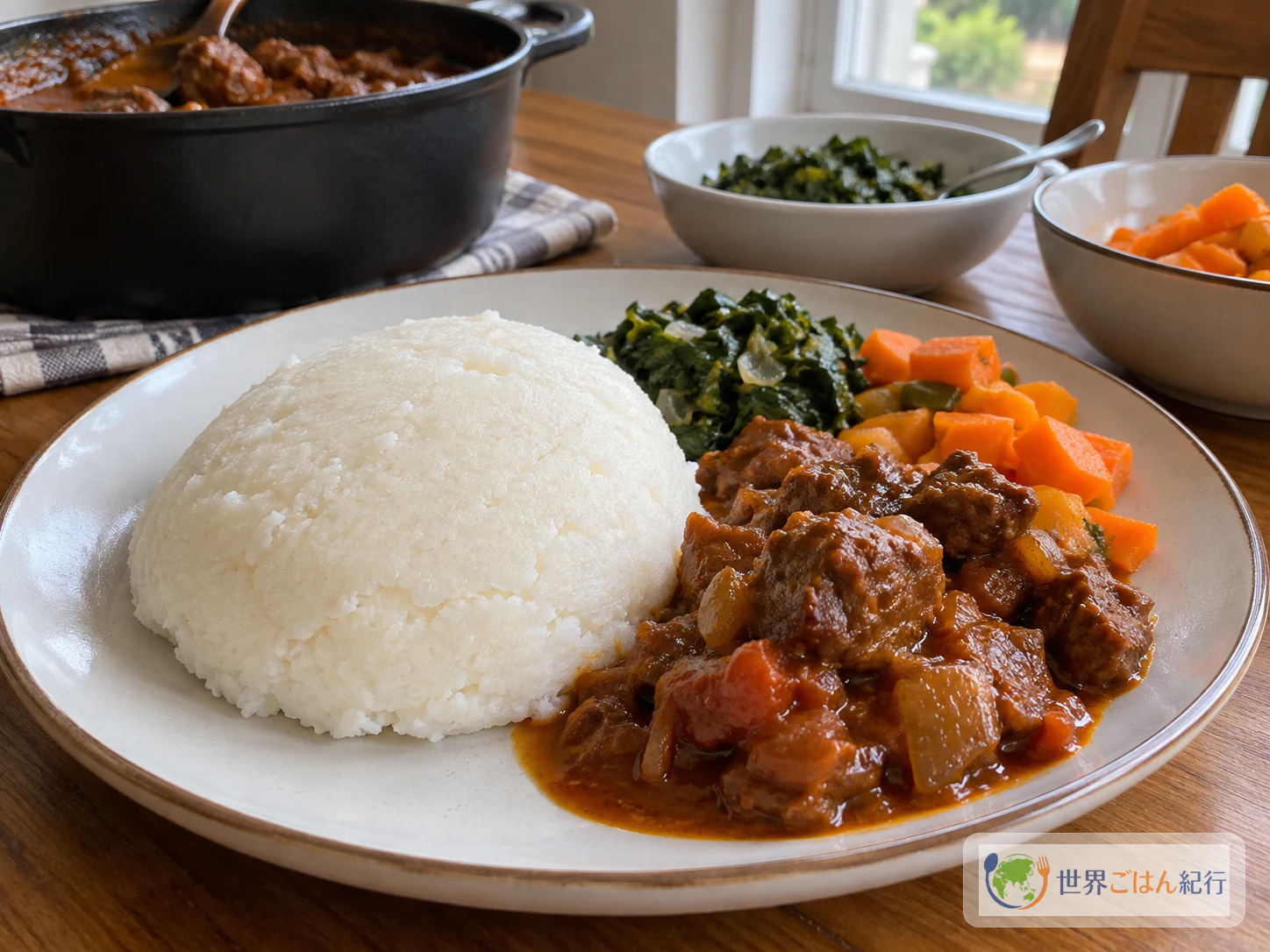
Mieliepap: A Firm Maize Meal Staple That Takes Up the Sauce
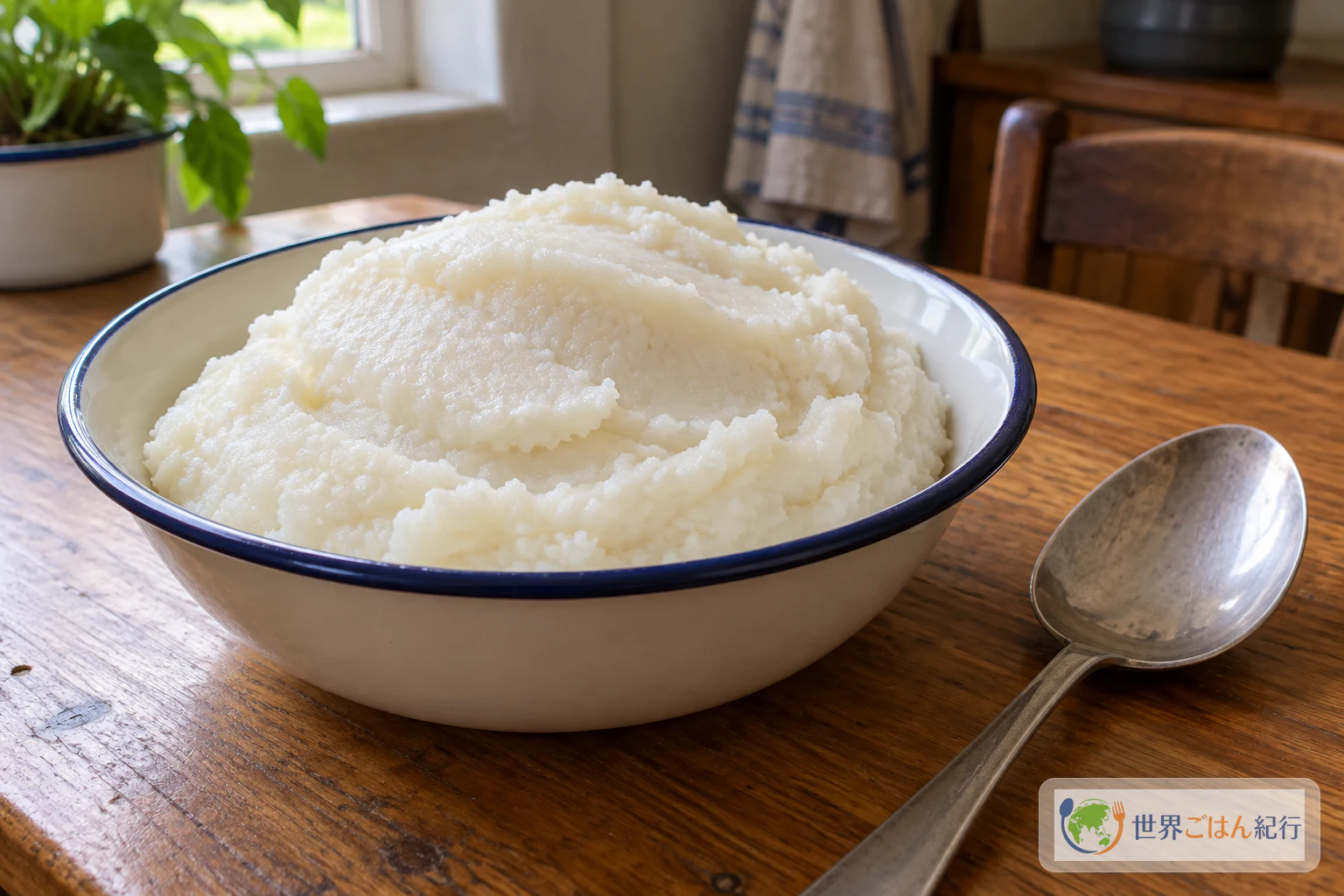
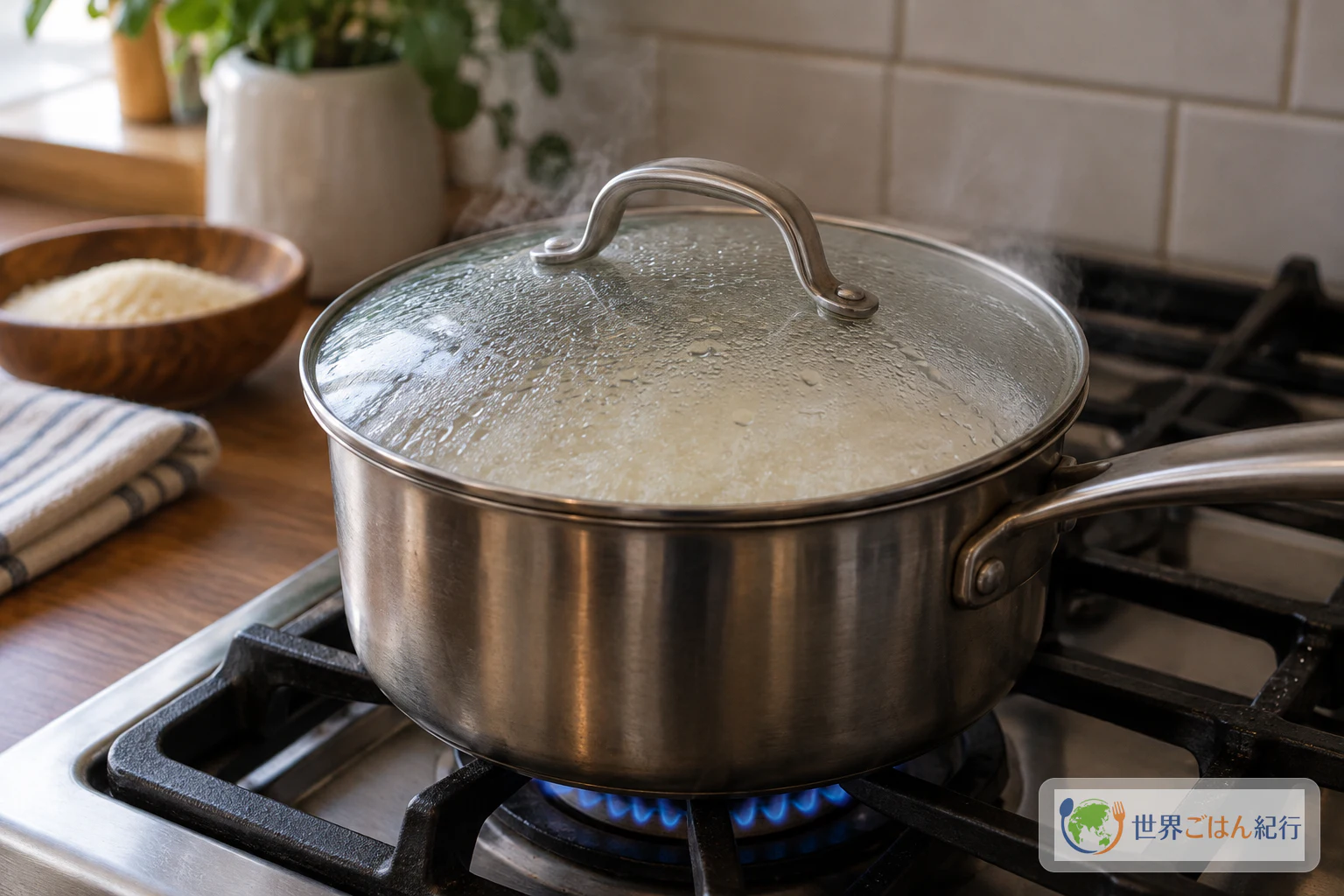
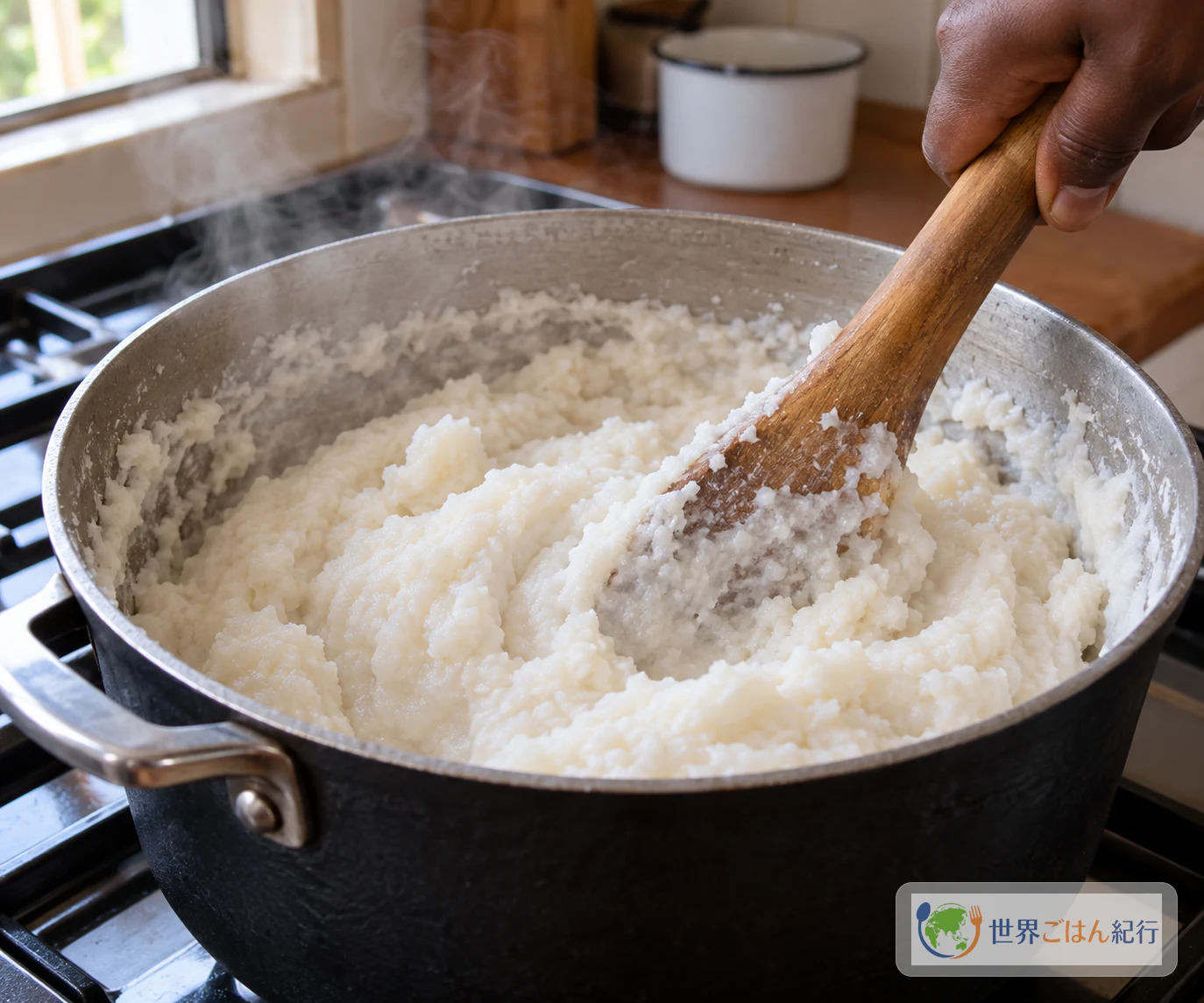
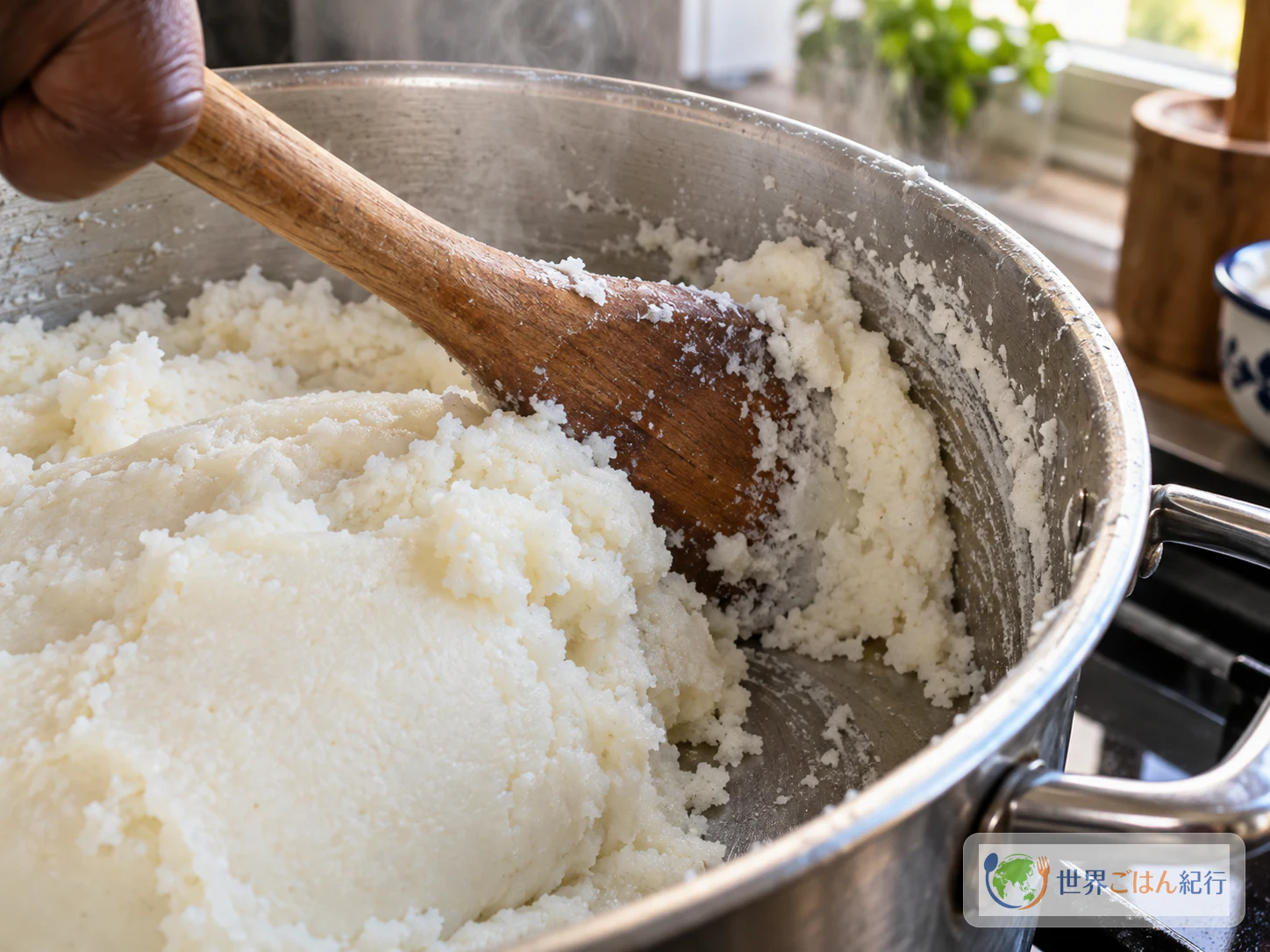
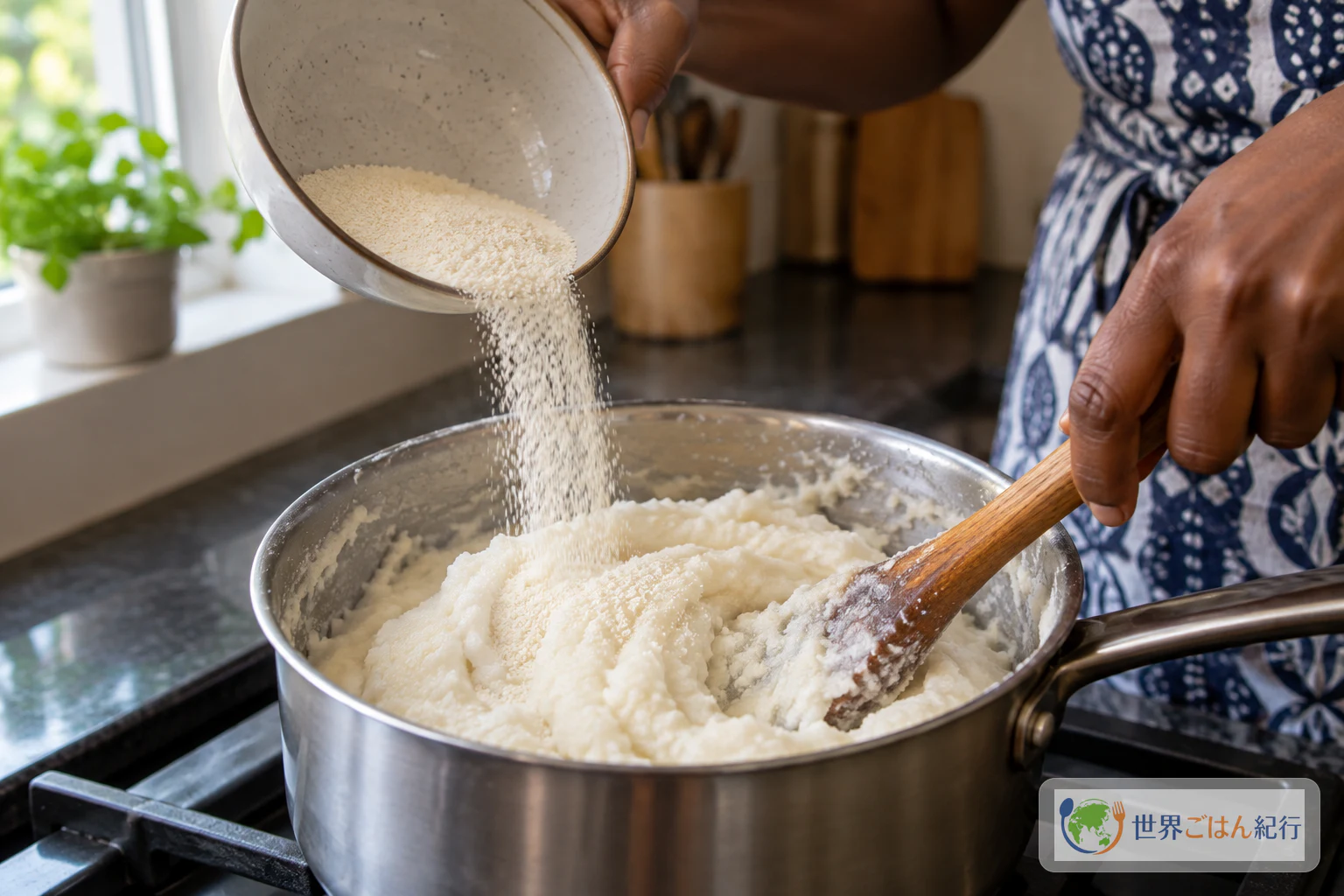
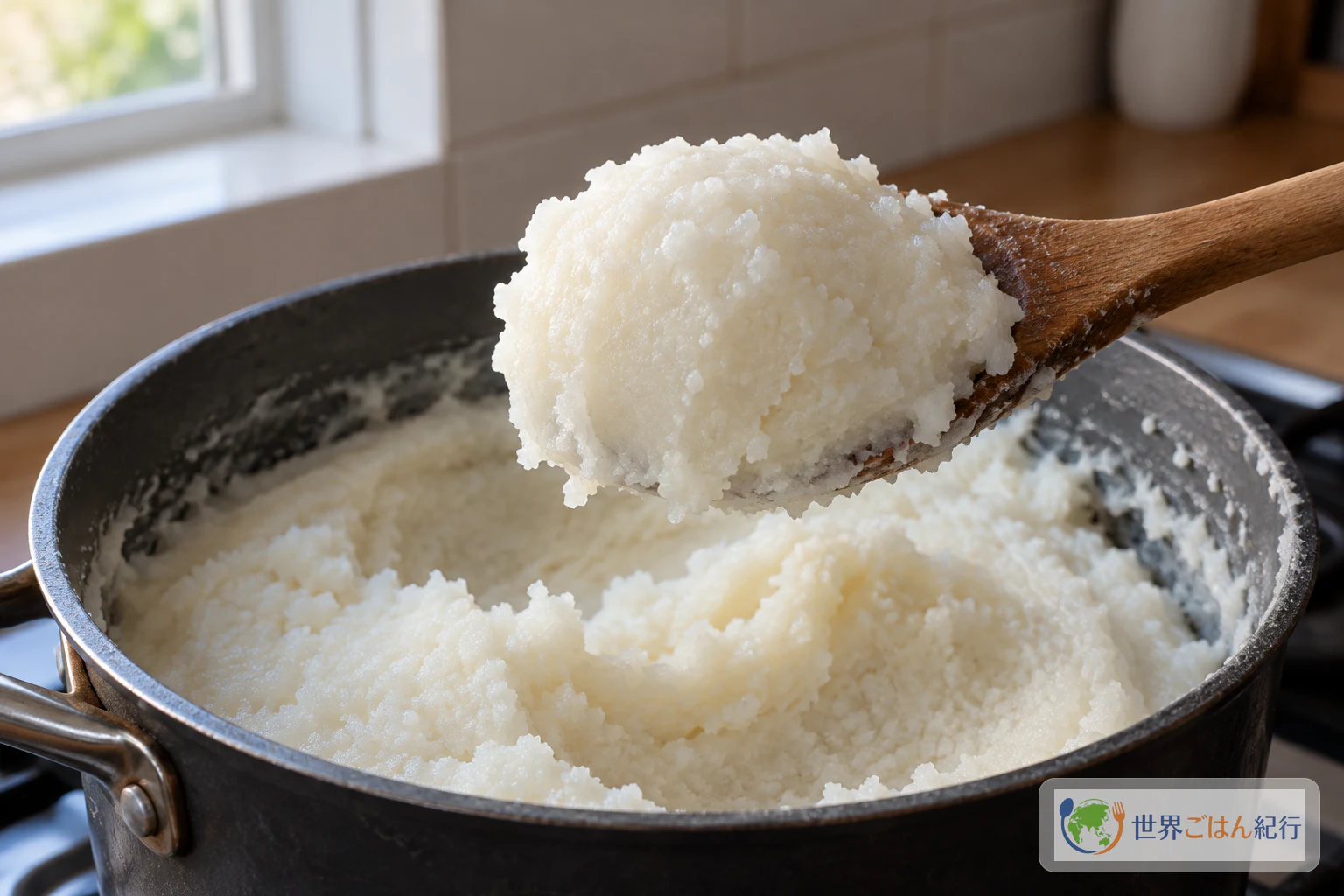
Add the maize meal in two stages, press out the lumps against the side of the pot, and finish it covered over the lowest heat. The goal is a firm, cohesive pap that holds its shape beside a saucy main dish.
A pot of maize meal porridge comes to the table to catch the juices of meat and vegetables. In South Africa, pap is a maize meal staple eaten at breakfast, lunch and dinner, and the way it is finished changes from household to household: some pap is runny, some soft, some stiff.
This article makes one specific version: stiff pap, also called stywe pap, from a recipe by Siba Mtongana published on Woolworths TASTE. It uses only water, maize meal and butter. It is not the same thing as polenta, and it is not the only "correct" pap in South Africa. Thinking of it as one clearly defined firmness among many makes the method easier to follow and the result easier to judge.
The dish is known as mieliepap or simply pap. It is commonly explained as porridge made from mielie meal, the Afrikaans word for maize meal. Stywe pap means stiff pap.
How Pap Changes Firmness Across South African Tables
Pap is a broad name, and its firmness moves with who is cooking it. South African Tourism describes pap as a maize meal dish that can be runny, soft or stiff, eaten across the day, and a staple in many households because it is affordable and versatile. It is eaten with milk and sugar, with meat and vegetables, and even in a thinned form as mageu, and the way it is cooked differs between cultures and communities across South Africa.
Within that range, specific dishes carry their own names. In an introduction to Xhosa cuisine by Fatima Dike, stiff mieliepap is eaten with samp and with offal stews; umqa is described as a stiff maize meal porridge, while umphokoqo is a crumbly maize meal eaten with sour milk or buttermilk. These are distinct preparations, not alternative spellings for the recipe here.
For that reason, this article does not present one "authentic" pap. It follows a single, clearly stated stiff pap recipe and treats the other textures as separate dishes with their own ratios and methods.
Ingredients: Serves 4, Measured in the Recipe's Own Cups
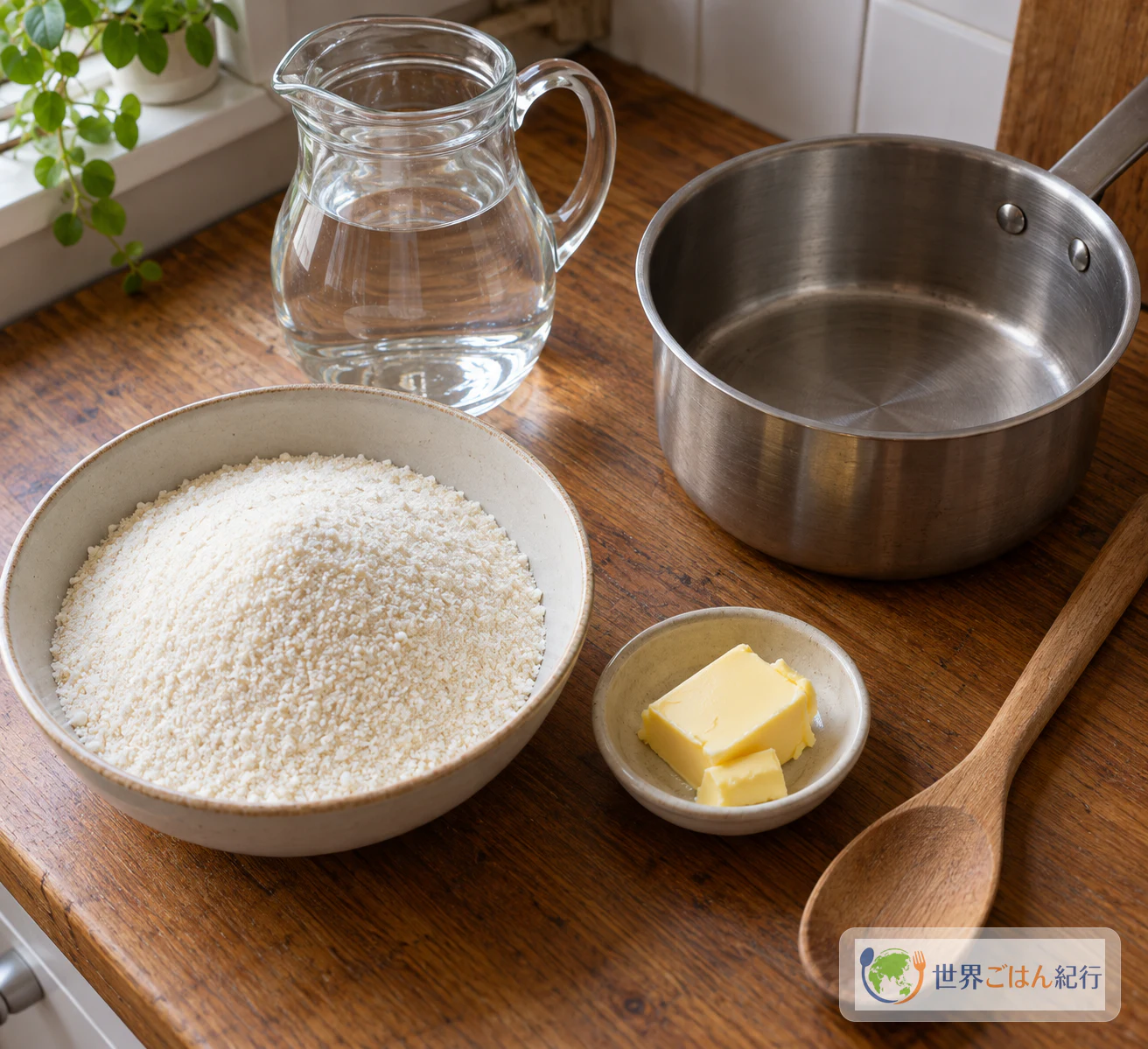
Serves 4. Use the amounts in their own units, with no conversion to grams or milliliters.
The recipe lists no salt, milk or sugar, so none are added here. Any extra water used to adjust a too-dry pap at the end is not a fixed amount; it is added only if needed, a little at a time (see step 6).
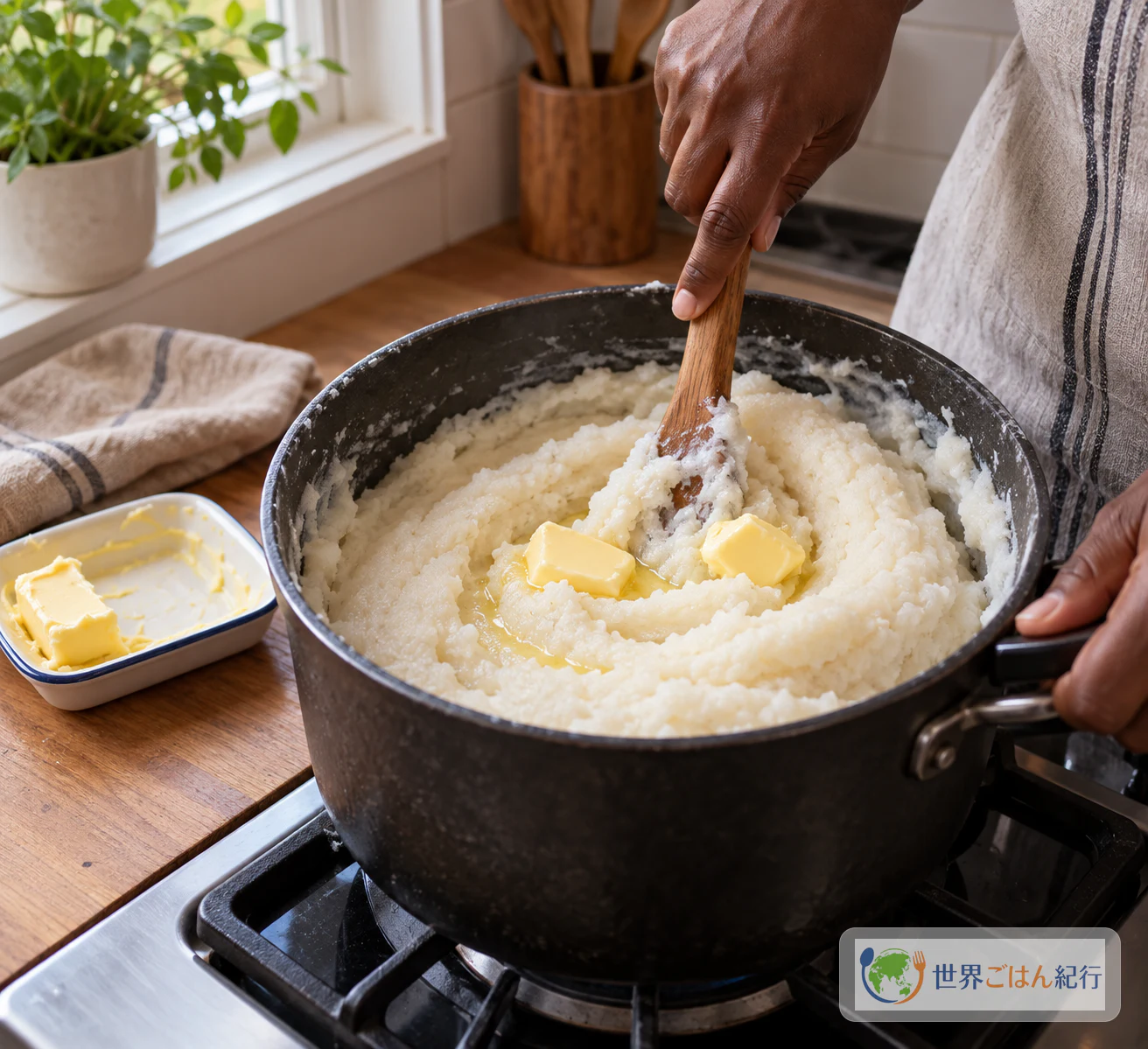
The butter is a dairy ingredient. If you avoid dairy, leave it out or choose a suitable alternative; the pap will taste less rich. Check maize meal packaging for allergen and cross-contact statements. The pap and the steam rising from it are very hot when you lift the lid and stir.
Choosing Maize Meal and Measuring Cups
Maize meal is the ingredient that changes the result most. It is the dried maize meal of southern Africa, and the recipe does not specify a grind. Products sold elsewhere as cornmeal or maize flour vary in particle size and color, so don't assume they are identical to South African maize meal. Check the packaging for the grind, and if you can find southern African maize meal, it will bring you closer to the intended texture.
- Yellow polenta meal: a possible stand-in, but the color, flavor and texture will change.
- Cornstarch: not a substitute. It does not make pap.
Measure the water and maize meal with the same cup. Keeping the 3-to-2 relationship in one cup is what matters. Note which maize meal and cup you used so you can adjust next time.
Equipment
- A large, heavy-bottomed saucepan with a lid
- A wooden spoon or other sturdy spoon for pressing the pap against the side of the pot
No special pot is needed; a lidded saucepan you already own is enough.
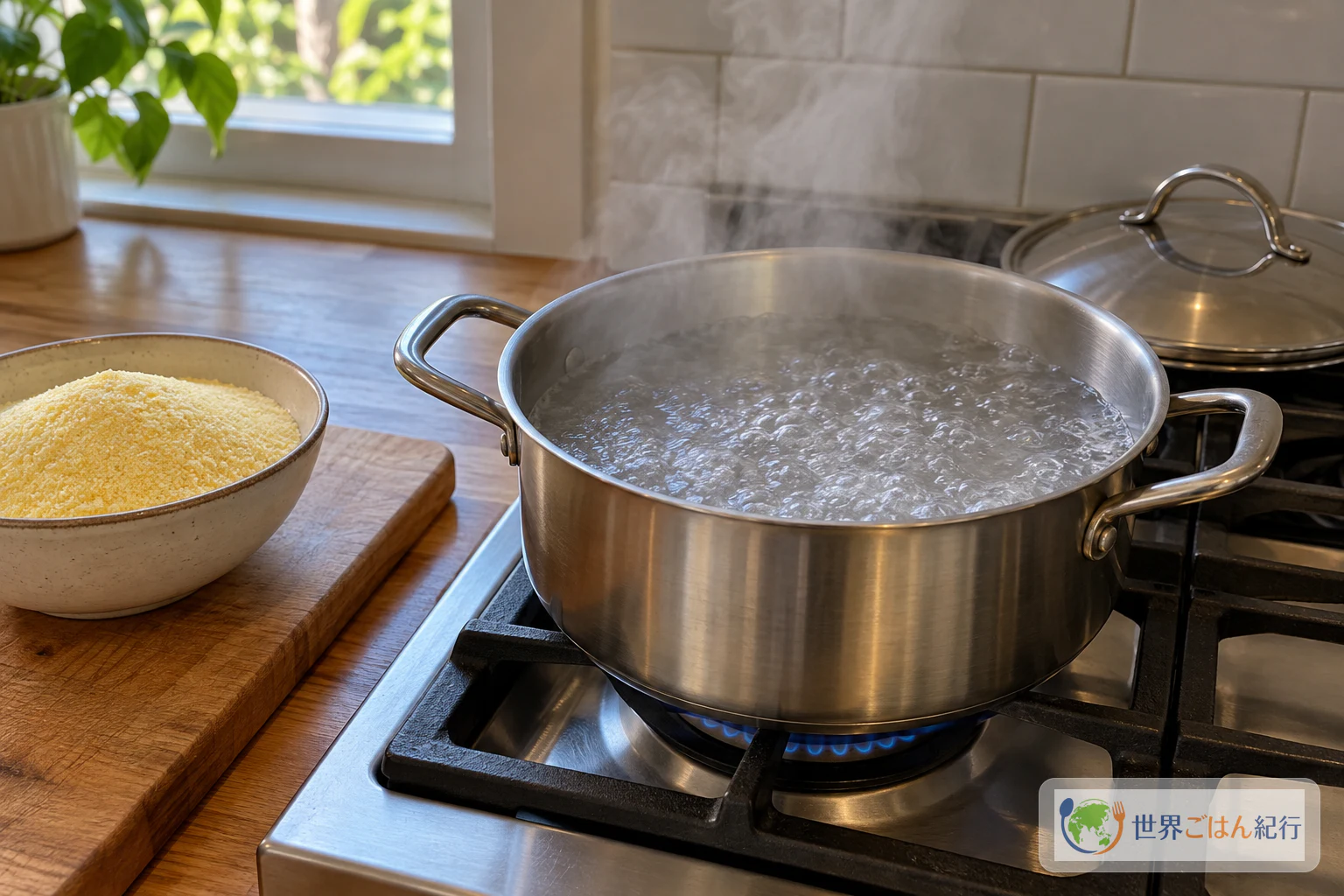
Method: Two Additions of Maize Meal, Then a Covered Finish
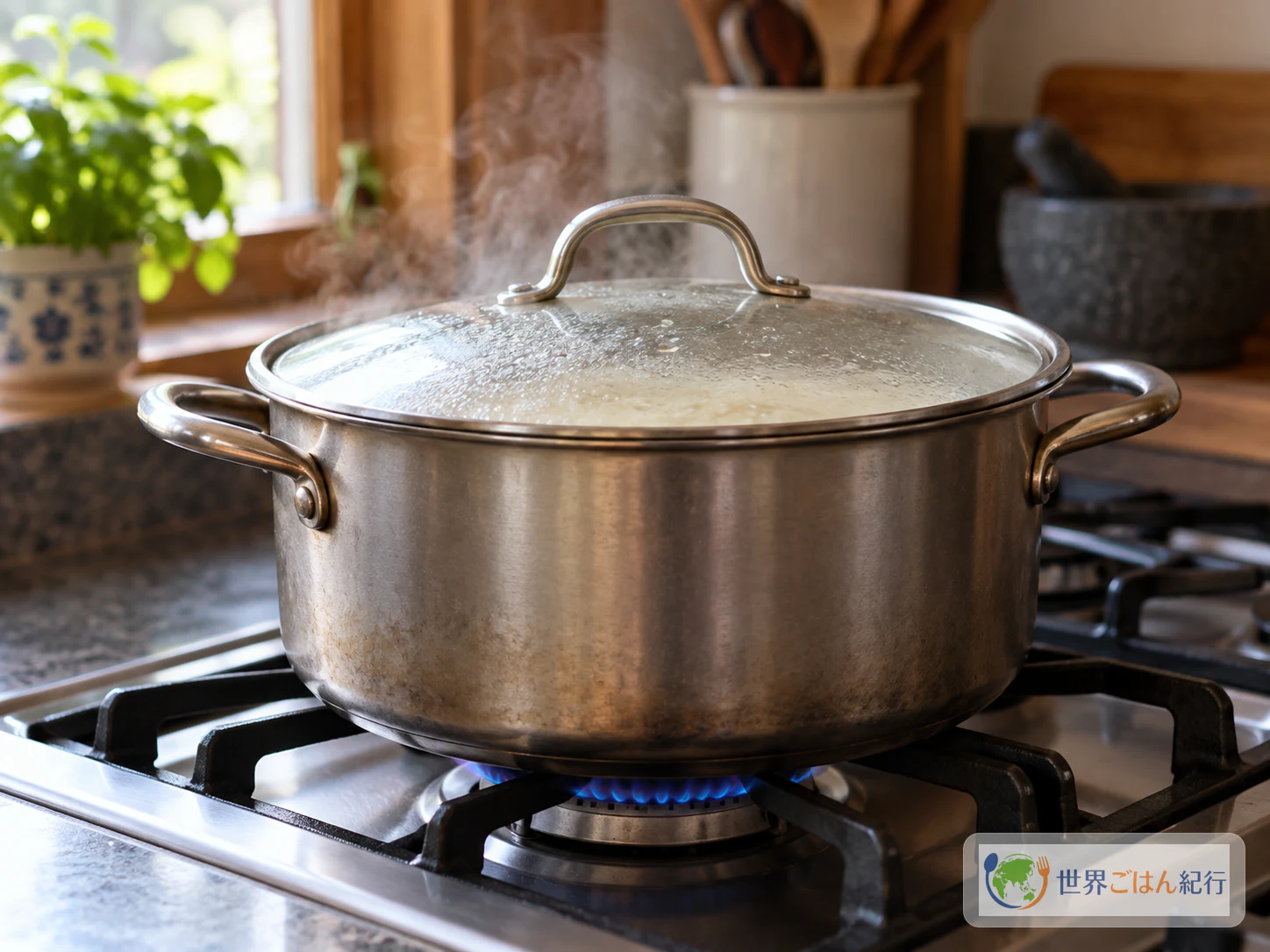
Follow the times given in each step. The time it takes your water to boil depends on your stove and pot, so watch the pot rather than relying on a single overall cook time.
Lumps, Scorching, Too Stiff: Fixing Problems in the Pot
Most pap problems come from how the meal goes in and how high the heat is at the end.
| Condition | Main cause | How to fix it |
|---|---|---|
| Lumps of dry meal | Stirring during the first covered stage, or adding the second cup all at once | Leave the first cup unstirred for the full 8–10 minutes, then stir hard and press against the side of the pot. Add the second cup gradually |
| The bottom scorches | Heat too high during the final covered stage, or a thin pot | Keep the heat at its lowest setting. Don't scrape the scorched layer back into the pap |
| Too stiff or dry | Maize meal grind, cup size or how much water evaporated | Add a little hot water at a time and stir, stopping once it reaches the firmness you want |
| Too loose | Different maize meal or cup from the recipe's | The recipe gives no fix for this, such as adding more meal, so don't guess. Measure the water precisely next time and take the grind of your meal into account |
How Pap Is Eaten, and Textures Made Differently
Accompaniments are optional and sit beside the pap. They are not part of this recipe's base amounts.
Stiff pap is a staple that takes up sauces. The Woolworths TASTE recipe serves it with stews and braai meat, and South African Tourism describes pap eaten with meat and vegetables. A vegetable relish such as chakalaka is another common pairing. In Xhosa cooking, stiff mieliepap appears with samp and offal stews.
Pap is also eaten very differently. South African Tourism describes it with milk and sugar, a way of eating it that is separate from this savory stiff pap. Other textures are separate dishes rather than adjustments to this recipe:
- Runny or slap pap: a thinner pap with more liquid. Don't make it by simply adding water to this recipe; follow a recipe written for it.
- Soft pap: a texture between runny and stiff. A half-cooked stywe pap is not the same thing.
- Crumbly pap (phutu, umphokoqo): made with a different ratio and way of mixing. Umphokoqo is eaten with sour milk or buttermilk.
For comparison, AMC Cookware South Africa sets out different ratios of maize meal to water for different textures. These belong to a different method and should not be mixed into the recipe above.
| Texture (AMC) | Maize meal to water | Method in brief |
|---|---|---|
| Fine crumbs | 1 cup : 1 cup | Maize meal added unstirred to gently boiling salted water, covered 5 minutes, then stirred and cooked over low heat for 20–30 minutes |
| Bigger chunks | 1 cup : 1½ cups | Same method as fine crumbs |
| Smooth (breakfast) | 1 cup : 2 cups | Water and maize meal mixed together first |
AMC also mentions eating pap with chakalaka or buttermilk.
Not Simplifying Its Origins
Pap is woven into South African food culture and economy, but maize itself is not native to Africa. An essay from the University of Cape Town's Bio-economy Research Chair suggests that maize may have arrived in the 16th century through Portuguese sailors. The same essay argues that mining and industrialization in the late 19th century changed maize's place as a staple, and notes that different communities cook pap with different textures.
These are a researcher's interpretations, not settled facts, and no single inventor or place of origin is claimed for pap. What can be said is that a dish many people eat every day has a history shaped by trade and economic change.
Frequently Asked Questions
Before changing anything, check that you measured the water and maize meal with the same cup and kept the heat at its lowest for the final stage.
What is stywe pap?
It is the name for stiff pap, the firm version of maize meal porridge. Within South Africa there are other textures too, from runny to soft to crumbly, and this recipe makes the stiff one.
Can I use cornmeal instead of maize meal?
You can try, but the result will depend on the grind and color of the product. Cornmeal and maize flour sold outside southern Africa are not necessarily the same as South African maize meal. Yellow polenta meal will change the color, flavor and texture, and cornstarch will not work.
Should I mix the maize meal into the water first?
Not in this recipe. Half the maize meal goes into boiling water and is left covered before you stir. Mixing the meal and water together first is a different method, used by AMC for its smooth pap.
What do I serve it with?
Stews, braai meat, vegetables and relishes such as chakalaka. In Xhosa cooking it appears with samp and offal stews, and in other households pap is eaten with milk and sugar. Keep the pap itself plain and serve the accompaniments beside it.
Sources
- Siba Mtongana, "Stiff pap," Woolworths TASTE. The ingredients, method and serves-4 yield for the stiff pap recipe in this article, and serving it with stews and braai meat. https://taste.co.za/recipes/stiff-pap/
- AMC Cookware South Africa, "Mieliepap." Comparison of water ratios and methods for fine-crumb, chunky and smooth pap, and eating pap with chakalaka or buttermilk. Not used for the recipe amounts. https://www.amcsa.co.za/en/amc-cookware-blog/mieliepap/
- South African Tourism, "Traditional African food in South Africa." Pap as a maize meal staple eaten through the day, its runny, soft and stiff textures, ways of eating it, and differences between cultures. https://www.southafrica.net/au/en/travel/article/traditional-african-food-in-south-africa
- Fatima Dike, "Xhosa cuisine: the dishes and traditions," South African Tourism. Stiff mieliepap with samp and offal stews, and umqa and umphokoqo as distinct preparations. https://www.southafrica.net/gl/en/travel/article/xhosa-cuisine-the-dishes-and-traditions/1000
- Gina Hendrickse, "Pap politics," University of Cape Town Bio-economy Research Chair. The possible 16th-century introduction of maize via Portuguese sailors, the influence of late 19th-century mining and industrialization, and pap's place in South African food culture and economy. https://bio-economy.org.za/pap-politics/