Malakwang: Sharp Green Leaves Softened by a Rich Nut Paste
The sourness of the leaves is the heart of the dish. Taste it before you change it, and let the odii round it out rather than bury it.
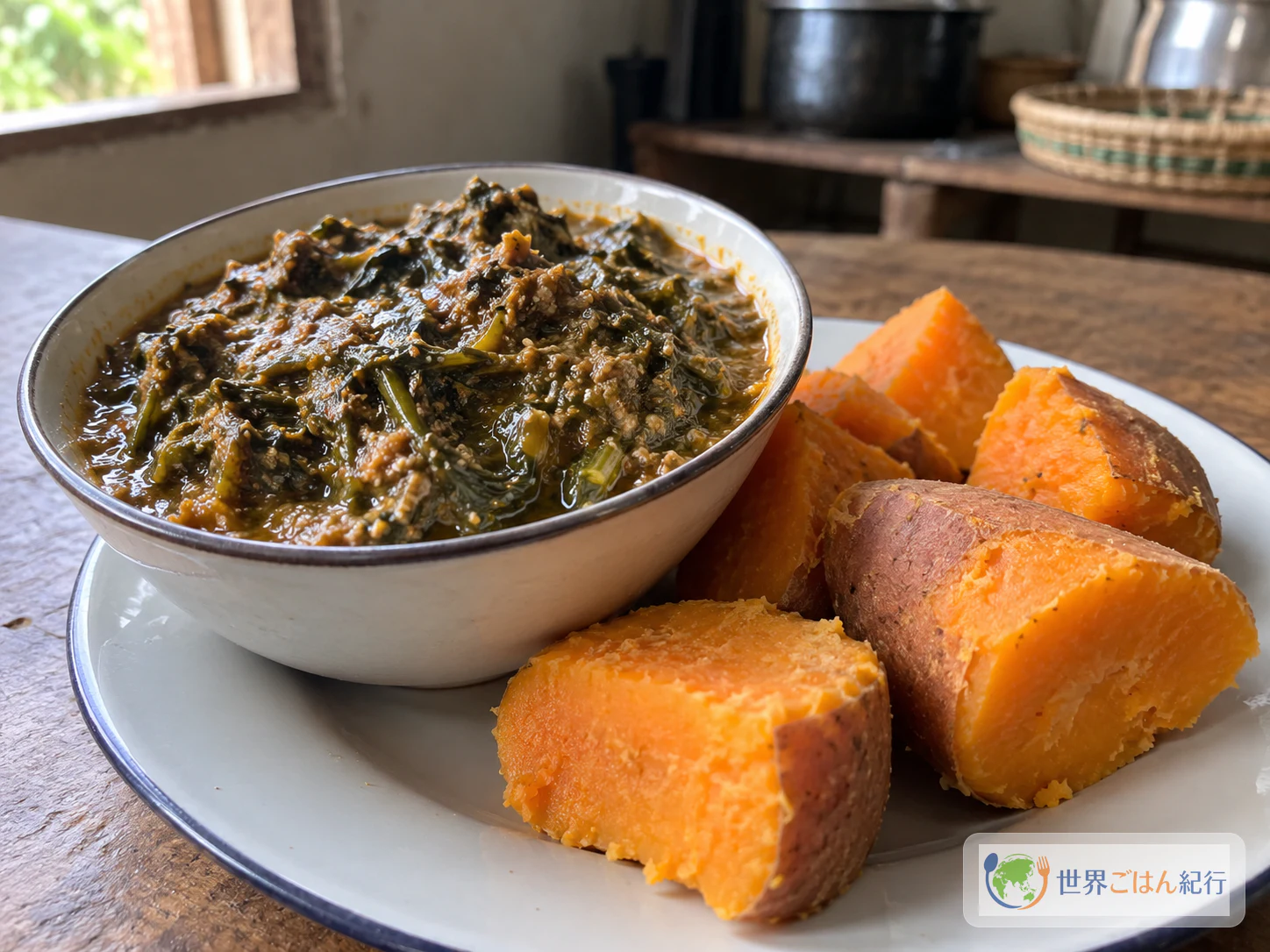
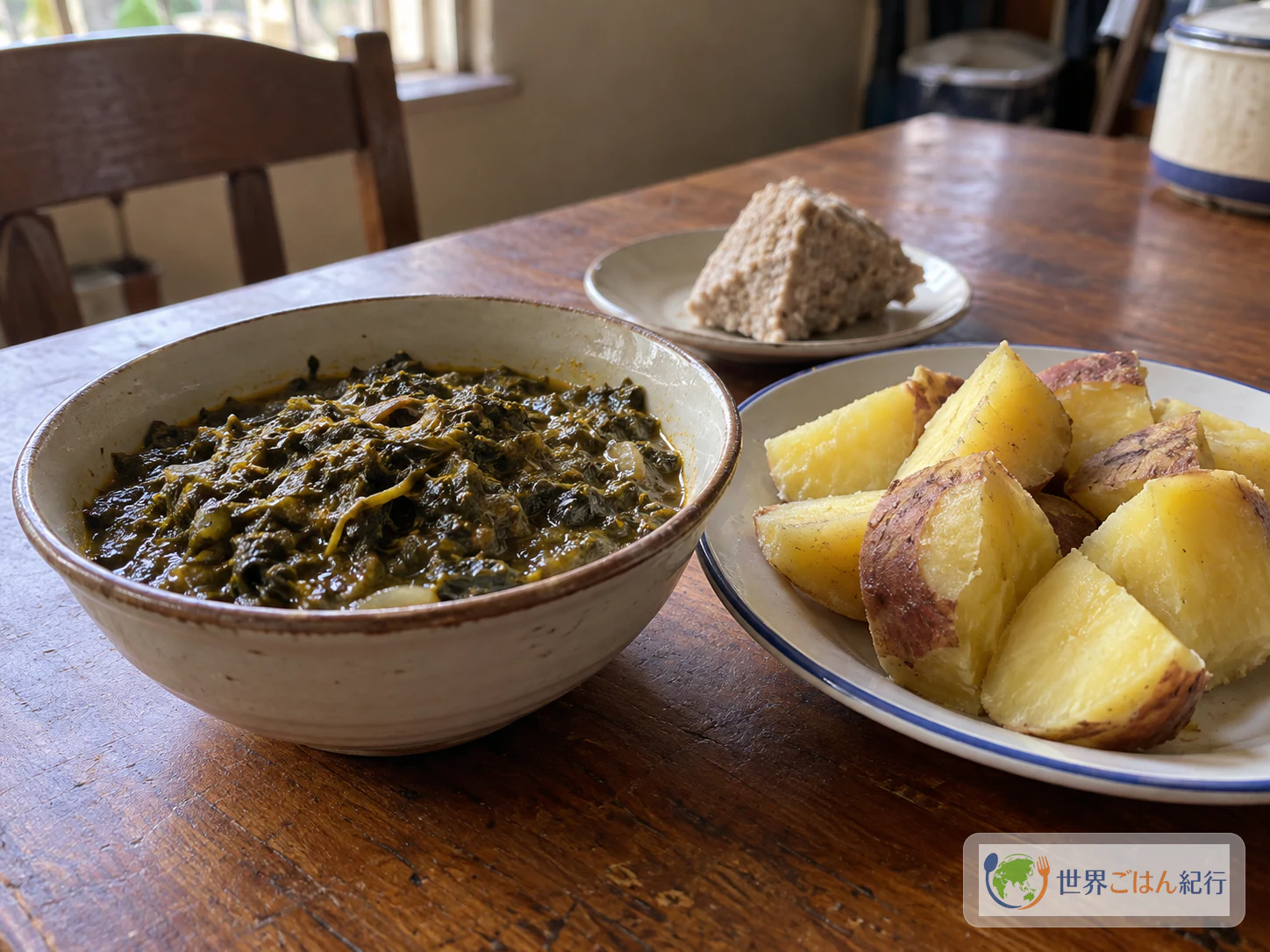
A piece of firm millet bread is torn off and used to scoop up a green sauce, sour from the leaves and rich and earthy from a paste of peanut and sesame. In northern Uganda, meals that pair a grain staple with leafy greens and sauces are well recorded, and malakwang is one of the leafy dishes that sits in that pairing. Its outline is simple: cooked sour leaves, bound with odii, seasoned with salt.
The first question most cooks ask is which leaf to buy. Malakwang is a leaf-vegetable name, and a study of traditional food plants in northern Uganda reports that it can cover more than one Hibiscus species, while a Ugandan food guide gives roselle (Hibiscus sabdariffa) for it. Either way, this is a dish of cooked leaves. It is a different use from the dried red calyces brewed into hibiscus tea.
Our editors have not yet kitchen-tested this recipe. That is why no water amount, number of servings or total time is given, and why every substitute below is described as untested.
What Is Malakwang? Northern Uganda's Sour Leaf Dish
Malakwang is both the name of a sour leaf and of the dish made from it. In the northern Ugandan study area of the ethnobotanical research cited below, the leaf is called malakwang in Acholi, Lango and Thur, and emalakany in Ateso. A Lango recipe book also gives the Madi name kalabi. Because the name can cover several Hibiscus species, this article does not tie the dish to a single plant.
The leaf belongs to a meal, not just a pot. The same study records meals that combine staples such as kwon and atap with greens and sauces. At the Ekyooto Cultural Festival, Ugandan newspaper New Vision reported malakwang and kwon kal, an Acholi millet bread, among the dishes shown for the north. A festival display shows that the dish stands for the region; it does not tell you how often any given household eats it.
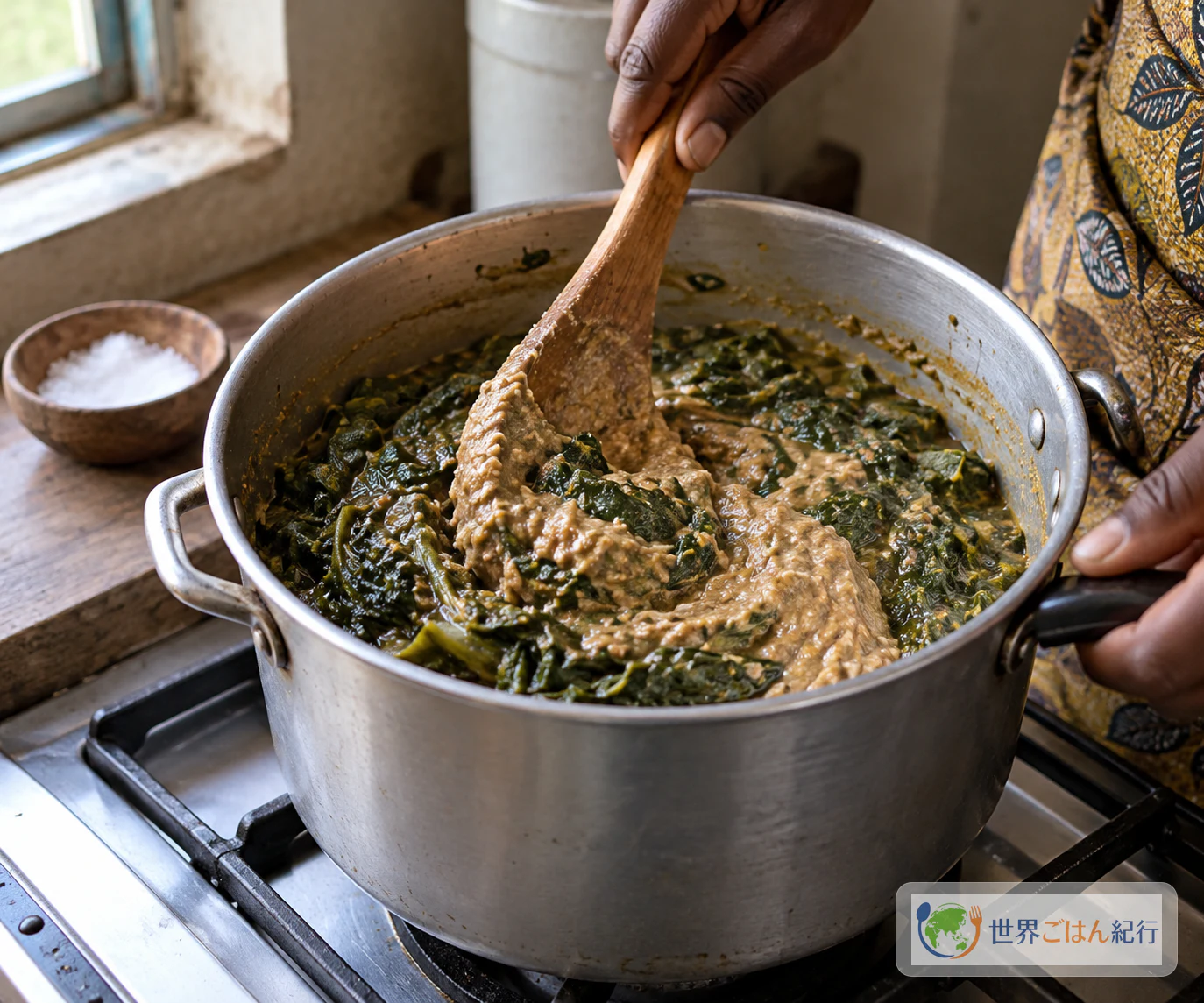
Structurally, the dish is a balance of two things. The leaves bring sourness, which the research describes as their defining trait. The paste, whether called odii or, in the study area, alodi, and made from groundnut, sesame or both, brings body and a toasted, nutty depth. A Ugandan food guide also lists groundnut or sesame paste as the partner for roselle leaves.
You can find more dishes from the same country on our Uganda page.
The Acholi Version Used Here, and How Others Differ
The recipe in this article comes from a Prosper Global staff feature. A staff member of Acholi background in Uganda shared it after consulting their grandmother, under the name "sweet potatoes with malakwang sauce." It is one family's version, not the single national recipe. It gives four bunches of leaves, 560g of odii, a tablespoon of salt and an optional quarter teaspoon of baking soda, but no water amount, leaf weight or yield.
Other written versions deliberately retain the sour cooking water. A recipe book from E-SAFF Uganda, labelled Lango, keeps the leaf cooking water so the sourness stays in the dish.
| Point | Acholi family recipe (this article) | Lango recipe book |
|---|---|---|
| Leaf cooking | 10–15 minutes in boiling water until soft | 10 minutes in water |
| Cooking water | Kept at first; changed for fresh water only if too sour | Set aside, then returned after the paste goes in, and cooked 10–15 minutes more |
| Paste | Odii (peanut and sesame) | Sesame or groundnut paste |
| Additions | None in the sauce; sweet potato or meat served alongside | A second method cooks dried fish or meat first, then adds the paste |
| Other amounts | Salt 1 tablespoon, optional baking soda 1/4 teaspoon | Water 2 cups, salt 1/2 tablespoon |
The ethnobotanical study also records a third approach in its area: very sour leaves are blanched, the first water is discarded, and the leaves are combined with alodi paste. These versions are different recipes, so their amounts and steps are not mixed into the one below.
A Ugandan food guide also describes customs connected with serving the dish to visiting relatives and at weddings. Those are recorded for the area that book describes and should not be read as rules for every Acholi household today.
Ingredients: Four Bunches of Leaves and a Rich Paste
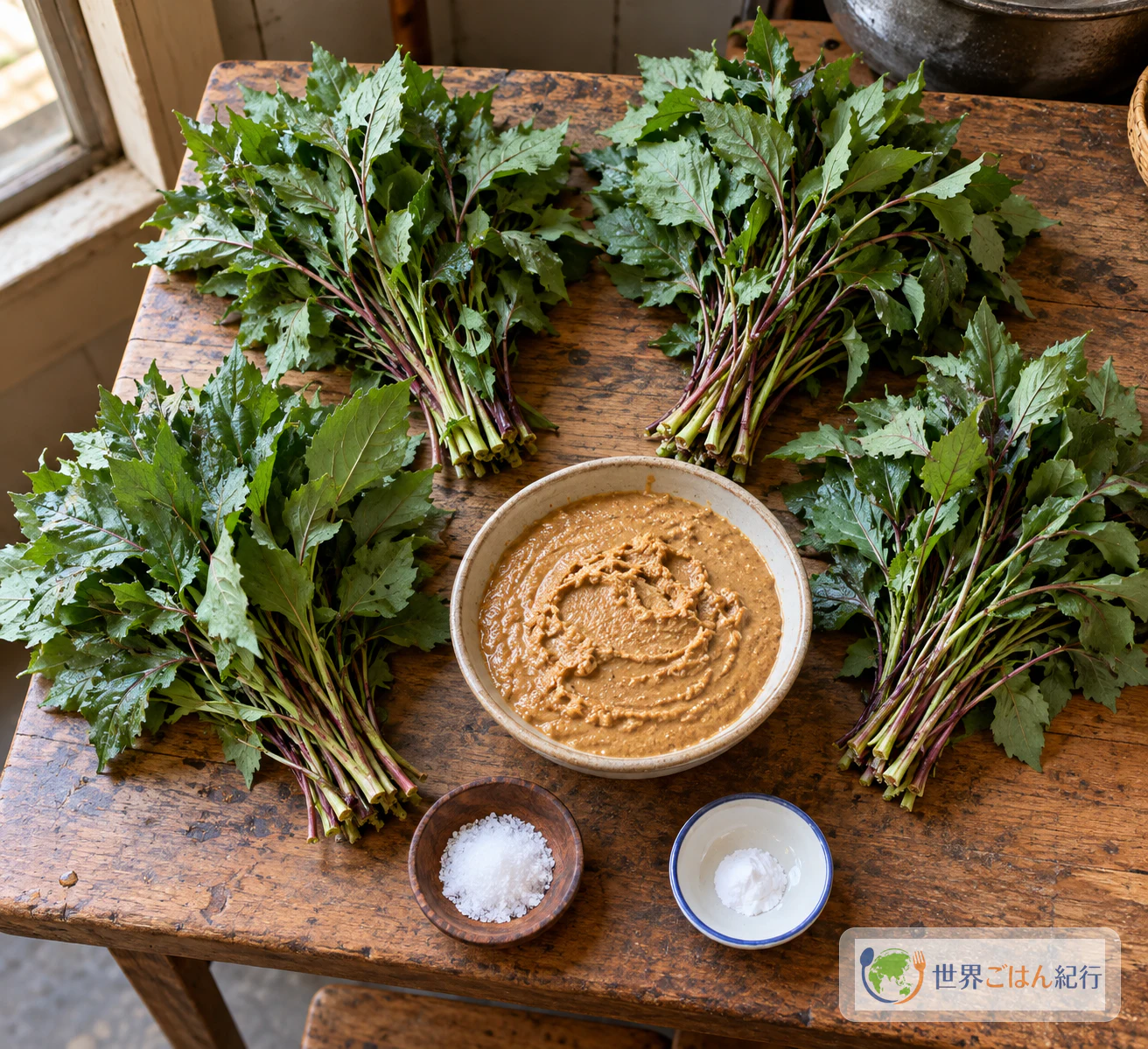
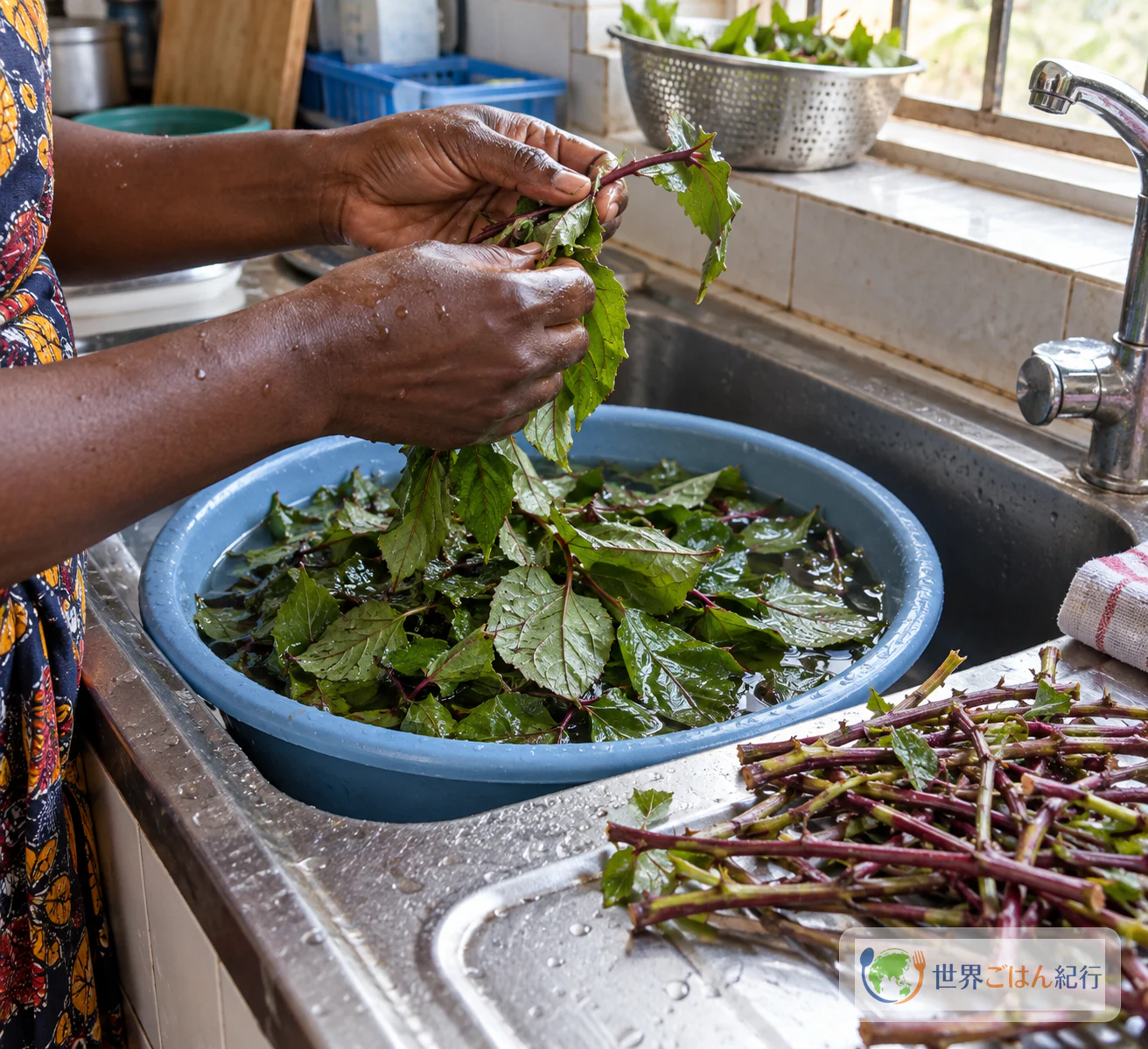
Odii contains peanuts and sesame. Do not serve this dish to anyone with a peanut or sesame allergy, and check the labels of any paste you buy. Wash the fresh leaves well under running water before cooking, and cook them until they are soft.
Equipment
- A large basin or bowl for washing the leaves
- A colander
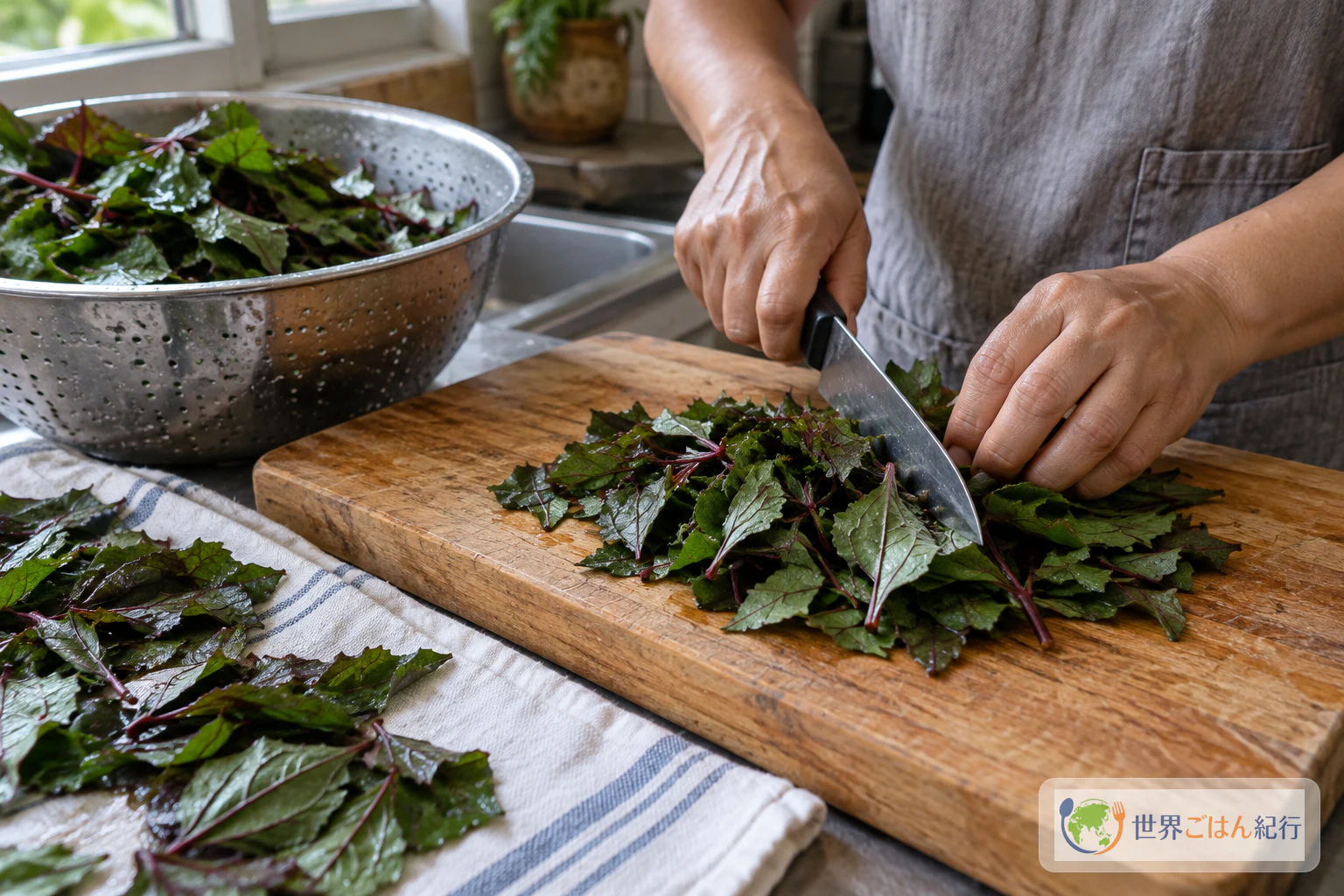
- A cutting board and knife
- A pot for boiling the leaves
- A wooden spoon
- Measuring spoons
Choosing Leaves and Paste, and What Substitutes Change
Malakwang leaves: Look for fresh bunches under names such as "malakwang", "sour hibiscus leaves" or "roselle leaves" at African or specialist grocers. Stock varies, and the leaf sold under one name may be a different Hibiscus from the next shop's. Dried leaves are sometimes sold, but rehydrating them is not part of this recipe, so their amount and soaking are not given here.
Odii: Search for "odii" or "groundnut sesame paste". Odii is a paste of peanut and sesame, and ordinary peanut butter is not the same thing. Many peanut butters contain sugar, salt or oil and have a different thickness, so do not swap them in at the same weight and expect the same sauce. Choose an unsweetened paste and check the salt on the label.
If you cannot find the leaves: Spinach with a squeeze of lemon is sometimes suggested as a stand-in, but it is a different plant with a different texture and sourness. It has not been kitchen-tested for this dish, so no amounts are given, and it will not taste like malakwang.
How to Make Malakwang
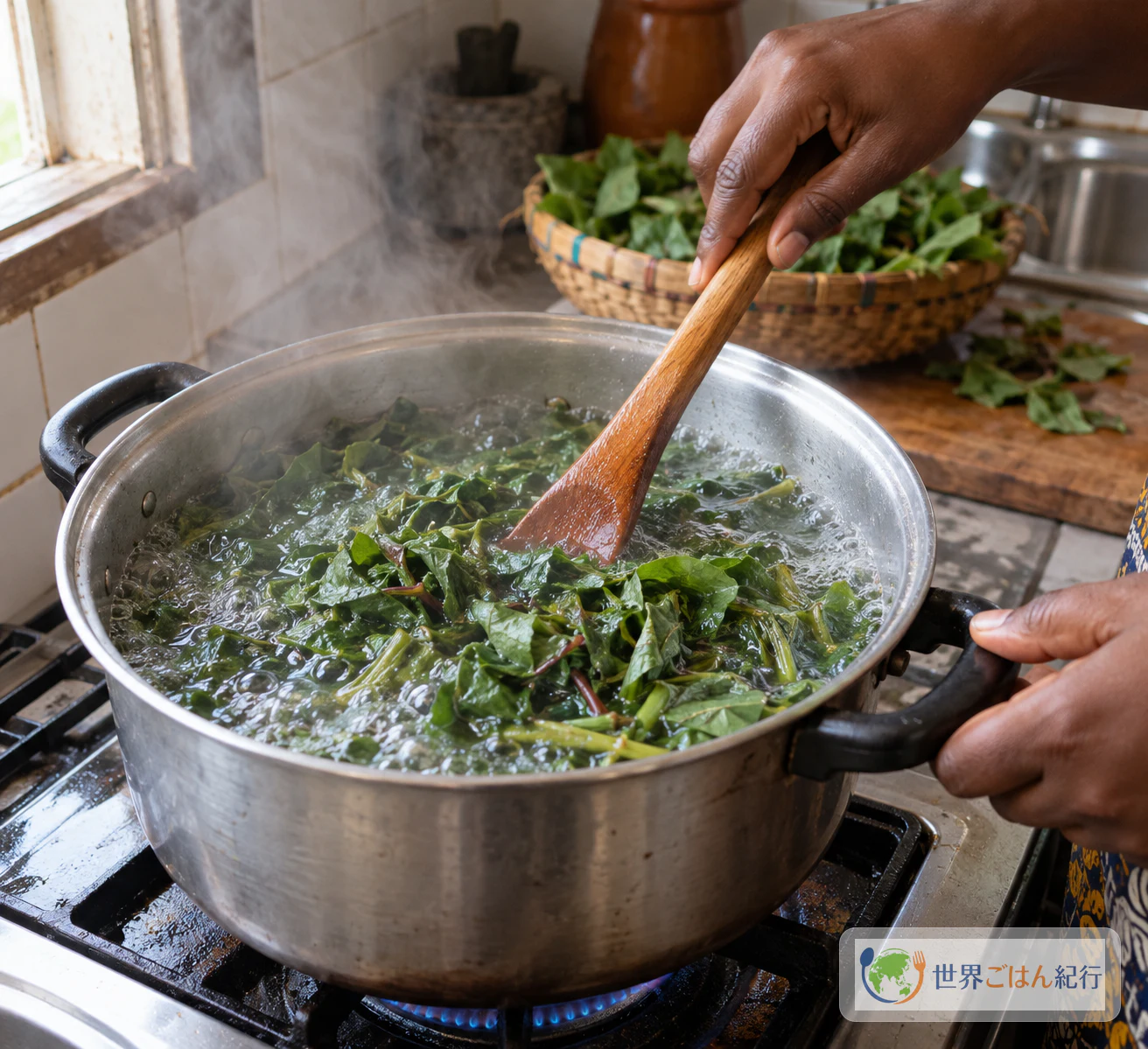
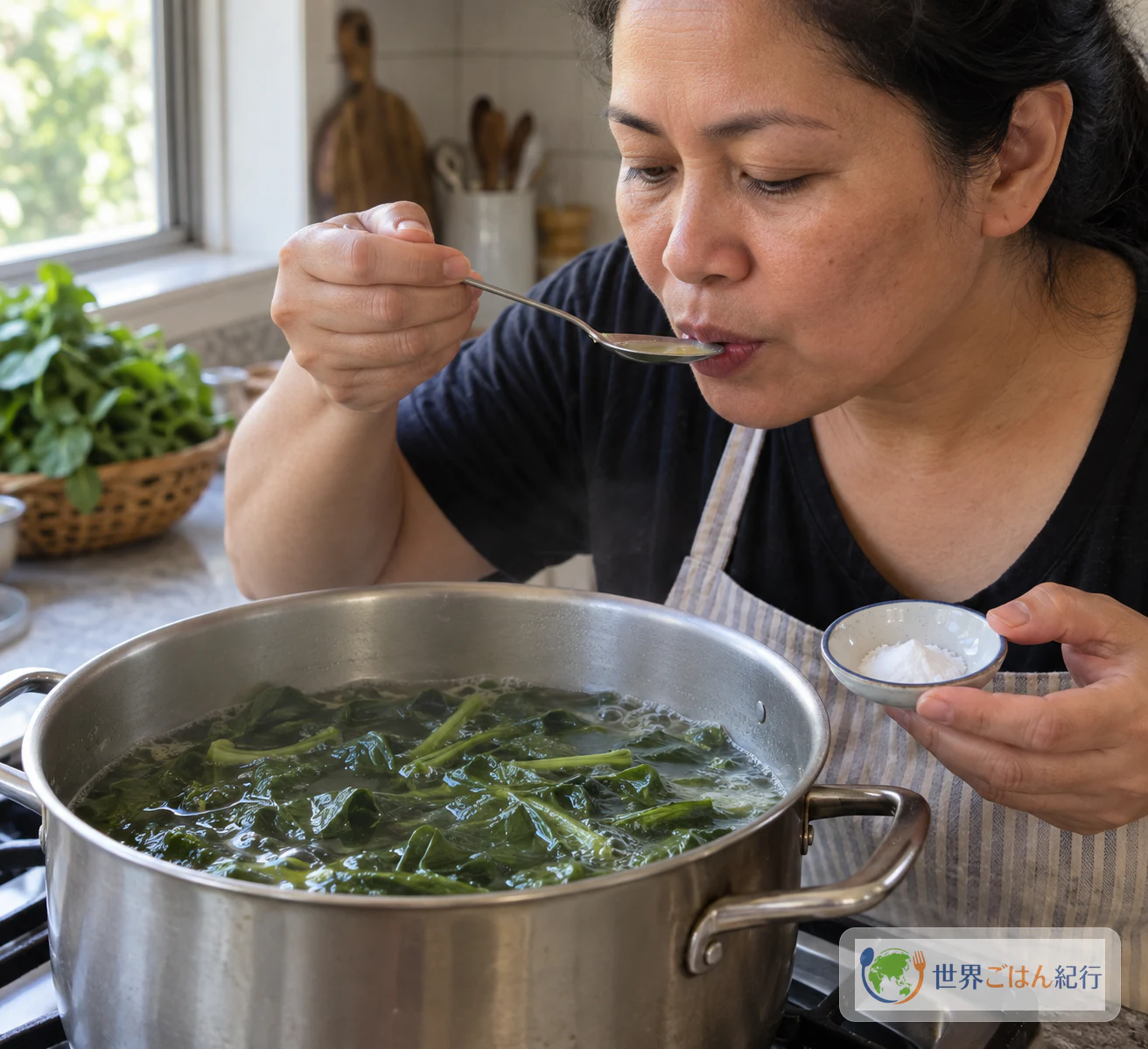
The leaves are done when they are soft. Taste for sourness before you add anything, and add the baking soda only if the leaves really need it.
Adjusting Sourness and Thickness
The Acholi family recipe keeps the first cooking water and only changes it if the leaves are too sour after tasting. The Lango recipe book deliberately returns the cooking water to keep sourness, while the study-area practice discards the first water. If you like a sharp sauce, keep the cooking water; if it is too much, use the soda and then the water change, in that order.
The baking soda is optional, and a quarter teaspoon is the most to use. Adding more changes the flavor of the sauce, so there is no "larger amount" here.
| Problem | Likely cause | What to do |
|---|---|---|
| Too sour | A sharp batch of leaves | Add the optional 1/4 teaspoon baking soda and boil a few minutes more. If still too sour, pour off the cooking water and replace it with fresh water |
| Leaves still tough | Older leaves or a different pot | Keep cooking and judge by softness rather than by the 10–15 minute guide alone |
| Paste won't blend smoothly | The paste went in all at once | Add the odii a little at a time, stirring, and watch the thickness as it builds. No extra water amount has been tested |
| Sauce tastes too salty | A store-bought paste that already contained salt | Next time, check the paste label first and add the salt gradually, tasting as you go |
Variations Across Northern Uganda
These are documented ways of making the dish, not tested variations of this recipe:
- Keeping the sour water: The Lango version saves the leaf cooking water, mixes the leaves with the paste, returns the water and cooks for 10–15 minutes.
- With fish or meat: The same Lango book gives a method in which dried fish or meat is cooked first and the paste added after. The Acholi recipe here keeps meat on the side instead.
- Groundnut, sesame, or both: Written sources describe sesame paste, groundnut paste, and pastes of both. A sesame-leaning or groundnut-leaning paste will change the aroma and thickness.
What to Serve With It
The Acholi family recipe suggests boiled sweet potatoes, or a meat of your choice served alongside rather than cooked into the sauce. The sweet potato also gives the sourness of the leaves something mild to sit against.
For a broader northern Ugandan table, pair it with a grain staple. Kwon, a millet bread, appears beside malakwang in festival displays of Acholi food and in the recorded meals of the region. Kwon is its own staple; it is not a stand-in for bread or rice cakes from other cuisines.
Frequently Asked Questions
Is malakwang the same as hibiscus tea?
No. Hibiscus tea is brewed from dried calyces. Malakwang is a dish of cooked leaves. A Ugandan food guide identifies the plant as roselle (Hibiscus sabdariffa), while ethnobotanical research reports that the name can cover several Hibiscus species.
Which leaves should I use?
Leaves sold as malakwang, sour hibiscus or roselle leaves are the closest match. Because more than one species can go by the name, leaves from different shops may differ in sourness. Spinach with lemon is sometimes suggested, but it is untested here and will not give the same taste or texture.
How can I make it less sour?
Follow the order in step 4: taste, add the optional 1/4 teaspoon baking soda and boil a few minutes, then change the cooking water if it is still too sour. Avoid the Lango method of returning the cooking water if you want less sourness, since that keeps it in.
Can I use only sesame paste or only groundnut paste?
Other written versions do use sesame paste or groundnut paste on its own. This Acholi family recipe uses odii, which contains both, and we have not tested single-nut versions, so the flavor and thickness will differ.
Can I use store-bought peanut butter, and how much salt then?
Peanut butter is not the same as odii; it may contain sugar, salt and oil and have a different thickness. The tablespoon of salt in this recipe is paired with odii. If your paste is already salted, adding the salt gradually and tasting is our editorial suggestion, not part of the family recipe.
Sources
- Prosper Global, "From our kitchens to yours: Recipes from around the world." The Acholi family recipe (as described by a staff member who consulted their grandmother), its amounts and steps, sourness adjustment, and serving with sweet potatoes or meat. https://www.prosperglobal.org/en-gb/blog/unique-recipes-around-world
- The Alliance of Sustainable Food Systems Uganda (E-SAFF Uganda), "Recipe Book: Preparation of Neglected and Underutilised Species, Malakwang – Lango." The Lango, Teso and Madi names, the version that keeps the cooking water, sesame or groundnut paste, and the method with fish or meat. https://www.esaffuganda.org/_files/ugd/7283b6_065a724cdc264876b3833f1bf0e1337e.pdf?index=true
- Slow Food Foundation for Biodiversity / International Trade Centre, "Uganda: From Earth to Table," Roselle. Identification as roselle (Hibiscus sabdariffa), its place as a northern Ugandan traditional vegetable, pairing with groundnut or sesame paste, and recorded customs. https://www.eresourcesforhealth.org/wp-content/uploads/2024/06/Uganda-From-Earth-to-Table.pdf
- New Vision, "Ugandan cuisine and diverse culture at Ekyooto Cultural Festival." Malakwang and the Acholi millet bread kwon kal shown among northern dishes at the festival. https://www.newvision.co.ug/news/1486390/ugandan-cuisine-diverse-culture-ekyooto-cultural-festival
- Pröbstl et al., "Traditional food plants of the upper Aswa River catchment of northern Uganda—a cultural crossroads," Journal of Ethnobiology and Ethnomedicine, 2021. Malakwang and emalakany as names for Hibiscus leaf vegetables across language areas, the sourness of the leaves, discarding the first water before combining with alodi paste, and meals pairing staples such as kwon and atap with greens. https://link.springer.com/article/10.1186/s13002-021-00441-4