Hong Kong Egg Waffles: A Thin Crisp Shell Around Soft, Airy Bubbles
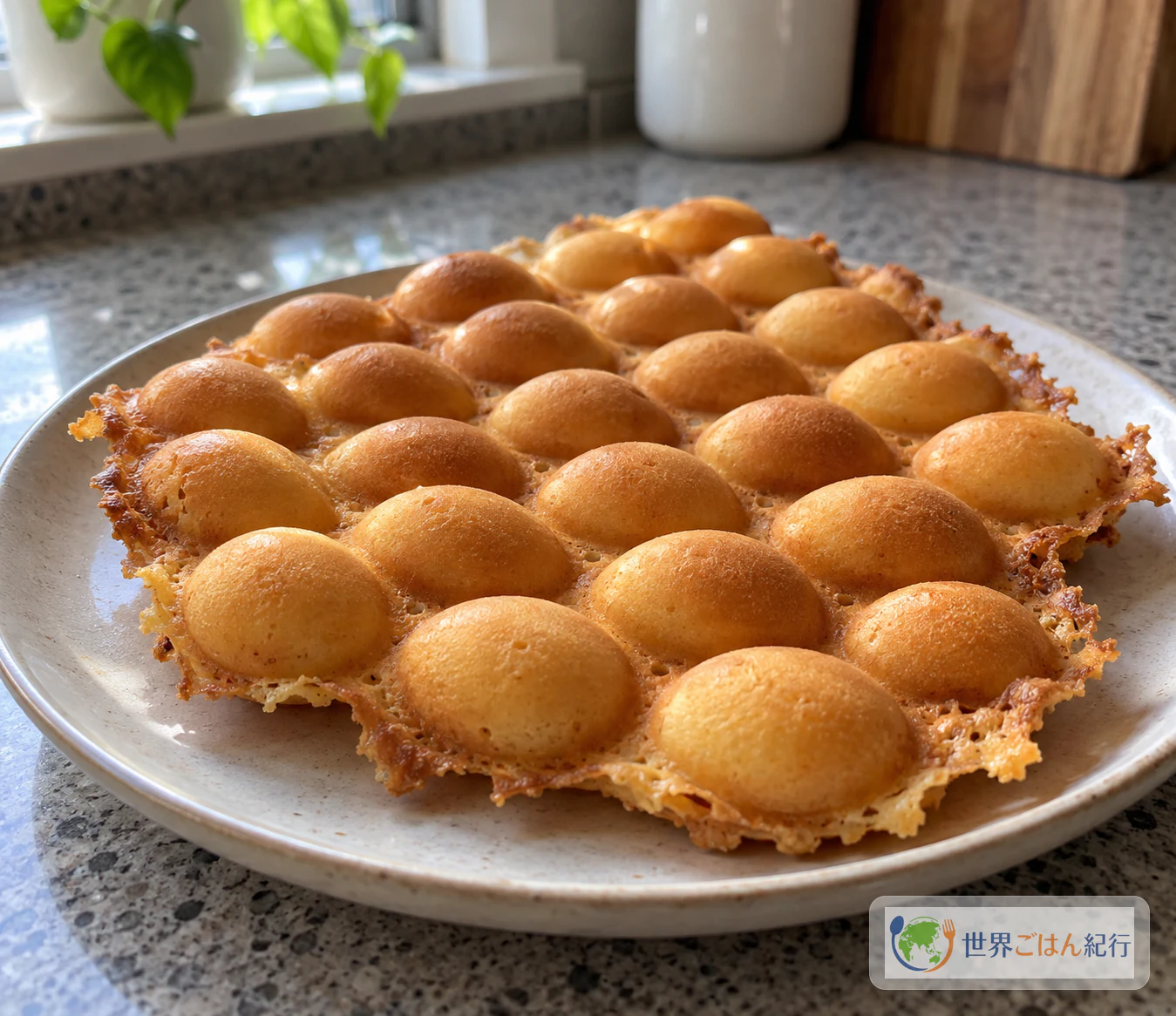
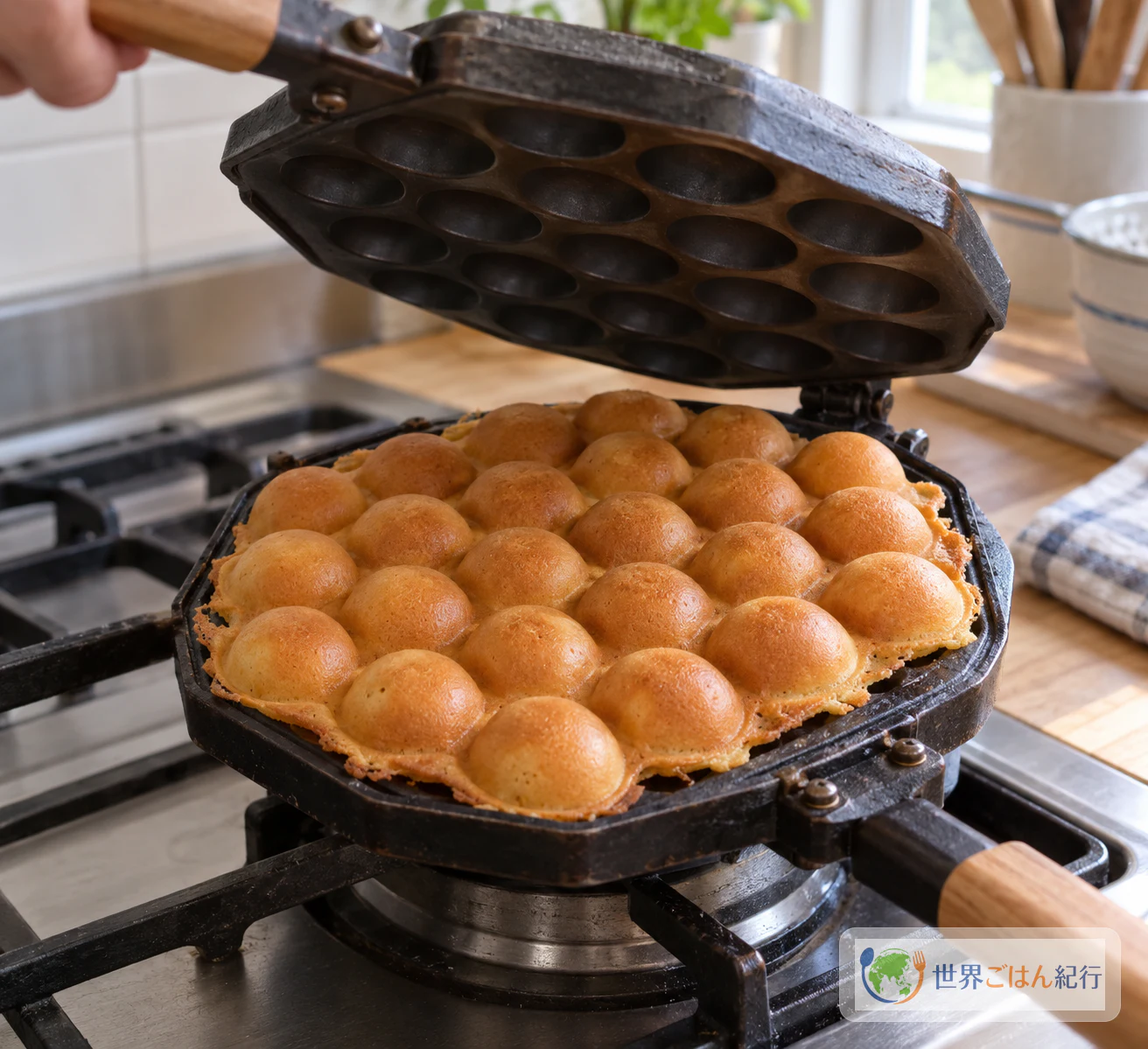
A sheet of small, connected oval bubbles, golden and thinly crisp on the outside, soft inside. Make the plain version first. Flavors and fillings can come later.
A Hong Kong egg waffle looks like a honeycomb turned inside out: rows of small oval bubbles joined by a thin sheet of batter. The Hong Kong Tourism Board describes it as a sweet street snack cooked in a mold with egg-shaped holes. The South China Morning Post describes the contrast that makes it so popular: a thin, crisp outer layer around bubbles that stay soft and slightly chewy. In Cantonese it is called gai daan jai (also written gai daan zai, 鷄蛋仔), and in English it is also called egg puffs.
Street stalls guard their own batters, and this article does not claim to reproduce any shop's recipe. Instead it follows one home recipe from start to finish: Huy Vu's "Hong Kong Egg Waffle Recipe" on Hungry Huy. The author adds rice flour for a crisper bite and bakes the batter in a manual two-sided iron over a stovetop burner. Every amount, time and doneness cue below comes from that single recipe. Nothing has been mixed in from other recipes. Sekai Gohan has not kitchen-tested this recipe as a whole.
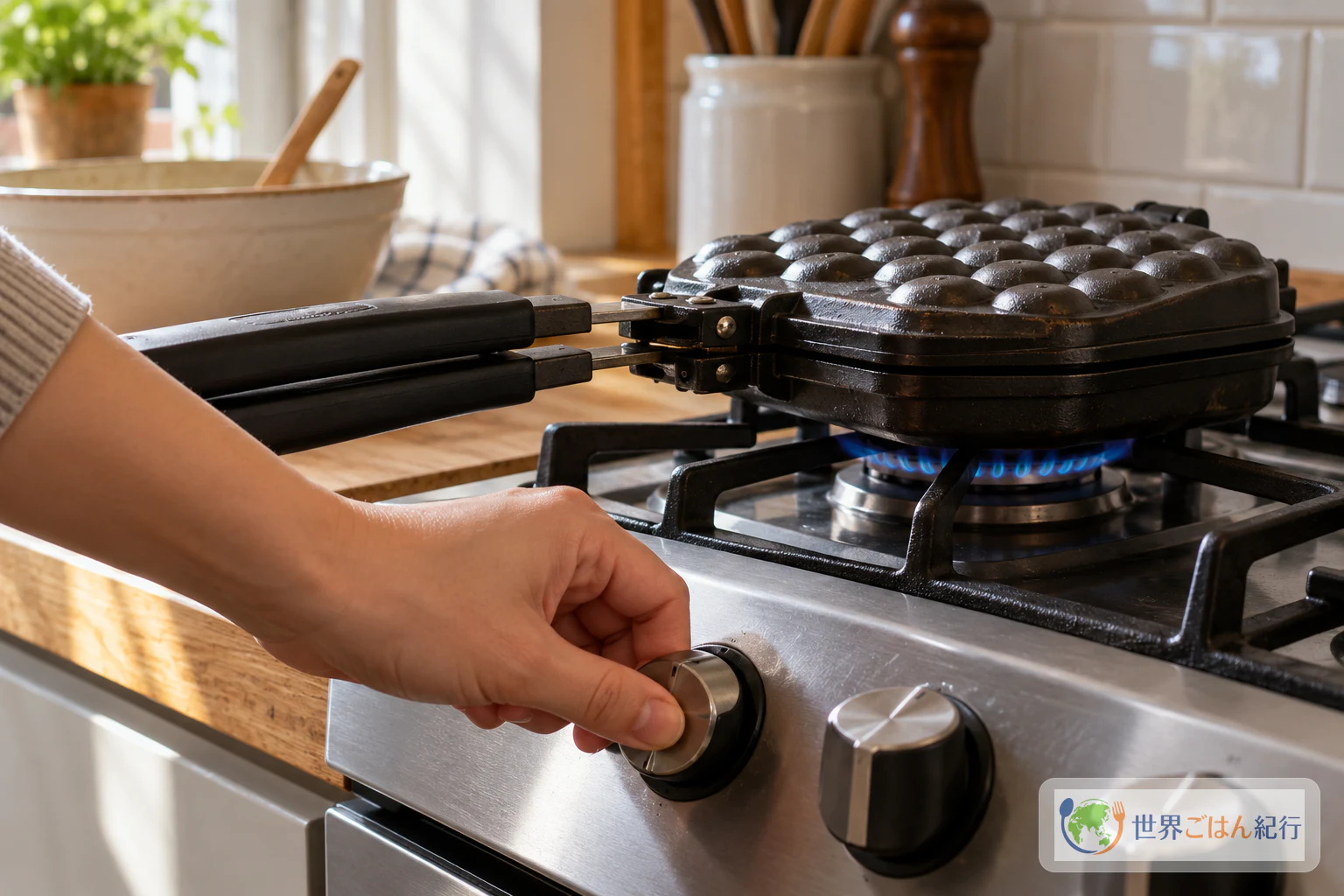
The iron shapes the whole method, so check your equipment before you shop for flours.
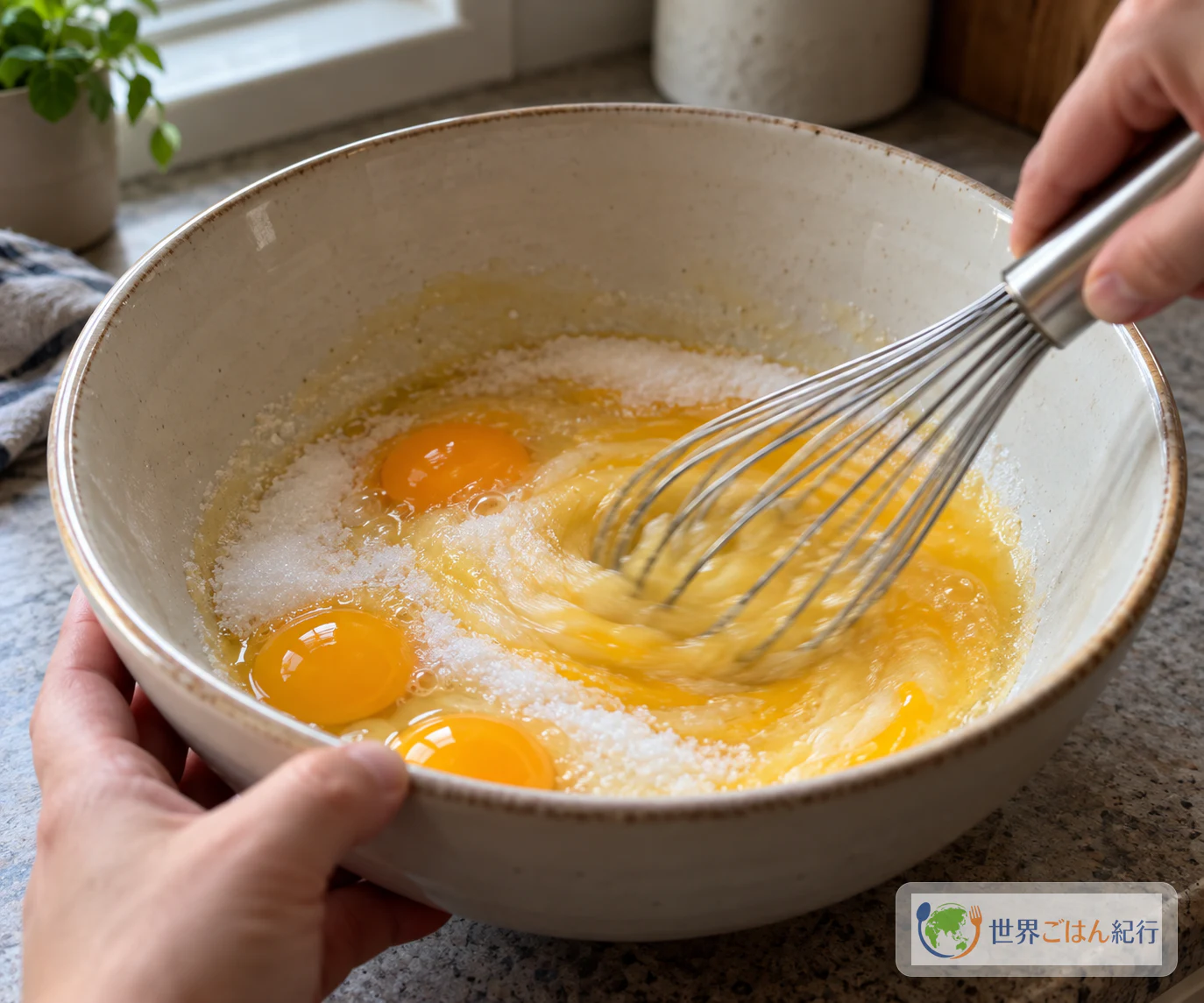
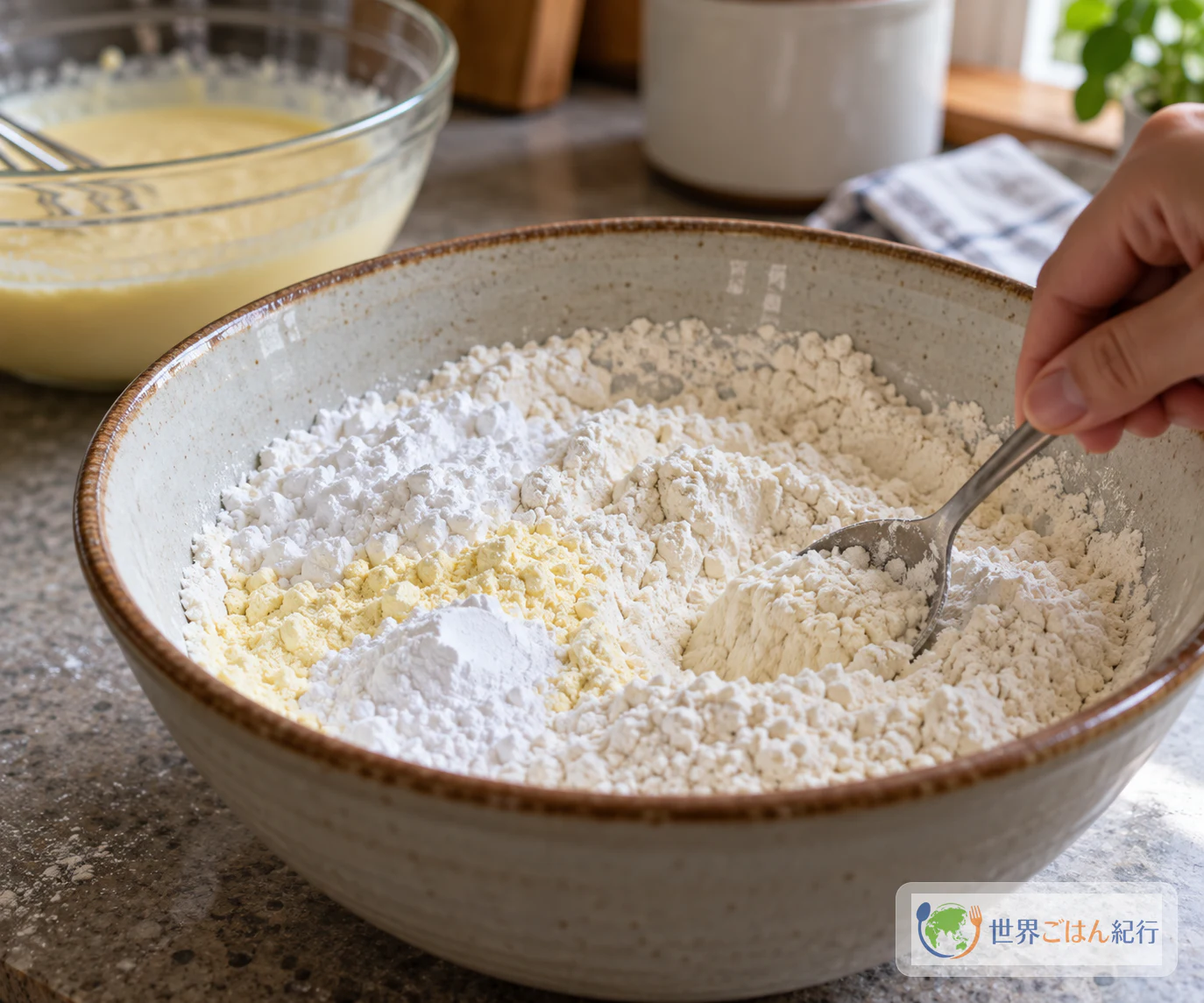
Ingredients: One Batter With Rice Flour, Tapioca Starch and Custard Powder
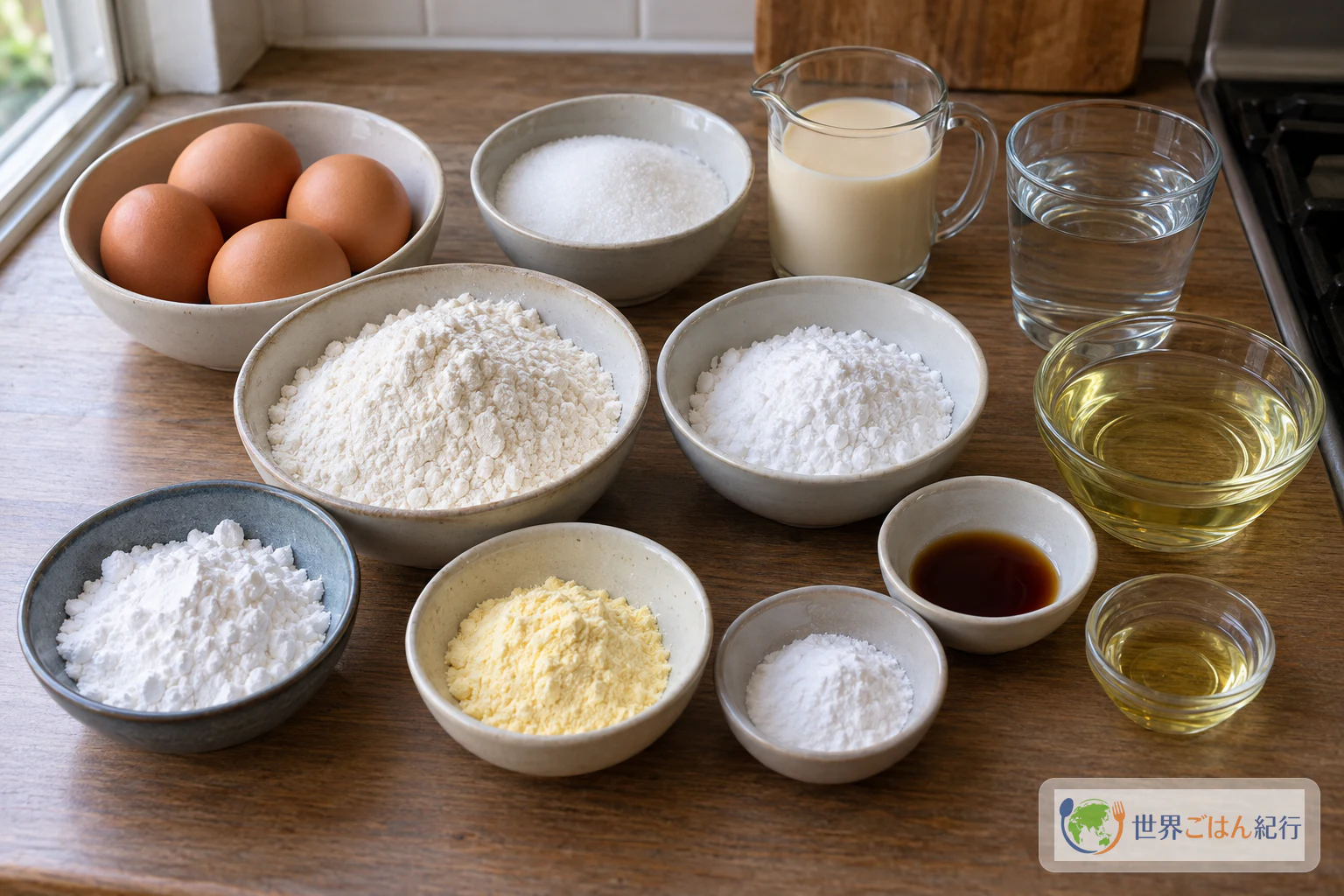
Makes 6 servings. There is no salt in the recipe. The oil for greasing the iron is extra, on top of the 50g in the batter.
This batter contains egg, wheat and milk. Custard powder and baking powder are processed products, so check each label for other allergens and for shared-facility statements.
Choosing and Substituting Ingredients
Evaporated milk. Use unsweetened evaporated milk. Sweetened condensed milk is a different product and would change the batter. Fresh milk is not an alternative in this recipe.
Rice flour and tapioca starch. Rice flour is there for texture and has no replacement in this recipe. Tapioca starch should not be swapped for potato starch, even though both are white starches. If you can't find one of these flours, it is better to look for it than to quietly change the formula.
Custard powder. Cornstarch can replace custard powder, as needed, but the vanilla flavor will be weaker. Treat this as an adjustment, not a tested version of this recipe.
Sugar. You can make the waffles less sweet by using less sugar, to taste. The recipe here keeps 192g.
Baking powder. Use double-acting baking powder; switching to another type, such as single-acting, may change the result.
Equipment
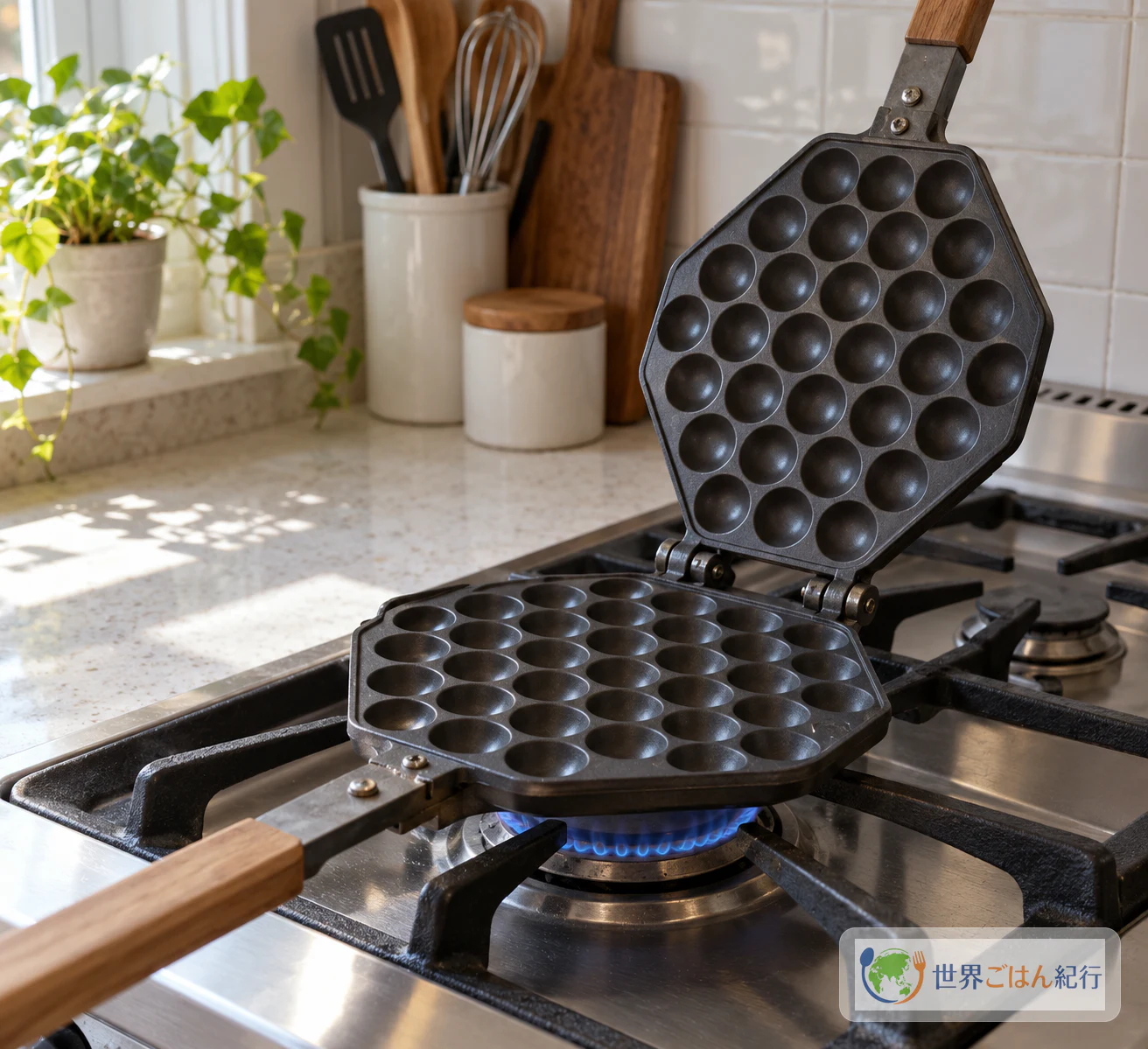
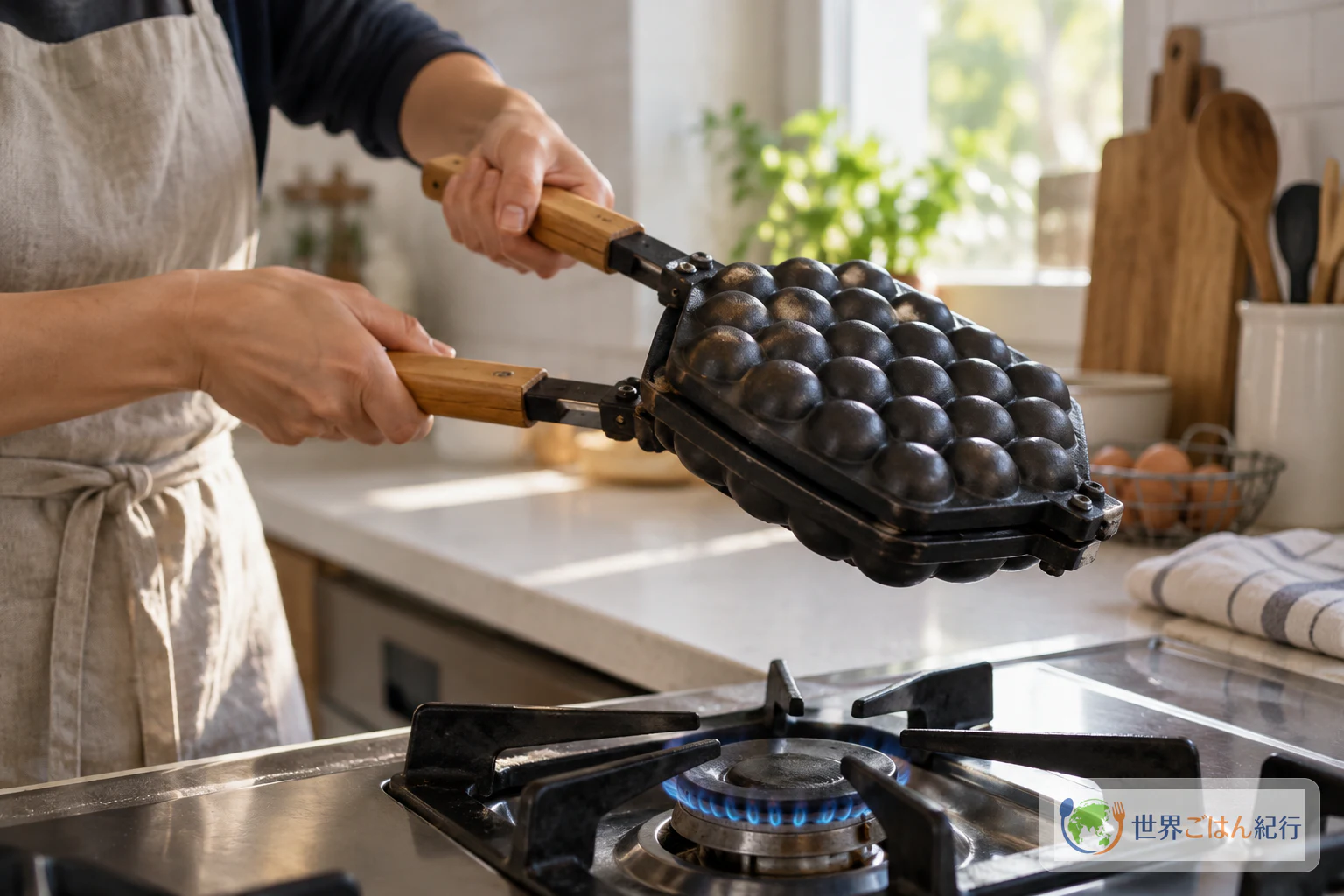
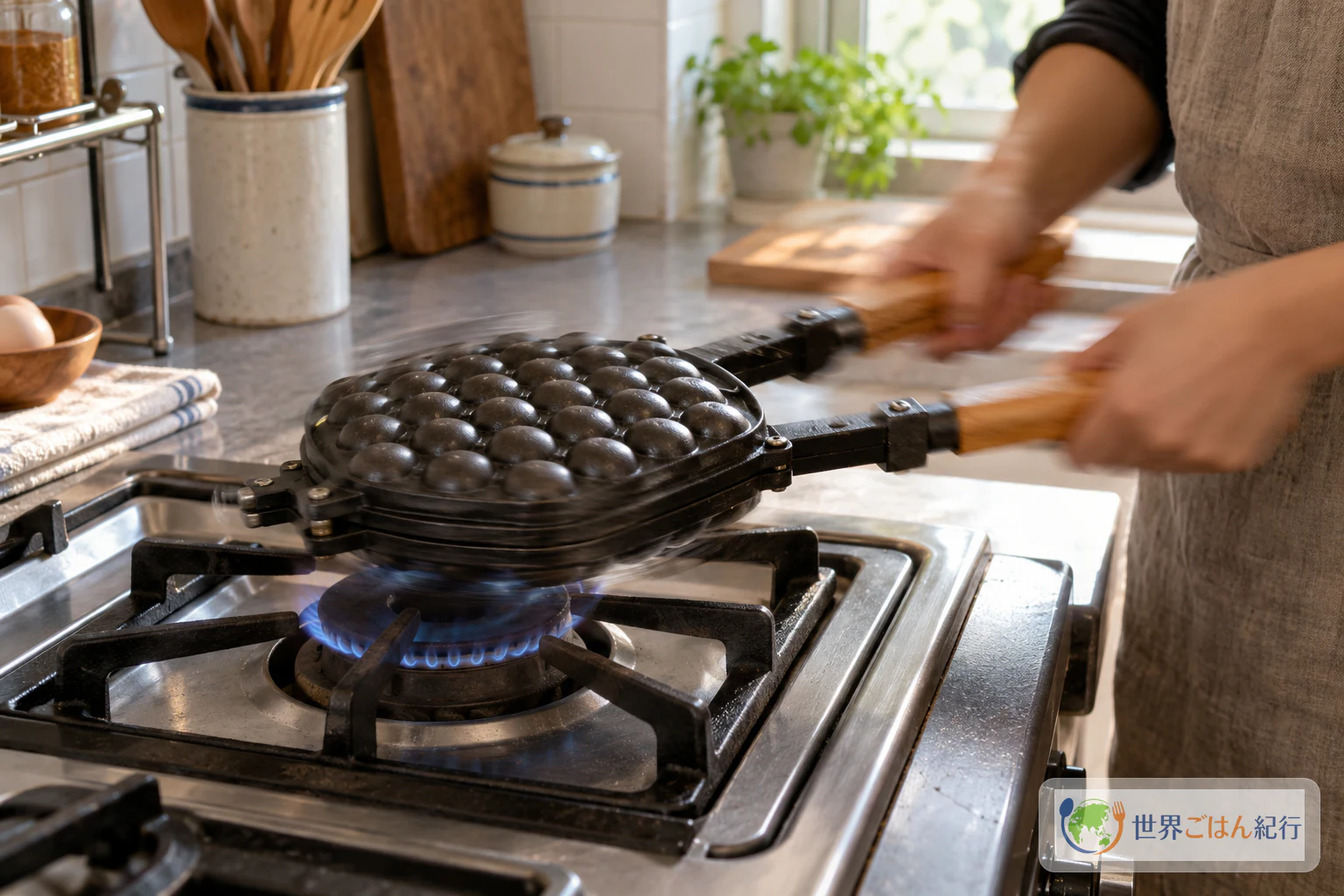
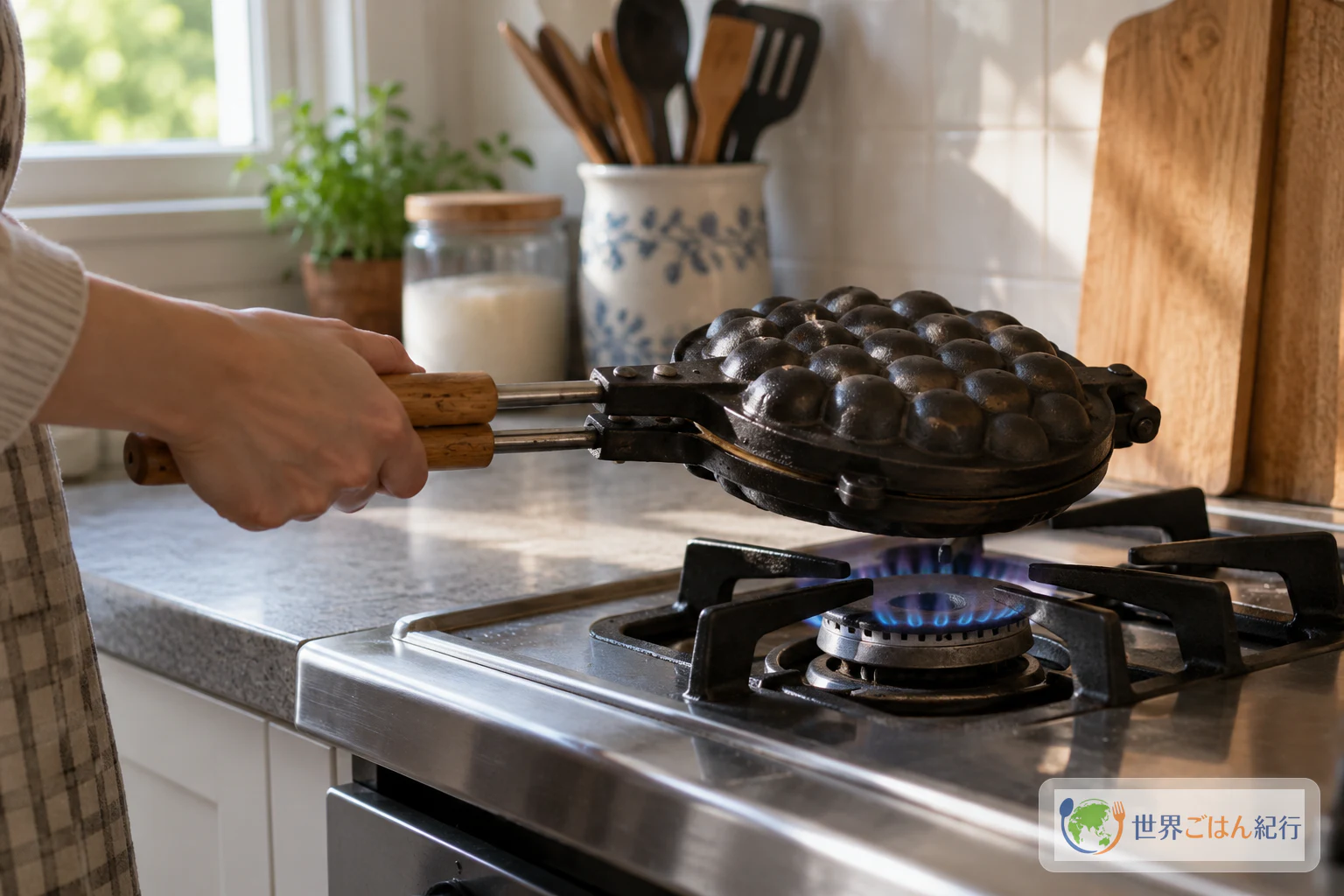
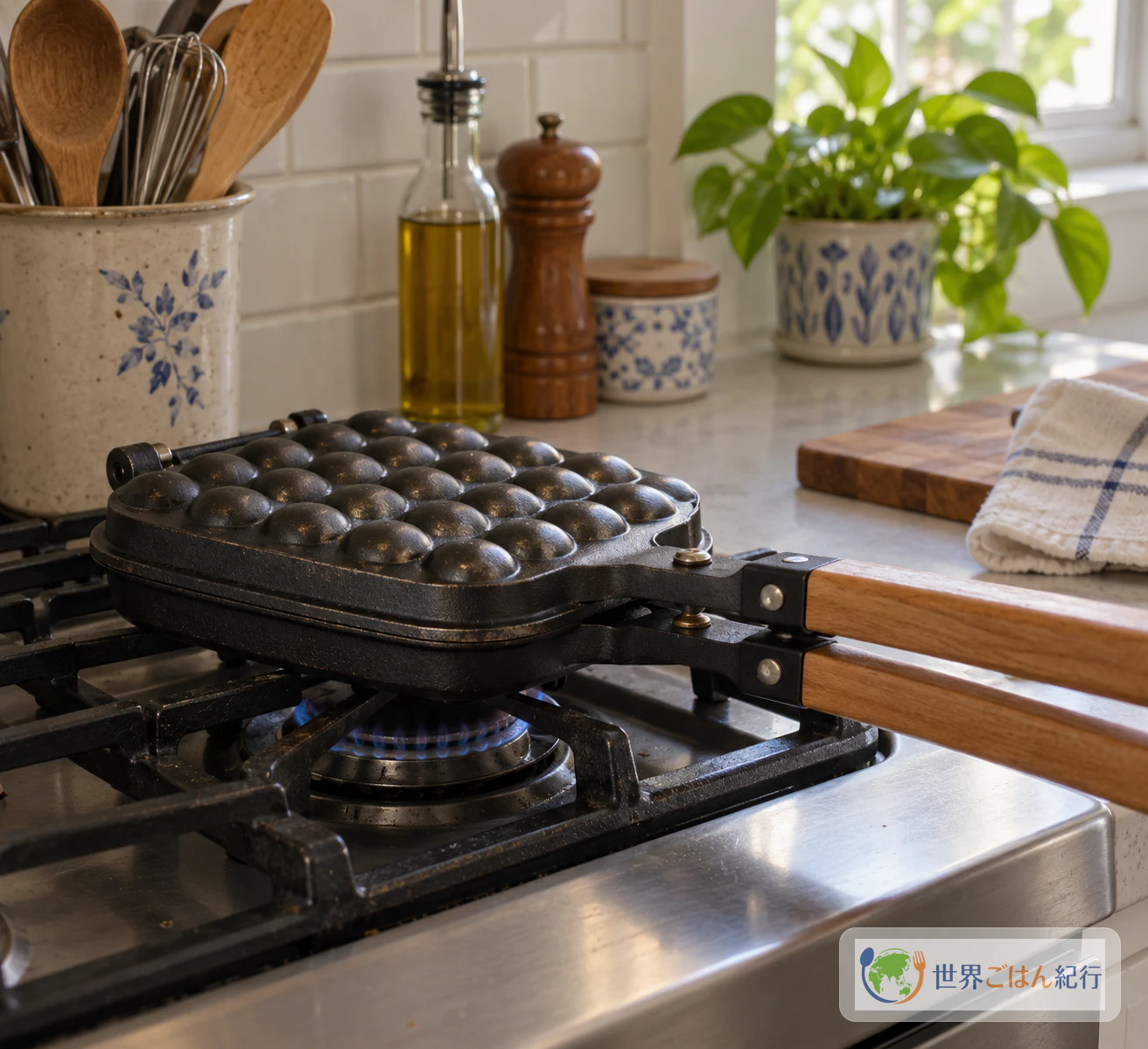
- A manual egg waffle iron: two hinged plates that close together and can be turned over above a stovetop burner. A standard square waffle maker has a different shape and is not used in the same way.
- Two bowls, one large for the wet mixture and one for the dry mixture
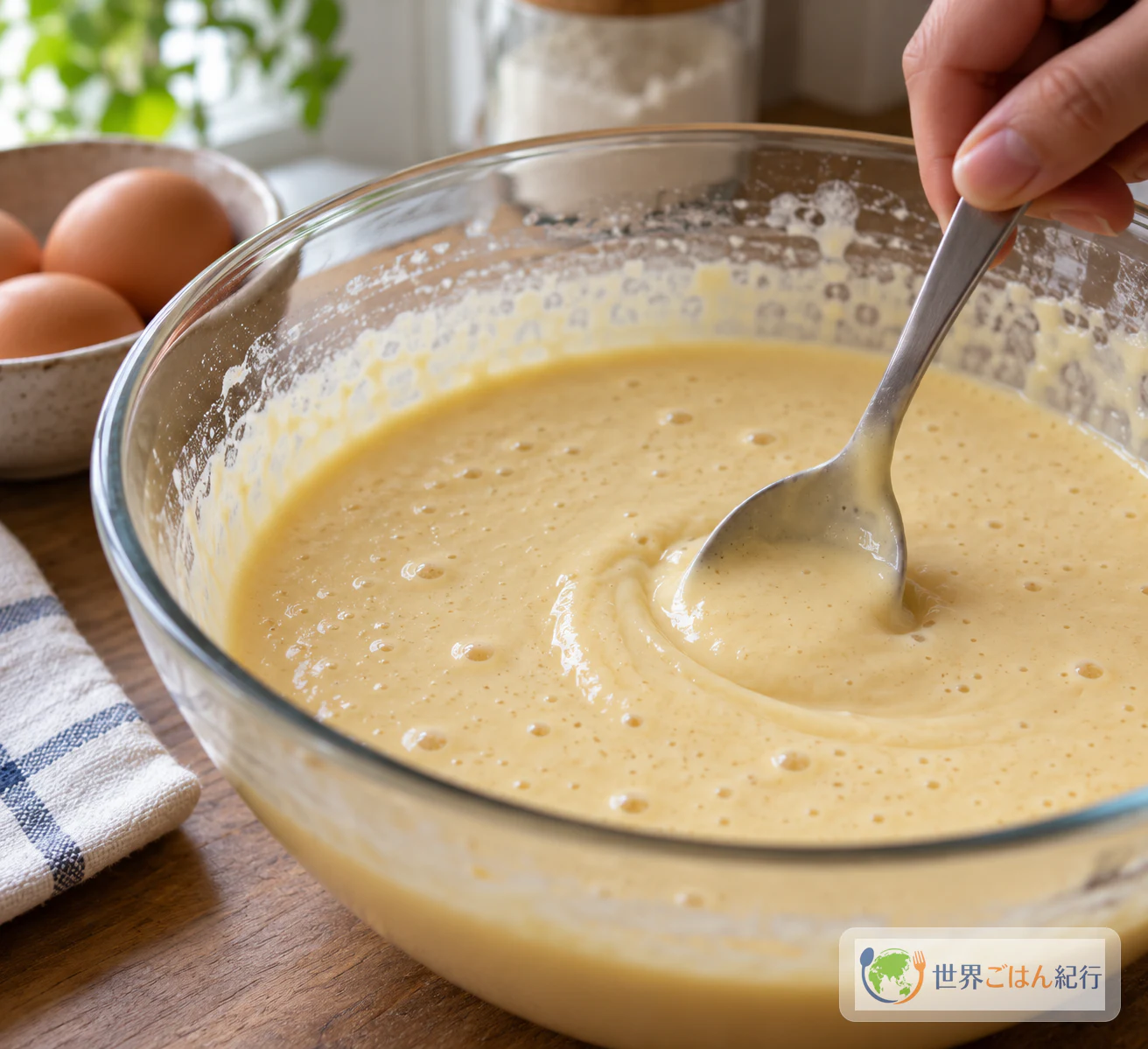
- A whisk
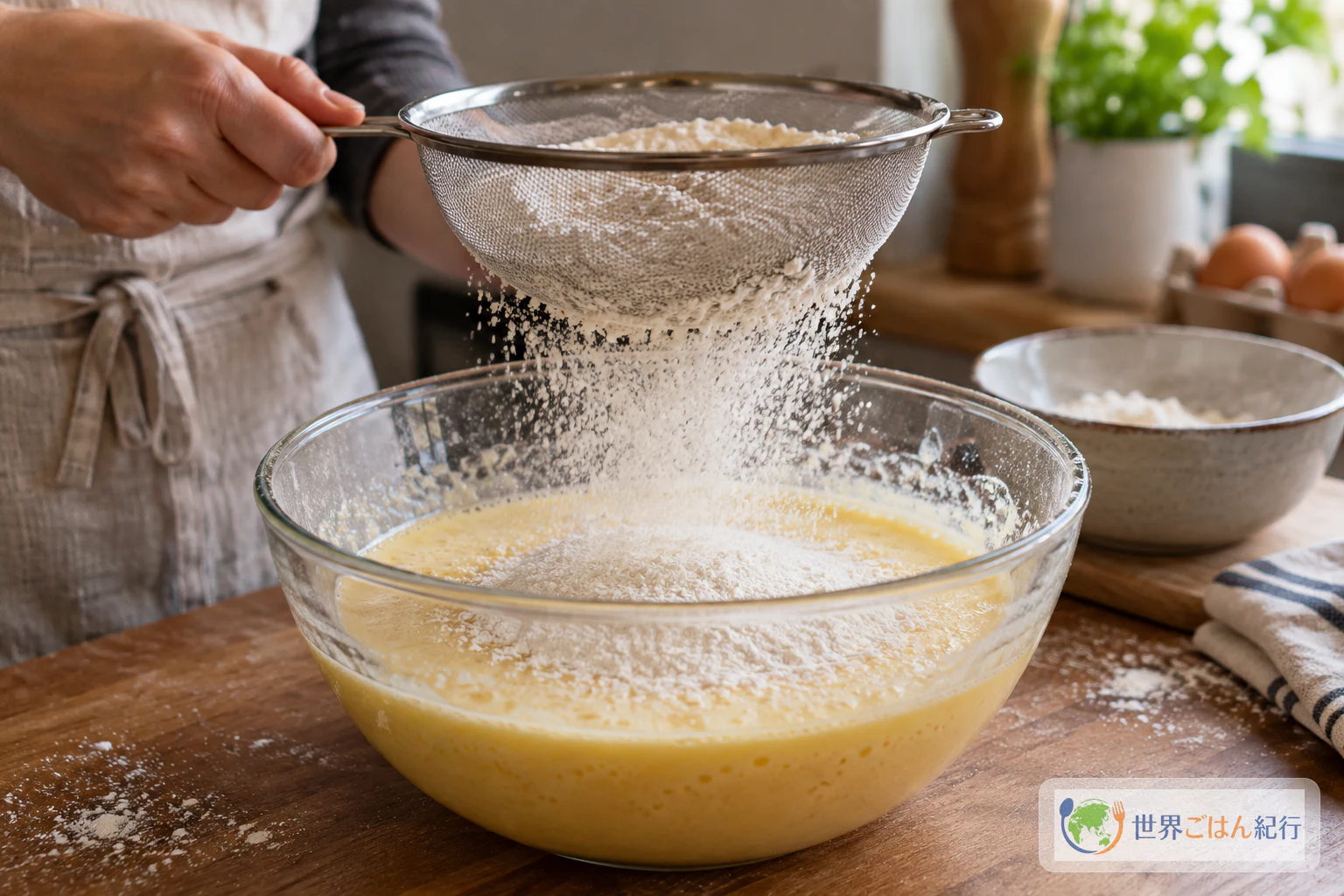
- A sieve, for sifting the dry mixture into the wet one
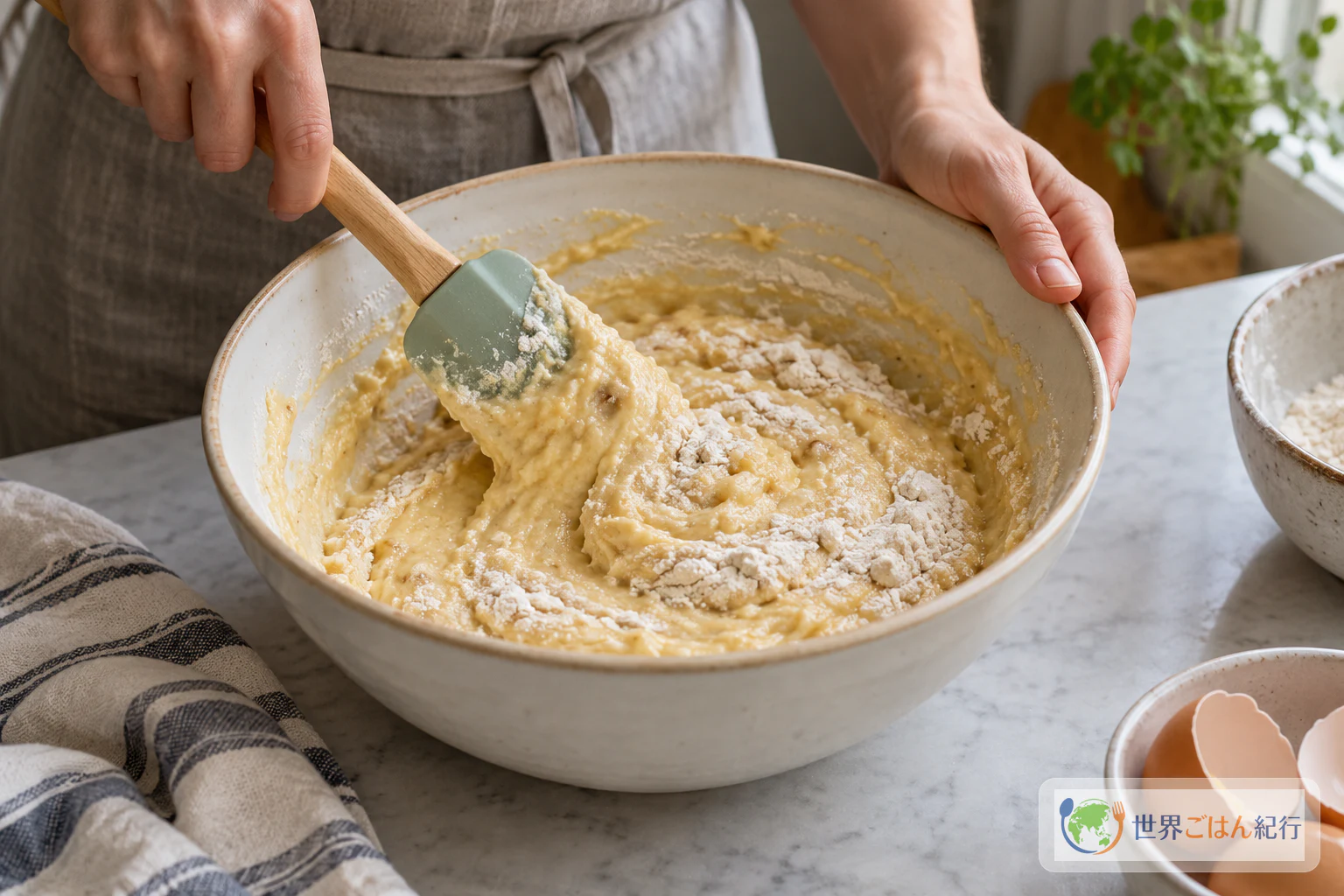
- A spatula, for folding
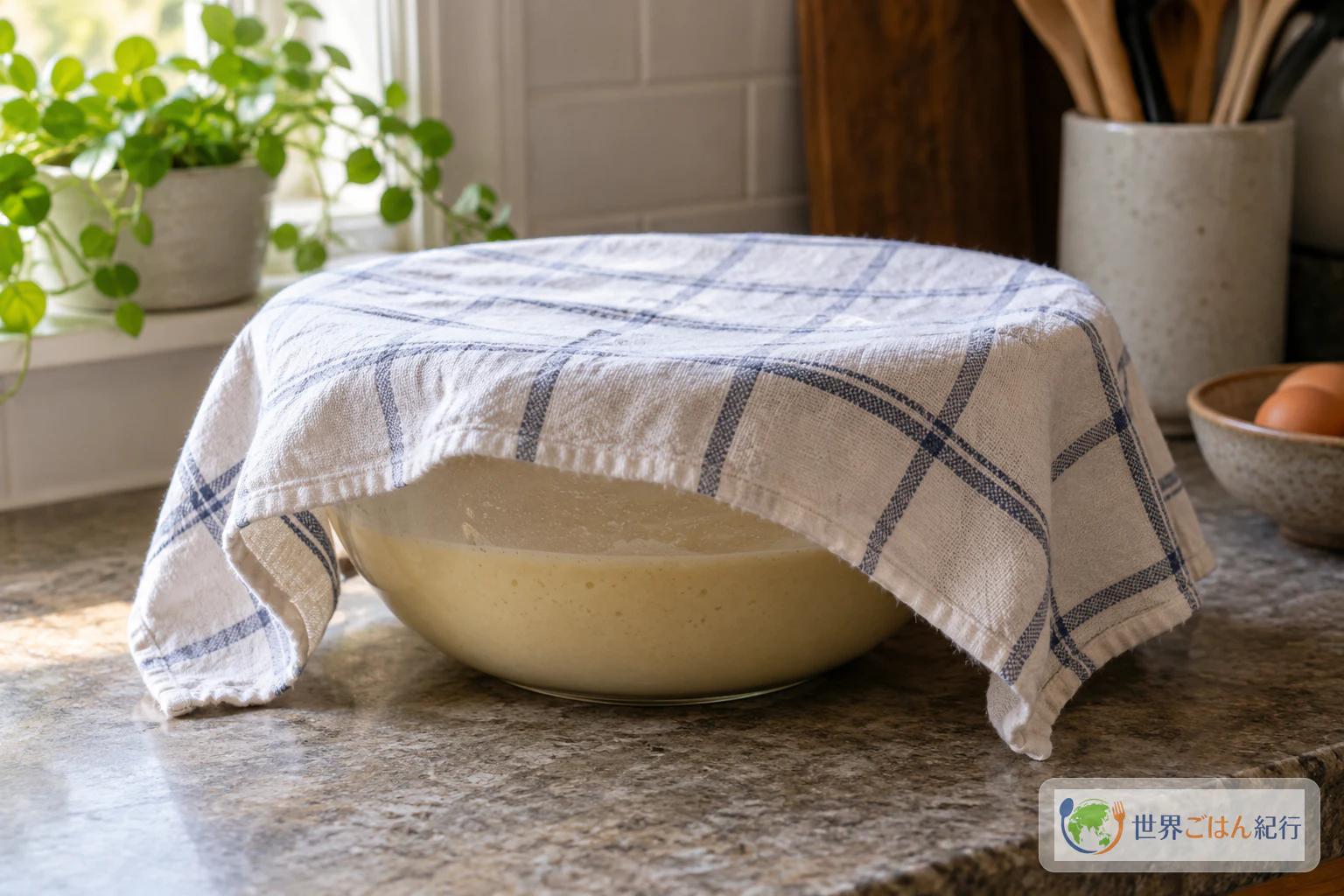
- A clean kitchen towel, to cover the batter while it rests
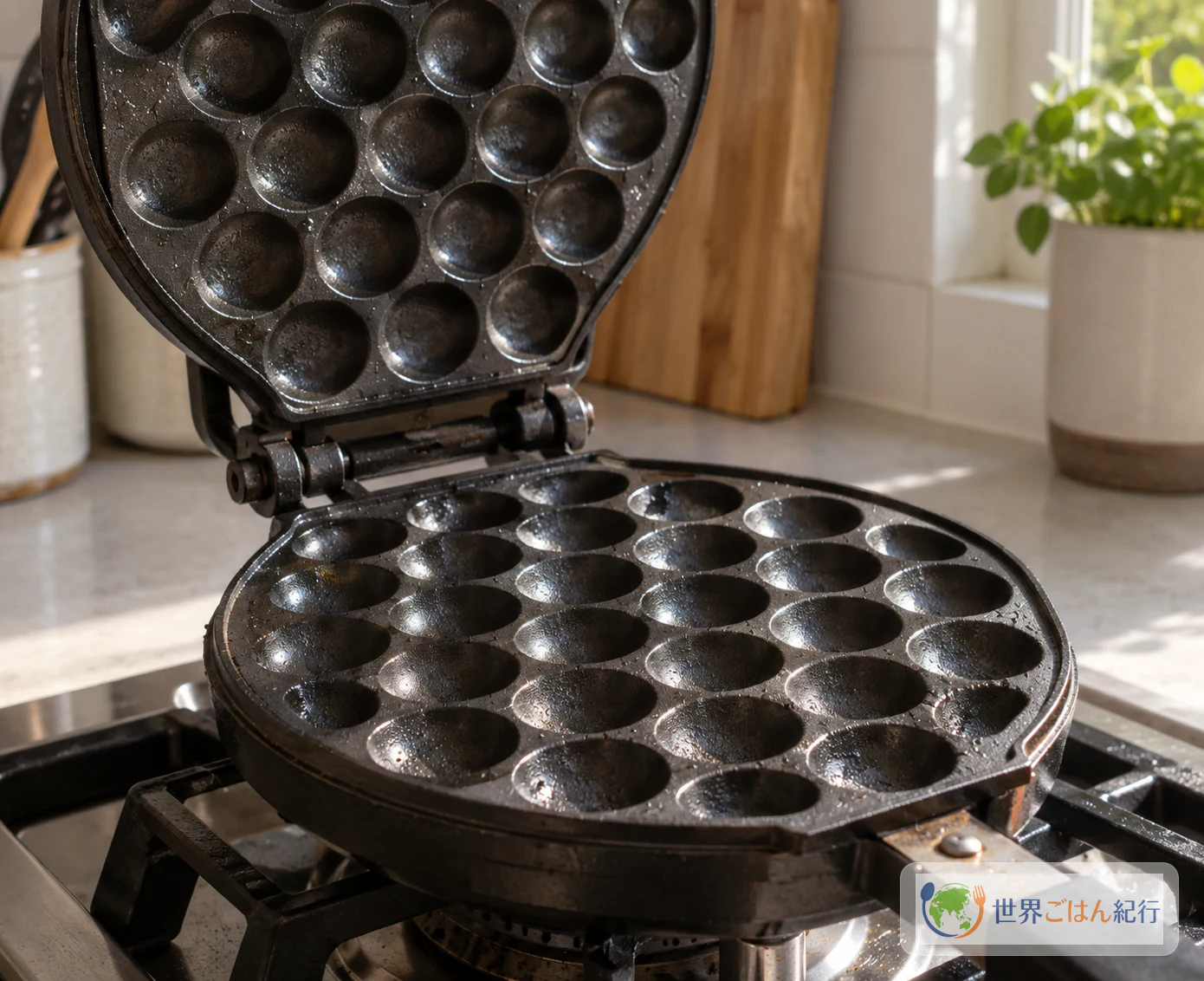
- Something to wipe a thin film of oil inside the iron
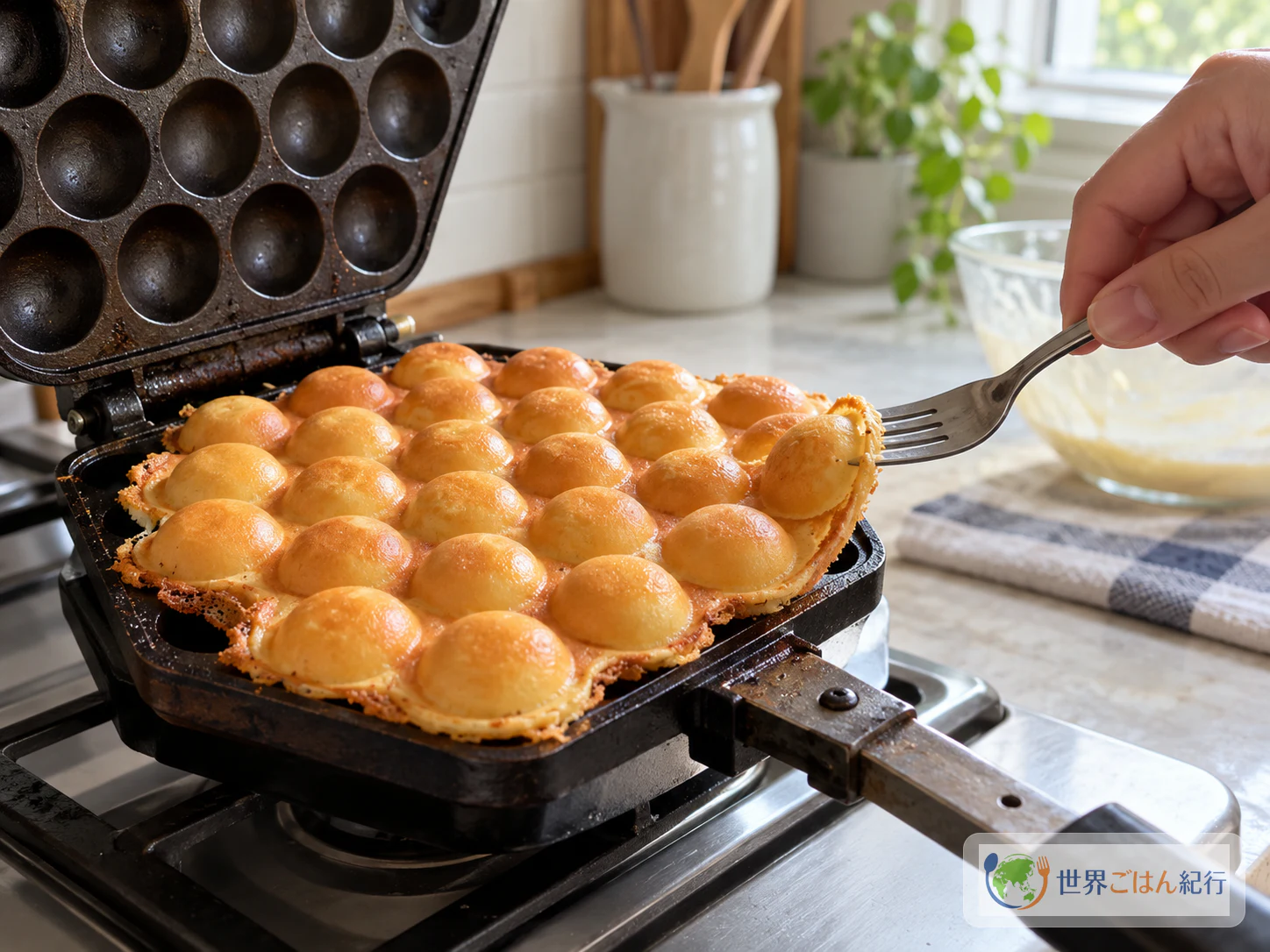
- A fork or tongs, in case a waffle sticks
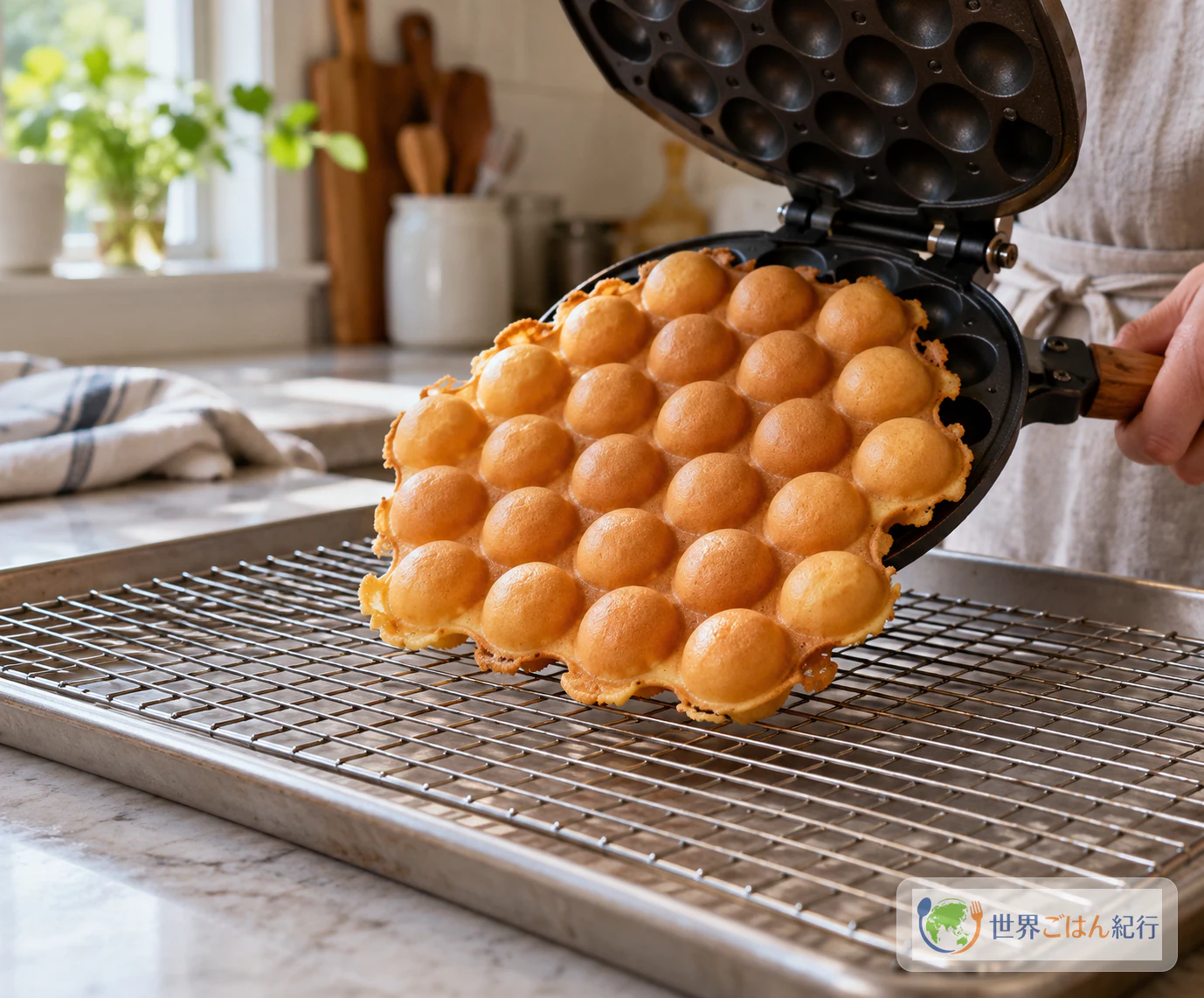
- A wire rack set over a baking sheet
- Optional: a clamp to hold the iron closed and protect your hands.
When you buy an iron, check which heat sources it works on, its capacity, how it opens, closes and turns, its weight, and how safe the handles feel.
Method: Mix Gently, Rest, Then Bake One Waffle at a Time
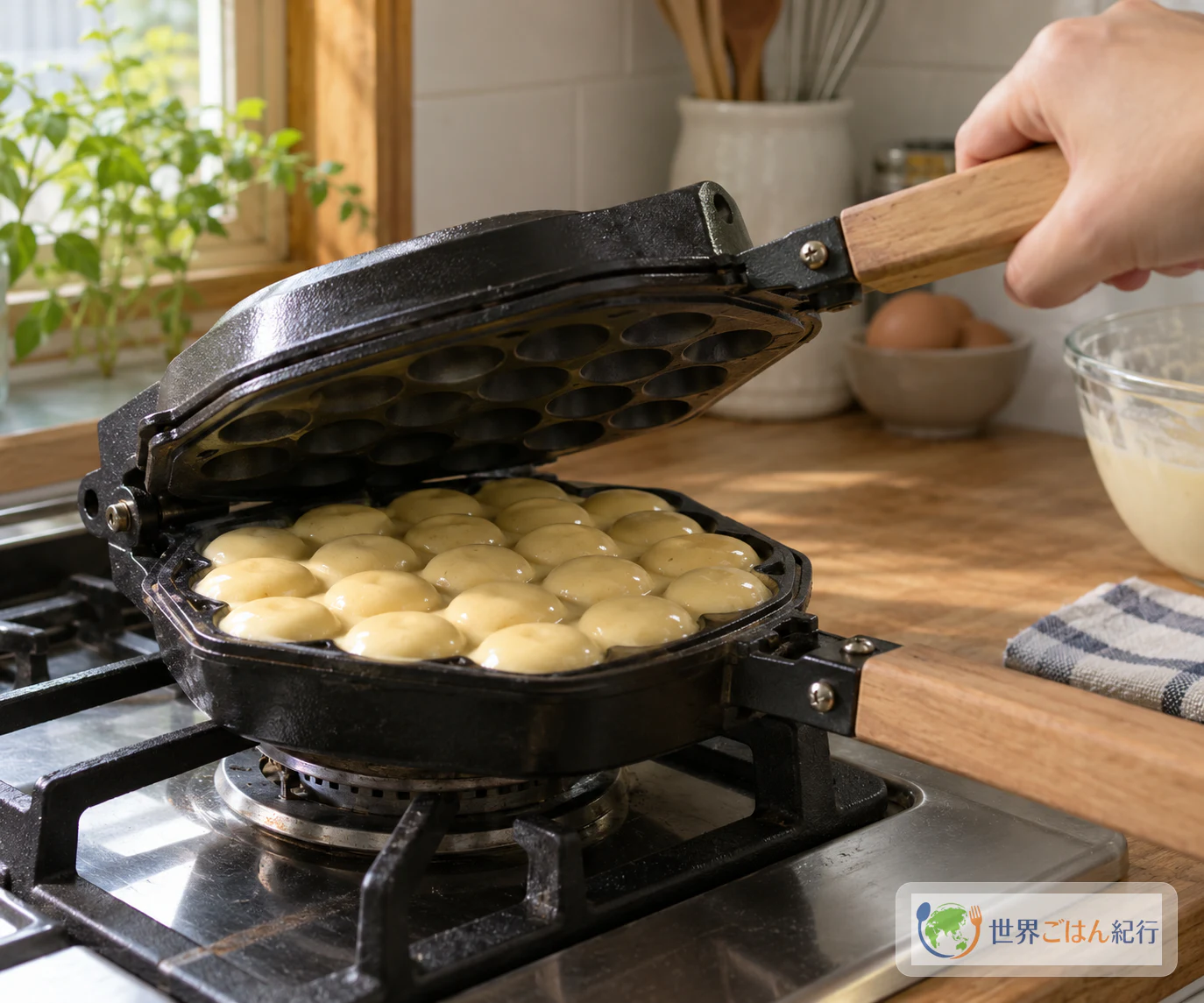
The batter rests for 1 hour at room temperature before baking. Each waffle bakes for about 5–7 minutes over medium heat. Judge doneness by a sweet aroma and a golden color, not by the clock alone.
Keys to a Crisp Shell and Light Bubbles
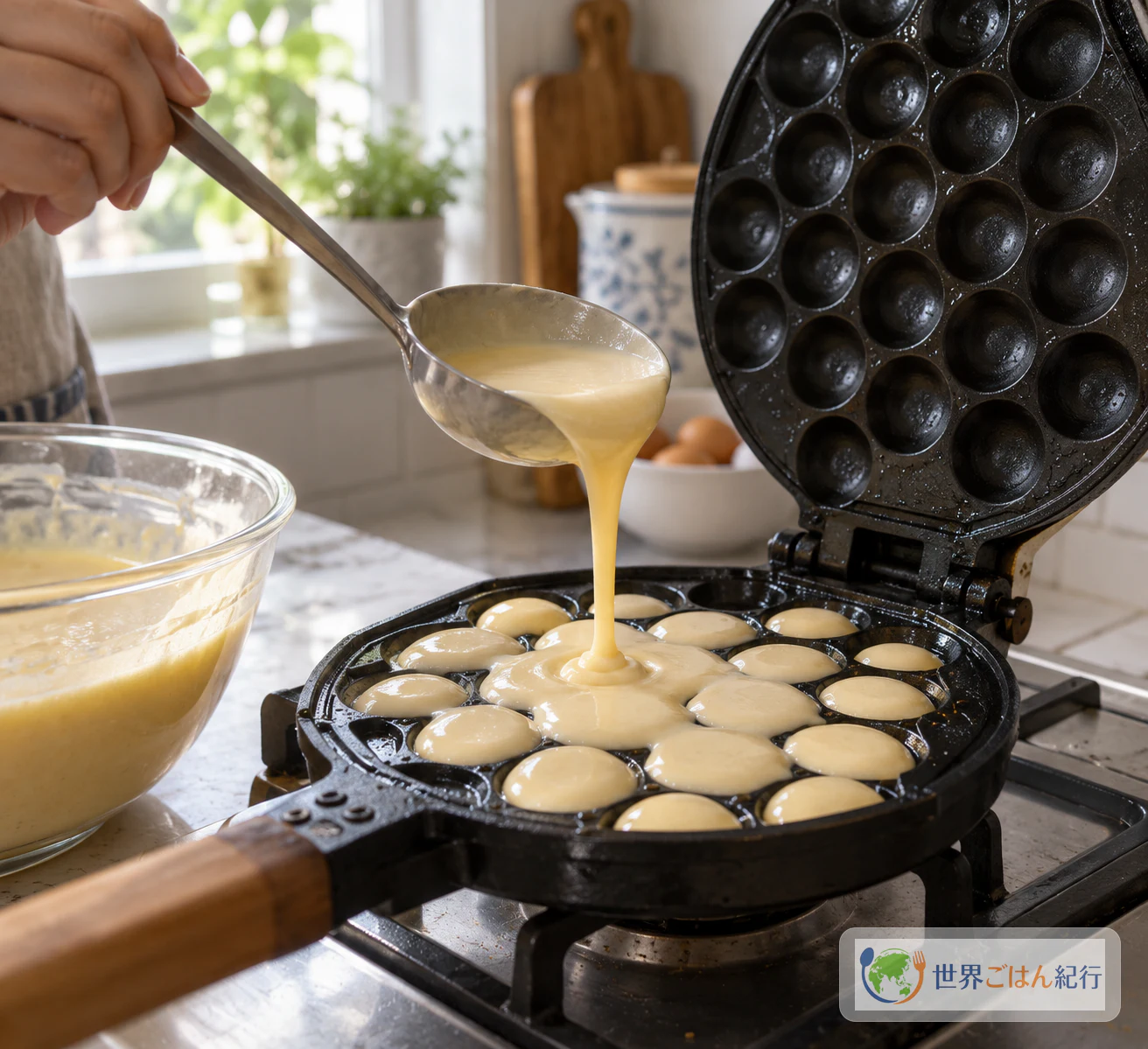
The batter puffs in the iron. Overfilling leaves it no room to rise.
Mix the batter on the day you bake. If you want to prepare ahead, see the make-ahead question below rather than leaving finished batter overnight.
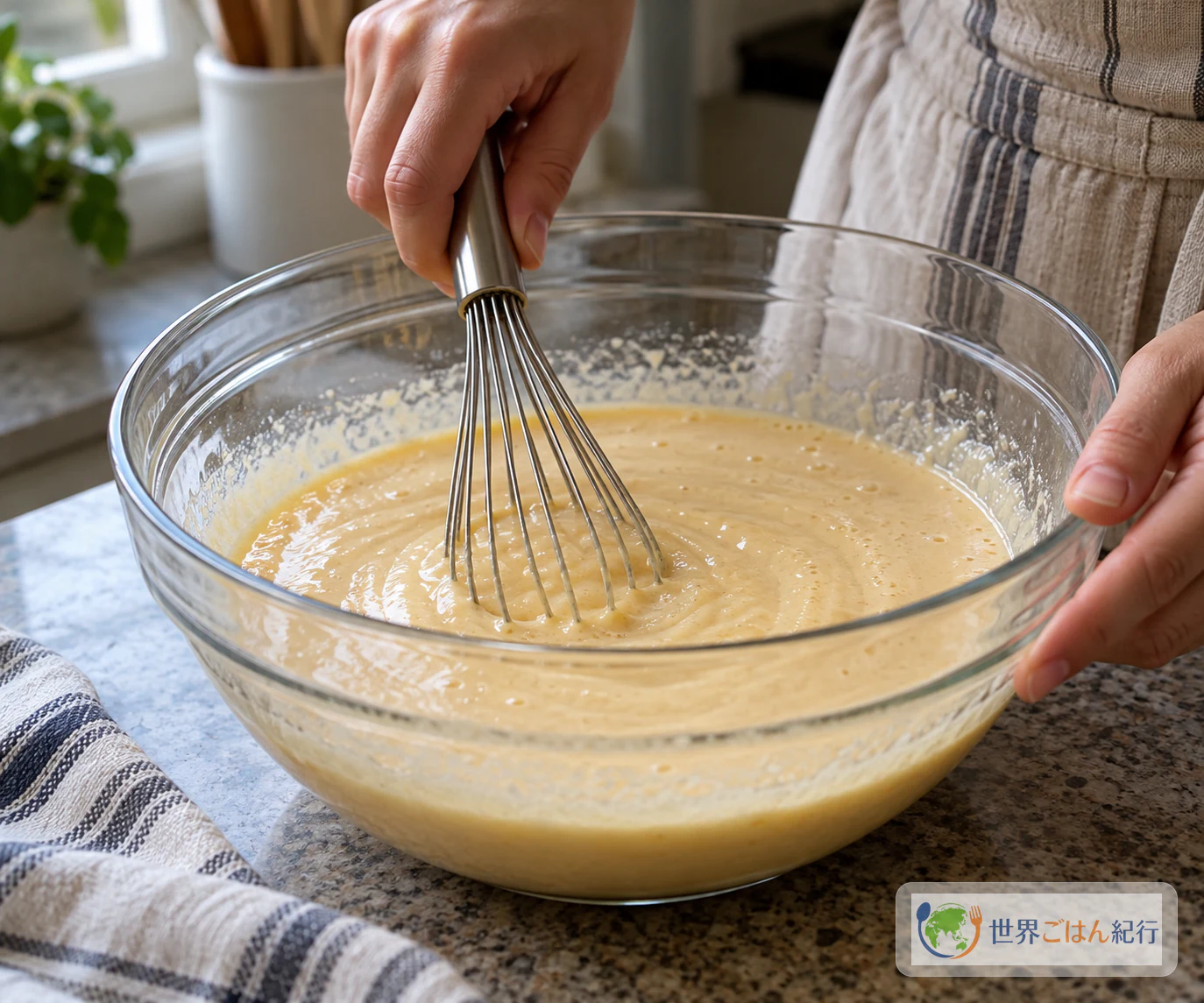
A few small lumps are fine. The author warns that overmixing makes the waffles tough.
About 5–7 minutes over medium heat is the author's guide, but burners and irons vary. Use the sweet aroma and the golden color as your cues too.
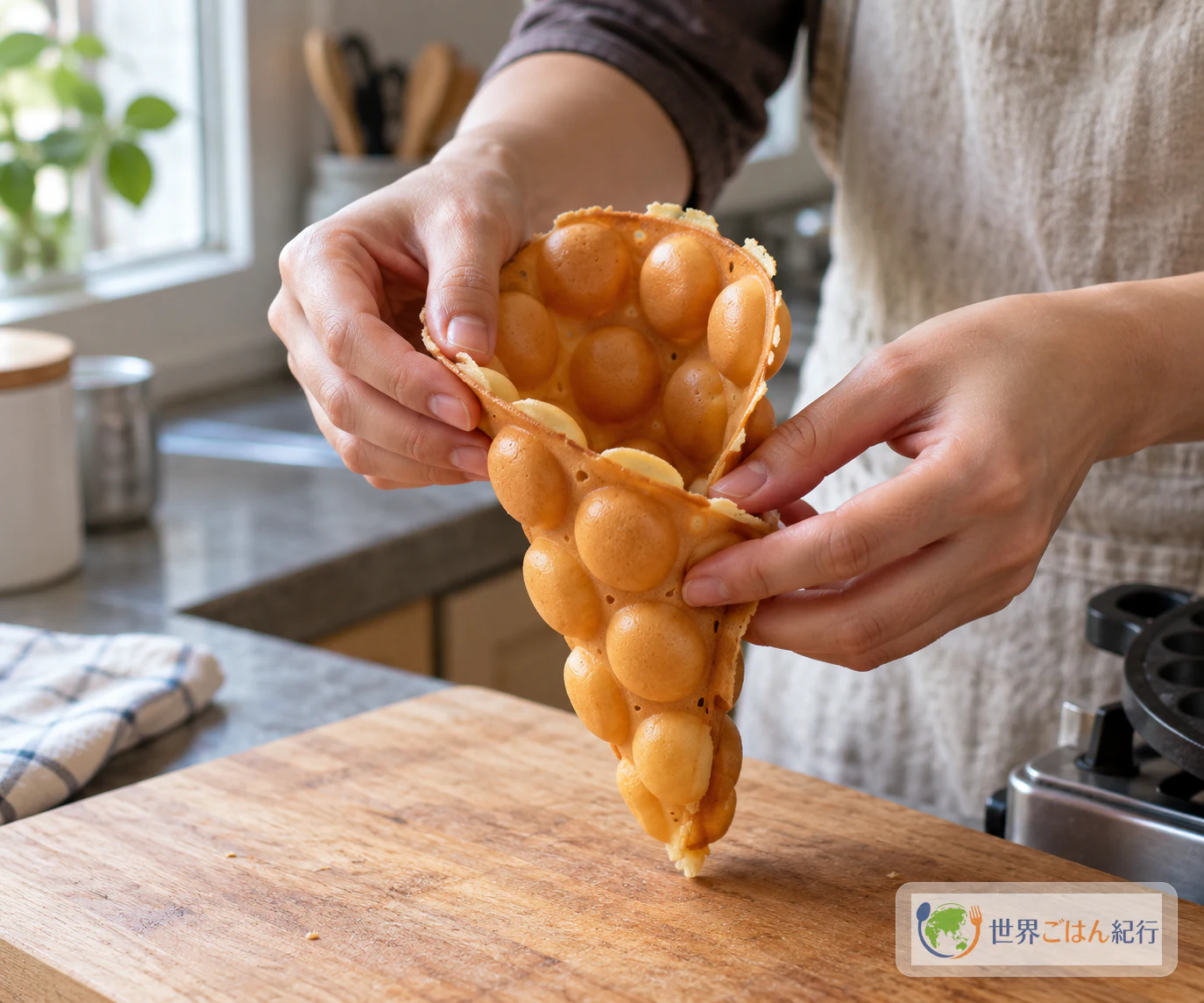
Let each waffle rest flat on the rack. If you want a cone, shape it before it sets.
| Problem | Likely cause in this recipe | What to do |
|---|---|---|
| Tough, dense waffles | Batter overmixed | Next time fold gently and stop while a few small lumps remain |
| Batter has no room to puff | Iron filled too full | Fill to about 75% of the iron's capacity |
| Waffle sticks to the iron | Not enough oil on the iron | Ease it out with a fork or tongs, then wipe a thin layer of oil in before the next waffle |
| Later waffles brown too fast | The iron keeps getting hotter | Turn the heat down |
| Gummy texture | Finished batter left overnight | Prepare the wet and dry mixtures separately and combine them 1 hour before baking |
| Pale after 5–7 minutes | Heat or iron differs from the author's | Wait for the sweet aroma and golden color before you open it |
| Doesn't rise as expected | A different type of baking powder | Use double-acting baking powder as specified |
From Plain to Flavored
Plain is the starting point. The Hong Kong Tourism Board describes plain egg waffles as the usual way they were traditionally eaten. Make this recipe plain first.
Newer flavors and toppings. The same source says that in recent years egg waffles have appeared in flavors such as salted egg yolk, chocolate chip and green tea, and served with soft-serve ice cream. These are newer ways to enjoy the snack, not the traditional standard. The sources give no amounts for these flavors, so this recipe does not include them.
Cone shape. In Huy Vu's recipe the cone is only a change of shape. Fold the hot waffle before it sets (step 18). The batter stays the same.
Author's adjustments. Less sugar and cornstarch in place of custard powder are both mentioned by the author, but neither comes with an amount. They are options to keep in mind, not fixed versions of the recipe.
Other home recipes differ. Other published recipes use different batters and methods. What To Cook Today bakes in an electric waffle maker. Ginger and Scotch preheats the two halves of the mold separately. A Rakuten Recipe version includes a coconut variation. Each is its own formula, so don't mix their amounts or times into this one.
A Hong Kong Street Snack
The Hong Kong Tourism Board lists gai daan jai among the street foods to try in Hong Kong: a sweet snack made in a mold with egg-shaped holes. Its guide to Lee Keung Kee in North Point describes a shop that serves the original flavor and makes the waffles to order. The same guide describes a crisp outside with a light, fluffy inside.
Egg waffles also appear in Hong Kong's public cultural spaces. A page for Hong Kong City Hall, run by the Leisure and Cultural Services Department, lists egg waffles as one of Hong Kong's local flavors, alongside milk tea and pineapple buns.
On the dish's age, the South China Morning Post says egg waffles have been around since the 1950s. That is a newspaper account rather than a primary historical record, so this article attributes it to SCMP. The same article describes what Hong Kong-style egg waffles share: small oval bubbles, a thin crisp exterior and a soft, chewy inside.
Frequently Asked Questions
Can I use an ordinary waffle maker?
This recipe is written for a manual two-sided egg waffle iron that you close and turn over above a burner. Some recipes, such as What To Cook Today's, use an electric egg waffle maker, but their batter and method are different. Don't combine the heating and flipping steps here with an electric machine's instructions.
How many waffles does this recipe make?
The author lists 6 servings but does not give a number of waffles. The count depends on your iron's capacity and how much batter you pour each time. The author's recipe card also lists a cook time of 1 hour, while the method says about 5–7 minutes per waffle. The recipe does not explain how those two figures fit together. Similarly, the numbered method flips the iron once halfway through, while the tips on the same page say to flip at least 3–4 times, so the number of flips is not fixed.
Can I swap the rice flour or tapioca starch for another flour?
The author gives no substitute for rice flour, which is there for texture. Tapioca starch is not the same as potato starch. The only substitution the author mentions is cornstarch for custard powder, with no amount given and a weaker vanilla flavor.
What if a waffle won't come out of the iron?
Ease it out gently with a fork or tongs, as the author suggests. Keep your hands off the hot iron. Check your iron's instructions on whether metal tools are safe for its surface.
Can I make the batter the night before?
The author advises against resting the finished batter overnight. Over time the baking powder and gluten change and the waffles can turn gummy. Instead, prepare the wet and dry mixtures separately the day before and combine them 1 hour before baking.
How should I store leftovers?
The author's own suggestion is to keep leftovers in an airtight container at room temperature for up to 2 days, or airtight in the freezer for up to 2 weeks. To reheat, put them in a toaster oven straight from frozen for 4–6 minutes. These are the author's household practices. They have not been checked against public food-safety guidance for baked goods made with egg and milk, so they are not a guarantee that leftovers will keep safely.
Sources
- Huy Vu, "Hong Kong Egg Waffle Recipe," Hungry Huy. The recipe used in this article: all ingredients and amounts, equipment, step order, baking and resting times, 75% fill, doneness cues, the author's stated yield, and the author's notes on sugar, cornstarch substitution, making ahead, cone shaping, storage and freezing. https://www.hungryhuy.com/hong-kong-egg-waffles/
- Marvellina, "Hong Kong Egg Waffles (Gai Daan Jai)," What To Cook Today. A separate recipe for comparison, made in an electric egg waffle maker. https://whattocooktoday.com/egg-waffles.html
- Ginger, "How to Make Hong Kong Egg Cakes (鷄蛋仔)," Ginger and Scotch. A separate home recipe for comparison, with the mold halves preheated separately. https://gingerandscotch.com/how-to-make-hong-kong-gai-daan-gai-eggettes/
- tara@minfannote, "香港のエッグワッフル♪鶏蛋仔(ガイダンジャイ)," Rakuten Recipe. A separate stovetop-iron recipe for comparison, including a coconut variation. https://recipe.rakuten.co.jp/recipe/1560010141/
- Hong Kong Tourism Board, "Must-Try Street Food in Hong Kong." Egg waffles as a sweet Hong Kong street snack baked in an egg-shaped mold, plain as the traditional style, and newer flavors and soft-serve pairings. https://www.discoverhongkong.com/eng/food-and-drink/must-try-street-food-in-hong-kong.html
- Hong Kong City Hall / Leisure and Cultural Services Department, "#bistrocity." Egg waffles listed as a Hong Kong local flavor alongside milk tea and pineapple buns. https://www.cityhall.gov.hk/en/hkch/facilities/cateringfacilities/bistrocity.html
- Hong Kong Tourism Board, "Lee Keung Kee." The North Point shop serving the original flavor made to order, and the crisp outside and light, fluffy inside. https://www.discoverhongkong.com/eng/place-to-go/travel.guide-lee-keung-kee.html
- Erika Na, "Why people love Hong Kong-style egg waffles and best places to eat them," South China Morning Post. The names gai daan zai and egg puffs, the newspaper's account of egg waffles since the 1950s, and the contrast between small oval bubbles, a thin crisp exterior and a soft, chewy inside. https://www.scmp.com/lifestyle/food-drink/article/3313979/why-people-love-hong-kong-style-egg-waffles-and-best-places-eat-them