Cart Noodles: A Bowl Built from Pots Prepared Side by Side
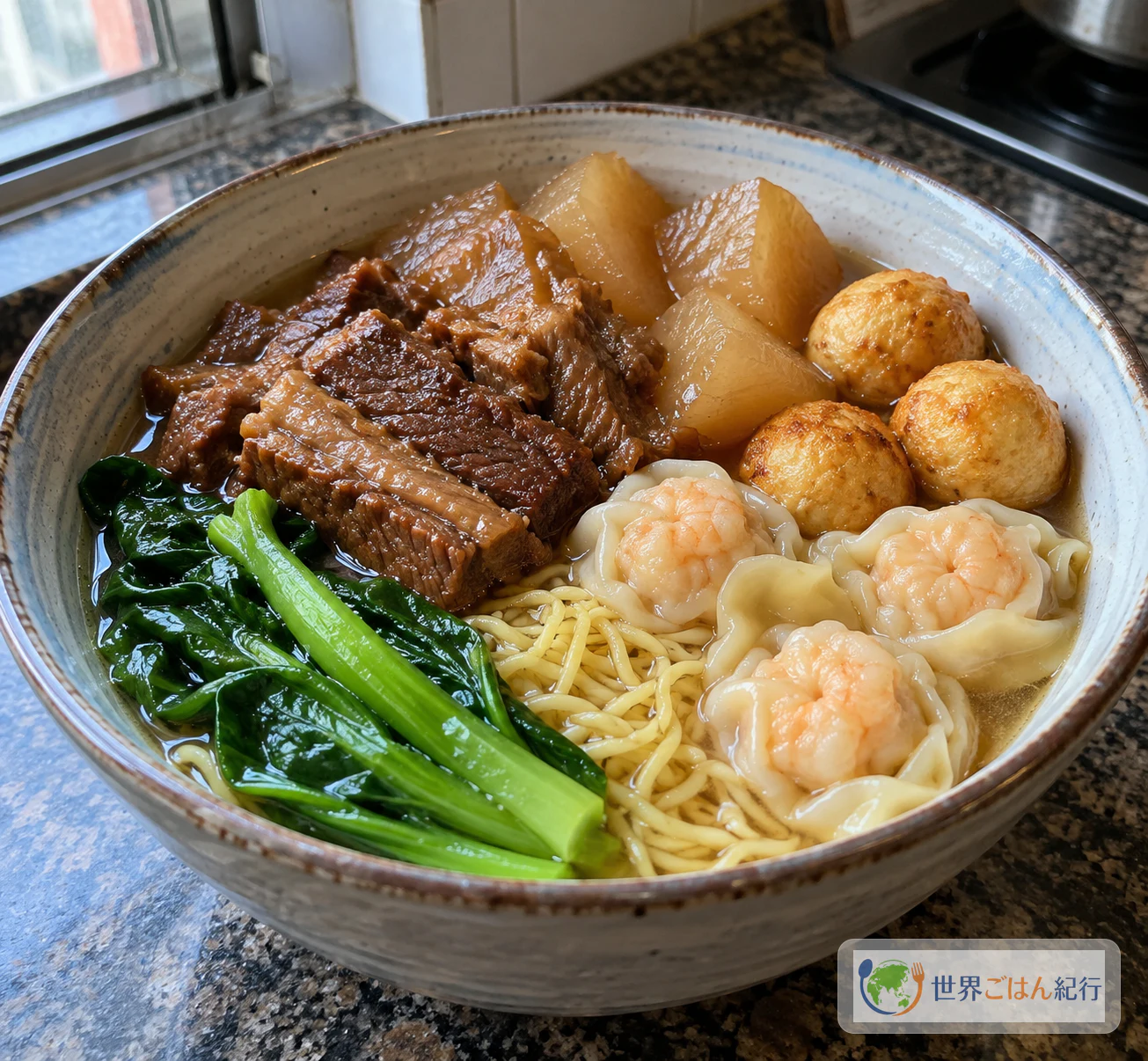
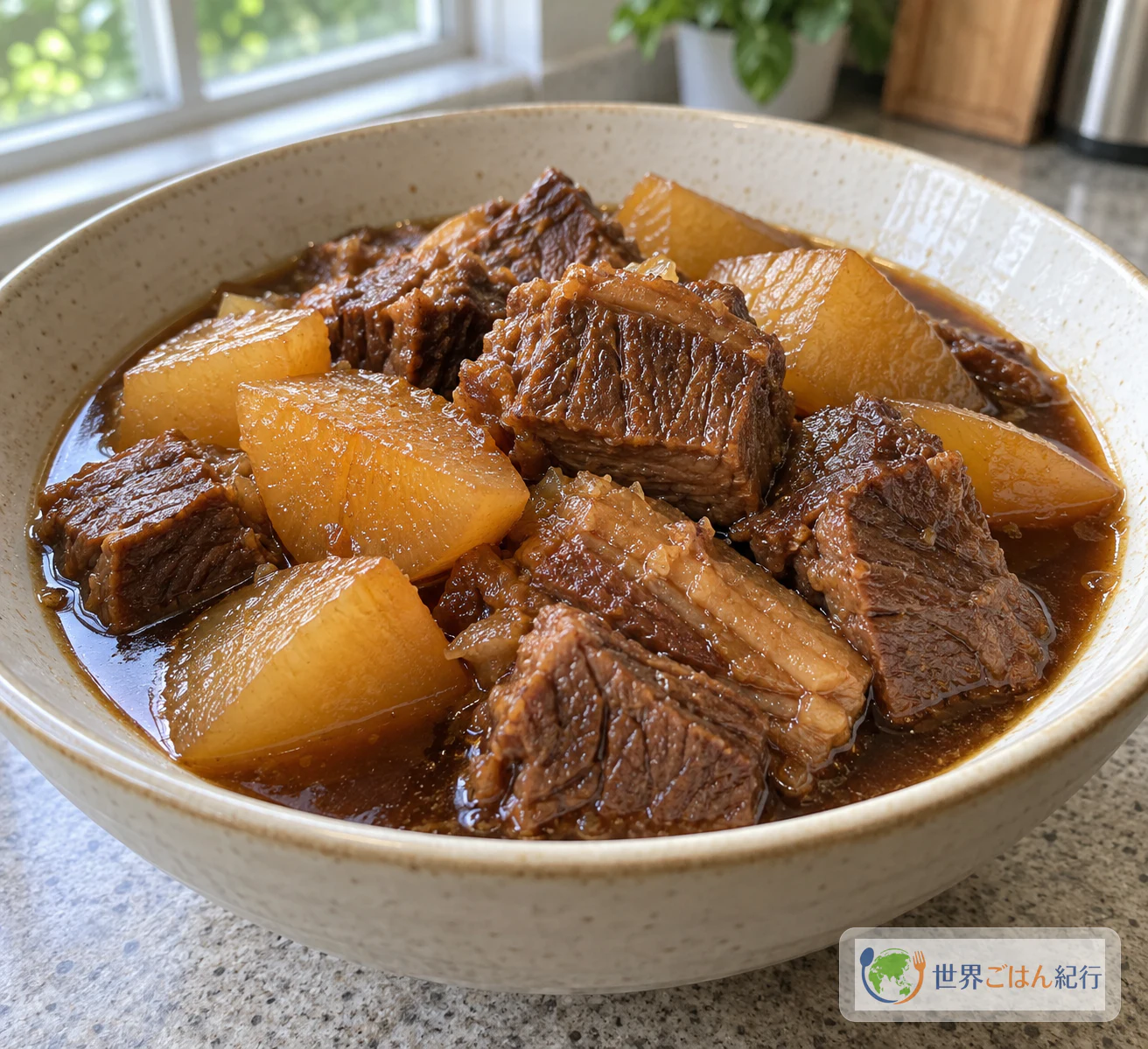
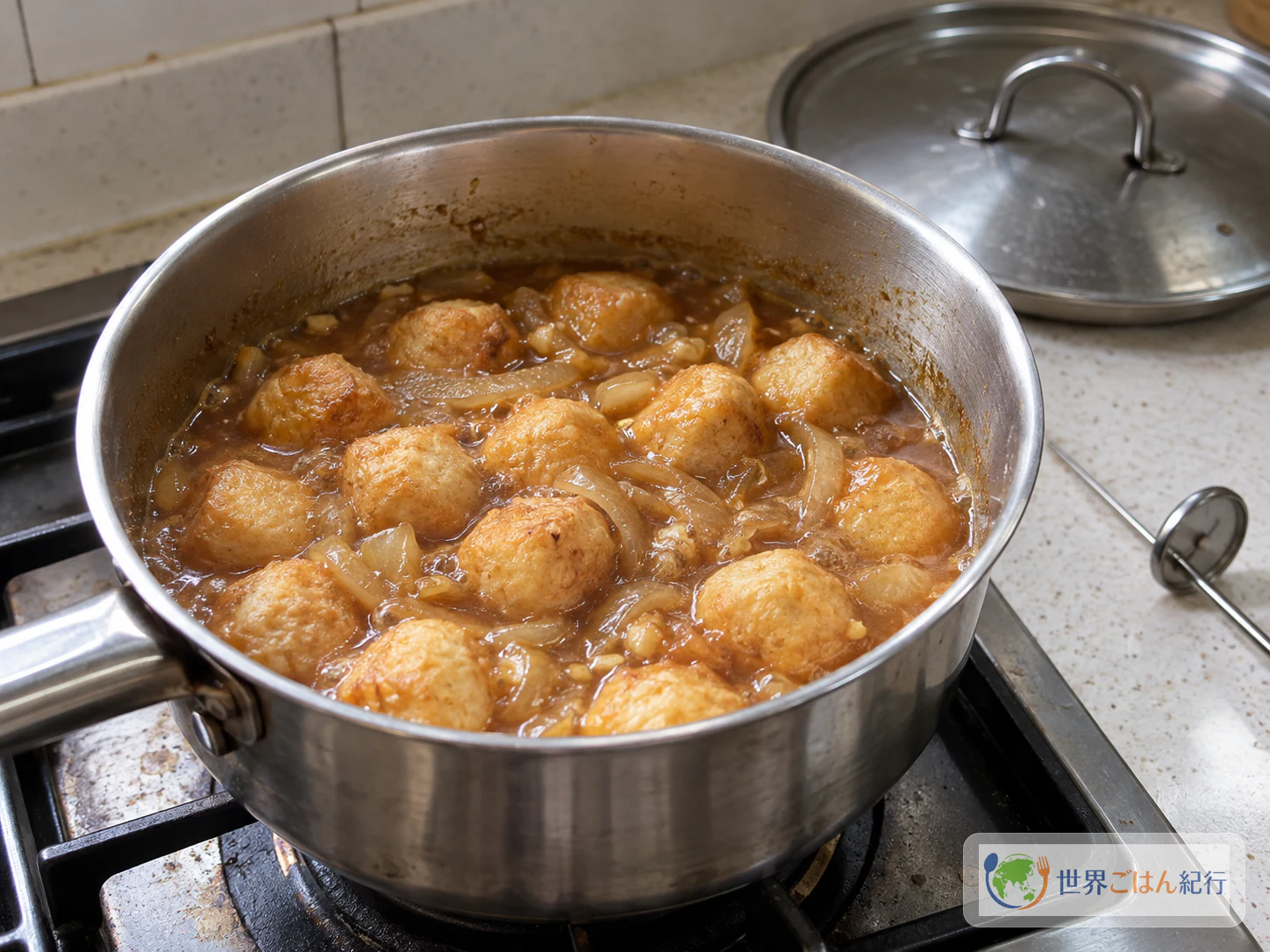
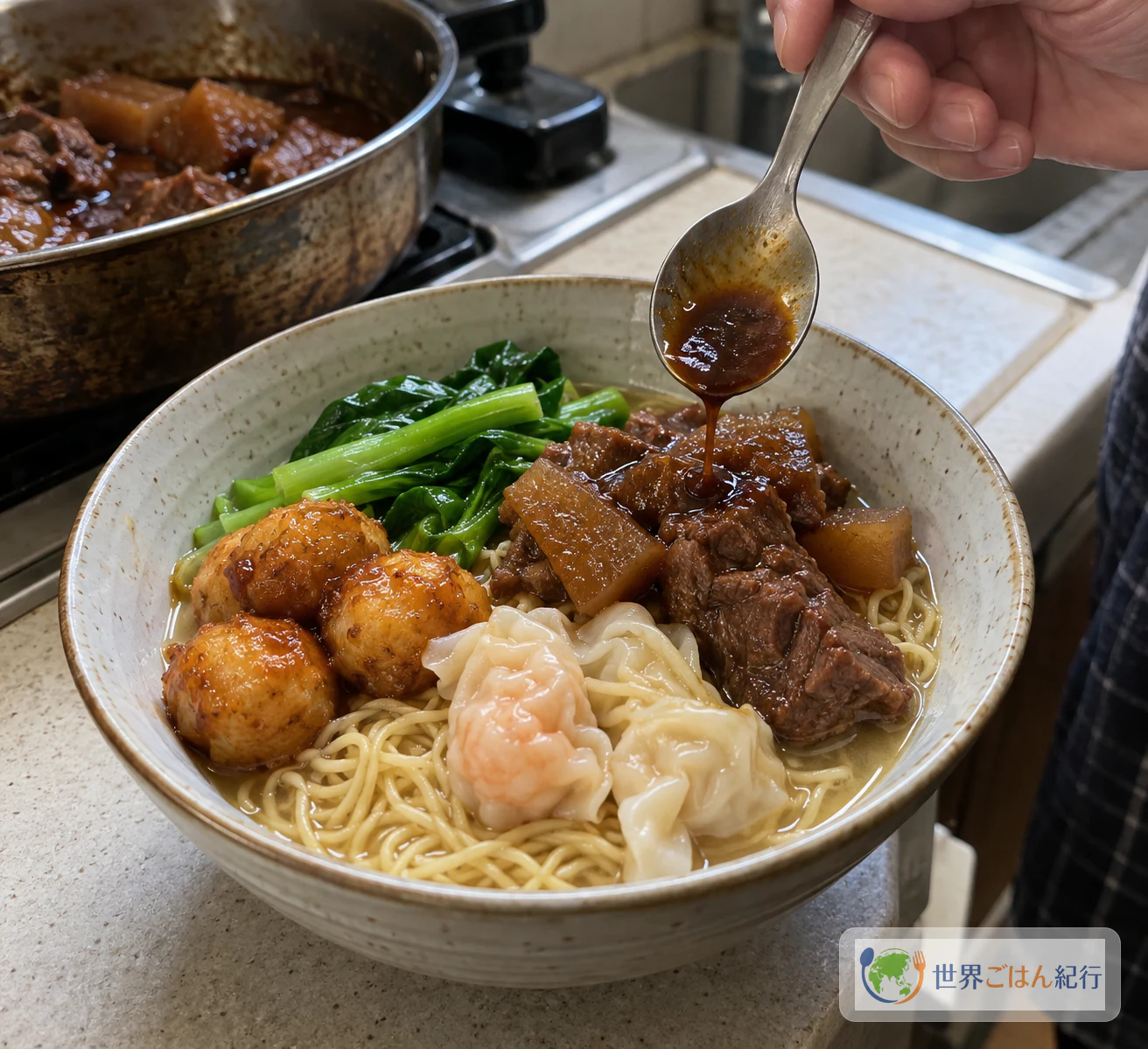
Two toppings are cooked in their own pots and kept apart: chu hou brisket with radish, and satay fish balls. The noodles go into a small amount of broth at the very end, and the toppings are layered on in a set order.
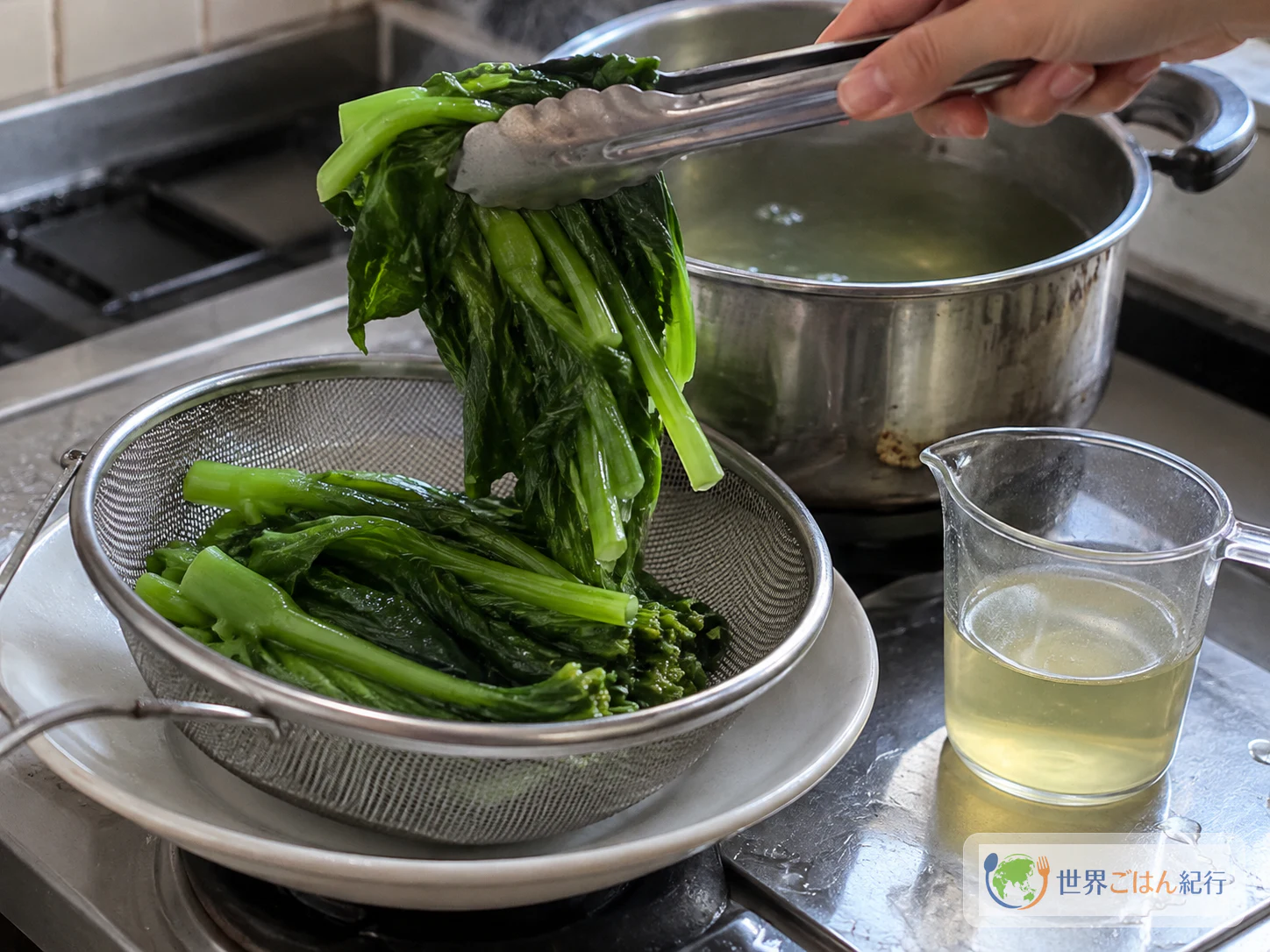
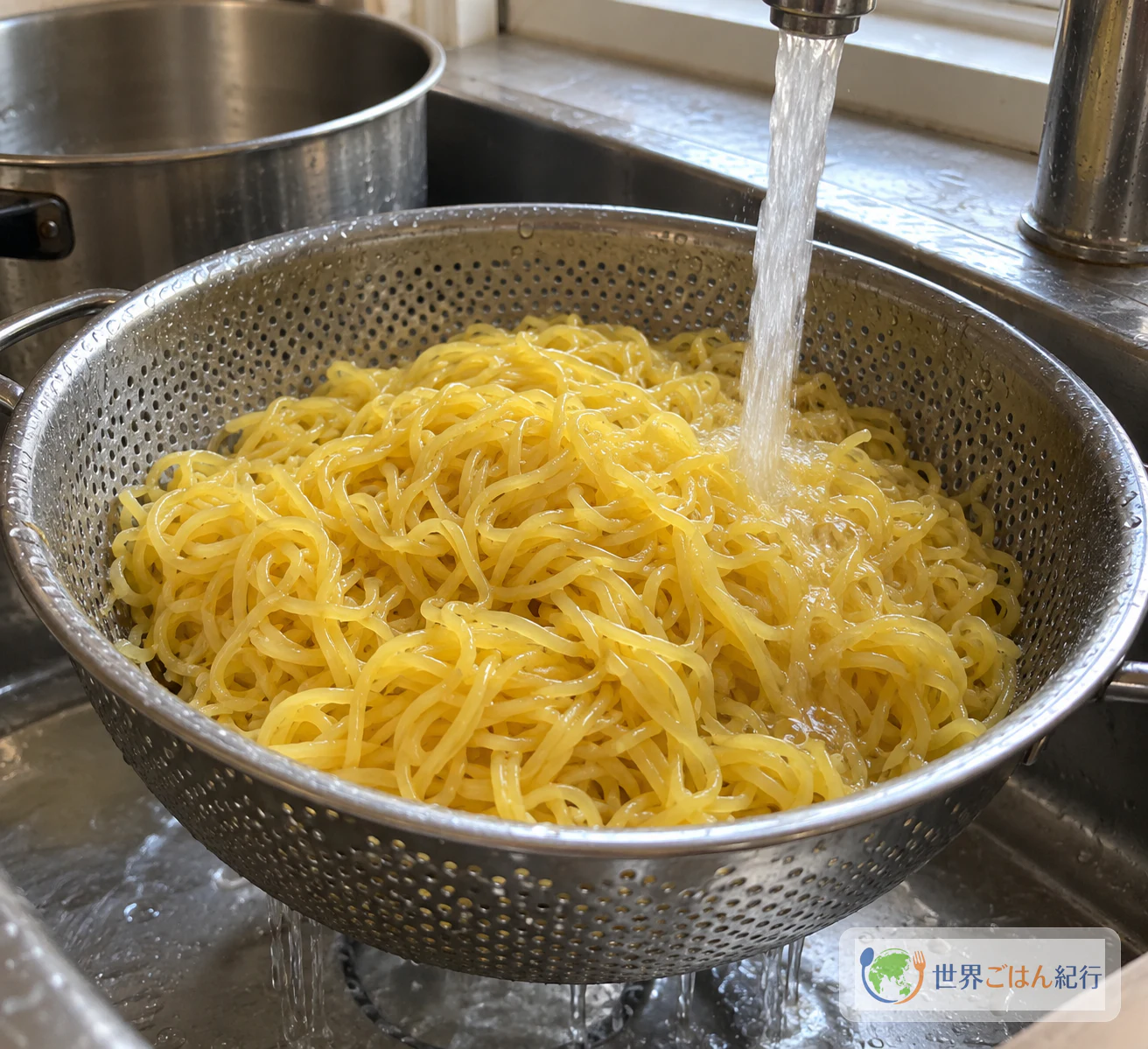
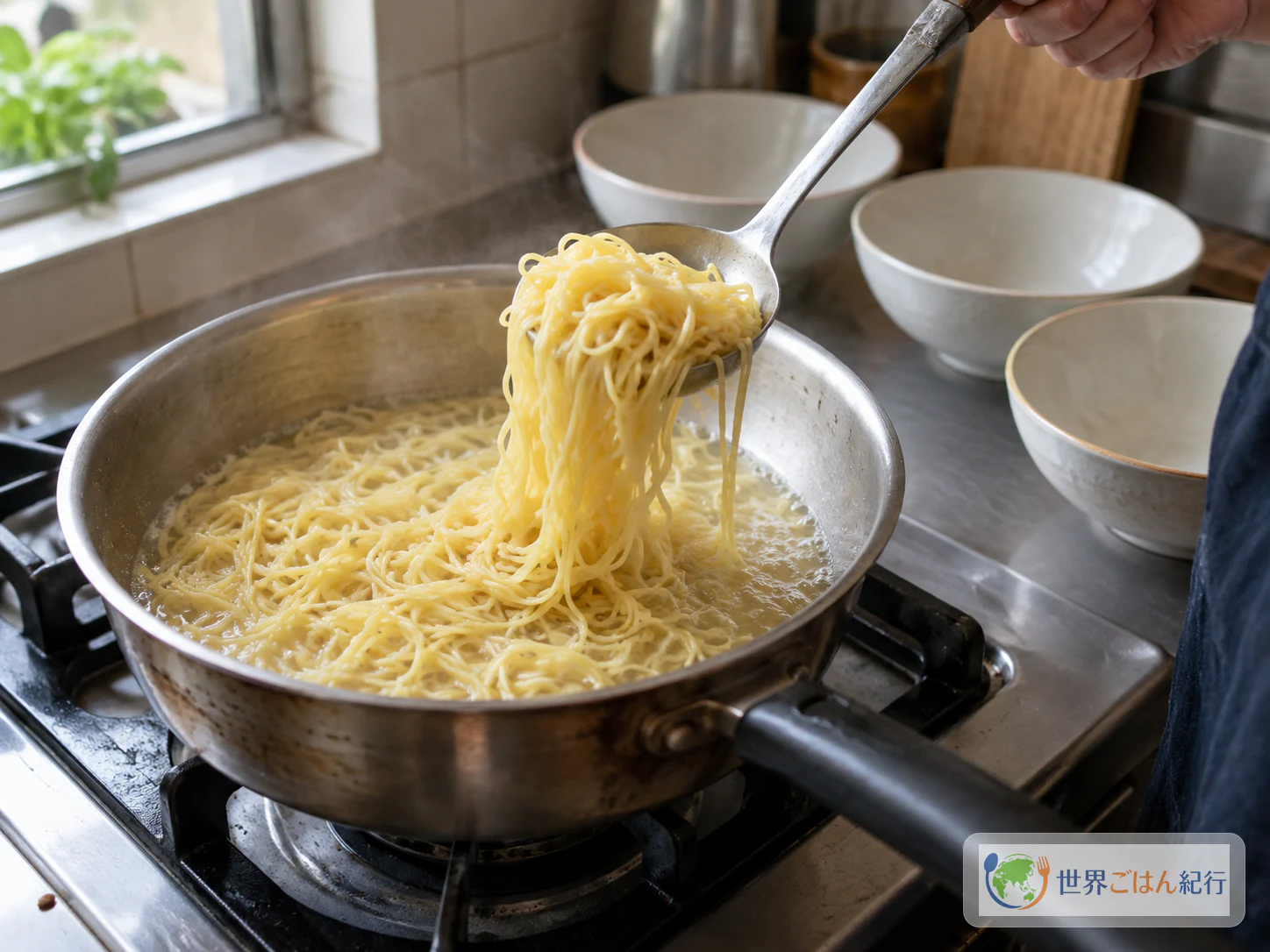
Yellow oil noodles have their surface oil rinsed off in hot water, pass through cold water, and are then brought to a boil in a modest pot of chicken broth and choy sum cooking water. Beside the stove, a braise of beef brisket and radish in chu hou sauce and a pan of fish balls in satay sauce wait in separate pots. The noodles go into bowls first, and the toppings are stacked on one by one.
This dish is called 車仔麵 in Hong Kong and cart noodles in English. The name points back to the mobile wooden carts where customers chose the toppings for their noodles.
The Hong Kong Tourism Board describes cart noodles as noodles served from mobile wooden carts, with toppings picked by the eater, and explains that the same pick-your-own style carries on in today's sit-down noodle shops. At Man Kee Cart Noodle, the menu still lets diners choose their noodles, toppings and vegetables.
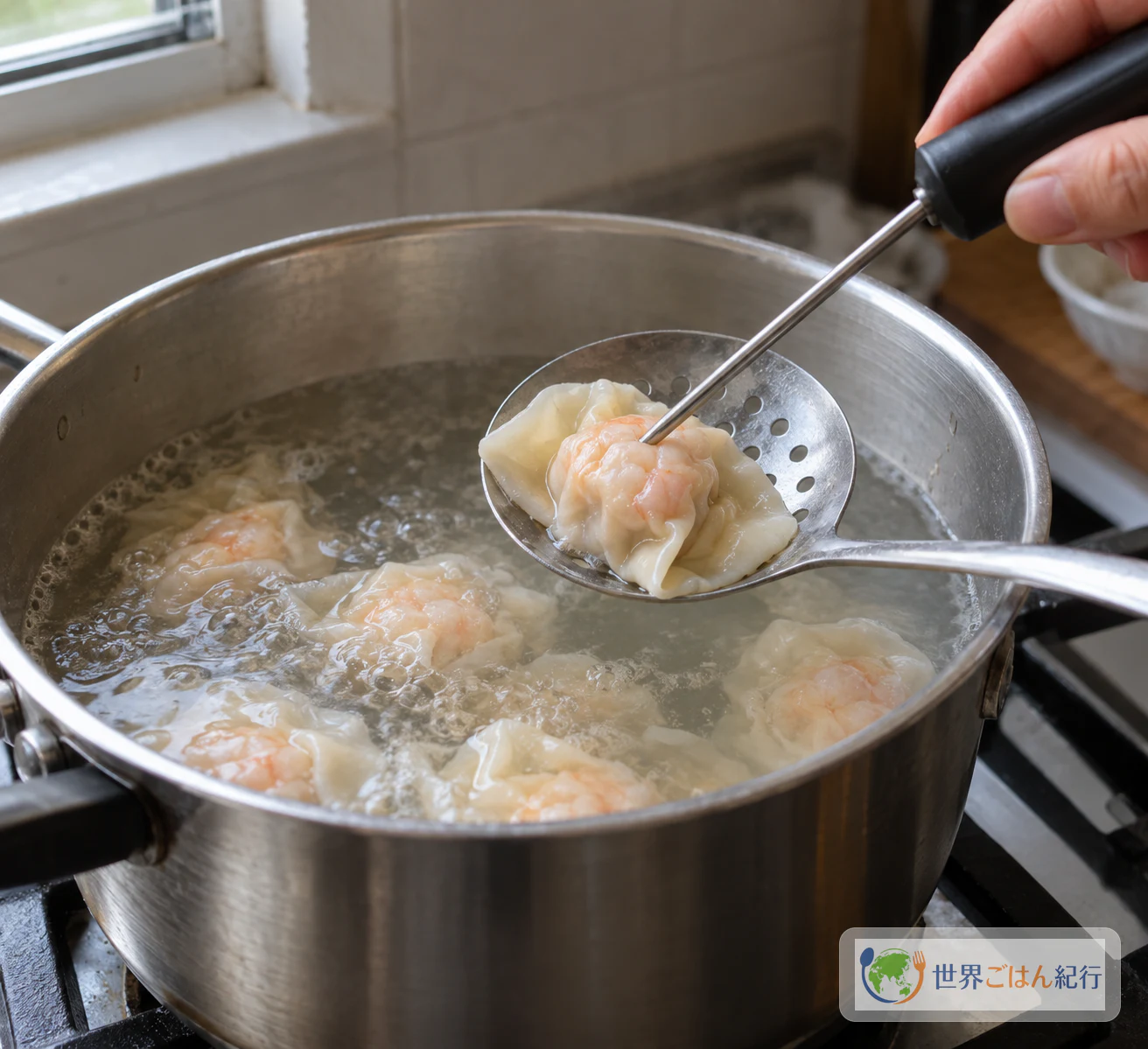
A home kitchen can't hold a cart's worth of choices, and home versions often narrow the selection. This recipe fixes one set and does not wander off into other toppings: Cantonese oil noodles, beef brisket and white radish braised in chu hou sauce, satay fish balls, shrimp wontons, and choy sum. It follows a four-serving home recipe by AA mama, along with the same author's linked recipes for the brisket and the fish balls. Sekai Gohan has not kitchen-tested the recipe as a whole.
Ingredients: Main Bowl for 4, Plus Two Topping Batches
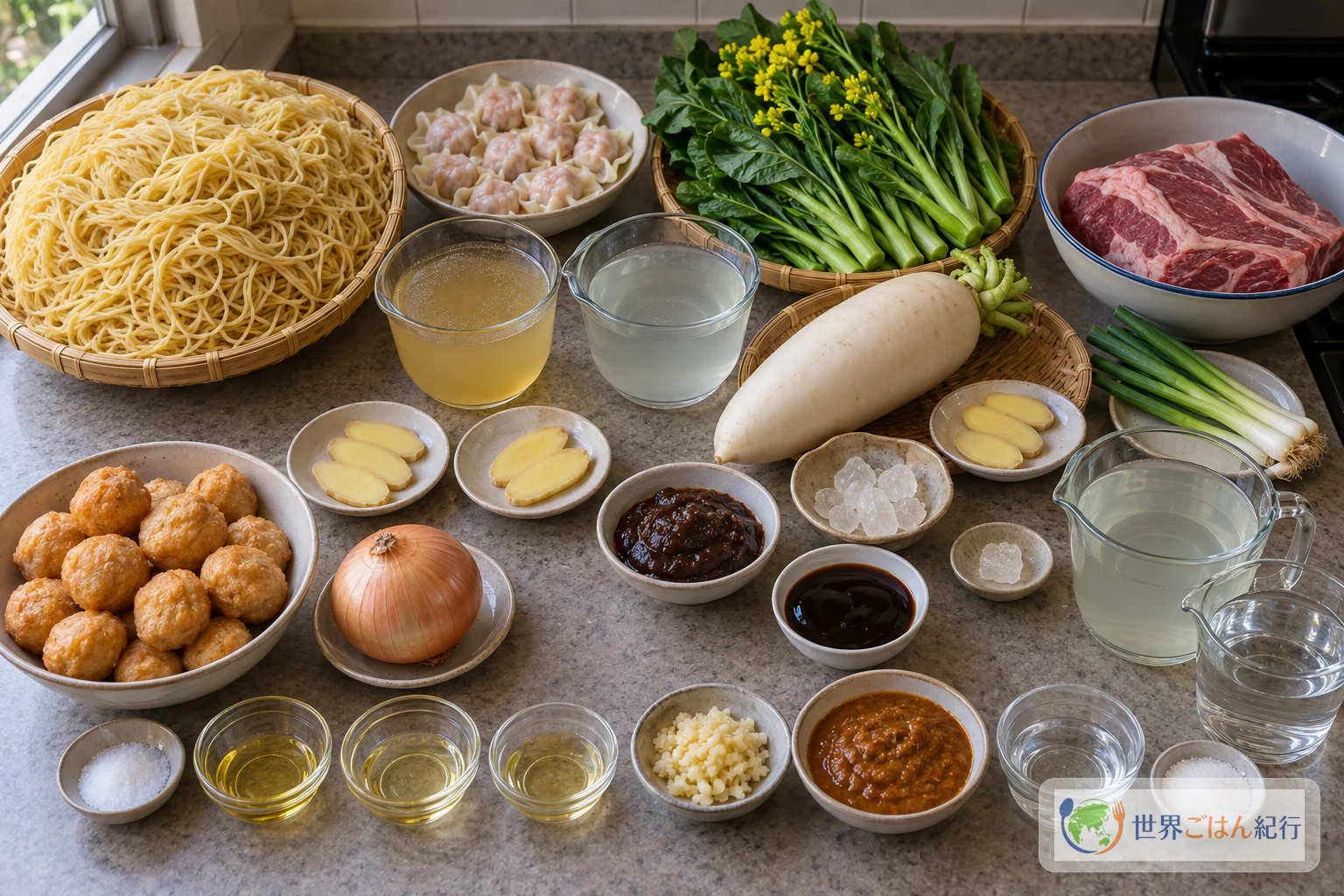
The main recipe serves 4. The brisket and fish balls are made as full batches using the author's linked recipes: 2 lb brisket with 600g radish, and 1 lb fried fish balls. The main recipe leaves the amount of brisket and fish balls in each bowl to your taste. It does not say the whole batch goes into four bowls, and it gives no per-bowl amount.
Equipment
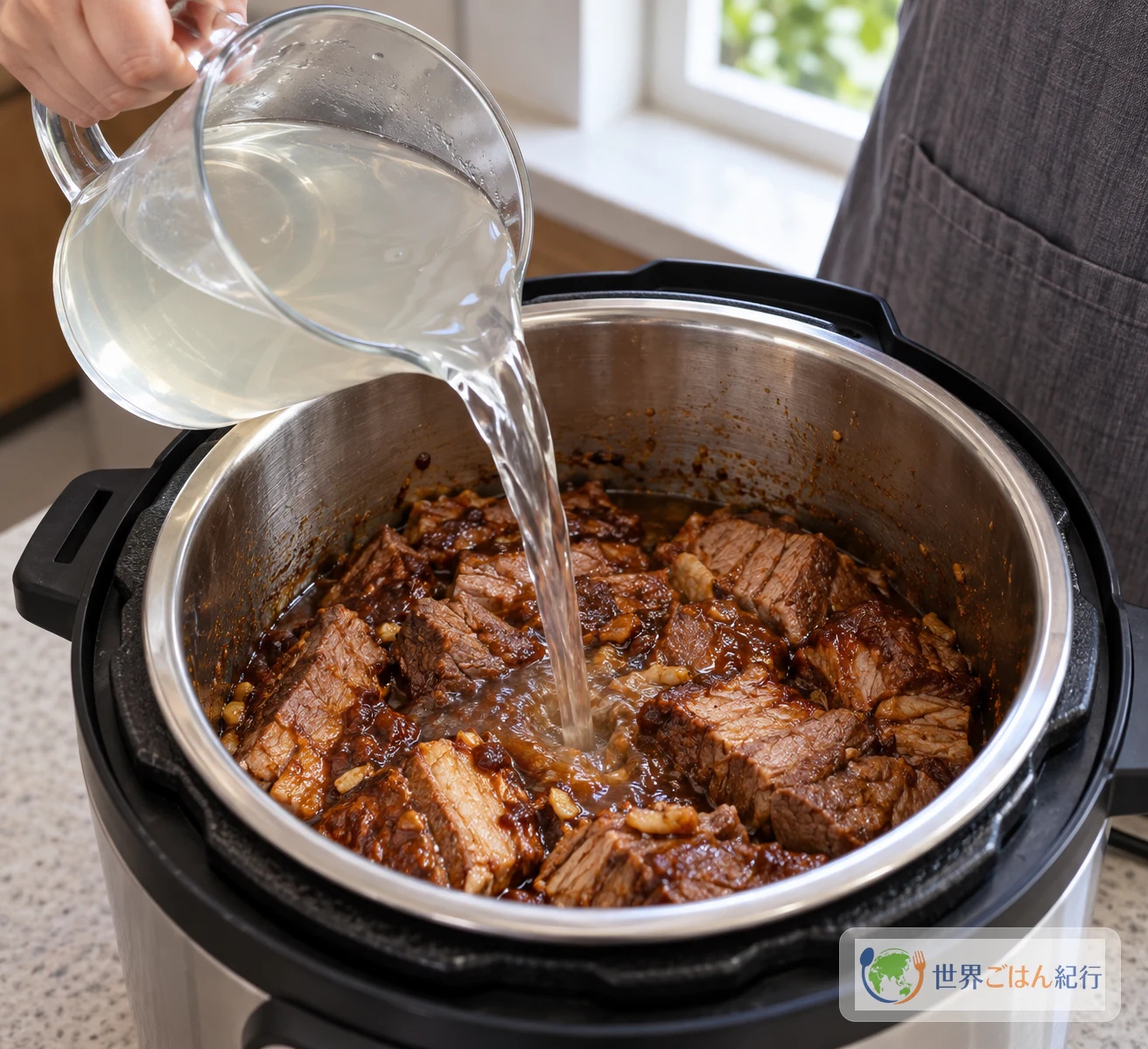
- Instant Pot IP-DUO60V2 electric pressure cooker (the model named in the brisket recipe), or your own cooker used according to its own manual
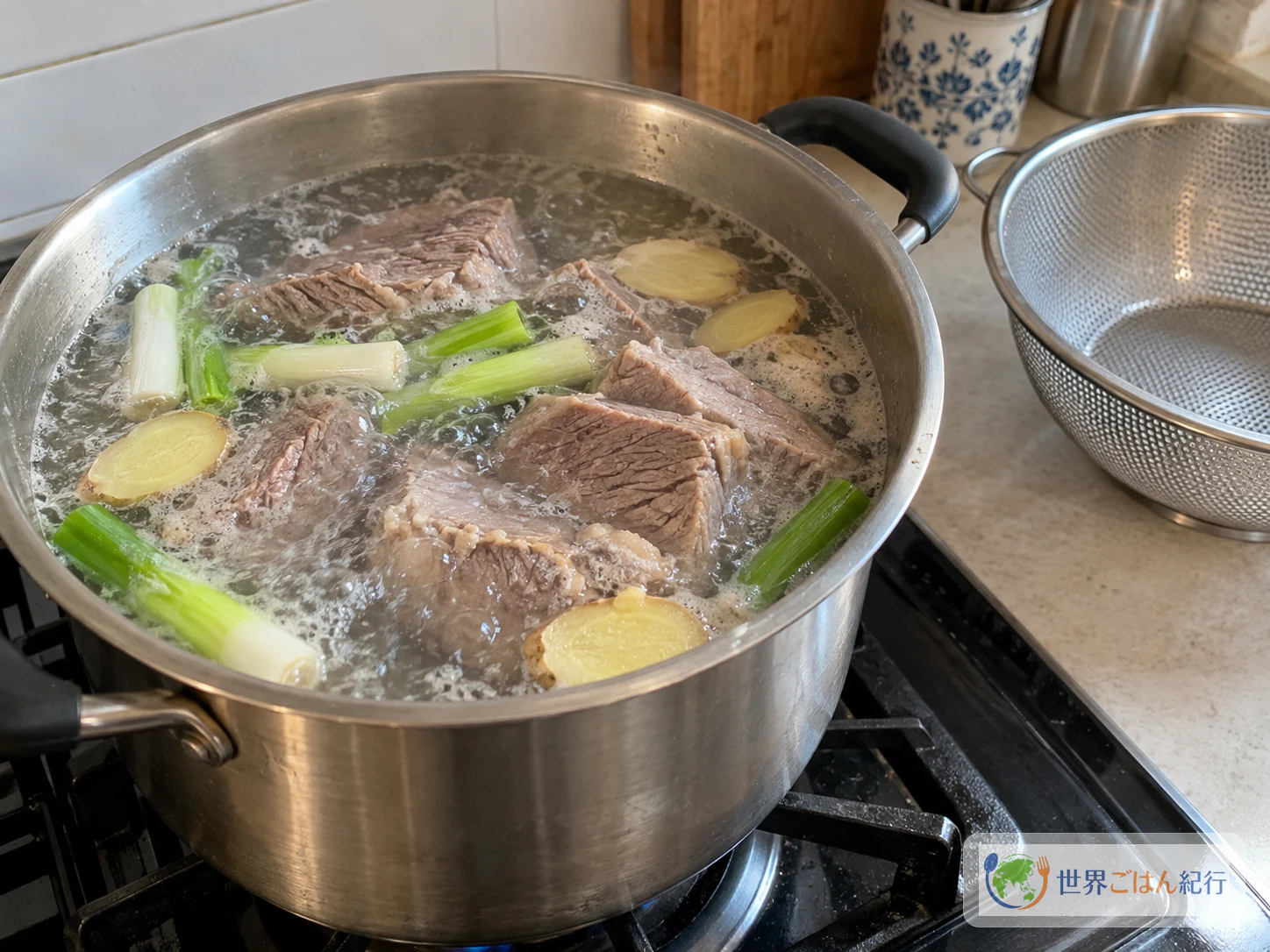
- A pot for blanching the beef, plus a sieve for draining
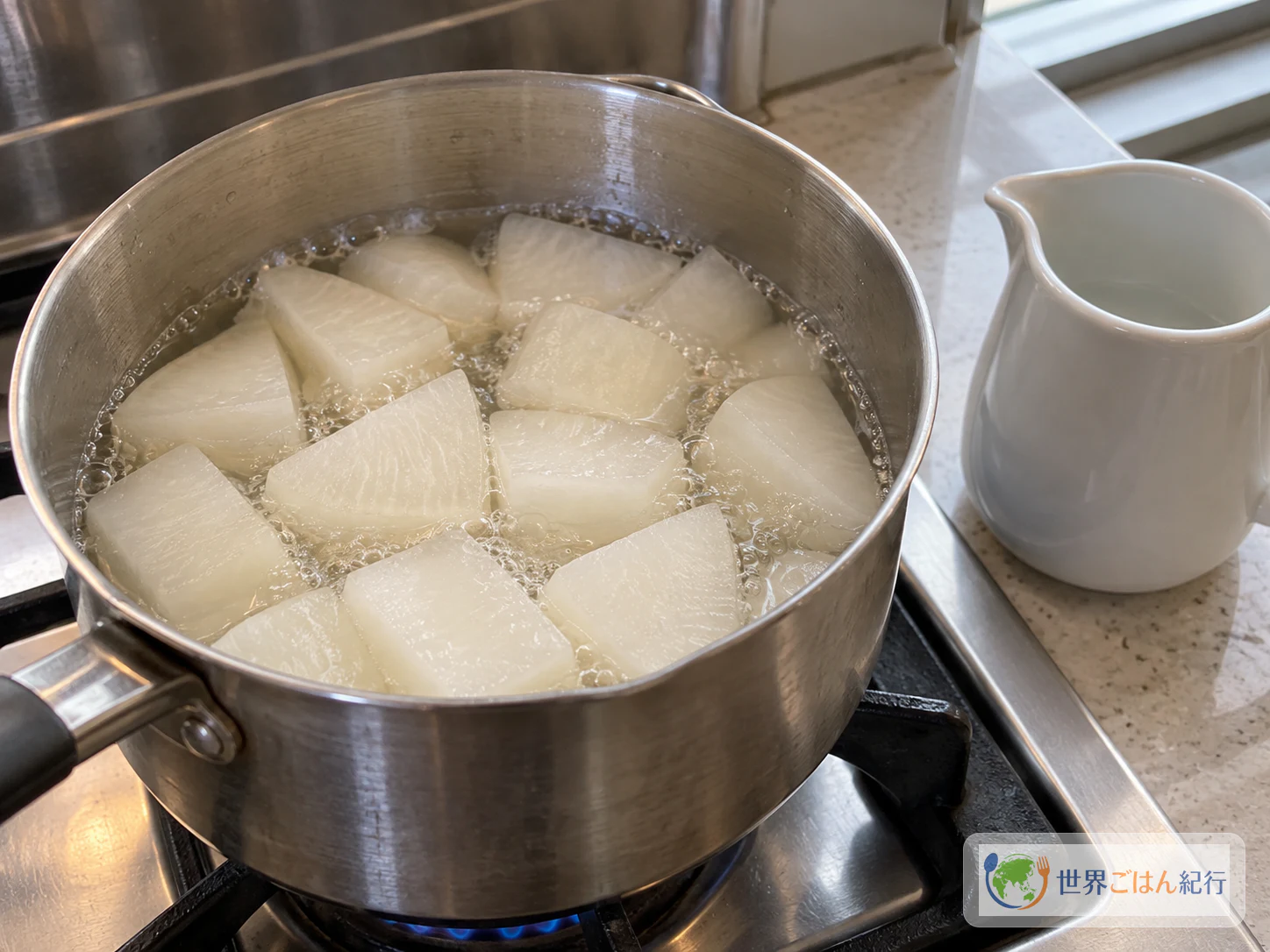
- A small saucepan for parboiling the radish, and a jug for the reserved radish water
- A saucepan for the satay fish balls, with a lid
- A pot for the choy sum, and a measuring jug for its cooking water
- A pot and a slotted spoon for the wontons
- A large sieve or colander for the noodles
- A pot for heating the noodles in the broth
- A food thermometer
- Four serving bowls
- Separate boards and utensils for raw beef
Shopping and Choosing: Keep Each Ingredient and Sauce Distinct
Look for 油麵 (oil noodles), 菜芯 (choy sum), 炸魚蛋 (fried fish balls), 現成鮮蝦雲吞 (ready-made fresh shrimp wontons), 柱侯醬 (chu hou paste) and 沙嗲醬 (satay sauce) at Chinese grocers. Check product names and package labels as you go. For the noodles, wontons and fish balls, read the storage and cooking instructions on each package and follow them.
The three sauces do different jobs. Chu hou paste and oyster sauce season the brisket pot. Satay sauce seasons the fish balls only. These recipes contain no light or dark soy sauce, and chu hou paste is not the same as soy sauce or oyster sauce, so don't swap one for another.
This recipe does not establish substitutes or ratios for any of these items. That includes local noodles or greens that look similar, and any stand-in for the leftover steamed-chicken broth. If an ingredient can't be found, the recipe offers no confirmed replacement.
Allergens differ from product to product. Check the labels on the wontons, fish balls, noodles, satay sauce and chu hou paste, including any shared-facility statements, before cooking for someone with allergies.
Method: Two Topping Pots, Then a Quick Finish for the Noodles
The amounts and order come from the author's recipes. Two of the author's directions are replaced here with Hong Kong Centre for Food Safety guidance: thawing at room temperature, and rinsing raw beef. Thaw in the refrigerator instead, and don't rinse raw meat. Some amounts are not given in the recipes: oil and salt for the choy sum water, oil for frying the ginger, the split of the 700ml braising liquid, and per-bowl toppings, broth and finishing sauce. Those are left to you rather than guessed.
For food in general, the Centre for Food Safety advises cooking until the core reaches at least 75°C and holds there for 30 seconds, checked with a thermometer. Cook large pieces of meat through to the center. Fish balls swelling, wontons floating, or a change in color does not prove they are cooked through. Also follow the cooking instructions on each package.
Troubleshooting: When Something Seems Off
| Situation | What it means | What to do |
|---|---|---|
| The broth looks shallow | The recipe uses only 200ml chicken broth and 200ml choy sum water for four bowls | That is how this version is built. Don't add water or stock to make a deeper soup |
| The fish balls have swollen, but you're unsure they're done | Swelling is not a safety test | Check the core with a thermometer: at least 75°C for 30 seconds, and follow the package |
| The wontons are floating | Floating is not a safety test | Check the center with a thermometer before serving |
| Your pressure cooker isn't an IP-DUO60V2 | The author's times and release steps are for that model | Follow your own cooker's manual, and never open it while pressure remains inside |
| You don't have leftover steamed-chicken broth | The recipe calls for it as an already-cooked leftover | No method for making it and no substitute is confirmed in the recipe |
| The flavor seems doubled up or heavy | Both sauces may have been added to the bowl | Finish with chu hou braising liquid only, and keep the satay sauce on the fish balls |
Variations: What the Recipe Itself Leaves Open
The author's main recipe lets you choose the finishing sauce: brisket liquid or fish-ball liquid, to taste. This version picks the chu hou brisket liquid and does not add both. If you prefer the satay liquid, use it in place of the chu hou liquid, not in addition to it.
The cart tradition is about choice, so at the table each person can take more or less of each topping from the set prepared here. Other toppings belong to other recipes and aren't covered here.
Culture: From Wooden Carts to Noodle Shops
According to the Hong Kong Tourism Board, cart noodles took their form from mobile wooden carts. Toppings were picked to order and placed on the noodles. That pick-your-own style continues in sit-down shops today, where menus such as Man Kee's let diners choose noodles, toppings and vegetables.
At home, the choices narrow to what fits on the stove. Cooking the toppings in separate pots, as in this recipe, is how a home kitchen keeps the spirit of the cart: each eater still builds their own bowl.
Frequently Asked Questions
How much brisket, fish balls and broth go in each bowl?
The author doesn't say. The main recipe leaves the amount of brisket and fish balls to taste. The broth is simply 200ml chicken broth and 200ml choy sum water shared among four bowls, with no per-bowl amount. The brisket and fish-ball recipes are full batches, and the recipe does not say you must use them up in four bowls.
Can I season the brisket with soy sauce?
These recipes use chu hou paste and oyster sauce for the brisket, and satay sauce for the fish balls. They contain no light or dark soy sauce, and chu hou paste is a different product from soy sauce.
Can I make the brisket on the stovetop or in another pressure cooker?
The author's times and release steps are for the Instant Pot IP-DUO60V2. No conversion to a stovetop pot or another model is given. If you use another cooker, follow its own manual.
Can I thaw the brisket on the counter, as some recipes say?
No. Following the Centre for Food Safety, thaw meat in the refrigerator at 0–4°C, and don't rinse raw beef. Keep raw meat apart from cooked foods.
Why rinse the noodles in hot water and then cold?
The hot water washes off the surface oil, and the cold water follows before the noodles are drained. They are heated again in the broth just before serving.
Sources
- AA mama, "自家製港式車仔麵 (柱侯蘿蔔炆牛腩 & 沙嗲魚蛋) / Homemade Hong Kong-Style Cart Noodles." The main four-serving recipe: oil noodles, shrimp wontons, choy sum, the chicken broth and choy sum water base, the noodle rinse, and the assembly order. https://aamamacooking.blogspot.com/2025/07/homemade-hong-kong-style-cart-noodles.html
- AA mama, "柱侯蘿蔔炆牛腩 (電子壓力煲) / Stewed Beef Brisket & Chinese Radish in Chu Hou Sauce (Instant Pot)." The brisket and radish amounts, the blanch and parboil, and the two-stage pressure-cooking sequence for the IP-DUO60V2. https://aamamacooking.blogspot.com/2025/07/stewed-beef-brisket-chinese-radish-in.html
- AA mama, "港式沙嗲魚蛋 / Hong Kong Style Satay Fish Ball." The fish-ball amounts, the order of cooking, and the covered one-hour rest for flavor. https://aamamacooking.blogspot.com/2025/07/hong-kong-style-satay-fish-ball.html
- Hong Kong Tourism Board, "Man Kee Cart Noodle." Cart noodles served from mobile wooden carts with chosen toppings, and the pick-your-own style in today's sit-down shops. https://www.discoverhongkong.com/eng/place-to-go/travel.guide-man-kee-cart-noodles.html
- Centre for Food Safety, Hong Kong, "Defrosting." Not thawing at room temperature, thawing meat in the refrigerator at 0–4°C, keeping raw and cooked foods apart, and cooking small items such as dumplings and fish balls from frozen when the product allows. https://www.cfs.gov.hk/english/trade_zone/safe_kitchen/defrosting.html
- Centre for Food Safety, Hong Kong, "Food Safety Bulletin 106th Issue (09/2026)." Cooking food to a core temperature of at least 75°C for 30 seconds, checked with a thermometer, and cooking thawed meat thoroughly to the center. https://www.cfs.gov.hk/english/multimedia/multimedia_pub/multimedia_pub_fsb_202603.html
- Jennifer Wong, "Step back in time with Hong Kong cart noodles at home," SBS Food. Background on home versions that narrow the choices and combine noodles, toppings and soup at the table; no amounts or methods are taken from it. https://www.sbs.com.au/food/article/step-back-in-time-with-hong-kong-cart-noodles-at-home/0tl0o6kmy
- Instant Pot, "Multi-Cooker Product Manuals." The manufacturer's current manual list, which links to the Duo V5 manual; compatibility with the IP-DUO60V2 is not confirmed there. https://instantpot.com/pages/multi-cooker-product-manuals