Amanattō: Whole Beans That Hold Syrup Inside
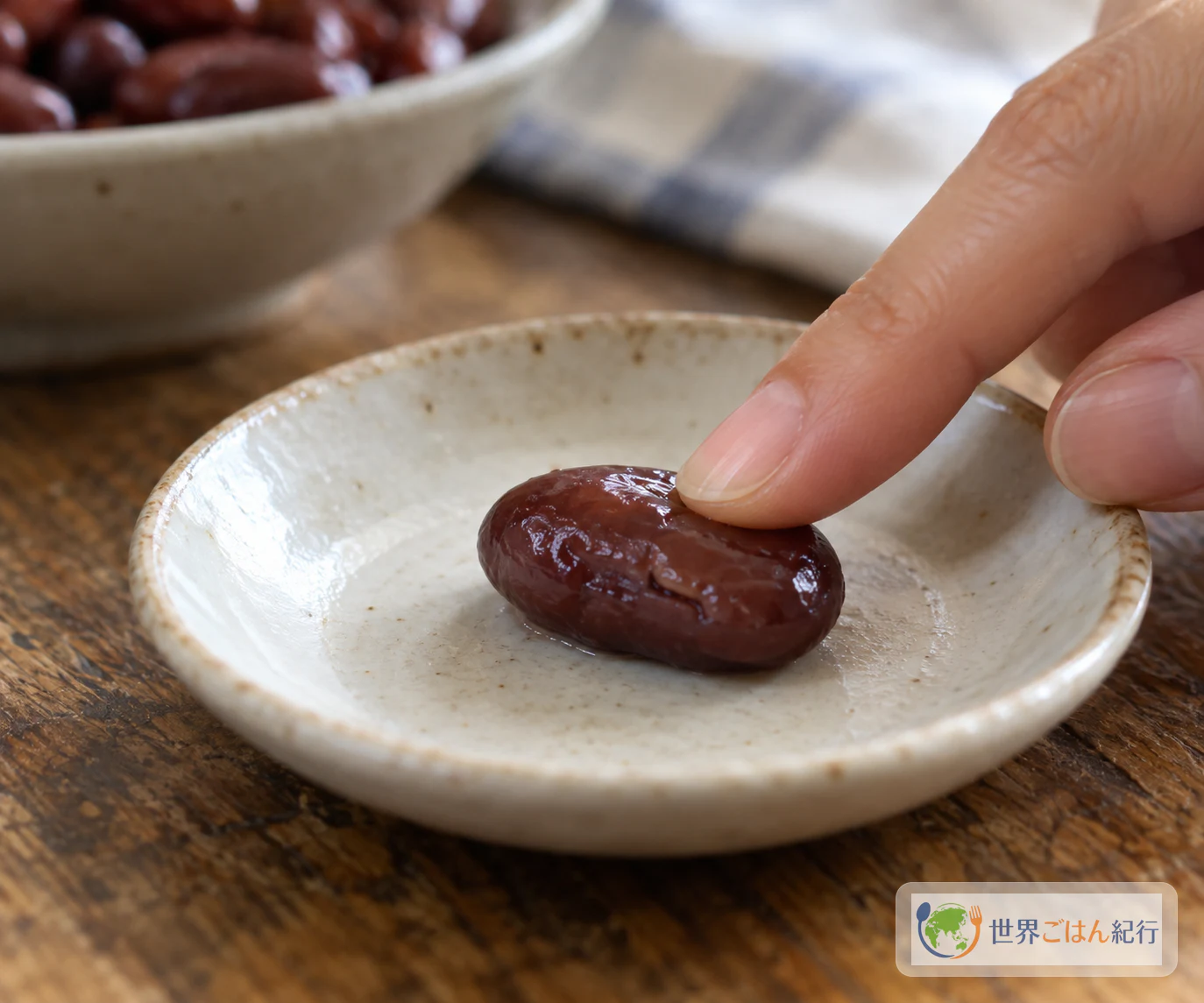
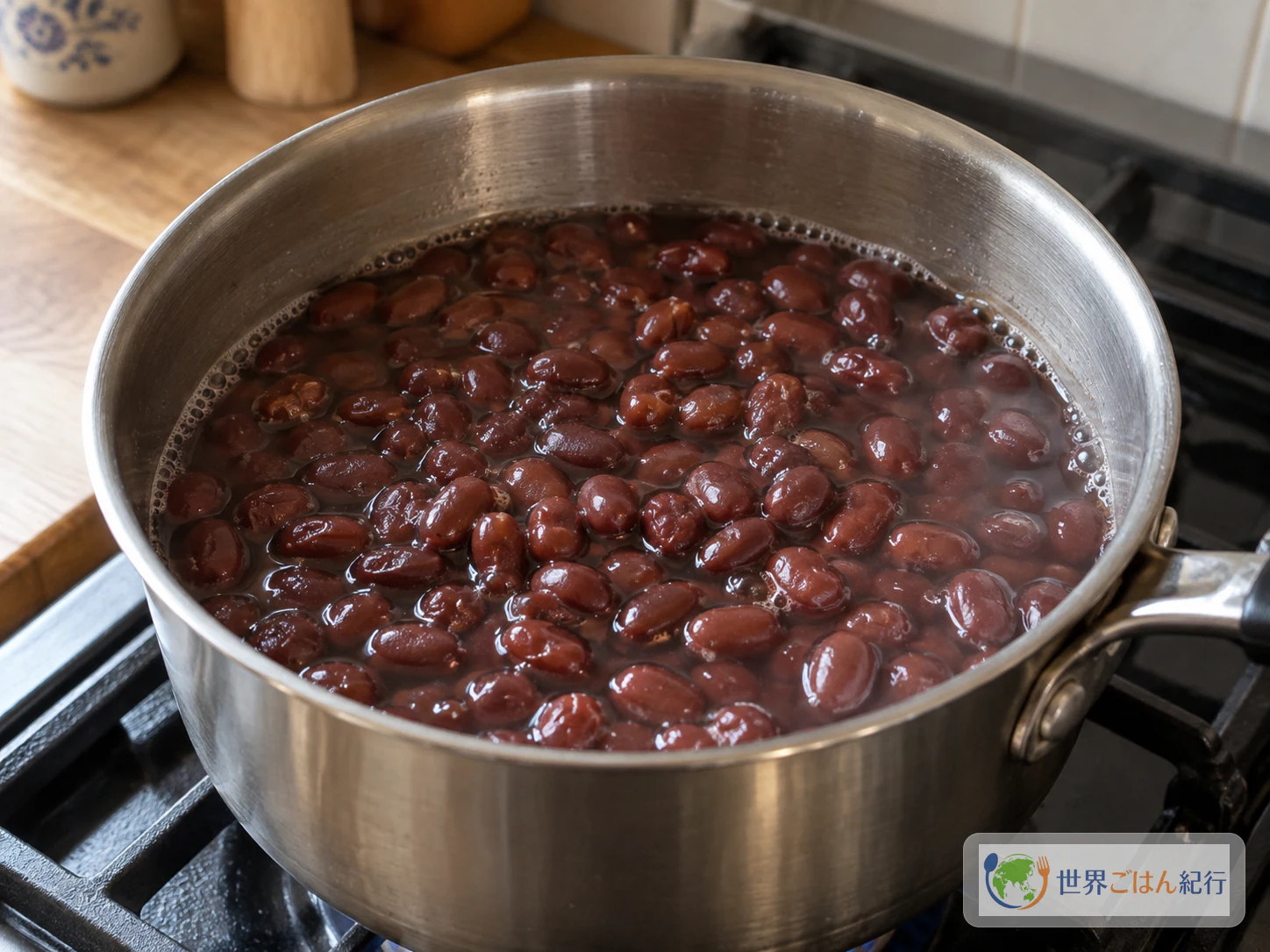
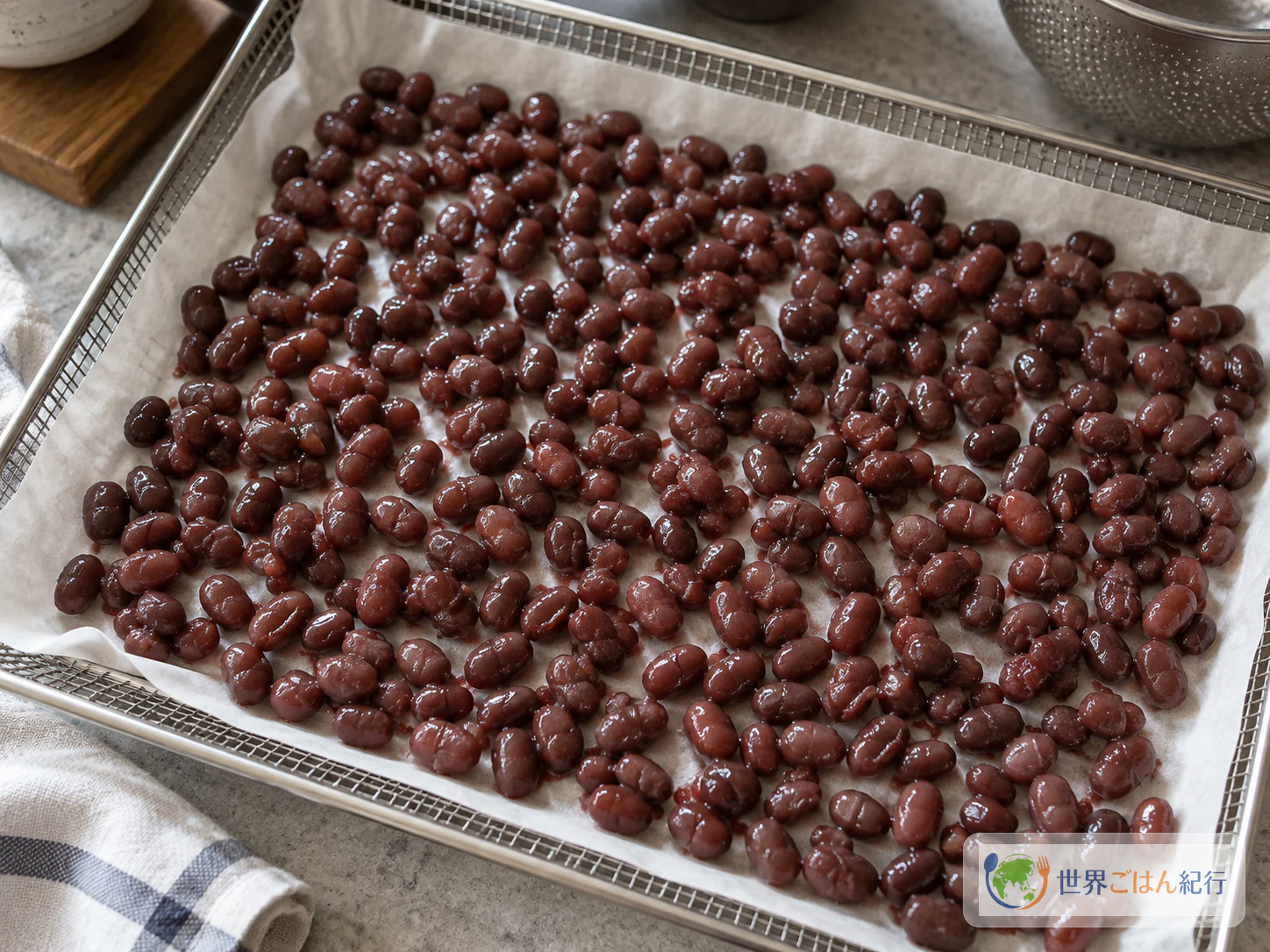
Cook the beans until you can crush them between your fingers but they have not fallen apart. Then let them take in syrup in two stages, and dry them before any sugar goes on the outside.
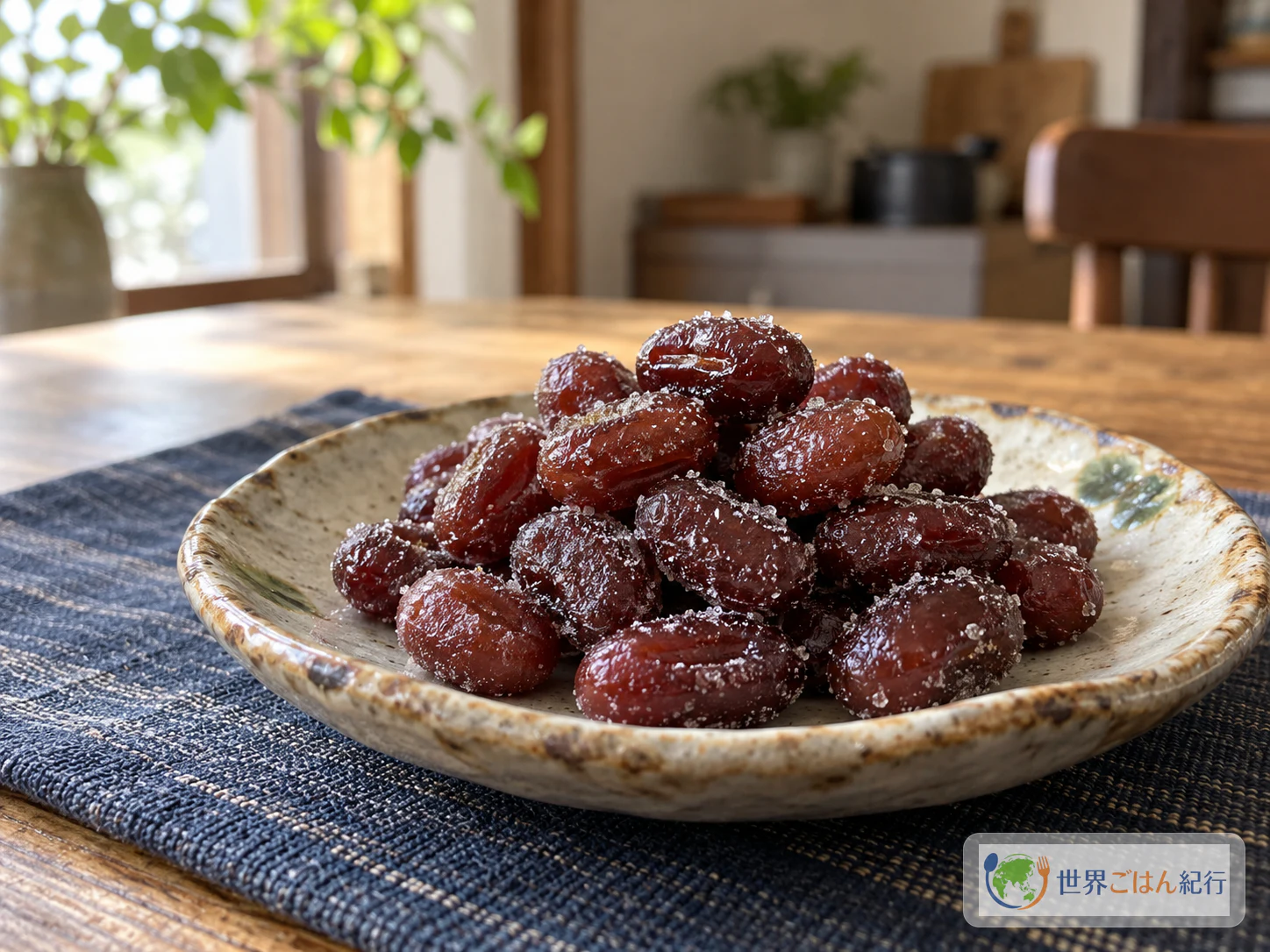
Amanattō (甘納豆) is a small Japanese sweet eaten with tea: whole beans, glossy red-brown, sometimes dusted with sugar. Each bean looks simple, but it carries two hidden techniques. The beans are cooked until tender without breaking, then moved from a lighter syrup into a heavier one so the sweetness works its way in while the bean keeps its shape.
Despite the name, amanattō has nothing to do with fermented natto. It is a confection of beans steeped in sugar syrup. Japan's standard food composition tables describe the general method as cooking the beans, soaking them in sugar solutions that move from low to high concentration, draining off the syrup, and coating them with sugar. One confectioner describes it as a semi-moist sweet: beans simmered in syrup, coated in sugar and dried.
Most of the work in this recipe is not at the stove. It is in the waiting: two nights of soaking in syrup and several hours of drying. The recipe here follows a home version published by NHK Educational's Kyō no Ryōri using Dainagon azuki, a large azuki bean. For more dishes from the same country, see our Japan page.
We have not tested this recipe in our own kitchen. The amounts, times and the finished weight below are the values published with the source recipe, not our own measurements.
Ingredients: One Batch of Dainagon Azuki Amanattō
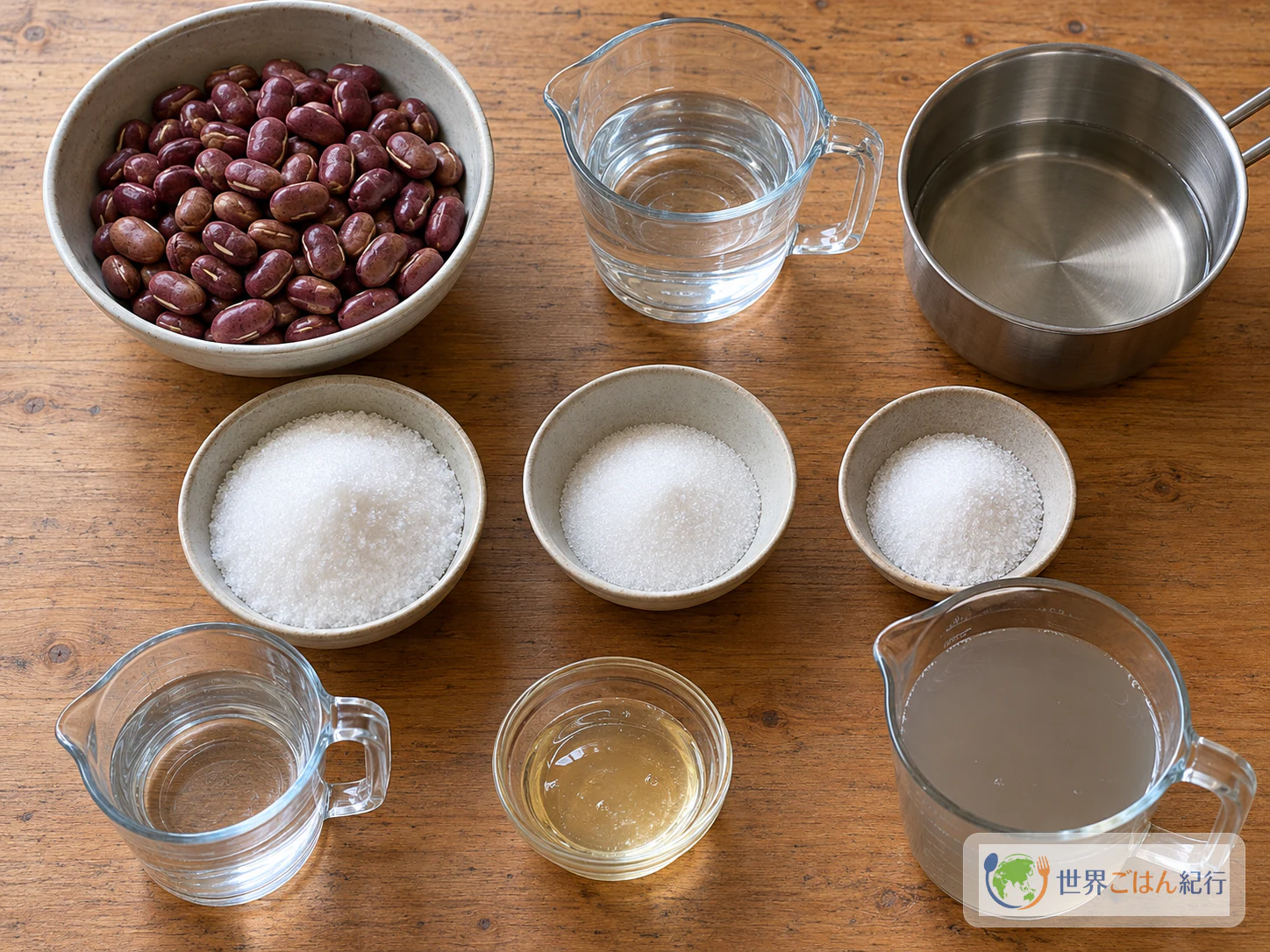
The source recipe gives the finished amount as about 480g. That is its published figure; we have not weighed a batch ourselves.
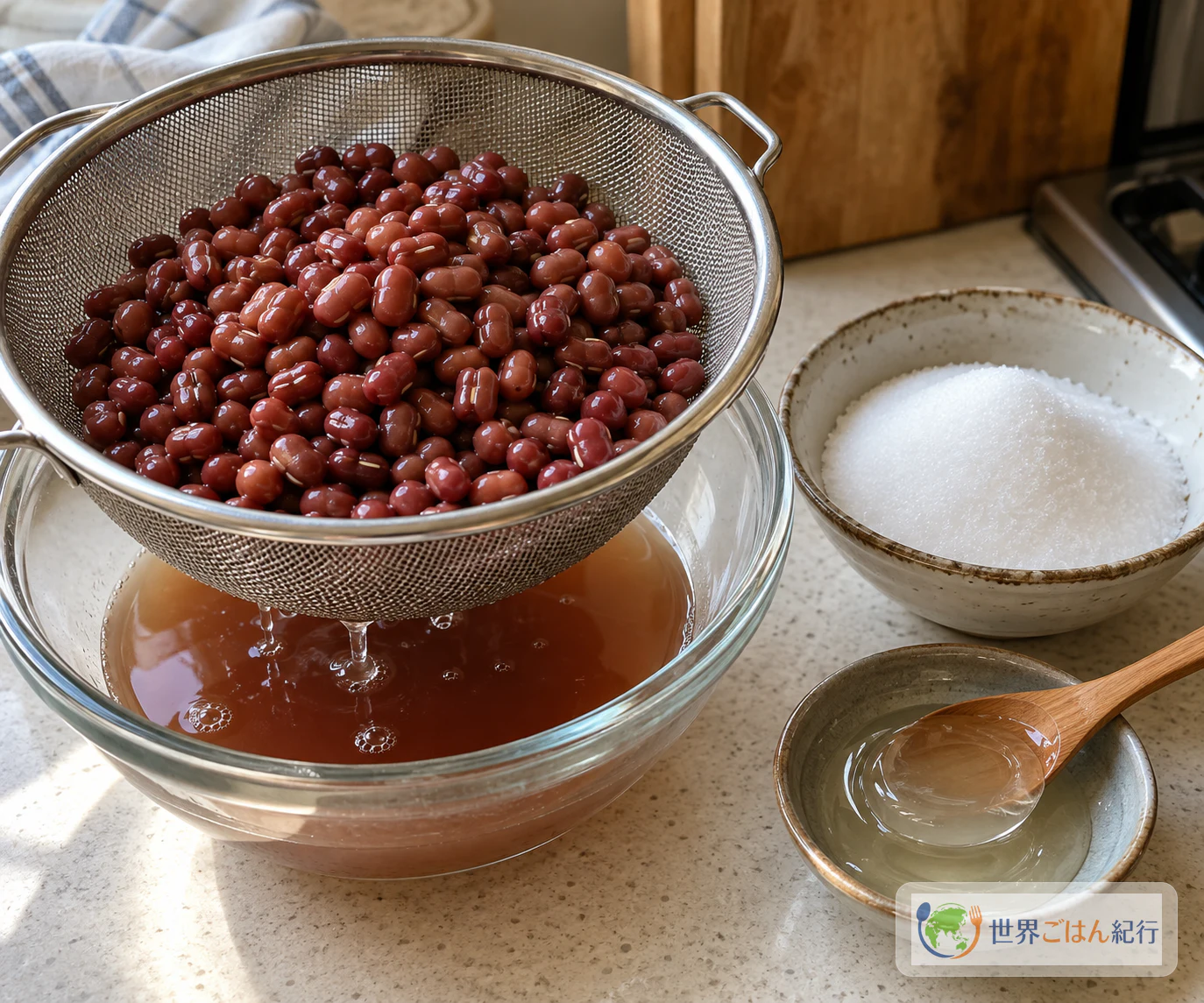
Sugar appears three times, and each portion has its own job: 150g for the first syrup, 100g added for the second syrup, and an optional amount for finishing. Water also has two jobs. The 200ml in the syrup stays with the beans; the cooking water is used in stages and poured away.
Equipment
- A heavy saucepan with room to spare, which makes a gentle simmer easier to hold
- A second pot for making the syrup
- A colander or sieve
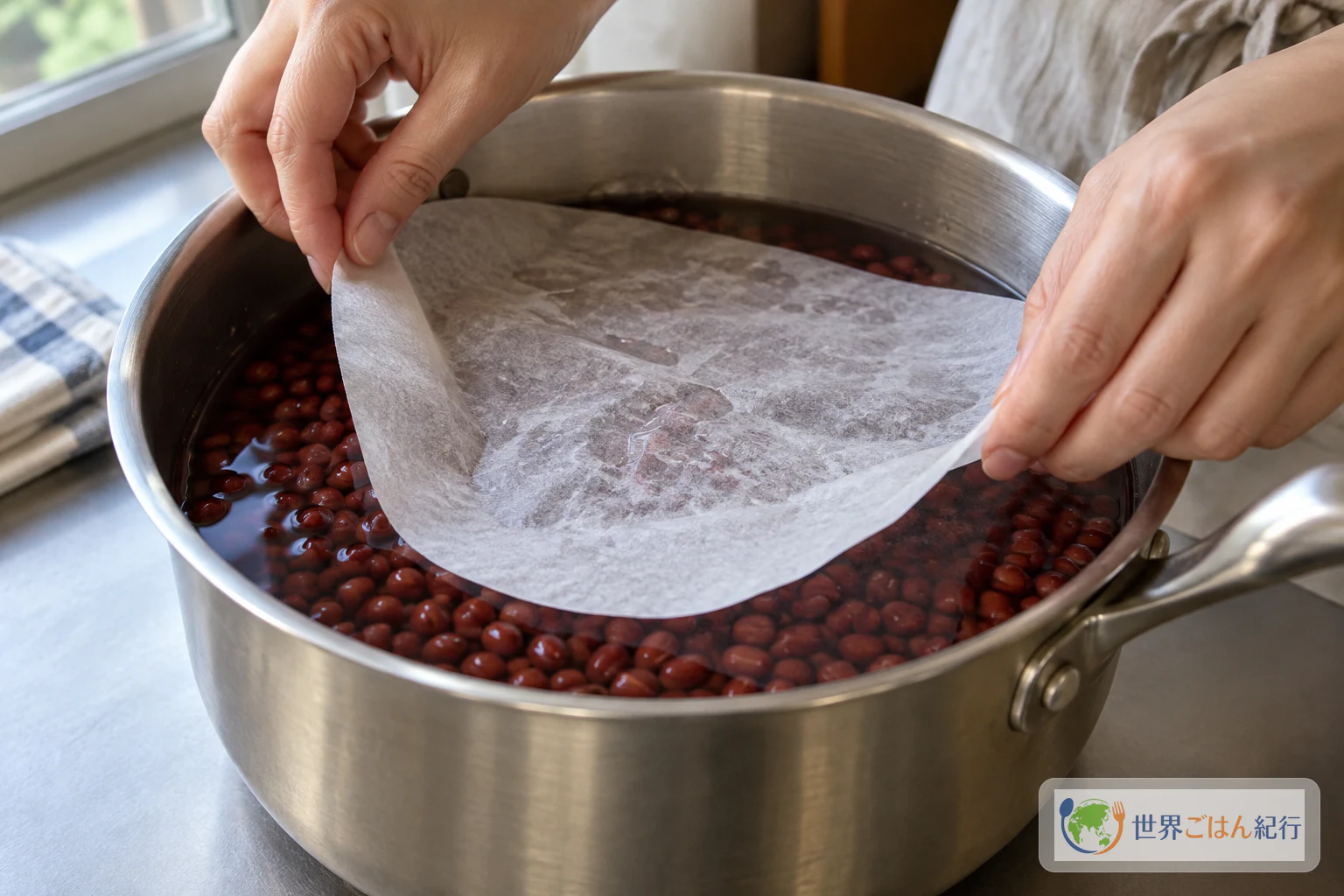
- Oven paper (parchment), for the drop lid and for drying
- A flat sieve or tray for drying
- A heatproof rubber spatula
- A kitchen scale
- A measuring cup
Choosing and Substituting
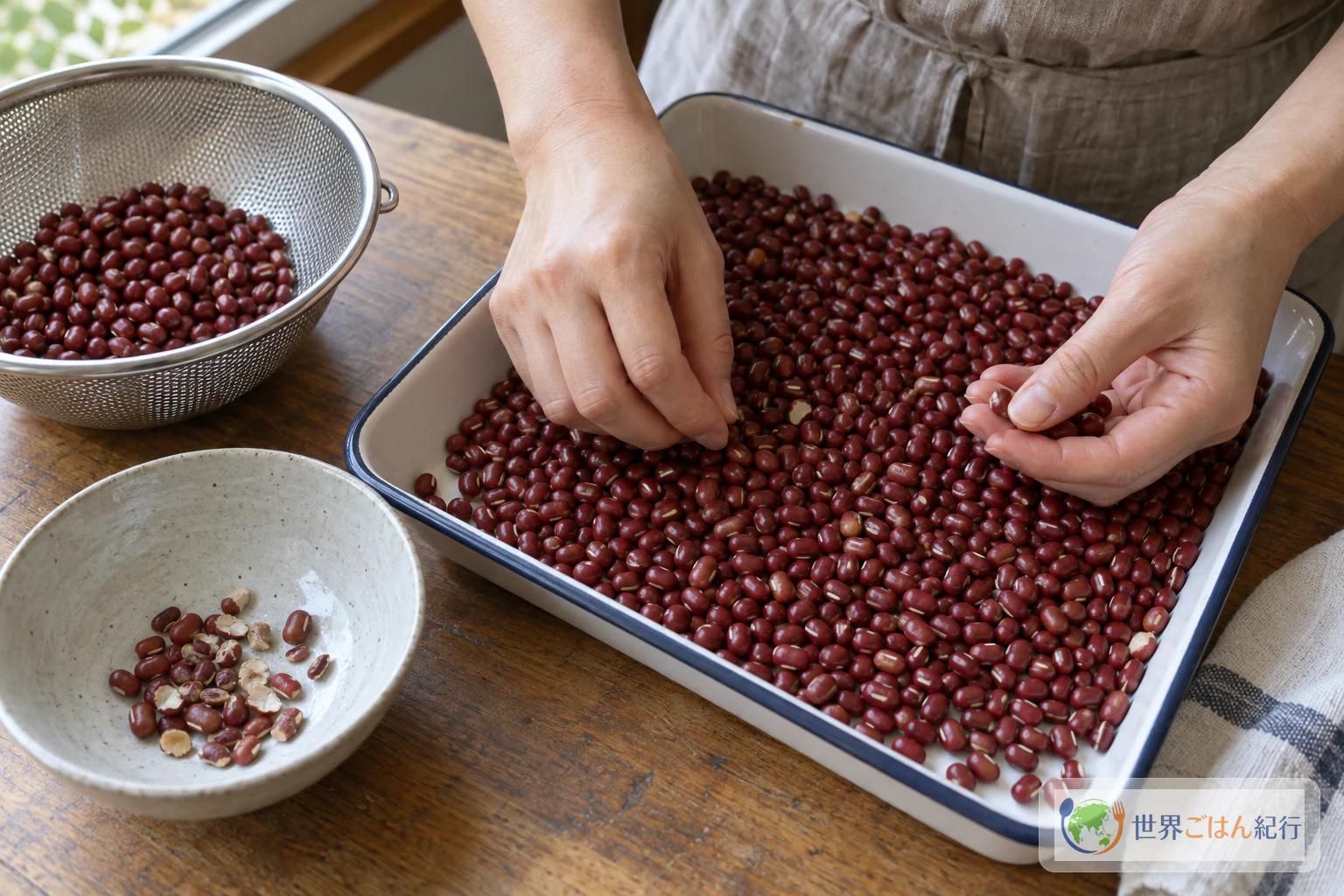
Beans. This recipe uses dried Dainagon azuki, a large azuki chosen because it holds its shape. Amanattō is also made with kintoki beans, tebō beans and others, but each bean is soaked and cooked differently. NHK's kintoki bean amanattō, for example, starts from the same 200g of dried beans yet uses a different method to rehydrate them. If you want to use another bean, follow a recipe written for that bean rather than swapping it into this one.
Sugar. Changing the type of sugar changes the sweetness and flavor, so this recipe keeps to granulated sugar throughout.
Mizuame. Mizuame is a Japanese starch syrup. Do not treat it as the same thing as corn syrup. This recipe does not offer a substitute.
Batch size. Use the full amounts as written. Scaling the recipe down would require recalculating every amount and rethinking the process, which this recipe does not cover.
Method: Three Days, Mostly Waiting
The source lists 150 minutes of cooking time. That figure does not include resting the beans, soaking them in syrup or drying them. A typical schedule spans three calendar days. Steps 1–6 happen on the first day, step 7 on the next day, and steps 8–9 on the day after that, with two overnight soaks of 8 hours or more and 4–5 hours of drying.
The source recipe soaks the beans at room temperature overnight, twice. We have not found a separate food-safety source that assesses these soaks across different room temperatures and seasons, such as hot summer conditions. We can't confirm them beyond what the source recipe states. We also can't promise that moving the soaks to the refrigerator would give the same process or result.
Getting It Right: What to Watch For
| What you notice | What the recipe asks for |
|---|---|
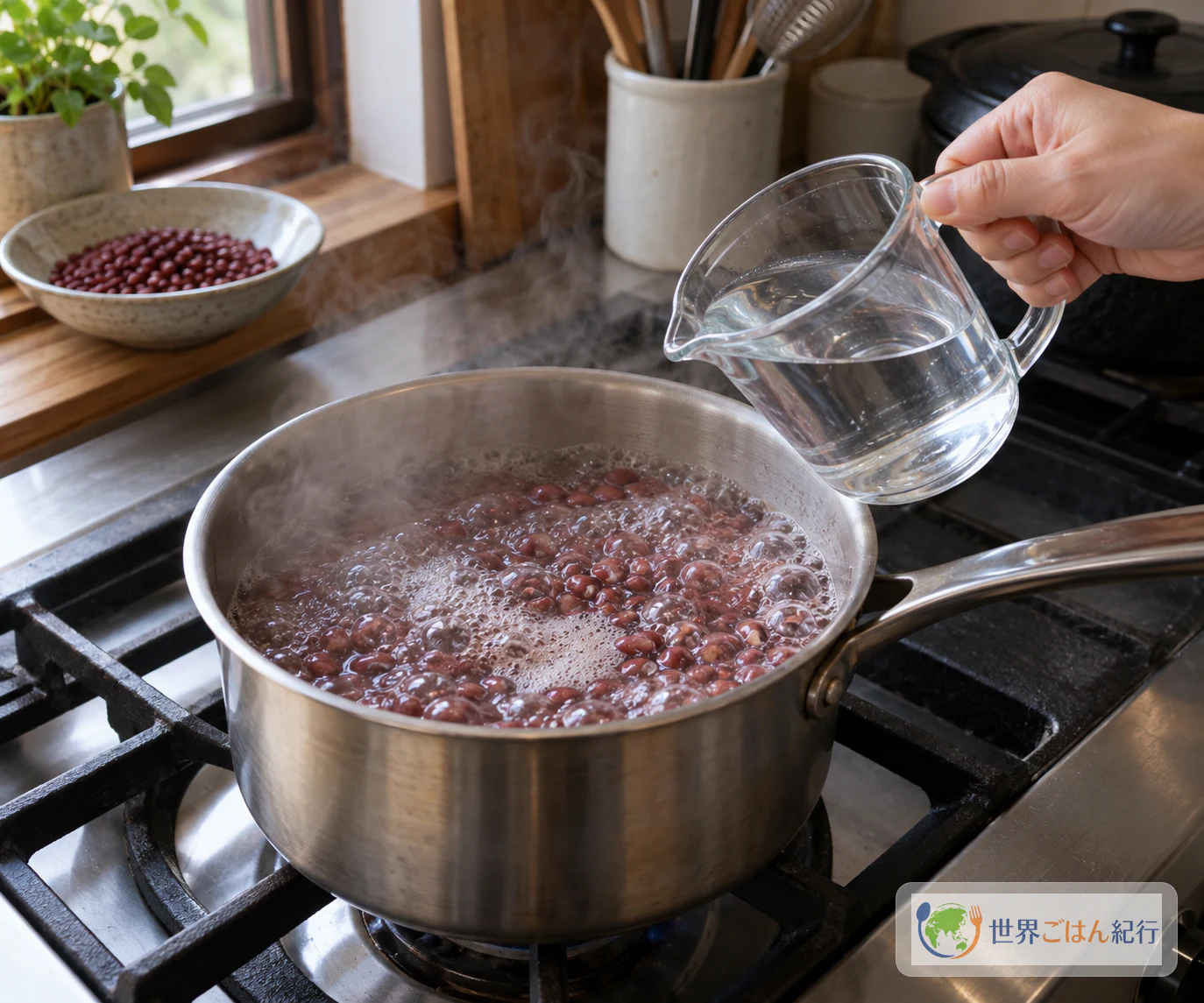
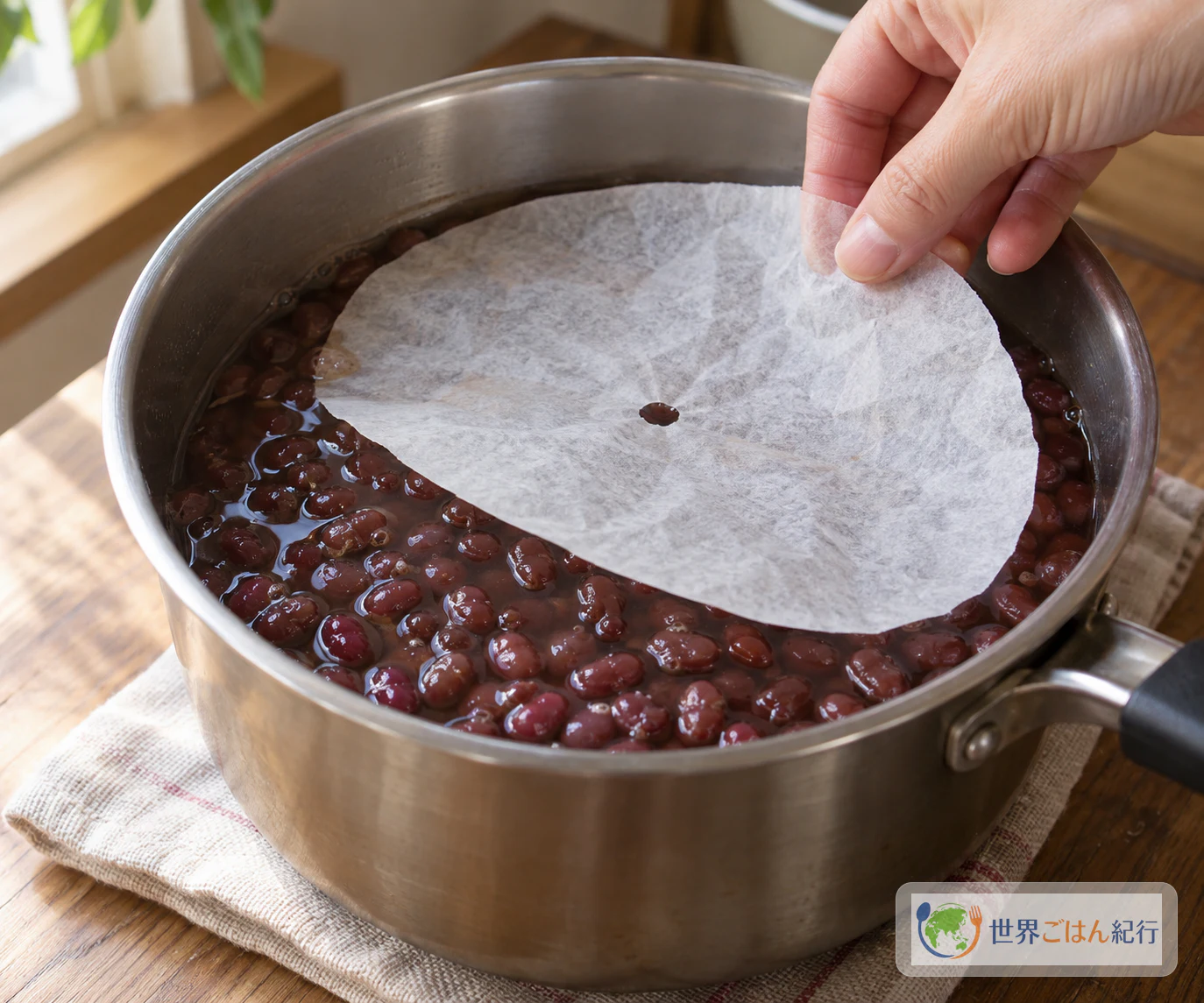
| Beans tumbling in the pot during the long simmer | Keep the heat very low so the beans barely move, and simmer uncovered |
| Beans poking above the water | Add lukewarm water so they stay covered |
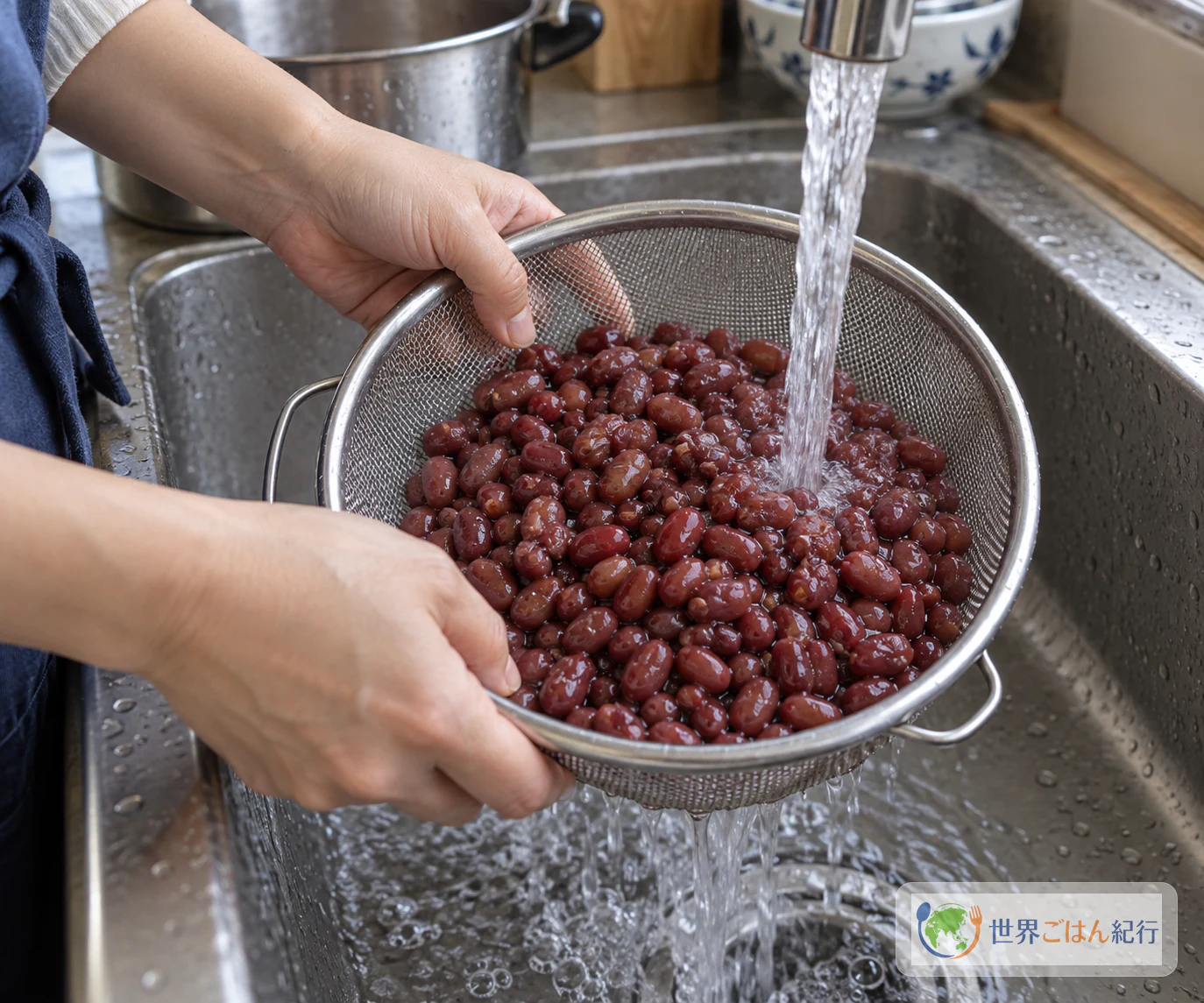
| Unsure whether the beans are done | Lift one out, cool it fully, and press it: it should crush between your fingers without the beans in the pot having broken apart |
| Tempted to make one strong syrup to save a day | Keep both stages: the 150g syrup first, then the added 100g sugar and 25g mizuame, each with its own overnight soak of 8 hours or more |
| Mixing up the water amounts | The 500ml, 400ml, 400ml and 500ml are cooking water you pour away; the syrup water is the 200ml in the first syrup |
| Beans still wet or warm when you want to add sugar | Wait until they are completely cool and dry after 4–5 hours spread out in a single layer, then add sugar |
Also remember that the 200g is the weight of the dried beans, not of cooked beans.
Variations
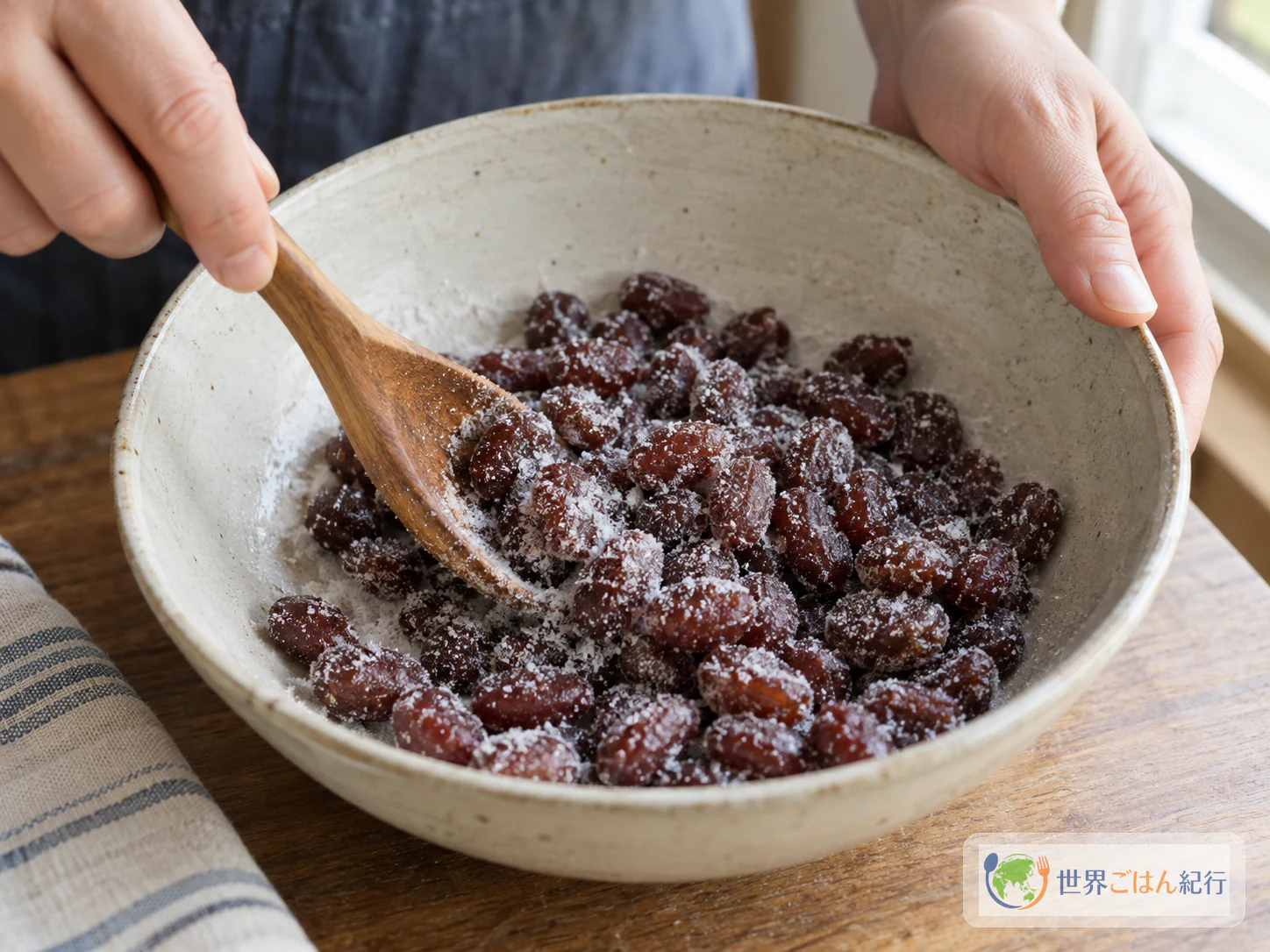
- Less finishing sugar. The source leaves the finishing sugar to taste, so you can use a light dusting or skip it. Don't reduce the sugar in the two syrups.
- Nure amanattō. Japan's food composition tables also list nure ("moist") amanattō, which is not coated with sugar. It is a different finish from this recipe, and its moisture and storage are not covered here.
- Other beans. Kintoki beans, tebō beans and others make their own amanattō, each with its own recipe and method. Treat them as separate recipes, not as a swap in this one.
Where Amanattō Comes From
Several confectioners link the origin of amanattō to Eitaro, the confectionery house in Nihonbashi, Tokyo, and to Hosoda Yasubei. Their accounts do not agree on when it began, and they place it at points ranging from the late Edo period to the early Meiji years. For that reason we don't fix a single date or a single inventor.
Eitaro's own company history says it created amananattō (甘名納糖) in the Bunkyū era. It treats this as a separate event from the opening of its Nihonbashi shop in the fourth year of Ansei, so the shop's opening date is not the date of the sweet. Eitaro also says the name is a play on Hamana nattō. The amananattō the company sells today is made with sasage (大角豆, a type of cowpea), so it is not the same recipe as the Dainagon azuki version above.
At home, amanattō is a sweet to set out with tea: a few beans on a small plate, eaten slowly.
Storage
The source recipe's storage guidance is to keep the finished amanattō in a storage container, at room temperature in winter and in the refrigerator in summer, for about one week. That guidance comes from the source recipe. We have not found a separate safety check of it for different room temperatures, so we don't extend it to other conditions.
Frequently Asked Questions
Is amanattō fermented like natto?
No. Amanattō is a sweet made by steeping cooked beans in sugar syrup, and no fermentation is involved. The similar name has its own story, which Eitaro describes as a play on Hamana nattō.
Can I make it with any bean?
Amanattō is made with many beans, but each one is soaked and cooked differently. NHK publishes a separate kintoki bean version with its own method. Follow a recipe written for the bean you want to use.
Is the finishing sugar required?
No. The source recipe adds it "as desired." Amanattō without a sugar coating also exists as nure amanattō, but that is a different finish from this recipe.
Can I finish it in one day?
Not with this recipe. The 150 minutes listed in the source cover only the cooking. The two overnight soaks and the 4–5 hours of drying come on top of that, which spreads the work across three calendar days.
Sources
- NHK Educational / Keiko Usami, "Honnori Amanattō" (ほんのり甘納豆), Minna no Kyō no Ryōri, 2015. The Dainagon azuki amanattō recipe used here: ingredients, method, times, finished amount of about 480g, and storage guidance. https://www.kyounoryouri.jp/recipe/21071_%E3%81%BB%E3%82%93%E3%81%AE%E3%82%8A%E7%94%98%E7%B4%8D%E8%B1%86.html
- Ministry of Education, Culture, Sports, Science and Technology (Japan), "Standard Tables of Food Composition in Japan 2015 (Seventh Revised Edition): Notes by Food Group, Confectionery." The general method of soaking cooked beans in sugar solutions from low to high concentration, then draining and coating them with sugar, and the existence of nure amanattō. https://www.mext.go.jp/component/a_menu/science/detail/__icsFiles/afieldfile/2017/06/22/1365346_1-0315r10.pdf
- Mitsutake Seika, "About Amanattō" (甘納豆について). Describes amanattō as a semi-moist sweet of syrup-simmered beans coated with sugar and dried, and gives a manufacturer's account of its origin. https://www.mitsutake.co.jp/html/page5.html
- Namisato Co., Ltd., "Tell me about the origin of amanattō" (甘納豆の由来について教えてください。). Gives an outline of the method, one theory of the name, and the company's account of Eitaro and Hosoda Yasubei. https://www.namisato.co.jp/faq/227/
- Minna no Kyō no Ryōri (NHK Educational), "Kintoki Bean Amanattō" (金時豆の甘納豆). A separate kintoki bean recipe with a different rehydration method, used here only for comparison. https://www.kyounoryouri.jp/recipe/21072_%E9%87%91%E6%99%82%E8%B1%86%E3%81%AE%E7%94%98%E7%B4%8D%E8%B1%86.html
- Eitaro Sohonpo, "History of Eitaro" (榮太樓の歴史). The company's account that it created amananattō in the Bunkyū era, distinct from its Nihonbashi shop opening in the fourth year of Ansei. https://www.eitaro.com/ryohan/history/
- Eitaro Sohonpo, "Main Store Exclusive: Amananattō" (本店限定品:甘名納糖). The company's account of the name as a play on Hamana nattō, and its use of sasage beans. https://www.eitaro.com/exclusive/