Katemeshi: Plain Rice Turned into a Fuller Bowl
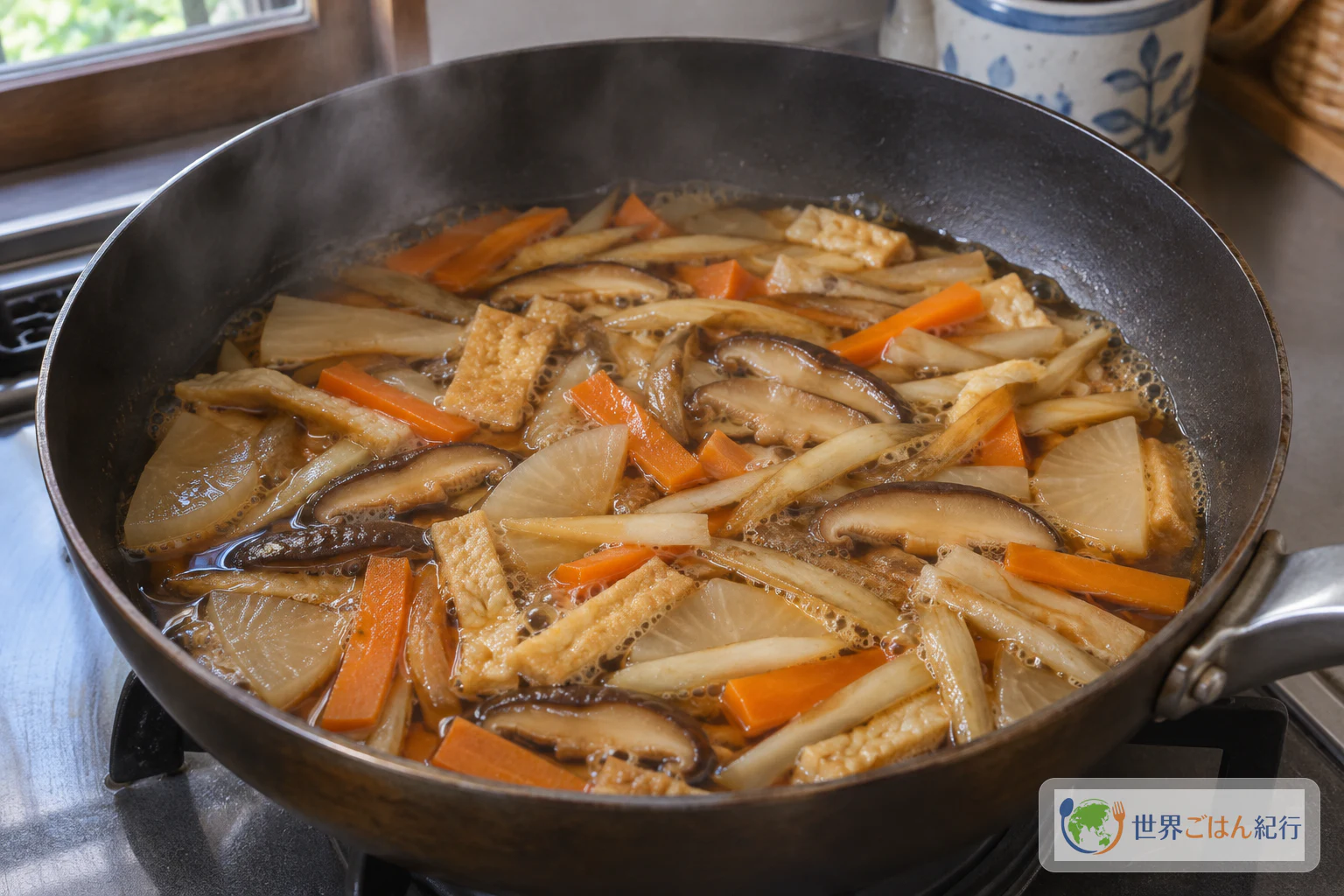
Cook the rice plain, simmer the vegetables separately in a small amount of soy-seasoned liquid, and only then bring the two together. Mixing after cooking is the heart of this version.
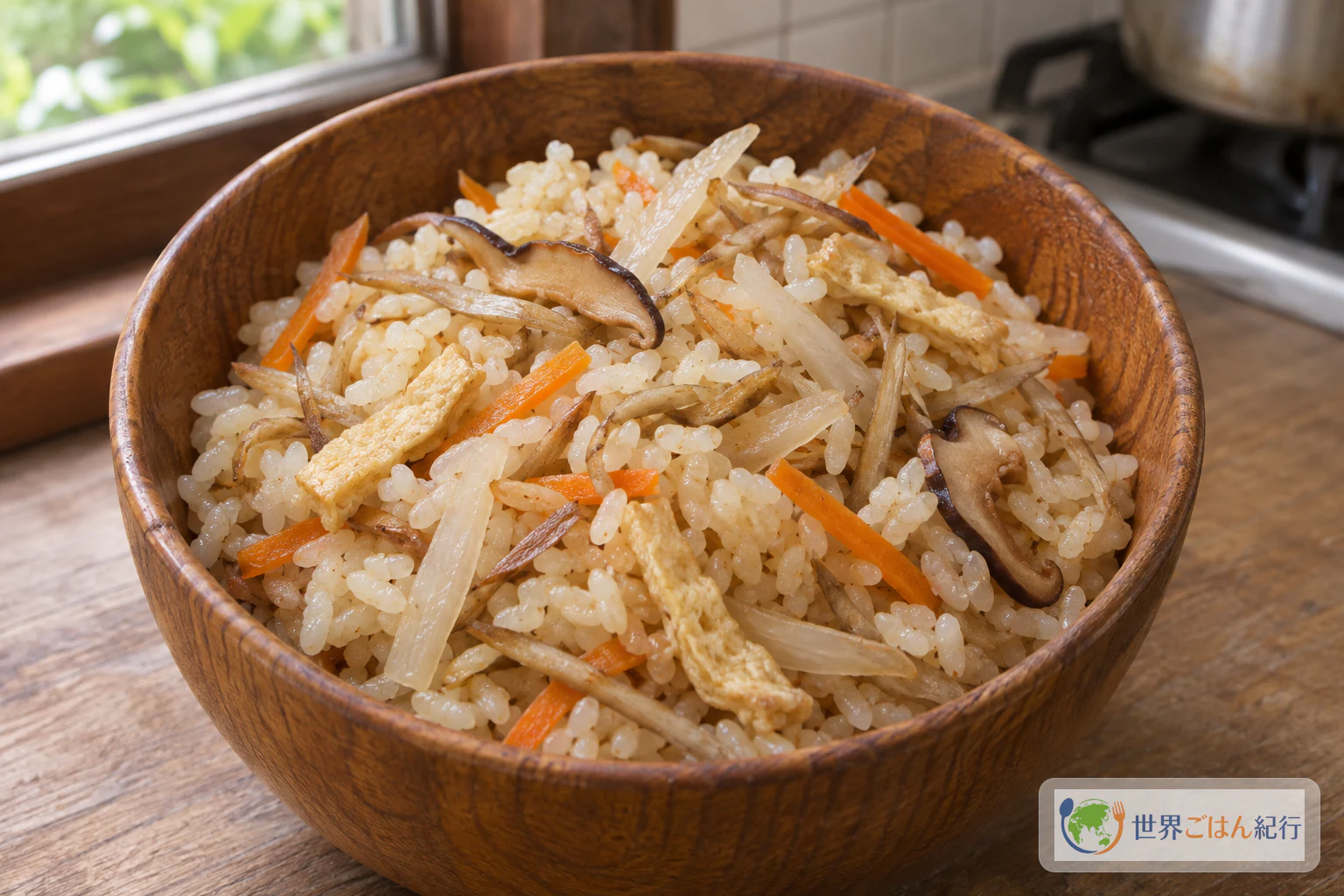
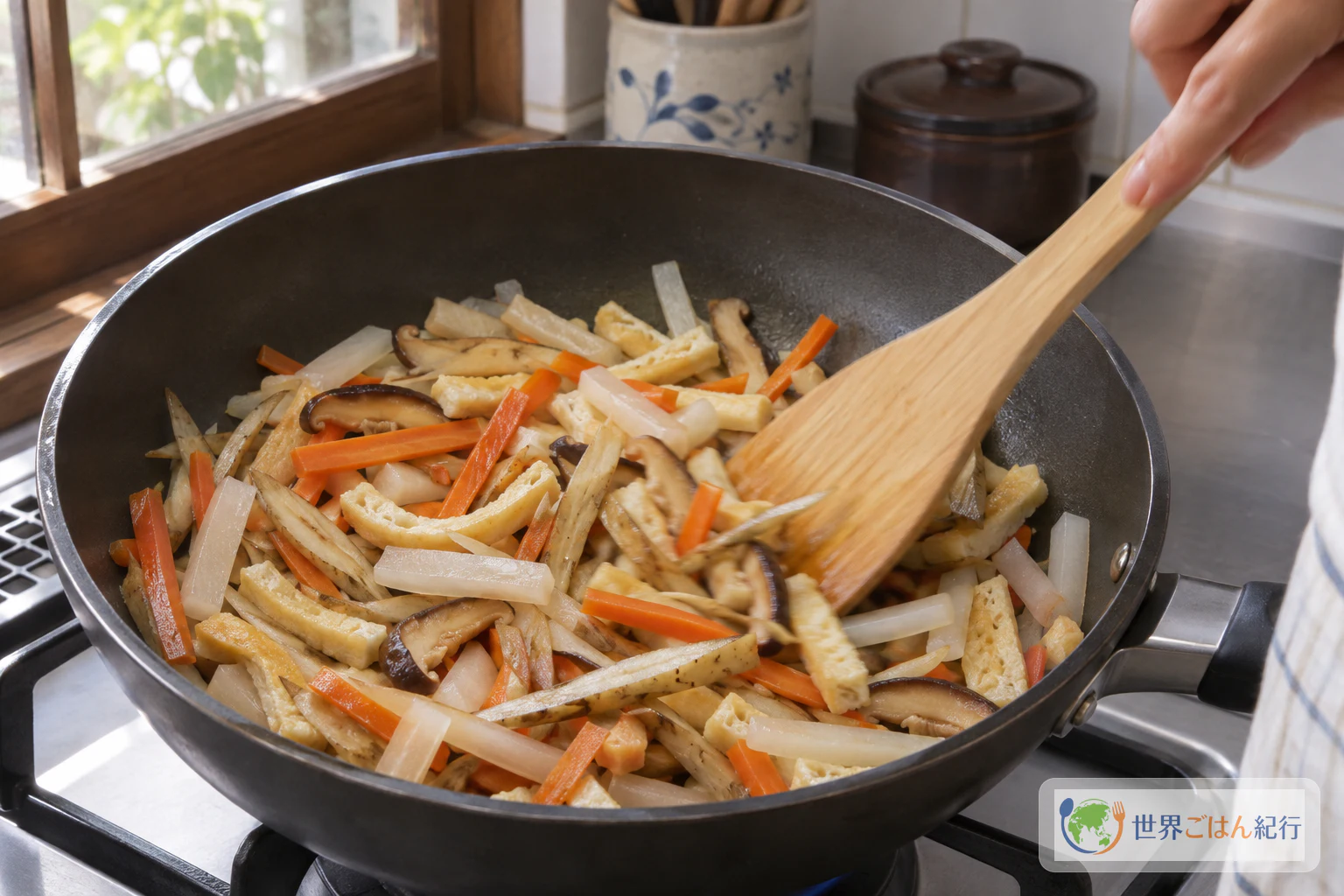
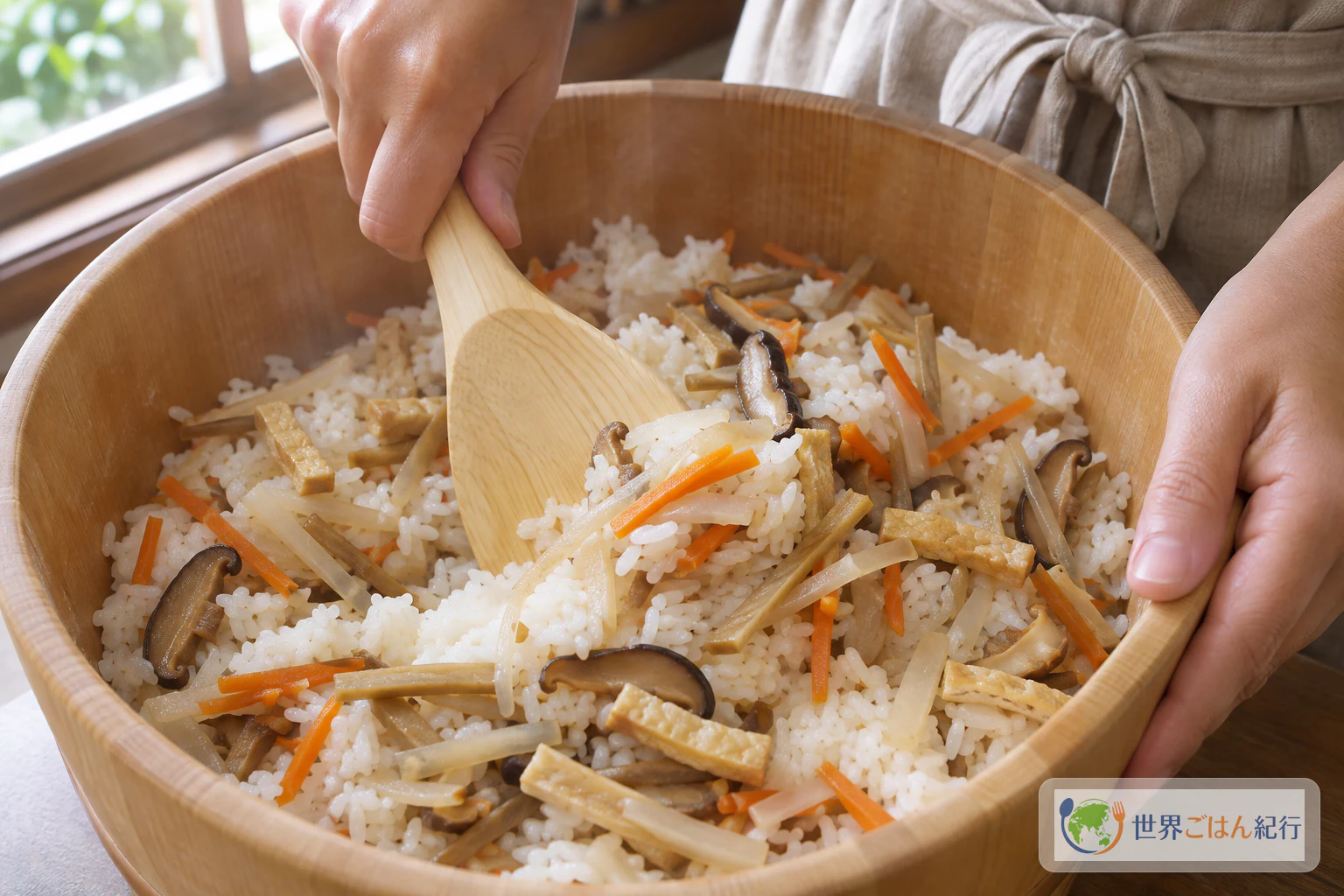
Freshly cooked white rice is still steaming when a pan of small strips is turned into it: white daikon, orange carrot, thin shavings of burdock, brown slices of shiitake and pale fried tofu, all glossy with soy sauce. A few folds with a rice paddle, and the plain rice becomes a fuller bowl. This is katemeshi (かてめし), a home dish handed down in Saitama Prefecture, just northwest of Tokyo.
Japan's Ministry of Agriculture, Forestry and Fisheries (MAFF) describes katemeshi as a dish in which vegetables and other ingredients were added to make up for the amount of rice. The Ministry presents this as part of the dish's transmitted story, and Saitama Prefecture notes that there are several accounts of how the name and dish came about. This article treats that history as the tradition tells it, not as a proven origin.
The recipe here is the six-serving root-vegetable version published on the MAFF regional-cuisine pages and credited to "Saitama Furusato no Denshō Ryōrishū," a collection of Saitama's traditional home dishes compiled by local keepers of traditional food. Sekai Gohan has not kitchen-tested this recipe. The fried-tofu strips and the use of the rice cooker's water markings below are editorial handling choices; the published method does not specify the tofu's cut or the rice-cooking water amount. It uses daikon, burdock, carrot, dried shiitake and fried tofu, sautéed in oil, simmered with water and seasonings, and mixed into cooked rice. Other parts of Saitama make katemeshi quite differently, and those versions are described later as separate dishes, not blended into this one. For more of the country's food, see our Japan page.
Where Katemeshi Comes From: Chichibu and Beyond
According to MAFF, katemeshi is passed down mainly in the Chichibu area of western Saitama, and it is also known in Saitama City, Hiki District and the Iruma area. It is not a single fixed recipe. Both the rice and the fillings change by place and by household. MAFF also places the dish among foods for festive occasions and special days, alongside its everyday role of stretching rice.
The regional differences MAFF records are wide:
| Form | What changes | Where it is described |
|---|---|---|
| Root vegetables mixed into plain rice | Simmered vegetables, shiitake and fried tofu folded into cooked rice | The version in this article |
| Vinegared-rice type | Local fillings mixed into seasoned vinegared rice | Mentioned for school lunches in northern Saitama |
| Zuiki type | Dried taro-family stems (zuiki) among the fillings | Mentioned for southern Saitama and Chichibu |
| Tea-rice and wild-vegetable types | Fillings mixed into tea-flavored rice, or mountain vegetables used | Mentioned as further local forms |
Saitama Prefecture introduces katemeshi as a traditional dish of Chichibu. Even the dish's name, then, points to a family of rice dishes rather than one plate.
Ingredients for Six Servings
Equipment
- Rice cooker or a pot for cooking rice
- Bowl for washing and soaking the rice
- Small bowl for rehydrating the shiitake
- Bowl of water for the burdock
- Knife and cutting board
- Frying pan or shallow pan
- Spatula or wooden spoon
- Large mixing bowl
- Rice paddle (shamoji)
- Measuring spoons
Choosing and Reading the Ingredients
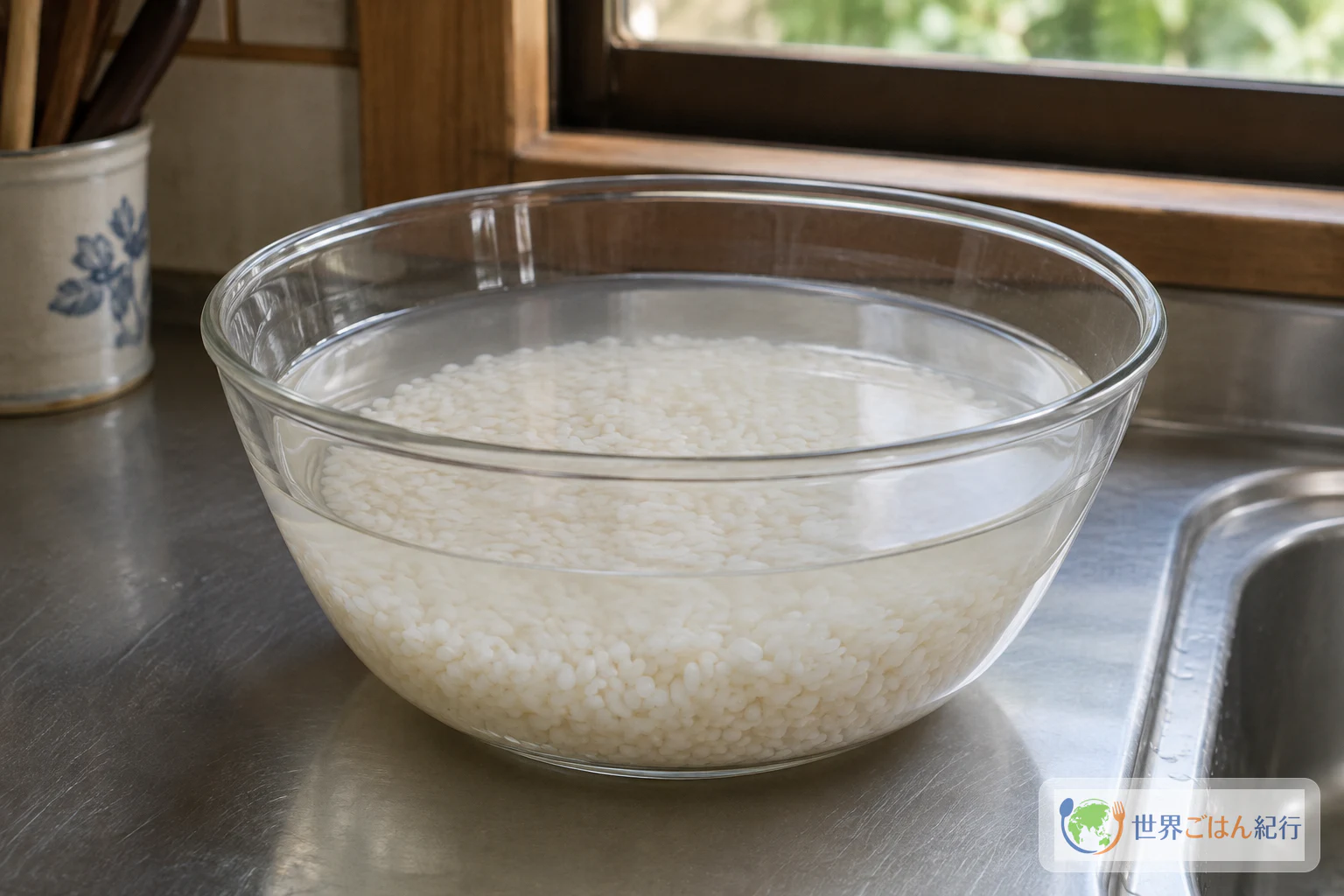
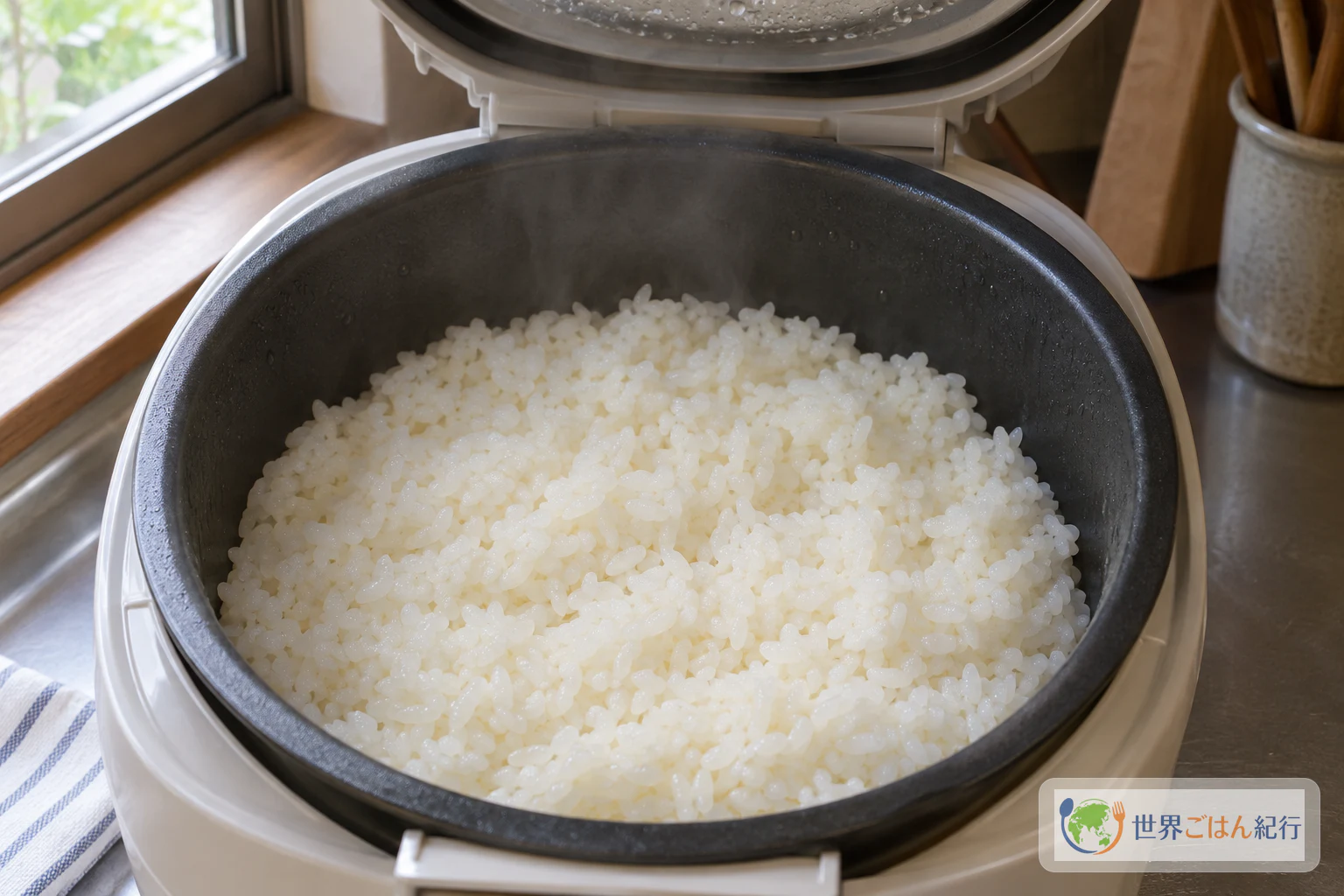
The 100cc of water goes only into the simmering pan with the vegetables. Cook the rice with separate water, following your usual method or your rice cooker's markings. Do not try to cook 3 gō of rice with 100cc.
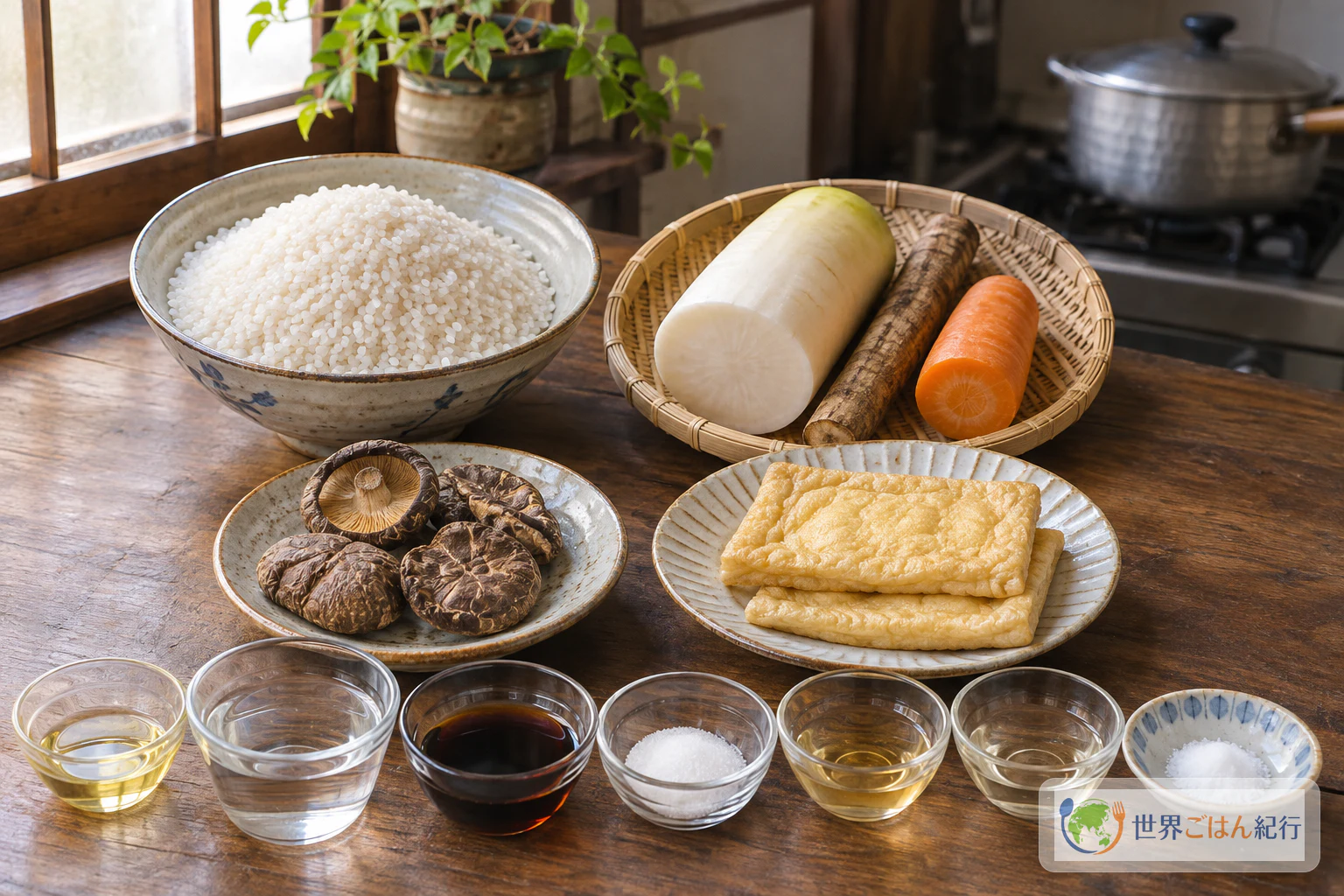
- Rice. Use 450g (3 gō) of raw rice before washing.
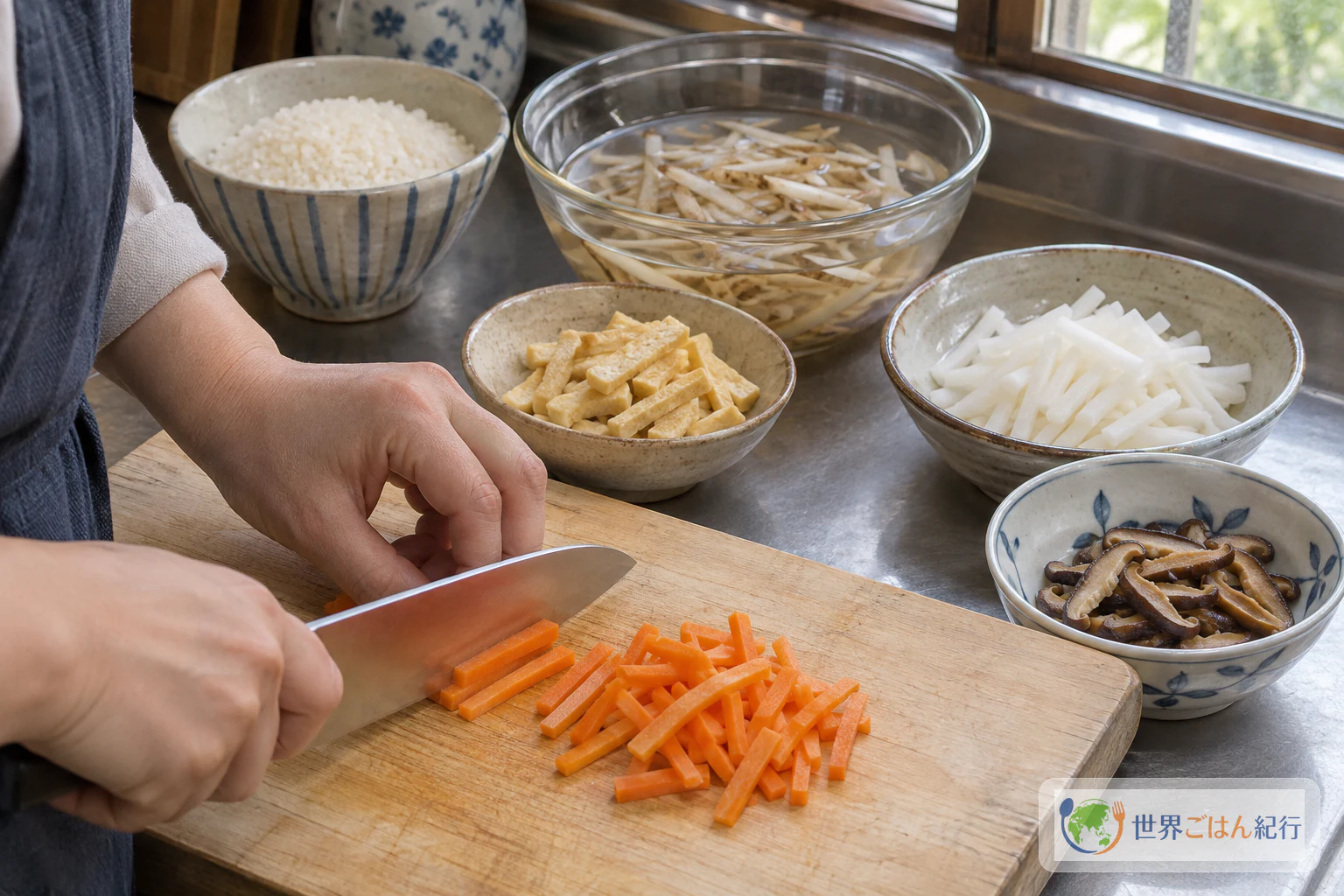
- Vegetables. Weigh the daikon, burdock and carrot before cutting.
- Dried shiitake. Use 4–5 dried mushrooms and rehydrate them in water as needed. Use 100cc plain water for simmering the fillings.
- Fried tofu. Cut it into short strips to match the other fillings for easier mixing.
- Seasonings. Use 1 tbsp each of sugar, mirin and sake, and 2/3 tsp salt. All the oil and seasonings go in once, at their own step. Nothing is added again later.
Fried tofu is made from soybeans, and soy sauce is soy-based. Check the labels of the fried tofu, soy sauce, dried shiitake and any other packaged ingredient for allergens. Wash the knife and cutting board after handling raw root vegetables and rehydrated mushrooms, and use clean utensils when you mix the cooked fillings into the rice.
Method: Cook the Rice, Simmer the Fillings, Then Mix
Five stages: rice, cutting, sautéing, simmering, mixing. The rice and the fillings are cooked separately and meet only at the end.
Common Mix-Ups and How to Avoid Them
| What happens | Why it happens | What to do |
|---|---|---|
| The rice turns out hard or soupy | The 100cc simmering water was treated as rice-cooking water | Cook the rice with its own usual water. The 100cc is for the fillings only |
| The dish tastes too salty | Salt or soy sauce was added again at the mixing stage | Season only once, in the simmering pan |
| The fillings were cooked in the rice cooker | Confusion with a rice-cooked-together style | In this version, cook the fillings separately and mix them in afterward |
| The mushroom flavor differs from other recipes | Some versions simmer with the shiitake soaking liquid | This version uses plain water; using the soaking liquid belongs to other household recipes |
Other Ways Katemeshi Is Made
These are separate versions, each with its own method. Their amounts are not used in the recipe above.
- Ageo school-lunch katemeshi. Ageo City in Saitama publishes a school-lunch version in which the rice itself is cooked with sake, salt and soy sauce, while dried zuiki, koya-dofu (freeze-dried tofu), kelp and other fillings are simmered separately and mixed in afterward. Zuiki, the city explains, is the dried stem of taro-family plants.
- Zuiki katemeshi. MAFF also mentions zuiki in katemeshi from southern Saitama and Chichibu.
- Vinegared-rice katemeshi. MAFF notes a form, served in school lunches in northern Saitama, in which local fillings are mixed into vinegared rice.
- Tea-rice and wild-vegetable katemeshi. MAFF describes versions using tea-flavored rice or mountain vegetables. Their exact fillings vary.
- Autumn taro version. Saitama Prefecture presents an autumn katemeshi in which taro is cooked together with the rice, a different method from mixing simmered fillings in afterward.
- JA Saitama women's division version. A recipe from the women's division of JA Saitama, the regional farmers' cooperative, also mixes simmered fillings into cooked rice, simmering them in the shiitake soaking liquid with seasonings, and suggests shaping the rice into onigiri. It also stresses that each household makes it its own way.
If you enjoy dishes built on cooked rice, compare this with Chinese fried rice, a very different way of turning plain rice into a fuller plate. Both dishes use rice.
Serving and Leftovers
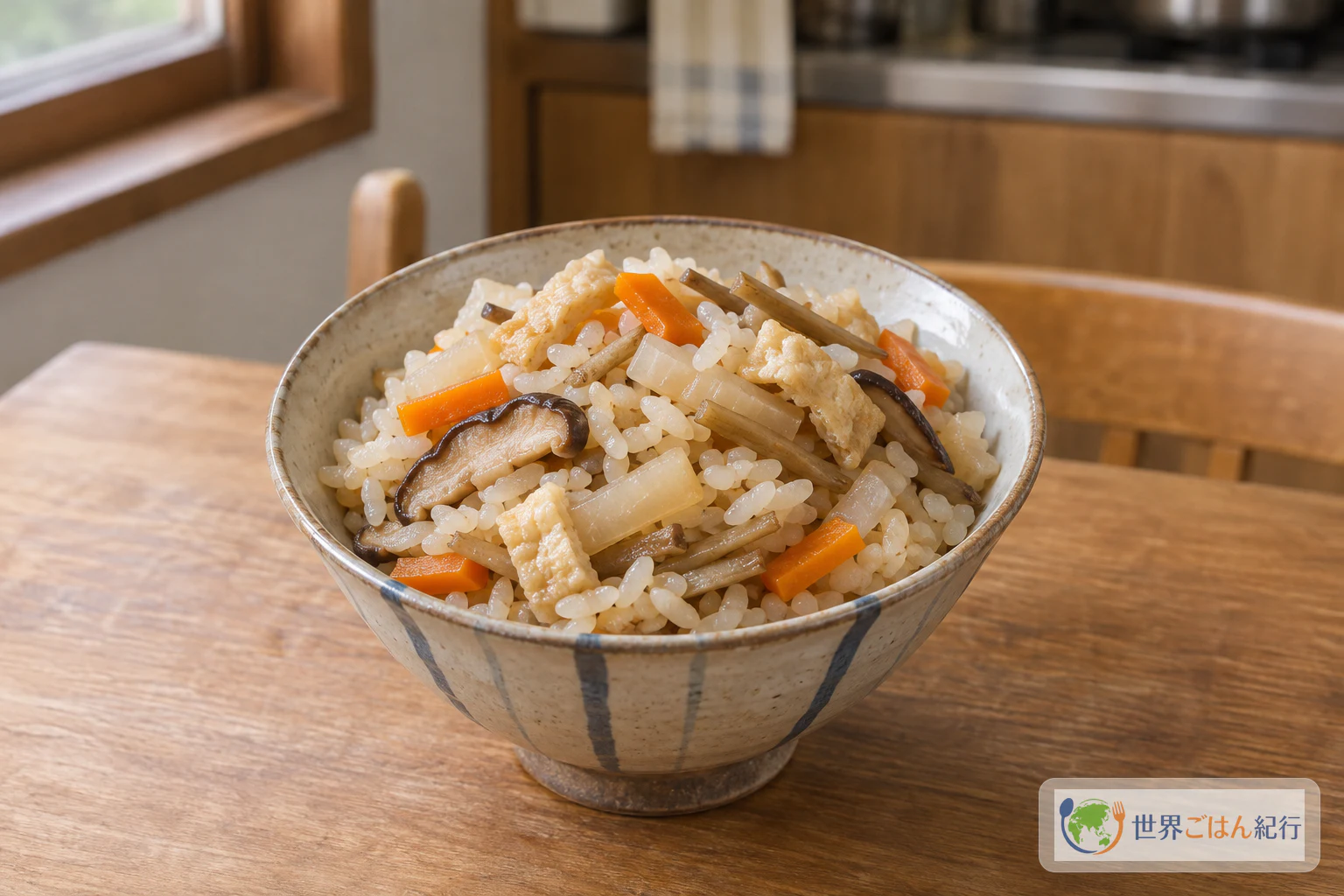
Katemeshi needs nothing on top. Serve it in bowls straight after mixing, so the soy-seasoned fillings sit among warm grains of rice.
For leftovers, follow general household food-hygiene practice from Japan's Ministry of Health, Labour and Welfare. Use clean utensils and dishes, do not leave food at room temperature for long before or after cooking, and divide leftovers into small, shallow containers so they cool quickly. That guidance is general. It is not a tested storage period for katemeshi, and this article gives no storage period, bento guidance or reheating guarantee for the dish.
Frequently Asked Questions
What is katemeshi?
It is a Saitama mixed-rice dish. MAFF explains it as rice to which vegetables and other ingredients were added to make up for the amount of rice. The dish is passed down mainly in Chichibu and also in Saitama City, Hiki District and the Iruma area. Saitama Prefecture notes there are several accounts of its origin.
Is katemeshi the same as takikomi gohan (rice cooked with ingredients)?
Not in this version. Here the fillings are simmered in a separate pan and mixed into rice that was cooked plain. Other katemeshi exist, though, such as Saitama Prefecture's autumn version, where taro is cooked together with the rice.
Are the fillings fixed?
No. MAFF describes differences in both the rice and the fillings by region, and the JA Saitama women's division recipe stresses household differences. Zuiki, koya-dofu, kelp, wild vegetables, vinegared rice and tea rice all appear in other versions.
What is zuiki?
Ageo City describes dried zuiki as the dried stems of taro-family plants. It is used in some katemeshi, including Ageo's school-lunch version, but not in this recipe.
Should I use the shiitake soaking liquid?
This version simmers the fillings in 100cc of plain water and does not call for the soaking liquid. The JA Saitama women's division recipe does simmer with the soaking liquid, so using it moves you toward that household-style version rather than this one.
How long should the fillings simmer?
The recipe sets no simmering time and no end point, such as how much liquid should remain. It also gives no rule about draining the fillings before mixing. This article does not add a simmering time or a draining rule.
Can I pack katemeshi in a bento or keep it for later?
This article does not give bento suitability, carrying limits, a storage period or reheating guidance for katemeshi. Only general household hygiene applies: keep utensils clean, don't leave food at room temperature for long, and cool leftovers quickly in small, shallow containers.
Sources
- Ministry of Agriculture, Forestry and Fisheries (MAFF), "Katemeshi, Saitama Prefecture" (かてめし 埼玉県), Uchi no Kyōdo Ryōri (regional home cuisine). Source of the six-serving recipe credited to "Saitama Furusato no Denshō Ryōrishū," including its ingredients, rice soaking and cooking, and the sauté, simmer and mix-in method. Also the source for the areas where the dish is handed down, its regional differences, its festive role, and the transmitted explanation of rice stretched with vegetables. https://www.maff.go.jp/j/keikaku/syokubunka/k_ryouri/search_menu/menu/33_6_saitama.html
- Ageo City, "Katemeshi" (かてめし). The school-lunch version with zuiki, koya-dofu and kelp, the seasoned rice used in it, and the explanation that dried zuiki is the dried stem of taro-family plants. https://www.city.ageo.lg.jp/page/294831.html
- Saitama Prefecture, "Local dishes made with Saitama ingredients" (埼玉産の食材で作る郷土料理). Katemeshi as a traditional dish of Chichibu, the note that there are several accounts of its origin, and the separate autumn version with taro cooked together with the rice. https://www.pref.saitama.lg.jp/a0314/sainokuni/sainokuni-kensei-202611p11.html
- JA Group, "Saitama 'Katemeshi,' JA Saitama Women's Division" (埼玉県「かてめし」JAさいたま女性部). A household-style mixed-in version simmered with shiitake soaking liquid and seasonings, its use for onigiri, and differences between households. https://life.ja-group.jp/recipe/detail/?id=8734
- Ministry of Health, Labour and Welfare, "Preventing food poisoning at home" (家庭での食中毒予防). General household hygiene: clean utensils and dishes, avoiding long periods at room temperature before and after cooking, and dividing leftovers into shallow containers to cool quickly. It is not a storage test for katemeshi. https://www.mhlw.go.jp/stf/seisakunitsuite/bunya/kenkou_iryou/shokuhin/syokuchu/01_00008.html