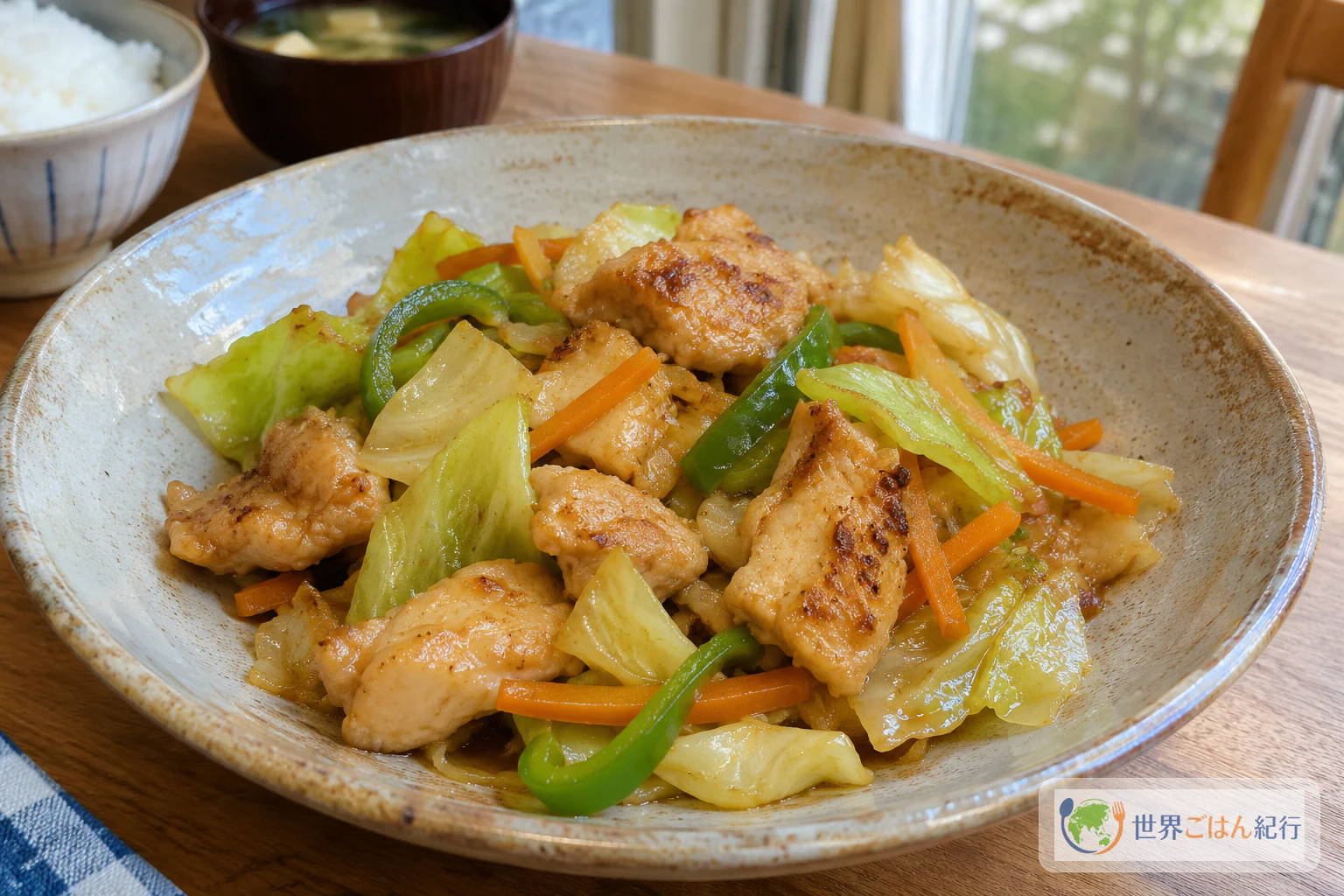
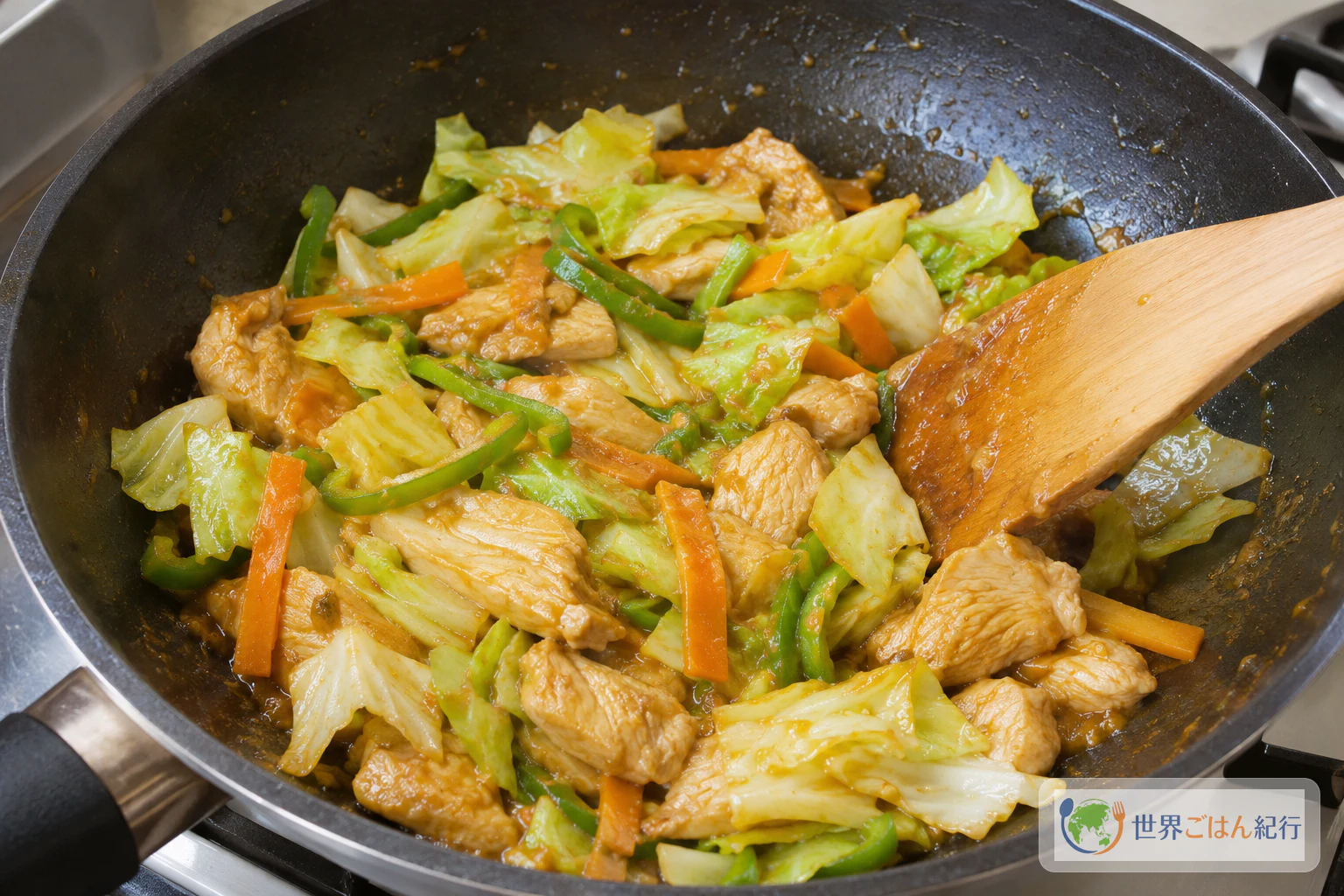
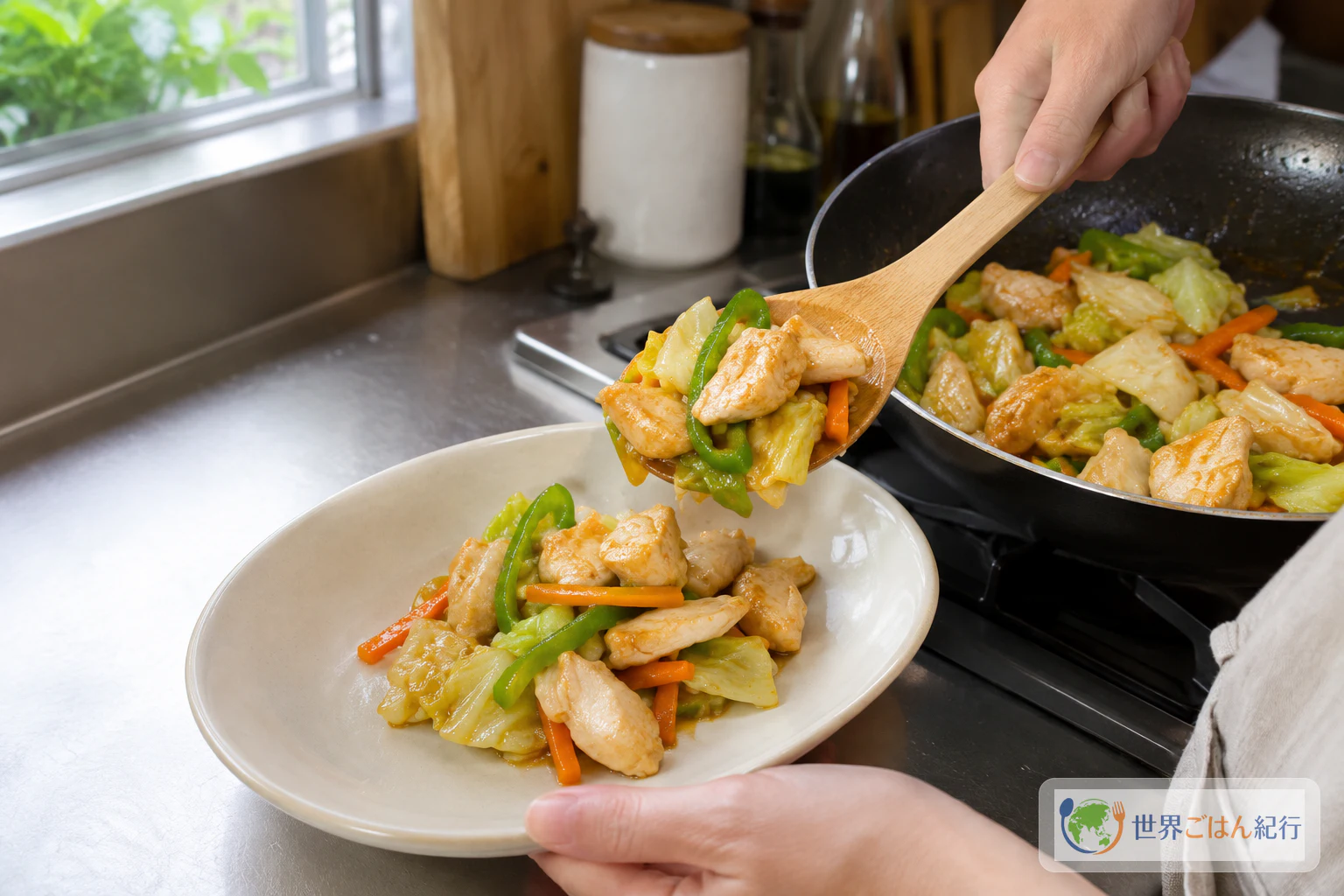
Keichan: Chicken and Vegetables Stir-Fried in a Seasoned Sauce
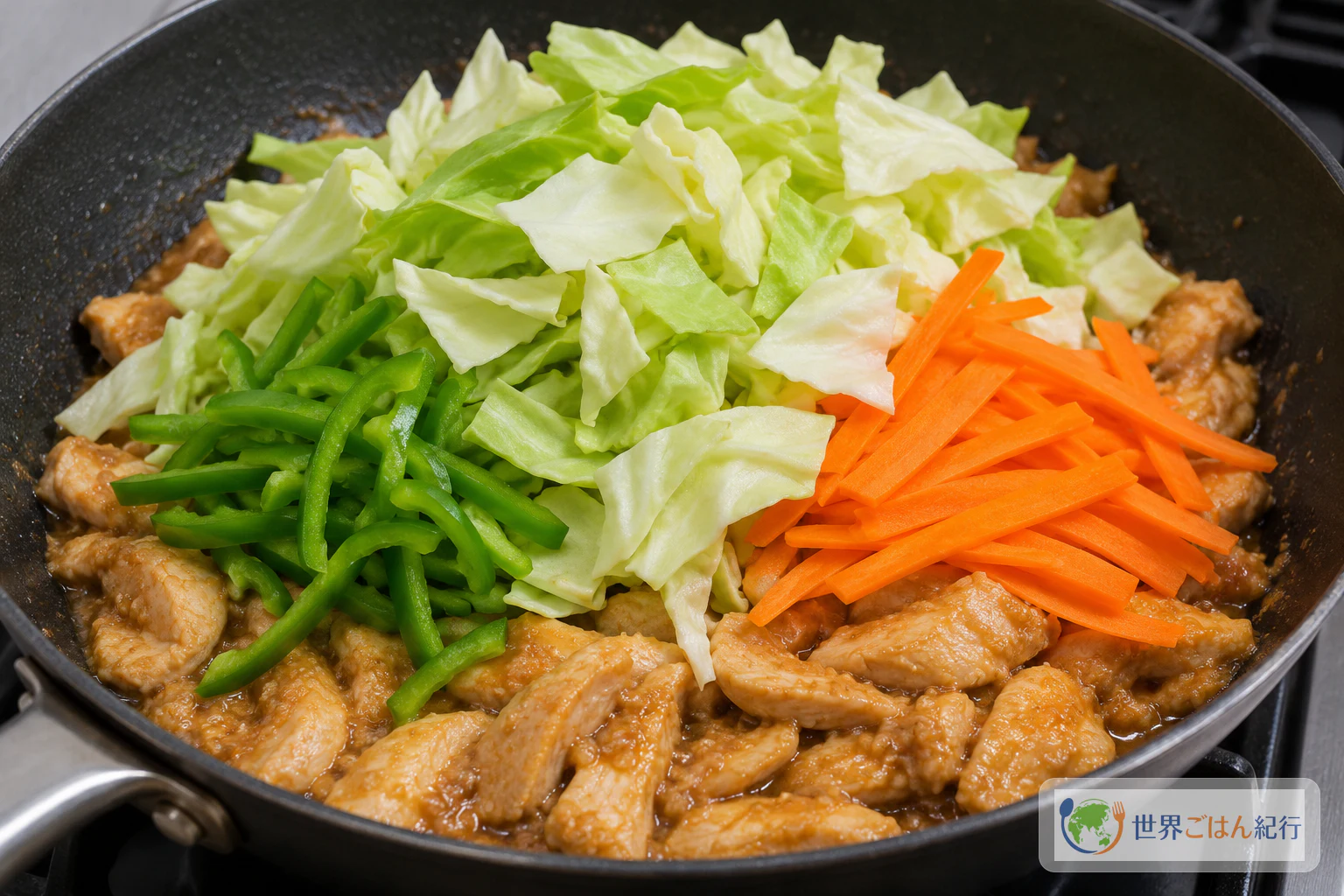
Chicken breast seasoned with miso, sake, usukuchi soy sauce and garlic goes into the pan first, and cabbage, carrot and green pepper follow. Keep that order, and cook the chicken all the way through before the vegetables join it.
In the mountain areas of Gifu Prefecture, chiefly Gujo City, Gero City and the southern part of Takayama City, chicken and vegetables are coated in a seasoned sauce and stir-fried. This is keichan (鶏ちゃん), a local dish that Japan's Ministry of Agriculture, Forestry and Fisheries (MAFF) presents in its collection of regional home cooking. MAFF also describes it being cooked on an iron griddle or a jingisukan pan and eaten as it grills.
There is no single fixed keichan. MAFF notes that the flavor ranges across miso, soy sauce, salt and more, and differs by area, household and shop. A keichan specialty shop in Gero, Suginoko, likewise describes sauces built from ingredients such as miso, soy sauce and garlic, varying from shop to shop and home to home. This article does not claim to show the one true version. It follows one published home recipe and explains where it sits within that range.
This Version: Chicken Breast and Mixed Miso, Serves 4
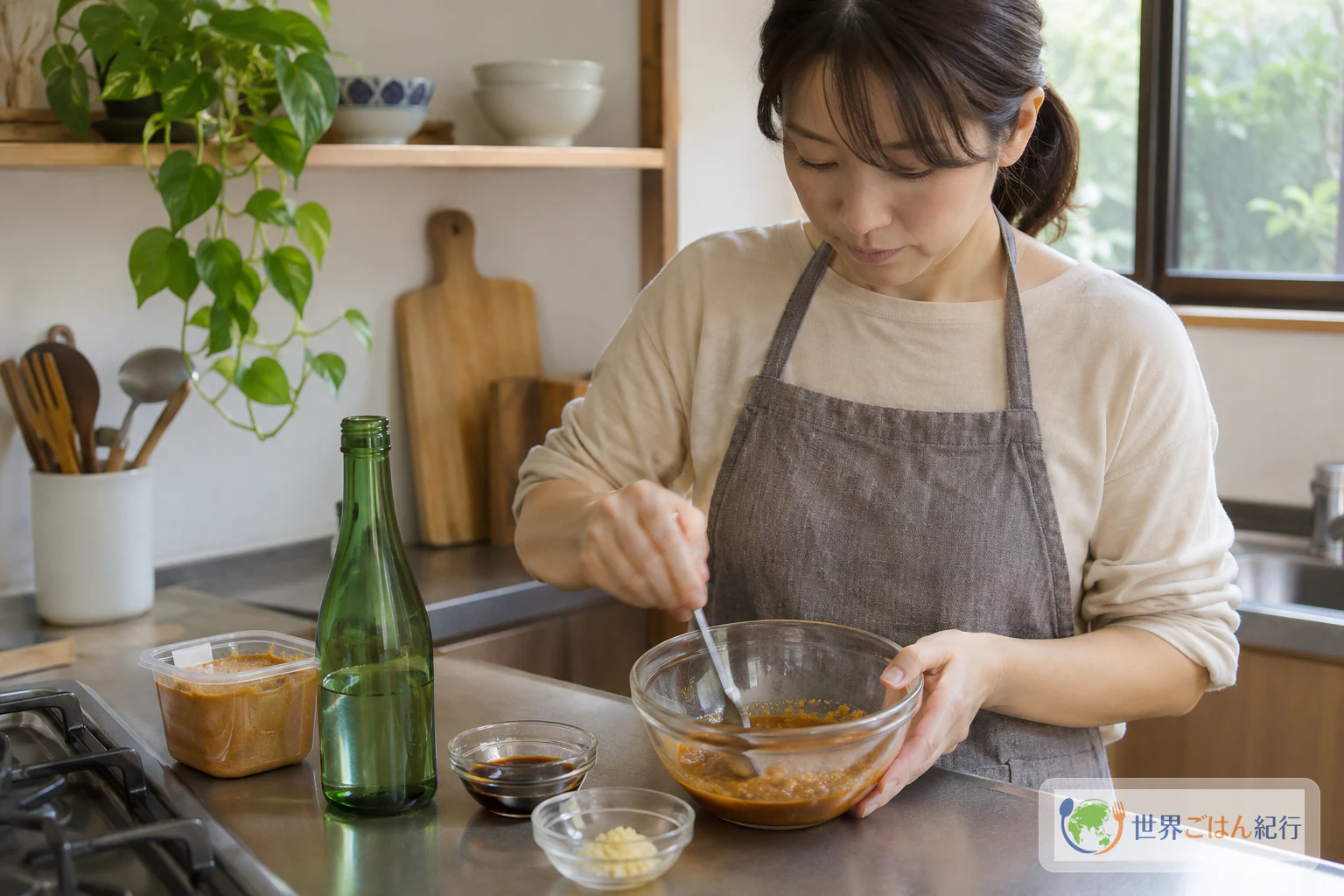
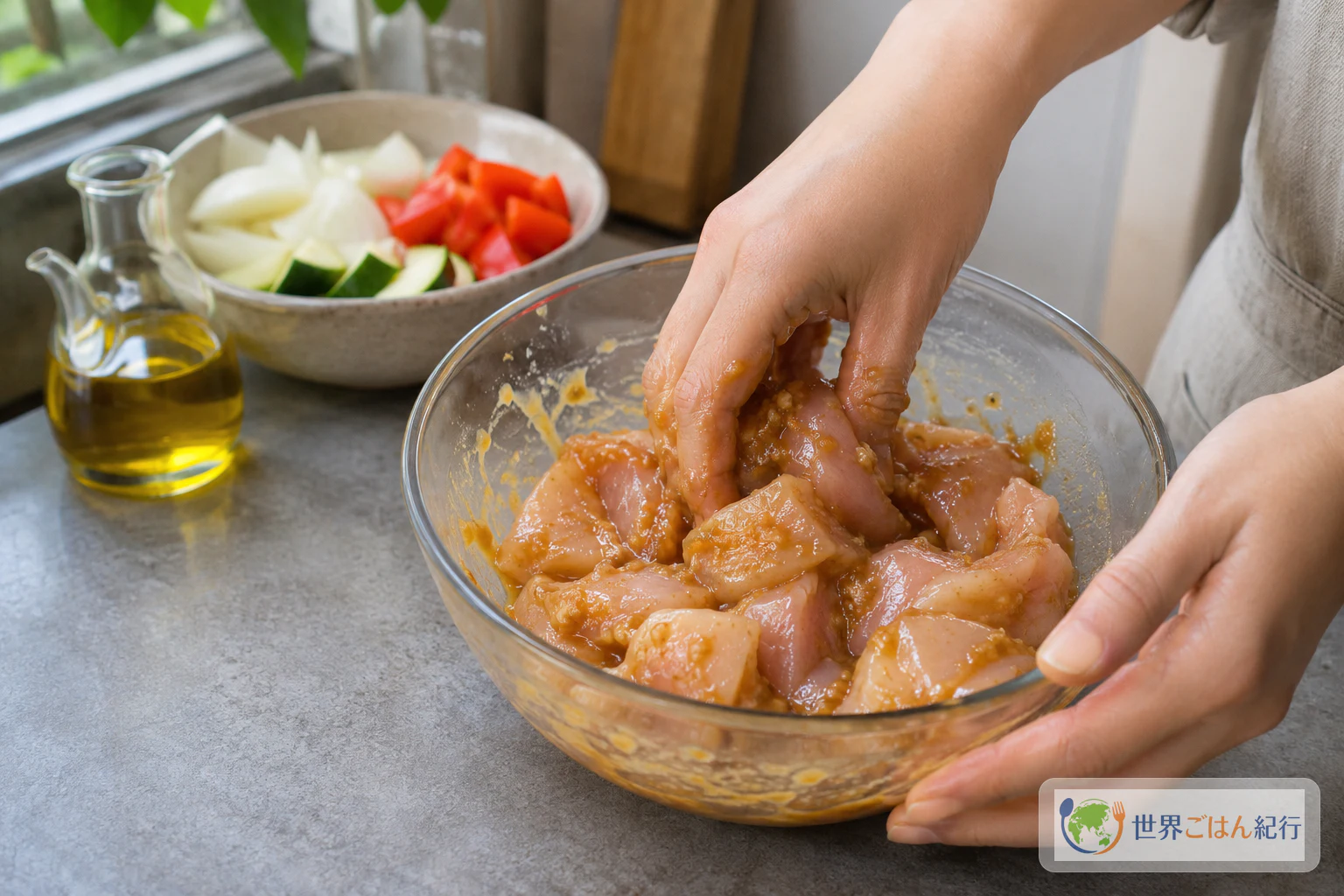
The recipe here is the four-serving keichan published on MAFF's regional cooking pages, with the recipe credited to the Gifu Prefecture School Dietitians' Association (岐阜県学校栄養士会). Bite-size chicken breast is rubbed with mixed miso, sake, usukuchi soy sauce and grated garlic, then stir-fried in a frying pan with cabbage, carrot and green pepper. All amounts are by weight in grams and are kept exactly as published.
That recipe does not give a marinating time, a heat level, a cooking time, or the brand or blend ratio of the miso, so none of these appear below. Sekai Gohan has not kitchen-tested this recipe; the amounts and steps are presented as published, with a few practical preparation steps (peeling the garlic, cutting the chicken, premixing the seasoning, coring the pepper) spelled out so each action is clear.
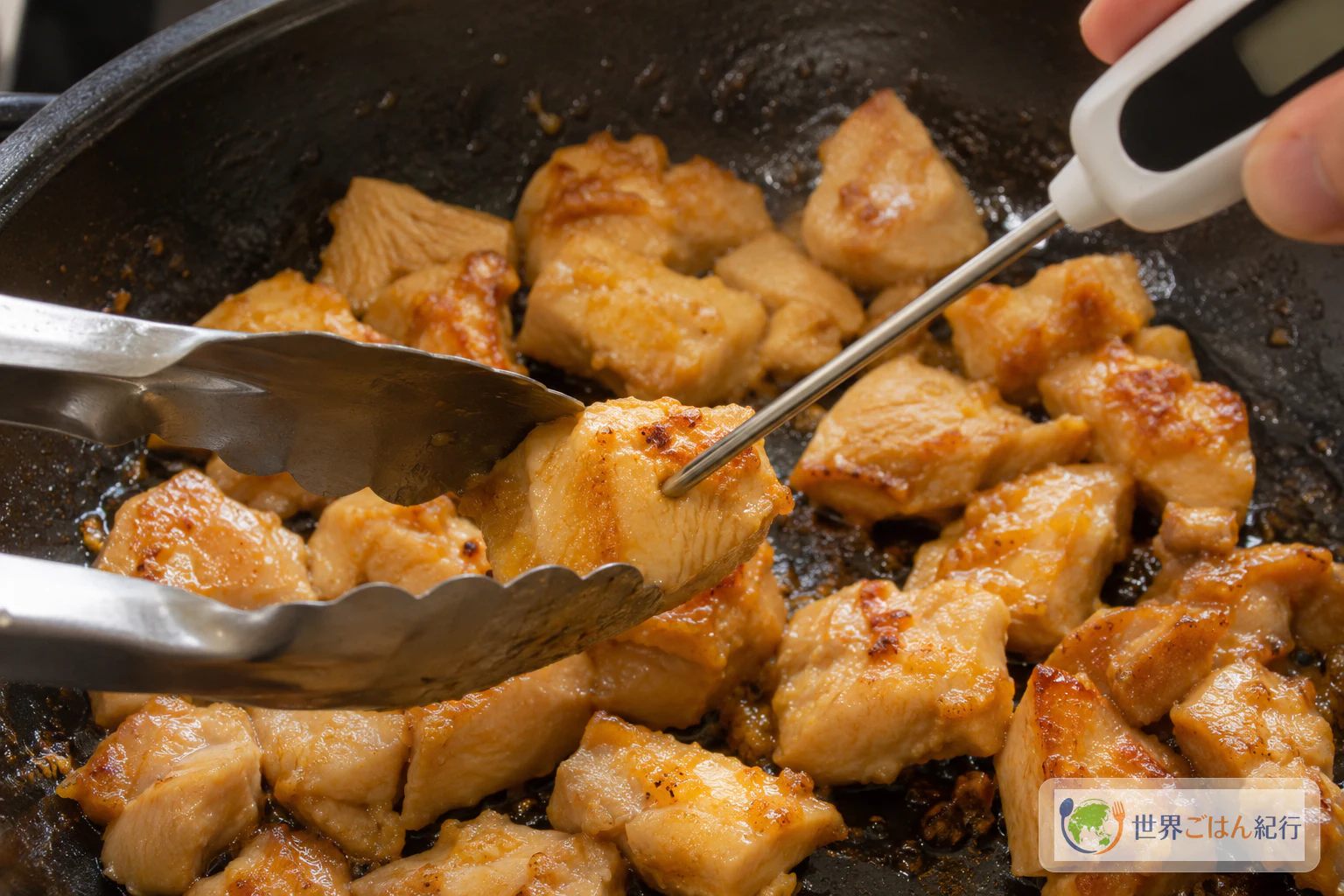
MAFF's general guidance for chicken is to heat it thoroughly, using 75°C or higher at the center for at least 1 minute as a guide. It also advises not washing raw chicken and not letting raw meat touch other foods. This is general food-safety guidance for chicken, not a value set by the keichan recipe itself. The photos in this article show each action; they do not prove any temperature, time or doneness.
Ingredients: Serves 4
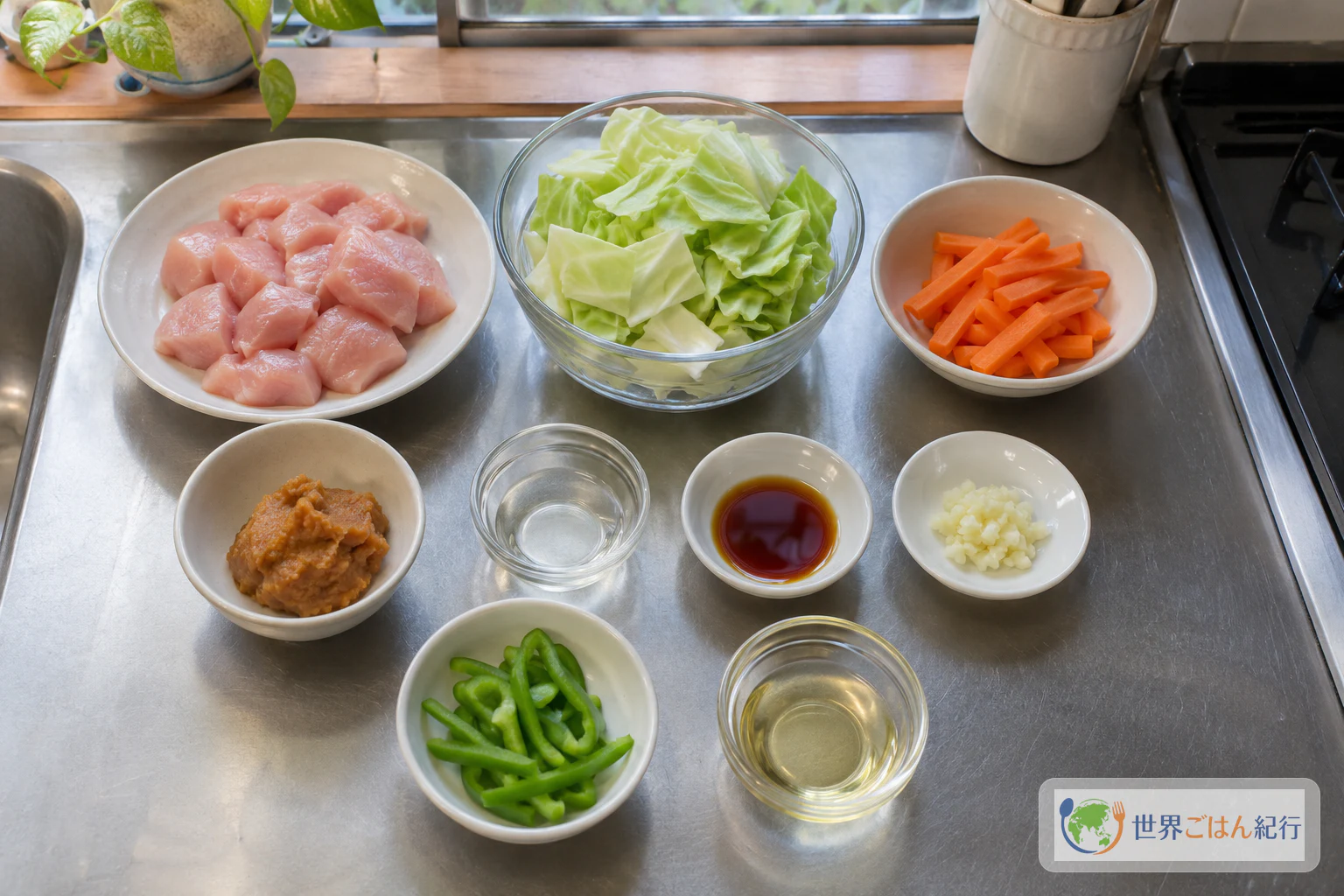
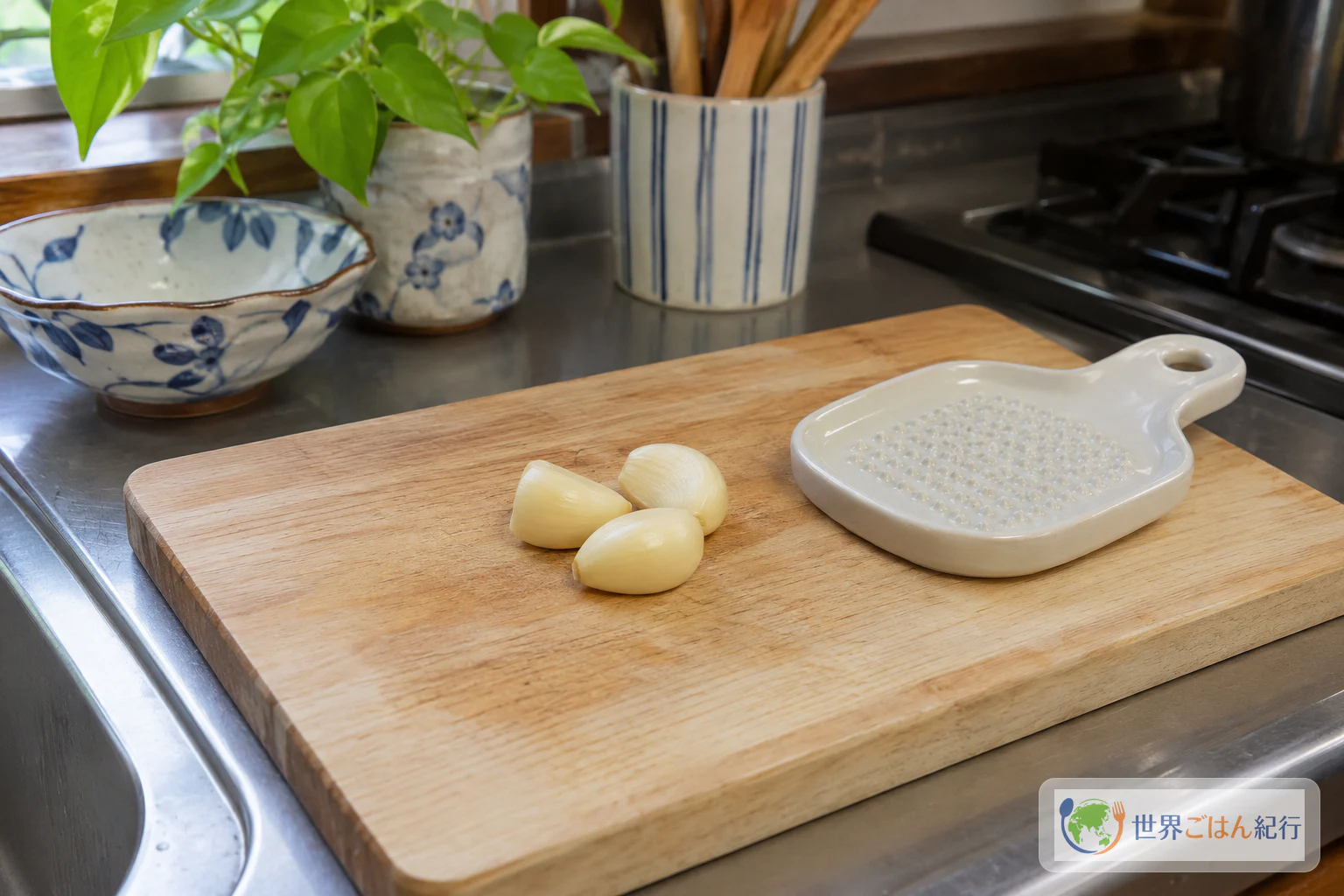
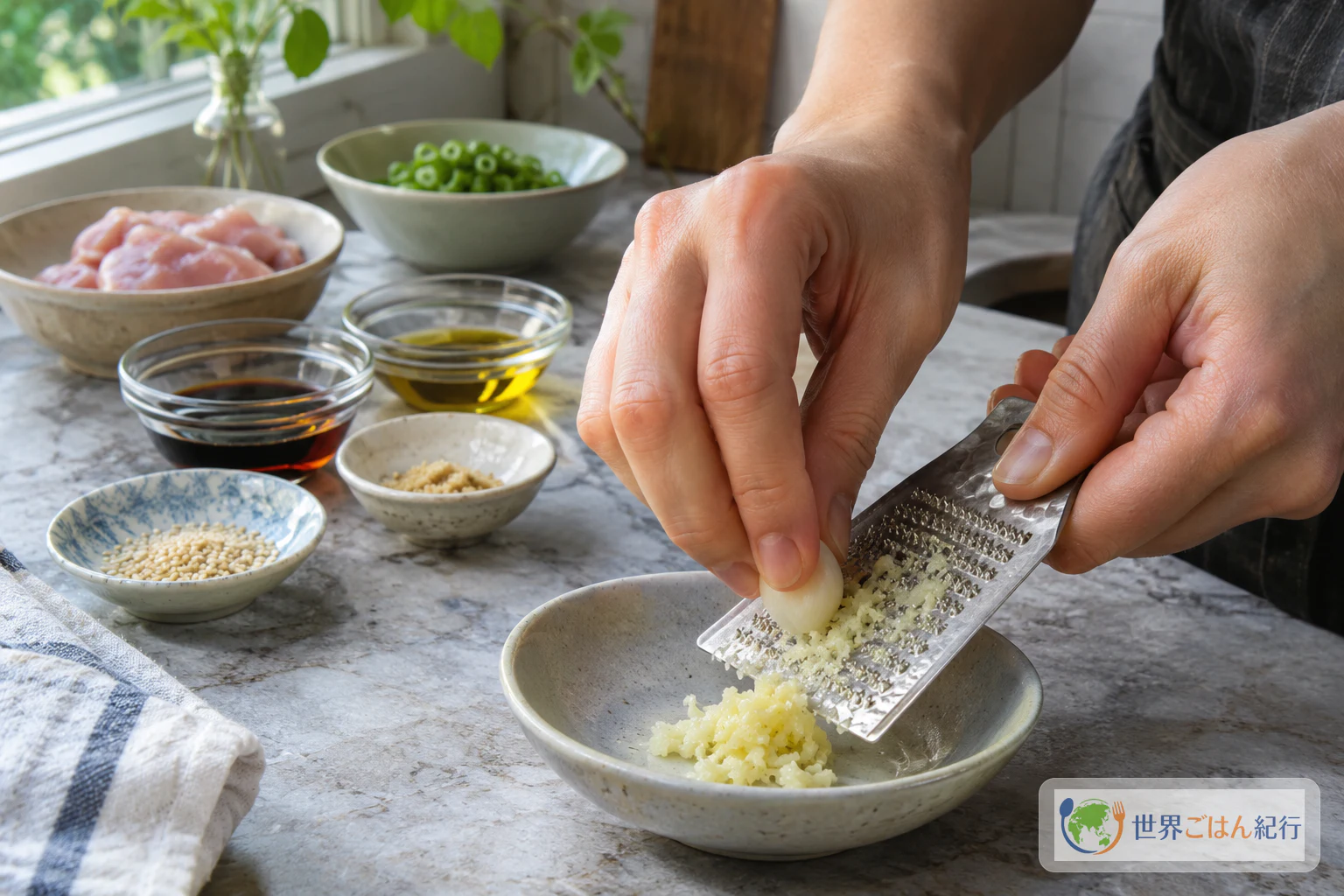
Use all 6 g of garlic, grated. No extra salt, water, sugar, mirin, onion or bean sprouts go into this version.
Choosing the Miso, Soy Sauce and Chicken
Mixed miso. In Japan, a store-bought awase miso (blended miso) is a practical choice, but that is a convenient buying interpretation, and the flavor will not necessarily be the same.
Usukuchi soy sauce. Use usukuchi, the light-colored Japanese soy sauce. Swapping in regular dark (koikuchi) soy sauce changes both the color and the saltiness of the dish.
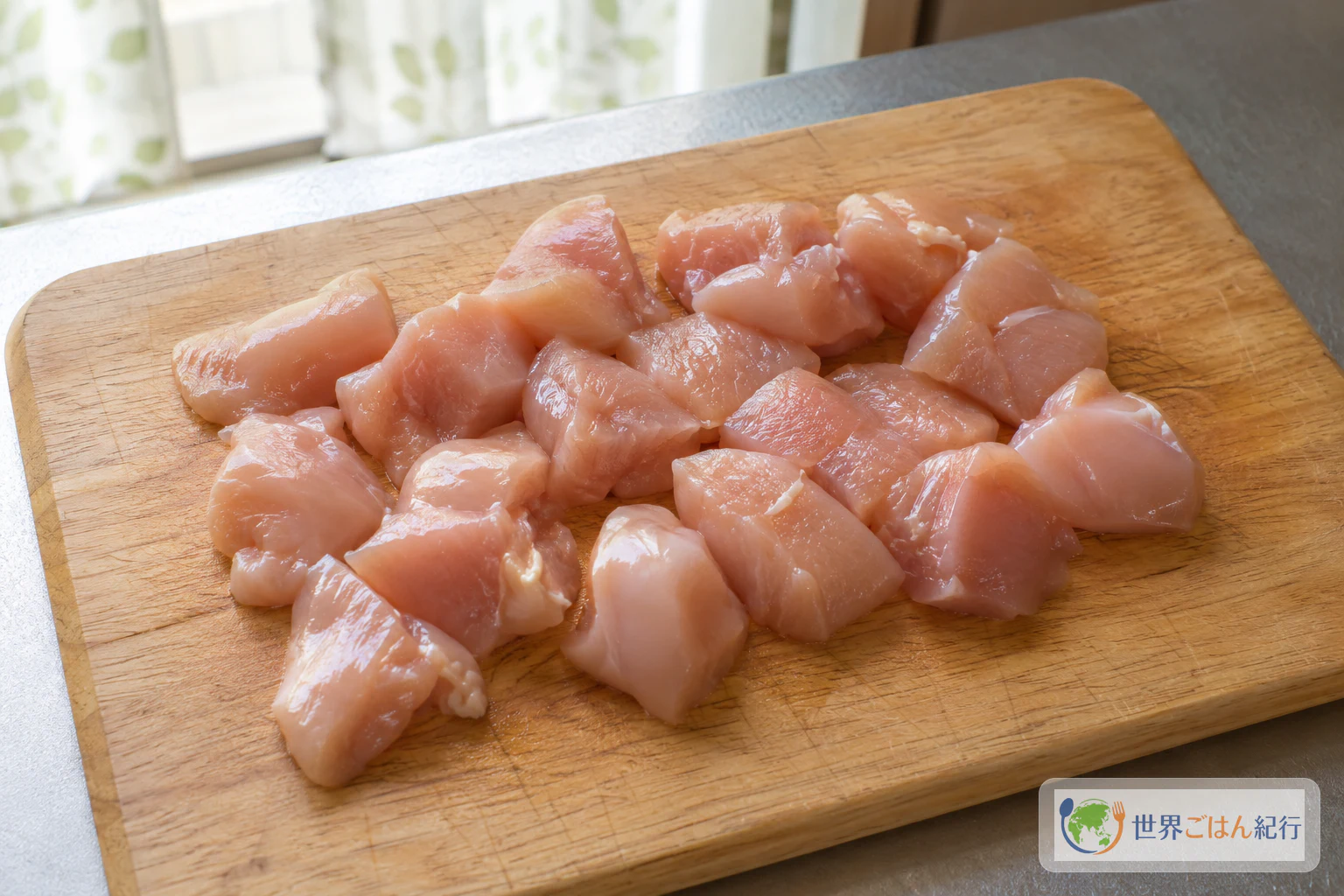
Chicken breast. Keep to breast. Thigh gives a different texture and more fat, which makes it a different version rather than this one.
Garlic. Use fresh garlic and grate it. Tube garlic differs in moisture, salt and aroma.
Sake. Japanese cooking sake (ryorishu) can be used. Products differ, for example in salt, so keep the weight the same.
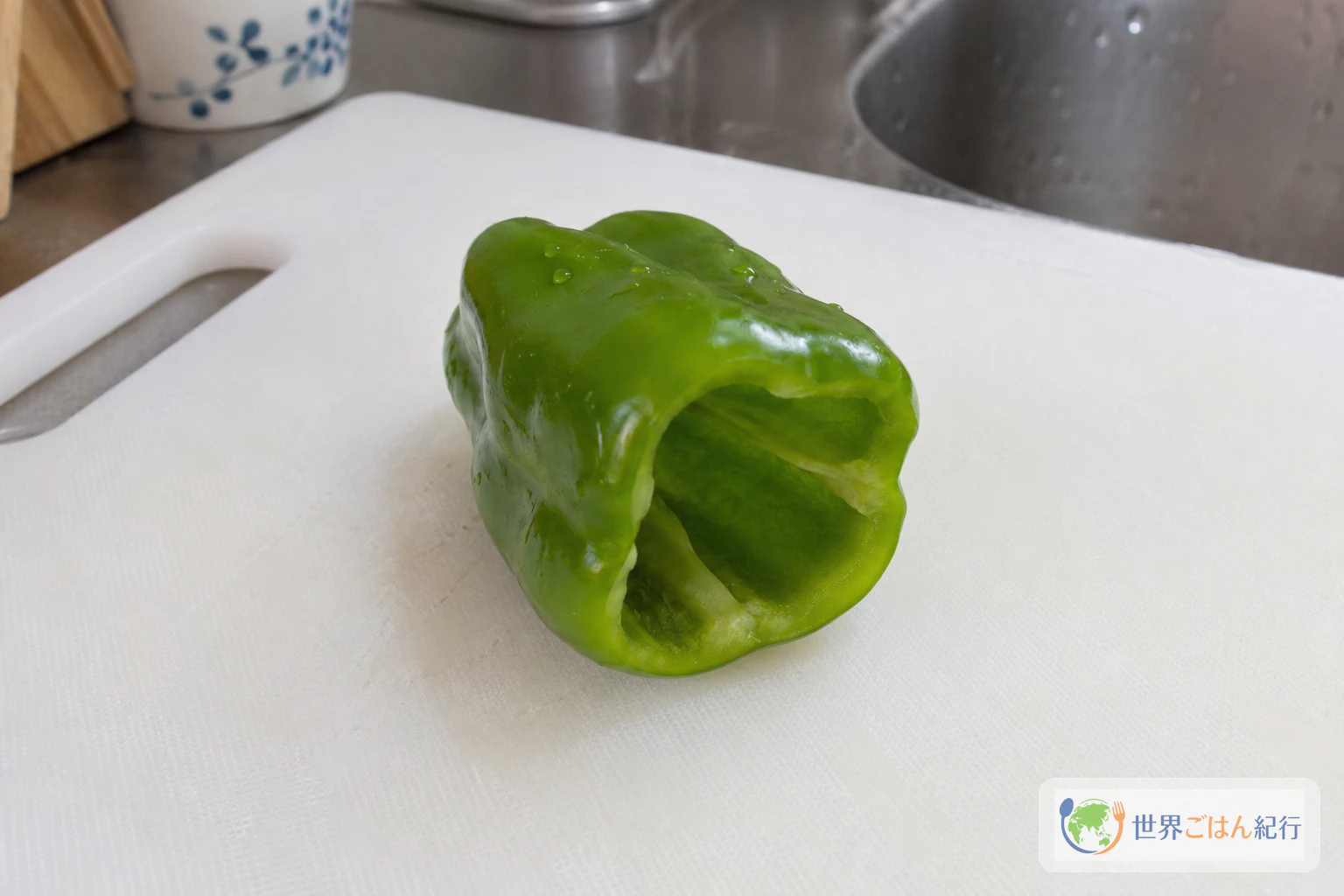
Green pepper. Piman is the green pepper sold in Japanese supermarkets.
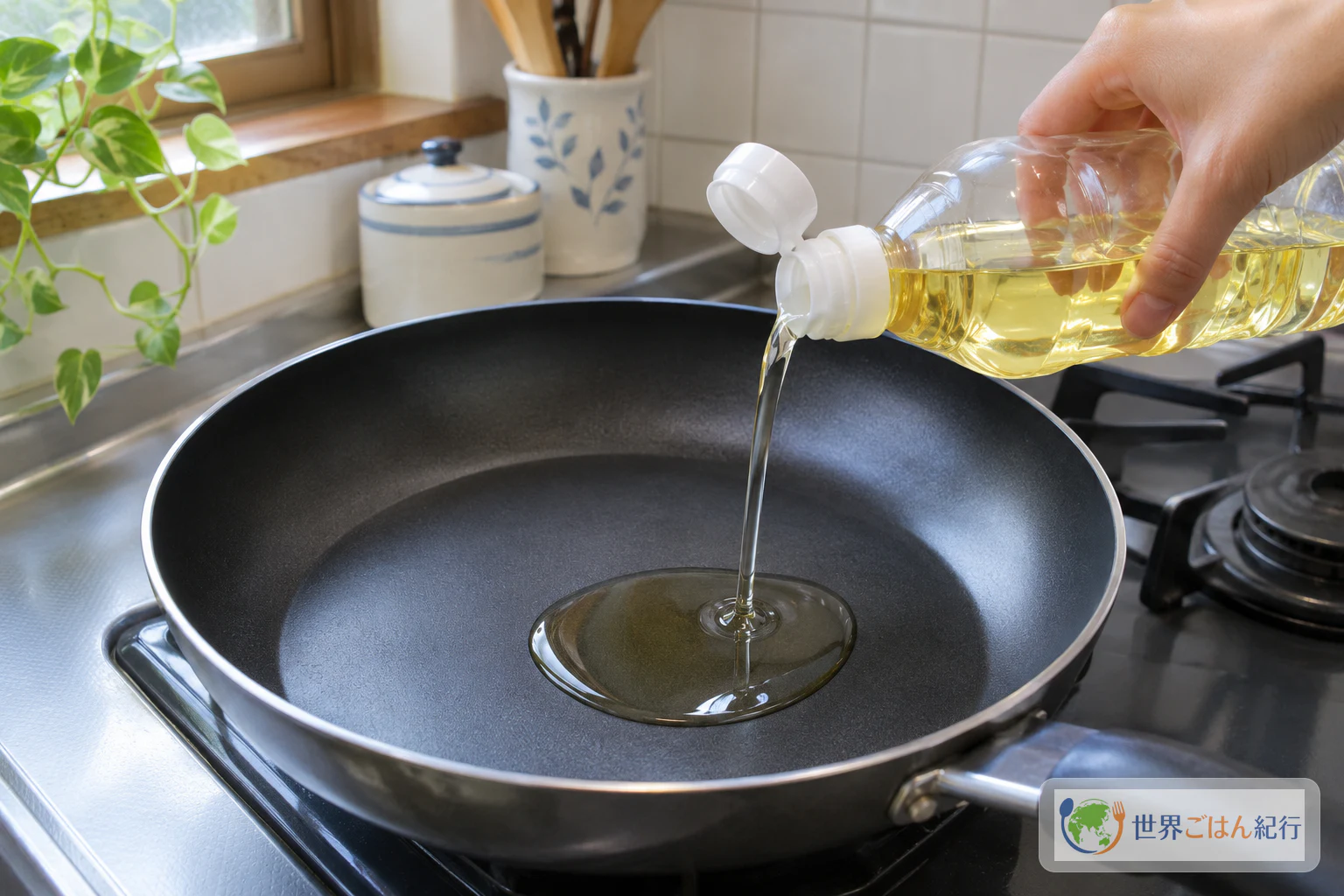
Vegetable oil. Any neutral vegetable oil works; no particular type is needed.
Equipment
- Frying pan
- Grater for the garlic
- Knife
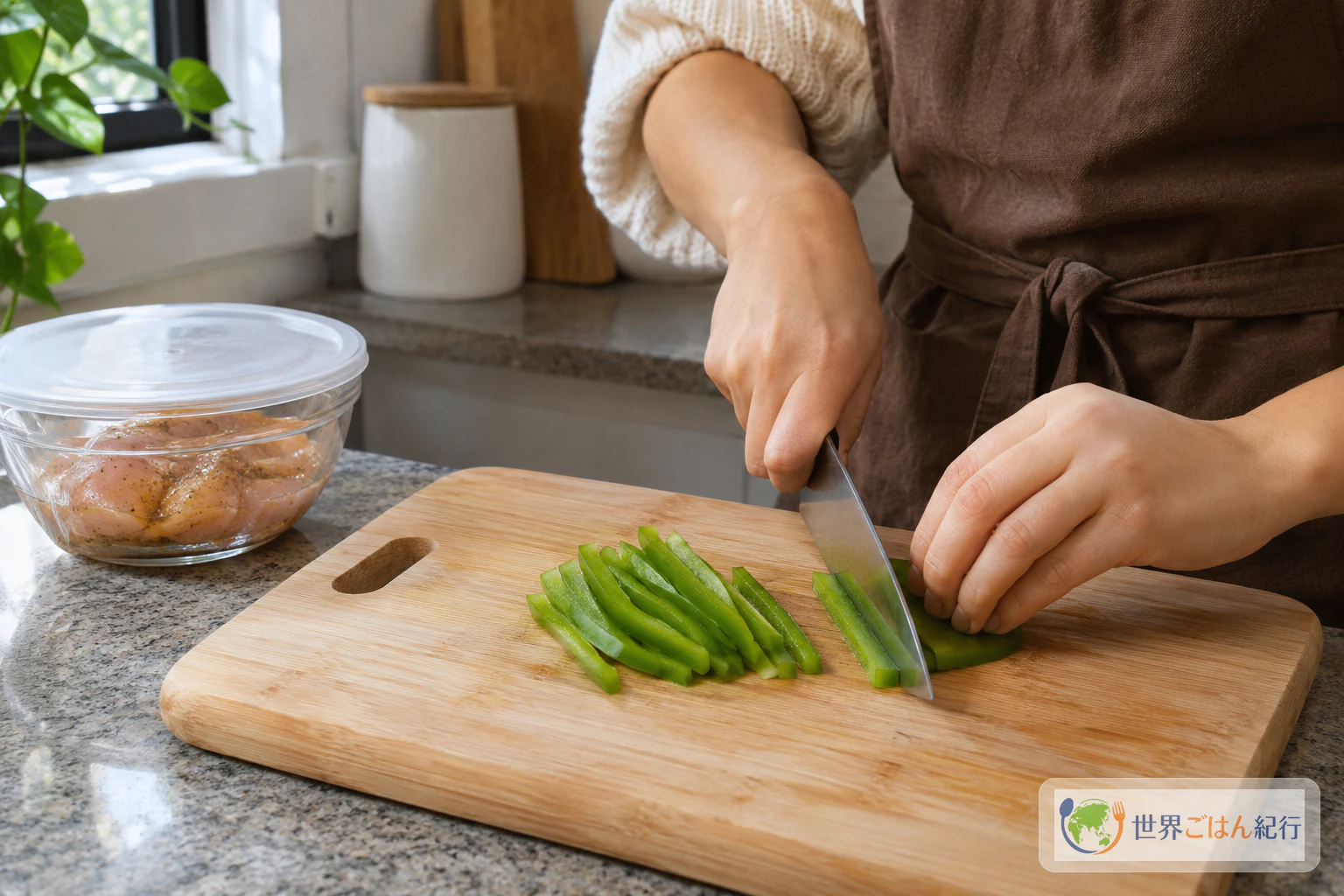
- Two cutting boards: one for raw chicken, one for vegetables
- Bowls for the seasoning, the chicken and the cut vegetables
- Spatula
- Food thermometer (optional)
- Serving dish
Method: Chicken First, Then the Vegetables
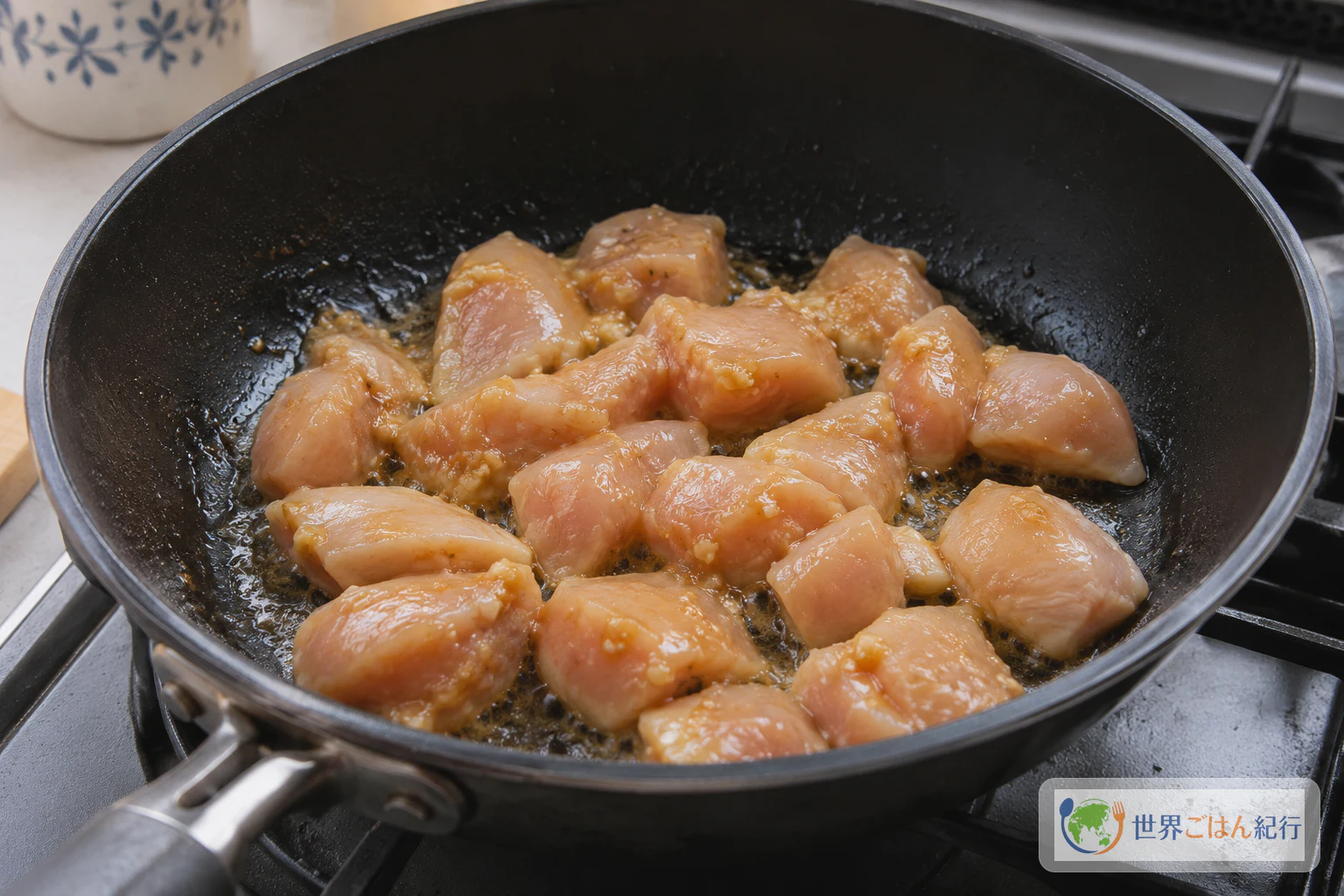
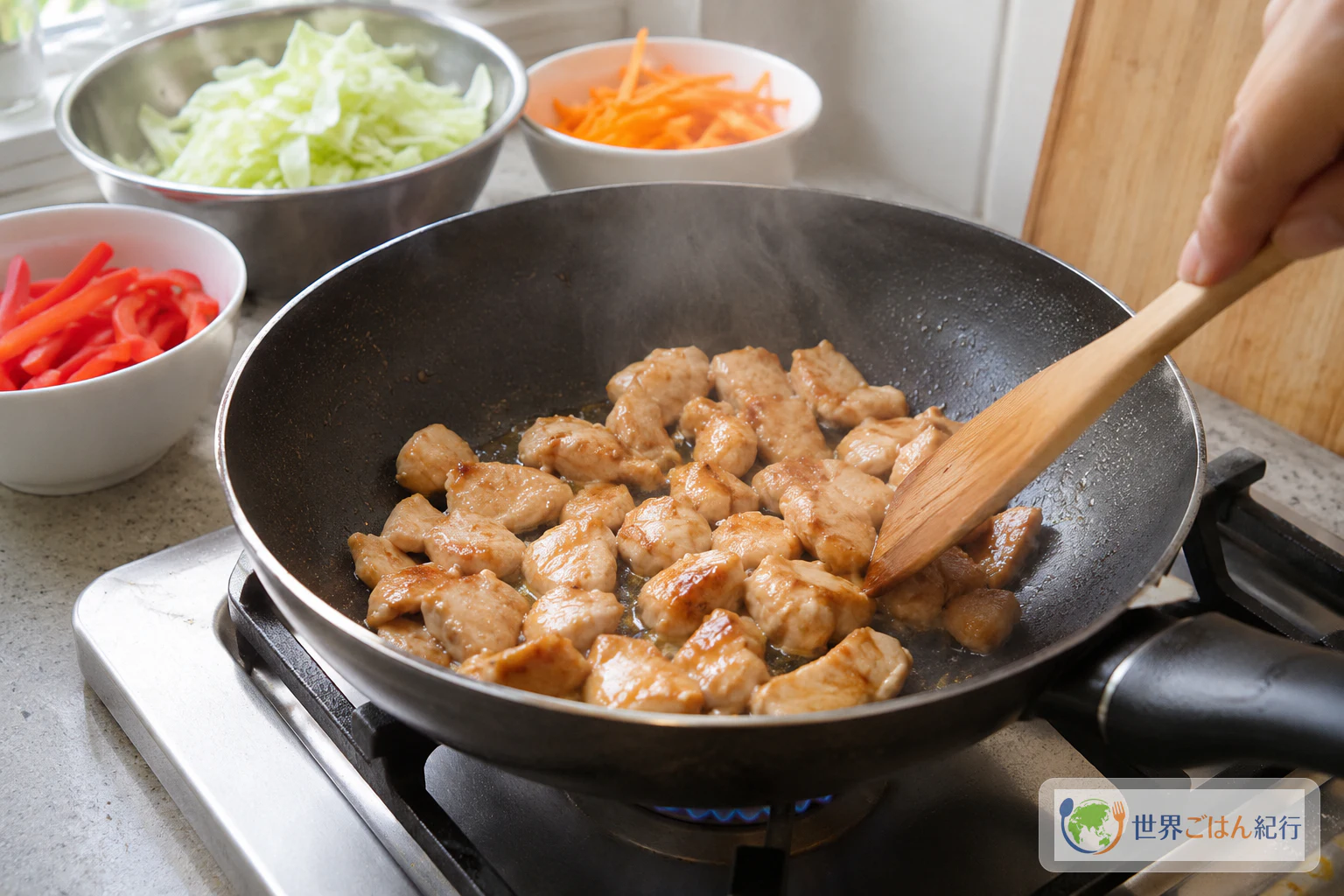
Prepare the garlic and season the chicken, cut the vegetables, then heat the oil. Cook the chicken until it is done to the center, and only then add all the vegetables together.
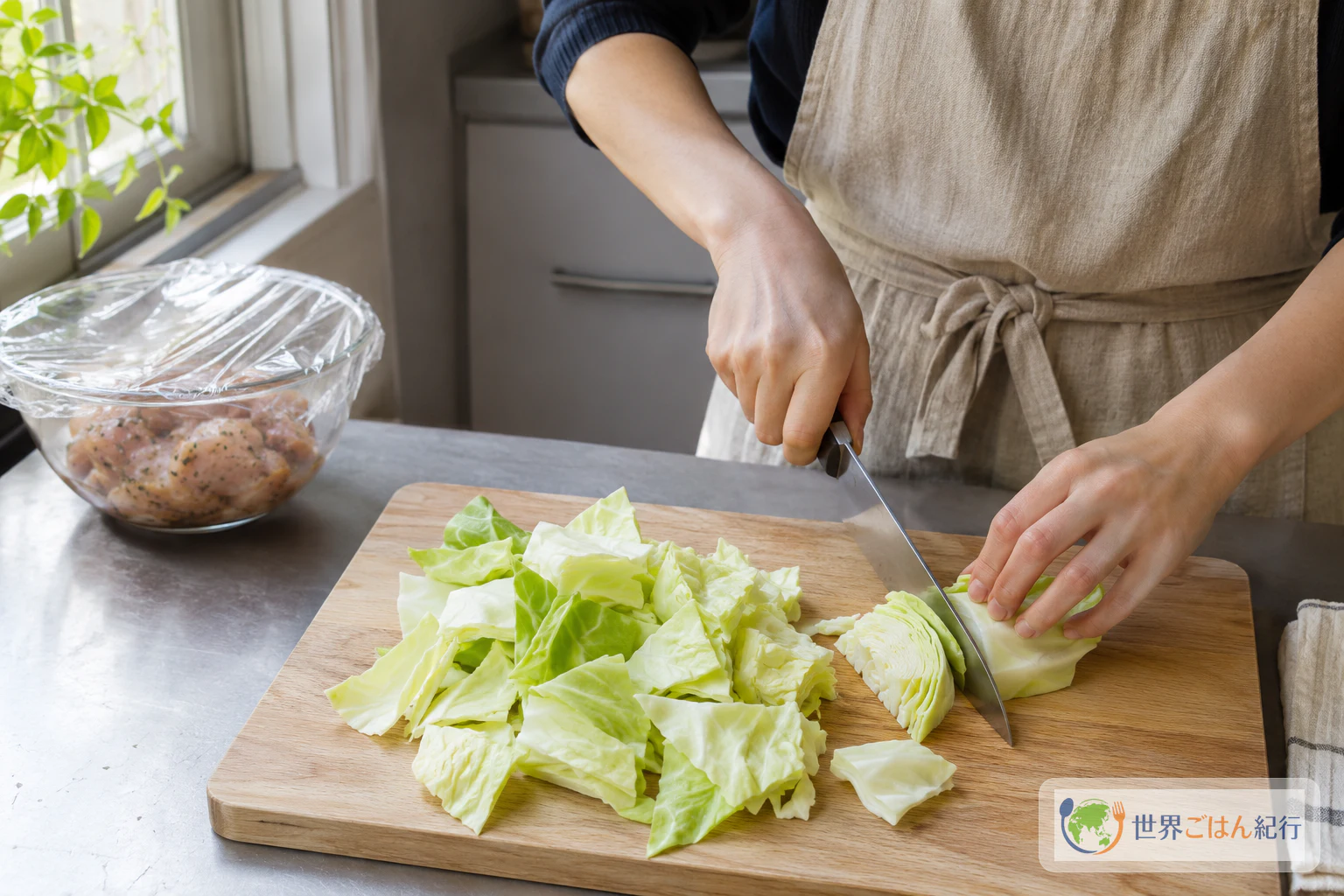
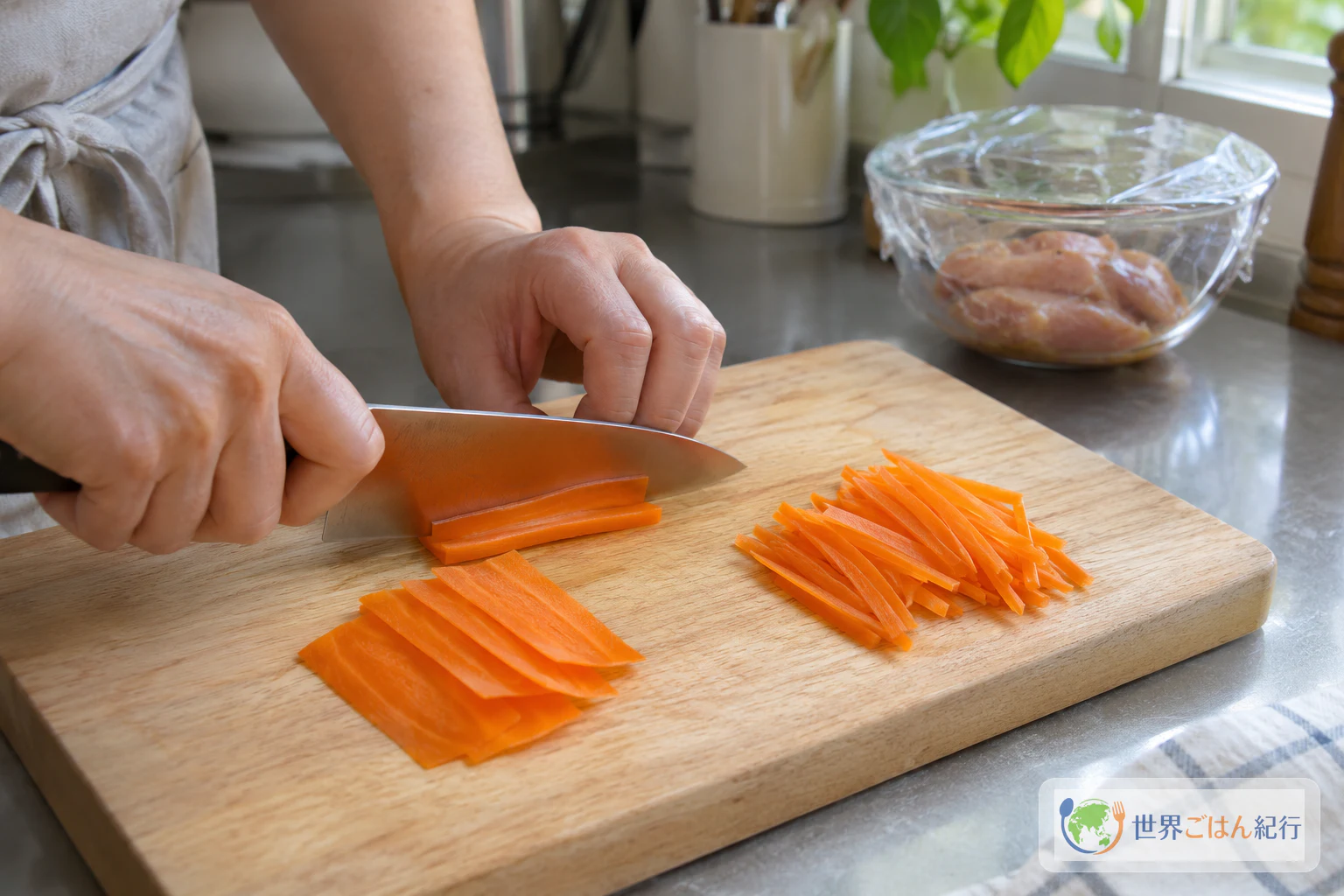
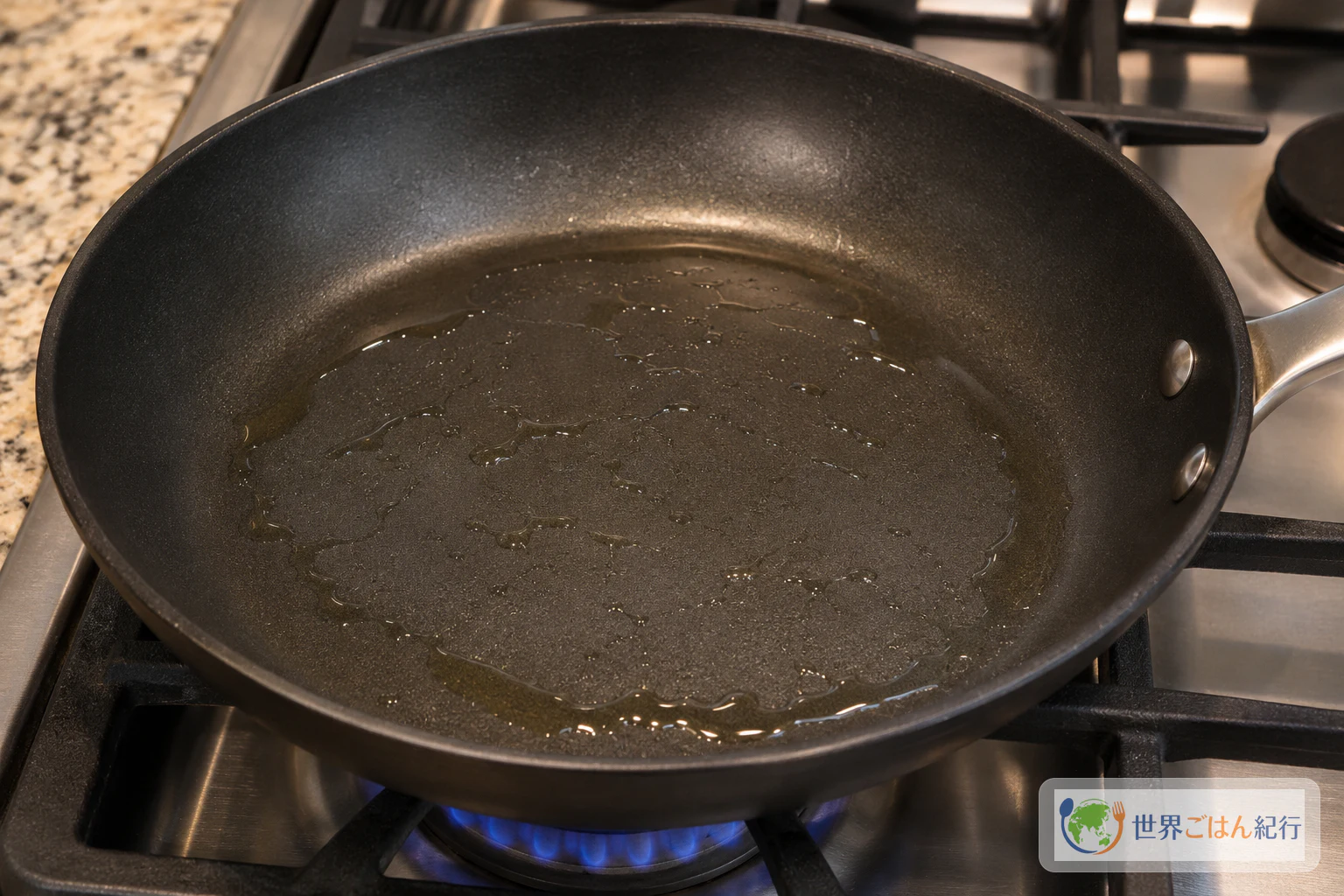
Steps 1 to 9 are preparation; the pan only goes on the heat at step 10. Keep raw chicken and its board, knife and bowl away from the vegetables throughout.
When Things Go Off Course
| Situation | What to do |
|---|---|
| You're not sure the chicken is done | Keep cooking. Check the center of the thickest piece with a thermometer if you have one, aiming for 75°C or higher for at least 1 minute. Don't rely on color or the clock alone |
| The vegetables went in before the chicken was cooked | Keep cooking until the chicken is done to the center. Next time, cook the chicken alone first and add the vegetables after |
| You feel like rinsing the raw chicken | Don't. Go straight from the package to the raw-meat board |
| Raw chicken touched the vegetable board or knife | Wash the board, knife and your hands before cutting any vegetables |
| The flavor isn't what you expected | Mixed miso varies, and the blend is not fixed, so the miso you choose shapes the dish. If you change the amounts, treat it as your own version |
Variations: Keeping Them Separate From This Recipe
Each idea below is a different version, not a tweak to the amounts above.
- Chicken thigh. Other home recipes use thigh as well as breast. Treat a thigh version as its own recipe with its own texture and fat.
- Soy sauce or salt keichan. Across the region, keichan is also made in soy sauce and salt styles. These are separate local styles, not substitutions within this miso version.
- Cooking at the table. Keichan is also cooked on an iron griddle, a jingisukan pan or a hot plate and eaten as it grills.
- With rice. You might serve keichan as a dish alongside rice. Rice is not part of this recipe.
Culture and History: A Shared Form, Many Sauces
According to MAFF, keichan is said to have begun around 1950 in imitation of jingisukan, after which butcher shops and izakaya in each area developed their own flavors. MAFF records several theories about the name, so no single origin of the word is treated as settled here.
What holds the dish together is its form: chicken and vegetables coated in a special sauce and stir-fried. Within that form, miso, soy sauce and salt styles, and the way of cooking, change with the area, the household and the shop. Suginoko, a keichan specialty shop in Gero, describes keichan as a local dish centered on Gero and Gujo, made with chicken and vegetables such as cabbage and grilled in a sauce of miso, soy sauce, garlic and more. That is one shop's own description, not a history of the whole region. A company recipe from Shimaya shows yet another home version, using chicken thigh or breast, a miso sauce, several vegetables and a hot plate; it includes the company's dashi product and is a different recipe from the one in this article.
The school dietitians' version used here is a simple, everyday example: one seasoning rubbed into the chicken, three vegetables and a little oil. For more Japanese dishes, see Japanese cooking on Sekai Gohan.
Frequently Asked Questions
Can I use chicken thigh?
This version uses 200 g of chicken breast. Switching to thigh changes the texture and fat, which makes it a different recipe. Other published versions, such as Shimaya's, use thigh or breast with their own amounts.
What miso should I use?
The recipe calls for 32 g of "mixed miso" without naming a brand or blend ratio. In Japan, awase miso is a practical choice, but that is an interpretation for shopping, and the flavor is not guaranteed to be the same.
How long should the chicken marinate?
The published recipe gives no marinating time. This article does not borrow one from other recipes.
How do I know the chicken is safe to eat?
MAFF's general guidance is to cook chicken until the center reaches 75°C or higher for at least 1 minute, not to wash raw chicken, and to keep raw meat away from other foods. A food thermometer makes checking easier but is optional. Color, cooking time or a photo alone does not confirm the chicken is done.
Is this the authentic keichan?
It is one published home version among many. MAFF and the Suginoko shop both describe flavors and methods that differ by area, household and shop.
Sources
- Ministry of Agriculture, Forestry and Fisheries (MAFF), Japan; recipe provided by the Gifu Prefecture School Dietitians' Association, "鶏ちゃん 岐阜県 | うちの郷土料理" (Keichan, Gifu Prefecture | Our Regional Cooking). The four-serving chicken breast and mixed miso recipe, its ingredients and method; the main areas where the dish is handed down (Gujo, Gero, southern Takayama); regional and household differences in flavor; eating it grilled on a griddle or jingisukan pan; its said beginnings around 1950 and the multiple theories on the name. https://www.maff.go.jp/j/keikaku/syokubunka/k_ryouri/search_menu/menu/38_2_gifu.html
- Ministry of Agriculture, Forestry and Fisheries (MAFF), Japan, "鶏料理を楽しむために~カンピロバクターによる食中毒にご注意を!!~" (Enjoying Chicken Dishes: Beware of Campylobacter Food Poisoning). General guidance to cook chicken to 75°C or higher at the center for at least 1 minute, not to wash raw chicken, and to keep raw meat from touching other foods. https://www.maff.go.jp/j/fs/campylobacter.html
- Keichan Specialty Shop Suginoko (Gero, Gifu), "鶏ちゃんとは" (What Is Keichan). The shop's own description of keichan as a local dish centered on Gero and Gujo, and of sauces and methods differing by shop, household and area. Not used for recipe amounts. https://keichan-suginoko.jp/keichan/
- Shimaya Co., Ltd., "鶏ちゃん(けいちゃん)" (Keichan). A separate company home recipe using chicken thigh or breast, a miso sauce, several vegetables and hot-plate cooking; used only for comparison and not combined with the recipe in this article. https://www.shimaya.co.jp/recipe/all/904.html