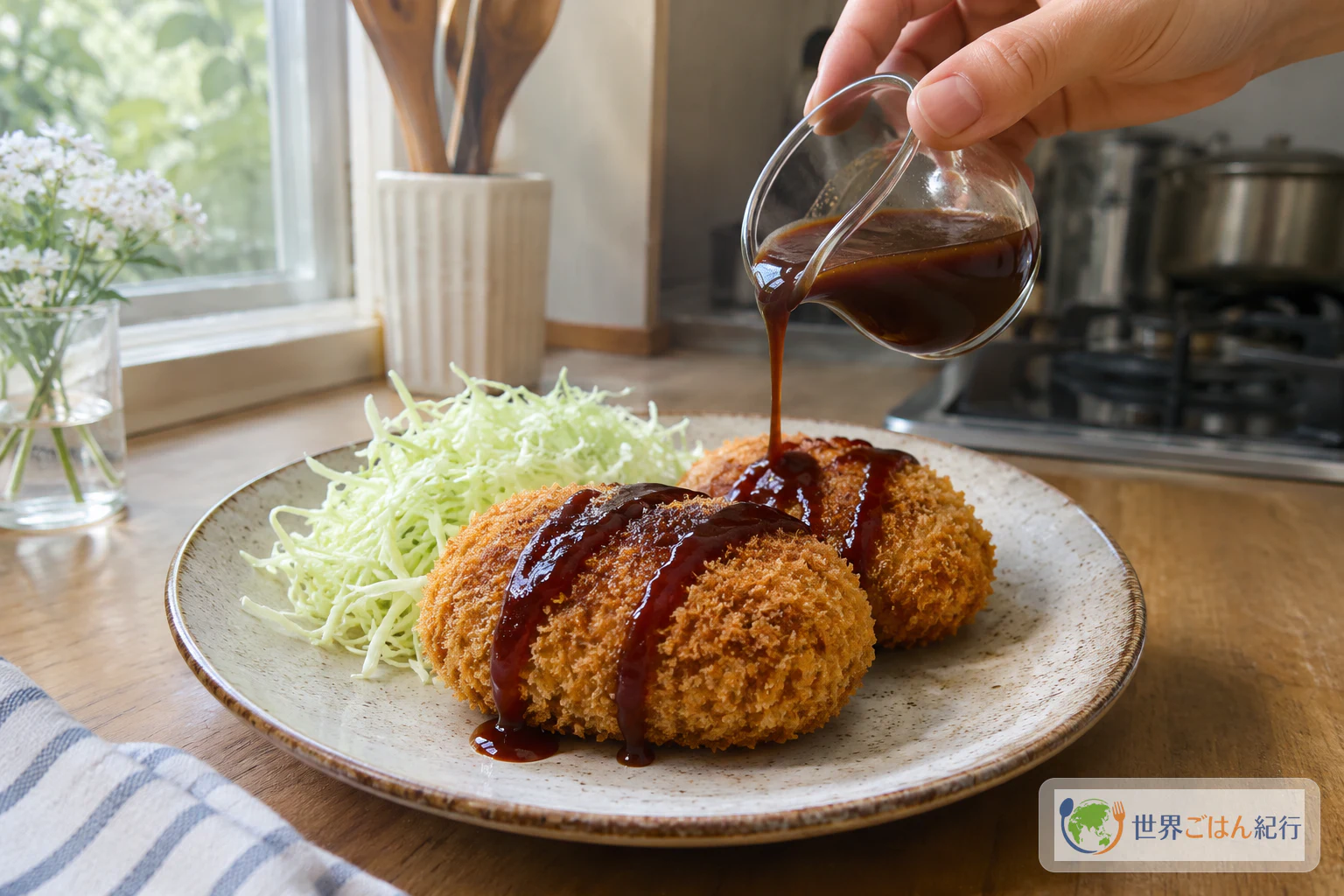
Korokke: A Crackling Panko Shell Around Potato, Beef and Onion
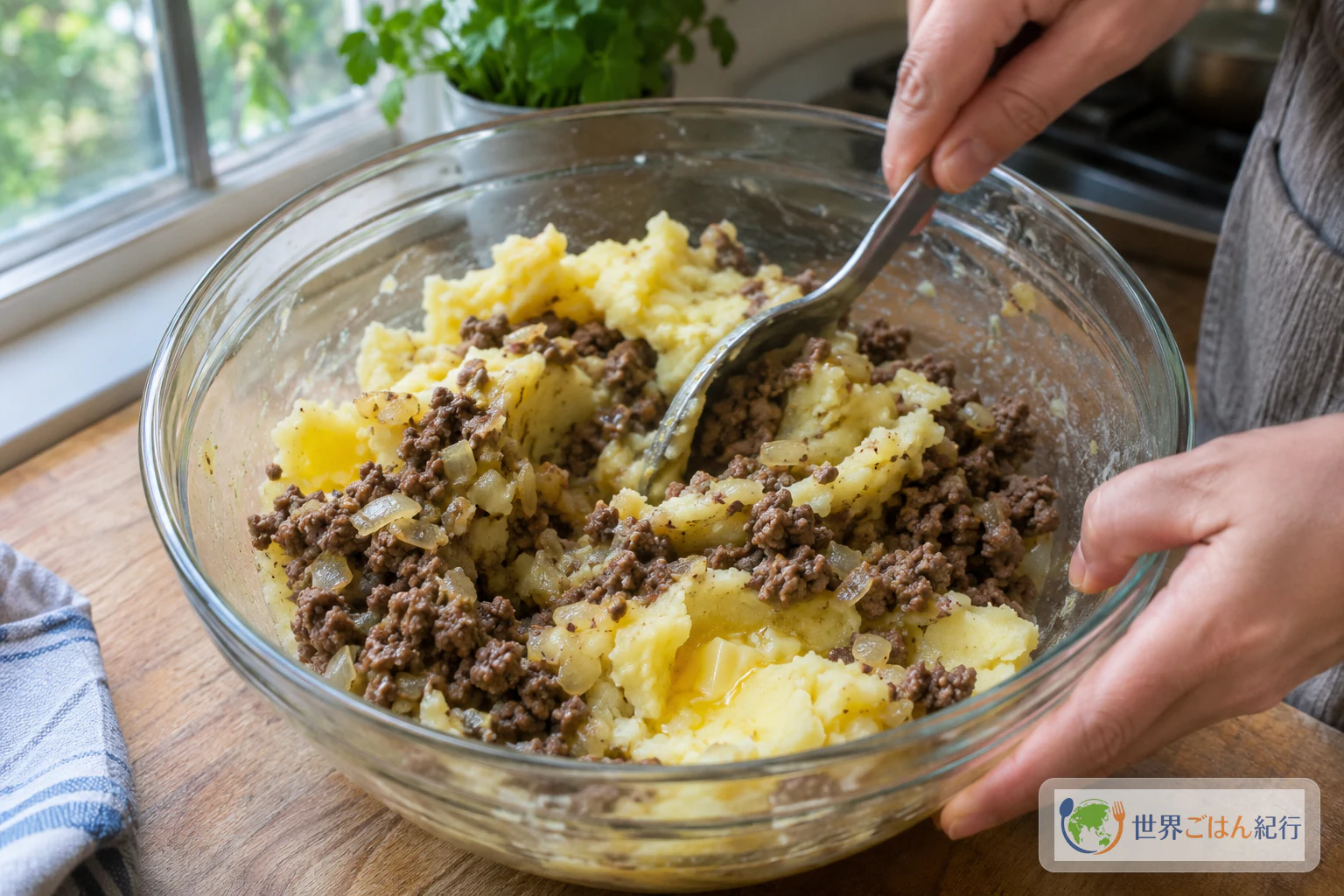
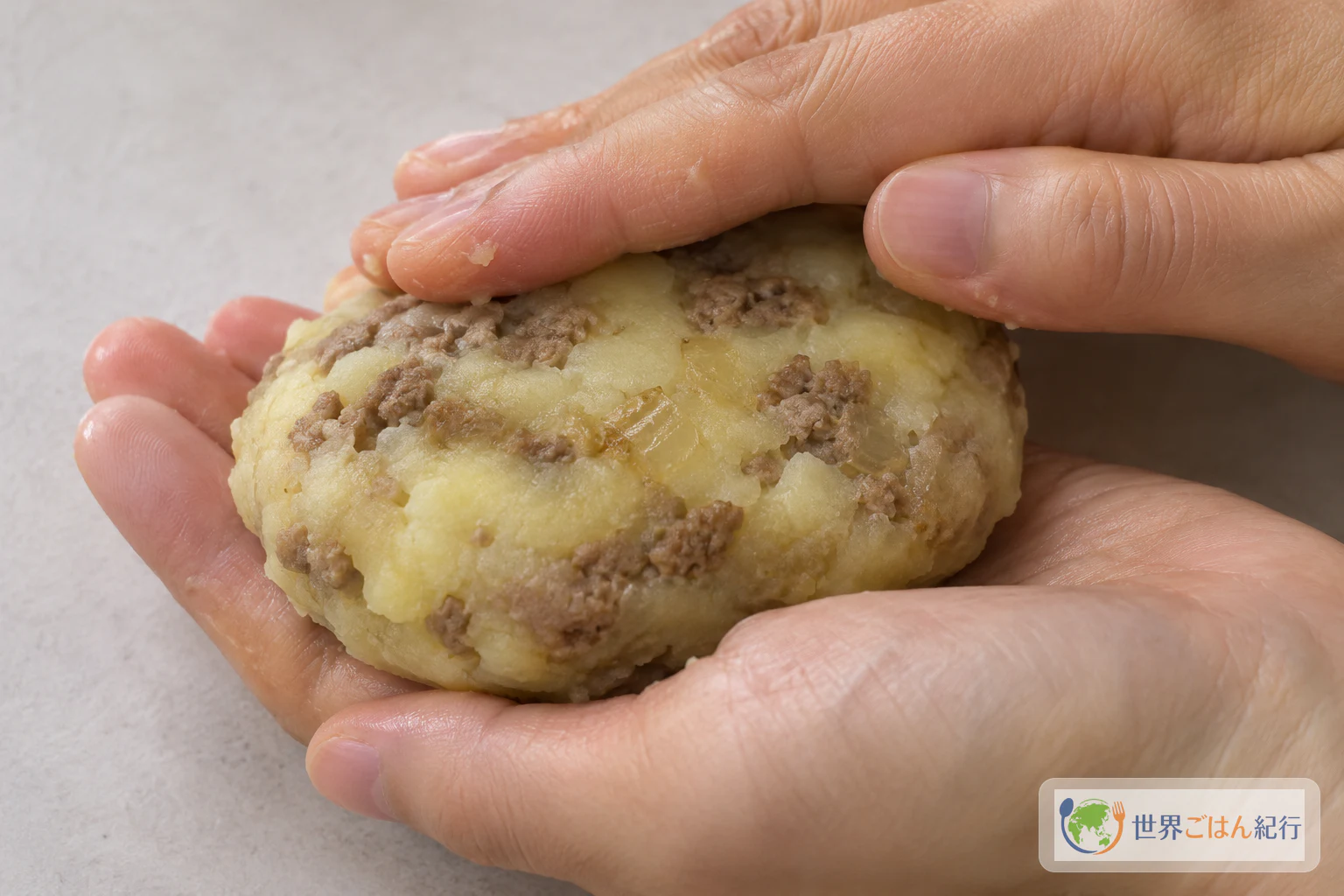
Keep the filling dry and the shape tight. Drive moisture off the potatoes, the onion and the beef at each stage, press out air pockets as you shape, and chill the patties before they go into the coating. That way the crust stays whole in the oil.
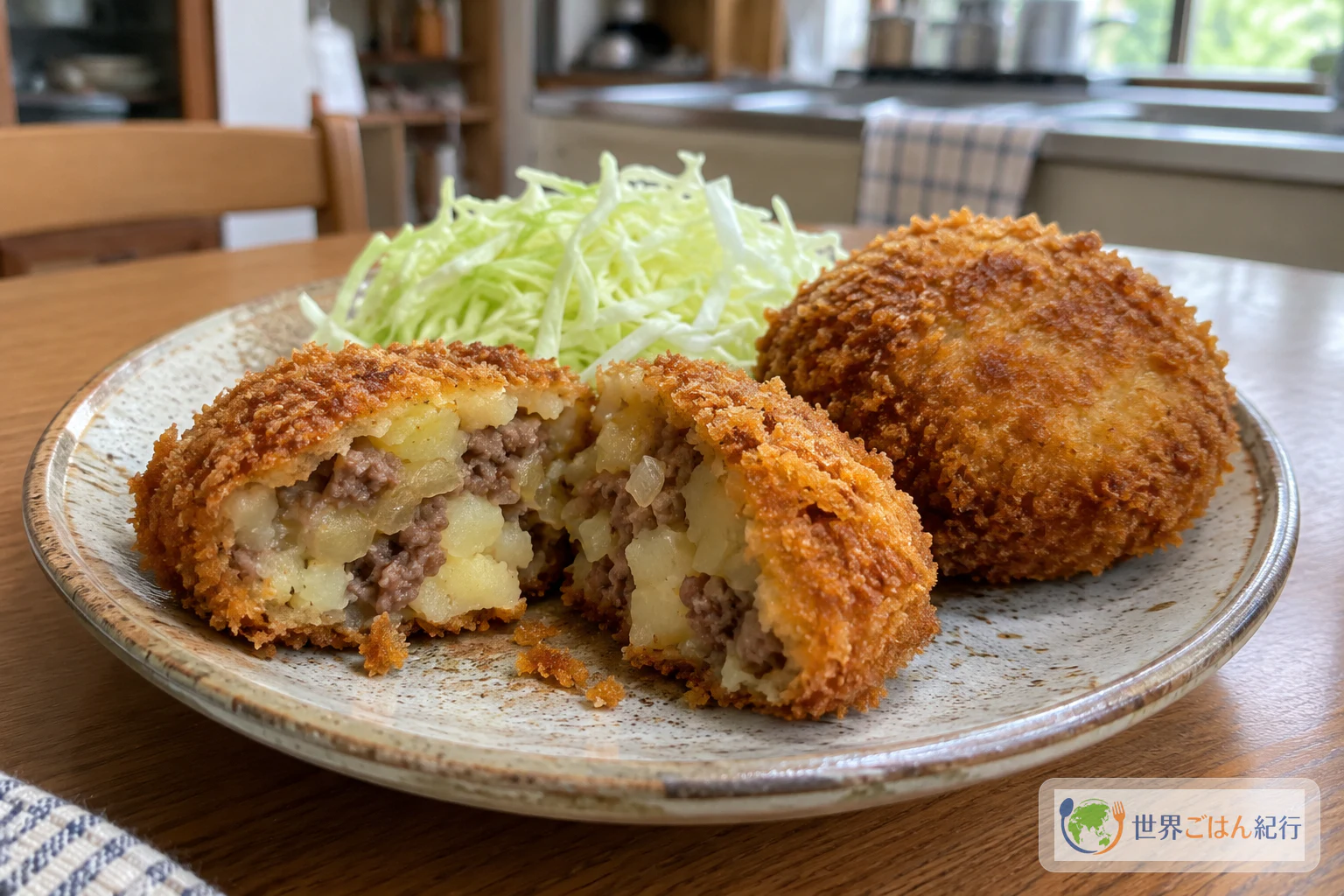
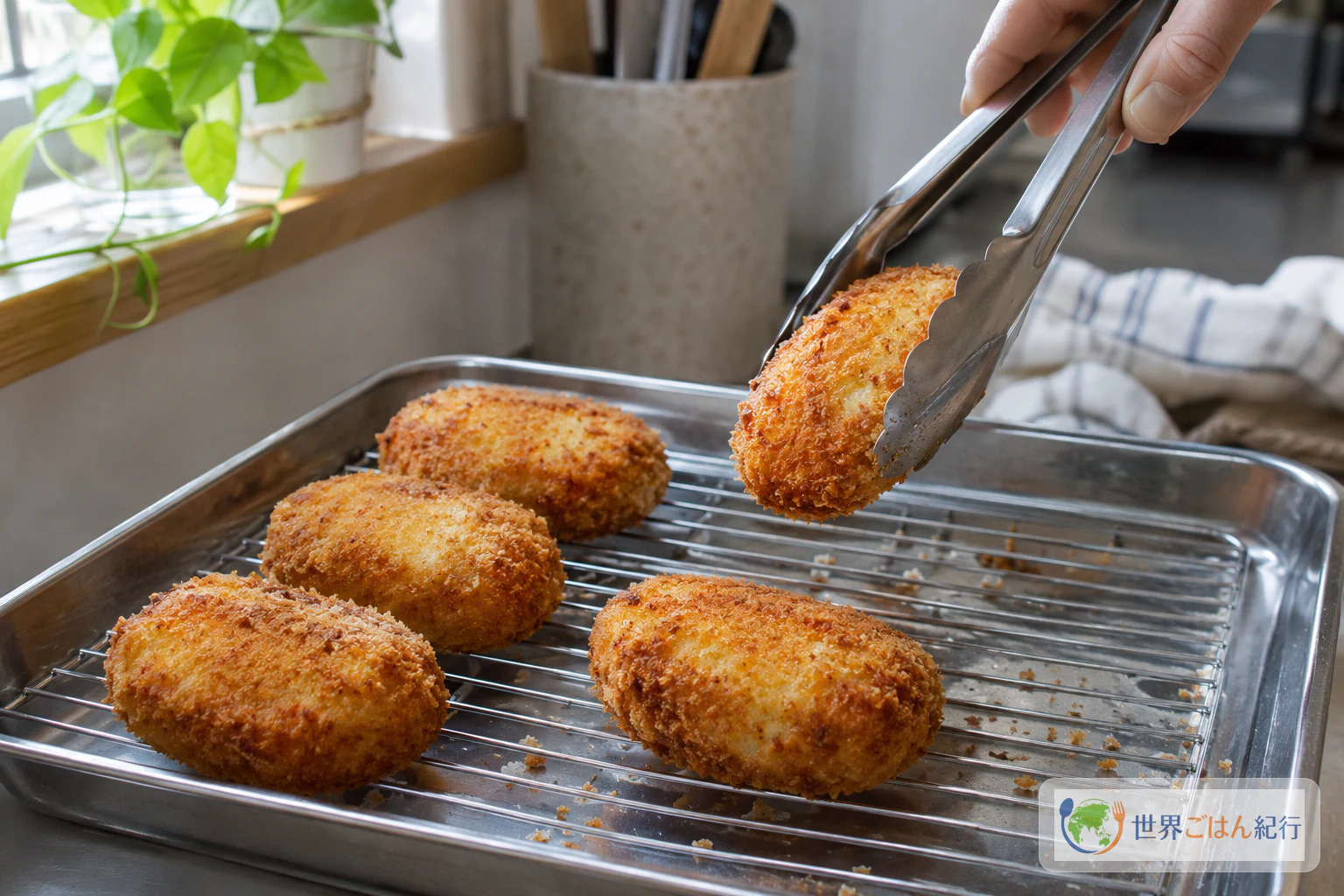
Break open a freshly fried korokke and the panko shell crackles, then gives way to soft mashed potato with small chunks left in, flecked with browned ground beef and sweet, slowly cooked onion. Korokke is the Japanese croquette: an everyday dish found on home tables, in lunch boxes and at neighborhood shops, eaten with a drizzle of tonkatsu sauce and a pile of shredded cabbage.
The problems home cooks usually meet are familiar ones: a filling that turns watery, patties that slump while shaping, and coatings that split open in the oil. Each step below is arranged to prevent those. This article covers the potato, beef and onion type only. Cream croquettes made with a white sauce, and versions with crab, kabocha squash or rice, are different dishes and are not mixed in here.
The recipe follows "Japanese Croquettes (Korokke) お母さんのコロッケ" by Namiko Hirasawa Chen of Just One Cookbook, which she presents as her mother's beef and potato korokke. It makes 16 croquettes, and its US measures are kept as published, without added gram conversions. Two general food-safety points are layered on top from official US guidance: checking the ground beef with a thermometer, and chilling the shaped patties quickly rather than letting them sit out. This recipe has not been kitchen-tested by Sekai Gohan.
For more of the country's cooking, see Japanese recipes.
What Korokke Is: A Yoshoku Dish That Settled Into Everyday Life
Korokke is a breaded, fried potato croquette that became part of yoshoku, the Western-influenced cooking that Japan made its own. Western cooking clearly shaped it, but this article does not name a single year of origin or a single inventor.
Japan's Ministry of Agriculture, Forestry and Fisheries (MAFF), in its regional-dish collection, lists korokke under Tokyo. It describes the dish as widely eaten in daily life, both cooked at home and bought ready-made from places such as butcher shops, and places it within the story of Western-style single dishes that suited rice and took root in the city. The same page describes the basic build of a coated, fried potato croquette and notes that the details vary by region and household.
Kikkoman's food-culture series The Japanese Table places korokke among the Western-style dishes eaten with rice, mentions a "Korokke Song" that was popular around 1920, and describes korokke as a dish packed into lunch boxes. Together, these sources show a dish that moved from novelty to something ordinary: a side for rice, a bento item, a purchase on the way home.
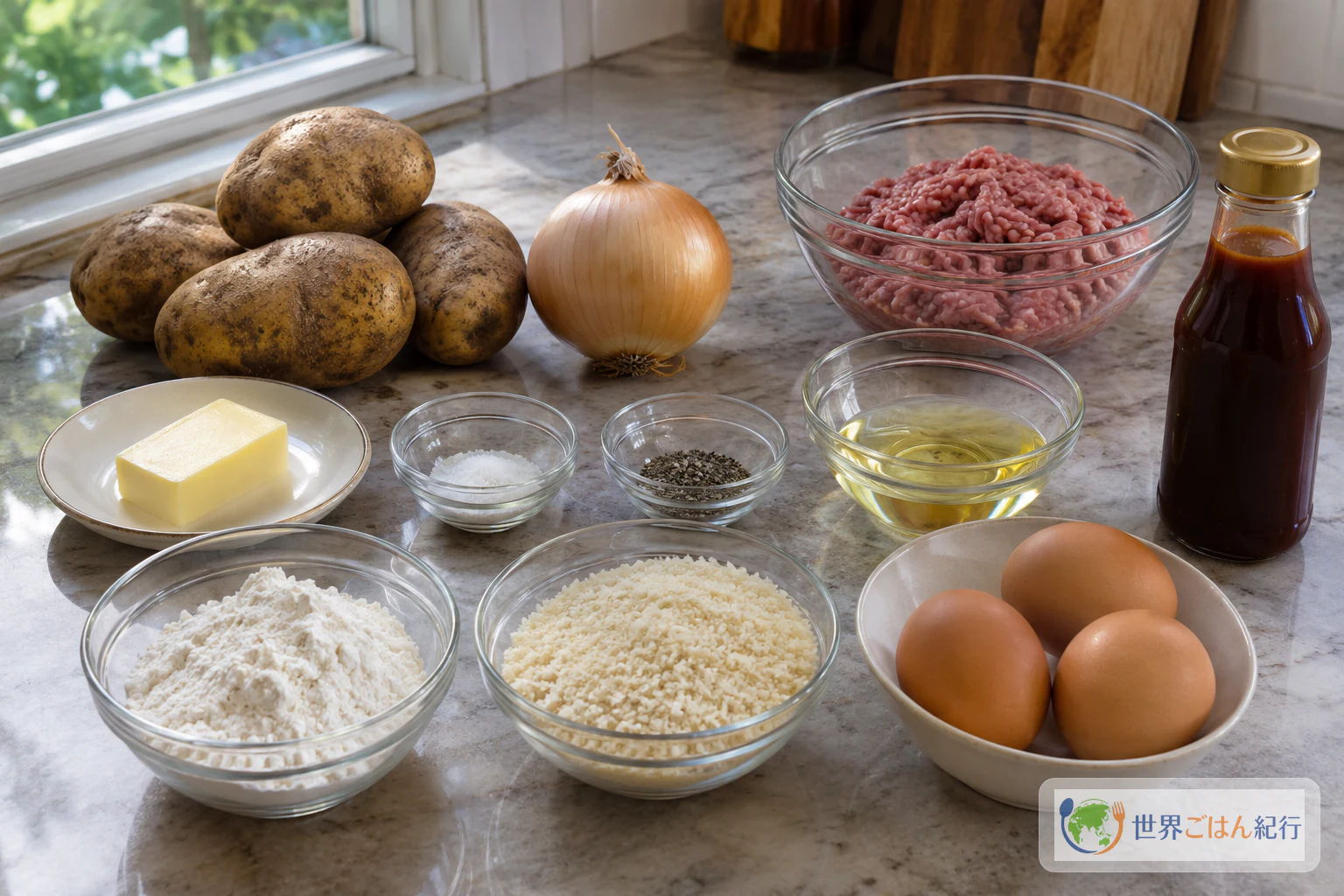
Ingredients for 16 Korokke
Choosing Potatoes, Salt and Oil
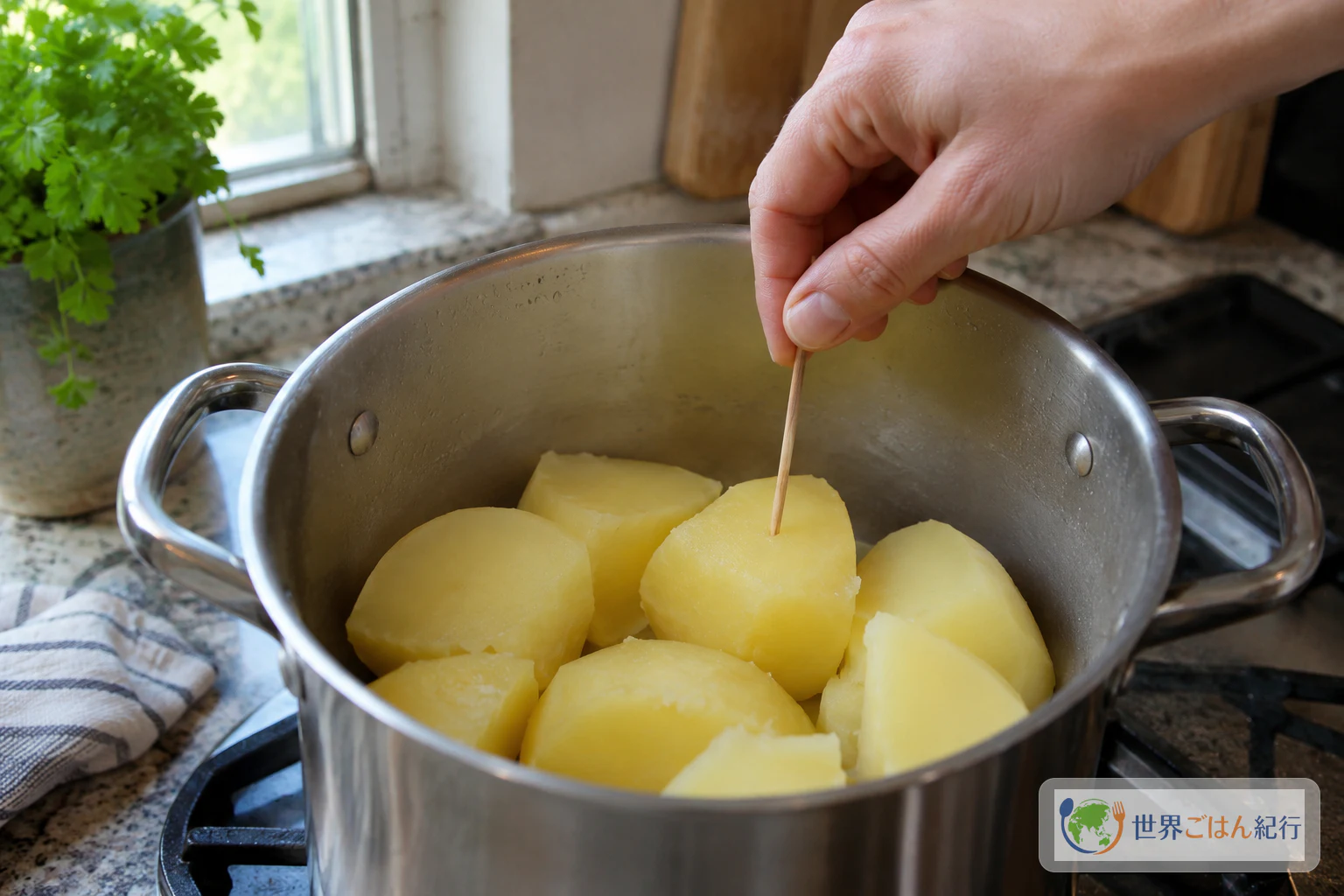
Potatoes. Use russets, a floury potato that mashes dry. In Japan, danshaku (男爵) is a floury potato that can stand in, but it is not guaranteed to behave exactly like a russet, so the texture may differ a little. Waxy potatoes hold more moisture and work against a firm filling.
Salt. The amounts are for Diamond Crystal kosher salt, which has large, light crystals. If you use fine table salt, use half the volume, or the same weight. Spoon-for-spoon, table salt is much saltier, so don't swap it one-to-one by volume.
Oil. Use a neutral oil for both the onion and the frying. A heavy, fairly small pot lets you reach the 2-inch (5 cm) depth without a large volume of oil.
This recipe contains wheat (flour, panko), egg, beef and milk (butter). Check the labels on panko and tonkatsu sauce for other allergens. Handle raw ground beef separately from the other ingredients, and check its doneness with a food thermometer rather than by color.
Equipment
- Large pot for boiling the potatoes
- Bamboo skewer or thin knife for testing doneness
- Large skillet and wooden spoon
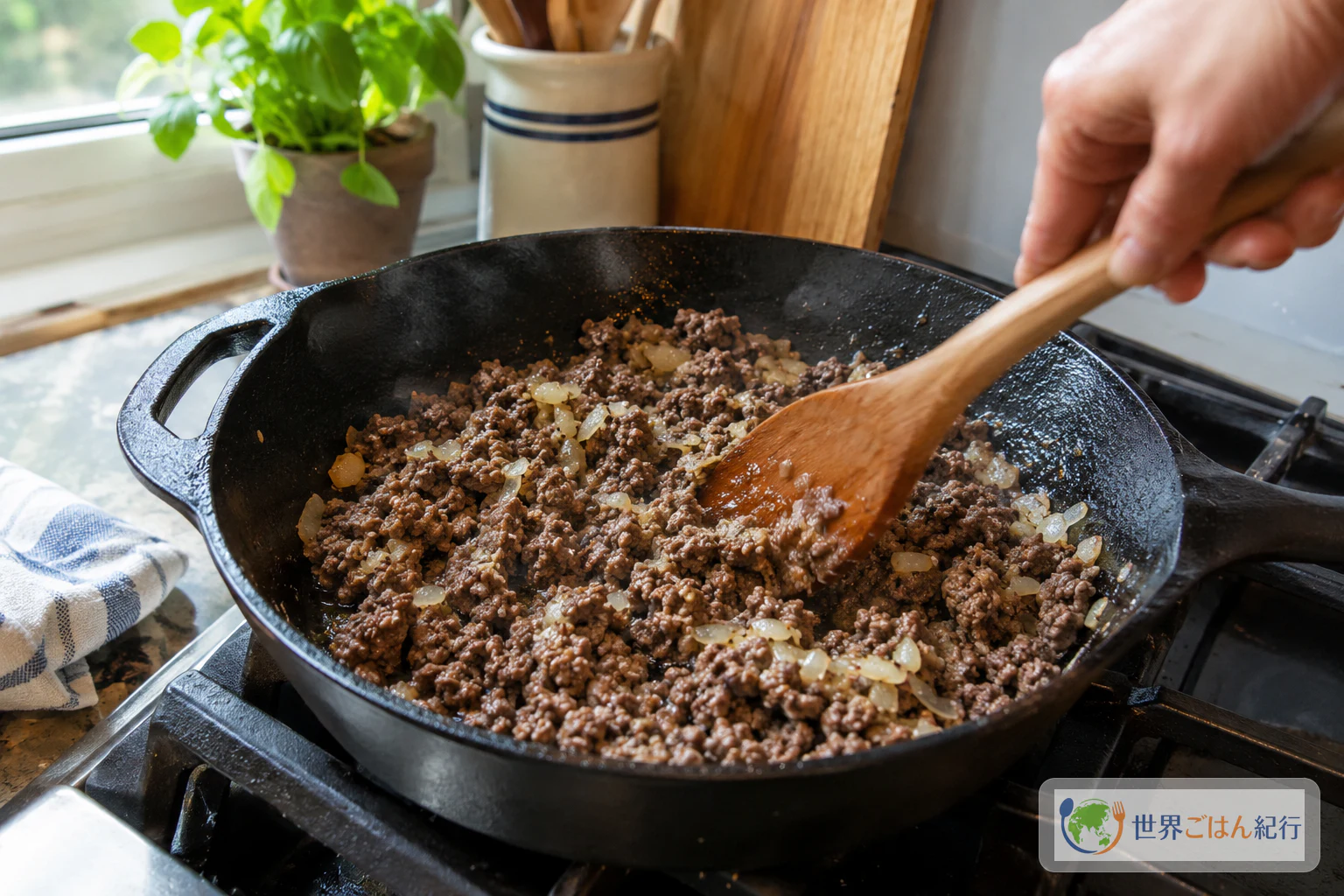
- Instant-read food thermometer (for the beef)
- Potato masher or sturdy fork
- Large mixing bowl
- Colander or strainer, for draining the potatoes and the beef
- One or more shallow trays, plus a cover or wrap, for chilling the patties
- Two shallow bowls and one shallow tray for the flour, egg and panko
- Heavy, sturdy pot for deep-frying
- Deep-fry or oil thermometer
- Tongs or a slotted spoon
- Wire rack set over a tray
Method: From Dry Filling to Crisp Crust
Most of the success is decided before any frying: drying the potatoes, draining the beef, shaping firmly and chilling. If the filling is dry and the patties are cold and fully coated, the frying itself is quick.
Watery, Cracked, Oily: Fixing Common Problems
| Problem | Likely cause | What to do |
|---|---|---|
| The filling is wet and won't hold a shape | Moisture left in the potatoes, onion or beef | Dry the potatoes over low heat after draining, cook the onion until truly soft, cook off the beef's moisture, and don't add the pan juices back |
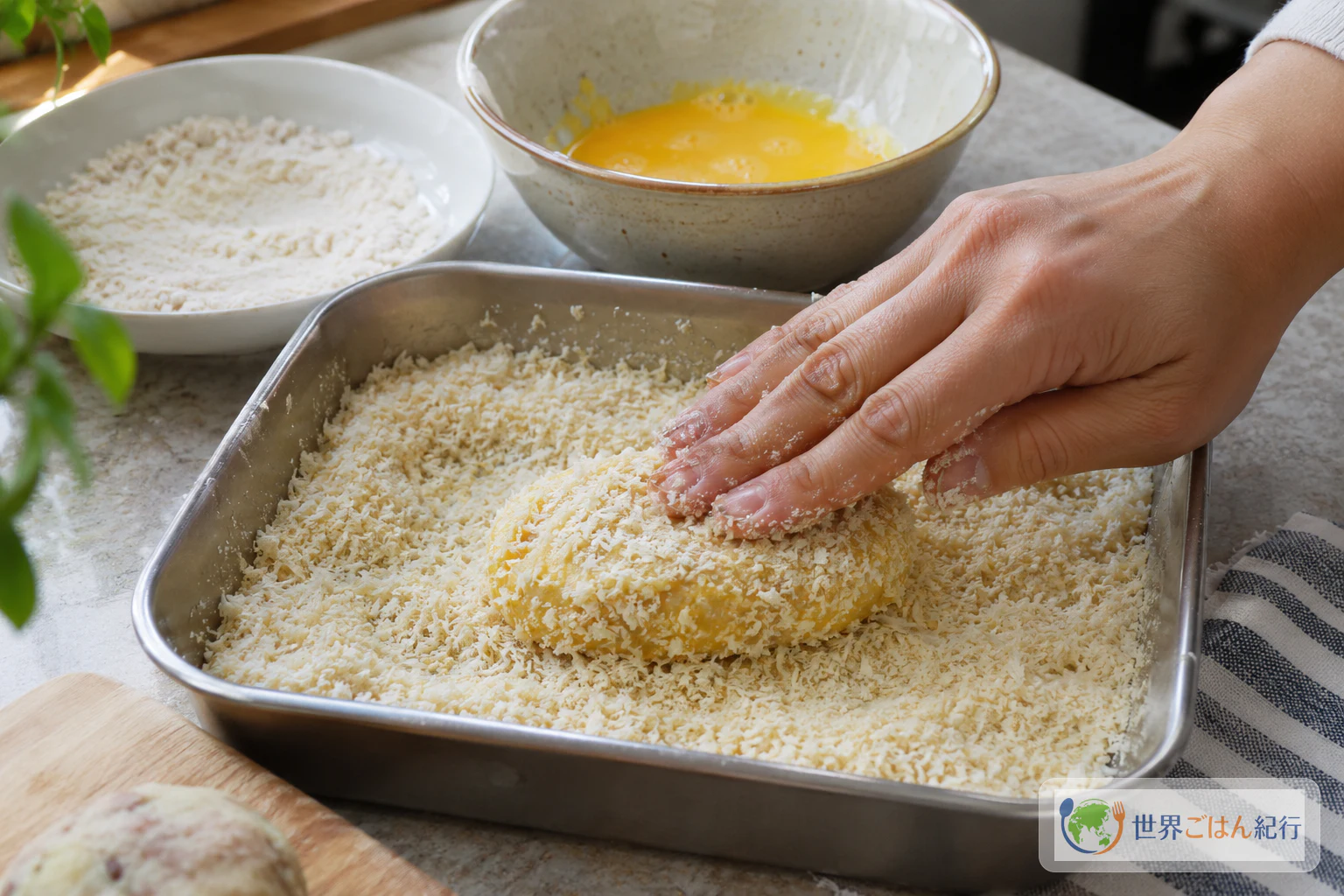
| The coating cracks or bursts in the oil | Air pockets, a filling that is still warm, or gaps in the coating | Press out air while shaping, chill the patties before coating, and cover every surface with flour, egg and panko |
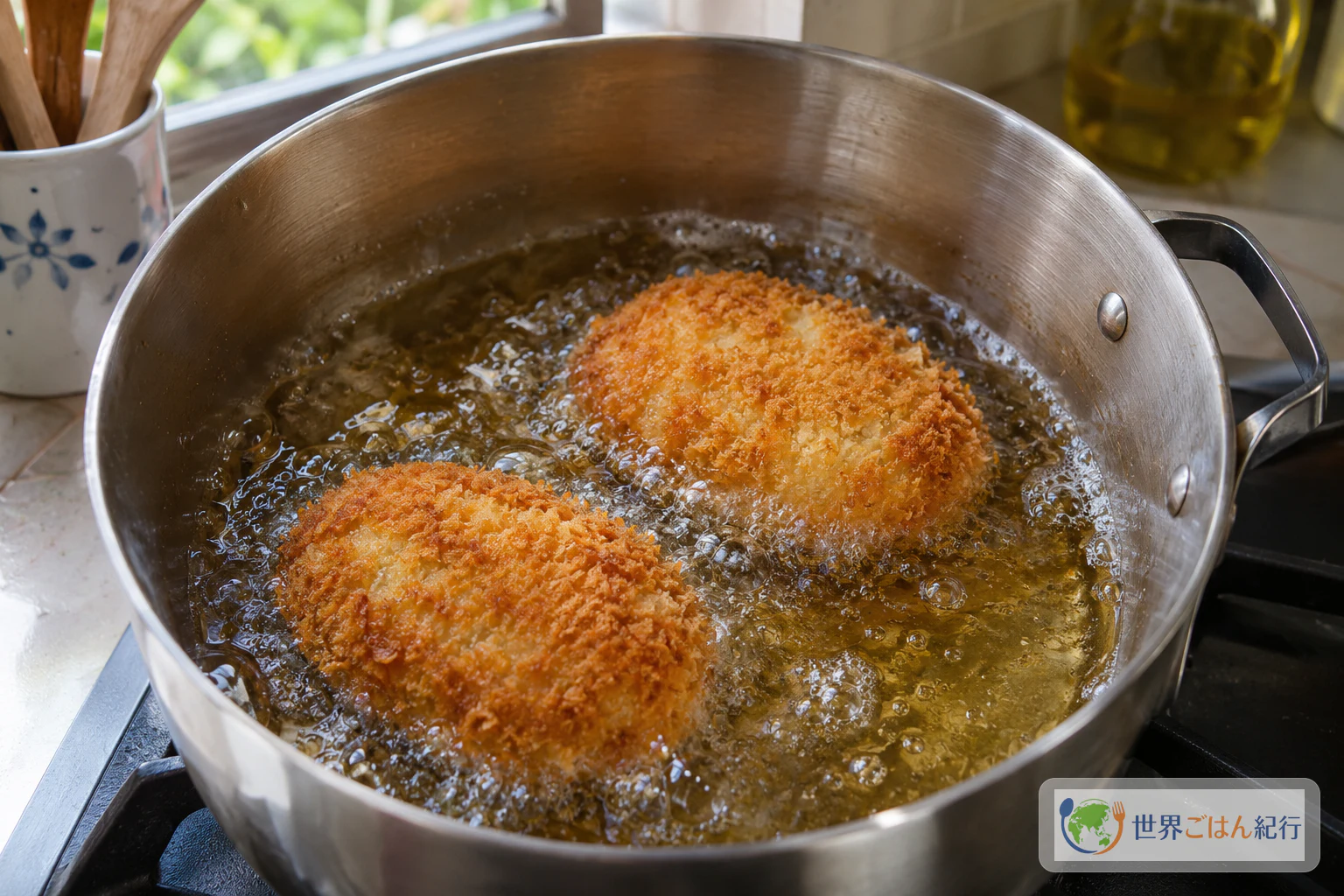
| The croquettes come out greasy | The oil temperature dropped | Fry only 2–3 at a time, watch the thermometer, and let the oil recover between batches |
| The patties slump on the tray | The mixture was too hot when shaped | Let it cool until warm, not hot, before shaping, then chill |
These are the most common reasons rather than the only ones. If a batch cracks, go back through the list in order: moisture, shaping, chilling, then oil temperature.
Variations
These are departures from the recipe above, not part of it, and the flavor will change.
- Part pork: Replacing some of the beef with ground pork changes the fat and the savory depth.
- Mixed ground meat: A beef and pork blend gives a different flavor and releases fat differently, so drain it well.
- Kabocha squash: Squash korokke is really a separate dish. Its moisture and sweetness differ from potato, so it needs its own approach.
- Smaller croquettes: If you shape them smaller, recheck the frying time rather than relying on the times above.
- Sauce: Adjust the amount of tonkatsu sauce to your taste.
Serving and Leftovers
Korokke is at its best freshly drained, when the panko is crispest. In keeping with its yoshoku roots, it sits naturally beside a bowl of rice, with shredded cabbage to cut the richness.
For leftovers, cool them quickly, then refrigerate them in a covered container at 40°F (4°C) or below. Don't leave cooked croquettes at room temperature for more than 2 hours, or 1 hour if it is hotter than 90°F. No fixed storage period or reheating time is given here. The published recipe includes its own freezing and reheating suggestions, but they are not adopted in this article.
Frequently Asked Questions
Can I use danshaku potatoes instead of russets?
Yes, danshaku is a floury potato and a reasonable substitute. It is not guaranteed to match russets exactly, so the texture of the filling may differ slightly. Use the same weight, 2 lb, and dry the potatoes well after draining as in step 3.
Why do my croquettes fall apart?
Usually the filling holds too much moisture or the patties went into the oil warm. Dry the potatoes, cook off and drain the beef, press out air pockets when shaping, and chill the patties for 15–30 minutes before coating. Check, too, that the panko covers every surface.
Does the coating order matter?
Yes. Flour first, then beaten egg, then panko. The flour gives the egg something to cling to, and the egg holds the panko. Press the panko on lightly at the end.
How hot should the oil be, and how many can I fry at once?
Keep the oil at 340–350°F (170–180°C), measured with a thermometer, and fry 2–3 at a time for about 2–3 minutes. Adding more at once drops the temperature and tends to make the croquettes greasy.
Can I let the patties cool on the counter before chilling?
The published recipe cools the shaped patties to room temperature before refrigerating. This article adds a food-safety adjustment based on FDA guidance: spread them on shallow trays to cool quickly, then cover and refrigerate for 15–30 minutes. The FDA's limit of 2 hours at room temperature for perishable food (1 hour above 90°F) is an upper limit, not a waiting time to aim for.
Why use a thermometer for the beef if it is cooked until no pink remains?
Color is not a reliable sign of safety for ground beef. FoodSafety.gov's chart gives 160°F (71°C) as the safe minimum internal temperature for ground beef, so check the center with a food thermometer in step 2.
Sources
- Namiko Hirasawa Chen, "Japanese Croquettes (Korokke) お母さんのコロッケ," Just One Cookbook. The recipe followed here: ingredients and amounts for 16 croquettes, method, frying temperature and time, and serving; presented by the author as her mother's beef and potato korokke. https://www.justonecookbook.com/moms-korokke-croquette/
- Ministry of Agriculture, Forestry and Fisheries of Japan (MAFF), "コロッケ 東京都|うちの郷土料理." Used for the context of korokke as an everyday home and ready-made dish in Tokyo, yoshoku that suited rice, the basic build and coating order, and regional and household variation. Not used for amounts. https://www.maff.go.jp/j/keikaku/syokubunka/k_ryouri/search_menu/menu/34_10_tokyo.html
- Kikkoman Corporation, "Japanese Fusion Cuisine (No. 3)," The Japanese Table. Used for yoshoku eaten with rice, the "Korokke Song" popular around 1920, and korokke as a lunch-box dish. https://www.kikkoman.com/en/culture/foodforum/the-japanese-table/26-3.html
- FoodSafety.gov, "Safe Minimum Internal Temperatures." Used for the general 160°F (71°C) thermometer guideline for ground beef. https://www.foodsafety.gov/food-safety-charts/safe-minimum-internal-temperatures
- U.S. Food and Drug Administration, "Are You Storing Food Safely?" Used for quick cold handling, refrigeration at 40°F (4°C) or below, and the 2-hour (1 hour above 90°F) room-temperature limit for perishable food. https://www.fda.gov/consumers/consumer-updates/are-you-storing-food-safely