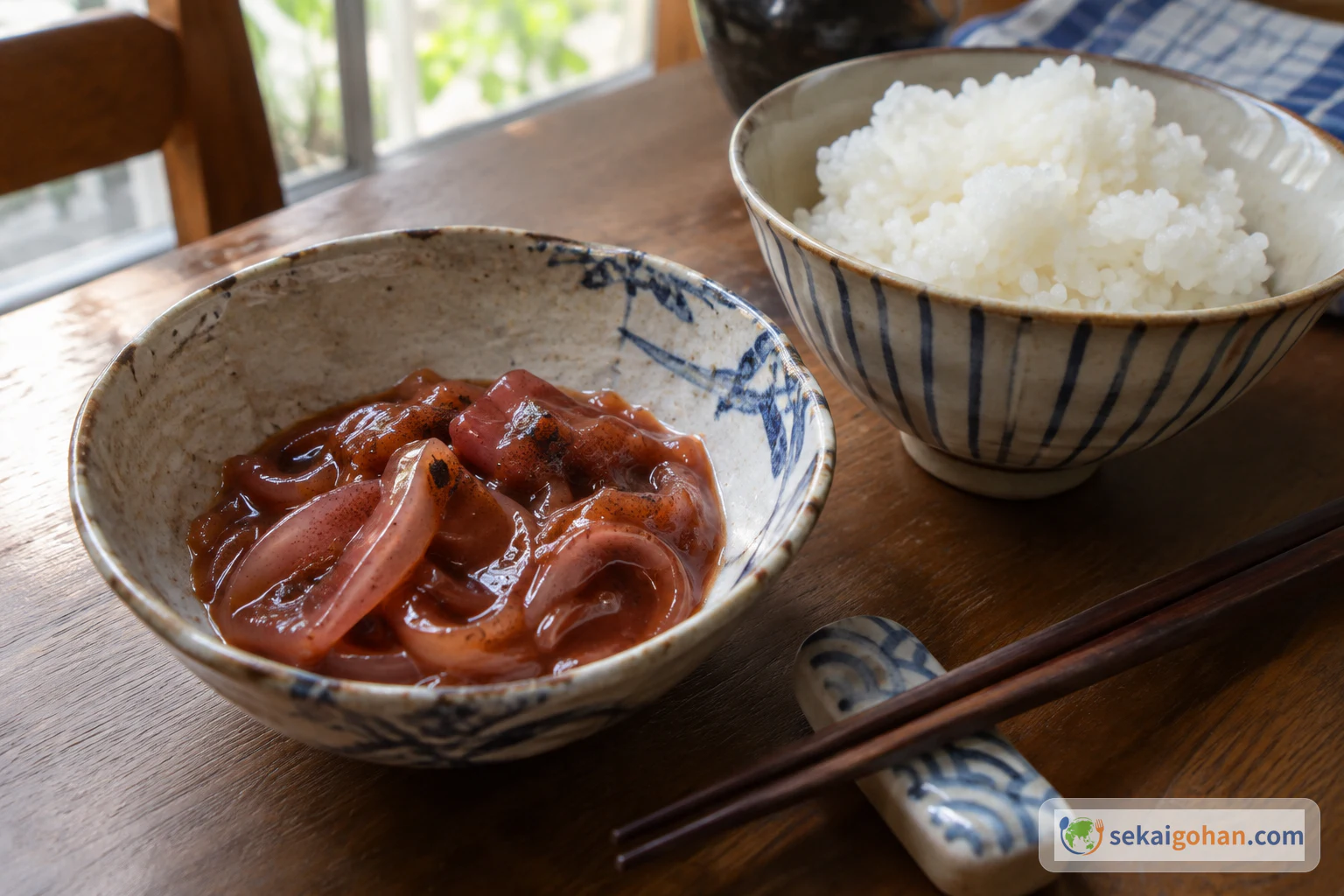
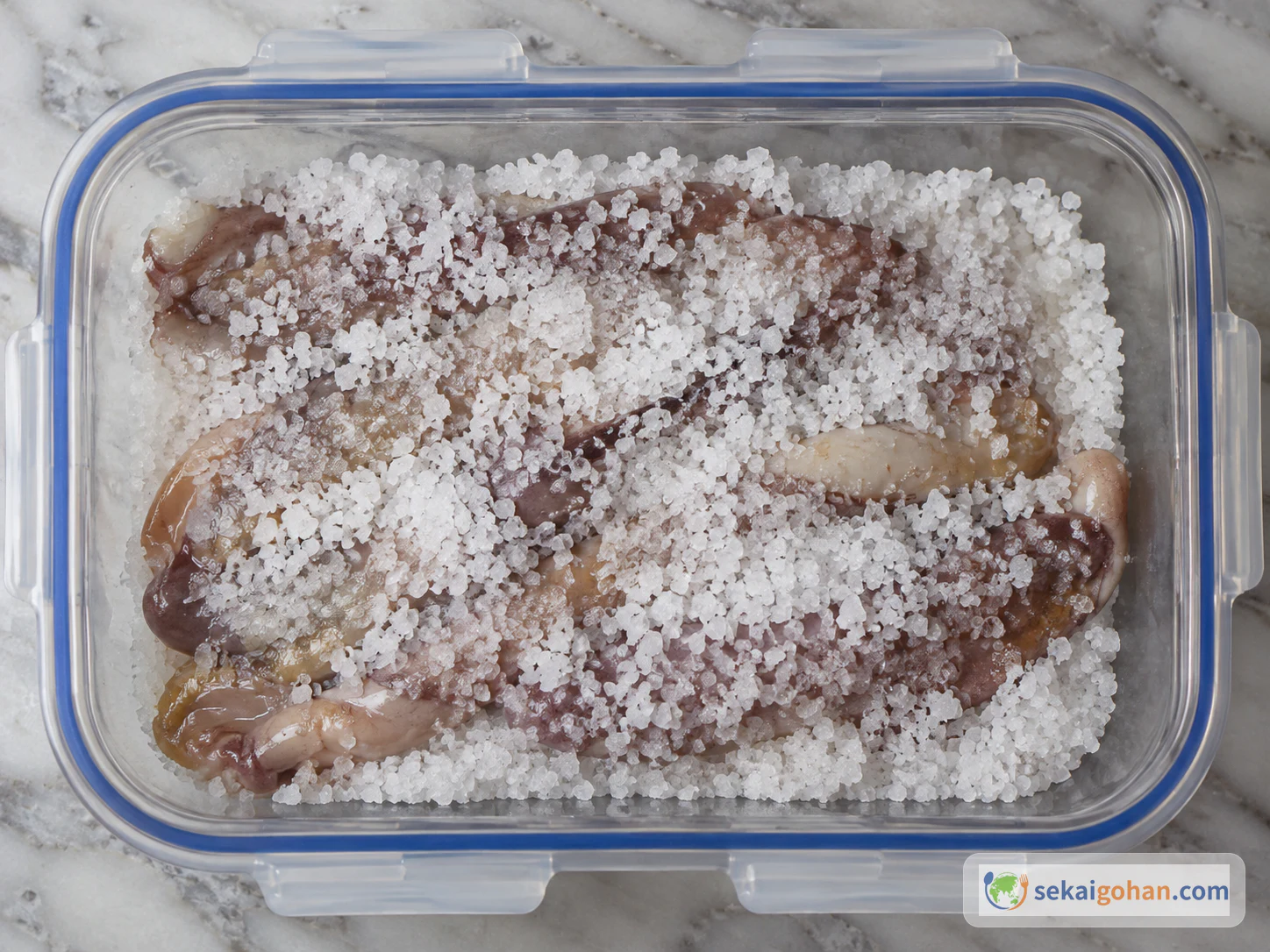
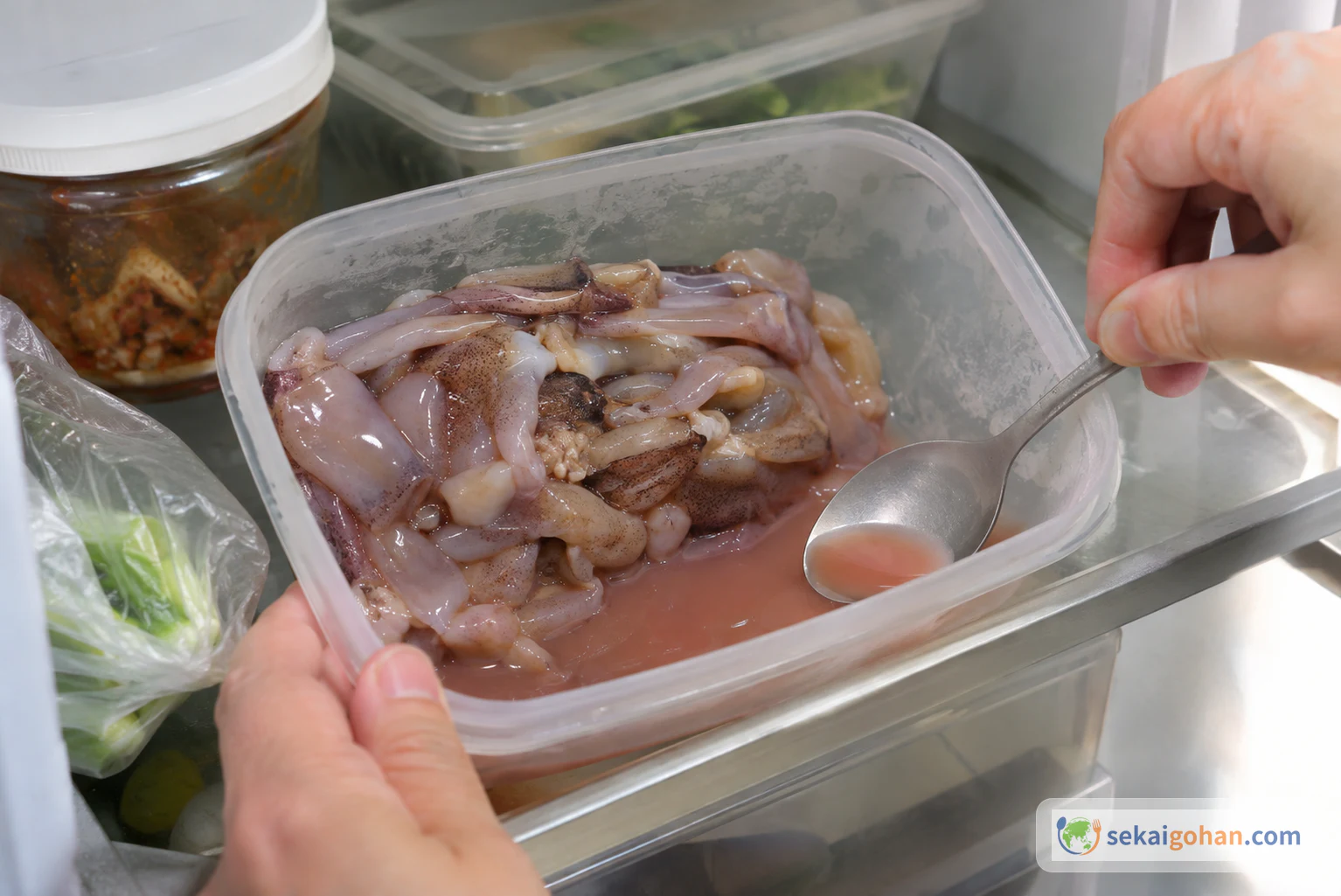
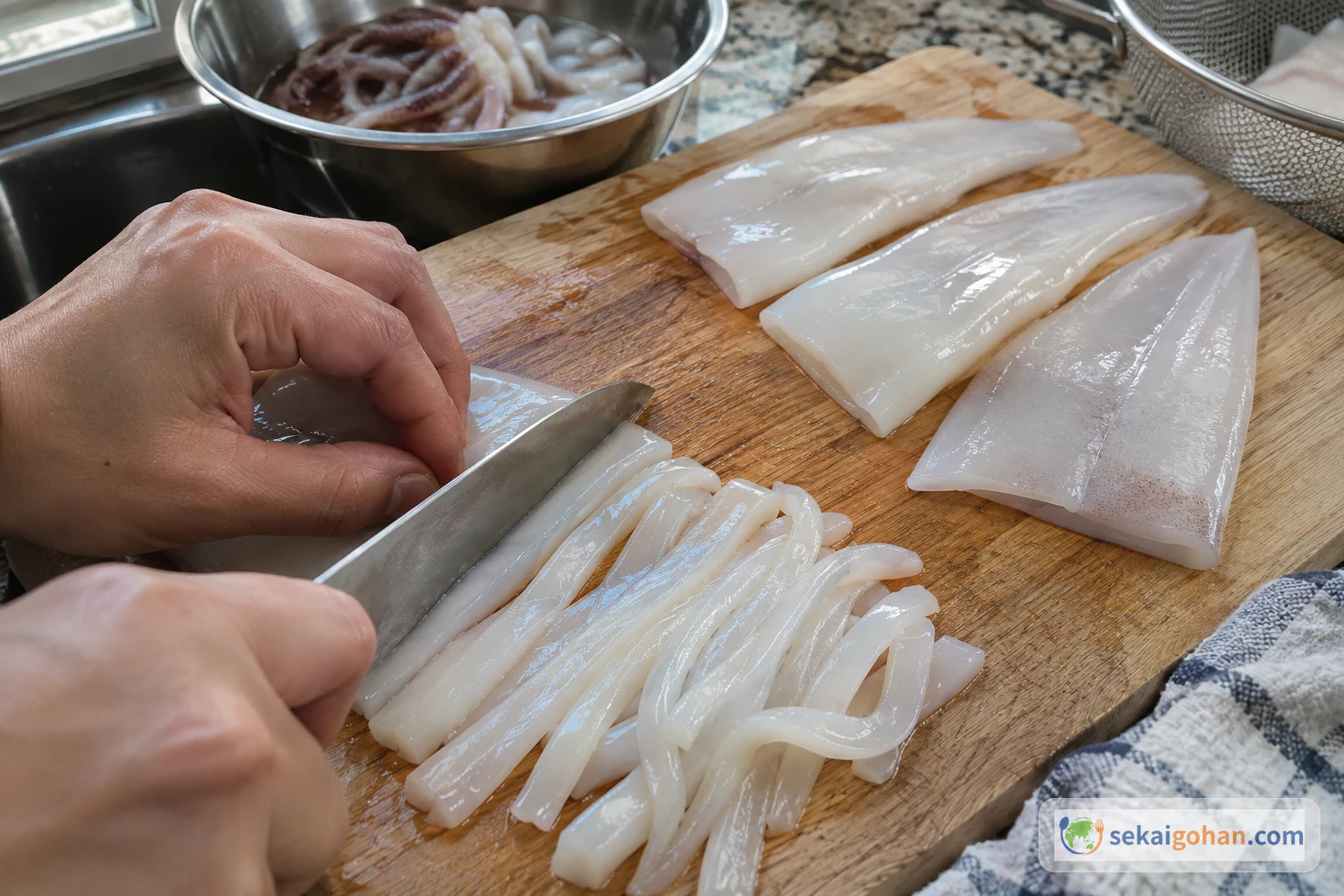
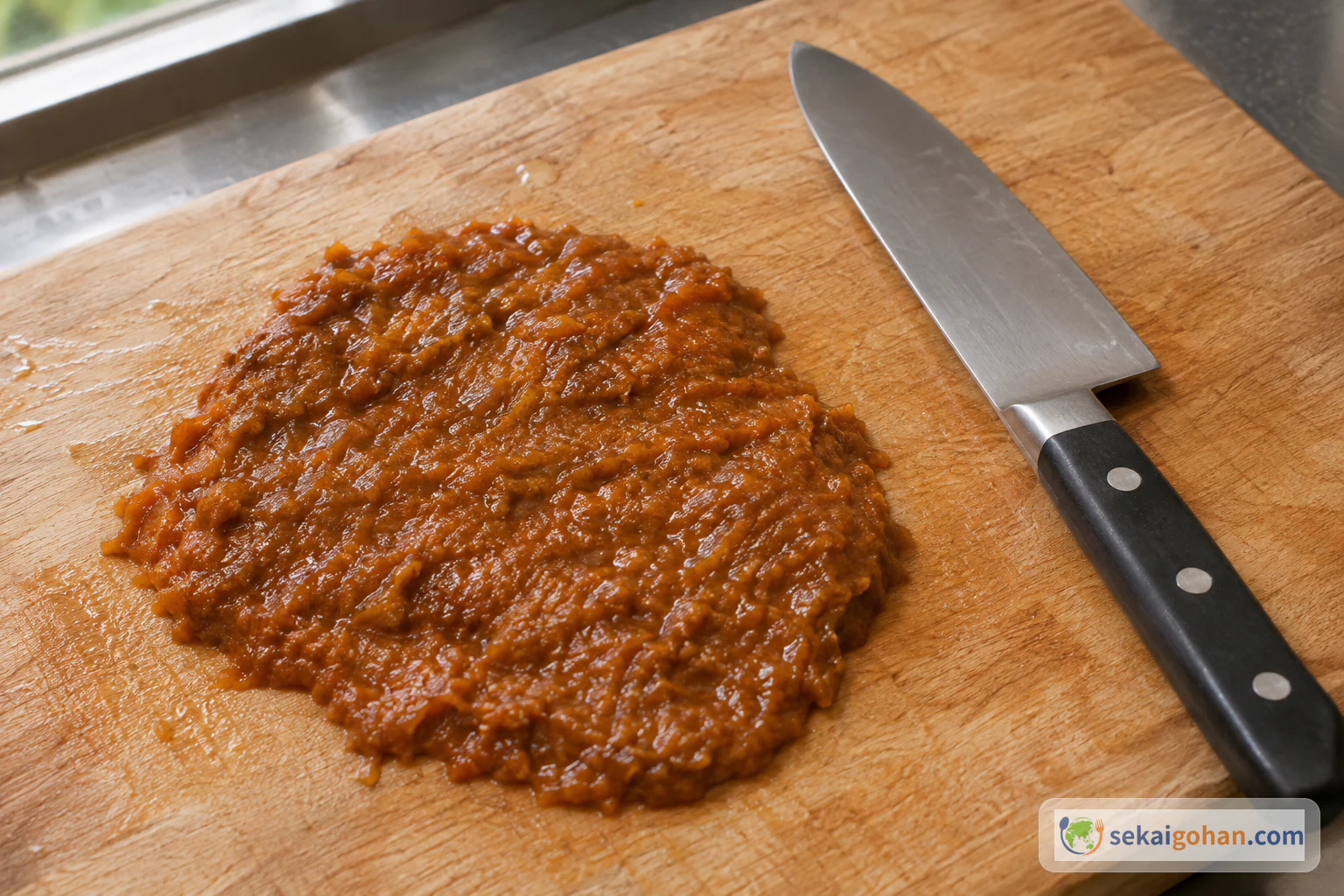
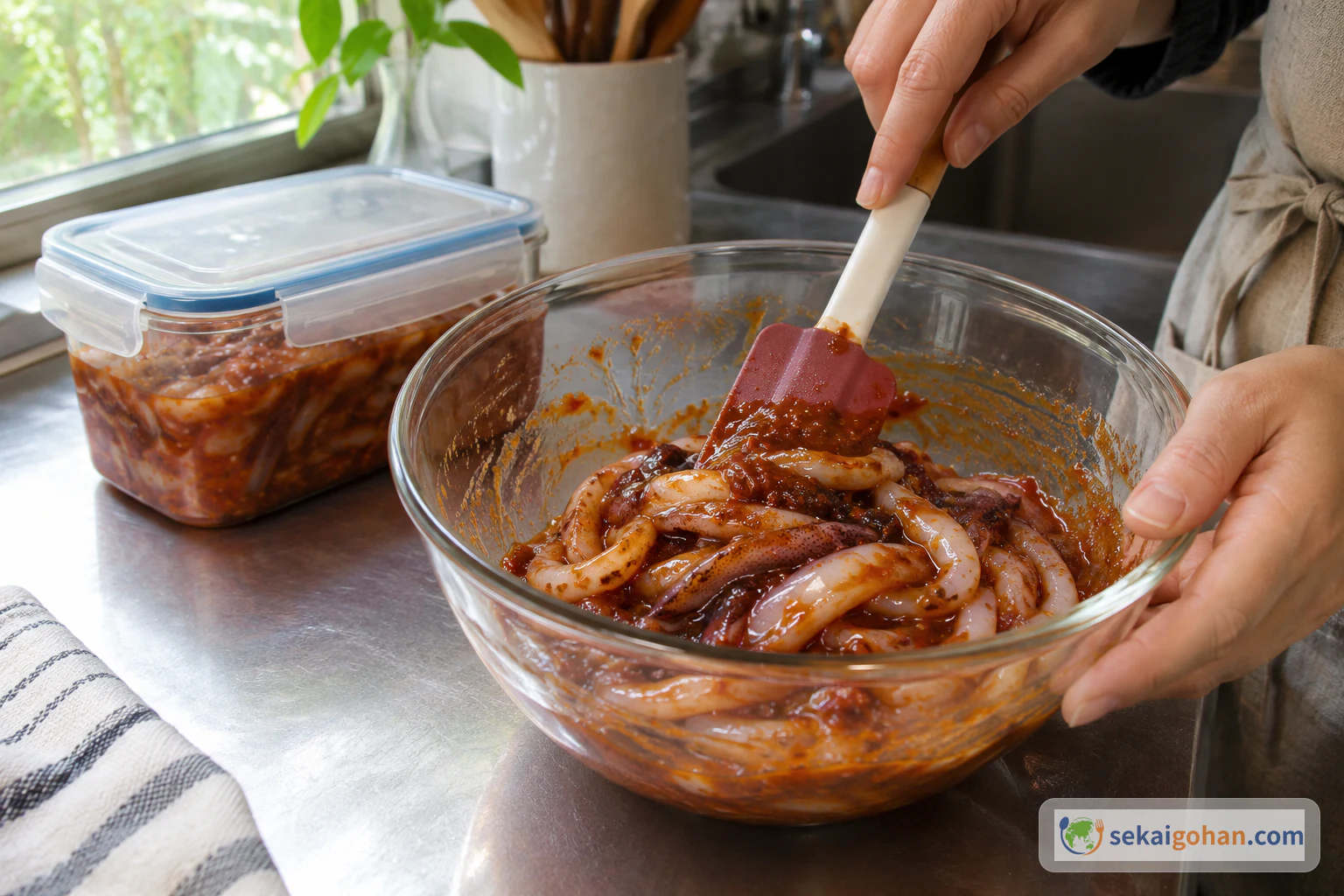
Once a day for four or five days, you open a container at the back of the fridge, find a little liquid gathered around the salted squid innards, and lift it away. On the last day you rinse off the salt, split the innards open and pound them with the back of a knife into a dark, glossy paste, then fold in thin strips of squid body. That bowl is ika no shiokara, squid cured in salt with its own innards. In Japan it sits beside a cup of sake as a drinking snack, or on top of hot white rice, and a little goes a long way: deeply salty, rich from the innards, the raw strips coated and clinging.
Salt, Squid and Time: Where Shiokara Comes From
Shiokara is a preserving method before it is a recipe. Seafood is packed in salt and left to ferment, and the result keeps far longer than fresh fish. The practice is usually traced to the Sanriku coast in northeastern Japan, where the catch was plentiful and had to be put by. In Miyagi, shiokara is made from more than squid: sea squirt, bonito and sea urchin all go into their own versions, each a separate dish.
The history runs long. Shiokara is recorded in writings from the Heian period, and salting seafood goes back further still. Today a jar of it sits in Japanese supermarkets, but making it at home keeps the handwork that the jar hides: two parts of one squid handled on two different clocks, the innards curing in salt while the body waits frozen.
Red, white, black, and shuto
Squid shiokara comes in three main styles. The one made here is aka-zukuri, "red-style": cut body, innards and salt, which gives the reddish-brown colour of the finished bowl. Shuto is a cousin that people often confuse with it. Shuto uses only innards and salt and is aged for a long time, while shiokara uses both the flesh and the innards.
Red-style (aka-zukuri) mixes the cut body with innards and salt. White-style (shiro-zukuri) uses skinned flesh and is favoured in western Japan. Black-style (kuro-zukuri) is made with squid ink, mainly in Fukui Prefecture.
Ingredients (serves 4)
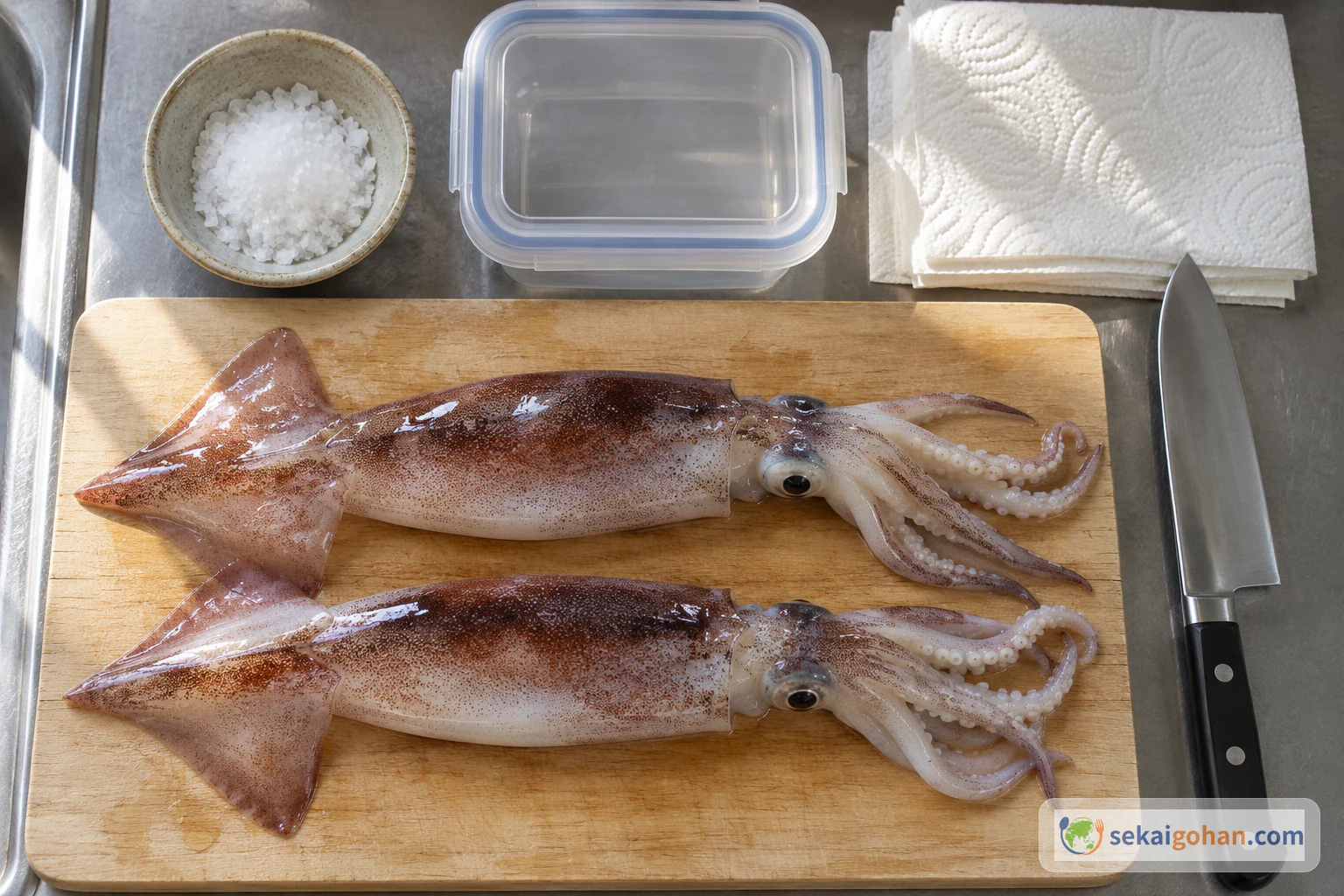
This dish is made of squid. Anyone with a squid or shellfish-related seafood allergy should not eat it.
Equipment
- Sealed storage container for curing the innards (enamel or glass)
- A second sealed container for the finished shiokara
- Sharp kitchen knife and cutting board
- Clean rubber spatula
- Mixing bowl
- Paper towels
- Plastic wrap
Choosing the Squid and the Salt
The squid has to be whole. Cleaned tubes and frozen rings have already lost their innards, and without the innards there is no red-style shiokara. Buy fresh whole surumeika from a fishmonger or a supermarket fish counter, and choose squid sold for eating raw. Outside Japan, look for whole squid at a Japanese or Asian grocer or a trusted fishmonger, and tell them you plan to eat it raw.
Natural salt is the only seasoning. A coarse natural sea salt works well because it is easy to spread in a thick bed and pile over the innards. Sake and mirin do not belong in this version; they appear in a different, quicker mix described under the variations.
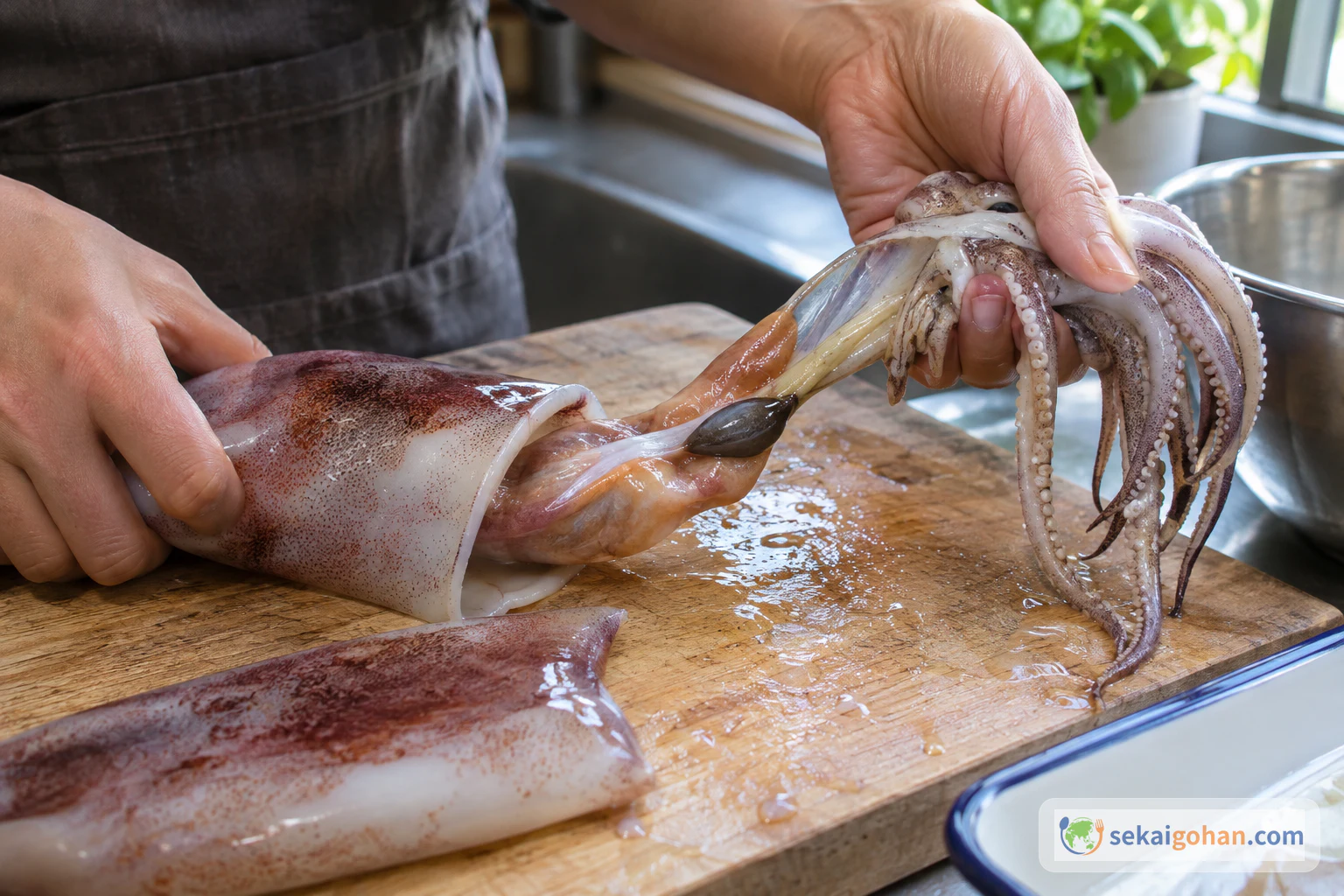
When you buy, ask the fishmonger to leave the squid uncleaned. At home, the whole job of step 1 is to bring the innards out unbroken, because a torn sac leaks into the board instead of into your shiokara.
Method: Two Parts on Two Clocks
The work falls on two days with a quiet stretch between. On day one, clean the squid, set the innards in salt and freeze the body. For the next four to five days the innards cure in the fridge, and your only job is to remove the liquid once a day. On the final day, thaw and cut the body, pound the innards, and mix.
Use squid sold for eating raw, keep it cold, and clean and salt it the day you buy it. Work with clean hands, a clean board and tools kept apart from other food. Salt does not kill anisakis larvae, a parasite found in squid; freezing at −4°F (−20°C) or colder for at least 24 hours does. The body is frozen in this method and the innards are only salted, so as an added precaution beyond the steps below, you can also freeze the innards at −4°F (−20°C) for at least 24 hours before salting. Throw the batch away if it smells wrong, grows mould or turns an unexpected colour. People who are pregnant, elderly, very young or have weakened immunity should skip shiokara.
When It Goes Wrong
| What you see | Why | What to do |
|---|---|---|
| A fishy smell when you open the container | Liquid was left standing around the innards | Remove the liquid every day without fail; for the next batch, clear it at the same time each day |
| Innards torn or leaking during cleaning | The legs were pulled too hard, or the ink sac broke | Pull slowly and steadily, and lift off the ink sac before anything else |
| Lumpy paste that will not coat the strips | The innards were not pounded enough | Keep pounding with the knife spine until the paste is smooth |
| A wrong smell, mould or an unexpected colour | Contamination during curing or storage | Throw the whole batch away; next time use clean containers, hands and tools throughout |
Serving, Variations and Storage
At the table
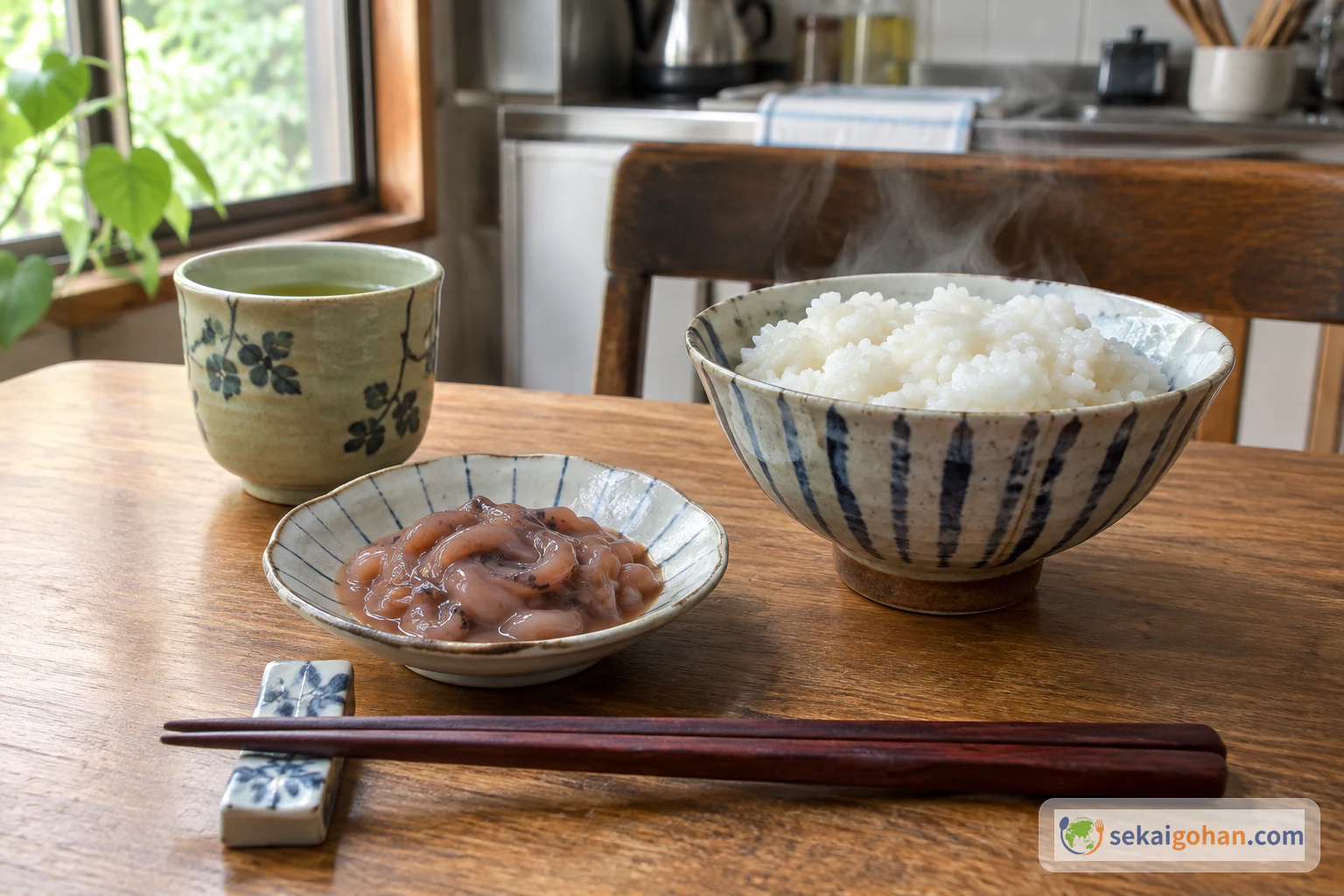
Shiokara is eaten in small amounts, straight from the fridge, never heated. Put a little on a small plate next to a bowl of steaming white rice and a cup of green tea, or serve it as a snack with sake in the evening. Take a few strips with your chopsticks and eat them with a mouthful of rice so the salt is carried by the grain.
Variations
- A quicker mix with sake and mirin. This is a separate mix: 1 squid of about 10½ oz (300 g), the innards salted overnight in the fridge uncovered, then about 1½ oz (40 g) of innards squeezed out and mixed with the body, 1 tsp salt, 1 tsp sake and 1 tsp mirin. It is eaten from the next day, stirred once a day with dry chopsticks. The sake and mirin soften the salt and add sweetness.
- White-style. Shiro-zukuri uses skinned flesh and is the style favoured in western Japan, so it is paler in the bowl.
- Black-style. Kuro-zukuri adds squid ink and is made mainly in Fukui Prefecture, turning the bowl dark.
Storage
Keep the finished shiokara in a sealed container in the fridge for 4 to 5 days. Use a clean spoon or chopsticks each time you take some out, and return it to the fridge right away.
Frequently asked questions
Can I make it without the innards?
The innards are what make red-style shiokara: they become the paste that coats and seasons the strips. Without them you have salted raw squid, a different dish. Buy whole squid so the innards come with it.
What do I do with the legs and fins?
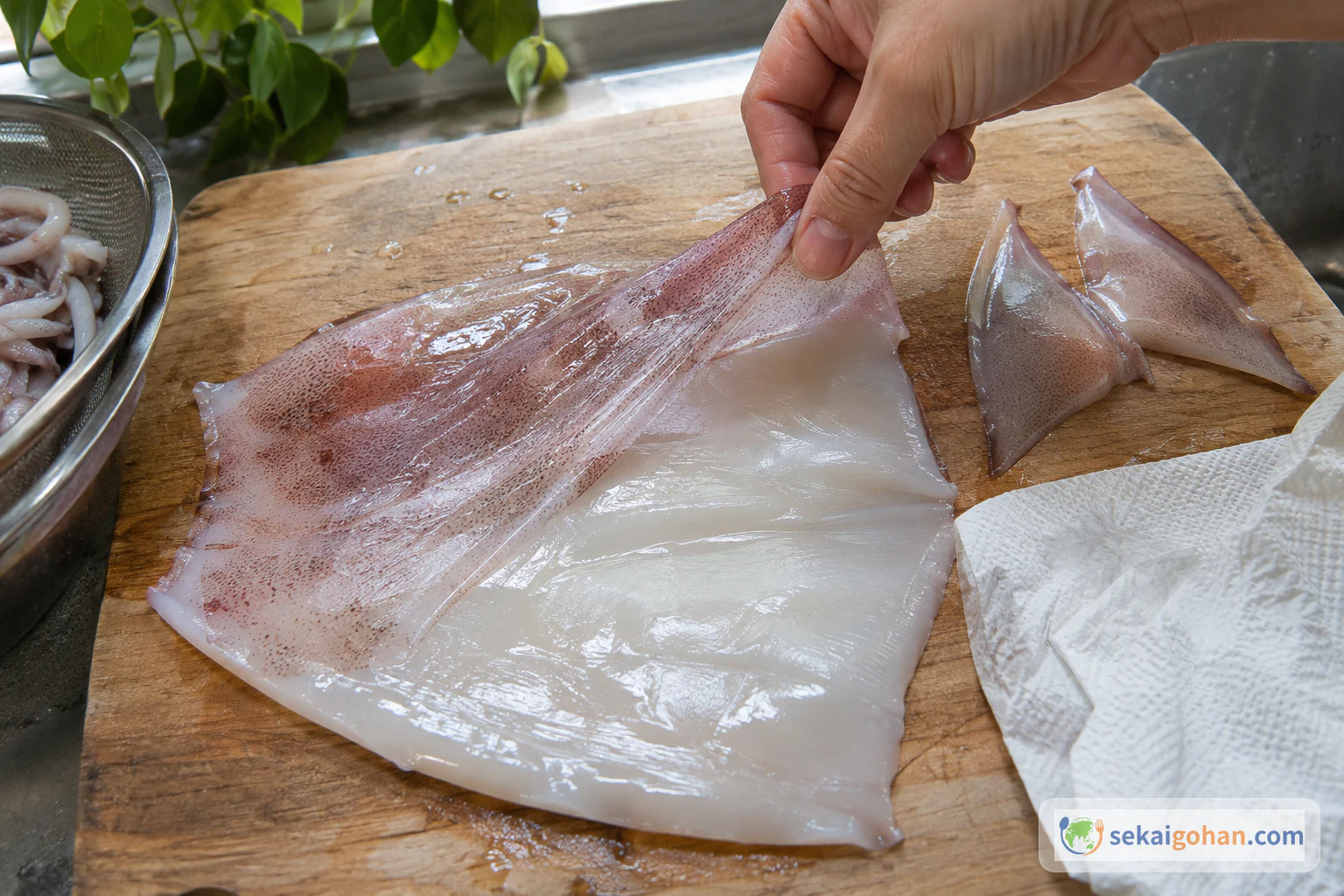
The legs, fins and thin skin do not go into the shiokara. They can be simmered with atsuage, thick fried tofu, as a separate dish.
Why does store-bought shiokara taste milder?
Traditional shiokara was usually made with about 10 to 20 percent salt. Low-salt products of around 5 percent have become common in recent years, so many supermarket jars taste gentler than traditional ones.
Can I cook it to make it safer?
Heat kills anisakis larvae: a few seconds at 140°F (60°C), and instantly at 158°F (70°C) or above. Shiokara, though, is eaten uncooked. If raw squid is not right for you, choose a fully cooked squid dish instead.