Hong Kong Egg Tarts: A Flaky Shell Around a Pale, Just-Set Custard
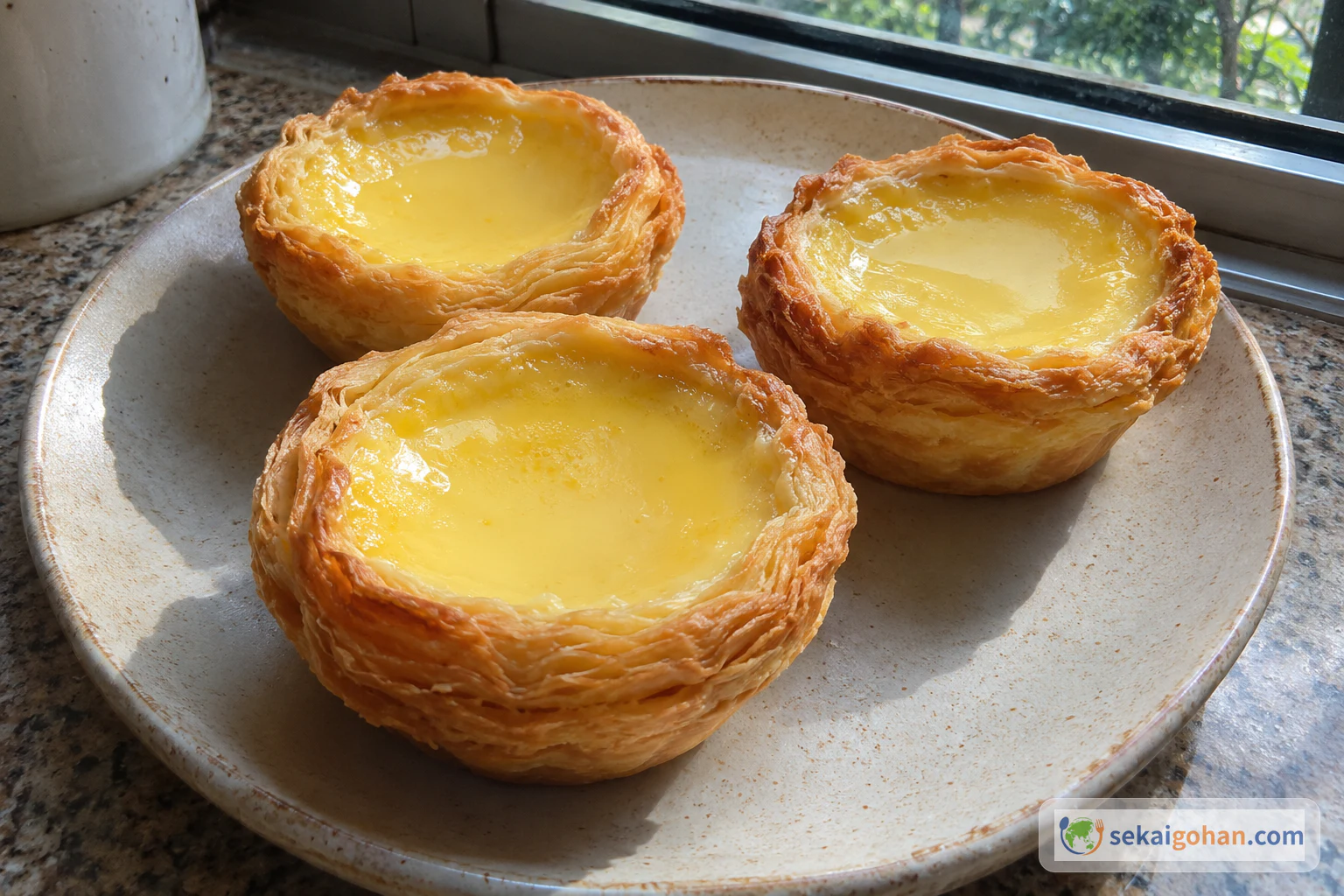
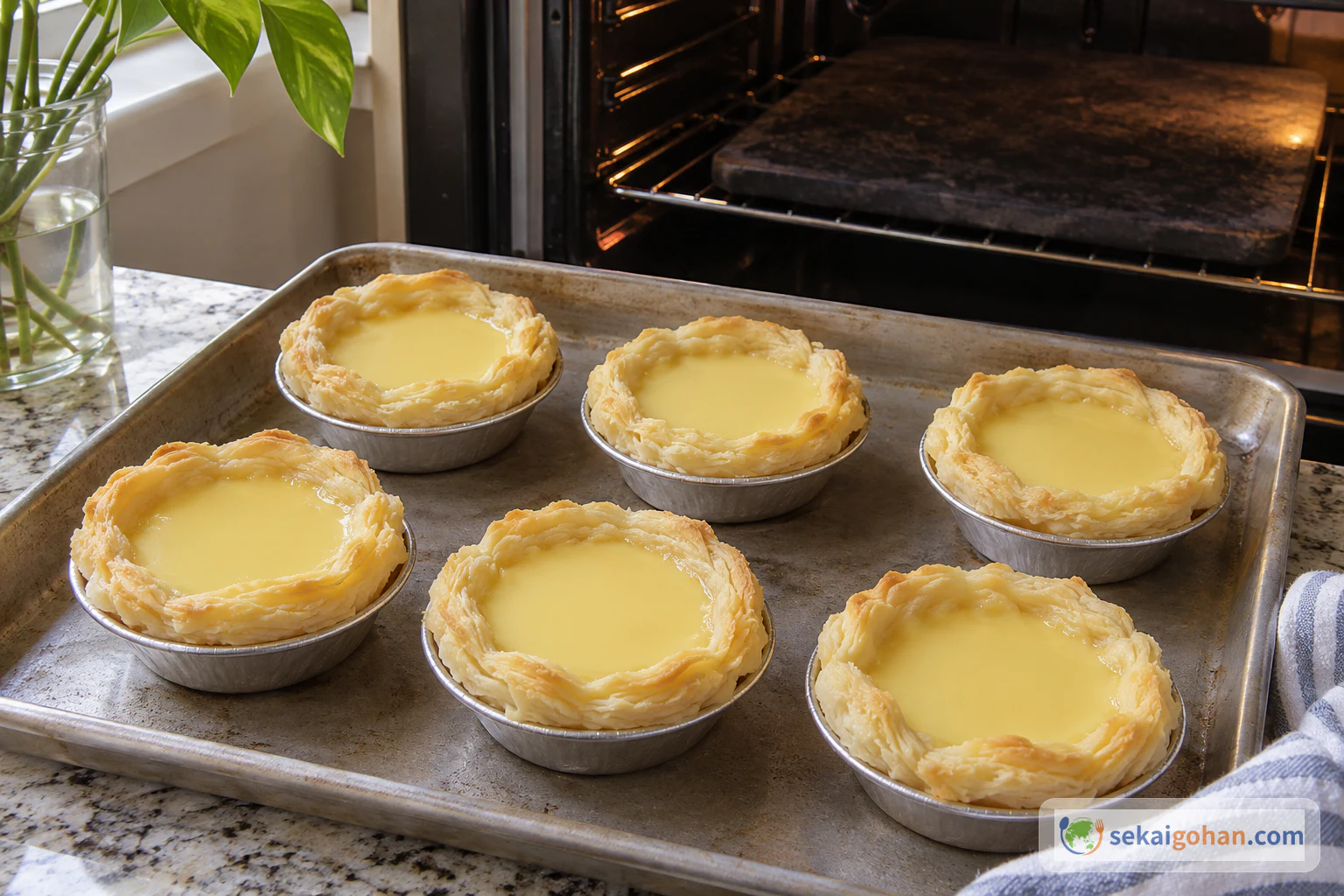
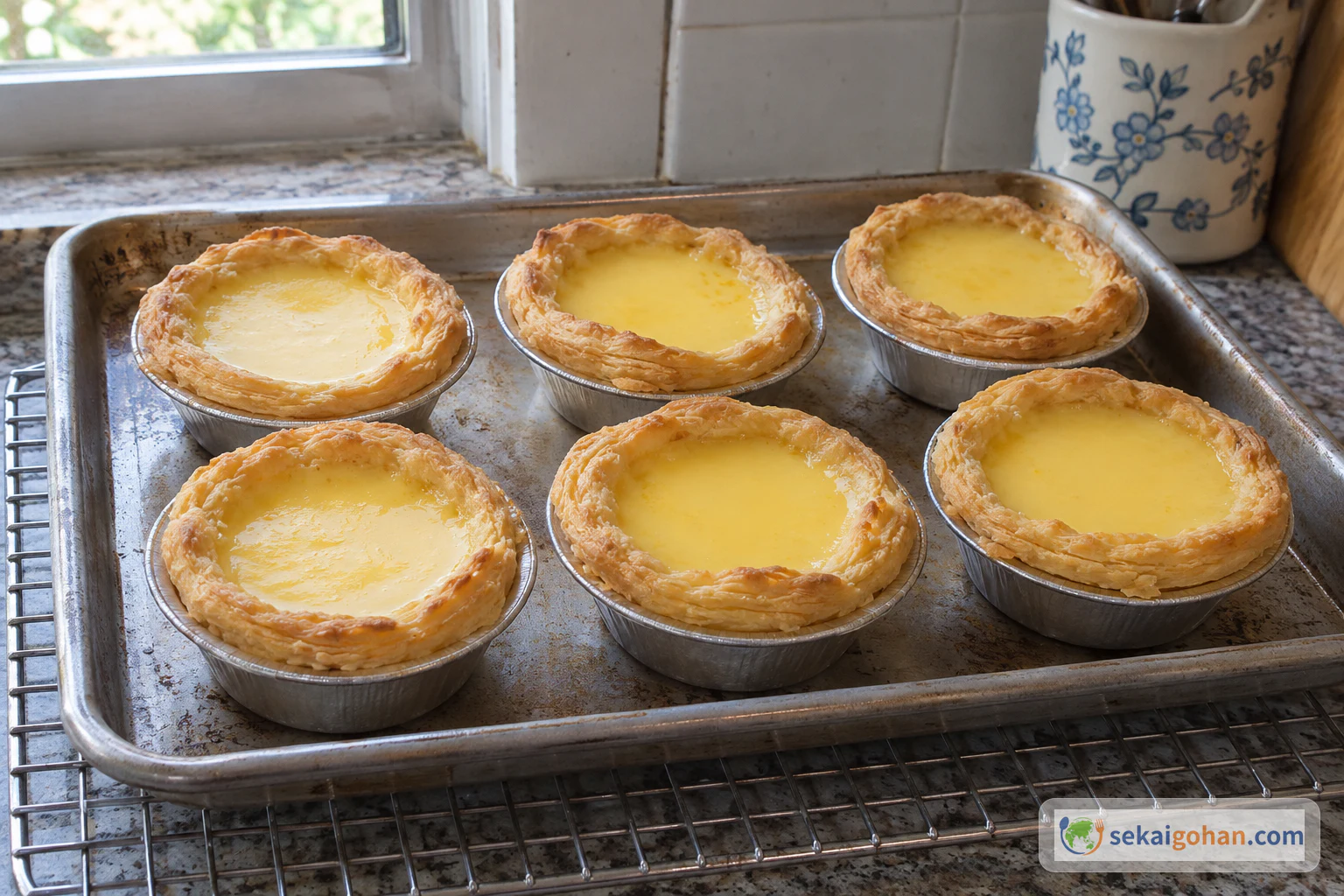
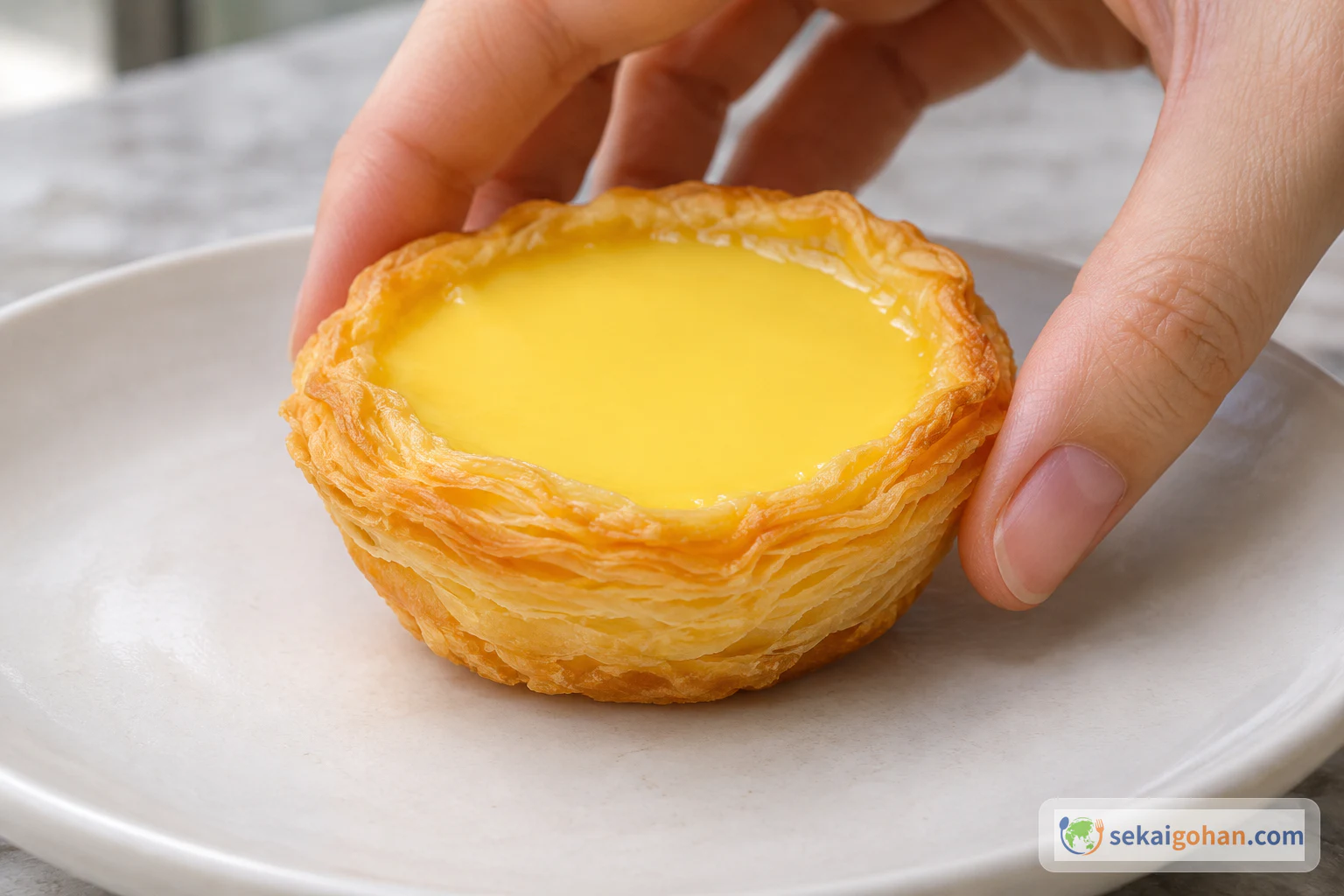
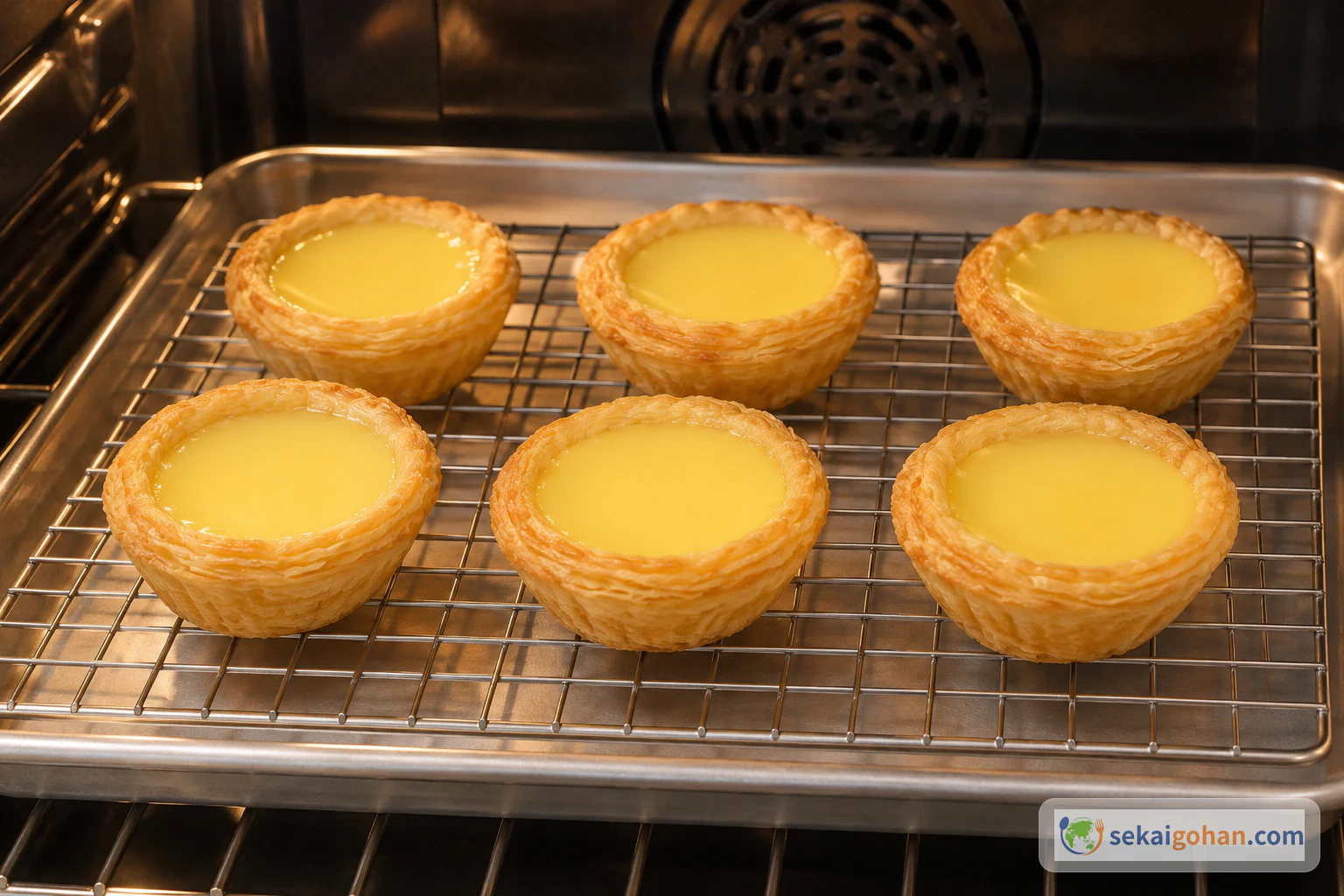
Layered, flaky pastry, and a custard that is smooth, pale yellow and only just set. No dark, caramelized spots on top.
Hong Kong egg tarts are a local favourite in the city's bakeries and in its cha chaan tengs, the city's casual cafés. The Hong Kong Tourism Board lists the egg tart among the traditional desserts to try in Hong Kong, describing a pastry shell filled with egg custard.
There is more than one kind of Hong Kong egg tart. Some have a crumbly, cookie-like crust; others have a flaky crust built from many thin layers. This article follows one specific flaky version: a rough-puff recipe by Genevieve Yam, published by King Arthur Baking, that makes 15 tarts in 3-inch molds. Its butter pastry is folded five times to build layers, and its custard is made with evaporated milk, whole eggs and an extra yolk, then rested before baking.
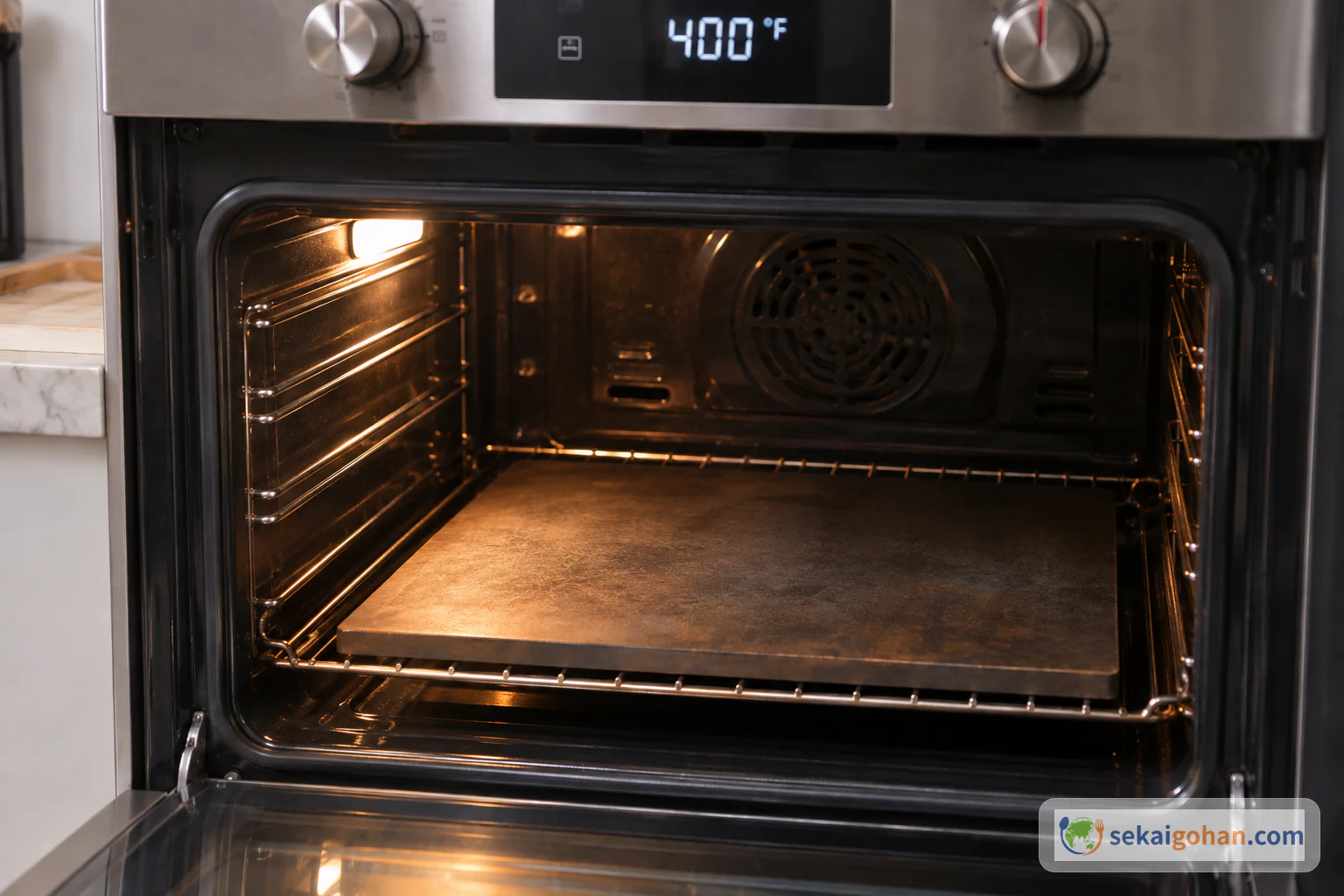
Sekai Gohan has not kitchen-tested this recipe as a whole. The recipe is kept as written: the same 15-tart quantities, the US cup and spoon measures with their gram weights, inch sizes, Fahrenheit temperatures, and a baking steel or stone on the lowest oven rack. Celsius figures in parentheses are approximate. This is one reproducible home version, not the single standard Hong Kong egg tart.
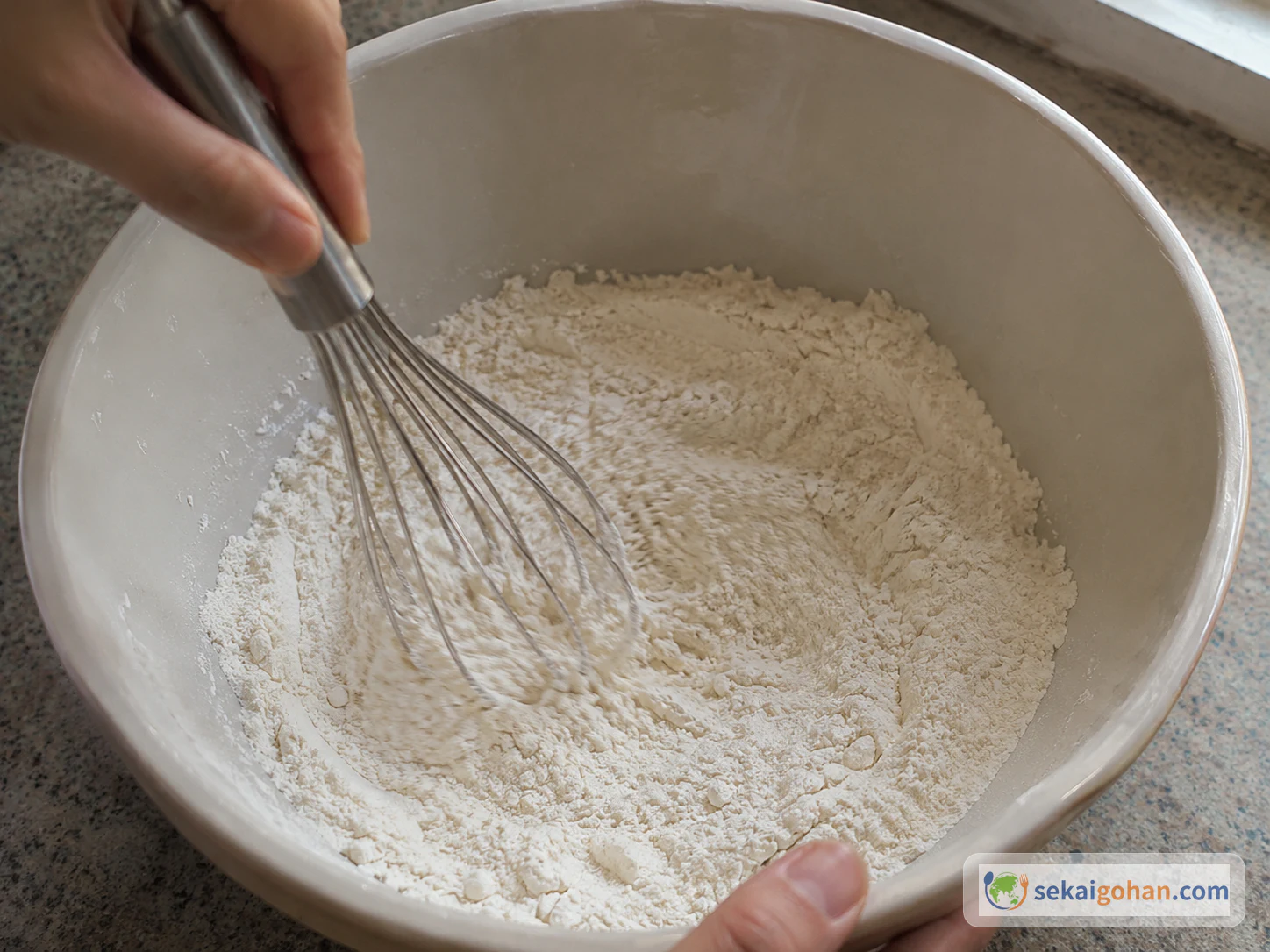
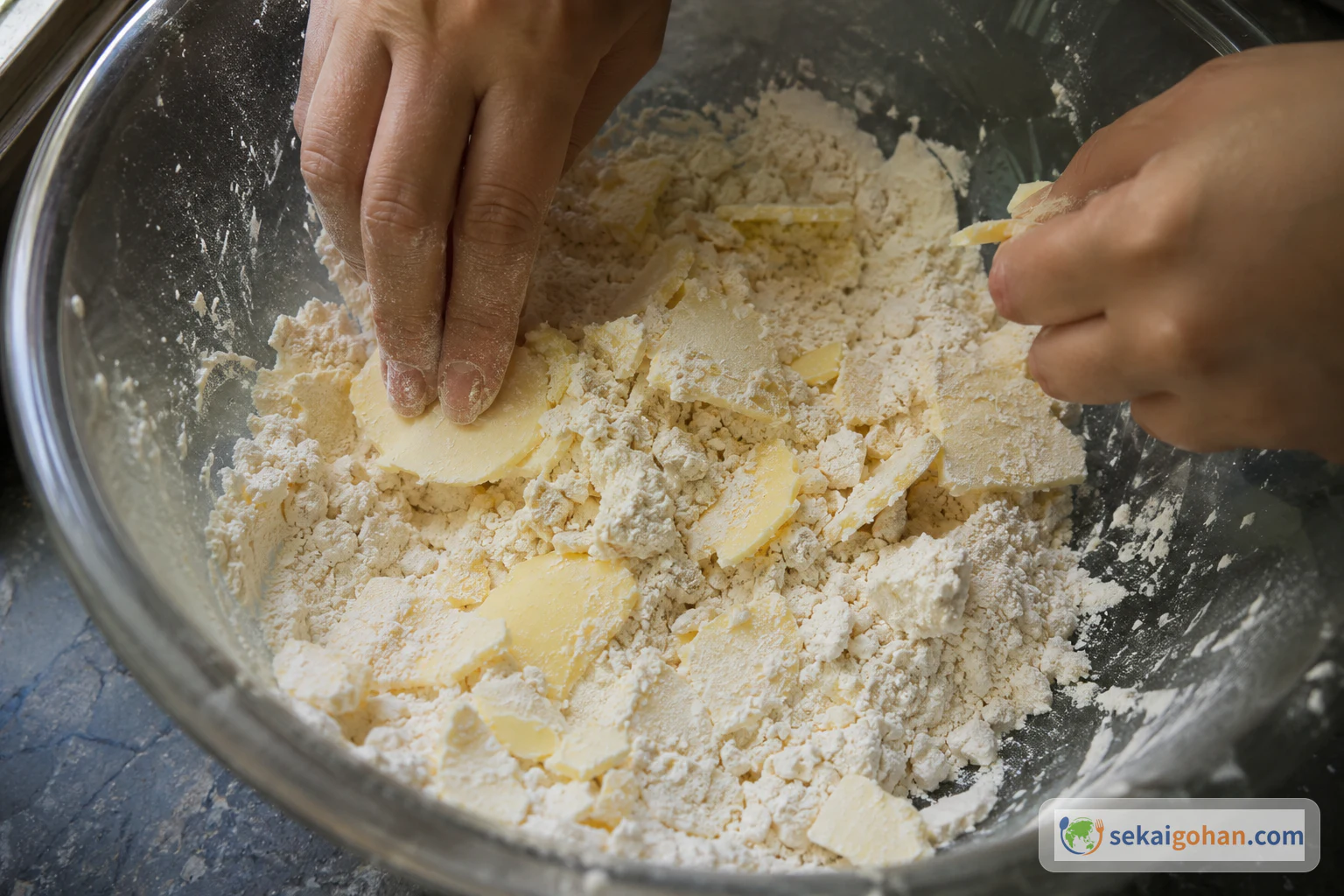
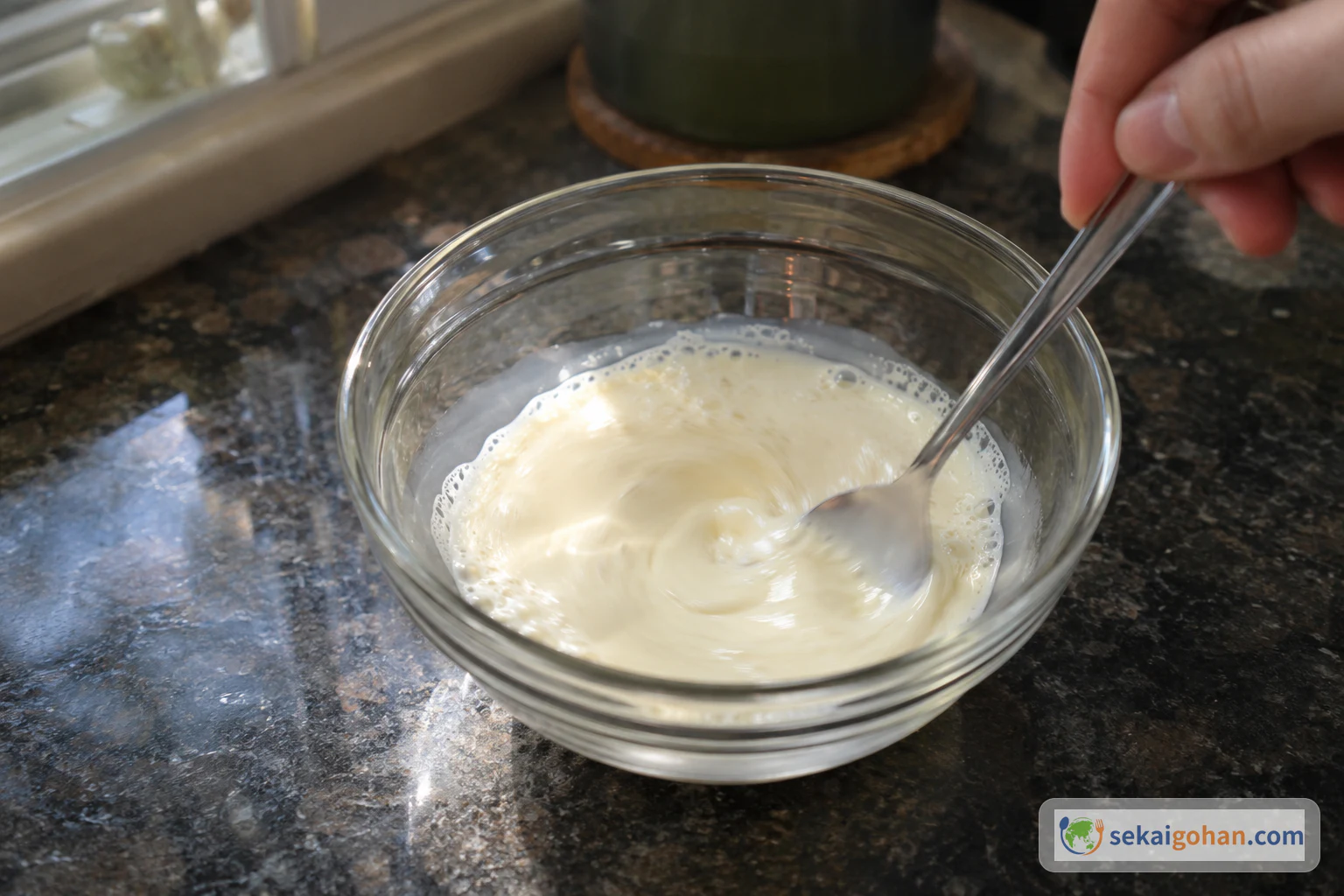
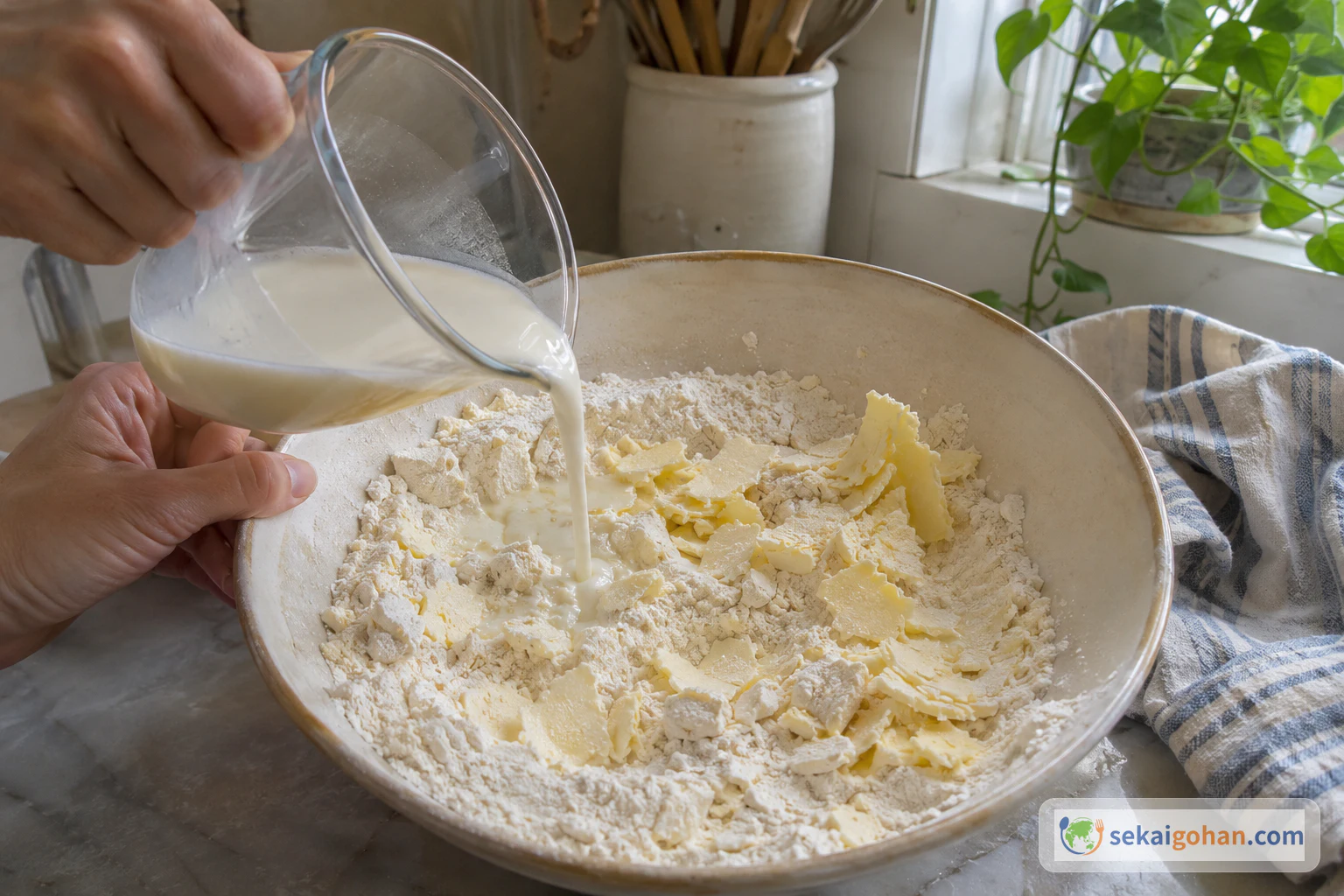
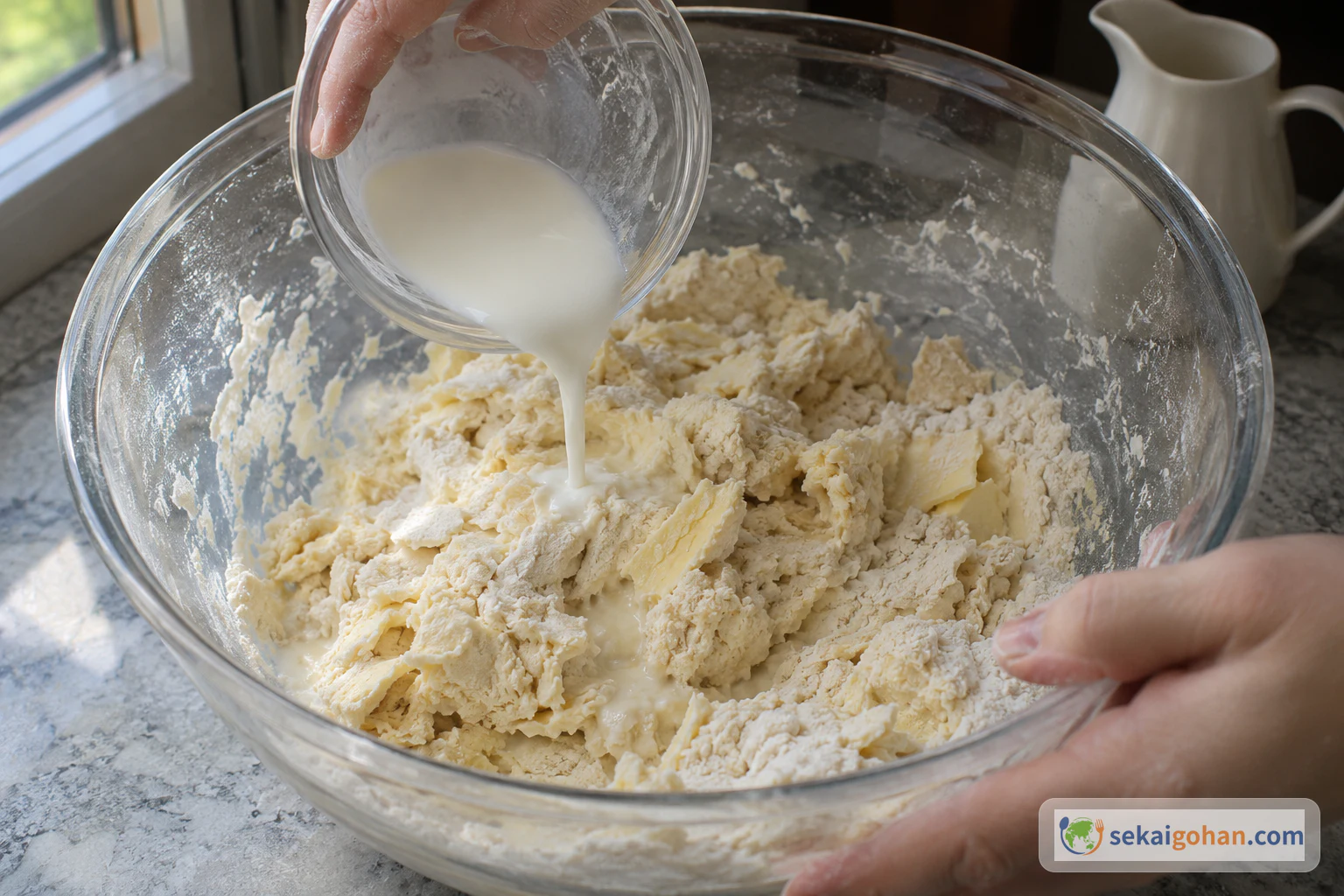
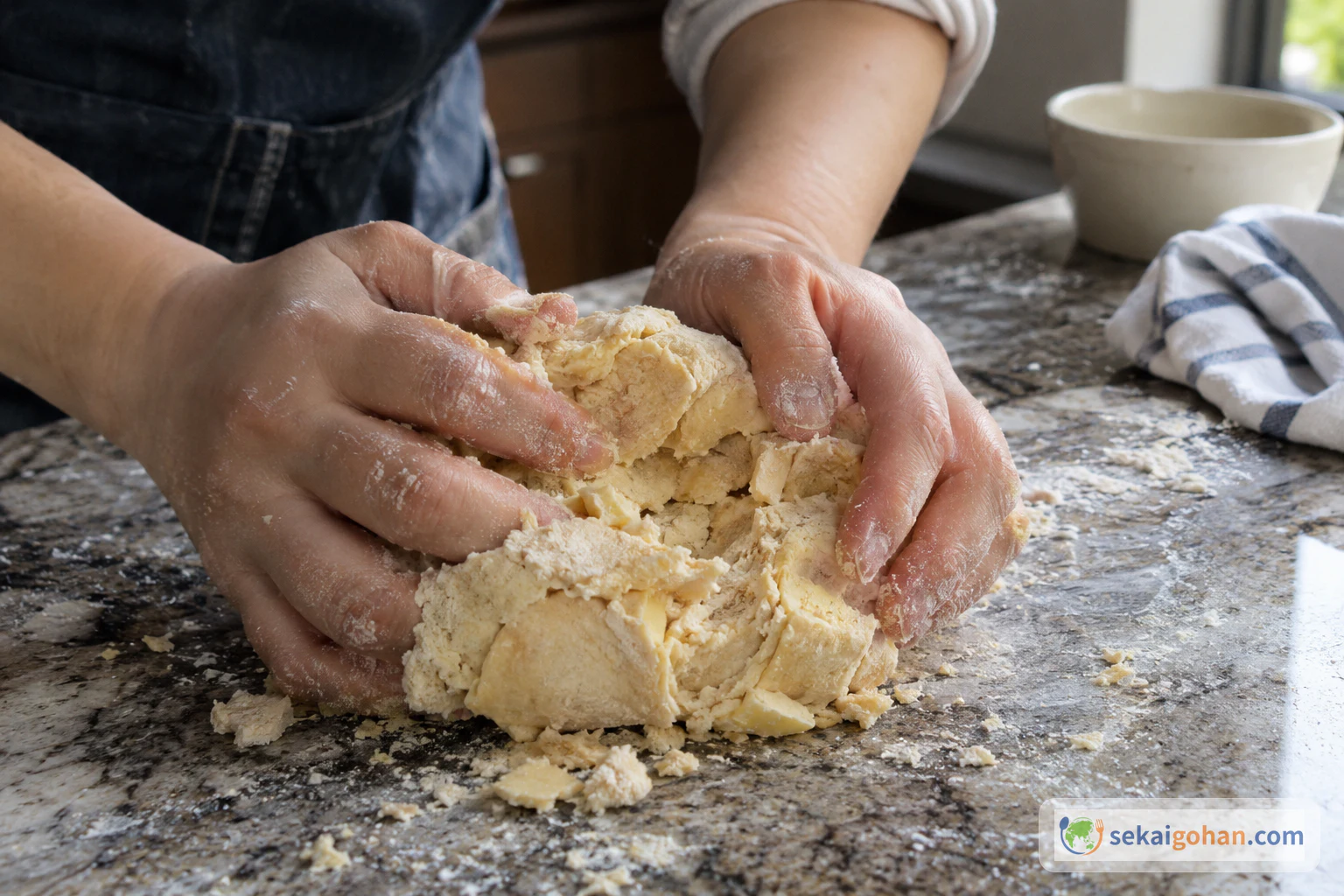
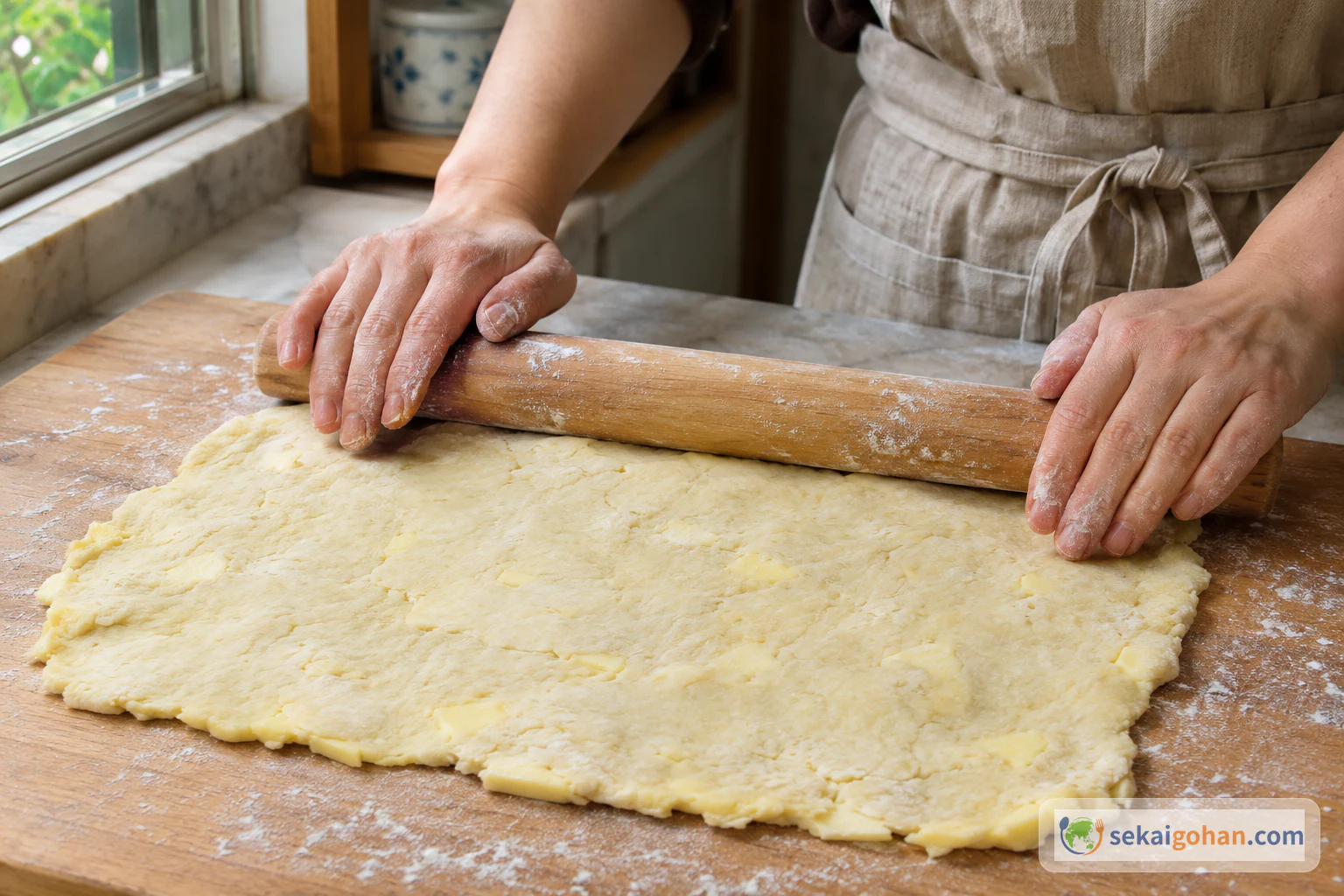
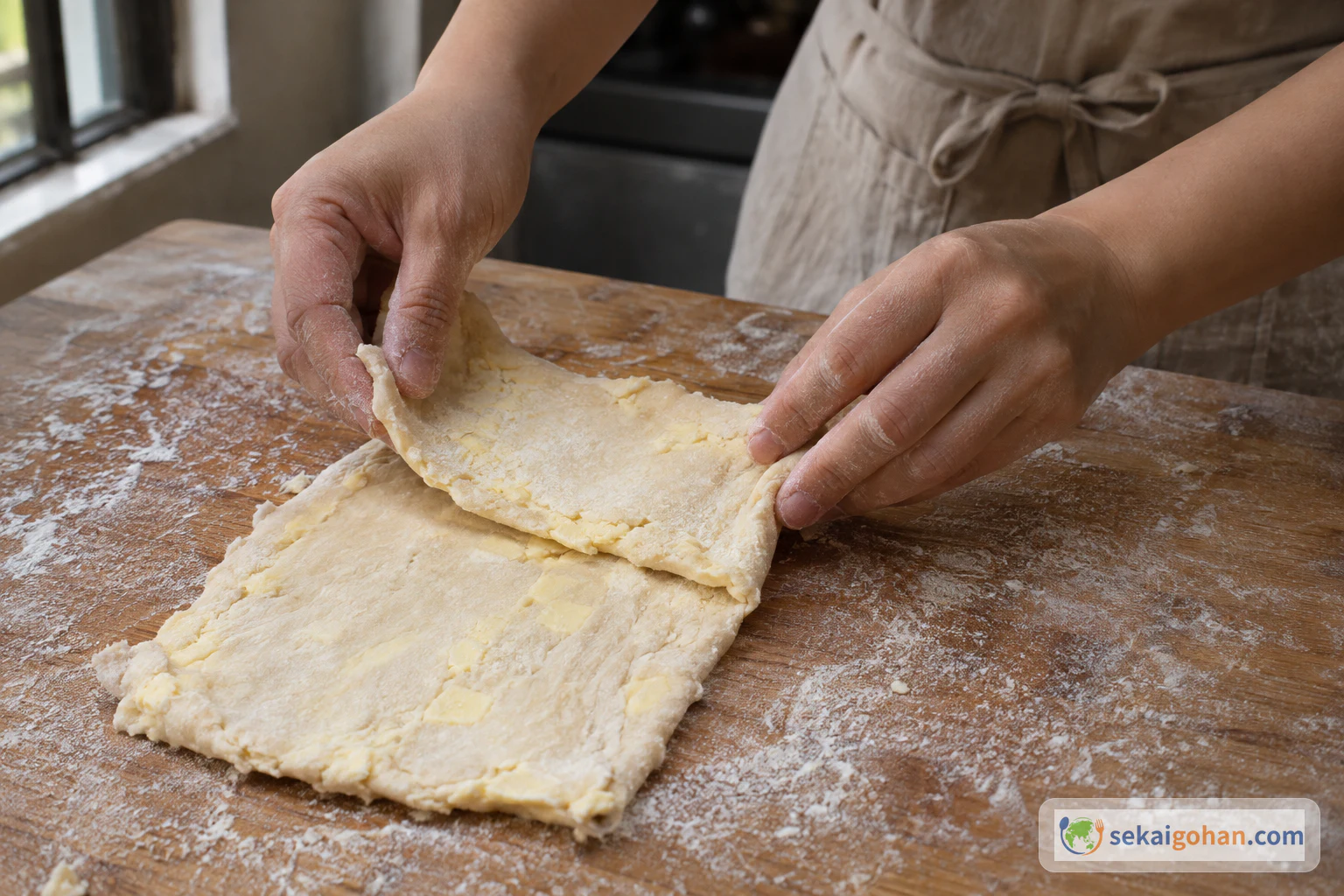
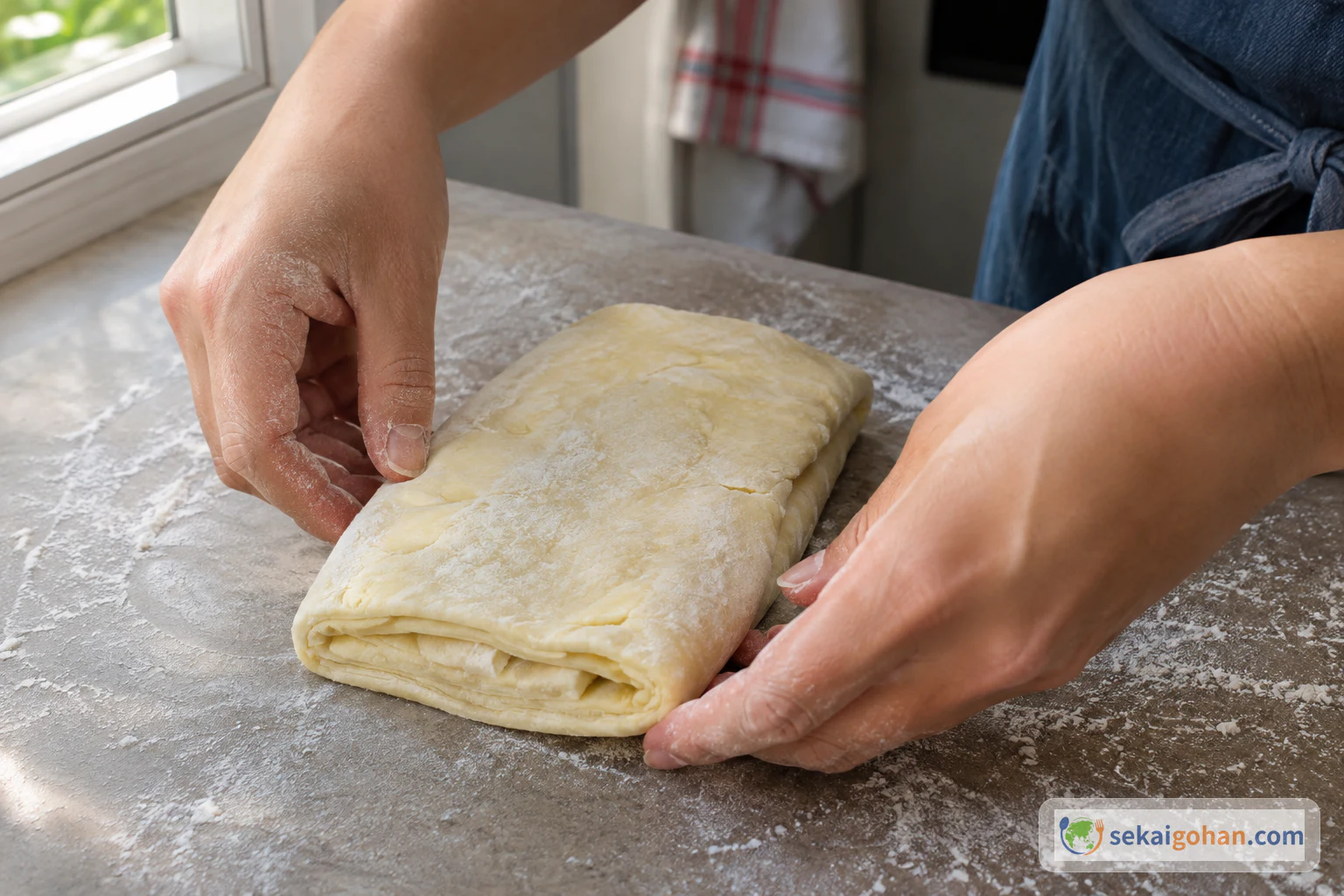
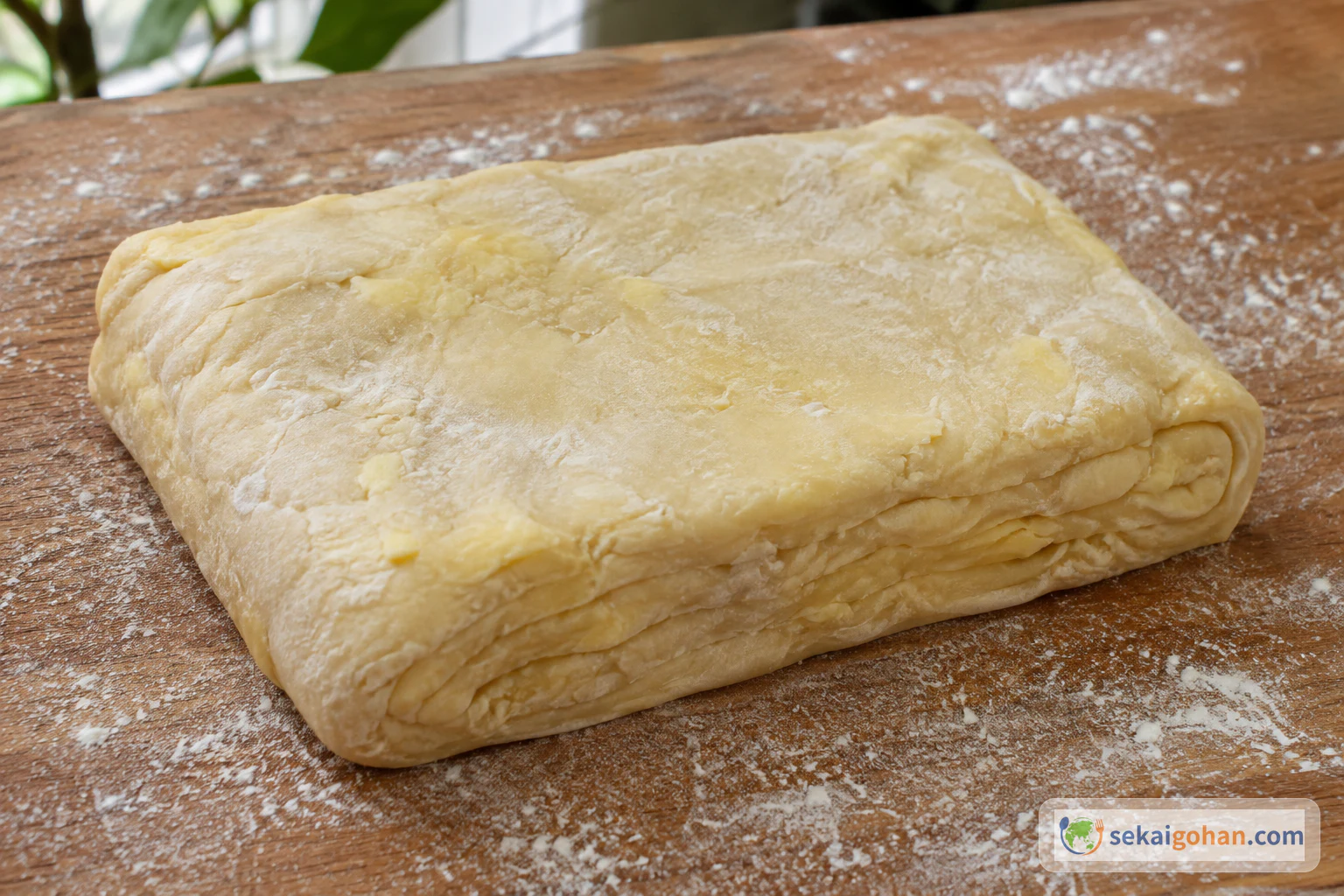
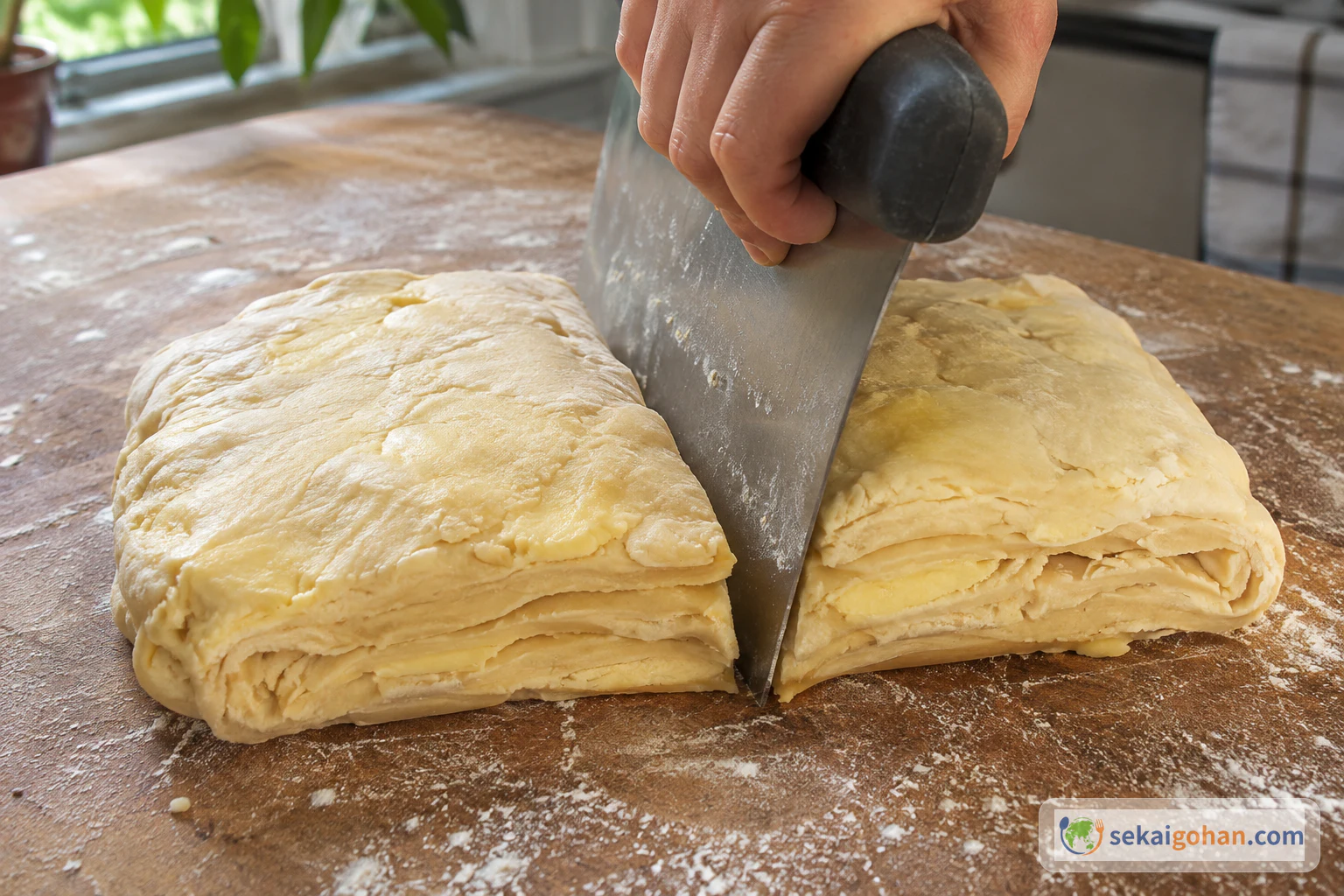
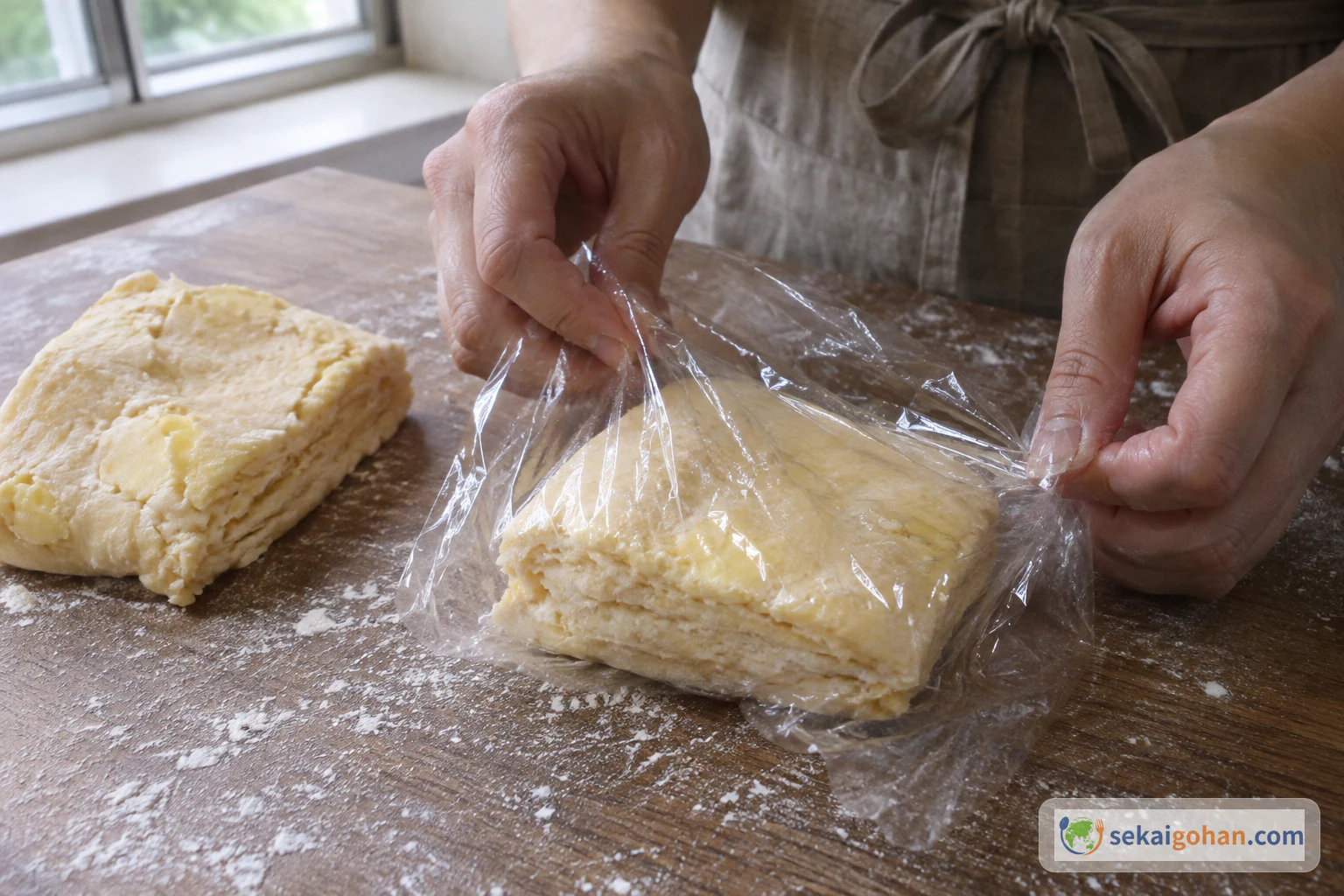
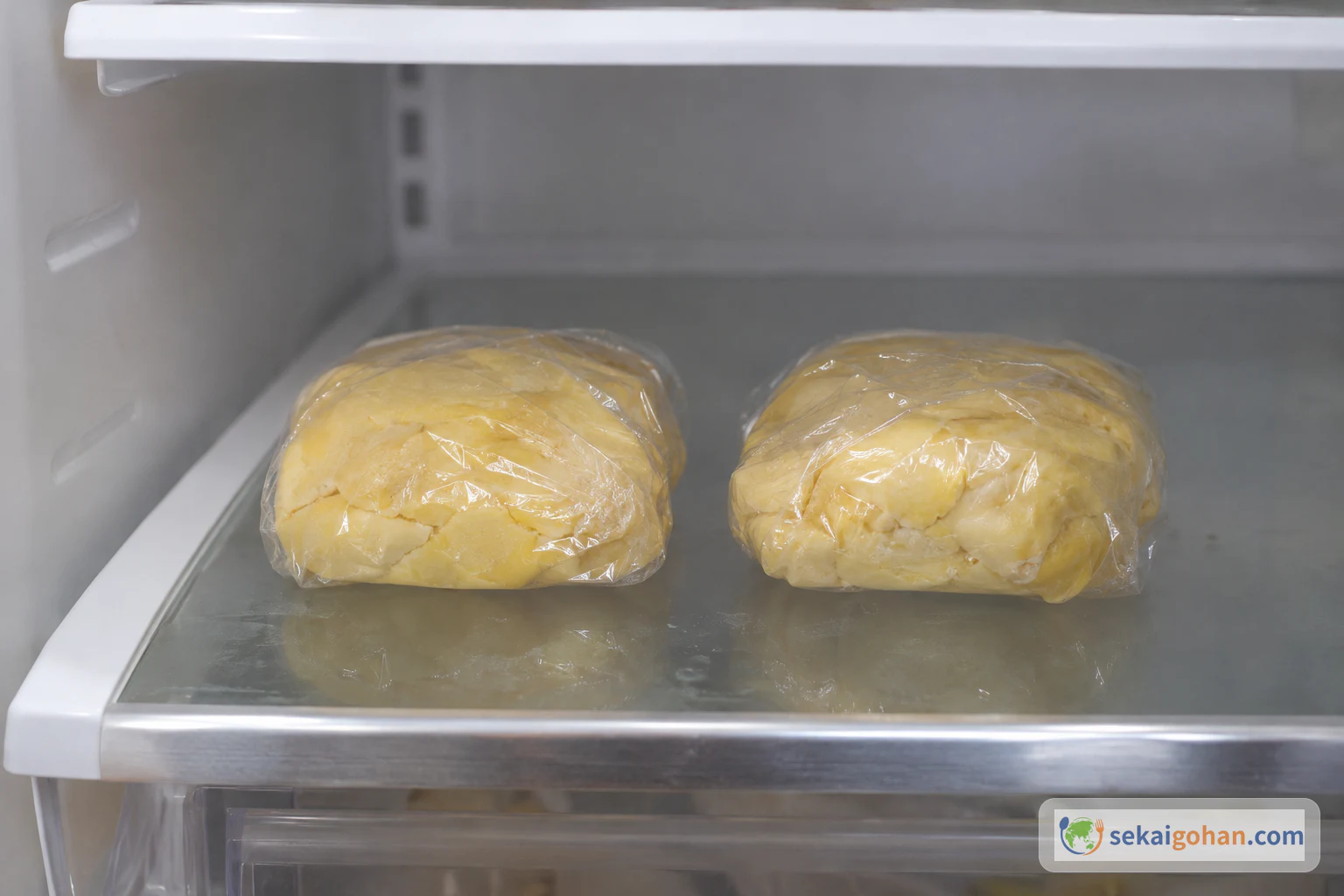
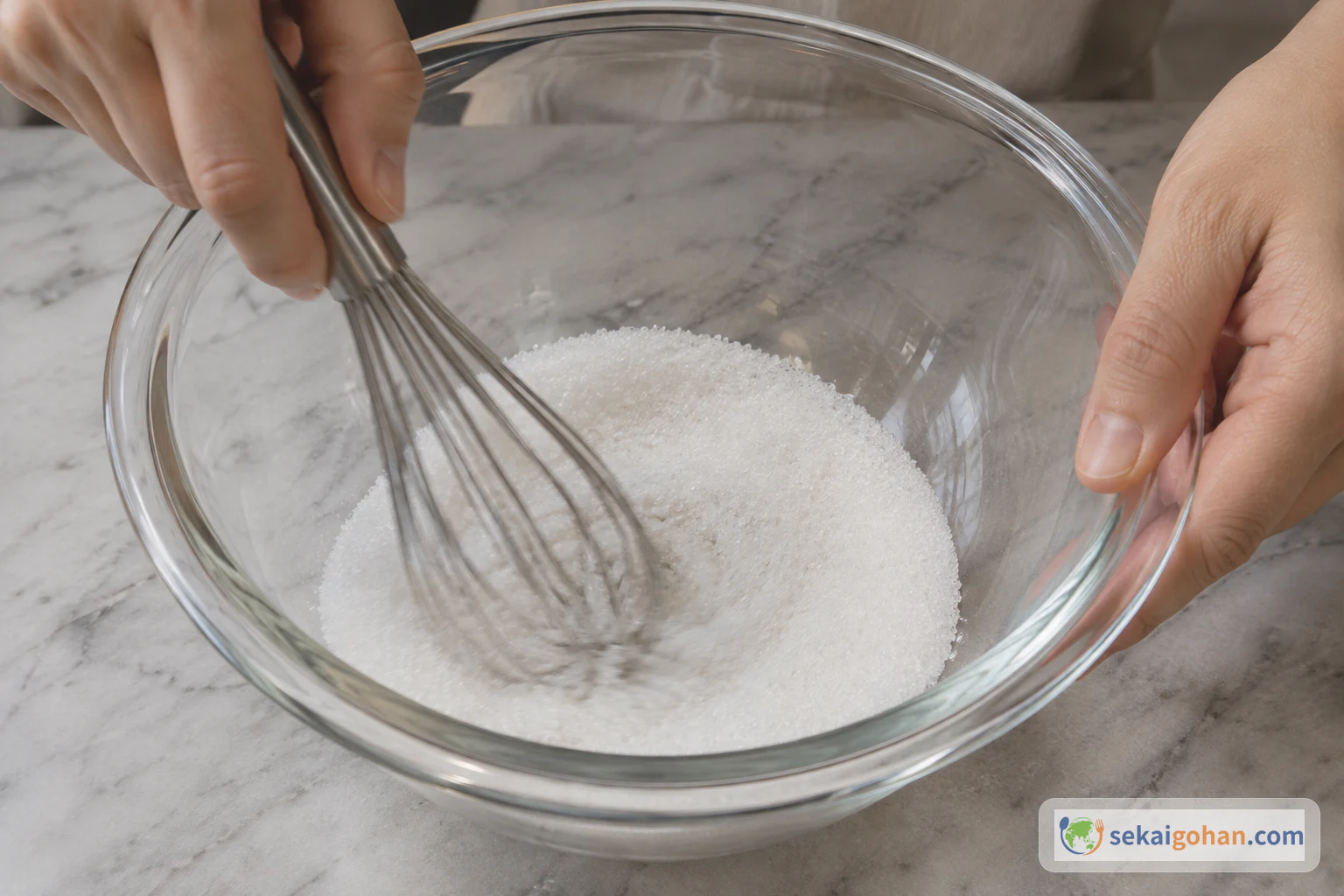
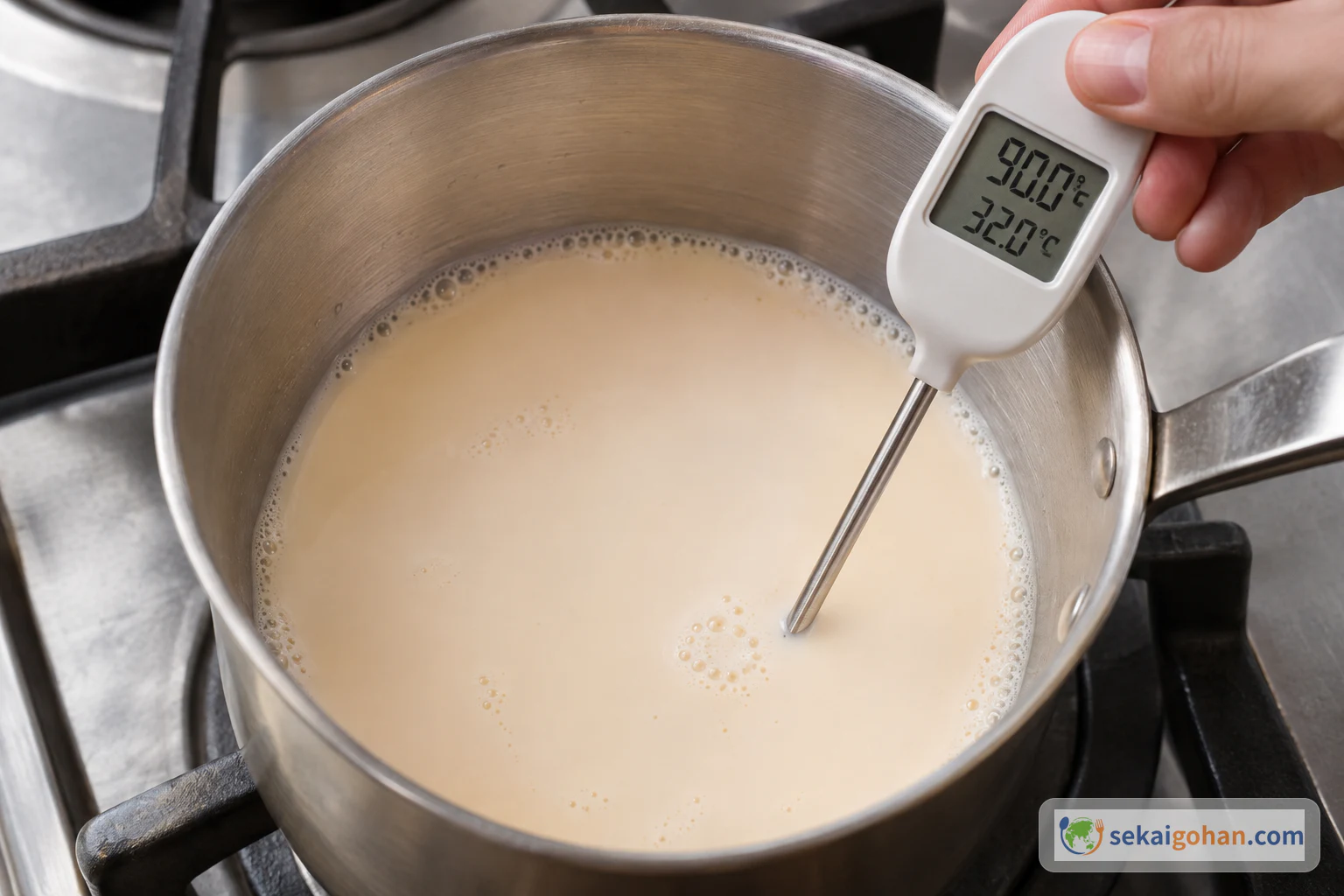
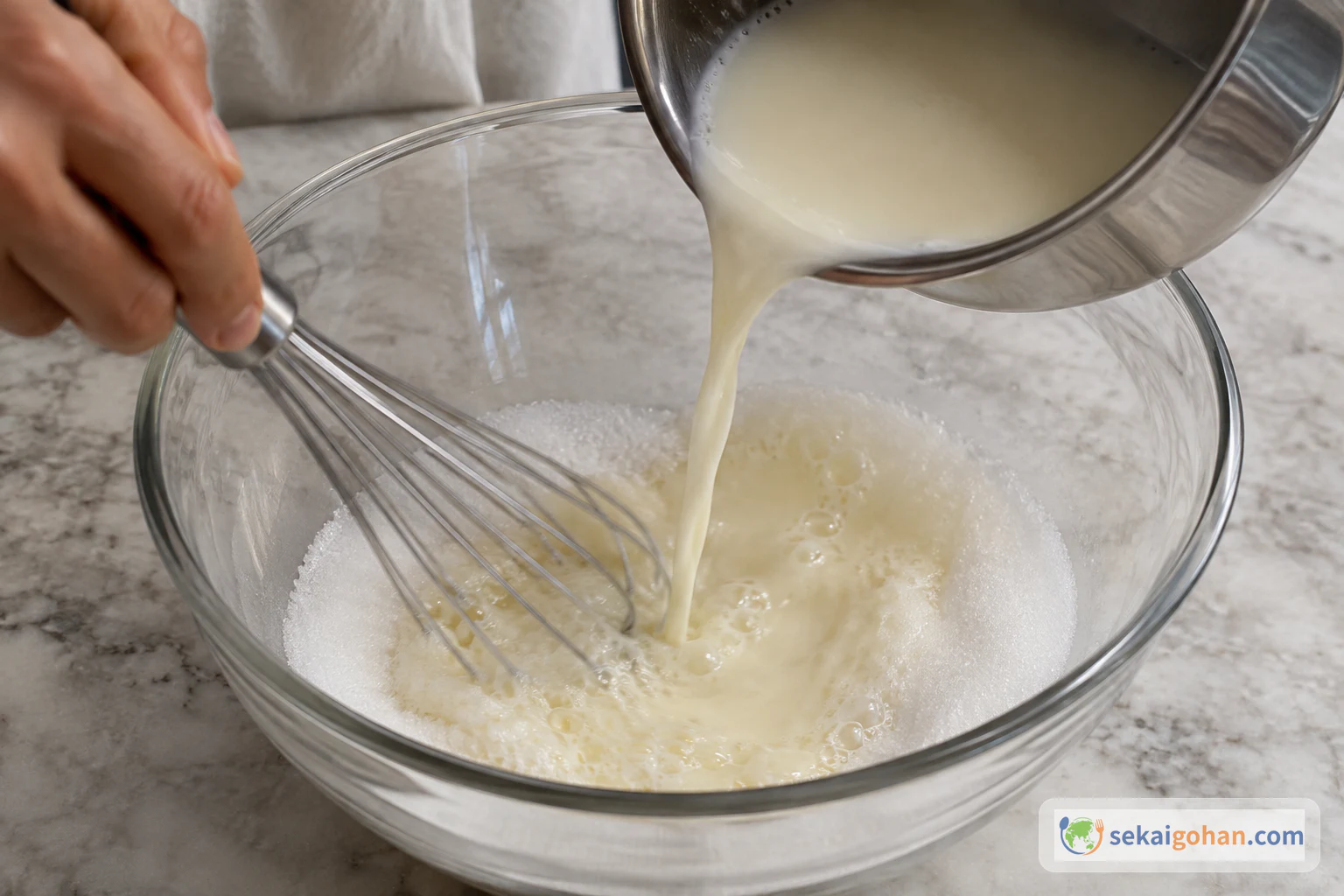
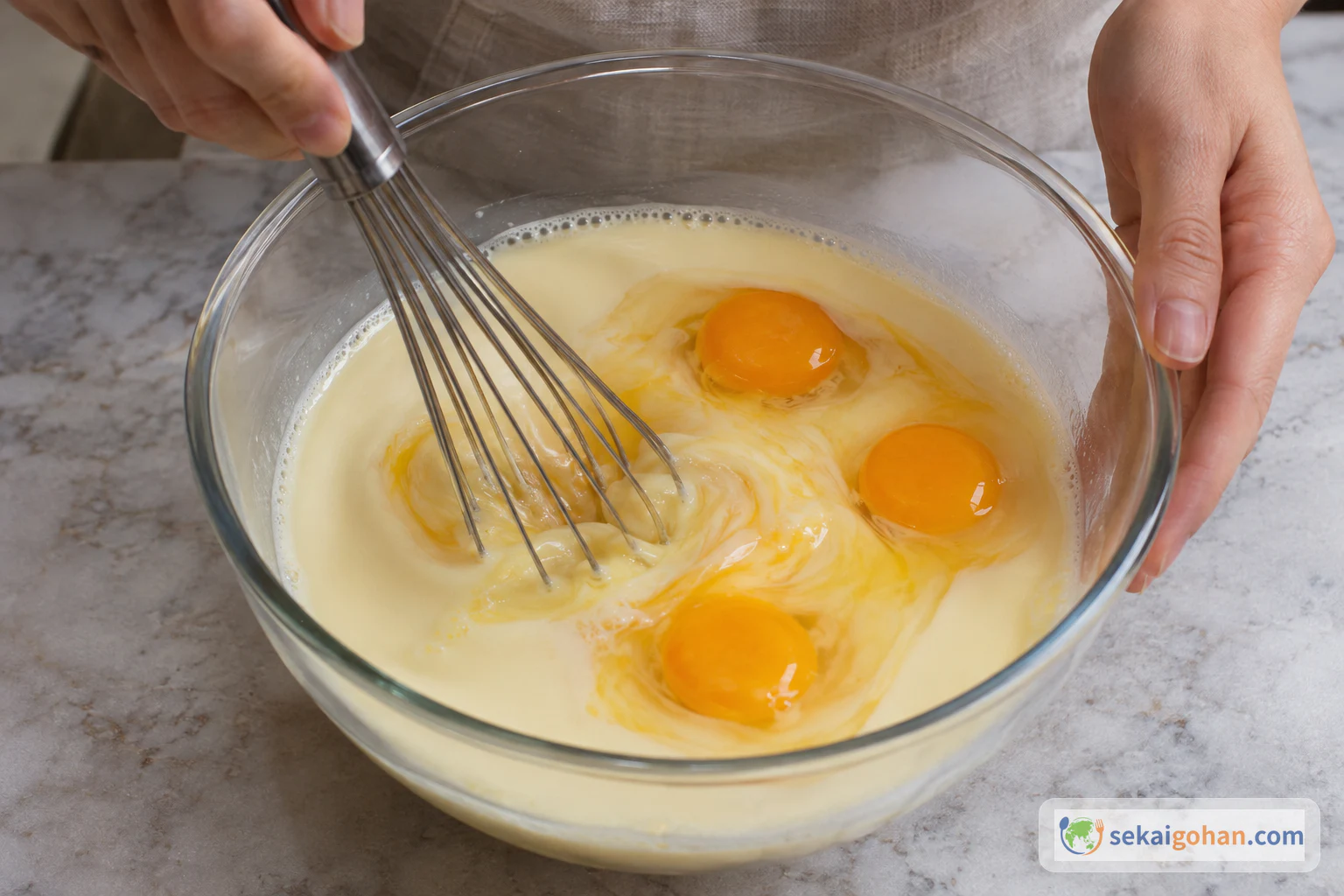
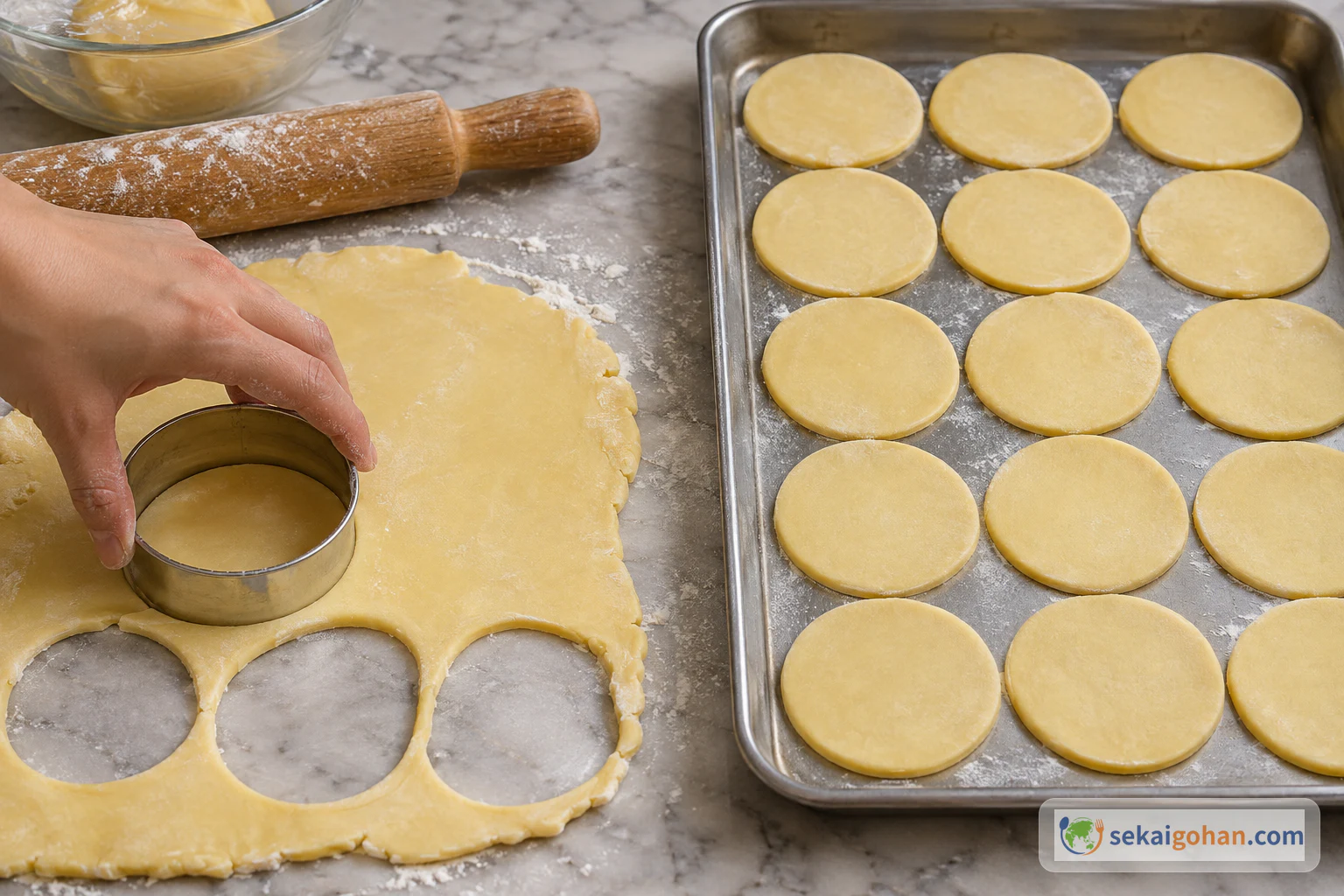
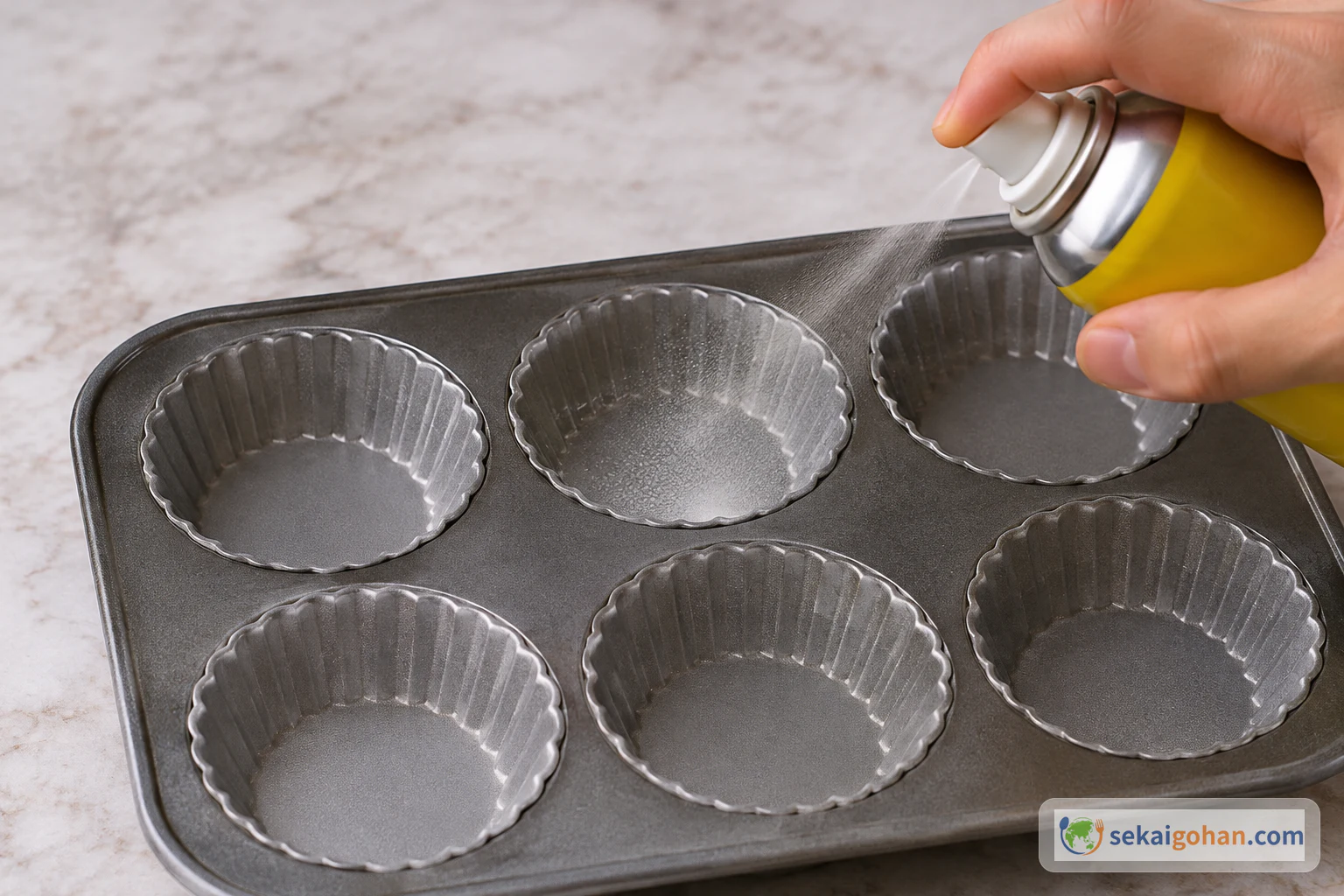
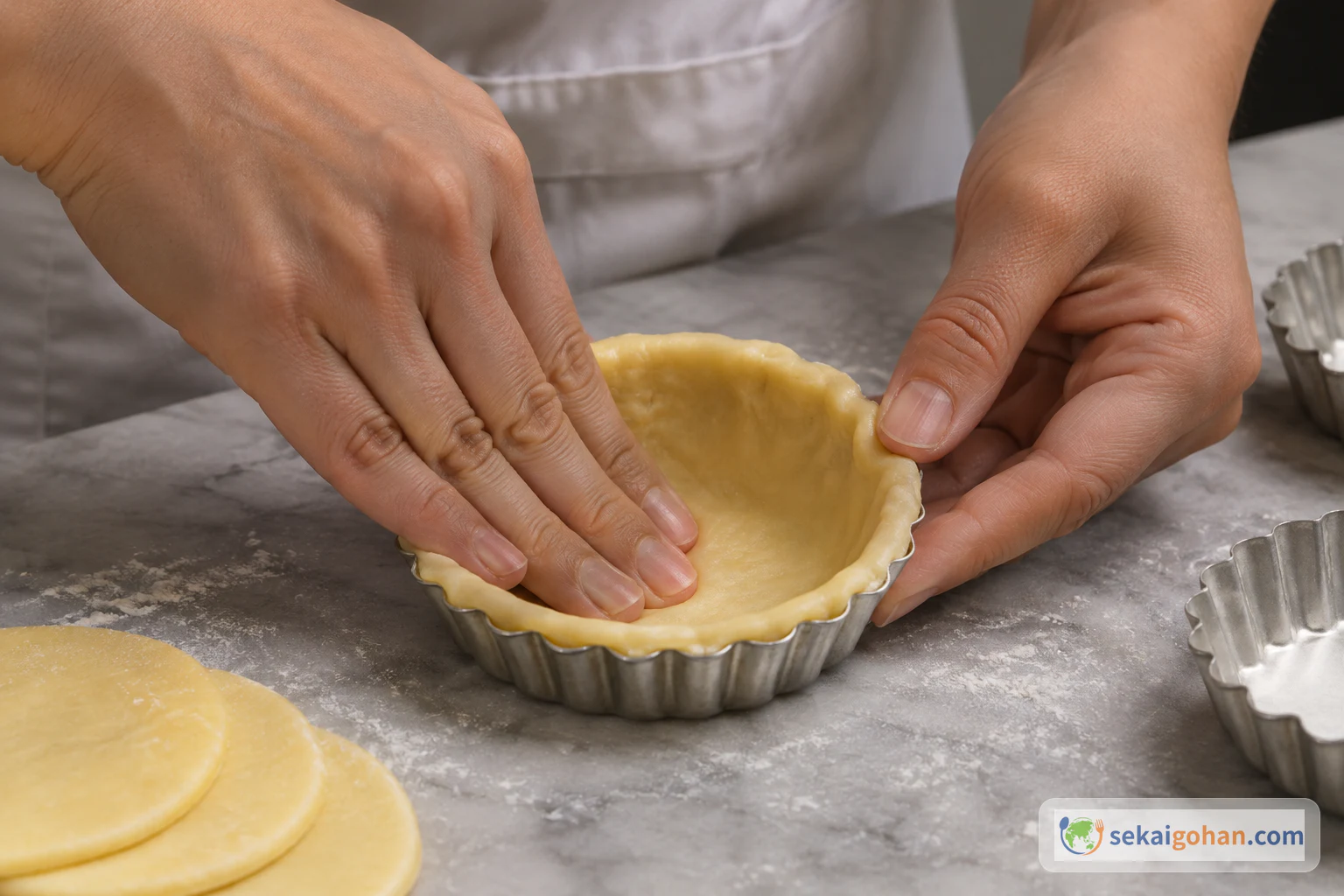
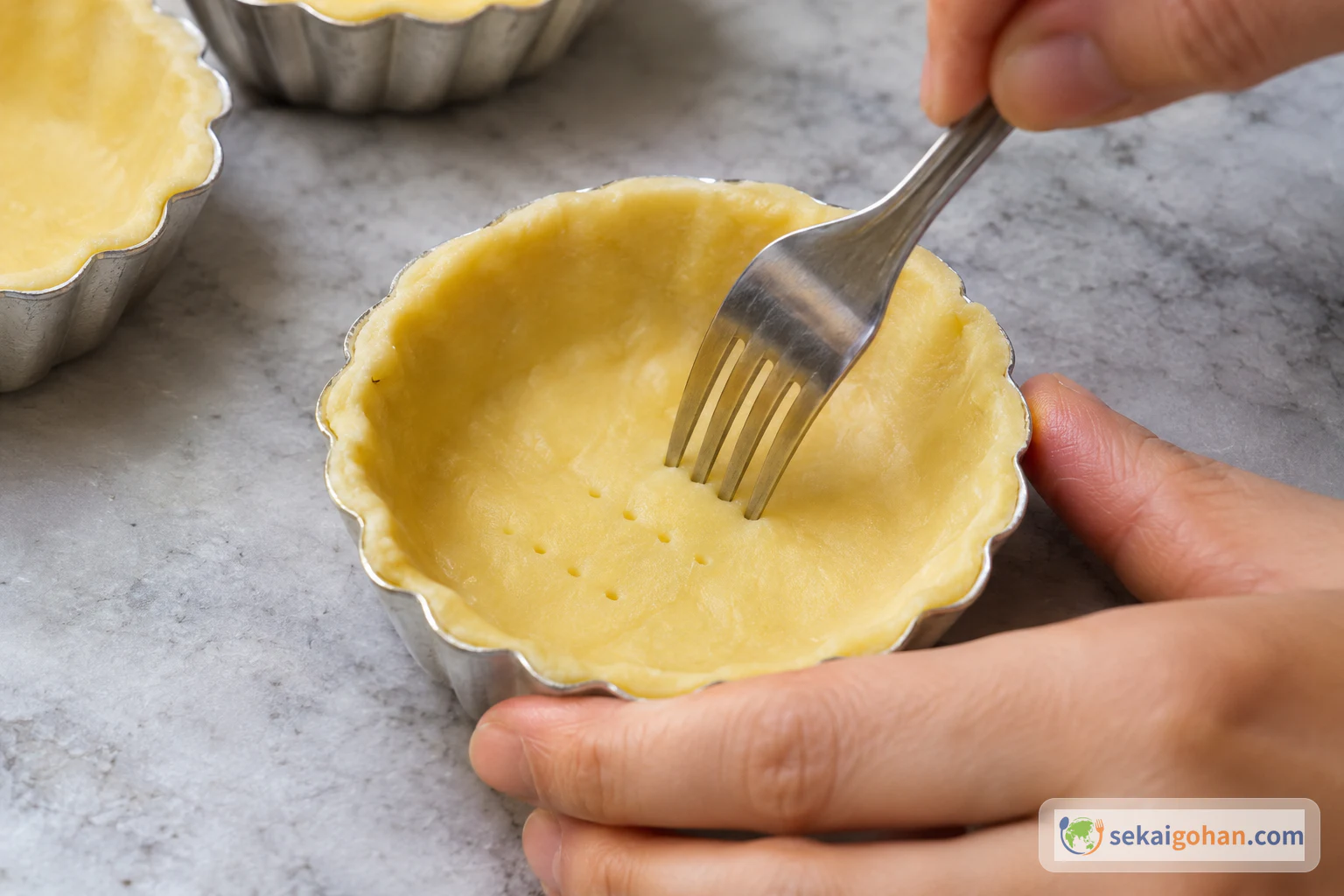
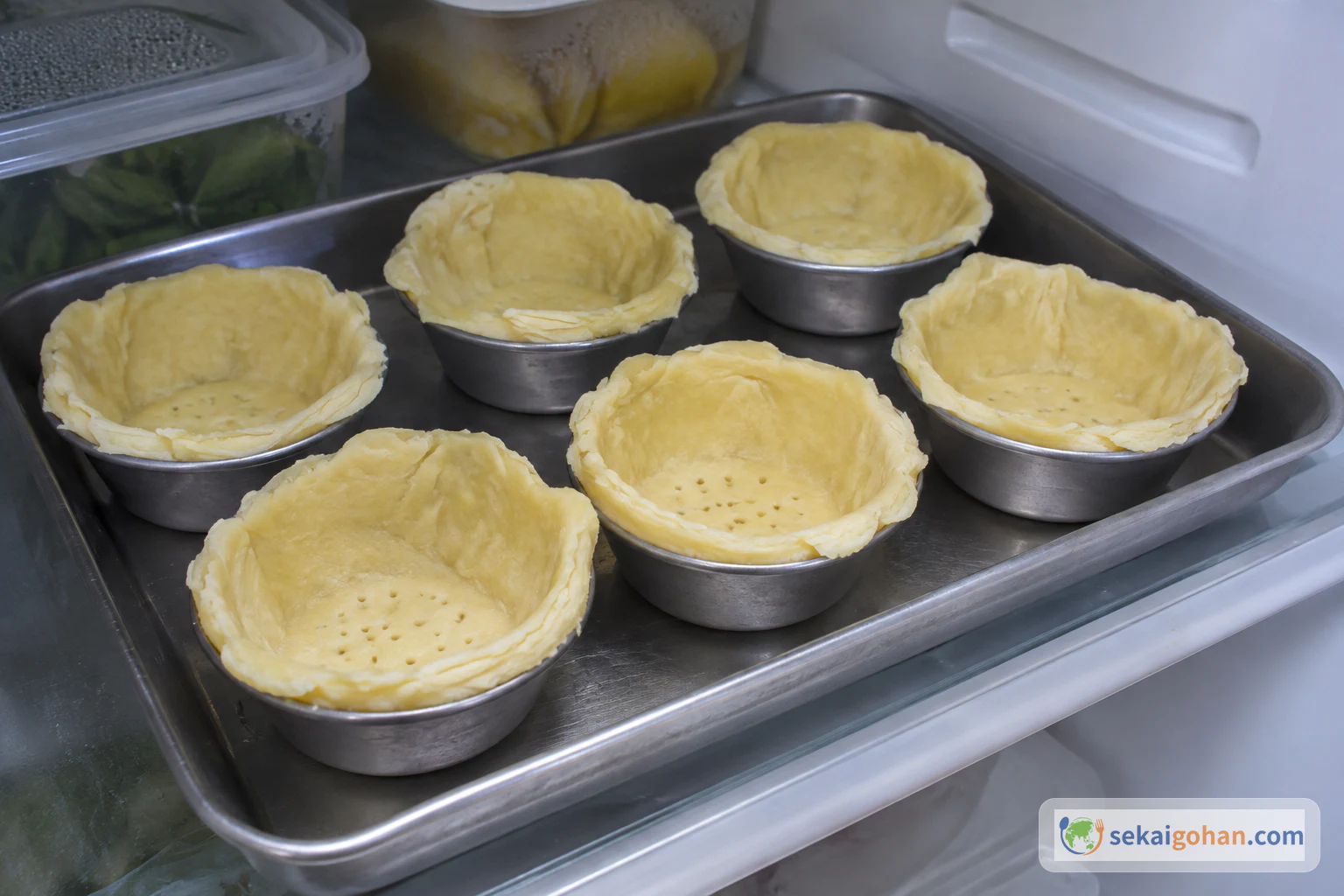
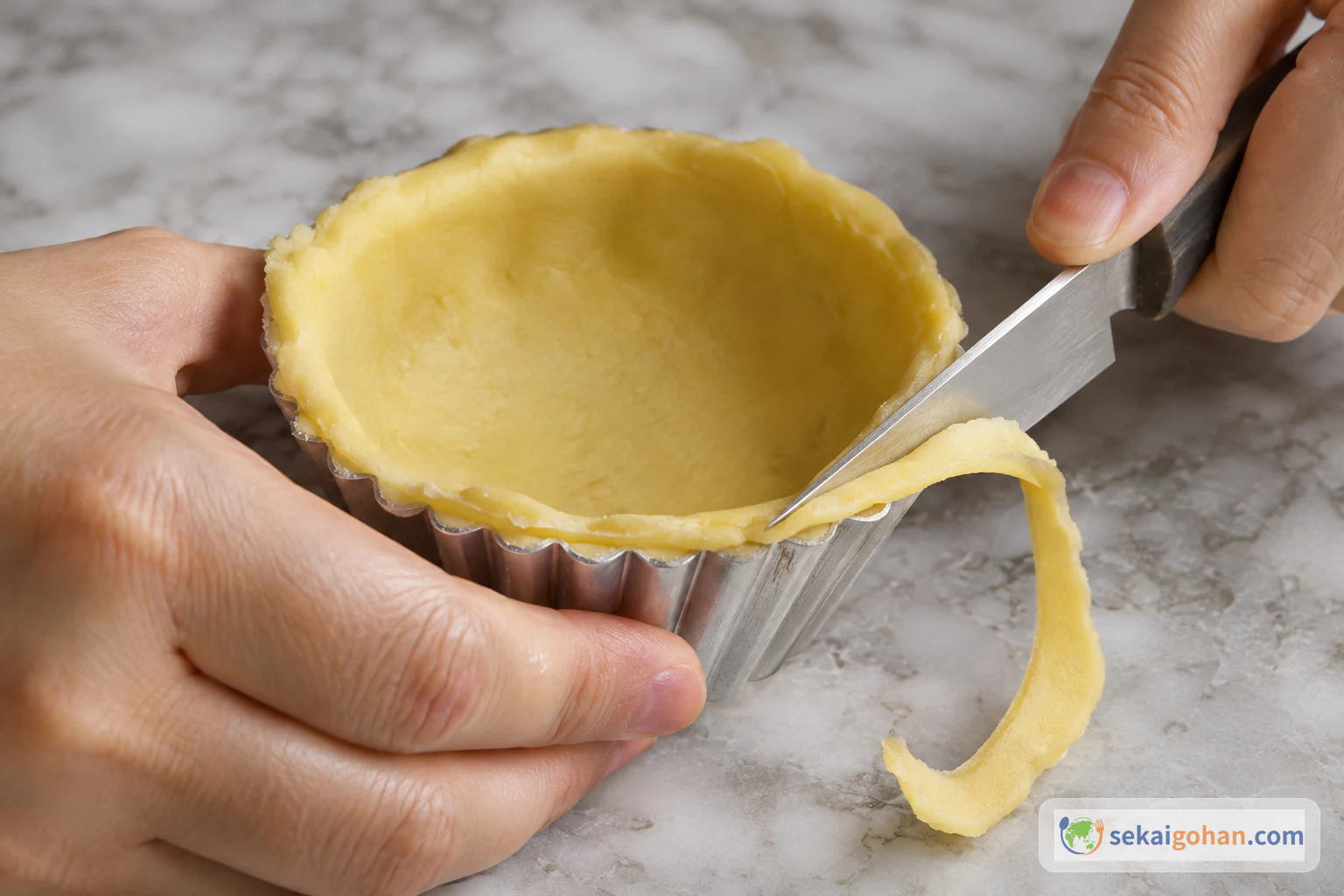
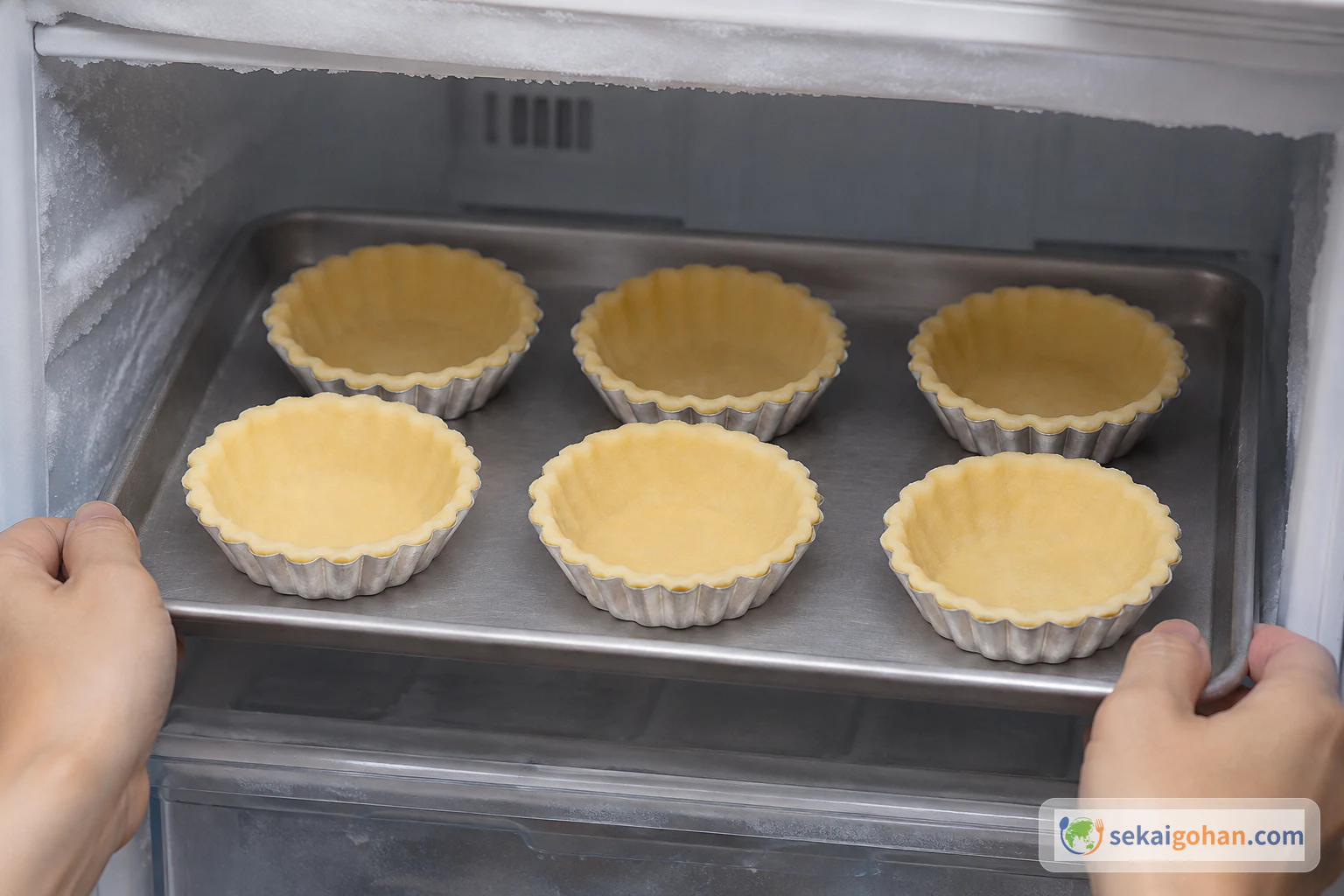
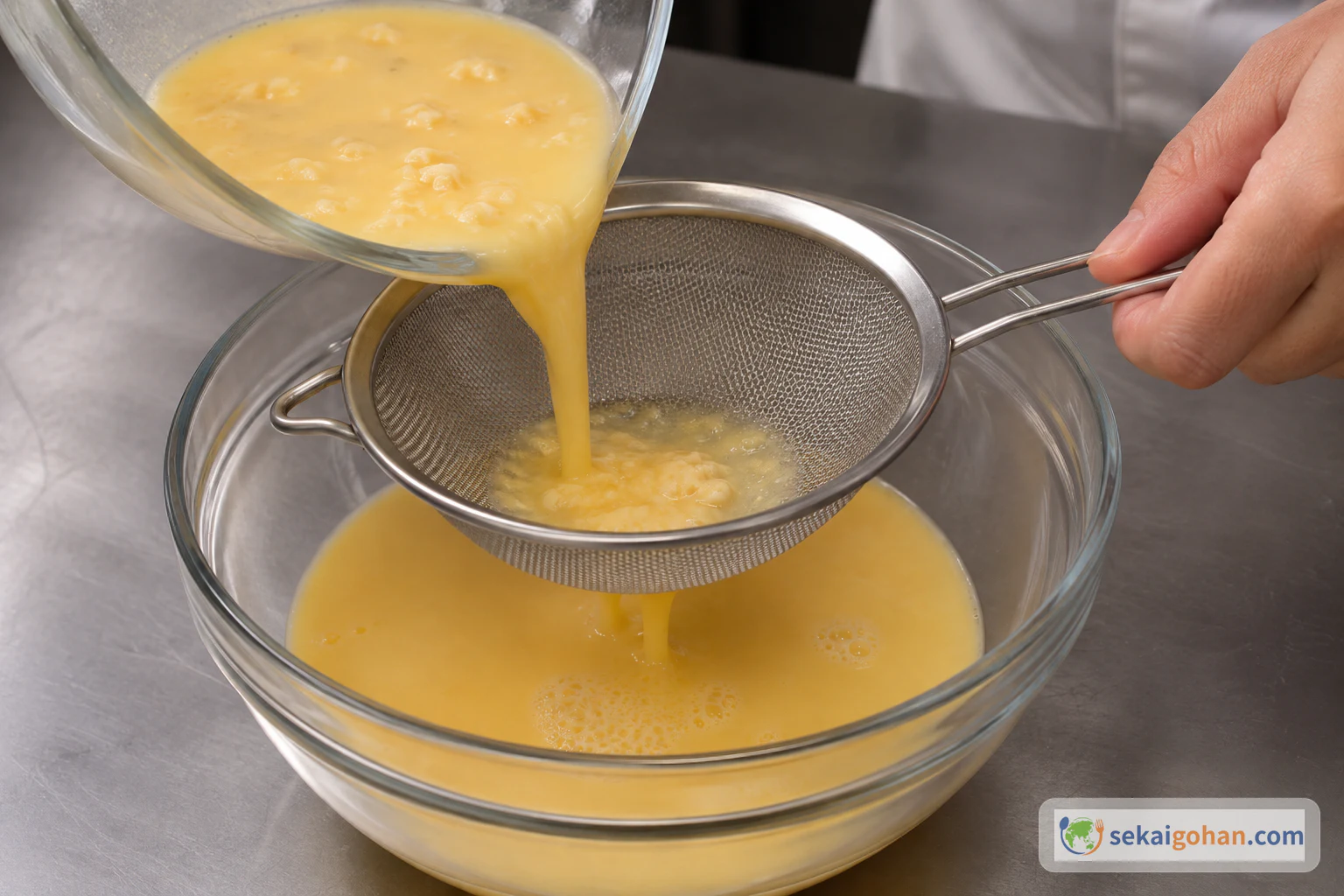
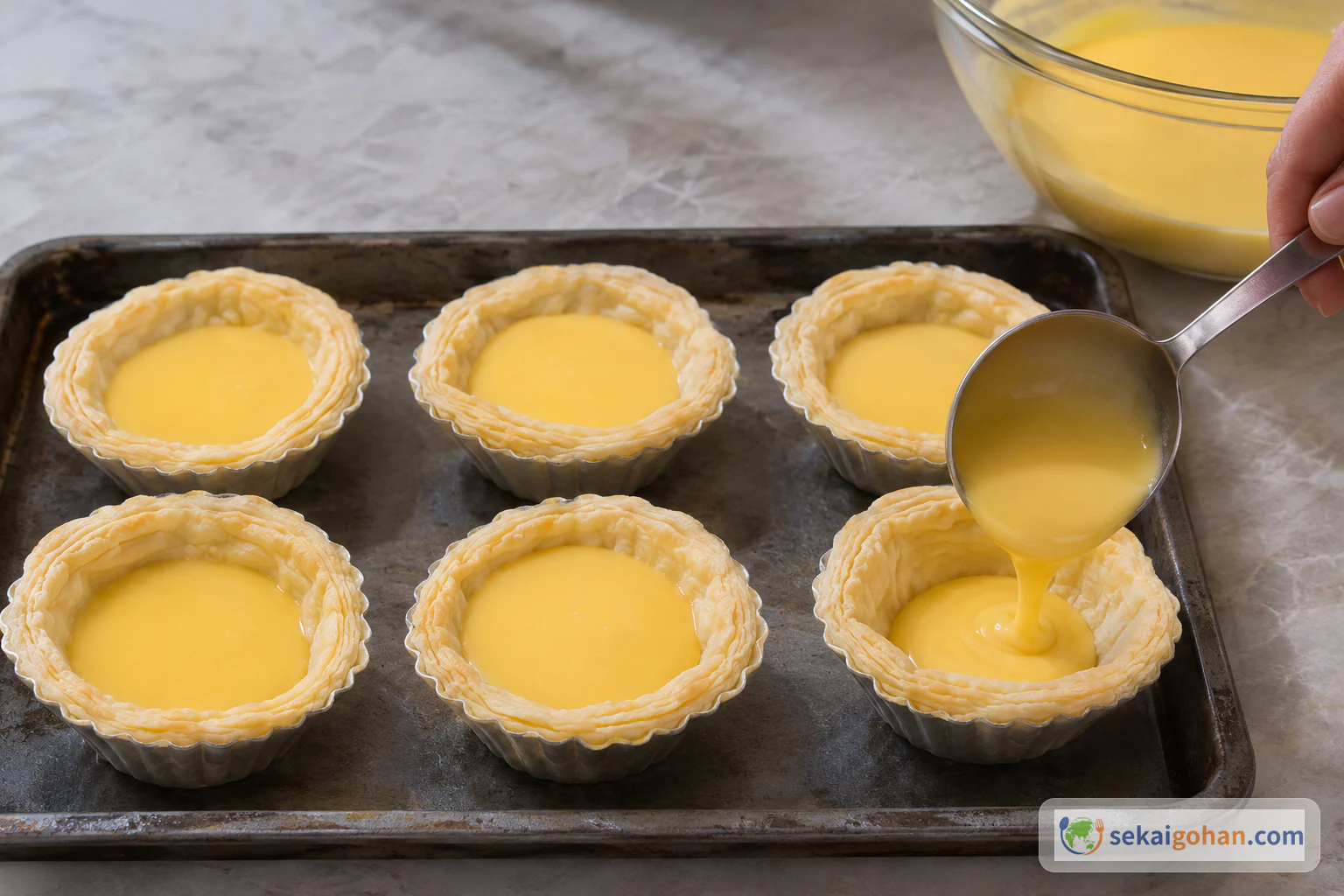
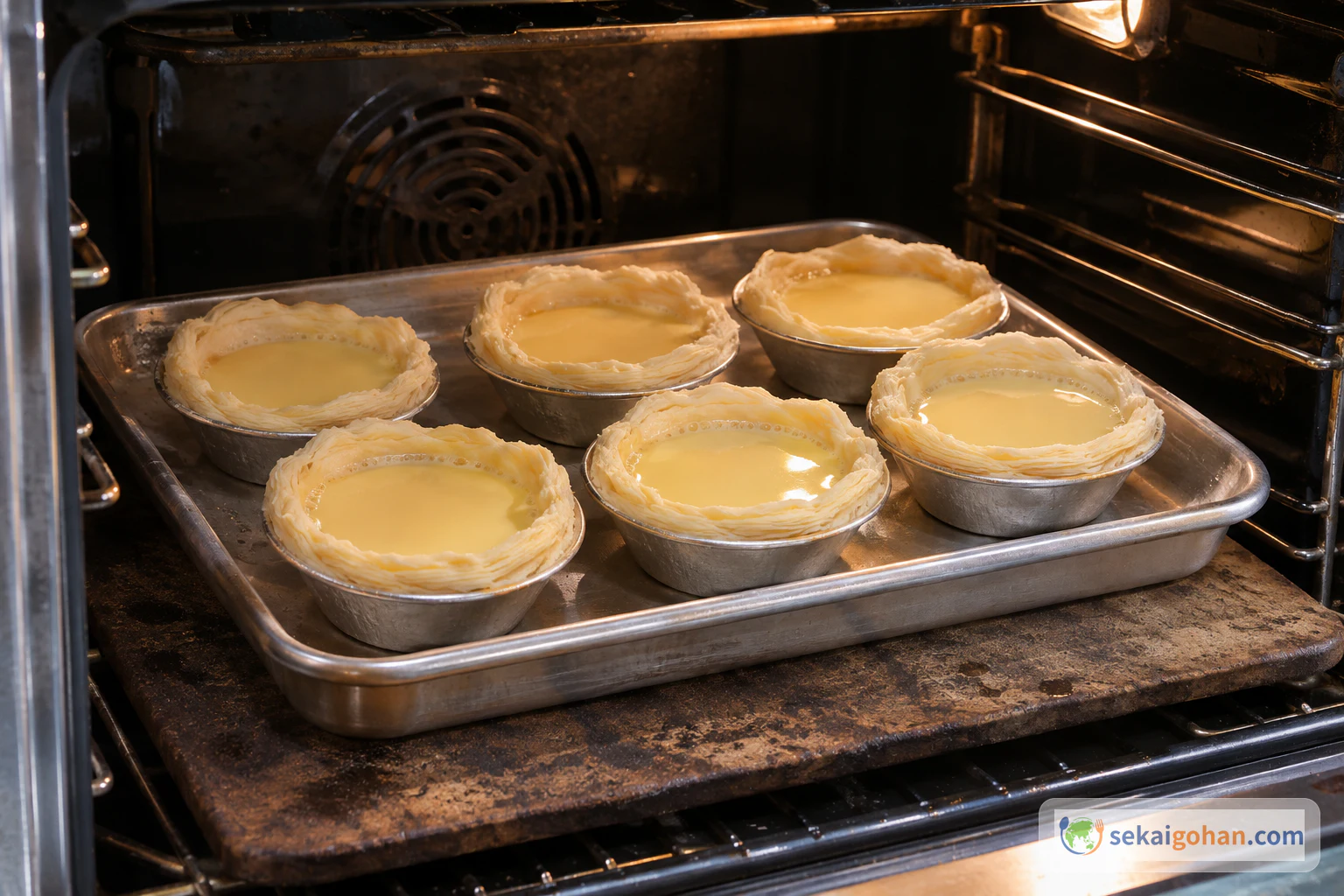
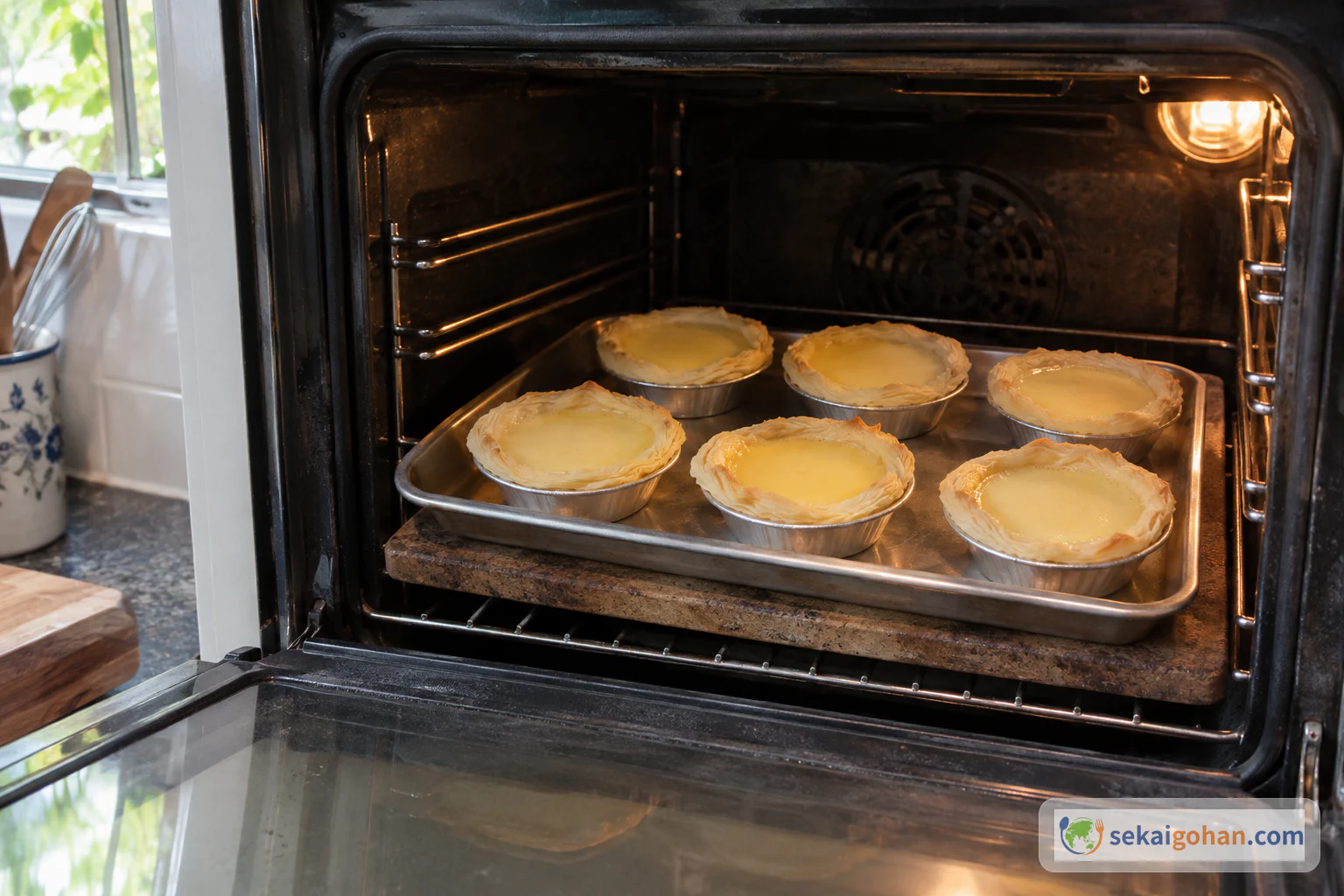
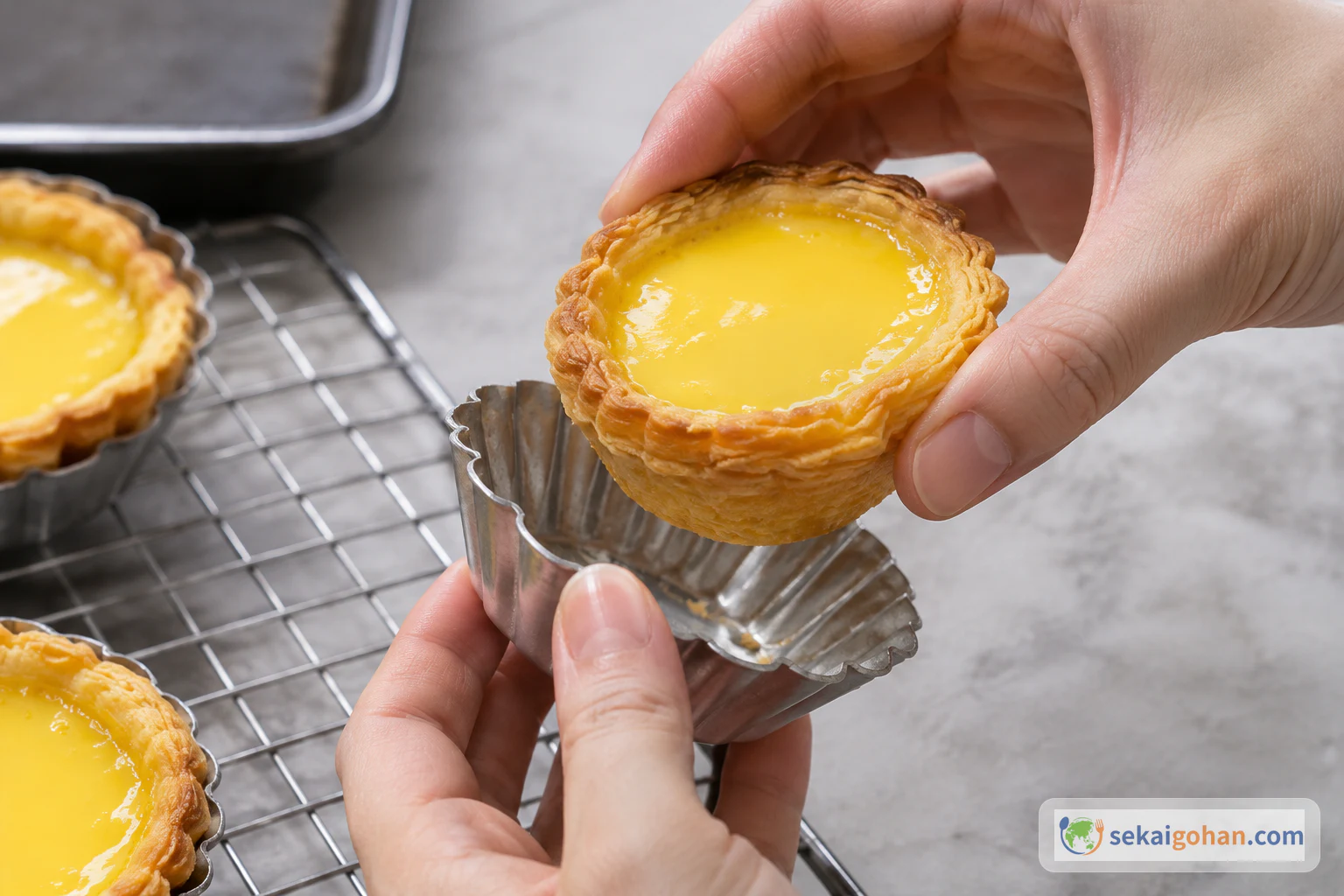
Each photo shows the stage being described. The photos illustrate the method; they are not a record of a test bake, and they do not confirm amounts, fold counts, times or temperatures. Use the written amounts and cues.
Which Hong Kong Egg Tart This Is
This is a flaky-crust Hong Kong egg tart made with butter rough puff. The Hong Kong Science Museum explains that the flaky crust of puff-pastry egg tarts comes from layering two doughs, a water dough and an oil dough, and discusses lard in that context. The version here reaches flaky layers by a different, home-friendly route: cold butter is pressed into flakes, the dough is rolled and folded in thirds, and the fold is repeated.
The museum also distinguishes Hong Kong flaky egg tarts from the Portuguese pastel de nata. The Portuguese-style tart, also familiar from Macau, is known for a custard top with dark caramelized spots. The Hong Kong tart in this recipe aims for the opposite: a pale, smooth custard that is taken out of the oven when it has just set.
Ingredients: 15 Tarts, Pastry and Custard
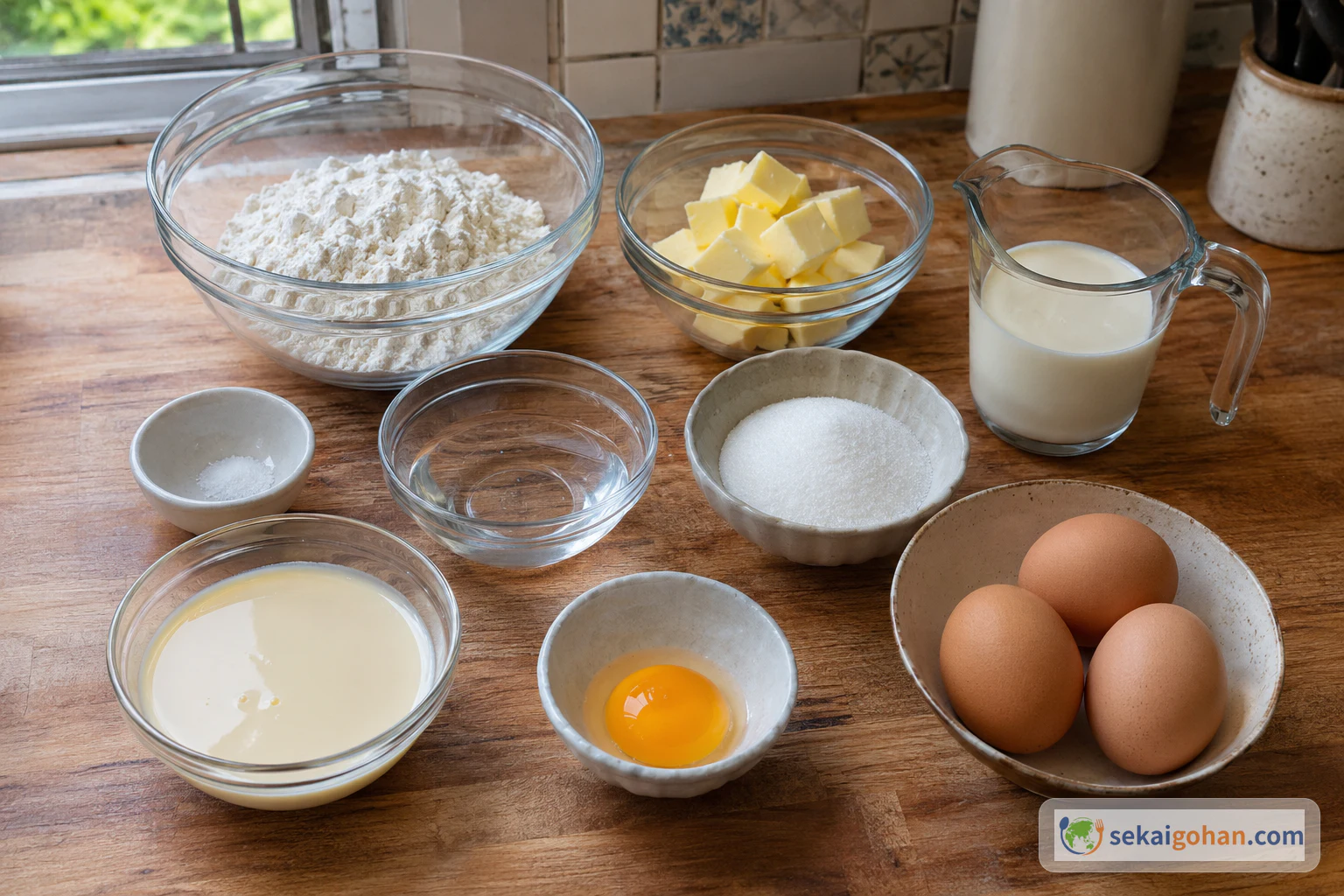
Makes 15 tarts in 3-inch molds.
Choosing the Flour, Milk and Butter
Use all-purpose flour and evaporated milk. Replacing evaporated milk with regular milk or sweetened condensed milk, or using a different flour, changes the formula. Use unsalted butter and measure the pastry salt separately.
The pastry relies on cold fat and cold liquid. Cut the butter into 1/2-inch cubes before you start and keep it cold until it goes into the bowl.
Equipment
- Large mixing bowl and a whisk
- Separate small container for the cream and water
- Rolling pin
- Knife or bench scraper for dividing the dough
- Plastic wrap
- Small saucepan and a thermometer for warming the milk
- Fine-mesh strainer
- Bowl and a cover for resting the custard
- 3 3/4-inch round cutter
- 3-inch tart molds, enough for 15 tarts
- Fork
- Small knife for trimming
- Baking sheet
- Baking steel or baking stone
- Small offset spatula or a chopstick, if needed, for releasing tarts
- For the optional reheat: a wire rack and a rimmed baking sheet
Method: Fold the Pastry, Rest the Custard, Bake in Two Stages
Don't taste the raw pastry dough or the raw custard. Warming the evaporated milk to about 90°F only takes the chill off before the eggs go in; it does not cook the custard or make raw egg safe. The tarts are done when the custard has just set in the oven.
The pastry needs at least an hour in the refrigerator, so start with it and make the custard while it chills. The custard then rests while you roll, line and chill the shells.
When Something Goes Wrong
| What you see | What to do |
|---|---|
| Dry flour remains after kneading | Add water 1/2 teaspoon at a time, just until the dough holds together |
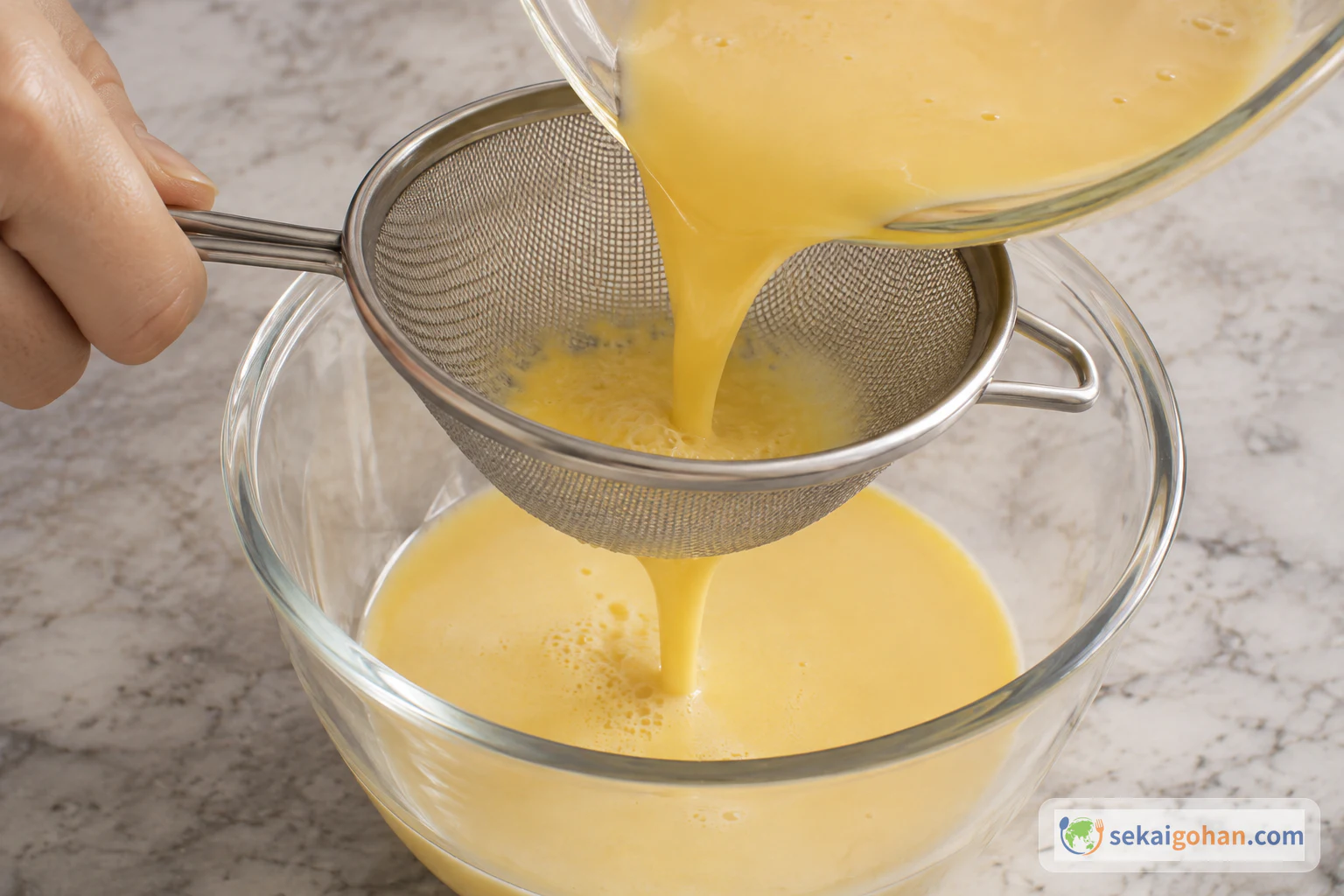
| Lumps in the custard after resting | Strain it again before filling the shells |
| Air pockets under the pastry in the molds | Press them out when lining the molds, and dock the bases with a fork |
| Custard still liquid after 20 minutes | Keep baking at 350°F and check again; total baking time is 20 to 25 minutes |
| A tart sticks in its mold | After the 5-minute cool, ease it out with a small offset spatula or a chopstick |
| Custard with dark, caramelized spots | That is the look of a Portuguese-style tart, not this one. Here the target is a pale custard that has just set, with edges only beginning to color |
Optional: Next-Day Reheat and Pastry Scraps
These two extras sit outside the main recipe. The tarts are meant to be served warm, soon after unmolding.
Reheating leftover tarts the next day. Set unmolded tarts on a wire rack placed on a rimmed baking sheet, and reheat at 300°F for 8 to 10 minutes. No storage period is given for these tarts; being able to reheat them the next day is not a guarantee of how long they keep.
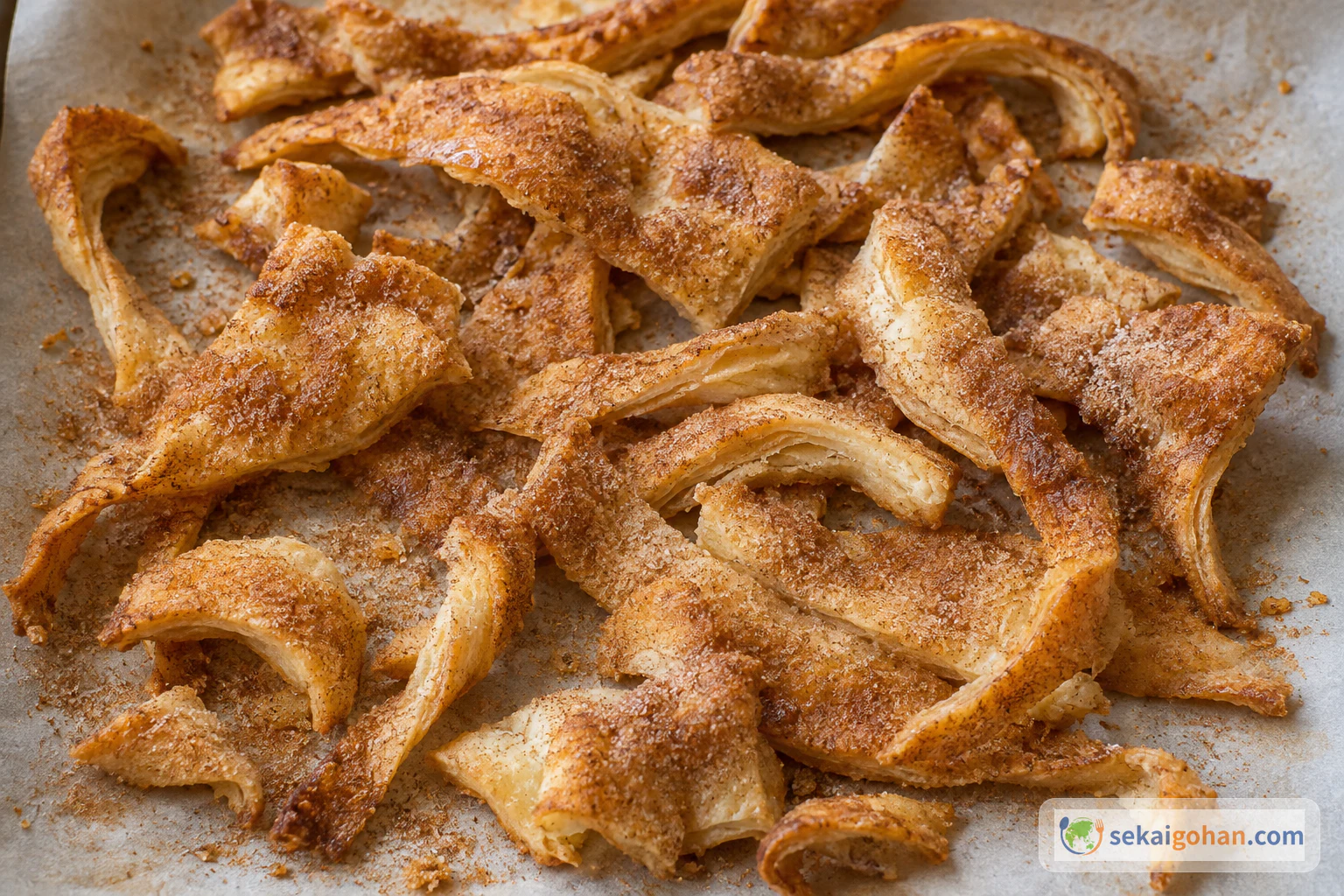
Baking the pastry scraps. Brush leftover pastry scraps with beaten egg or evaporated milk, sprinkle with a little cinnamon sugar, and bake until golden and crisp.
Egg Tarts in Hong Kong: Bakeries, Cha Chaan Tengs and More Than One Crust
The Hong Kong Tourism Board presents the egg tart as a local favourite found in bakeries and cha chaan tengs, a sweet that belongs to everyday eating in Hong Kong rather than to special occasions alone.
Within Hong Kong, the crust varies. The Hong Kong Science Museum's explanation of flaky egg tarts focuses on how a water dough and an oil dough are layered to make the crust flake, and it discusses lard in that context. The rough-puff version in this article gets its layers from butter instead, through repeated rolling and folding, which suits a home kitchen. The museum's explanation is background for the style; it does not change the amounts or steps of this recipe.
The museum also separates the Hong Kong flaky egg tart from the Portuguese pastel de nata. Keeping that distinction in mind helps when judging your bake: a Hong Kong tart is finished while the custard is still pale and smooth.
Frequently Asked Questions
Is this the same as a Portuguese or Macau-style egg tart?
No. The Hong Kong Science Museum distinguishes Hong Kong flaky egg tarts from the Portuguese pastel de nata. This recipe aims for a pale, smooth custard that has just set, without dark caramelized spots.
Can I use regular milk instead of evaporated milk?
This recipe is built on evaporated milk and does not offer a swap, so this article doesn't give one. Using regular milk or sweetened condensed milk would make a different custard from the one described here.
Does warming the milk to 90°F make the custard safe to taste?
No. The milk and water are warmed to about 90°F (about 32°C) only to take the chill off before the eggs go in. Don't taste the raw custard or the raw dough. The custard is cooked in the oven, and the tarts are done when it has just set.
Can I make parts ahead?
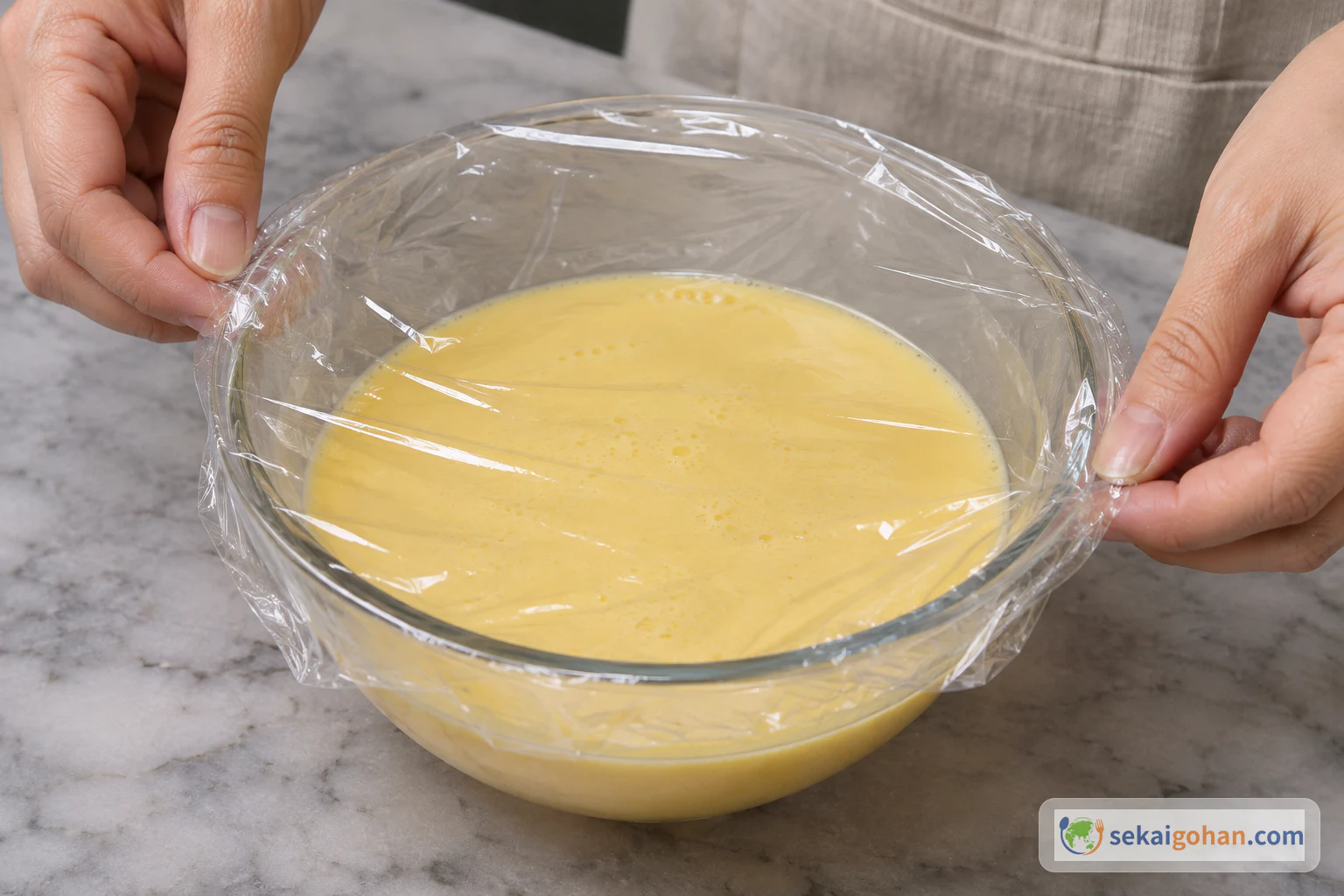
Yes, within the recipe's own windows. The wrapped pastry chills for at least 1 hour and up to 24 hours, and the covered custard rests for 30 minutes to 2 hours. King Arthur Baking's recipe page also includes make-ahead notes, including an option for freezing; this article does not give a freezer time.
How long do the finished tarts keep?
No storage period is given. The tarts are meant to be served warm. King Arthur Baking's recipe offers an optional next-day reheat at 300°F for 8 to 10 minutes on a wire rack over a rimmed baking sheet, but that is a reheating method, not a promise about how long tarts last.
Why do the folds matter so much?
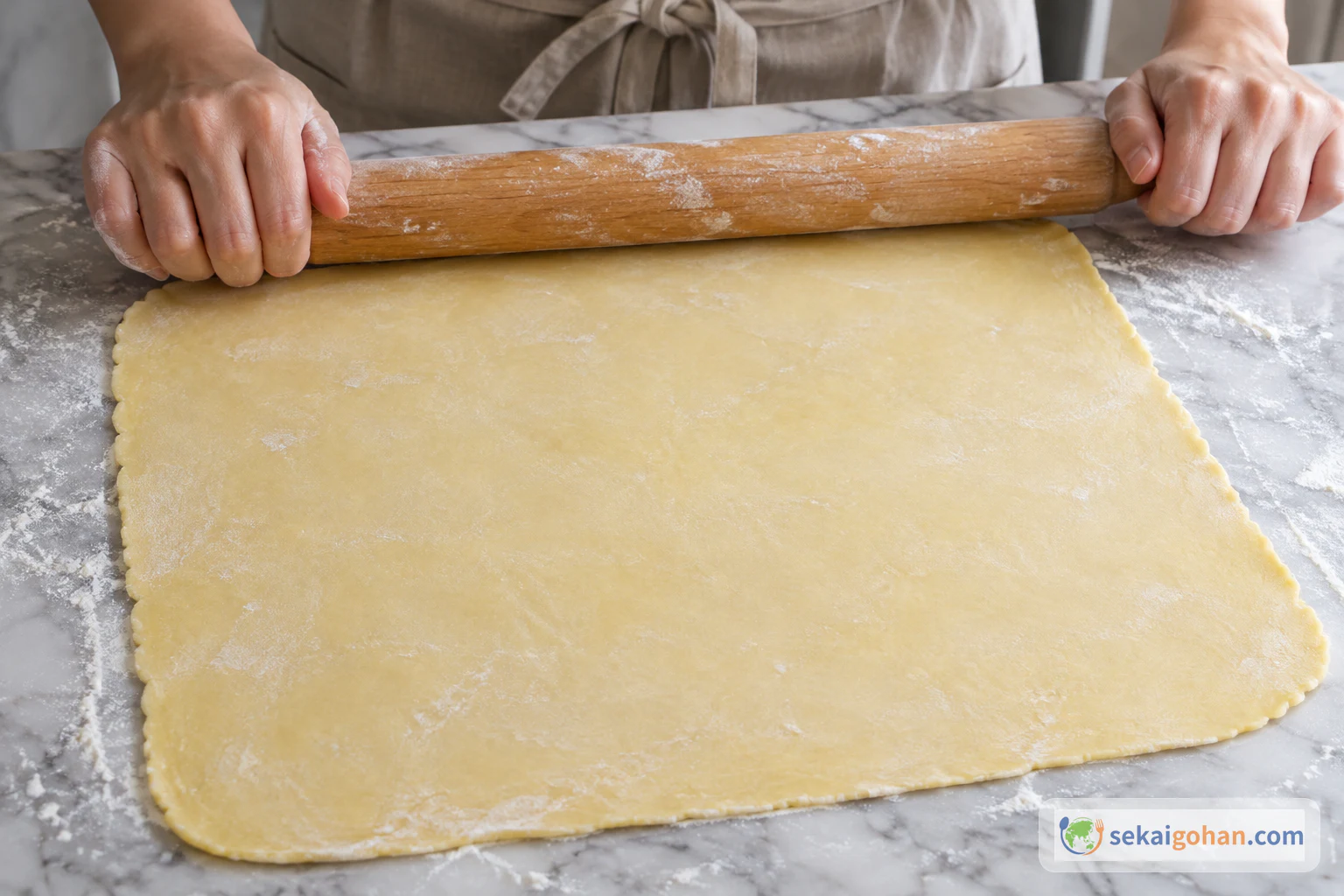
Each round of rolling, folding in thirds and turning stacks more thin layers of butter and dough. This version does it five times in all, counting the first. The photos show one fold and the finished dough, but the count of five comes from the method, not from the pictures.
Is this the only way to make Hong Kong egg tarts?
No. Hong Kong egg tarts are made with more than one kind of crust, and the Hong Kong Science Museum describes a flaky crust made from layered water and oil doughs. This article follows Genevieve Yam's rough-puff recipe for King Arthur Baking as one Hong Kong style for home kitchens.
Sources
- King Arthur Baking (Genevieve Yam), "Hong Kong Egg Tarts." The recipe used for all ingredients, quantities, units, mold and cutter sizes, oven setup, baking temperatures and times, finishing cues, and the optional next-day reheat and scrap ideas. https://www.kingarthurbaking.com/recipes/hong-kong-egg-tarts-recipe
- Hong Kong Science Museum, "What Gives Puff Pastry Egg Tarts Their Flaky Crust?" Background on the Hong Kong flaky crust, water-dough and oil-dough layering, lard in that context, and the distinction from the Portuguese pastel de nata. Not used to change the recipe. https://hk.science.museum/en/web/scm/online-explore/qkpost-roadshow-food/eggtart.html
- Hong Kong Tourism Board, "6 Must-Try Traditional Hong Kong Desserts." Background on the egg tart as a Hong Kong local favourite found in bakeries and cha chaan tengs. https://www.discoverhongkong.com/eng/food-and-drink/must-try-traditional-hong-kong-desserts.html