Gul-gukbap: Oyster and Radish Soup, Poured Over Rice
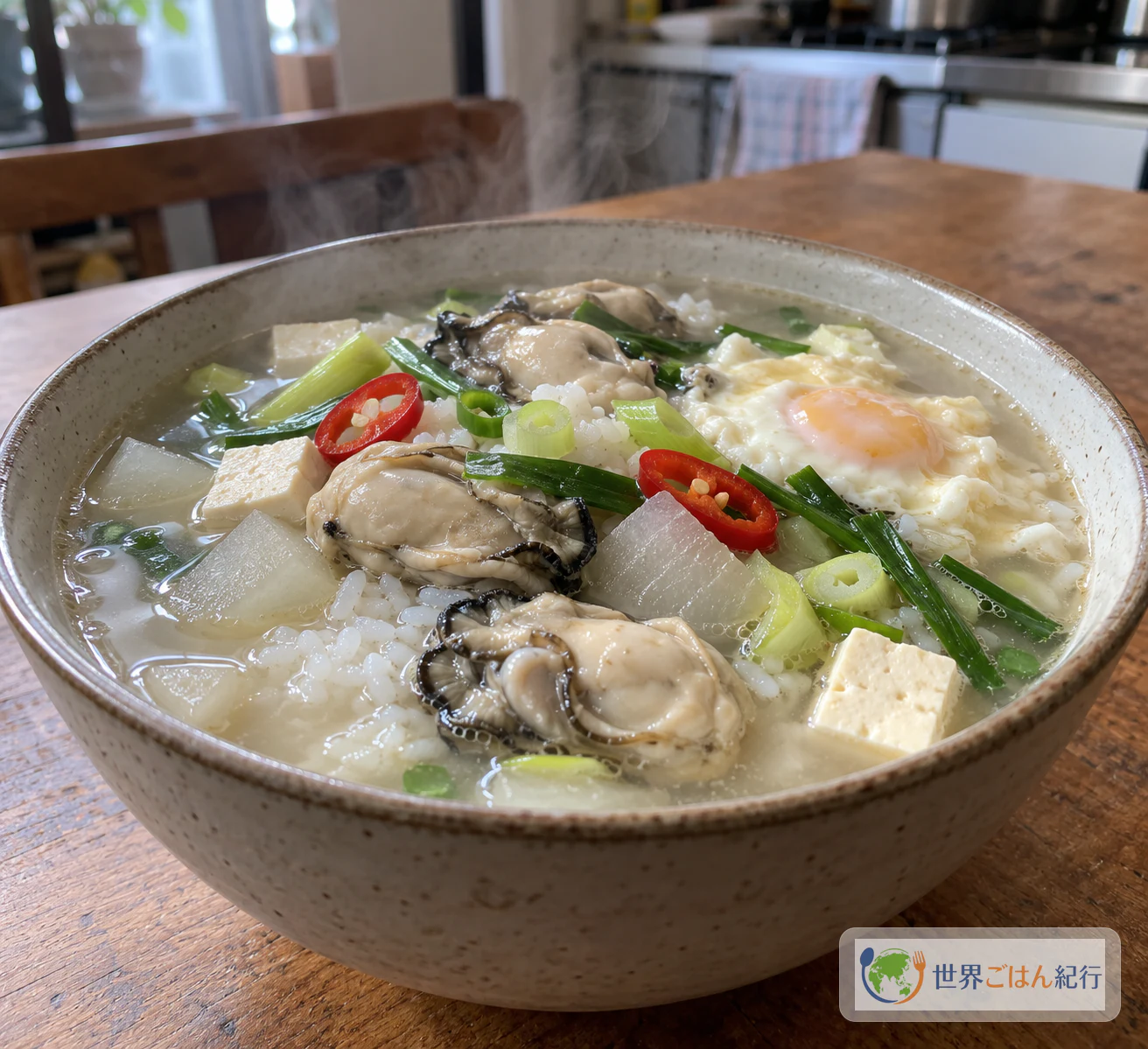
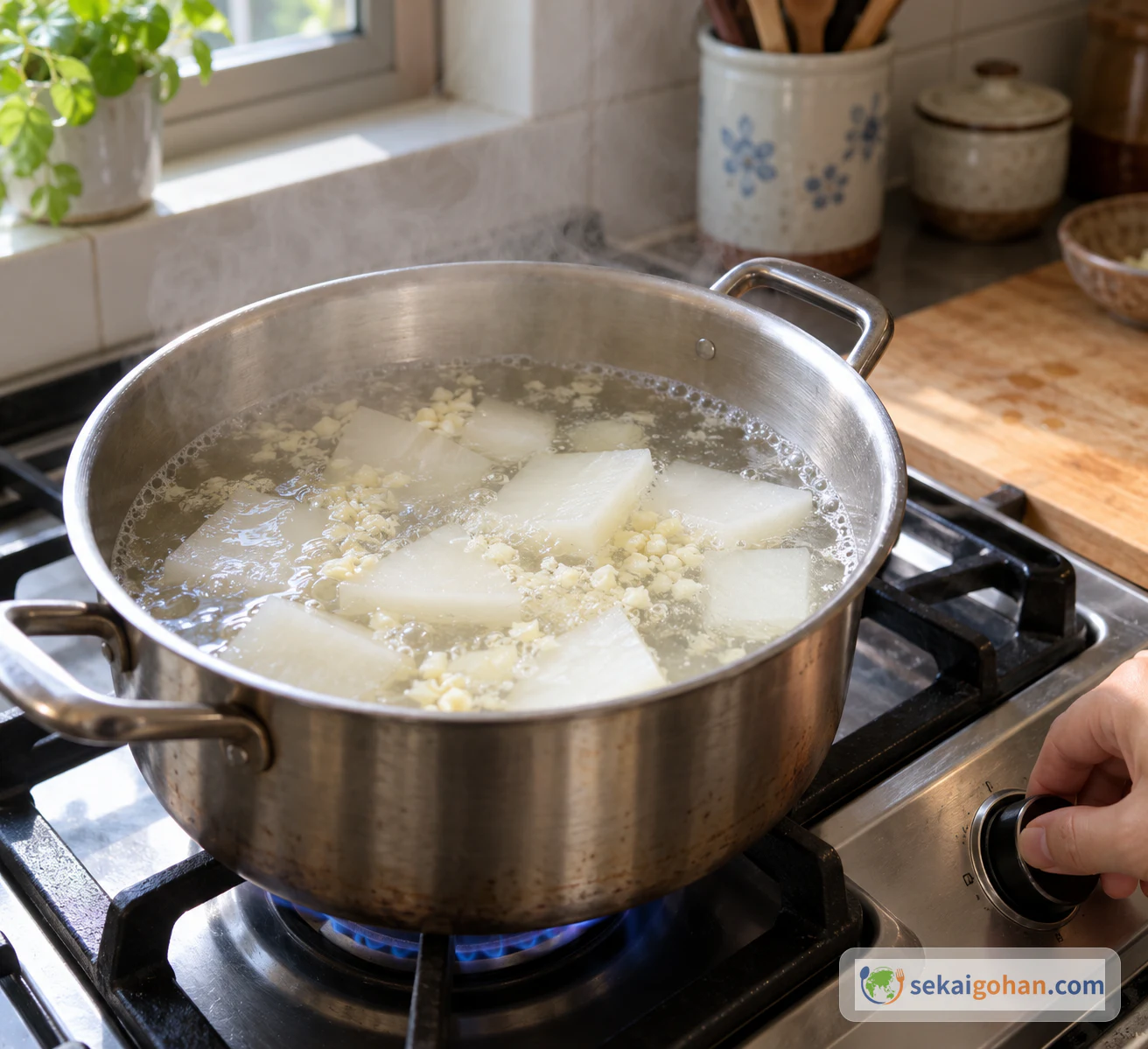
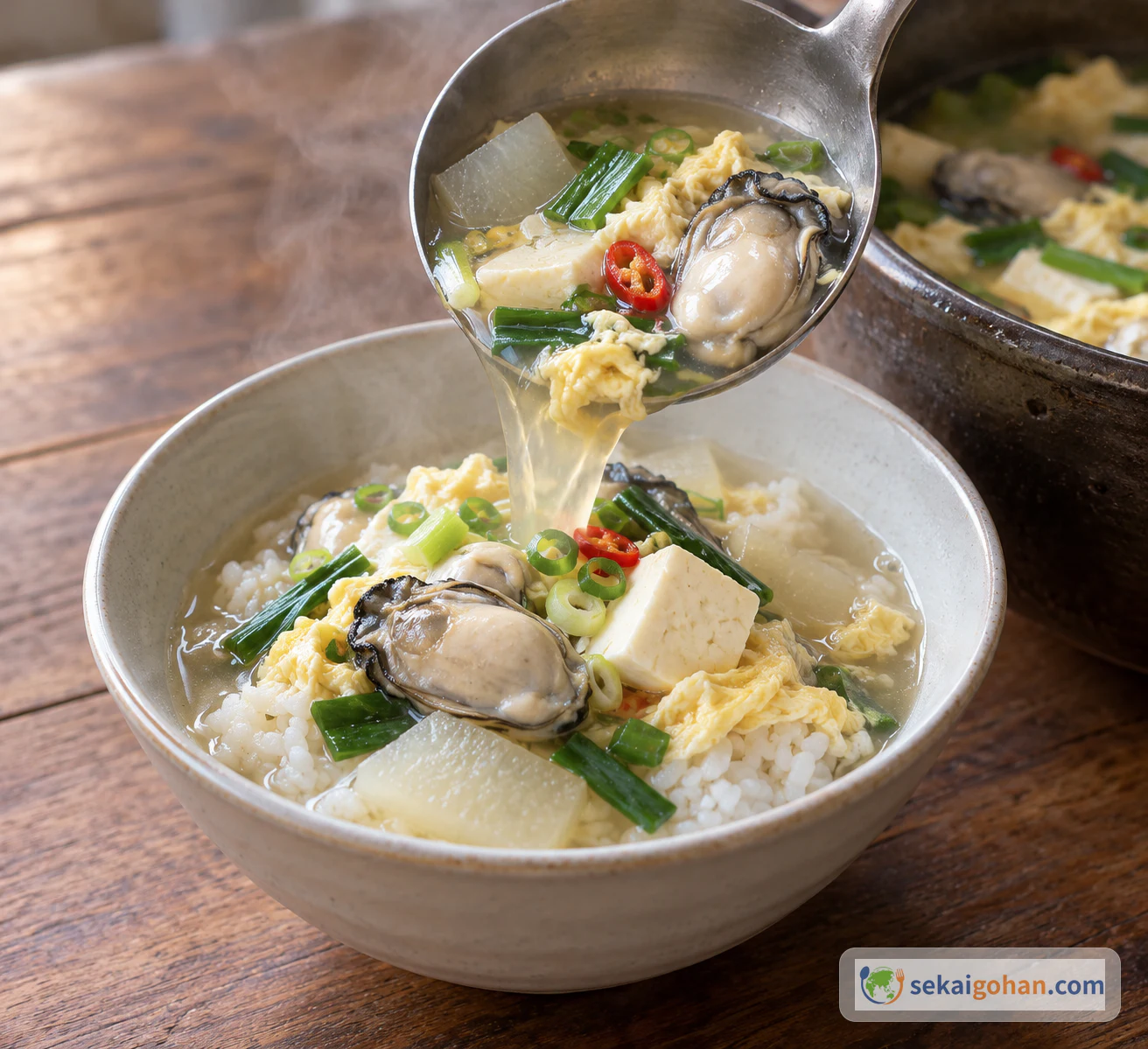
Radish and garlic form the broth base, followed by oysters, tofu, chilies and one egg. Garlic chives and scallion go in last. Serve the soup over cooked rice.
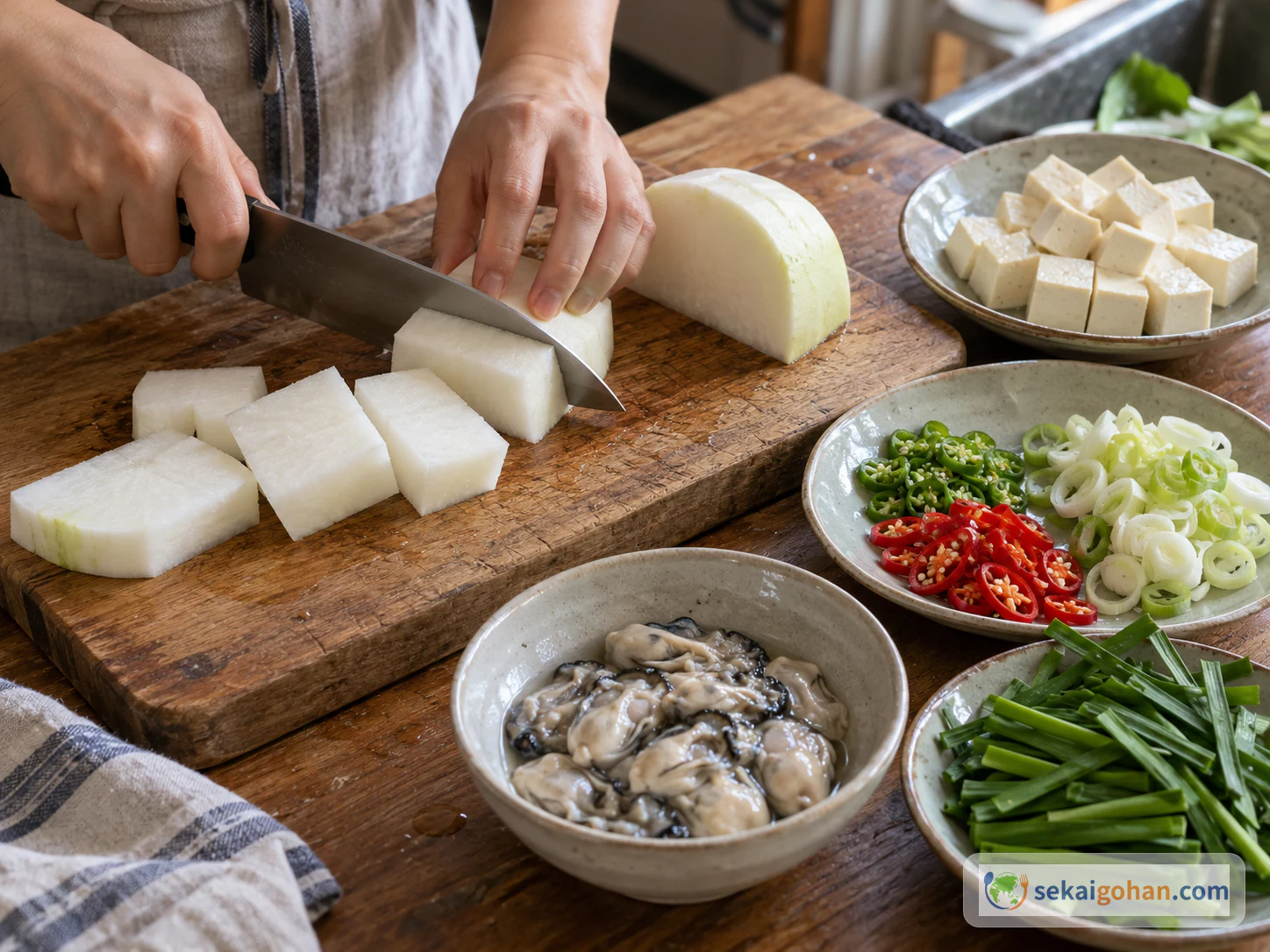
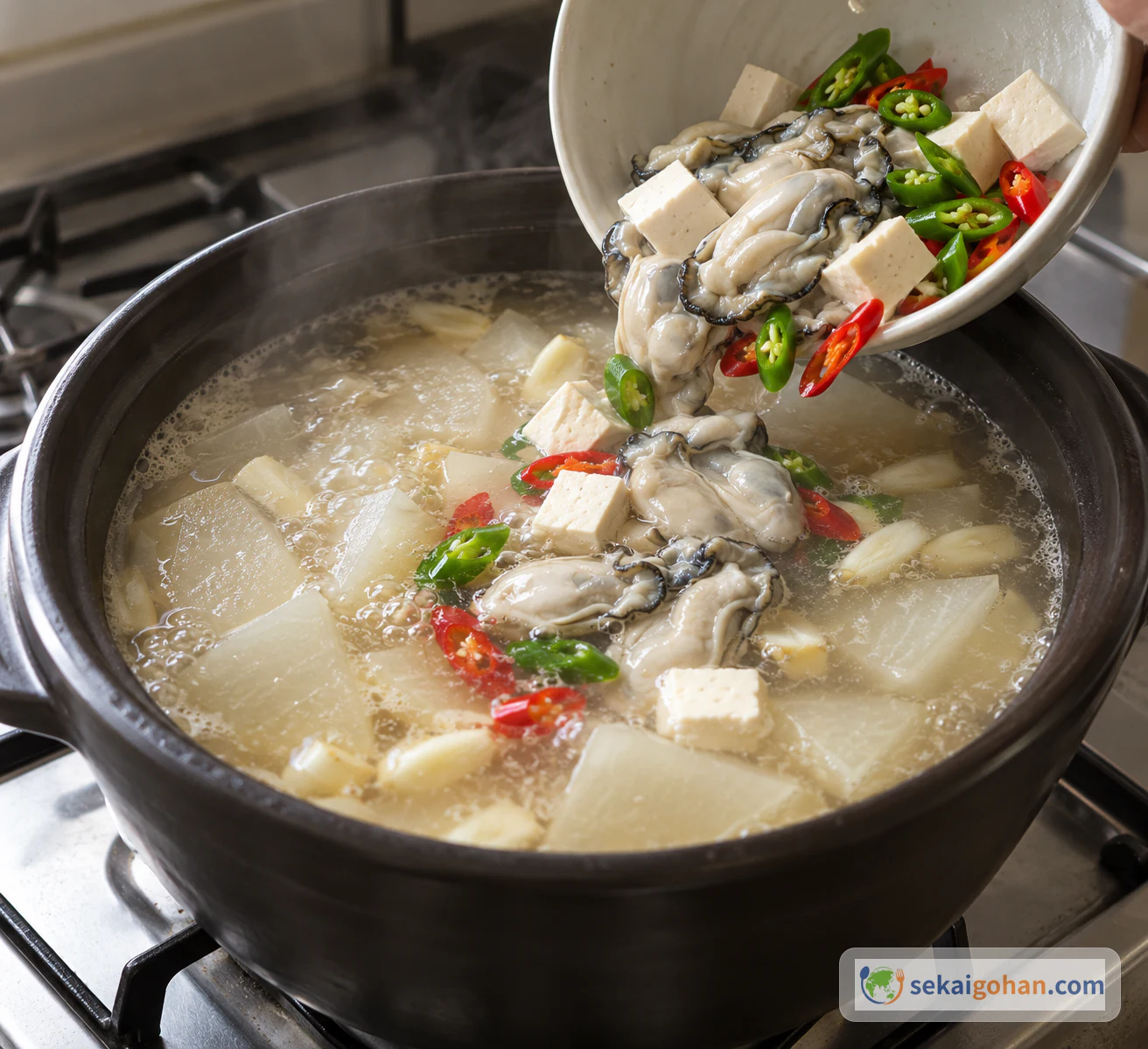
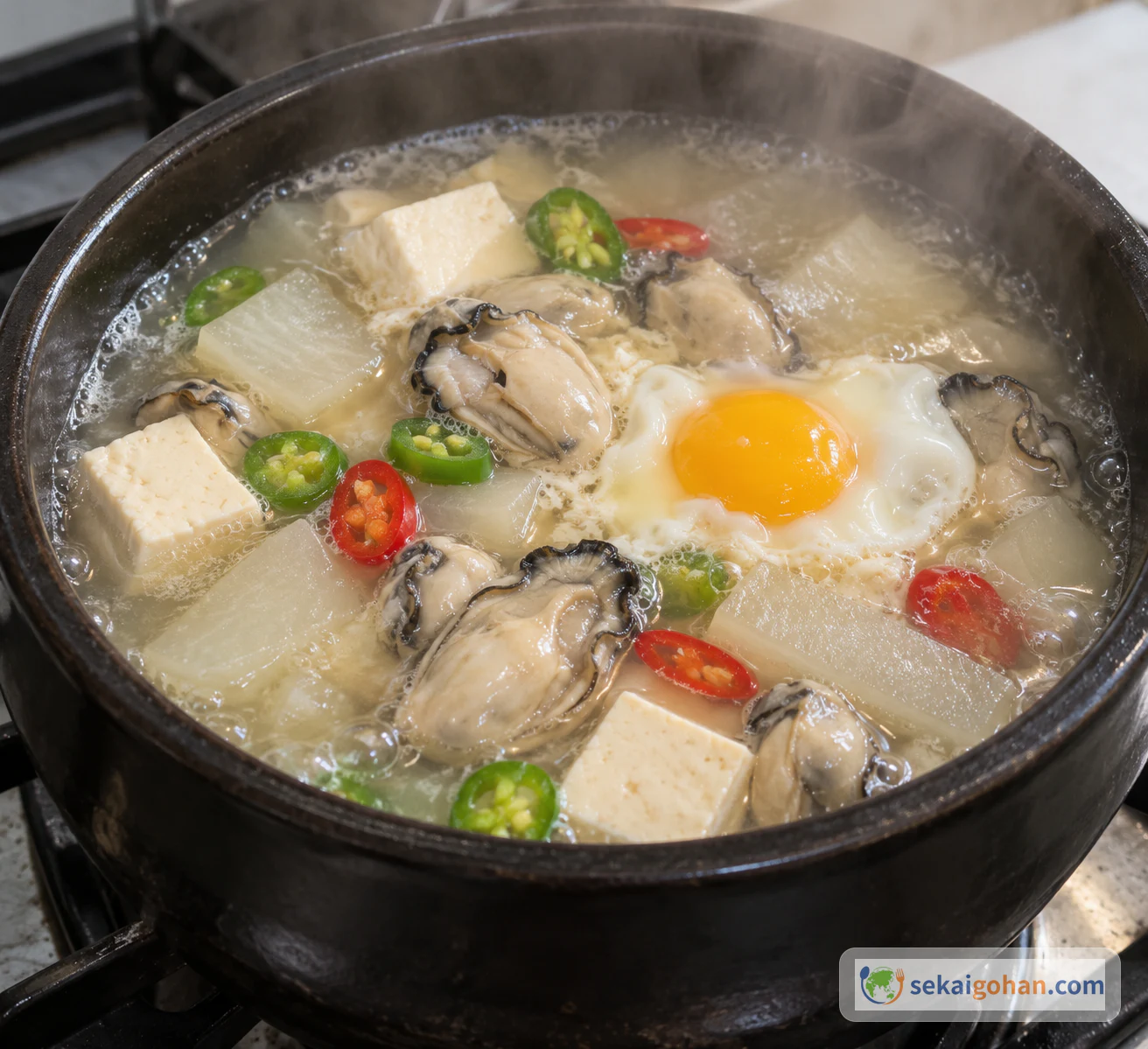
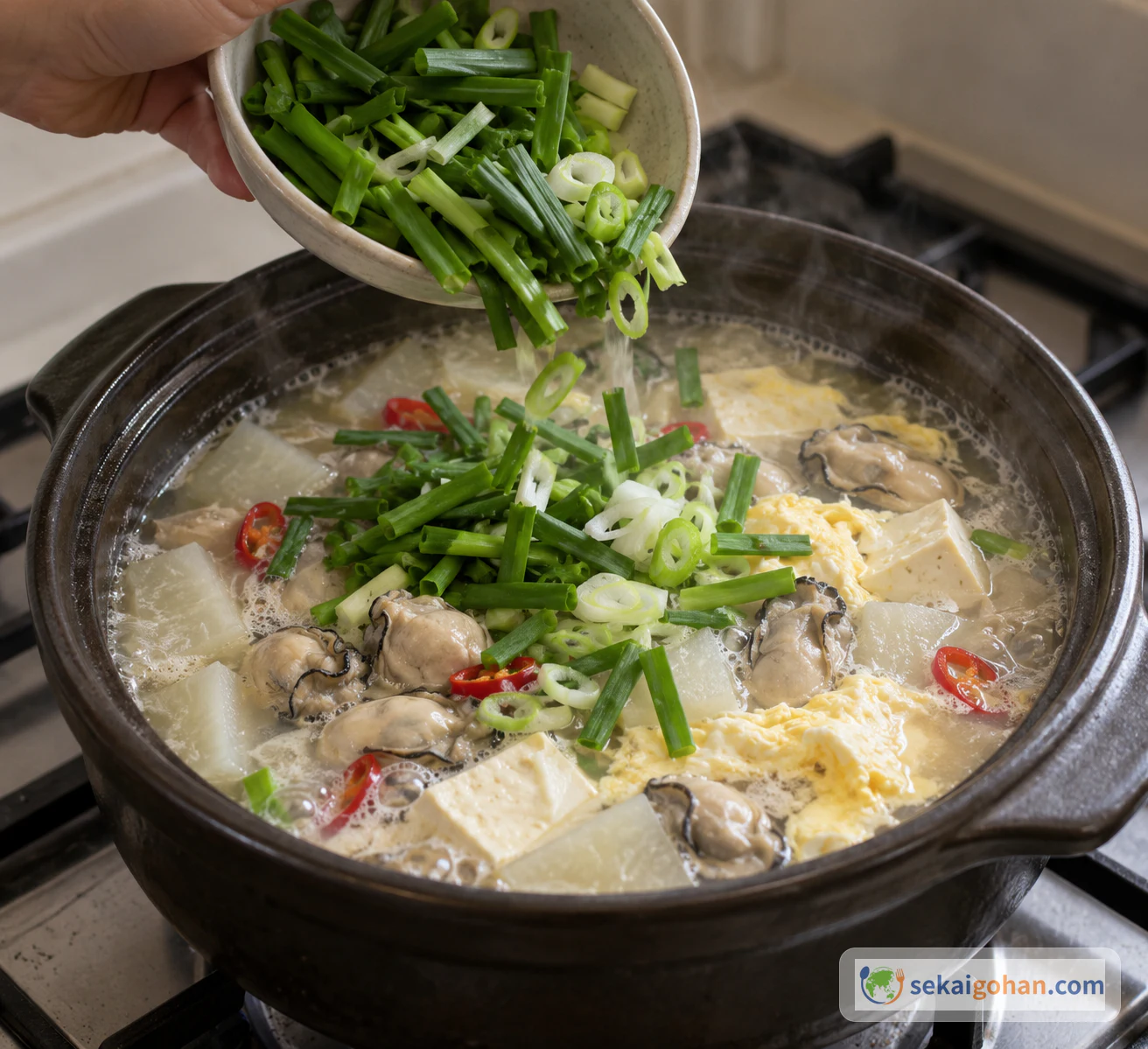
Thick pieces of Korean radish cook in a pot of water with minced garlic. Oysters, tofu and sliced green and red chilies follow, then one egg, and finally garlic chives and scallion. The hot soup is then added to cooked rice. This is gul-gukbap (굴국밥), which the Korea Tourism Organization presents in English as "Oyster and Rice Soup" and describes as a dish commonly eaten in winter.
The recipe here follows one specific written version: "굴 국밥," hosted on the Korean recipe site 10000recipe, with CJ 제일제당 (CJ CheilJedang) displayed on the page as its creator. It is a short recipe for 2 servings, labeled beginner level and "within 30 minutes" for the whole dish. The broth is seasoned with salt and a beef stock seasoning, Beef Dashida Gold, rather than an anchovy-and-kelp stock. That makes it a different formula from the broader version the Korea Tourism Organization describes, and the two are kept apart in this article.
This recipe has not been kitchen-tested by Sekai Gohan. The amounts and order below follow the adopted recipe, and the oyster safety notes come from separate public food-safety guidance. For more dishes from the same country, see South Korea.
Gul-gukbap is written 굴국밥 in Korean, and you will also see it as Gulgukbap. In English it is often called oyster rice soup or oyster and rice soup.
Ingredients for 2 Servings
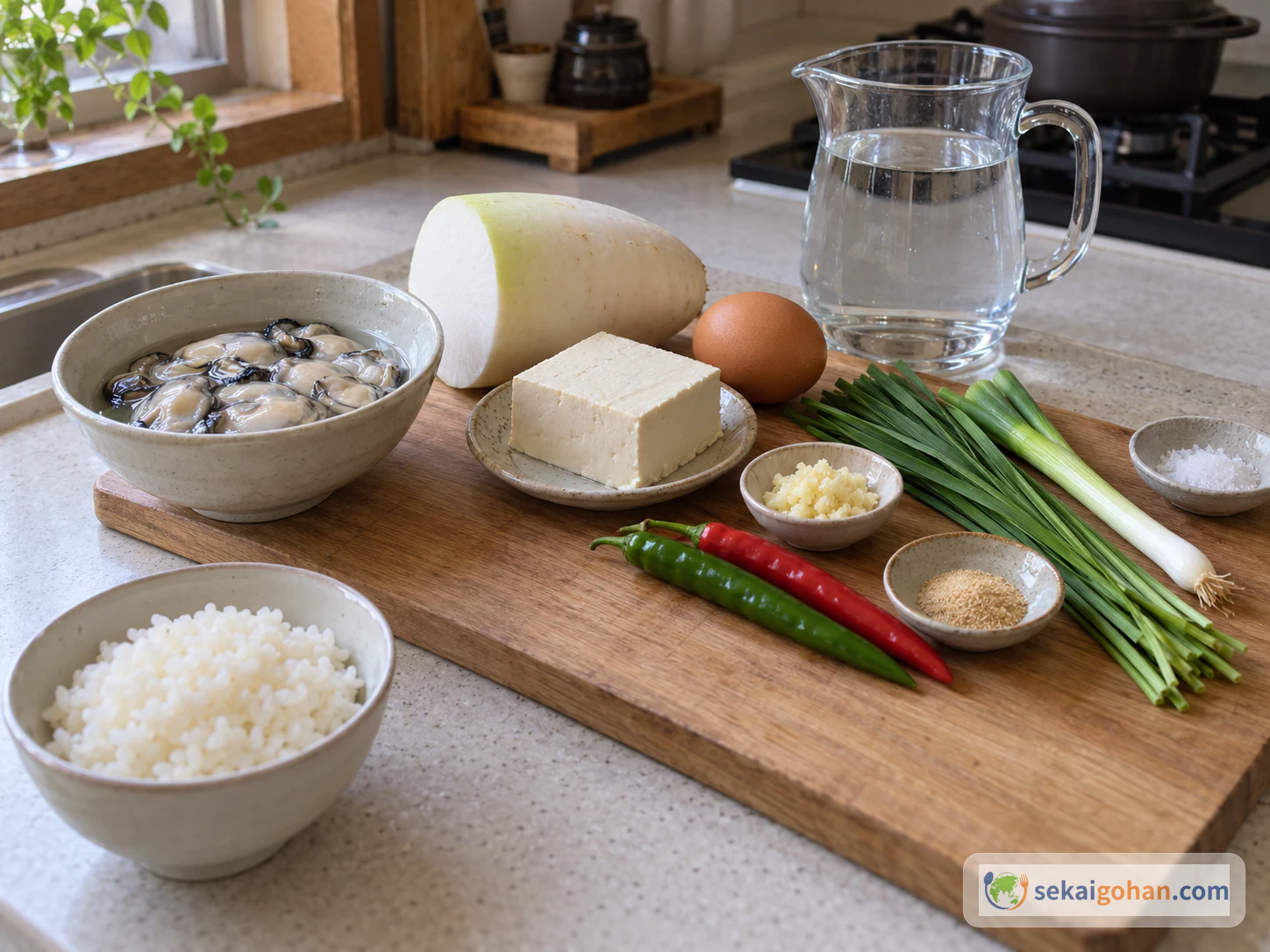
Season the soup with salt to taste, and serve with cooked rice as needed.
Choosing and Substituting
Use Beef Dashida Gold (쇠고기다시다골드), the beef stock seasoning listed in the ingredients.
Cheongyang green chili is a hot Korean variety.
Don't add anchovy, kelp, onion or mushrooms to this formula.
This soup contains shellfish (oysters), egg and soy (tofu). Check the label on the stock seasoning for other allergens.
Equipment
- Knife and cutting board
- Medium pot
- Ladle
- Serving bowls
Cooking Oysters Safely
- The U.S. Food and Drug Administration (FDA) describes shucked oysters as fully cooked when the flesh turns opaque or milky white and firm.
- For oysters sold in Korea labeled 가열조리용 ("for cooking") or 익혀 먹는 ("eat cooked"), the Korean Ministry of Food and Drug Safety (MFDS) advises heating them to a core temperature of at least 85°C for at least 1 minute. This applies to products with those labels. It is public safety guidance, not a time or temperature from the recipe, and the recipe's brief boil should not be read as meeting it.
- The FDA advises pregnant people to avoid raw or undercooked shellfish.
- When handling raw seafood, the FDA advises keeping it cold, keeping it apart from ready-to-eat foods, and washing hands and utensils after handling it.
The photos in this article show the cooking stages. They cannot show internal temperature or prove that oysters are safe. This article makes no claim that raw oysters are safe to eat.
Troubleshooting
| What you notice | What to do |
|---|---|
| The shucked oysters still look translucent or soft | Keep cooking until they are opaque or milky white and firm |
| Your oysters are labeled 가열조리용 or 익혀 먹는 | Follow MFDS guidance: a core temperature of at least 85°C for at least 1 minute. The brief boil in step 4 is not a substitute |
Another Version: The Broader Winter Soup
The Korea Tourism Organization describes a common winter gul-gukbap with oysters, radish, bean curd, onion, anchovy, mushrooms and rice. It also mentions seaweed and garlic chives. That version builds its flavor differently from the recipe above, which uses no anchovy, kelp, onion or mushrooms and relies on Beef Dashida Gold instead.
The tourism description gives no amounts or method, so it is not a recipe here. If you want to try that direction, treat it as a separate dish rather than adding those ingredients to the formula above.
Gul-gukbap also shares the "gukbap" pattern of soup and rice with dishes like dwaeji-gukbap, which is made with pork and pork bones. That is a different dish with no oysters.
Background: A Winter Bowl of Oysters and Rice
The Korea Tourism Organization presents gul-gukbap as a soup eaten in winter, centered on oysters and rice. It also notes that the dish is popular as a hangover soup. That is a note about how people eat it, not a claim that it cures hangovers or has any health effect.
The recipe used here is a short, everyday version hosted on 10000recipe and attributed on the page to CJ 제일제당. The page shows it was registered on 2016-11-07 and updated on 2018-08-06. It calls for the company's beef stock seasoning and suggests serving the soup with ready-made 햇반 (Hetbahn) rice. The page sits on 10000recipe, not on a CJ-owned website, and the account behind it has not been independently verified.
Frequently Asked Questions
Why is the water 500 ml when the recipe says 2.5 cups?
The 10000recipe measuring guide defines 1 cup as 200 ml, so 2.5 cups comes to 500 ml. That is smaller than a US cup, so measure in milliliters if your cups are a different size.
How much salt and rice should I use?
The recipe gives no amount for either. Salt is added to taste in step 3. The rice is how the soup is eaten, so use as much as you like. Sekai Gohan does not suggest a set amount.
How long does it take?
The recipe page labels the whole dish "within 30 minutes." It gives no time for each step.
Does the egg have to stay whole?
The recipe says to add one egg and bring the soup briefly to a boil. It doesn't say whether to beat the egg, and it doesn't forbid it. The photos in this article show the egg added whole.
Can I use raw oysters or undercooked oysters for serving?
No. This is a cooked soup. Cook shucked oysters until they are opaque or milky white and firm, as the FDA describes. For Korean products labeled 가열조리용 or 익혀 먹는, follow the MFDS guidance of a core temperature of at least 85°C for at least 1 minute. The FDA advises pregnant people to avoid raw or undercooked shellfish.
Can I add anchovy stock, kelp or mushrooms?
Those ingredients appear in the broader winter version described by the Korea Tourism Organization, not in this recipe. Adding them makes a different soup. Treat it as a separate version rather than an adjustment to this one.
Sources
- 10000recipe, "굴 국밥," creator displayed on the page as CJ 제일제당 (registered 2016-11-07, updated 2018-08-06). The adopted recipe: 2 servings, within 30 minutes, beginner level, ingredient amounts and cooking order, salt and cooked 햇반 rice in the method without amounts, and the site's measuring guide defining 1 cup as 200 ml. https://www.10000recipe.com/recipe/6860249
- Korea Tourism Organization, "Oyster and Rice Soup (굴국밥 / Gulgukbap)" (2023-10-19). Dish name in Korean and English, the common winter version with oysters, radish, bean curd, onion, anchovy, mushrooms and rice, the mention of seaweed and garlic chives, and its popularity as a hangover soup. https://english.visitkorea.or.kr/svc/contents/contentsView.do?vcontsId=178134
- Korean Ministry of Food and Drug Safety (MFDS), 열린마루 February 2025, norovirus prevention and safe oyster cooking (2025-02-11). Heating oysters labeled 가열조리용 or 익혀 먹는 to a core temperature of at least 85°C for at least 1 minute. https://www.mfds.go.kr/webzine/202502/sub02.html
- U.S. Food and Drug Administration, "Selecting and Serving Fresh and Frozen Seafood Safely." General guidance on buying seafood, keeping it cold, keeping raw seafood apart from ready-to-eat foods, and cleaning hands and utensils. https://www.fda.gov/food/buy-store-serve-safe-food/selecting-and-serving-fresh-and-frozen-seafood-safely?r=iamready
- U.S. Food and Drug Administration, "Meat, Poultry & Seafood (Food Safety for Moms-to-Be)." Shucked oysters are fully cooked when opaque or milky white and firm; pregnant people should avoid raw or undercooked shellfish. https://www.fda.gov/food/people-risk-foodborne-illness/meat-poultry-seafood-food-safety-moms-be