Kushi Dango: The Dough Is Boiled Before the Dumplings Are Shaped
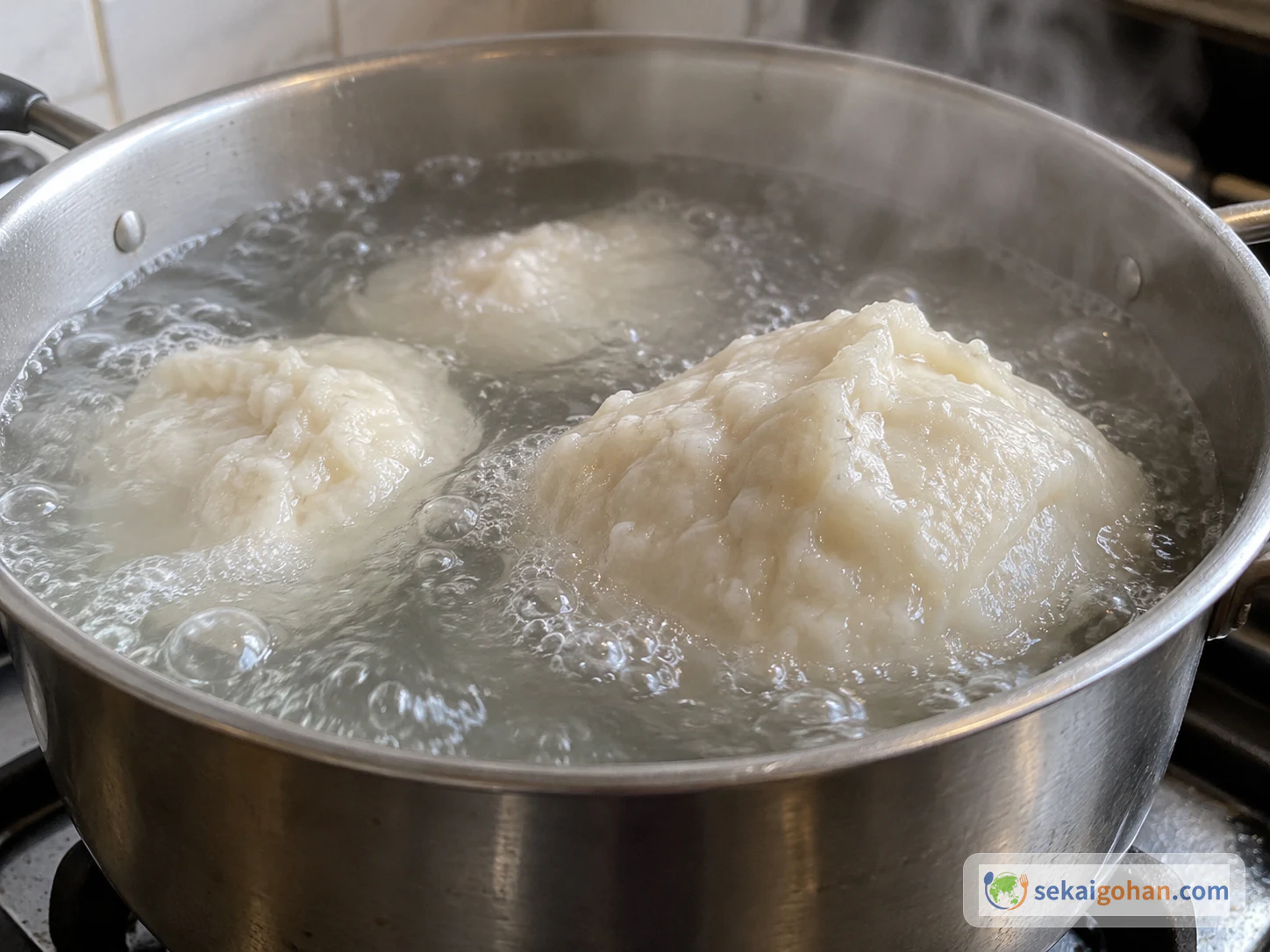
Two rice flours are mixed in two separate bowls, one with cold water and one with boiling water. The combined dough goes into the pot in a few large pieces, not as small balls. Only after it floats, is lifted onto a damp cloth and kneaded again is it cut and rounded into dumplings.
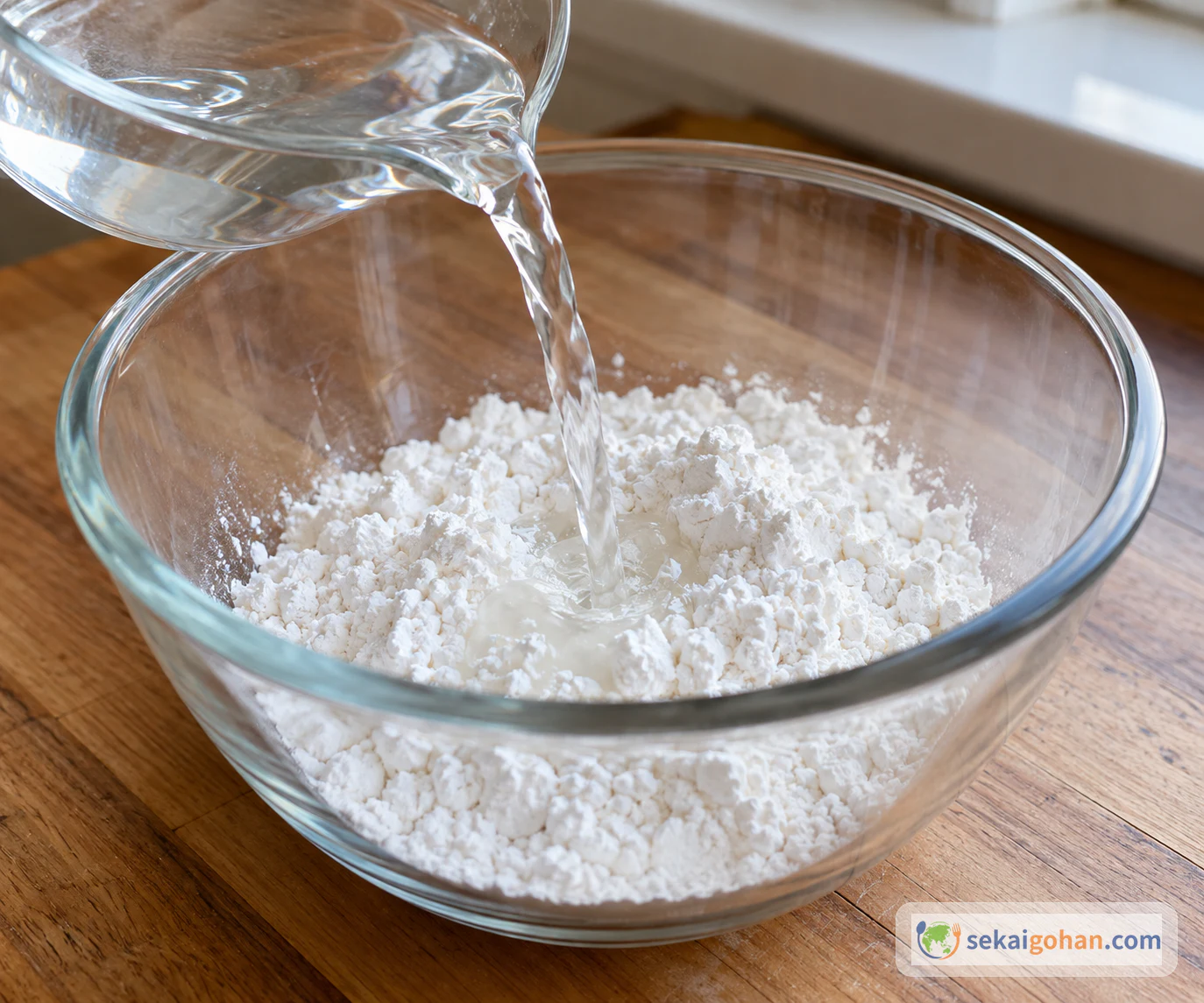
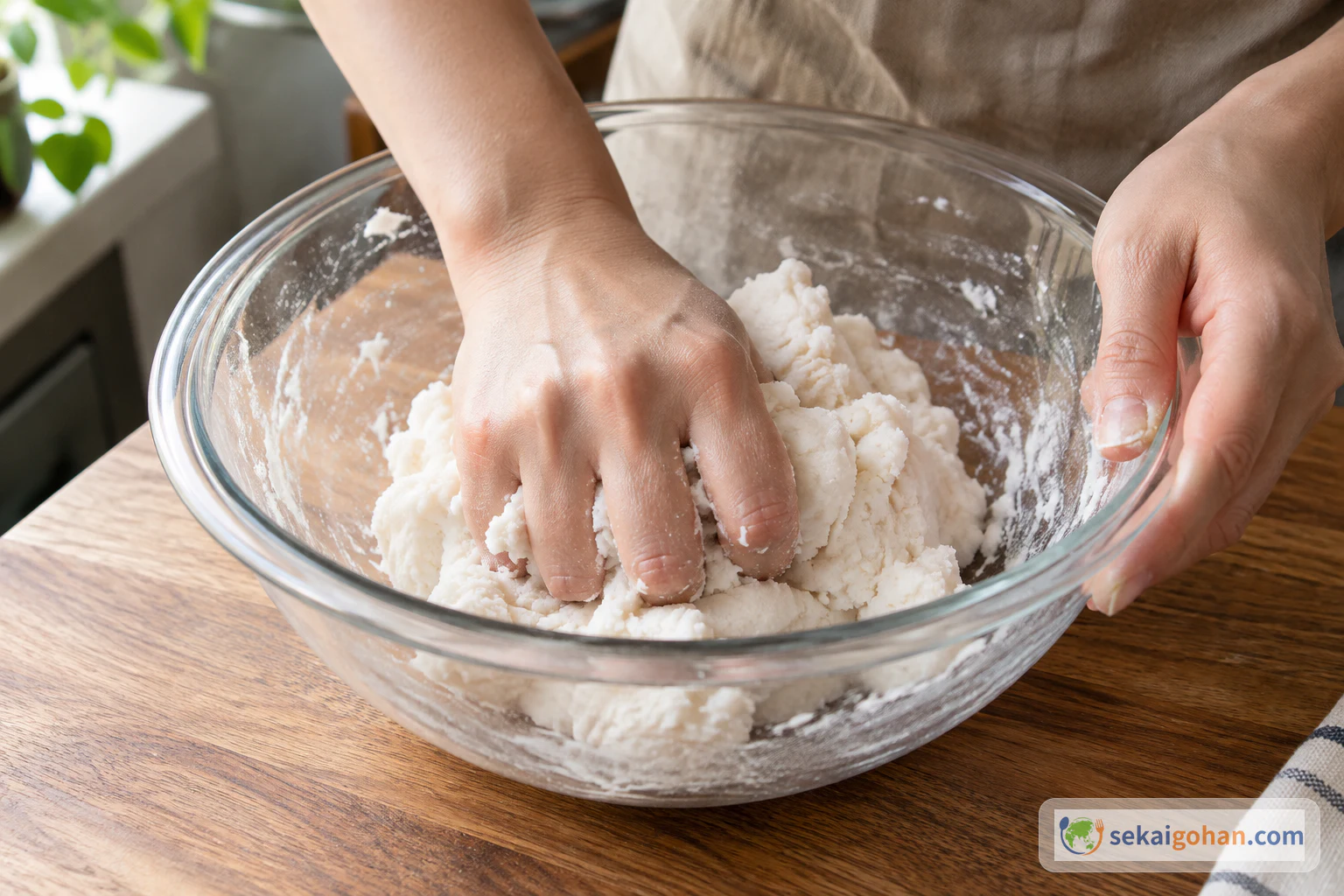
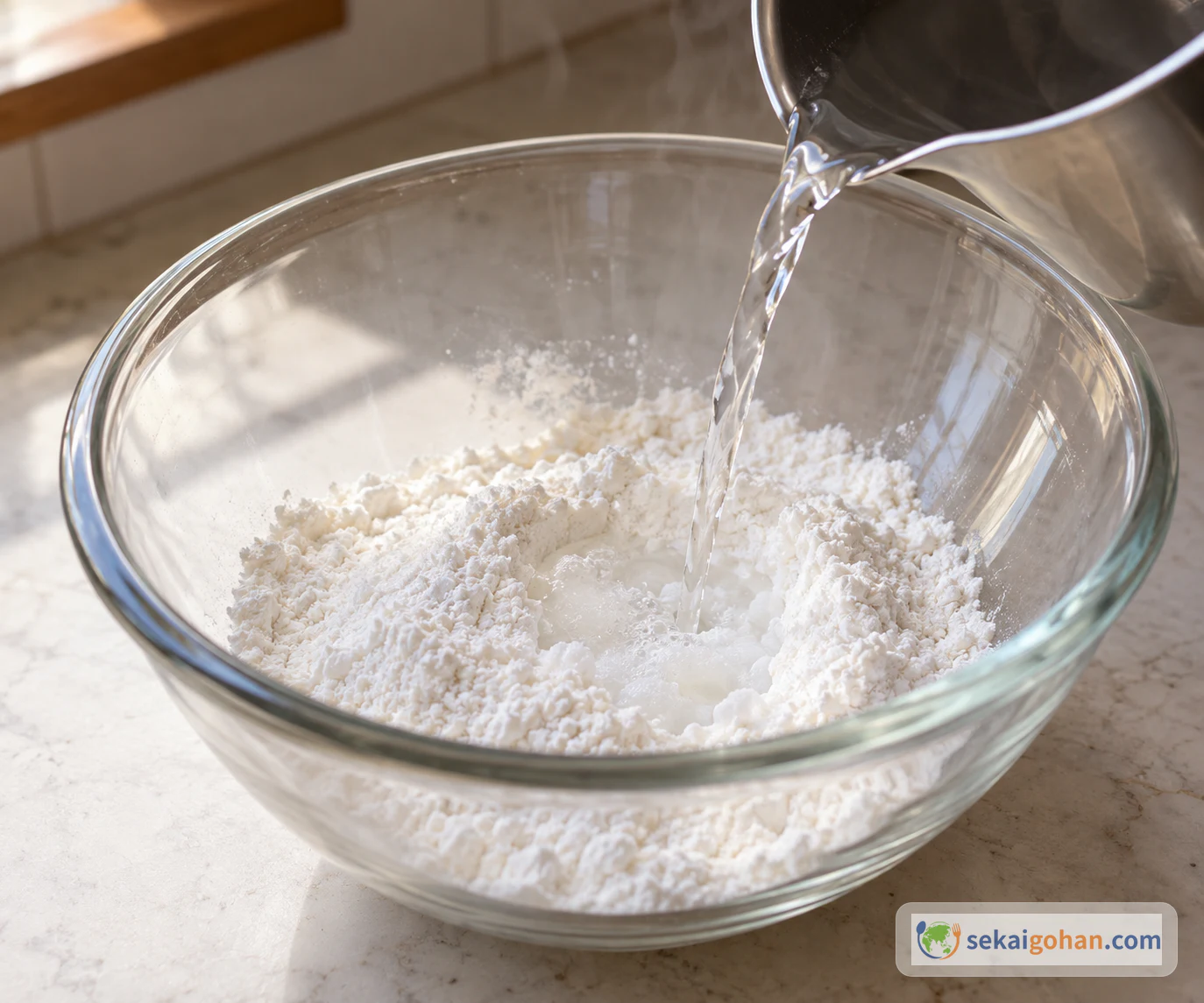
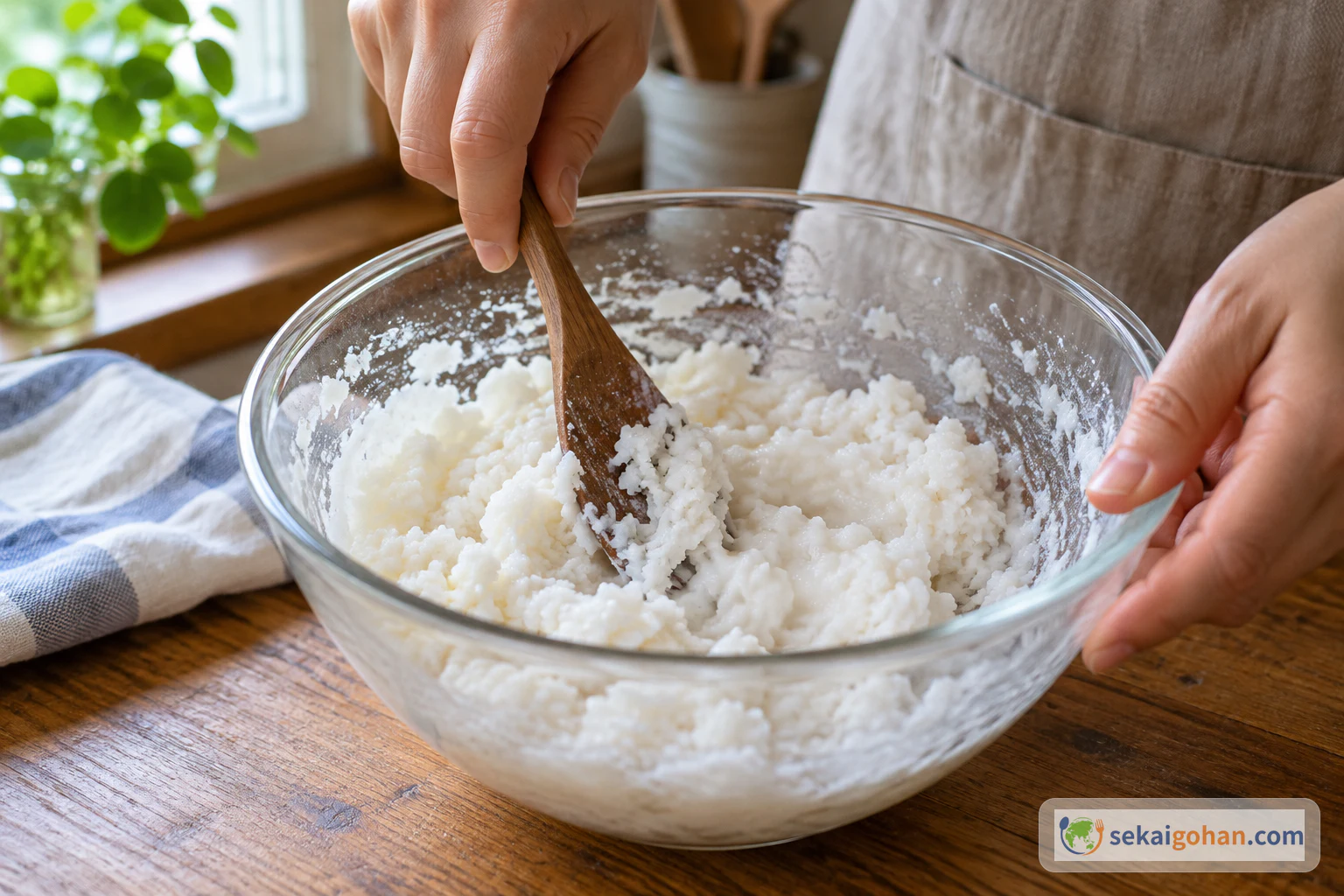
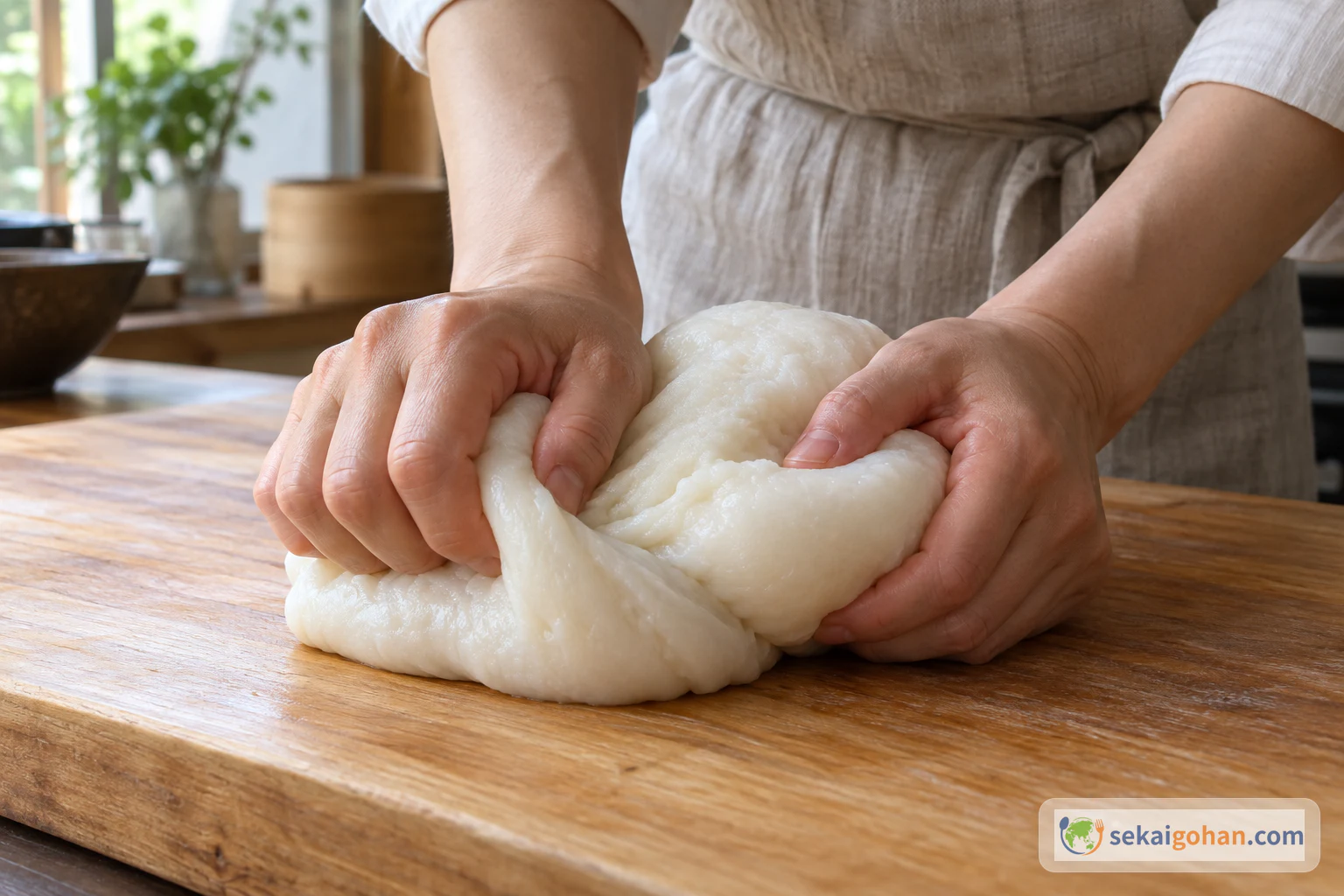
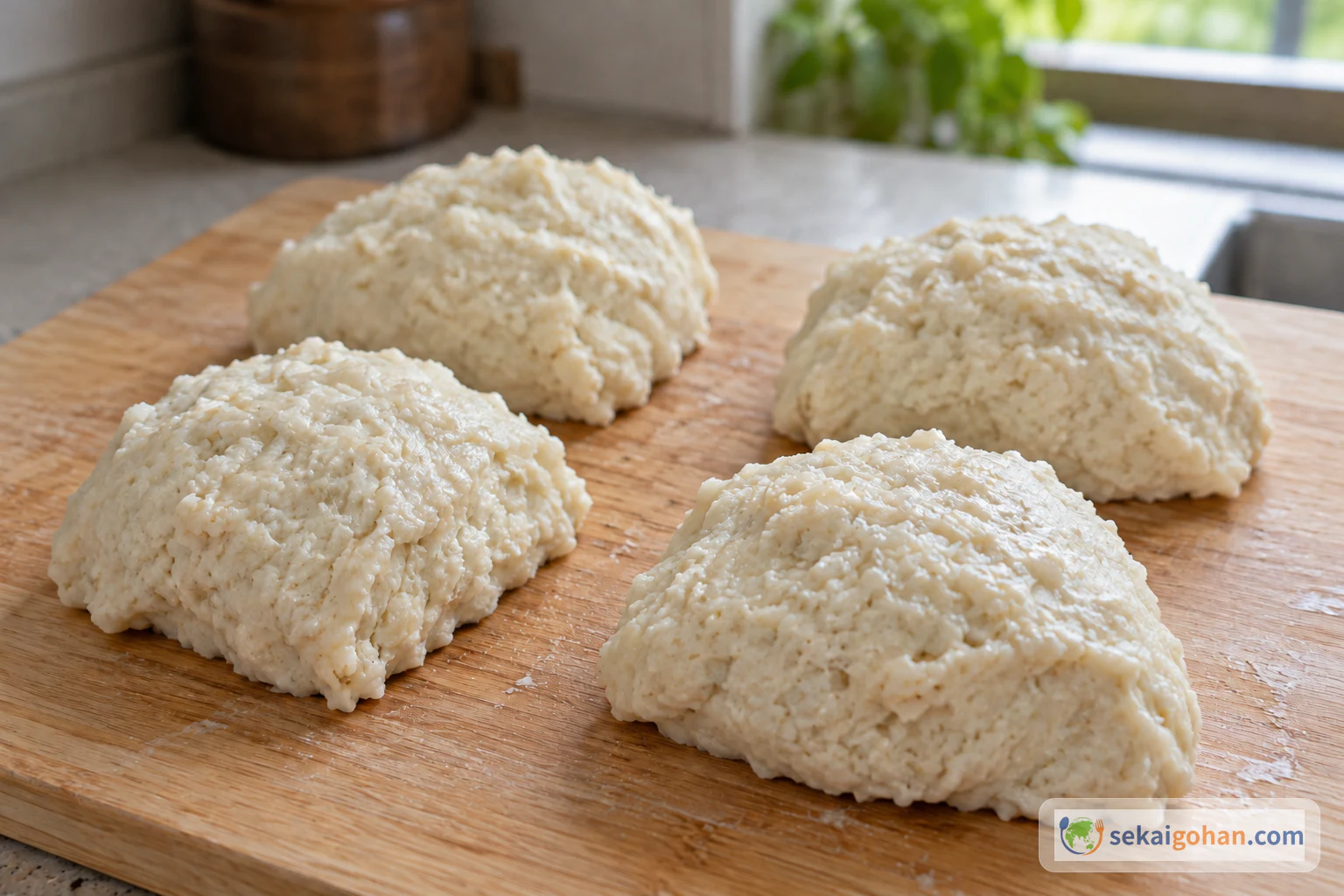
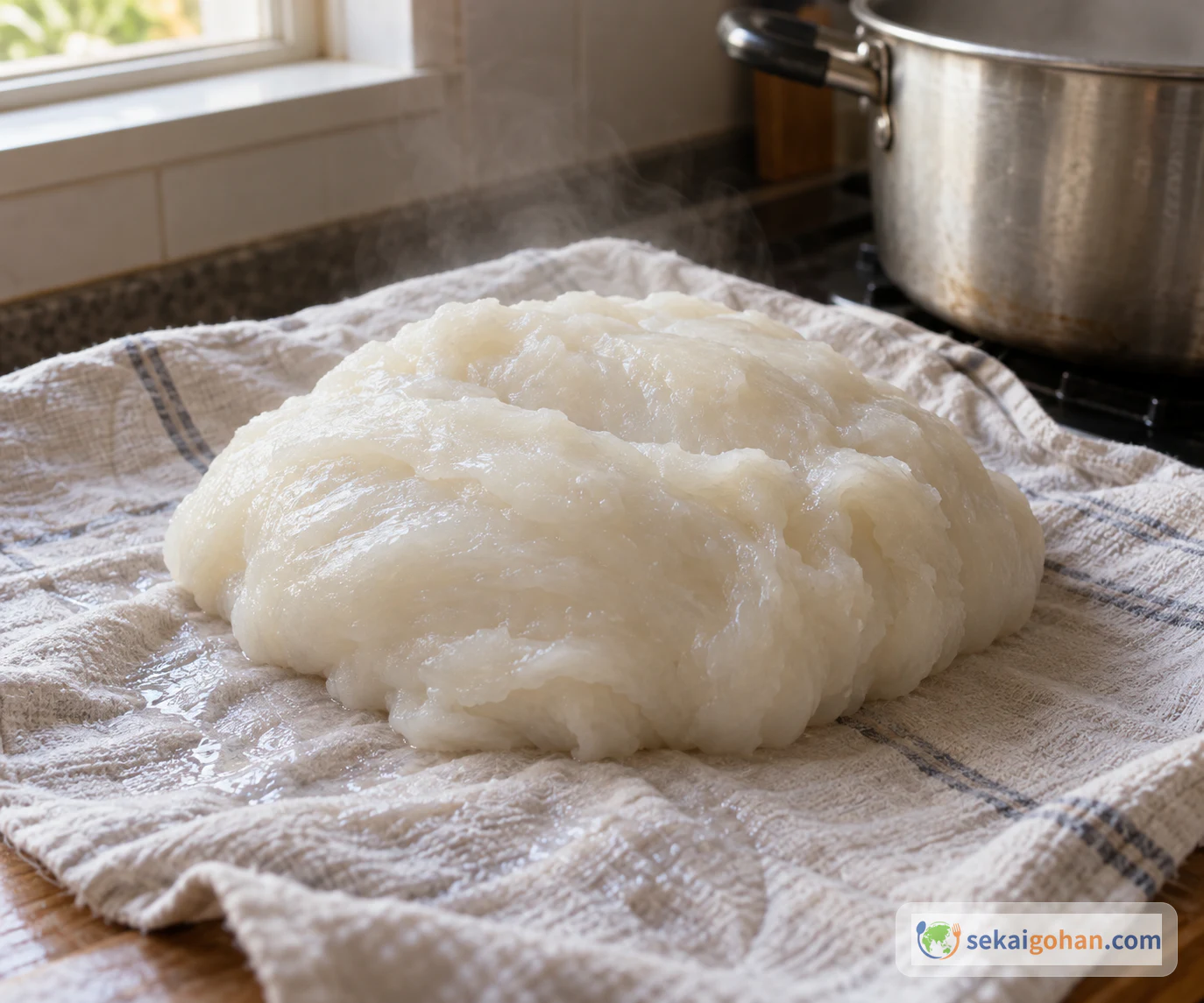
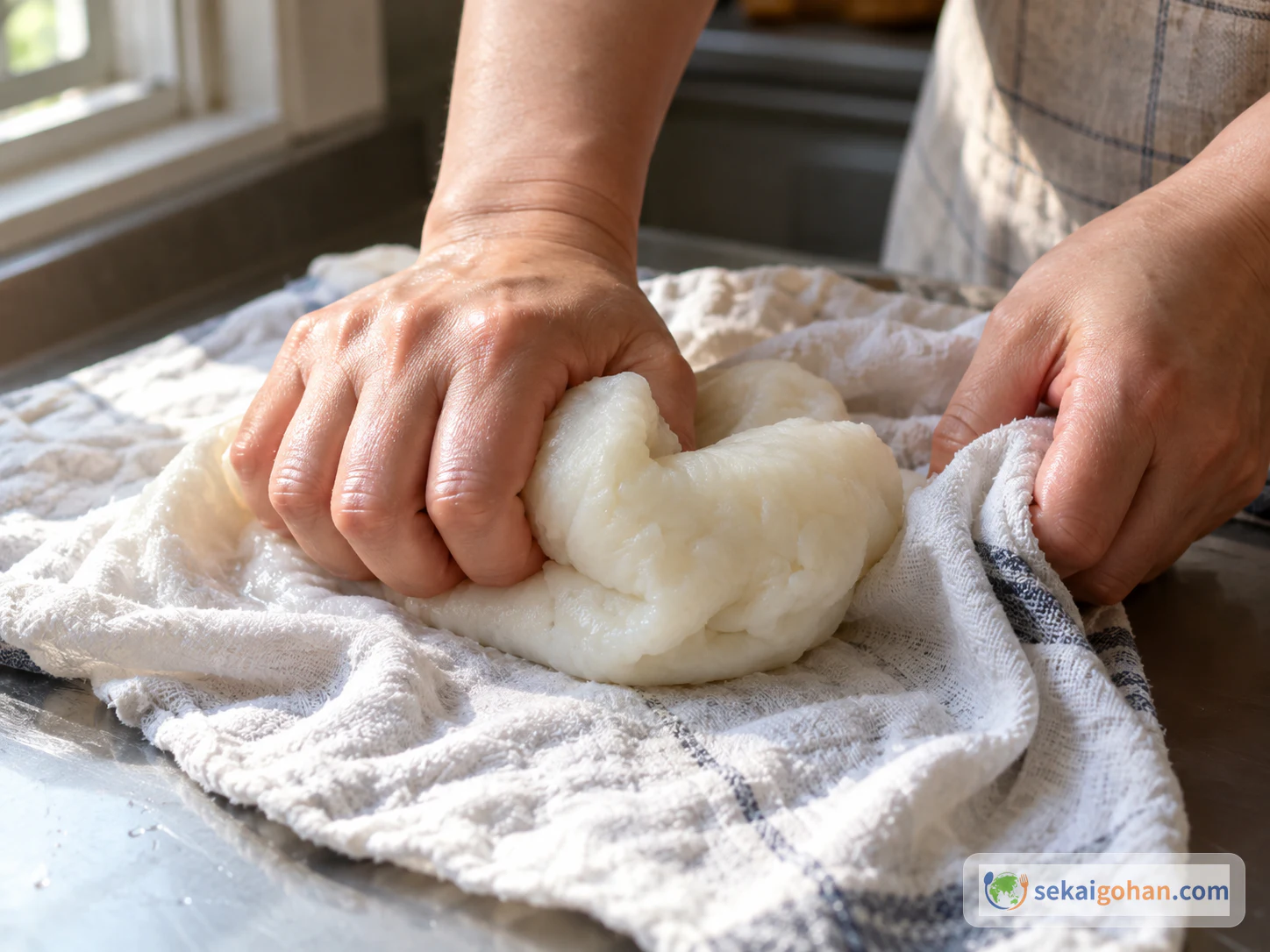
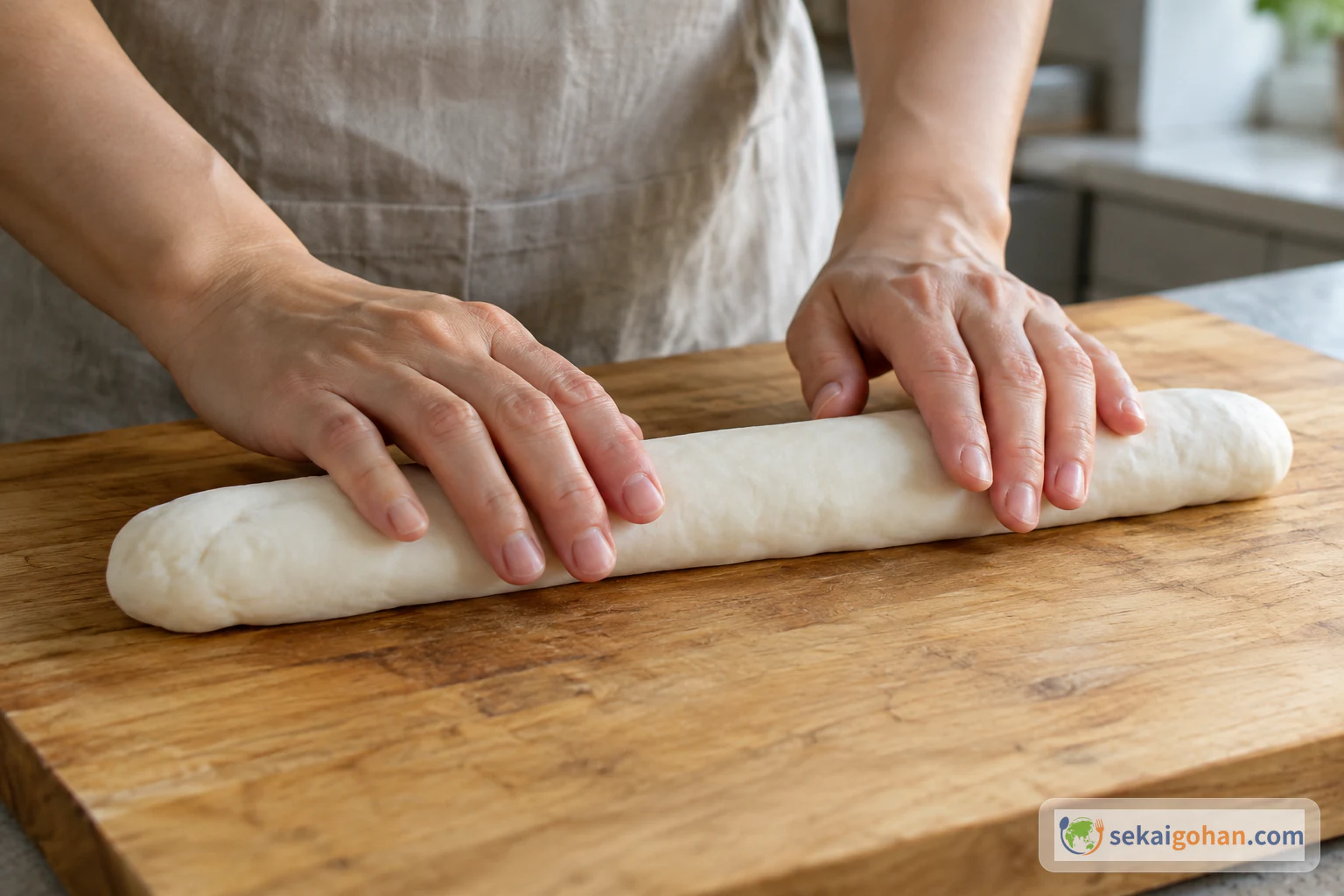
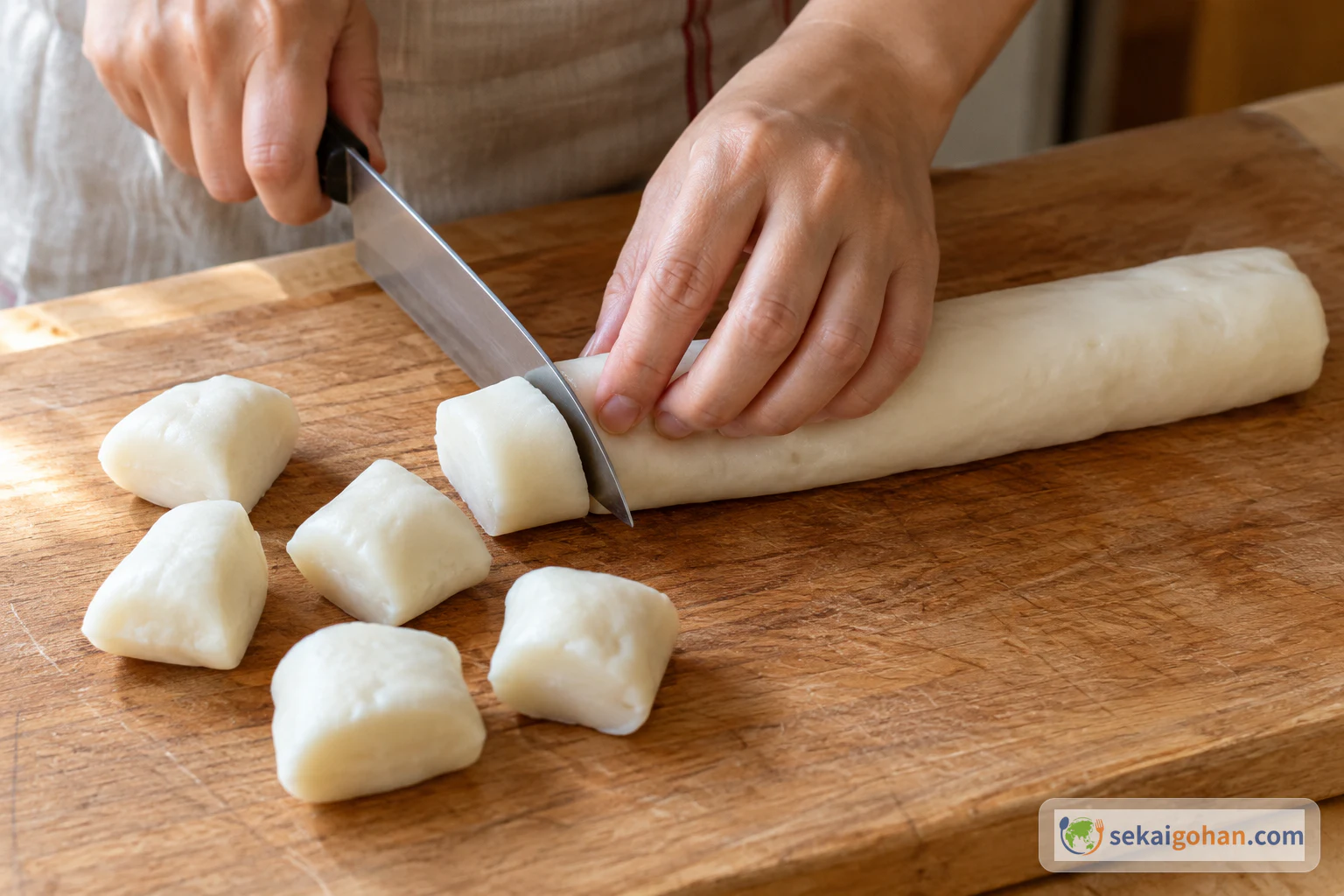
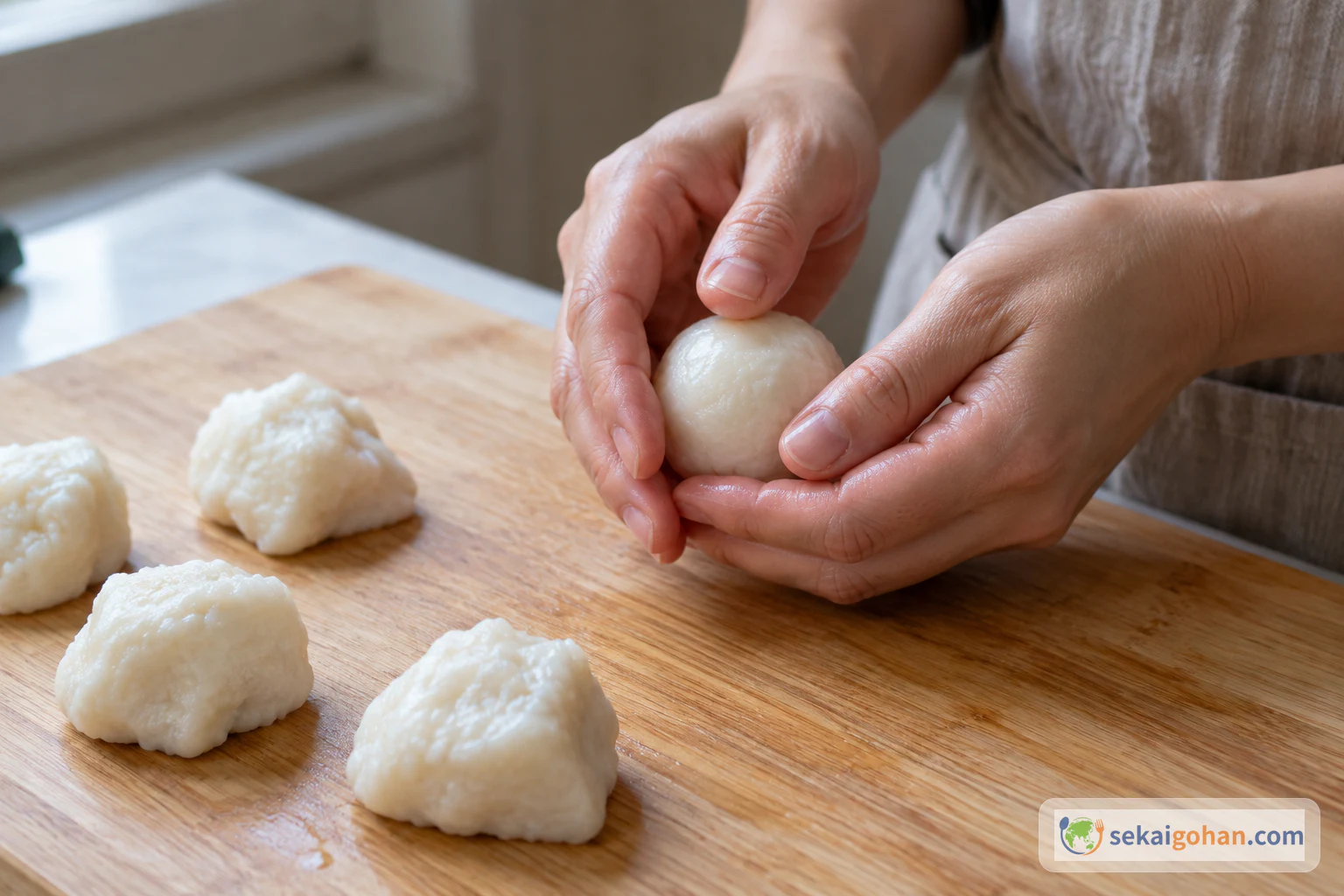
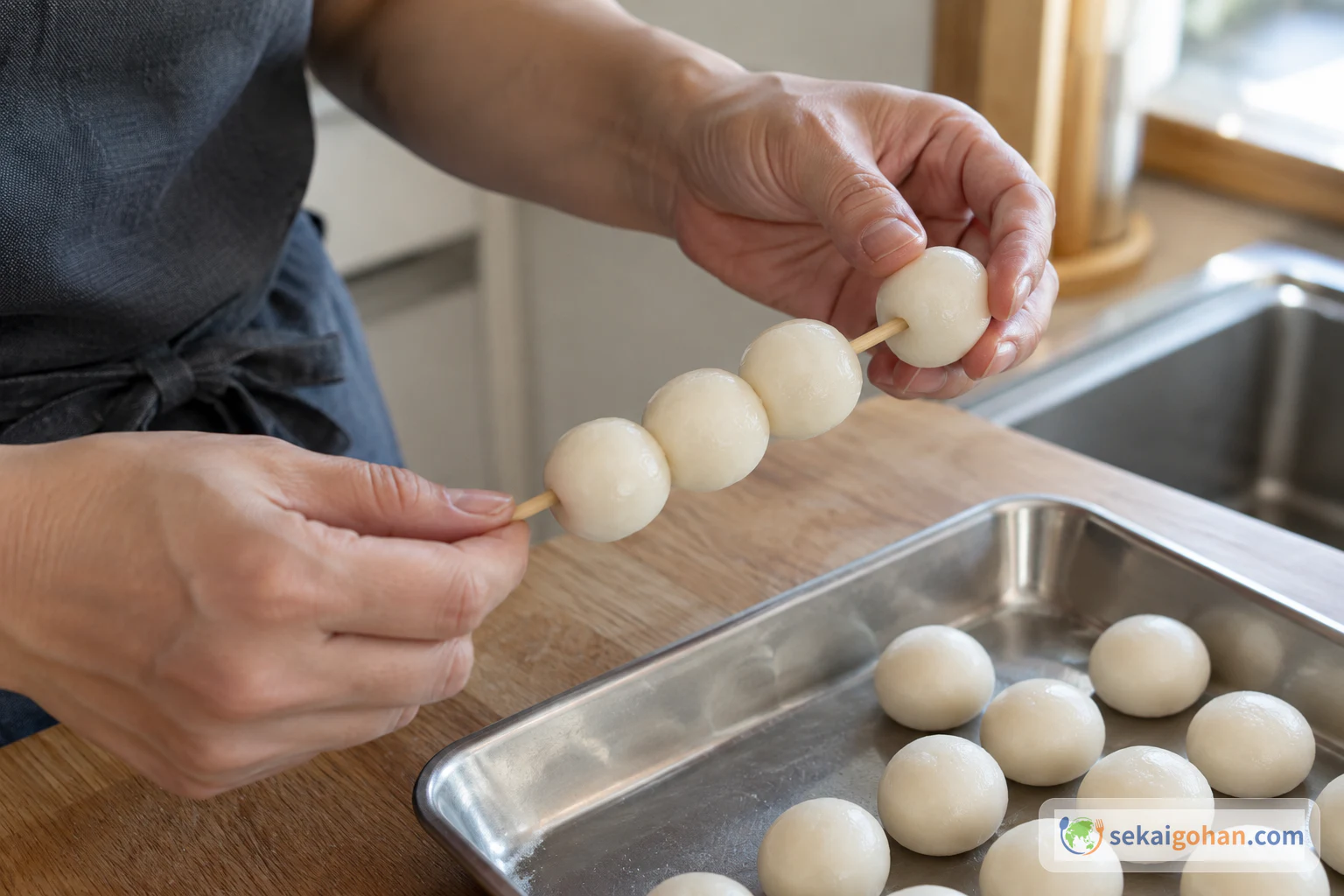
Picture two bowls on the counter. In one, shiratamako takes on water a little at a time and is kneaded into a soft dough. In the other, joshinko is stirred together with boiling water. The two doughs are then pressed into one, broken into a few rough lumps and dropped into a pot of boiling water. When the lumps rise to the surface, they come out onto a damp cloth and get kneaded all over again. Only then does the dough become a log, sixteen pieces, sixteen small balls and four bamboo skewers.
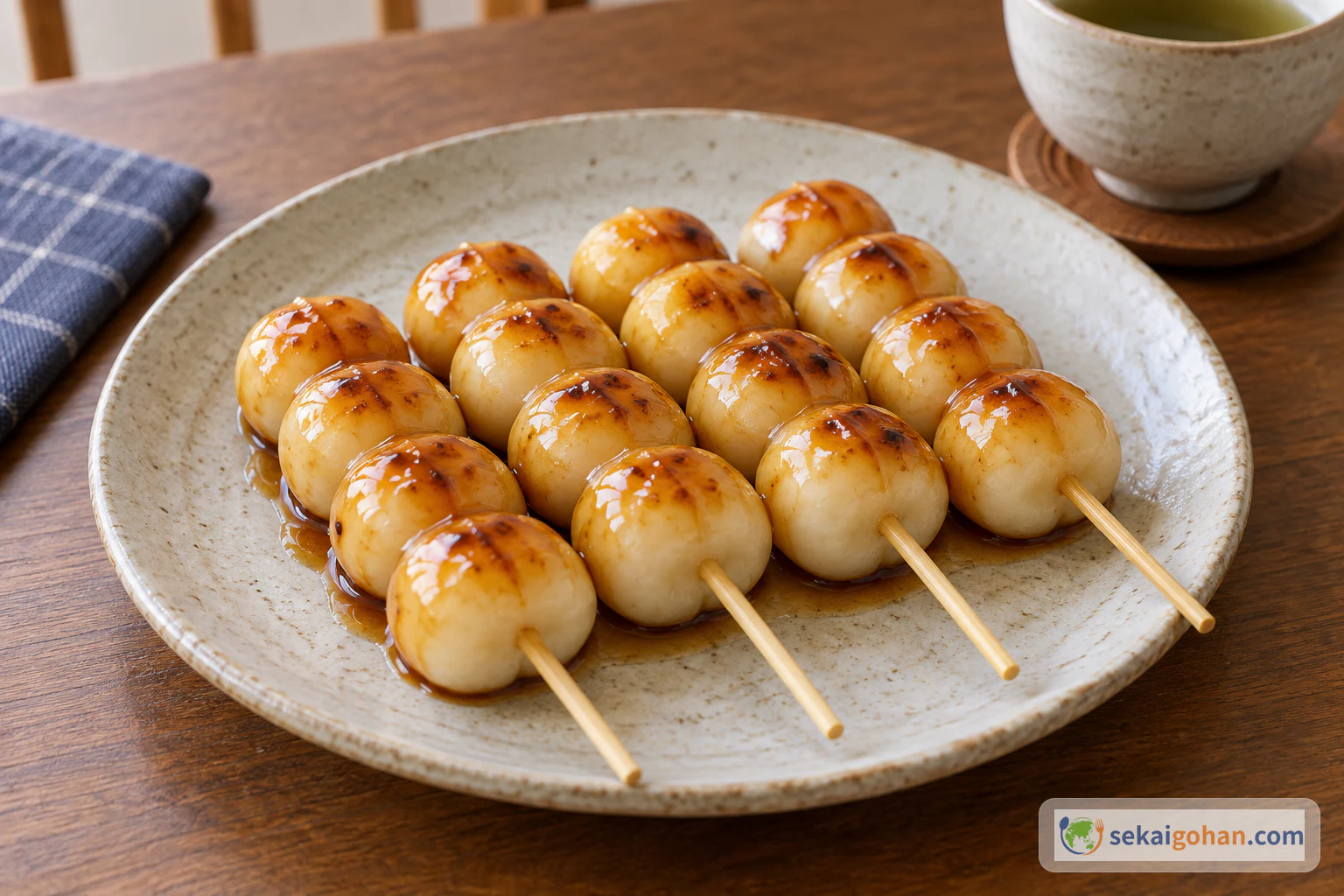
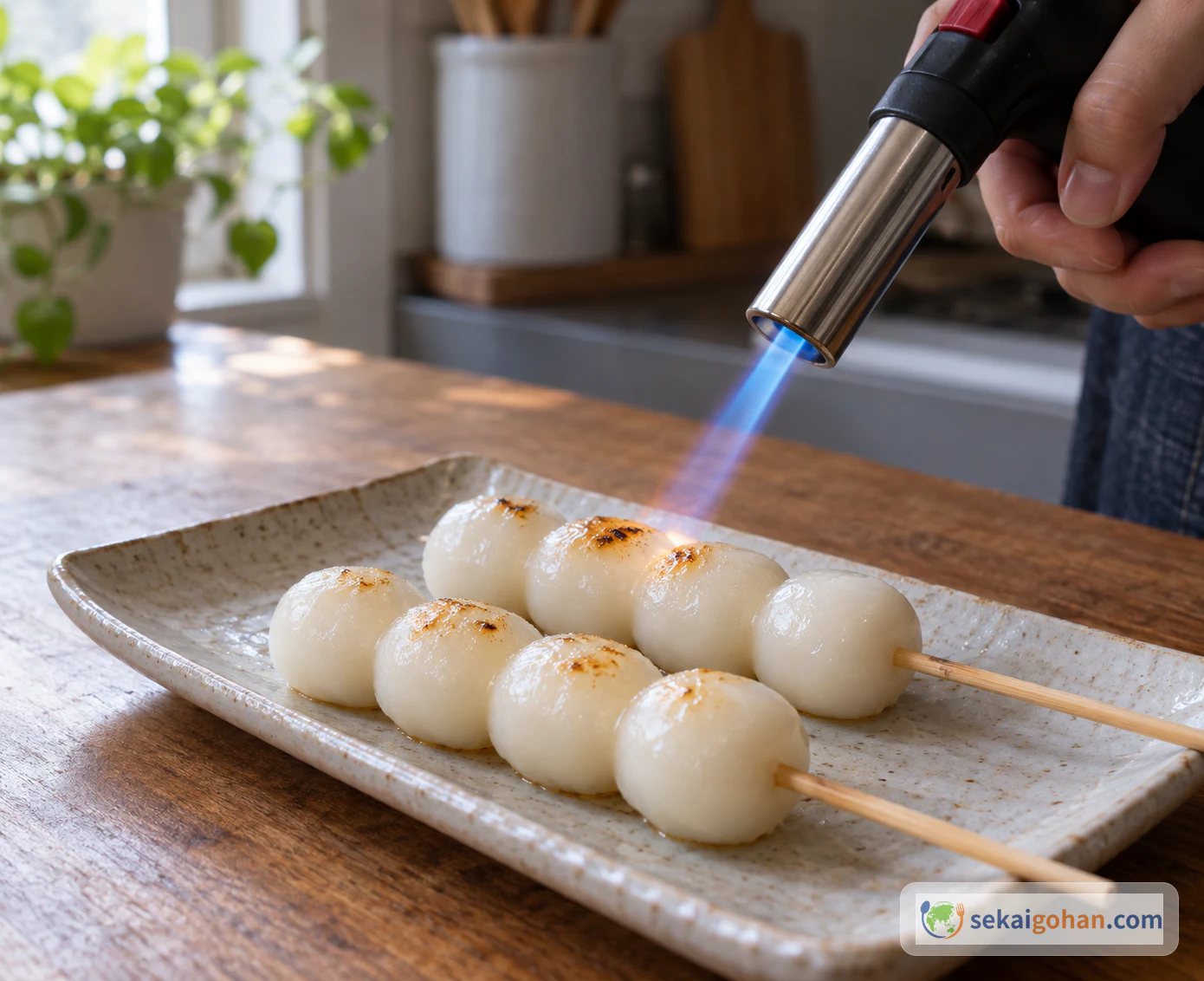
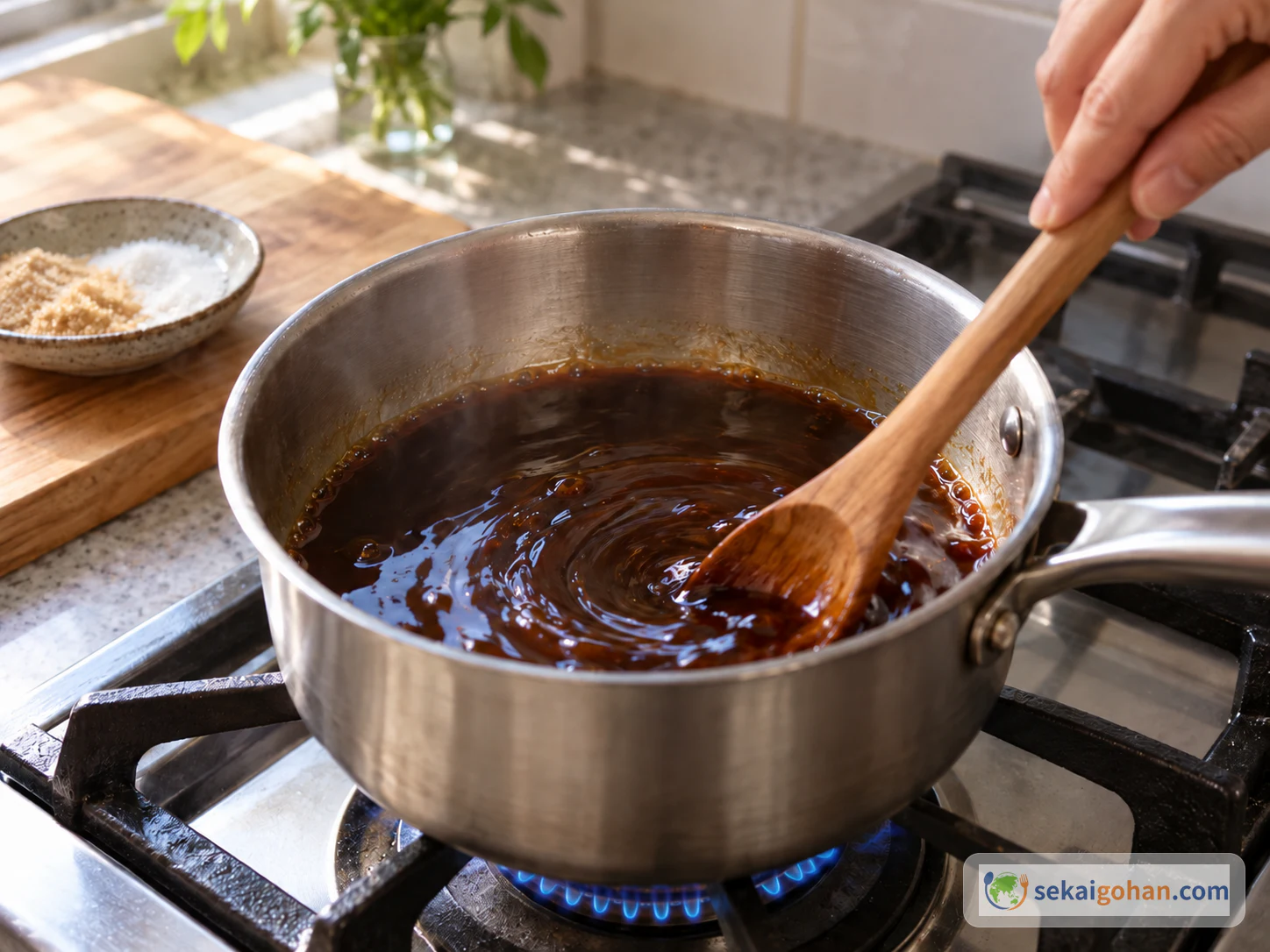
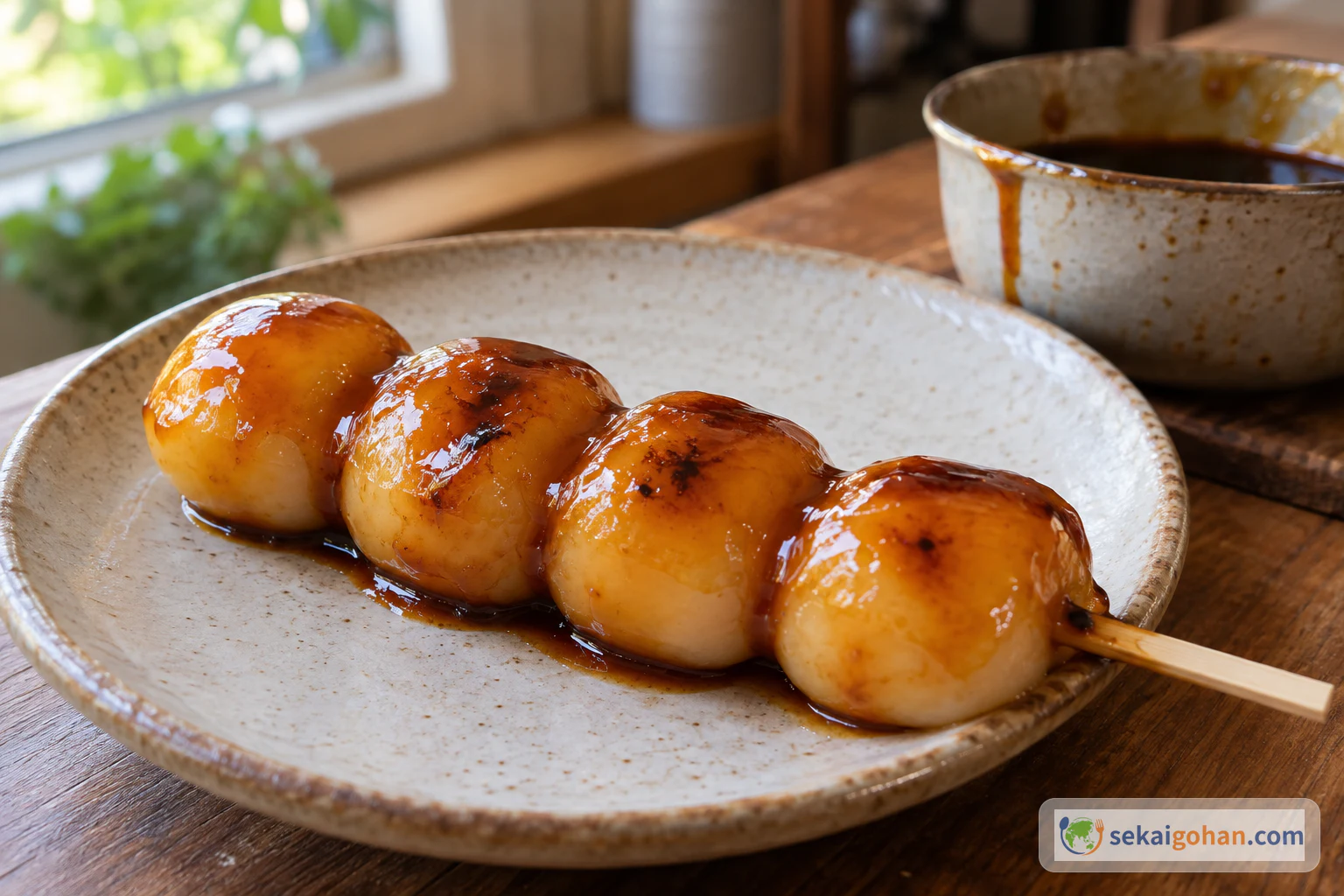
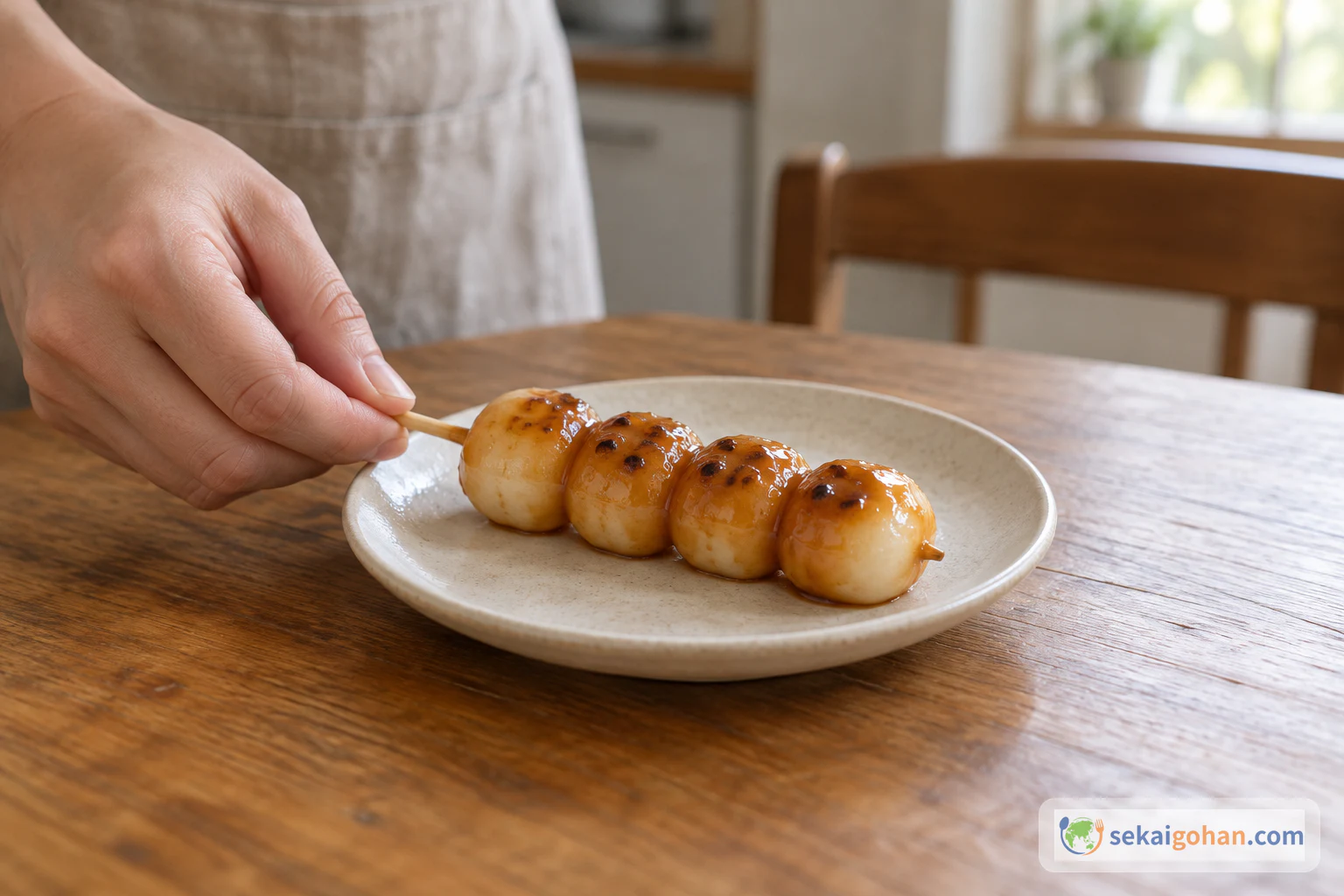
This is kushi dango (串だんご) as it appears among the local dishes of Tokyo in "Uchi no Kyodo Ryori" (Our Local Cuisines), a regional food collection published by Japan's Ministry of Agriculture, Forestry and Fisheries (MAFF). The dumplings get a light pass with a kitchen torch and are finished with a glossy sauce made from just soy sauce, sugar, water and potato starch. You can find more dishes from the same country on the Japan page.
The amounts and order here follow MAFF's detailed Tokyo recipe. That recipe gives no cooking times, no heat levels, no temperatures and no volume for the boiling water. It works by signs instead: the dough is done boiling when it floats, and the torching is only light. This article keeps it that way rather than filling in numbers.
This recipe has not been kitchen-tested by Sekai Gohan. The amounts, the four skewers of four dumplings, and the order of steps come from the published recipe described above, not from a test batch. No serving count, cooking time or nutrition information is given.
Ingredients: Two Flours, Three Separate Waters
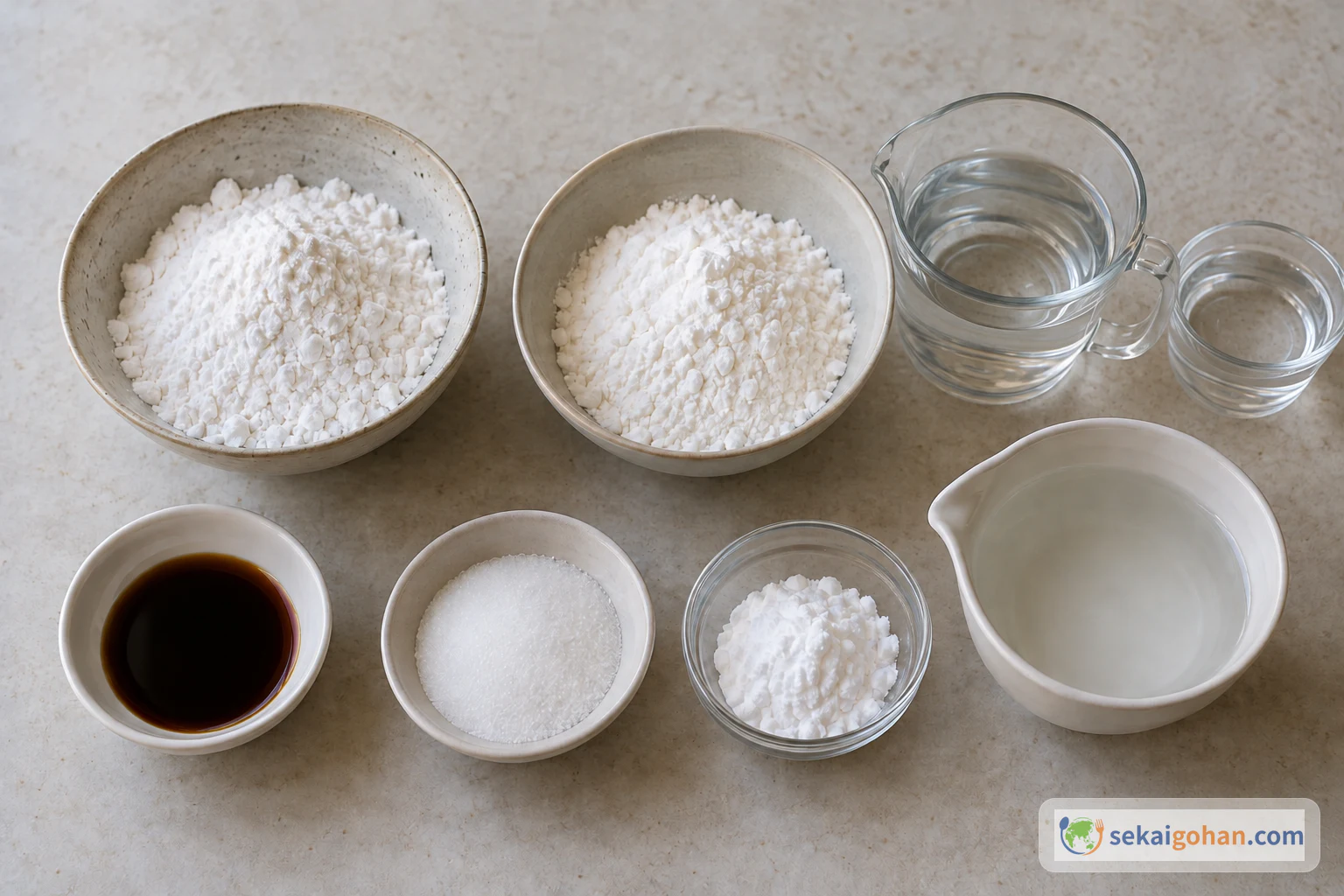
These amounts make 4 skewers of 4 dumplings each.
Choosing Flours, Starch and Soy Sauce
Shiratamako and joshinko are both Japanese rice flours, and this recipe uses both. Making the dumplings with just one of them is a different recipe.
The sauce uses potato starch (katakuriko). Do not replace it with cornstarch. Use the flours, starch and soy sauce as listed.
Equipment
- 2 bowls, one for each dough
- A pot for boiling the dough
- A clean kitchen cloth, dampened
- A board and a kitchen knife
- 4 bamboo skewers
- A culinary kitchen torch
- A small saucepan and a spoon or spatula for the sauce
Method: Mix, Boil, Knead Again, Then Shape
The dough is boiled until it floats. The torched surface should only be lightly marked. The sauce ingredients all go into the pan together before heating.
Easy Places to Go Wrong
Most slips in this recipe come from mixing up its stages, not from technique. Check these points before and during cooking.
| Point | What to keep straight |
|---|---|
| The three waters | 50ml water is for the shiratamako, 70ml boiling water is for the joshinko, and 5 tbsp water is for the sauce. The pot water for boiling is a fourth, separate amount |
| Separate doughs first | Knead the shiratamako and mix the joshinko in separate bowls, then combine them |
| 4 portions vs 16 dumplings | The 4 rough portions are only for boiling. The 16 dumplings are cut and rounded after the second kneading |
| Boil before rounding | Don't round small raw balls and boil those. That is a different order from this recipe |
| When the dough is done | It is done when it floats. No extra boiling time is given after that |
| Torching | Light toasting only, with a kitchen torch. No frying pan or oil is used |
| Starch in the sauce | The potato starch goes into the pan with the soy sauce, sugar and water from the start, not added later as a separate slurry |
The Same Name, Different Recipes
"Dango with sweet soy sauce" covers many recipes in Japan. Even the MAFF Tokyo page itself has two versions. Its general description of the dish has small balls rounded before boiling. Its detailed recipe, the one followed here, boils large portions first and kneads them again before shaping. This article follows the detailed recipe and does not mix the two orders.
Two widely read home recipes for mitarashi dango, the sweet soy-glazed dango, take different routes again. They are shown here only for comparison. None of their amounts or steps have been carried into the recipe above.
| Version | Flours | Dough | Cooking | Sauce and finish |
|---|---|---|---|---|
| MAFF Tokyo kushi dango (this article) | Shiratamako 30g, joshinko 120g | No sugar. Two doughs mixed separately, then combined | Boiled in rough portions until floating, kneaded again, then cut into 16 and rounded. 4 skewers of 4 | Soy sauce, sugar, water and potato starch combined from the start. Lightly torched |
| Shirogohan.com mitarashi dango | Joshinko 90g, shiratamako 30g | Sugar in the dough | Raw balls rounded first, then boiled. 18 dumplings on 6 skewers | Different sauce water and starch amounts |
| Kikkoman Home Cooking, recipe by Makiko Oda | Flours of 150g and 50g | 40g sugar in the dough, with lukewarm water (40–50°C), 150–160ml | Steamed over high heat for 20 minutes, then kneaded, cooled and worked for about 3 minutes | Sauce with mirin. Finished in a frying pan with oil |
Each of these is a complete recipe on its own terms. If you want sugar in the dough, steaming or mirin in the sauce, follow that recipe from start to finish rather than swapping parts into this one.
Kushi Dango in Tokyo's Local Food
MAFF's "Uchi no Kyodo Ryori" collection gathers dishes regarded as local cuisine in each of Japan's prefectures. Kushi dango is listed under Tokyo. That listing is why this article carries Tokyo's name. It does not claim the dish began in Tokyo or belongs only there.
The same page introduces more than one story about how many dumplings go on a skewer: one version tells of four per skewer, another of five. These are presented as lore that has been handed down, side by side. No single story is the confirmed origin, and the sources here give no date or inventor for the dish. The recipe in this article uses four per skewer because that is what its detailed recipe calls for, not because it settles the question.
Ikinari dango, a name that can look related, is a different sweet that includes sweet potato. It is not another name for this kushi dango.
Frequently Asked Questions
Can I make it with only shiratamako or only joshinko?
The recipe followed here uses both flours, each mixed its own way. A single-flour version is not covered by the sources for this article, so it is not offered as a way to make this dish.
Do I round the dumplings before boiling them?
Not in this recipe. Following MAFF's detailed Tokyo recipe, the dough is boiled in large portions, lifted onto a damp cloth, kneaded again, and only then cut into 16 and rounded. The general description on the same MAFF page, and the Shirogohan.com recipe, round the balls first. That is a different order.
How many skewers does this make?
Four skewers of four dumplings, sixteen in all. The very first division of the dough is worded in a way that can be read as "5 to 4 equal parts". This article takes 4 rough portions, which is an editorial reading, not a measured result. No serving count is given.
How long should the dough boil after it floats?
The only sign given is that the dough floats. No extra boiling time after that, no amount of boiling water and no heat level are stated, so none are added here.
How long do leftovers keep?
The recipe sources give no storage guidance at all, so this article does not give storage times, refrigeration, freezing or reheating instructions.
Sources
- Ministry of Agriculture, Forestry and Fisheries of Japan (MAFF), "Uchi no Kyodo Ryori: Kushi Dango, Tokyo" (串だんご 東京都). The recipe followed in this article: amounts for the dough and sauce, the full order of steps, floating as the sign the dough is done, and the four-per-skewer assembly. Also the source for kushi dango as a Tokyo local dish, the page's general description that rounds the balls before boiling, and its differing stories about how many dumplings go on a skewer. https://www.maff.go.jp/j/keikaku/syokubunka/k_ryouri/search_menu/menu/34_29_tokyo.html
- Shirogohan.com, "Mitarashi Dango" (みたらし団子). Used for comparison only: joshinko 90g and shiratamako 30g, sugar in the dough, 18 dumplings on 6 skewers, raw balls rounded before boiling, and different sauce water and starch amounts. https://www.sirogohan.com/recipe/mitarasi/
- Kikkoman Corporation, Home Cooking, "Mitarashi Dango" (みたらし団子), recipe by Makiko Oda. Used for comparison only: flours of 150g and 50g, 40g sugar in the dough, lukewarm water, steaming over high heat, a mirin sauce and a frying-pan finish with oil. https://www.kikkoman.co.jp/homecook/search/recipe/00056388/