Shabu Shabu: A Hot Pot Where the Broth Stays Clear and the Sauces Do the Seasoning
Shabu shabu is not a pot where everything simmers in a strong seasoning. The broth stays clear and mild, each person cooks a little at a time at the table, and the flavor comes from the dipping sauce.
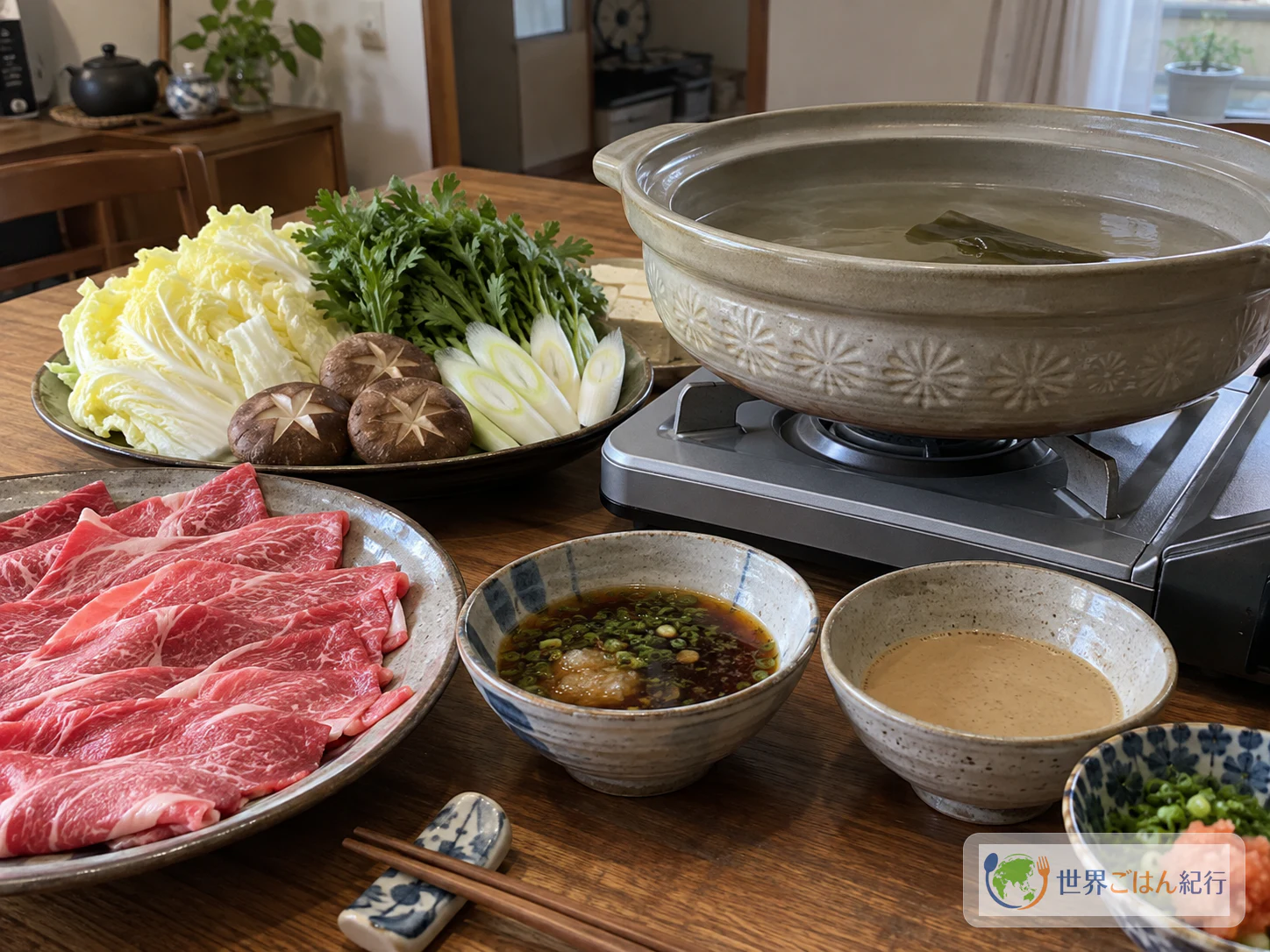
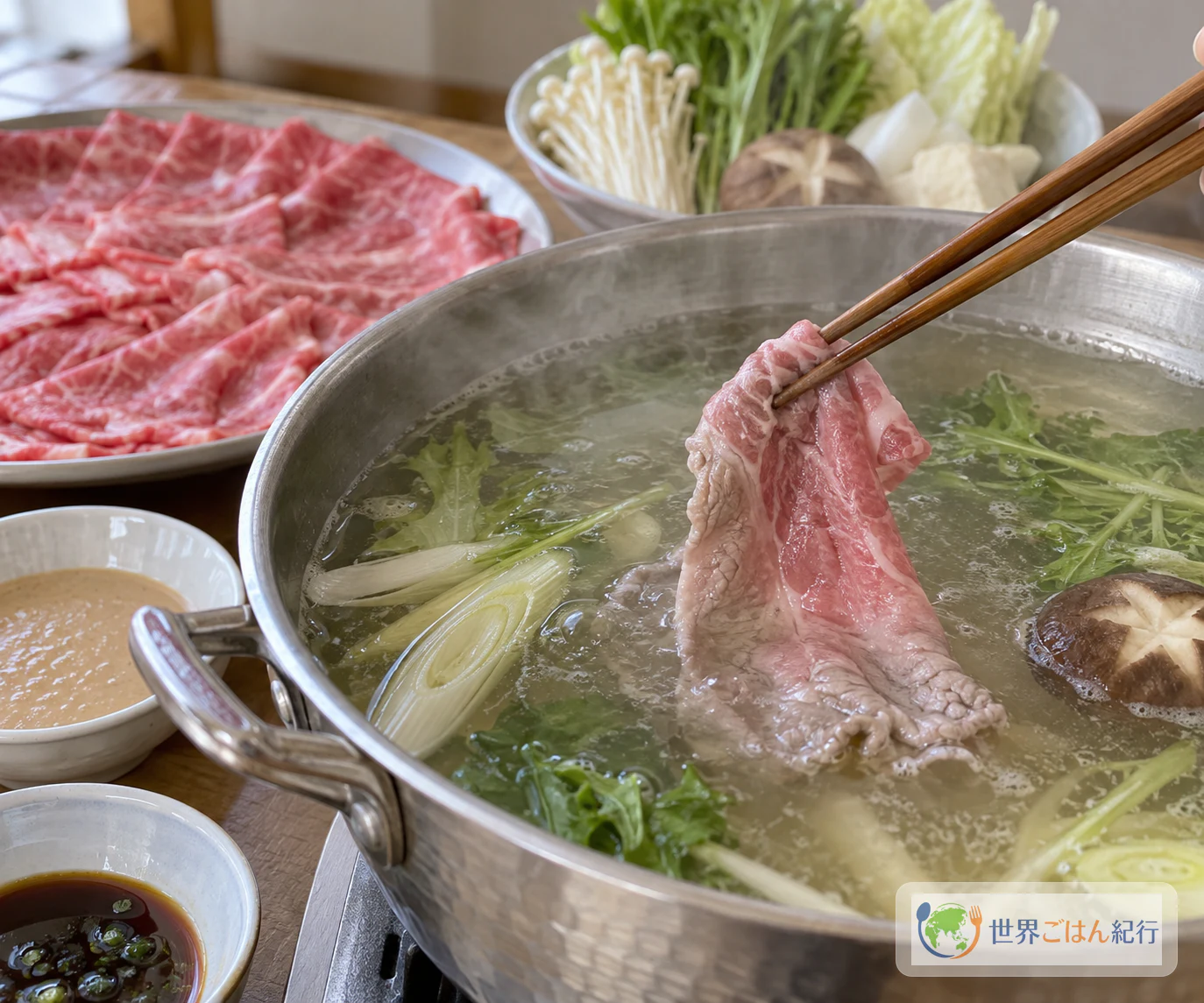
A pot of clear kombu broth sits in the middle of the table, steaming gently. Around it are plates of thinly sliced beef, napa cabbage, shungiku, negi and shiitake, and in front of each person, two small bowls: tart ponzu and rich sesame sauce. Japan's Ministry of Agriculture, Forestry and Fisheries describes shabu shabu as a dish in which thin slices of meat are cooked briefly in a clear broth and then dipped in ponzu or sesame sauce.
The pleasure is in the rhythm. A slice of beef goes into the broth one piece at a time, and the vegetables follow, so the meal comes together bit by bit rather than arriving all at once. That also sets it apart from sukiyaki, the other well-known Japanese beef hot pot, where the ingredients are cooked in a seasoned soy-based liquid. In shabu shabu, the broth stays plain and you build the flavor yourself, bite by bite, in the sauce.
This recipe follows Kikkoman's published recipe for two, and keeps its amounts as they are. Below you'll find what to buy, how to make the broth and the sesame sauce, the order for adding meat and vegetables, and the food-safety points that matter when raw meat is on the table.
Ingredients for Two: Beef, Vegetables, Kombu Broth and Two Sauces
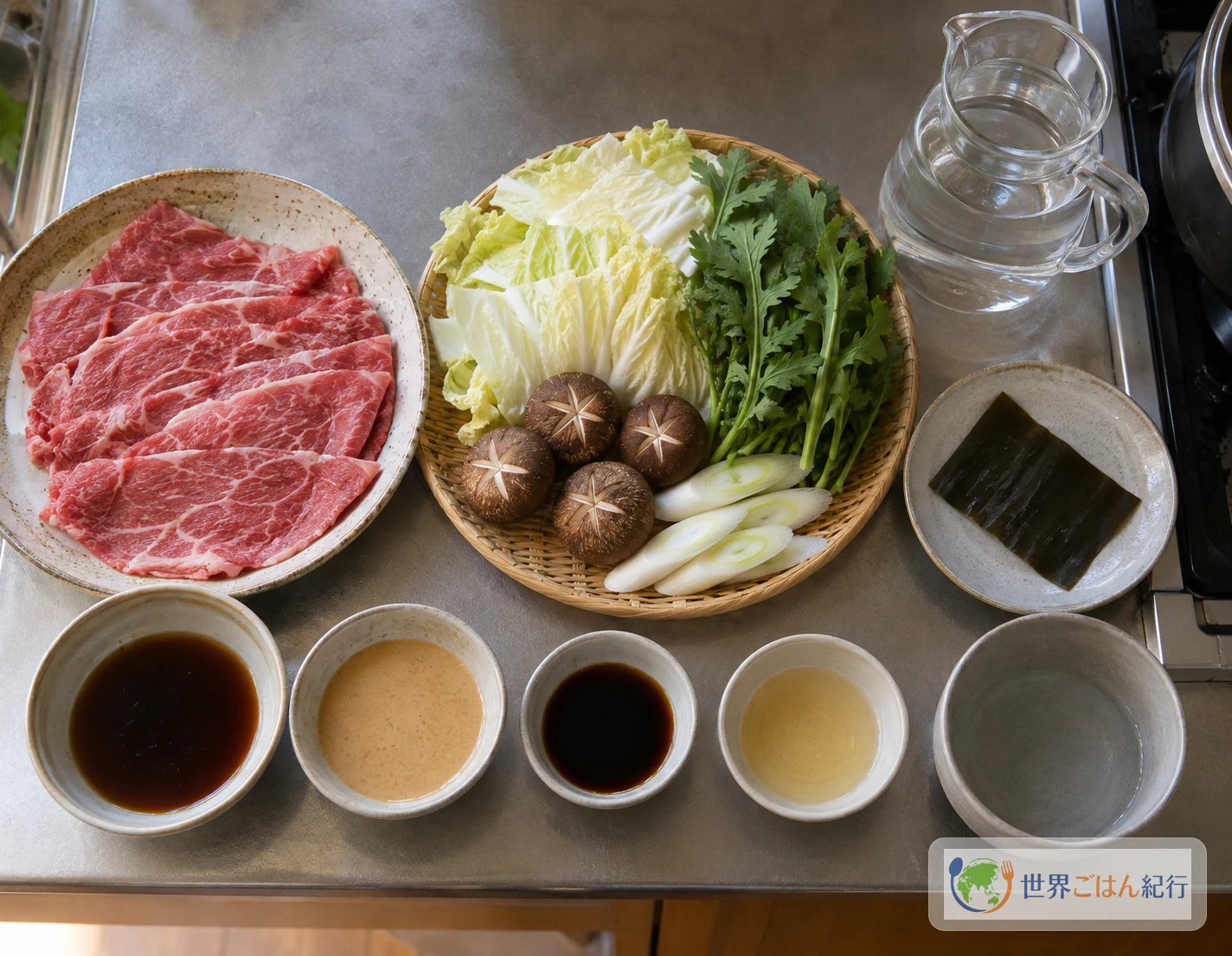
These are the amounts from Kikkoman's recipe for two, taken as published without adjustment. The water for the broth does not appear in that recipe's ingredient list but is used in its method, so it is included here. The ponzu amount is for both people together, not per person.
This recipe contains beef and sesame. Soy sauce and ponzu commonly contain wheat and soy, depending on the product. Check the labels of the soy sauce, ponzu, mirin and any store-bought sauces you use.
Choosing the Beef, Vegetables and Sauces
Beef. Look for beef sliced specifically for shabu shabu, such as thinly sliced chuck. The amount of fat changes how cloudy the broth becomes and how the meat feels in the mouth. If you buy frozen sliced beef, thaw it following the package directions.
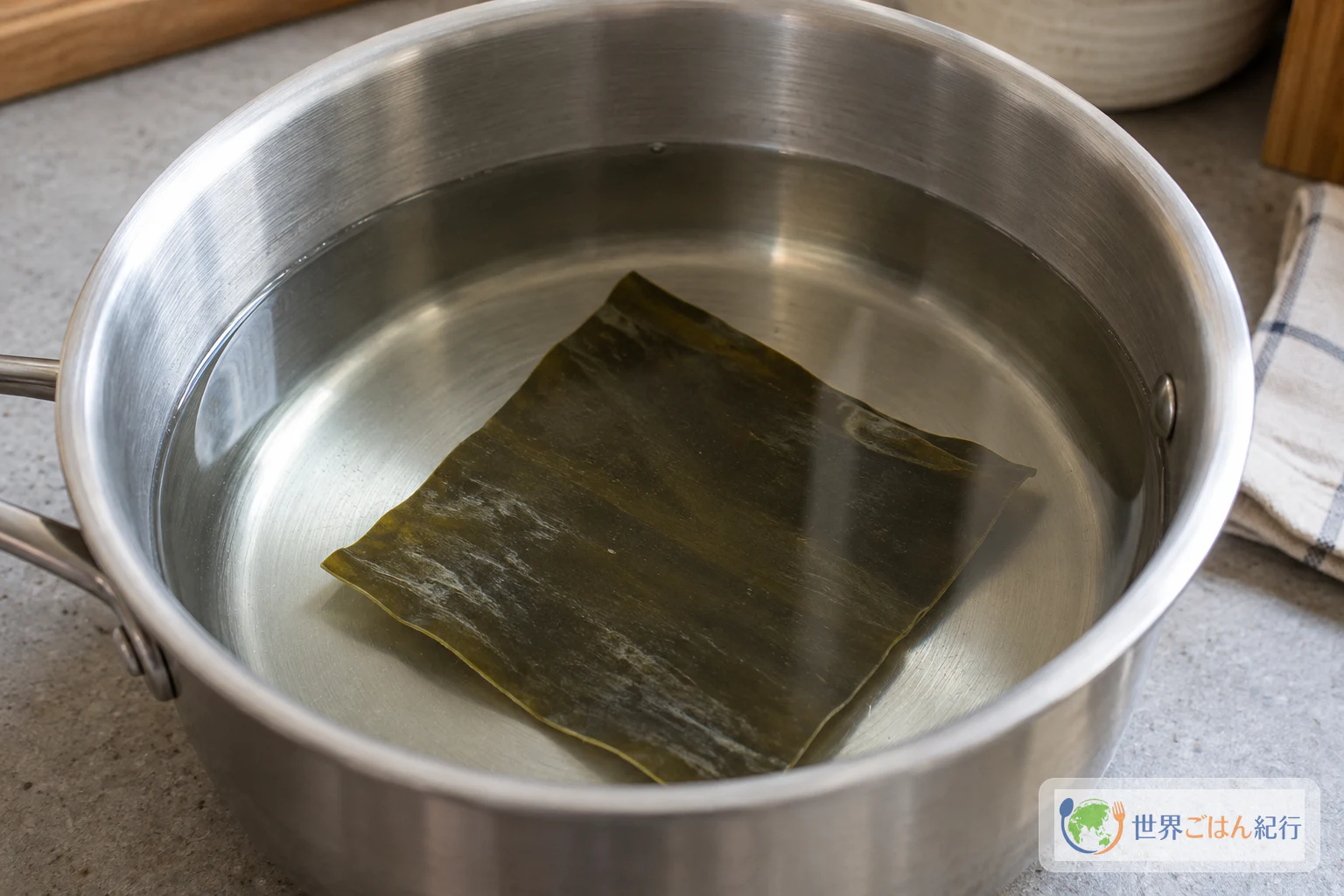
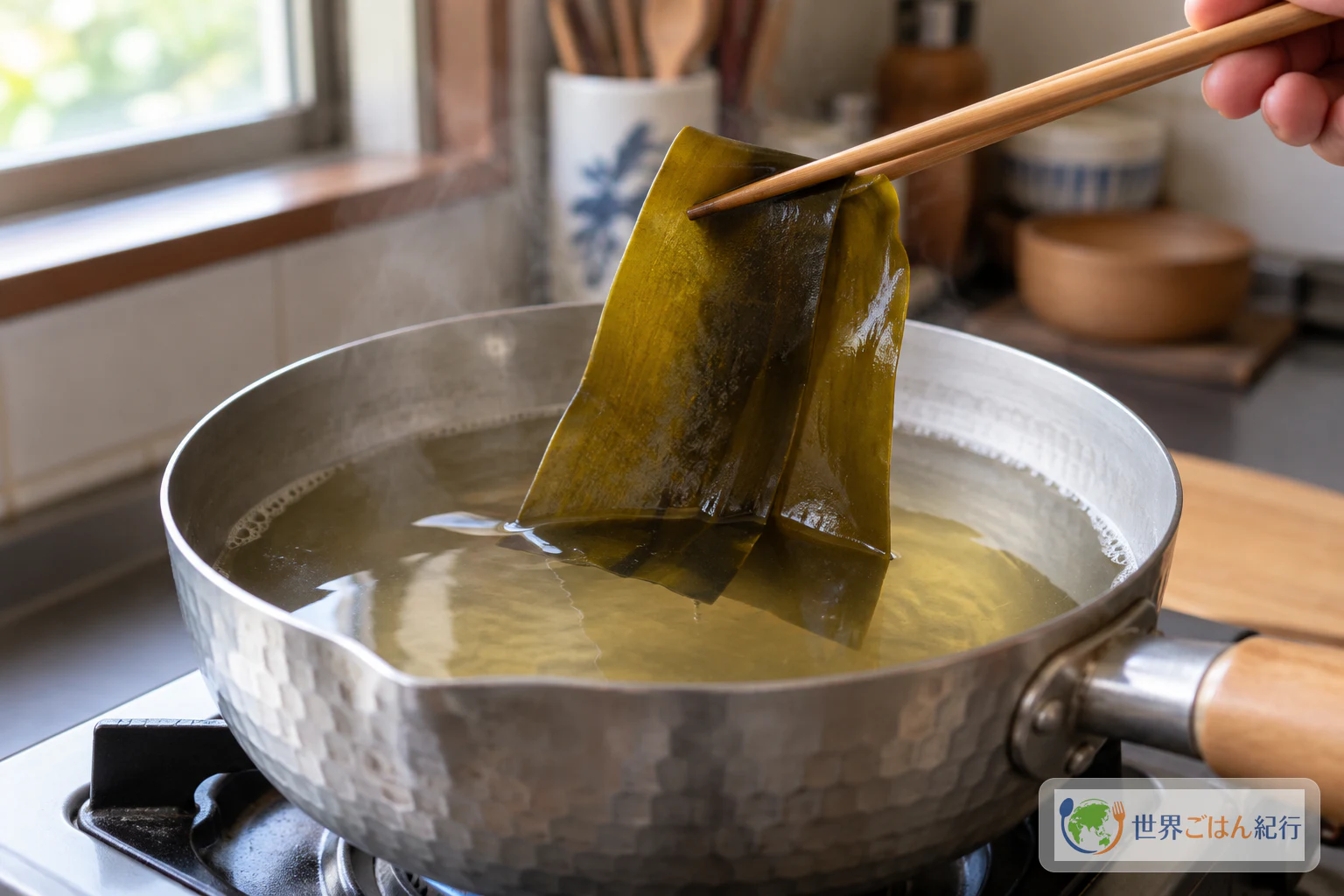
Kombu. Use kombu sold for making broth (dashi kombu). One 8 cm square piece is all this pot needs.
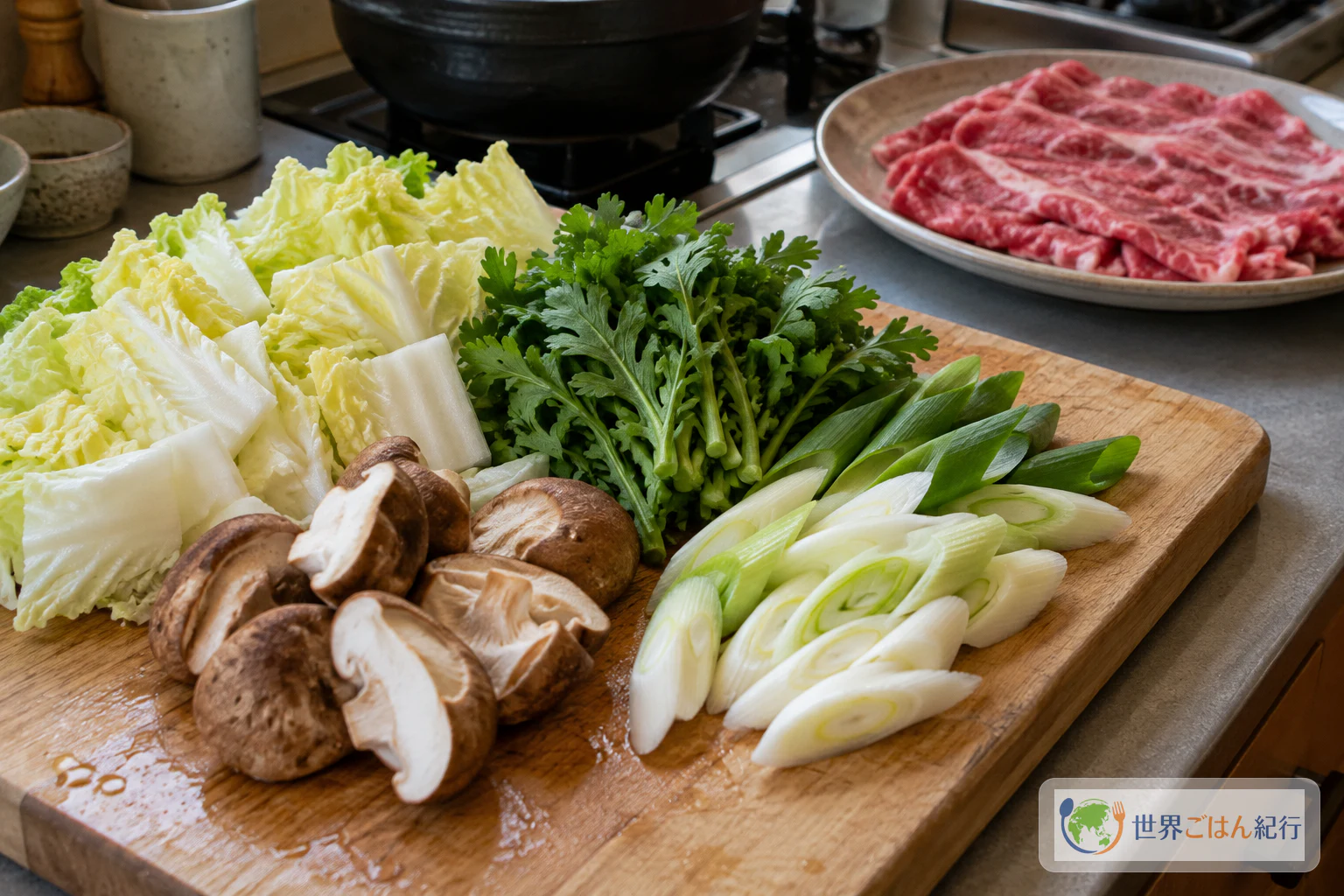
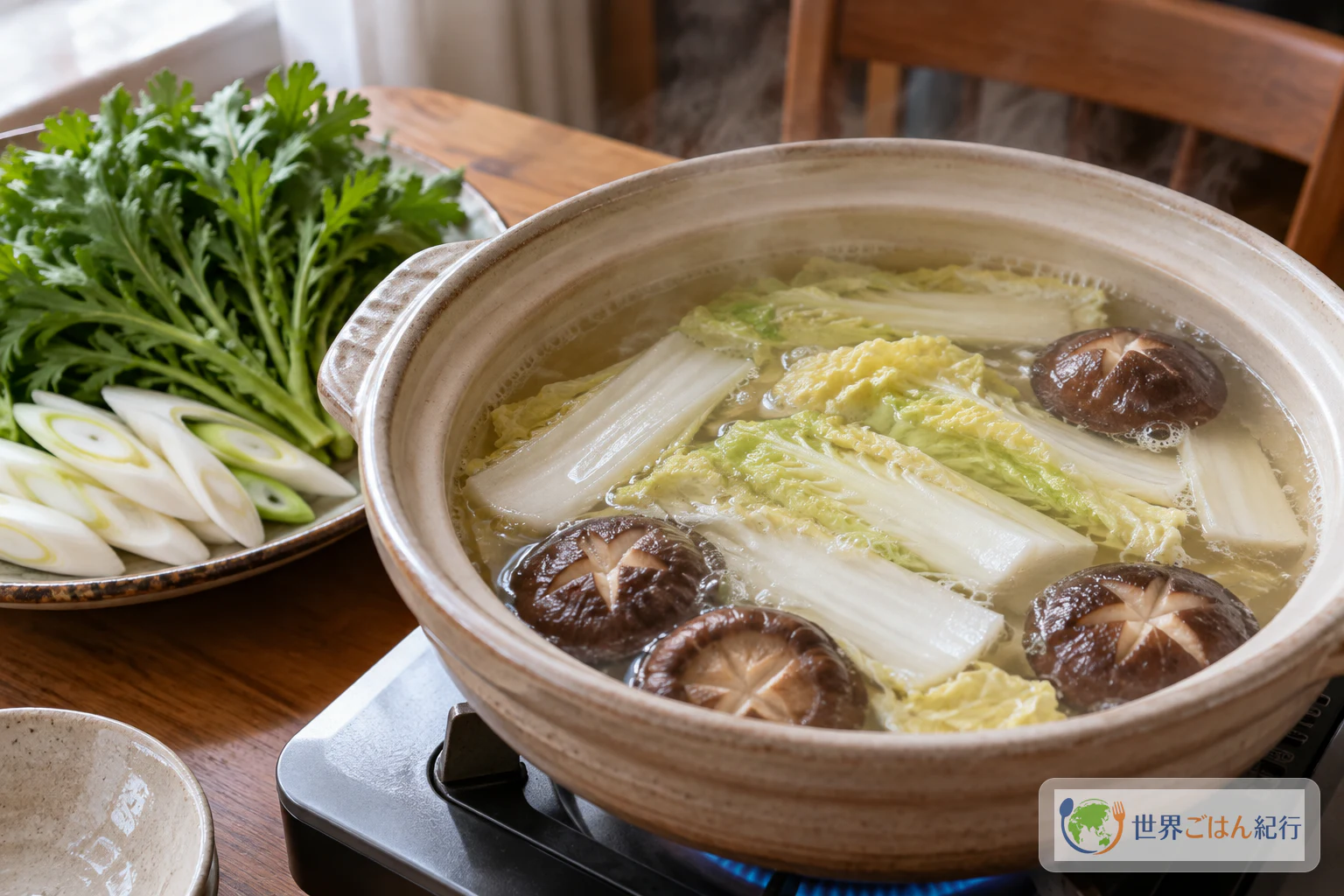
Vegetables. Napa cabbage, shungiku, negi and shiitake each bring something different: the cabbage stems stay crisp-tender, the shungiku carries a green, herbal fragrance, the negi adds mild sweetness and the shiitake adds aroma. Any ordinary long onion will do for the negi. You can swap vegetables to suit your taste, but the set above is the standard one in this recipe.
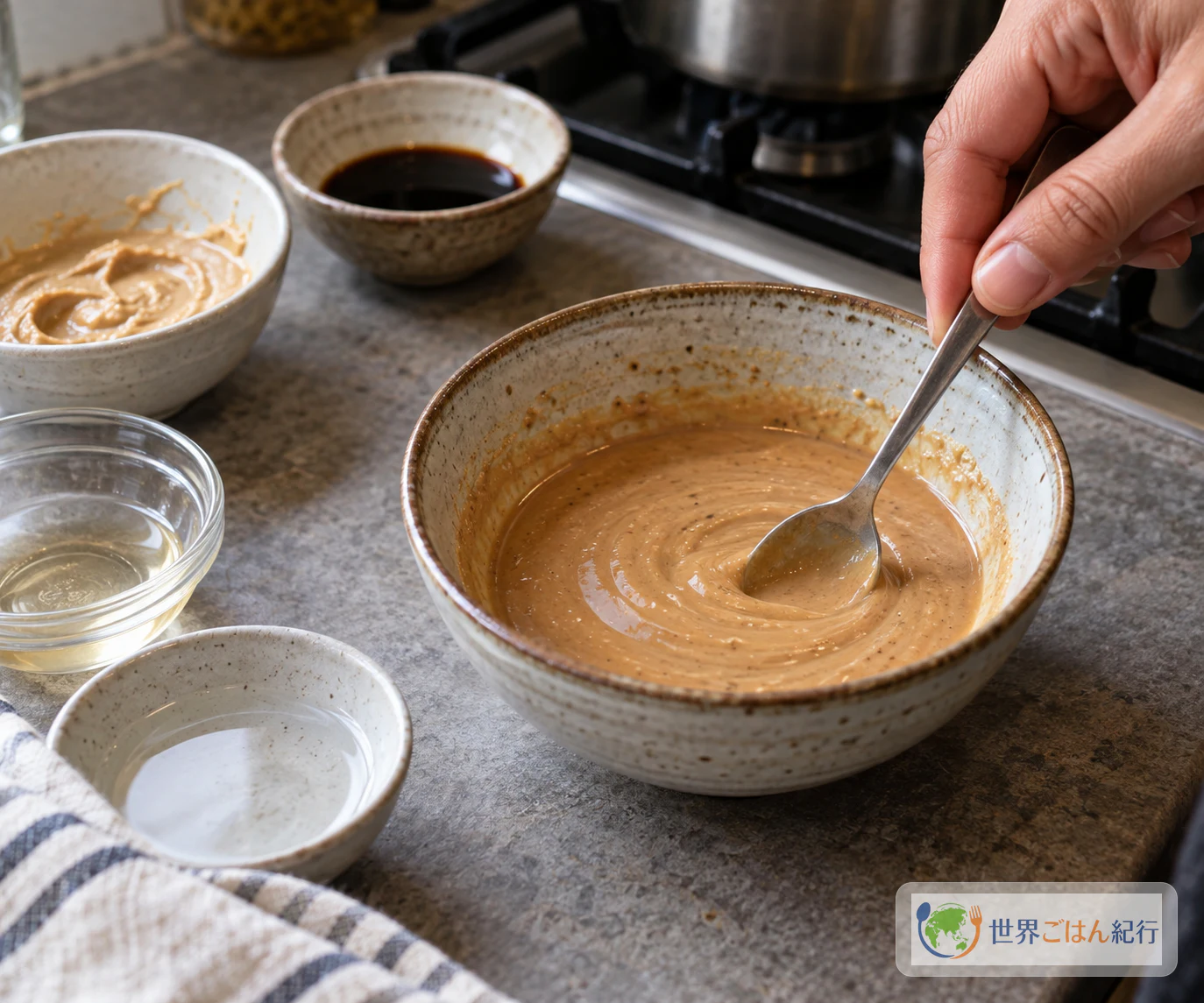
Sesame paste. The sauce assumes smooth white sesame paste (Japanese neri goma). Ground sesame seeds give a different texture, so they are not treated as a standard substitute here.
Sauces. The ponzu is a store-bought ponzu sauce. The sesame sauce is homemade, but a ready-made sesame sauce also works; it saves time, though its flavor and ingredients will differ from the homemade version.
Equipment
- A pot for the broth that can sit on the table
- A tabletop heat source, such as an induction cooktop with a compatible pot (not needed if you already have a pot and a way to keep it warm at the table)
- A small heatproof container and a microwave, for heating the mirin
- Small bowls for the two dipping sauces
- A ladle or skimmer for lifting off scum
- A separate pair of chopsticks or tongs used only for handling raw meat
How to Make Shabu Shabu
Kikkoman lists a cooking time of 20 minutes for this recipe. The 30-minute kombu soak is not included in that figure, so start soaking before you begin the rest.
Eating Order and the Two Sauces
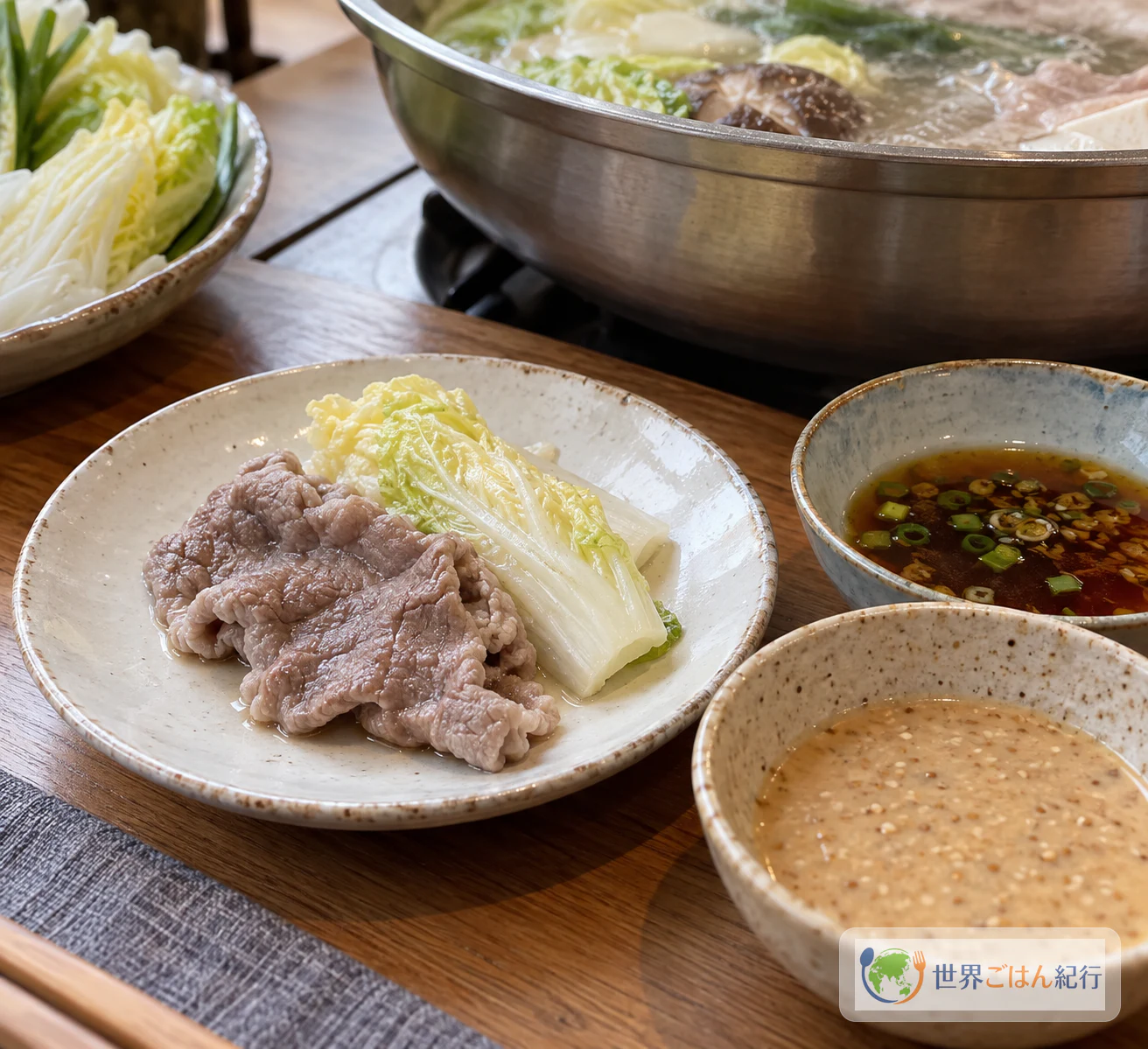
The two sauces pull the same pot in two directions. Ponzu is light, with citrus tartness and soy sauce; sesame sauce is thick and nutty. Both the Kikkoman recipe and Japan's Ministry of Agriculture, Forestry and Fisheries present these two as the standard pair, so there is no need to pick one: try the beef in each, and the vegetables in each.
As the meal goes on, the savory flavor from the meat moves into the broth, and the vegetables cooked after it pick that up. Starting the vegetables with the cabbage stems and mushrooms, then moving on to the leafy greens, keeps the tender leaves from overcooking while they wait.
Add only a few things to the pot at a time. Crowding it cools the broth and makes it harder to tell what is cooked through.
When Things Go Wrong at the Table
| Problem | Likely cause | What to do |
|---|---|---|
| The broth keeps boiling hard | The heat is too high | Lower the heat and add ingredients a little at a time. A gentle simmer helps keep the vegetables from falling apart and avoids big swings in the pot's temperature when food goes in |
| The sesame sauce is stiff | The hot water hasn't been fully worked in | Make sure the 1 tbsp hot water is mixed in thoroughly first. If you still want it looser, that is your own adjustment, not part of the recipe |
| Scum or a cloudy broth | Too much added at once; fat from the meat | Don't pack the pot. Skim off floating scum as you go |
| Unsure if the meat is done | Judging by color only | Keep cooking until it is thoroughly cooked through. Color is a hint, not proof |
Food Safety and Leftovers
- Keep separate chopsticks or tongs for raw meat, and never eat with them.
- Don't let raw meat or its juices touch food that will be eaten without cooking.
- Cook the meat thoroughly before eating. The color change, a few swishes through the broth, or a steaming pot do not by themselves guarantee the meat is safe.
There is no dish-specific guidance in these sources for how long leftover broth or ingredients keep, or how many times they can be reheated, so this recipe does not give storage times. What Japan's Ministry of Health, Labour and Welfare recommends for home leftovers in general is:
- Don't leave leftovers out at room temperature.
- Divide them into shallow containers so they cool quickly, then refrigerate them promptly.
- When reheating, heat everything thoroughly, to 75°C or above; bring soups to a boil.
Reheating does not make food that has spoiled safe again. If in doubt, throw it out.
Variations
These are separate options; they are not mixed into the main recipe above.
Pork shabu shabu. Pork is also common for shabu shabu. If you replace the beef with pork, cook it completely through to the center. The fat will behave differently in the broth.
Store-bought sesame sauce. It saves the step of making sauce, but the flavor and ingredients differ from the homemade version here. Check the allergen labeling.
A Takayama restaurant style. The Japan Livestock Products Export Promotion Council publishes a home version of shabu shabu from a restaurant in Takayama, Gifu Prefecture, that adds sake, salt, garlic and pepper. It shows how flavors vary from one restaurant and region to another. Treat it as a different recipe rather than adding those seasonings to this one.
Where Shabu Shabu Comes From, and How It Differs from Sukiyaki
Japan's Ministry of Agriculture, Forestry and Fisheries introduces shabu shabu and sukiyaki side by side. In shabu shabu, thinly sliced meat is cooked briefly in a clear broth and dipped in ponzu or sesame sauce. In sukiyaki, the ingredients are cooked in warishita, a seasoning of soy sauce, mirin and sugar. One pot keeps the broth plain and puts the flavor in the sauce; the other seasons the pot itself.
The origin of the name is told in more than one way. Dojima Suehiro, a restaurant in Osaka, explains in its own history that it developed the dish inspired by a Chinese hot pot, shuanyangrouguo, and after two years of trials first put it on the menu in 1954. That is the restaurant's account of its own history, so it is best read as one telling rather than the single settled story. The Chinese hot pot it mentions is a separate dish, not the same recipe.
Part of the appeal of shabu shabu as a home hot pot, especially in winter, is that the cooking happens right at the table and is shared, a few pieces at a time. For more dishes and food culture from the same country, see the Japan page.
Frequently Asked Questions
Can I make it with something other than beef?
Yes. Pork is also widely used. Whatever meat you choose, cook it thoroughly through to the center before eating, and keep using separate chopsticks for raw meat.
Can I soak the kombu overnight?
This recipe uses a soak of about 30 minutes, following Kikkoman. Longer soaking is not covered by the sources used here, so this recipe makes no claim about how it would change the broth.
Is store-bought sauce fine?
The ponzu in this recipe is already a store-bought product. For the sesame sauce, a ready-made product works too, as the Japan Livestock Products Export Promotion Council also suggests a store-bought sesame dressing, but expect the flavor to differ from the homemade sauce.
What should I do with leftover broth?
Don't leave it out at room temperature. Divide it into shallow containers, cool it quickly and refrigerate it promptly, then bring it to a boil when you reheat it. No storage period is given here, because the sources don't provide one for this dish.
Does heating the mirin remove all the alcohol?
The recipe heats the mirin uncovered at 600W for 30 seconds, but that does not guarantee all the alcohol is gone, and heating time varies with the container and microwave. If someone needs to avoid alcohol completely, consider that when choosing a sauce.
Sources
- Kikkoman Corporation, "Shabu Shabu (Japanese Hot Pot with Thinly Sliced Beef)." The recipe for two used here: ingredients and amounts, preparation, making the kombu broth, the sesame sauce, and cooking the ingredients at the table, meat first. https://www.kikkoman.com/en/cookbook/recipe/00001112.html
- Japan Livestock Products Export Promotion Council, "Shabu-shabu." How shabu shabu is eaten with ponzu and sesame sauce, skimming scum, adding firmer vegetables first, and a separate home recipe from a restaurant in Takayama. https://jlec-pr.jp/en/recipes/recipes-7489/
- Restaurant Dojima Suehiro, "The beginning of shabu-shabu." The restaurant's own account of developing the dish, inspired by shuanyangrouguo, and first listing it on the menu in 1954. https://www.e-suehiro.com/dojima/en/history-en/the-beginning-of-shabu-shabu/
- Ministry of Agriculture, Forestry and Fisheries of Japan, "Washoku: Japanese cuisine (Shabu-shabu and sukiyaki)." Thin slices of meat cooked briefly in clear broth and dipped in ponzu or sesame sauce, and the difference in seasoning and cooking from sukiyaki. https://www.maff.go.jp/j/shokusan/gaisyoku/pamphlet/pdf/washoku_english.pdf
- Ministry of Health, Labour and Welfare (Japan), "家庭での食中毒予防" (Preventing food poisoning at home). Keeping raw meat juices away from foods eaten as they are, and cooking meat thoroughly. https://www.mhlw.go.jp/stf/seisakunitsuite/bunya/kenkou_iryou/shokuhin/syokuchu/01_00008.html
- Ministry of Health, Labour and Welfare (Japan), "家庭でできる食中毒予防の6つのポイント" (Six points for preventing food poisoning at home). The general guide of heating the center to 75°C for at least one minute, preventing cross-contamination between raw meat and cooked food, dividing leftovers into shallow containers, and reheating to 75°C or above, with soups brought to a boil. https://www.mhlw.go.jp/stf/seisakunitsuite/bunya/kenkou_iryou/shokuhin/syokuchu/01_00006.html