Mul-Naengmyeon: A Cold Bowl Once Eaten in Warm Winter Rooms
A clear beef broth chilled until it is truly cold, the flavor of buckwheat noodles, and the sweet-sour crunch of radish, cucumber and pear. Everything else in this recipe serves those three things.
Picture a winter room warmed from the floor by ondol heating, and a bowl of icy noodles on the low table. The Korea Tourism Organization describes naengmyeon as a dish that was eaten in exactly this setting, in freezing weather, with the soup traditionally made from the brine of dongchimi, a radish water kimchi, ladled from earthenware jars in winter. Today many people think of cold noodles as summer food, but the dish has winter roots.
Naengmyeon (냉면) means "cold noodles," and it is a family name for dishes from Korea rather than a single recipe. This article covers mul-naengmyeon (물냉면), the version served in chilled broth. Its sibling, bibim-naengmyeon (비빔냉면), is tossed in a spicy sauce with no broth, and is a different dish.
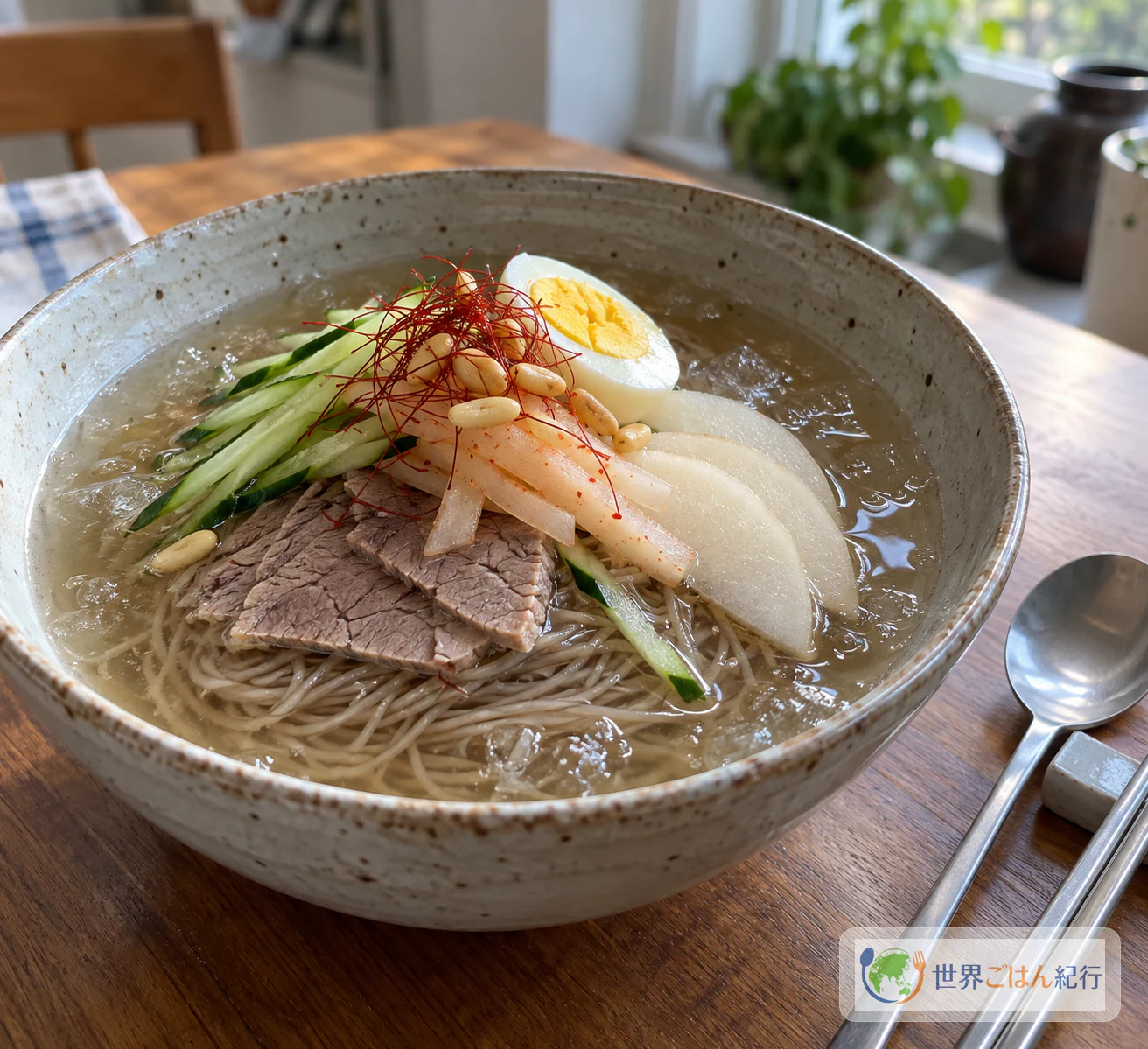
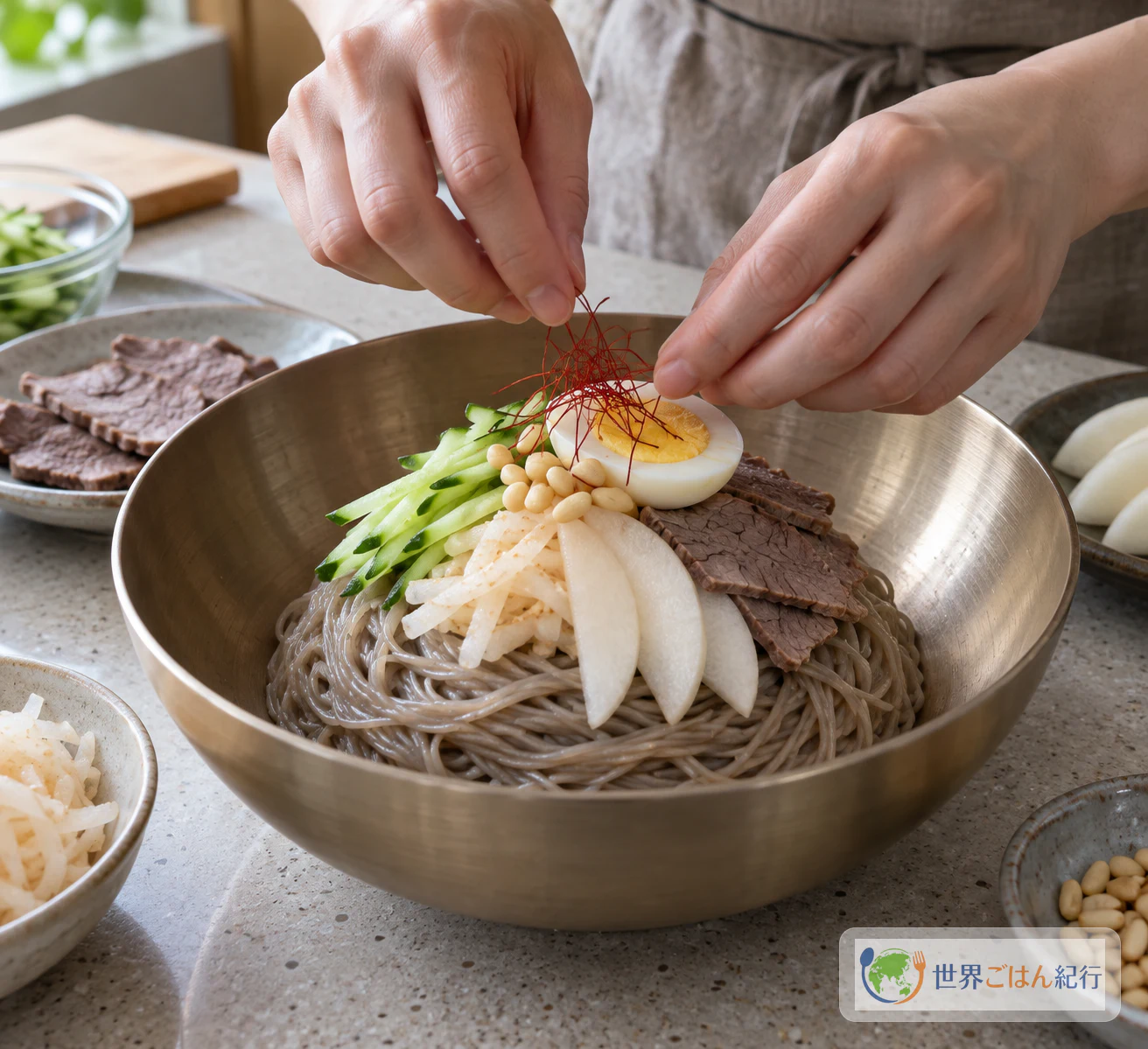
The recipe here follows one source only: the naengmyeon recipe published by Korea.net, the official website of the Republic of Korea. Its broth is made from beef alone, without dongchimi brine, and it is topped with sliced beef, salted cucumber, a quick radish pickle, pear in sugar water, boiled egg, pine nuts and fine red pepper threads. The two parts that need the most care are the long beef simmer and cooling that broth safely, so plan to start the broth well ahead of the meal.
What Mul-Naengmyeon Is: Broth, Noodles and Toppings
Mul-naengmyeon is noodles served in a cold soup; bibim-naengmyeon is noodles dressed in a spicy sauce. Korea.net and Maangchi both draw this line, and keeping it clear matters when you shop and cook, because the two dishes ask for different balances of noodle, broth and seasoning.
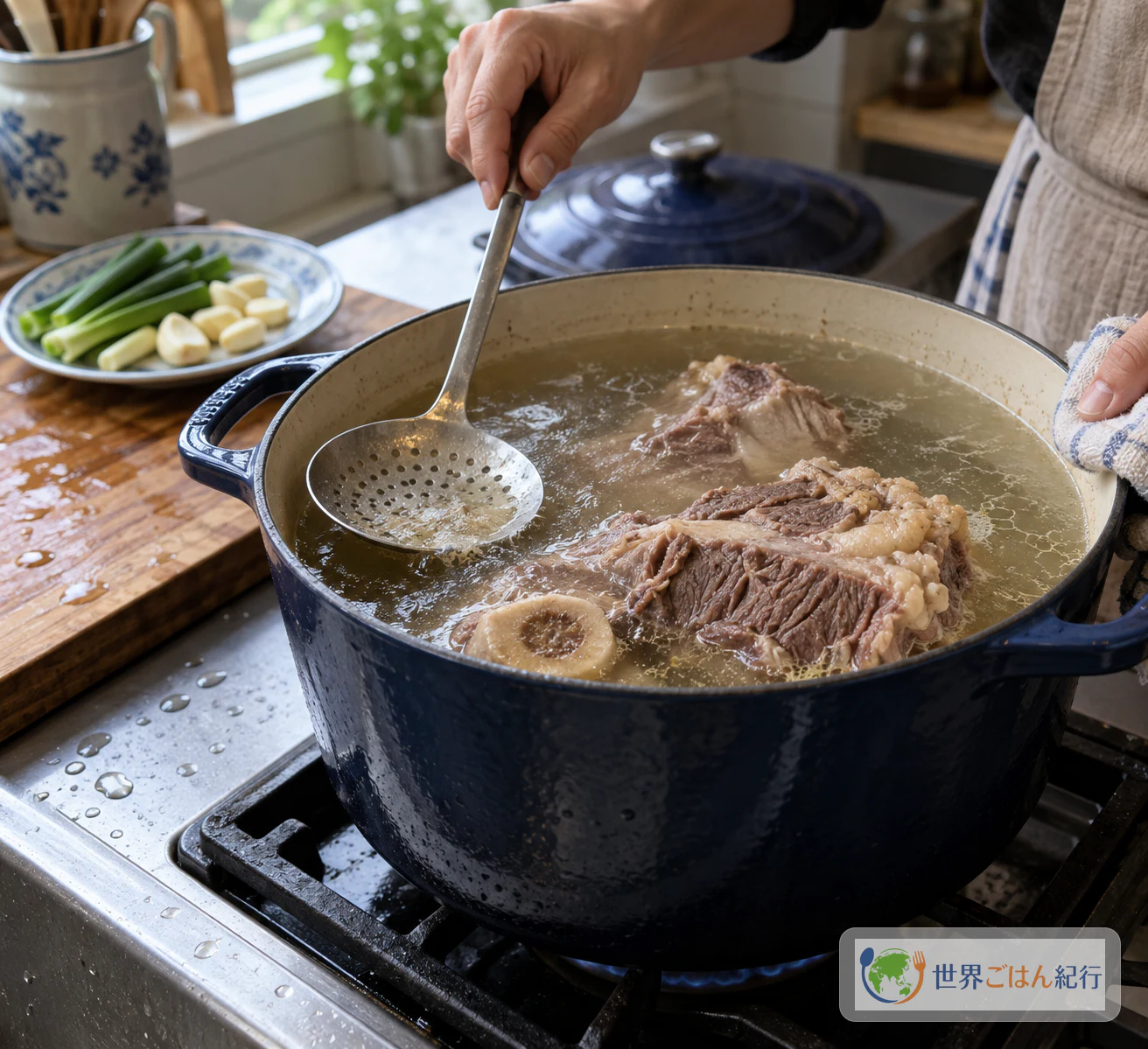
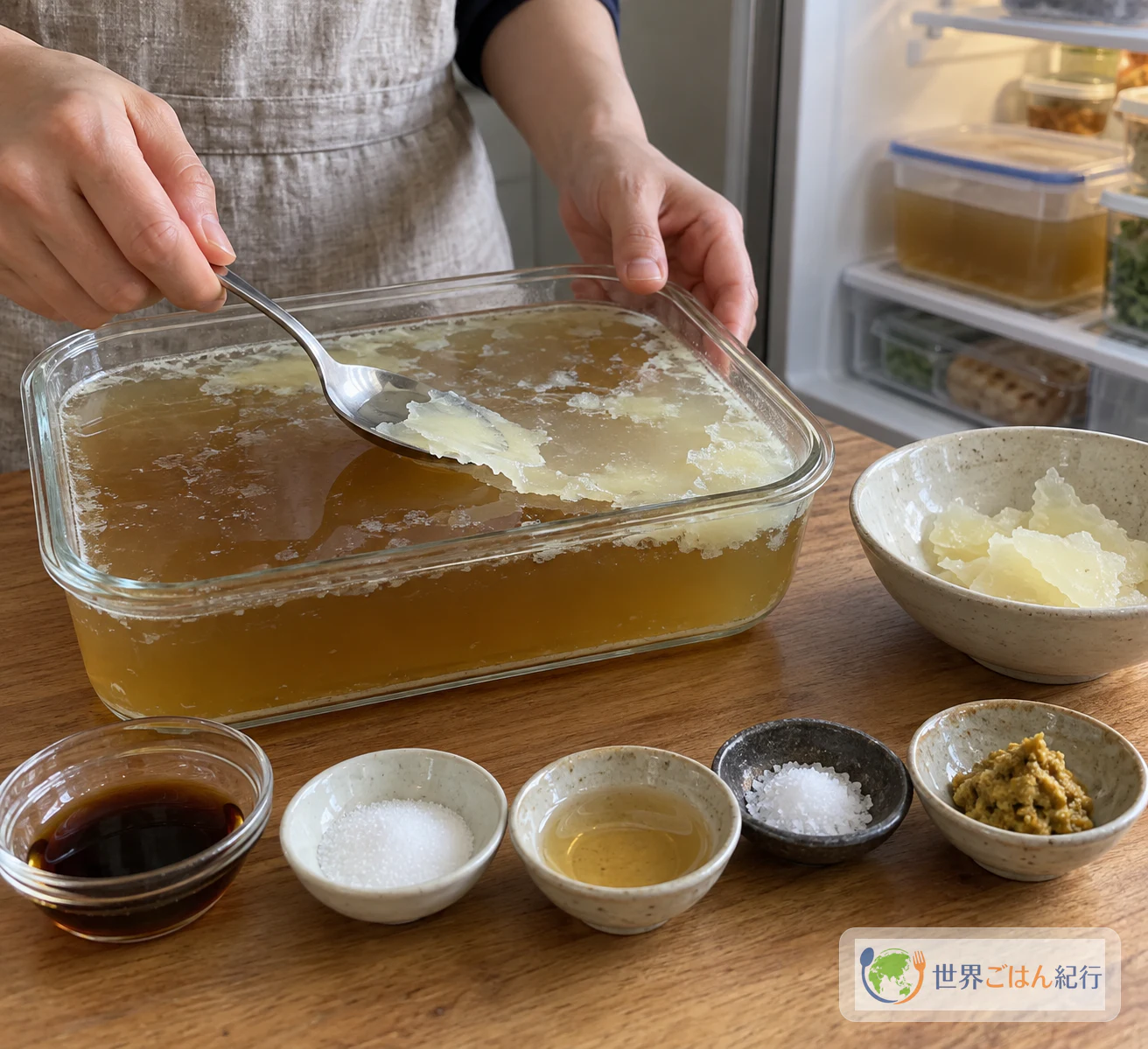
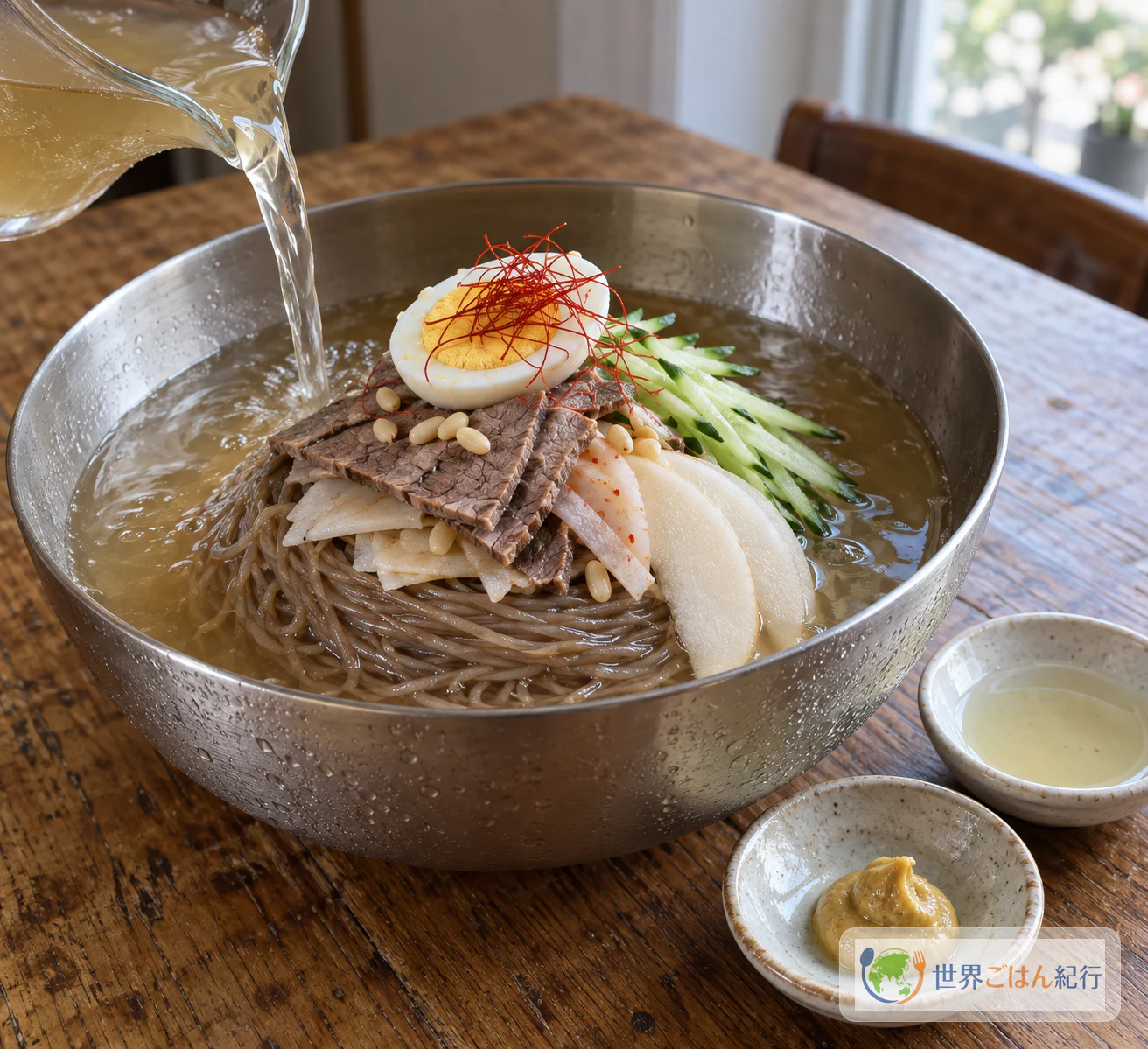
The broth itself varies. The Korea Tourism Organization's own mul-naengmyeon recipe notes that the dish can be eaten with either dongchimi broth or beef broth, and gives the example of eating it after galbi. Maangchi explains that a traditional broth combines beef stock with dongchimi brine. The Korea.net recipe used here takes the beef-only route: beef simmered with green onion and garlic, chilled, skimmed of fat and seasoned with soy sauce, sugar, vinegar, salt and fermented mustard.
Eaten in Winter: Ondol, Earthenware Jars and Old Records
The Korea Tourism Organization presents naengmyeon as a dish eaten in winter, in rooms heated by ondol, with dongchimi brine taken from the jars where it had been kept through the cold months. The same source is careful about origins: it says the origin of naengmyeon is not clear, and it introduces the idea that it came from the northern mountain regions as a theory, not a settled fact. It also notes that recipes differ by region.
Korea.net mentions that a late Joseon-era record, the Dongguk Sesigi, lists naengmyeon among foods eaten around the winter solstice. That is Korea.net's own summary of the record; read it as a pointer to the dish's long winter association rather than a precise date of origin.
Pyongyang Style and Hamhung Style
Korea.net sketches two well-known regional styles:
| Style | Noodles | Character |
|---|---|---|
| Pyongyang style | Mainly buckwheat | A clean, clear broth |
| Hamhung style | Mainly potato or sweet potato starch | Chewy, springy noodles and spicy flavors |
The recipe in this article sits closer to the Pyongyang side: buckwheat noodles in a clear beef broth. It is a home version built from one published recipe, not a claim to reproduce any particular regional tradition exactly.
Ingredients: One Batch from the Korea.net Recipe
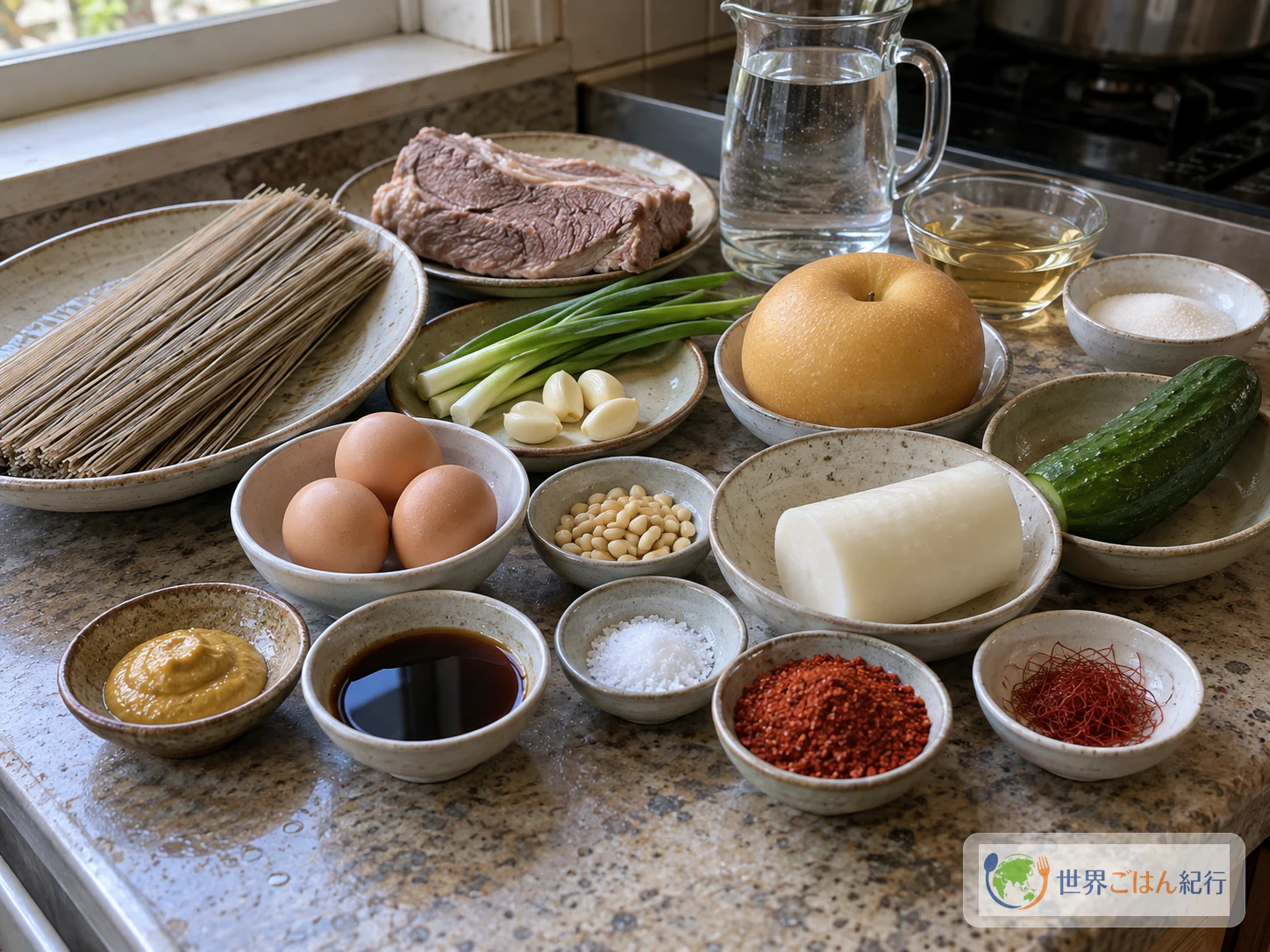
These amounts make one batch, with 400 g of dried noodles and 2 eggs. Note that three different waters appear: one for the noodles, one for the beef broth and one for the eggs. Keep them separate, and keep each salt amount with its own component.
Equipment
- A large pot for boiling the noodles
- A pot for simmering the beef broth
- A separate pot for boiling the eggs
- Shallow containers for cooling and refrigerating the broth
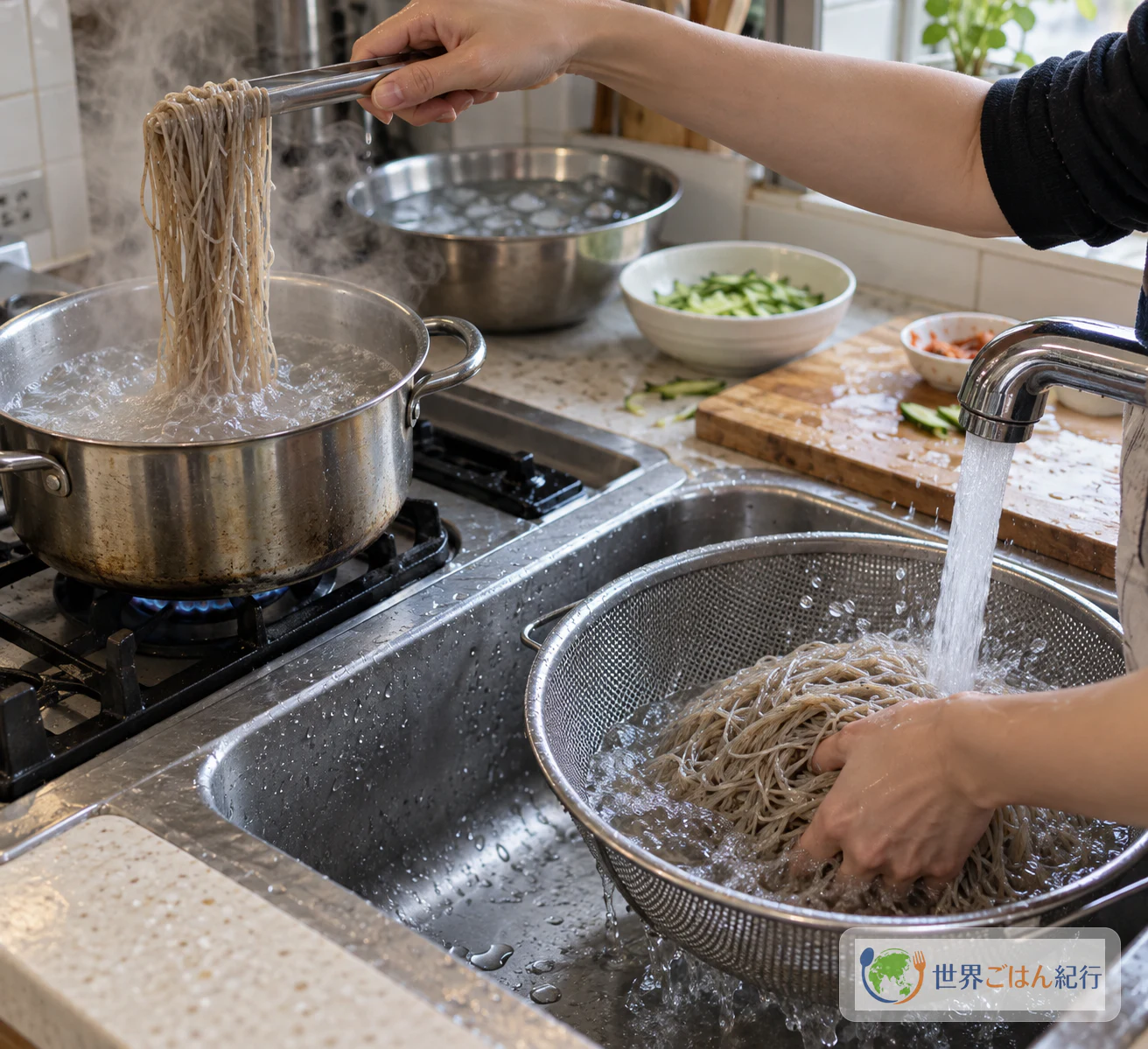
- A colander for rinsing and draining the noodles
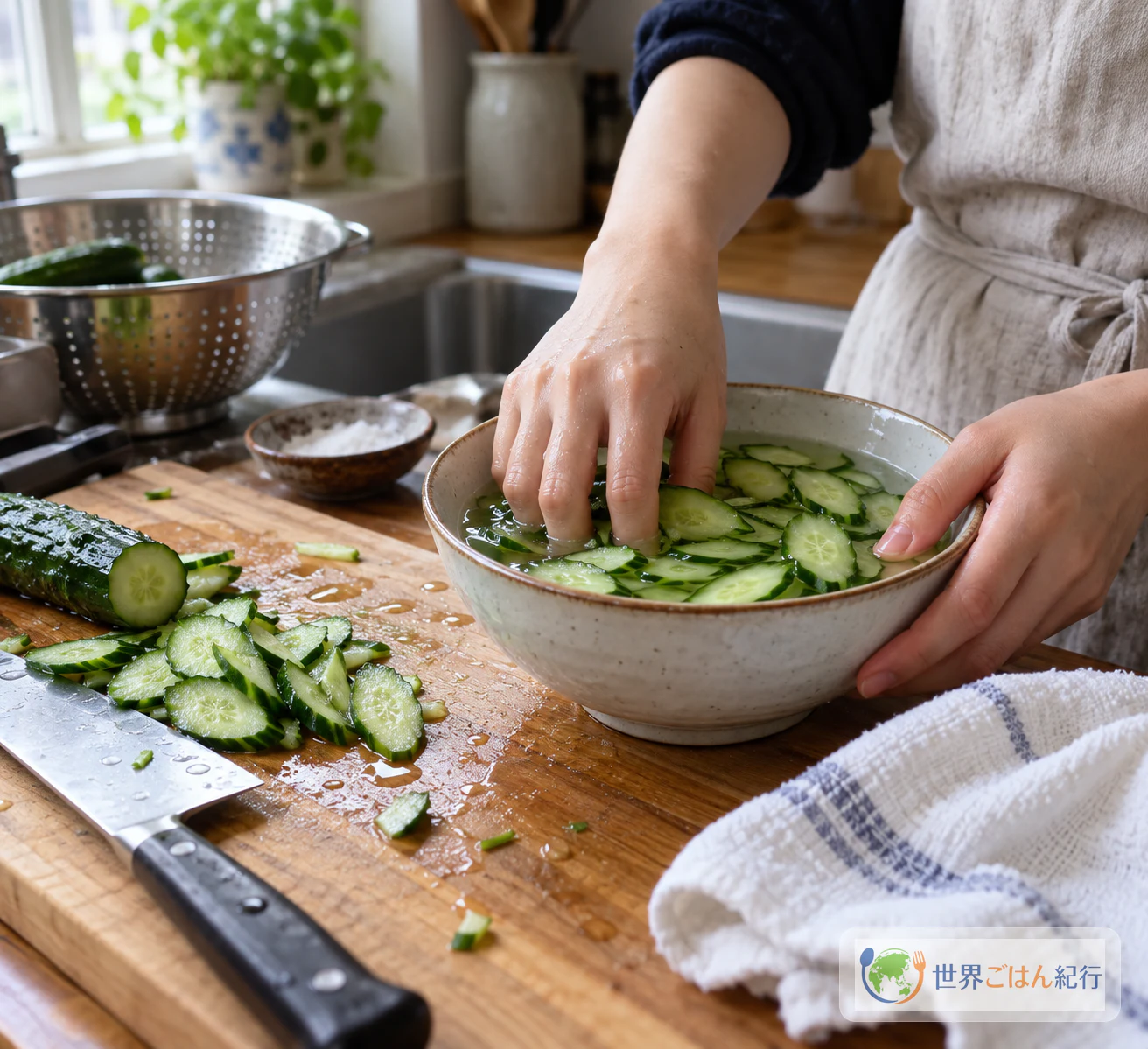
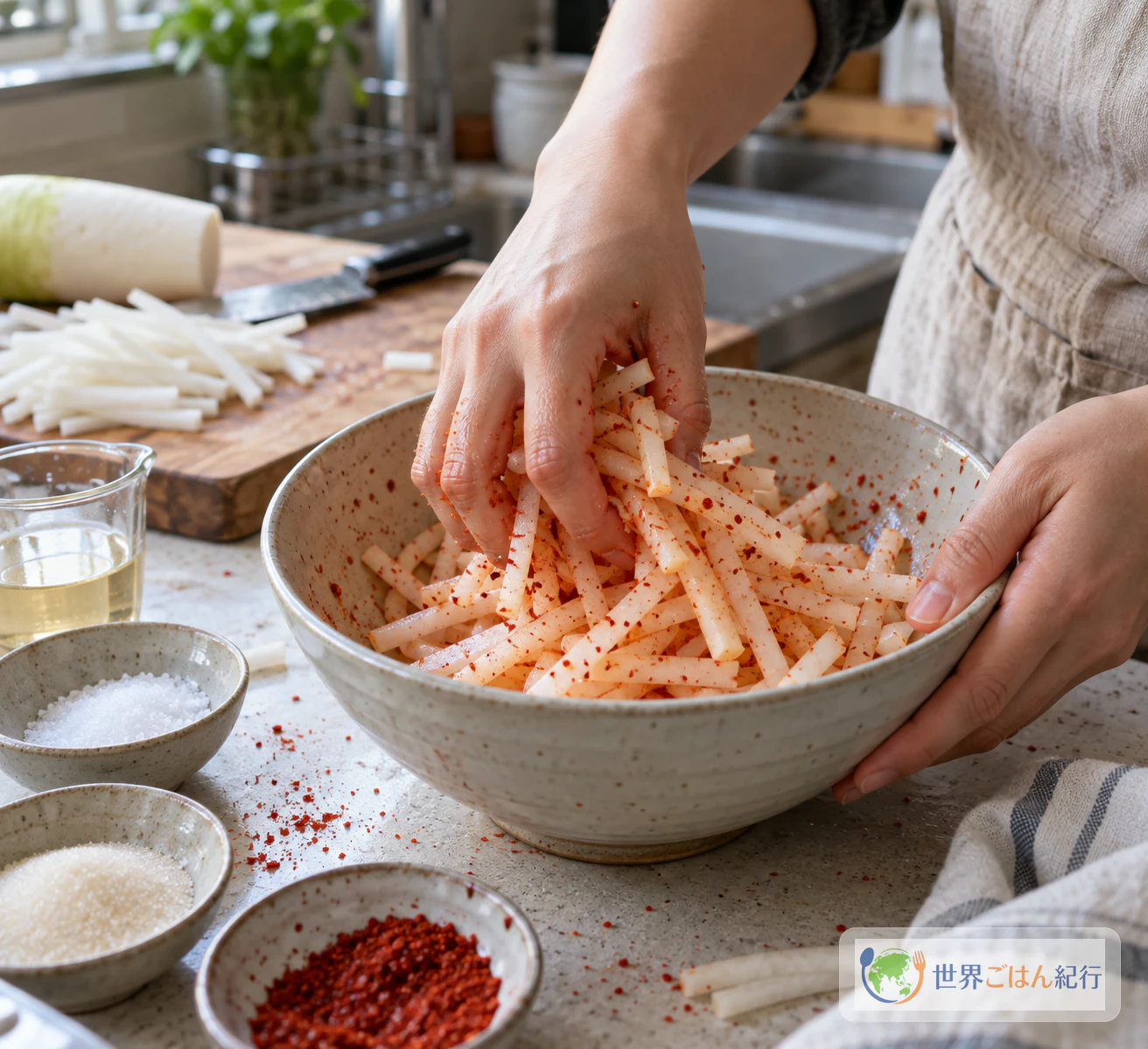
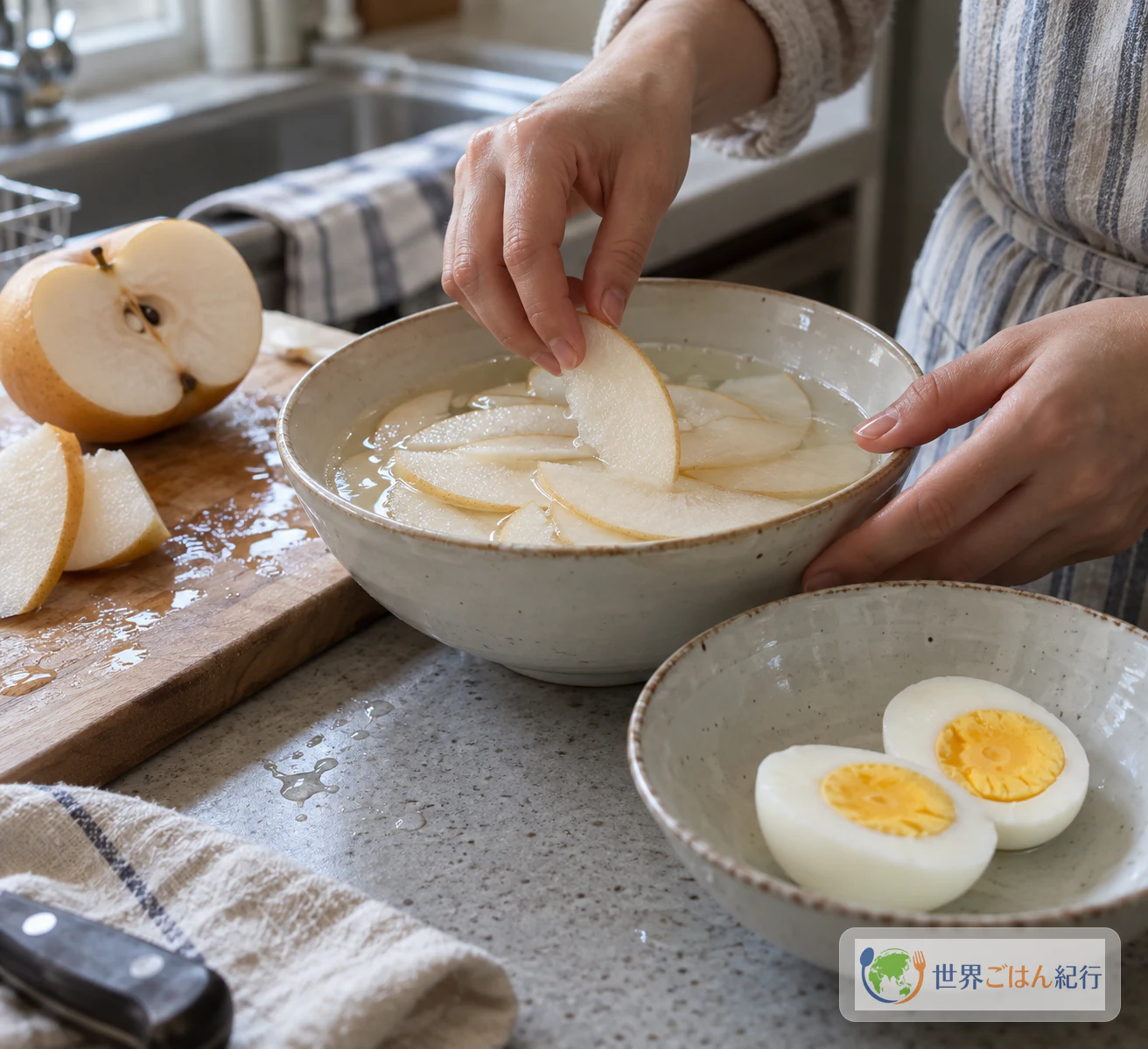
- Small bowls for soaking the cucumber, radish and pear
- Clean cloths for wiping the beef, cucumber and pine nuts
Choosing Noodles, Beef and Seasonings Outside Korea
Noodles. Use dried buckwheat noodles. Packaged naengmyeon noodles sold at Korean grocers vary: some are mostly buckwheat, others include a good share of starch. Read the ingredient list and compare, and follow the package cooking time when it differs from 2 minutes. Japanese soba can stand in when nothing else is available, but its texture, spring and buckwheat aroma differ, so treat it as a substitute rather than the same dish.
Beef. Use brisket shank. Beef shin or a similar braising cut is a reasonable approximation, but the fat and gelatin they release are not identical, so the body of the broth will change somewhat.
Clear soy sauce. Do not assume it is the same as Japanese light (usukuchi) soy sauce or any specific product. Saltiness differs between soy sauces, so taste the chilled broth rather than adjusting the recipe in advance.
Fermented mustard. If a Korean grocer carries mustard sold for naengmyeon, that is the first choice. A Japanese-style hot mustard gives a different aroma and heat, so don't treat the amounts as interchangeable.
Pear. Asian pear is the closest match; other pears differ in sweetness and juiciness from fruit to fruit. If you cannot find a suitable pear, it can be left out.
This recipe contains egg, buckwheat and soy (from the soy sauce). Packaged noodles may also contain wheat or other starches, so check the label. Mustard and pine nuts are also worth checking for anyone with allergies.
Method: From Beef Broth to a Cold Bowl
The broth needs about 1 hour 40 minutes of simmering and then must chill thoroughly in the refrigerator, so it is convenient to make it ahead, for example the day before. The cucumber and radish each rest for 20 minutes; prepare the pear in sugar water alongside them. Boil the noodles last, right before serving.
Fixing Common Problems
| Problem | Likely cause | What to do |
|---|---|---|
| The broth tastes greasy | Fat was removed while the broth was still warm, or not at all | Chill the broth thoroughly so the fat sets on top, then lift it off |
| The broth tastes flat or thin | Water from the cucumber or noodles diluted it, or it was tasted while warm | Blot the cucumber dry, drain the noodles well after rinsing, and judge the flavor only once the broth is cold |
| The noodles clump or turn soft | Cooked past the package time, or left sitting before rinsing | Check the package time; the source's 2 minutes is one guide. Rinse in cold water as soon as they are done and keep them draining until you plate |
| The radish tastes like kimchi | Too much red pepper or a long rest | Keep to the recipe's amounts and 20 minutes |
Storage
Keep the noodles, toppings and broth in separate containers rather than storing assembled bowls. Divide cooked food into shallow containers and refrigerate promptly, within 2 hours, or within 1 hour if it is above 32°C, with the refrigerator at 4°C or below. As in step 2, that time limit is about getting food into the refrigerator, not about the food reaching 4°C by then.
The materials behind this recipe do not give a storage period for the beef broth or the cooked beef, so plan to eat them soon. FoodSafety.gov's general chart gives up to one week in the refrigerator for hard-boiled eggs; even so, use them early.
Variations
These change the flavor or method, and each should be treated as its own version rather than as the Korea.net recipe:
- Adding dongchimi brine. Closer to the traditional broth that Maangchi describes, which combines beef stock and dongchimi brine. Use this only with dongchimi that is already fermented; Maangchi notes the fermentation takes 4–5 days. No tested ratio is given here.
- Store-bought naengmyeon broth. A shortcut version, like the one Maangchi offers alongside the traditional method. It is a separate recipe from the beef broth here.
- Vegetable broth instead of beef. A different dish in character, with a noticeably different flavor.
- Bibim-naengmyeon. Noodles dressed in a spicy sauce with no broth. It is a separate dish; don't mix its steps into this one.
- Japanese soba. An availability-first version. Expect a different texture and aroma from naengmyeon noodles.
For more Korean dishes, try bibimbap for a one-bowl meal, japchae for a noodle dish built on glass noodles with a very different texture, and mandu to round out a Korean table.
Frequently Asked Questions
Are naengmyeon and mul-naengmyeon the same thing?
Naengmyeon is the umbrella term for Korean cold noodles. Mul-naengmyeon is the type served in chilled broth; bibim-naengmyeon is the type tossed in spicy sauce.
Can I use soba instead?
Yes, as a substitute when naengmyeon or buckwheat noodles are hard to find. The texture, chew and aroma will differ, so it won't be the same dish as the source recipe.
Is dongchimi required?
Not for this recipe; the Korea.net version uses beef broth only. Dongchimi brine belongs to another traditional style of broth, described by the Korea Tourism Organization and Maangchi.
Can I make it ahead?
The broth is best made ahead. Store the broth, toppings and noodles separately, cool the broth in shallow containers, and get it into the refrigerator within 2 hours (1 hour above 32°C), with the refrigerator at 4°C or below. Boil the noodles just before serving.
How is it different from bibim-naengmyeon?
Mul-naengmyeon is served in a cold broth. Bibim-naengmyeon has no broth; the noodles are mixed with a spicy sauce.
Sources
- Korea.net, official website of the Republic of Korea, "Korean recipes: Naengmyeon (냉면)." The ingredients, amounts and every step of the recipe used here, the mention of a late Joseon-era winter solstice record, and the outline of Pyongyang and Hamhung styles. The page does not state a number of servings. https://www.korea.net/NewsFocus/Culture/view?articleId=143235
- Korea Tourism Organization (VISITKOREA), "Korean Food Story: Naengmyeon." Eating naengmyeon in winter in ondol-heated rooms, dongchimi brine taken from jars in winter, the unclear origin and the northern-mountain theory, and regional differences in recipes. https://english1.visitkorea.or.kr/enu/FOD/FO_ENG_1_4.jsp
- Korea Tourism Organization (VISITKOREA), "Mul naengmyeon Recipe: Korean Food." That mul-naengmyeon is eaten with dongchimi broth or beef broth, the example of eating it after galbi, and adding vinegar and mustard at the table. A separate recipe, not combined with the one above. https://english1.visitkorea.or.kr/enu/FOD/FO_EN_EC_Recipes.jsp?cid=1928358
- Maangchi, "Mul-naengmyeon (Korean cold noodles in chilled broth)." The traditional broth combining beef stock and dongchimi brine, the 4–5 days needed to ferment dongchimi, and a shortcut version with store-bought broth. https://www.maangchi.com/recipe/naengmyeon/comment-page-1?ya_src=serp300
- FoodSafety.gov, "4 Steps to Food Safety." Refrigerator at 4°C or below, refrigerating perishable food within 2 hours (1 hour above 32°C), and cooling food quickly in shallow containers. General U.S. guidance, not specific to Korean cooking. https://www.foodsafety.gov/keep-food-safe/4-steps-to-food-safety
- FoodSafety.gov, "Cold Food Storage Chart." The general guide of one week in the refrigerator for hard-boiled eggs. https://www.foodsafety.gov/food-safety-charts/cold-food-storage-charts