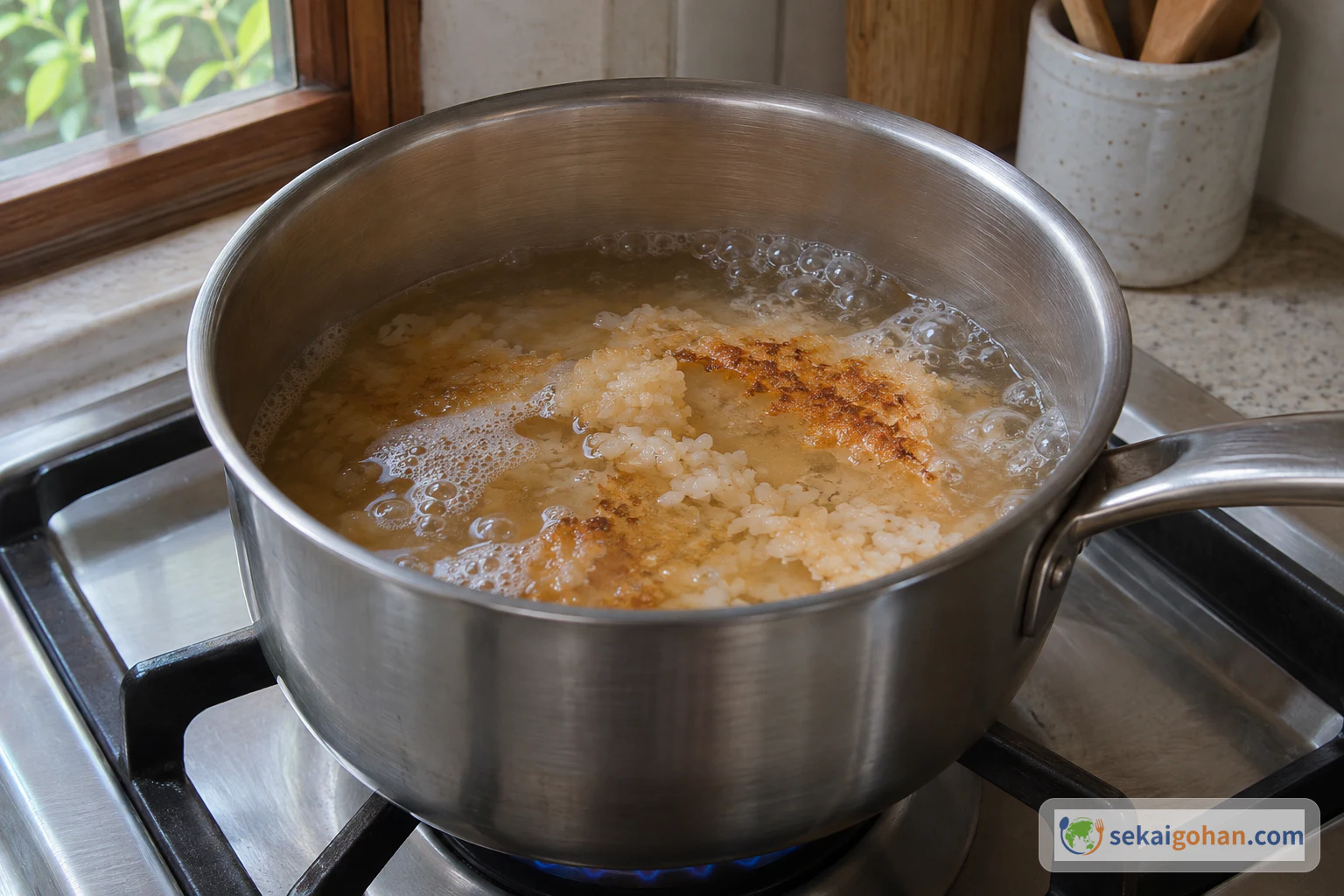
Nurungji: The Second Rice Dish at the Bottom of the Pot
Cook the rice, lift it out, and keep the thin layer left behind golden and crisp rather than black. Then use the same pot, with fresh water, for a warm drink.
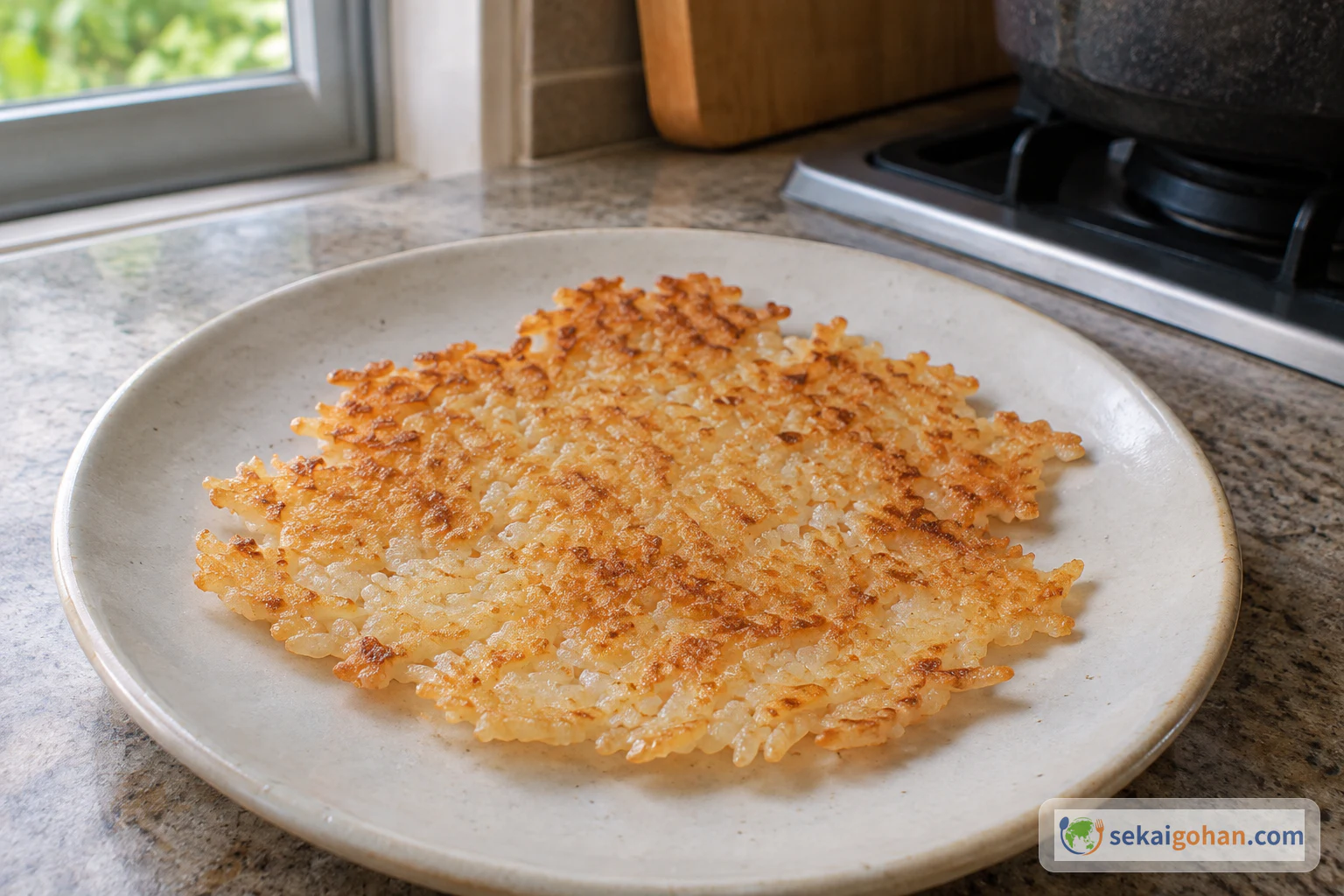
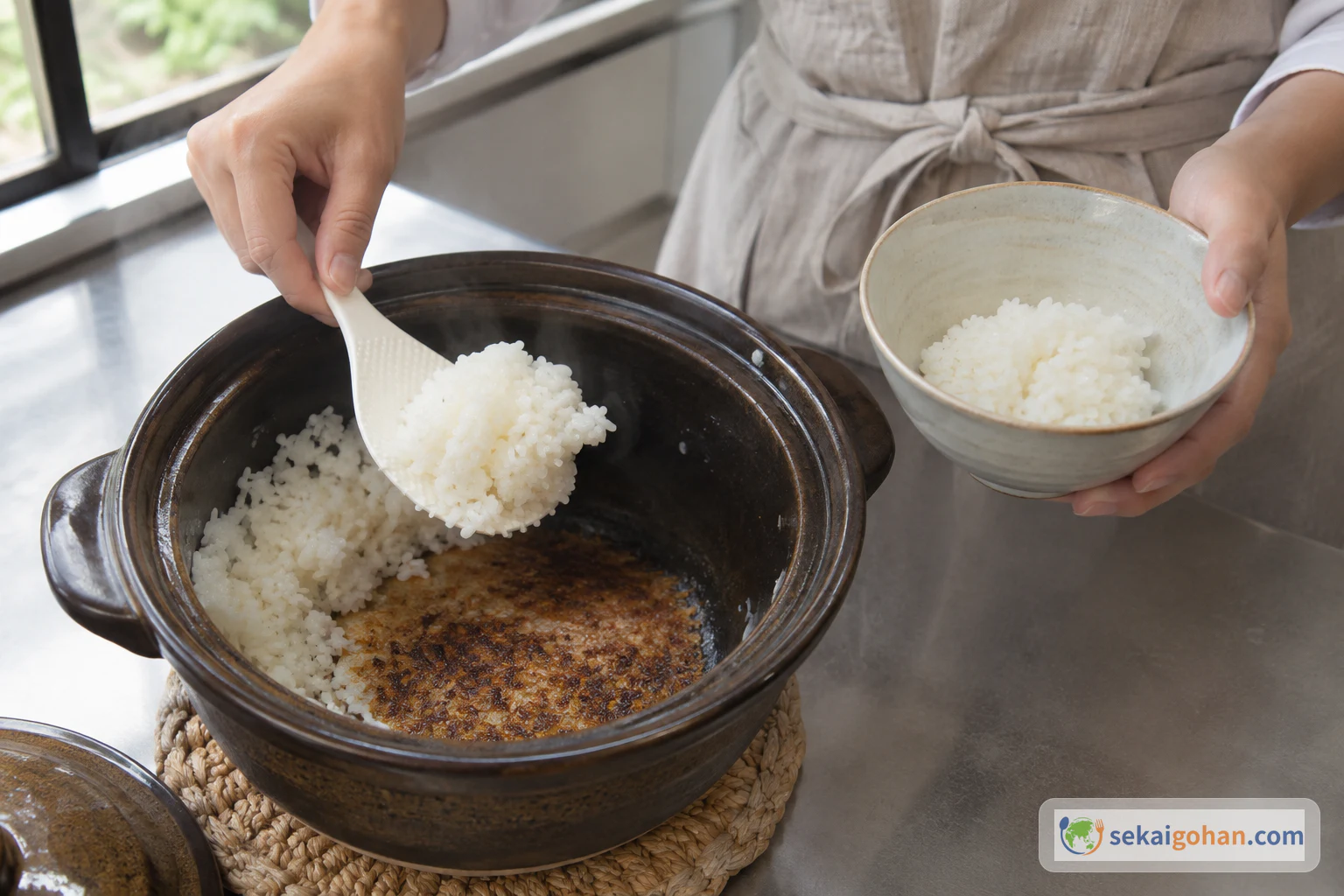
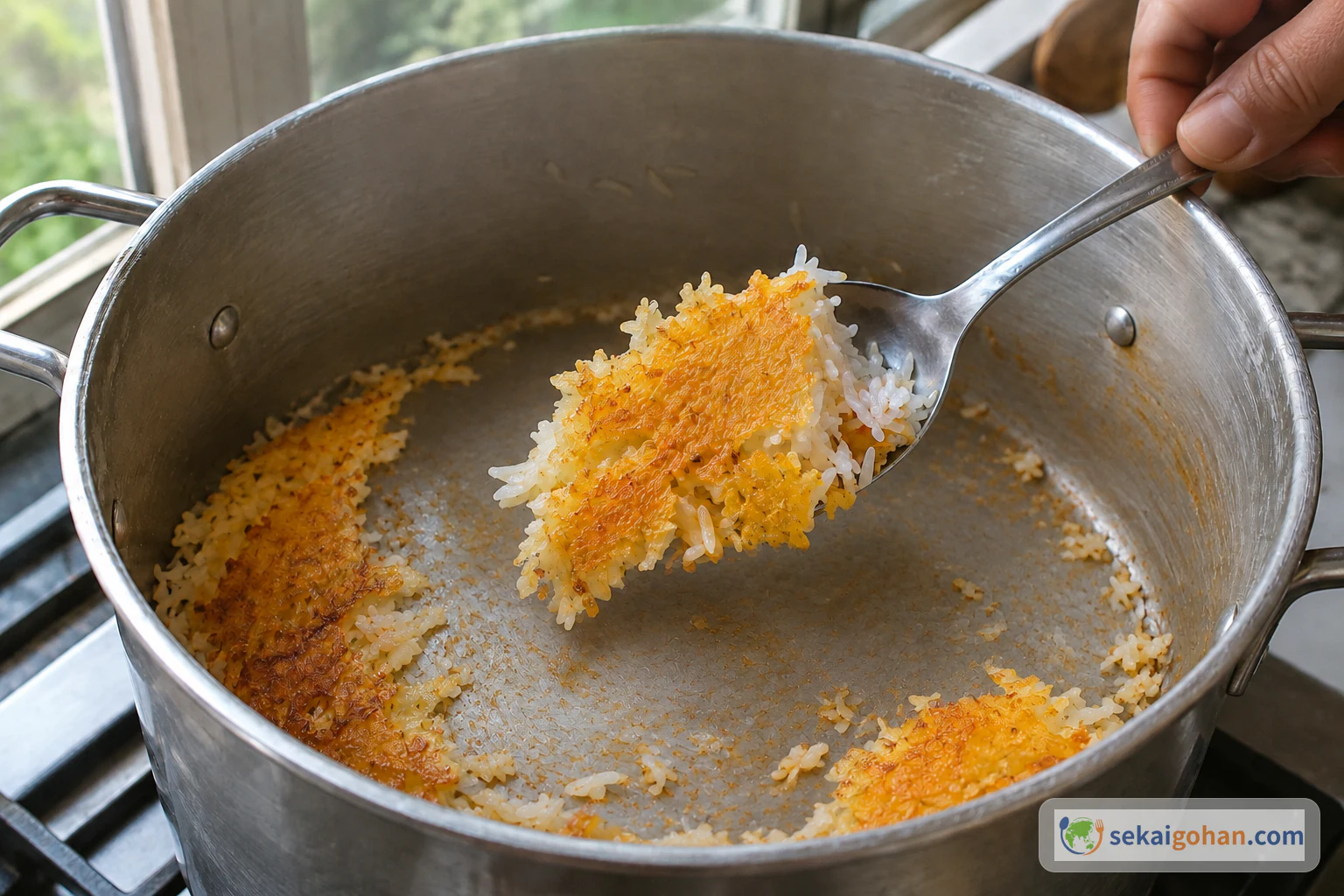
When rice is cooked in a pot and the fluffy rice has been scooped out, a thin layer stays stuck to the bottom. In Korean this layer is called nurungji (누룽지). The Korea Tourism Organization describes it as the crisp, golden layer that forms at the bottom of a pot or electric rice cooker when rice is made, something you can eat as it is or turn into sungnyung by pouring hot water over it.
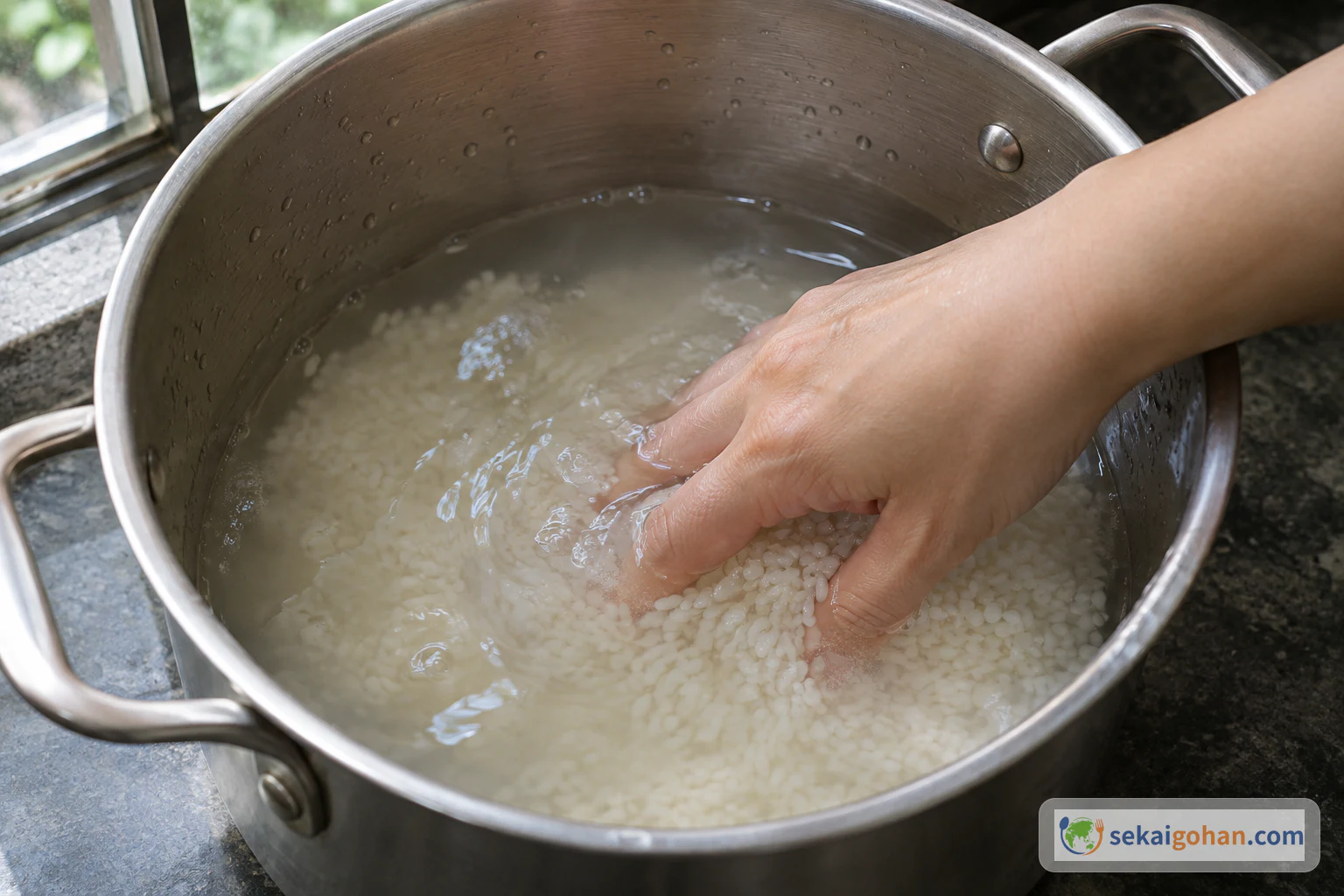
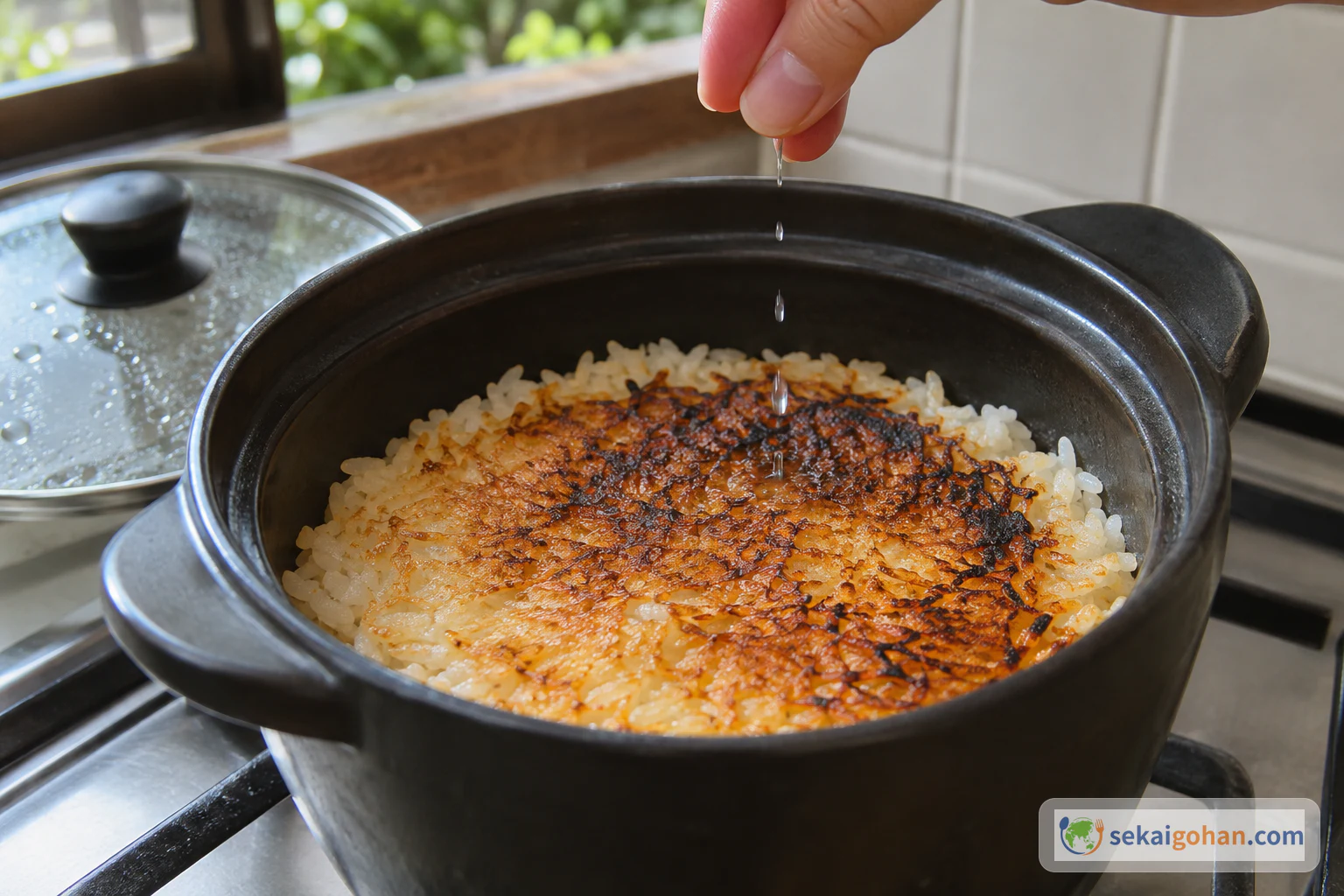
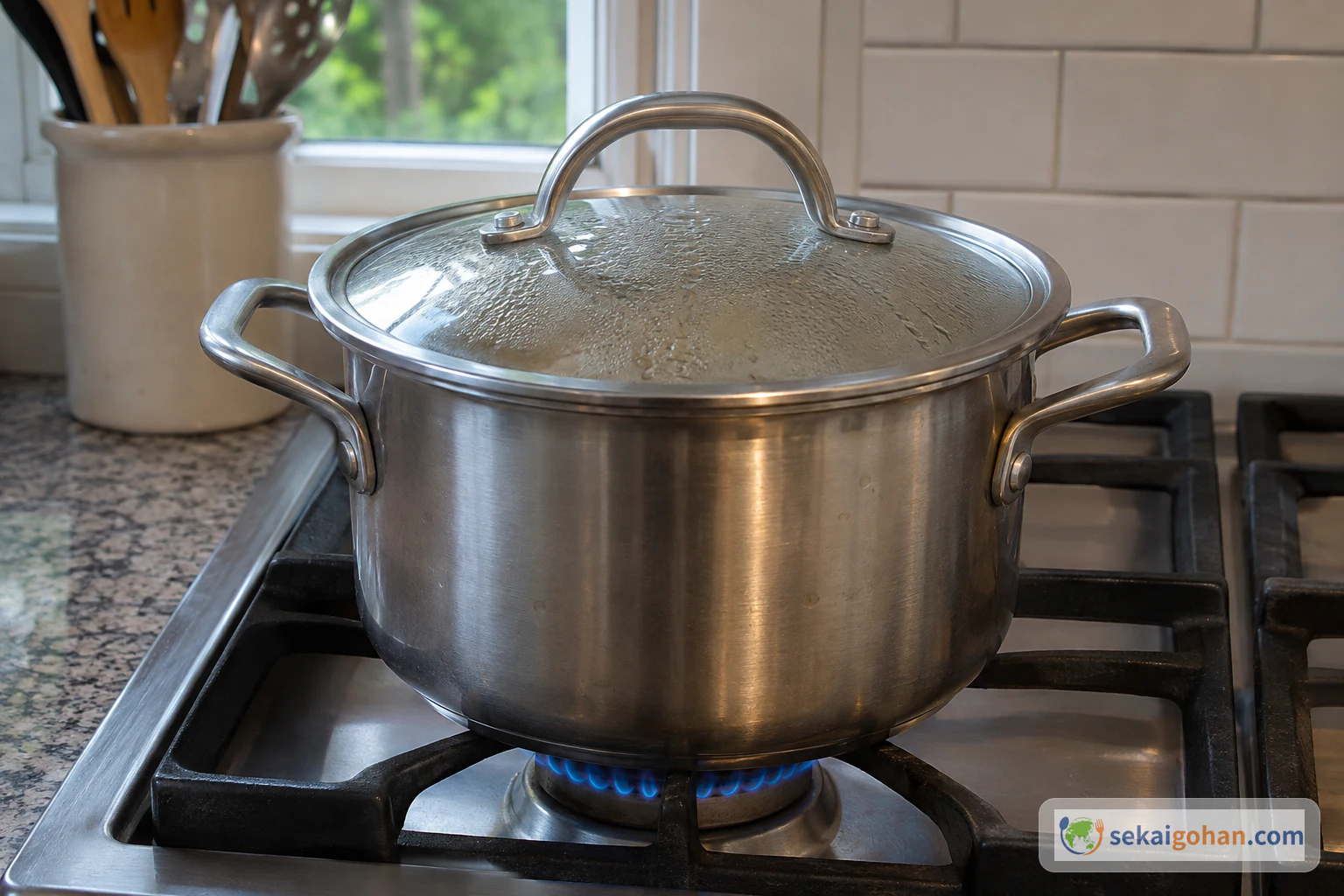
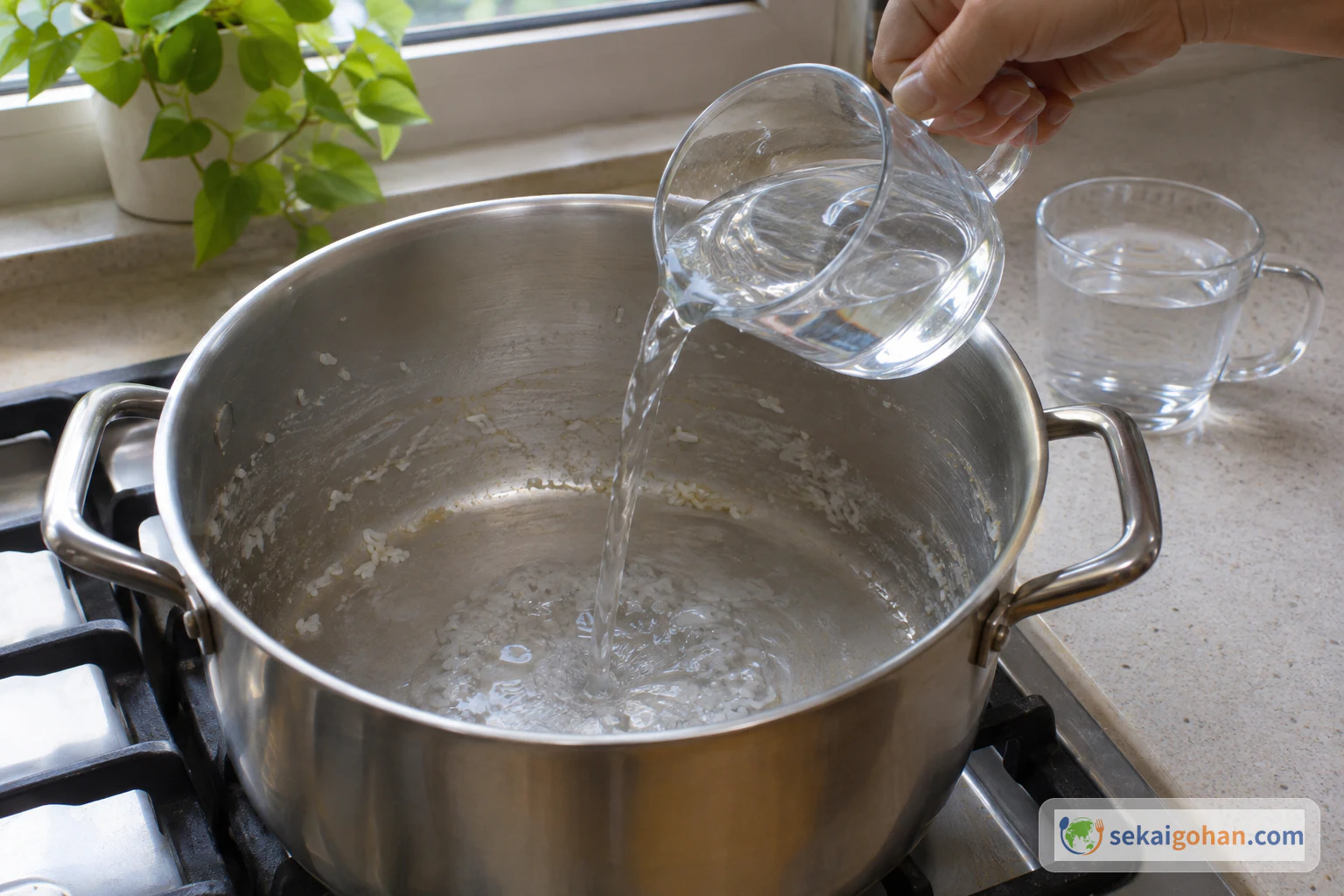
This article follows one specific home method: Maangchi's recipe for rice, scorched rice and scorched rice tea. Sekai Gohan has not kitchen-tested this recipe. It starts from raw short-grain rice, cooks a pot of rice, and adds a further simmer so that a crust forms on the bottom. After the rice is lifted out, a short covered heating, a few drops of water and one more covered minute help the crust come away from the pot. Water is then added to the pot and boiled gently to make sungnyung.
Only rice and water go into this pot. There is no oil, salt, sugar, tea or garnish, and this version does not reheat leftover rice. It is meant to be cooked and eaten fresh.
Nurungji and sungnyung are not the same thing
Nurungji is the layer of rice you eat. Sungnyung (숭늉) is the drink made by adding water to the pot after the crust has been taken out and boiling it. Both the Korea Tourism Organization and the Encyclopedia of Korean Culture separate the two: the crust is eaten as a snack, and the water boiled with it is drunk as sungnyung. In this recipe both come from the same pot, one after the other.
Ingredients: Short-Grain Rice and Water Used Four Ways
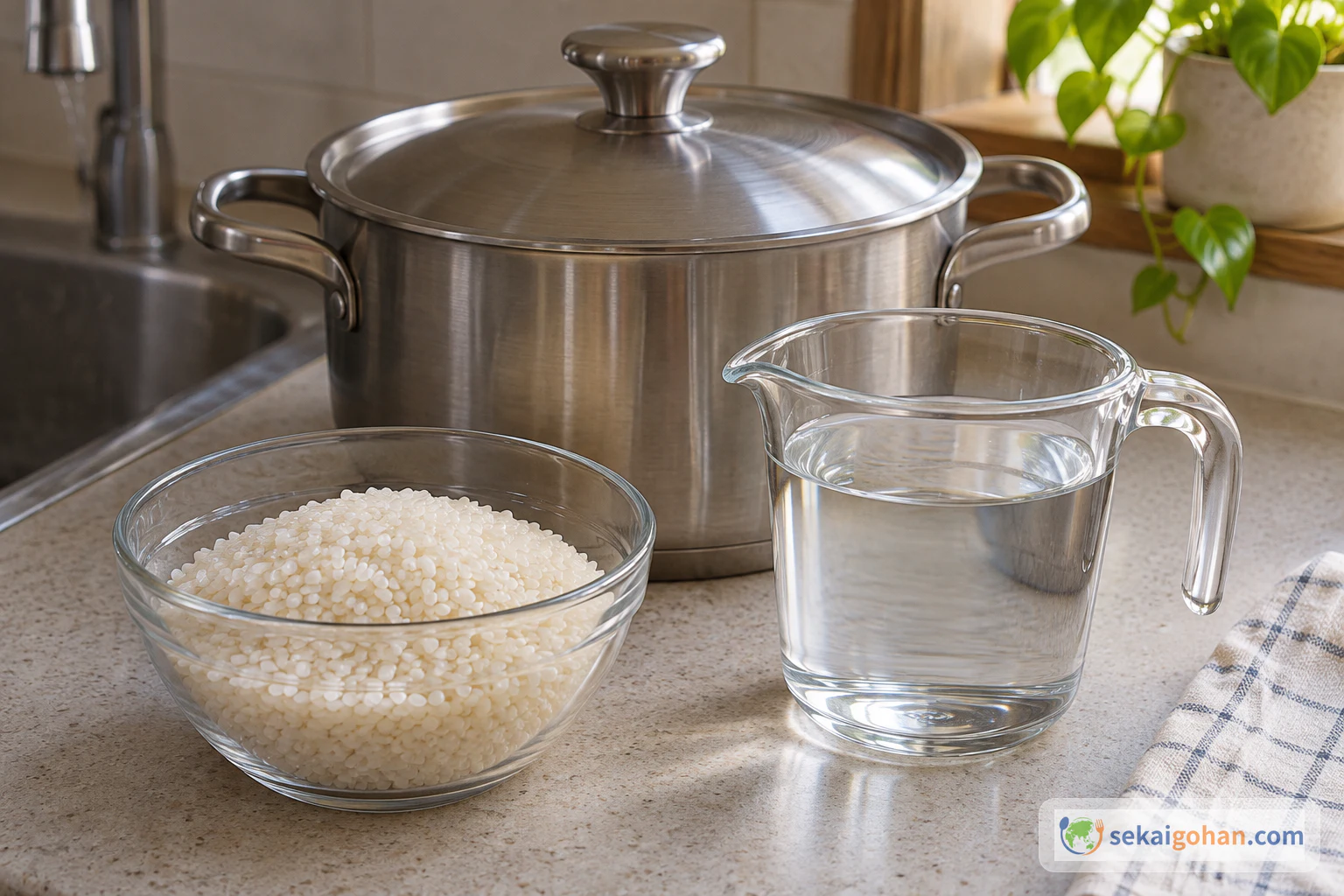
The only ingredients are rice and water. The water is listed by the stage where it is used.
Notes on the Rice, the Cups and the Yield
Use plain short-grain rice.
The 2-serving yield is for the cooked rice you scoop out; it is not a yield for nurungji.
Equipment
- A heavy-bottomed pot with a lid
- A cup measure
- A spoon suited to your pot (metal or wooden). On coated pots, use utensils that the pot's maker recommends so you do not scratch the coating.
- A bowl for the cooked rice
- Cups for serving sungnyung
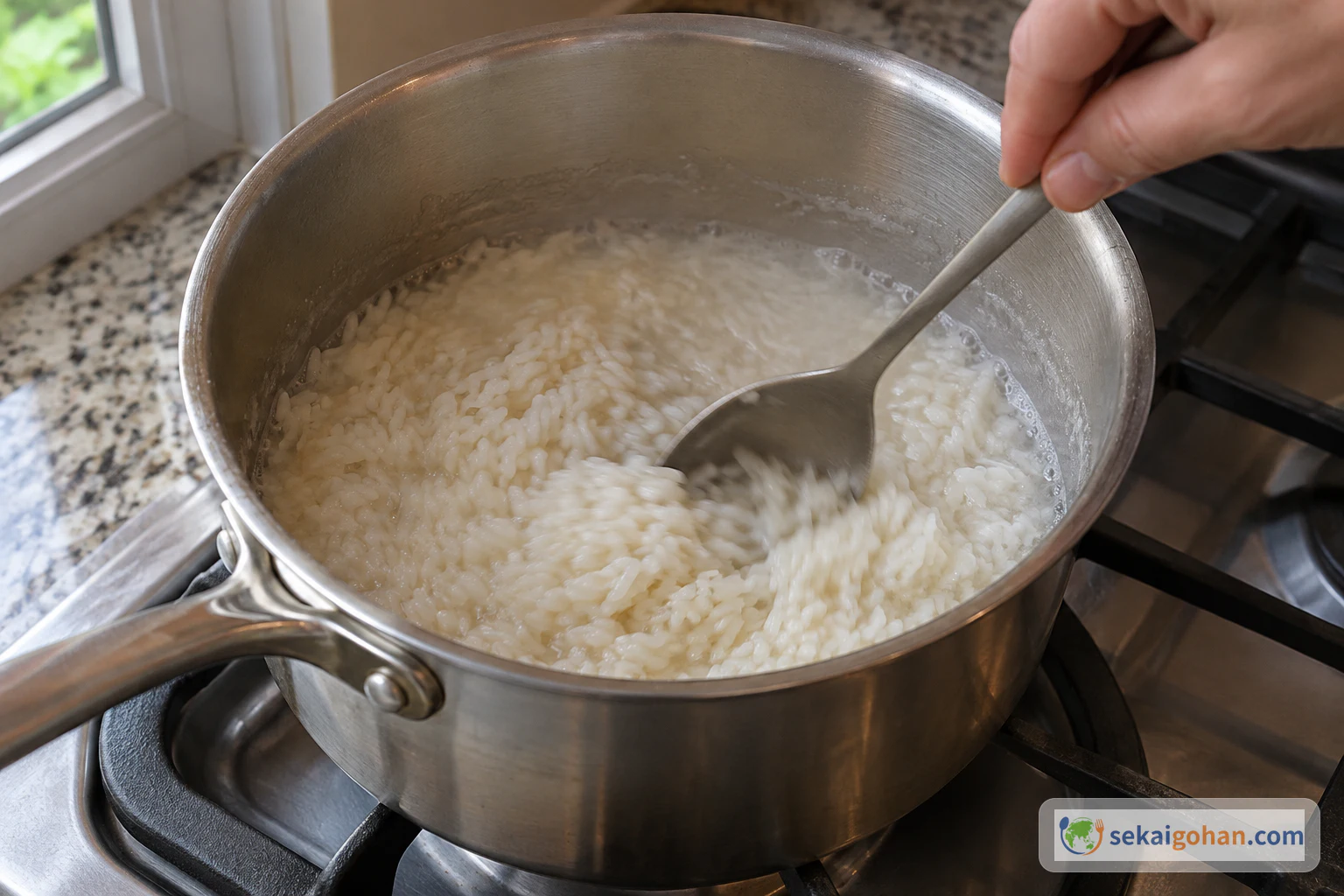
Method: From Raw Rice to Crust to Sungnyung
The pot, the lid and the steam get very hot, especially while you are working at the crust. Use a cloth or mitt on the lid and keep your hands and face away from rising steam.
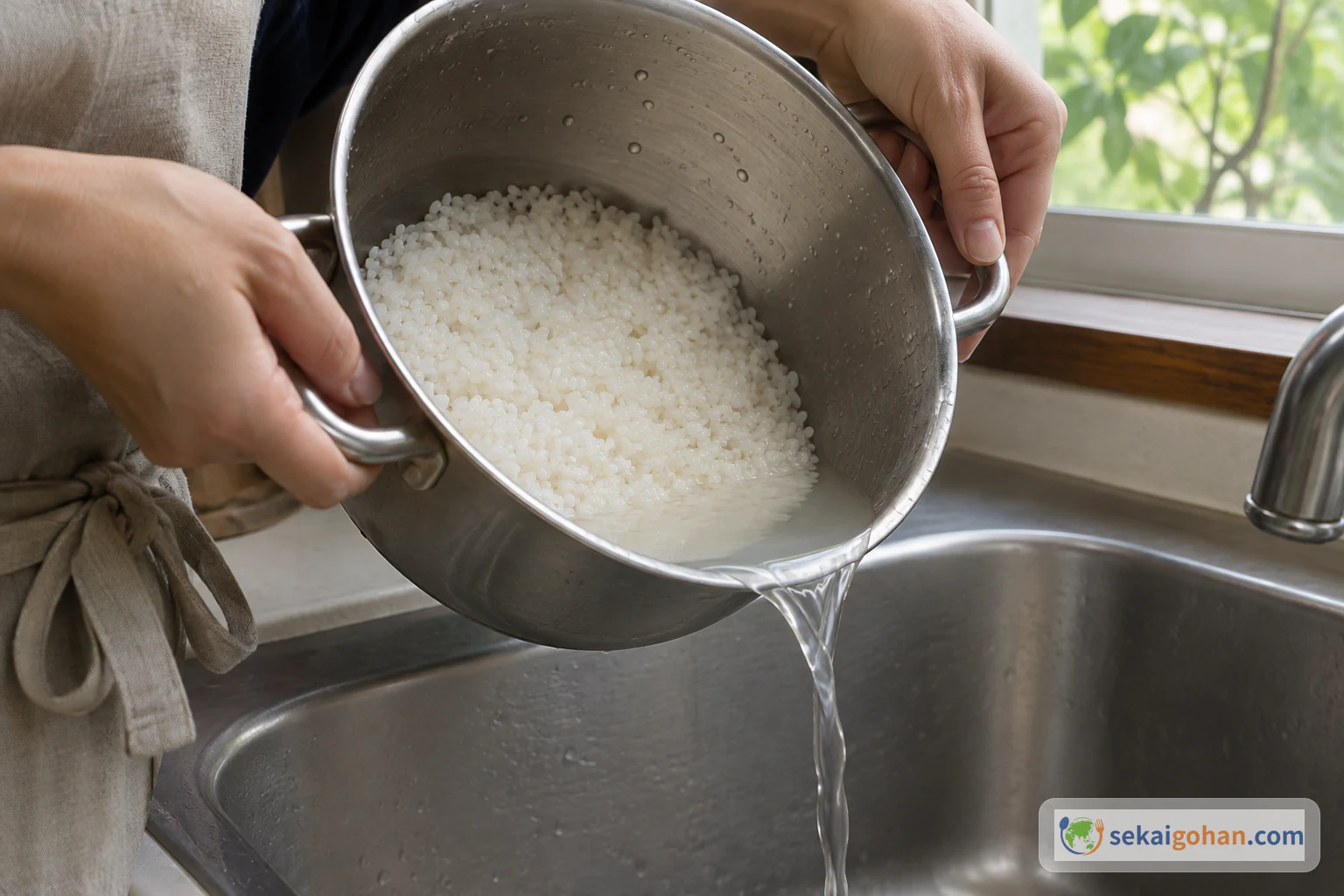
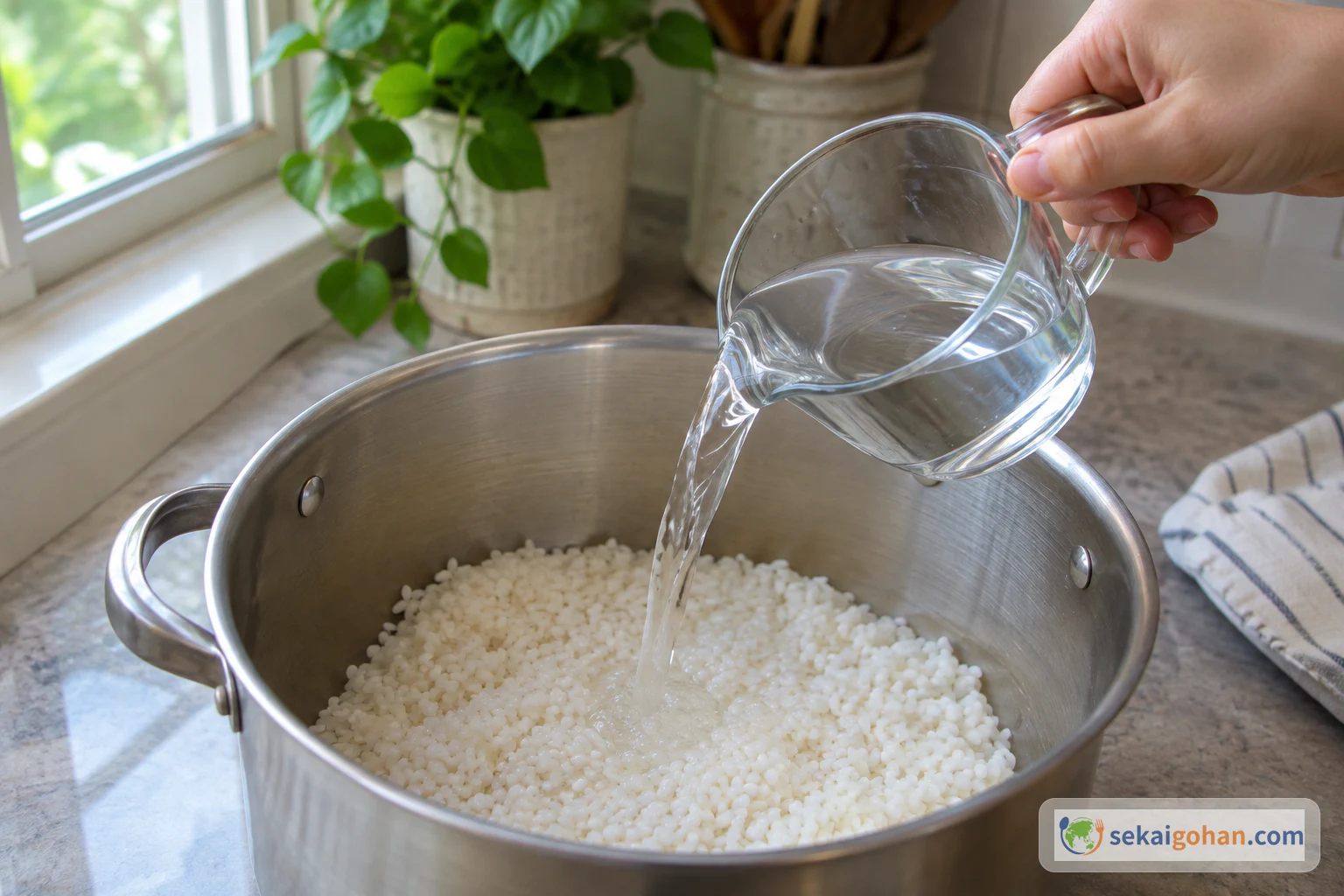
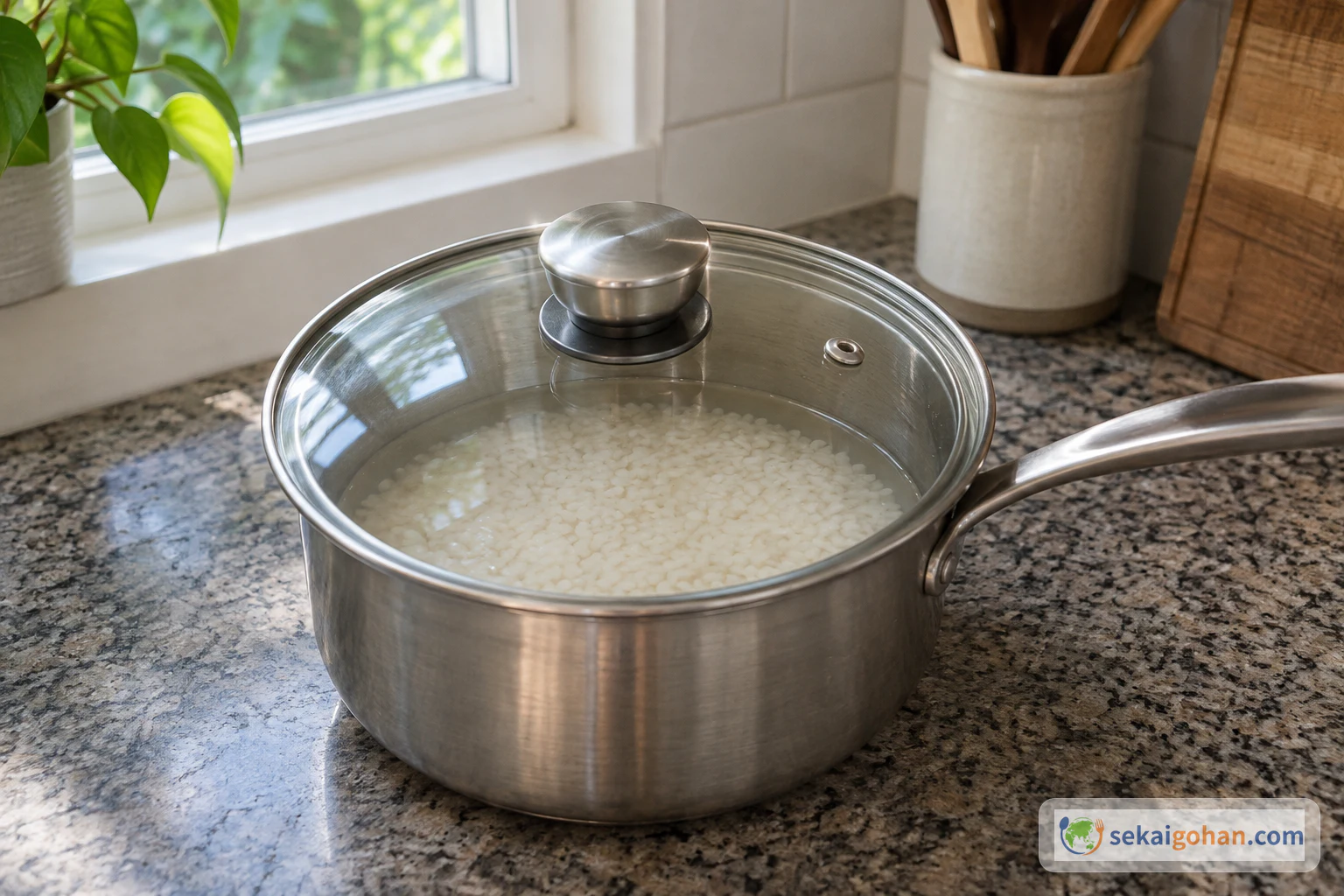
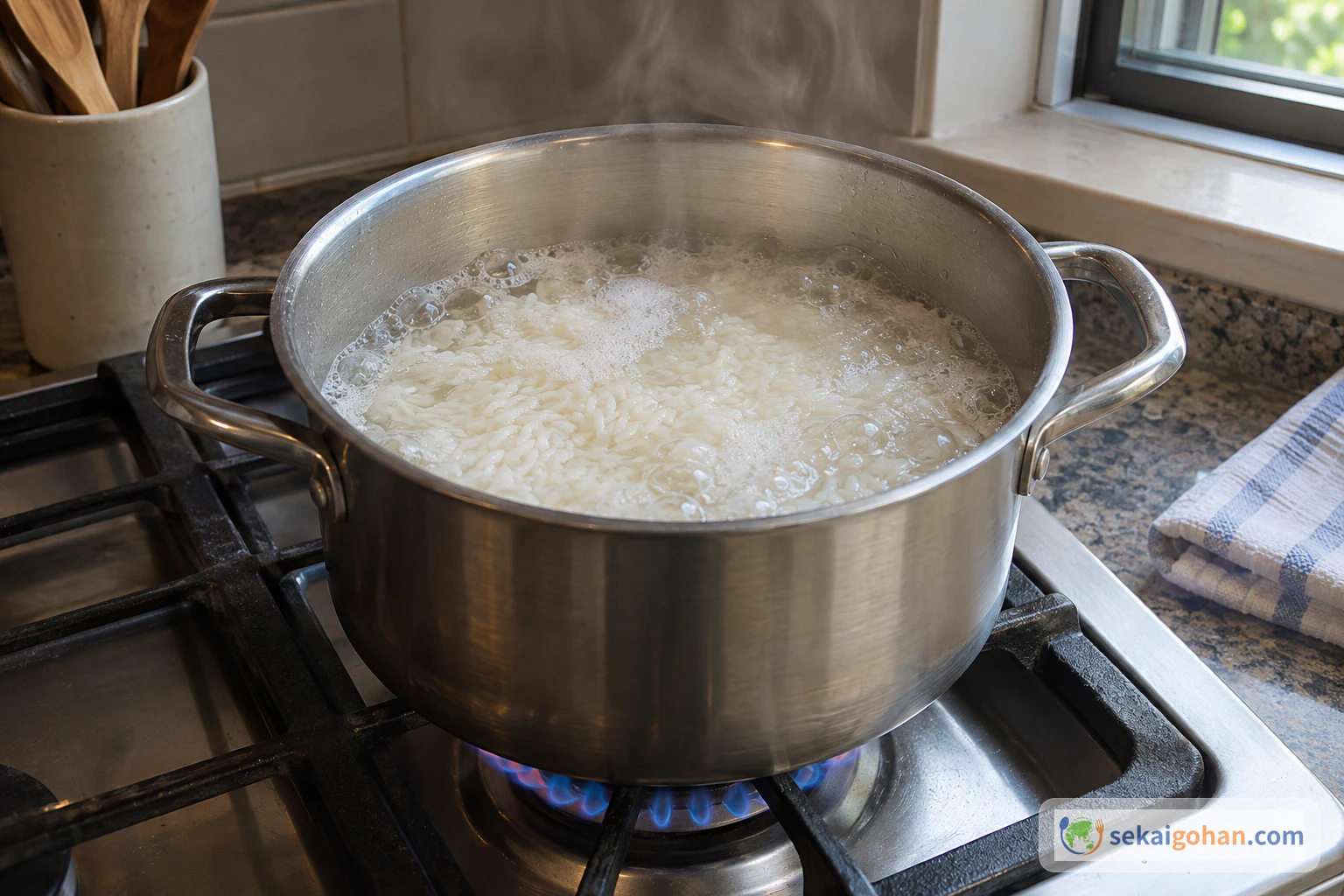
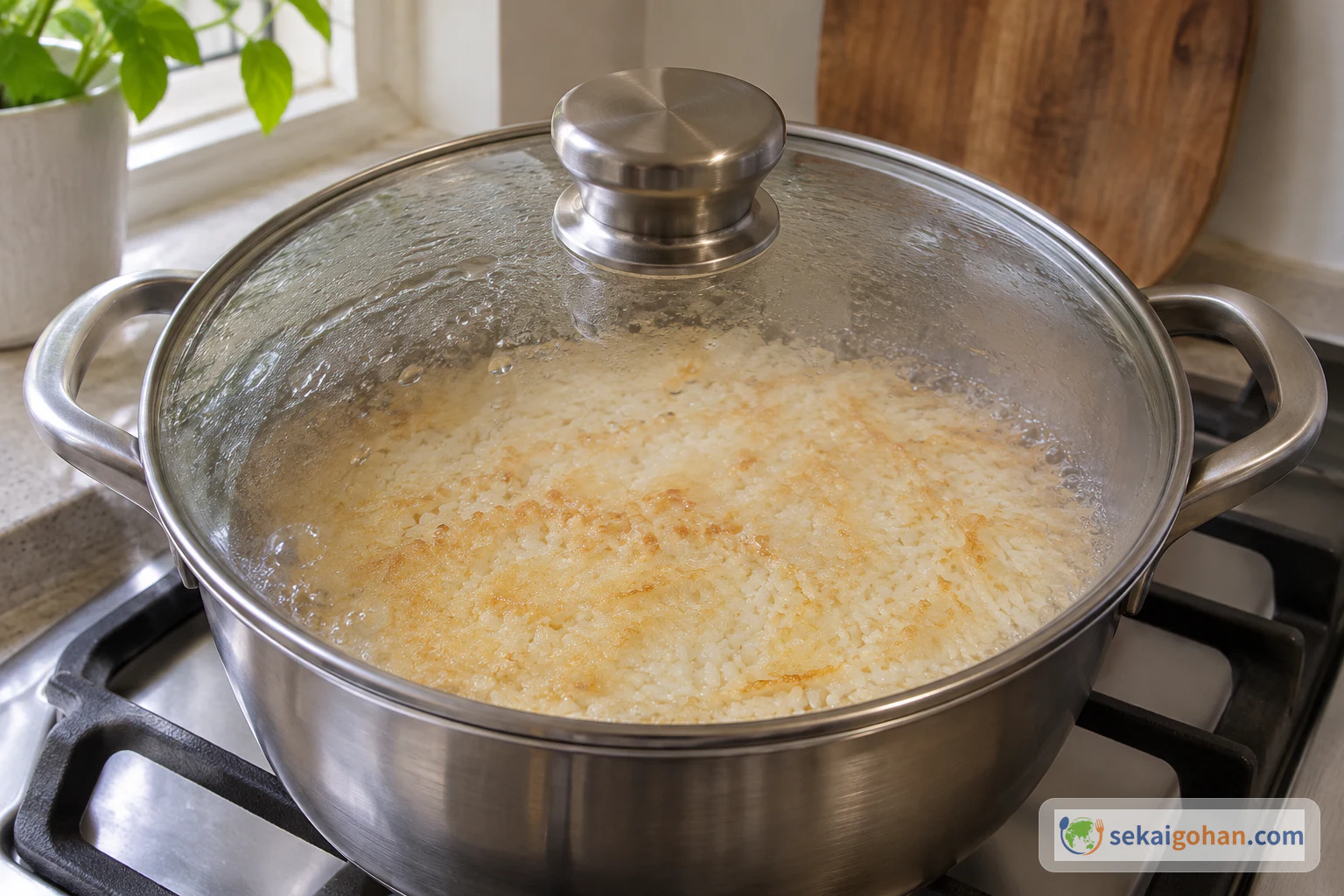
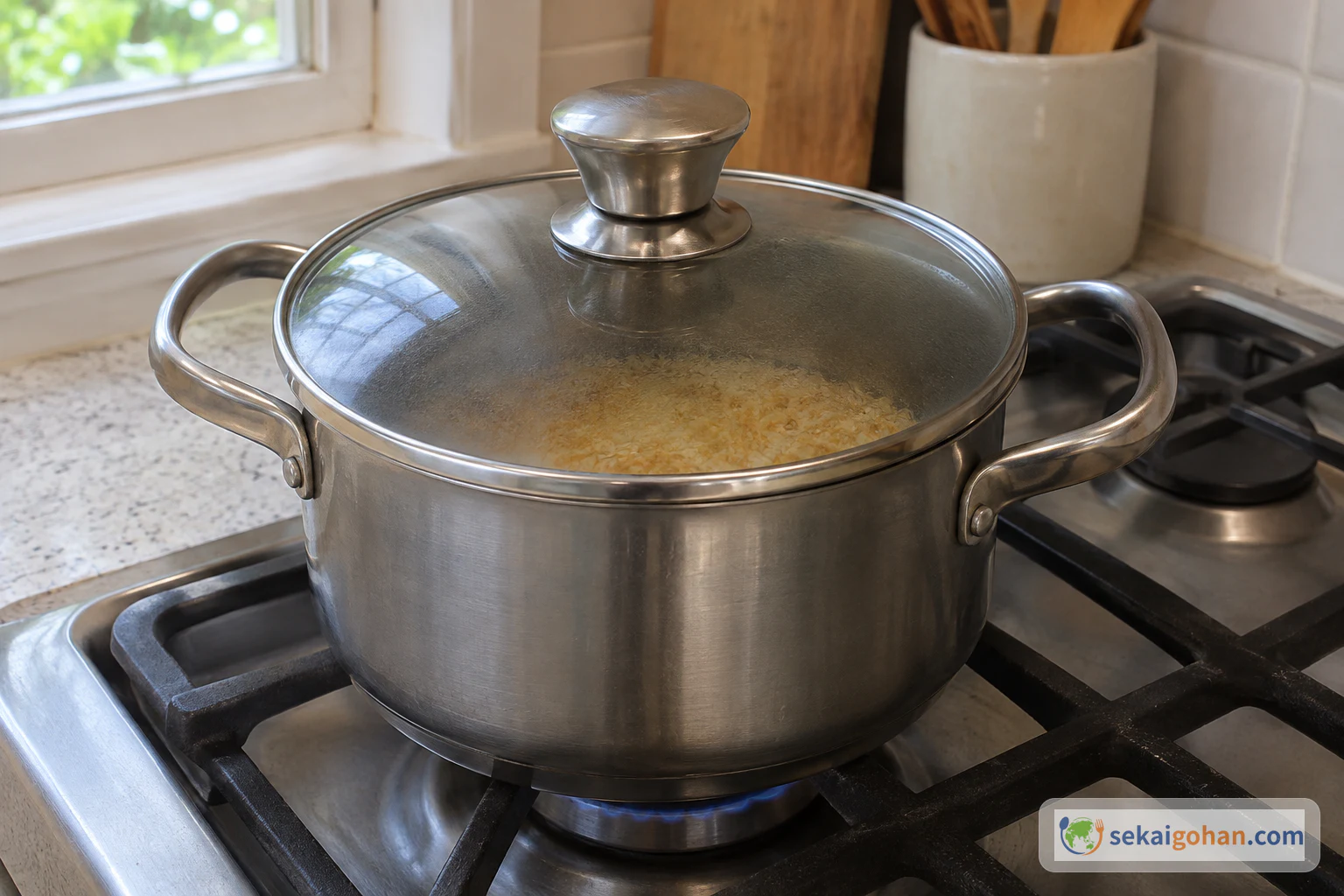
The method runs in one line: cook the rice, build the crust, lift out the rice, loosen the crust, then make the drink. The steps below split it into small stages so each one matches what you see in the pot.
Eating the Crust and Drinking Sungnyung
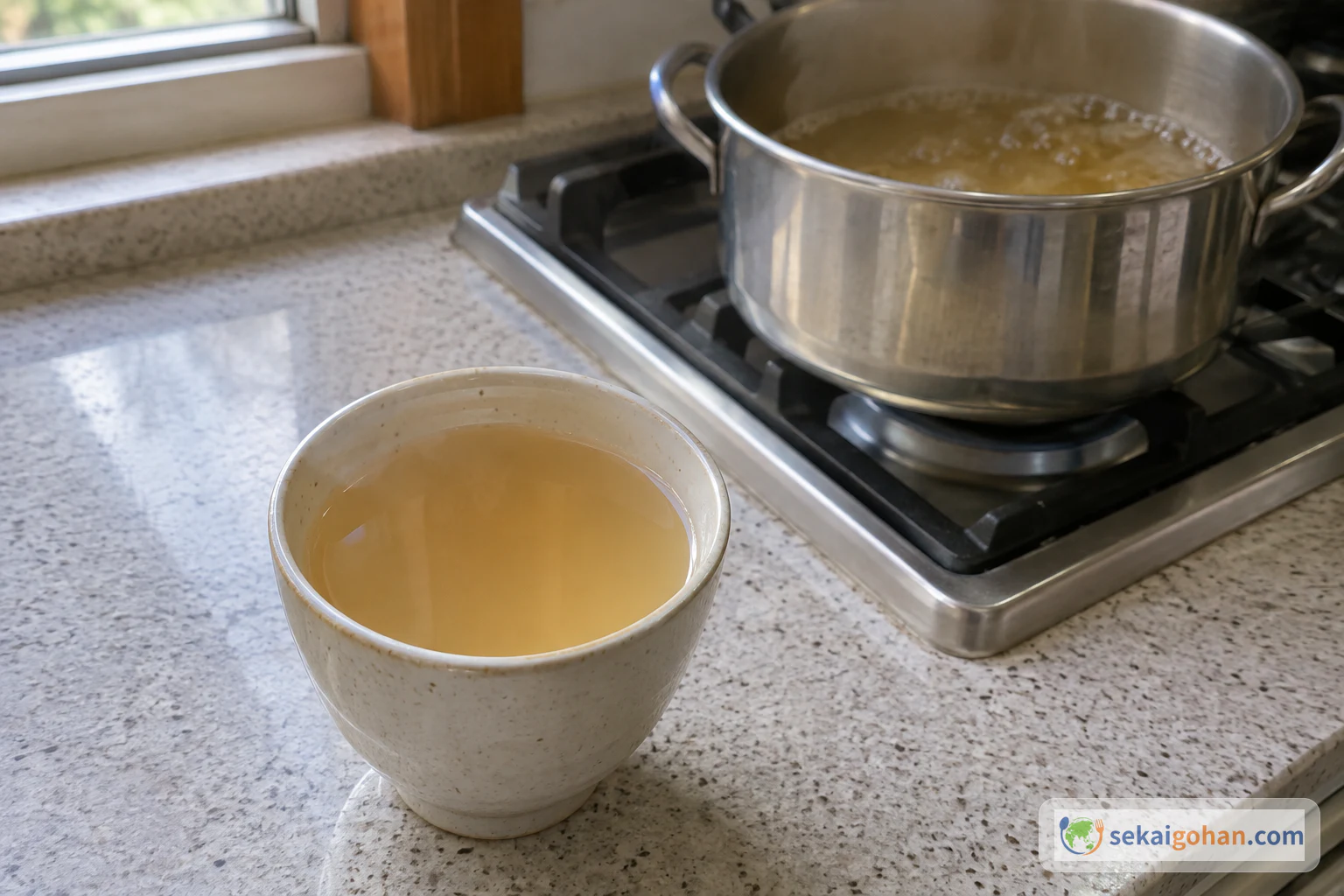
Nurungji can be eaten as it is. Serve the crisp pieces on a plate while they are fresh, alongside the bowl of rice you lifted out in step 8. Sungnyung is plain: only water and whatever bits of crust are left in the pot, with no tea leaves or sugar.
For more dishes from the same table, see the Korea country page.
Stuck, Dark or Scarce: Reading the Crust
This method gives no pot size, exact temperature or target color, so how much crust forms and how it releases will vary with your pot and burner. Use the table to decide what to look at, not as a guarantee of results.
| What you see | What to check | What to do |
|---|---|---|
| The crust will not come away | Whether all three loosening stages were done: 2 minutes covered over low heat, a few drops of water, 1 more covered minute | Start at the outer edge and work inward with the spoon instead of prying from the center. Lift the crust in pieces |
| The crust is black rather than golden | Whether the pot was left unwatched during the extra simmer | The aim is a thin, golden, crisp layer. Next time, keep an eye on the pot during step 7 |
| A thick layer of soft rice sits on top of the crust | Whether all the cooked rice was lifted out in step 8 | Scoop out the soft rice first, so only the thin layer remains on the bottom |
| Very little crust forms | The pot and the heat | Use a heavy-bottomed pot on the stovetop, as in this method. |
| Scratches on a coated pot | The spoon | Switch to a utensil the pot's maker recommends |
Ways to Enjoy Nurungji
These are different ways the crust is eaten. Only the first two are covered by the method above.
- As it is. Eat thin, crisp pieces straight from the pot.
- As sungnyung. Water boiled in the pot after the crust comes out, as in steps 13 and 14.
- Fried, like a snack. Frying the crust as a snack is a separate preparation, and no method for it is given here.
- Ready-made nurungji. Store-bought crust is a separate product from the layer left in your own pot, and this recipe does not depend on it.
The Rice at the Bottom of the Pot: Names and Background
The Encyclopedia of Korean Culture (Academy of Korean Studies; entry by Han Bok-jin, written in 2010 and updated in 2023) defines nurungji as the rice that sticks to the bottom of the pot when rice is cooked. It lists other names for it, including 가마치 (gamachi), 가매치 (gamaechi), 누룽갱이 (nurunggaengi) and 눌은밥 (nureunbap). It describes nurungji eaten as a snack and boiled with water to drink as sungnyung.
The same entry notes that in the days of cooking rice in large pots, people sometimes scorched more rice on purpose and fried it to eat like a snack, and that today, because rice is often made in electric or pressure cookers or in small pots, nurungji does not always form on its own. The encyclopedia itself notes that its entries reflect the author's scholarly view, which may differ from the Academy's official position, so these points are presented here as that entry's description rather than as a rule for all times and regions.
Maangchi's recipe is one household's method, not a regional standard. It is a useful one for cooking at home because it lays out, on a single page, the amounts, timings and order from raw rice to crust to sungnyung.
Eat It Fresh: Advice on Handling Cooked Rice
This recipe is meant to be cooked and eaten fresh. It does not promise any keeping time for the cooked rice or the crust, and it does not use leftover rice.
If you do keep the cooked rice, the UK Food Standards Agency's "Home food fact checker" advises cooling it as quickly as possible, ideally within one hour. It advises against leaving rice in the rice cooker, steamer or pan to cool. It advises refrigerating the rice and eating it within 24 hours. It also advises reheating it no more than once, until it is steaming hot throughout. That advice applies to England, Wales and Northern Ireland. It is general guidance for rice, not a shelf life tested for this dish, and reheating does not make rice that was stored badly safe again.
FoodSafety.gov, the U.S. government food safety site, gives general advice to put leftovers in shallow containers and refrigerate them promptly. Its general two-hour limit for perishable foods (one hour above 90°F/32°C) is not a reason to leave rice to cool slowly at room temperature for two hours.
Frequently Asked Questions
Are nurungji and sungnyung the same thing?
No. Nurungji is the layer of rice stuck to the bottom of the pot, which you eat. Sungnyung is the drink made by adding water to that pot and boiling it. The Korea Tourism Organization and the Encyclopedia of Korean Culture both describe them this way.
Can I make nurungji in a rice cooker?
The Korea Tourism Organization says the layer can form at the bottom of an electric rice cooker as well as a pot. The method in this article is for a pot on the stovetop, and it does not include a rice cooker method. The Encyclopedia of Korean Culture also notes that with electric and pressure cookers, the crust does not always form on its own.
How much does this make?
Maangchi's recipe gives 2 servings of cooked rice. It does not give a number or weight of nurungji pieces, and the amount of crust varies with the pot and the heat.
What heat do I use for the extra 10-minute simmer?
The recipe does not name a burner setting for that simmer, so none is given here. The heat levels it does specify are medium-high to bring the rice to a boil and low for the covered 2 minutes after the rice is lifted out and for boiling the sungnyung.
Can I keep the crust or the rice for later?
This recipe is meant to be eaten fresh and does not promise any keeping time. For cooked rice in general, see the UK Food Standards Agency advice summarized in the section on handling cooked rice above.
What do I need to buy?
Short-grain rice. For equipment, a heavy-bottomed pot with a lid and a spoon suited to the pot are enough. No special ingredients or products are needed.
Sources
- Maangchi, "Rice, scorched rice, and scorched rice tea (Bap, nurungji, & sungnyung)." The recipe followed in this article: short-grain rice and water, rinsing and draining, a 30-minute covered soak in 1 cup of water, boiling over medium-high heat for about 10 minutes, turning the rice, simmering about 10 minutes more for the crust, covered low heat for 2 minutes, a few drops of water and 1 more covered minute, scraping from the outside in, and boiling 2 cups of water over low heat for sungnyung. Yield given as 2 servings of cooked rice. https://www.maangchi.com/recipe/rice
- Korea Tourism Organization (VisitKorea), "Scorched Rice (누룽지 / Nurungji)." Nurungji as the crisp, golden layer at the bottom of a pot or electric rice cooker, eaten as it is or made into sungnyung with hot water, and also made separately as a snack today. https://english.visitkorea.or.kr/svc/contents/contentsView.do?vcontsId=231676
- Academy of Korean Studies, Encyclopedia of Korean Culture, "누룽지" (entry by Han Bok-jin). Definition, alternative names, eating as a snack and as sungnyung, the earlier practice of frying deliberately scorched rice, and the note that modern cookers and small pots do not always produce it. https://encykorea.aks.ac.kr/Article/E0067930
- Food Standards Agency / GOV.UK, "Home food fact checker." Advice on cooling rice quickly, ideally within one hour, not leaving it in the cooker, steamer or pan to cool, refrigerating and eating within 24 hours, and reheating no more than once until steaming hot throughout; applies to England, Wales and Northern Ireland. https://www.gov.uk/government/publications/home-food-fact-checker/home-food-fact-checker
- FoodSafety.gov, "4 Steps to Food Safety." General advice on refrigerating perishable foods within two hours (one hour above 90°F/32°C) and putting leftovers in shallow containers to refrigerate promptly. https://www.foodsafety.gov/keep-food-safe/4-steps-to-food-safety