Chongqing Xiaomian: A Simple Mala Noodle From the Morning Streets
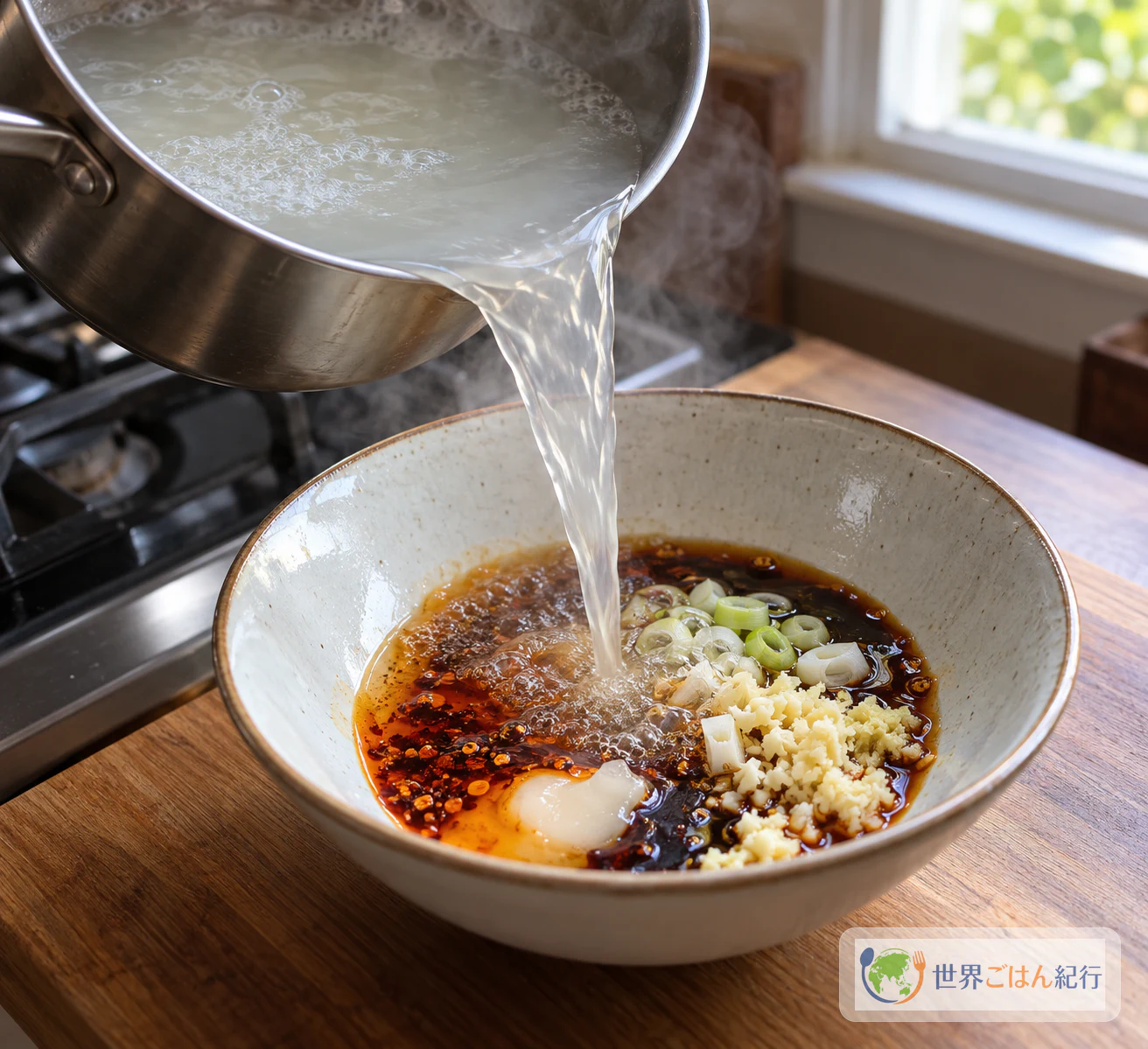
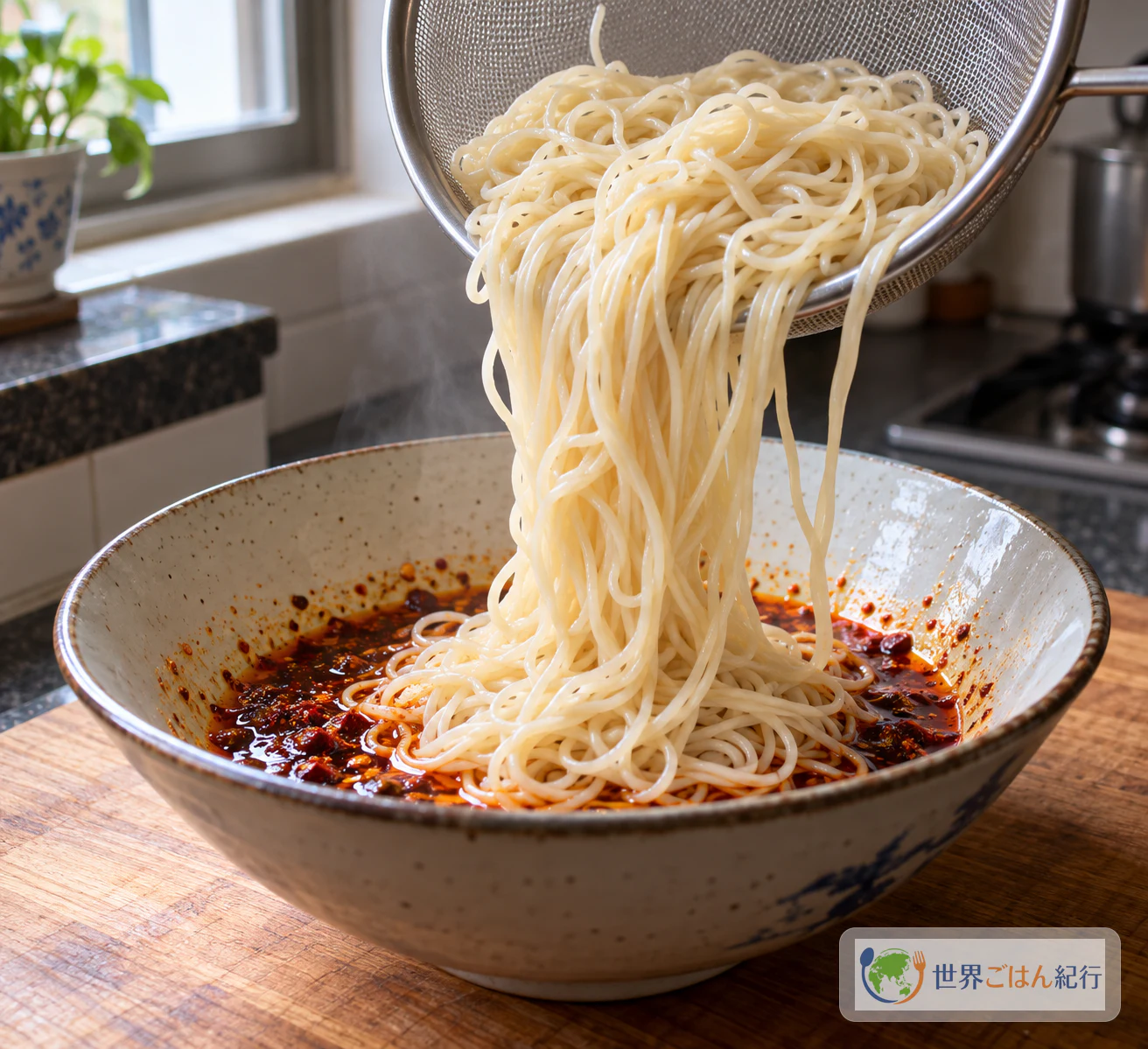
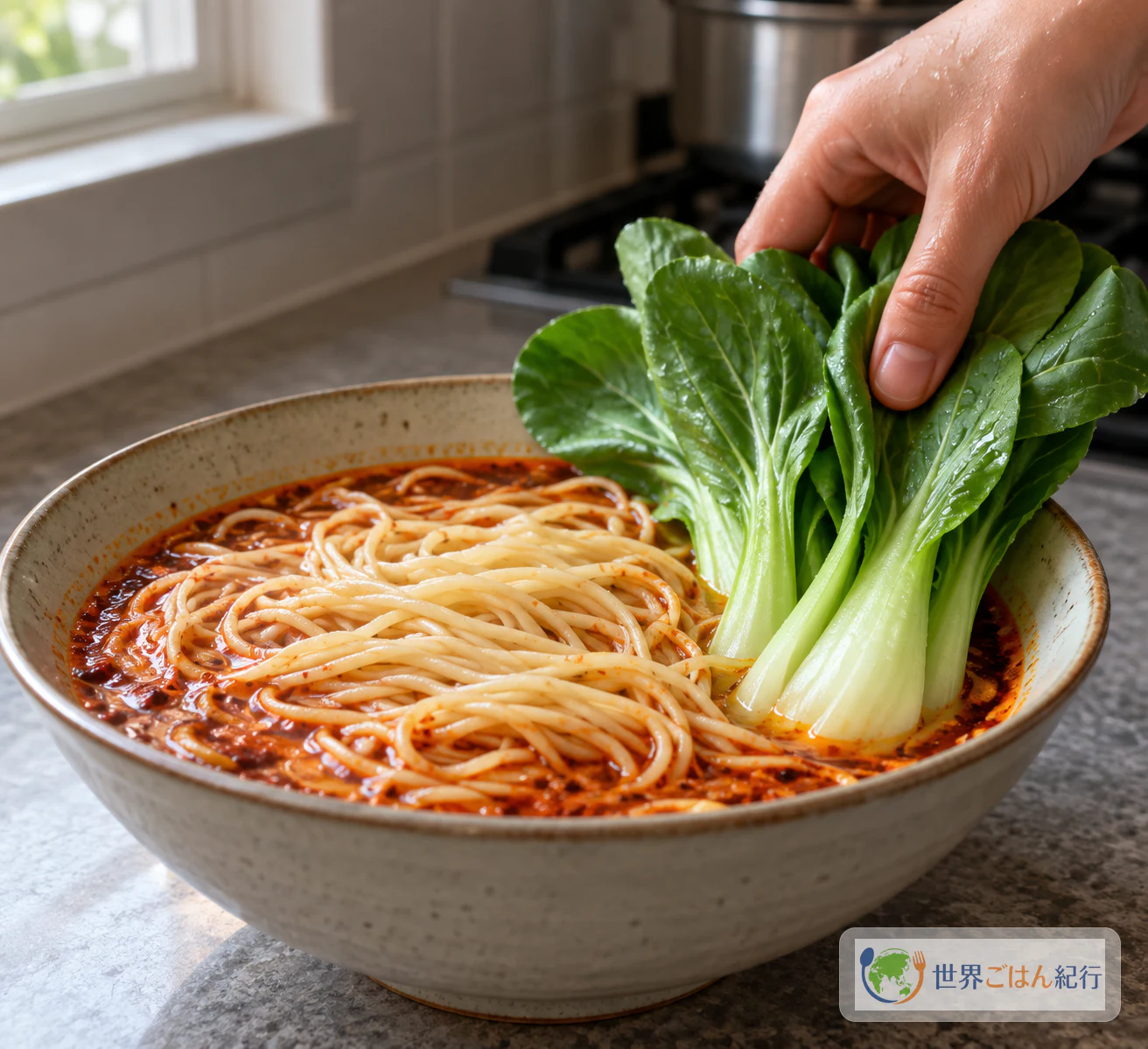
The sauce is built in the serving bowl, not in a pan. Hot noodle-cooking water loosens it, and the noodles, greens and crunchy toppings go in on top. There is no separate broth, no meat topping and no sugar.
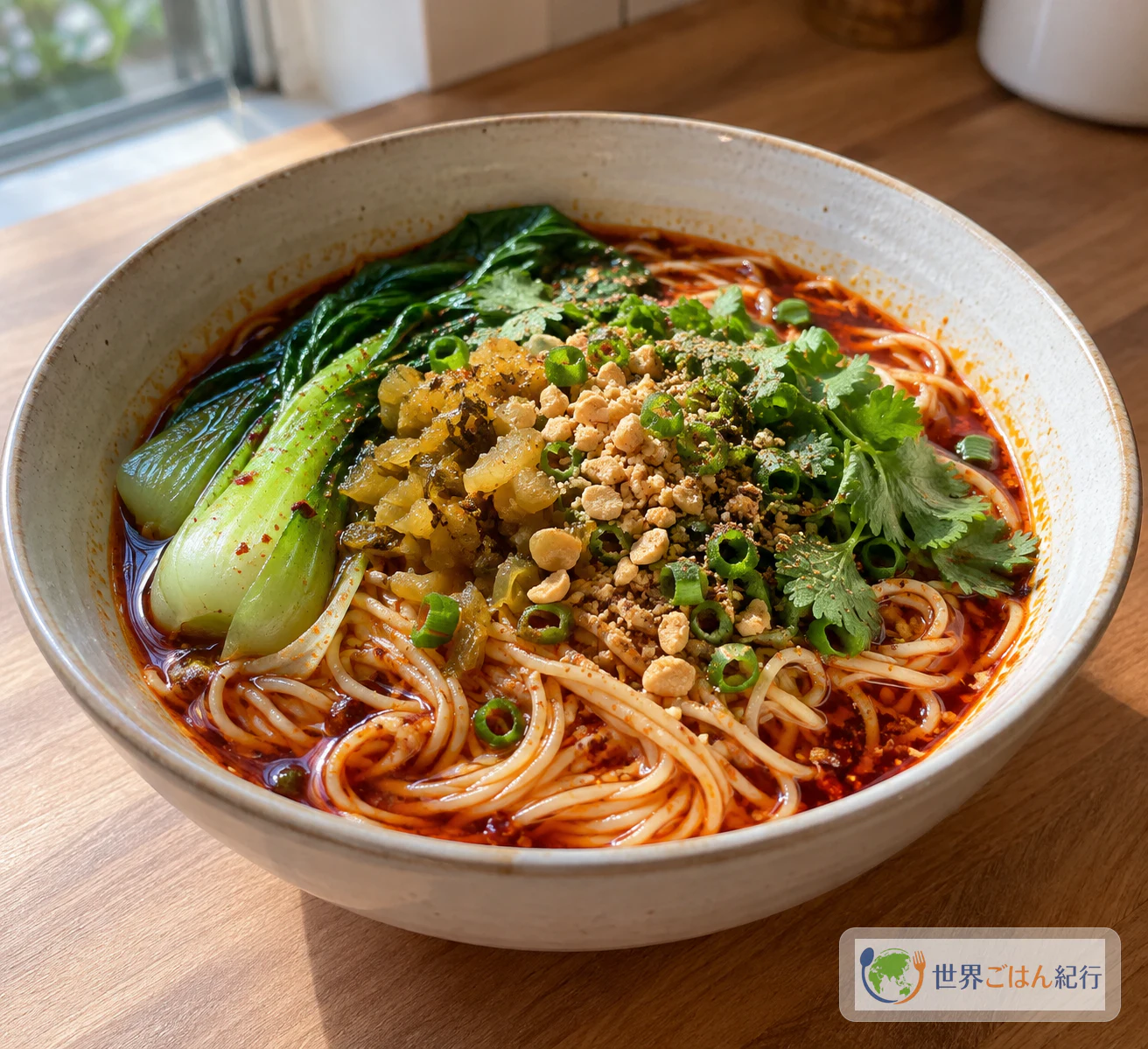
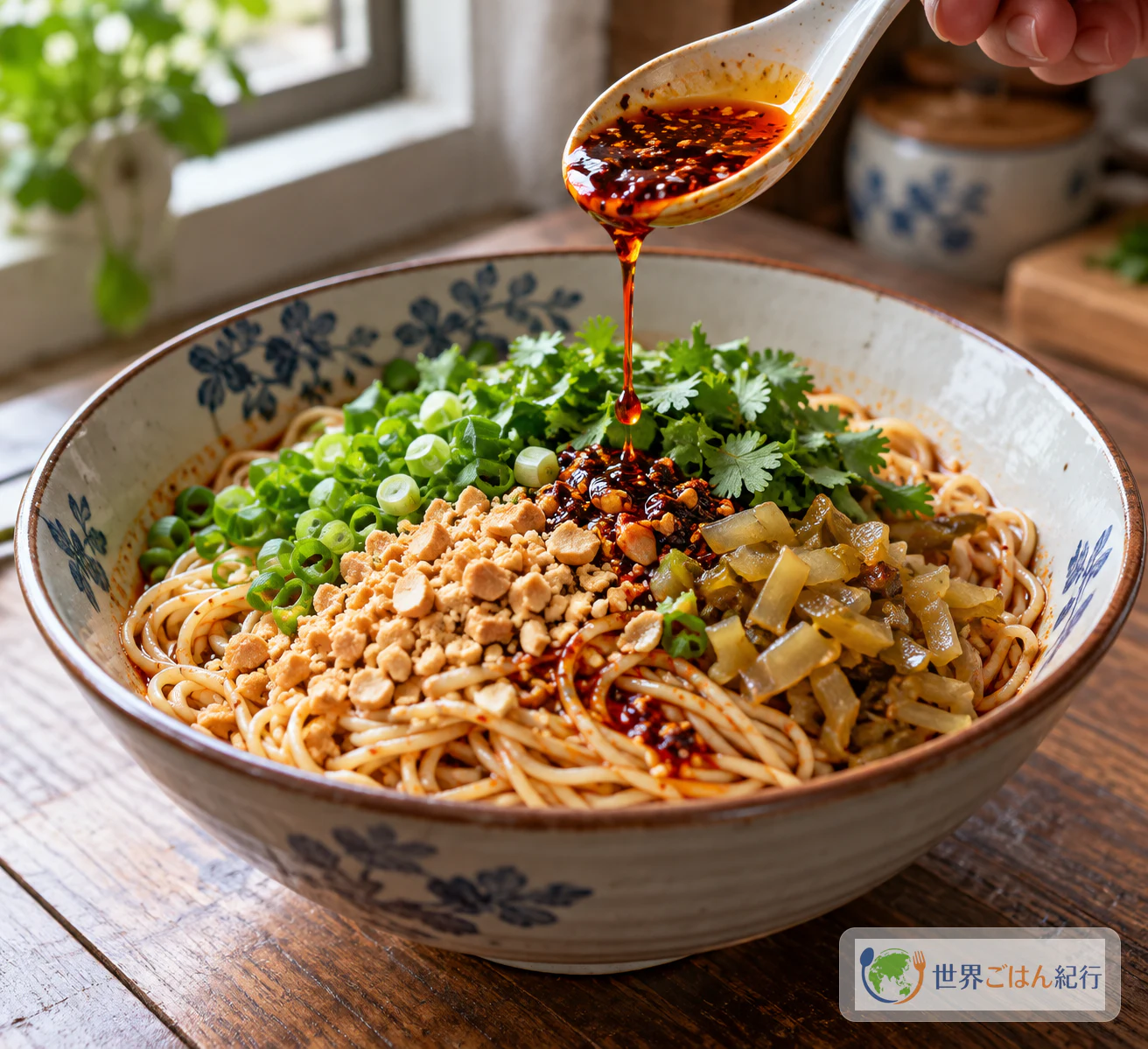
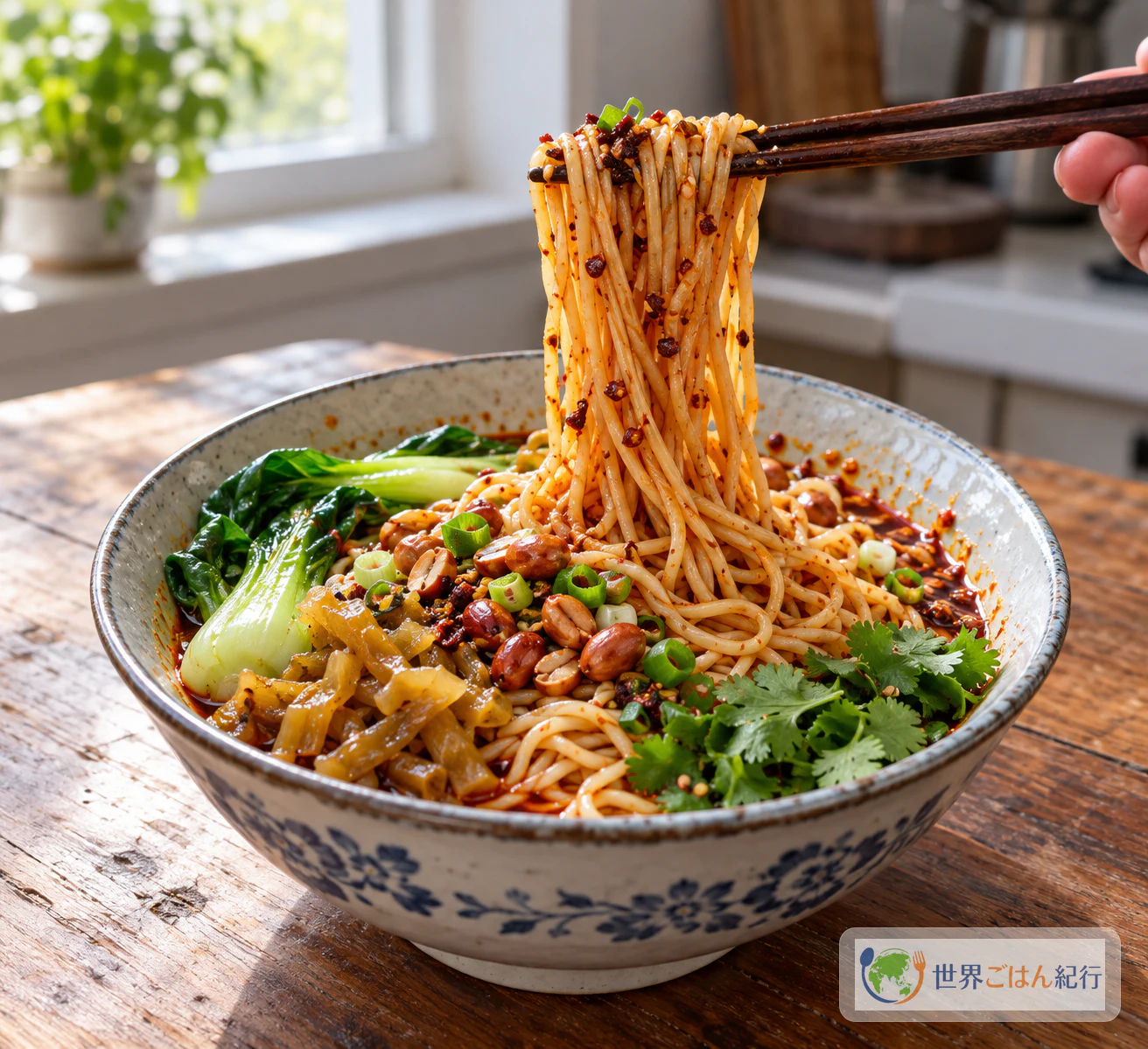
Picture a bowl with a slick of red oil at the bottom, thin noodles lifted out of boiling water and dropped straight in, and a scattering of crushed peanuts, scallion greens, coriander and chopped zha cai on top. That is Chongqing noodles, or xiaomian (小面): a plain noodle seasoned with chili oil, Sichuan pepper, garlic, ginger and soy sauce, mixed right in the bowl.
The recipe here is the version published by Elaine on China Sichuan Food. She names the dish XiaoMian, describes it as a Chongqing-style spicy and numbing noodle, and writes that Chongqing is her hometown. In Chongqing itself, a Xinhua Daily Telegraph report describes xiaomian as part of the city's breakfast culture, with morning noodle shops a familiar street scene. For more dishes from the country, see our China recipes.
The xiao (小, "small") in xiaomian is easy to misread. According to the Xinhua report, it doesn't refer to short or thin noodles. It points to the dish's simple, plain style as a mala noodle.
One version among many
Xiaomian is a family of noodles rather than one fixed formula. The Xinhua report describes many seasoning combinations varying from shop to shop, and Elaine's own general description treats xiaomian as a group of plain noodles seasoned with vinegar, sugar, red oil, ginger and scallion, with some versions topped with meat. This article follows only her recipe card: no meat topping, no stock, and, because the card does not list it, no sugar even though her general description mentions it. It isn't presented as the one standard bowl of Chongqing.
It is also a different dish from Sichuan dandan noodles, which use a pork topping, preserved mustard greens (ya cai) and sesame paste. None of those go into this bowl.
What the card does and doesn't settle
Sekai Gohan has not kitchen-tested this recipe as a whole; it is presented as the card describes it. Three points on the card don't line up, and they are left as they are rather than guessed at:
- Yield. The card header says it serves 2, but the ingredient list gives the noodles only as "1 serving," with no weight. The amounts below are therefore one batch of the card, with no confirmed number of servings and no nutrition figures.
- Time. The card lists 10 minutes of prep, 10 minutes of cooking and 20 minutes in total. The introduction to the recipe says the bowl can be done in 5 minutes once the ingredients are ready. This article goes by the card's times; the noodle cooking time itself depends on the package.
- Measures. The card uses teaspoons and tablespoons without naming a national standard, and it leaves the salt, greens and noodle water as a pinch, a handful and "some." Those are kept as written, with no gram or milliliter conversions.
Ingredients (One Batch)
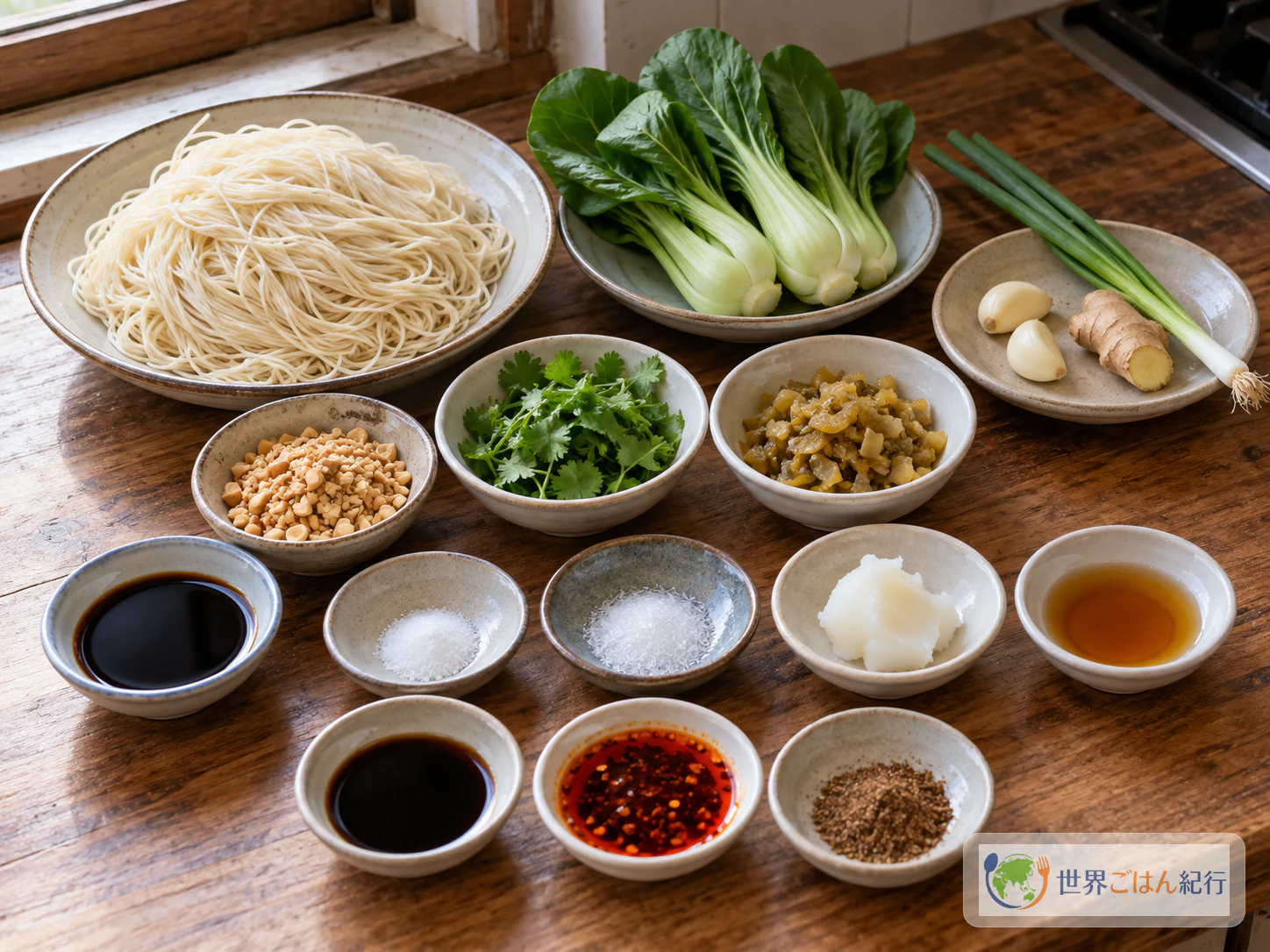
Judge the salt, greens and noodle water by eye and taste. Peanuts, soy sauce and sesame oil are all in this bowl, and chili oils and zha cai can contain other ingredients, so check the labels on everything you buy if you are cooking for anyone with allergies. Lard is pork fat.
Equipment
- A pot for boiling the noodles
- A serving bowl
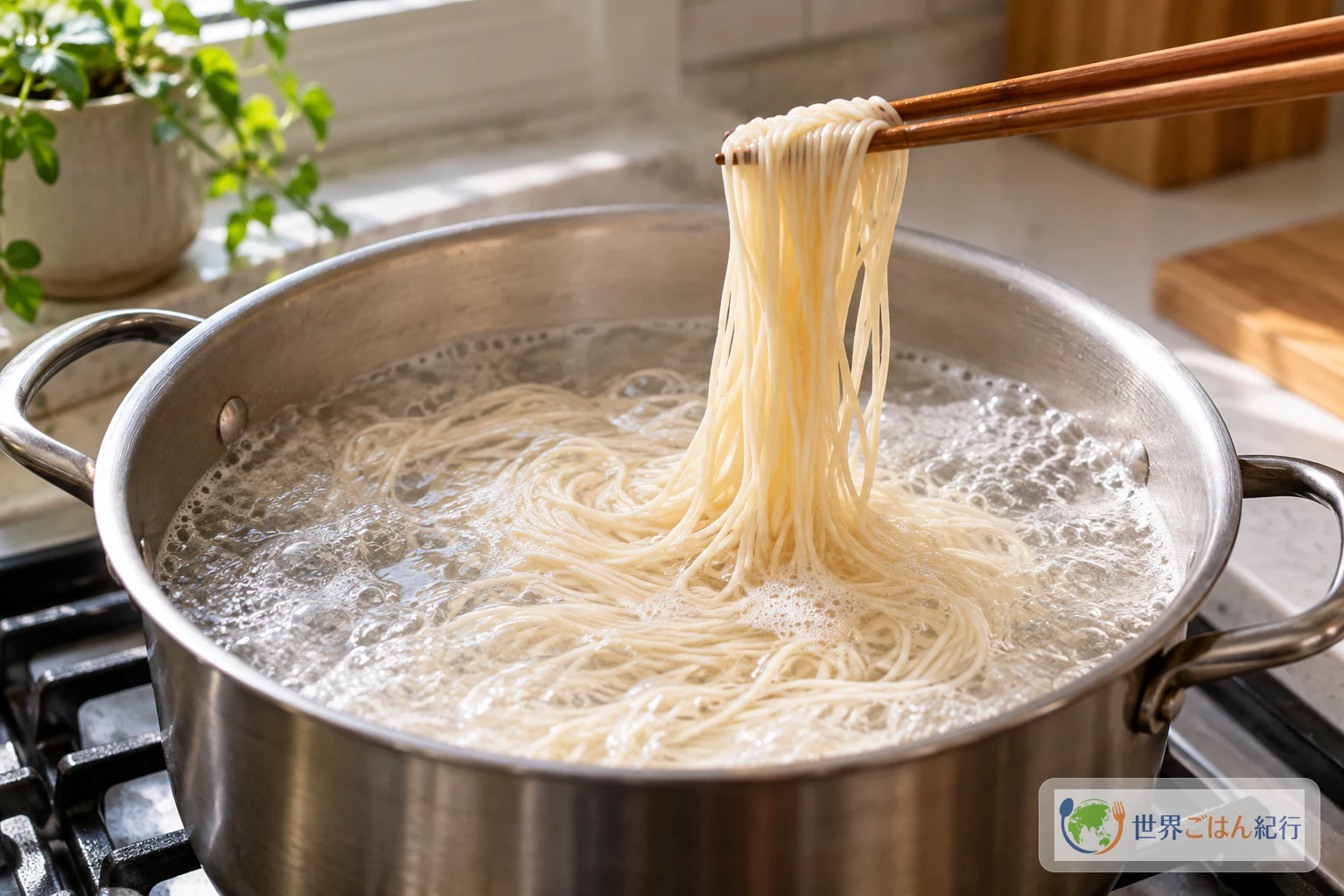
- A strainer or chopsticks for lifting the noodles
- A knife and cutting board
Choosing Noodles, Chili Oil and Zha Cai
Noodles. Thin alkaline noodles are ideal; thin dried noodles are fine too, and thin round fresh noodles also fit. In Japan, for example, Shimadaya sells a fresh mid-thin Chinese-style noodle in 120 g packs in the Kanto, Koshinetsu and Shizuoka areas. That pack is a shopping example only: this bowl has no set noodle weight, so 120 g is not the same as "1 serving," and the product is not claimed to match the alkaline noodles recommended above.
Chili oil and Sichuan pepper. This bowl uses "Chinese red oil." Japanese food companies such as YOUKI list Sichuan pepper powder, Sichuan chili oils and zha cai in their catalogs, which gives you useful names to search for, but a catalog listing doesn't mean every store stocks them or that a given chili oil matches Chinese red oil. If a chili oil already contains Sichuan pepper or crunchy bits, read the ingredient list before deciding how much peppercorn powder to add.
Zha cai. Some ready-chopped zha cai is sold already dressed. Gyomu Super's chopped zha cai, for instance, is made in China, comes in an 800 g pack and is seasoned with a sesame-oil-flavored dressing, so it tastes different from plain minced zha cai. Since zha cai is optional, you can leave it out if you can't find one that suits.
This bowl contains peanuts, soy sauce and sesame oil. Prepared chili oils and zha cai can contain other allergens, so read each label. No allergy-safety claim is made for any particular product.
Method: Seasoning the Bowl, Then Adding the Noodles
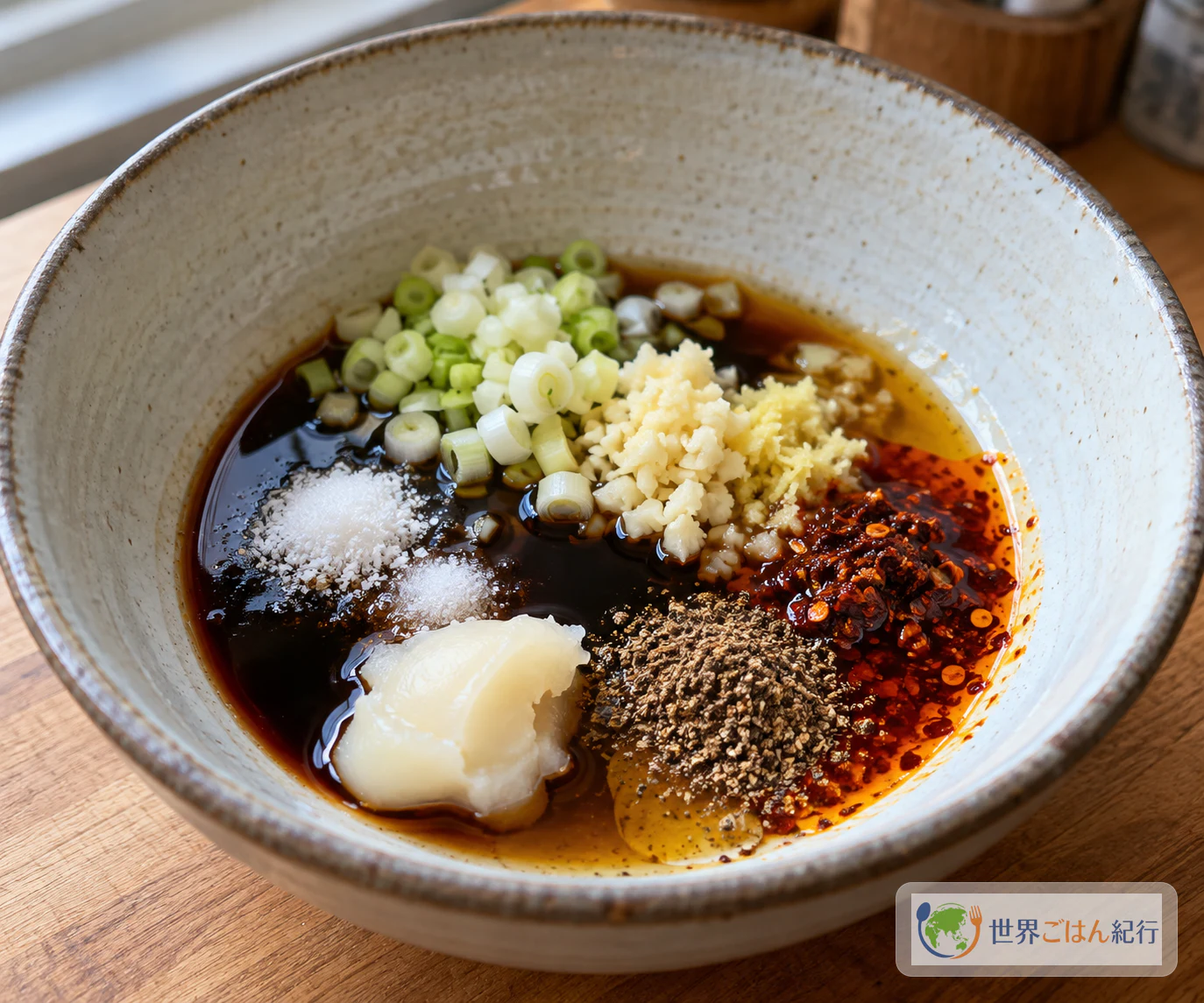
Before you start, mince the garlic, ginger, coriander and zha cai, smash the peanuts, separate and chop the white and green parts of the green onion, and rinse the bok choy. None of this involves heat.
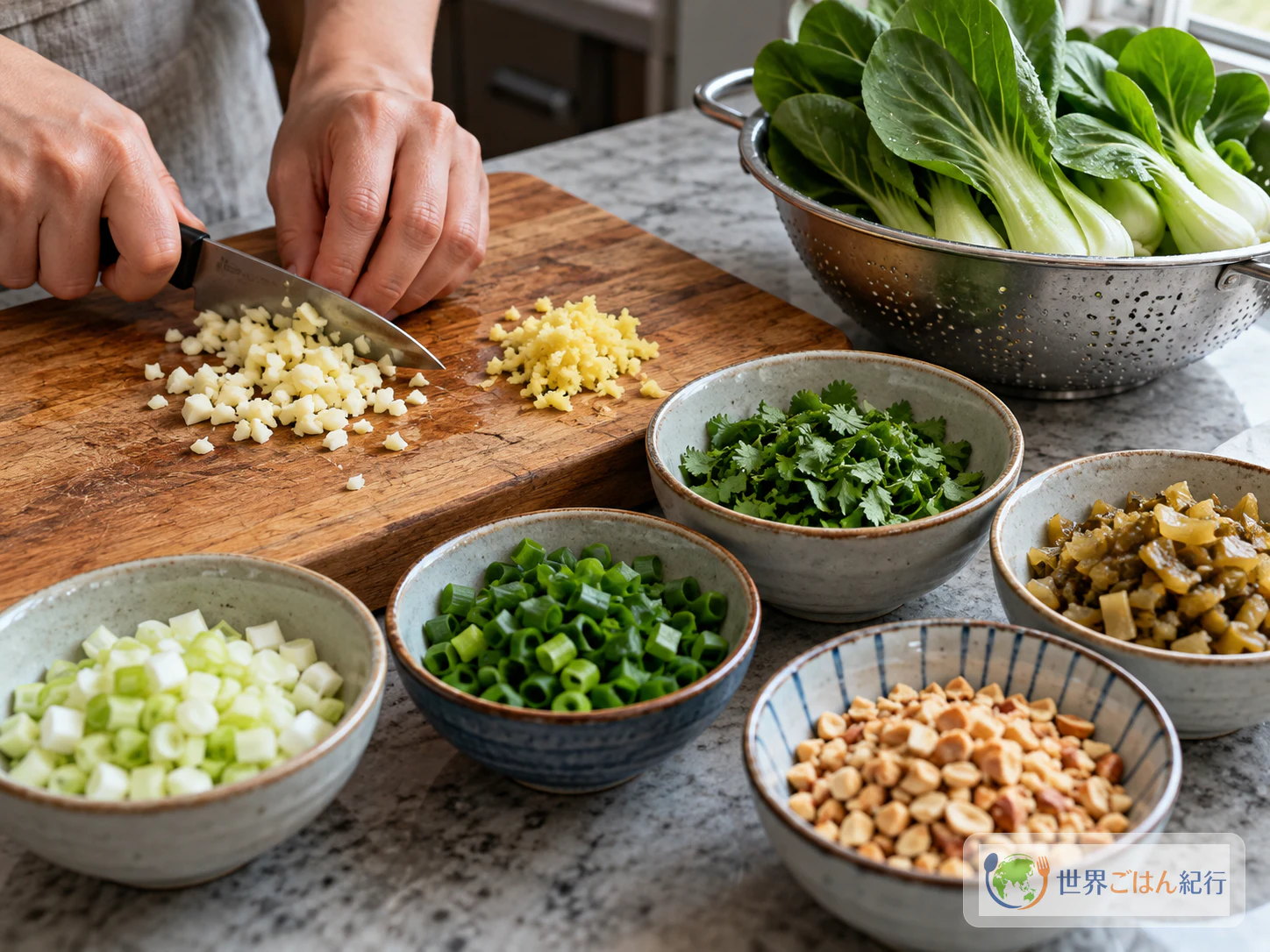
Sichuan peppercorn powder is optional. Here it goes into the bowl with the other seasonings in step 1; that placement is an assembly choice made in this article.
When the Bowl Isn't Quite Right
| If… | Try… |
|---|---|
| The sauce tastes too strong or too salty | Next time, add the noodle water a little more generously in step 3, tasting as you go |
| It tastes flat | Add a small pinch of salt |
| It isn't hot enough | Add more Chinese red oil on top, within your own tolerance |
| The numbing is too strong | Reduce or leave out the optional Sichuan peppercorn powder |
| The noodles turned soft | Cook to the package directions and eat as soon as the bowl is assembled |
| The bowl seems watery and thin | Add less noodle water next time; the amount is yours to judge |
Variations Within the Recipe
Every option below stays within this recipe's own ingredients. Sugar, stock, meat toppings and sesame paste belong to other versions and are not part of it.
- Dried noodles. Swap the fresh noodles for thin dried noodles and cook them according to the package.
- Chinese water spinach. Use it in place of bok choy; either works.
- No zha cai. Leave it out. You lose one layer of saltiness and crunch.
- No Sichuan pepper. Leave out the powder for a bowl with heat but less tingle.
- More or less chili oil. Stay within 1 to 2 tbsp in the bowl, and add more at the end only if you want it hotter. How much is "hotter" varies from person to person.
Flavor and the Breakfast Table
The heat in this bowl comes from the chili oil and the light numbing from Sichuan pepper, which Elaine describes as gentle here. Lard and sesame oil carry the aroma, soy sauce and a touch of black vinegar give it a savory edge, and the preserved zha cai and peanuts add crunch against the soft noodles.
In Chongqing, the Xinhua report places xiaomian in the morning: a city where people stop at noodle shops for a bowl at the start of the day, with each shop finding its own seasoning combination. Elaine's introduction also touches on eating it for breakfast. Her card is one home kitchen's way into that breakfast bowl.
Frequently Asked Questions
Does "xiaomian" mean small noodles?
No. According to the Xinhua report, the "small" (小) doesn't refer to the length or thickness of the noodles. It refers to a simple, plain style of mala noodle.
Do I need to make a separate soup or stock?
Not for this version. Some of the noodle-cooking water is added to the seasoning in the bowl to loosen it, and that is the only liquid. A separate stock isn't part of the card's method.
Can I change the noodles or the greens?
Yes, within what the card allows: thin dried noodles instead of fresh, and either bok choy or Chinese water spinach. The card gives no weight for the noodles or the greens, so there is no fixed amount to match.
Is zha cai required?
No. It is optional on the card. The photos show it included, but you can leave it out if you can't find plain zha cai or don't like it.
How many people does this serve?
That isn't settled. The card says it serves 2, but it lists the noodles as "1 serving" without a weight. Treat the ingredient list as one batch of the card rather than as a confirmed 1 or 2 servings. For the same reason, no nutrition figures are given here.
Sources
- Elaine, "Chongqing Noodles," China Sichuan Food. The recipe card used for all ingredients, amounts, steps and times in this article; also the source for the name XiaoMian, the author's Chongqing hometown, her general description of xiaomian, and her notes on noodles, chili oil, lard, MSG, Sichuan pepper and preserved vegetables. The yield, sugar and timing inconsistencies described above are on this page. https://www.chinasichuanfood.com/chongqing-noodles/
- Xinhua Daily Telegraph / Xinhua News, "从一'面'之缘到'面'向世界 重庆小面爆红背后的启示" (2023). Source for xiaomian as part of Chongqing's breakfast culture, morning noodle shops, the meaning of "small" in the name, and the variety of seasoning combinations across shops. Not used for recipe amounts. https://www.xinhuanet.com/politics/2023-06/21/c_1129709540.htm
- Shimadaya, "中華めん 1食" (official product information). Example of a fresh mid-thin Chinese-style noodle sold in Japan in 120 g packs in the Kanto, Koshinetsu and Shizuoka areas. A shopping example, not an equivalent of the recipe's "1 serving." https://www.shimadaya.co.jp/products/category/chilled/chinese/000088/
- YOUKI, "ユウキの商品" (official product catalog). Lists Sichuan pepper powder, Sichuan chili oils and zha cai on the Japanese market. Does not establish store stock or a match with the recipe's Chinese red oil. https://50th.youki.co.jp/products/
- Gyomu Super, "本格中華ザーサイ" (official product page). Example of chopped zha cai sold in Japan: made in China, 800 g, seasoned with a sesame-oil-flavored dressing. An availability example, not a direct substitute for plain minced zha cai. https://www.gyomusuper.jp/product/detail.php?go_id=2453