Doganitang: A Soup Built in Stages, with the Cartilage Returned Last
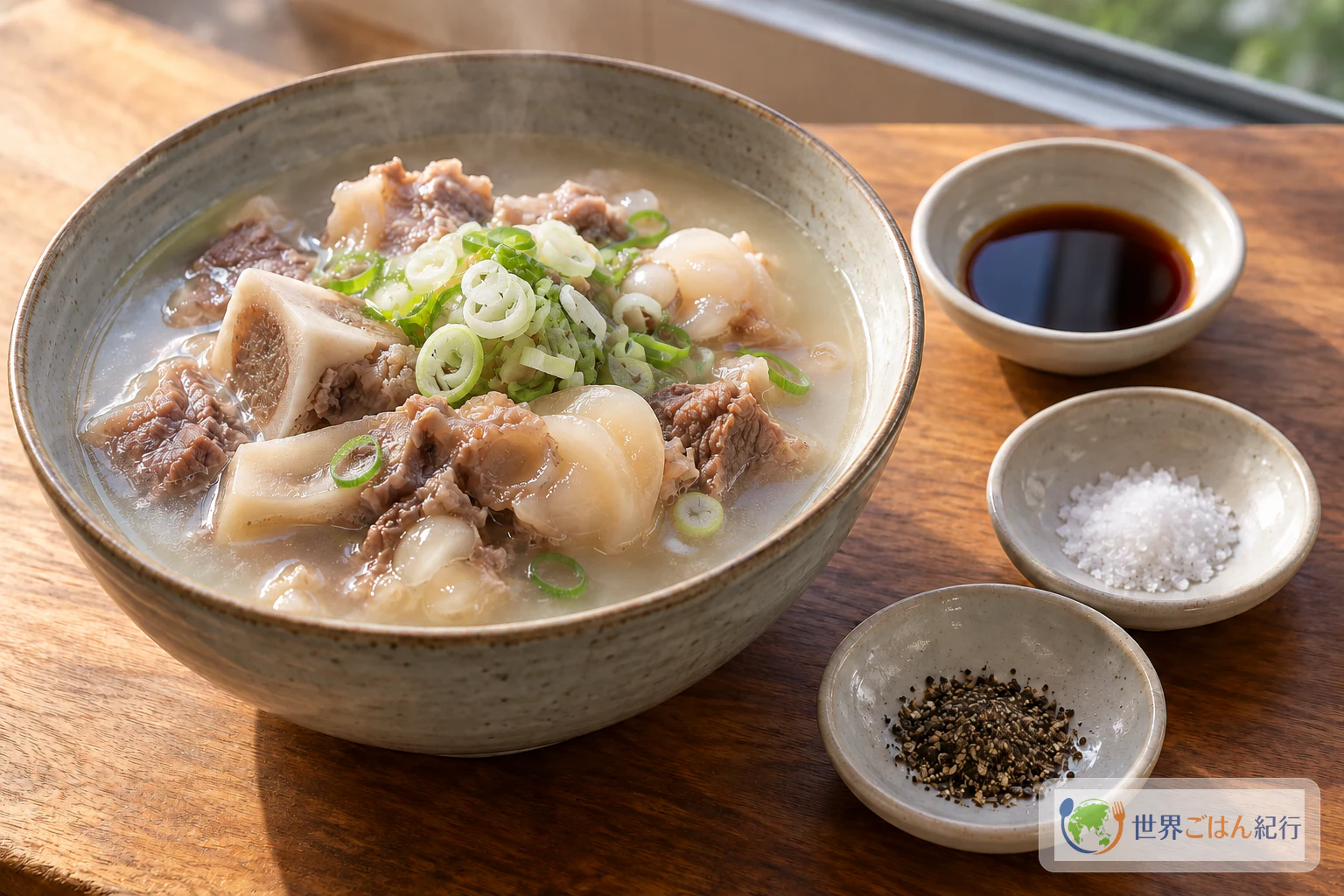
Keep the order of the stages: two separate extractions, the bones removed, the two broths combined, and the cartilage returned at the very end. Salt, pepper and sauce stay on the table, not in the pot.
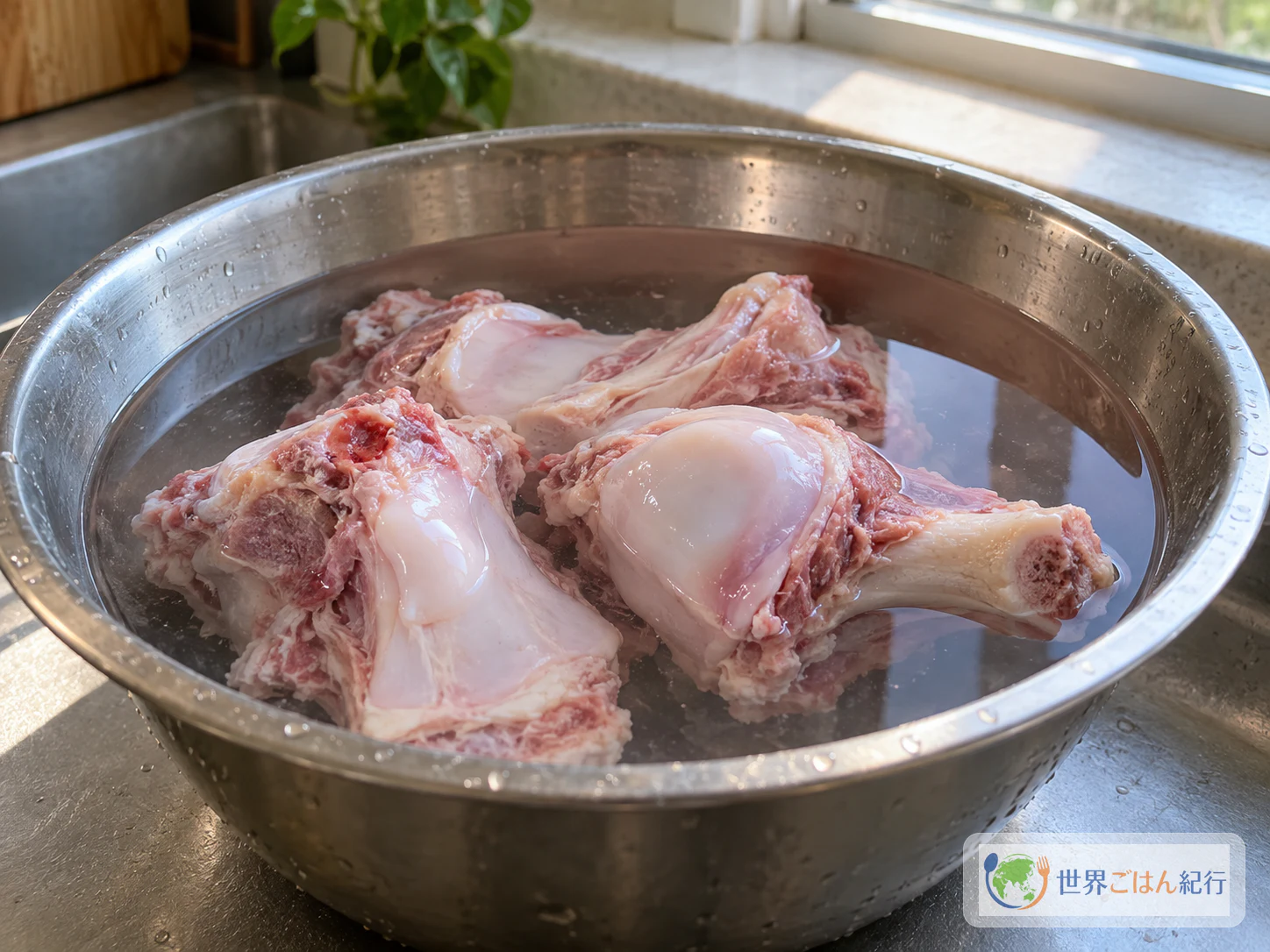
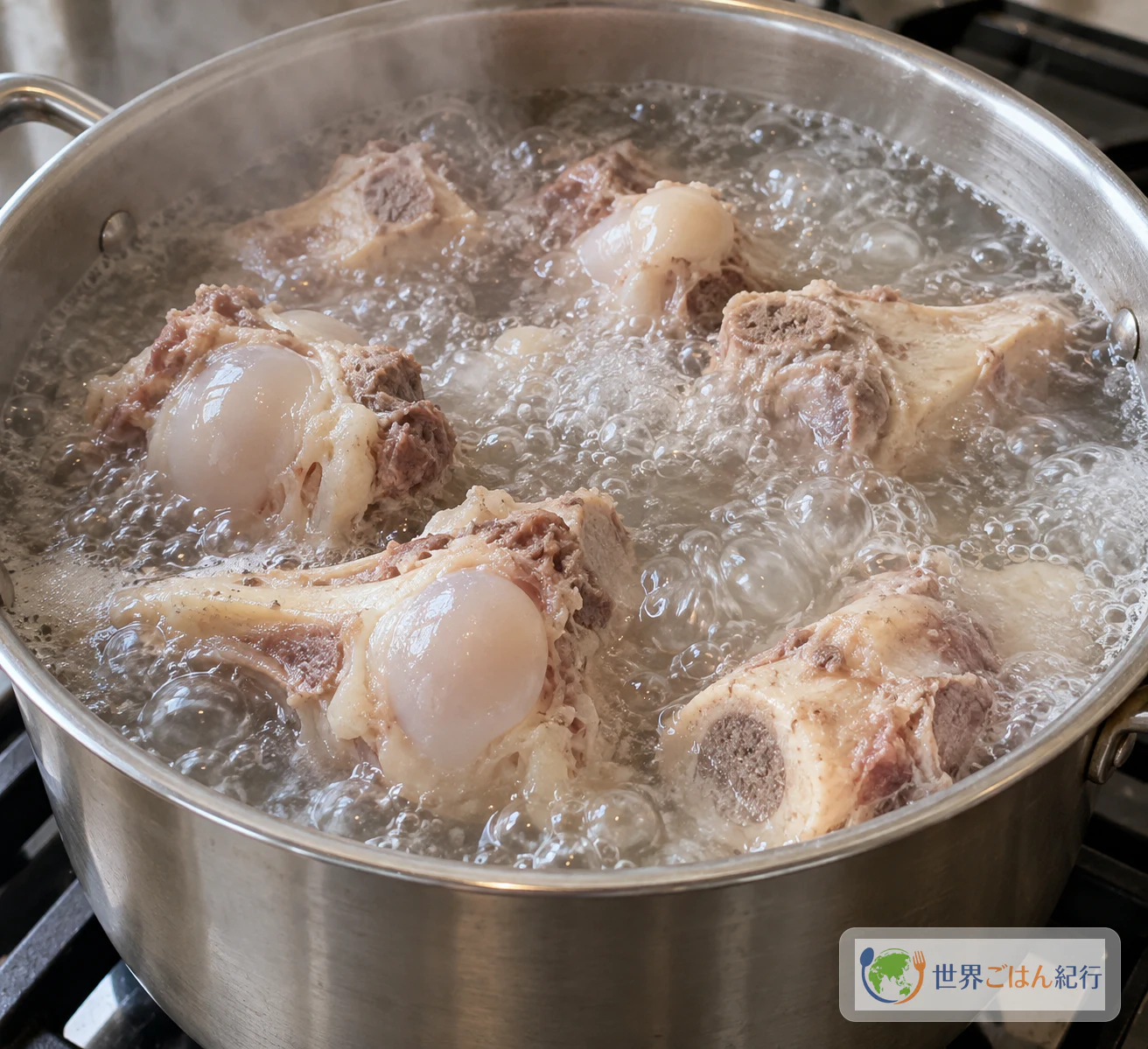
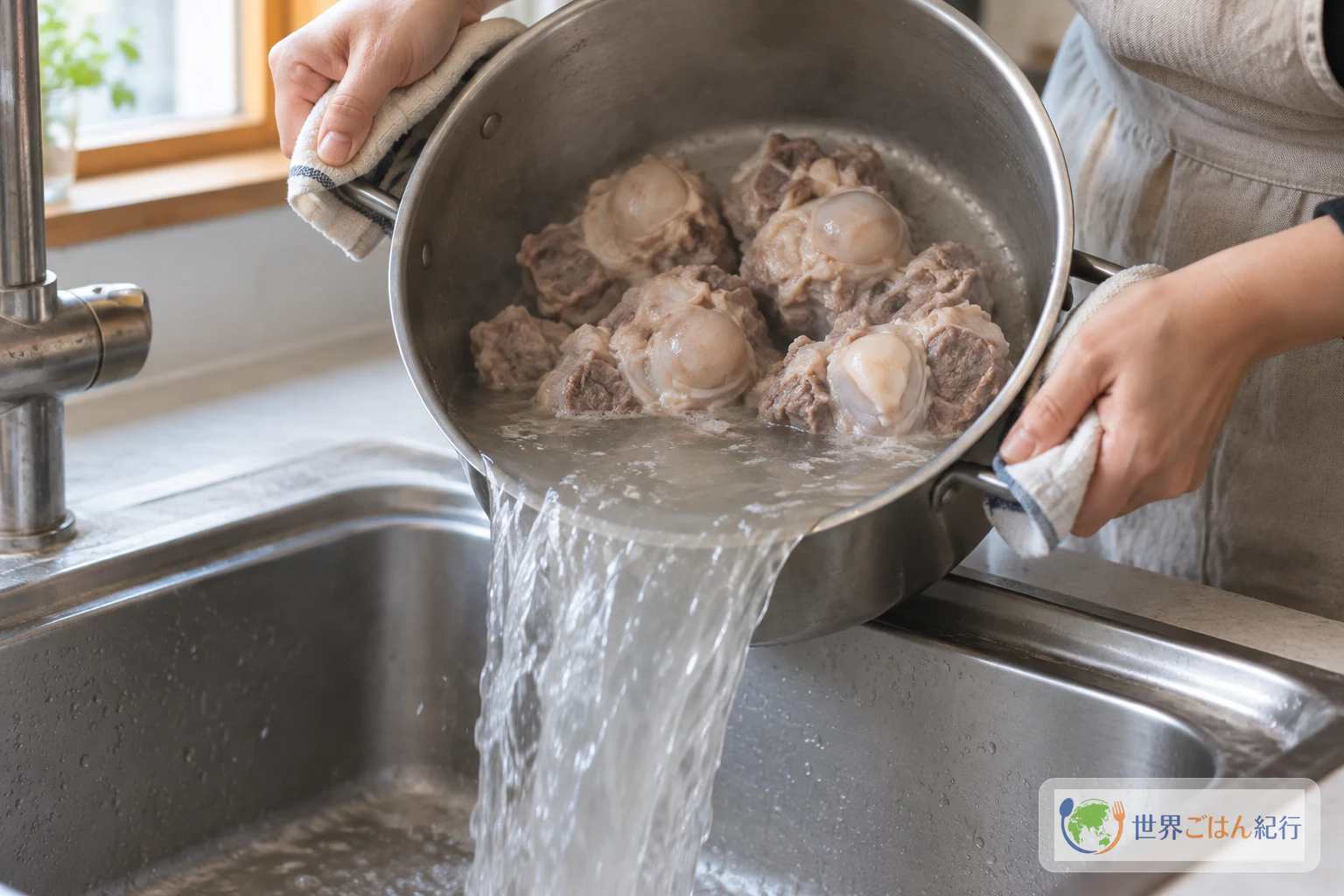
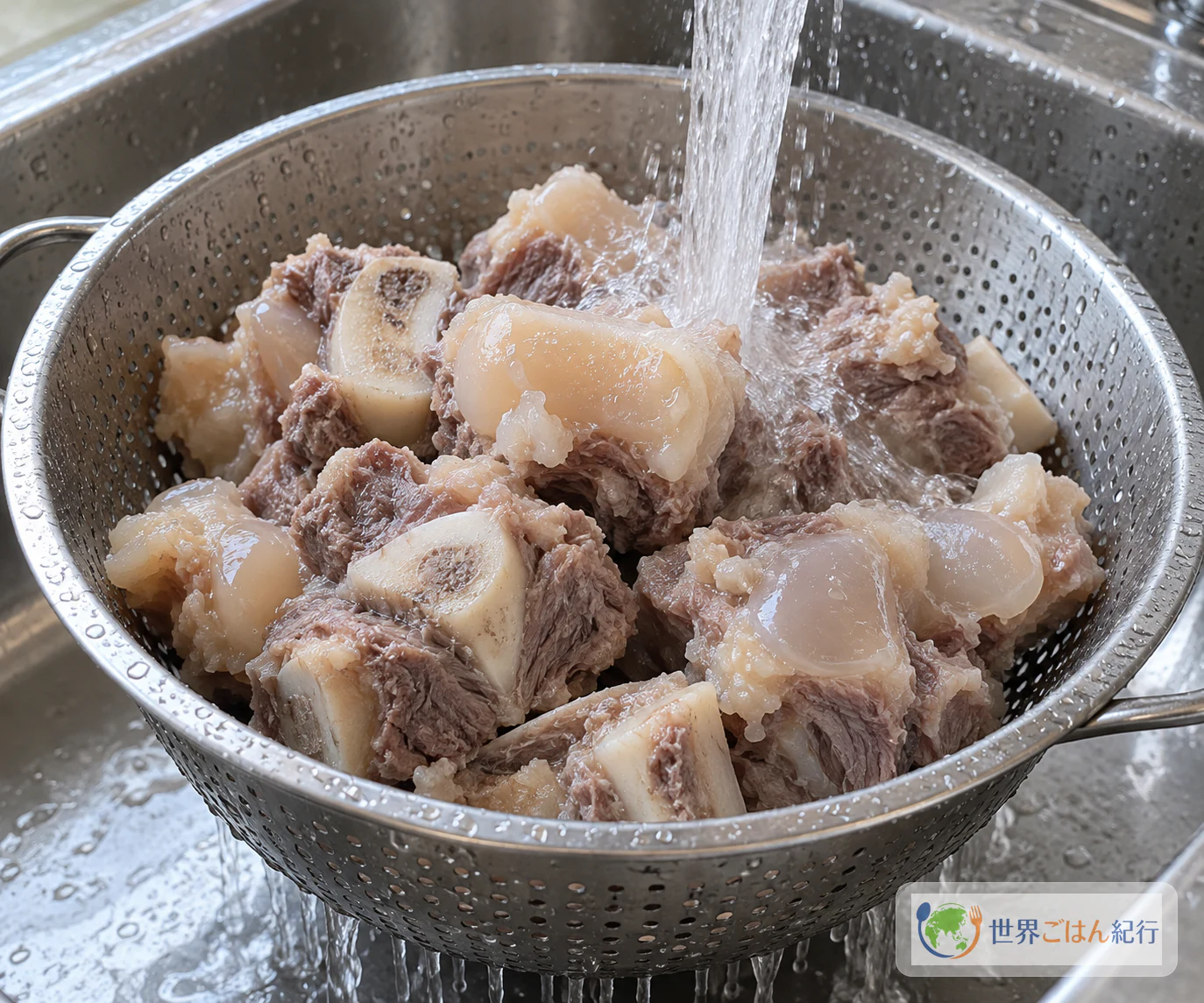
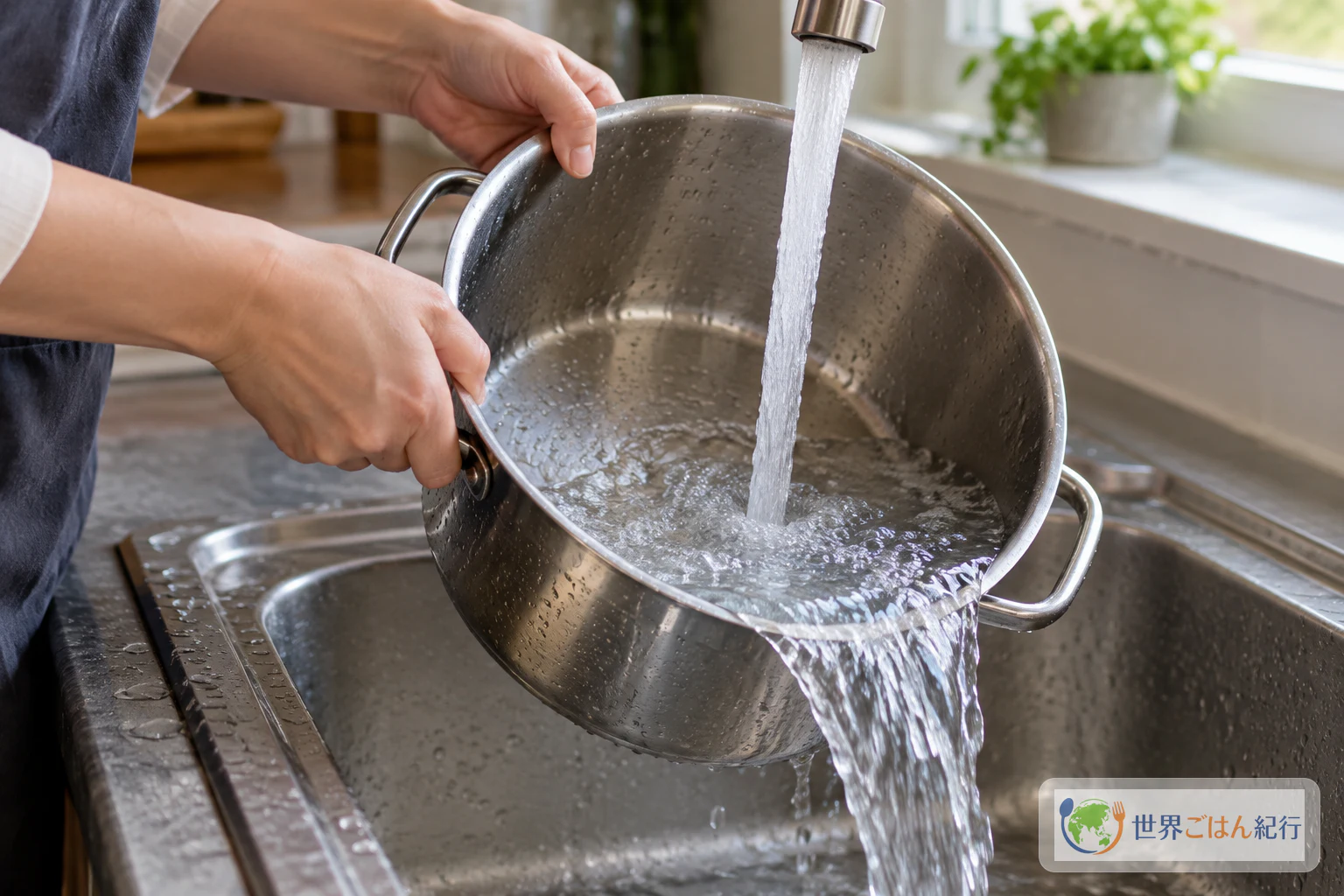
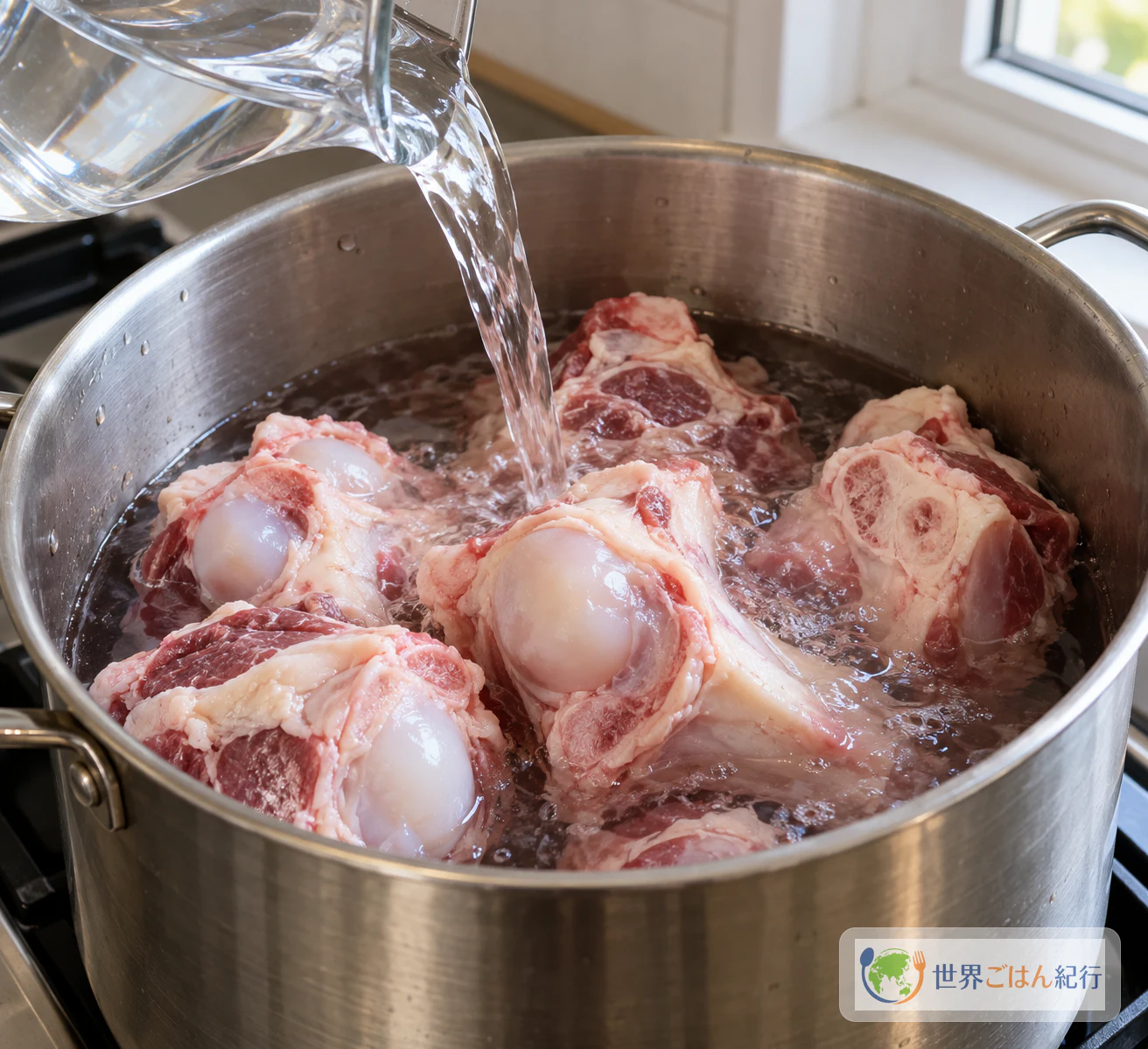
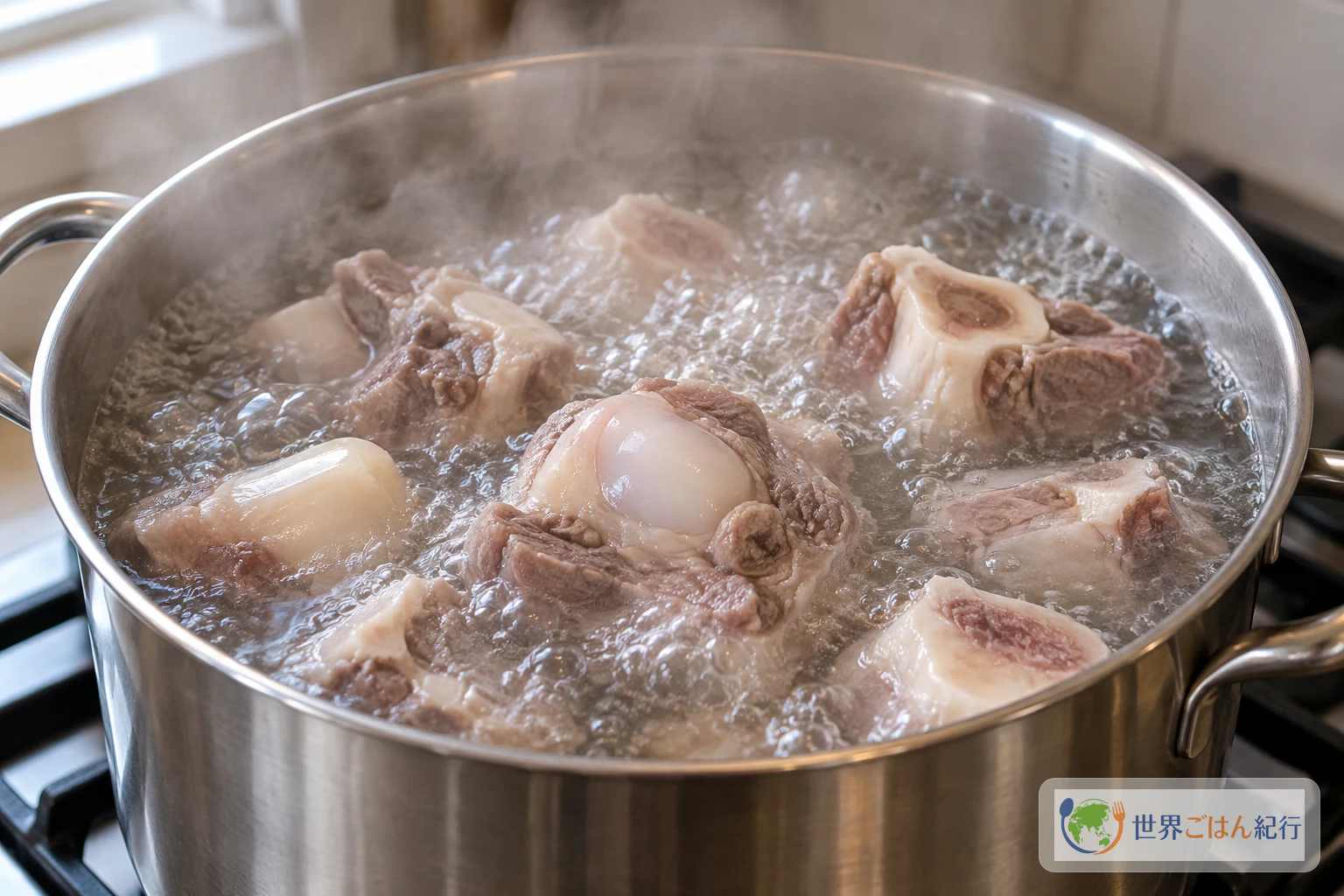
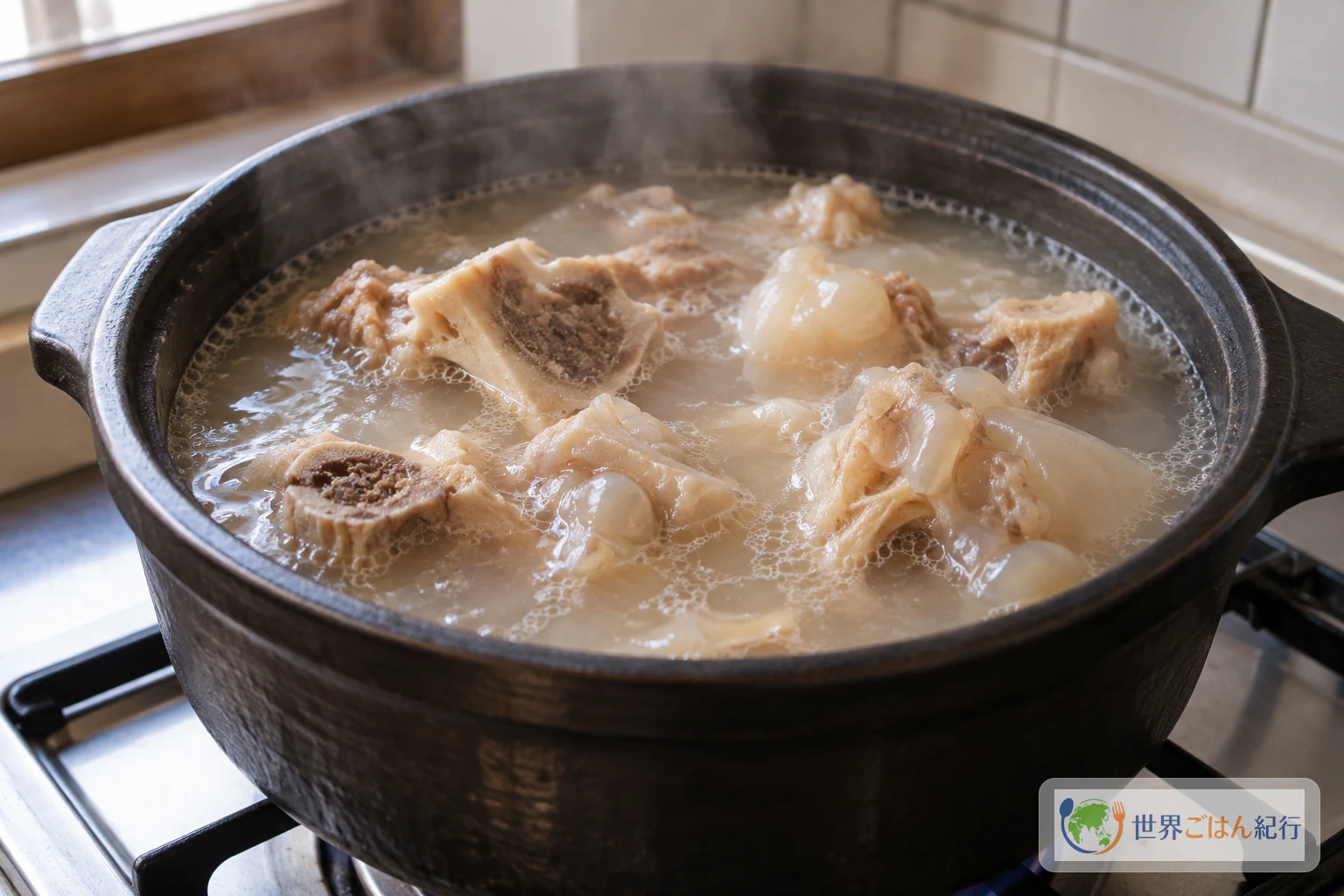
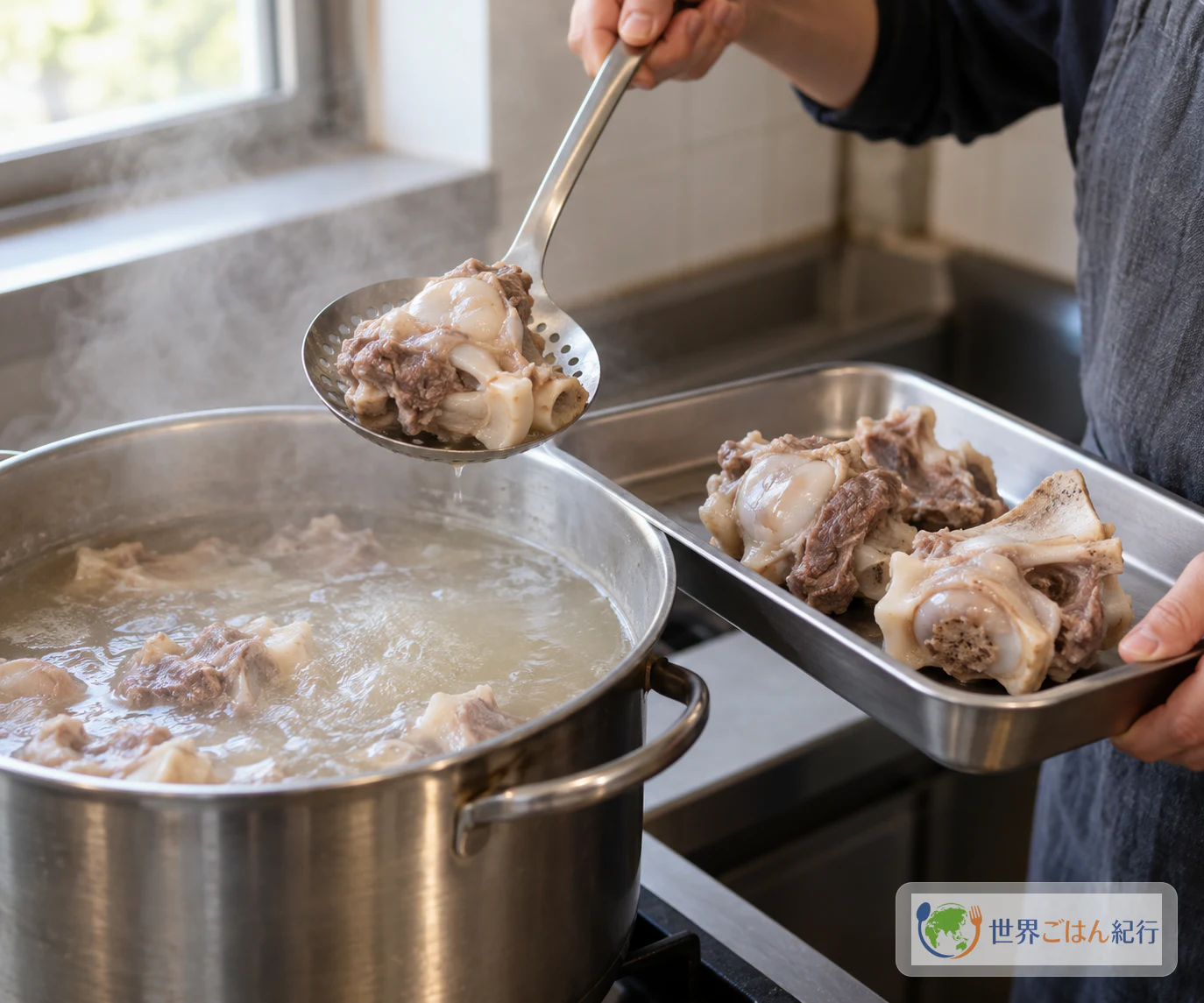
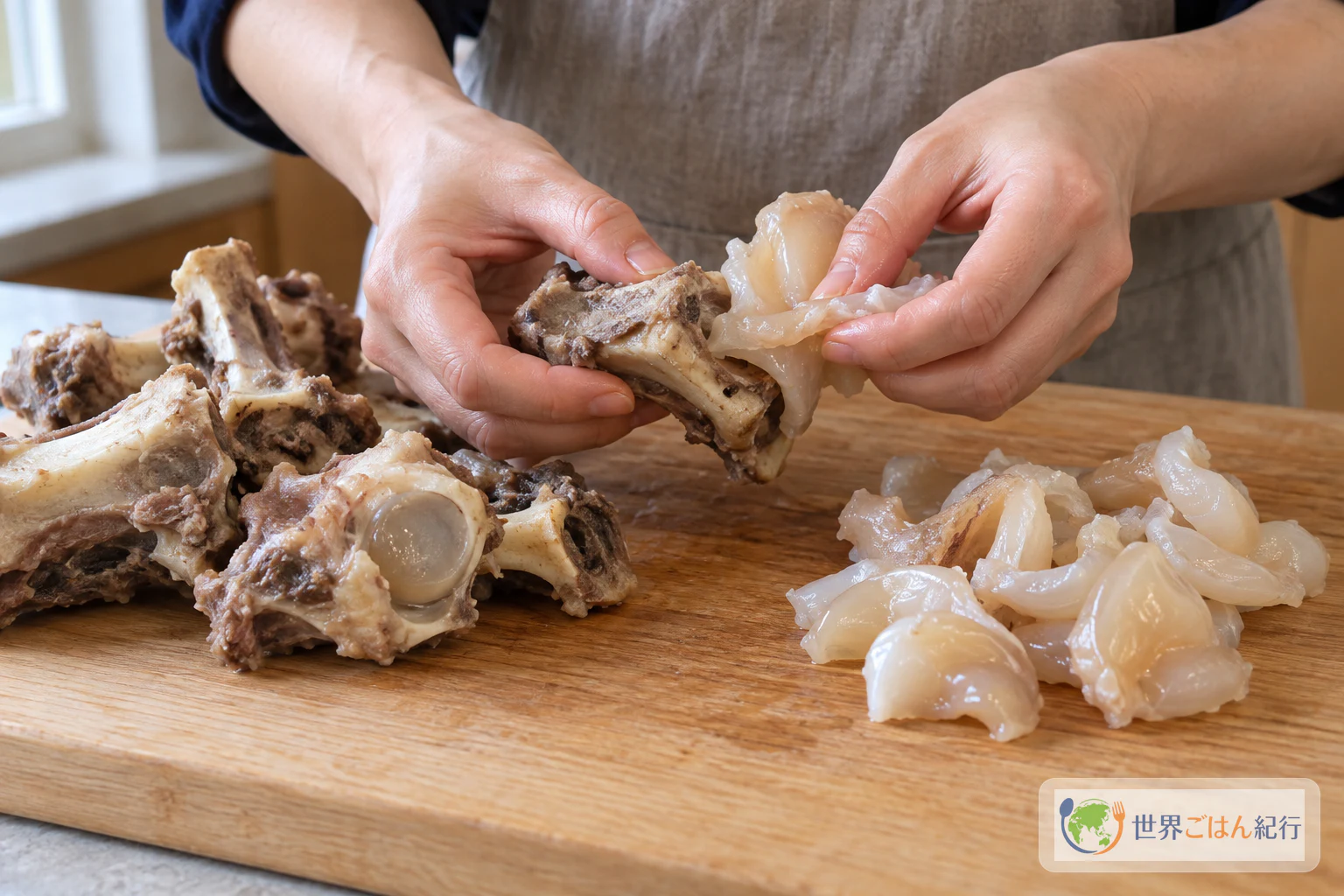
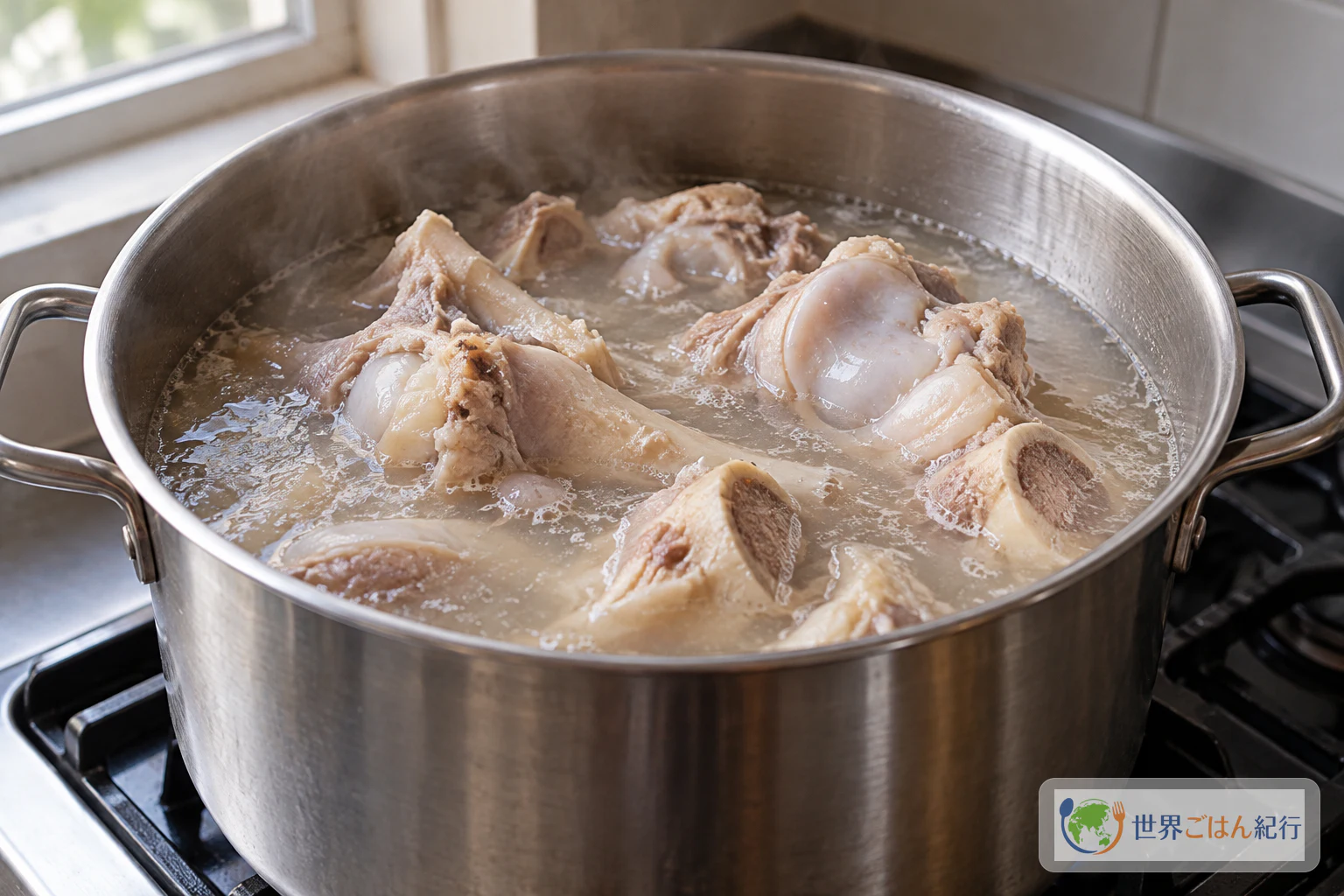
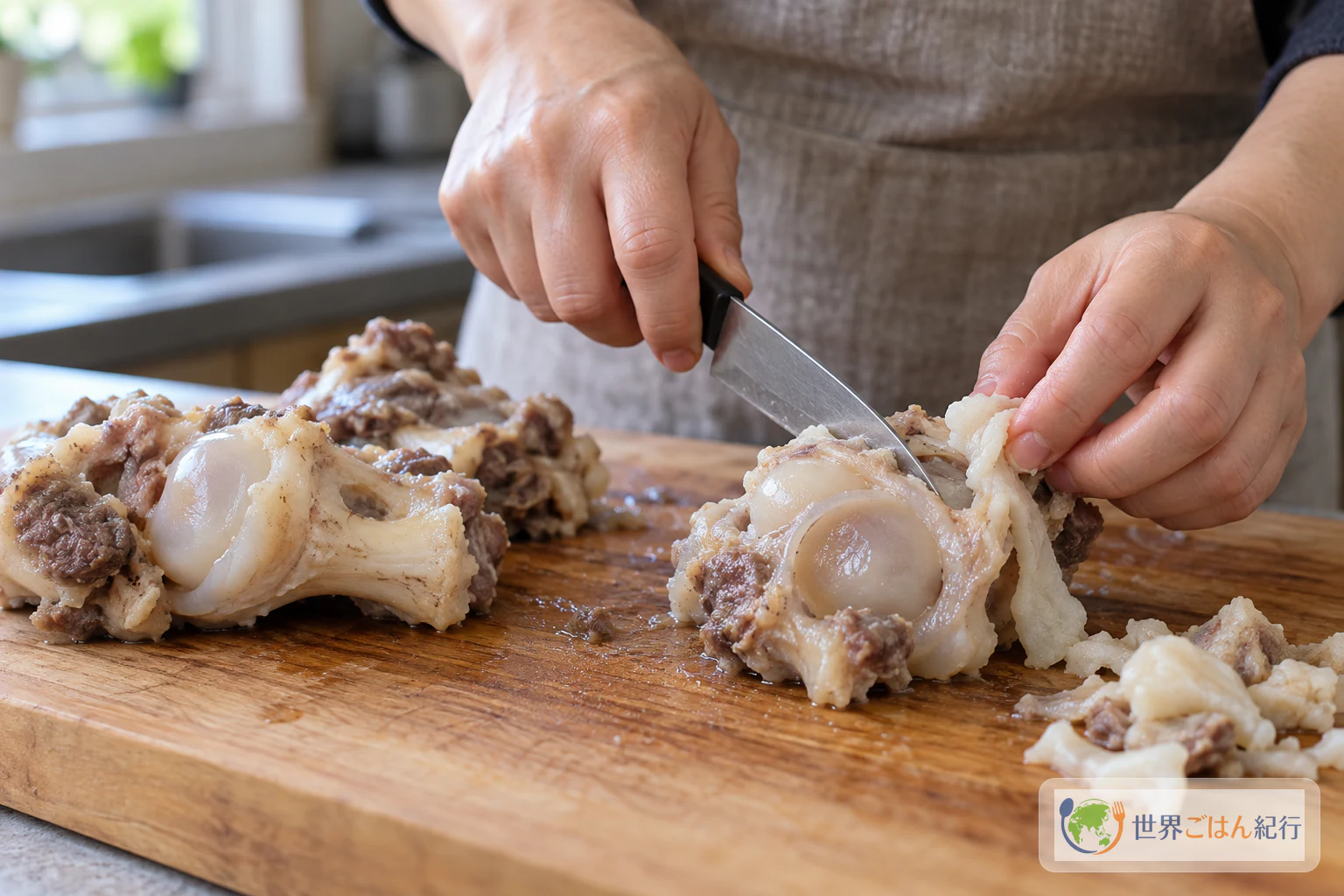
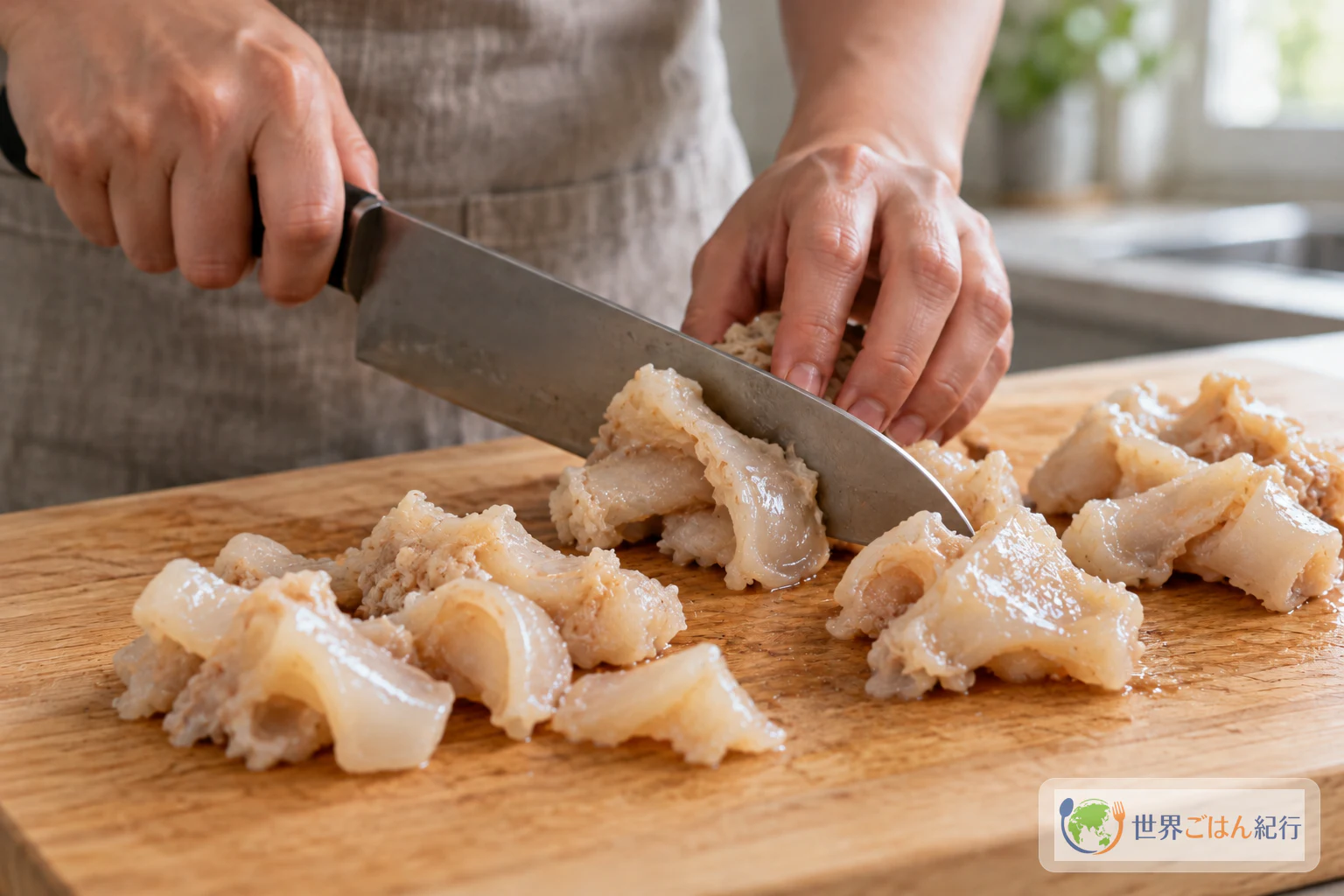
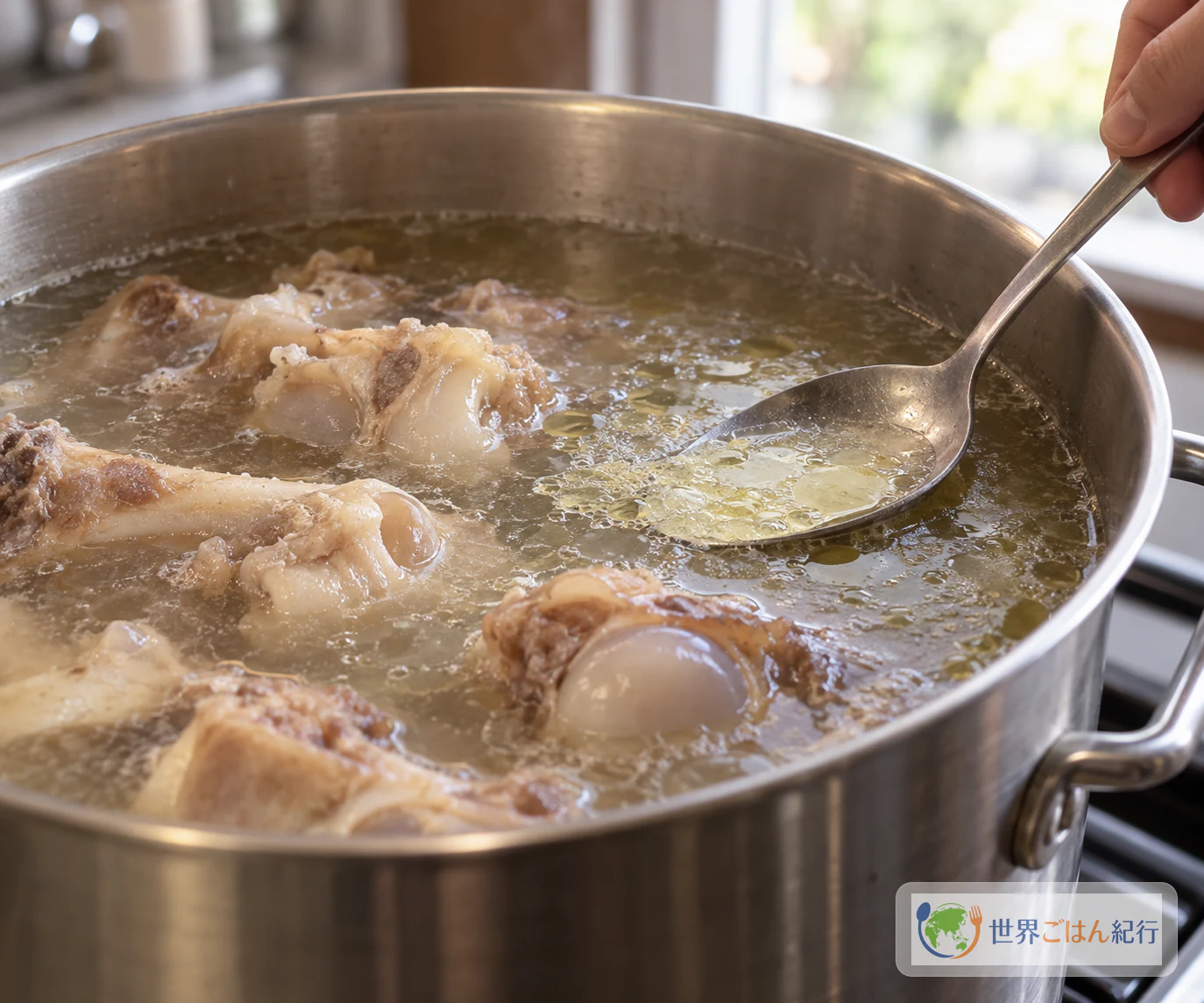
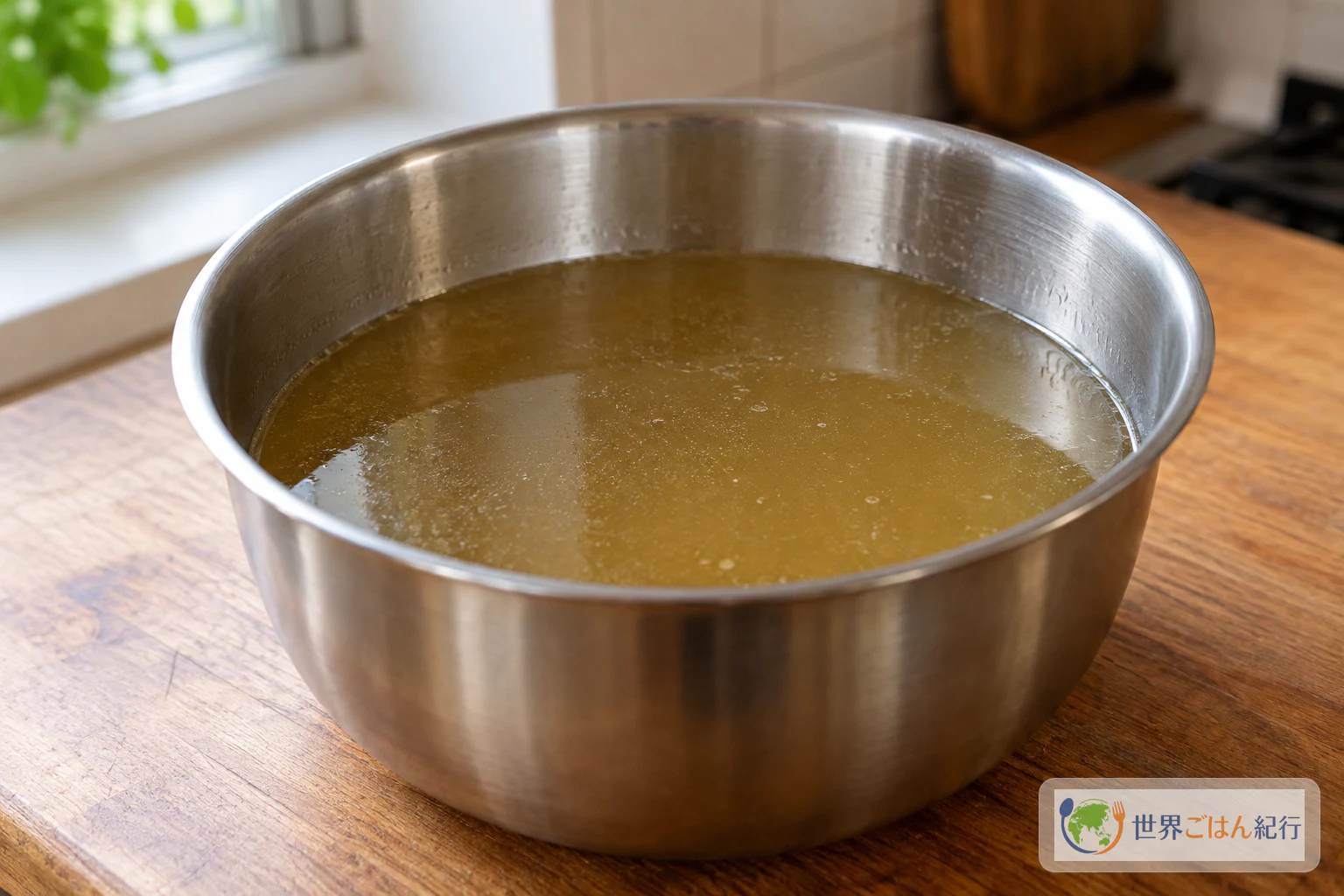
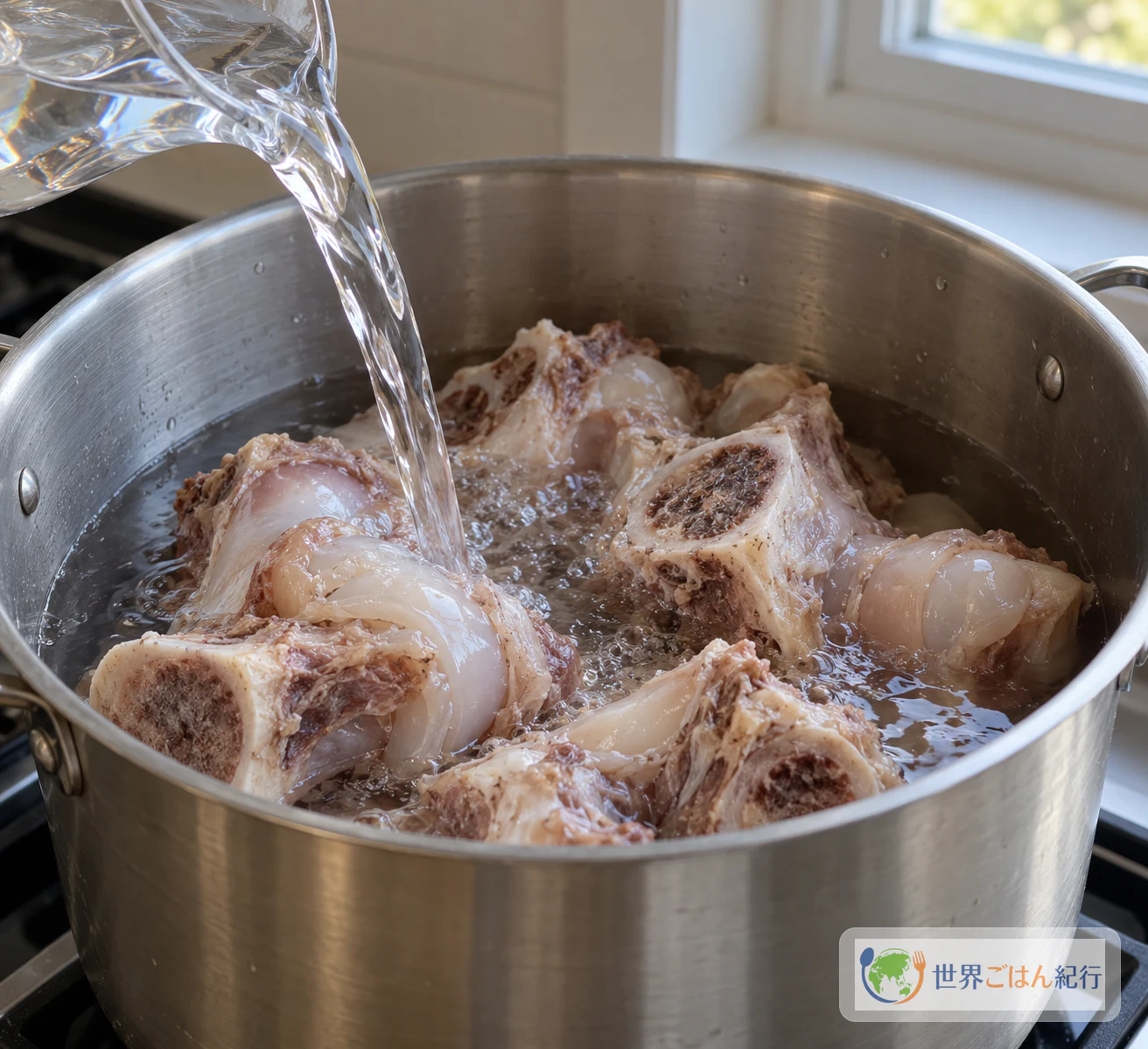
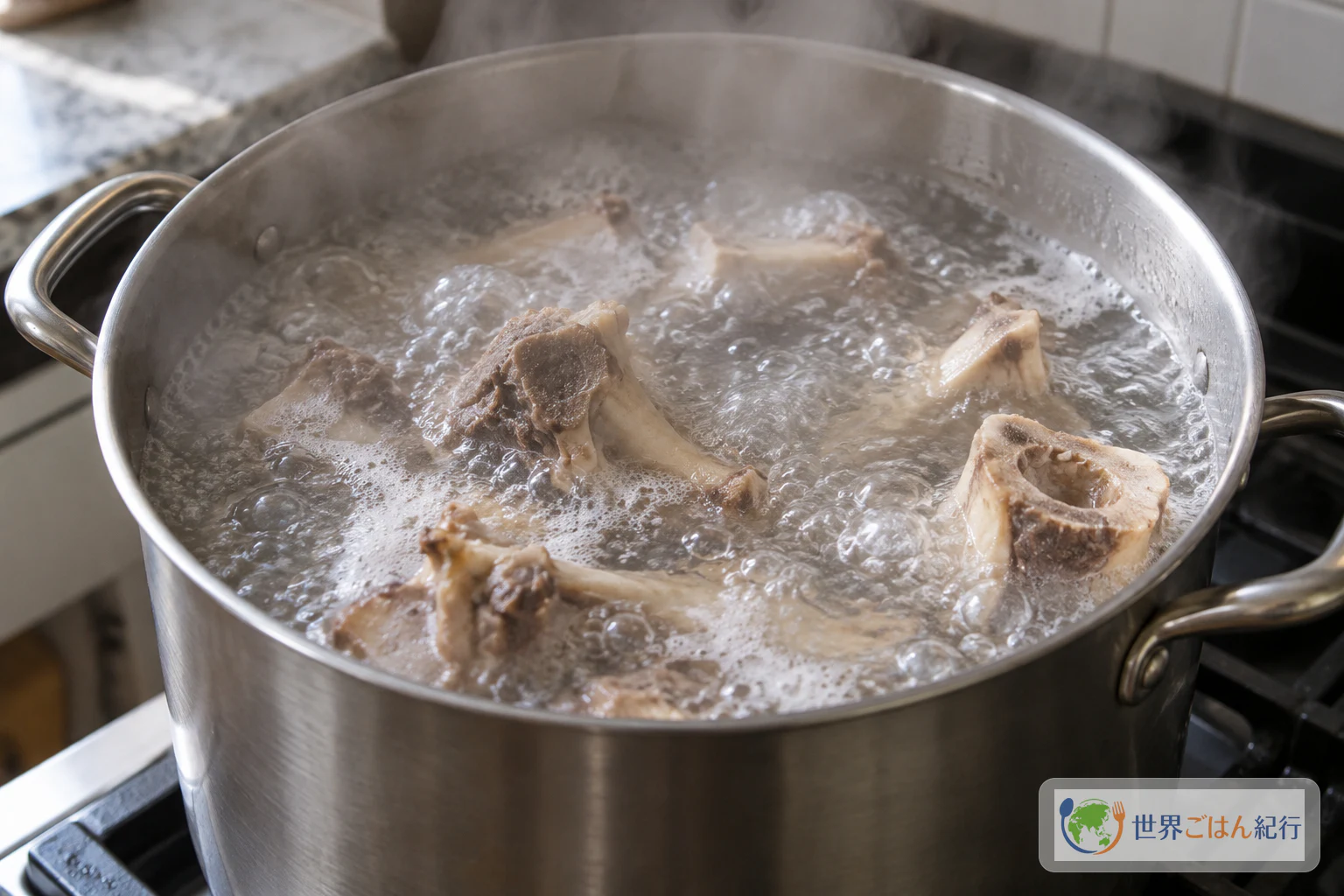
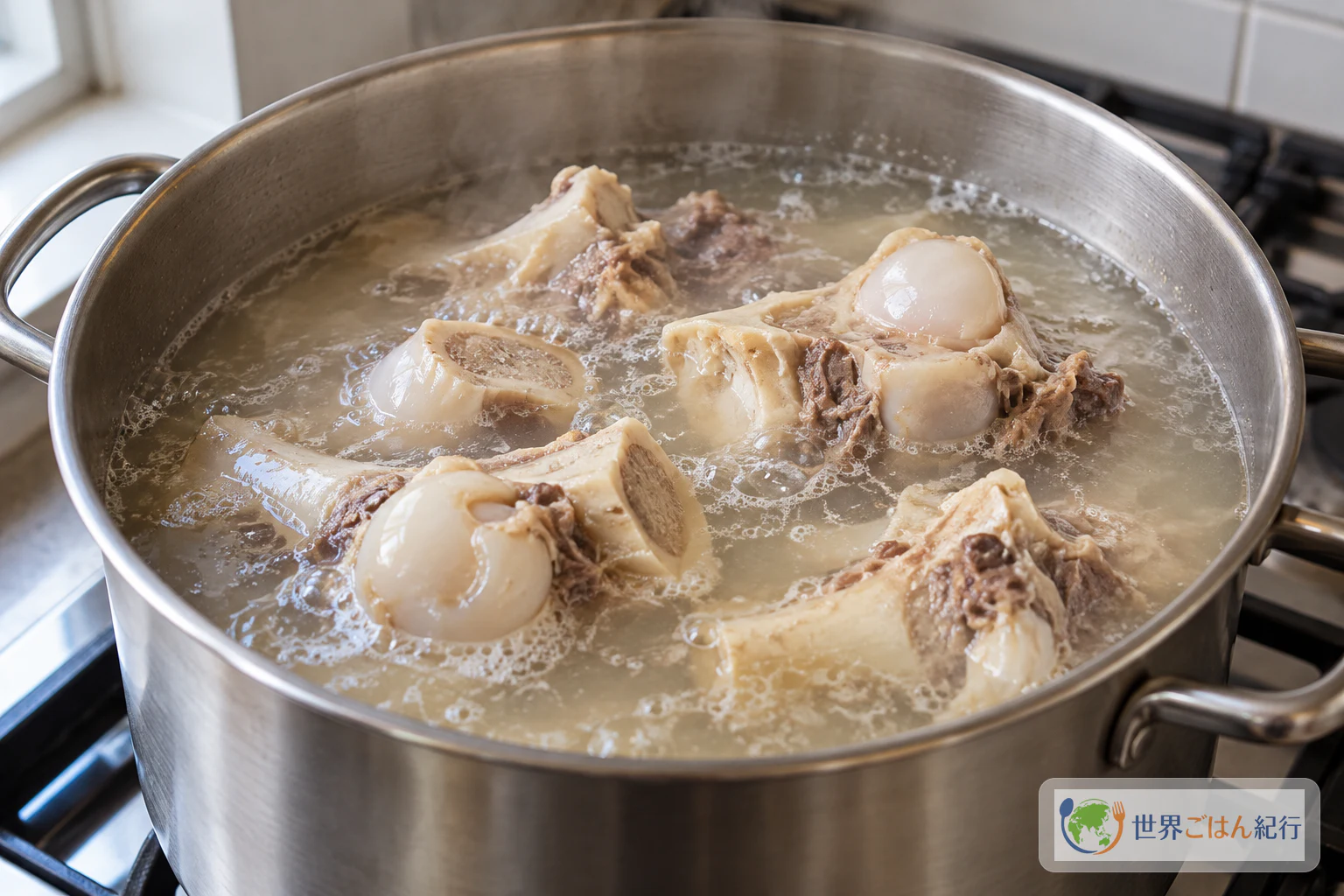
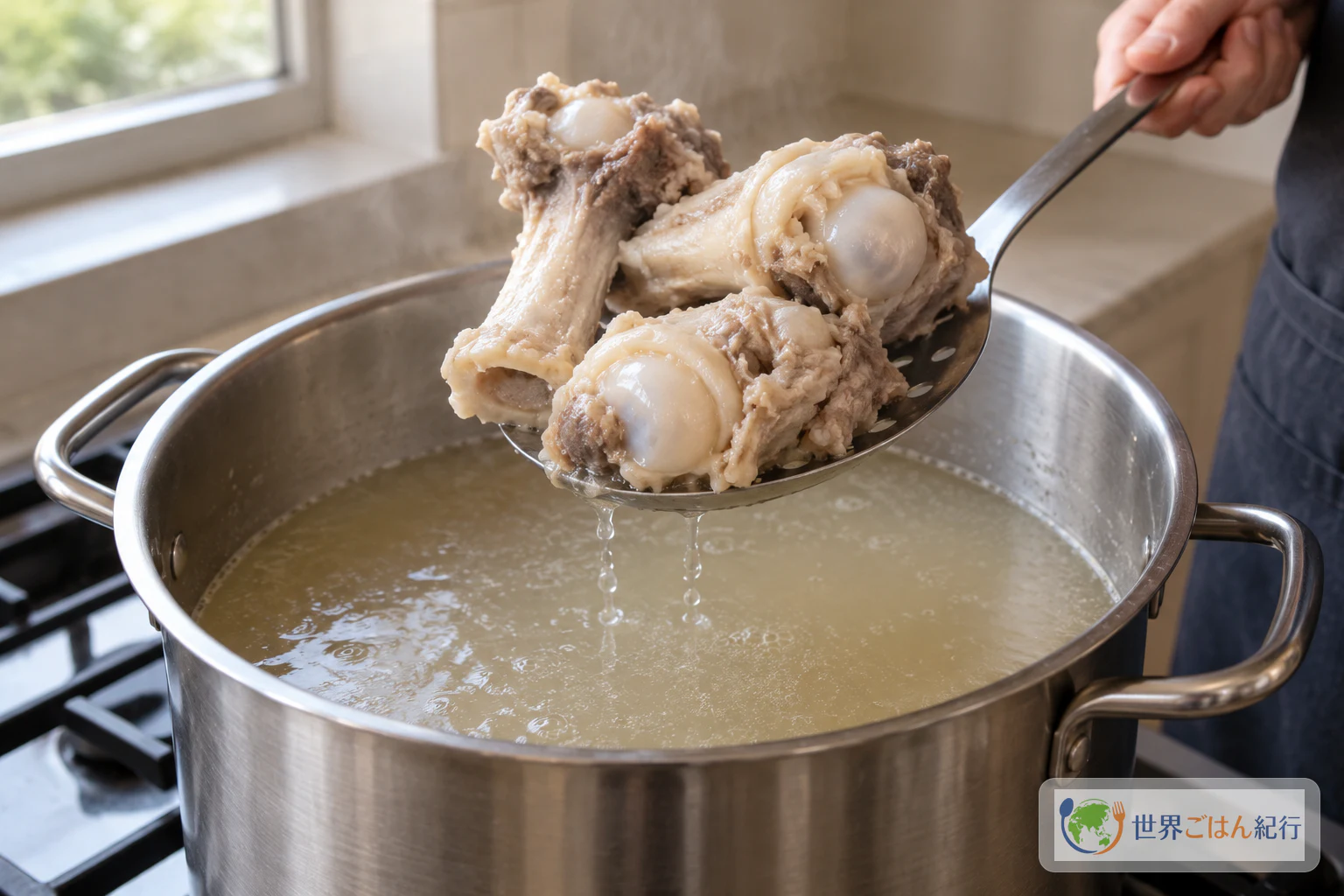
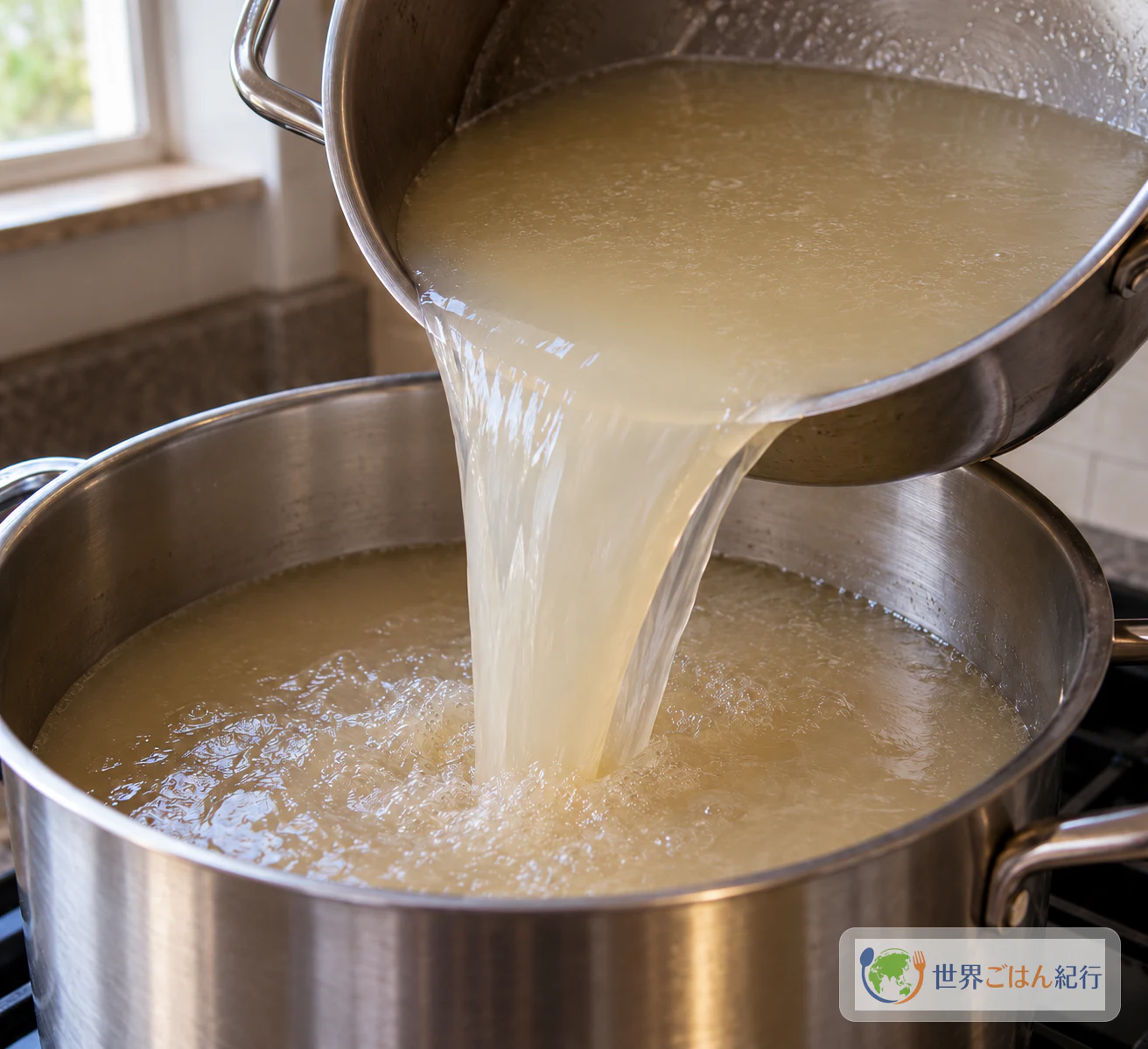
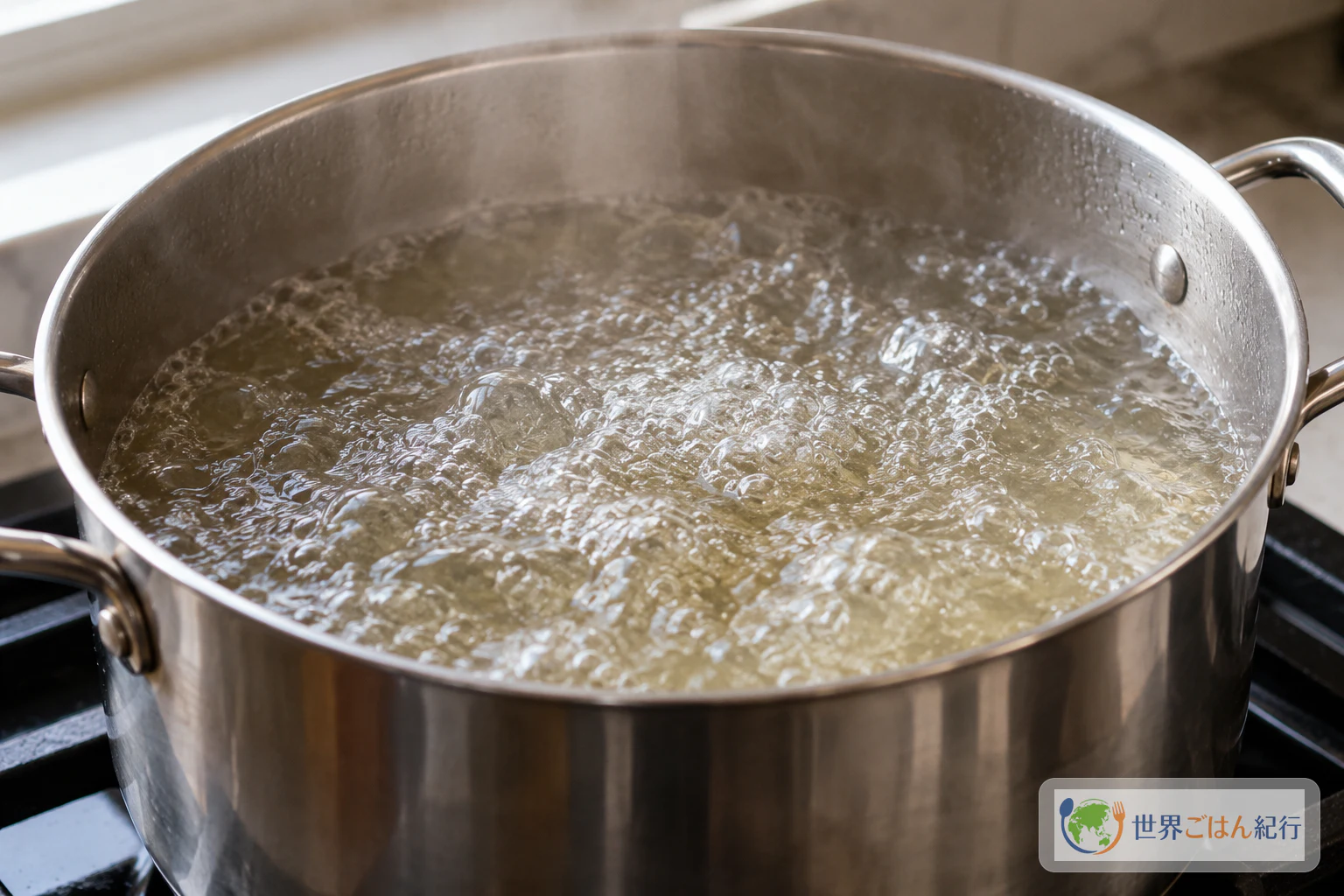
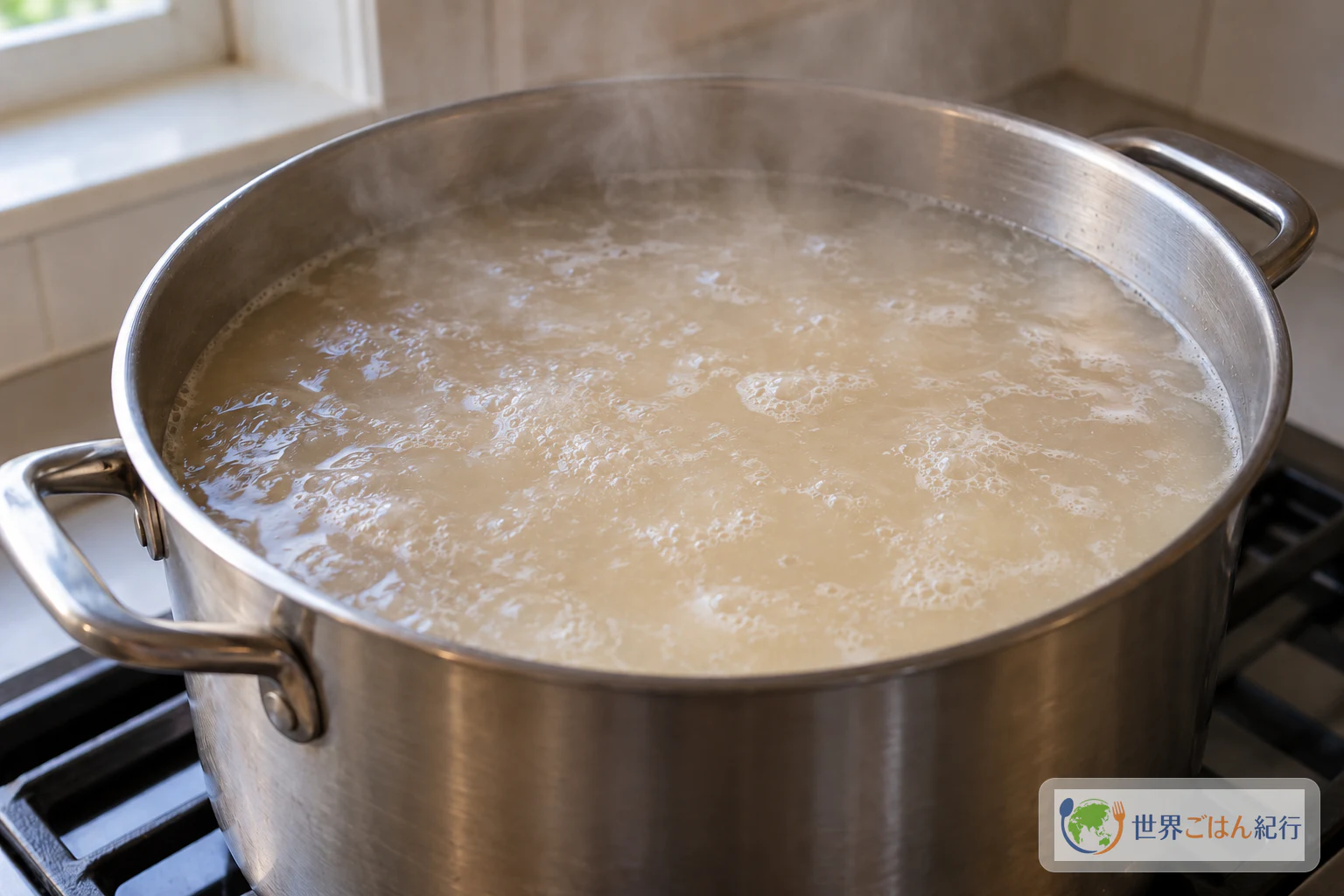
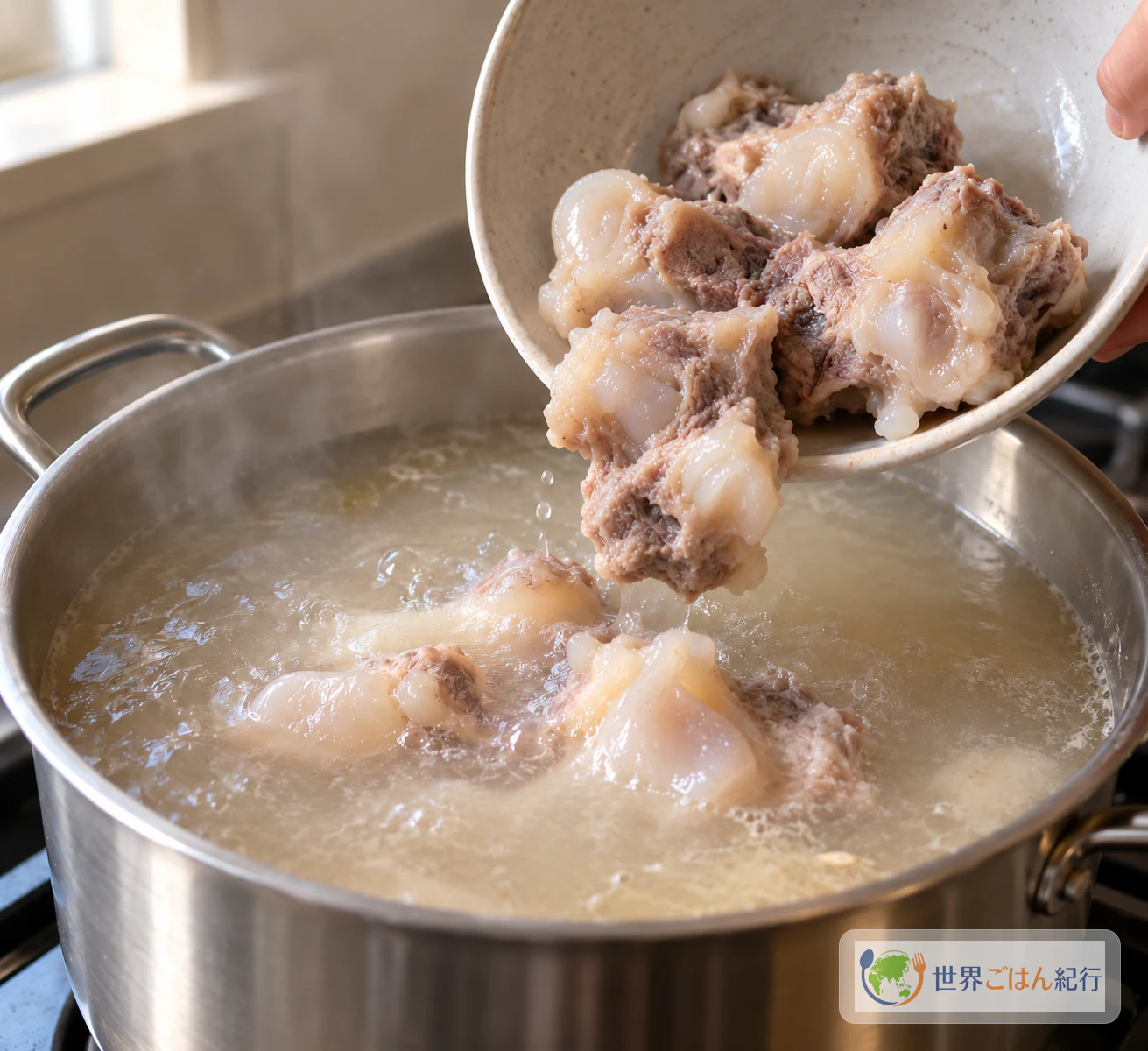
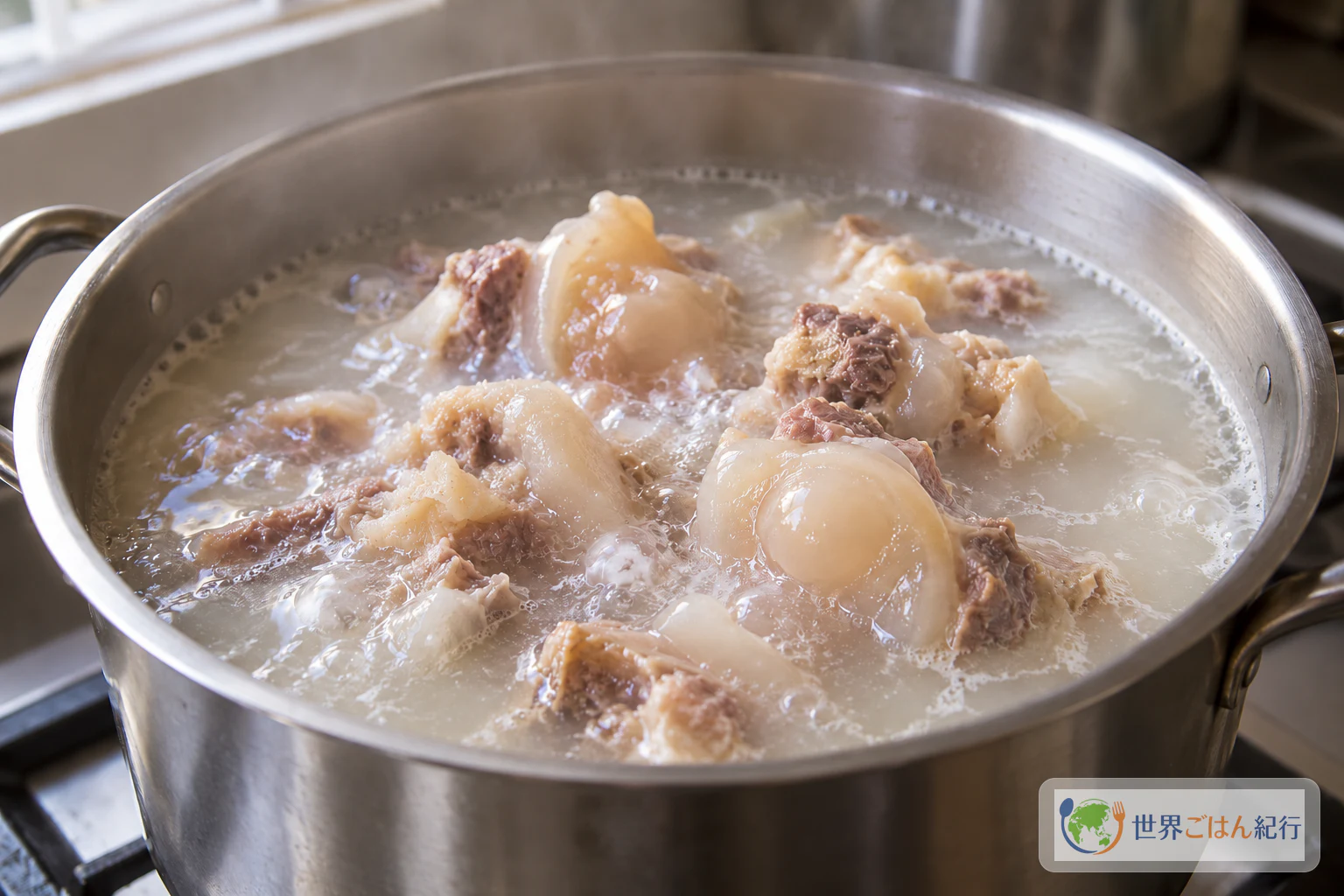
Knee pieces sit in cold water for about five hours before the stove is even lit. After a short, hard boil, that water goes down the sink, and the pot is washed and filled again. Later the cartilage comes off the bone and waits while the bones go through a second long simmer. Only when the two broths have been combined and simmered once more does the cartilage go back in, for one last boil.
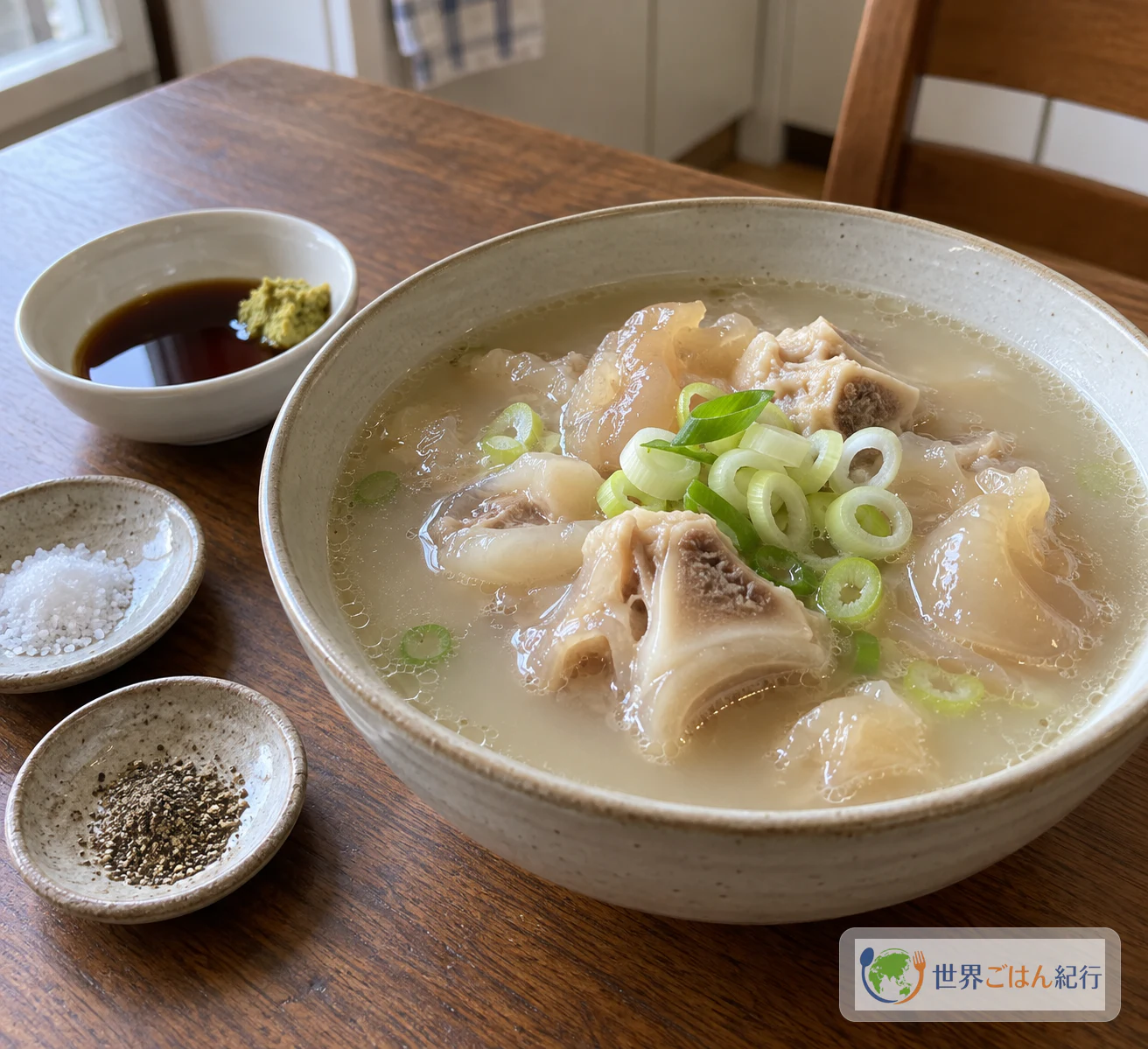
Doganitang (도가니탕) is a Korean soup that the Korea Tourism Organization introduces in English as Ox Knee Soup. This article follows one home version: the six-step recipe posted on 10000Recipe by the user 짱구맘, made with 1kg of Hanwoo (Korean beef) knee cartilage and bone and 5L of water for the first extraction.
We have not kitchen-tested this recipe. The amounts, order and times below come from the posted version, and the places where we have added something are explained in the safety section before the method.
This Version and How Its Time Breaks Down
The recipe card shows "6+ servings" and "2h+". Treat both as what the card displays. The serving count is not a measured yield, and 2h+ does not describe the whole process, as the times written into the individual steps make clear:
| Stage | Heat and time in the steps |
|---|---|
| Soak in cold water | About 5 hours |
| Blanch | Hard boil, about 10 minutes |
| First extraction | High heat to a boil, then low for about 2 hours |
| Bones back in the first broth | Low heat, at least 1 hour |
| Second extraction, bones only | Bring to a boil, then low for about 5 hours |
| Two broths combined | Bring to a boil, then low for about 3 hours |
| Cartilage returned | Bring to a boil once |
We don't add these up into a total. The stages may overlap with waiting and holding time, and the recipe gives no overall figure, so plan by the stages themselves.
The amount of water for the second extraction needs a note. The poster says to use the same amount as the first round if you have a lot of bone, or about half if you have little bone, as the poster did. This article follows the small-bone route. The 2.5L figure is our own arithmetic, half of the 5L first round, and not a number printed in the recipe.
Ingredients: 1kg of Knee and Two Rounds of Water
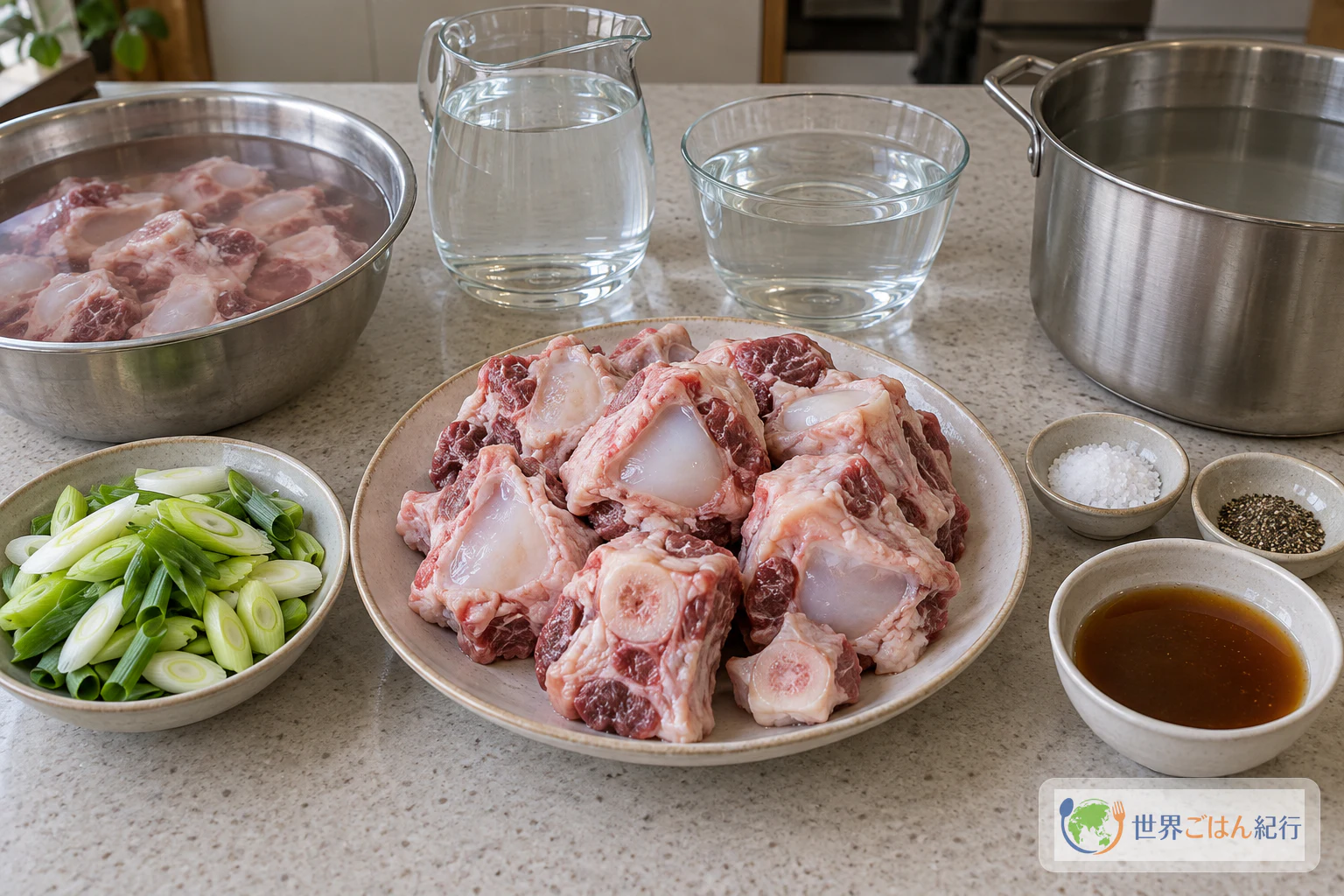
Equipment
- Basin or large bowl for soaking
- Large stockpot
- Colander
- Slotted ladle or similar utensil
- Spoon for skimming fat
- Tray for the lifted knee pieces
- Cutting board and knife
- Shallow containers for the first broth
Choosing and Buying: What Is and Isn't Fixed
Knee cartilage and bone. Try asking a Korean grocer or a butcher for beef knee cartilage (도가니, dogani). We haven't confirmed availability, product names or prices where you live. Use Hanwoo knee cartilage and bone, 1kg in all; bone count, cartilage ratio and cut size are not fixed here. We have no supported substitute to offer for this cut or breed, so we don't suggest one.
Large green onion. 대파 is defined by the National Institute of Korean Language as a large green onion with a long, thick stem. We fix no variety, weight or number of stalks, and we offer no replacement.
Wasabi-vinegar-soy sauce. Serve it alongside. We give no ratio or method and haven't invented one. Make it the way you already do, or use a recipe you trust.
Unstated details. Pot size, lid use, numeric heat settings and any amount of water to top up during simmering are left open, and we don't estimate them here.
Before You Start: The "Cool Place" and Our Safety Additions
The posted recipe tells you to put the first broth in a "cool place" (시원한 곳) during the second extraction. It gives no temperature, time, container or cooling method, so the phrase alone can't tell you the broth is being held safely.
The method below therefore differs from the posted recipe at this point. These are our editorial additions, based on general household guidance from Japan's Ministry of Health, Labour and Welfare (MHLW), not steps from the recipe. That guidance was not written about doganitang and does not verify the recipe.
- First broth: divide it into shallow containers so it cools quickly, and keep it in the refrigerator, using 10°C or below as the guide. Do not leave it at room temperature during the roughly 5-hour second extraction. The guidance says not to leave food at room temperature for a long time, but gives no allowable number of hours, so we don't give one either.
- Reserved cartilage: the recipe doesn't say where the cut cartilage waits. Under the same guidance, which says to refrigerate food when cooking stops partway, we keep it in the refrigerator until it returns to the pot.
- Knife, board and containers: wash anything that touched the raw knee, then pour boiling water over it before using it for other foods.
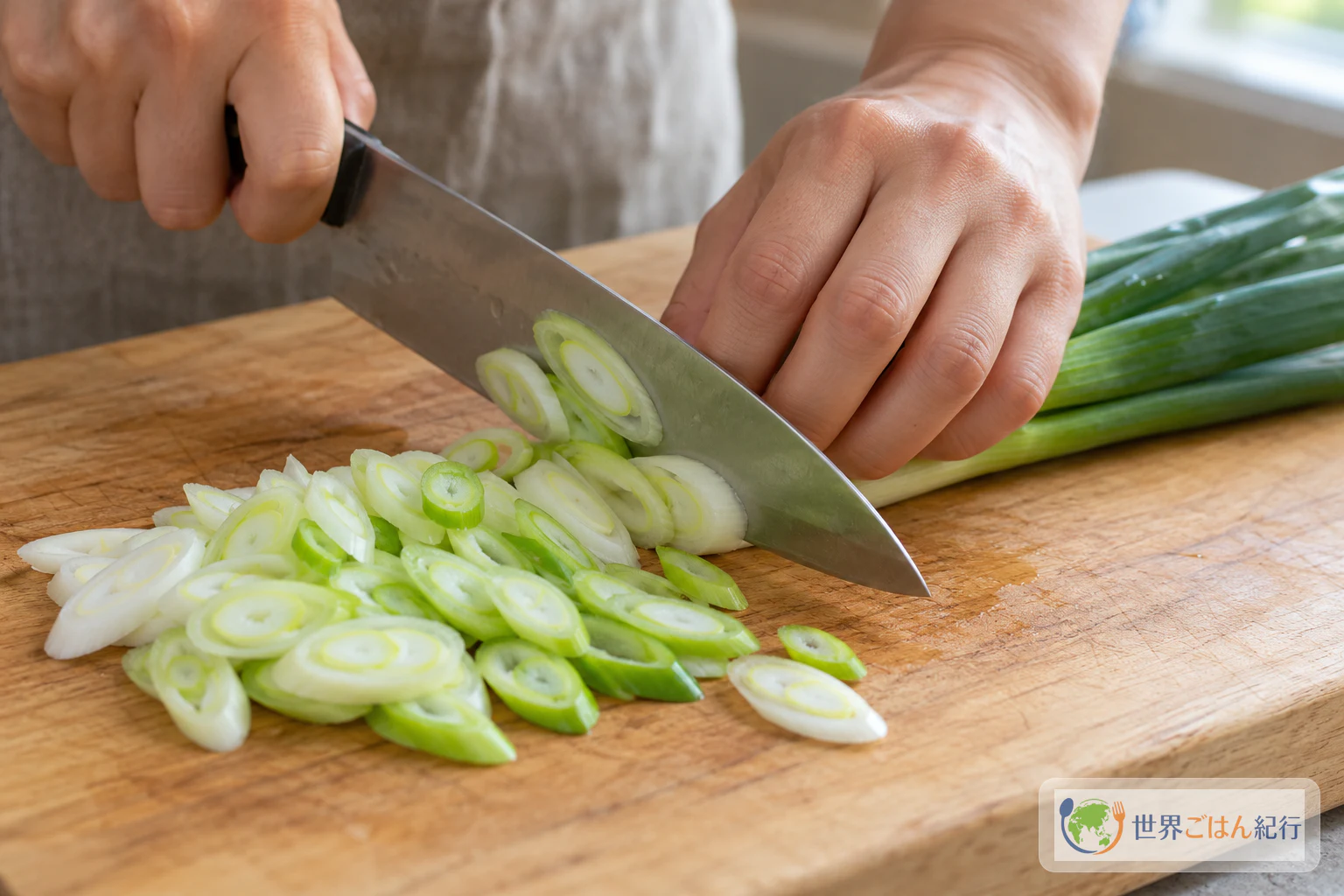
- Green onion: wash it well under running water before slicing. It goes on raw, while the soup itself has been through long simmering and a final boil.
The recipe states no cooking temperature. MHLW's general heating guide is 75°C at the center for at least 1 minute. Steps 5 and 6 bring the combined broth back to a boil and then the finished soup to a boil once. Japan's Ministry of Agriculture, Forestry and Fisheries also notes that microbes multiply more easily as food warms, and advises refrigerating foods that need it without delay.
The soak has a similar gap. The recipe calls for about 5 hours in cold water, with no water temperature, water changes or temperature control. We have no specific figures to add, but the general advice about not leaving food at room temperature for a long time is worth weighing when you decide where the basin sits.
Leftovers
The recipe gives no guidance on storing leftovers. Following the same general advice, divide them into shallow containers so they cool quickly and refrigerate them at 10°C or below as the guide, without leaving them at room temperature for a long time. We give no storage period because none of our references supports one for this soup.
Method: Six Steps, Two Extractions
Read through all six steps first, because the first broth, the bones and the cartilage each go separate ways in the middle.
Troubleshooting: Where This Recipe Gets Confusing
Most of the risk here is in losing track of the stages. The recipe offers no fixes for texture or cloudiness and no way of judging flavor, and we don't make any up.
| Situation | What to do |
|---|---|
| Unsure what goes in the second pot | Bones and cold water only. The first broth is set aside, and the cartilage waits until step 6 |
| Unsure how much water to use the second time | This article uses 2.5L, the small-bone route. See Variations if you have a lot of bone |
| You reach the end and no salt has gone in | That's as intended. The recipe has no instruction to salt the pot; salt and pepper are added at the table |
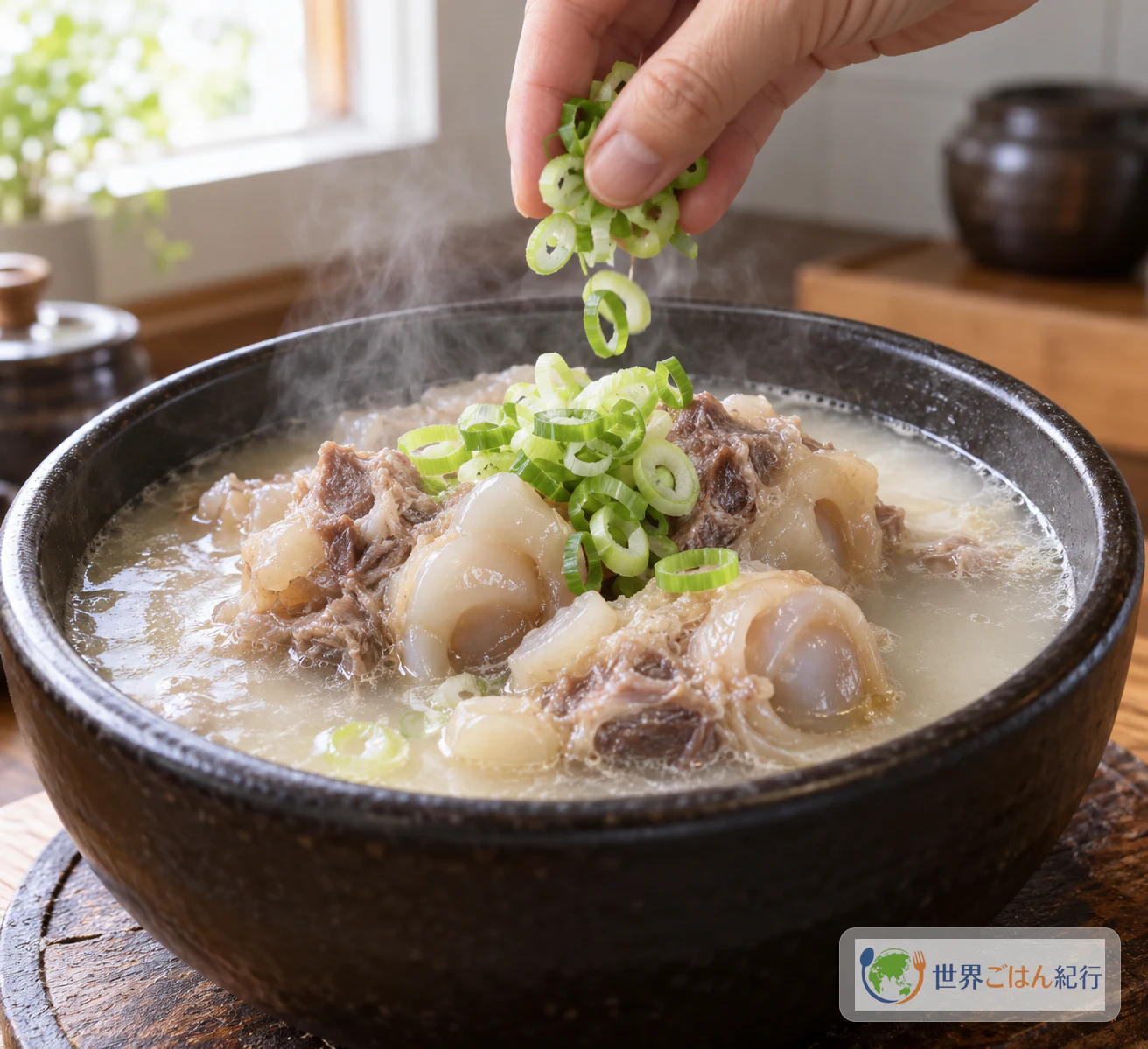
| Unsure when the green onion goes in | On top at serving, not during simmering |
| Wondering how soft the cartilage should be before separating, or what size to cut it | The recipe gives no doneness cue or dimensions, only the 2-hour simmer and "a convenient size" |
| The water level drops during a long simmer | The recipe gives no top-up amount, so we can't offer a number |
Variations: Other Versions, Kept Separate
These are different recipes, not add-ons. Their ingredients have not been mixed into the version above.
- More bone in the pot. The poster's other route uses the same amount of water for the second extraction as for the first, which would be 5L here. Choose one route or the other.
- Knee with beef shank. Menupan's recipe is written for 4 servings, with half a knee, 400g of beef shank and 20 cups of water, plus 2 green onions among other items. It lists salt and ginger twice and doesn't make clear how they are divided, so we don't borrow its amounts.
- Sinseo doganitang. A 2008 regional record on the Korean Traditional Knowledge Portal describes a version with knee cartilage, tendon, deer antler, ginseng, milk, nuts, leg-bone stock and an egg garnish.
Doganitang on the Korean Table
The Korea Tourism Organization's description is broader than this recipe. It mentions knee, tendon, brisket and shank simmered with green onion, garlic and black pepper, and served with mustard sauce or salt. That helps identify the dish, but it isn't a quantified recipe. It also shows how a single name covers different pots: the home version here relies on knee alone, and Menupan and Sinseo each build the soup differently.
Seasoning on the side appears in more than one of the versions we read, though the details differ. The posted version here offers salt, pepper and wasabi-vinegar-soy sauce, while the tourism page mentions mustard sauce or salt. We have not confirmed the dish's origin, the history of its name or any single household standard, so we make no claims about them. To see the soup alongside other dishes, browse more Korean recipes.
Frequently Asked Questions
Does "2h+" mean the soup takes about two hours?
No. It's what the recipe card displays. The steps themselves include about 5 hours of soaking, about 2 hours plus at least 1 hour for the first extraction, about 5 hours for the second, and about 3 hours after combining.
Is 2.5L the recipe's own number?
No. The poster says to use half the first amount if you have little bone. We calculated half of 5L as 2.5L.
Will this really serve six?
The card says 6+ servings, but that is a displayed figure rather than a measured yield. We have not kitchen-tested the recipe, so we can't confirm how much soup you will end up with.
When do the salt, pepper and sauce go in?
They are served alongside the soup for each person to add at the table. The recipe gives no amounts and no instruction to add them to the pot.
Is a "cool place" safe for the first broth?
The recipe doesn't say what it means by that: there is no temperature, time or container. Our editorial approach, based on MHLW's general guidance, is shallow containers in the refrigerator at 10°C or below as the guide, without leaving the broth at room temperature for a long time. This is our addition, not part of the posted recipe.
Do you have a recipe for the wasabi-vinegar-soy sauce?
Not here. The posted recipe mentions the sauce but gives no proportions or method, so we don't provide a formula.
Sources
- 10000Recipe (posted by 짱구맘), "도가니탕." The version followed here: card display, 1kg Hanwoo knee cartilage and bone, 5L water, all six steps with their times and heat, the same-or-half rule for the second water, and serving with green onion, salt, pepper and wasabi-vinegar-soy sauce. https://m.10000recipe.com/recipe/1718944
- Menupan.com / 메뉴판키친, "도가니탕 만드는법." Comparison version with 4 servings, half a knee, 400g beef shank and 20 cups of water; not used for amounts. https://www.menupan.com/Cook/recipeview.asp?cookid=159
- Korean Traditional Knowledge Portal, "Sinseo Doganitang (Beef Knee Cartilage Soup)." Comparison regional version from a 2008 record; not mixed into this recipe. https://koreantk.com/ktkp2014/food/food-view.view?foodCd=TF10001090
- Korea Tourism Organization / VISITKOREA, "Ox Knee Soup (도가니탕 / Doganitang)." Identification of the dish and its general description, including mustard sauce or salt on the side. https://english.visitkorea.or.kr/svc/sp/food/ext/special_view.do?menuSn=913&page=1&sContsTtl=&sort=regDt&vcontsId=178304
- Ministry of Health, Labour and Welfare (Japan), "家庭での食中毒予防" (Preventing food poisoning at home). General guidance on refrigeration at 10°C or below, refrigerating food when cooking stops partway, not leaving food at room temperature for a long time, shallow containers, heating to 75°C at the center for at least 1 minute, and treating knives and boards used for raw meat. It does not verify this recipe. https://www.mhlw.go.jp/stf/seisakunitsuite/bunya/kenkou_iryou/shokuhin/syokuchu/01_00008.html
- Ministry of Agriculture, Forestry and Fisheries (Japan), "冷蔵庫のかしこい使い方" (Using your refrigerator wisely). General guidance on microbes multiplying as food warms and on refrigerating foods that need it without delay. It does not verify this recipe. https://www.maff.go.jp/j/syouan/seisaku/foodpoisoning/frige.html
- National Institute of Korean Language, Basic Korean Dictionary, "대파." Definition of 대파 as a large green onion with a long, thick stem. https://krdict.korean.go.kr/m/eng/searchResultView?ParaWordNo=46865¤tPage=49&exaType=&font_size=12&mainSearchWord=%EB%8C%80&nation=eng&nationCode=6&proverbType=&searchType=W&sort=W&viewType=A&wordMatchFlag=N