Curry Shrimp with Okra: Shell Stock, Head-On Prawns and Long Okra Halves
This is one chef's published version: Nuno Mendes's "Caril de camarão com quiabos – Macanese curried prawns and okra," on Great British Chefs (first published in 2019, as shown on the page). It is not presented as the single standard Macanese recipe or as any restaurant's formula. This recipe as a whole has not been kitchen-tested by Sekai Gohan. The 4 servings and 1 hour 30 minutes shown on the original page are the publisher's figures.
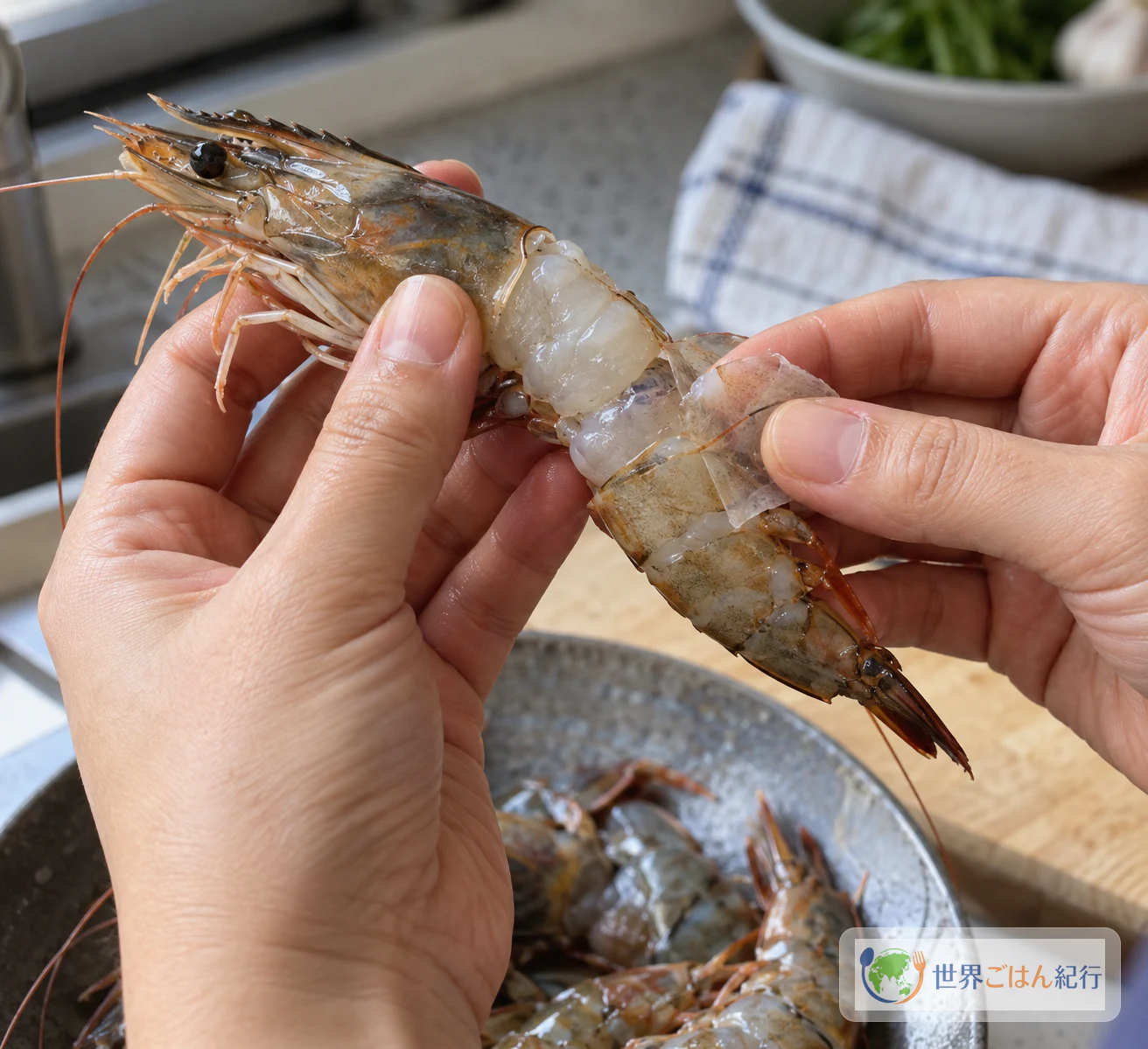
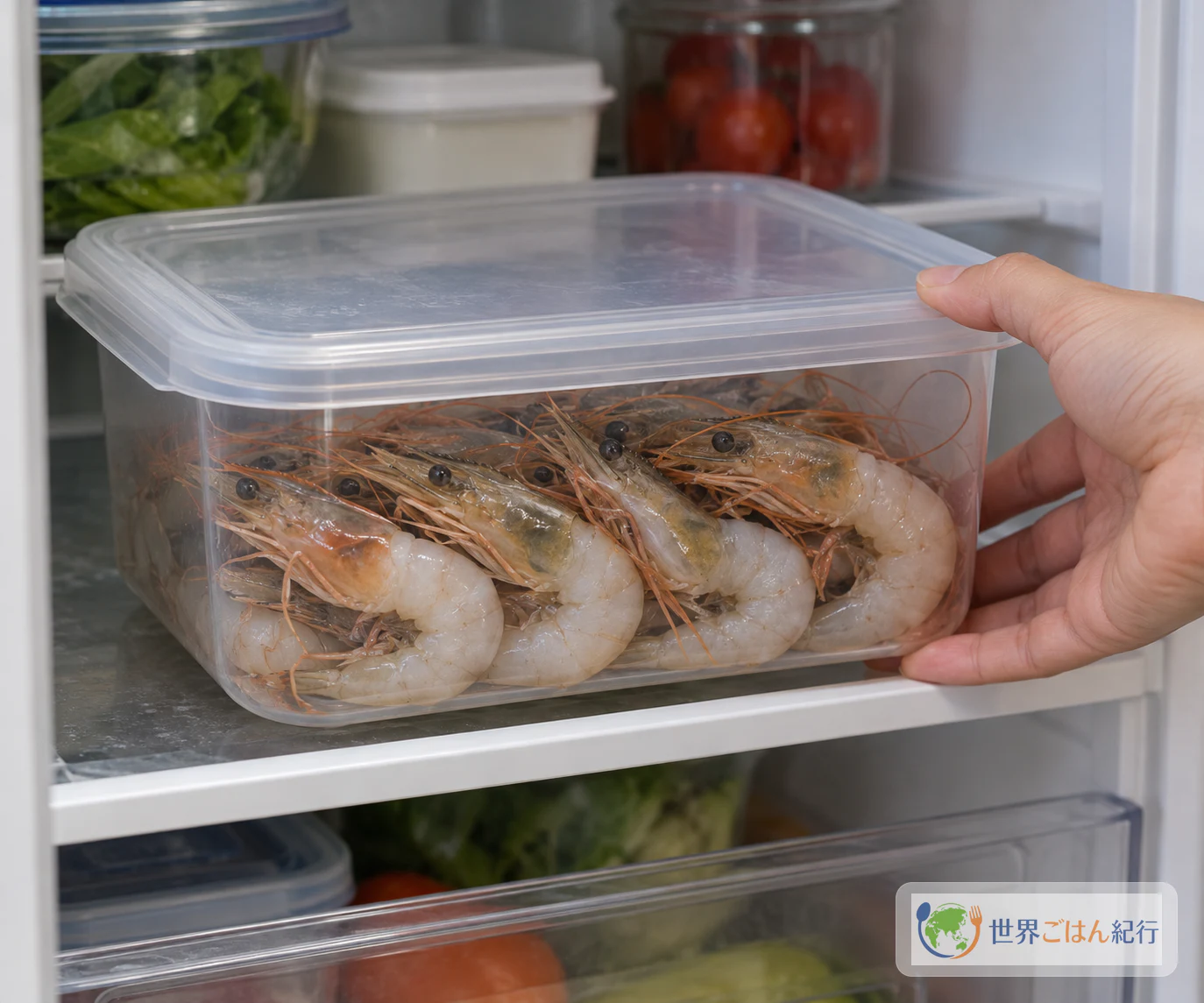
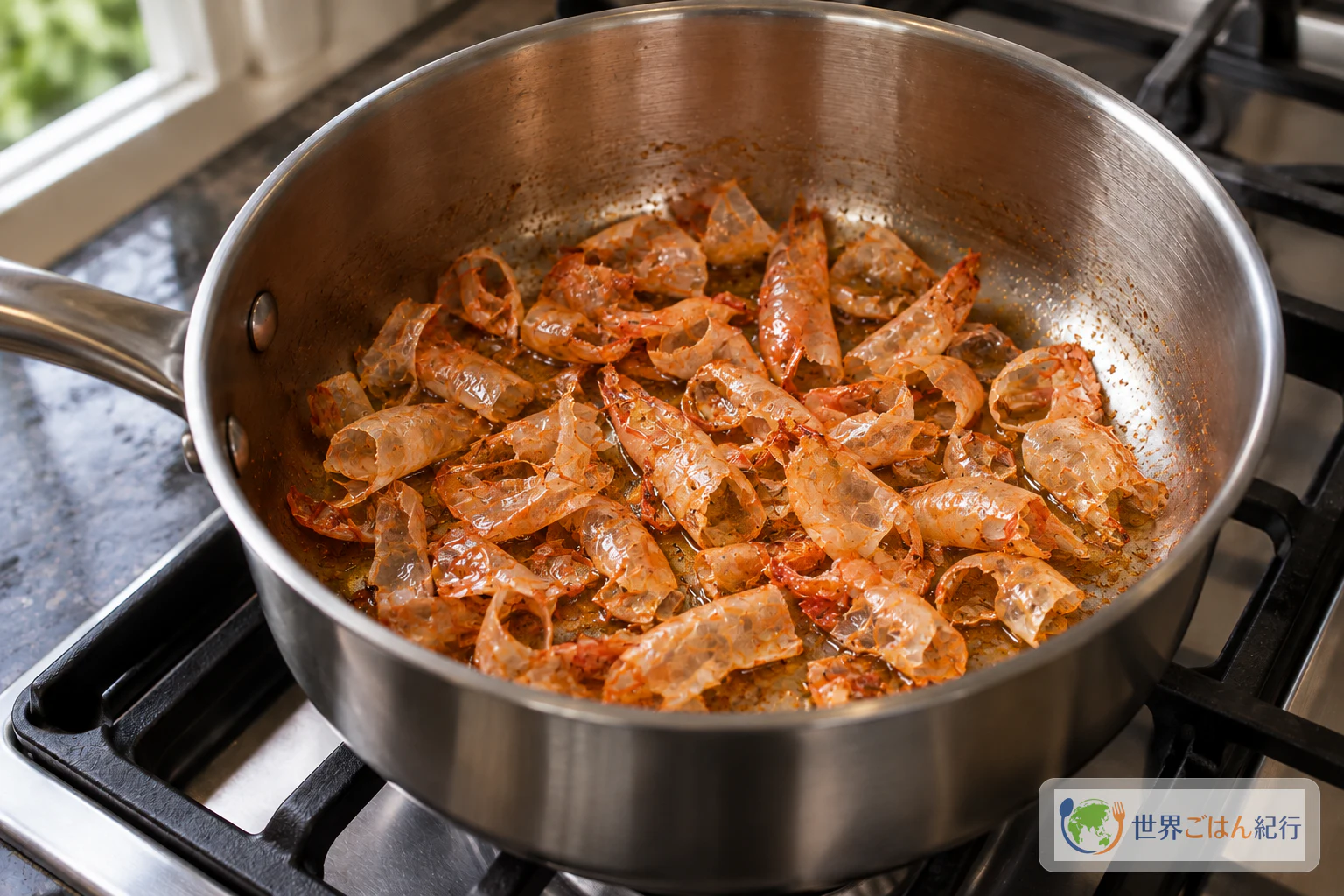
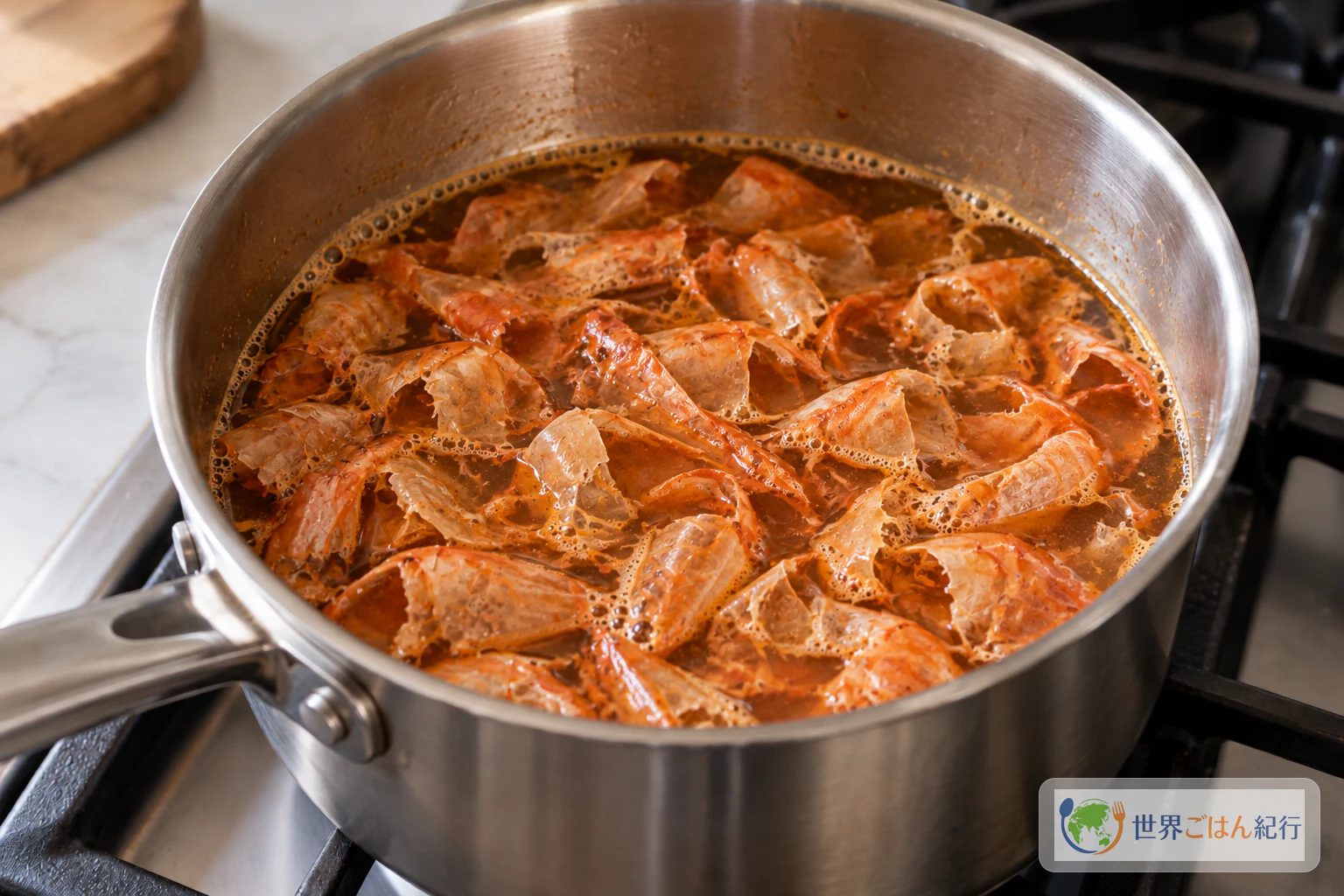
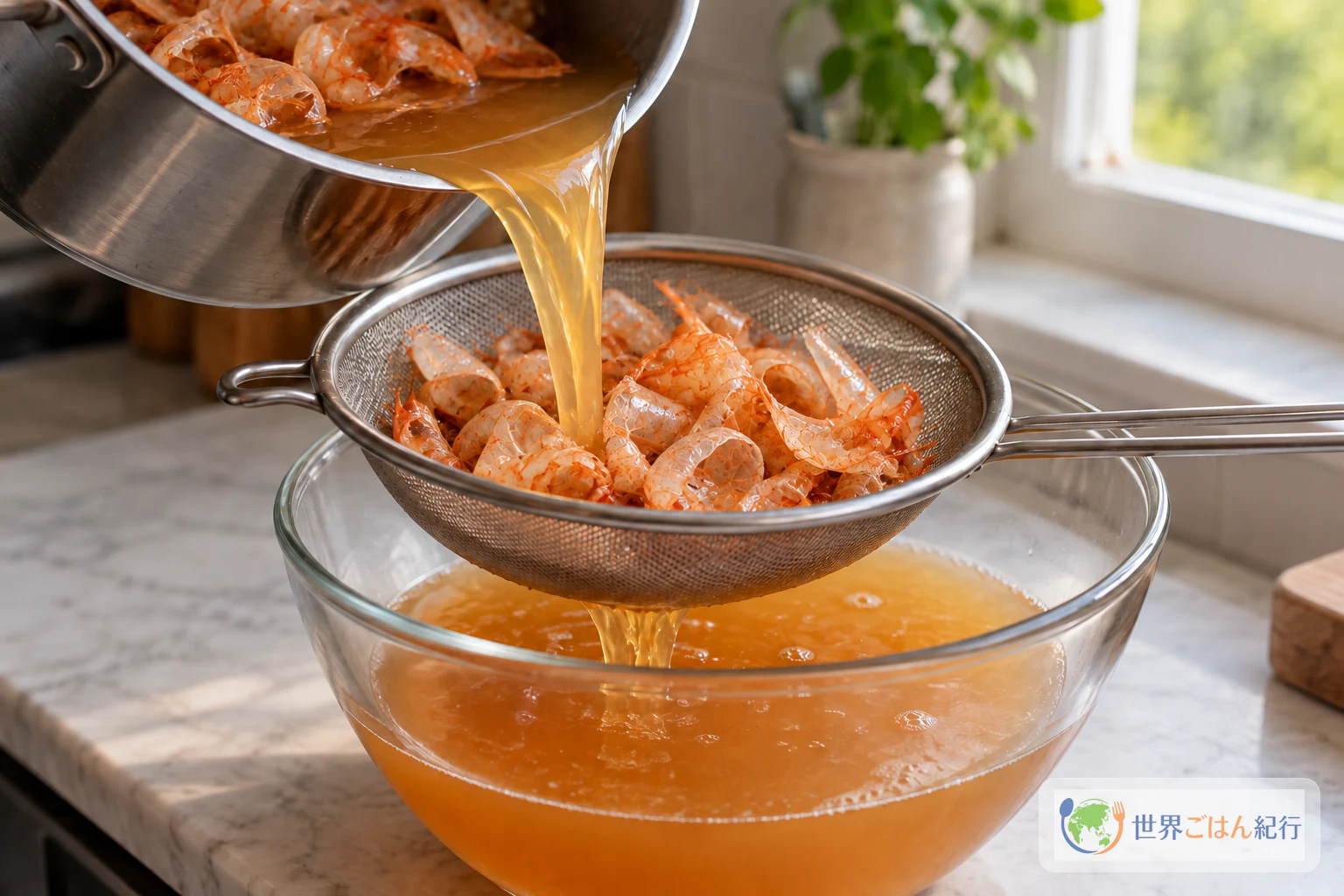
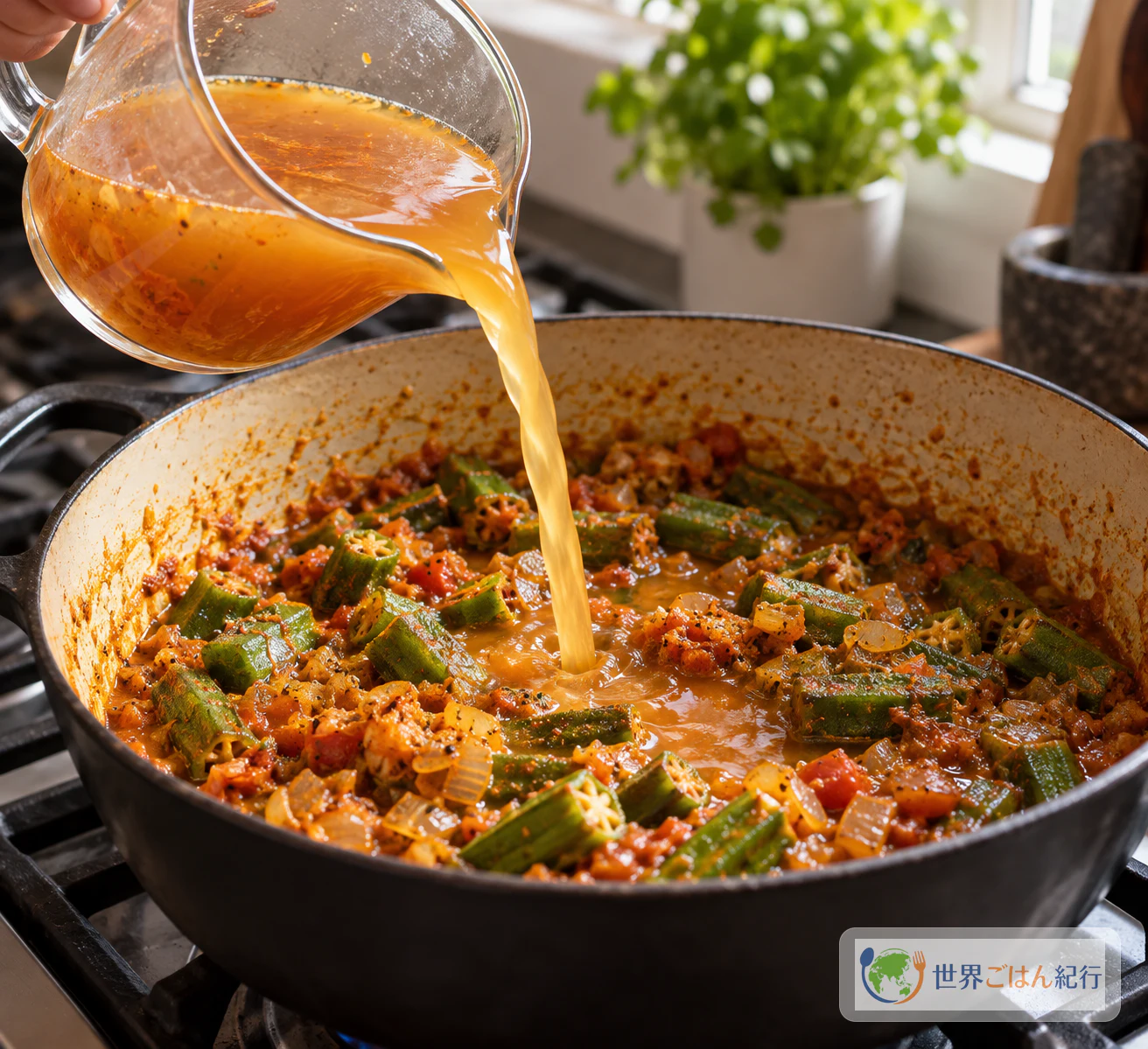
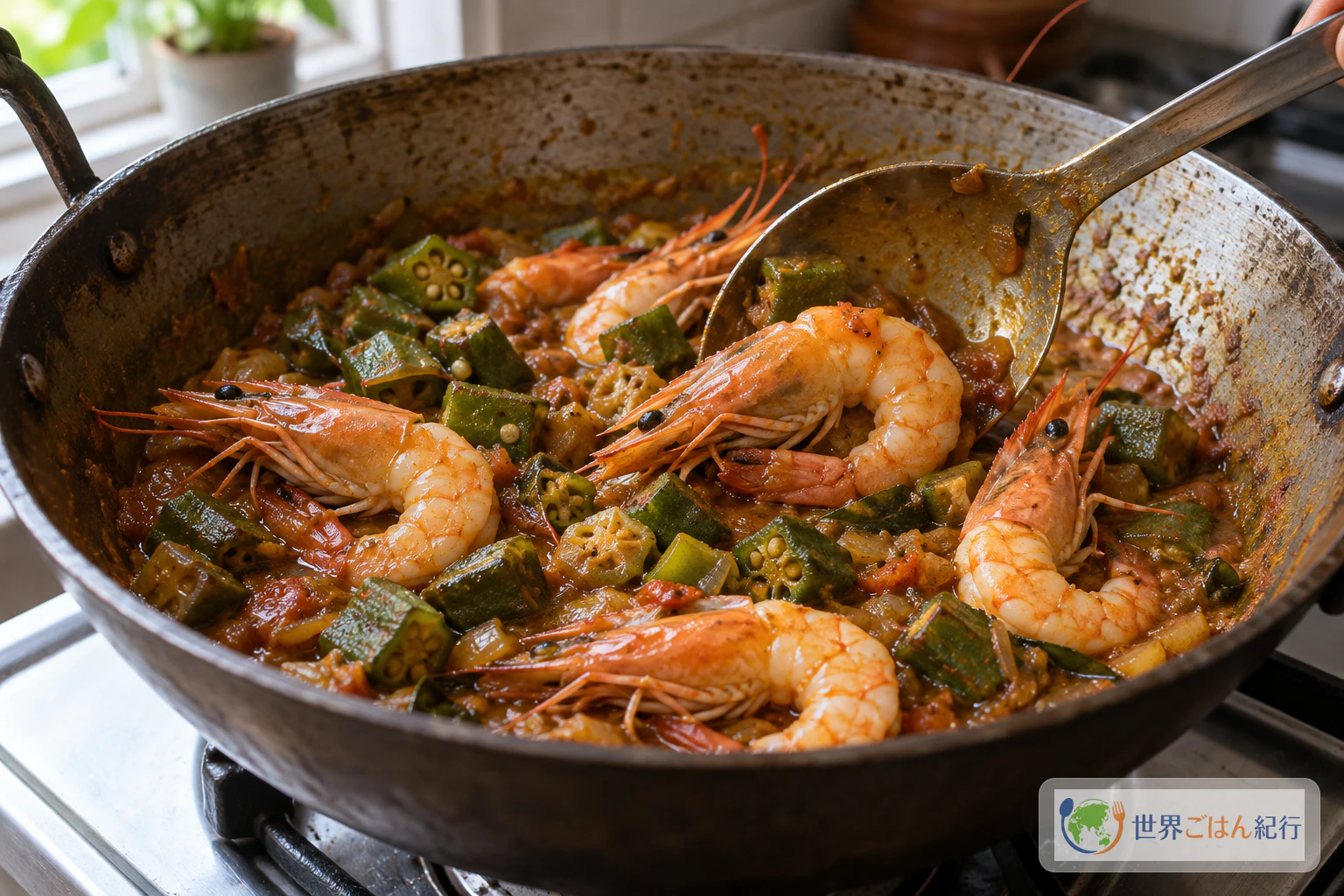
The prawns are peeled before anything goes near the heat, but their heads stay on. The empty body shells go into a pot with a spoonful of grapeseed oil, toast until they take on color, and are then simmered in water to make a stock. That stock becomes the liquid for the curry. The prawns themselves wait in the refrigerator until the very end, when they spend only 2–3 minutes in the sauce.
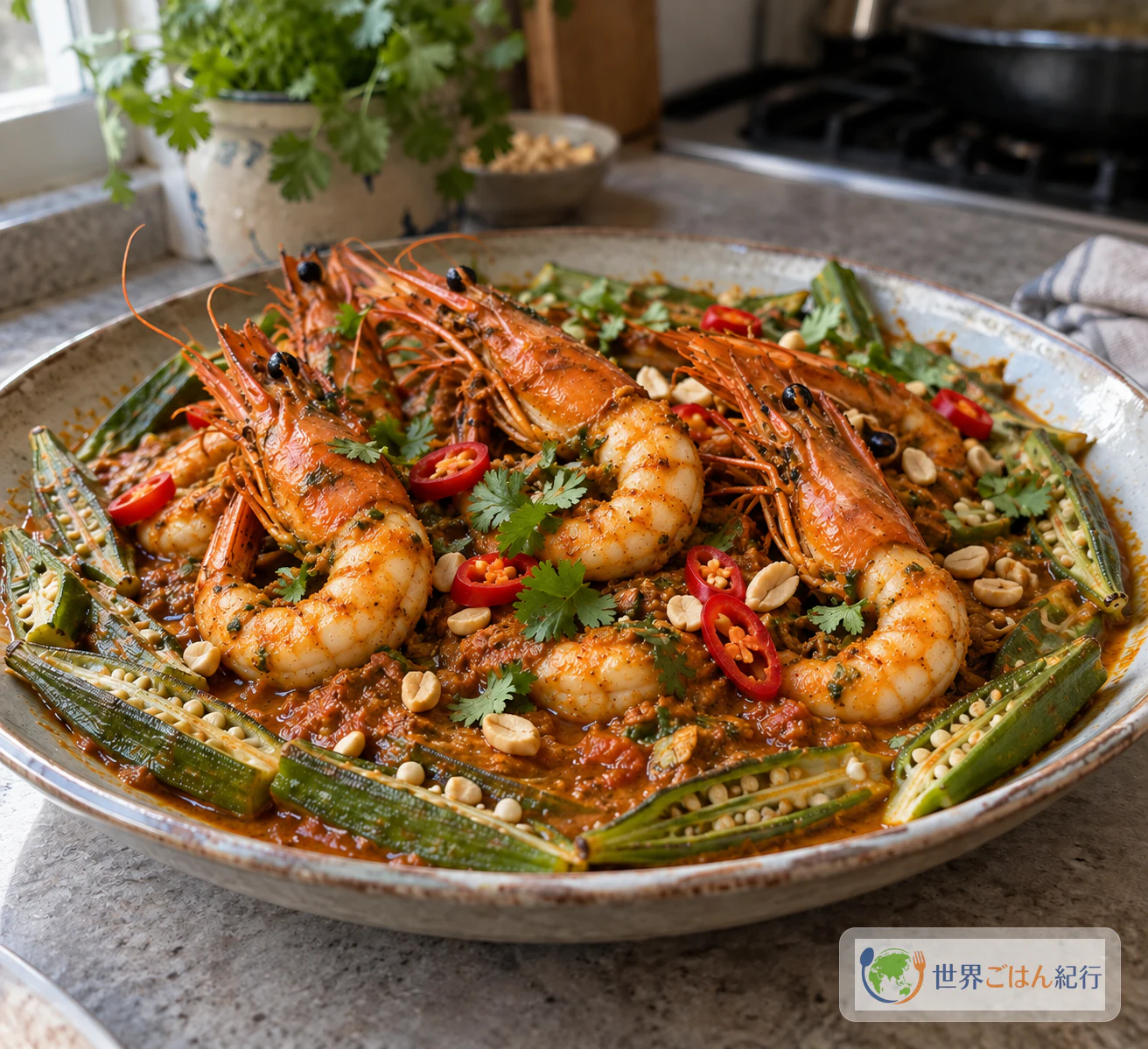
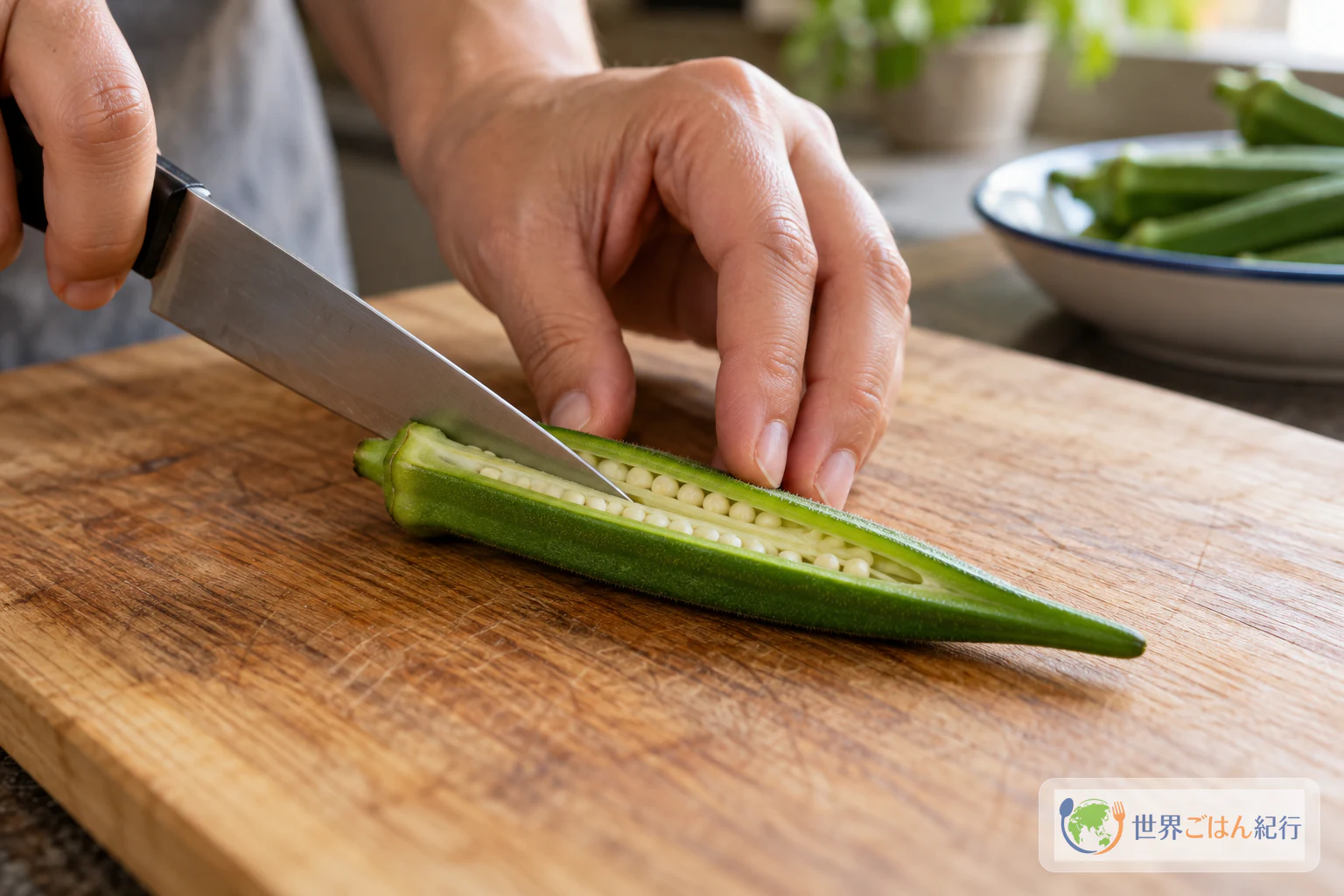
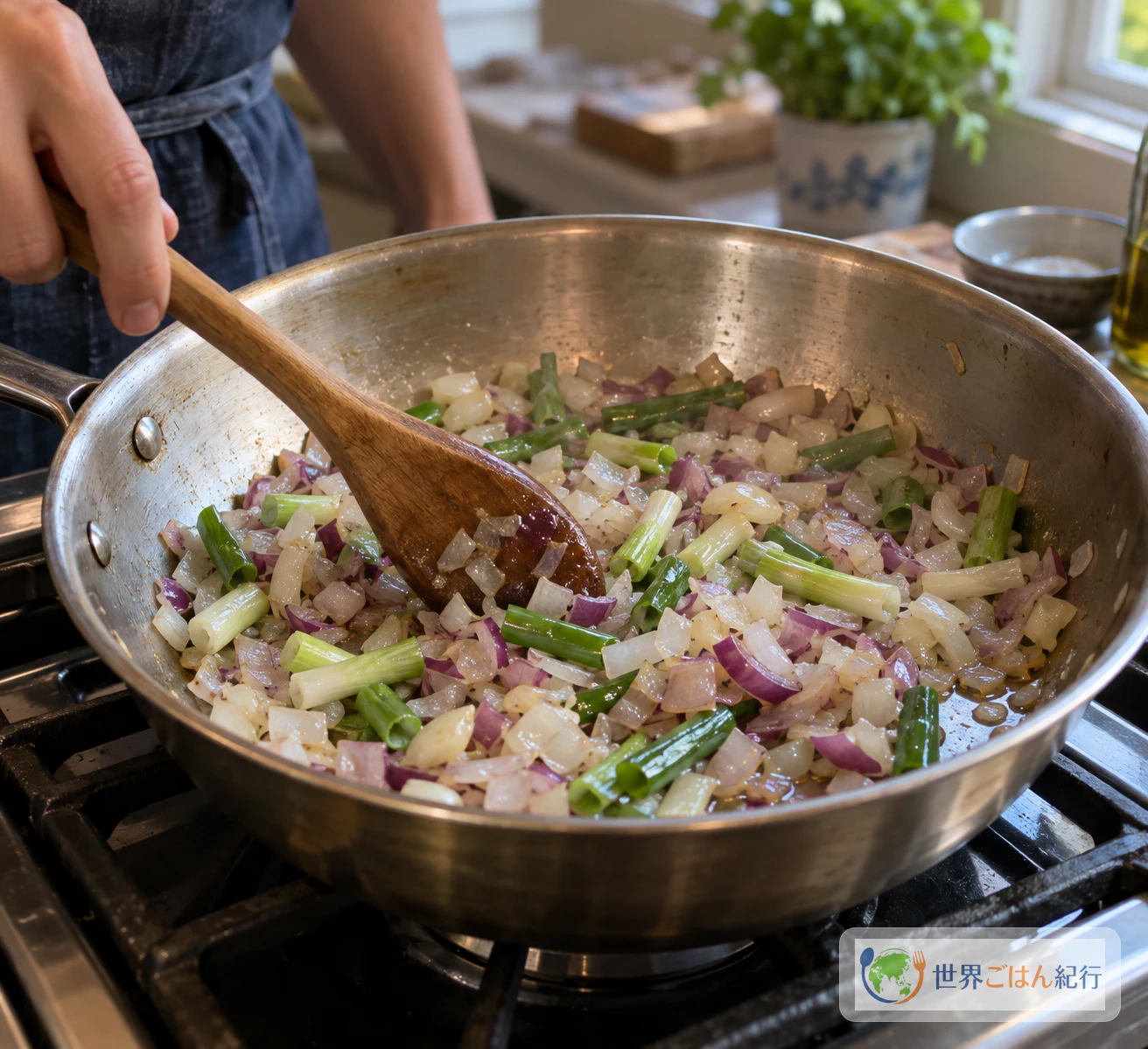
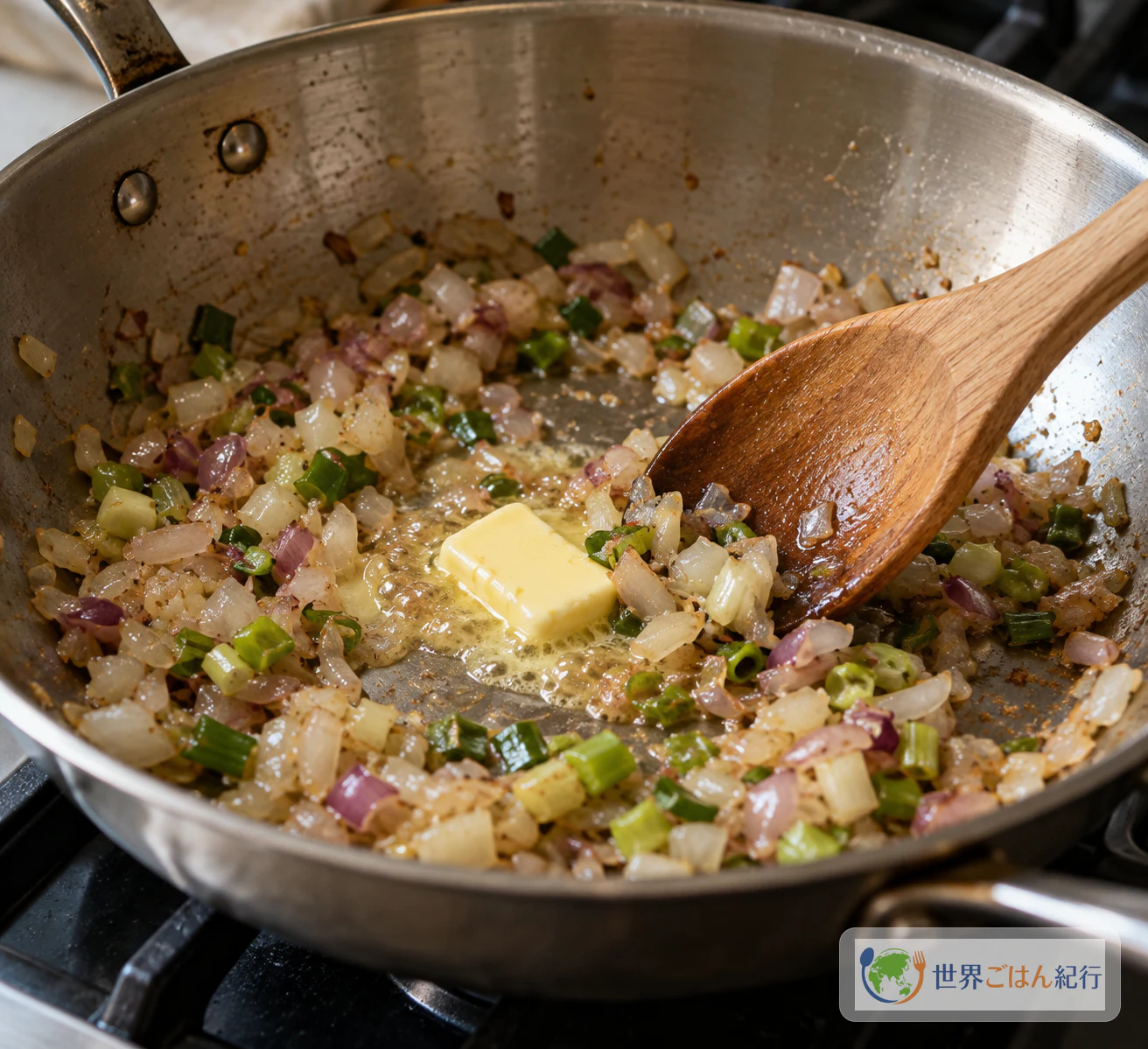
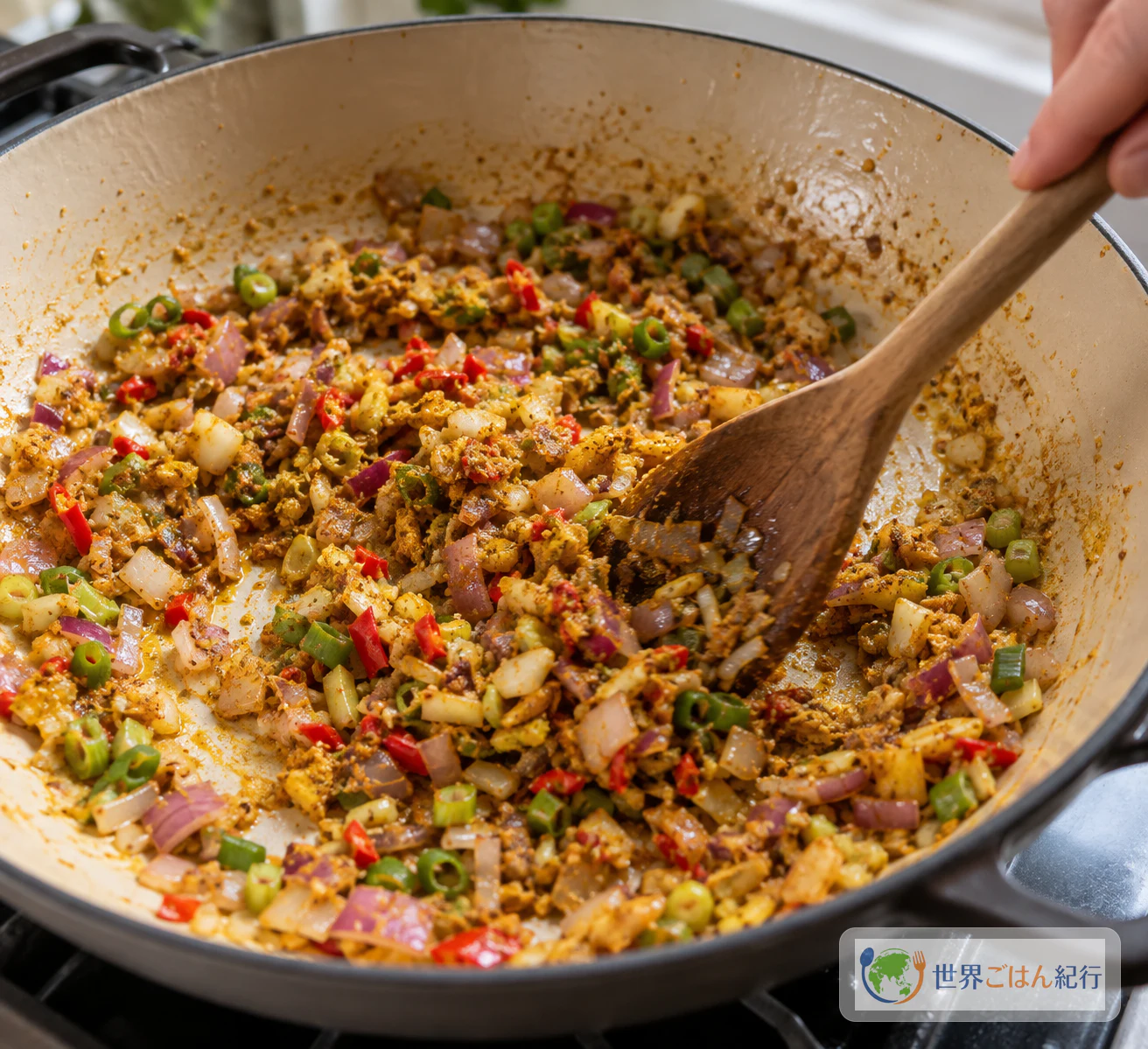
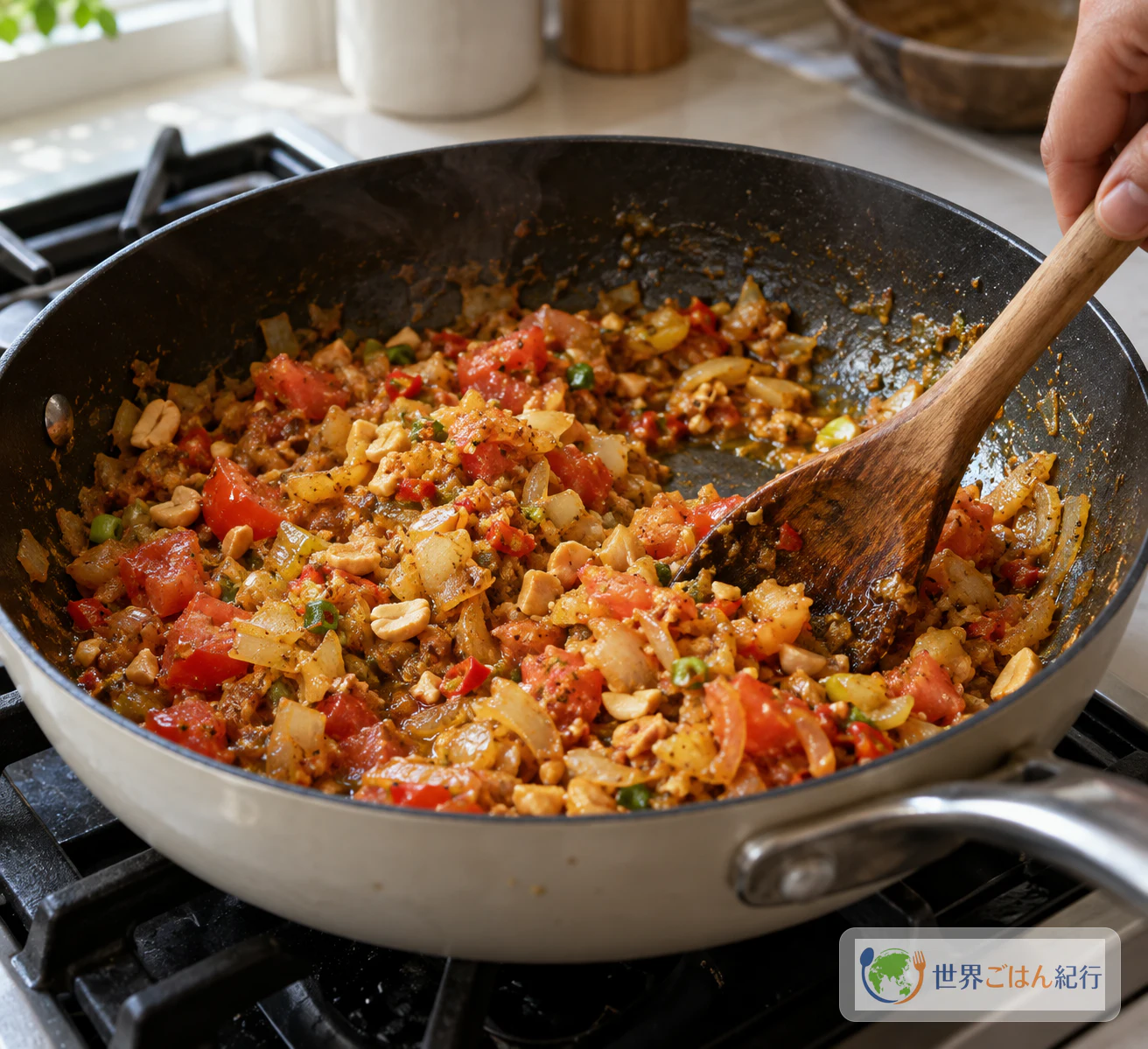
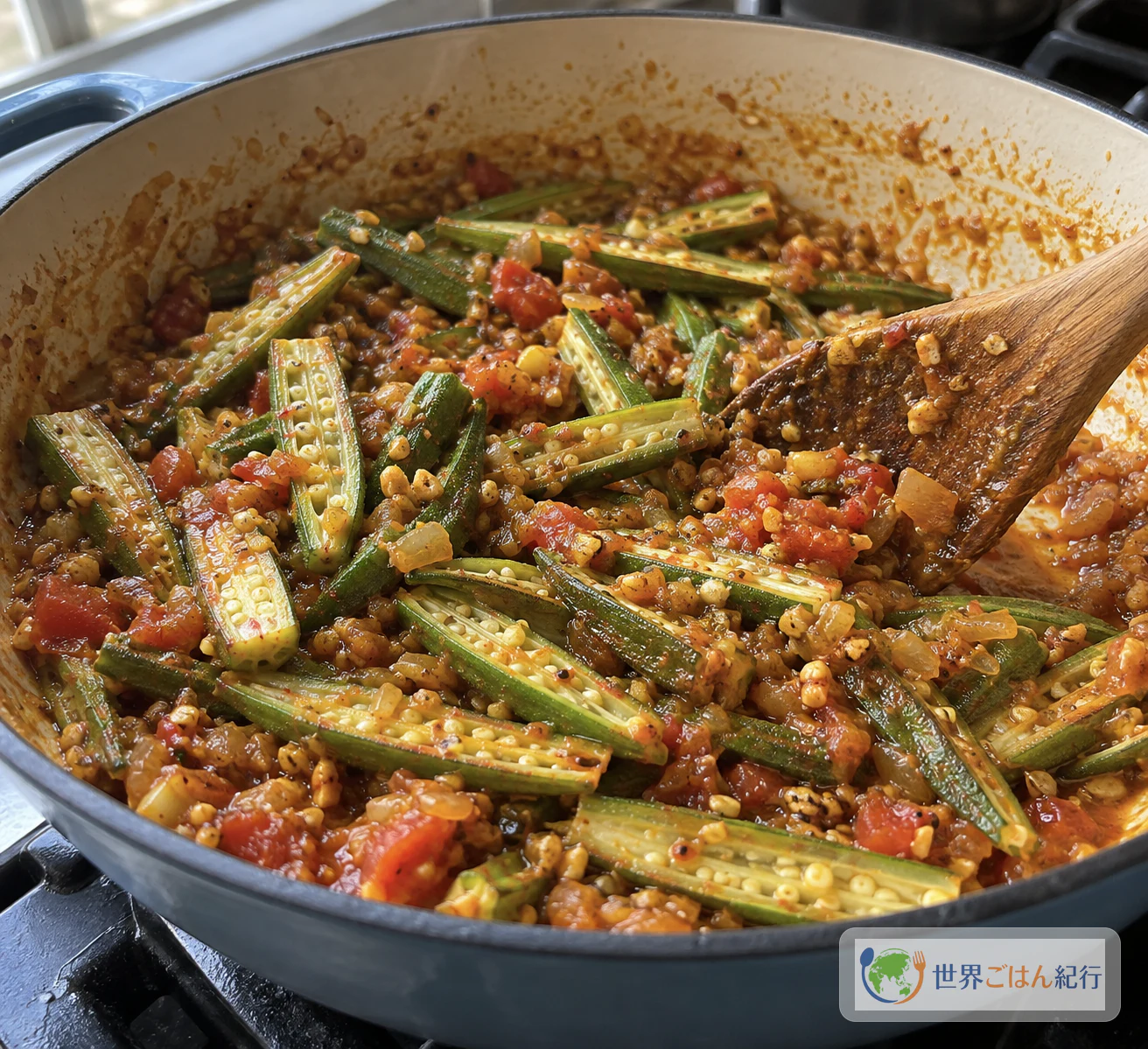
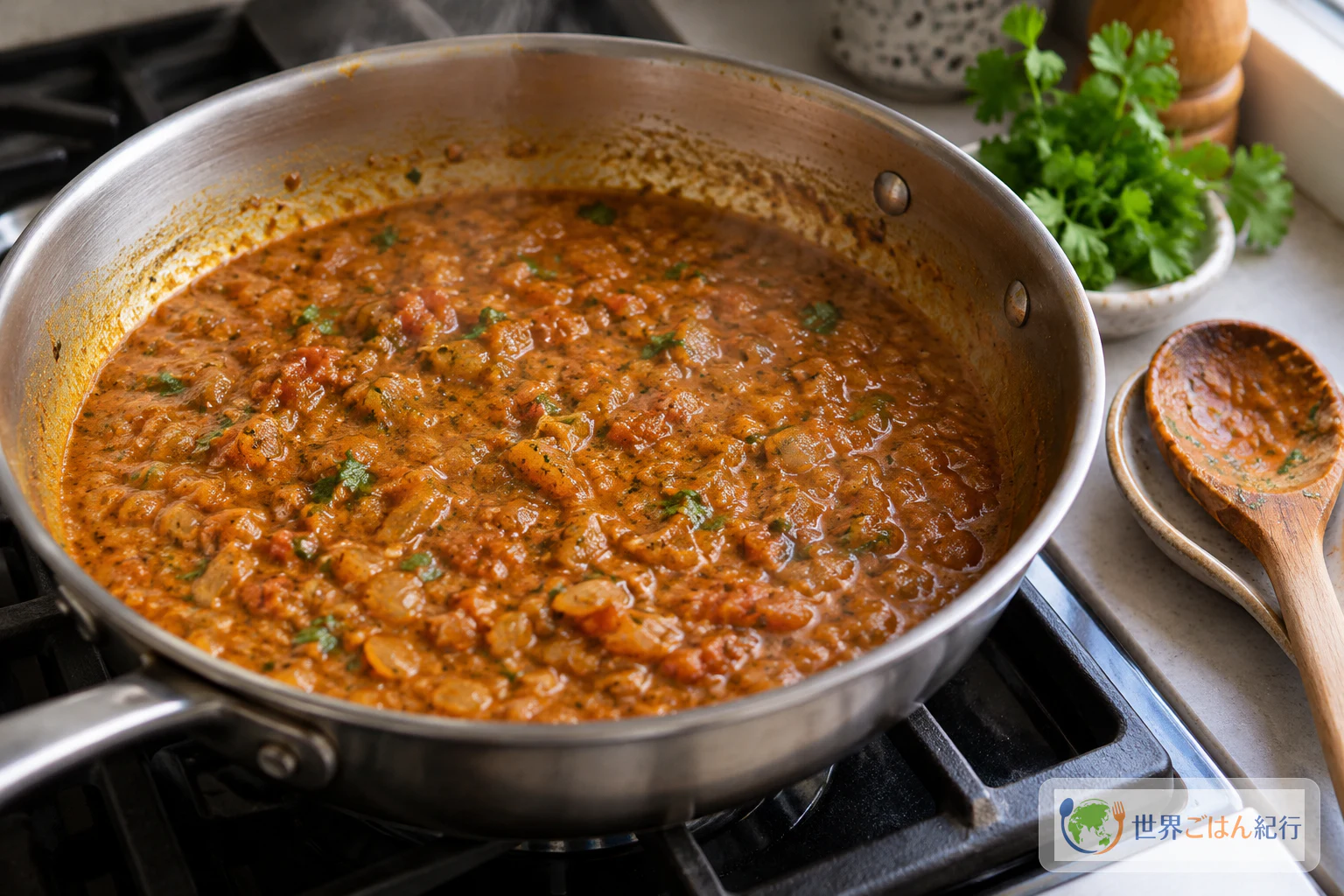
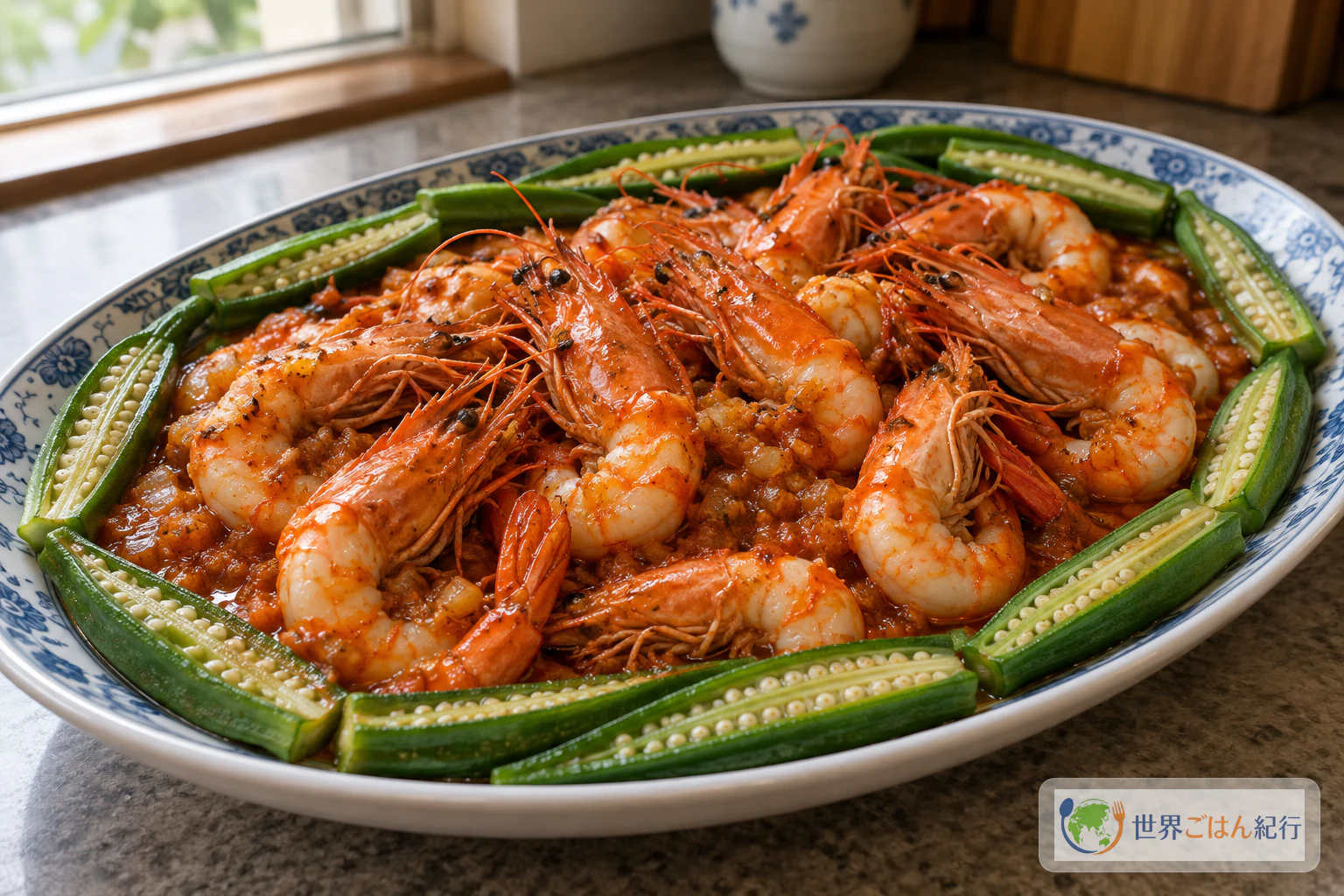
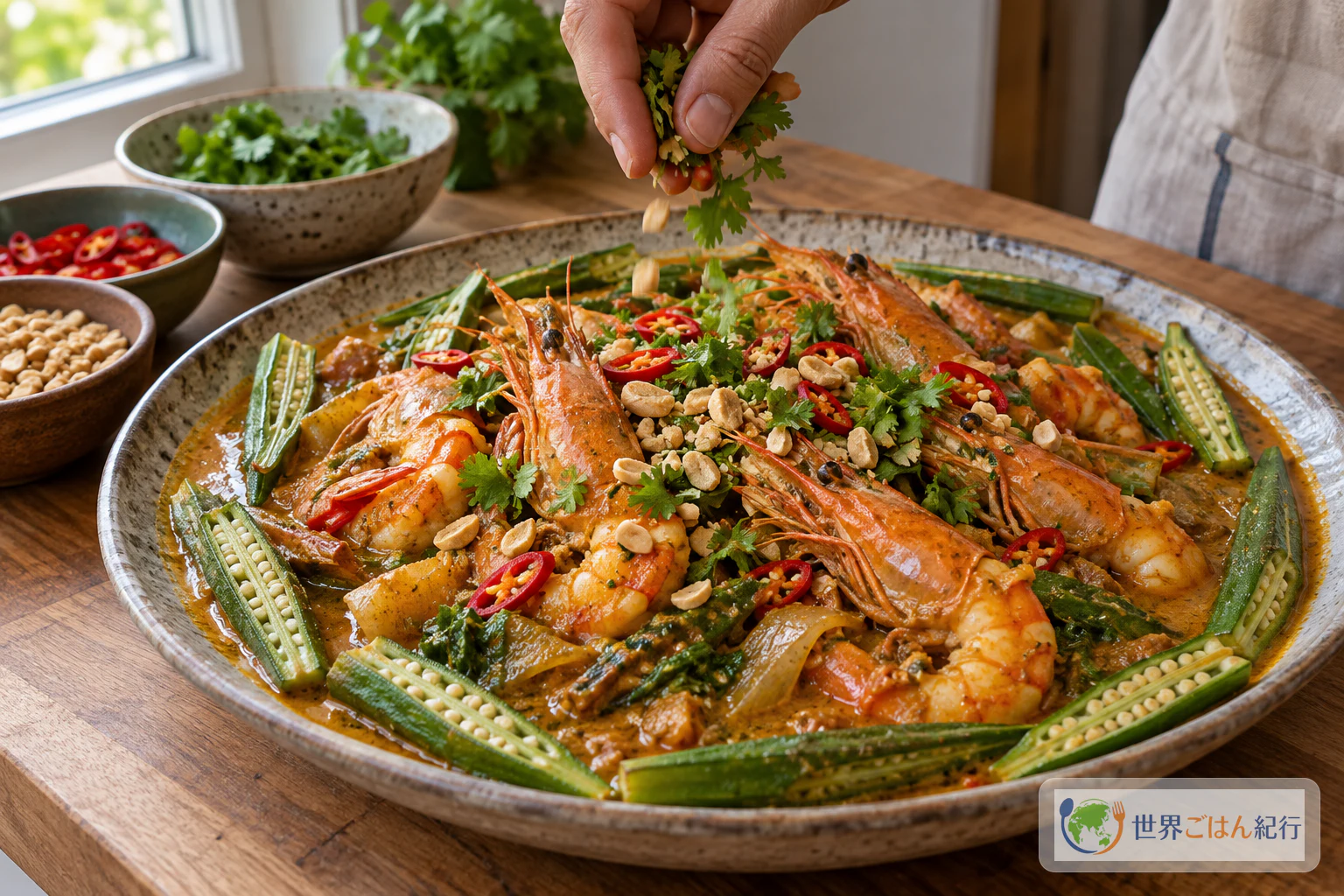
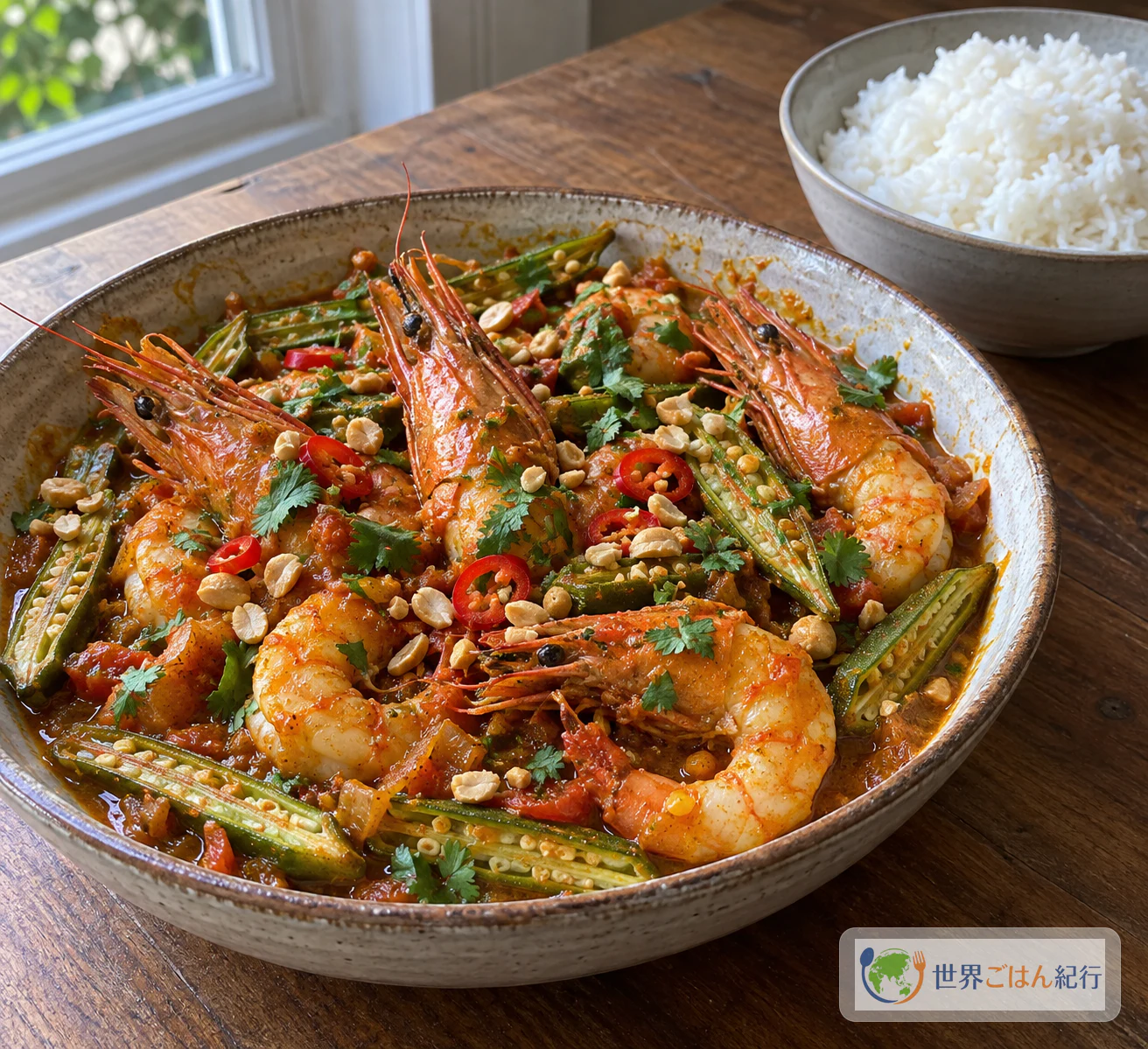
Between those two moments, the curry builds in a large pan: spring onions, red onion and shallots soften in oil, butter goes in over lowered heat, then chili, ginger and Madras curry powder, chopped roasted peanuts and tomatoes, and finally okra cut lengthways into long halves. On the platter, those okra halves are set around the rim, and the dish is finished with coriander, sliced red chilies and more peanuts.
Three things make this version what it is: the shell stock, prawns that keep their heads, and okra halved lengthways rather than sliced into rounds. There is no coconut milk in the curry itself.
Ingredients (Serves 4)
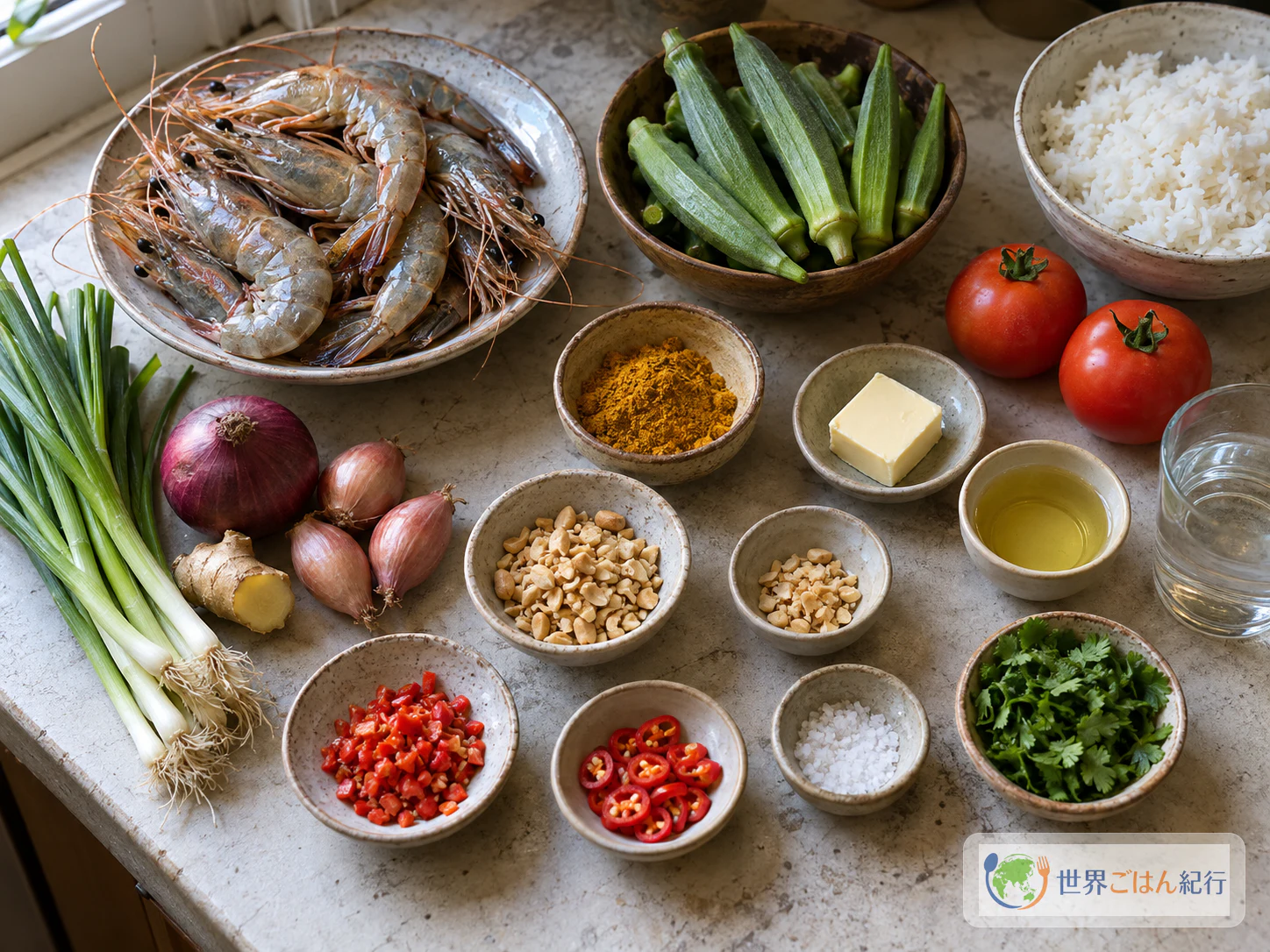
Chilies and peanuts each appear twice: once in the curry base and once as a garnish. They are listed as separate rows so they don't all go into the pan at once.
Equipment
- A saucepan or pot for the shell stock
- A large pan for the curry
- A fine sieve for straining the stock
- A serving platter
Choosing and Shopping Notes
This dish contains prawns, peanuts and butter. Check with everyone you are cooking for before serving.
Buy prawns with shells and heads. The shells become the stock, and the heads stay on through cooking and serving. You need 700g of large prawns in total.
Grapeseed oil is split, not added to. The 4 tbsp in the list cover both uses: 1 tbsp for the shells and 3 tbsp for the alliums. The butter is a separate ingredient that joins the alliums later. No other oil is used.
Madras curry powder goes in as a dry powder. Don't use curry paste or a curry roux.
Keep the garnish portions apart. Set aside the 2 garnish chilies (sliced), the handful of garnish peanuts (chopped) and the coriander before you start cooking. That keeps them from going into the base by mistake.
What's not in it. There is no coconut milk, garlic, extra spices, sugar or stock cubes in the curry. Coconut belongs only with the rice, if you serve coconut rice on the side.
Rice. Serve with plain, already-cooked rice; coconut rice is the ideal alternative. A recipe for cooking the rice isn't included.
Method: From Shell Stock to Platter
The method is broken into 17 short steps. Steps 1–5 make the prawns and stock ready. Step 6 prepares the okra. Steps 7–13 build the curry, and steps 14–17 finish and serve it.
Troubleshooting: Staying Close to the Published Recipe
| Situation | What the recipe says | What to do |
|---|---|---|
| Prawn heads come away while stirring | The prawns are stirred gently for 2–3 minutes, keeping the heads attached | Fold them through the sauce rather than stirring hard |
| The sauce is still loose after adding the stock | Simmer, stirring occasionally, until thickened; no time is given | Keep simmering before adding the prawns. The recipe uses no thickener |
| The okra was cut into rounds | Okra is halved lengthways | For this version, keep the long halves; they are also what goes around the platter rim |
| The strained stock isn't exactly 400ml | The curry uses 400ml; the page doesn't promise that 600ml of water gives exactly that | Measure 400ml for the curry. The recipe gives no instruction for a different amount |
| All the peanuts or chilies went into the base | Base (200g peanuts, 3 small chilies) and garnish (1 handful peanuts, 2 sliced chilies) are separate | Portion the garnish before cooking and keep it aside until step 16 |
| Not sure how much oil to add with the butter | The butter goes into the pan with the 3 tbsp oil already used for the alliums | Add only the butter; no extra oil |
Variations: The Rice on the Side
The published recipe sticks to one formula, and this article doesn't swap ingredients or spices. The one choice the recipe itself leaves open is the rice. Nuno Mendes names coconut rice as the ideal accompaniment; this article serves the curry with plain, already-cooked rice. If you prefer the author's suggestion, coconut rice is his pick, but a recipe for it isn't included here. Either way, the coconut belongs with the rice, not in the curry.
Macanese Cooking and This Dish
The recipe here comes from a single published source. The background below describes Macanese cooking in general and a restaurant that serves a similarly named dish; neither is evidence for how this particular recipe came about.
Great British Chefs presents this recipe under its Portuguese name, Caril de camarão com quiabos, alongside the English "Macanese curried prawns and okra." Great British Chefs introduces Macanese cooking as a cuisine where influences from several regions meet, and the Macao Government Tourism Office describes it in similar broad terms: a combination of Portuguese and Chinese cuisines, drawing on ingredients and seasonings from Europe, South America, Africa and Southeast Asia. The tourism office also lists shrimp in curry sauce among Macanese dishes, describing that kind of curry as spicy with a thicker sauce. This is general context and doesn't describe Nuno Mendes's ingredient list. The same page mentions coconut milk for a separate crab curry, which is a different dish.
In Taipa, the Taipa Village directory describes Casa Maquista as a restaurant set in a historic house and names Curry Shrimp with Okra among its highlights. The page doesn't publish a recipe, so there is no basis to call Nuno Mendes's version the restaurant's formula or to combine the two.
For more on the region's food, see the Macau country page.
Other dishes from elsewhere also pair shrimp with okra, or shrimp with curry. One is caruru from Brazil; another is the Bengali chingri malai curry, which uses coconut milk. Those are separate dishes, and their ingredients and methods don't carry over to this one.
Frequently Asked Questions
Do I remove the prawn heads?
No. In this version the heads stay on. You peel and devein the bodies, and the removed shells go into the stock. The recipe doesn't specify how to handle the tails.
How many prawns do I need?
The recipe gives 700g of large, shell-on prawns and no count.
Is there coconut milk in it?
Not in the curry. The published ingredient list has no coconut milk. Coconut appears only in the author's suggestion of coconut rice as the ideal side.
Should the okra be sliced into rounds?
No. The okra is halved lengthways, and the long halves are arranged around the platter rim when you serve.
How long does the sauce simmer?
The recipe says to simmer until the sauce has thickened, stirring occasionally, and gives no fixed time.
Is this the standard Macanese recipe?
This article presents one chef's published version and makes no claim that it is the standard. A restaurant in Taipa lists a dish of the same name, but its recipe isn't published.
How do I store leftovers?
The source gives no leftover, storage or reheating guidance, so none is given here. The recipe says to serve the curry immediately.
Sources
- Nuno Mendes, "Caril de camarão com quiabos – Macanese curried prawns and okra," Great British Chefs (first published in 2019, as shown on the page). The recipe source for this article: all ingredients, amounts, preparation, method order, stated times, the 4 servings and 1 hour 30 minutes published on the page, plating and the cooked-rice side. https://www.greatbritishchefs.com/recipes/macanese-prawn-okra-recipe
- Macao Government Tourism Office, "Macanese & Portuguese Dishes." Used only for the office's broad description of Macanese cuisine and its general description of shrimp in curry sauce; not a source for this recipe's ingredients or method. https://www.macaotourism.gov.mo/en/dining/taste-of-macao/macanese-and-portuguese-dishes
- Taipa Village, "Casa Maquista." Used only for the restaurant's description and its listing of Curry Shrimp with Okra among its highlights; the page does not publish a recipe. https://www.taipavillagemacau.com/directory/casa-maquista/