Coffin Bread: Lift the Toast Lid, Spoon In the Creamy Filling
This is one home cook's oven version, not the deep-fried formula and not a standard for every coffin bread. Thick toast is brushed with butter and baked, a lid is cut from the top, and a pork-and-shrimp filling thickened with cornstarch goes inside.
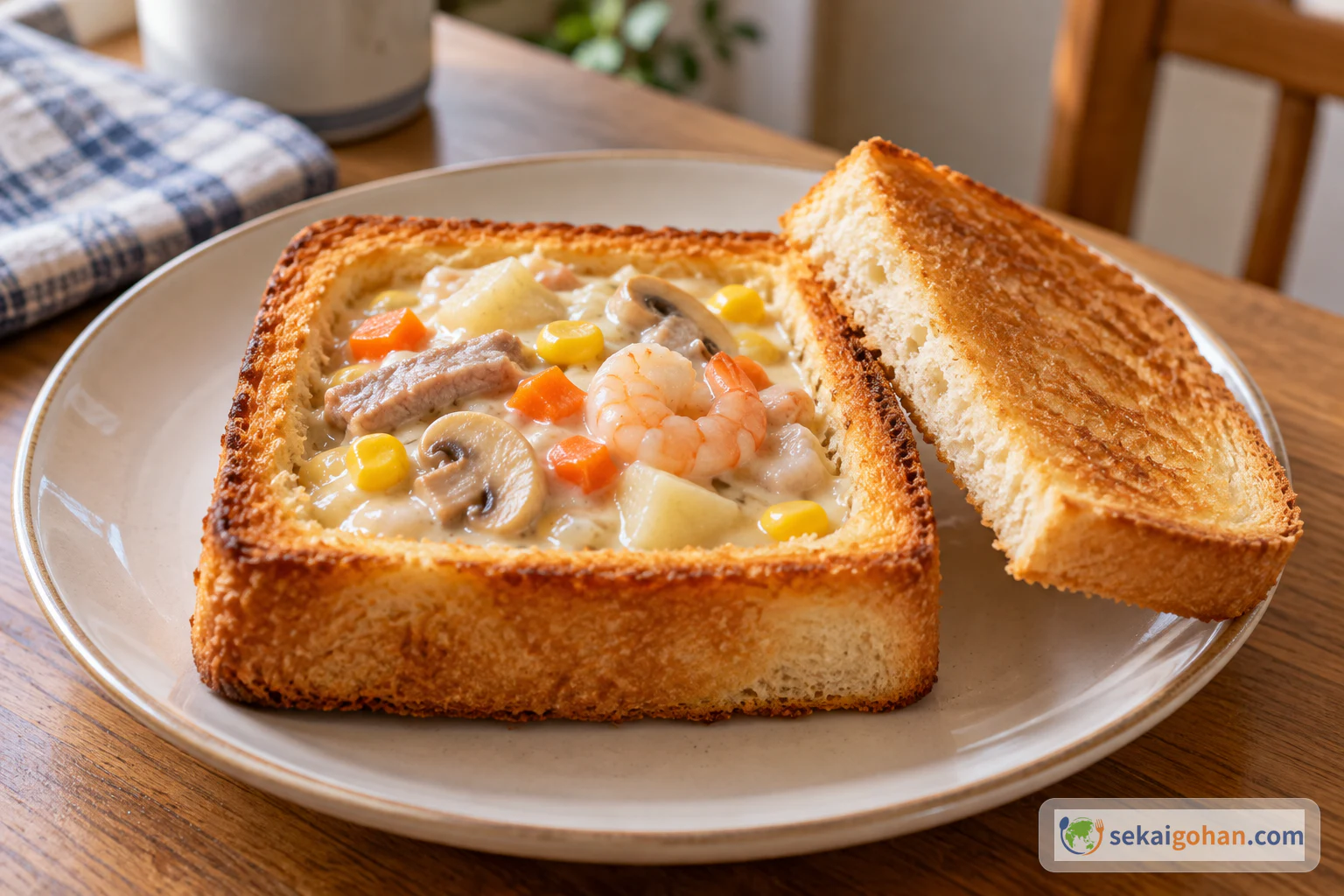
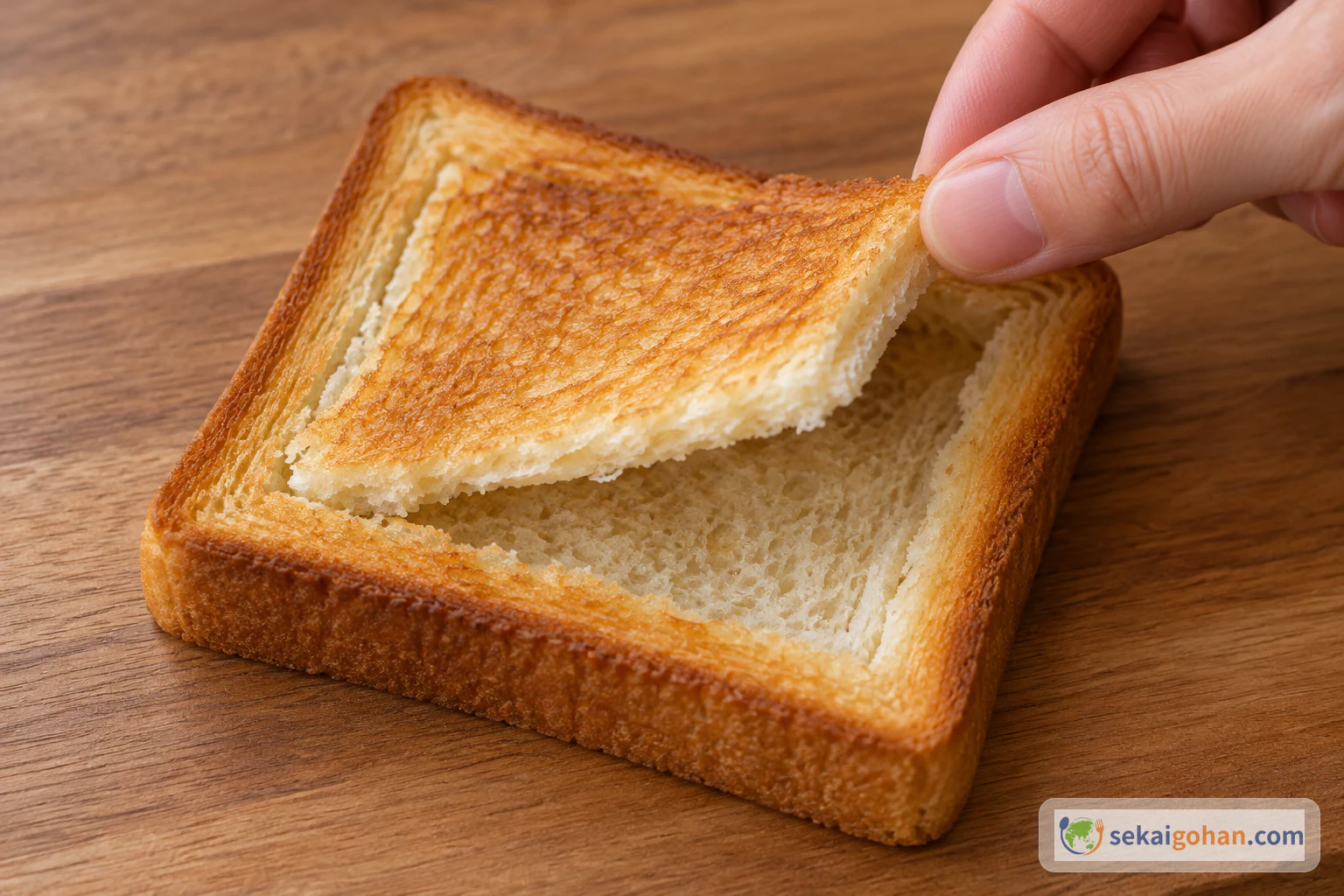
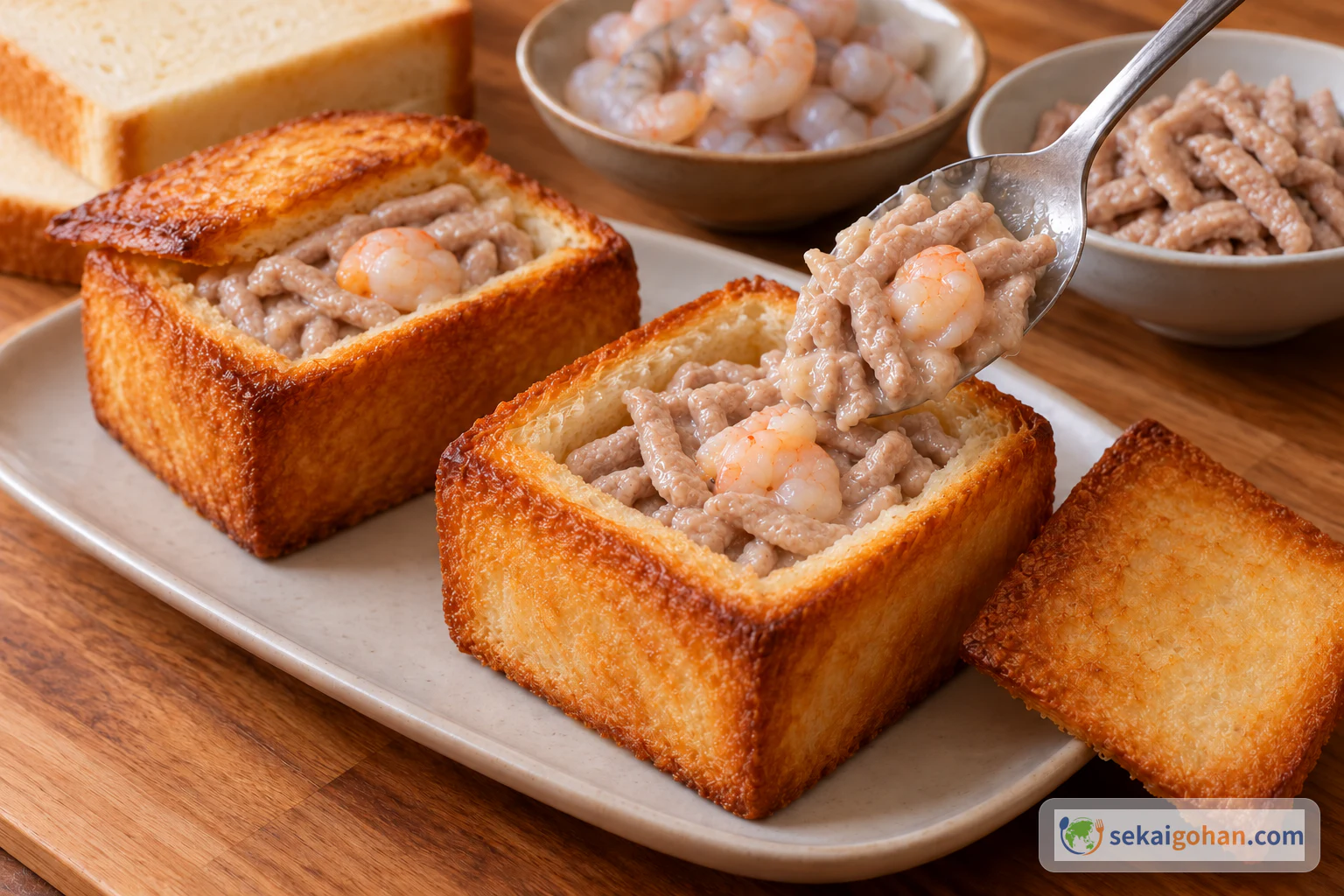
A browned slice of thick toast, its top cut around the edge and raised like a lid, and a pale, creamy filling spooned in underneath: that is the picture of coffin bread (棺材板). The name, which reads literally as "coffin board," fits the shape of a box with its lid lifted.
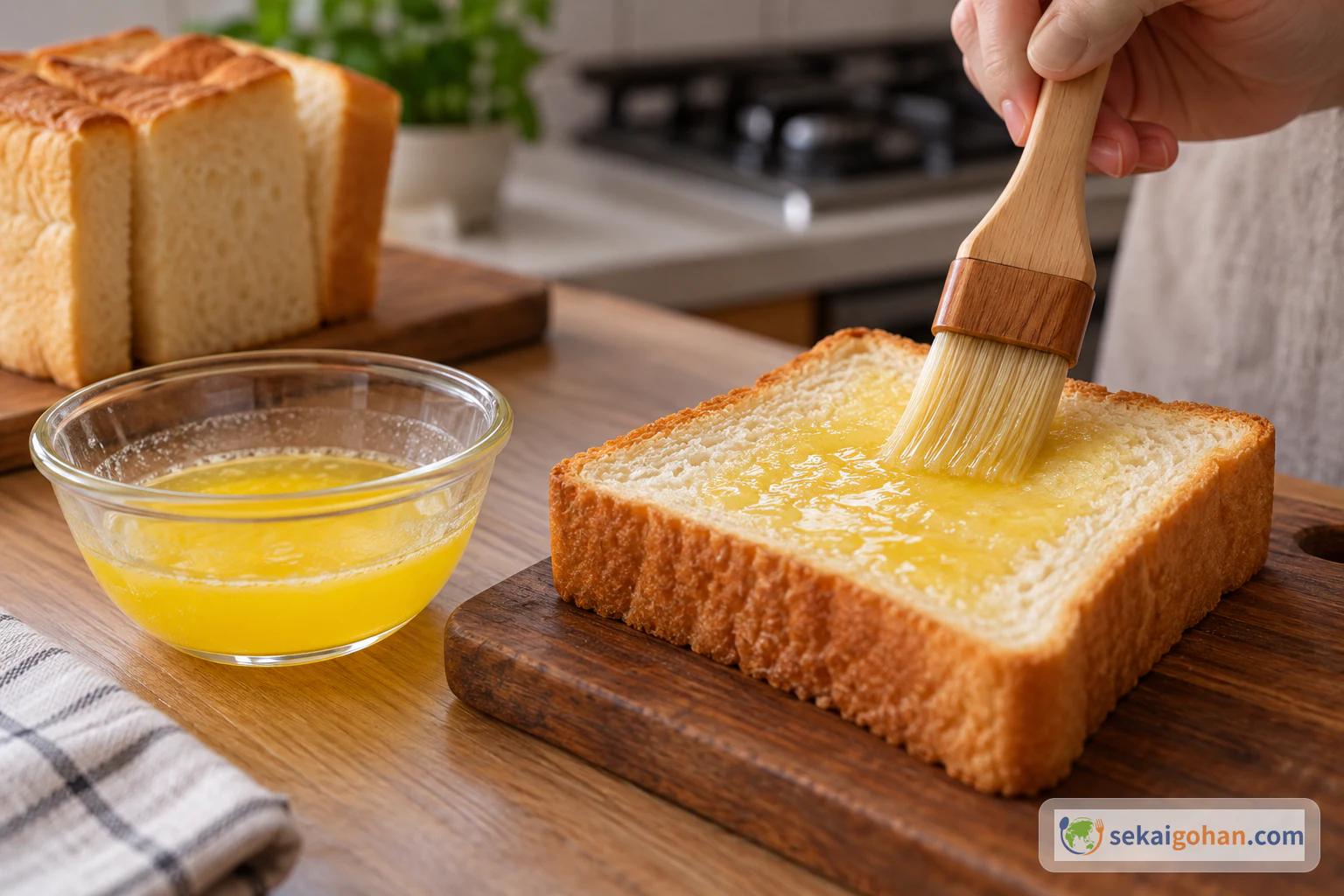
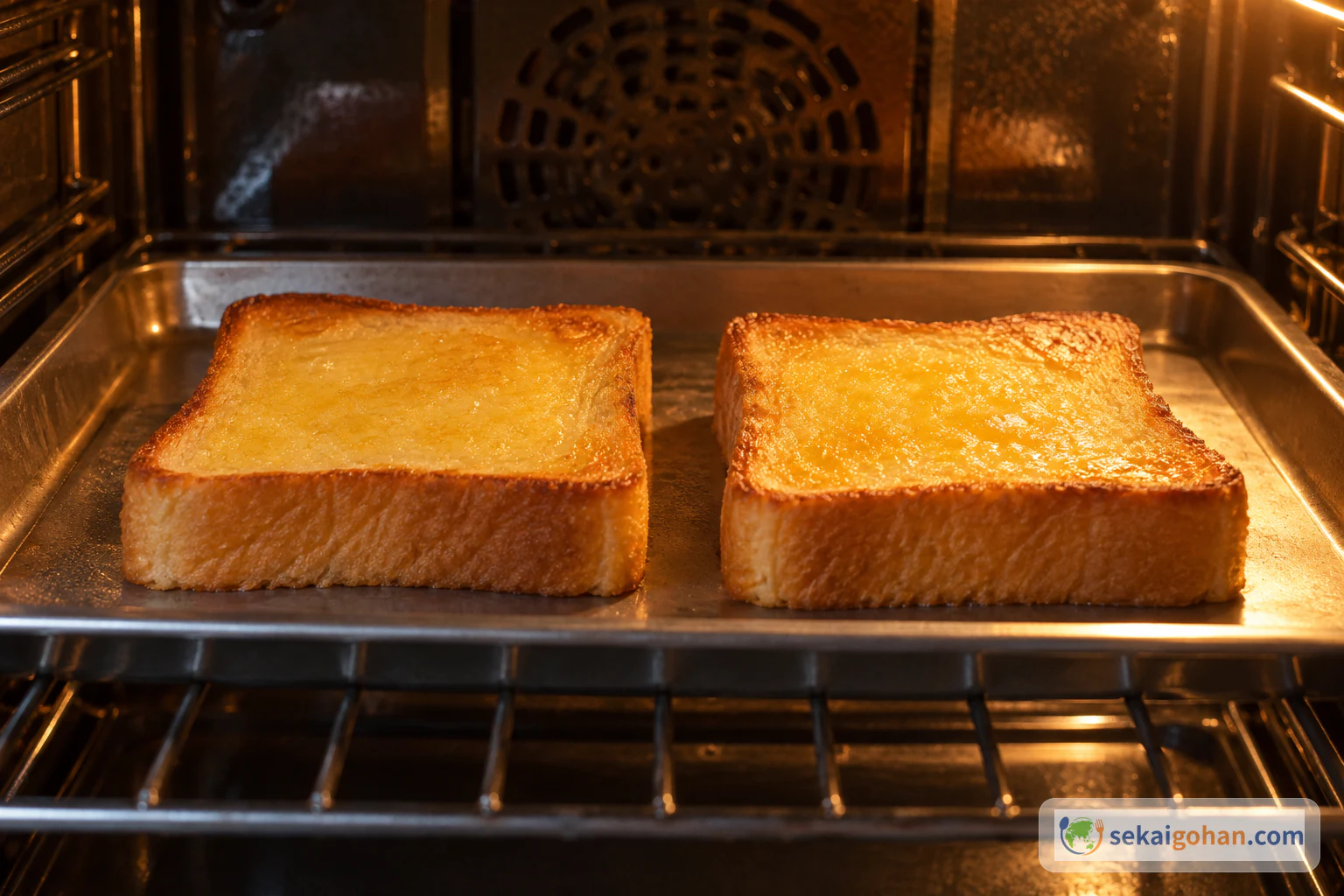
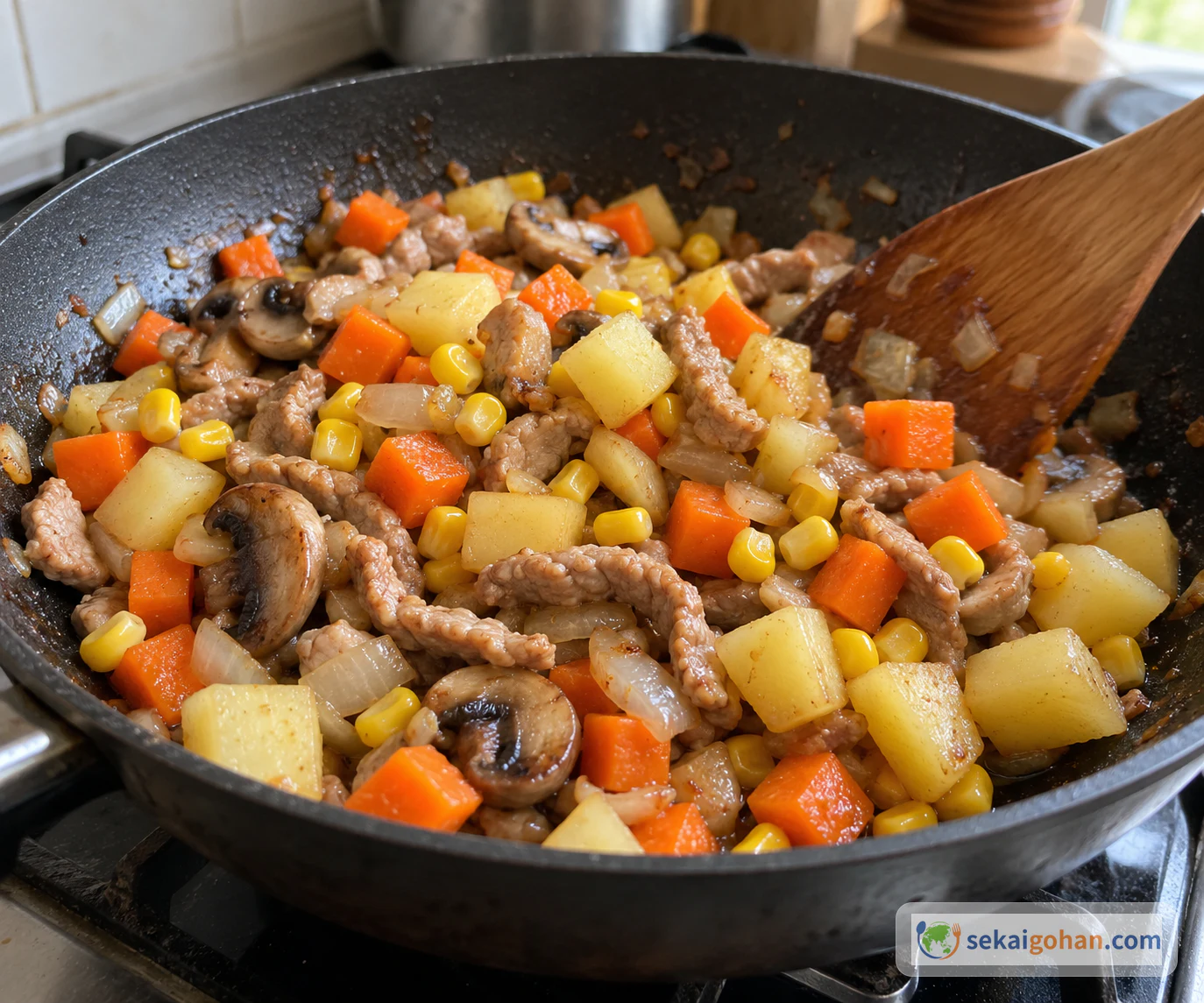
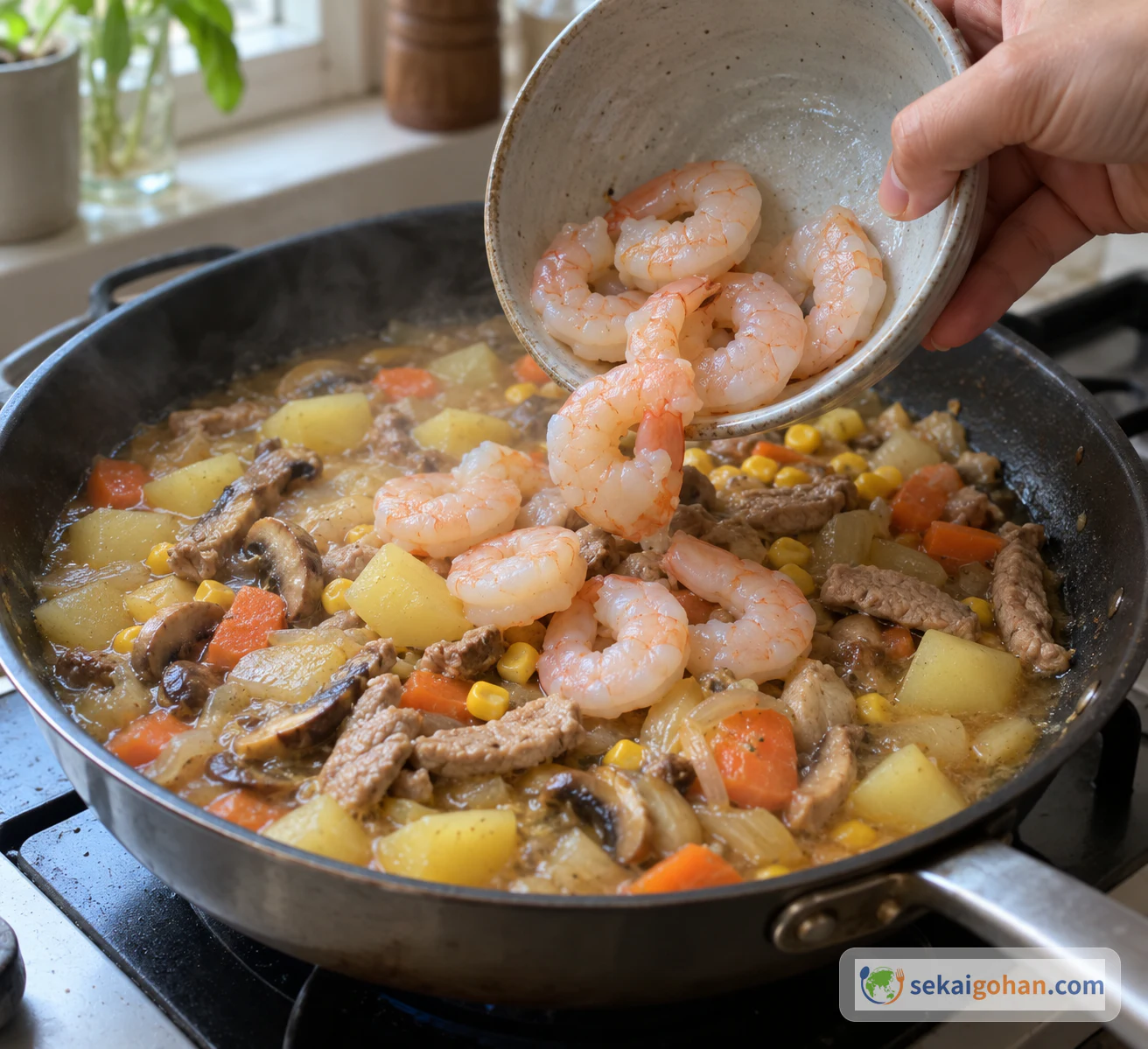
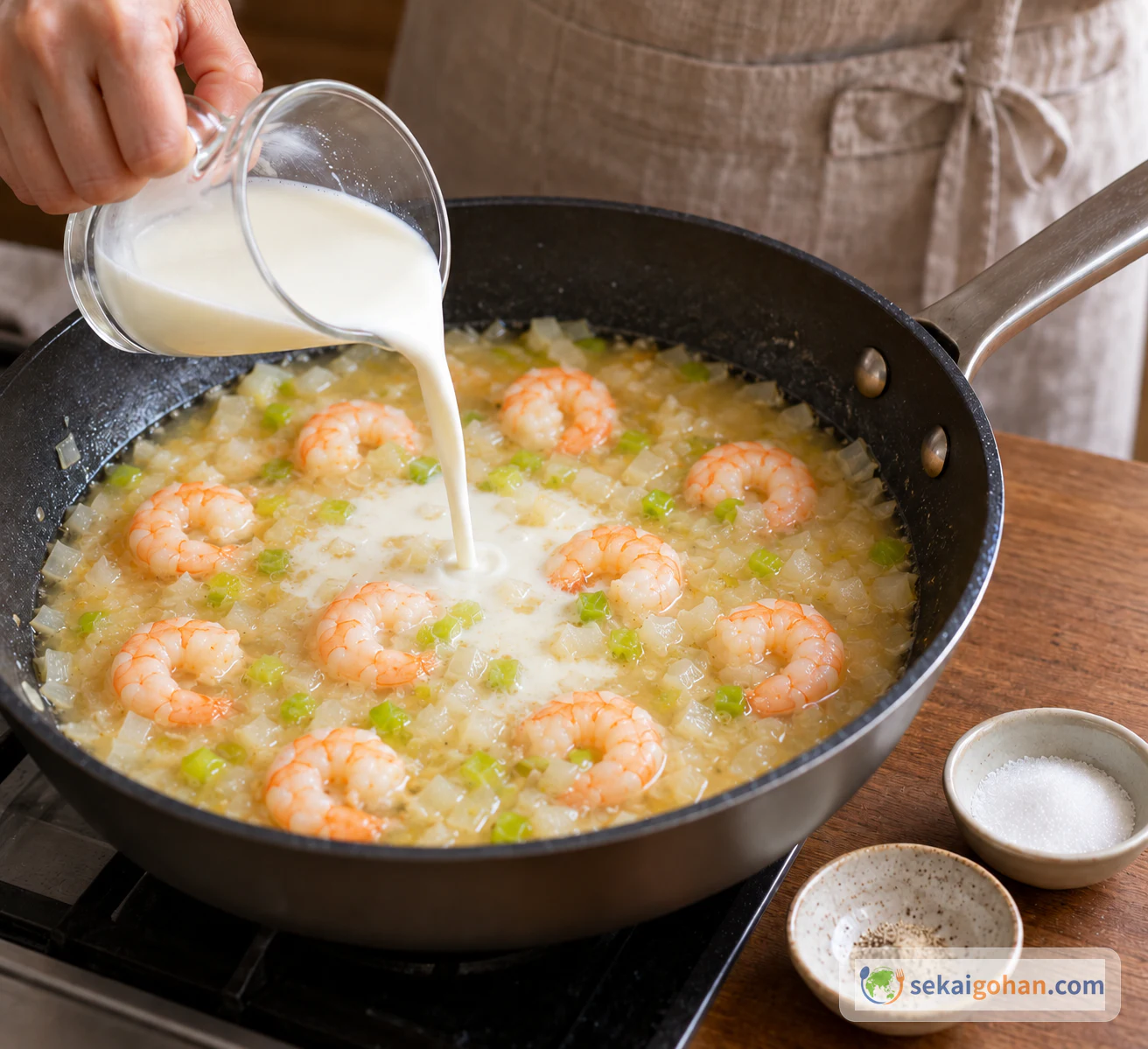
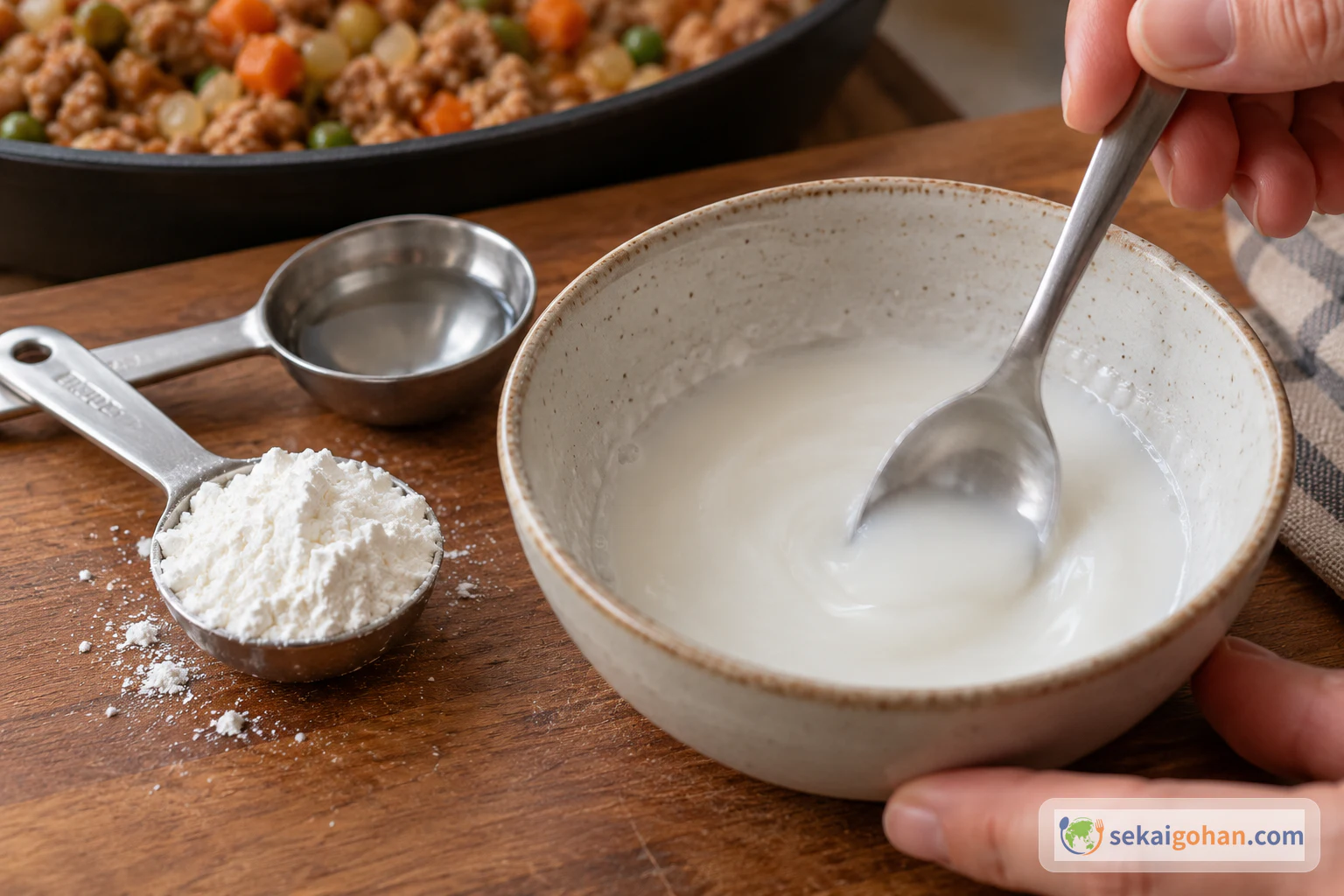
The recipe here follows the written iCook recipe by 安木白 Amber, an individual home cook who introduces the dish as Tainan food and presents it as a version to make at home. Her filling brings together mushrooms, strips of pork shoulder, onion, carrot, corn, potato and ten shrimp, simmered in stock and milk, thickened with a cornstarch slurry and finished with butter after the heat is off. The bread is not fried; it is brushed with melted butter and baked in a 200°C oven.
Other recipes under the same name use different breads, fillings and heat sources, and some fry the bread shell. This article keeps to Amber's one version so the amounts and steps stay consistent. For more dishes from the island, see Taiwan.
In Chinese the dish is written 棺材板; in English it is usually called coffin bread or Taiwanese coffin bread. A story about where the name came from is told below, but it is a reported anecdote, not settled history.
Ingredients: Two Separate Butter Portions, Ten Shrimp, a Few Thick Slices
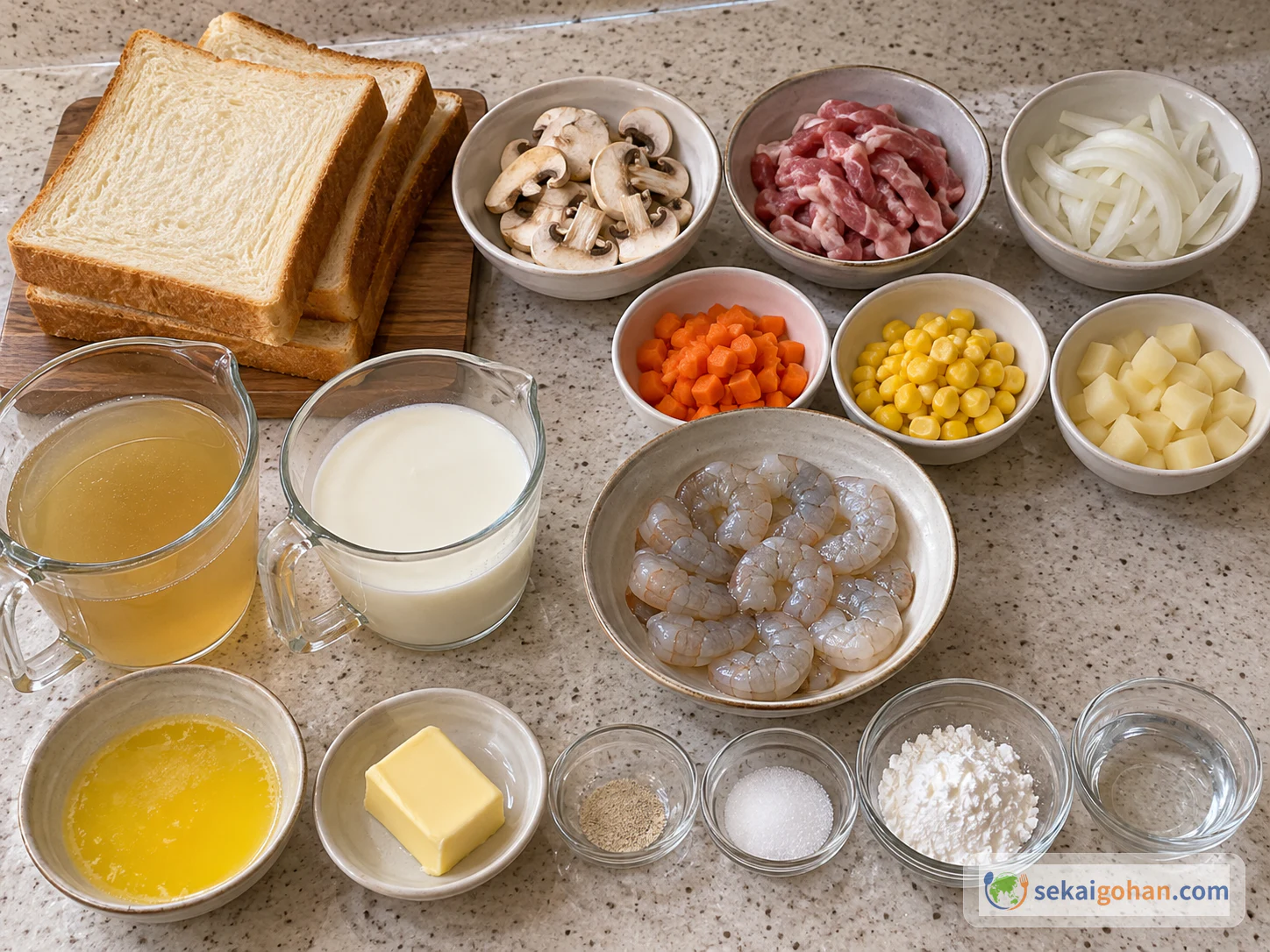
The butter appears twice and in two different roles. The 30 g is melted for brushing the bread. The 15 g goes into the filling after the heat is off. Keep them in separate bowls.
Choosing the Bread, Stock and Starch
- Bread: Use a few slices of thick-sliced toast bread, thick enough that you can cut a lid into the top without cutting through the bottom.
- Stock: The stock is what carries the salt in this filling; no salt is added later.
- Milk: Use 100 ml milk.
- Starch: Use cornstarch (玉米粉). Do not swap it for potato starch or another thickener.
- Butter: Two portions, two jobs. Brushing butter (30 g, melted) and filling butter (15 g) are not combined into one amount.
Equipment
- Oven
- Baking tray
- Pastry brush
- Knife for cutting the bread
- Frying pan or pot
- Wooden spatula or spoon for stirring
- Small bowls (for the melted butter, the slurry and the filling butter)
- Spoon for filling the bread
Method: Bake the Bread, Then Build the Filling in One Pan
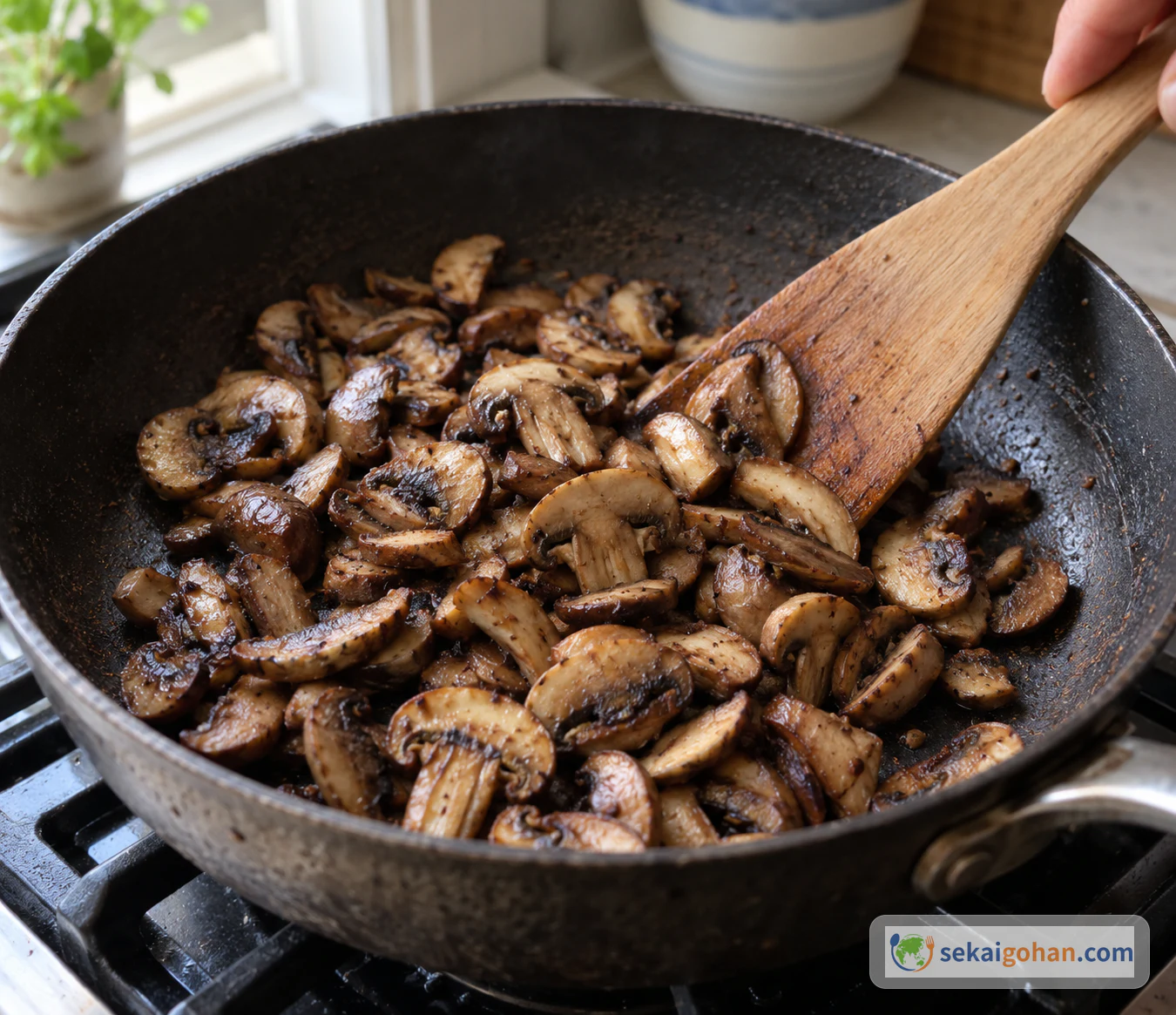
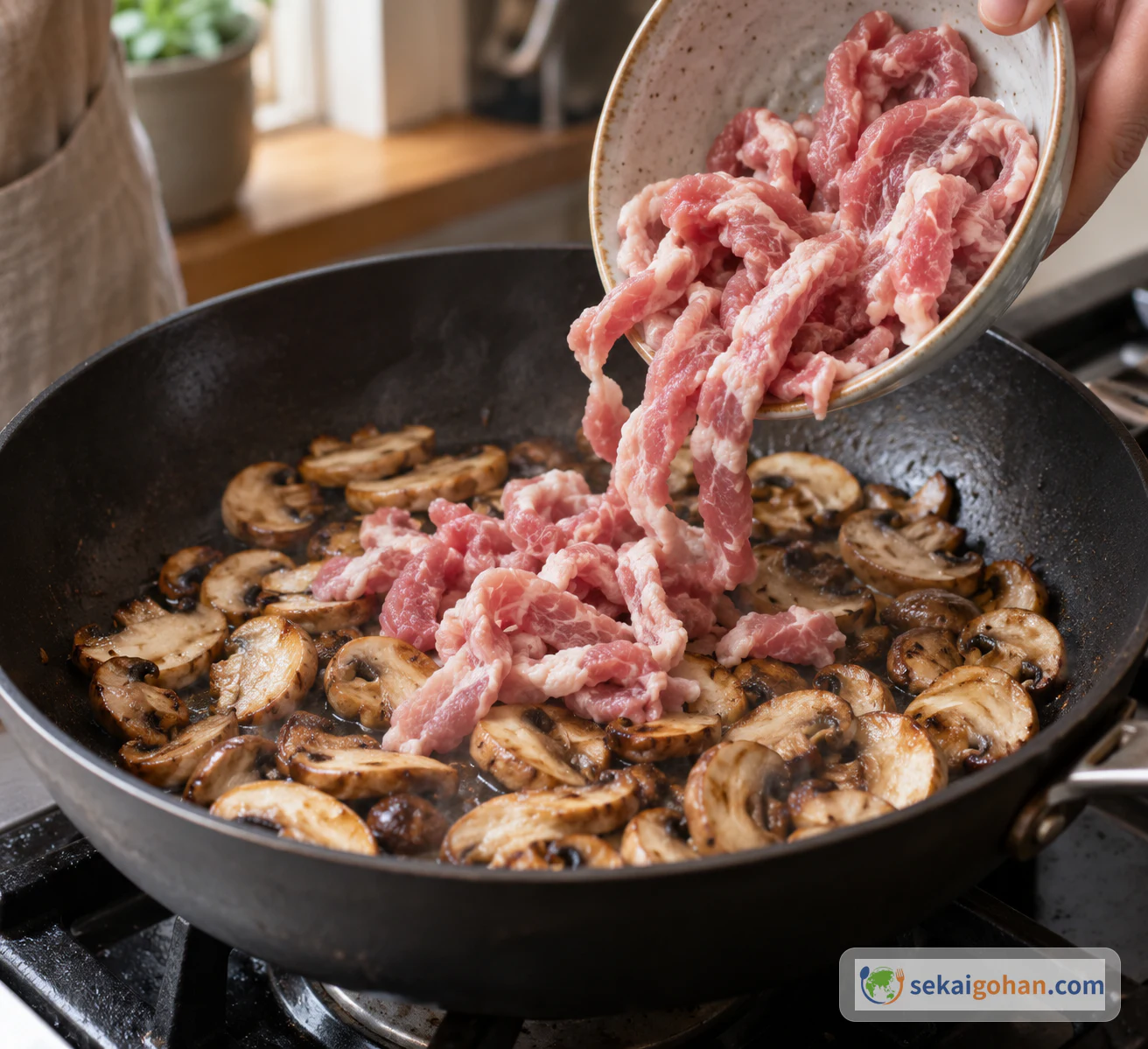
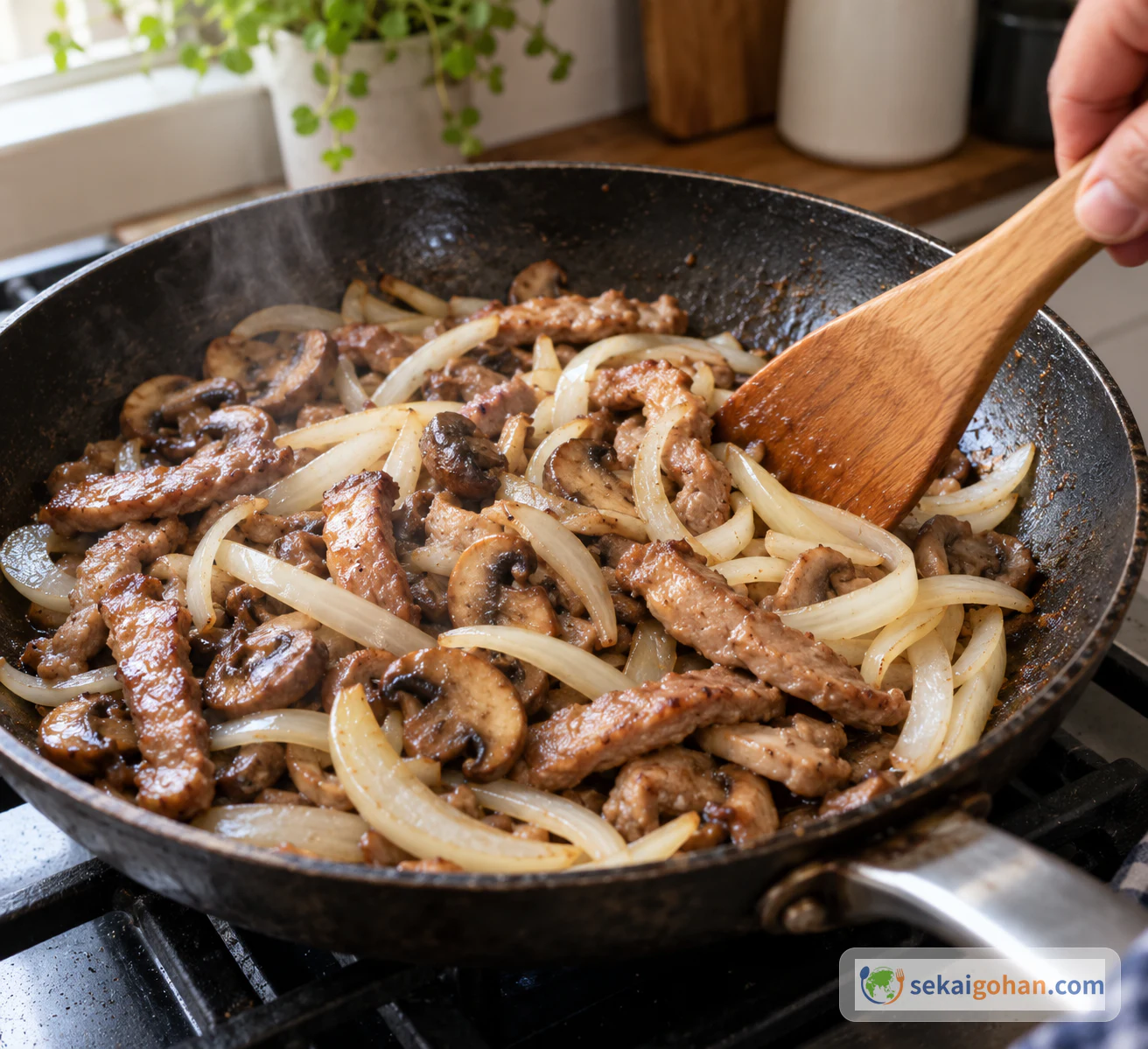
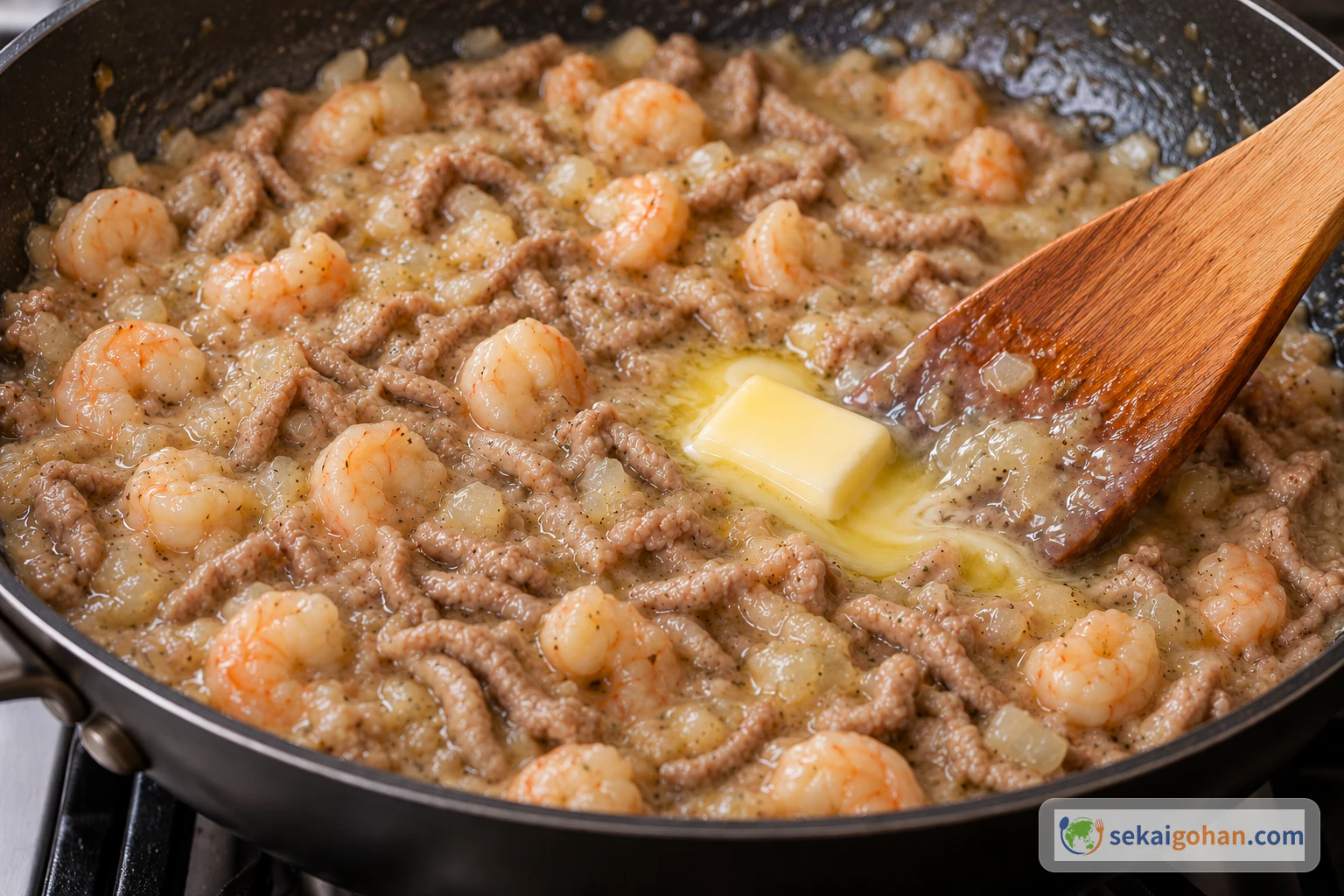
The bread is baked and cooled first, then the filling is cooked in a set order: mushrooms, pork, onion, vegetables, stock, shrimp, milk, seasoning, slurry, butter. The 15 minutes in the oven is for the bread only.
Points to Watch
| What happens | What to check |
|---|---|
| The knife goes through the bottom of the bread | Only the top is cut. Keep about 1 cm at the edge and stop before the knife reaches the bottom |
| The bread is cut while still hot | Let it cool after baking, then cut |
| The filling is still thin after the slurry | Keep cooking a little longer until the sauce is thicker, then turn off the heat |
| The two butters get mixed up | 30 g, melted, is for brushing the bread; 15 g goes into the filling after the heat is off |
| You want to add salt | No salt is added in this filling; the stock already carries the salt |
| The pan looks dry when the pork goes in | Add a little cooking oil only if needed |
Other Versions of Coffin Bread: Same Name, Different Builds
Recipes published under the name 棺材板 differ widely in bread, filling and cooking method. The versions below are shown for comparison only; none of their amounts or steps belong in Amber's recipe above.
| Version | What sets it apart |
|---|---|
| Amber (安木白), iCook | Butter-brushed thick toast baked at 200°C for 15 minutes; pork-and-shrimp filling with vegetables in stock and milk, thickened with cornstarch slurry, finished with 15 g butter off the heat |
| Taiwan Ministry of Agriculture food and farming education platform, "神秘盒(台南名產棺材板作法)" | A large loaf divided into three, hollowed with a 1 cm border and lid, then fried; filled with milkfish, shrimp, squid and vegetables |
| 食譜自由配 / Liberty Times (licensed from 料理123), "免油炸棺材板" | A no-fry oven version: one thick slice coated with egg and milk, baked at 180°C for 10 minutes; a different filling with ground pork and eight shrimp |
| 鍋寶好食光, "台南小吃棺材板" | Another oven version: half an uncut loaf, frozen mixed vegetables, prawns and flour thickening, baked at 200°C for 20 minutes after preheating |
What they share is the outline: a bread box, a lid, and a creamy filling inside. Whether the bread is fried or baked, and what goes into the sauce, depends on the recipe. If you want a fried shell or a seafood filling, follow one of those recipes as a whole rather than mixing its steps into this one.
The Name and a Story Told About It
Amber's page introduces coffin bread as Tainan food. That label places the dish, but on its own it does not tell us who first made it or how standard any one formula is.
The Chinese Food Culture Foundation (中華飲食文化基金會) keeps a question-and-answer entry on the origin of Tainan's coffin bread. It preserves a reported story linking an early bread dish filled with chicken liver to the name 棺材板, and it gives a clipping from a 2000 United Daily News article as its source. This is a secondary record, not a contemporary document from the dish's beginnings, so it is best read as one story told about the name rather than verified history. The recipe here contains no chicken liver.
Frequently Asked Questions
Is this the standard coffin bread?
No. It is one home cook's oven version. Other published recipes fry the bread shell or use different fillings, temperatures and bread shapes, as the comparison above shows.
Is the bread fried?
Not in this version. Amber's written method brushes one side of the bread with melted butter and bakes it in a preheated oven at 200°C for 15 minutes. A browned finish alone does not tell you whether a coffin bread was baked or fried; the method does.
How many servings does this make?
Amber's recipe does not give servings, yield or a slice count; it calls for "a few slices" of thick toast. How much filling each slice holds depends on the bread you use.
How do I hollow out the bread?
Amber's method says only to leave about 1 cm at the edge, cut without going through the bottom, and lift the top as a lid. It does not describe removing crumbs or give a cavity depth. Some other recipes hollow the bread or press the inside down, but those steps belong to their own versions.
Why is there no salt?
Amber notes that the stock is already salted, so no salt is added. The type of stock is not specified.
Can I use potato starch instead of cornstarch?
This recipe uses cornstarch (玉米粉) and does not offer a substitute. Using a different starch would be a change from the recipe.
Has this recipe been tested?
No. Sekai Gohan has not kitchen-tested this recipe as a whole. The amounts and steps follow Amber's written recipe page; her linked video was not used as a reference for this article.
Sources
- 安木白。Amber, "棺材板(影片)," 愛料理 / iCook user recipe page. The written recipe followed here: ingredients and amounts, the two butter portions, the 200°C, 15-minute bake, the 1 cm edge and lid cut, the order of the filling, and the note that the stock is already salted. The linked video was not used. https://icook.tw/recipes/418401
- Taiwan Ministry of Agriculture food and farming education platform (data source: Fisheries Research Institute), "神秘盒(台南名產棺材板作法)." A separate Tainan-labeled version with a fried bread shell and a fish-and-seafood filling; used for comparison only. https://fae.moa.gov.tw/theme_data.php?id=2893&sub_theme=recipe&theme=topics
- 食譜自由配 / Liberty Times (recipe and images licensed from 料理123; demonstration by 張秋永), "免油炸棺材板." A separate no-fry oven version with egg-and-milk coating, a 180°C, 10-minute bake and a ground-pork filling; used for comparison only. https://food.ltn.com.tw/article/8194
- 鍋寶好食光, "台南小吃棺材板." A separate oven version with half an uncut loaf, frozen mixed vegetables, prawns and a 200°C, 20-minute bake; used for comparison only. https://www.cookpot.com.tw/cookbook/601.html
- 中華飲食文化基金會 (Chinese Food Culture Foundation), "台南小吃棺材板的由來?" A question-and-answer entry preserving a reported story linking an early chicken-liver-filled bread dish to the name, sourced to a 2000 United Daily News clipping; used as secondary cultural context, not as verified origin. https://www.fcdc.org.tw/qa-detail/%E5%8F%B0%E5%8D%97%E5%B0%8F%E5%90%83%E6%A3%BA%E6%9D%90%E6%9D%BF%E7%9A%84%E7%94%B1%E4%BE%86--i.60