Guilinggao: A Dark Jelly That Sets as It Cools
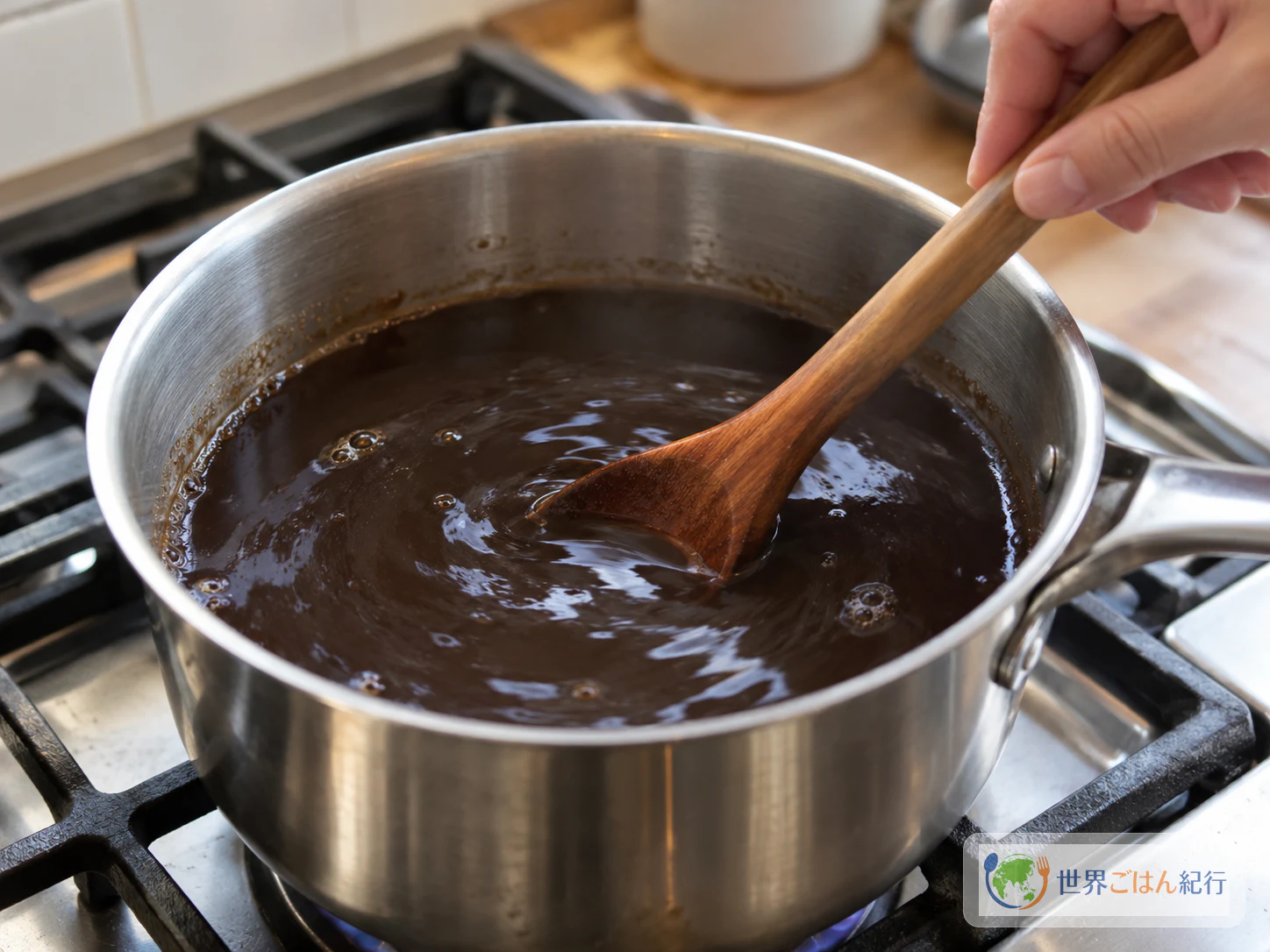
One sachet of powder, two separate measures of water, one measure of sugar, and 10 minutes of steady stirring over low heat. Everything else is left exactly as simple as that.
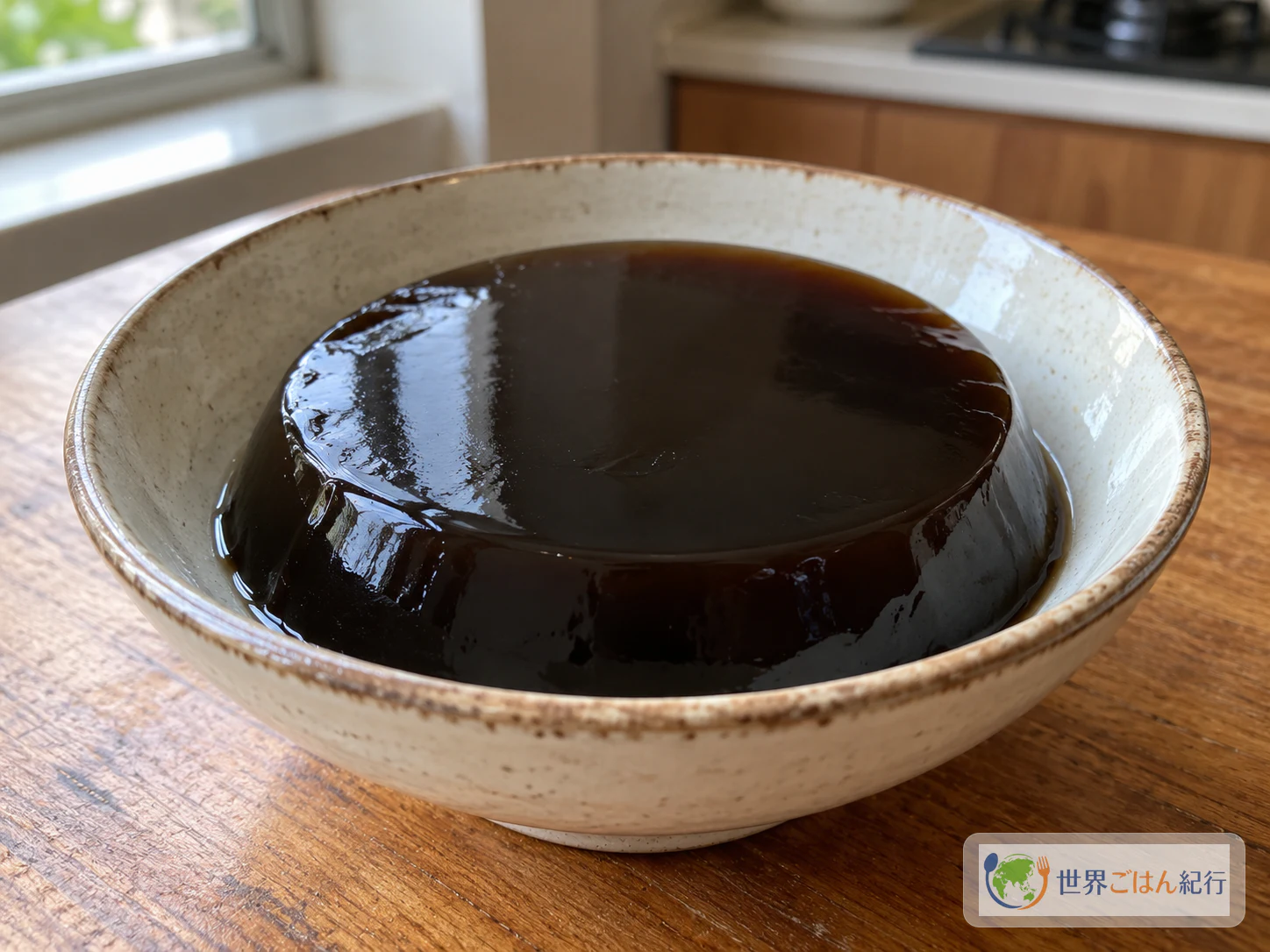
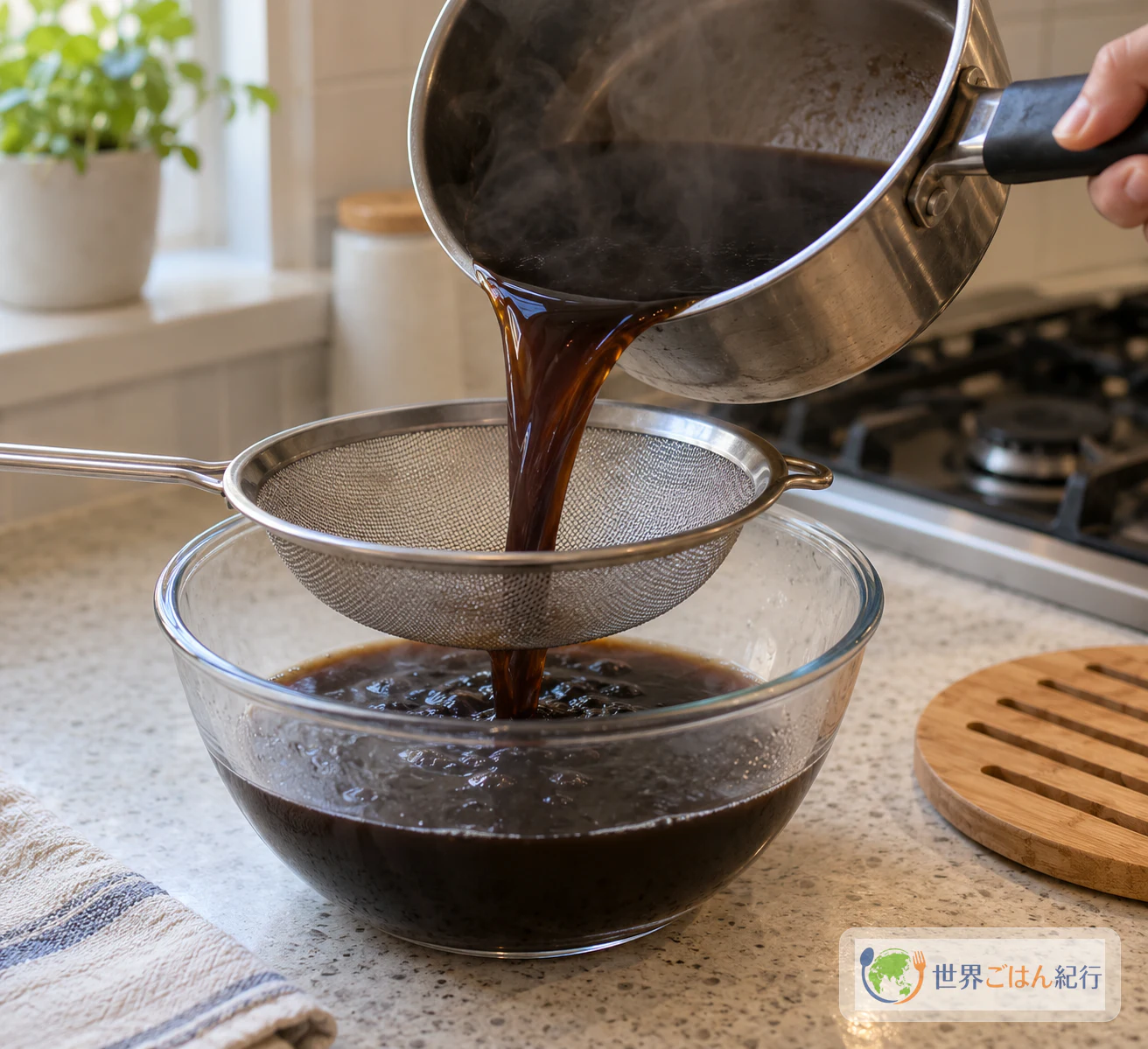
The last step happens at the stove: the hot, dark liquid is poured through a strainer into a bowl, and the bowl is set aside to cool. Only after it has cooled is it eaten. Guilinggao (龟苓膏 in simplified Chinese, 龜苓膏 in traditional characters) is a dark herbal jelly from China, and this article follows one specific way of making it at home: from a packaged powder.
The amounts here come from a single product. Eu Yan Sang Malaysia sells an Original guilinggao powder, (原味)龟苓膏粉, in a pack of three 50g sachets, and its official product page gives a method for one sachet. This article uses that method and only that method. It is not the traditional Wuzhou craft of making guilinggao from raw materials, it is not a formula shared by every brand of powder, and it is not a grass jelly recipe. Sekai Gohan has not kitchen-tested this recipe; what follows sets out the published method clearly and marks plainly what it does not say.
If you would like to explore more of the country's cooking, browse our China recipe collection.
Two Things Called Guilinggao: The Wuzhou Craft and the Powder in a Sachet
It helps to separate three layers before cooking, because they are easy to blur together.
The regional craft. China's national intangible cultural heritage record lists 龟苓膏配制技艺, the craft of preparing guilinggao, in the fifth batch of 2021 under traditional craftsmanship, item number 1524 / Ⅷ-278. The nominating area is Wuzhou in the Guangxi Zhuang Autonomous Region, and Wuzhou is named as the core area where the craft is passed on. The record describes the craft as a process of more than 20 steps. Citing the Wuzhou City Gazetteer (《梧州市志》), the same record notes that shops selling guilinggao stood in the city's markets in the late Ming and early Qing period.
The modern powder product. Packaged guilinggao powder is a later form. One example comes from Guangxi Shuangqian Health Industry Co., listed in China's Ministry of Commerce digital museum of time-honored brands as a maker of guilinggao and guilinggao powder. According to the company history on that page, its predecessor launched Shuangqian-brand guilinggao powder (双钱牌龟苓膏粉), made using plant extraction, in the 1980s. That is one company's own account of its history; it is not a history of all guilinggao powder, and it says nothing about the product used in this recipe.
One brand's home method. The recipe below belongs to the third layer: the directions Eu Yan Sang Malaysia gives for one sachet of its Original powder. The ratio is tied to that product. A sachet from another brand should be made with that brand's own printed directions.
Keeping these apart is the reason this article does not call the powder method "traditional," and does not borrow any of the craft's 20-plus steps to fill gaps in the short home method.
Ingredients for One Sachet
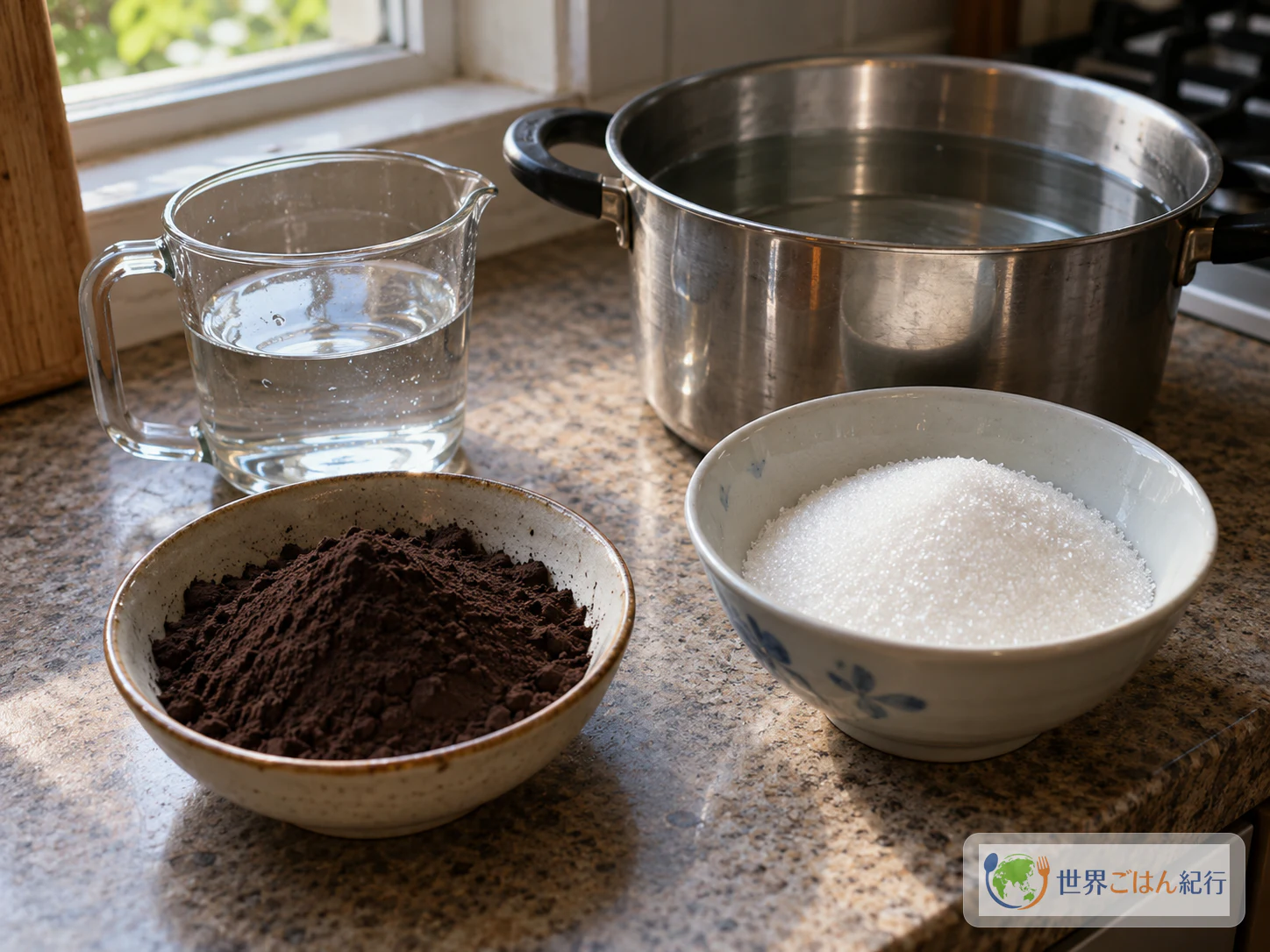
This is one batch made with one 50g sachet. Keep the two water measures separate: the 250ml goes with the powder, and the 1L goes into the saucepan with the sugar.
Equipment
- A small bowl for mixing the powder
- A saucepan
- A spoon or other utensil for stirring
- A strainer
- A heatproof bowl or dish for setting and serving
Choosing the Powder and Sugar
Buy guilinggao powder, not grass jelly powder. Look for packs labeled 龟苓膏粉, 龜苓膏粉 or "guilinggao powder." Grass jelly powder, black jelly powder (黑凉粉), agar and gelatin are different products, and none of them is a stand-in for this recipe.
Match the ratio to the pack in your hand. The amounts above belong to one product. If your powder is from a different brand, or if the sachet size is different, follow the directions printed on that package instead of these numbers.
Sugar. Use 150g of sugar.
Check the label. Main ingredients include 甘草, 土茯苓, 金银花, 蒲公英, 干地黄, 槐花, 苦草 and 苦参. This is not a complete ingredient list or an allergen statement. Read the complete label on the pack you buy before cooking, especially if anyone eating has allergies.
Method: Mix, Boil, Stir Over Low Heat, Strain, Cool
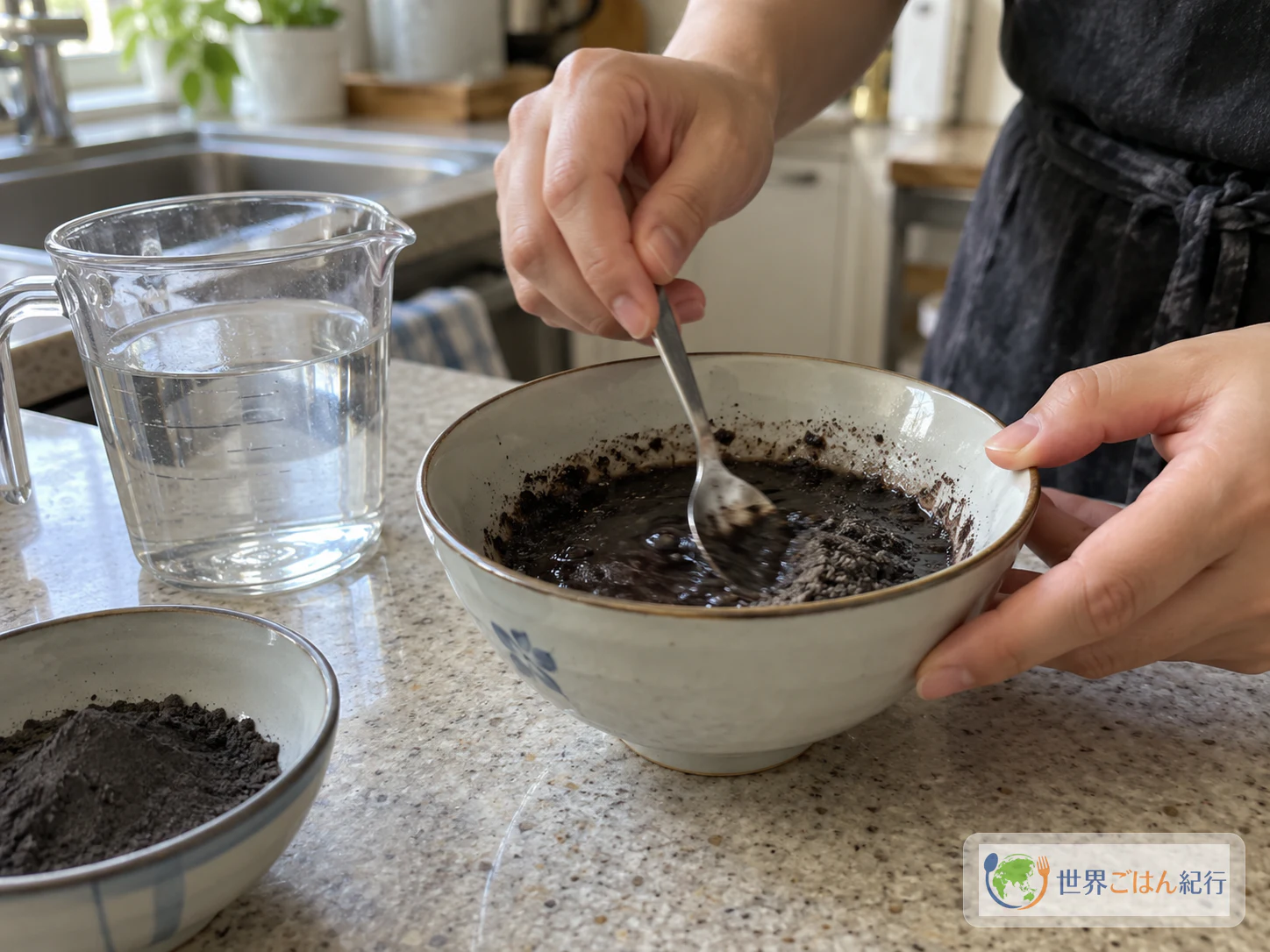
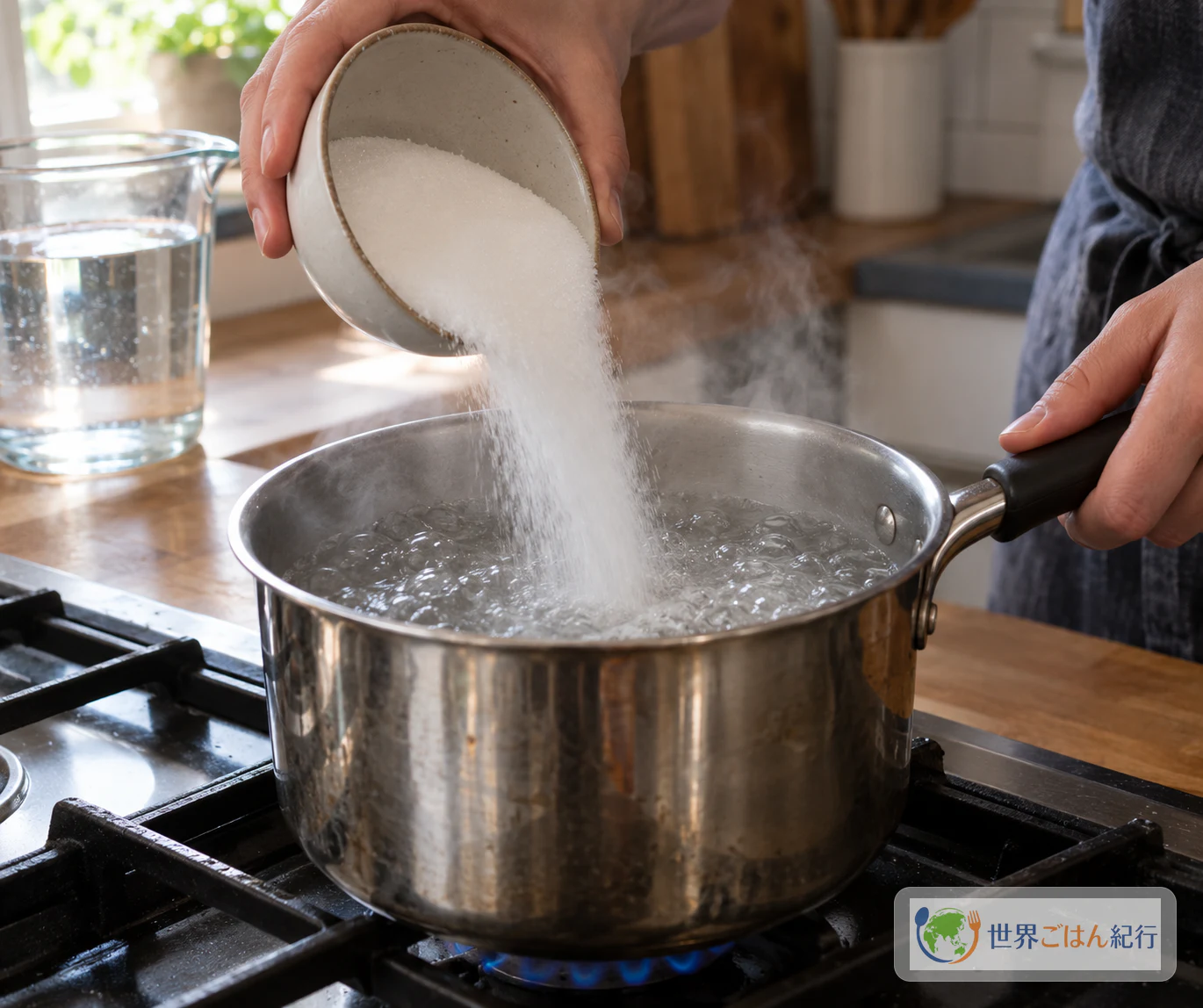
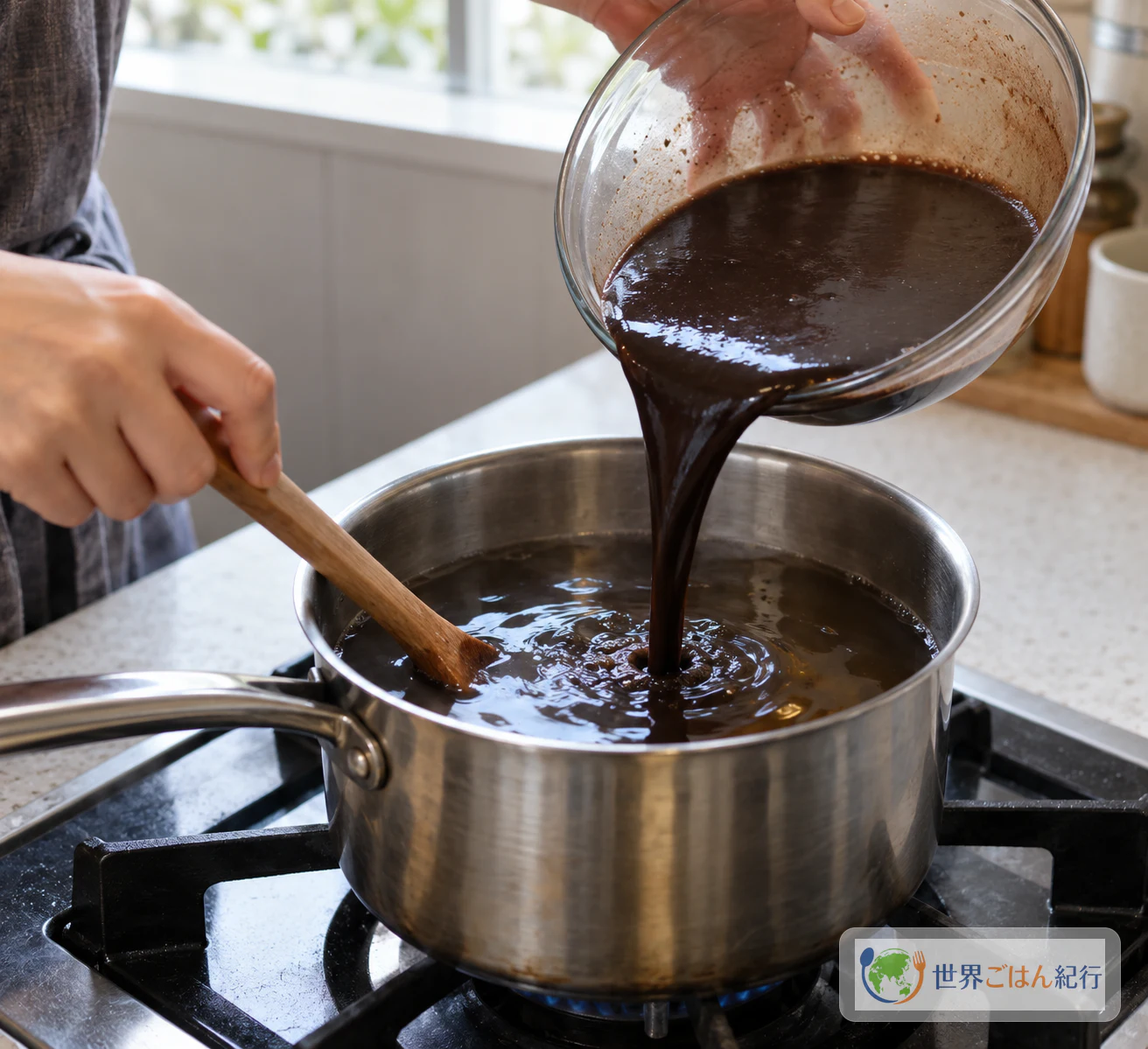
The powder is mixed with cold water first, and only goes into the pan after the sugar water has boiled and the heat has been turned down. Keep the steps in this order.
Serving: Plain, Once It Has Cooled
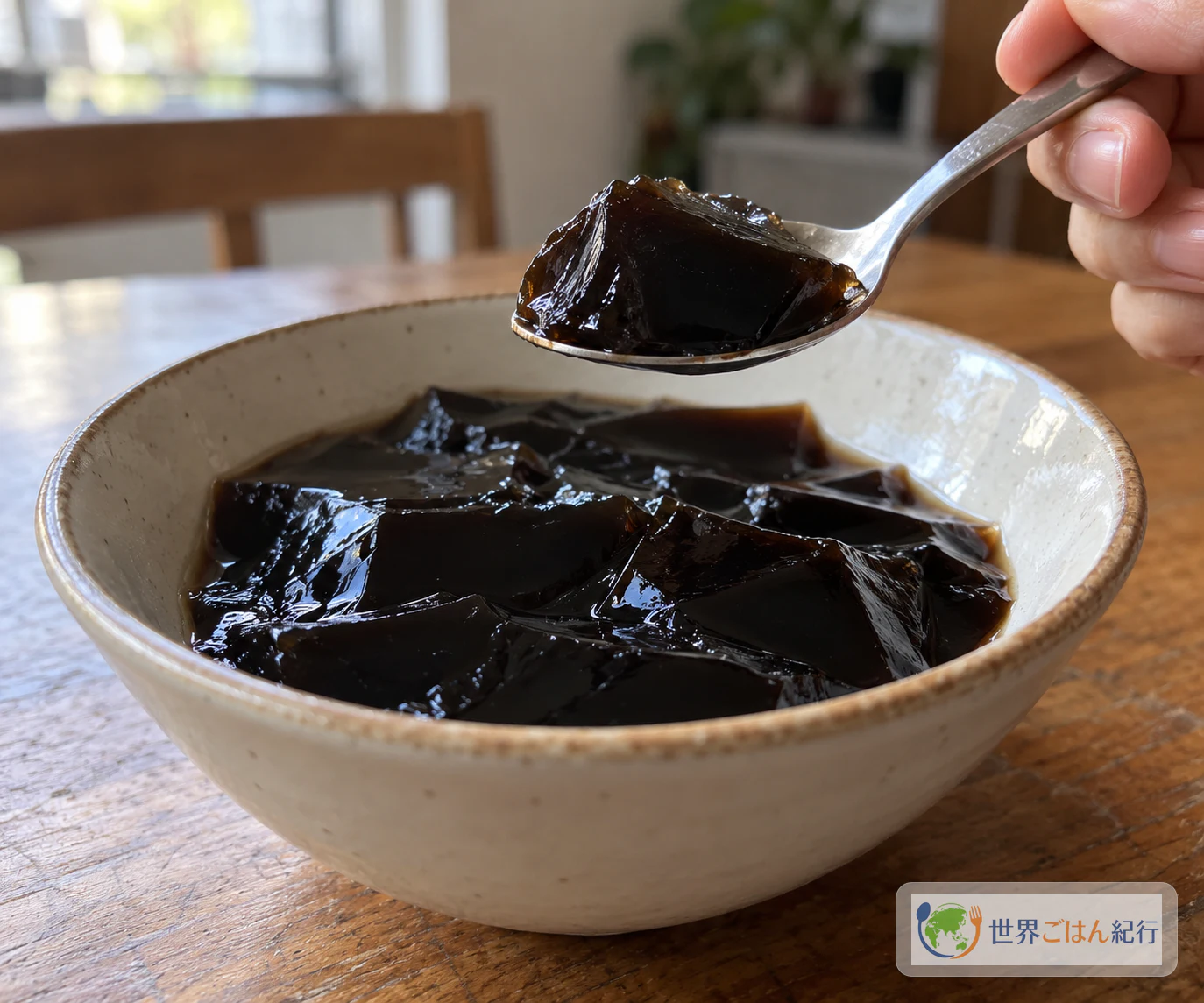
The method ends simply: once the jelly has cooled, it is ready to eat. Nothing is added on top, and this article does not suggest toppings, syrups or pairings that are not part of the method. Serve it plain from the bowl it set in, with a spoon.
Keeping the Batch on Track
The method is short, so most of what keeps it on track is following its order and its few instructions closely.
| Point to watch | What to do |
|---|---|
| The powder and water | Mix the 50g of powder into the 250ml of cooled boiled water until evenly combined before it goes anywhere near the pan |
| The two water measures | Keep the 250ml and the 1L separate; each belongs to its own step |
| The order in the pan | Boil the water, add the sugar, lower to low heat, and only then add the powder mixture |
| The 10 minutes | Keep the heat low and keep stirring the whole time |
| The finish | Strain the hot liquid into the bowl, then leave it to cool before eating |
The method does not give a fix for a batch that does not set, and this article does not invent one: no extra powder, starch or rescue reheating. If a batch disappoints, reread the directions printed on your own pack before the next try, and check that the powder, ratio and order all match that package.
Variations: What This Recipe Does Not Stretch To
Several common questions about variations come down to the same answer: the one product's directions do not cover them, so this article does not turn them into recipes.
- Other brands of powder. Make them with their own maker's ratio and steps. The numbers here are not a universal ratio.
- Less sugar or a different sweetener. No alternative amount is published for this product, so 150g stays as it is.
- Honey or syrup poured over the top. Not part of this method.
- Grass jelly powder or black jelly powder in place of guilinggao powder. A different food from a different plant, covered below.
- A warm or reheated version. The method ends with cooling and eating; it has no warm serving.
Not the Same as Grass Jelly
Guilinggao and grass jelly can both look like a dark jelly in a bowl, which is exactly why they are easy to confuse. They are not the same food.
Grass jelly is made from a different plant. Taiwan's National Taiwan Science Education Center describes 仙草 (xiancao) under the scientific name Mesona palustre, with alternative names including 仙草 and 凉粉草, and explains that the whole plant can be used to make 仙草凍, grass jelly. Guilinggao powder, by contrast, is sold under its own name, and the product used here lists its own set of main ingredients. Nothing in either source says one can replace the other at the same ratio.
So the color is not a guide. If a recipe calls for guilinggao powder, use guilinggao powder; if you want grass jelly, follow a grass jelly recipe made for that product.
Leftovers: General Home Food-Safety Guidance
The product's cooking directions stop at "cool, then eat." They do not give a shelf life, a refrigeration time or a reheating method for the finished jelly, and this article does not create one. Any storage information on the powder package refers to the powder itself, not the cooked jelly.
If you are not going to eat the jelly soon after it has cooled, follow general home food-safety guidance. Japan's Ministry of Health, Labour and Welfare advises the following for food at home:
- Refrigerate foods that need refrigeration quickly; keep the refrigerator at 10°C or below as a guide.
- Do not leave cooked food standing at room temperature for a long time.
- Handle leftovers with clean utensils, and divide them into shallow containers so they cool quickly.
This is general guidance for household food, not a storage period set for guilinggao by its maker.
Frequently Asked Questions
Can I use the same ratio with another brand of guilinggao powder?
That has not been confirmed. The 50g powder, 250ml cooled boiled water, 1L water and 150g sugar come from the directions for Eu Yan Sang Malaysia's Original guilinggao powder only. For any other product, use the directions printed on its own package.
Can I use grass jelly powder instead?
Not as a substitute in this recipe. Grass jelly (仙草凍) is made from Mesona palustre, a different plant, and the guilinggao powder product does not present grass jelly powder as an alternative. They are different foods.
What kind of sugar should I use? Can I use less, or swap in honey?
The product's directions call simply for 150g of sugar (糖) without naming a type. No alternative amount or sweetener is published for this product, so this article does not recommend reducing the sugar or replacing it with honey as a version of this recipe.
How many servings does one sachet make?
The product page does not say, so this article does not estimate a number of servings or bowls. One sachet makes one batch.
How long does it take to set, and how long does it keep?
Neither the cooling time nor a shelf life for the finished jelly is given in the directions. Let it cool before eating, and if you keep any, follow the general home food-safety guidance in the leftovers section above, along with anything printed on your package.
What if my jelly doesn't set?
The directions do not include a fix, and this article does not invent one. Before the next batch, recheck the directions on your own pack and make sure the powder, ratio and order of steps match it.
Is this the traditional Wuzhou way of making guilinggao?
No. The Wuzhou craft, recorded in China's intangible cultural heritage list, is a process of more than 20 steps. This recipe is a short home method for one packaged powder and is not a reproduction of that craft.
Has this recipe been tested in a kitchen?
No. Sekai Gohan has not kitchen-tested this recipe. The amounts and steps are the product's published directions, presented as they are.
Sources
- Eu Yan Sang (1959) Sdn. Bhd. (余仁生 Malaysia), "(原味)龟苓膏粉" official product page. The product name, the pack of 3 × 50g sachets, the one-sachet method (powder mixed with 250ml cooled boiled water; 1L water boiled with 150g sugar; low heat after boiling; powder mixture added and stirred for 10 minutes; strained into a bowl and eaten after cooling), and the listed main ingredients. https://www.euyansang.com.my/zh_MY/original-herbal-jelly-powder-955616020116.html
- China Intangible Cultural Heritage Network / China Intangible Cultural Heritage Digital Museum, "龟苓膏配制技艺." The 2021 fifth-batch listing under traditional craftsmanship (item 1524 / Ⅷ-278), Wuzhou in Guangxi as the nominating and core area, the description of more than 20 steps, and the record's citation of the Wuzhou City Gazetteer on market shops in the late Ming and early Qing. https://www.ihchina.cn/art/detail/id/23597.html
- Ministry of Commerce of the People's Republic of China, Time-Honored Brands Digital Museum, "双钱." Guangxi Shuangqian Health Industry Co. as a maker of guilinggao and guilinggao powder, and the company's own account that its predecessor launched Shuangqian-brand guilinggao powder using plant extraction in the 1980s. https://lzhbwg.mofcom.gov.cn/edi_ecms_web_front/thb/detail/5e777f3449304f8eaaa4ce67ba3d7c83
- National Taiwan Science Education Center, "仙草." The scientific name Mesona palustre, alternative names including 仙草 and 凉粉草, and the use of the whole plant to make grass jelly (仙草凍). https://www.ntsec.gov.tw/article/detail.aspx?a=5810
- Ministry of Health, Labour and Welfare, Japan, "家庭での食中毒予防" (Preventing food poisoning at home). General home guidance on quick refrigeration with the refrigerator at 10°C or below as a guide, not leaving cooked food at room temperature for long, and dividing leftovers into shallow containers with clean utensils. https://www.mhlw.go.jp/stf/seisakunitsuite/bunya/kenkou_iryou/shokuhin/syokuchu/01_00008.html