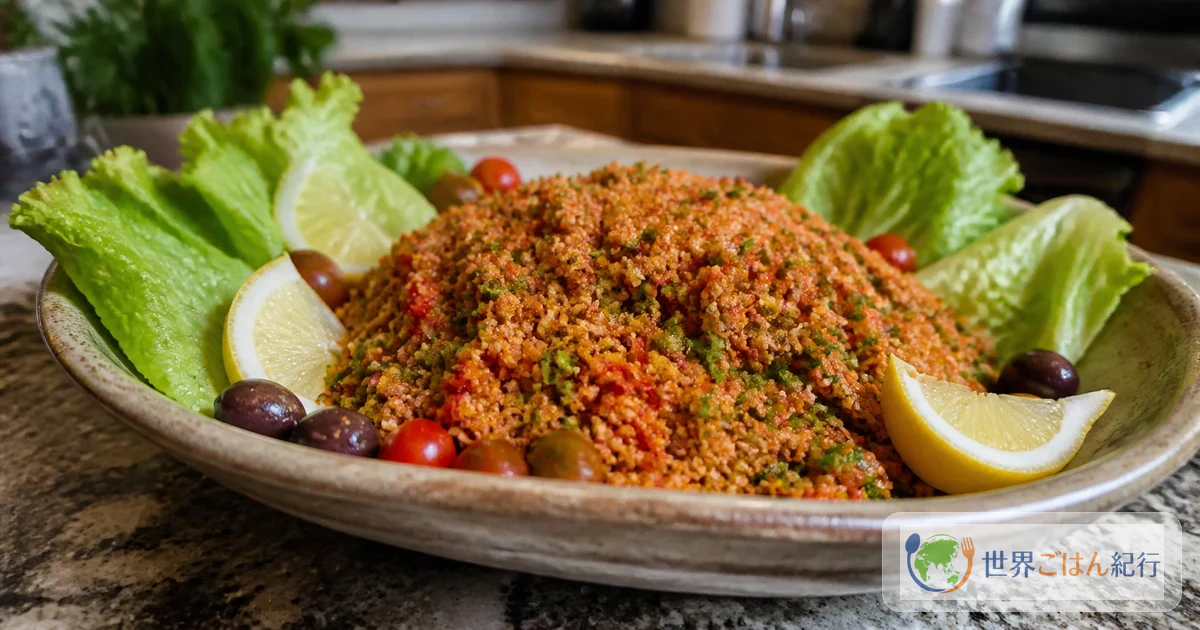
Countless meatballs: Turkey's soul food
If you had to name the one dish most loved on Turkish tables, it would be köfte. It is simple: ground meat kneaded with spices, shaped and cooked. Yet it is sometimes said that Turkey has 291 kinds of köfte (the figure is said to come from a 2005 survey by a meat company and is not an official count). Each city and each household has its own spice blend and shaping method, and insisting that "our köfte is the best" is part of the Turkish way.
The word köfte goes back to the Persian koofteh ("pounded, crushed"). From Persia it spread through the Ottoman Empire across the Middle East, and on to the Balkans and South Asia. In English it is known as "Turkish meatballs," but "meatball" isn't quite accurate. Köfte come not only round but also in sticks, flat discs and shapes wrapped around skewers, and they may be grilled, simmered or fried.
In Istanbul's old town, countless specialty shops called köfteci are scattered about. Among them, Sultanahmet Köftecisi, founded in 1920, is known as a famous shop that has kept the same recipe for over 100 years. In Turkey a köfte shop sells köfte the way a butcher sells meat, and the sight of people eating two or three köfte tucked in pita as they walk at lunchtime is part of everyday life.
This article gives a recipe for Turkey's basic köfte (ızgara köfte, grilled köfte) using ingredients available in an ordinary grocery store. It falls in the same Turkish category as the kebab recipe, but köfte is homier and quicker. Set beside hummus (in Japanese) and tabbouleh, it completes a Turkish-style meze table. On days when a meat dish alone feels heavy, serve mercimek çorbası, a red lentil soup brightened with lemon, first, for a flow that feels like a Turkish eatery.

Ingredients (serves 4, about 20 pieces)
Ground cumin and paprika are in the spice aisle of most supermarkets. Aleppo pepper (called pul biber in Turkey) can be hard to find in some places, but coarsely ground Korean chile flakes are a close substitute in both flavor and heat. Sumac is sold at Middle Eastern grocers and online. If you can't find it, lemon juice will stand in.
This dish contains wheat (breadcrumbs), milk and egg. Swapping the breadcrumbs for rice-based breadcrumbs and the milk for water brings it closer to gluten-free and dairy-free. If you have a soy allergy, check the label to make sure the ground meat contains no soy.
Cooking tips
Köfte need a certain amount of fat. Meat that is too lean (5% fat or less) turns out dry. Aim for around 20% fat; most supermarket ground beef-and-pork blends are about right. If you make it with all beef, choose ground beef from a fattier cut, or add 1 tbsp beef fat to lean meat.
Some recipes toast the spices first, but for Turkish köfte, the ground spices go into the meat raw. The heat of cooking brings out their aroma, so toasting beforehand is unnecessary. Toasting can in fact transfer a scorched bitterness to the meat, so mix them in as they are.
Besides the skillet, you can use a grill or an oven. On a grill, thread them onto metal skewers and cook over medium heat for about 10 minutes, turning once. In an oven, arrange them on a baking sheet and bake at 220°C (425°F) for 12–15 minutes. The oven lets excess fat drain off for a lighter result, but the savory flavor of the Maillard browning from a skillet is hard to give up.
You can freeze them shaped. Arrange them on a tray, cover, and once firm transfer them to a freezer bag. They keep for 1 month. Thaw in the refrigerator for 4–5 hours and cook as usual. Cooked köfte also freeze well and can be reheated in the microwave for 2 minutes. Handy for weekday lunch boxes too.

Variations
I mentioned at the start that Turkey has more than 291 kinds of köfte. Here are a few variations that are easy to try in a home kitchen.
İzmir köfte (simmered in tomato)
A specialty of İzmir, on the Aegean coast. After cooking the basic köfte, immerse them in tomato sauce (1 can of tomatoes, garlic and olive oil) and braise them in a 180°C (350°F) oven for 20 minutes. If you slice potatoes thin and add them too, the potatoes absorb the tomato sauce and make an excellent side. Like shakshuka, it is a tomato-based braise, but the savor of the köfte makes it a heartier dish.
İnegöl köfte (no breadcrumbs)
From the İnegöl area near Bursa. It is the simplest köfte: no breadcrumbs at all, just meat, onion and salt. With no other ingredients, the quality of the meat shows directly in the flavor. Traditionally it is grilled over charcoal. It calls for leaving out the breadcrumbs and egg and kneading only the meat and onion.
Çiğ köfte (made without meat)
A specialty of southeastern Turkey (around Gaziantep and Şanlıurfa), it was originally made by kneading raw ground beef with bulgur and spices by hand. In Turkey today, much of the çiğ köfte sold in shops is made without meat, using bulgur, walnuts and chile paste. The version that uses raw meat carries a risk of food poisoning, so at home make it without meat.
Japanese-style variation
Add 5 shredded shiso leaves and 1 tsp grated ginger to the ground meat for a Japanese-style köfte. Using 1 tbsp miso in place of the spices also works well and makes a side dish that goes with rice. Served with ponzu and grated daikon, it fits naturally on a Japanese table.

Background: the Ottoman legacy and köfte culture
The history of köfte is closely tied to the expansion of the Ottoman Empire. As the empire ruled a vast territory from the 14th to the early 20th century, köfte spread to the Balkans (Greece's keftedes, Serbia's ćevapčići), the Middle East (Lebanon's kafta) and South Asia (India's kofta curry).
Köfteci culture
Every Turkish city has a köfteci, a specialty köfte shop. Like a hamburger shop or ramen shop, it is a business built around a single dish. A köfteci's menu is strikingly simple, and it's not unusual for a shop to serve just three things: köfte, piyaz (white bean salad) and grilled peppers.
Breadcrumbs or no breadcrumbs
Whether to put breadcrumbs in köfte differs by region and by shop. Some shops add them for a fluffy result, while others make theirs with only meat, onion and spices. The recipe in this article is Istanbul-style; adding breadcrumbs gives a texture that is easy to like.

Storing and how long it keeps
| State | Storage | How long | Tips |
|---|---|---|---|
| Raw (before cooking) | Refrigerator | Same day | Wrap to prevent drying. The time also lets the spices blend in |
| Raw (before cooking) | Freezer | 1 month | Freeze arranged on a tray, then move to a freezer bag. Thaw before cooking |
| Cooked | Refrigerator | 3 days | Store in an airtight container. Reheating in a toaster oven for 3–4 minutes works best |
| Cooked | Freezer | 2 weeks | Freeze with tomato sauce and next day it becomes İzmir-style |
If you shape and freeze a batch on the weekend, weekday dinners get easier. Frozen raw köfte are best thawed in the refrigerator over 4–5 hours, but in a hurry you can use the microwave's defrost setting.
Köfte relatives around the world: the spread of "rolling ground meat"
The method of köfte, mixing ground meat with spices and herbs, shaping it and cooking it, produced similar dishes across the vast region touched by the Ottomans.
| Dish | Country / region | What it has in common | What's different |
|---|---|---|---|
| Keftedes | Greece | Spiced meatballs | Mint and oregano are the main herbs. Often fried |
| Kafta | Lebanon | Ground meat with spices and parsley | Wrapped around a skewer and grilled. Lots of lemon juice |
| Kofta curry | India | Spiced meatballs | Simmered in a tomato and cashew curry sauce |
| Ćevapčići | Serbia, Bosnia | Charcoal-grilled ground meat | Finger-shaped sausage form. Eaten tucked in bread |
| Hamburger steak | Germany, Japan | Ground meat shaped and cooked | Served with sauce. The Japanese version often comes with grated daikon ponzu |
| Tsukune | Japan | Ground meat wrapped on a skewer and grilled | Sweet-salty teriyaki glaze |
Japanese tsukune and Turkish köfte are strikingly similar in method and in how they're eaten. In both, ground meat is mixed with aromatics and a binder, shaped, cooked over direct heat and brought to the table. That structural similarity may be why Japanese people feel at home with köfte.
Ingredient guide
Choosing spices
Here is where to find and how to choose the spices that shape the flavor of köfte.
| Spice | Where to find | What to look for |
|---|---|---|
| Ground cumin | Supermarket spice aisle | A common brand is fine. Indian grocers sell large packages (100 g) |
| Paprika | Supermarket spice aisle | Choose sweet. Smoked paprika, if you have it, is closer to the original |
| Aleppo pepper | Middle Eastern grocers, online | If you can't find it, substitute ichimi (Japanese chile flakes). Aleppo has a fruity note within its heat |
| Allspice | Supermarket spice aisle | A versatile Middle Eastern spice. A blend of cinnamon, nutmeg and clove can substitute |
Choosing the meat
The fat content of the ground meat matters. Too little fat and the köfte come out dry; too much and they shrink as they cook and lose their shape. Around 20% fat is ideal, which is close to a typical beef-and-pork blend.
If you make it with 100% ground beef, choose one with more fat (a slightly coarse grind) or mix in a little beef fat from the butcher counter.
Nutrition at a glance
| Nutrient | Per serving (about 5 pieces) | Role |
|---|---|---|
| Energy | About 400 kcal | Mostly ground meat and cooking oil |
| Protein | About 25 g | From beef and pork |
| Fat | About 28 g | Mostly meat fat |
| Carbohydrate | About 9 g | From breadcrumbs and onion |
Köfte makes a balanced meal when combined with bread and salad. The traditional Turkish way of eating it tucked in bread adds carbohydrate, and piyaz (white bean salad) adds fiber and vitamin C. As the introduction to Middle Eastern cuisine (in Japanese) also explains, a Middle Eastern table always has several small dishes (meze), which naturally makes the meal balanced.
Frequently asked questions
Also see recipes for hummus (in Japanese), falafel (in Japanese) and tabbouleh, which pair well with köfte. Turkey's other classic, kebab, and the Middle Eastern shakshuka are recommended too. You can also build a world-food dinner by combining them with Georgian cheese bread khachapuri (in Japanese) or borscht (in Japanese). From South America's ceviche (in Japanese) to Southeast Asia's pad thai (in Japanese) and pad kra pao (in Japanese), enjoy re-creating the world's home cooking at your own table.
Q1. If I can't get lamb, which meat is best?
The easiest to find is a beef-and-pork blend of ground meat, and it is the safest choice. To get closer to the original, choose 100% ground beef. Around 20% fat is ideal. You can make it with ground chicken, but the flavor and juiciness differ quite a bit. Lamb can be found frozen at halal shops and some butchers.
Q2. My köfte fall apart in the skillet. Why?
The three most common causes are: (1) the onion's water wasn't squeezed out enough, (2) the mixture wasn't kneaded enough, (3) the skillet wasn't hot enough. Be thorough especially with (1) and (2). If they still fall apart, add one more egg or an extra 2 tbsp breadcrumbs.
Q3. How do I make it milder for children?
Cumin and paprika aren't hot spices, so the basic recipe is fine for children. Leave out the Aleppo pepper and black pepper and it has almost no heat. Serving it with sweet ketchup is a hit with kids. Making them smaller (about 15 g each) also makes them easier for small hands to hold.
Q4. How do I enjoy leftover köfte the next day?
Reheating cooked köfte in a toaster oven for 3–4 minutes brings back the crisp outside. In the microwave alone they tend to go limp all over. Another good option is to simmer them for 5 minutes in a pot with canned tomatoes, the "next-day İzmir style." Leftovers turn into a new dish.
Q5. What is the difference between köfte and kebab?
Both are Turkish meat dishes, but köfte is shaped from "kneaded meat" (ground meat) and cooked, while kebab is "chunks or thin slices of meat" cooked on skewers or a grill. But ground-meat dishes wrapped around skewers, like Adana kebab, count as kebab, so the boundary is blurry. See the kebab recipe for details.
Sources
- Wikipedia, "Köfte" (etymology, regional köfte; accessed 22 October 2026)
- Tarihi Sultanahmet Köftecisi Selim Usta official website (sultanahmetkoftesi.com, a long-established shop founded in 1920; accessed 22 October 2026)
- Son Dakika, "Türk Mutfağı Neden Marka Olamıyor?" (one example of where the "291 kinds of köfte" figure comes from; accessed 22 October 2026)
- Charles Perry et al., Medieval Arab Cookery, Prospect Books, 2001 (medieval Arab cookbooks)