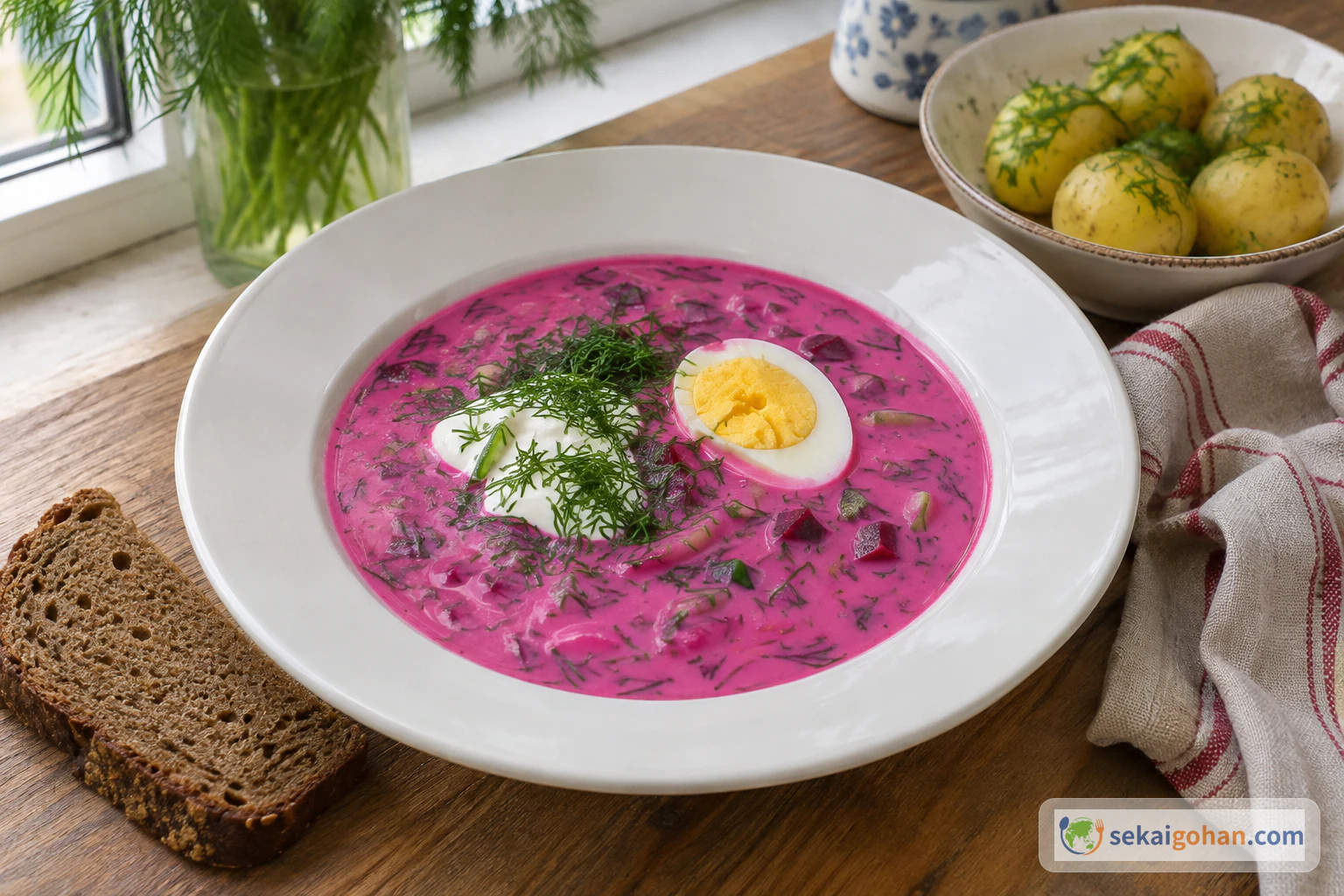

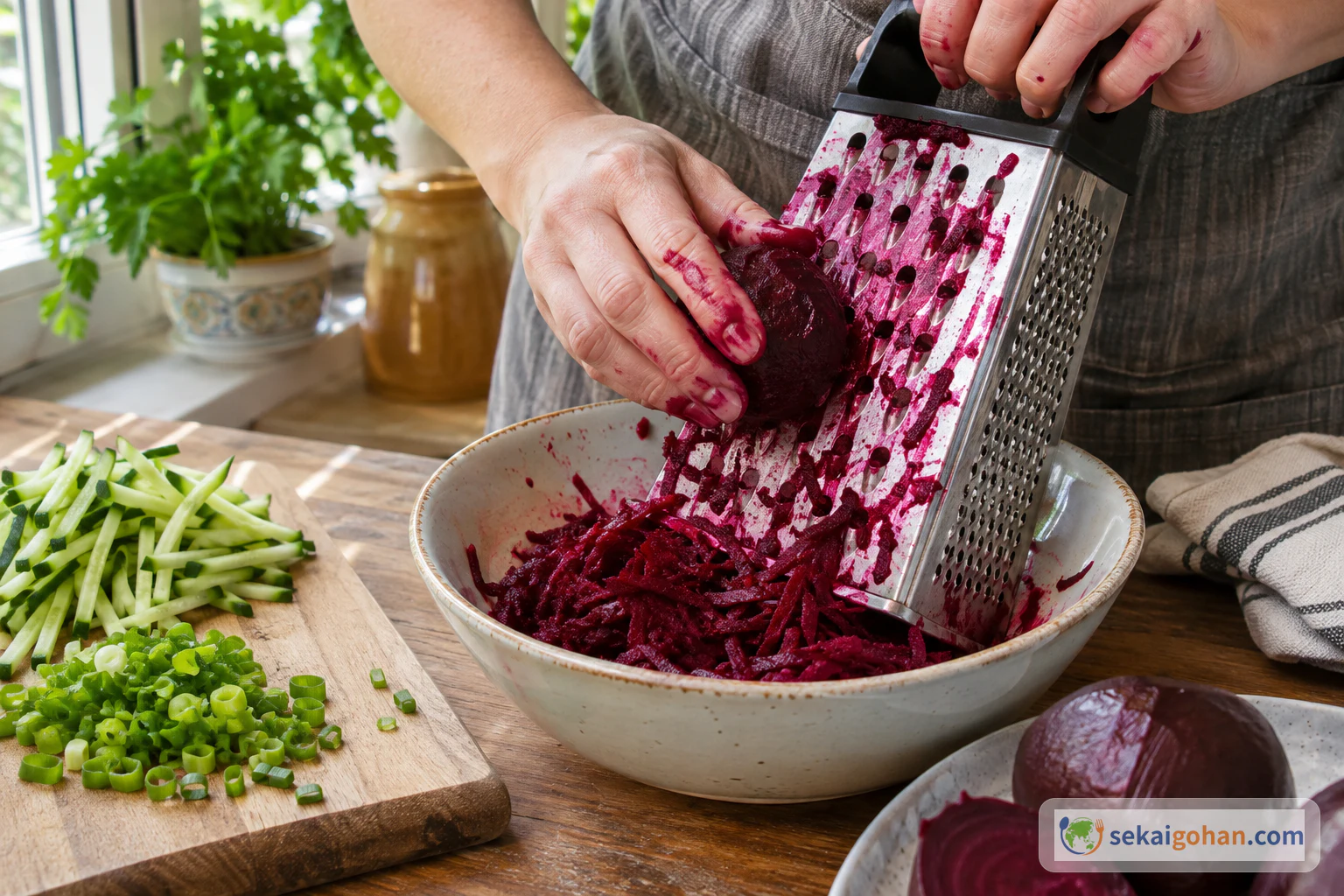
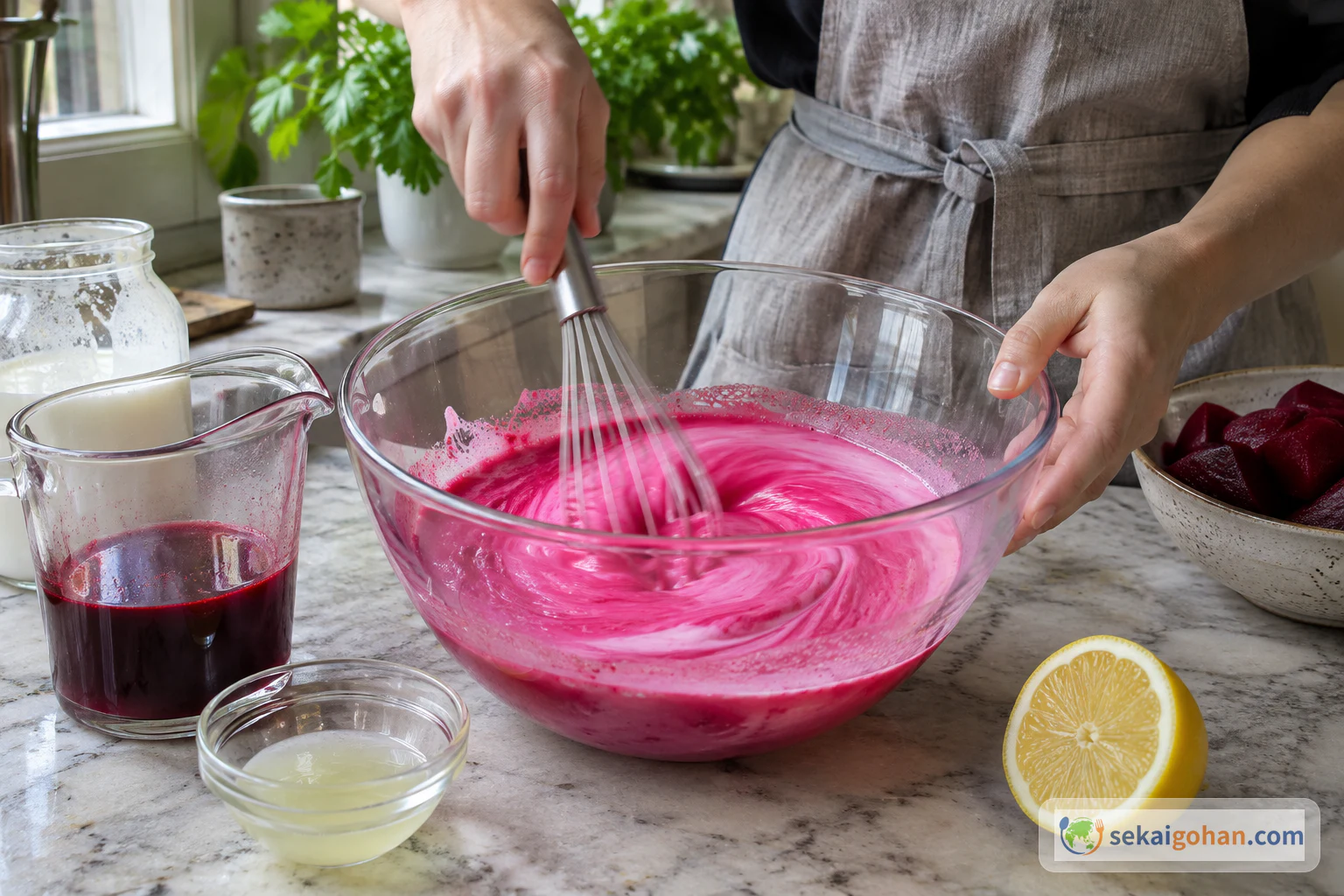
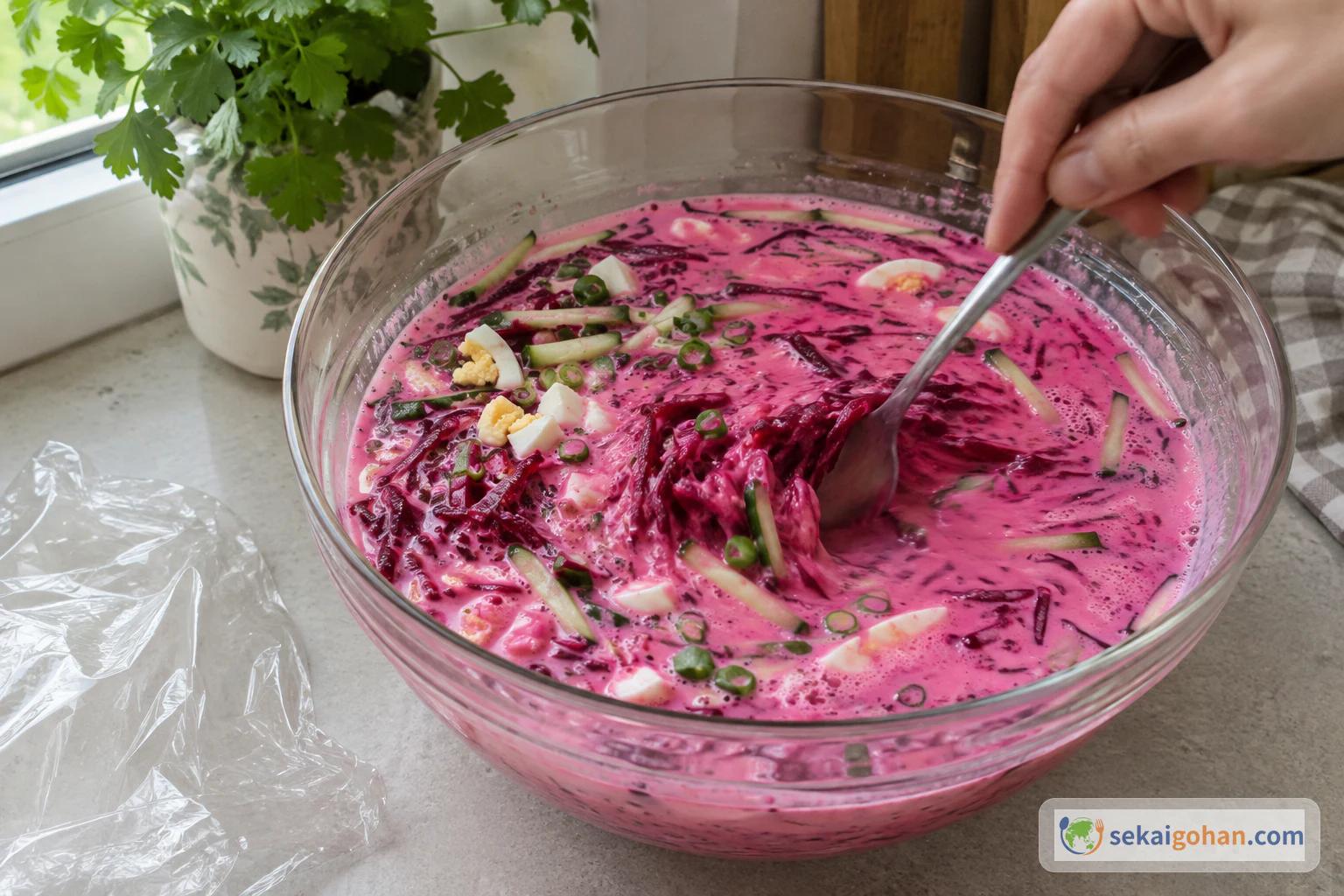
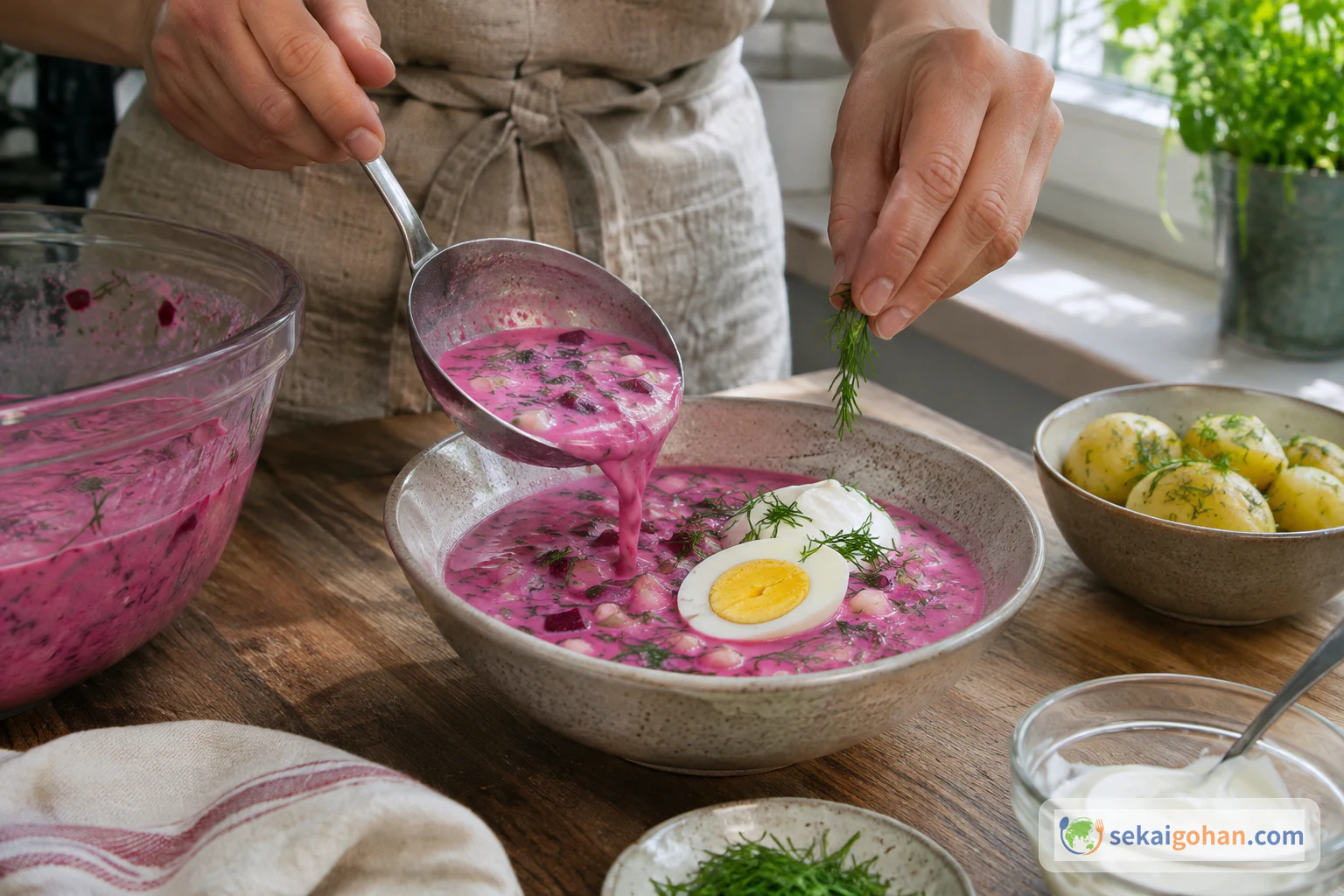
Pour the deep red beet stock into a bowl of pale kefir, start whisking, and in a few turns the whole bowl goes a shocking, cheerful pink. That colour is the first thing anyone notices about khaladnik, the chilled beet soup Belarus eats in summer. Grated beet, thin cucumber strips, chopped egg and green onion float in a tangy, cold, slightly earthy broth, and a spoonful of sour cream and a heap of dill go on top. It tastes sour and fresh first, then sweet from the beet, and the dill carries through every spoonful. On a hot day it is the whole point of lunch.
A Cold Soup With an Old Summer Story
The name and where it sits
The name means, roughly, "the cold one". It appears as Khaladnik, Kholodnik, Kholodnyk or холодник, depending on the language and the transliteration, and in English it is sometimes simply called a "cooler". It belongs to Belarus's summer table, and a bowl of it with rye bread is the plainest kind of hot-weather meal.
Belarus is not the only place that makes it. Cold beet soups run across this whole corner of Europe, and Ukrainians and Russians also use the name kholodnik or svekolnik for close relatives. Lithuania has šaltibarščiai, the bright pink kefir and beet soup that Poland knows as chłodnik litewski, "Lithuanian chłodnik". Russia's okroshka is a cousin too, a cold soup of kvass or kefir, but it is usually built without beets. Ukrainian borscht shares the beet and the colour but is served hot. Where exactly the cold beet soup began is not settled, and each country has its own way of making it.
The name describes the serving, not a single recipe. That is why the liquid can be kefir in one house, soured milk in another and kvass in an older village version, and all of them still go by the same word.
The older form, with greens and kvass
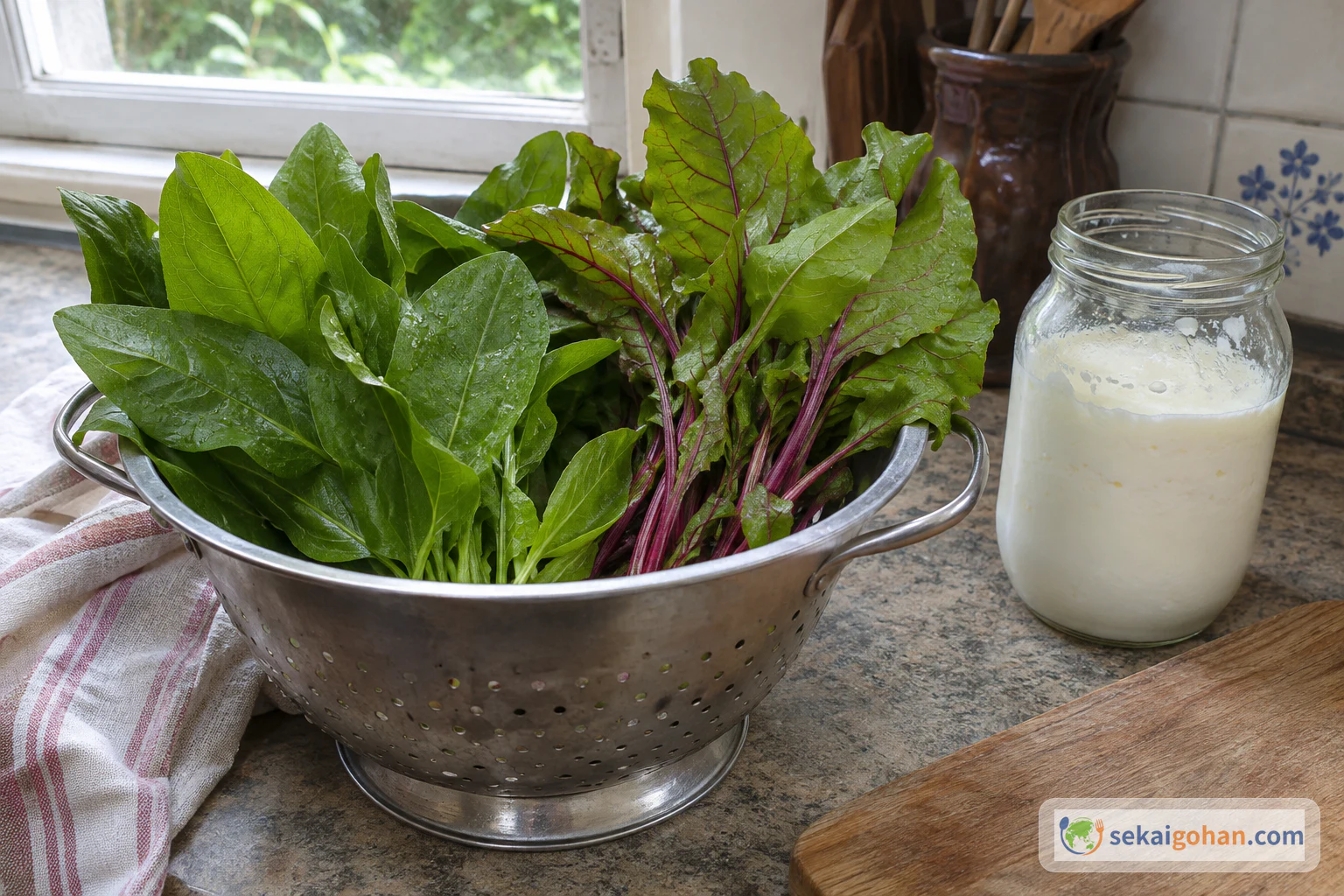
Ethnographic records from the eighteenth and nineteenth centuries describe khaladnik as a summer food in Belarus, and those versions look quite different from today's pink bowl. One describes sorrel, goutweed and beet leaves thinned with kvass. Another lists bread kvass, steamed greens, light kvass, salt and milk. A household version from the Lida region uses soured milk with cucumber and dill, which is already close to what most people make now.
How households make it today
Kitchens still disagree about the liquid. Some cooks get their sourness from pickled beets and thin the soup with cold water, then add kefir and sour cream. Some use a bought beet stock seasoned with salt and citric acid as a quick base. Some add sorrel and roasted beets to a kefir broth and serve baked potatoes beside it. Kefir, sour cream, soured milk, kvass and water all show up, and none of them is the single correct answer. The version below uses kefir, lemon and the beets' own cooking liquid, which gives a clean, bright soup that is easy to make anywhere.
More dishes from the same country are gathered on the Belarus page.
Ingredients
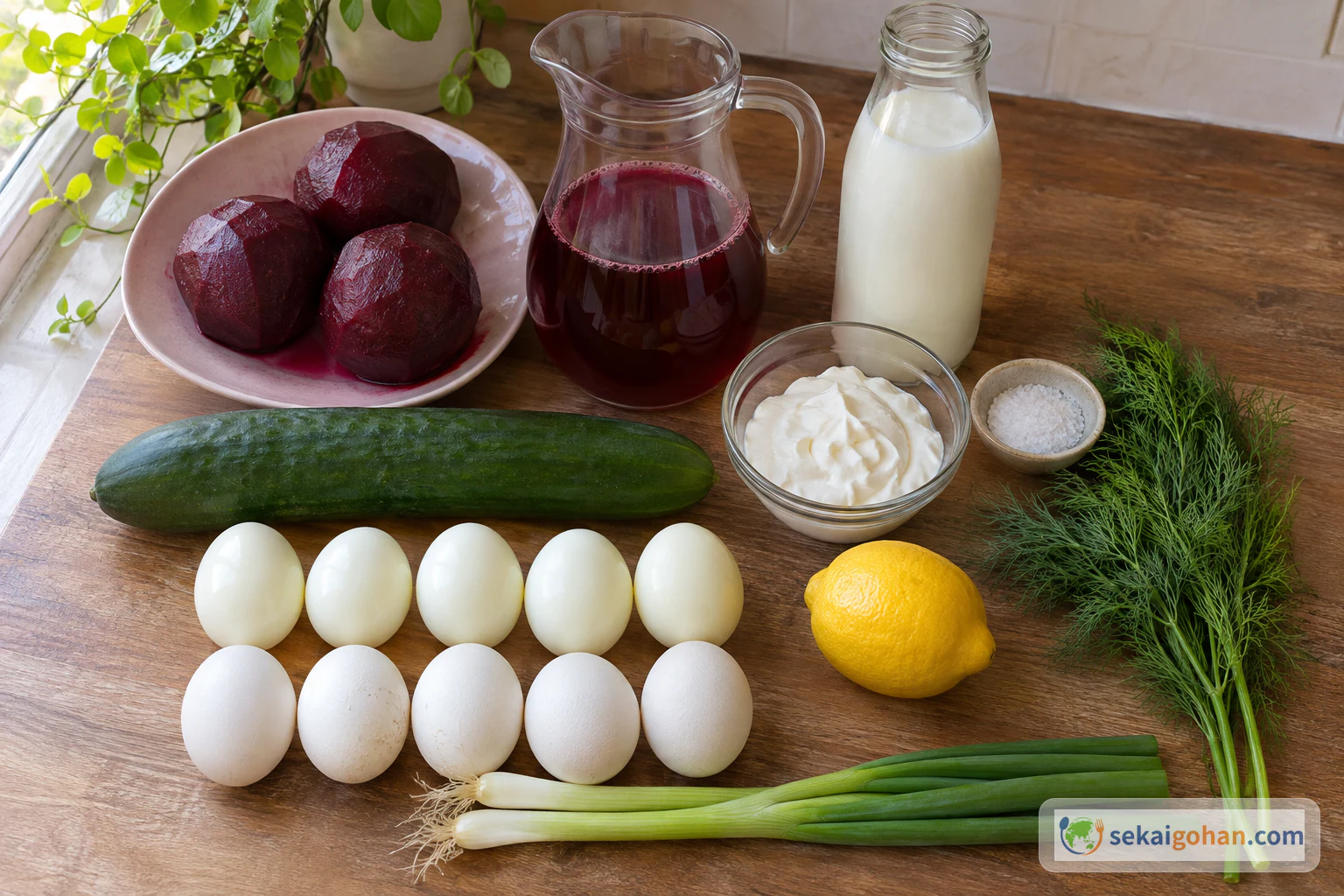
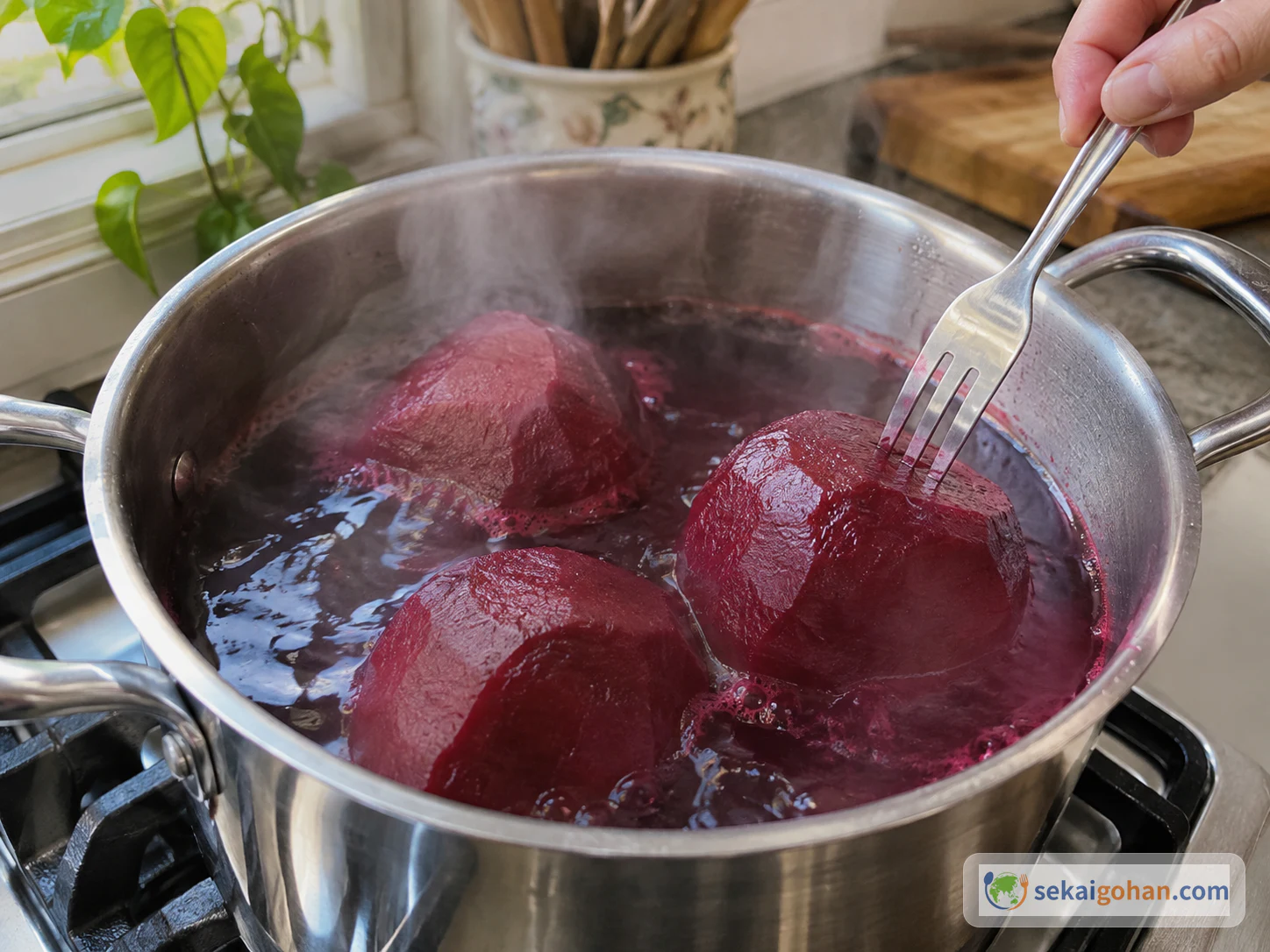
The beet cooking liquid is an ingredient, not something to pour away. It carries most of the colour, and without it the soup turns a weak pastel and tastes thin.
Khaladnik contains eggs and milk (kefir, sour cream, and yogurt and milk if you substitute). Every egg in it is fully hard-boiled; no raw egg goes in.
Equipment
- Large pot for the beets
- Fork for testing the beets
- Saucepan with a lid for the eggs
- Bowl of ice water
- Box grater with coarse holes
- Knife and cutting board
- Large bowl (a big glass bowl works well) and a whisk
- Food wrap, or a large covered glass container for the fridge
- Ladle and serving bowls
Choosing and Substituting
Kefir is the one thing worth seeking out. Look for plain, unsweetened kefir in the dairy aisle, at an Eastern European or Russian grocer, or online. If you cannot get it, whisk 3 cups (720 ml) plain unsweetened Greek yogurt with 1 cup (240 ml) milk and use that in its place. The soup works, but the sourness is gentler and the texture thicker and more spoonable than kefir's thin, lively tang, so taste and adjust the lemon.
Fresh beets give the best colour and taste. When they are out of season, canned plain beets are a fair swap: use the liquid from the can as the stock and skip the boiling. The soup may come out milder and sweeter, so taste and adjust the lemon.
A long English cucumber has thin skin and few seeds. Thicker regular cucumbers also work; use one or two. Supermarket sour cream may be milder and different in fat from Eastern European smetana, which is fine on top.
What must stay for the soup to taste right: the sourness of kefir and lemon, a proper chill, and dill. Everything else bends.
Method
The work is mostly hands-off. The beets boil while you cook the eggs, and both need to cool before anything is mixed. The rest is quick knife work and whisking, then the soup waits in the fridge for at least 2 hours while the flavours settle.
When It Goes Wrong
| What you see | Why | What to do |
|---|---|---|
| Tastes flat and watery after chilling | Cold mutes salt | Stir in salt a pinch at a time, tasting between each |
| Pale, washed-out pink | Beet stock was short or poured away | Use all the reserved stock next time; with canned beets, add the can liquid |
| Sharp and too sour | Lemon went in all at once on top of a tangy kefir | Add the lemon gradually next time and taste after each squeeze; a spoonful of sour cream in the bowl softens it now |
| Beet shreds hard and squeaky | Beets were pulled before a fork slid through | Boil the beets until the fork meets no resistance |
| Grey-green ring around the yolks | Eggs kept cooking in their heat | Move them into ice water as soon as the 11 minutes are up |
Serving, Variations and Storage
At the table
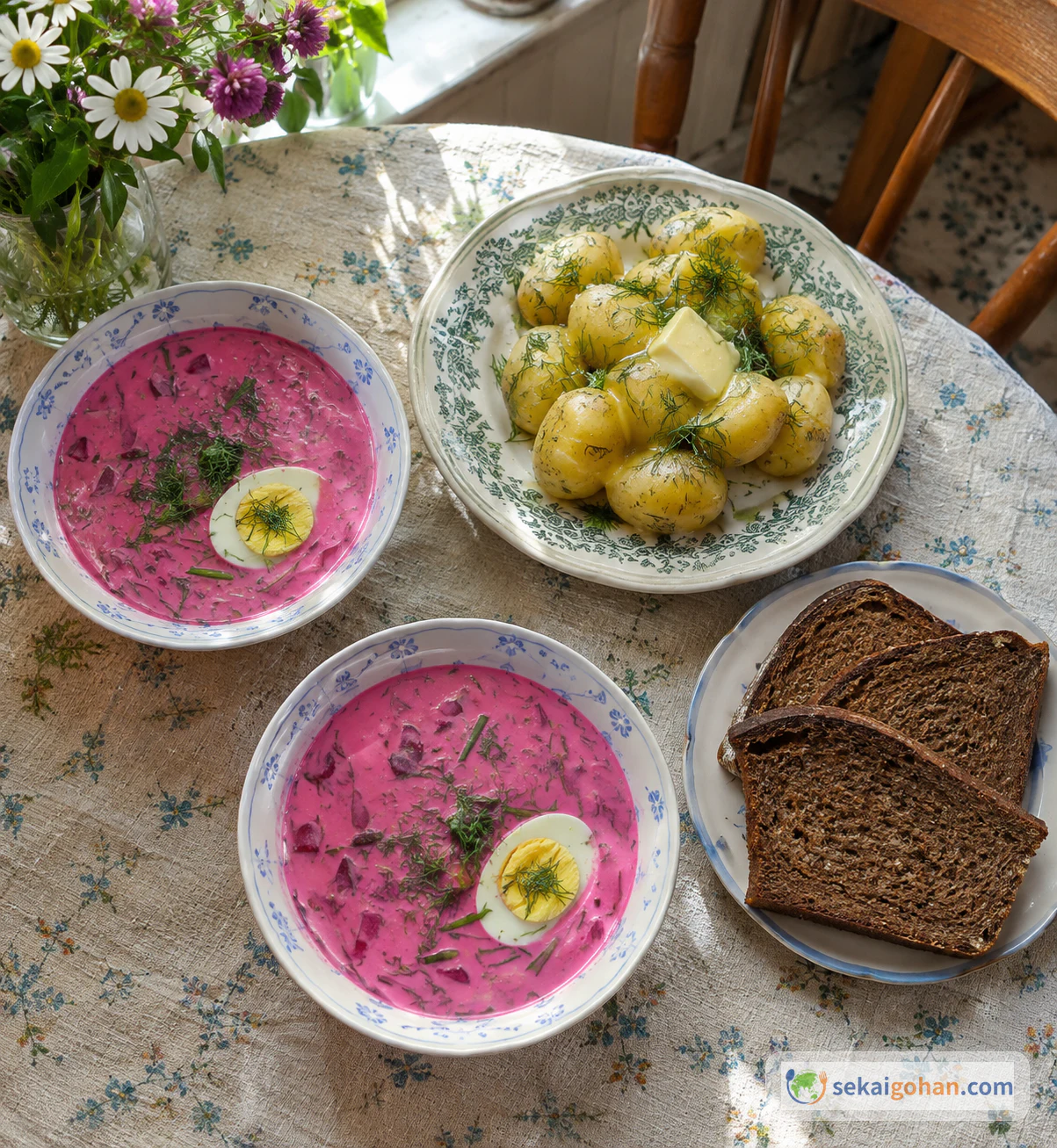
The traditional partner is freshly boiled potatoes, often new potatoes with butter and dill, served hot beside the cold bowl. Serve them beside the cold bowl. Dark rye bread is the other constant, and its sour crumb suits the kefir. With eggs in the bowl and potatoes alongside, it makes a full summer lunch.
Variations
- Smoked chicken or smoked salmon: dice it and add it on top as a garnish. It adds a salty, smoky note and makes the bowl more filling.
- Sorrel: add shredded sorrel to the kefir broth for a greener, sharper sourness that leans toward the older leafy form.
- Other herbs: chives, parsley, basil or cilantro all work if dill is missing, though dill is the traditional choice and each of the others shifts the taste noticeably.
Storage
Khaladnik is made with eggs and dairy, so keep it cold. Cover it and refrigerate it promptly, do not leave it standing at room temperature, and eat it soon. Do not freeze it.
Frequently asked questions
Is khaladnik the same as Lithuanian šaltibarščiai?
They are close relatives: both are cold beet soups with a soured-dairy base, and the names differ from country to country. Households in both vary the liquid and extras.
Do I need to make my own kefir?
No home fermentation goes into this soup. Plain store-bought kefir is what the base is built on, and if you cannot buy it, the Greek yogurt and milk mix stands in.
Should the beets be peeled before boiling?
Yes. Peel them raw, then boil. The colour flows straight into the water, which is exactly what makes the stock so red and what turns the kefir pink.
How should I serve the potatoes?
Serve them hot beside the bowl, which keeps the soup at its coldest. Cook them just before you eat so they arrive hot.