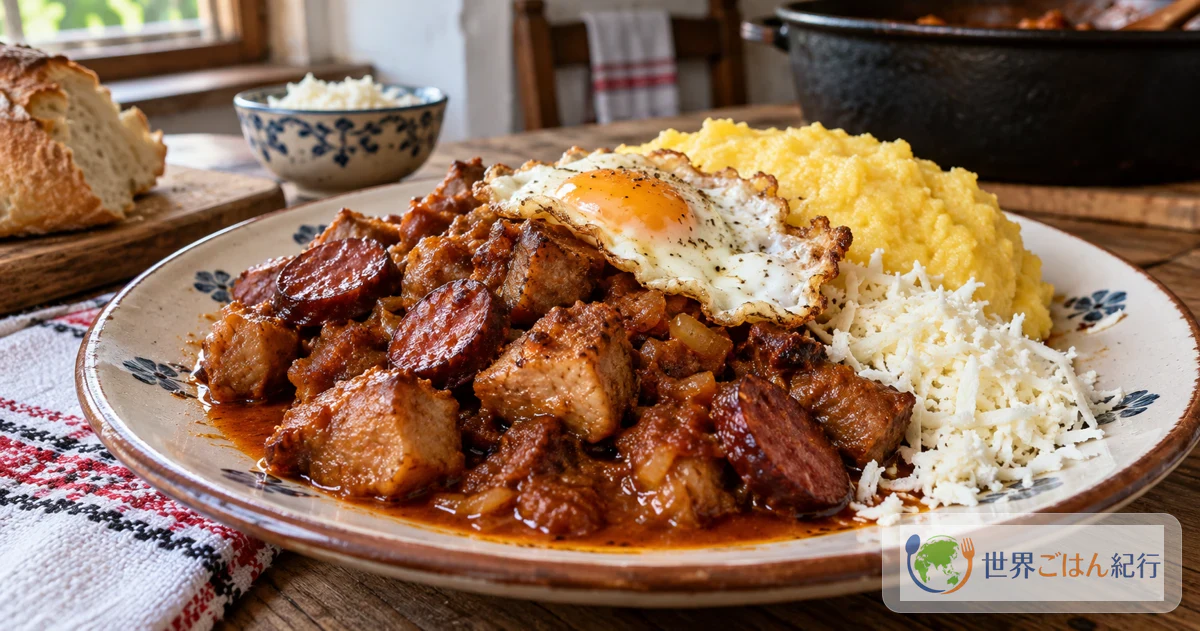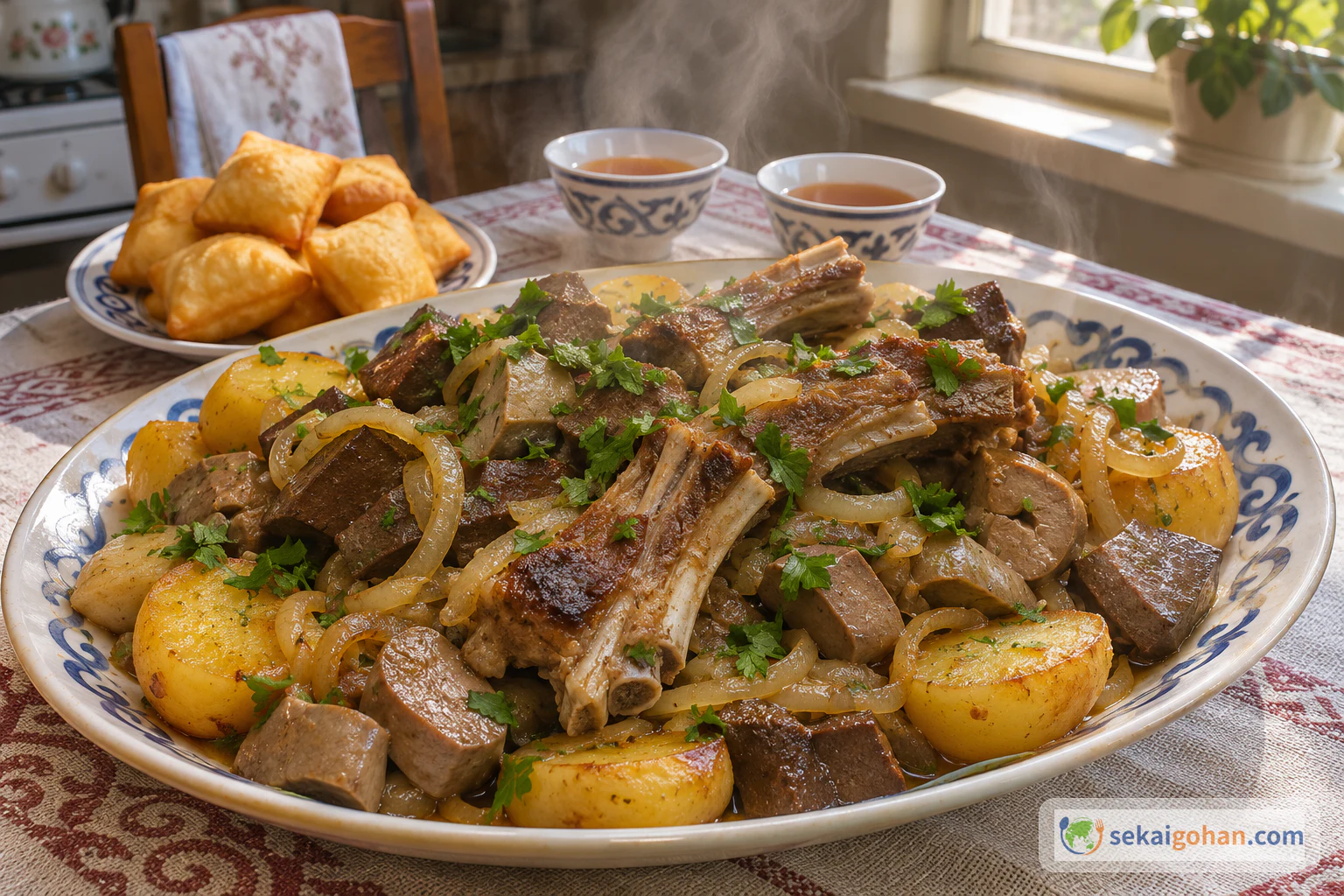
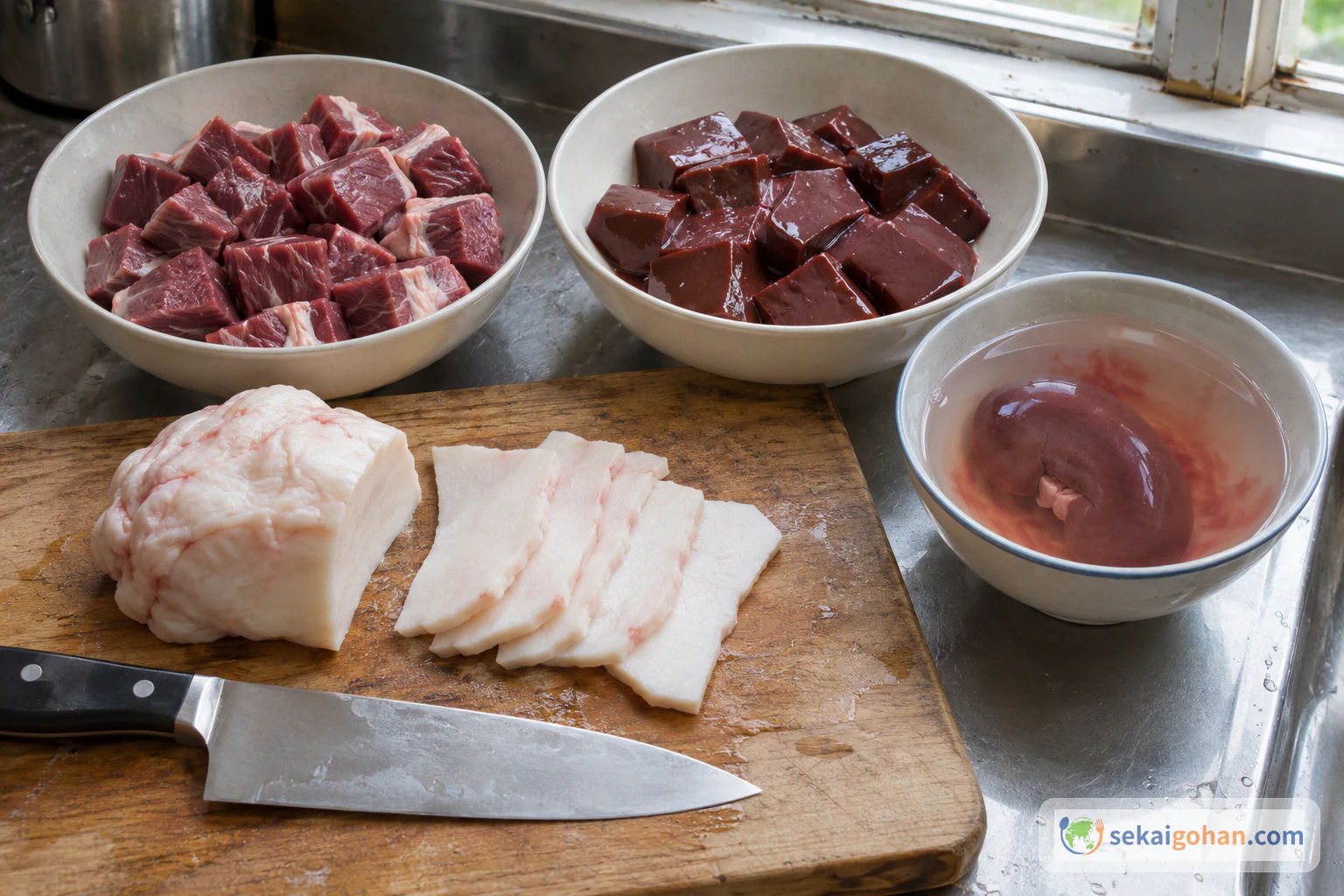
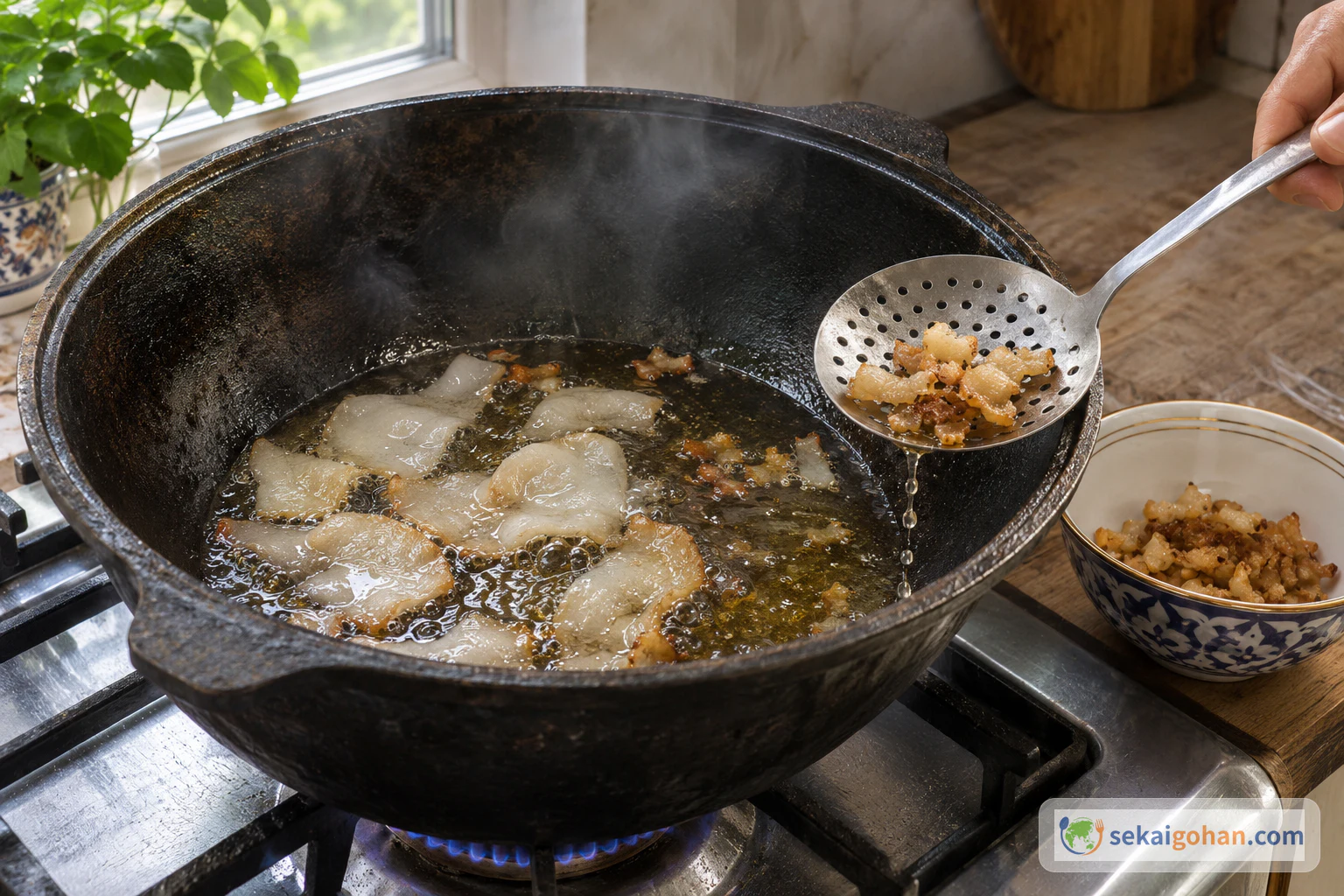
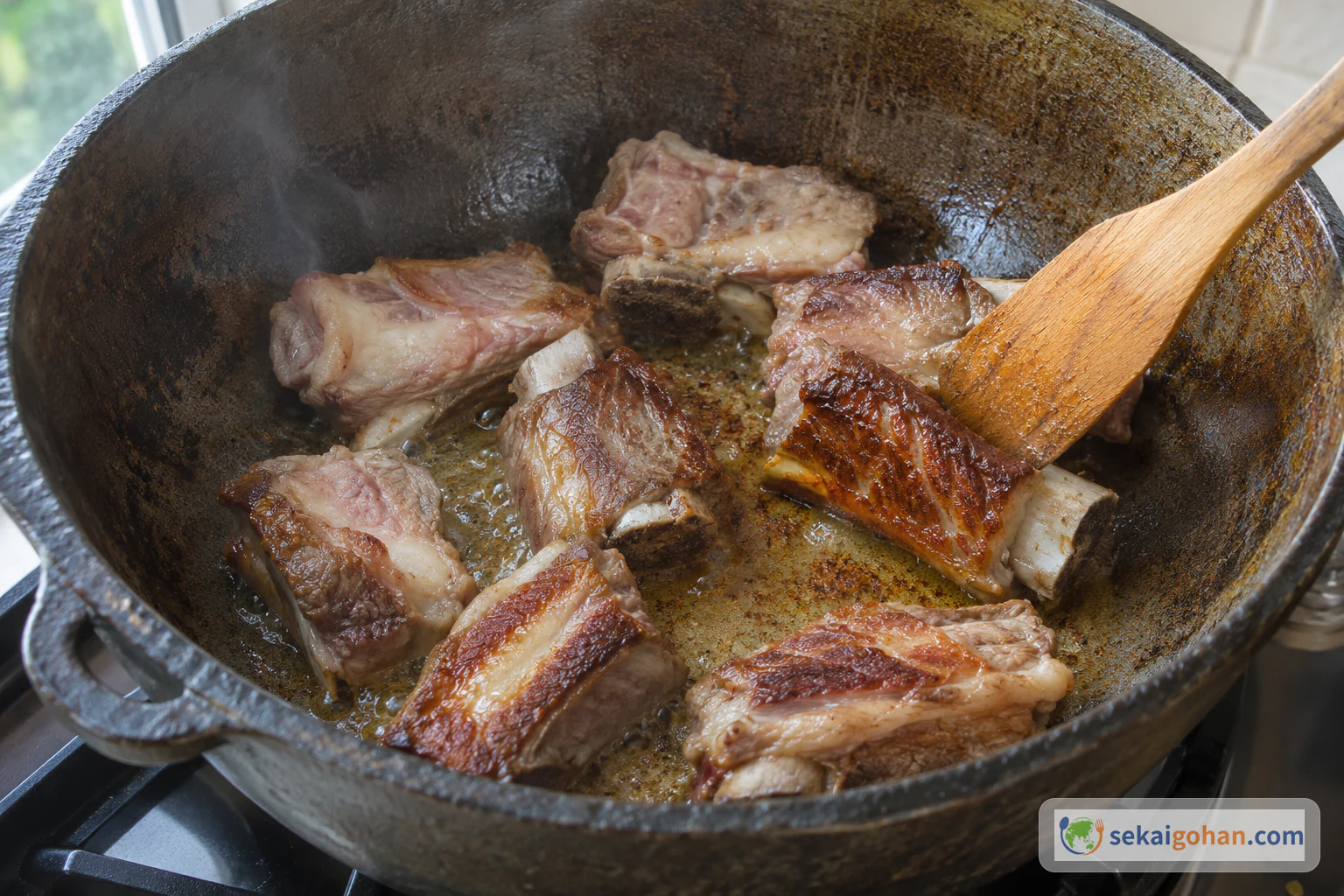
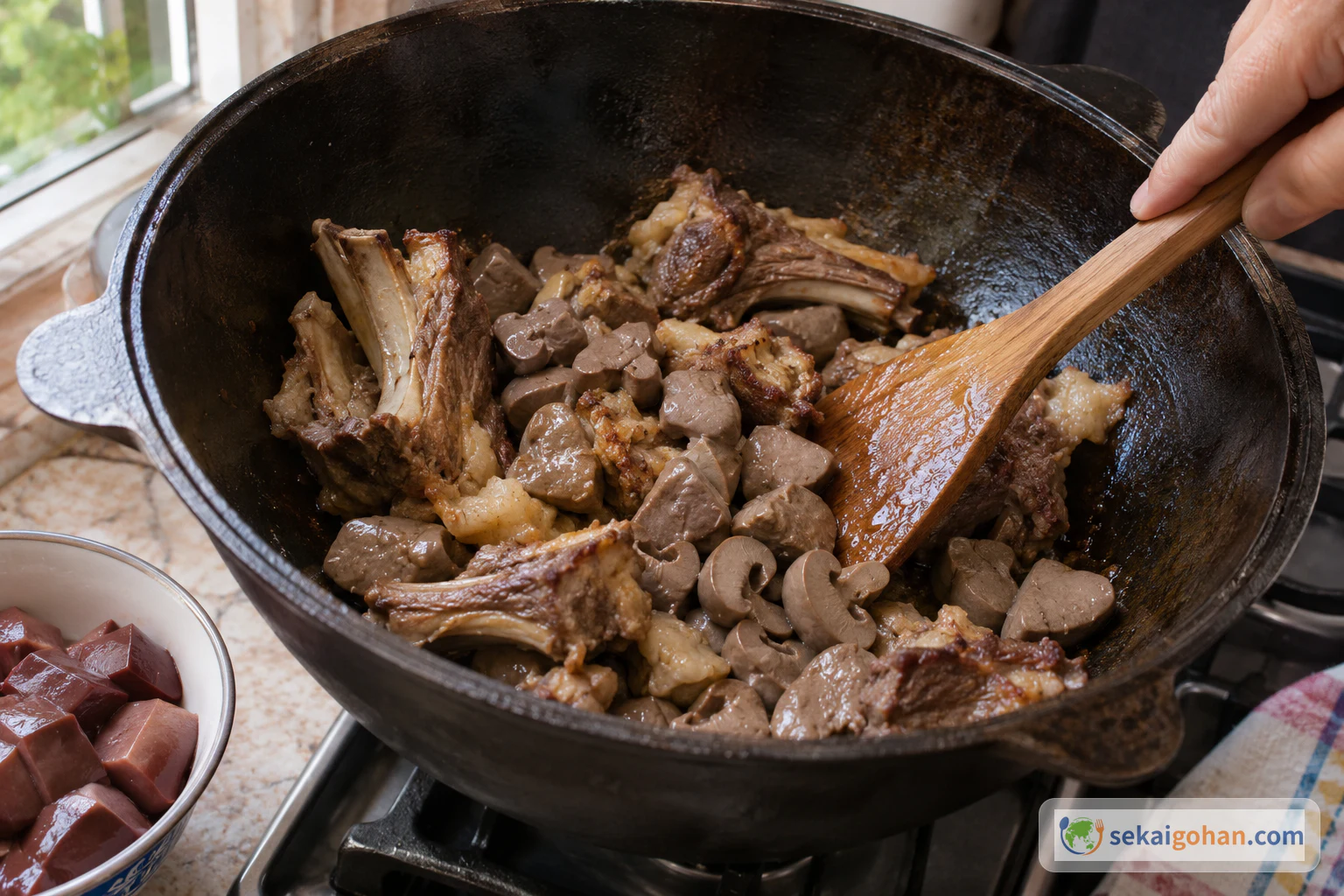
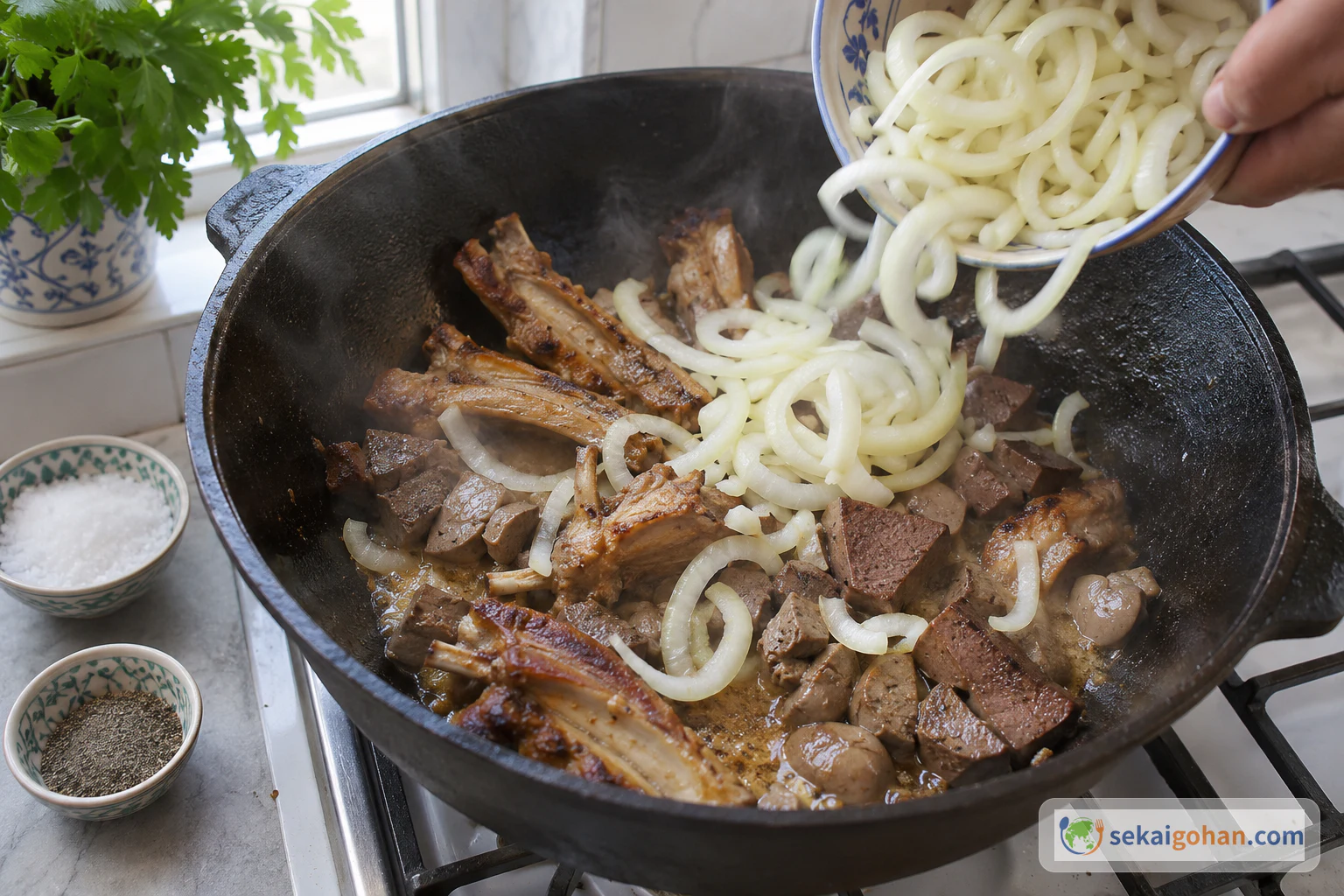
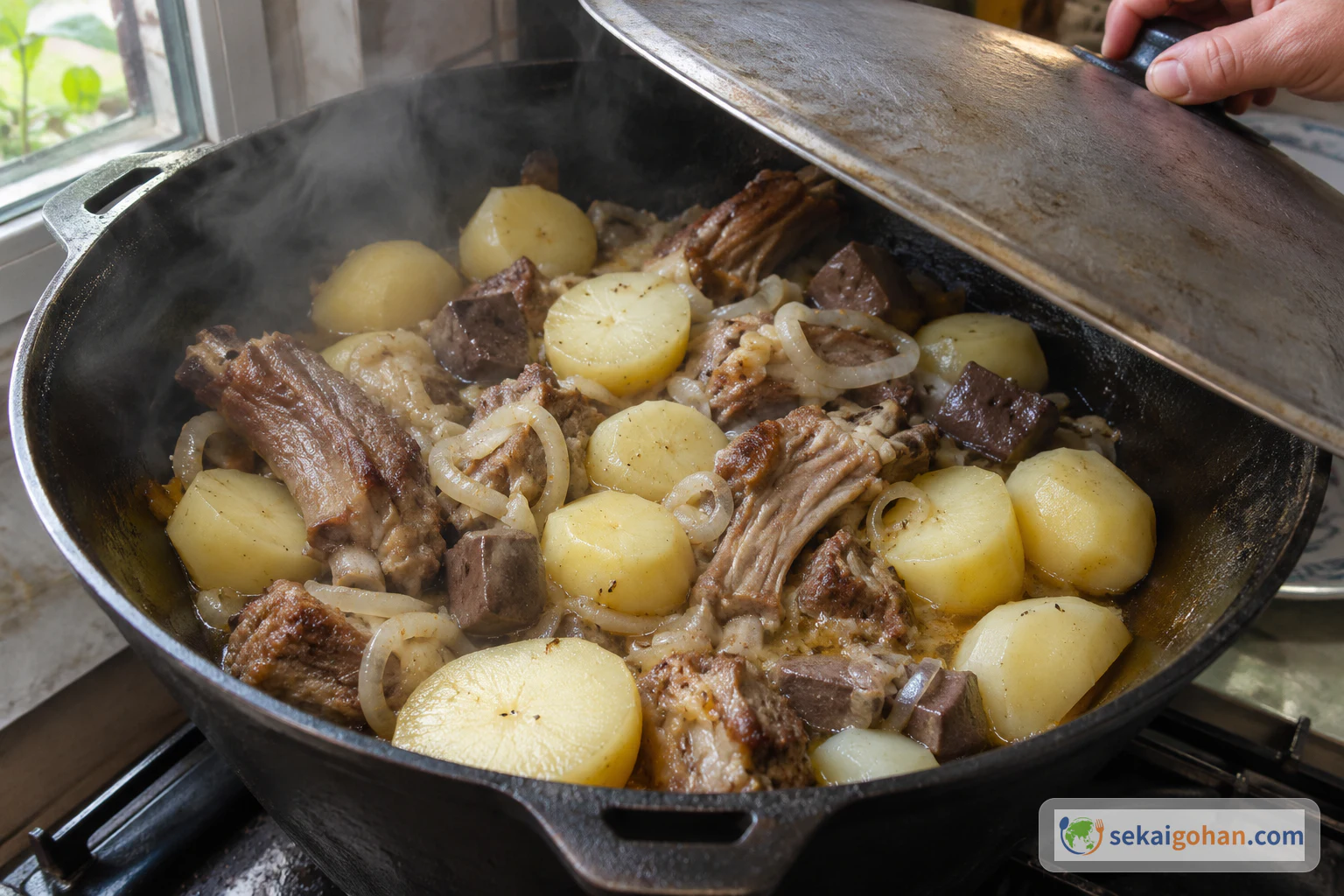
Thin slabs of lamb tail fat go into a hot kazan. Within minutes the iron is shining with clear fat and small golden cracklings float to the surface. Ribs follow and spit as they brown, then heart and kidney, then liver, then a heap of onion rings, and the whole kitchen smells of lamb and black pepper. This is kuyrdak, the Kazakh fry of lamb ribs and offal finished with potatoes under a tight lid. It tastes deep and savoury: the heart chewy, the liver soft, the potatoes stained amber by the fat, with nothing but salt and pepper between you and the meat.
The Pot That Follows the Sogym Slaughter
The name comes from the Kazakh verb қуыру, "to fry", and that is the whole method in one word. Everything happens in fat: first the fat is rendered, then the meat and offal are fried in it, in a fixed order.
Kuyrdak belongs to the sogym slaughter. When a Kazakh household slaughters its sogym animal, kuyrdak is a formal, traditional part of the day, and a house that has done the slaughter does not go without it.
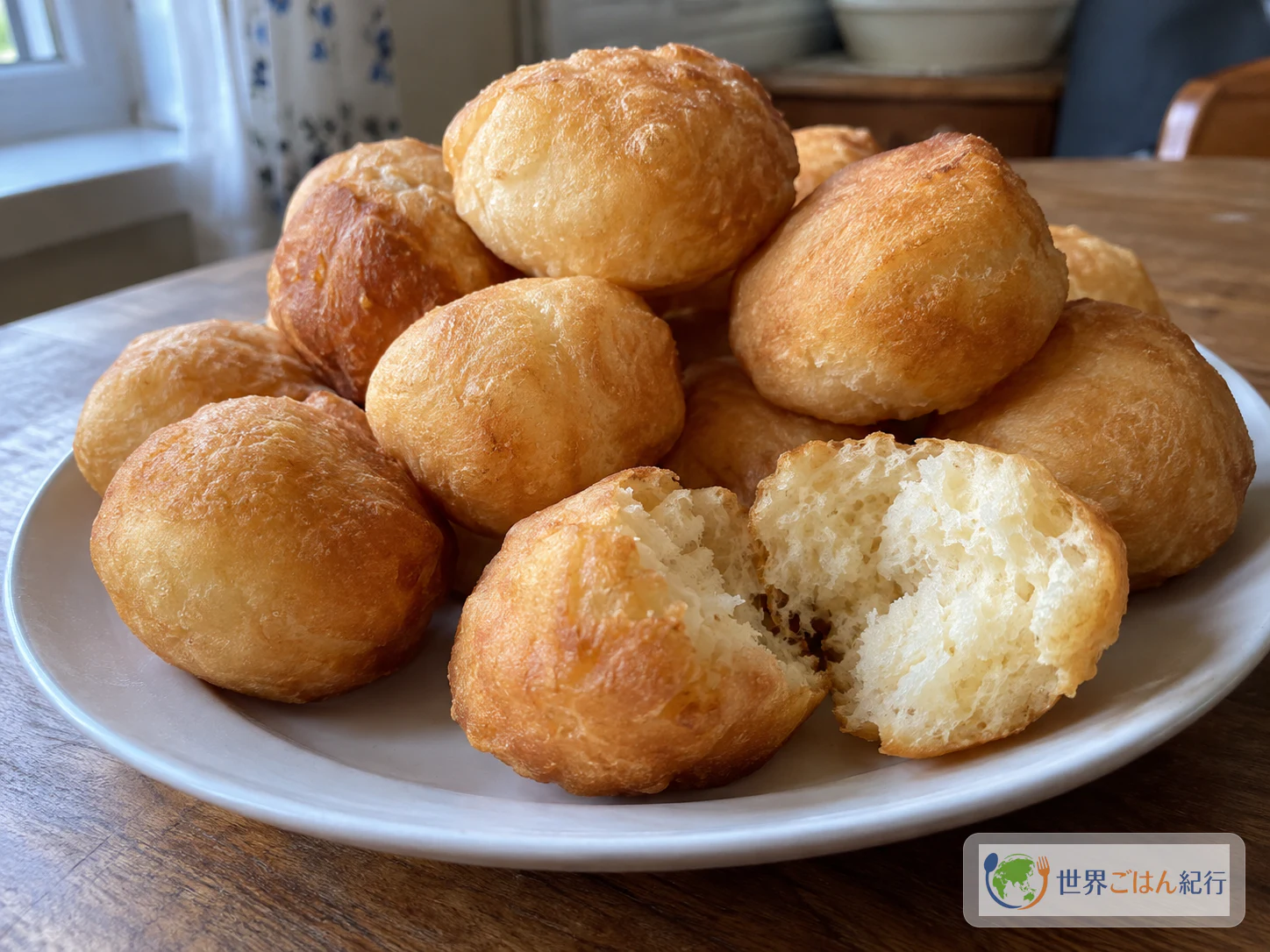
It is also the dish for family and for guests who turn up without warning. It is easy to make and cooks quickly, so it reaches the table fast, piled high on a wide plate, scattered with parsley, eaten hot with baursak, the puffed fried dough of the Kazakh table.
Classic and modern pots
The classic Kazakh kuyrdak uses only offal for its meat and only onion for its vegetable. Today many homes add potatoes, pumpkin, carrot or tomato, and some make it with lamb, beef or horse meat. Which offal goes in changes from house to house too: one pot is built on heart, liver and kidney with ribs, another leans on lung, another on liver, lung and heart. Some cooks pour in broth or water before the potatoes; others cover the pot and let the meat and onion steam in their own juices, as this recipe does.
Across the border, Kyrgyz kuurdak comes from the same root word but is cooked differently, with beef and vegetables simmered with cumin and paprika, while the Kazakh pot fries offal and ribs in tail fat. On the same Kazakh table, beshbarmak shows the other side of lamb cooking, meat boiled rather than fried.
Kazakh: қуырдақ, written kuyrdak or kuirdak in Latin letters. Kyrgyz: куурдак, kuurdak. The spellings share a root and mark two national dishes, each cooked its own way.
Ingredients (serves 6)
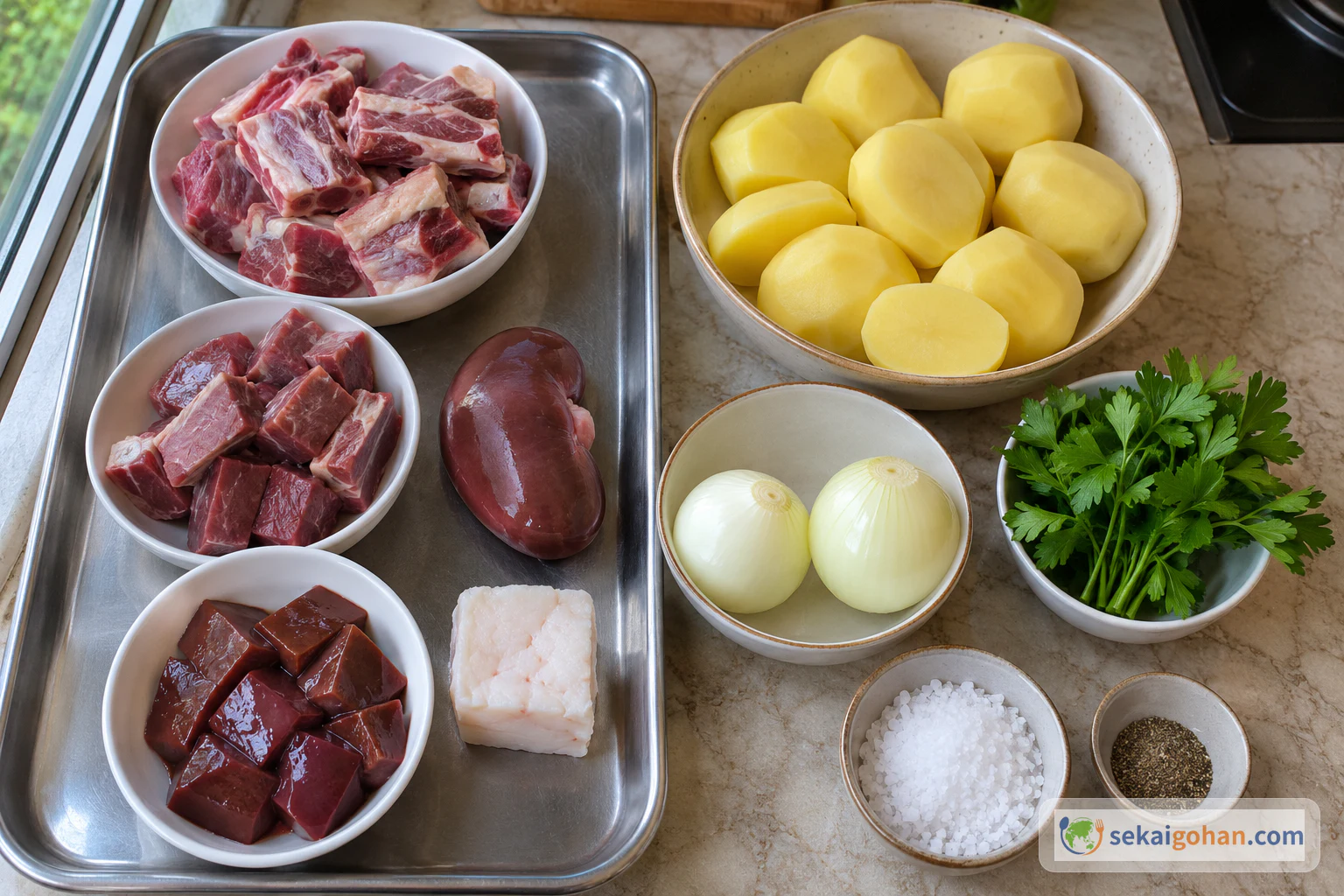
The dish contains lamb and lamb offal, onion, potato, salt, black pepper and parsley. Baursak served alongside contains wheat. There is no dairy in the pot, and the lard swap below contains no milk.
Equipment
- Kazan, or a heavy, deep pot about 9½ inches (24 cm) across, with a tight lid
- Wooden spatula
- Slotted spoon
- Sharp knife and cutting board
- Small bowls to keep the kidney, heart and liver apart
- Skewer for testing the potatoes
- Wide serving platter
Buying and Swapping
Lamb spare ribs and lamb offal can be hard to find in ordinary supermarkets, so a butcher that sells lamb or a lamb specialist online is the easiest place to look. Lamb meat and lamb tail fat keep the pot tasting Kazakh. The offal is where you can bend when you cook abroad.
- Beef heart, beef liver and beef kidney at the same weights replace the lamb offal. Buy liver labelled for cooking. The aroma is milder and the pieces cook through at a slightly different pace. Kidney goes by different names at different shops, so ask.
- Lamb fat trimmings or unsalted lard at the same weight replace the tail fat. Lard fries just as well but loses the lamb smell that defines the dish.
- Boneless lamb shoulder, 9 oz (250 g), replaces the ribs. The fat carries less bone flavour.
- A thin pot runs the fat too hot. Use the heaviest deep pot you own and keep the heat at medium or lower.
Buy offal on the day you cook it. It spoils quickly.
Salt and black pepper are all this pot takes. Cumin, paprika, garlic and tomato belong to other versions; leave them out and the sweetness of the tail fat and the iron edge of the liver come through.
Method: Fat First, Offal in Order
The work is front-loaded. Cut everything and get the kidney soaking before the kazan goes on, because once the fat is rendered the offal goes in on a clock and there is no time to reach for a knife. The long, quiet stretch comes at the end, when the potatoes steam under the lid.
Cook the heart, liver and kidney through to the centre, and never serve them rare or raw. Raw lamb meat and offal carry a high risk of food poisoning. Beef liver is sold for cooking only in Japan and must reach 146°F (63°C) at the centre for 30 minutes or 167°F (75°C) for 1 minute. Soaking the kidney in cold water is preparation and does nothing in place of cooking. Wash knives, boards and bowls that touched raw offal before using them for anything else. Hot fat spits when meat goes in, so lower pieces in away from you.
When It Goes Wrong
| What you see | Why | What to do |
|---|---|---|
| The fat smokes and turns dark; the bottom tastes bitter | The kazan was too hot, or cracklings were left in | Take the pot off the heat, lift out the cracklings and spoon off a little fat. Next time render over medium |
| The ribs stay pale | The pot was crowded or there was too little fat | Brown them in two batches and add a little more tail fat |
| The liver is dry and crumbly | It cooked too long | This cannot be undone; serve the cubes whole rather than cutting them small. Next time keep it to 5 minutes |
| The potatoes fall apart | They were cut too small or stirred too often | Shake the pot instead of stirring. Leave them larger next time |
| The bottom catches and sticks | No liquid goes in, and a thin pot or high heat dries it out | Pour boiling water down the side and lift the food away from the stuck patch rather than scraping it into the pot |
| It tastes too salty | All the salt goes in with the onion | Add more potato. Water only makes it taste flat |
At the Table, and Other Ways to Make It
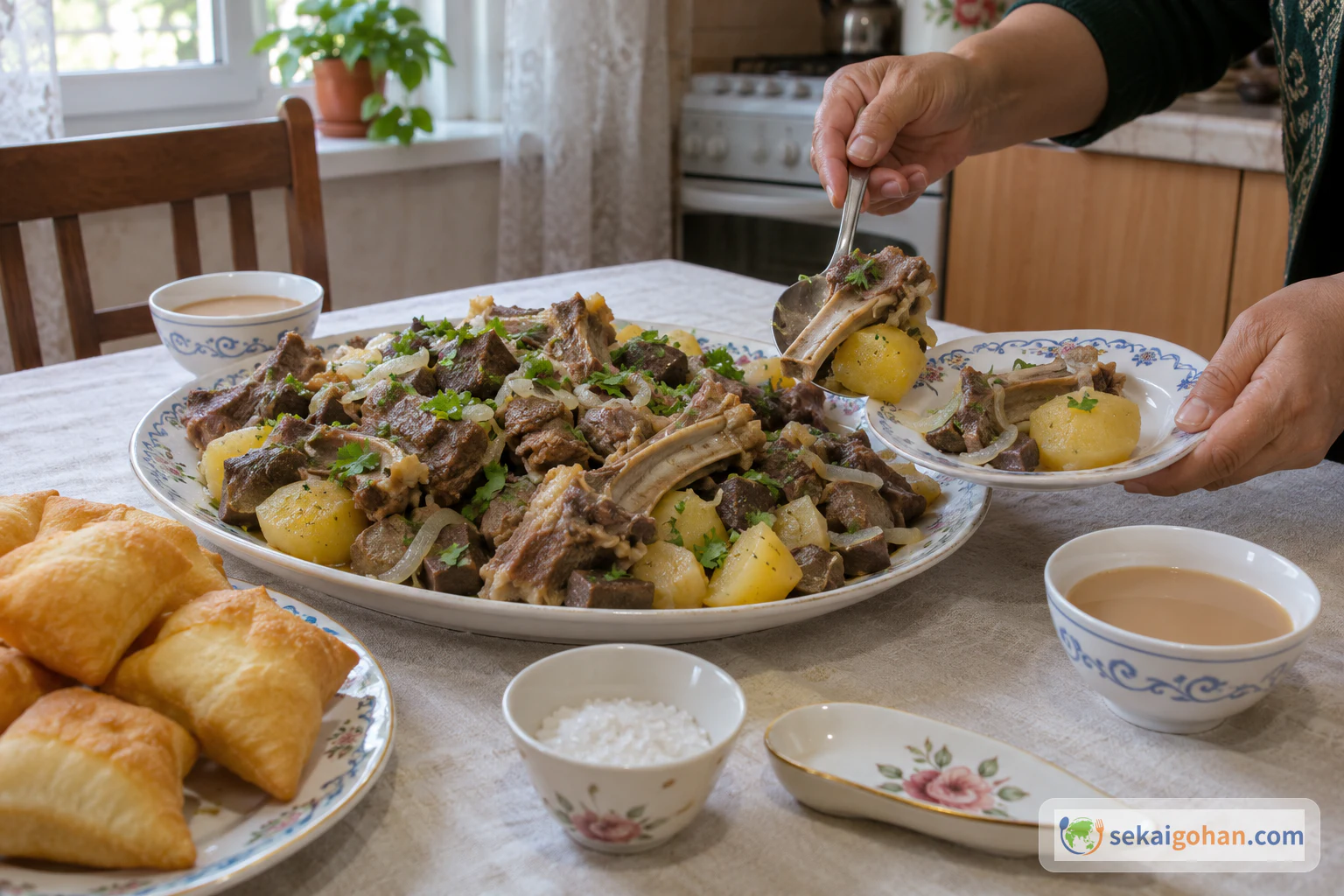
Kuyrdak is a shared dish. The platter goes in the middle, baursak goes beside it, and everyone takes a rib, a few cubes of offal and a potato onto their own plate, adding salt and pepper as they like. It suits the day lamb arrives from the butcher and the evening friends turn up unannounced. For a longer Central Asian meal, pair it in the same week with nauryz kozhe or a pot of Uzbek plov, where fat and lamb do a different job with rice.
Variations
- Beef offal pot: beef heart, beef liver for cooking and beef kidney at the same weights. The flavour is milder and less gamey.
- Lard or lamb trimmings instead of tail fat: the same weight. The pot fries cleanly but loses some of its lamb aroma.
- Classic, without potatoes: offal, ribs and onion only, the oldest form of the dish. Steam it for a shorter time under the lid and check often, since there are no potatoes to wait for.
- With carrot: add it with the onion. It brings a sweeter, more colourful pot.
Leftovers
Cool leftovers, cover them and refrigerate promptly. To reheat, take out one portion at a time rather than stirring the whole pot, since the potatoes break easily the next day. Heat each portion until it is hot all the way to the centre.
Frequently asked questions
Can I make kuyrdak in a frying pan?
Yes, if the pan is deep and heavy. A thin pan lets the fat get too hot and the base dries out under the lid. Keep the heat at medium or lower and check the bottom more often during the steaming.
Can I add lamb lung?
Yes. Lung is a common part of kuyrdak, and some households build the whole pot around it. This recipe gives no amount or timing for lung, so it is left out of the table; if you add it, cook it through to the centre like the rest of the offal.
Some versions add broth. Should I?
Some households pour in sorpa, the meat broth, or water before adding the potatoes, then let the pot bubble gently. That makes a looser, juicier kuyrdak. Steaming without liquid keeps the fried edges and makes the fat cling to the potatoes.
Can I soak the kidney longer than 30 minutes?
Yes. Some cooks soak kidney for one to four hours. Change the water whenever it clouds, and keep it in the refrigerator during a long soak.