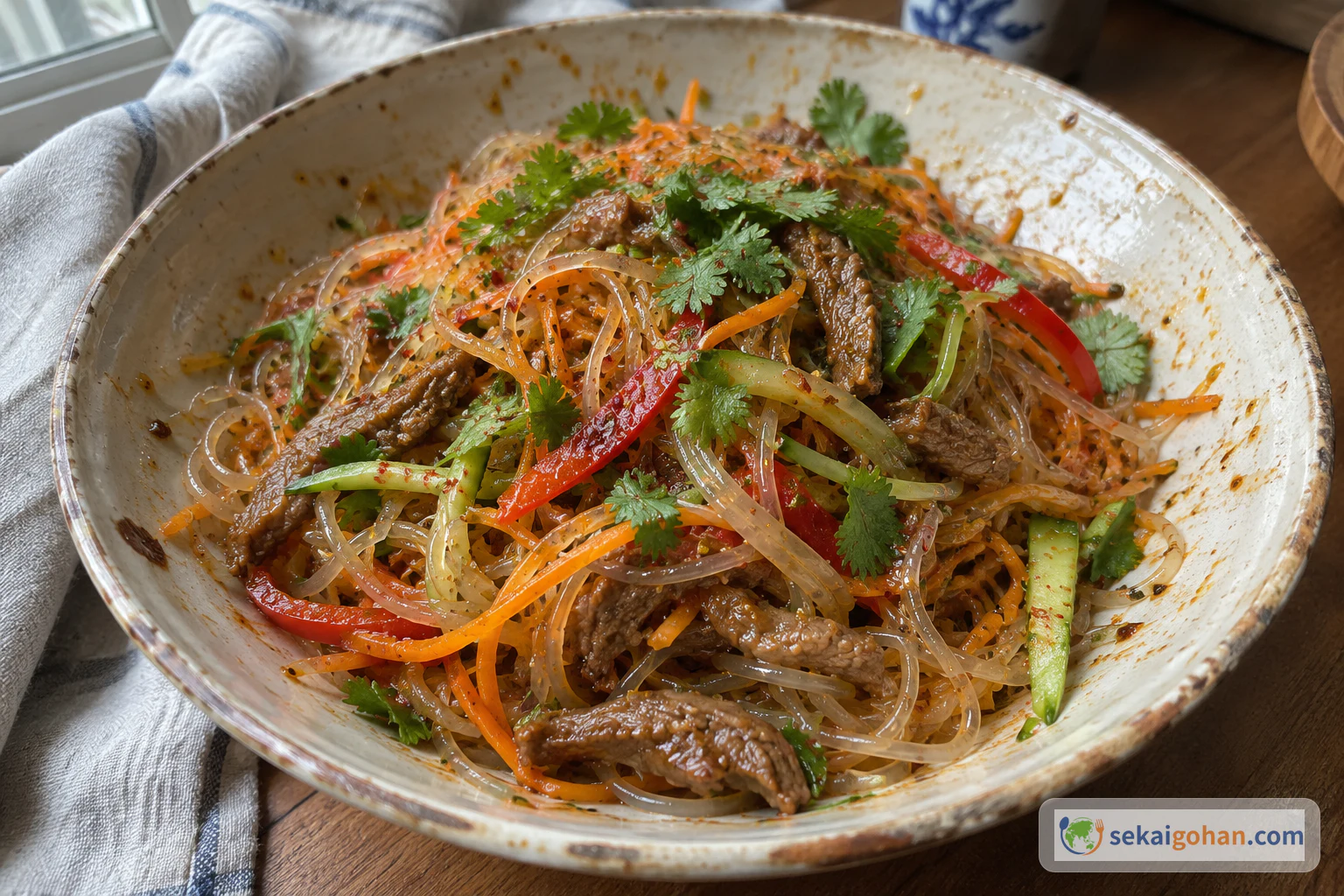
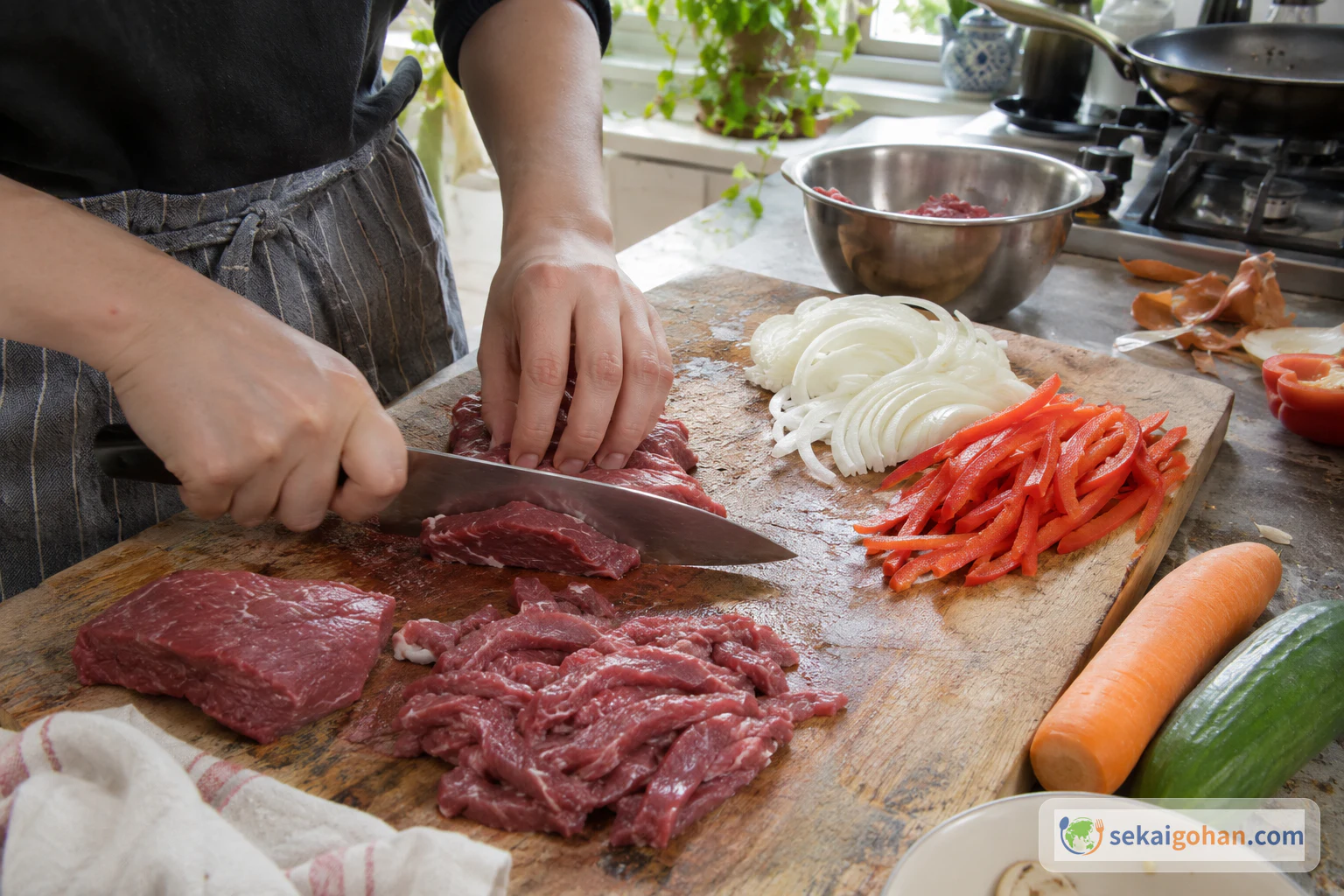
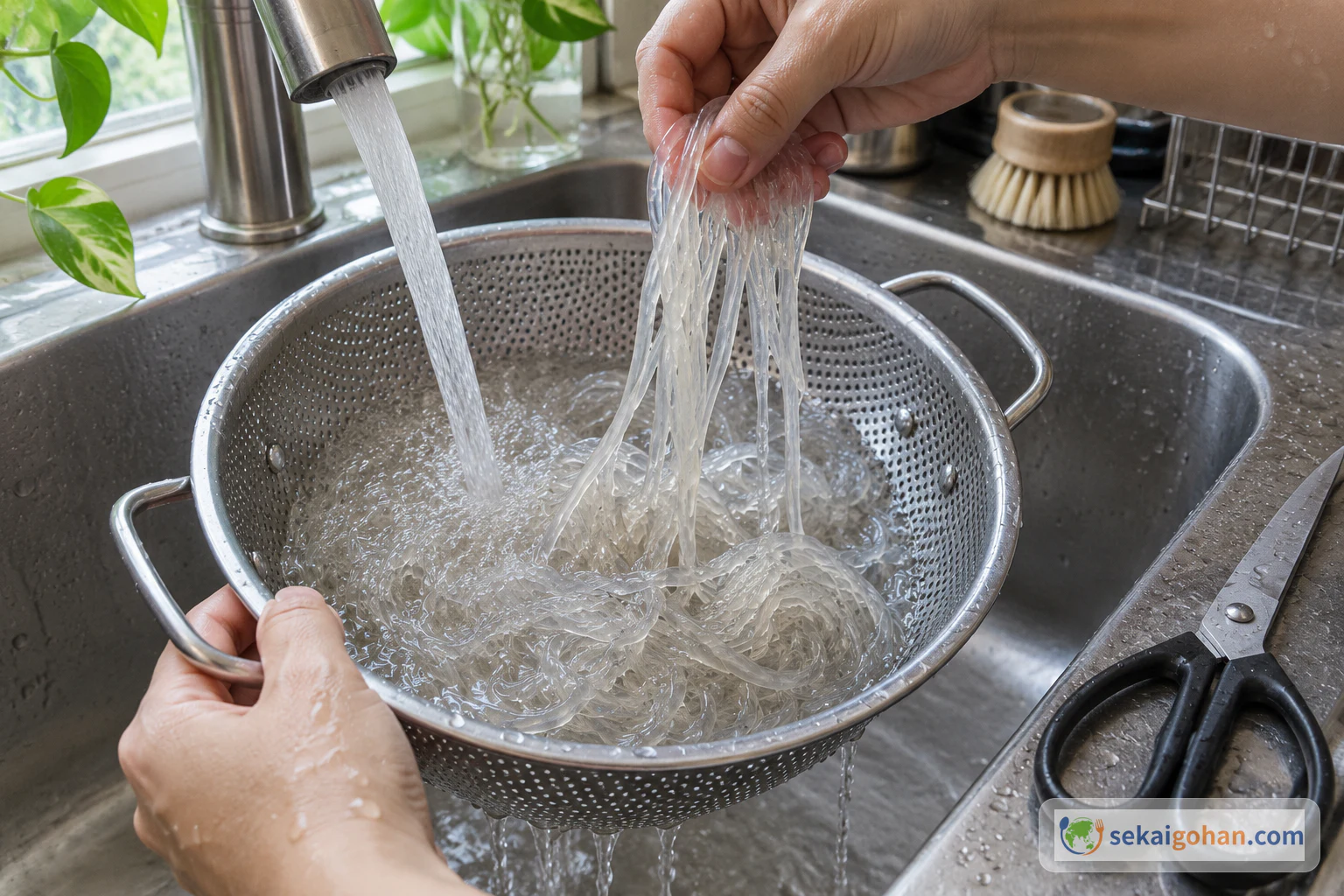
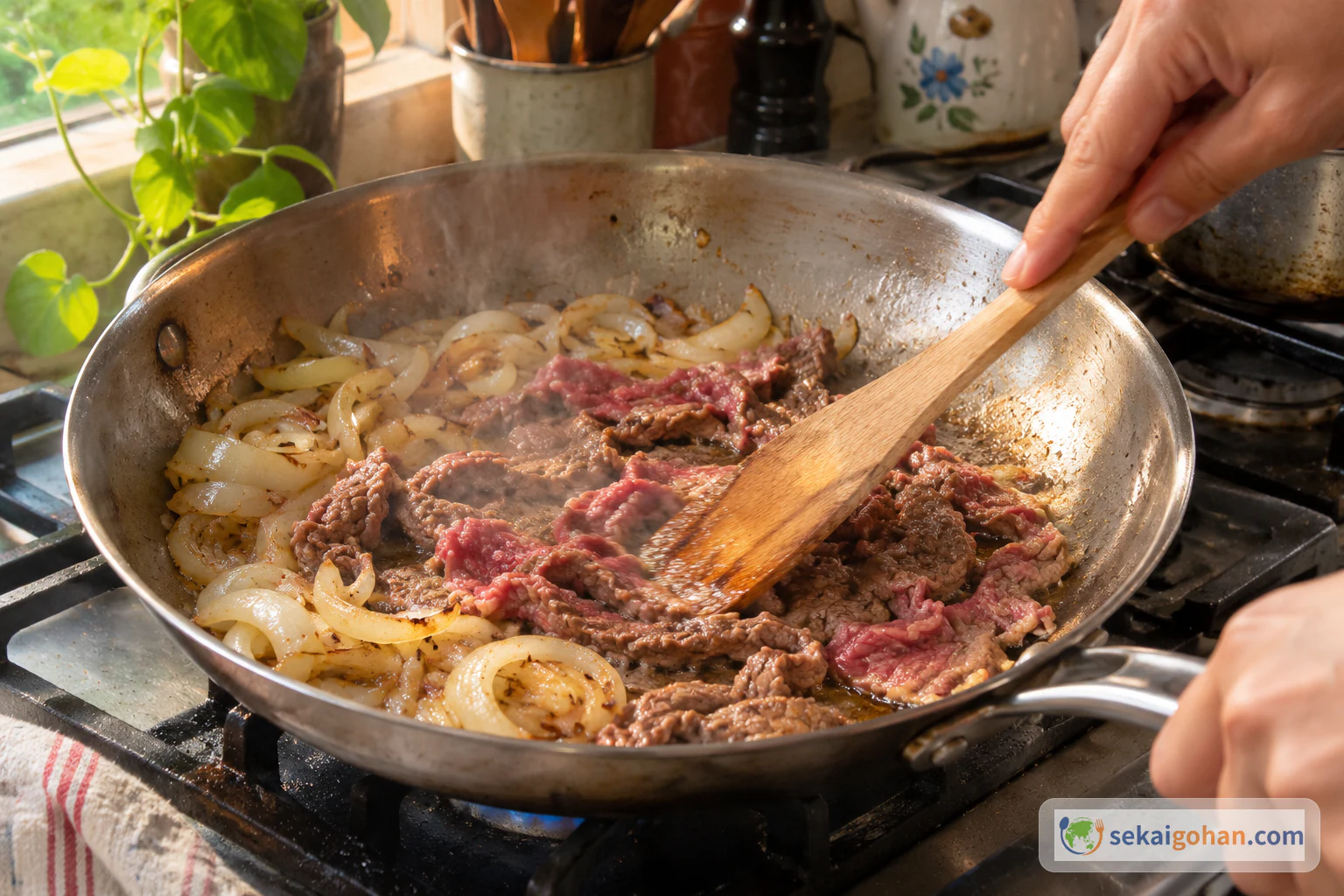
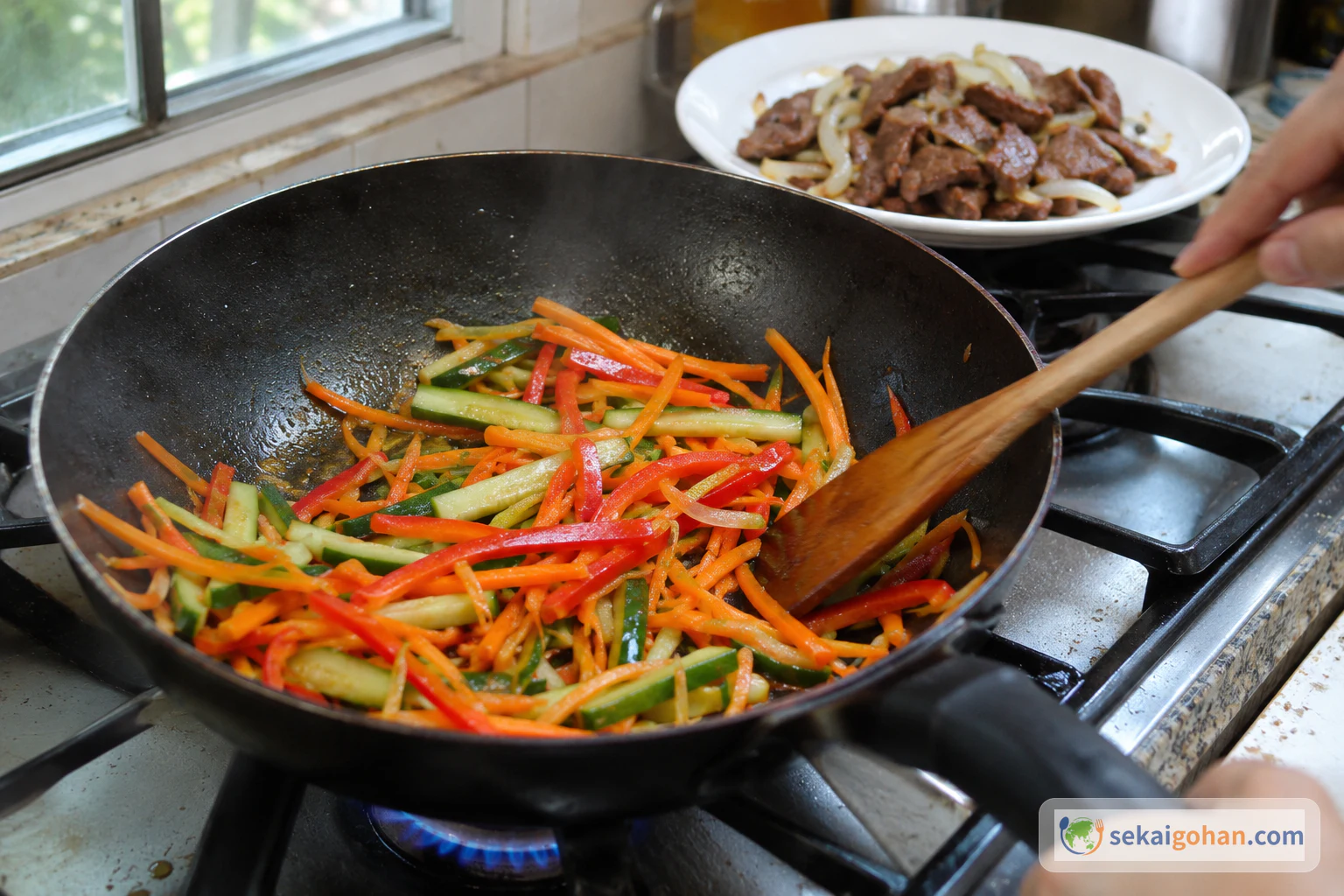
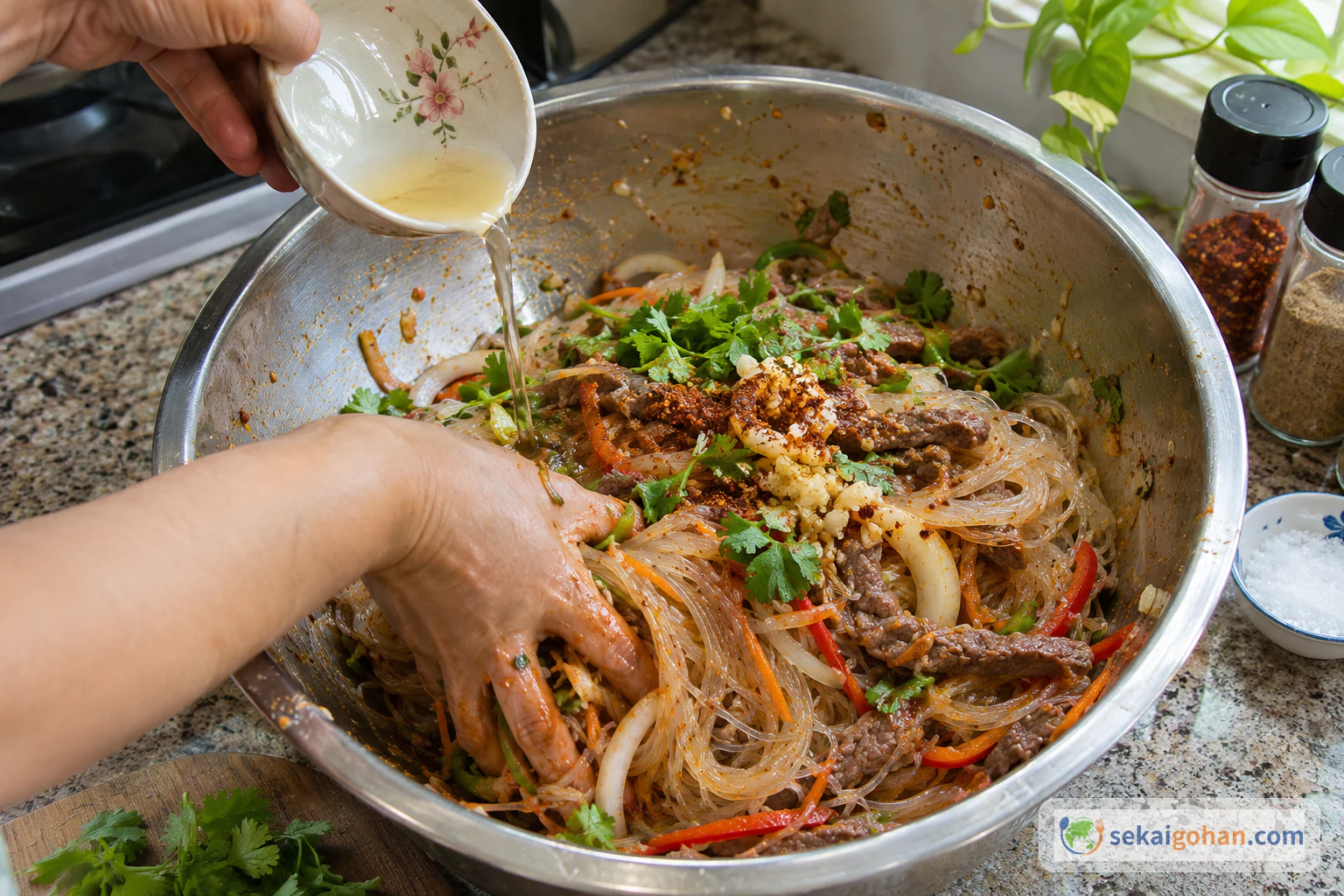
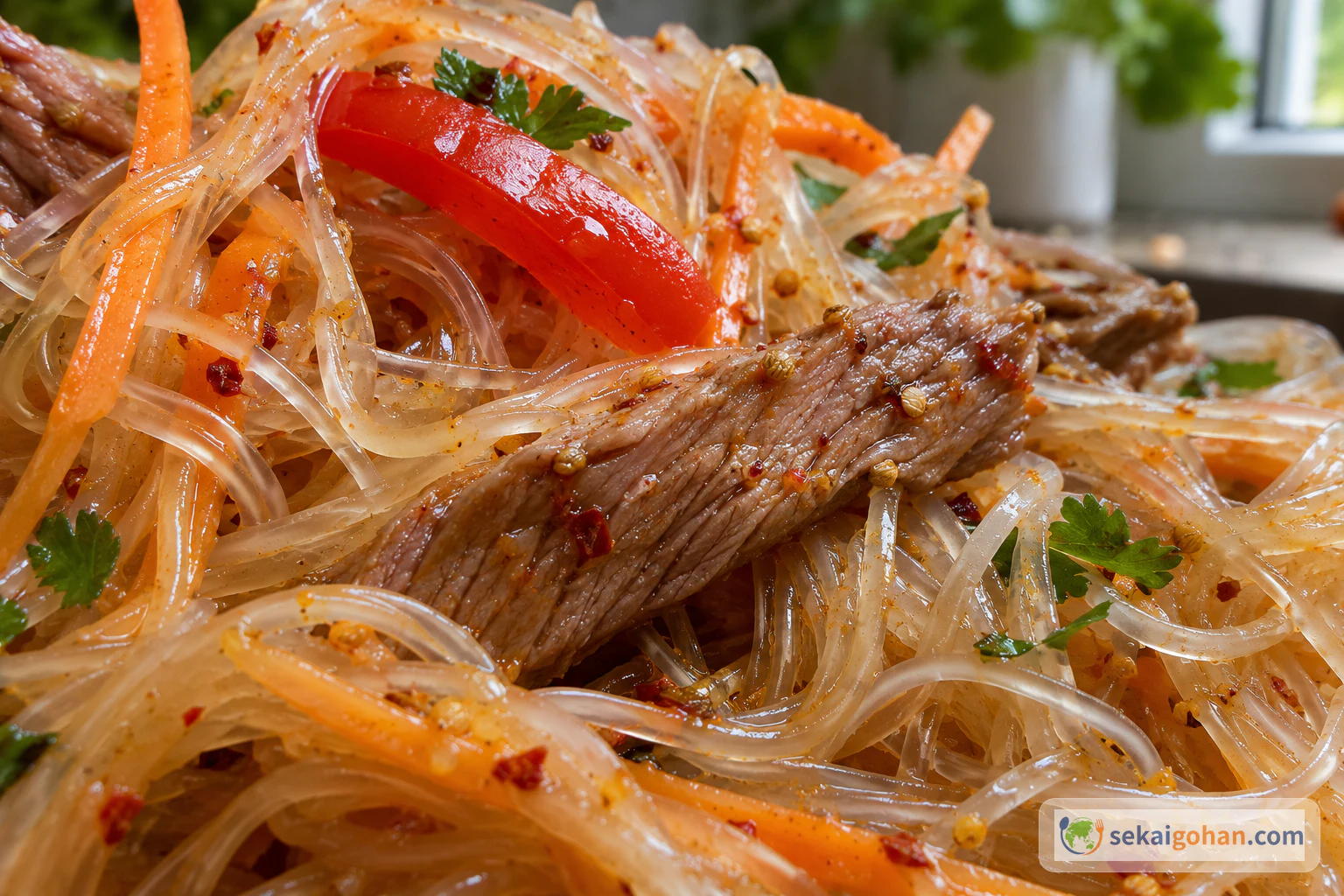
The vegetables come off the heat after a few minutes, still bright orange, red and green, and the oil they cooked in goes with them into a bowl of cold, slippery glass noodles. Garlic, ground coriander, chili, a splash of sharp diluted vinegar and a big handful of chopped cilantro follow, and you mix everything with your hands until every strand shines. This is funchoza, one of the "Korean salads" stacked on market counters across Kazakhstan and made at home by the bowlful. It eats cold, salty and sour at first, then warm with allspice and coriander, with crisp shreds of carrot and cucumber and thin strips of beef caught in the noodles.
From the Salad Counters of Kazakhstan
At the market
Walk through a bazaar in Kazakhstan and you will find a counter of Korean salads, sold by weight from deep trays. Cooks in Kazakhstan count nine or ten kinds, and carrot and glass noodles sit among the most popular. The seasonings that run through the whole family are soy sauce, garlic, flavored oil and kochi, a ground red chili. At the Green Bazaar in Almaty, Korean pickles and salads share the aisles with everything else the city eats.
Selling these salads at the market spread in the late 1980s and through the 1990s. One seller in her seventies, with more than thirty years behind the counter, recalls that her parents were among those sent to the Kazakh steppe. That memory leads straight to the reason these salads are here at all.
How Korean salads reached the steppe
In 1937 the Soviet state deported Korean families from the Far East to Central Asia. The counts differ: one figure puts the number moved to Kazakhstan and Uzbekistan at about 180,000, while another counts more than 100,000 sent to the Kyzylorda region of southwestern Kazakhstan alone. The deported people call themselves Koryo-saram. In 1938 Korean-language schools were closed and Korean book publishing stopped, and during the Second World War many were drafted into the labor army.
They farmed rice and left their growing skills behind in Kyzylorda. They brought hot, spicy flavors and rice into the food of southwestern Kazakhstan, and they founded the first state academic Korean musical comedy theater. Their kitchens adapted to what the steppe could supply. The well-known carrot salad grew out of exactly that: there was no daikon, so carrot took its place.
In Russian the dish is фунчоза, in Korean 푼초자, and Kazakh-language recipes use фунчоза as well. Markets file it under korean salat in Russian or kәris salaty in Kazakh. Where the word funchoza comes from, and how this salad first reached Kazakhstan, is not settled.
Its cousins on the table
Glass noodles, beef and vegetables also meet in Korean japchae, which is stir-fried and served warm. Funchoza is cold and dressed with vinegar and coriander, a separate dish built from some of the same ingredients. Within Kazakhstan it shares the table with very different food, from the national dish beshbarmak to the spring festival soup nauryz kozhe. The south of the country has long mixed Uyghur, Uzbek and Dungan cooking into its own, the same neighborhood that gives Central Asia its plov.
Households make funchoza in more than one way. Some leave out meat, some dress it with soy sauce, and some serve it warm. The recipe here is the cold version with beef, salt and vinegar essence, and the other styles appear further down.
Ingredients (serves 6)
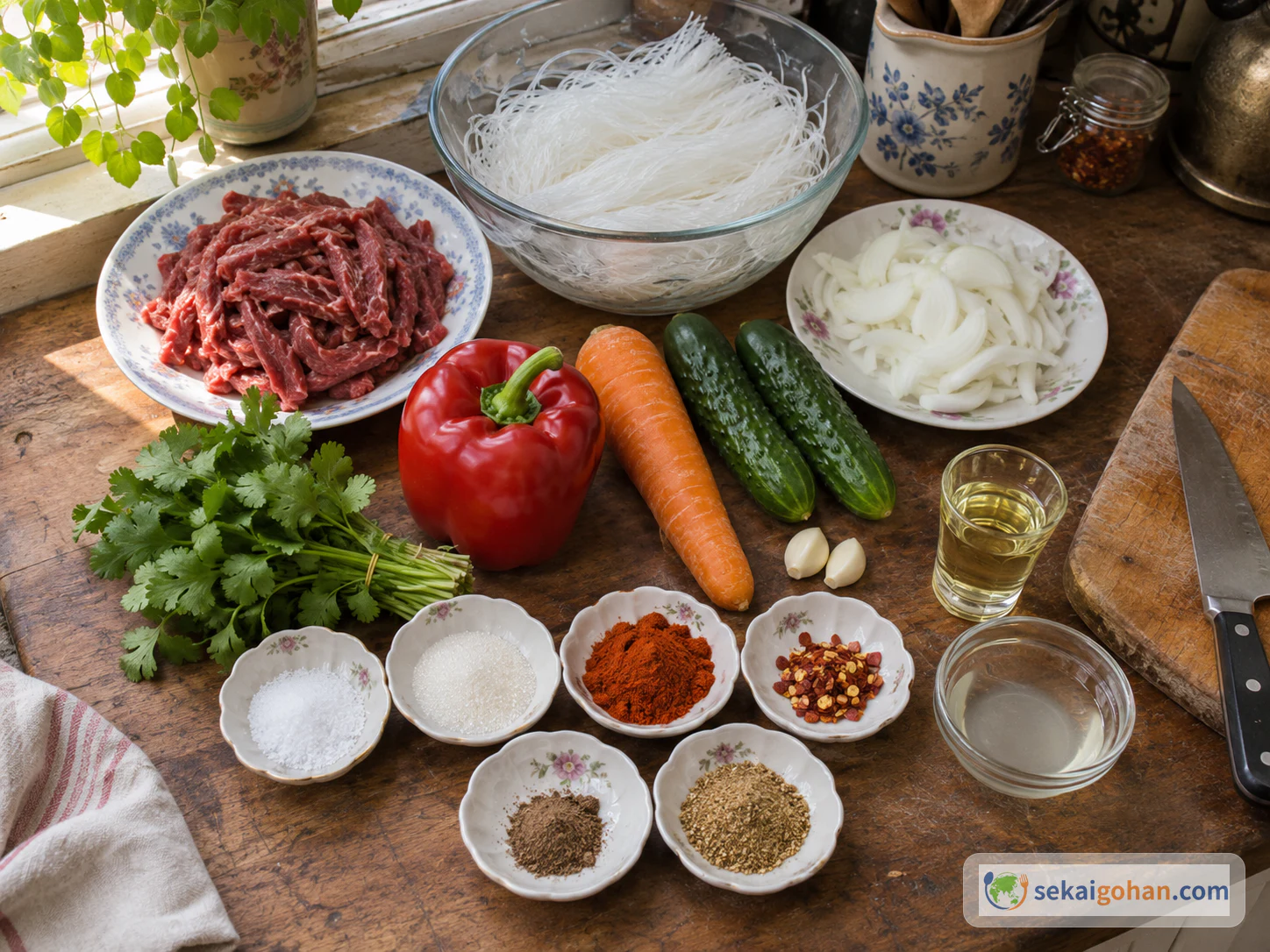
This salad contains beef, cilantro (a member of the celery family), garlic and chili. There is no soy sauce in this version. The market-style variation below adds soy sauce, which brings in soy and wheat. Read the noodle label for anything else it contains.
Equipment
- Large pot for boiling the noodles
- Colander
- Kitchen scissors
- Cutting board and sharp knife
- Salad grater or julienne grater for carrot and cucumber (the kind sold for Korean carrot salad)
- Wide frying pan
- Small bowl for diluting the vinegar
- Large mixing bowl
- Container with a tight-fitting lid
Buying and Swapping
The noodles are sold as starch noodles, glass noodles or cellophane noodles. They are made from mung bean, potato or sweet potato starch, and each cooks a little differently, so read the label and choose by the starch and the thickness. Thicker strands need longer in the water. When the package gives a different time from the one in step 3, follow the package and check by eye.
Allspice is the spice behind the Russian name chyorny dushisty perets, which translates as "fragrant black pepper." It is a separate spice from black pepper, and black pepper in its place gives a different, harsher salad. Leaving the allspice out works, but the warm depth goes with it. Ground coriander and fresh cilantro play two separate roles, and the salad tastes like funchoza only with both. Paprika should be the plain sweet kind, because smoked paprika pulls the aroma somewhere else entirely.
Chili powders vary a lot in heat. Korean chili flakes, Japanese ichimi and other ground chilies are each stronger or milder, so start with less of an unfamiliar one rather than swapping spoon for spoon. For the oil, a neutral sunflower or vegetable oil keeps the dressing clean. Sesame oil changes the aroma toward a different salad. A green bell pepper in place of the red one gives a grassier taste and a duller color.
The vinegar decides the most. Vinegar essence at 70% is common in Russian and Central Asian shops and hard to find elsewhere. With 9% vinegar, about 8 tbsp (120 ml) carries the same amount of acid as the diluted essence, worked out from the two strengths. A spoon of ordinary vinegar in place of a spoon of essence leaves the salad flat. Weaker vinegars need still more, so check the percentage on the label and add it in stages, tasting as you go.
| Keep for the taste of Kazakhstan | Fine to change at home |
|---|---|
| Allspice, ground coriander and fresh cilantro together | Chili type and amount |
| Frying oil going into the dressing | Cilantro to green onion if you dislike it |
| A clearly sour, salty dressing | Beef to chicken breast, cooked through |
How to Make Funchoza
All the cutting comes first, because the frying moves fast once the pan is hot. Cook the noodles while the vegetables wait on the board, so the noodles are cold and drained by the time the beef is done. The only hands-off time is the chill in the refrigerator at the end.
When It Goes Wrong
| What you see | Why | What to do |
|---|---|---|
| Liquid in the bottom of the bowl | Noodles not drained, cucumber juice | Drain the noodles hard in step 3. Let the salad rest in the fridge, then toss it again before serving |
| Too salty | All the salt went in at once | Adding more noodles throws off every other seasoning. Next time start with four-fifths of the salt and taste |
| Harshly sour, or barely sour | Essence measured wrong, or ordinary vinegar swapped spoon for spoon | Always dilute the essence before it goes in. With table vinegar, add it in stages and taste |
| Noodles in a sticky clump | Not rinsed or not cut | Rinse under cold water, cut into palm-width lengths and pull them apart by hand while tossing |
| Chewy, tough beef | Strips cut too thick, or fried too long | Slice thin and lift the beef out as soon as no pink remains, before it browns hard |
| Flat, dull aroma | One coriander left out, or black pepper used for allspice | Use both ground coriander and fresh cilantro, and real allspice |
Serving, Variations and Storage
Serving
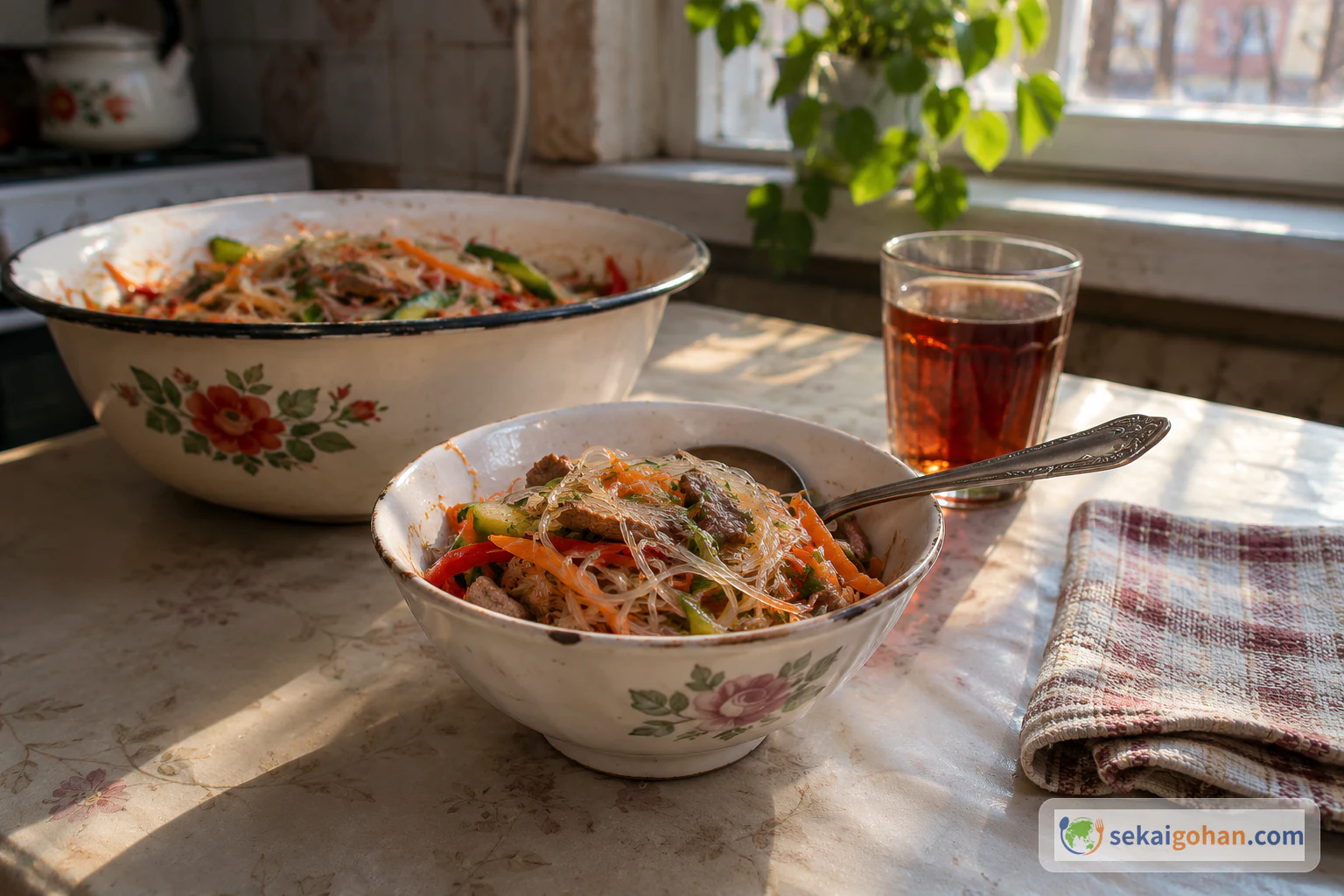
Funchoza goes to the table cold, spooned out of the big bowl into small ones. As a side salad, the batch above serves six. As the main dish of a light meal, it feeds three or four. It sits well beside other dishes because its sourness and chili cut through richer food.
Variations
- Milder heat. Cut the chili to ¼ tsp. The coriander and allspice come forward and the salad tastes softer.
- Green onion for cilantro. For anyone who dislikes cilantro. The salad turns oniony instead of bright and herbal.
- Chicken breast for beef. Slice it thin and cook it through completely in step 4. It gives a lighter, less savory salad, and the cooking time changes.
- Market style with soy sauce. Some Kazakh cooks dress the noodles with soy sauce, sugar and vinegar, with plenty of grated carrot, garlic, fried onion, black pepper and red chili. Treat it as a separate recipe and do not mix its seasoning into this one. The soy sauce brings soy and wheat into the allergen list.
Storage
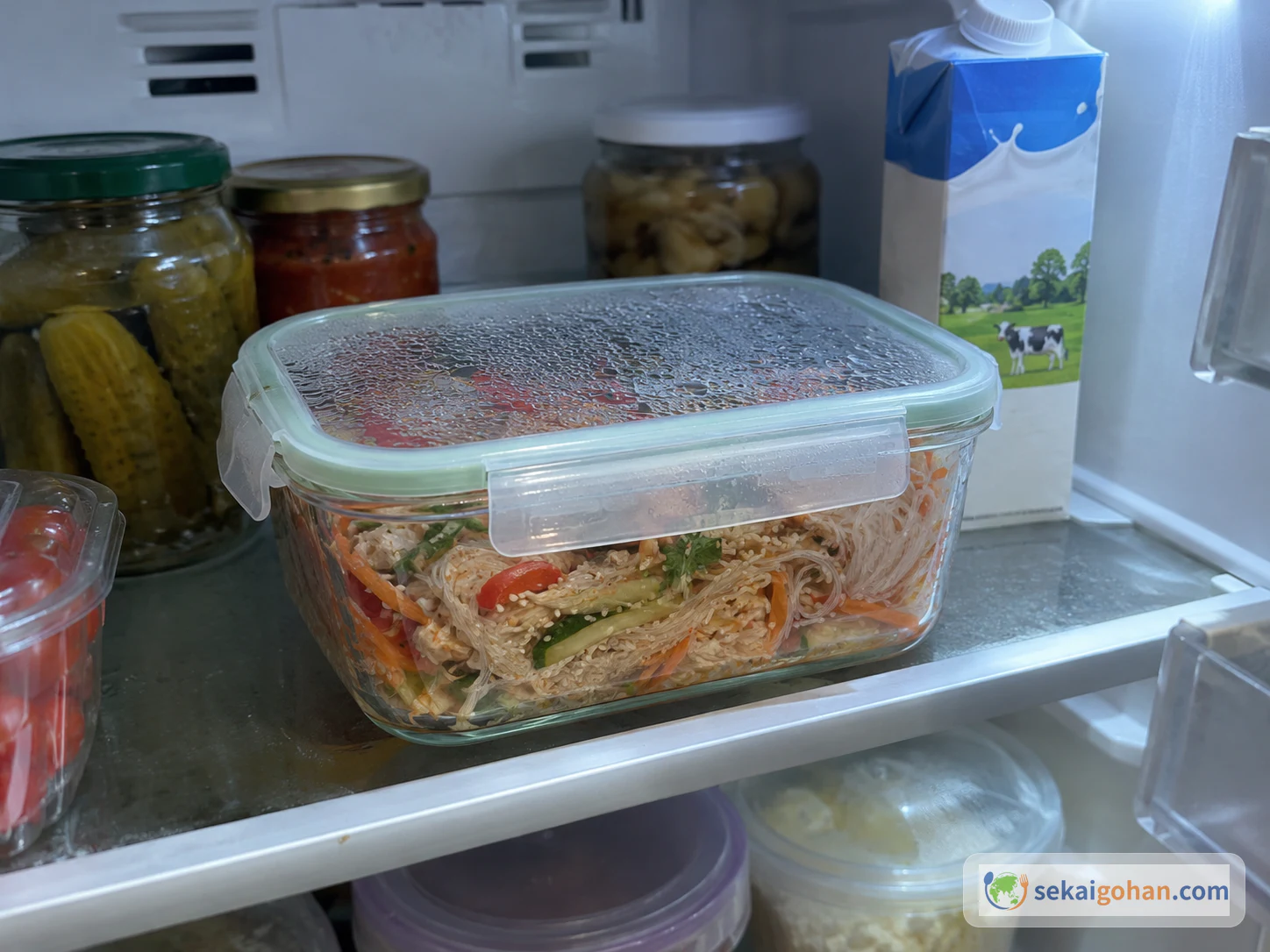
Keep the salad in a covered container in the refrigerator and eat it within 1 to 2 days. The beef is cooked, but the cucumber and cilantro are raw, and the vinegar does not preserve it. Never leave the dressed salad at room temperature. Take out only what you will eat and put the rest straight back in the cold. Funchoza is a cold dish; do not reheat it.
Frequently Asked Questions
How long should it chill before I serve it?
Serve it once it is cold all the way through. Several Kazakh home recipes give the salad one hour in the refrigerator, which is a good mark to aim for. Eating it right after tossing works too, but the dressing is sharper and the noodles have soaked up less.
Can I make it without meat?
Yes. A common Kazakh home version skips the beef and dresses raw cucumber, bell pepper, grated carrot, parsley and dill with a sachet of ready-made chim-chim dressing, then chills it for an hour. The result is lighter and fresher, and the flavor depends on the bought dressing.
Is funchoza ever served warm?
Some households make a warm, stir-fried funchoza with ground meat or lamb, tomatoes, three colors of bell pepper and a bay leaf. The vegetables simmer covered over low heat before the noodles join them, and it is eaten hot. It is a separate dish from this cold salad and needs its own recipe.
Why are the cucumbers fried?
A few minutes in hot oil takes off their raw edge while keeping them crisp and green, and lets them share the oil with the carrot and pepper. They are not salted first, so they release some juice as the salad rests. That juice settles into the noodles during chilling.