Oshi Palav: Rice That Carries the Flavor of Everything Beneath It
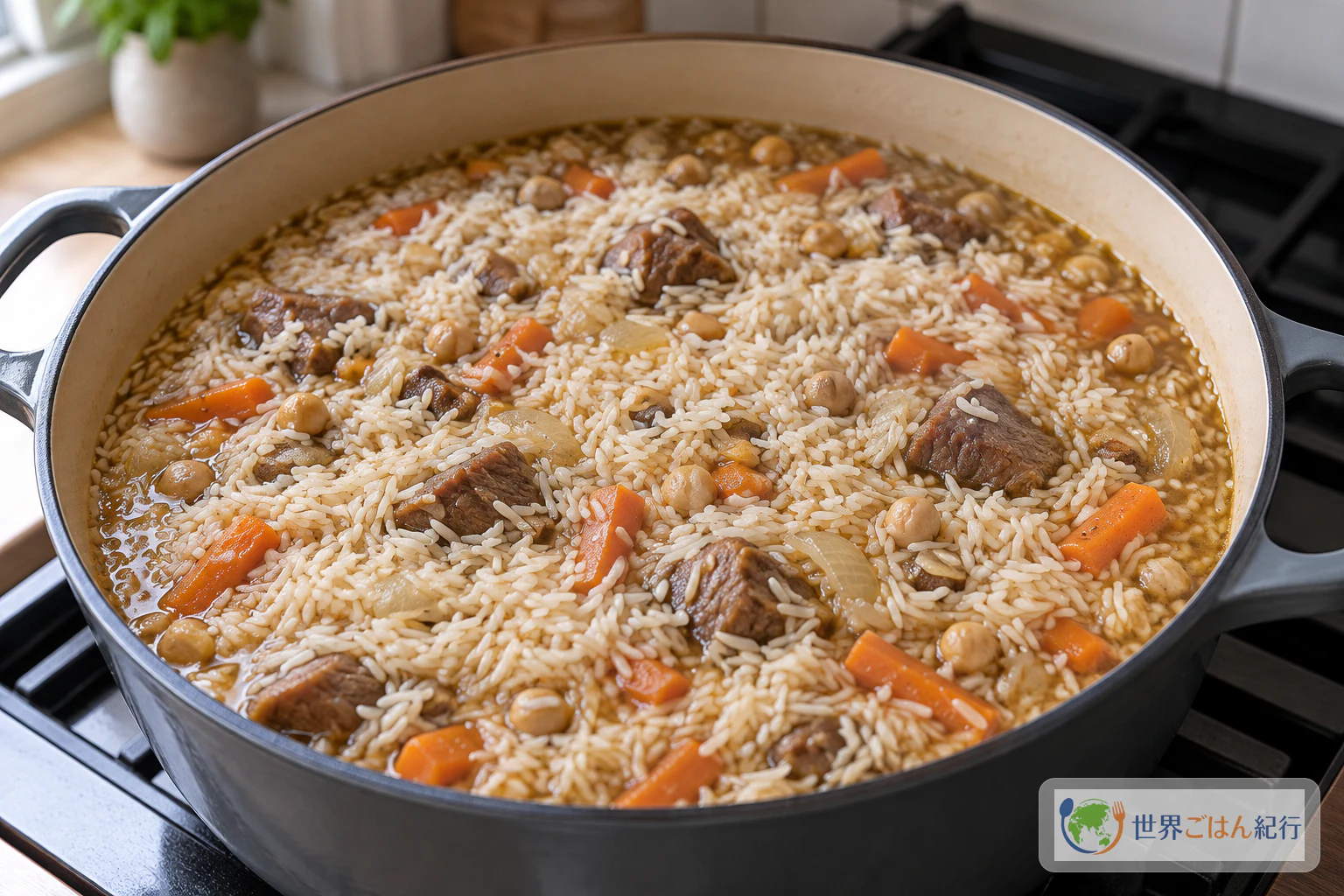
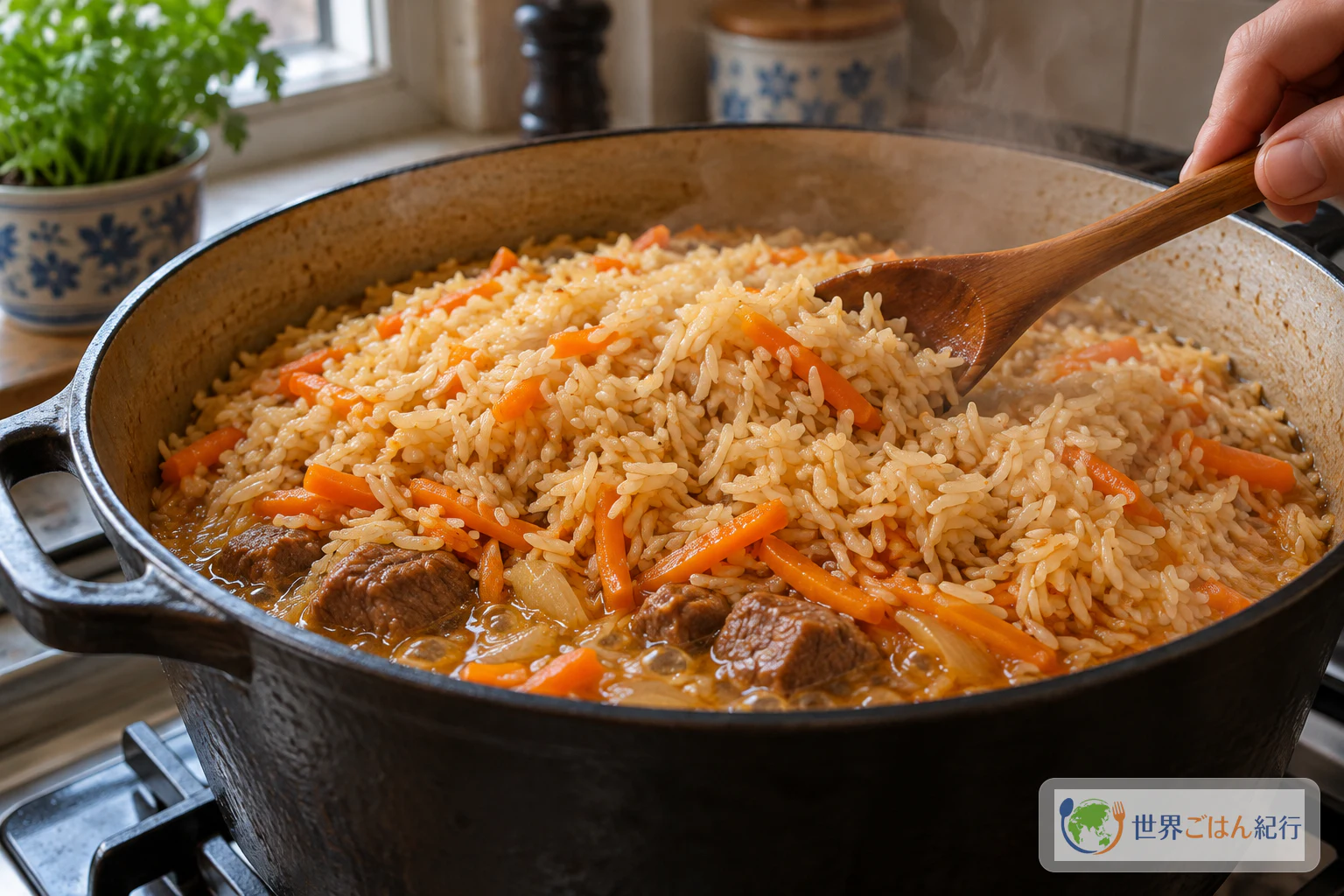
Cook the lamb and chickpeas until they are done in the broth first. Then lay the rice on top and let it drink up that broth, moving only the rice layer so the meat and vegetables stay underneath.
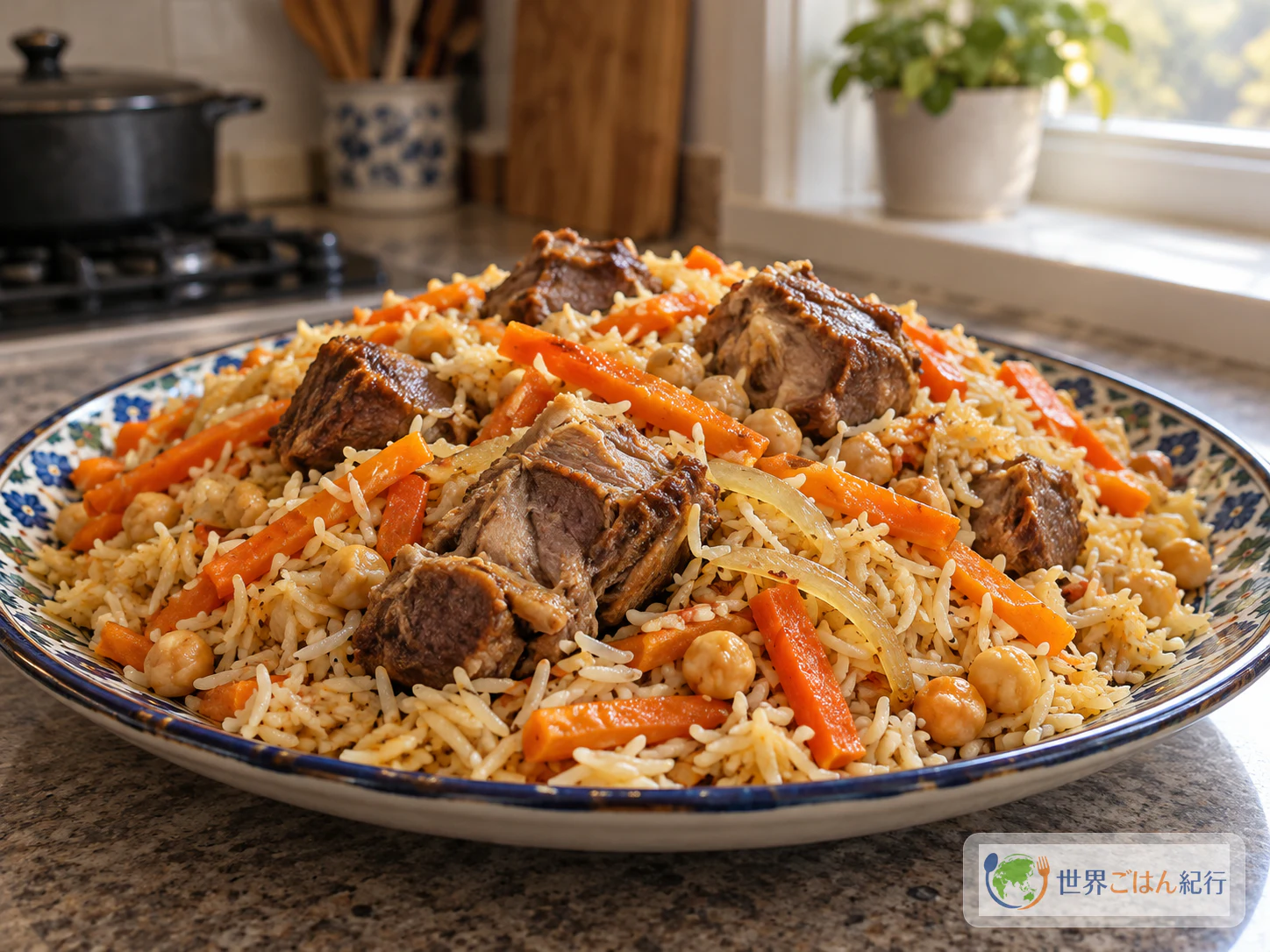
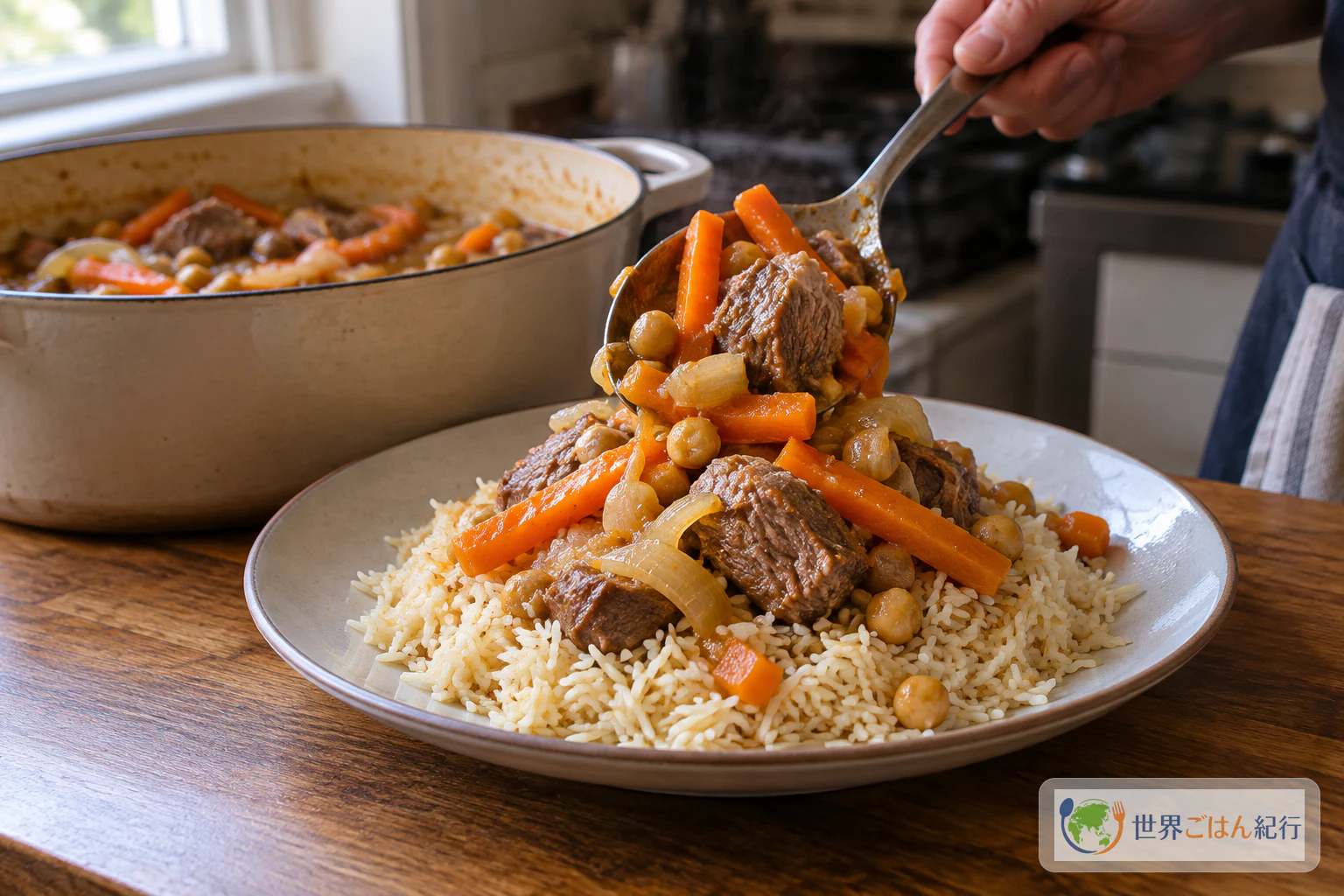
At the end of cooking, the lid comes off the pot and the rice on top has taken in the broth from the lamb, carrots and onion below. The rice is spooned onto a platter first, and then the meat, carrots and chickpeas are lifted out and laid over it. Oshi palav (ошӣ палав; also transliterated osh, palov or palav) is a Tajik dish built on rice, meat, carrots, oil and onion.
In Tajikistan it is a dish valued for welcoming guests and for traditional gatherings, and cultural records describe it as part of family meals, eateries, teahouses and celebrations alike. It is closely related to the plov cooked elsewhere in Central Asia, and the dishes overlap rather than divide neatly by border, so this article does not claim an exclusive origin for it.
What follows is one household version: a measured home recipe for 5 servings using lamb, carrots, rice and chickpeas. It is not presented as the single national form of the dish. Regional, ingredient-based and occasion-based versions are introduced further down, kept separate from this recipe.
What Oshi Palav Is: Fry, Make the Broth, Cook the Rice
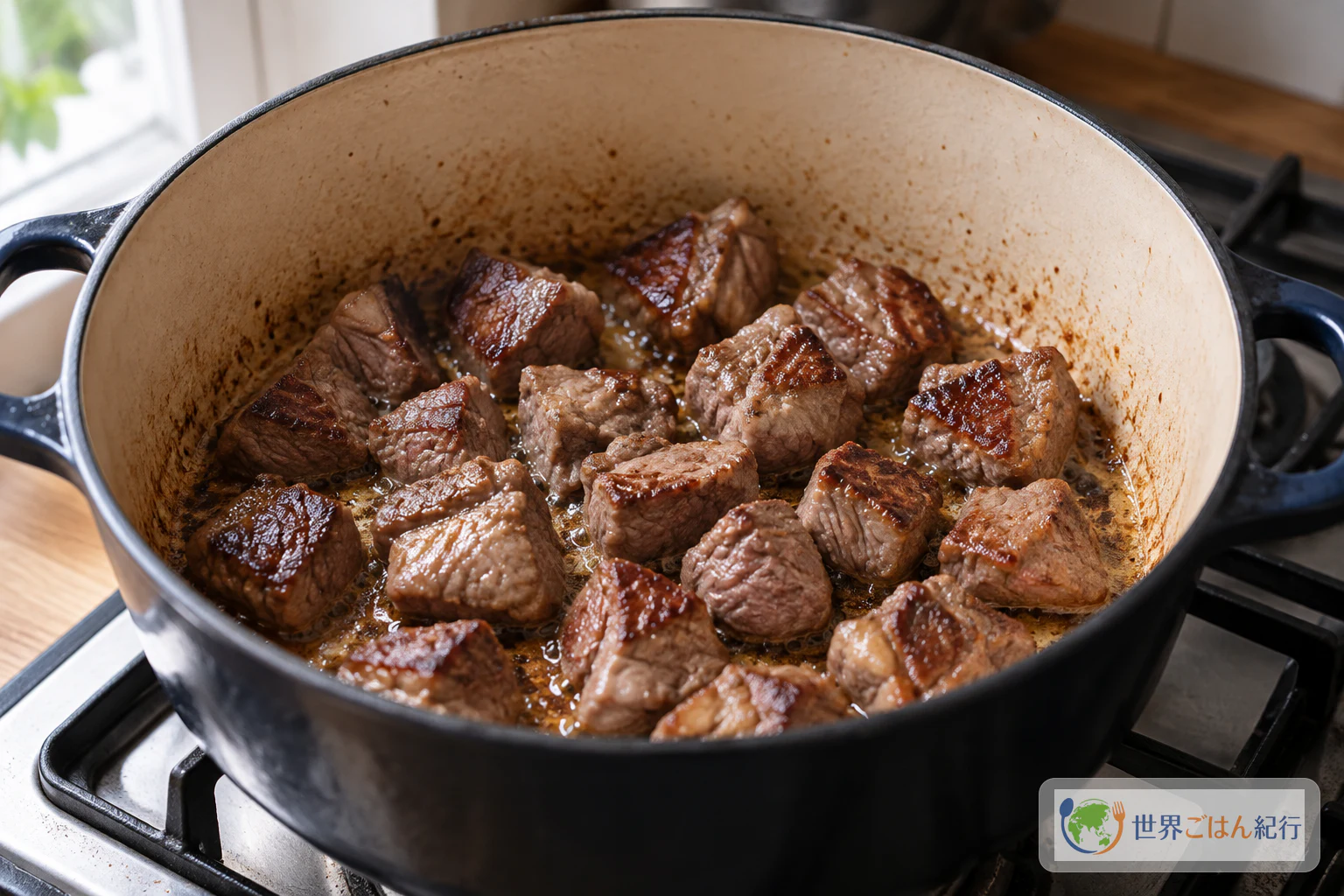
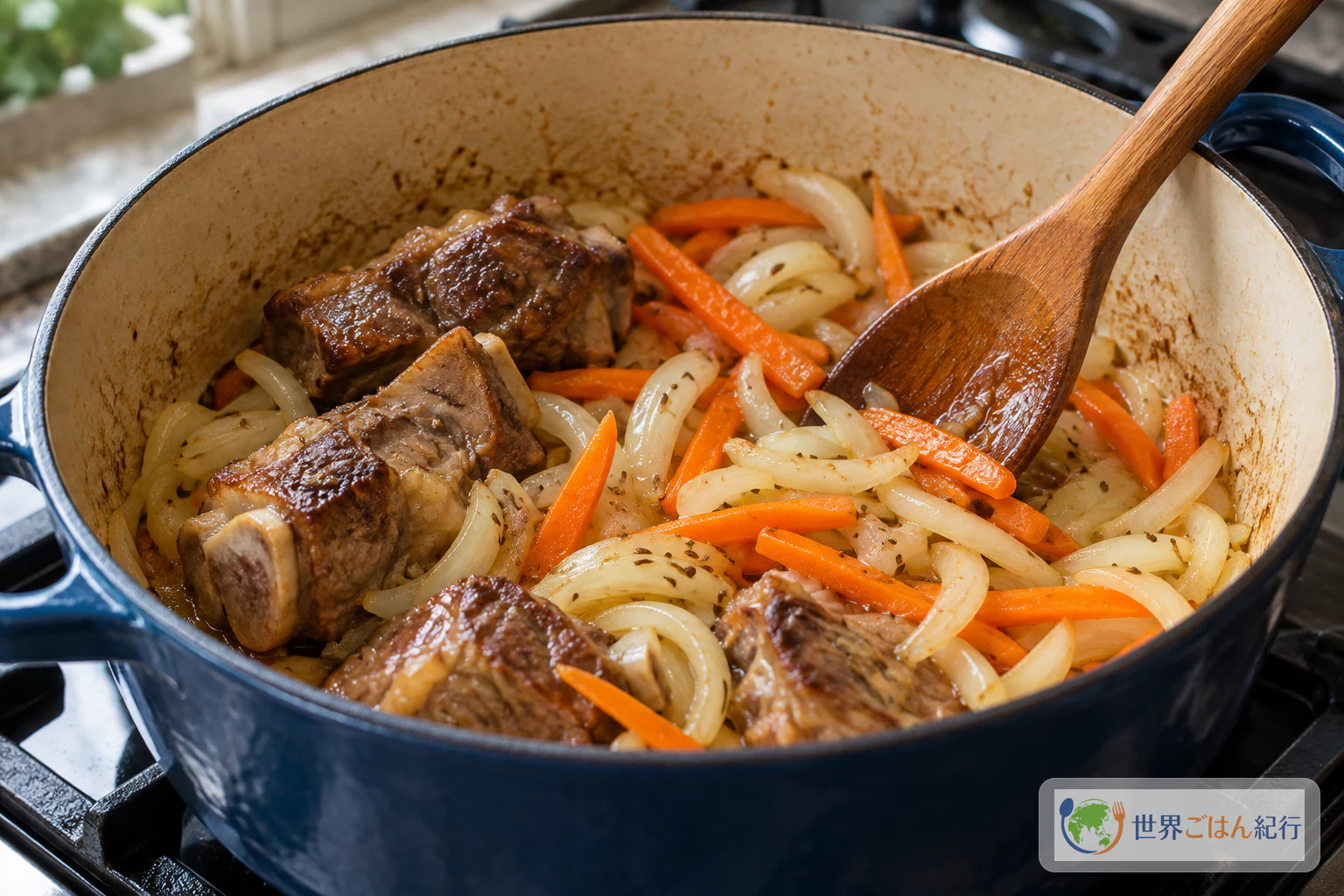
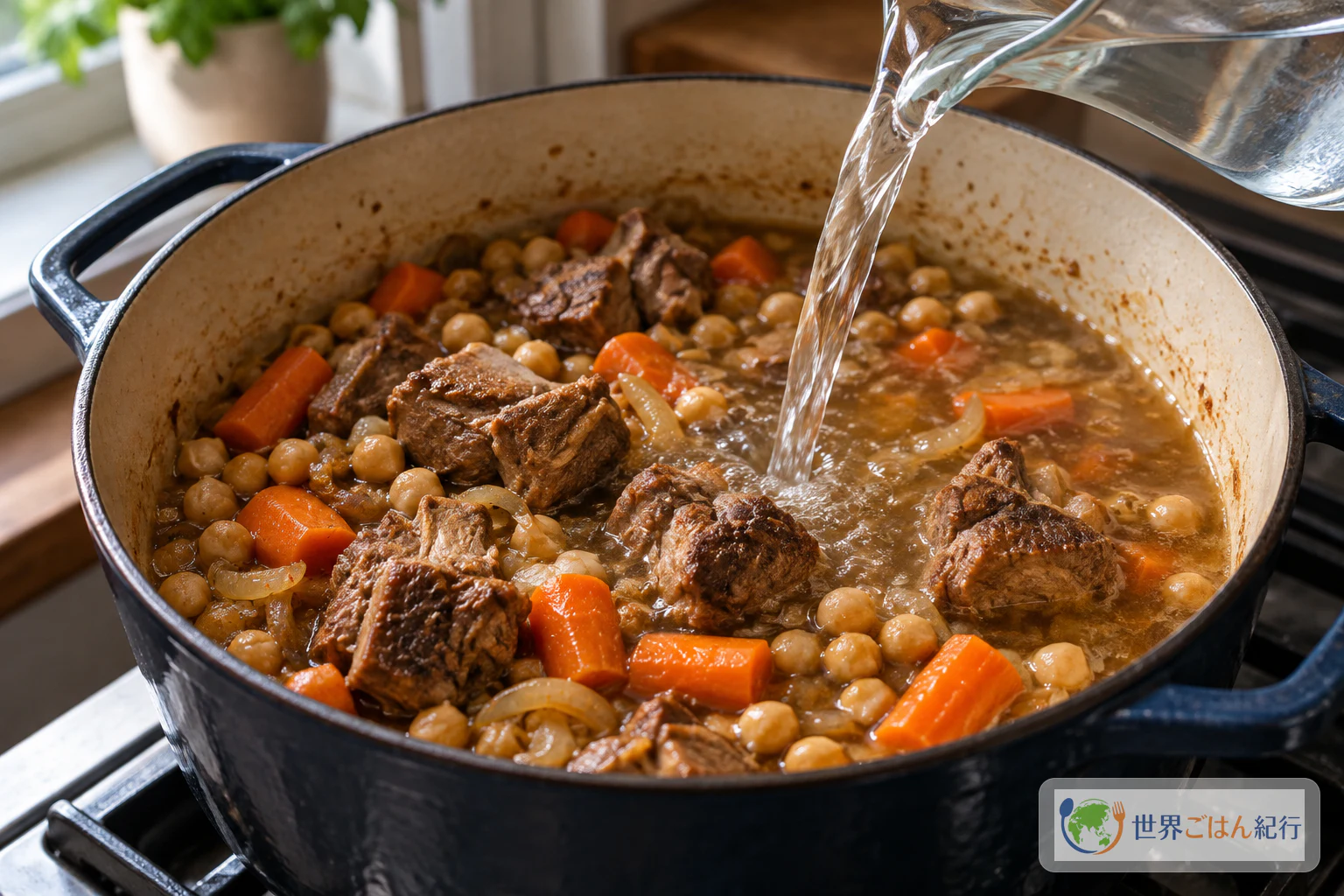
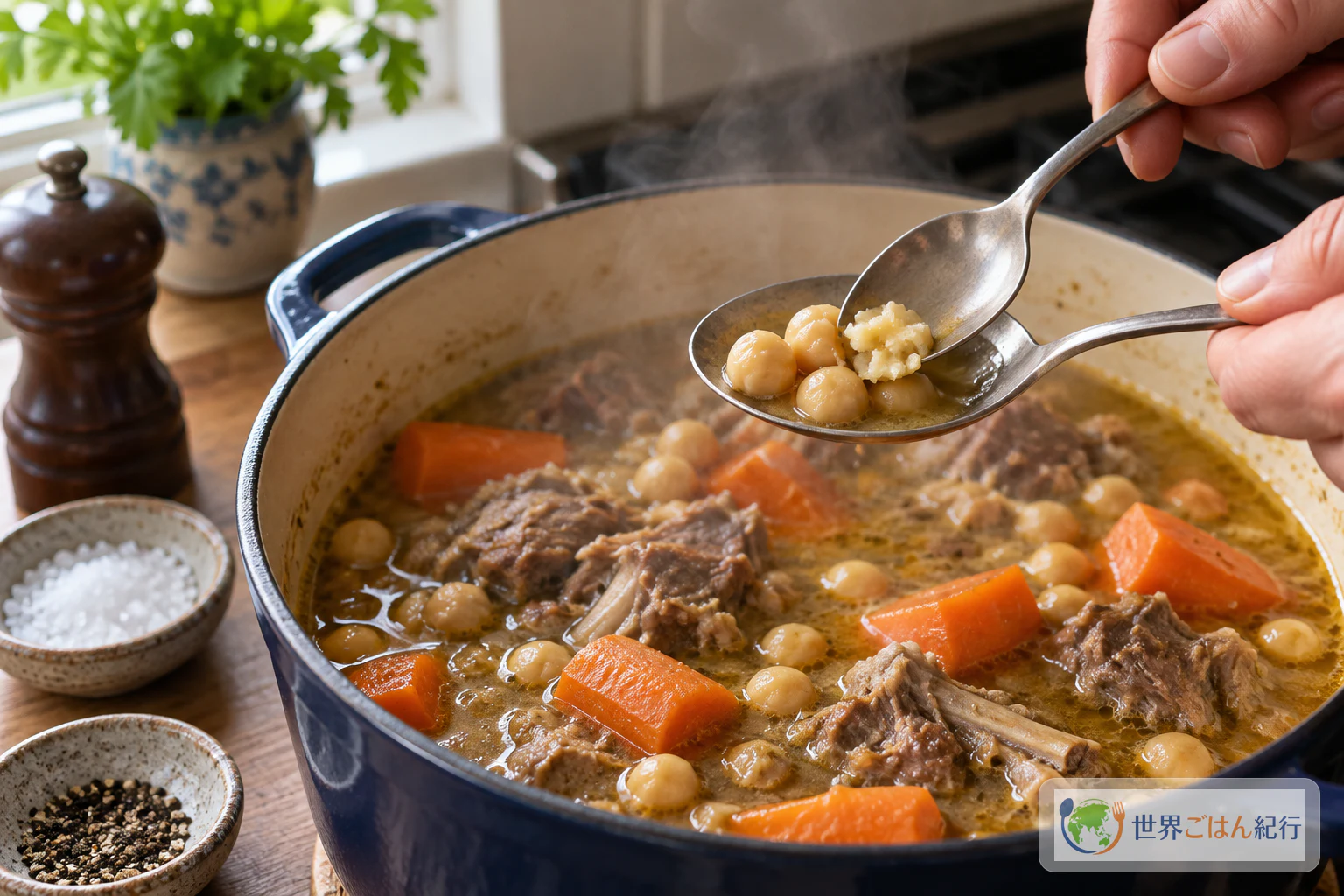
A Tajik cultural heritage record describes oshi palav as being made in three stages: first the ingredients are fried, then a broth called zirbak is made, and finally the rice is simmered in it. The recipe below follows that same order. The lamb is browned in oil, the onion, carrots and cumin go in, then water and soaked chickpeas are added and simmered until the meat and chickpeas are done. Only after that is the rice spread on top.
The same record lists saffron, cumin, black pepper, lemon and chickpeas among the possible additions, and a travel guide to Tajik food mentions carrots or yellow turnip, oil or fat, often whole garlic, and additions such as chickpeas, raisins, quince and apricots. This version uses cumin, black pepper and chickpeas only.
Ingredients for 5 Servings
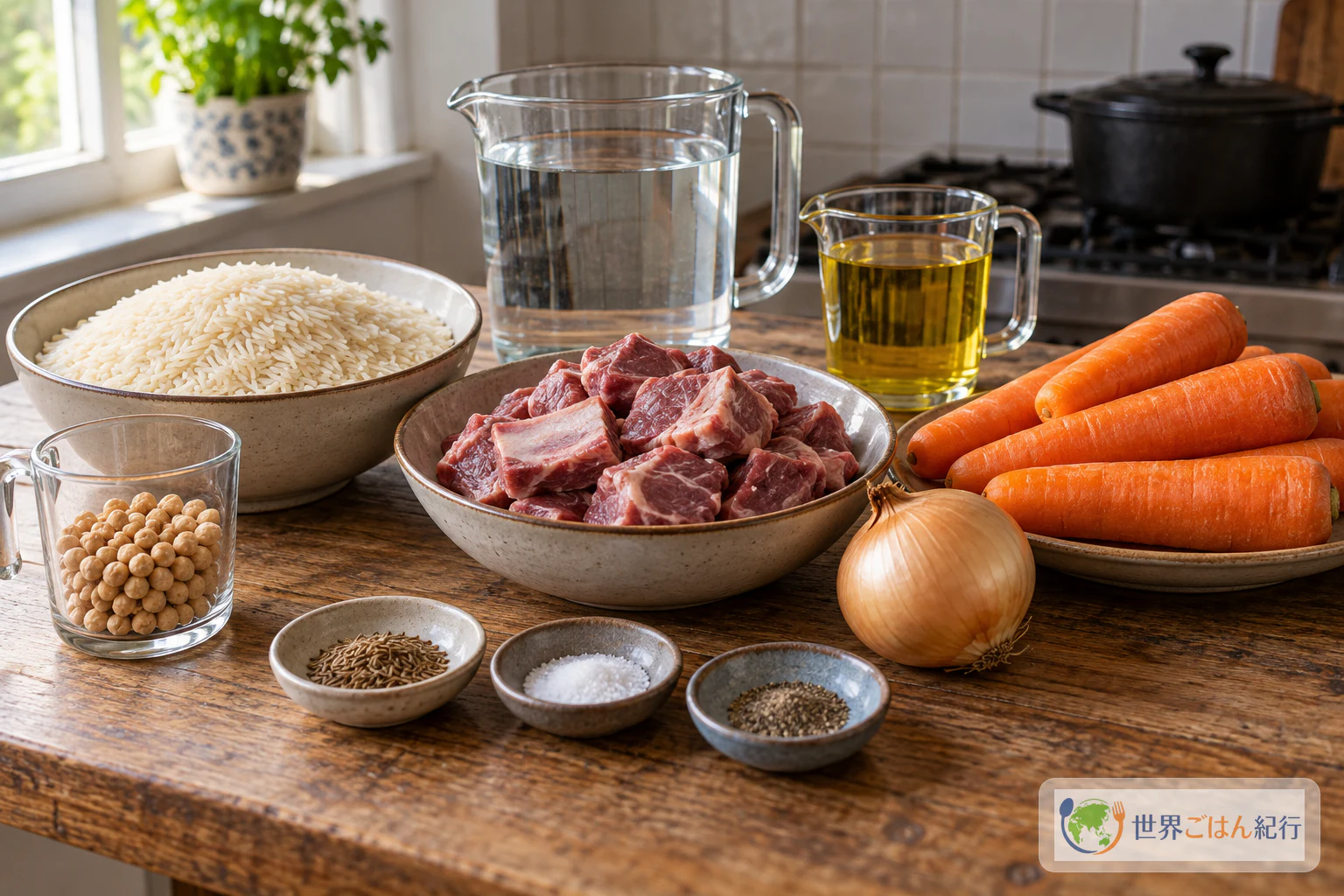
These are the amounts from the source recipe for 5 servings. The source measures the oil and chickpeas in a стакан (a glass) without stating its capacity. Here, one glass is set as a 200 ml measuring cup. That is this recipe's own measuring rule for cooking at home, not a figure given by the source and not a universal definition of the word. The chickpeas are measured by volume, half of that cup, and are not converted to grams.
Equipment
- A kazan or a heavy pot with a lid, large enough to hold all the ingredients and water with room to spare when it boils
- A sieve or colander
- A 200 ml measuring cup
- Kitchen scale
- A rice paddle or wide spoon
Choosing and Substituting: What Is the Source and What Is a Choice Made Here
The source leaves several details open. This version fills them as follows, and each is an editorial choice rather than part of the original:
- Rice: long-grain rice. Cooking time and water absorption change with the variety.
- Cumin: whole seeds. The source says only "cumin" and does not say whole or ground.
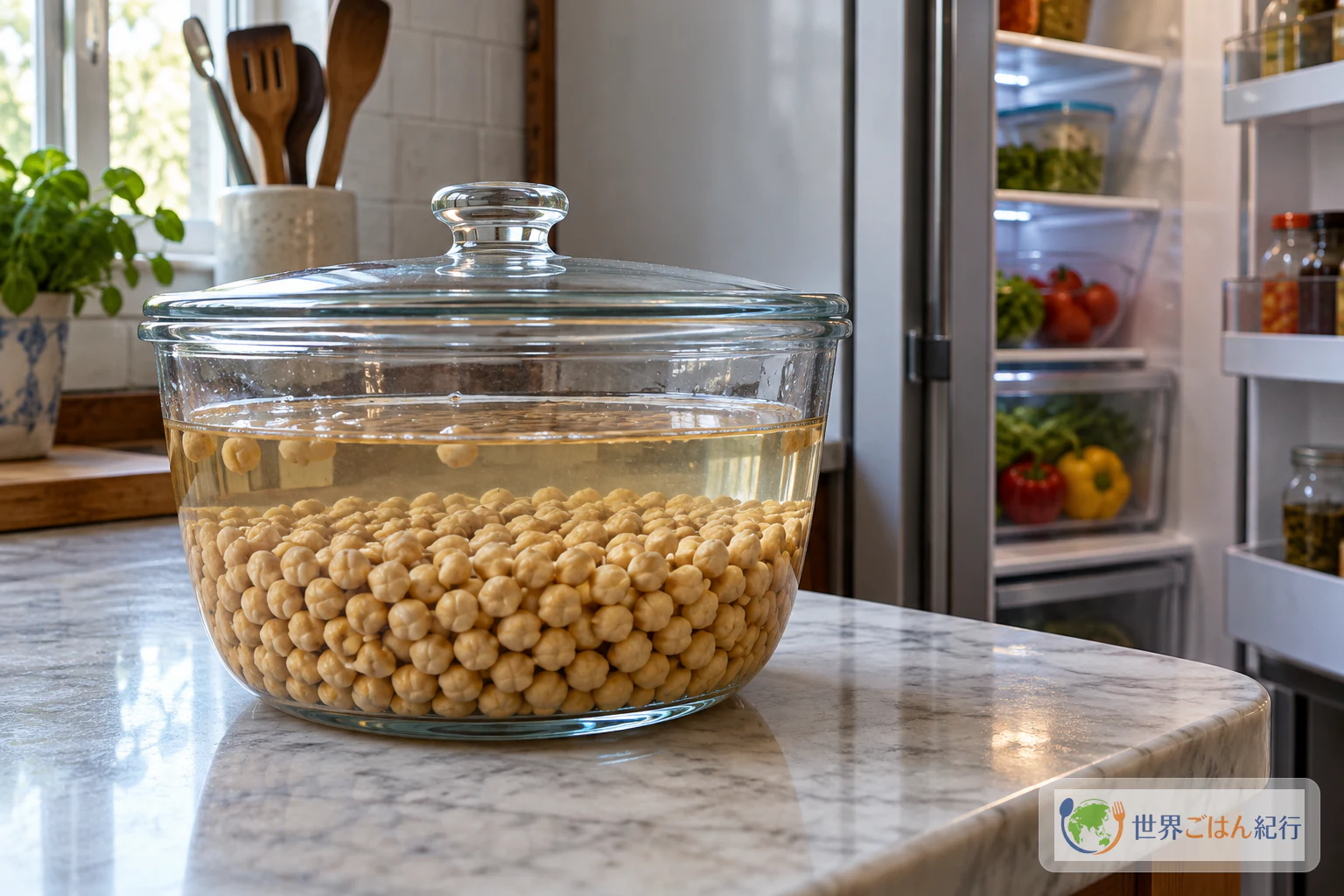
- Chickpea soaking: overnight in the refrigerator. The source does not give a soaking time.
- Pepper: added to the broth together with the salt. The source lists pepper but does not say when it goes in.
- Oil: plain vegetable oil, as in the source. This is not an olive-oil recipe.
Lamb, rice, carrots, onion and vegetable oil can be chosen by their ordinary names at a supermarket. Dried chickpeas and cumin seeds may need a little looking for.
Swapping lamb for beef, using a different oil, or adding raisins or garlic all lead to separate versions of the dish, not small adjustments to this one; no tested amounts for them are given here. Canned chickpeas are not an automatic swap: dried chickpeas measured by volume and drained canned chickpeas are not the same thing, so don't simply use the same weight or volume.
Check the labels of any processed seasonings or products you use for allergens.
Method: Meat and Chickpeas First, Rice Last
The 1 L of water is added only when the meat and chickpeas are simmered. When the rice goes on, top up only if the broth has reduced, just enough to bring the water level above the rice. Do not add another litre.
Hard Chickpeas, Hard Rice, a Scorched Bottom: What to Check
There is rarely just one cause. Look at the pot and adjust in the order below.
| Problem | What to check | What to do |
|---|---|---|
| Chickpeas still hard | Whether they were soft to the center before the rice went in | Keep simmering before adding the rice, and check by splitting one. Don't count on the rice stage to soften them |
| Rice still hard | Water level, remaining liquid, heat | The source allows topping up water; add a little if the pot has run dry, and keep the heat low. Watch how your rice behaves and adjust |
| Bottom scorching | Heat and how fast the liquid is dropping | Use a heavy pot and low heat. If the bottom does scorch, don't stir the scorched part into the rest |
| Meat not tender | Whether the broth stage was long enough | Simmer longer before the rice goes in. Make sure the meat is fully cooked at this stage |
Variations: Other Forms of the Dish
The Tajik cultural heritage record describes versions that differ by ingredient, region and occasion. Some of the examples it gives:
| Name | What sets it apart |
|---|---|
| Palavi bargitoki | Made with grape leaves |
| Oshi za'faroni | Made with saffron |
| Oshi mavizi | Made with raisins |
| Oshi nahor | Served early in the morning at weddings |
These are separate forms and occasions, not additions to the recipe above. If you want to try a version with raisins, garlic, beef or a different fat, treat it as a different recipe rather than adding to this one.
Guests and Gatherings: Where Oshi Palav Sits on the Tajik Table
Oshi palav is described as a dish served to guests and at traditional gatherings, and the wedding-morning oshi nahor shows how closely it is tied to particular occasions. A travel guide to Tajik food also describes palov being prepared for everyday meals, for families, for weddings and for public celebrations, often served from a shared dish.
At home, the same idea carries over simply: rice first on a large platter, the meat, carrots and chickpeas on top, and everyone serving themselves from the middle. The history of the dish's origins and the meaning of its name are not settled by the sources used here, so they are left out.
Leftovers and Reheating
Refrigerate leftovers within 2 hours of cooking, or within 1 hour if the surrounding temperature is above 32°C (90°F). Keep your refrigerator at 4°C (40°F) or below. Dividing leftovers into shallow containers helps them cool. When reheating, heat until the center reaches 75°C (167°F) or above. These are general home food-safety guidelines, not storage tests or shelf-life guarantees for this dish.
Frequently Asked Questions
How is this different from Uzbek plov?
Rice, meat and carrots cooked this way are found across Central Asia, and versions overlap from region to region and household to household. Rather than drawing a sharp line, it is more accurate to see this as one Tajik household version within that wider family of dishes.
How big is the "glass" in the original recipe?
The source does not say. This recipe sets it as a 200 ml measuring cup, so the oil is 200 ml and the chickpeas fill half of that cup (100 ml by volume). That is a measuring rule chosen here, not the universal meaning of the word.
Can I use canned chickpeas in the same amount?
Not as a direct swap. Dried chickpeas measured by volume and cooked, drained canned chickpeas differ in both amount and state, so no automatic conversion is given here.
How long should the chickpeas simmer?
The source gives no fixed time. Split a chickpea and check that it is soft all the way through before adding the rice. If it isn't, keep simmering.
Why not stir the whole pot while the rice cooks?
The source method moves only the rice layer occasionally so it does not mix with the fried meat and vegetables below. Stirring from the bottom breaks that layering.
For more dishes from the same country, see Tajik recipes.
Sources
- Даша Петрова, "Таджикский плов," Повар.ру, 2013. The household recipe adopted here: amounts for 5 servings, the order of frying, simmering the meat and soaked chickpeas, adding the rice, topping up water and the final rice stage of about 30 minutes. https://povar.ru/recipes/tadjikskii_plov-11796.html
- International Information and Networking Centre for Intangible Cultural Heritage in the Asia-Pacific Region (ICHCAP), "Intangible Cultural Heritage in Tajikistan: Oshi palav." The dish's place at gatherings and for guests, the three-stage preparation, possible additions, and regional, ingredient-based and occasion-based versions. https://archive.unesco-ichcap.org/eng/ek/sub2017_6/pdf_down/6.%20TRADITIONAL%20FOOD/5.%20Oshi%20palav.pdf
- Travel to Tajikistan, "Tajik Cuisine Guide: What to Eat in Tajikistan." Supporting context on common ingredients, additions, variation between cooks and regions, and the occasions at which palov is served. https://traveltotajikistan.org/tajikistan/tajik-cuisine/
- FoodSafety.gov, "Food Safety Tips for the Holidays." Refrigerating leftovers within 2 hours (1 hour above 32°C/90°F) and keeping the refrigerator at or below 4°C/40°F. https://www.foodsafety.gov/blog/food-safety-tips-holidays
- Ministry of Health, Labour and Welfare (Japan), "家庭でできる食中毒予防の6つのポイント" (Six points for preventing food poisoning at home). Heating to a center temperature of 75°C for at least 1 minute, using separate utensils for raw meat, cooling in shallow containers and reheating. https://www.mhlw.go.jp/stf/seisakunitsuite/bunya/kenkou_iryou/shokuhin/syokuchu/01_00006.html