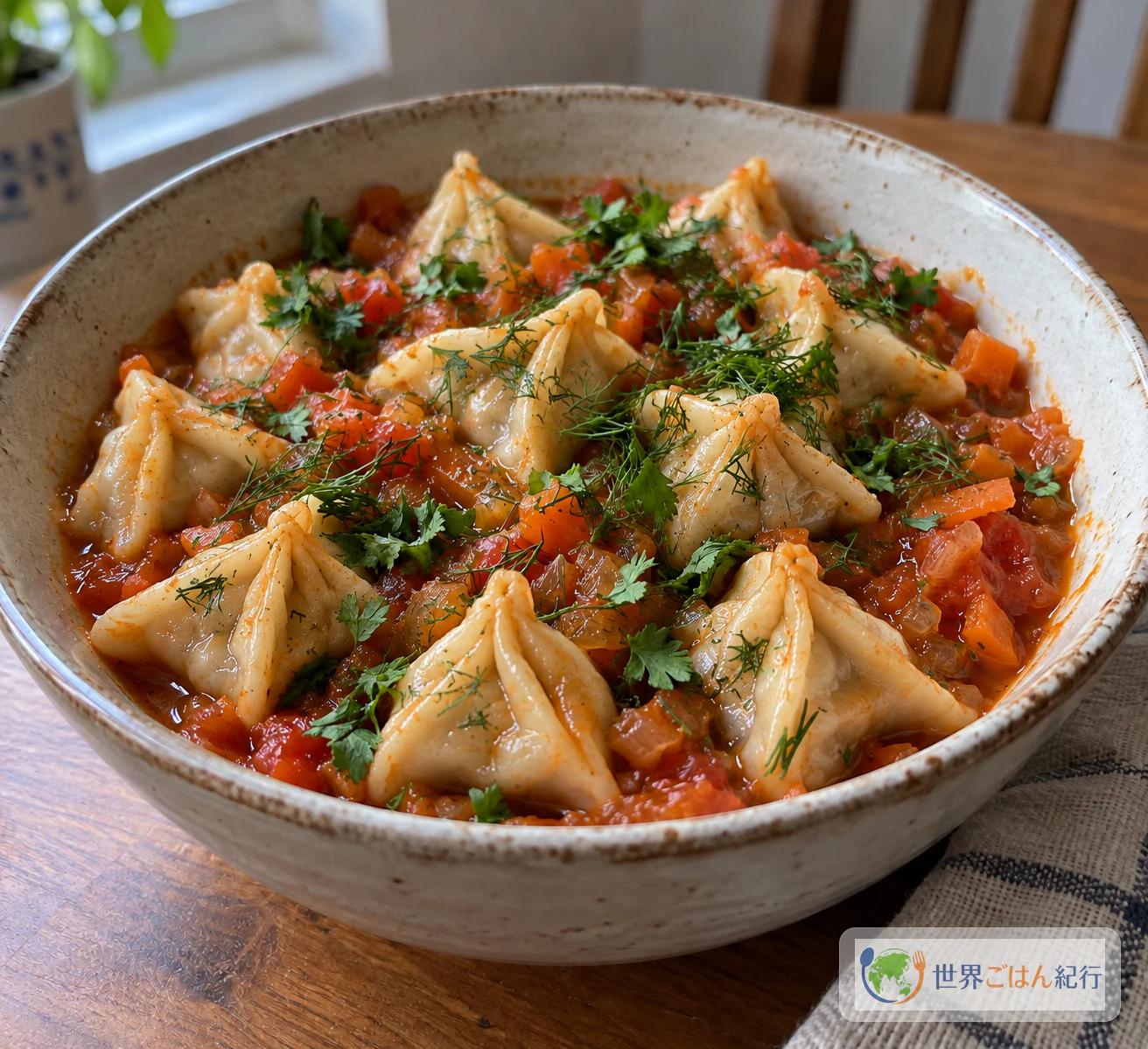
Chuchvara: Hand-Chopped Lamb, Small Triangles and a Vegetable Sauce
This is one cook's home-style version: Tatyana Semina's lamb dumplings, published on Povar.ru on 9 September 2017. It is not presented as the single authentic Uzbek form. Sekai Gohan has not kitchen-tested this recipe; the amounts and steps below are the author's, with our editorial choices clearly marked.
The recipe's title on Povar.ru is "Пельмени с бараниной", lamb pelmeni, but in her introduction the author says that, more precisely, these are chuchvara, Uzbek pelmeni. The page itself files the dish under Uzbek / Oriental cuisine.
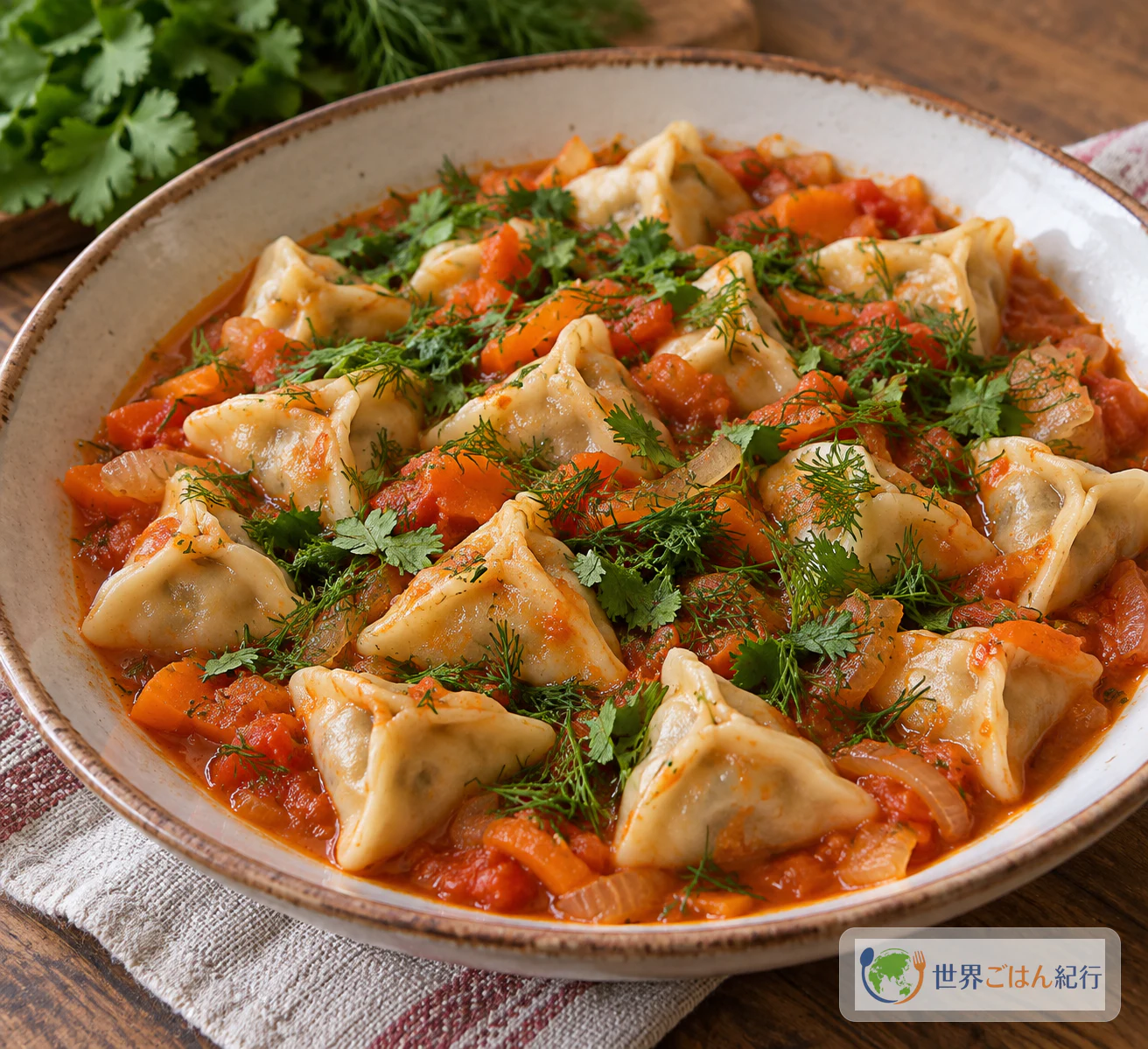
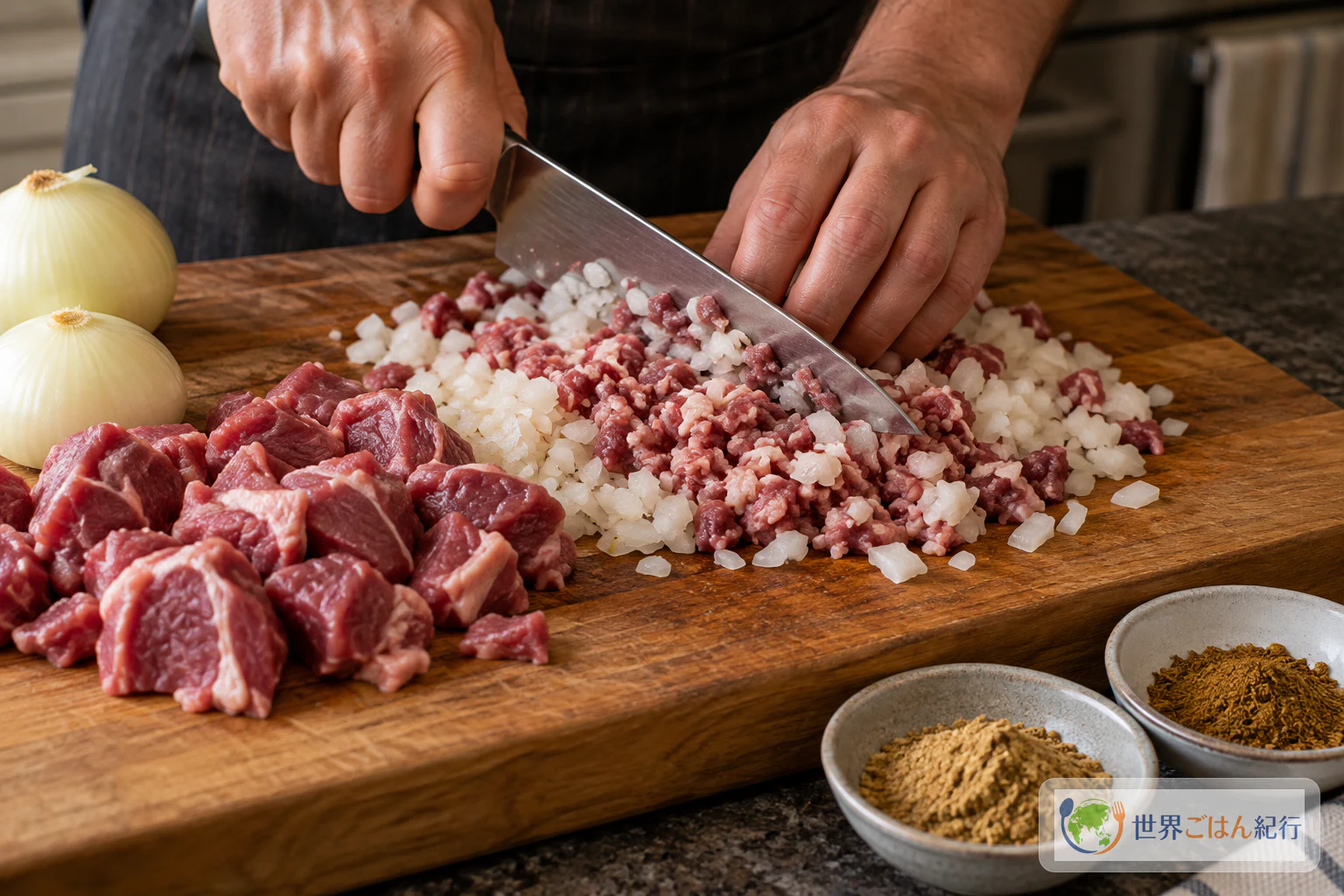
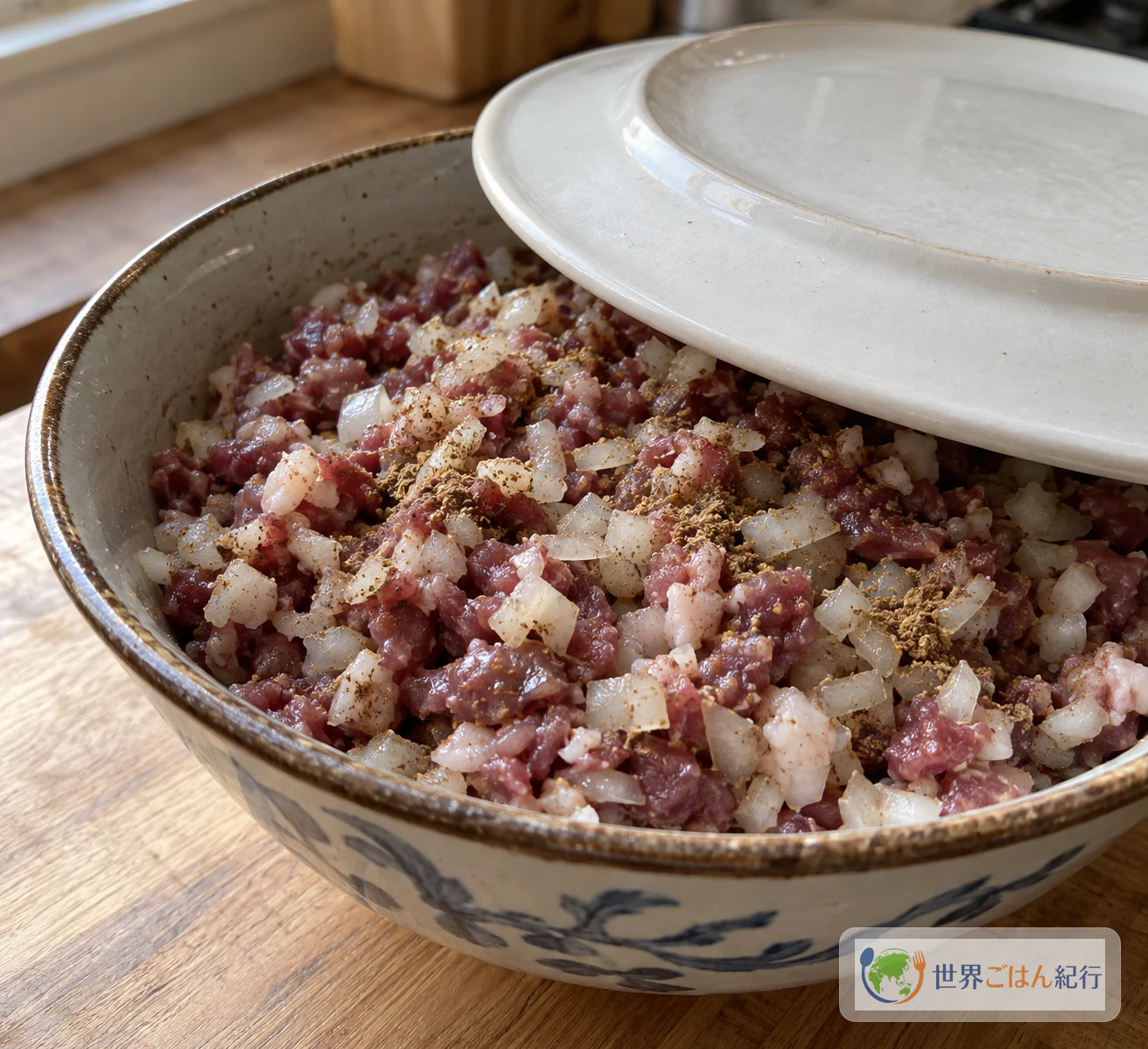
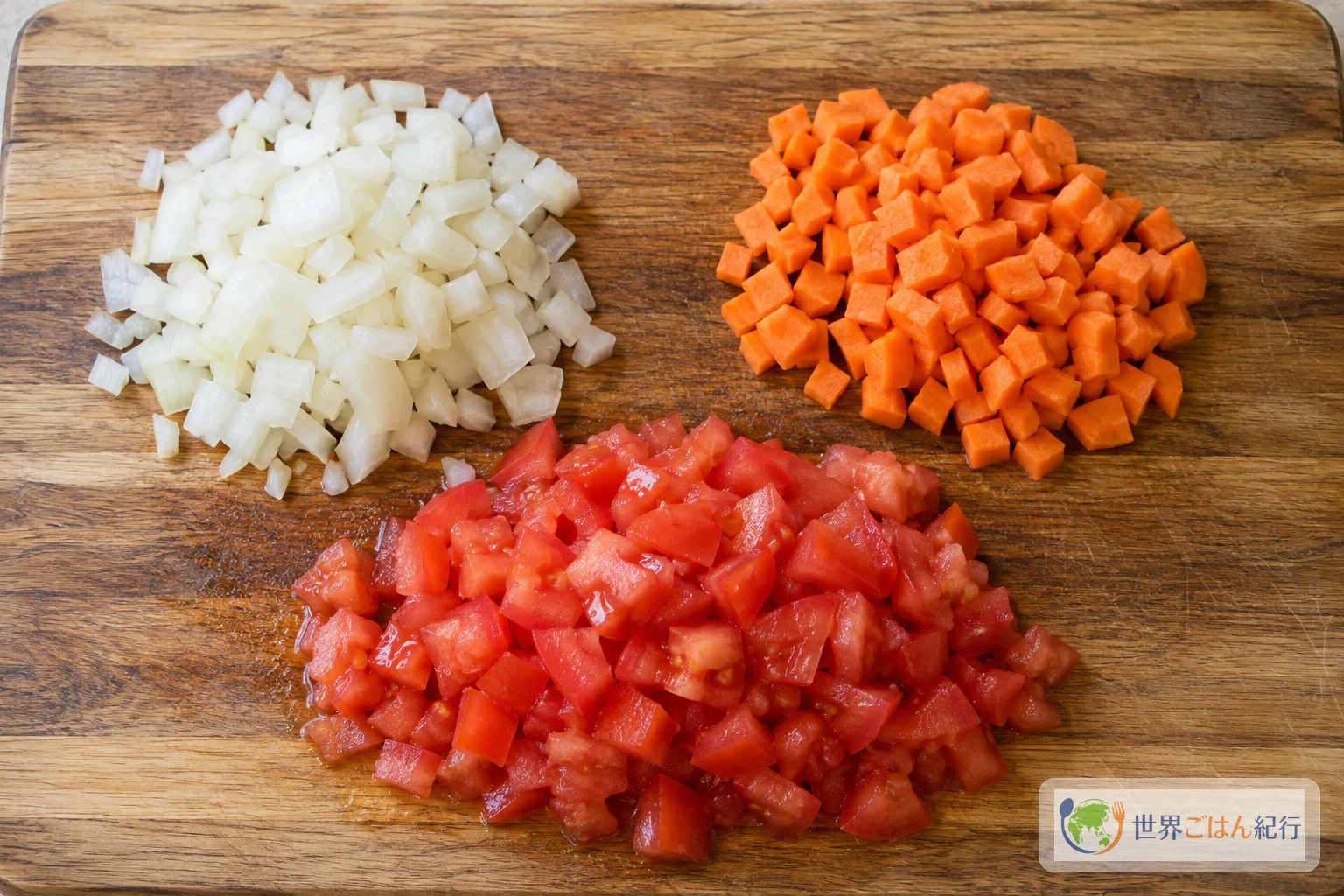
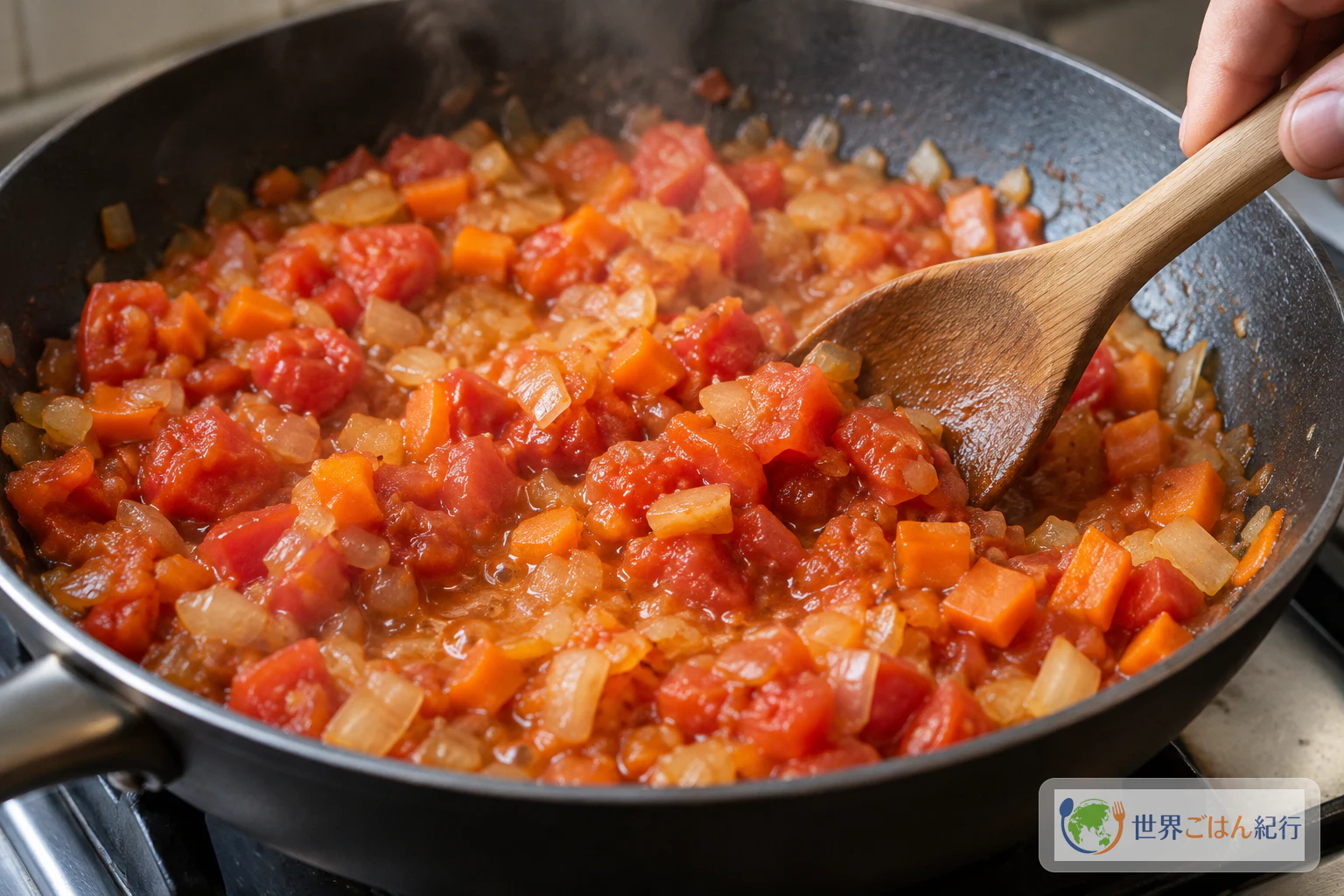
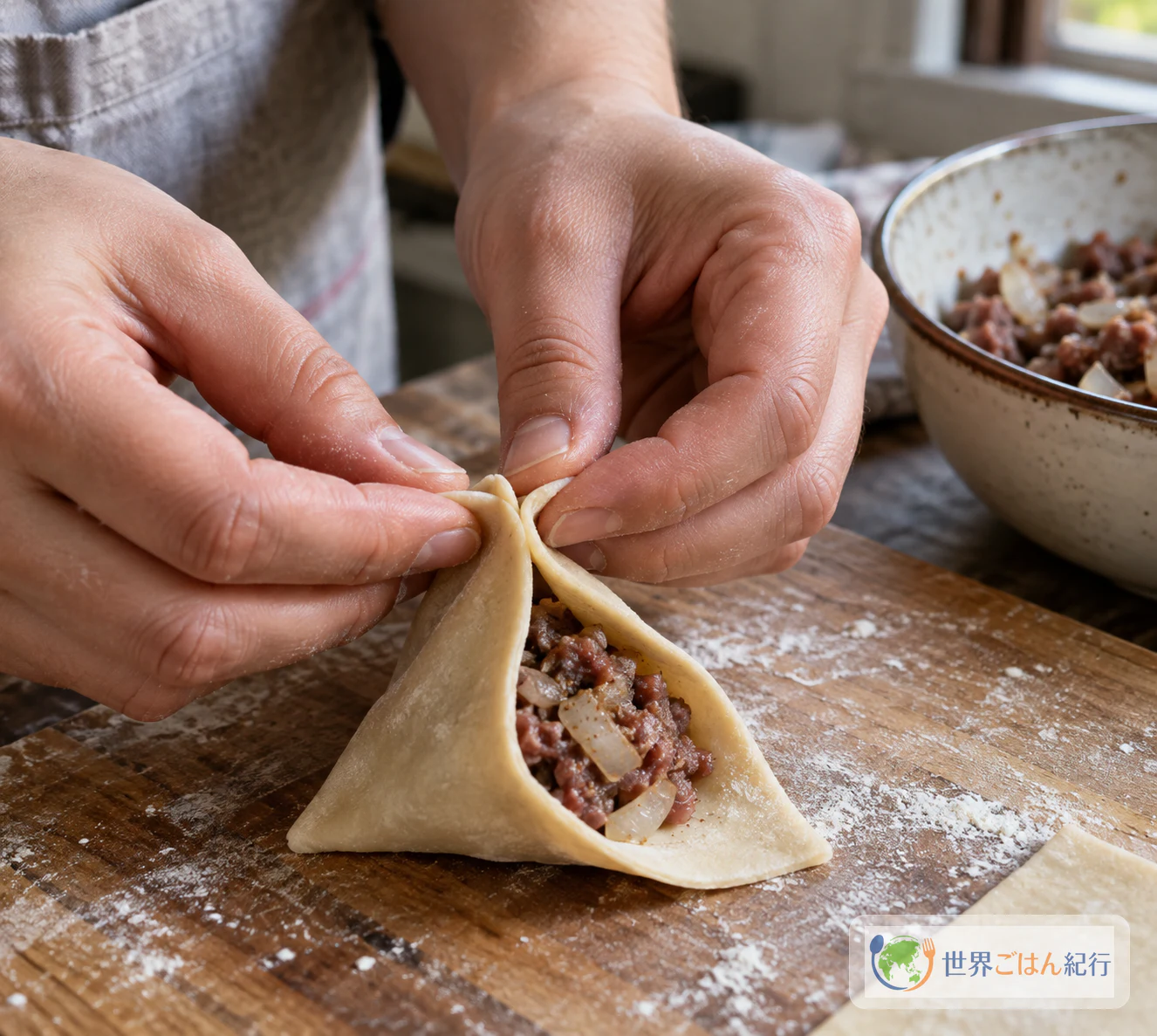
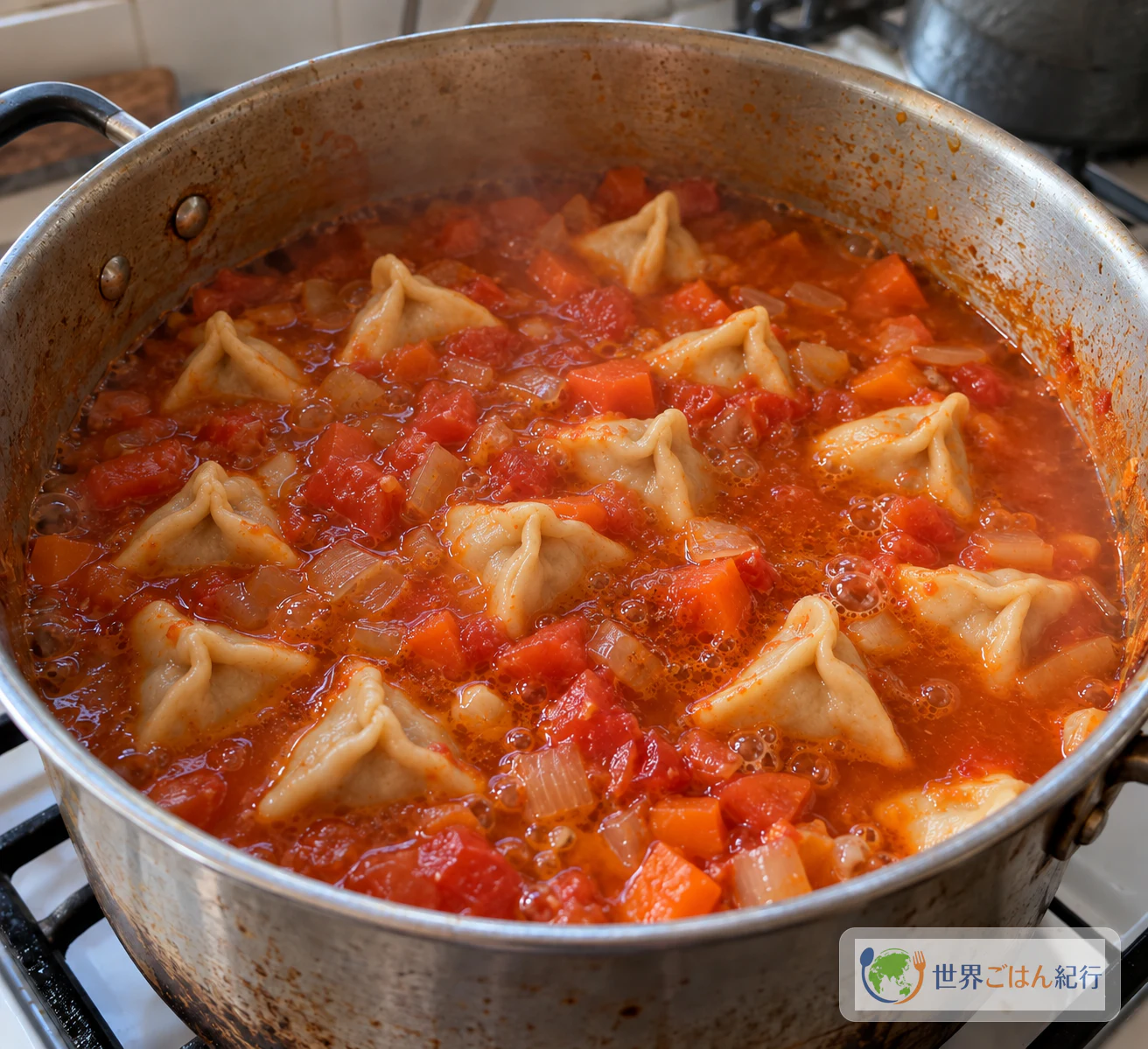
What defines this version is how plainly it is built. Boneless lamb is chopped with a knife together with onion, not put through a grinder. The only seasonings in the filling are ground coriander and ground cumin. The dumplings are small squares of dough folded into triangles with their corners brought together, and instead of being boiled in water or clear broth, they cook directly in a sauce of onion, carrot and tomato. The author suggests serving them with that sauce and fresh herbs.
The recipe card shows 6 servings and a time of 1 hour. For more dishes from the same country, see the Uzbekistan country page.
The Shape of the Dish: One Author's Sauce Version
This chuchvara is a dumpling and its sauce cooked in the same pot. Other published recipes take a different route. Explore Uzbekistan describes chuchvara as tiny meat dumplings in clear broth, with its own complete recipe, and Central Asia Travel gives another recipe with dough, filling and a broth, and mentions other types, including herb-filled and fried chuchvara. Those versions are separate recipes; nothing from them is mixed into the method here.
Within Tatyana Semina's version, three things are worth keeping intact:
| Element | What the recipe uses | What to avoid |
|---|---|---|
| Filling | Boneless lamb chopped by knife with onion, ground coriander and cumin | Ready-made mince, beef, extra salt or pepper in the filling |
| Shape | Small squares folded into a triangle, corners joined | A plain open triangle or half-moon |
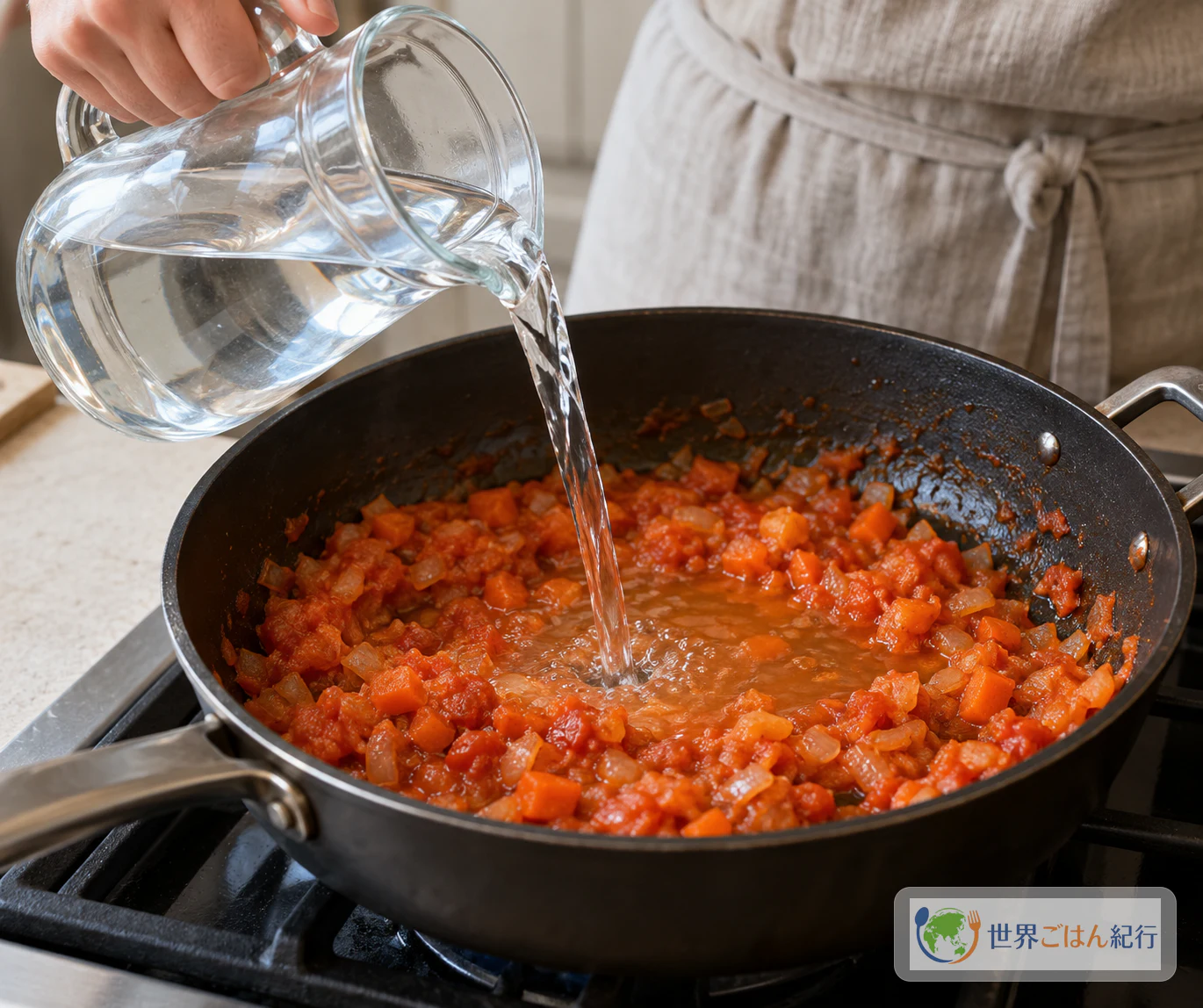
| Cooking liquid | A cooked sauce of onion, carrot, tomato and water | Clear broth, yogurt or sour cream |
Ingredients: Dough, Filling and Sauce for 6 Servings
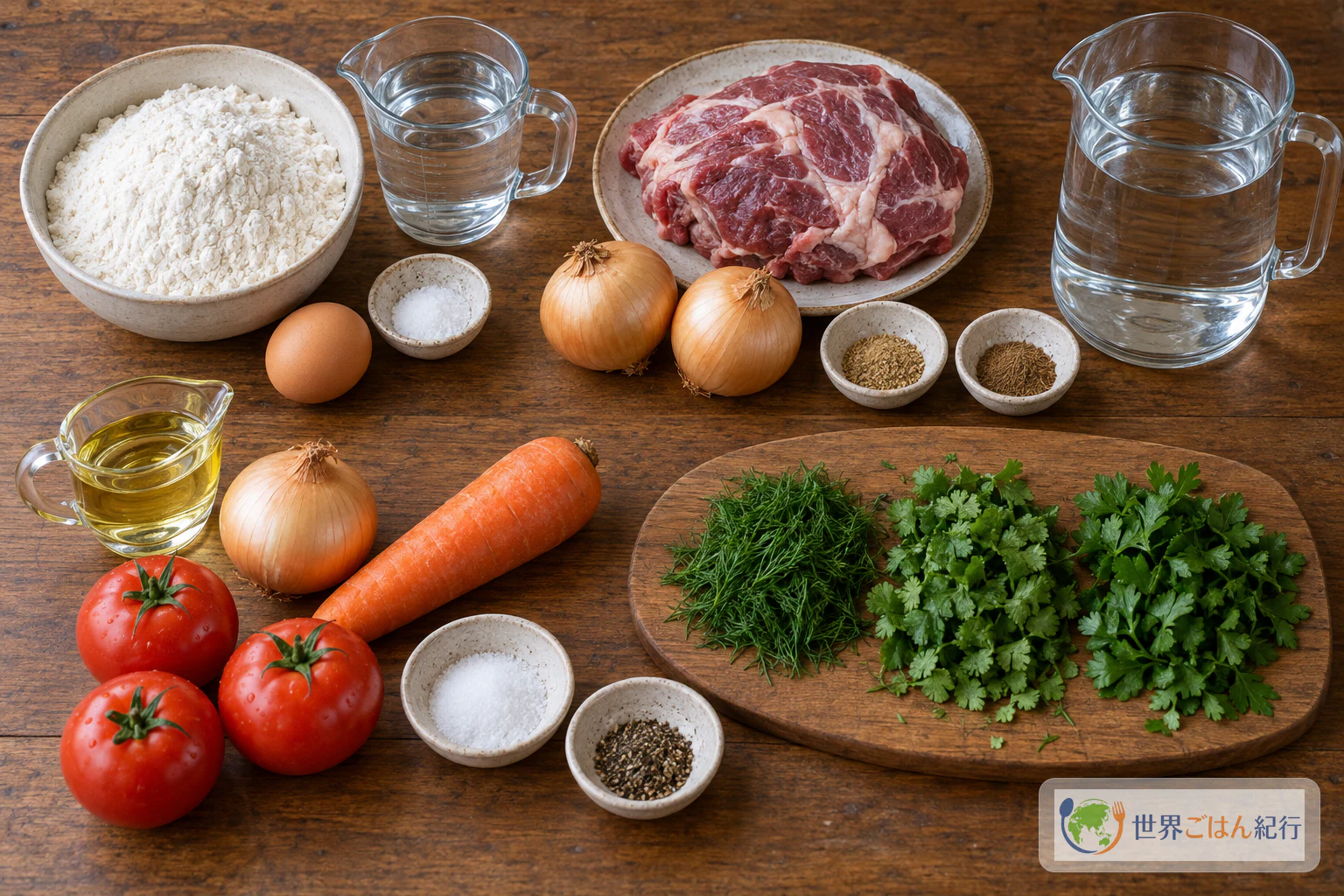
The amounts follow the Povar.ru recipe card. The 1 L of water for the sauce appears only in the method, and the salt and pepper for the sauce appear only in the method, without quantities. The filling has no salt or pepper at all in the original.
Equipment
- Mixing bowl and a cover for it
- Refrigerator space for the dough
- Sharp chef's knife and a sturdy cutting board
- Pan or pot for the sauce (the recipe gives no size), wide and deep enough to cook the dumplings in later
- Rolling pin and a clean work surface
- Spoon or skimmer to lift out the dumplings
Choosing the Lamb and Other Notes
Choose boneless lamb and chop it yourself. The recipe depends on knife-chopped meat and onion; it does not offer ground meat or beef as alternatives, so this article does not either.
The author mentions adding kurdyuk (sheep tail fat) if you like a fattier result, but gives no amount, so it is not part of the base recipe here. The onions, carrot and tomatoes are given by count, not by weight; use ordinary-sized vegetables and keep the counts as listed.
The dough contains wheat flour and egg. Check any other products you use against your own needs.
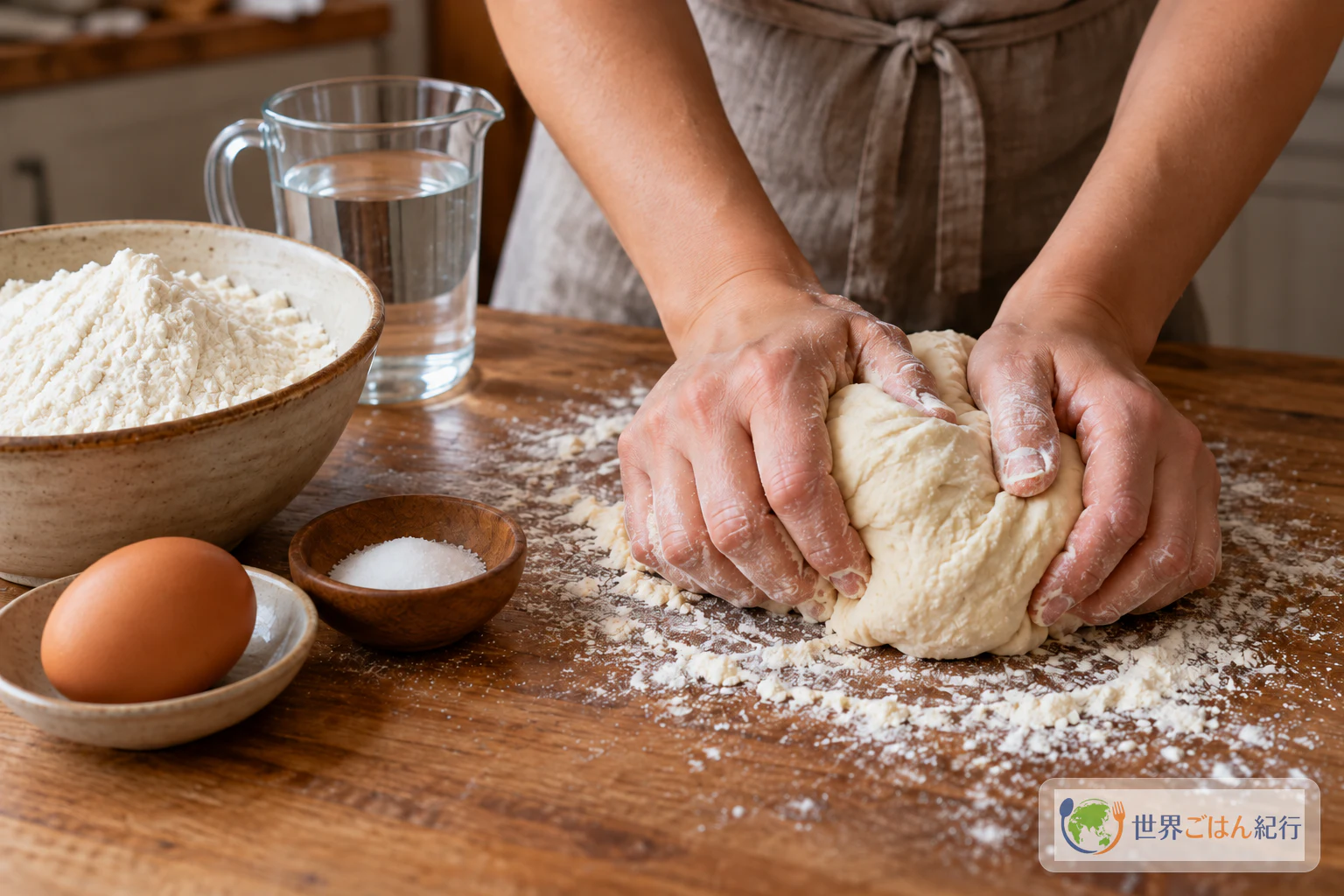
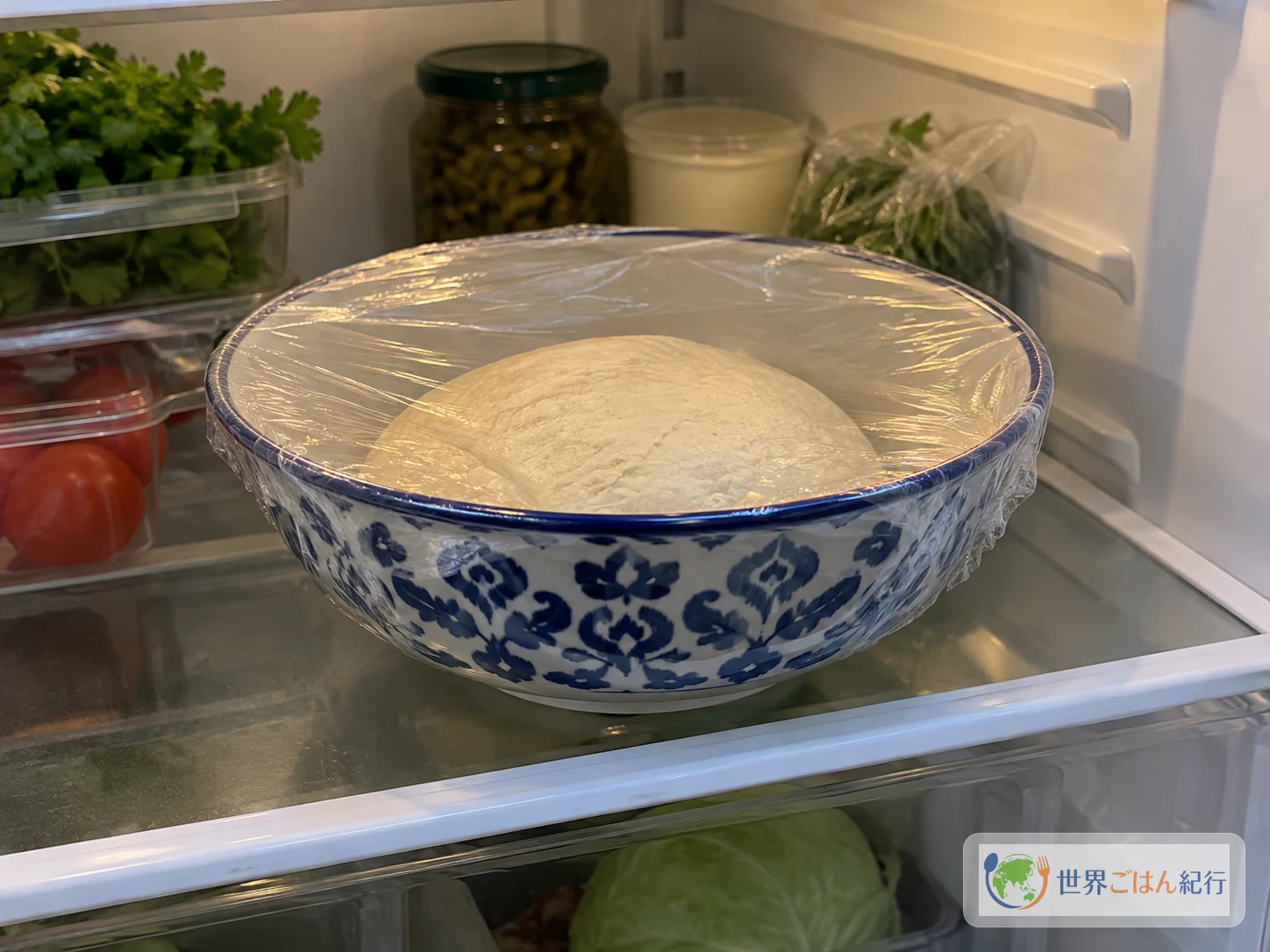
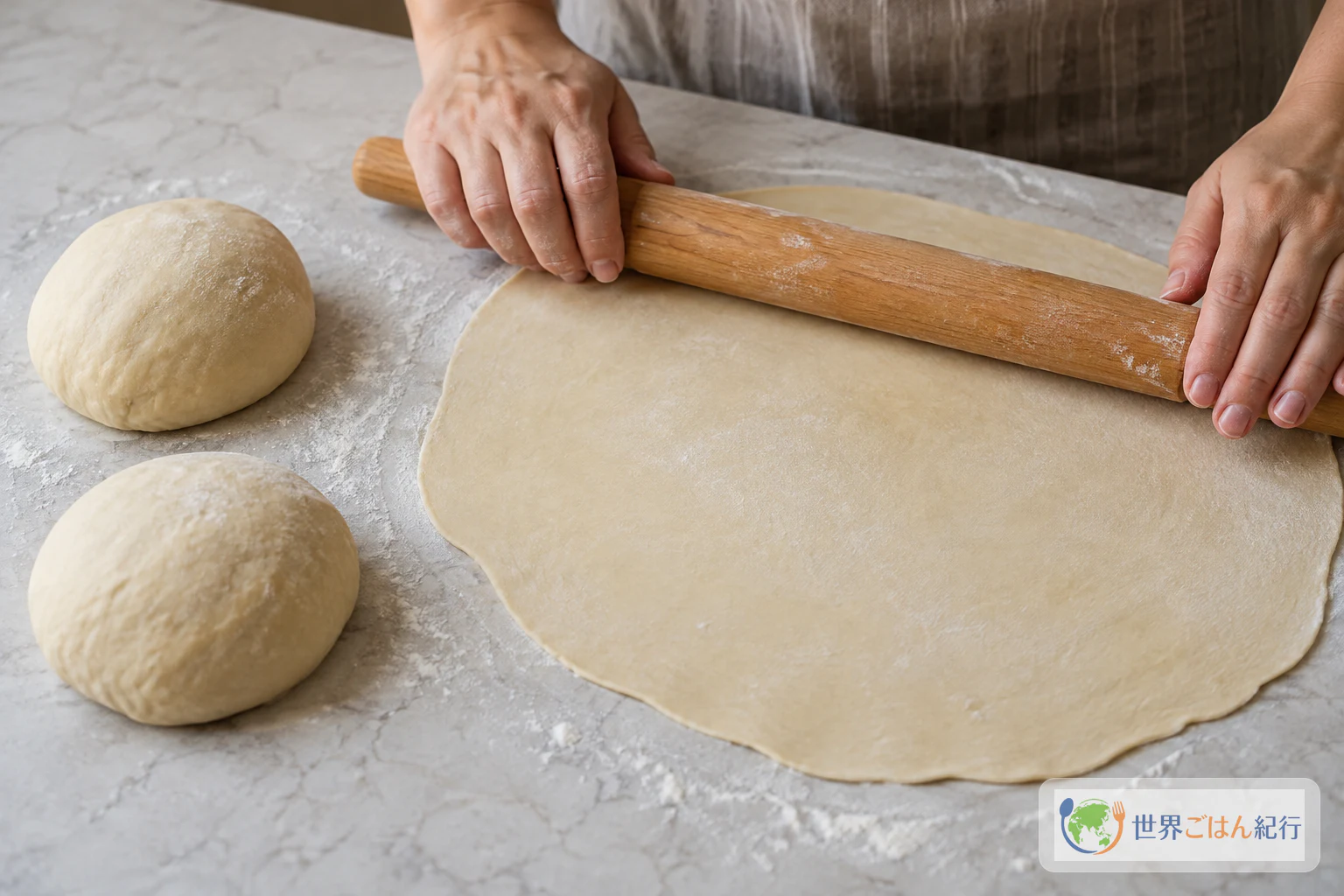
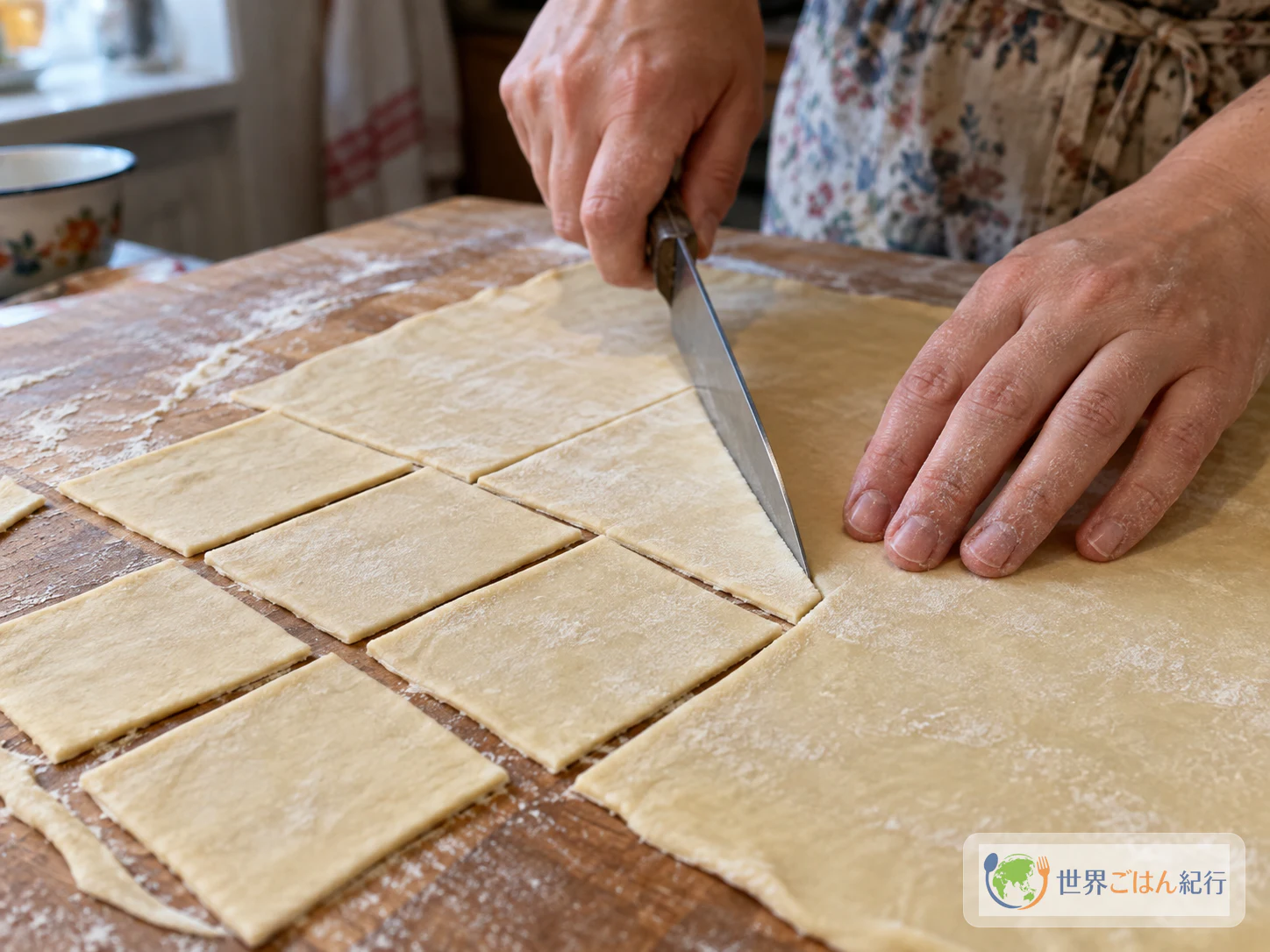
Method: Dough, Filling, Sauce, Then Shaping and Cooking
The original gives three timed points: the dough chills for 30 minutes, the filling rests for 20 minutes, and the sauce simmers for about 20 minutes. The recipe card's 1 hour is the author's displayed time; the steps do not specify how long everything else takes.
Where the Recipe Leaves Gaps
The original is short, and some details are simply not given. The table below shows what is fixed, what is open, and how this article handles each point.
| Point | What the recipe says | How to handle it |
|---|---|---|
| Salt in the dough | Listed as a pinch; not mentioned in the method | Added with the flour, egg and water (editorial choice) |
| Square size | "4×4" with no unit | Cut small, even squares; no measurement is assumed |
| Filling per dumpling | Not specified | Use enough to close the triangle fully |
| Salt and pepper in the sauce | "To taste," no amounts | Season while frying the vegetables and taste |
| Salt in the filling | None | Don't add any; the original filling has none |
| Cooking time for the dumplings | Cook until they float | No extra time is added; floating is not a safety guarantee |
| Pan size | Not specified | Use one that holds the sauce and the dumplings |
| Herbs | Listed for the sauce; served as fresh herbs; no timing | Added at serving (editorial choice) |
Variations Mentioned by the Author and Elsewhere
- Kurdyuk (sheep tail fat): The author suggests it as an optional addition for a fattier result but gives no amount, so it stays outside the base recipe.
- Clear-broth chuchvara: Explore Uzbekistan publishes a separate recipe for tiny meat dumplings in clear broth. It uses its own filling, dough and cooking, and is a different recipe from this sauce version.
- Other types: Central Asia Travel describes further forms, including herb-filled and fried chuchvara, alongside its own broth recipe.
Keeping Some for Later
The author notes that some of the dumplings can be frozen. The recipe gives no freezing method and no cooking time from frozen, so this article does not provide one either.
Frequently Asked Questions
Why is it called pelmeni on the original page?
The Povar.ru recipe is titled "lamb pelmeni," but the author explains in the introduction that, more precisely, it is chuchvara, Uzbek pelmeni, and the page lists the cuisine as Uzbek / Oriental.
Can I use ground lamb or beef?
The recipe calls for boneless lamb chopped by knife with onion, and gives no alternative. This article keeps to that.
Is "4×4" in centimeters?
The recipe doesn't say. It prints "4×4" with no unit, so we don't present any specific size as the author's.
Do I need to cook the dumplings longer after they float?
The author's method ends when the dumplings float and gives no further time. Floating is a visual cue for when to lift them out, not a guarantee of food safety.
Do the herbs go into the simmering sauce?
The method doesn't say. The ingredient card lists them for the sauce, and the introduction says to serve with fresh herbs, so here they are added at serving time as an editorial choice.
Sources
- Tatyana Semina, "Пельмени с бараниной" (Lamb pelmeni), Povar.ru, 9 September 2017. Primary recipe: the author's description of the dish as chuchvara (Uzbek pelmeni), the Uzbek / Oriental cuisine label, 6 servings and 1 hour on the recipe card, all ingredient amounts, the 1 L sauce water, the method from kneading to cooking until the dumplings float, serving with sauce and fresh herbs, the note on freezing, and optional kurdyuk. https://povar.ru/recipes/pelmeni_s_baraninoi-61526.html
- Explore Uzbekistan, "Chuchvara." Comparison only: a separate recipe for tiny Uzbek meat dumplings in clear broth, distinct from the tomato-vegetable sauce version. https://exploreuzbekistan.uz/en/recipes/chuchvara/
- Central Asia Travel, "Chuchvara." Comparison only: another chuchvara recipe with its own dough, filling and broth, and a description of other types, including herb-filled and fried chuchvara. https://www.centralasia-travel.com/en/countries/uzbekistan/cuisine/chuchvara