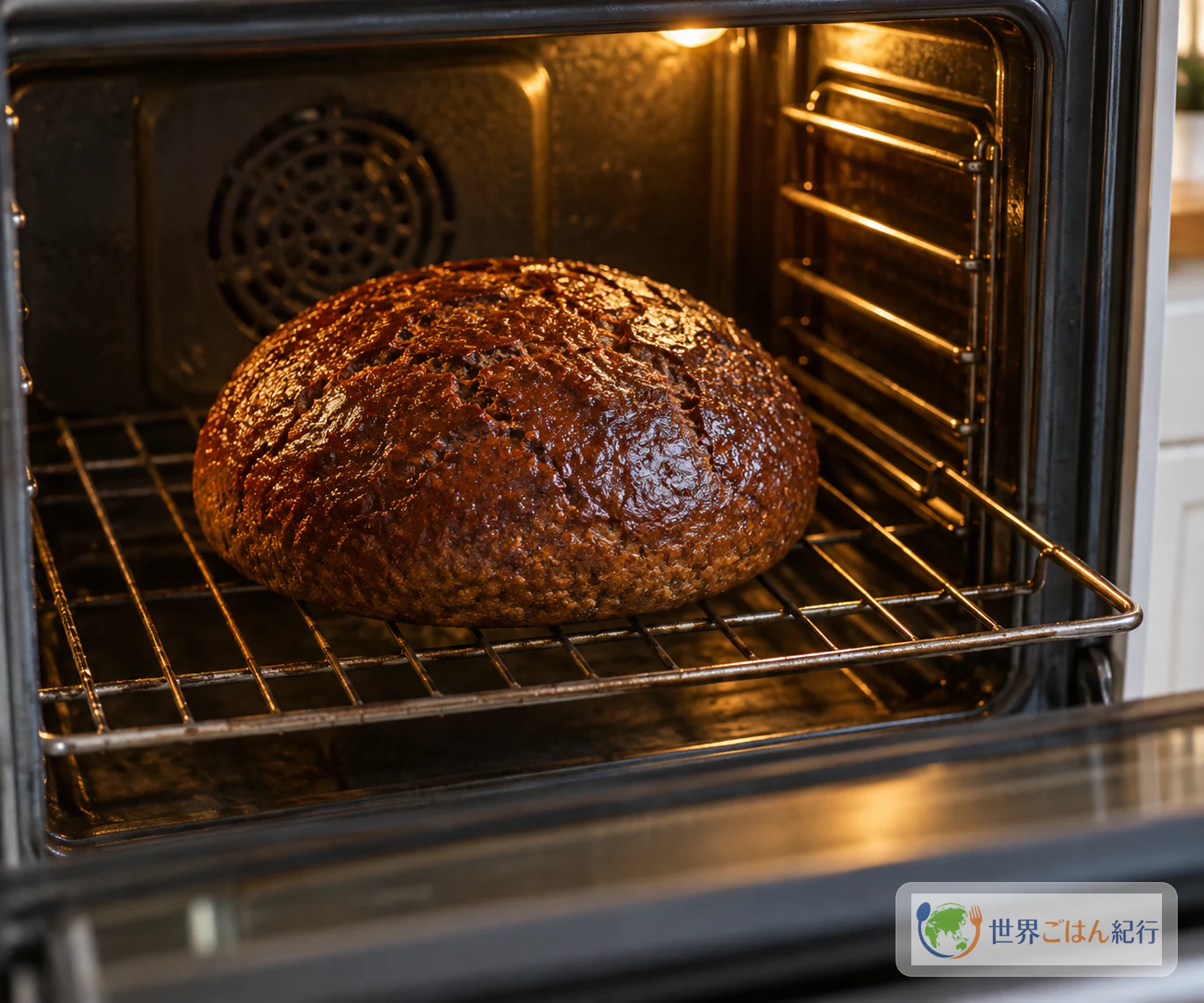
Åland Black Bread: Sweet, Dark and Compact, Made for Butter and Fish
A dense crumb, the deep sweetness of dark syrup and malt, and the flavor of coarse rye. The dough stays soft and sticky, and the glaze goes on once, after the first bake.
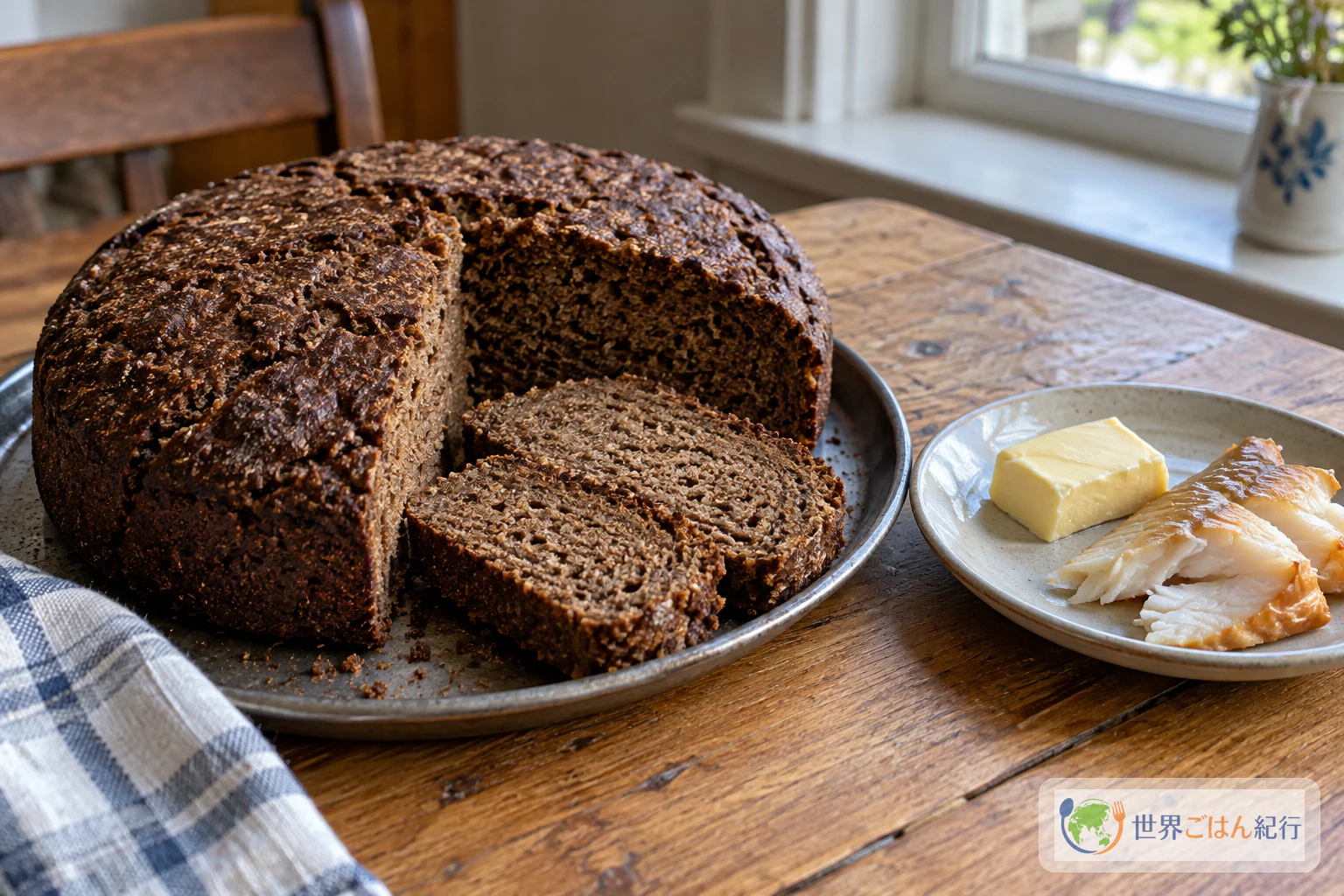
Thin slices of a dark, sweet loaf, a little island butter, and local fish alongside: that is how Visit Åland, the islands' tourism authority, describes this bread being eaten. The same bread also turns up beside fish soup and on the tables of midsummer and Christmas, so it belongs to both ordinary days and celebrations.
Åland black bread, in Swedish Åländskt svartbröd, is a compact, sweet rye loaf. It is not one fixed formula. Visit Åland notes that there are many variations, both in homes and in local bakeries. This article follows one of them: a home recipe published on the baking blog Matbröd, with a quick proof and a bake in pans, finished with a glaze of honey, dark syrup, strong coffee and butter.
The amounts, temperatures and times below come from that single published home version and are kept in its original units. This recipe has not been kitchen-tested by Sekai Gohan. It is one example of Åland black bread, not the only traditional formula.
What Kind of Bread Is Åland Black Bread?
The first thing to know is that this is a sweet bread. Dark syrup goes into the dough, malt adds its own flavor, and a share of brown or raw sugar rounds it out. Coarse rye flour gives the loaf weight and a close, tight crumb, so it slices thinly rather than tearing into an airy piece.
Density and sweetness also connect the bread to its past. Both Visit Åland and the food writer Patrik Arneke describe this kind of dense, sweet, long-keeping bread as historically important food to carry along, for seal hunters, fishers and sailors in Visit Åland's account. That is a description of the bread's history, not a promise about how long a loaf baked in your kitchen today will keep.
Ingredients for One Loaf Pan or Two Round Pans
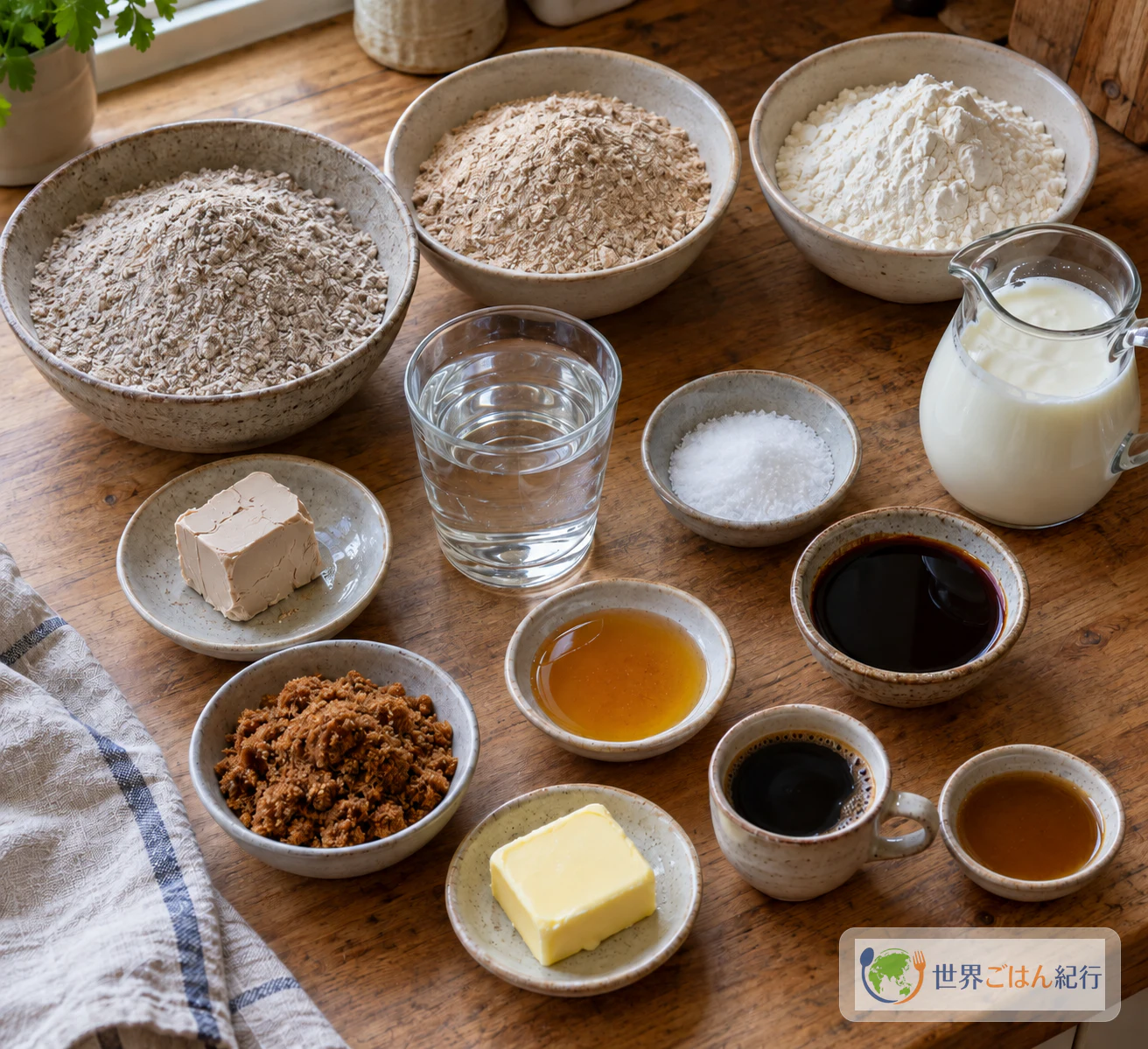
The source recipe states that it makes 1–2 loaves, depending on whether you bake it in one rectangular pan or two round pans. The finished weight and an exact yield are not given, so none is promised here.
Amounts are in the source's units: dl (deciliters), tsk (Swedish teaspoon) and msk (Swedish tablespoon). The wheat flour is only approximate in the source; how much you need depends on how much liquid your flours take up.
This bread contains milk (filmjölk and butter), wheat and rye, so it contains gluten. Eggs and nuts are not part of this formula. If you substitute any ingredient, check its label for allergens as well.
Equipment
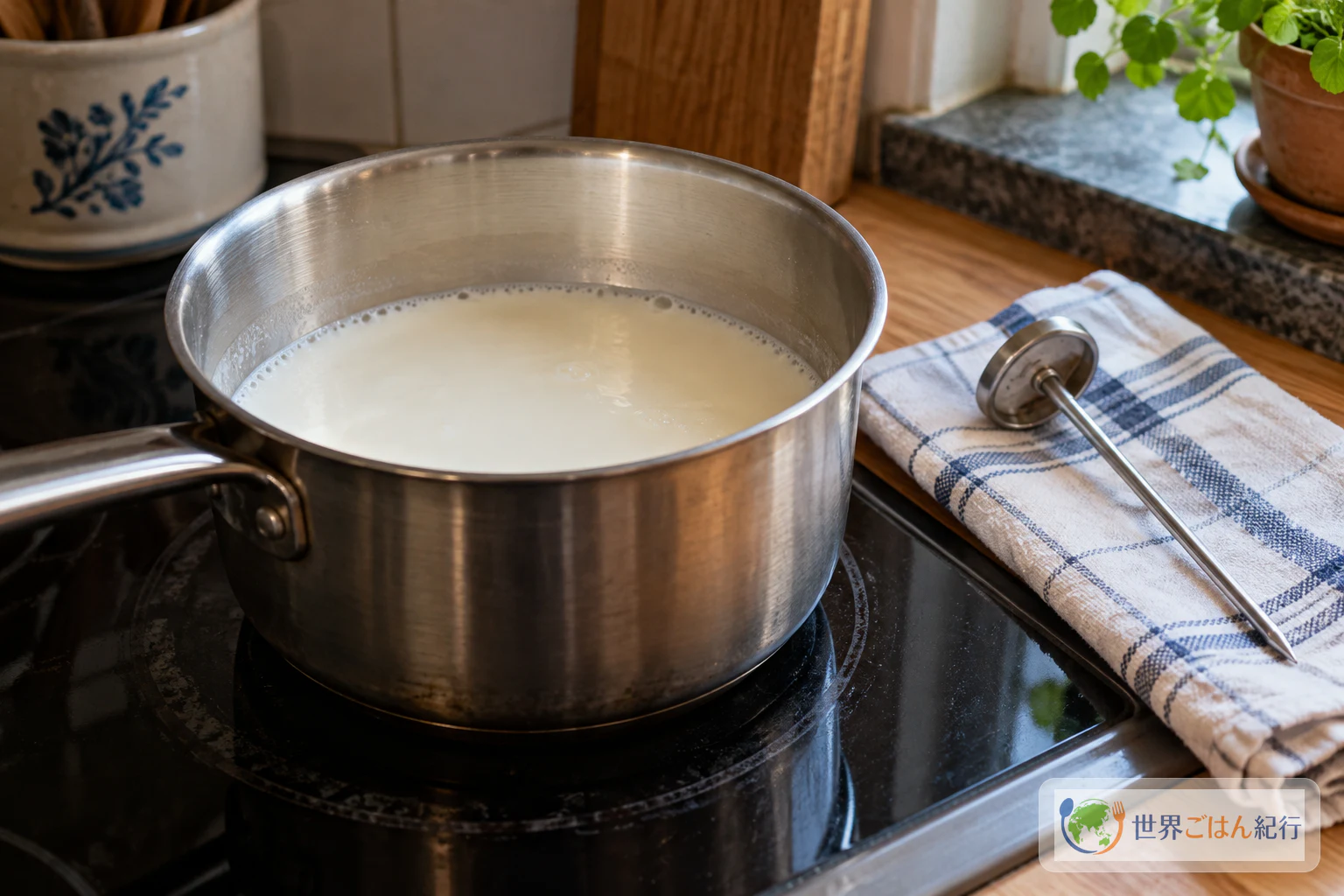
- A small saucepan for warming the filmjölk
- A kitchen thermometer (helpful for the 37°C milk; optional)
- A large mixing bowl and a sturdy wooden spoon
- Either one rectangular loaf pan of about 1.5 L, or two round pans about 22 cm in diameter
- A clean cloth for covering the dough while it proofs
- An oven
- A small bowl and spoon for the glaze
- A pastry brush
- A wire rack for cooling
- A bread cloth for covering the finished loaf
Choosing and Substituting Ingredients Outside Scandinavia
The ingredients that need some thought are filmjölk, malt and the flours. The suggestions below are editorial ideas for cooks who cannot find the originals; the source recipe does not name any substitutes, and none of them gives an identical result.
| Ingredient | What to look for | If you can't find it |
|---|---|---|
| Filmjölk | Swedish cultured milk | Unsweetened plain yogurt loosened with milk is a possible editorial alternative. It is not the same product; expect differences in sourness and thickness |
| Malt | The source does not say whether powder or syrup | Check which form you are buying before you shop. No conversion between malt powder and malt extract is given, so none is suggested here. Leaving it out changes the aroma and color |
| Coarse rye flour | Coarsely ground rye | Finely ground rye gives a different texture from the coarse version |
| Graham flour | Whole wheat flour | Ordinary whole wheat flour is the closest everyday match |
| Dark syrup | Swedish mörk sirap | Another dark syrup, such as Japanese kuromitsu, is an editorial option with a different taste |
| Sugar | Brown sugar (farinsocker) or raw sugar (råsocker) | Use only one of the two; don't layer a second kind of sugar on top |
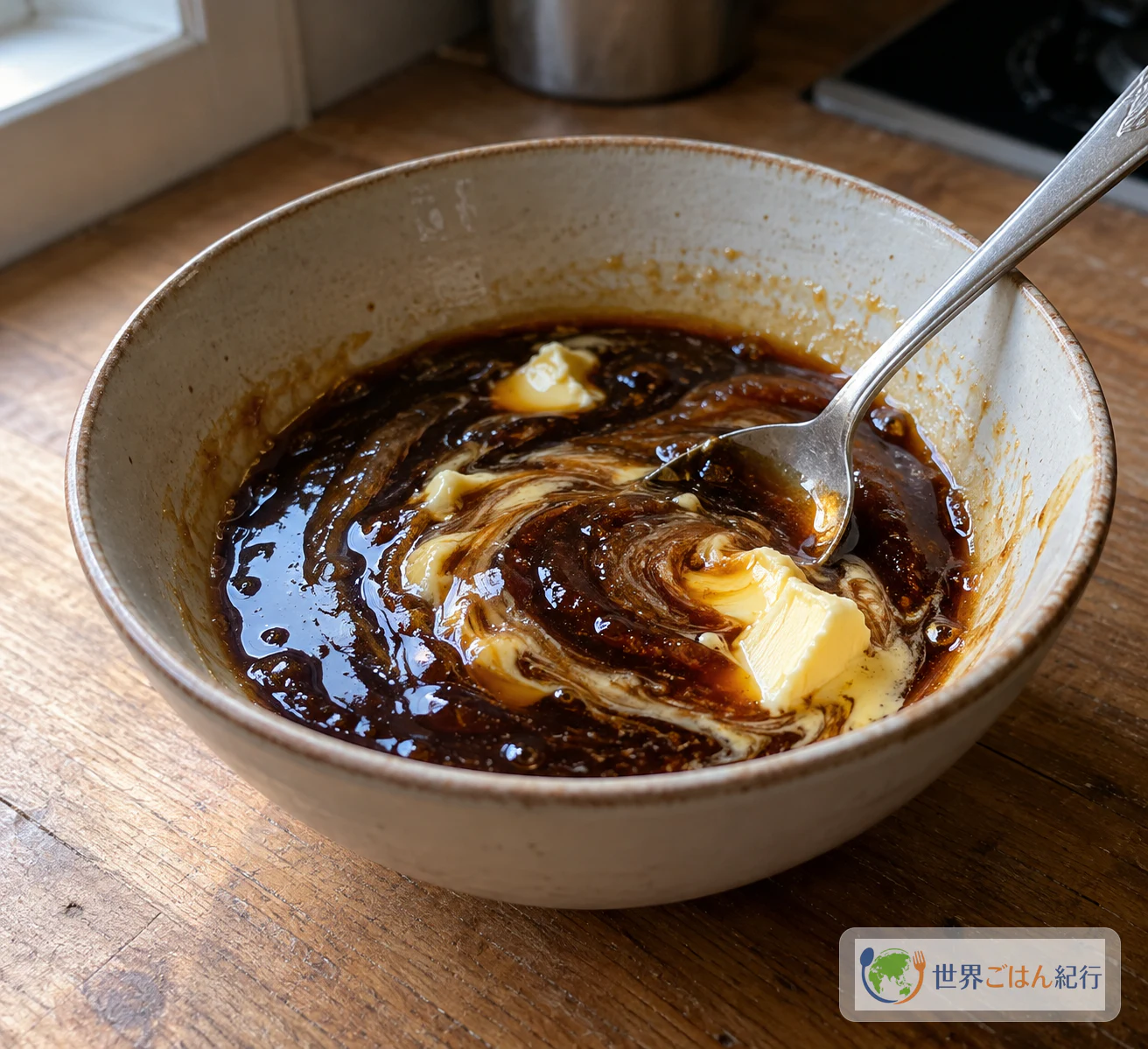
Keep the dough's 1 dl of dark syrup and the glaze's 1 msk apart from the start. They do different jobs: one goes into the bread, the other goes on the surface after the first bake.
Method: Sticky Dough, One Proof, Two Bakes
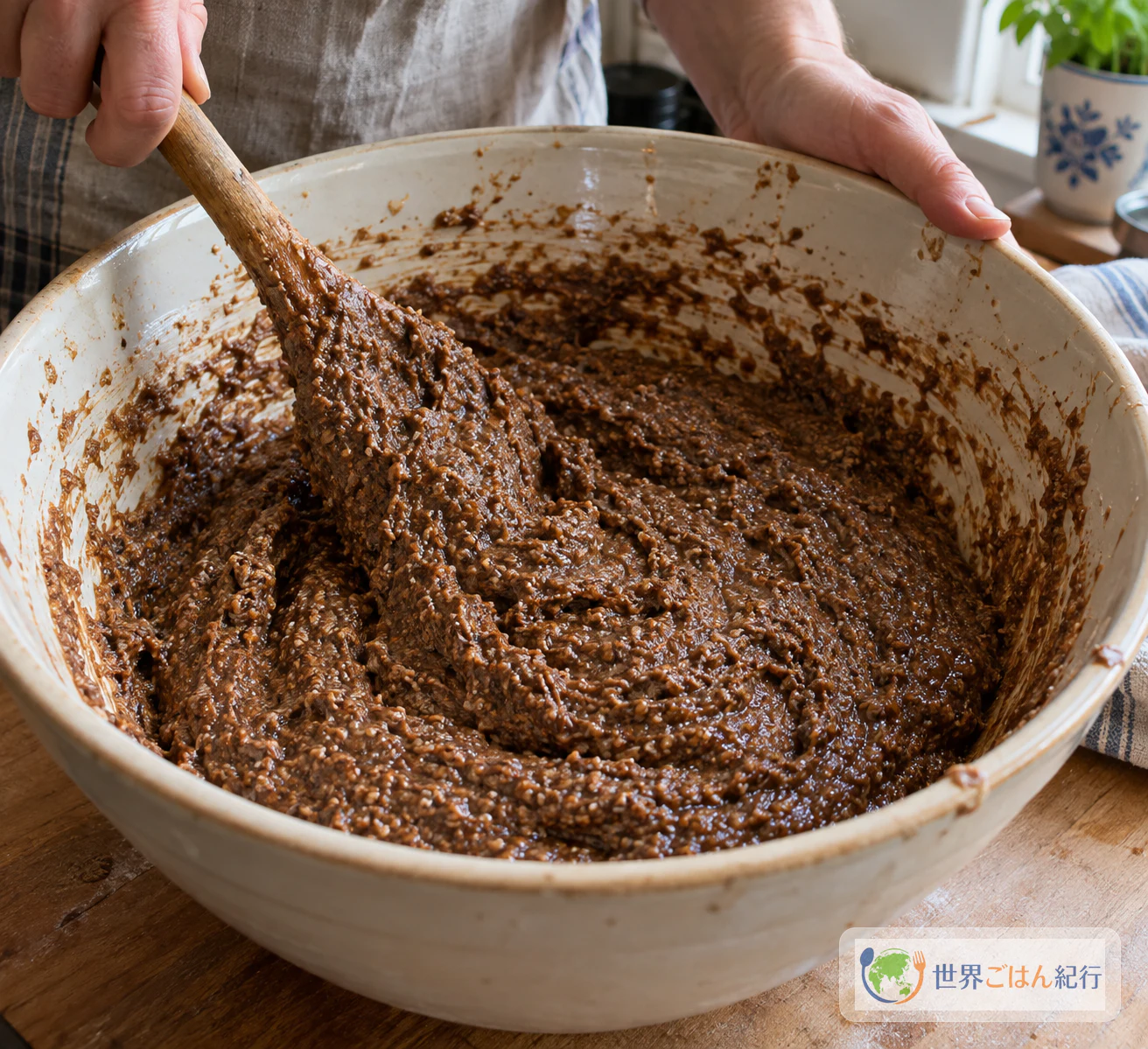
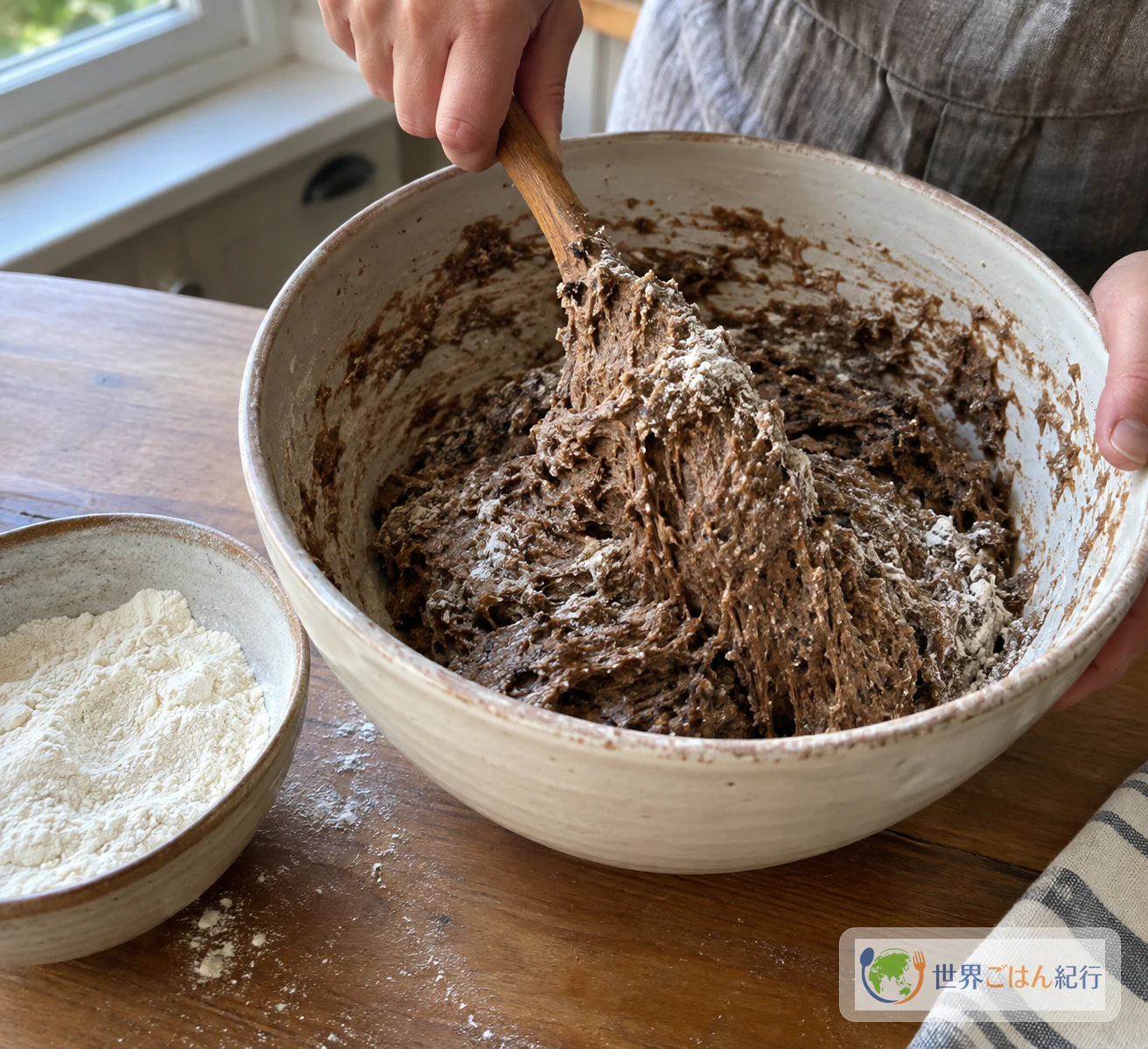
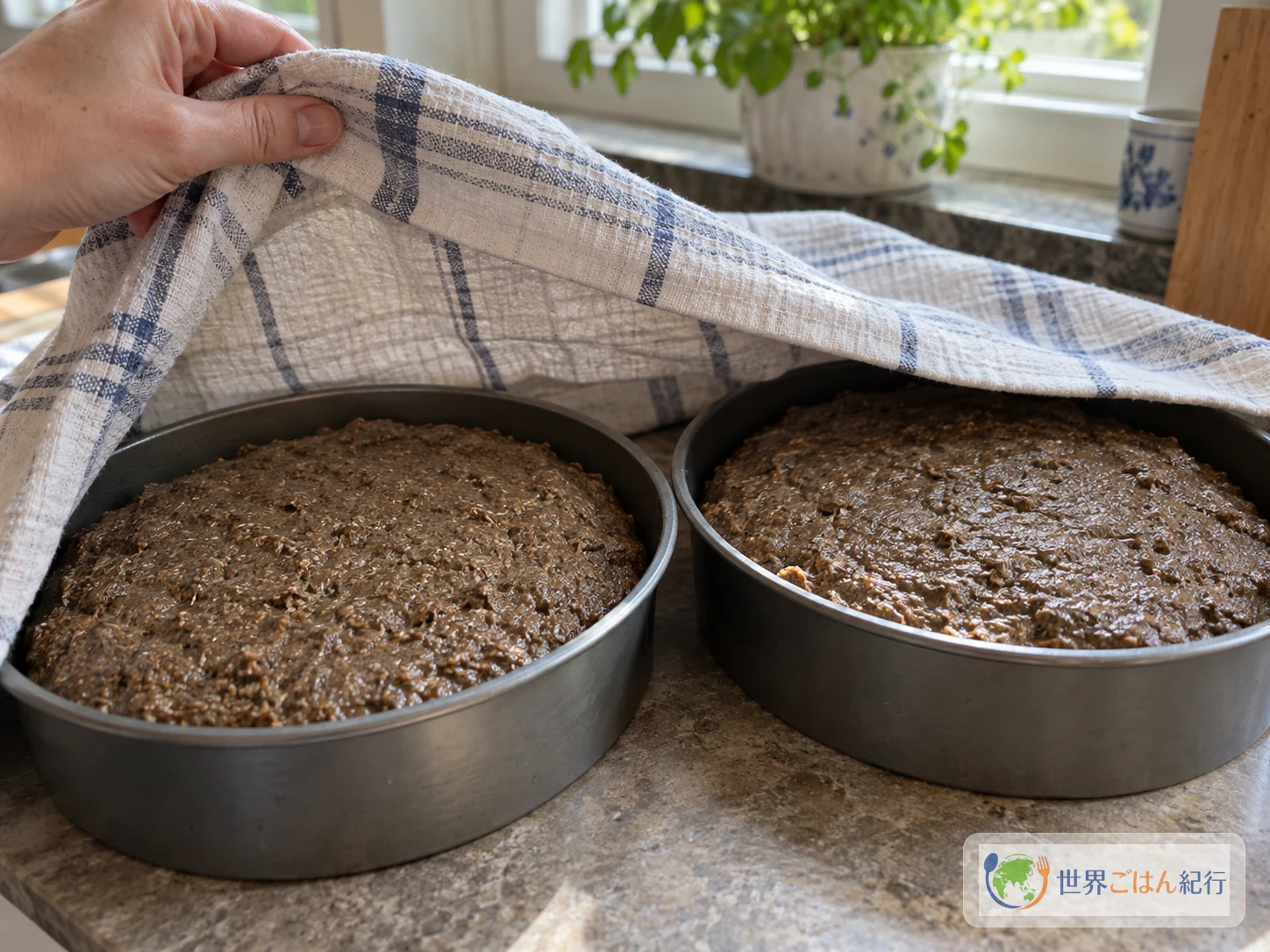
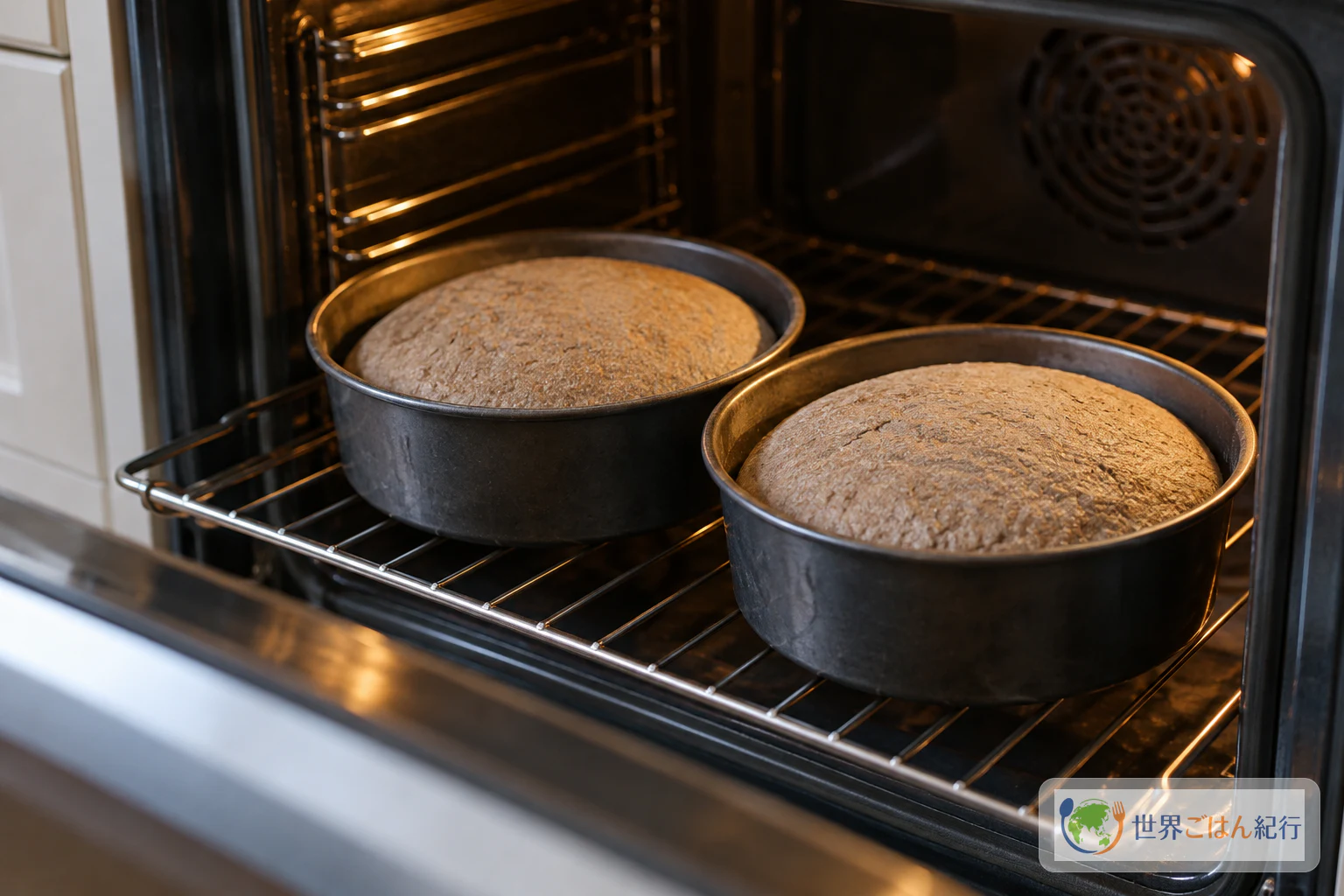
Decide on your pans first: one loaf pan of about 1.5 L or two round pans about 22 cm across. The photos below show the two-round-pan version. The source gives the same oven times for either choice; since home ovens vary, keep an eye on the loaf.
When the Dough or Loaf Doesn't Look Right
| What you see | What to check | What to do |
|---|---|---|
| The dough is soft and sticky | This is how the source describes it | Leave it that way. Don't add flour to firm it up |
| You've reached about 6 dl of wheat flour and the dough still seems wet | The source amount is approximate | Add a little more flour only gradually, and stop as soon as it is heavy and sticky |
| You added all the flour at once and the dough is stiff | The flour was not adjusted to the dough | Next time, add the wheat flour a little at a time and stop early |
| Unsure which malt to buy | The source does not specify powder or syrup | Check the form before buying; no conversion amount is available |
| The filmjölk felt too hot | It went well past 37°C | Let it come back down to 37°C before adding the yeast |
| Tempted to glaze twice | The source glazes once, then bakes 5 minutes | Keep to one coat of glaze |
Variations That Keep the Same Bread
- Pan shape: The same dough can go into one rectangular pan of about 1.5 L or two round pans about 22 cm across. The source gives one set of times for both; check on the loaf in your own oven.
- Sugar: Choose brown sugar (farinsocker) or raw sugar (råsocker). Each is an option on its own; don't combine them.
- Rye grind: Coarse rye flour gives the texture this recipe is built around. Finer rye changes the feel of the crumb.
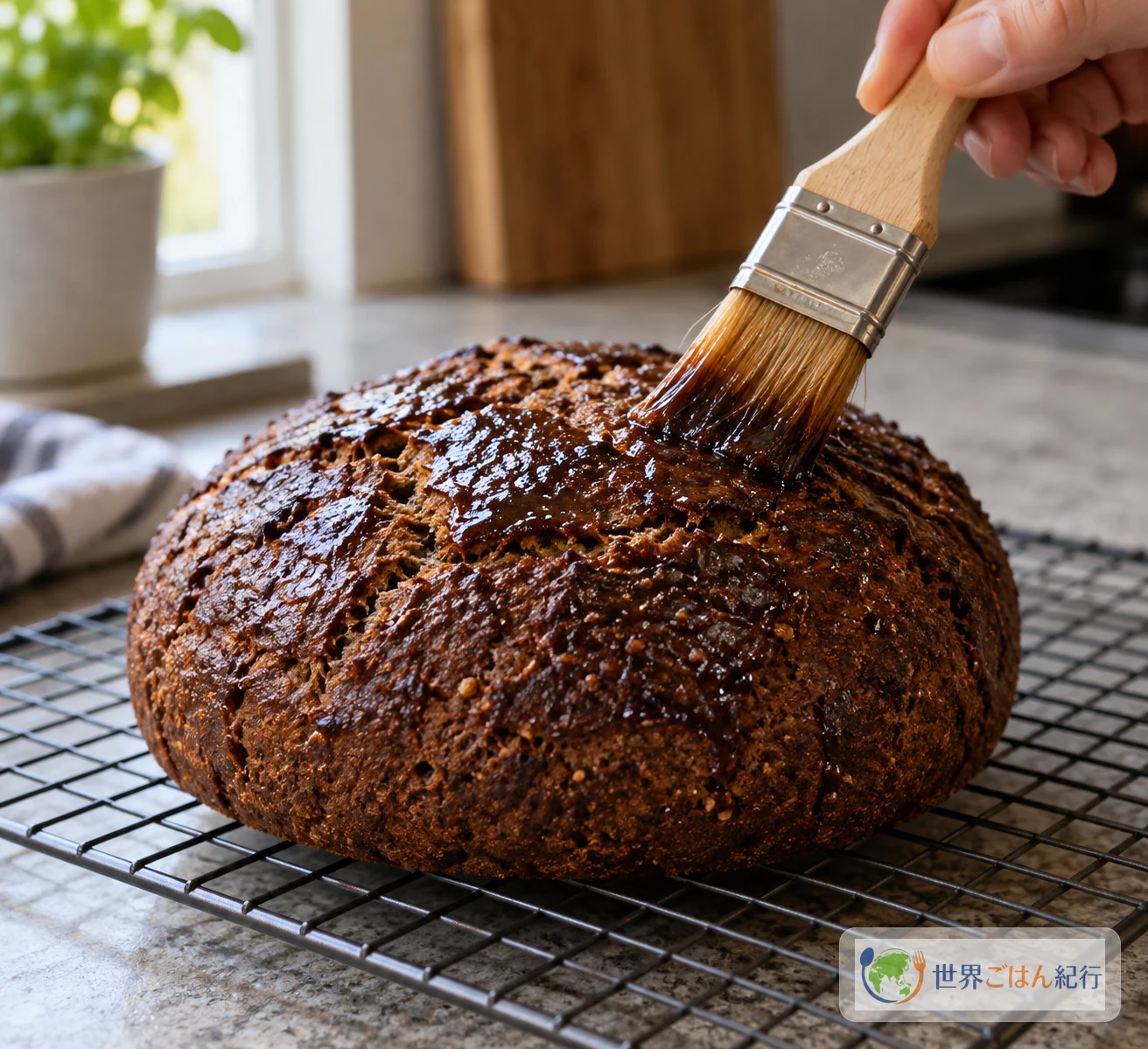
- Glaze: Brush it on once and finish with the 5-minute bake, as the source does, rather than building up several coats.
- Toppings and fillings: Keep butter and fish on the plate, not in the dough. This formula has no seeds, nuts, eggs or fish in the bread.
How Åland Black Bread Is Eaten
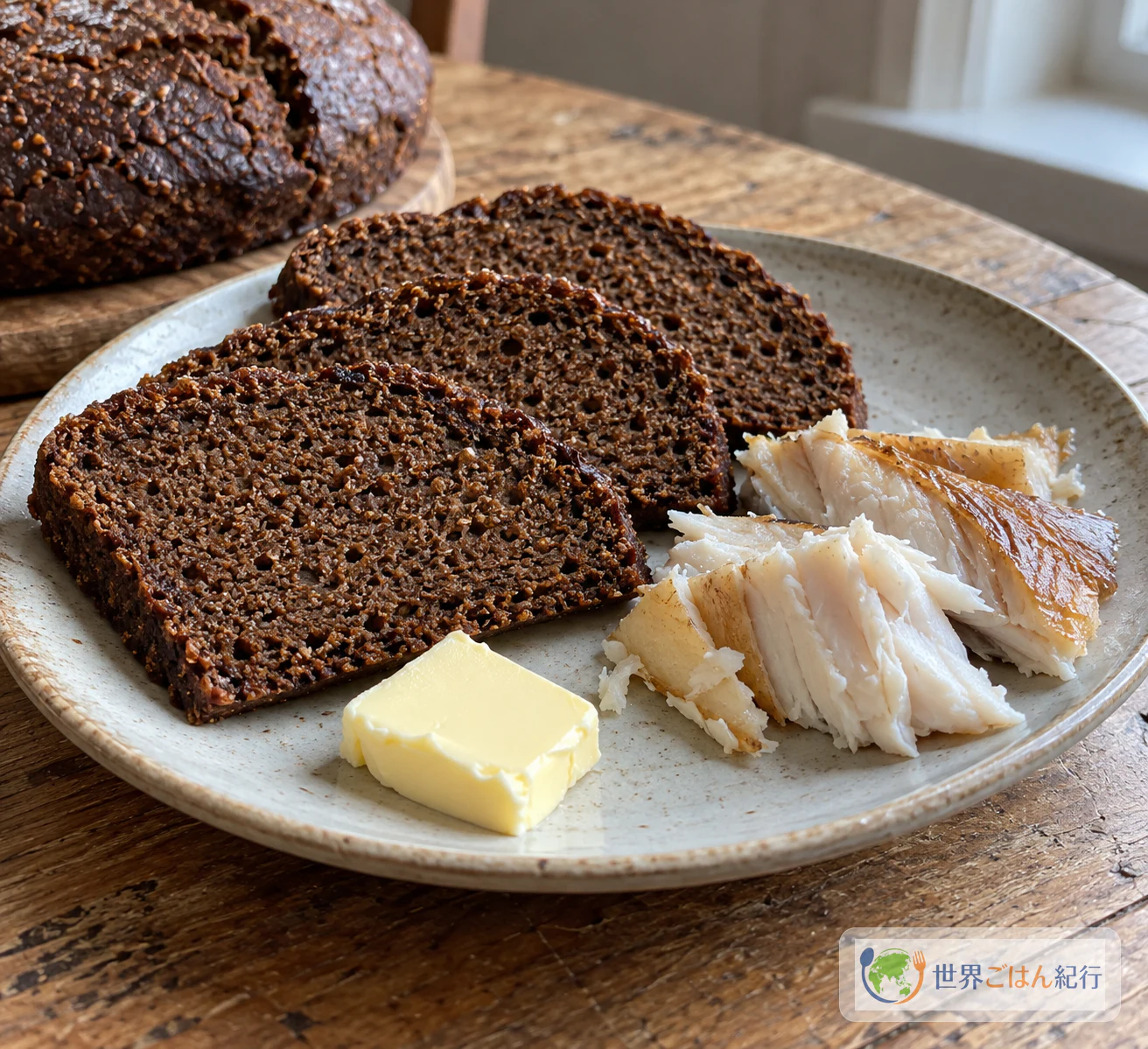
Visit Åland describes it served with butter and local fish, alongside fish soup, and on the tables of midsummer and Christmas. Patrik Arneke's account pairs thinly sliced black bread with a smoked whitefish spread; that spread is its own recipe, and a simple piece of smoked whitefish with butter keeps to the same idea of fish and bread together.
Slice the bread thinly and keep the pairings on the side: a little butter, some smoked or salted fish, or a bowl of fish soup.
Cooling and Keeping
The source's only guidance is to cool the finished bread on a wire rack and cover it with a bread cloth. It does not give a storage period, a freezing method or a way to reheat, so none is given here. The bread's historical reputation as long-keeping travel food is not a guide to how long a home-baked loaf keeps today.
Frequently Asked Questions
What kind of bread is Åland black bread?
It is a compact, sweet loaf built on rye, colored and flavored by dark syrup and malt. It appears at everyday meals and at celebrations, and there are many variations among homes and bakeries. This article follows one published home recipe.
Can I leave out the malt?
You can, but the aroma and color will change, and the result will not be the same bread. Because the source does not say whether its malt is a powder or a syrup, check which form you are buying before you shop.
What can I use instead of filmjölk?
Unsweetened plain yogurt loosened with milk is an editorial suggestion, not something the source recipe names. It is a different product, so expect differences in sourness and thickness.
What should I serve with it?
Butter and fish: local fish in Åland, smoked whitefish in Patrik Arneke's serving, and fish soup alongside. It also has a place on midsummer and Christmas tables.
How long does it keep?
The sources describe dense, sweet black bread as historically long-keeping food carried by seal hunters, fishers and sailors, but they do not give a storage period for bread baked at home today. The recipe's own instruction is to cool the loaf on a rack and cover it with a bread cloth; no number of days is given here.
Sources
- Visit Åland, "10 Flavours That Capture the Taste of Åland." Used for the description of Åland black bread as a compact, sweet rye loaf; its place in daily life and celebrations; the many home and bakery variations; its history as long-keeping food for seal hunters, fishers and sailors; and serving it with butter and local fish, fish soup, and at midsummer and Christmas. A regional tourism summary, not a recipe or a full history. https://visitaland.com/en/experience/culinary-aland/local-foods/
- Matbröd (Ing-Marie Olsson), "Åländskt svartbröd." The source of this recipe's ingredients and amounts, the 1–2 loaf yield, the choice of one loaf pan or two round pans, the proof of about one hour, the bake at 180°C for 40 minutes followed by 175°C for 5 minutes or until dark brown, and the coffee, honey, syrup and butter glaze. An individual home recipe, not an official or standardized Åland formula. https://matbrod.blogspot.com/2008/05/lndskt-svartbrd.html
- Smaka & Se / Patrik Arneke, "Svartbröd med röra på rökt sik." Used for the description of a dense, sweet, long-keeping bread as historical travel food, and for serving it with smoked whitefish. A food writer's 2012 account and serving recipe, not an official history or the bread formula used here. https://smakaose.com/2012/july/svartbrod-med-rora-pa-rokt-sik.html