Kama: A Summer Snack You Make by Stirring
Let the roasted aroma of the kama flour and the gentle sourness of the curdled milk or kefir stay in front. Keep the sweetener to the small amount given, and let the flour amount decide whether you drink it or eat it with a spoon.
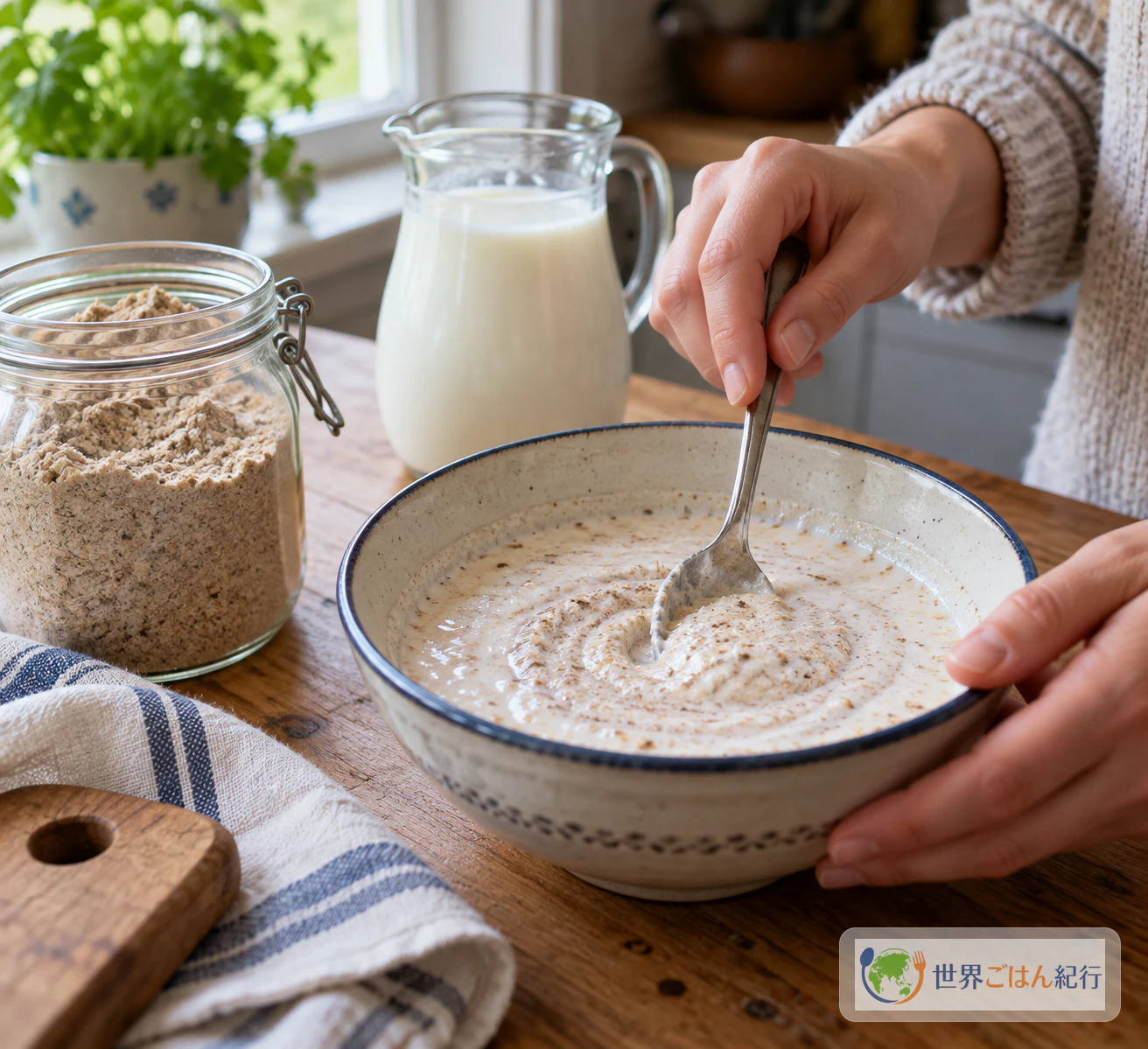
Kama belongs to the Estonian summer. The Estonian Institute describes it as a summer food that was once taken along during haymaking, and that today is a light snack for hot weather. There is no stove involved: a ready-made flour of roasted grains and legumes is stirred into soured milk, and the bowl is ready to eat.
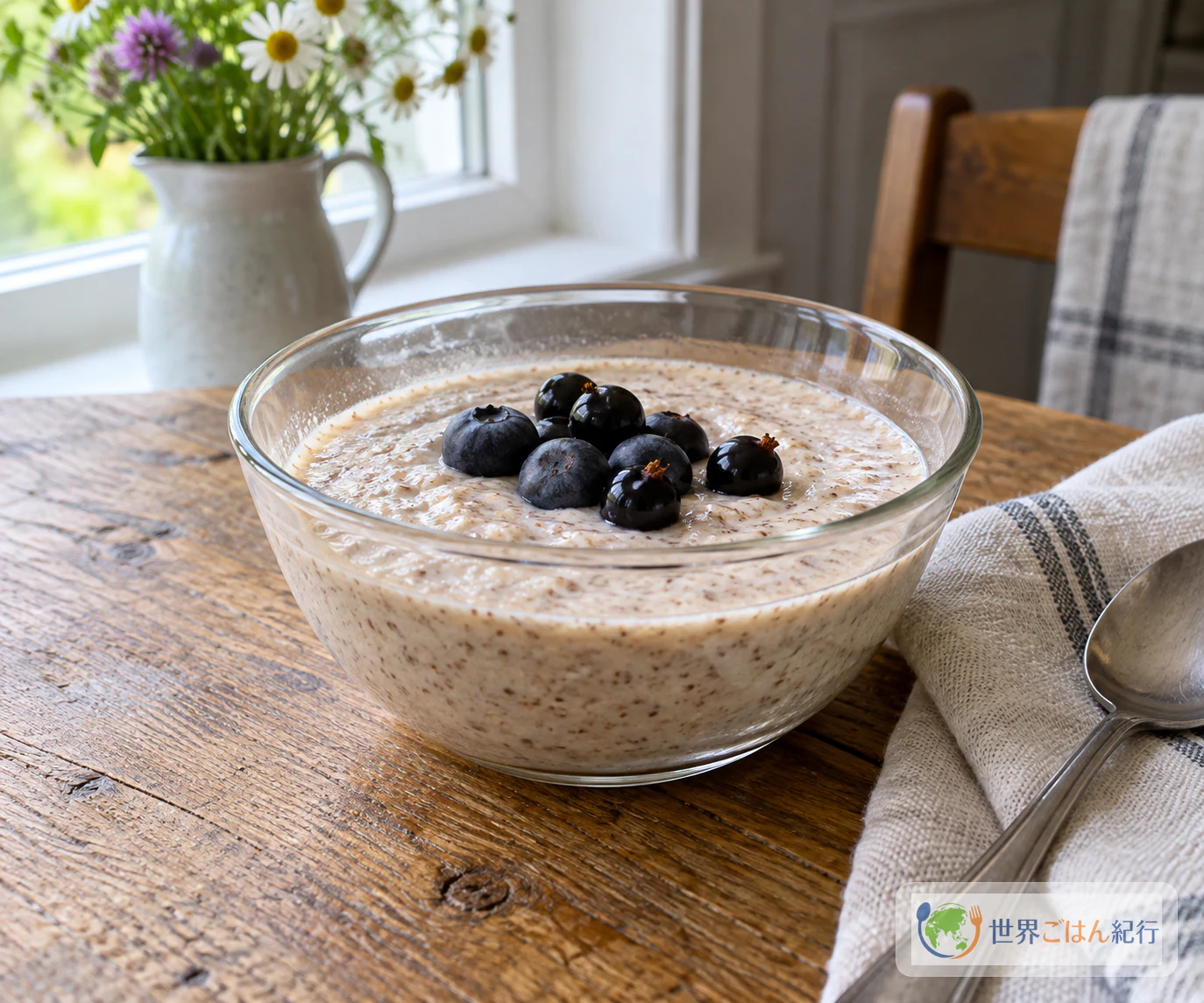
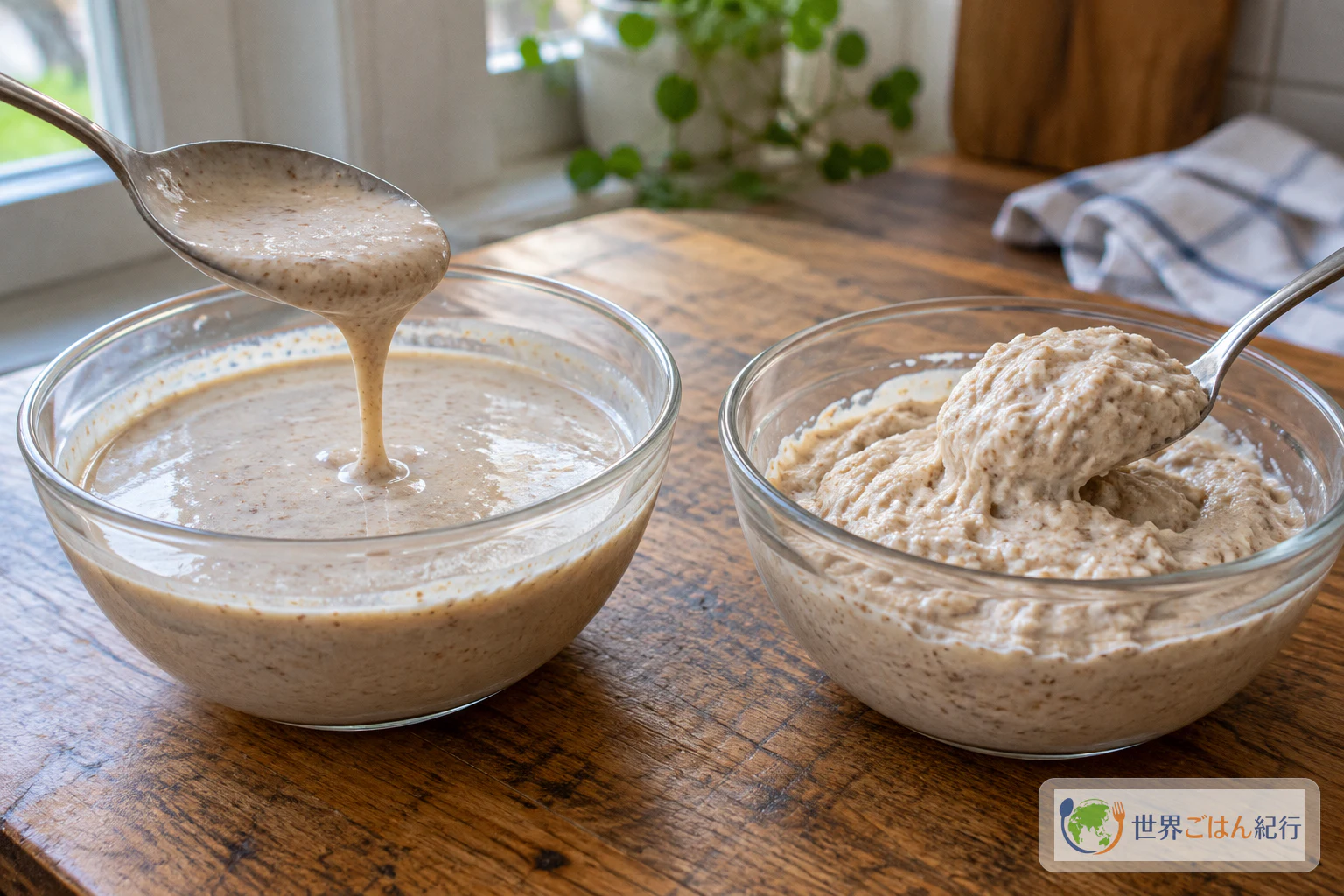
How thick that bowl ends up is part of the character of the dish. A regional account from Estonia's folk-culture centre describes kama mixed with sour milk, kefir or yogurt as something that can be thin enough to drink or thick enough to eat with a spoon, depending on how much flour goes in.
The word kama names both the flour and the food made from it. Below, the recipe follows the proportions published by the Estonian Institute as written. It has not been kitchen-tested for this article, so use the visual cues in the steps as a guide rather than a promise. For more dishes from the same country, see Estonian recipes.
What Kama Is: A Flour Blend That Changes by Region and Product
Kama flour (kamajahu) is a blend of roasted grains and legumes. The Estonian Institute lists roasted wheat, rye, barley, oats, dried peas and beans as possible components. Visit Estonia describes the usual flour mix as barley, rye, oat and pea, and notes that kama is traditionally eaten with sour milk such as buttermilk or kefir. These descriptions do not match exactly, and that is the point: there is no single fixed blend.
In Mulgimaa, the mixed version known as Mulgi kama or segakama is described as including barley, oats, rye, wheat, peas and beans. The Estonian Centre of Folk Culture adds that the ratios depend on what is available, on preference and on custom. That is why it is worth reading the ingredient list on any kama flour you buy: two packets with the same name may not contain the same grains or legumes, or the same proportions.
Ingredients for One Bowl of Kama
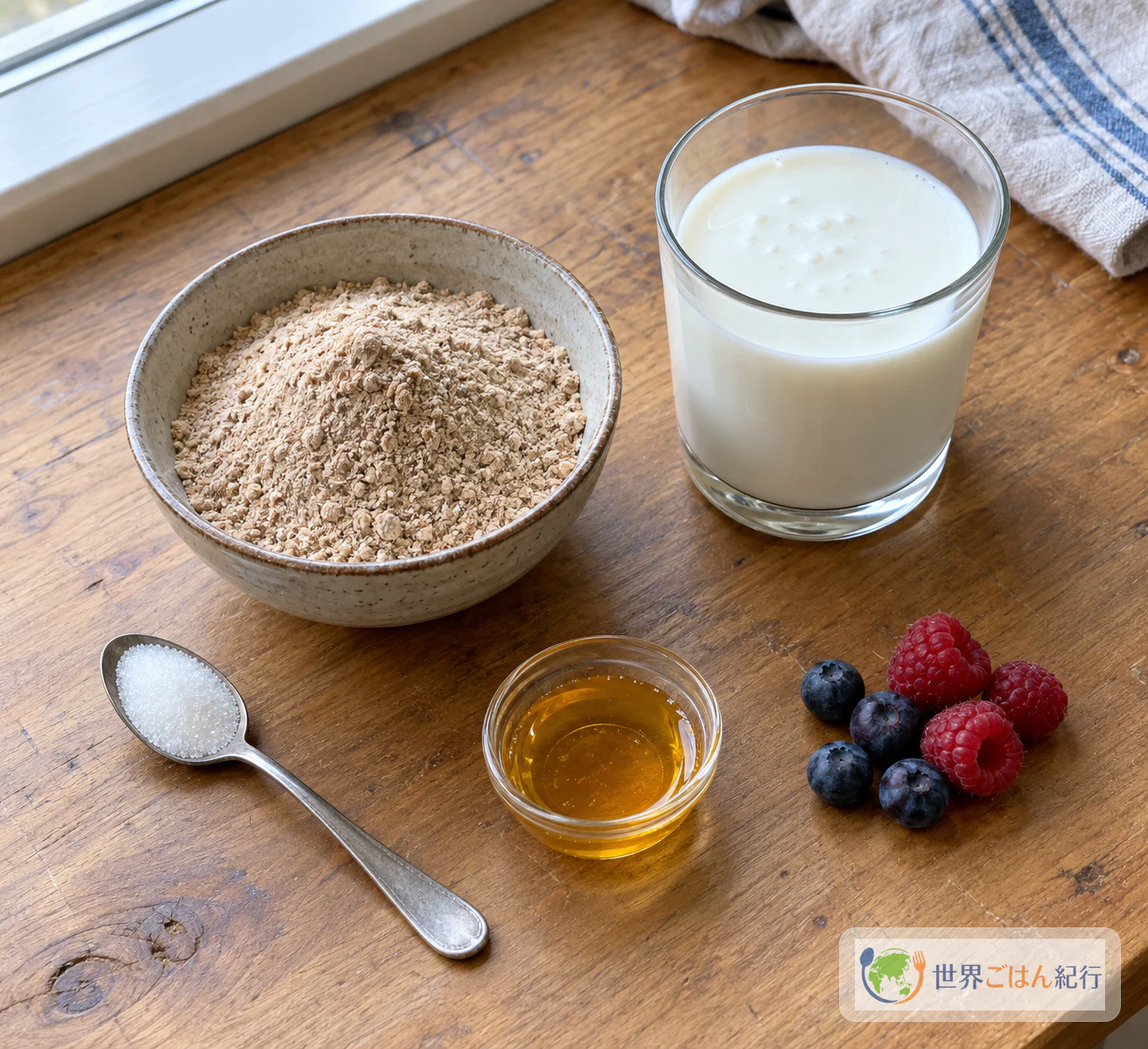
These are the Estonian Institute's published amounts, kept in the source's own units. The source does not state a yield; this is one bowl as written. Choose either sugar or honey, not both.
Depending on the product, kama flour can contain gluten-containing grains such as wheat, rye and barley, as well as peas and beans. Always check the product label. Kefir, curdled milk and yogurt are dairy, and honey is an optional ingredient to consider as well. Cross-contact cannot be assumed either way; check the label for each product you use.
Equipment
- A bowl
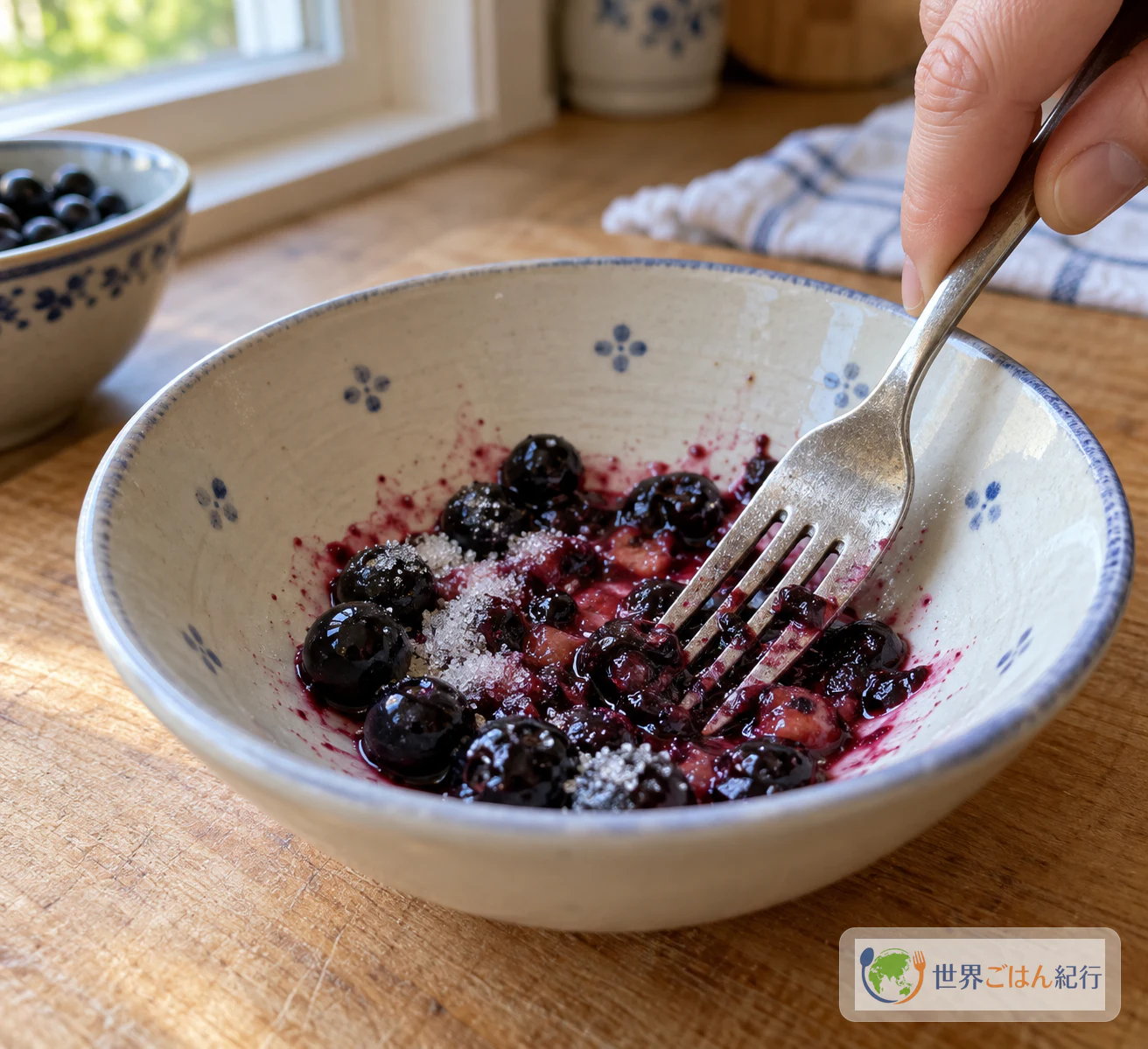
- A fork (only if using berries)
- A spoon for mixing
Choosing the Flour and the Milk
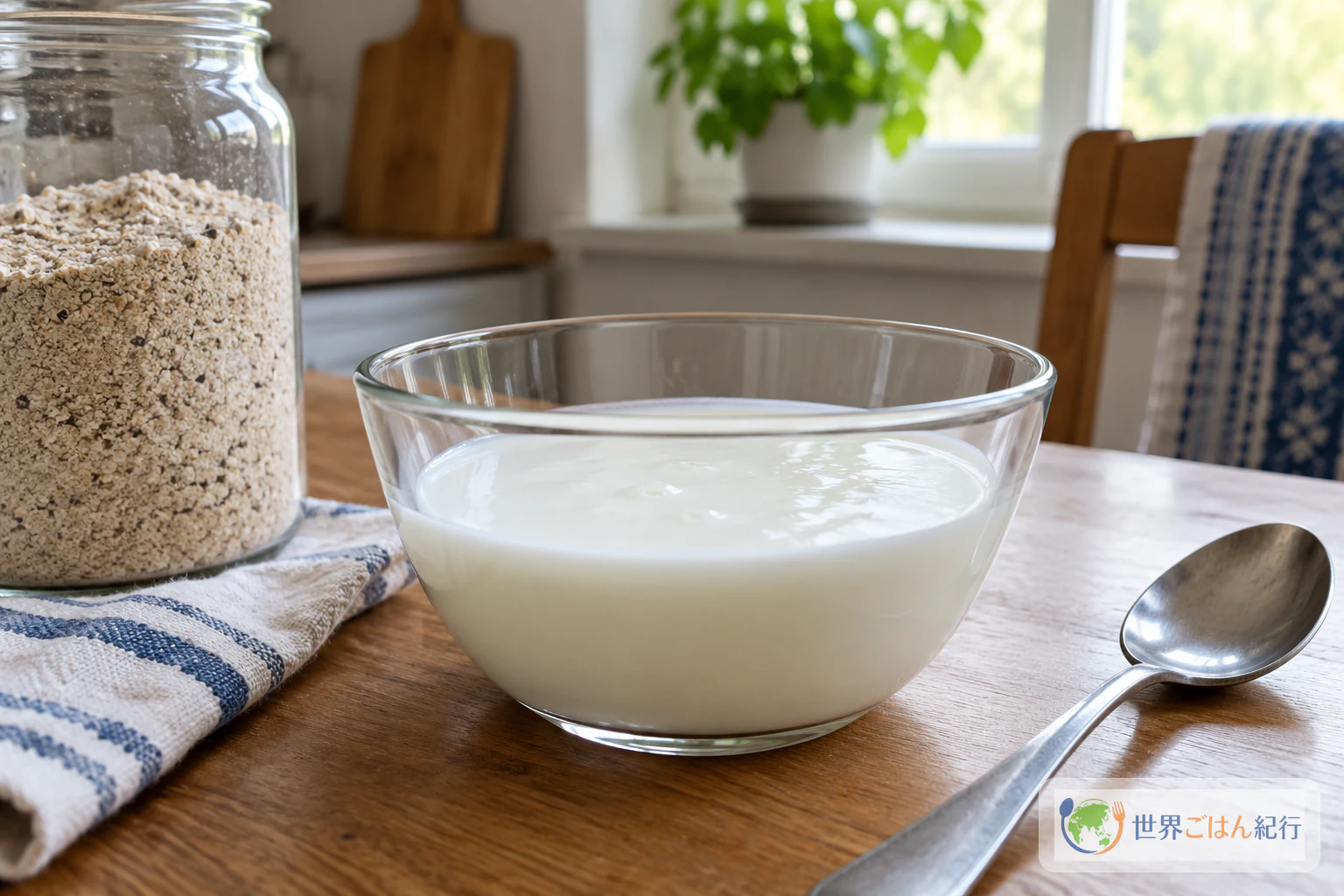
Look for kama flour itself. Search for "kama flour" or "kamajahu", and read the label to see which grains and legumes are in that particular product. Plain unsweetened kefir lets you control the sweetness yourself and stays close to the soured-milk base of the recipe.
Other flours are not kama. Roasted soybean flour (kinako), plain barley flour or starches such as potato starch are different products. They do not reproduce the blend or the roasted flavor, so anything you make with them is a different dish, not a traditional kama.
Yogurt is an allowed swap with a different result. The Estonian Institute permits unflavoured yogurt in place of curdled milk or kefir, but yogurt can be thicker, so the same amount may give a heavier bowl with a different sourness.
How to Make Kama
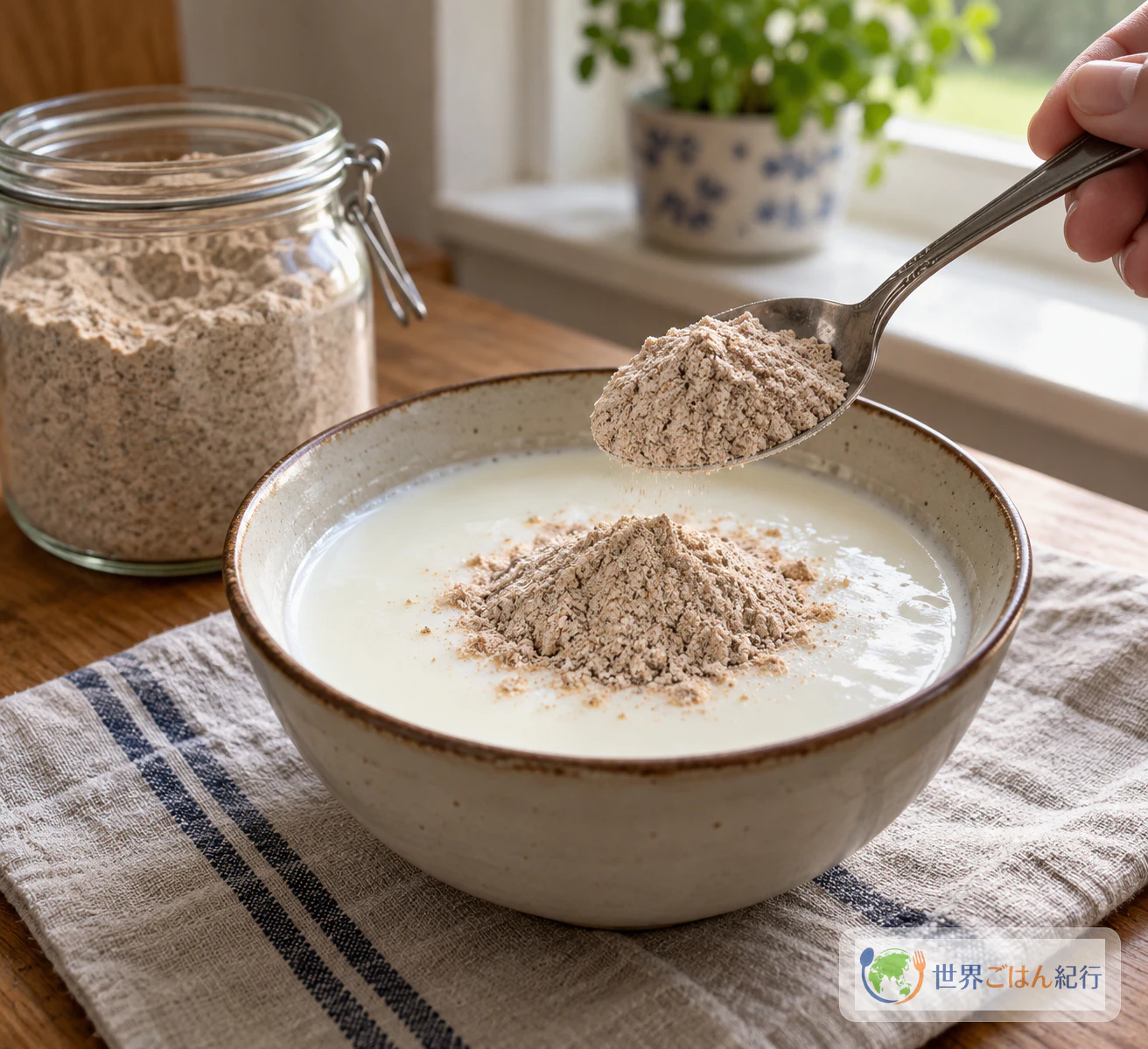
Everything is simply mixed. The source gives no temperature or timing; serving it cold suits its role as a hot-weather snack, but that is a suggestion rather than part of the published recipe.
Kama contains dairy and is meant to be made fresh and eaten right away. The sources give no storage guidance, so no storage time is given here; mix only as much as you will eat.
Troubleshooting
| Condition | Likely reason | What to do |
|---|---|---|
| Too thick or heavy | Flour toward the 3-tablespoon end, or yogurt instead of kefir | Next time start at 2 tablespoons. Loosening with a little more kefir is an option, but it moves away from the published proportions |
| Lumps of flour | Flour added in one heap | Spread the flour over the surface and stir it in gradually; press any lumps against the side of the bowl with the spoon |
| Thin and watery | Flour at the low end | Add more flour, staying within 2–3 tablespoons in total |
| Flavor tastes unfamiliar compared with another kama | Different product blend | Blends differ by product and region; check the label for which grains and legumes it contains |
| Tastes nothing like kama | A substitute flour was used | Other flours are different products; look for kama flour itself |
Variations
- Honey instead of sugar. The source allows either; use 2 teaspoons of one.
- With or without berries. Fresh or frozen wild berries are optional. Without them, the sourness of the milk and the roasted aroma of the flour carry the bowl.
- Drinkable or spoonable. Use 2 tablespoons of flour for a thinner bowl and 3 for a thicker one.
- Unflavoured yogurt. Allowed by the source, with a thicker body and different sourness from kefir.
- Less sweet. The regional account from Mulgimaa describes kama seasoned with salt, sugar or honey to taste, so a less sweet bowl is part of the tradition. That is a separate way of eating it; the main recipe here keeps the source's 2 teaspoons.
- Letting it stand. Some regional accounts describe leaving the mixture to stand for a while, which changes its thickness. This is a different way of eating it, not part of this recipe.
From Summer Fields to Modern Desserts
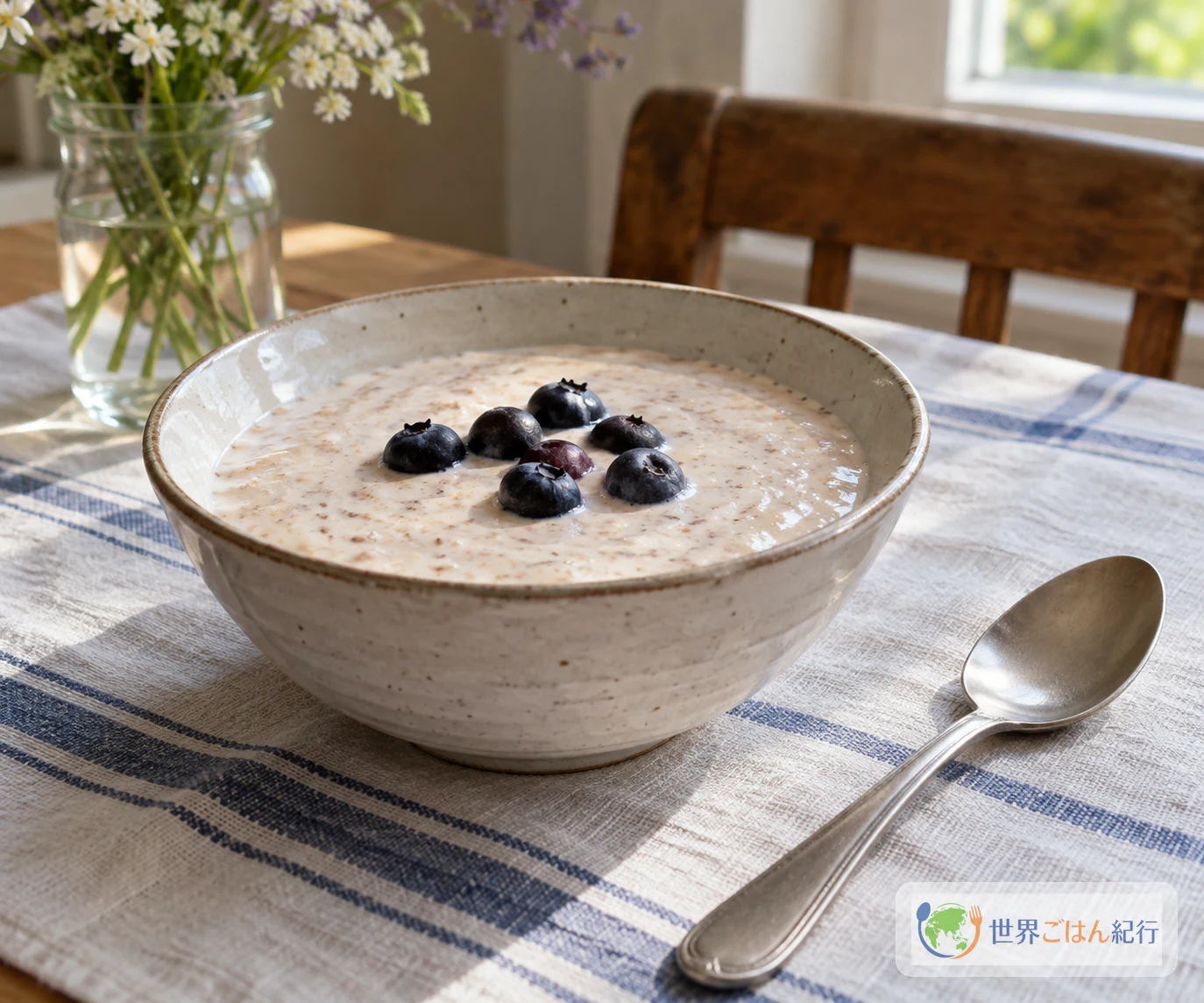
The Estonian Institute presents kama as a food taken along during haymaking in summer. A ready flour that only needed mixing with soured milk suited long working days; in a home kitchen today, the same quality makes it a snack you can put together in moments.
The history is told most fully by regional sources. According to the Estonian Centre of Folk Culture, the word kama appears in an Estonian–German dictionary from the early 18th century, where it referred to flour made from cooked oats. The same source, and the Mulgimaa food-region site, associate the mixed grain-and-legume kama known today with Mulgimaa, describing it as having spread more widely from there. These are the regional institutions' own accounts, and the Mulgimaa site itself notes that theories of more distant origins are uncertain.
Kama has also moved beyond the bowl. Visit Estonia describes it as an ingredient used in desserts rather than strictly a dessert itself, and notes that modern Estonian chefs use it in desserts. The simple mix of flour and soured milk in this recipe is the everyday form; dessert uses are a separate development.
Frequently Asked Questions
What goes into kama flour?
It depends on the household, region and product. Sources list combinations of roasted wheat, rye, barley and oats with peas and beans; Visit Estonia describes the usual mix as barley, rye, oat and pea. Check the label of the product you buy.
Can I use kinako instead?
Kinako is not the same blend or the same roast, so the flavor and texture will be different. If you use it, treat the result as a different dish rather than kama.
Is kama a cooked dish?
No. In this recipe the flour is simply mixed with curdled milk or kefir; there is no heating step.
Is it a drink or a dessert?
It depends on how thick you make it and how you serve it. With less flour it can be drunk; with more it is eaten with a spoon. Visit Estonia also notes its modern use as an ingredient in desserts.
Are the berries required?
No. The source lists fresh or frozen wild berries as optional.
Sources
- Estonian Institute, "Estonian Cuisine" (PDF). The recipe proportions and method (curdled milk or kefir, or unflavoured yogurt; kama flour; sugar or honey; optional berries crushed with the sweetener), the possible components of kama flour, and kama as a summer food taken along during haymaking and a light hot-weather snack. https://estinst.ee/wp-content/uploads/2017/03/581_Estonian-Cuisine_ENG_2015_veebi.pdf
- Eesti Rahvakultuuri Keskus (Estonian Centre of Folk Culture), "Kama valmistamine ja söömine Mulgimaal." The components of Mulgi kama / segakama, ratios varying with availability, preference and custom, drinkable versus spoon-thick consistency, the 18th-century dictionary record, and Mulgimaa as the described origin of the mixed version. https://rahvakultuur.ee/2020/03/17/kama-valmistamine-ja-soomine-mulgimaal/
- Visit Estonia / Estonian Business and Innovation Agency, "Five classic foods to try in Estonia." Kama as an ingredient used in desserts, the usual barley, rye, oat and pea mix, the traditional pairing with sour milk such as buttermilk or kefir, and modern dessert use by Estonian chefs. https://visitestonia.com/en/what-to-do/five-classic-foods-to-try-in-estonia
- Mulgi Culture Institute / Mulgimaa food-region site, "Mulgi toit. Retseptid – Mulgi kama elik segakama." The mixed kama associated with Mulgimaa and its wider spread, historical and contemporary lists of grains and legumes, kama as a summer food eaten at different thicknesses, and caution about remote-origin theories. https://mulgimaa.ee/toidupiirkond2023/mulgi-toit-retseptid/mulgi-kama-segakama/