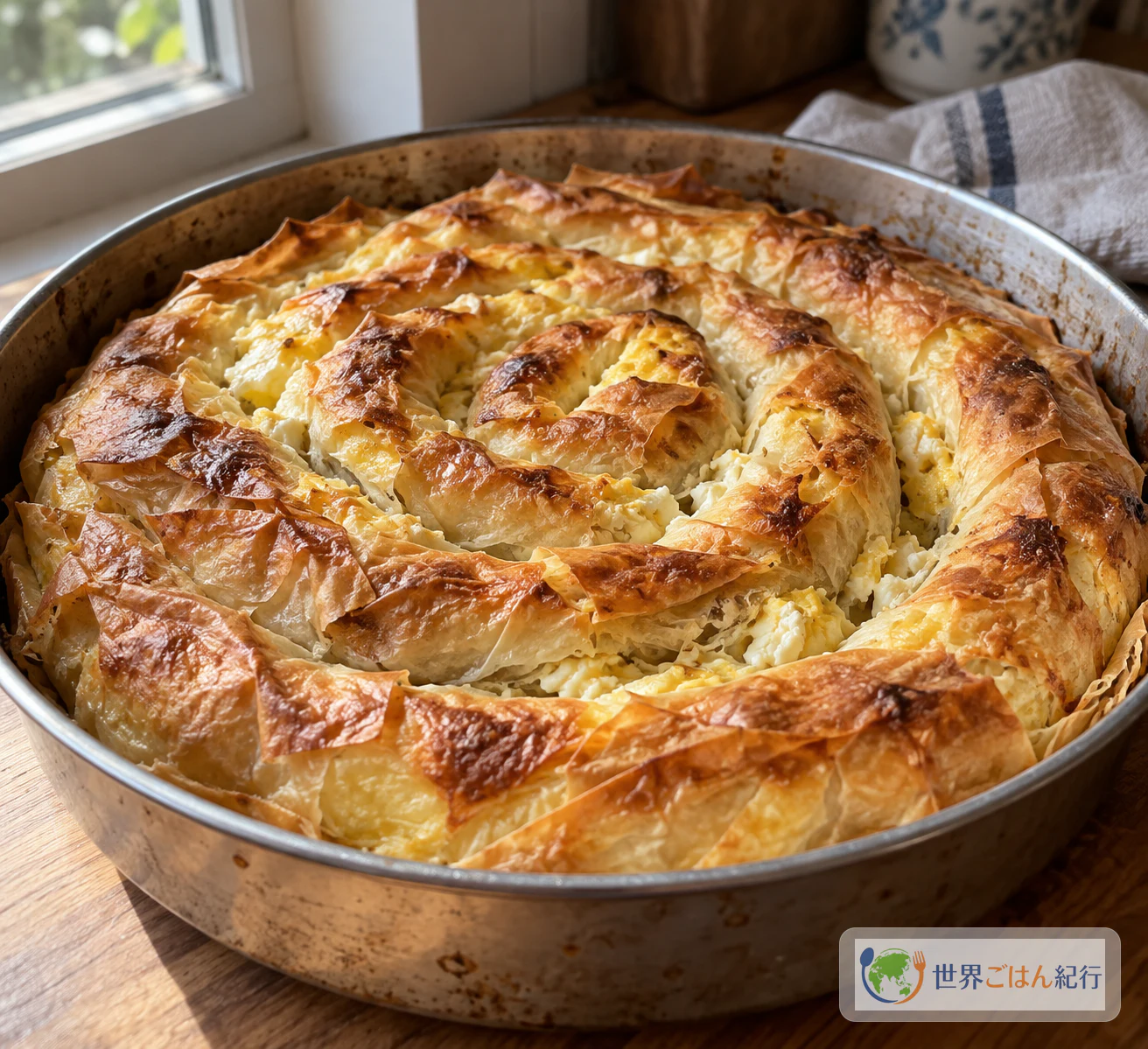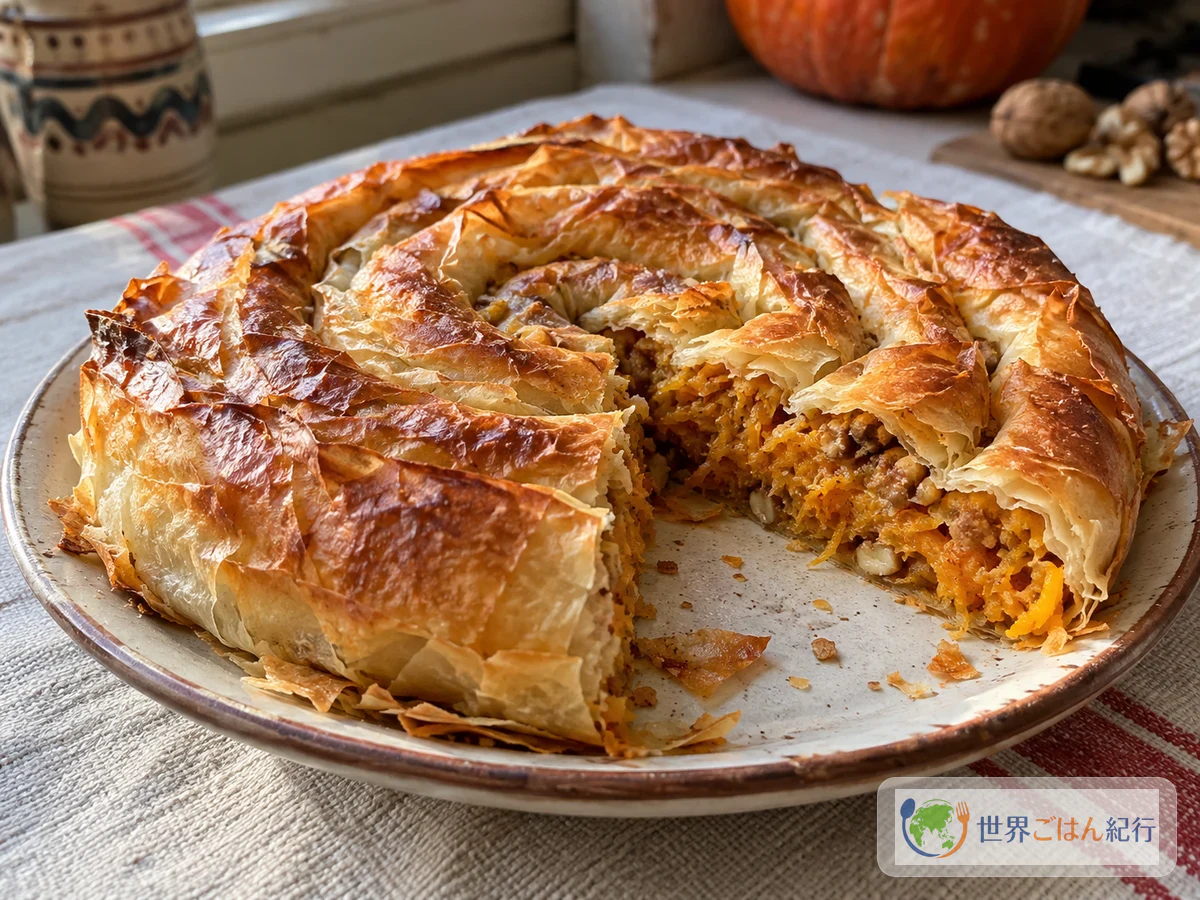
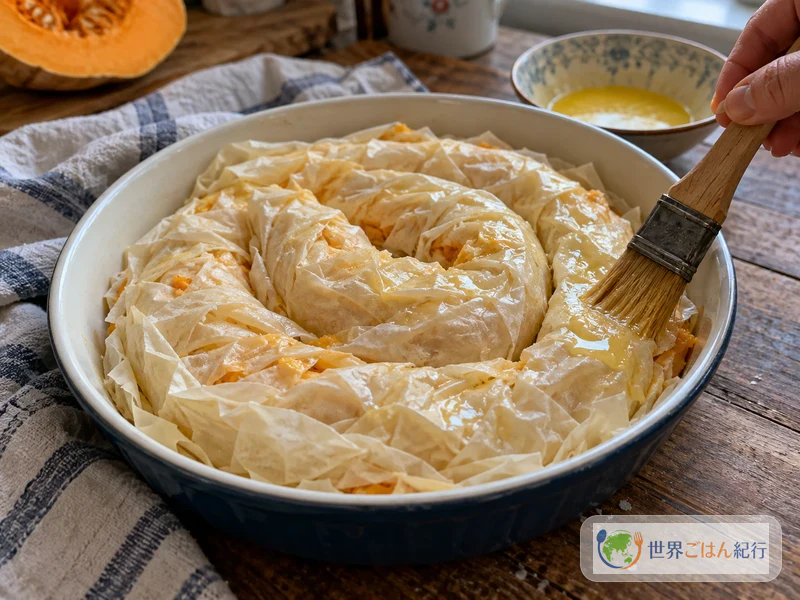
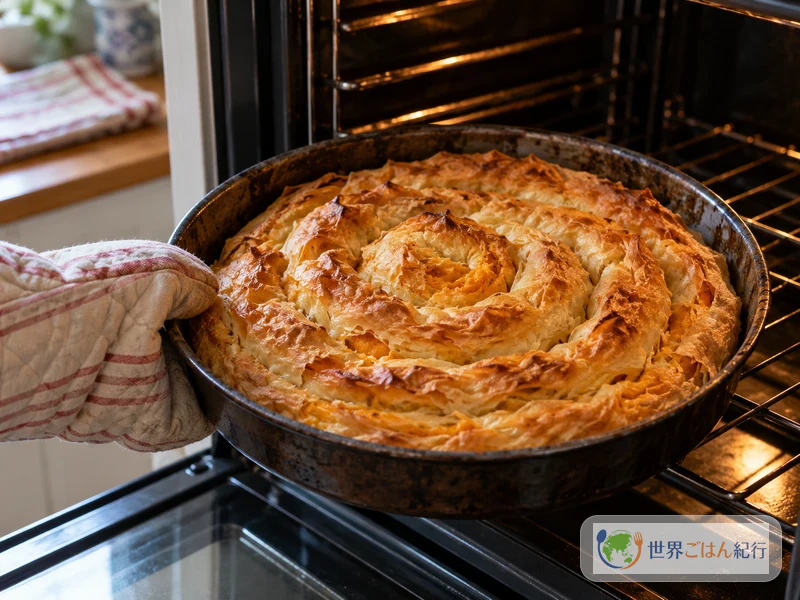
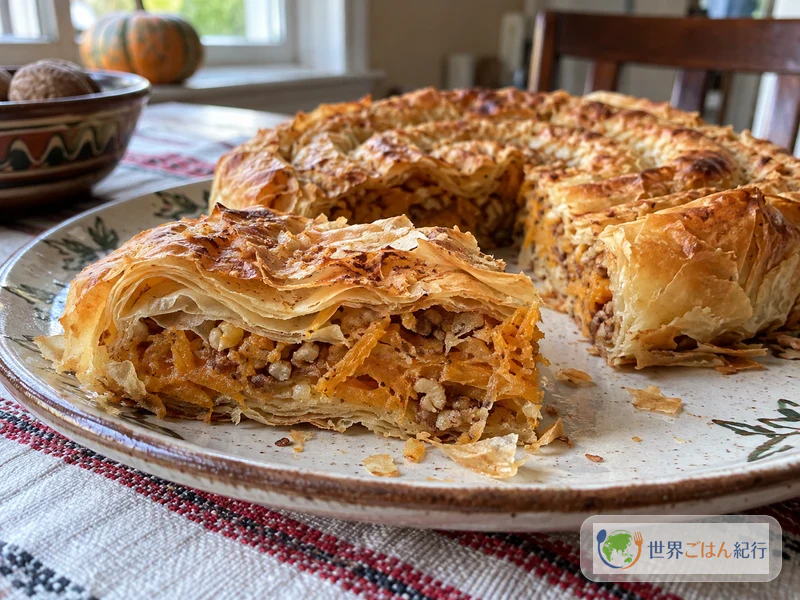
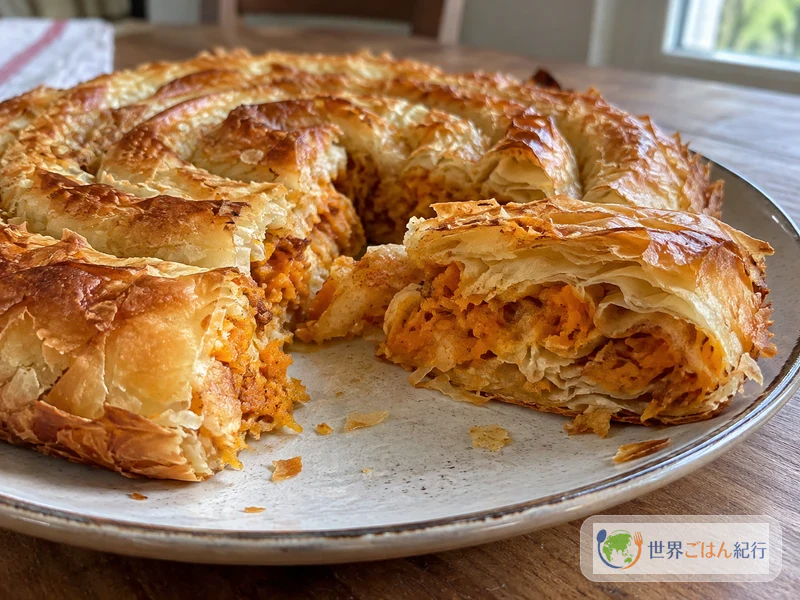
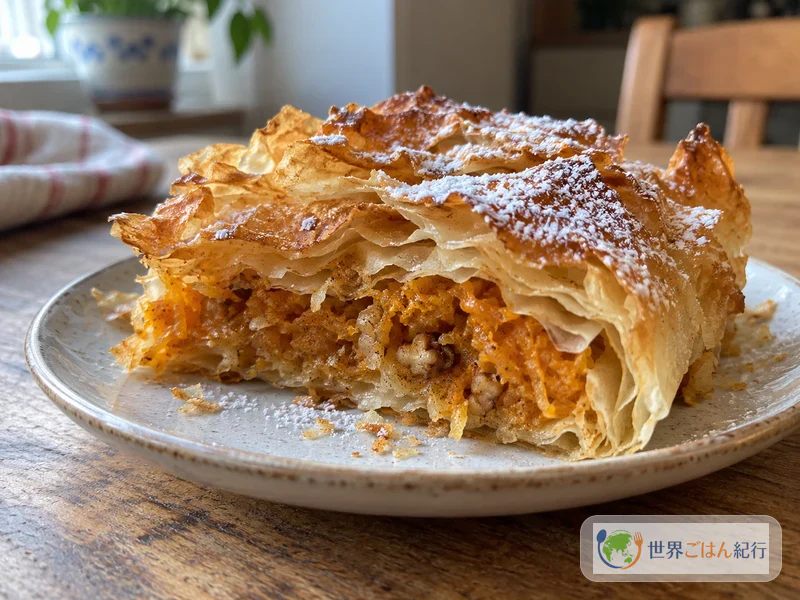
The dry crackle when a knife goes into a spiral fresh from the oven. From inside the thin layers of baked phyllo, pumpkin scented with cinnamon peeks out. Tikvenik (тиквеник / tikvenik) is a sweet Bulgarian pastry made by wrapping grated pumpkin in phyllo and baking it. A paper-thin, crisp exterior layered with cinnamon-scented pumpkin is the heart of this sweet. The cooking articles I consulted present examples eaten on Christmas Eve and in autumn and winter, and examples eaten all year.
Where the name comes from, and seasonal tikvenik in the articles
The name is said to come from tikva, meaning pumpkin. It is a sweet made by rolling pumpkin, sugar and cinnamon in thin phyllo and baking, and a bite spreads the sweetness of pumpkin and the scent of cinnamon together with the toastiness of the dough. Banitsa, made with the same thin dough, is an unsweetened pastry wrapped around cheese. Tikvenik is a close relative, a sweet cousin that uses pumpkin in place of cheese. The cooking articles consulted here explain the name and the dish, but do not state when or where it arose. Rather than settling on a single origin, we look at its outline through the ingredients and methods described.
In Bulgarian it is written тиквеник. Caroline's Cooking, which presents the recipe, describes it as the sweet version of cheese banitsa. That is only one way of presenting it, however, not a fixed classification shared across all of Bulgaria.
On its link to the winter table, Caroline's Cooking says it is a Christmas Eve dessert and also an autumn and winter sweet. The Vegan Physicist also gives an example of eating it at Christmas, while noting that it is eaten all year round. These are examples described in the two articles consulted; there is no source from which to generalize how often it appears on holidays or ordinary tables. It cannot be said to be always baked on holidays, or to take the same form in every household. As for regional differences, the articles consulted do not allow a comparison of fixed formulas or distribution across Bulgaria. What can be confirmed is that, even among the examples presented, there is a range in how the filling's moisture is cooked off and how it is rolled.
Compared with banitsa and bundevara, differences between households appear
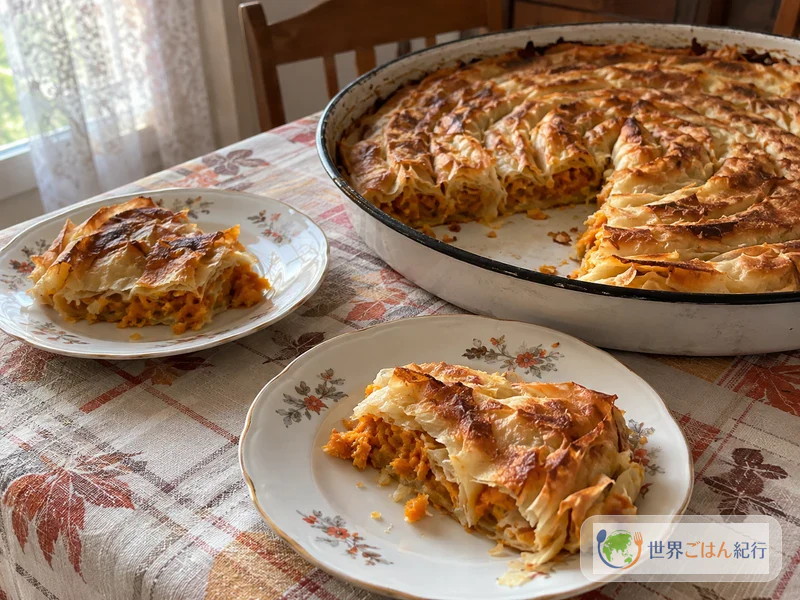
Caroline's Cooking likens tikvenik to a sweet version of cheese banitsa. The same article takes up Serbian bundevara as a similar pumpkin pastry, and contrasts it by saying bundevara often does not cook the filling first and is sometimes not made into a spiral. A different recipe compiled by the Vegan Physicist includes both a method of sprinkling sugar to draw out the pumpkin's moisture and then squeezing it, and a method of cooking off the water with heat. Both are comparisons within the articles, not strict definitions for the whole country. Even so, it is clear that for pastries of the same thin dough, each household handles the pumpkin differently.
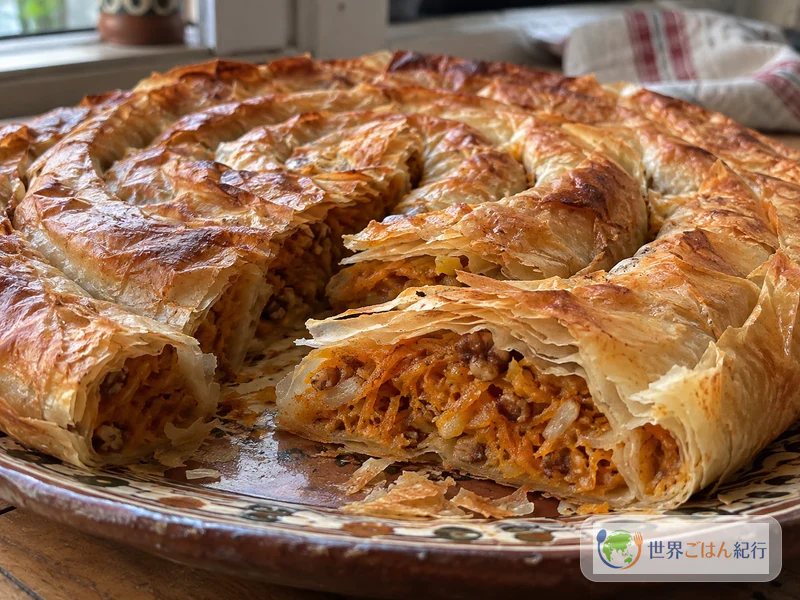
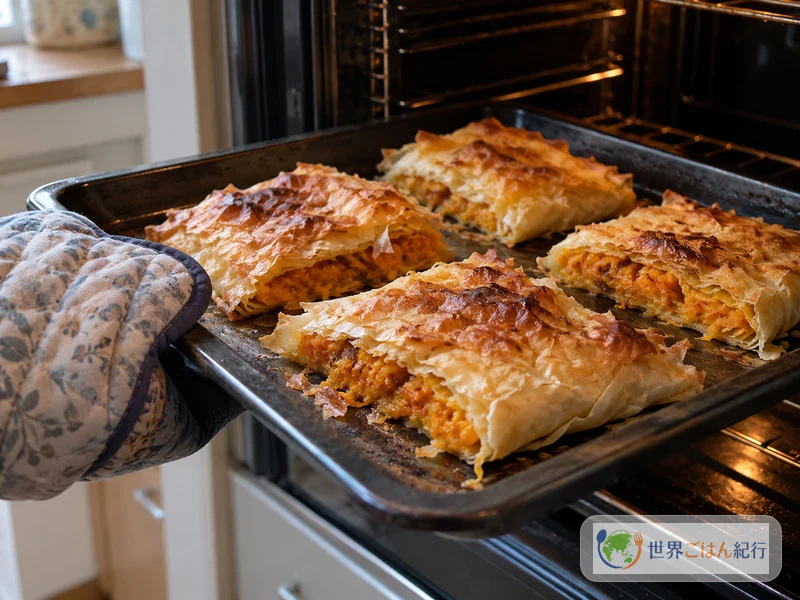
In the Vegan Physicist's comparison of several examples, some formulas leave out the walnuts or spices, and the finish varies from powdered sugar to syrup to nothing at all. Shapes also vary: some join rolls into a single spiral and others bake each roll separately. A spiral, or straight rolls, both are forms of tikvenik.
Caroline's Cooking's home recipe uses butter and cooks the filling to drive off moisture. Start with this method and enjoy the texture of the thin dough and pumpkin.
Ingredients (18–20 cm round, serves about 4)
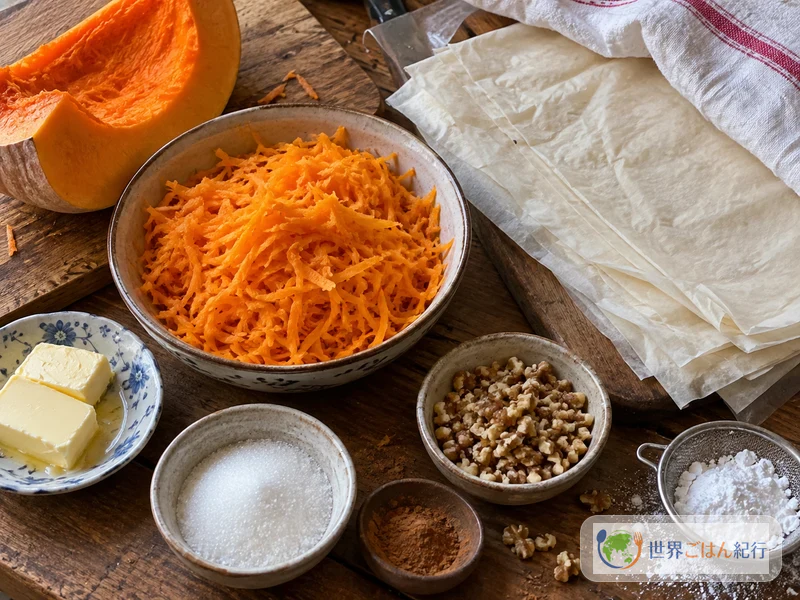
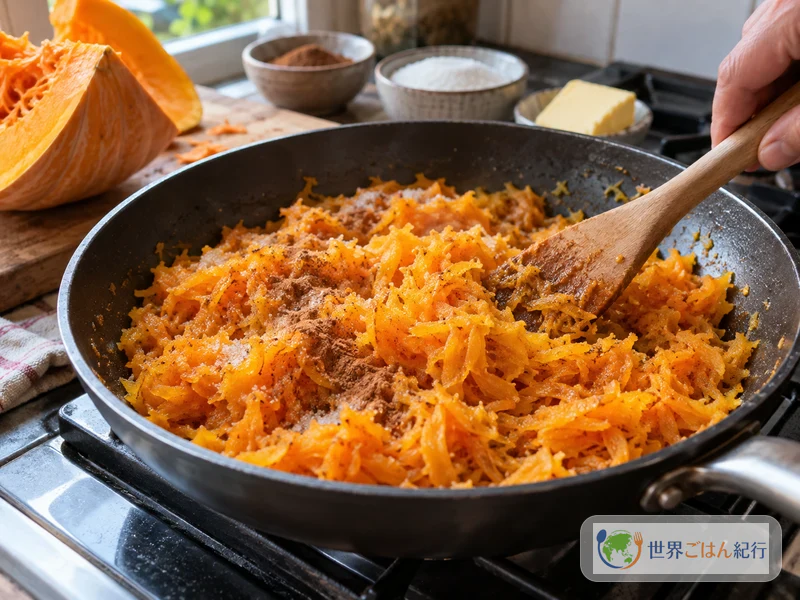
Phyllo is different from frozen puff pastry; it is dough in very thin layers. If you can't find it at a nearby shop, try the frozen section of an import store or order online. Whether it is stocked, however, differs from store to store. The other important point is that the star is raw grated pumpkin. Use raw pumpkin, coarsely grated. Fibers left in place come closer to this recipe's texture than a moist, smooth paste.
Phyllo dough is the key ingredient that creates this sweet's thin layers and light bite. Frozen puff pastry differs in thickness and texture, so substituting it will not give the same result. If you make it with puff pastry, enjoy it as a home variation separate from tikvenik. Pumpkin, cinnamon and walnuts are all familiar ingredients.
Phyllo dough contains wheat, butter contains milk, and walnuts are tree nuts. Store-bought phyllo differs in ingredients and allergen labeling by product, so check the package. Leaving out the walnuts still leaves wheat and milk, so allergens cannot be fully removed.
Small tips for a crisp bake
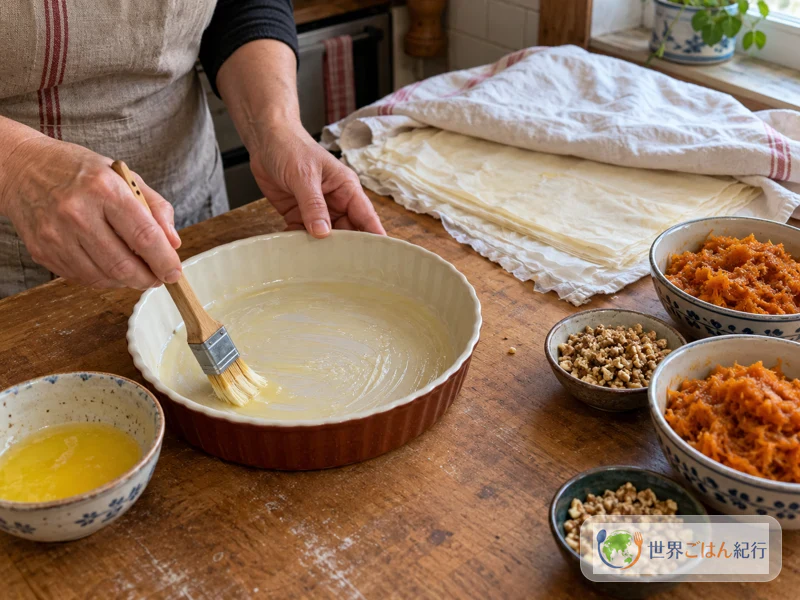
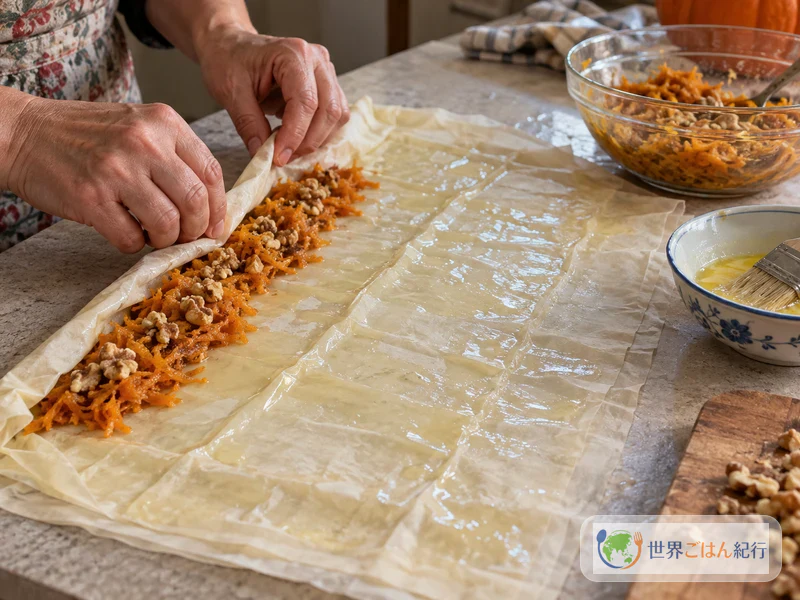
Make the filling ahead and let it cool a little. If you put wet, hot filling on thin phyllo, it quickly turns damp. Before taking the dough out of its bag, have the dish, butter and filling at hand, and the time the phyllo is exposed to air will be short. Don't roll tightly; leaving a little slack is just right. Bend it into a spiral while the dough is still soft, and settle the shape before it dries. If the dough dries and starts to crack anyway, don't force a spiral; you can also bake the rolls laid out as they are.
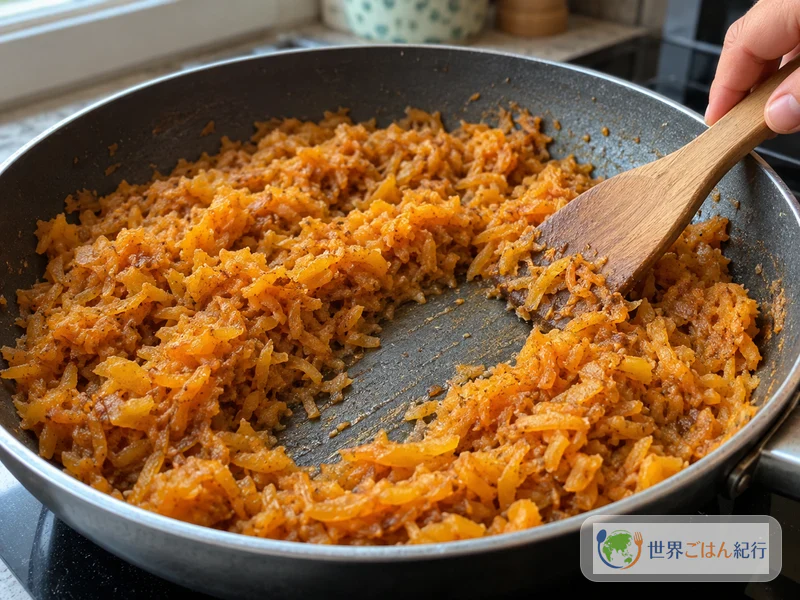
If the pumpkin is very wet, fry it in a wide frying pan to let the steam escape and cook off the moisture. Don't pack the filling tight; place it in a thin line along the long edge. If the bottom is damp after baking, the moisture that soaked into the dough can't be undone. Adjusting moisture before baking decides whether it comes out crisp.
Melt the butter over low heat and don't pour it piping hot onto the phyllo. Where it is missed, the color and crisp layering will differ in that spot. At the same time, don't soak it; distribute the butter evenly over the whole thin dough.
Home versions with different pumpkin or sweetness
The standard formula here includes coarsely chopped walnuts. If you leave them out, enjoy it as a variation with a different nutty crunch. The Vegan Physicist's recipe uses butternut squash and has a vegan formula with oil, but because that is a different recipe, don't mix it with the butter formula. If you want to change the shape, baking straight rolls is easier to shape than a spiral. The finished appearance changes accordingly.
What decides sweetness is the sugar added to the filling. Powdered sugar is for finishing, dusted after baking, so when you want to change the sweetness a lot, adjust the sugar in the filling. The signature scent is cinnamon. If you want to try adding other spices, bake once with this formula and learn its original sweetness and aroma first, and it will be easier to tell what changed.
When it goes wrong, go back to before baking
If water comes out of the filling, return it to a wide frying pan and cook it further, then cool it once the liquid is no longer noticeable. If the phyllo dries and cracks, work quickly and keep the dough you're not using covered. If the cracks are small, wrap them in the stacked dough and bake it straight without forcing a spiral. If the spiral unwinds, rather than trying to coil it tightly, lay it along the outer edge of the dish and connect the end to the next roll. If only the surface darkens first while baking, check that it isn't burning. Judge doneness by the color of the surface and the dryness of the layers. In every situation, put not tearing the dough ahead of the shape.
Storage
According to Caroline's Cooking, baked tikvenik keeps for 1–2 days, and the dough softens by the next day. That is about taste; the safe time and the texture deadline are separate matters. FoodSafety.gov advises that after baking it be moved into a shallow container within 2 hours and refrigerated, with the refrigerator kept at 4°C or below. Don't leave it at room temperature for a long time. No reliable method is known for restoring the dough's texture after storage. How long it keeps frozen also has no reliable guideline.
FoodSafety.gov advises refrigerating cooked food within 2 hours (within 1 hour when the outside temperature exceeds 32°C). Divide it into shallow containers and keep the refrigerator at 4°C or below. This is a general guideline for storing leftovers, not the result of storage tests on tikvenik.
Frequently asked questions
Can I make it with frozen puff pastry?
Frozen puff pastry is thicker than phyllo, and its layering and bite are different. You can make it as a home variation, but it will not have the same texture or method as this recipe.
Can I make it without walnuts?
Leaving out walnuts is a variation that changes texture and toastiness. It does not guarantee suitability for allergies. Check the ingredients of the dough and the production-line labeling too. Even without walnuts, allergens such as wheat and milk remain.
Can I use butternut squash instead of pumpkin?
The Vegan Physicist publishes a recipe using butternut squash. When using it, also go by the weight after removing skin and seeds, and fry it according to its moisture to cook off the water.
Will the dough still be crisp if I make it ahead?
According to Caroline's Cooking, the dough softens by the next day. If you store it, put it in a shallow container within 2 hours of baking and refrigerate at 4°C or below. No reliable method is known for restoring the dough's texture after storage.
A dish that leads to the Bulgarian table
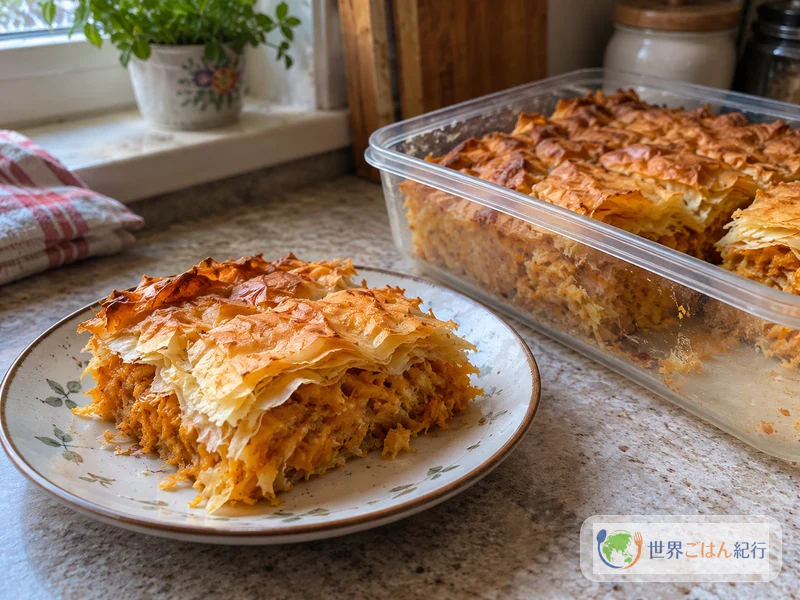
Tikvenik, with its pumpkin filling rolled in thin dough and baked, is presented as a Bulgarian sweet. The two cooking articles consulted mention examples eaten at Christmas and in autumn and winter, and say it is eaten year-round. Baked in a home kitchen: don't let the phyllo dry out, cook off the moisture in the filling, and spiral it while the dough is still soft. A slice baked that way has thin dough and the sweetness of pumpkin layered together. If you'd like to peek a little further into the Bulgarian table, try the page for Snezhanka too.
Nutrition (approximate per serving)
| Nutrient | Amount |
|---|---|
| Energy | 221 kcal |
| Protein | 3 g |
| Fat | 13 g |
| Carbohydrates | 25 g |
The figures are estimates per serving when the whole is divided into about 4 portions, based on the approximation published by Caroline's Cooking. They vary with the moisture of the dough and pumpkin, the brand of products used and the size of the cut. They are not values actually analyzed or measured.
Sources
- Caroline's Cooking. “Tikvenik - Bulgarian pumpkin strudel.” https://www.carolinescooking.com/tikvenik-bulgarian-pumpkin-strudel/ (accessed and checked 20 October 2026)
- Vegan Physicist. “Bulgaria: vegan tikvenik.” https://veganphysicist.com/bulgaria-vegan-tikvenik/ (accessed and checked 20 October 2026)
- FoodSafety.gov. “Bacteria and Viruses.” https://www.foodsafety.gov/food-poisoning/bacteria-and-viruses (accessed and checked 20 October 2026)