Berliner Eisbein: A Quiet Pot, a Soft Purée and Sharp Sauerkraut
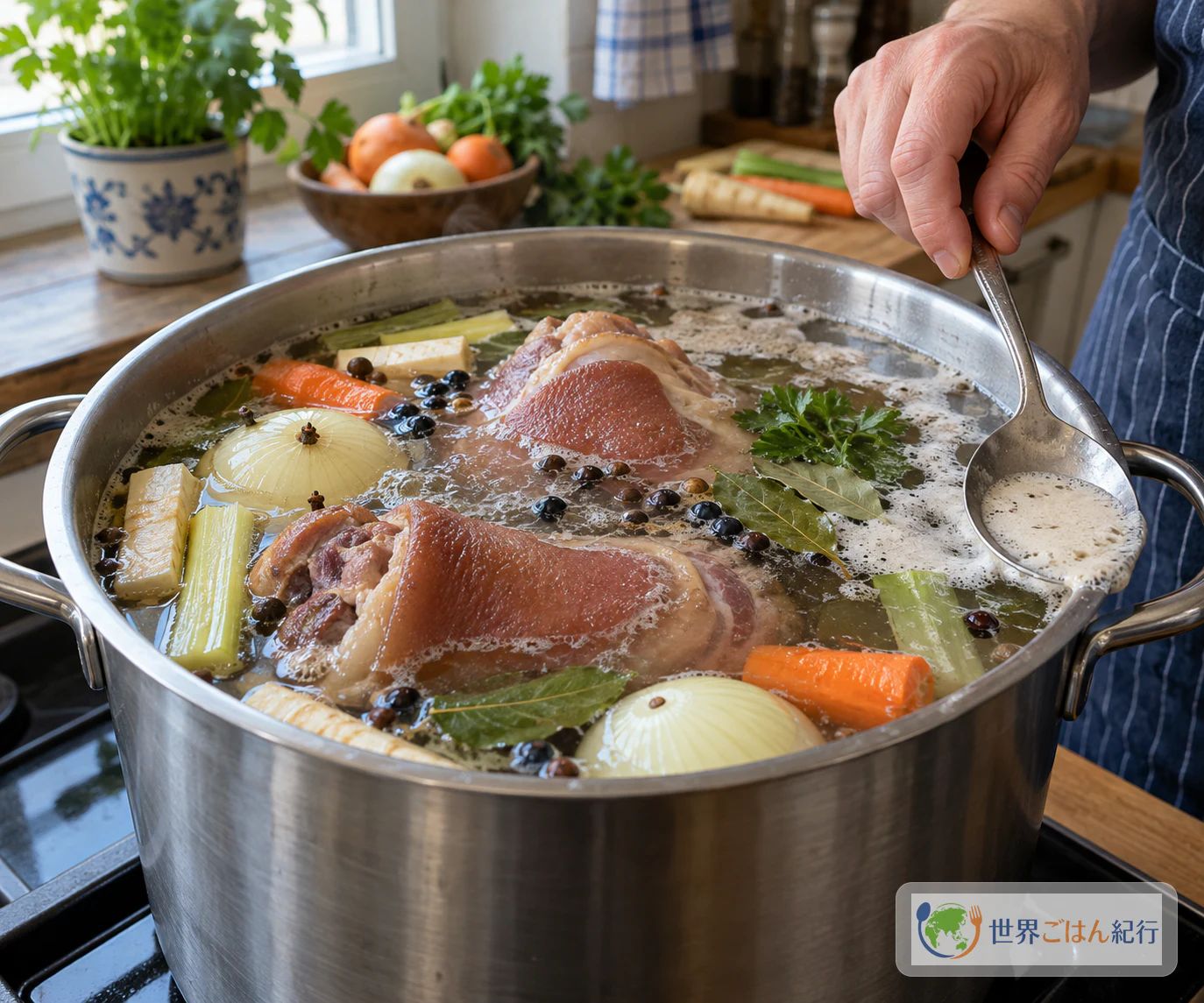
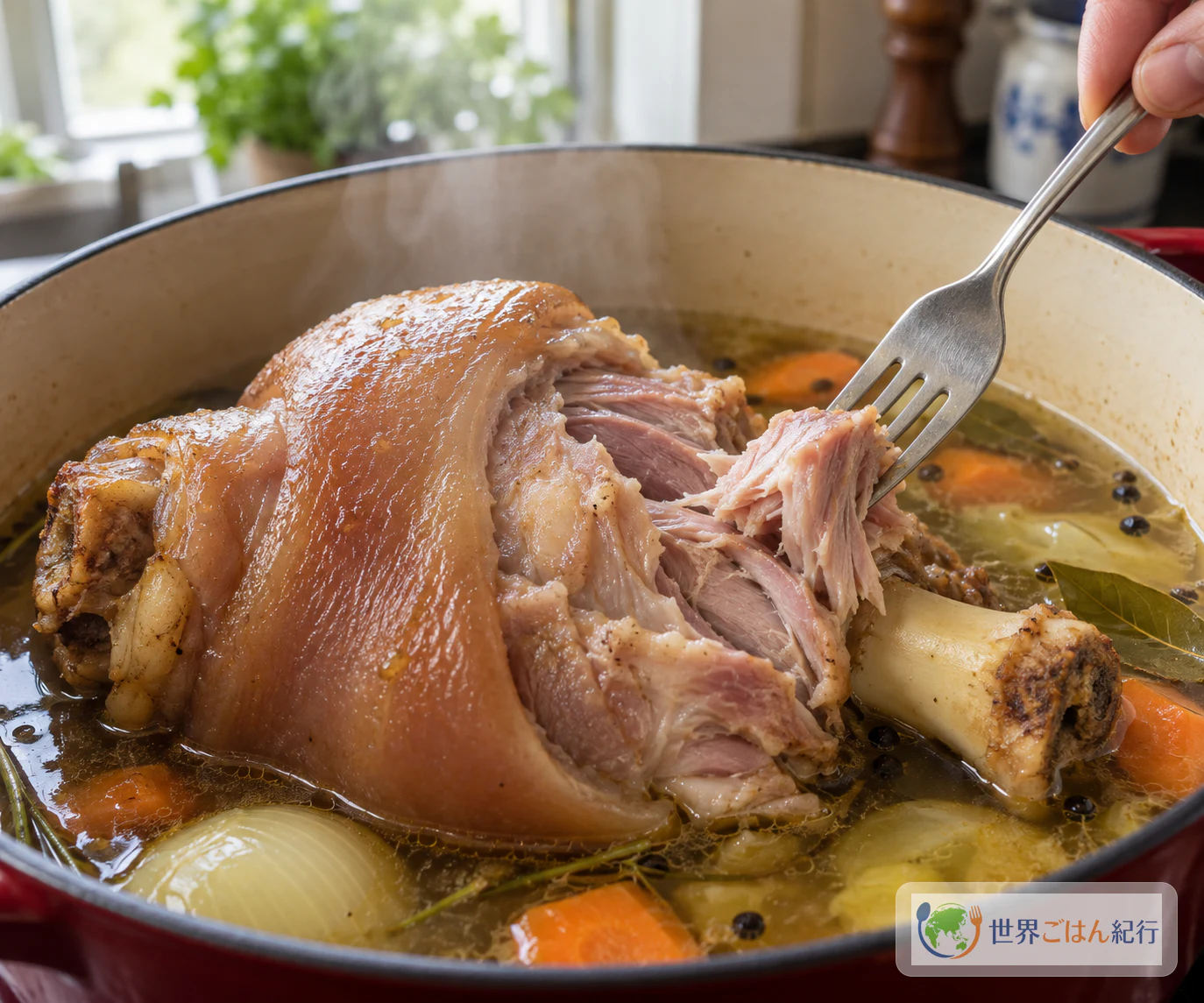
Simmer the cured knuckle gently, never at a rolling boil, until the meat comes away from the bone easily. Let the cooking liquid tie the plate together: a little goes into the pea purée, a little into the sauerkraut.
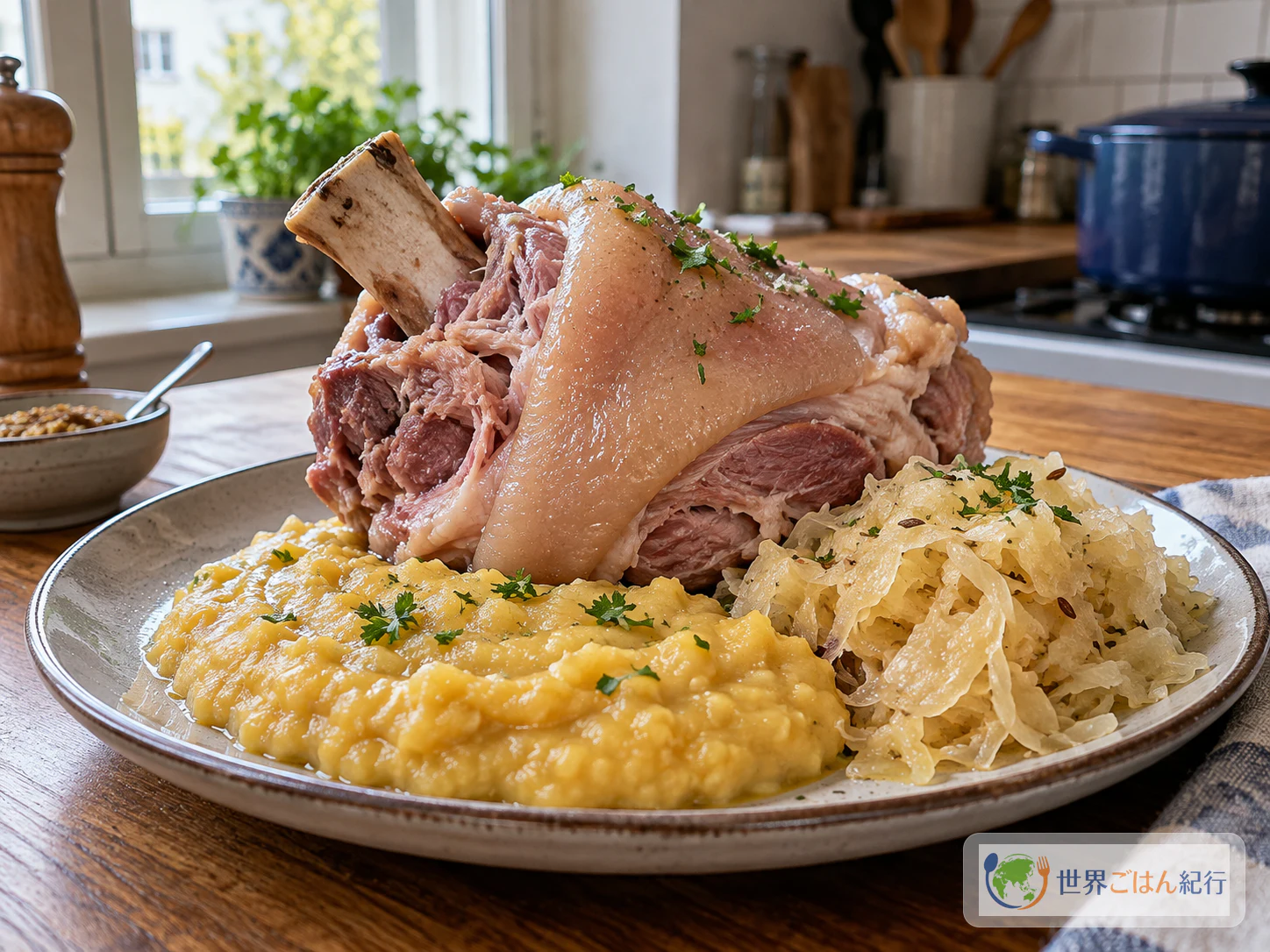
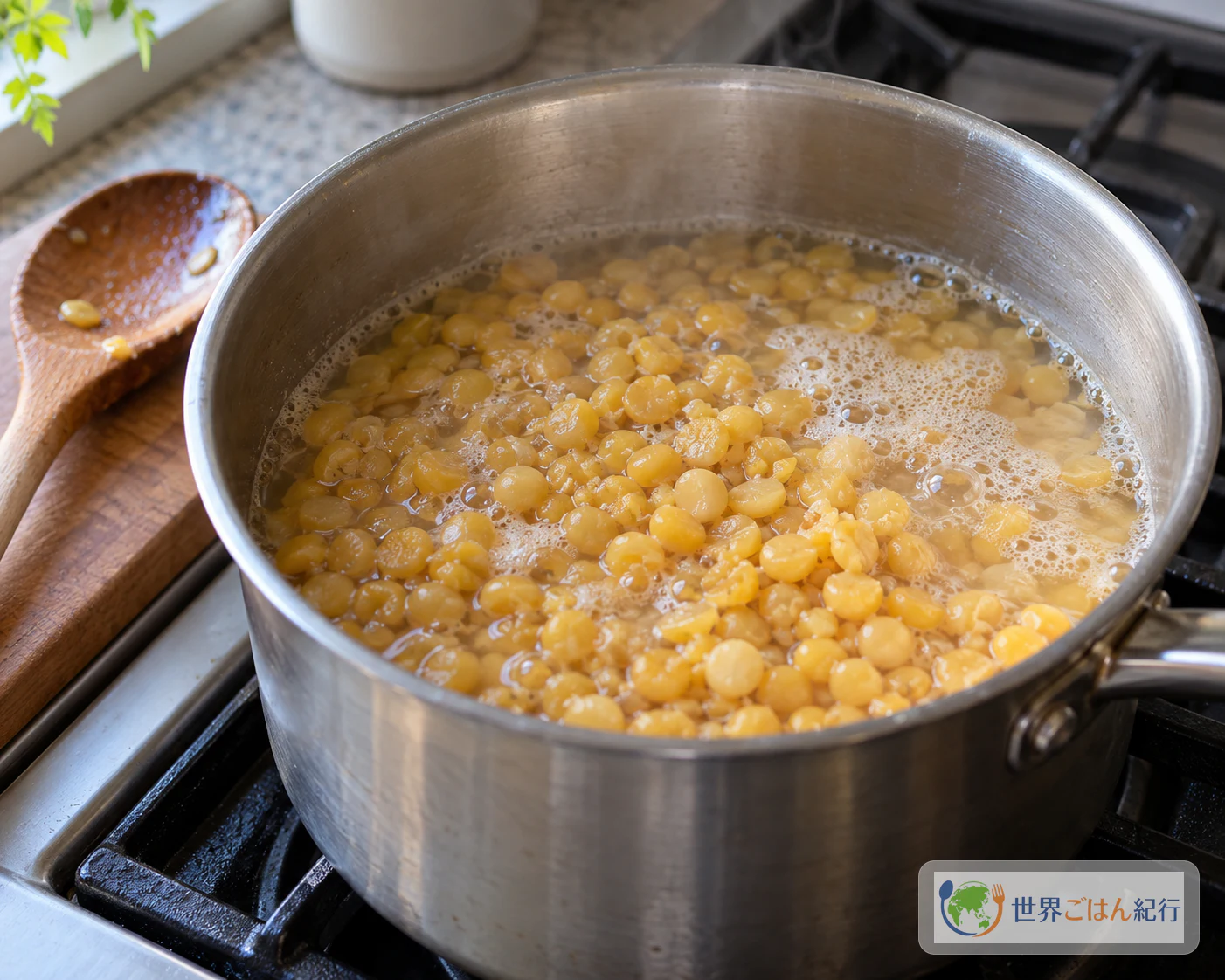
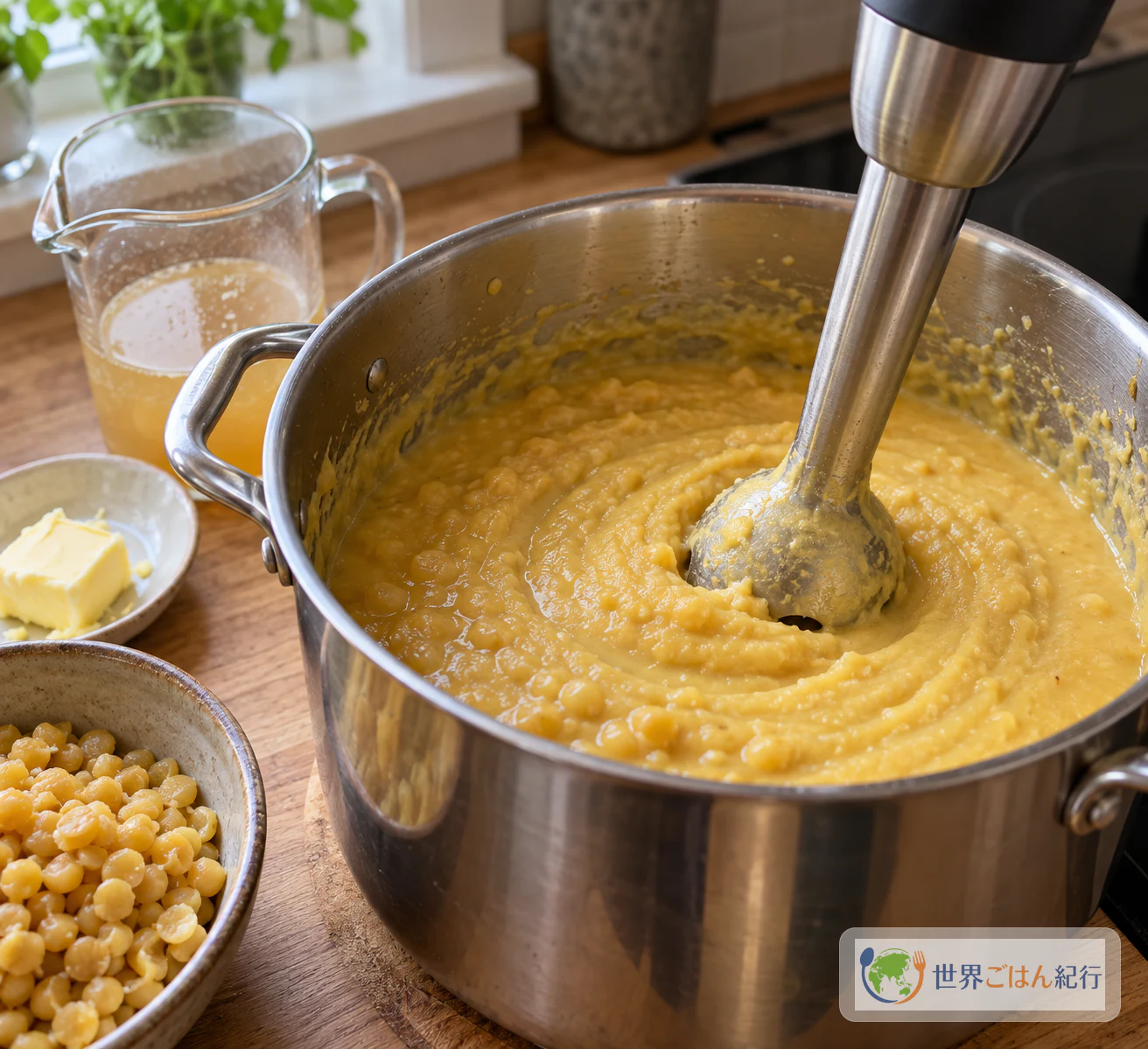
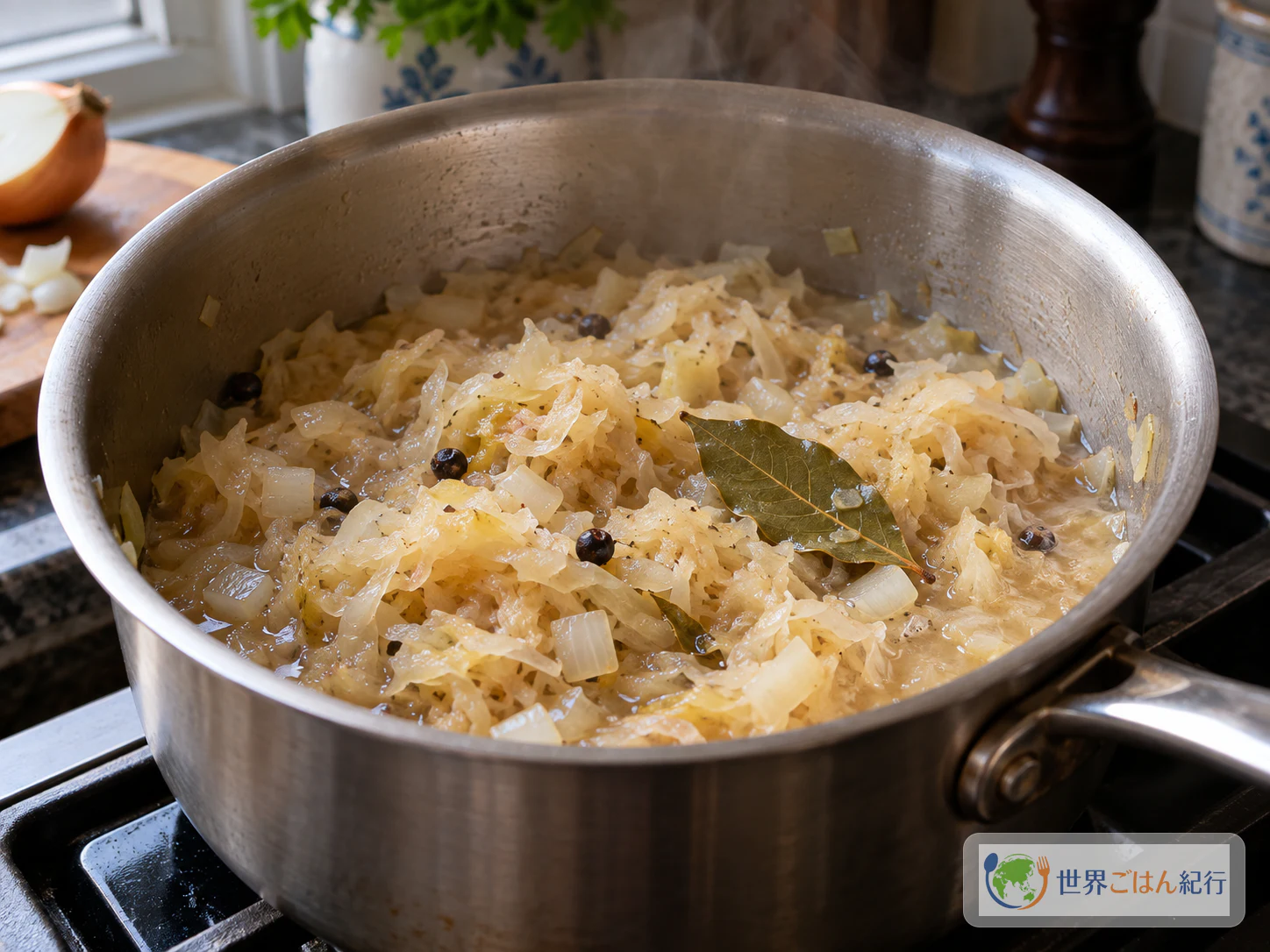
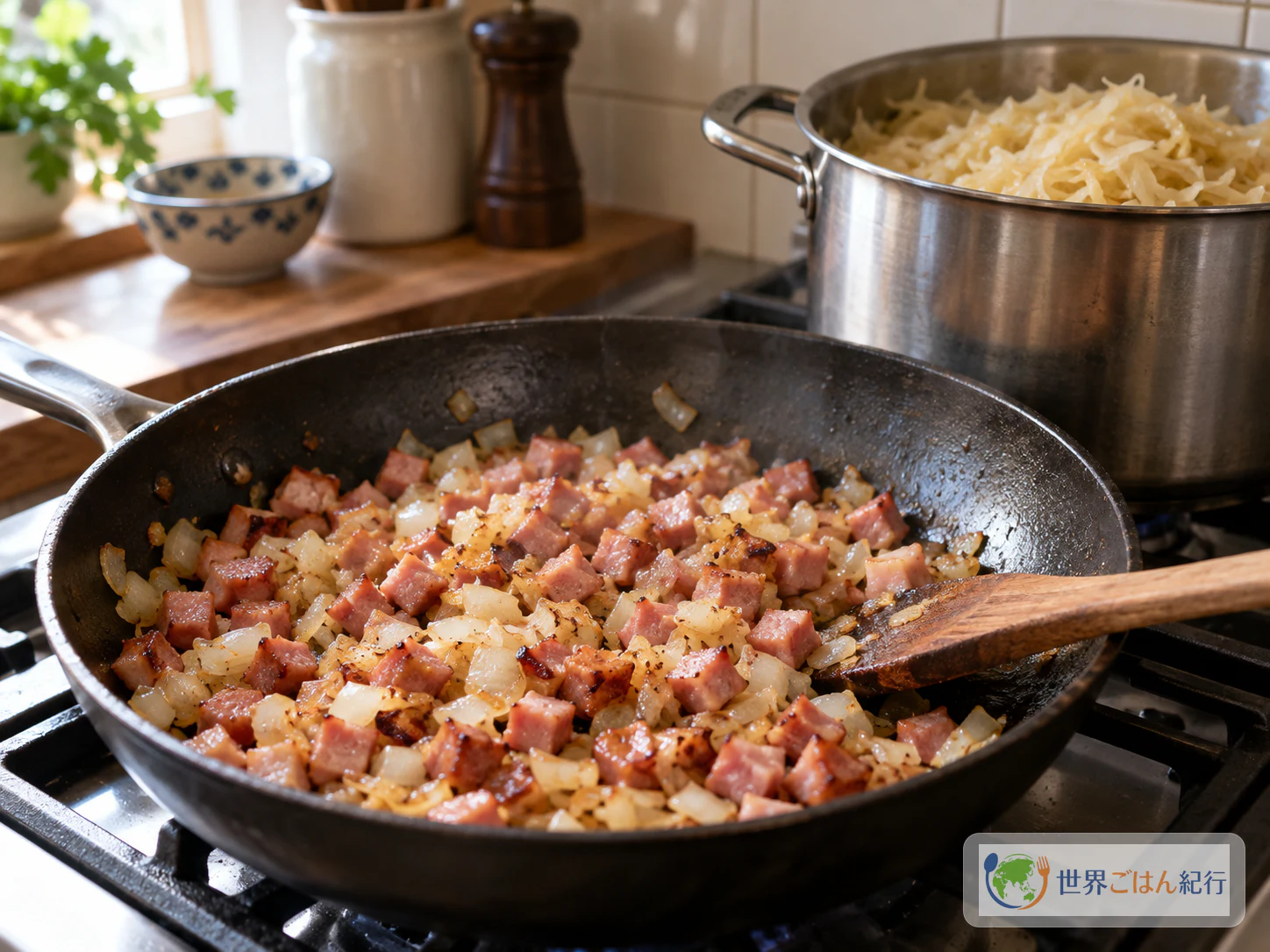
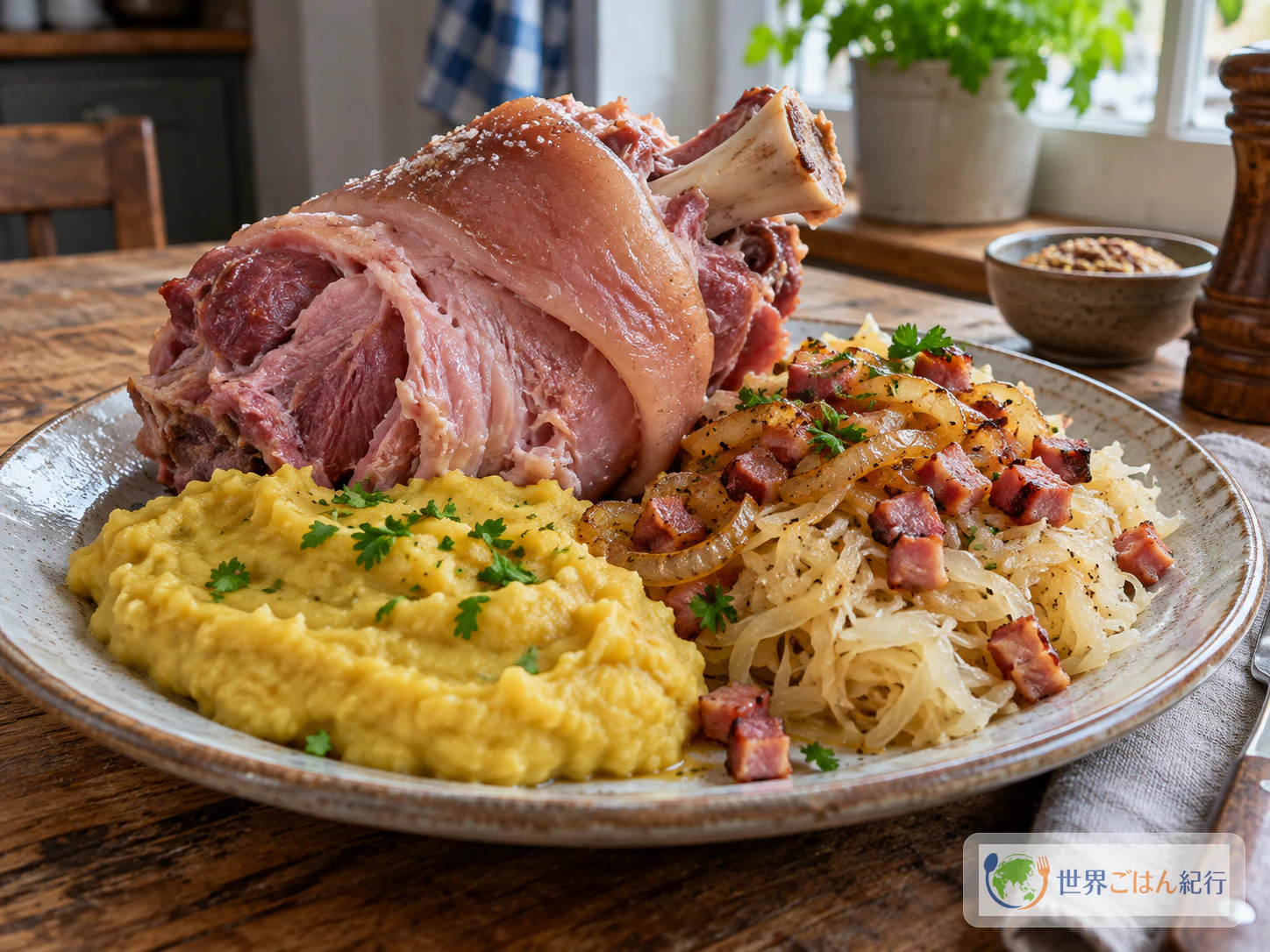
Steam rises slowly from a deep pot where bone-in pork knuckles sit under water with soup vegetables, bay leaves and whole spices. Beside it, yellow peas soften into a thick, pale golden purée, and sauerkraut braises with onion and juniper. Eisbein is cured pork shank simmered until tender, and in Berlin, Germany, it belongs to the city's classic dishes: visitBerlin presents Eisbein with pea purée among Berlin's kitchen classics, as part of a down-to-earth, hearty regional cooking.
This recipe follows a single Berlin-style recipe from REWE for 4 servings, with its ingredients, amounts and order kept together. One change has been made: the original adds 1 tbsp salt to the pot even though the meat is already cured. Cured products vary a great deal in saltiness, so here the salt is held back until you have tasted the cooking liquid.
Eisbein is not the same as Schweinshaxe. Both come from the pork leg, but Eisbein is simmered, while Schweinshaxe is roasted or grilled. If you are looking for a crisp, roasted knuckle, this is a different dish.
Ingredients: Serves 4, Built Around Cured Pork Knuckle
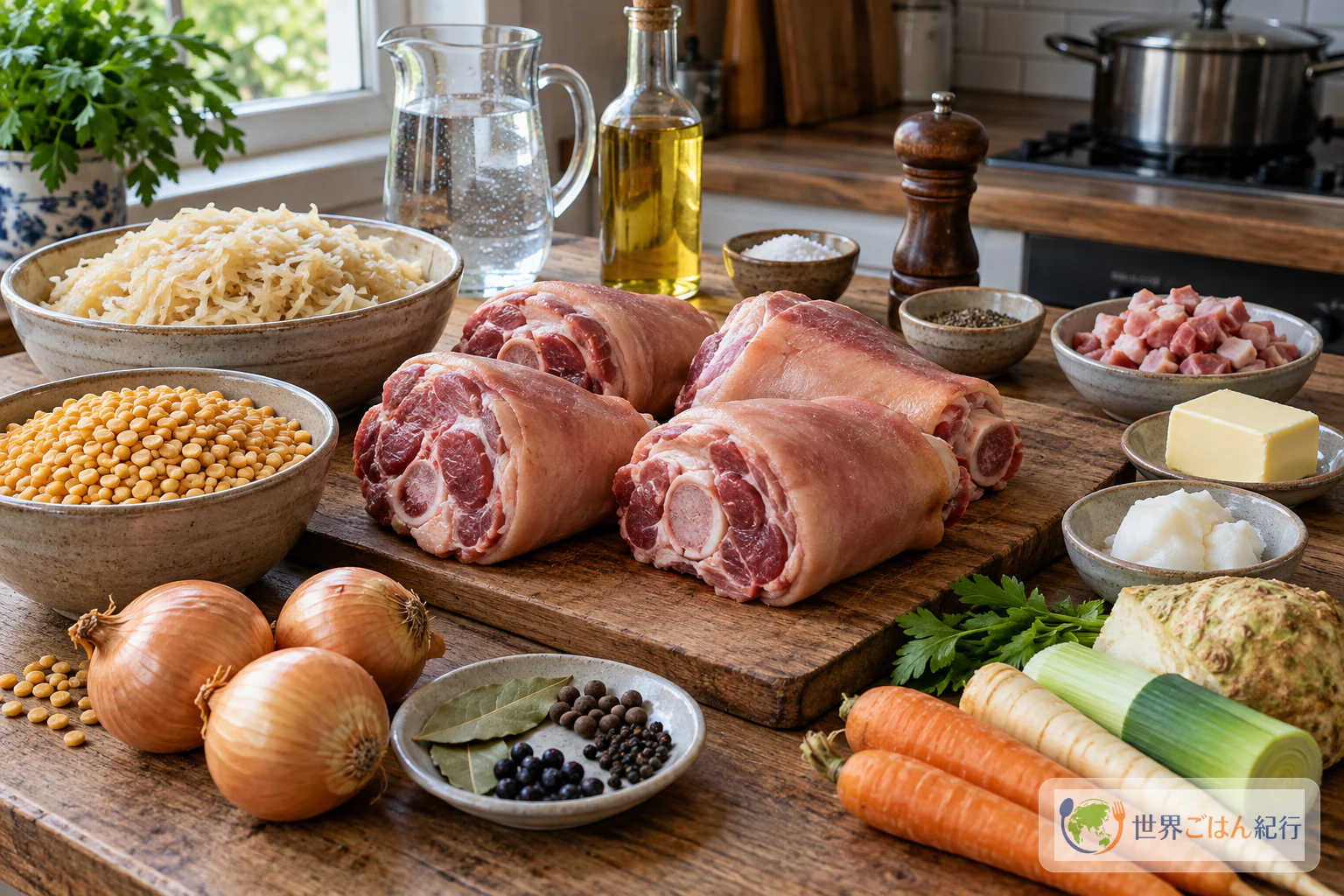
Where an ingredient is divided between steps, the split follows the method.
The cooking liquid from the Eisbein pot is also used: about 100ml for the purée and about 150ml for the sauerkraut.
This dish is built on pork, lard, ham and butter. The butter contains milk. Check the labels of processed products such as cured knuckles, diced ham and sauerkraut for any allergens that matter to you. Use a separate cutting board and utensils for raw meat to avoid cross-contamination.
Equipment
- A large, heavy pot big enough to keep 4 knuckles covered with water
- A slotted spoon or ladle for skimming foam
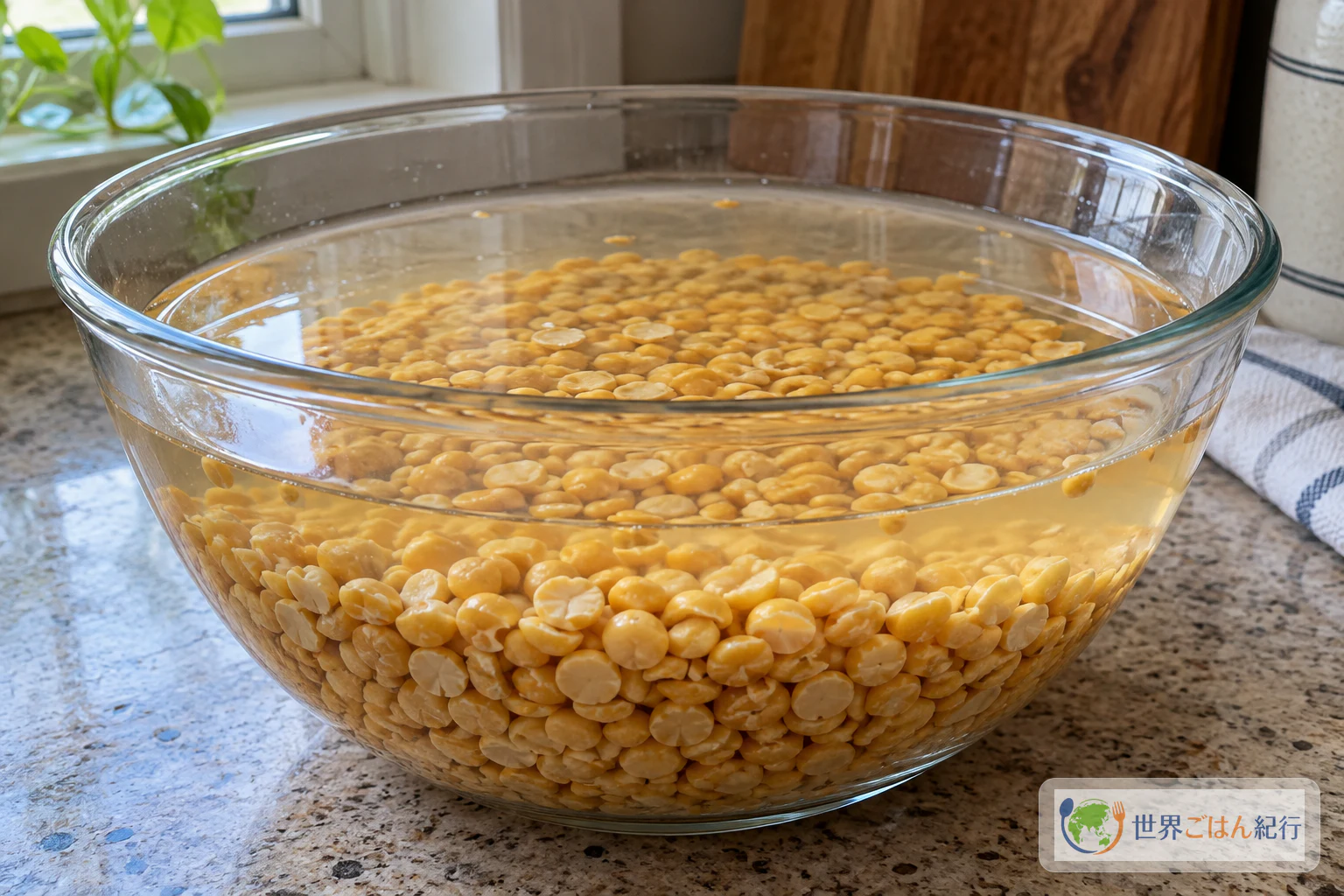
- A bowl for soaking the peas
- A saucepan for the peas
- A hand blender
- A saucepan for the sauerkraut
- A skillet for the ham and onion
- A separate cutting board and utensils for raw meat
- A food thermometer for checking the center temperature
Choosing and Substituting: Ask Whether the Knuckle Is Cured
Cured pork knuckle comes first. When buying bone-in pork shank, ask the butcher whether it is cured (gepökelt) or uncured. Uncured shank will not taste the same as cured, and a quick home cure is not offered here as an equivalent.
Dried yellow peas, whole or split, both work. Frozen green peas give a different flavor and texture and will not make the same purée.
Diced ham (Schinkenwürfel) is diced ham, not the same thing as bacon. If you substitute, expect differences in smokiness, fat and salt.
Juniper berries can be left out if you cannot find them, but the aroma of the meat and sauerkraut will change. Allspice and juniper are easiest to find under those general names.
Lard can be replaced with vegetable oil; the aroma becomes lighter.
Sauerkraut: if you use a seasoned jarred product, taste it for salt and sourness and adjust the amount of cooking liquid you add.
Method: Simmer Slowly, Then Build the Sides from the Pot
Judge the meat by how easily it comes away from the bone, not by the clock alone, and confirm the center is fully hot. Taste the cooking liquid before adding any salt.
When Things Go Wrong: Causes and Fixes
| Problem | Likely cause | What to do |
|---|---|---|
| The meat is falling apart and the broth is cloudy | The pot boiled too hard | Lower the heat to a quiet simmer with small, steady bubbles |
| The meat still clings to the bone | The knuckle is large, or it needs more time | Keep simmering gently; REWE notes up to 3 hours depending on size. Check the center is fully hot too |
| Everything tastes too salty | The cured meat was salty, or salt went in early | Don't add salt to the pot at the start. Taste the cooking liquid, purée and sauerkraut before adding any |
| The peas were not soaked | The overnight soak was skipped | This falls outside the recipe's conditions; no untested shortcut is offered as the same result |
| The sauerkraut is too sharp | A strongly sour product | Add a little more cooking liquid and taste as you go, rather than adding sugar the recipe does not call for |
| Jarred sauerkraut tastes off-balance | It was already seasoned | Check its salt and sourness and adjust how much cooking liquid you add |
Storing and Reheating Leftovers
REWE says leftovers keep in the refrigerator for up to 2 days. Following Japan's Ministry of Health, Labour and Welfare's general home guidance, cool leftovers quickly in shallow containers before refrigerating, and reheat until the whole portion is thoroughly hot, with the center reaching 75°C or more.
Ways to Vary the Plate
- Leave some texture in the purée. Blend the peas less so some stay whole. This changes the texture; it is not presented as a traditional form.
- Add a little more cooking liquid to the purée. It links the purée to the flavor of the meat, within the logic of this recipe.
- Soften sharp sauerkraut with cooking liquid. Add it a little at a time and taste.
- Serve boiled potatoes alongside. This is an addition outside the ingredients of the recipe followed here.
- Offer mustard at the table. Kitchen Stories serves its Eisbein with sauerkraut, pea purée and mustard; it is not a required ingredient of the REWE recipe.
Eisbein in Berlin, Its Name, and How It Differs from Schweinshaxe
Pea purée is the companion that defines Eisbein's place on the Berlin table. visitBerlin's guide to dining in Berlin lists Eisbein with pea purée among the city's kitchen classics, in the context of simple, hearty local cooking. That places the pairing in Berlin today; it is not evidence that the recipe has stayed the same for centuries.
Eisbein should not be treated as one uniform method across Germany. The Berlin and northern style simmers cured knuckle, while in the south the leg is more often roasted or grilled as Schweinshaxe. The two share a cut but differ in cooking and texture.
The name has more than one explanation. REWE's FAQ mentions the idea that the bone was once used for ice-skate runners, and a derivation from the Old High German isben. Kitchen Stories also repeats the skate story without offering evidence. None of these is settled, so they are best read as competing theories rather than history.
Frequently Asked Questions
What is the difference between Eisbein and Schweinshaxe?
Mainly the cooking method. Eisbein is cured pork knuckle simmered in water, associated with Berlin and the north; Schweinshaxe is roasted or grilled, associated with the south. Regional habits vary, so this is a broad contrast rather than a strict rule.
Where can I buy cured pork knuckle?
Ask a butcher for cured pork knuckle (gepökeltes Eisbein) and confirm whether the bone-in shank they offer is cured or uncured. Uncured shank will give a different result.
How long should I simmer it?
Start from about 2 hours at a gentle simmer. REWE notes up to 3 hours depending on size. It is ready when the meat comes away from the bone easily and the center is fully hot; Japan's Ministry of Health, Labour and Welfare's general guideline is 75°C at the center for at least 1 minute.
What should I serve with it?
Yellow pea purée and sauerkraut are the core. Boiled potatoes and mustard can be added as optional extras, but they sit outside the recipe followed here.
Where does the name "Eisbein" come from?
There are several theories, including the use of the bone for ice-skate runners and a derivation from Old High German isben. None is confirmed.
Sources
- REWE Rezeptwelt, "Berliner Eisbein." The recipe followed here: ingredients and amounts for 4 servings, method, simmering time, judging doneness by the bone, refrigerated storage of leftovers, and the naming theories in its FAQ. It is a retail recipe and does not set pork safety temperatures or salt standards for cured products. https://www.rewe.de/rezepte/berliner-eisbein/
- visitBerlin / Berlin Tourismus & Kongress GmbH, "Dining in Berlin 2017: Berlin Kitchen Classics." Eisbein with pea purée presented as a Berlin classic, within hearty regional cooking. Not used as proof of historical origin. https://about.visitberlin.de/sites/default/files/MAM/asset/2017-08/Dining%20in%20Berlin%202017.pdf
- Kitchen Stories, "Eisbein." A separate home recipe, used only for comparison and its serving example with sauerkraut, pea purée and mustard; its ingredients are not mixed into this recipe. https://www.kitchenstories.com/de/rezepte/eisbein
- Verbraucherzentrale Bayern, "Woher kommt die Bezeichnung „Eisbein"?" Supplementary only, for the naming theories and the contrast between northern simmered Eisbein and southern roasted or grilled Schweinshaxe. The full page text could not be retrieved, so nothing here rests on it alone. https://www.verbraucherzentrale.bayern/faq/woher-kommt-die-bezeichnung-eisbein-22170
- Ministry of Health, Labour and Welfare (Japan), "家庭でできる食中毒予防の6つのポイント" (Six points for preventing food poisoning at home). General home guidance on heating to 75°C at the center for at least 1 minute, using separate utensils, cooling in shallow containers and reheating. https://www.mhlw.go.jp/stf/seisakunitsuite/bunya/kenkou_iryou/shokuhin/syokuchu/01_00006.html