A Nordic roast that begins in the freezer
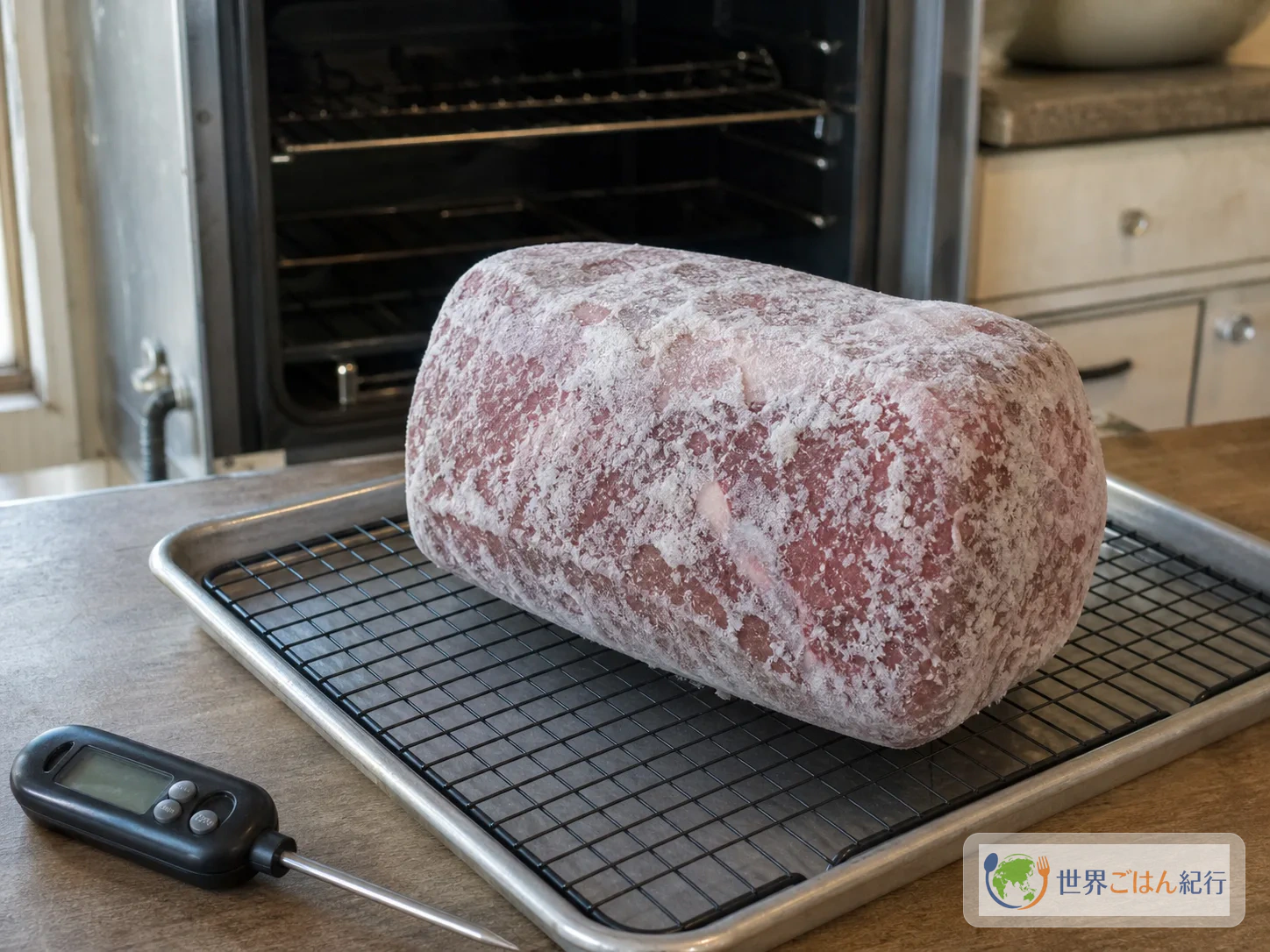
In the evening kitchen, take a big block of meat out of the freezer. Put it on a baking sheet, still white with frost, use no knife or skillet yet, and slide it into a low oven. For ordinary roast beef this order would give you pause, but this is where tjälknöl begins. You don't thaw before roasting. The flavor goes in later with brine. Not hurrying is the heat setting of this dish.
Tjälknöl is a cold roast eaten in northern Sweden. In the local language, tjäl calls to mind frozen ground or frost and knöl a lump, so the name is literally a dish in which a frozen lump of meat is slowly cooked at low temperature. It is most often described with moose, but in a home kitchen it is more realistic to make it with lean beef such as round, rump or inside round.
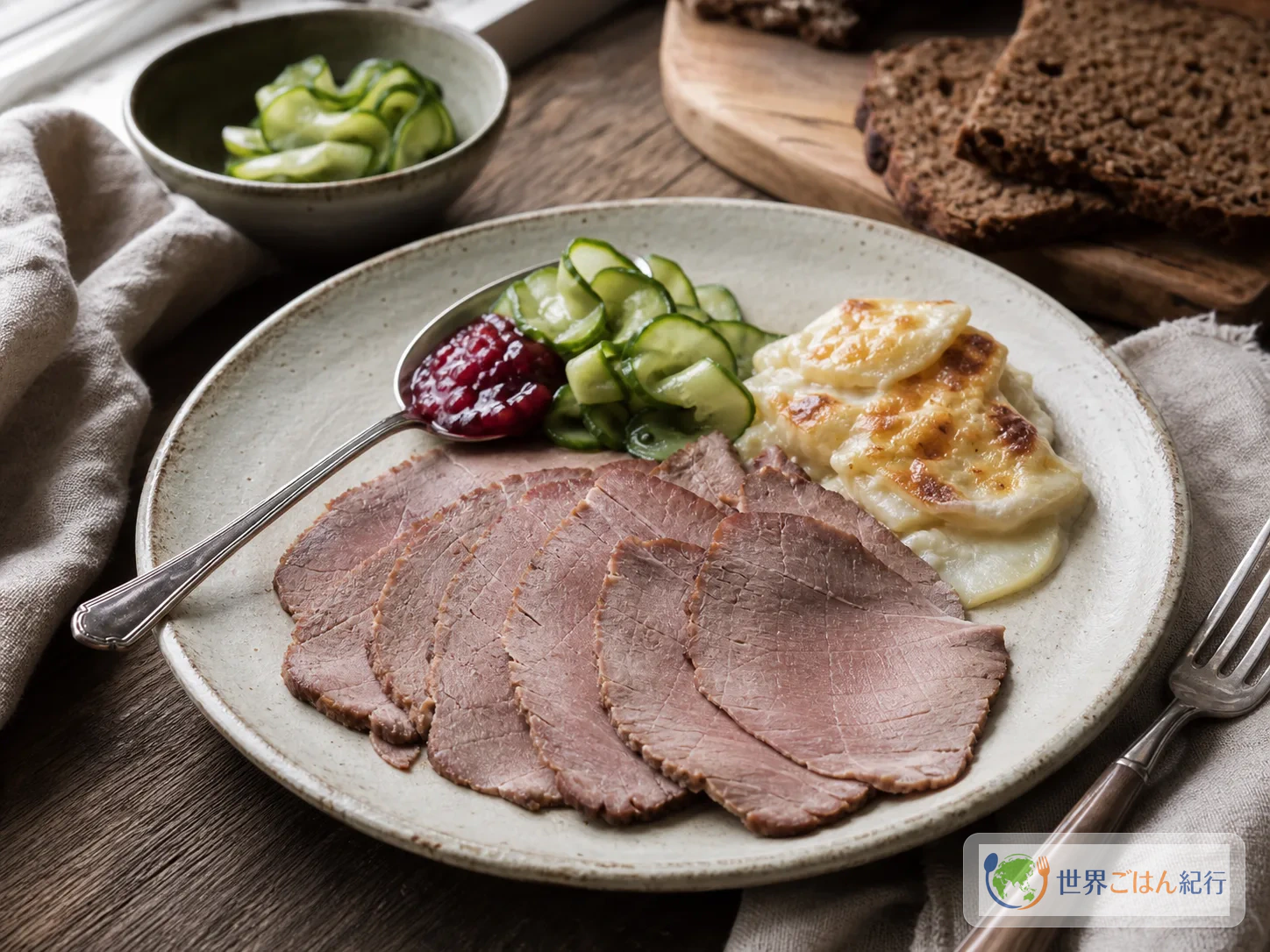
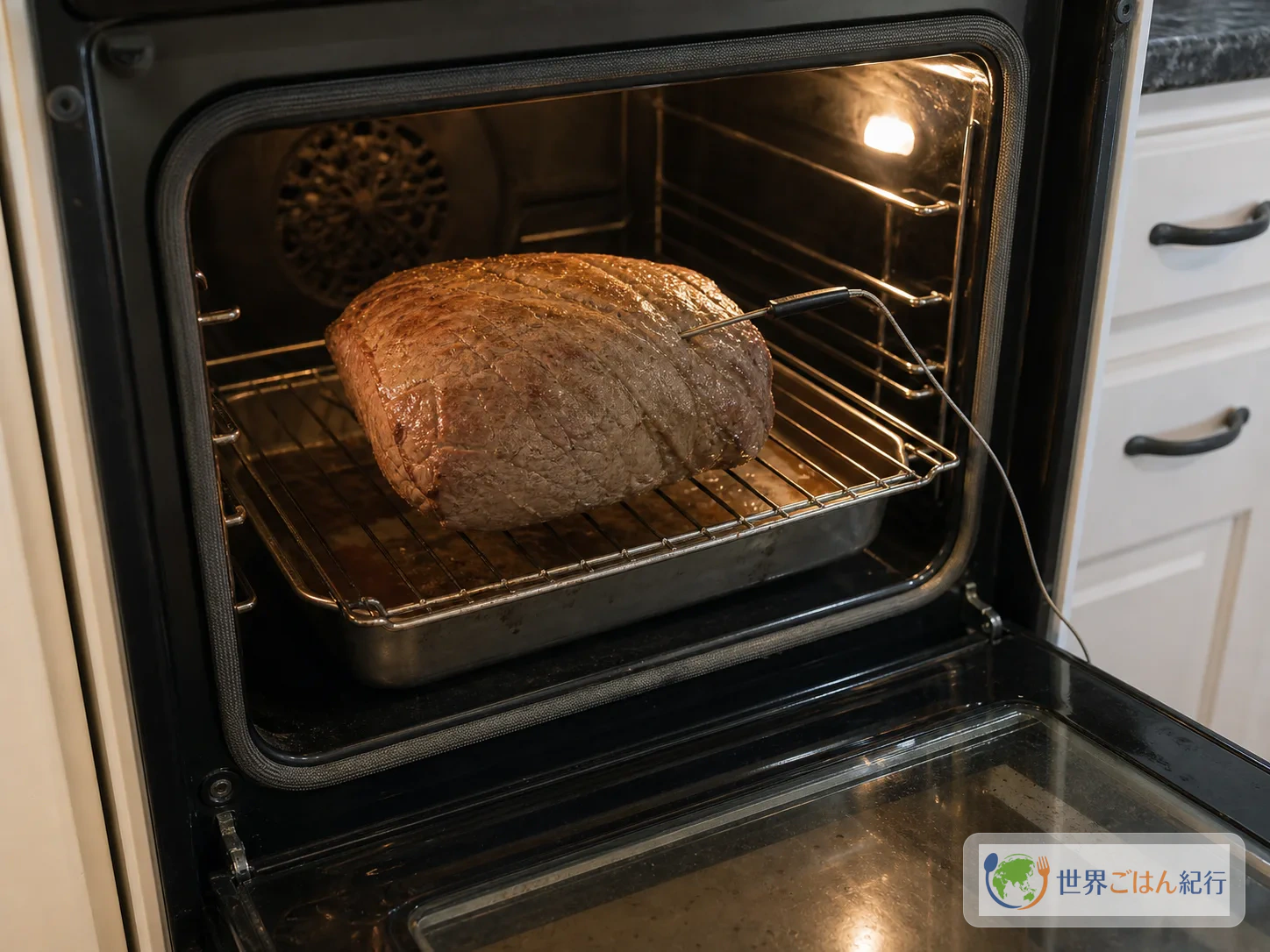
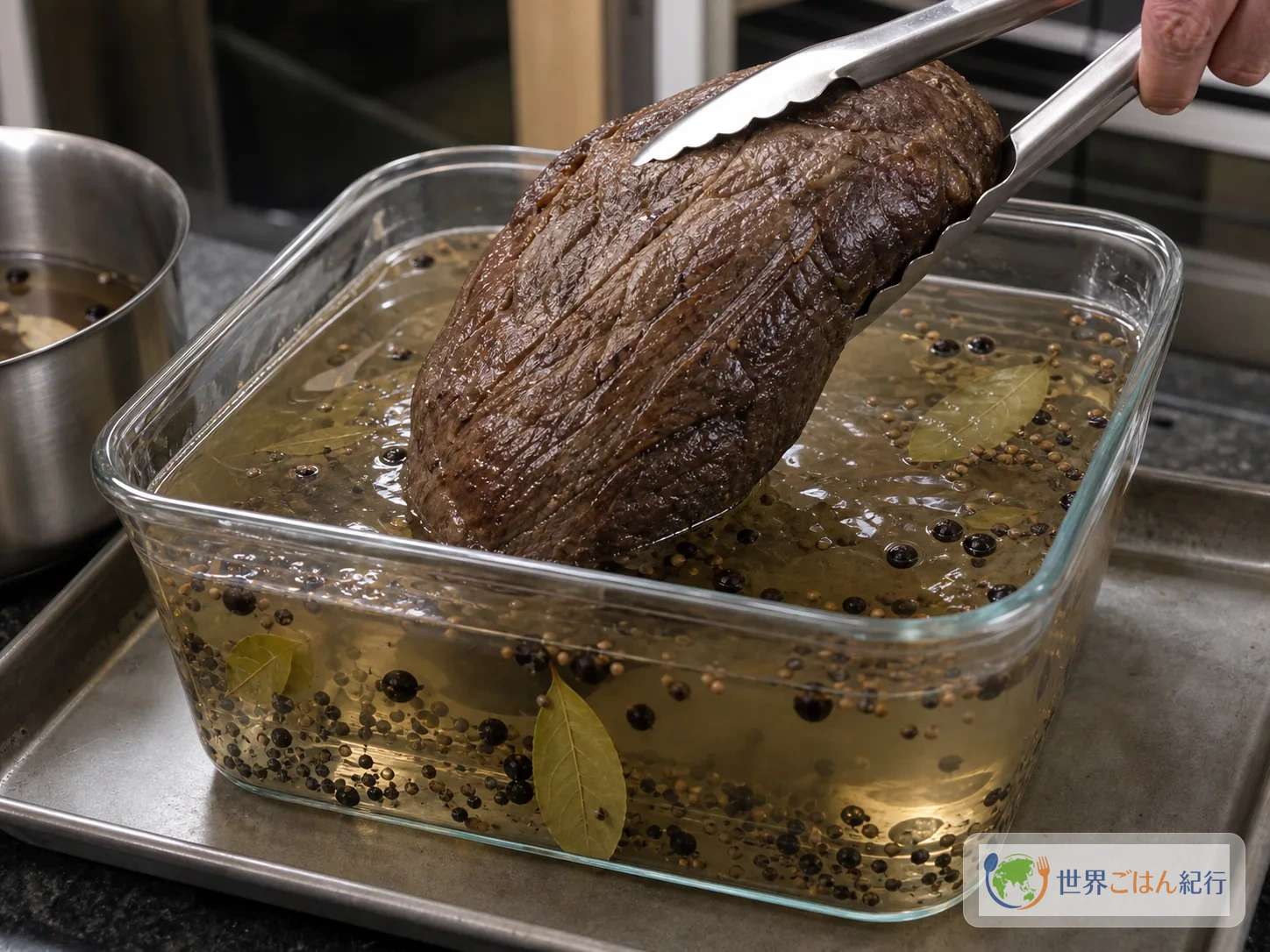
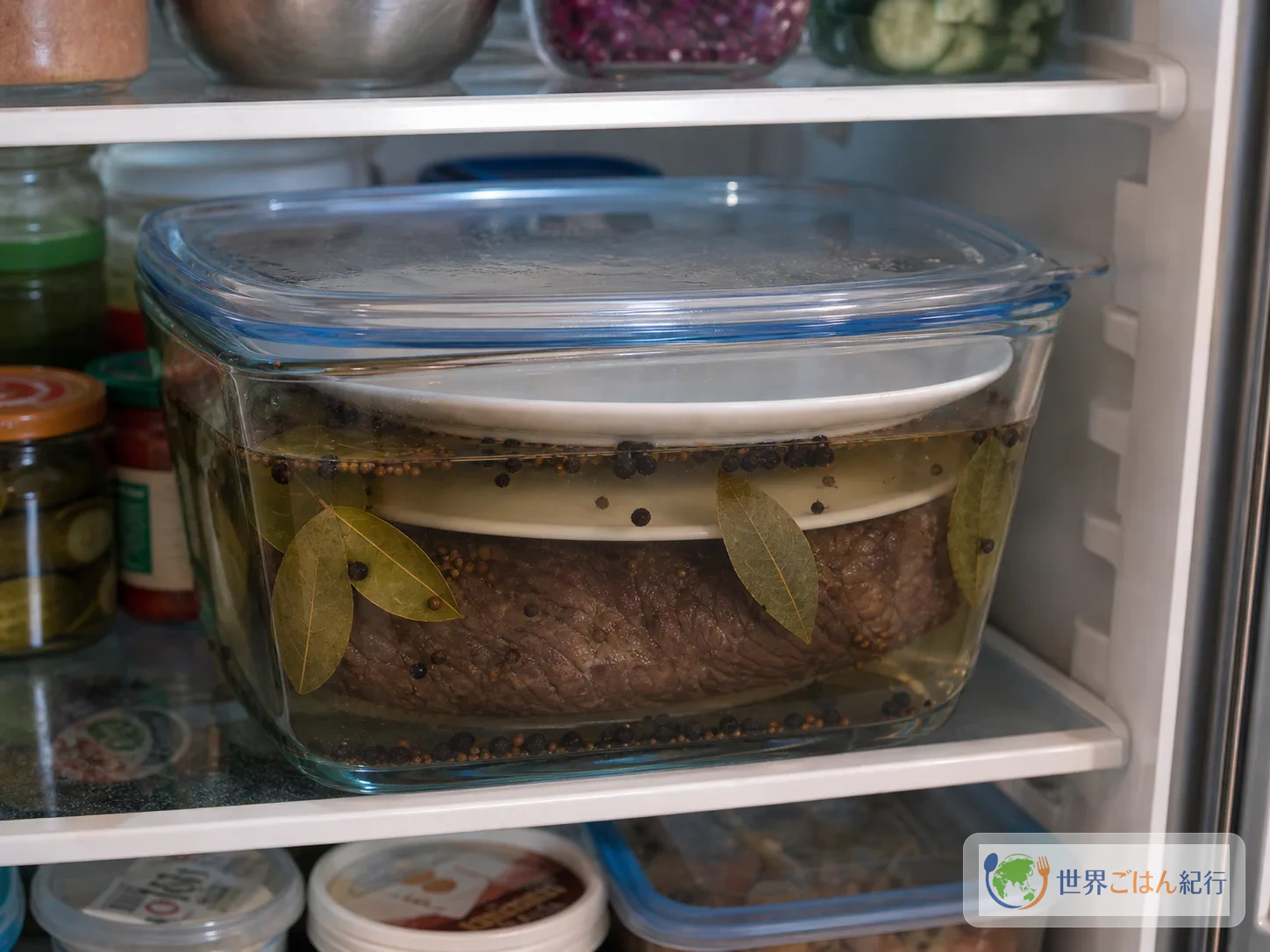
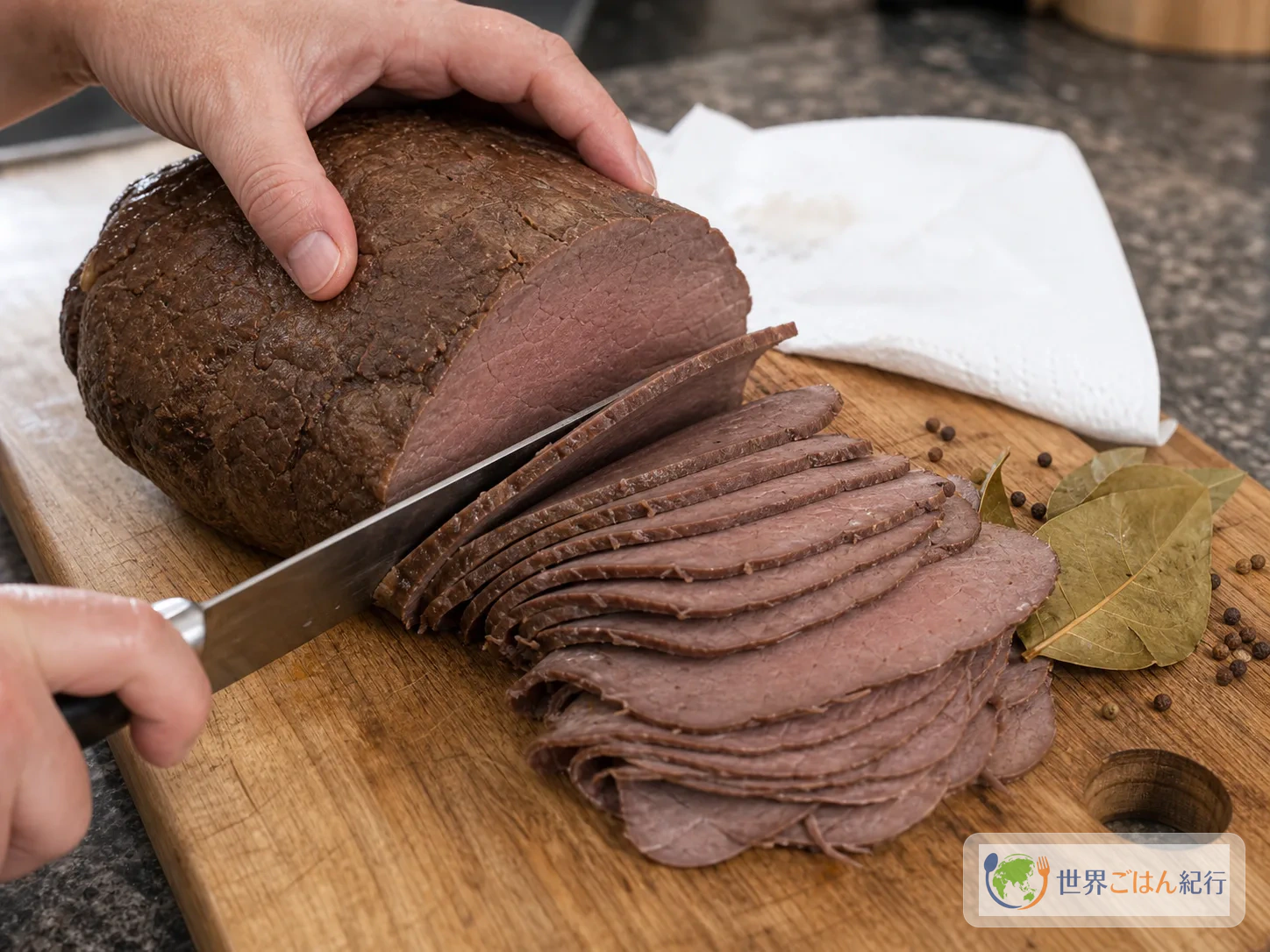
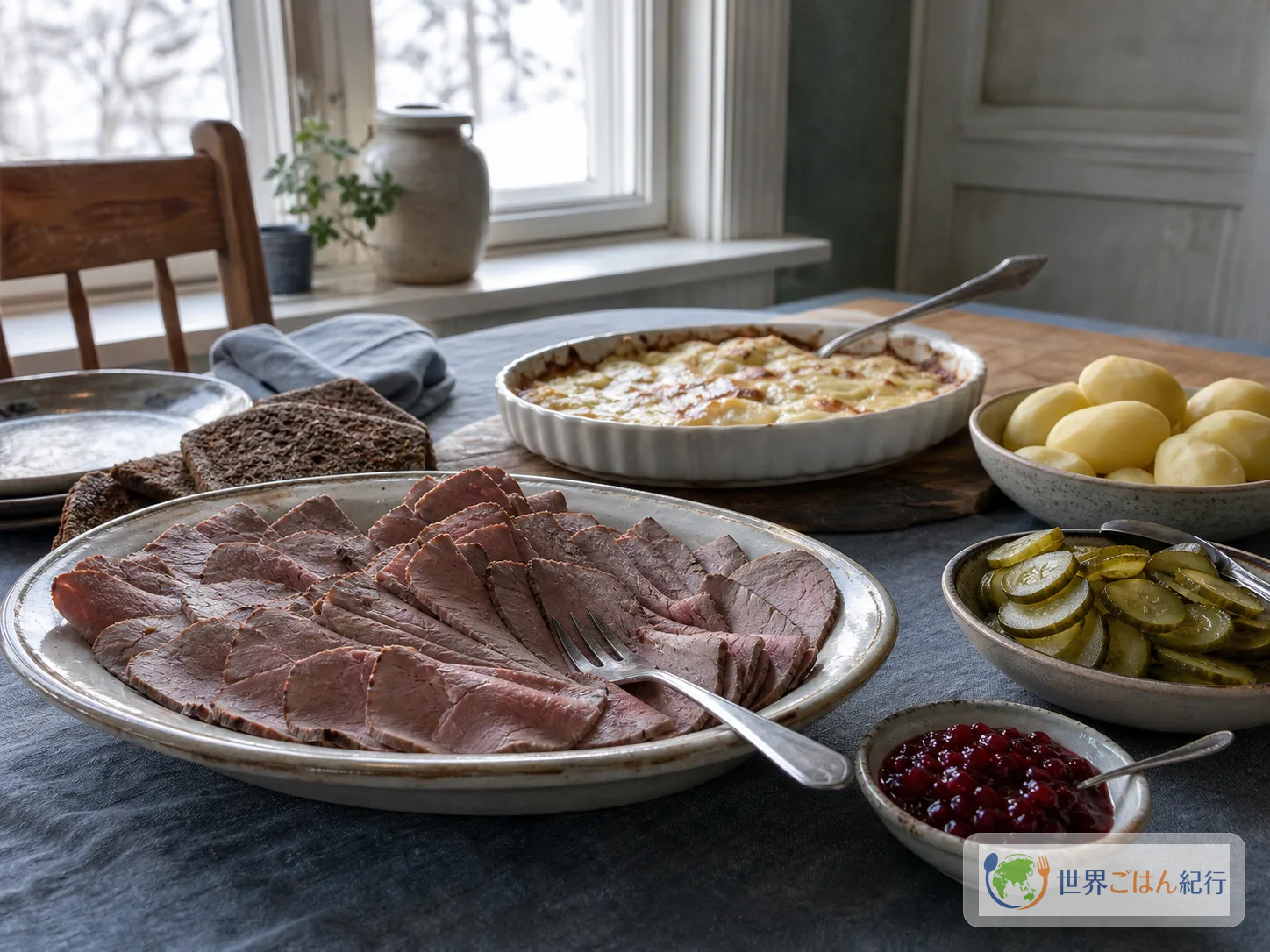
In this article, 1.2 kg of lean beef is put into an 80°C oven still frozen, roasted to a core temperature of 65–68°C, and brined for 5 hours in a spiced brine. Because the hot meat is submerged in brine, the surface is well seasoned and the center stays moist. To eat, slice it about 2 mm thick and serve it with potato gratin, boiled potatoes, lingonberry jam and pickled cucumber.
What's easy to get lost on in a home kitchen is thawing, core temperature and the strength of the brine. Keep the meat frozen, decide doneness by core temperature, and decide saltiness by soaking time. With that division you come close to the Nordic table and can still reproduce it in a home oven.
Use lean beef instead of moose, with a low oven, a core thermometer and 1 L of brine. The aim is not a warm steak but a cold roast that is delicious sliced thin the next day.
Story and background: why you roast frozen meat as it is
Tjälknöl is a dish that turns Nordic winter and preservation wisdom directly into a plate. Swedish-language sources describe it as a Norrland dish in which frozen meat is roasted at low temperature for a long time and then submerged in brine after roasting. English Wikipedia sorts it as a dish tied to the Medelpad region and northern Sweden and lists moose as the main ingredient.
A frequently told origin story is that in the 1970s a Swede, Ragnhild Nilsson, fell asleep with frozen moose meat in the oven. The next morning the meat had cooked slowly at low temperature, and soaking it afterward in brine brought the seasoning together. It is said to have spread by appearing in the food magazine ICA-kuriren and come to be told as a local dish of Medelpad. It is almost too well made for an accident, but I think it survived as home cooking because there was already a feel in the cold country for handling frozen meat and for eating game in thin slices.
The order of steps differs considerably from ordinary roasts. Many meat dishes season first, thaw, bring to room temperature and sear at high heat. Tjälknöl goes in frozen, so the center of the meat warms slowly and the outside is less likely to toughen abruptly. Because it goes into brine afterward, there is no need for a long marinade to get salt through a thick piece. Rather than cutting it fresh from the oven, you cool it and slice it thin, so the juices settle and even a slightly tough cut becomes easy to eat.
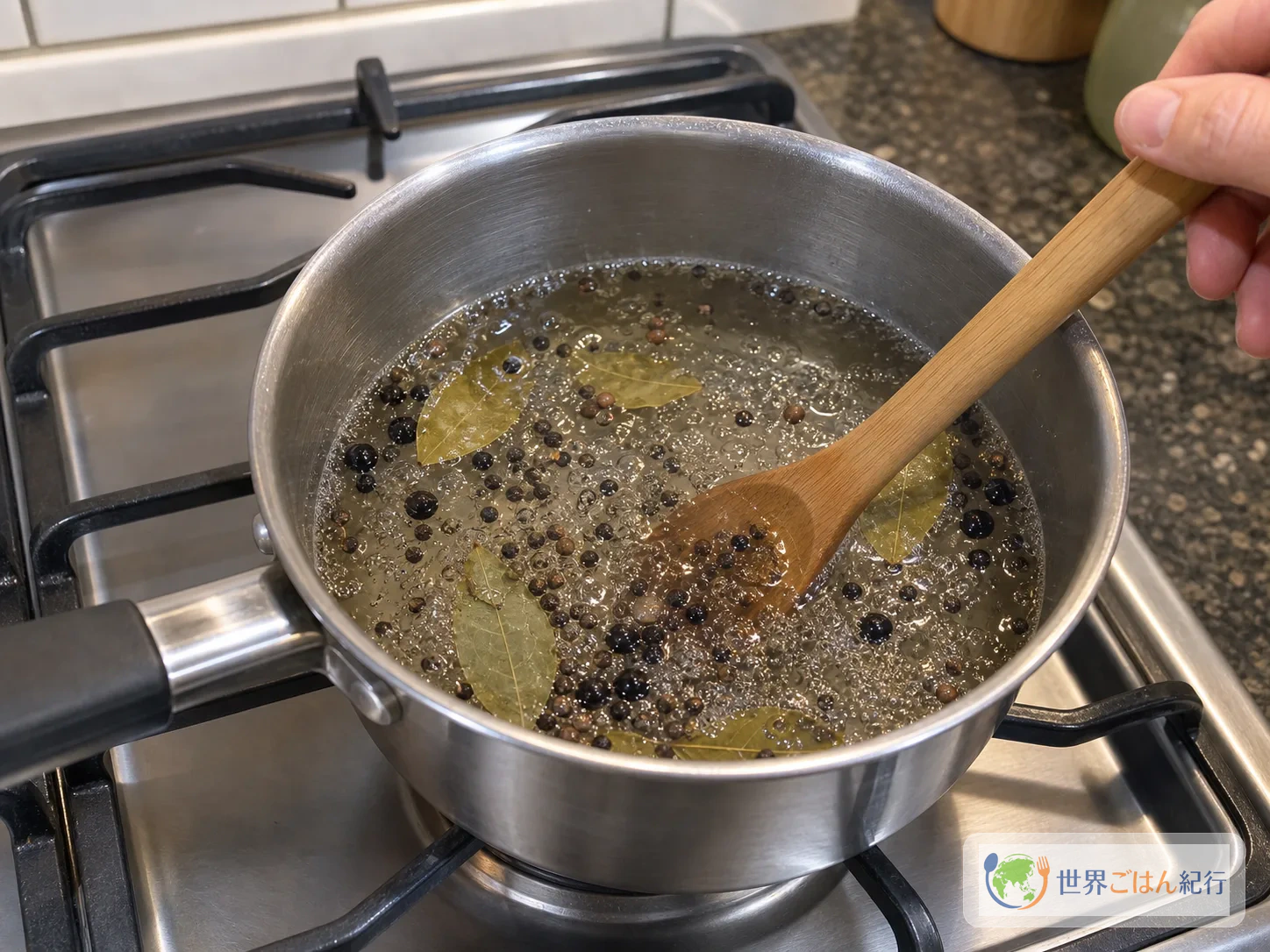
There are regional differences too. Temperatures are often given in a range of 75 to 100°C, and roasting times vary from 8 to 17 hours depending on the size of the meat. Examples of brine include bay leaf, black peppercorns, juniper berries, garlic, sugar and lingonberries. This article takes 80°C, which is stable in a home oven, as the base, and approaches the aroma with bay leaf, black pepper and a little allspice. With juniper berries you get a touch of coniferous fragrance, but the dish stands without them, so don't go out of your way to find them.
Ingredients: assembling them in a home kitchen
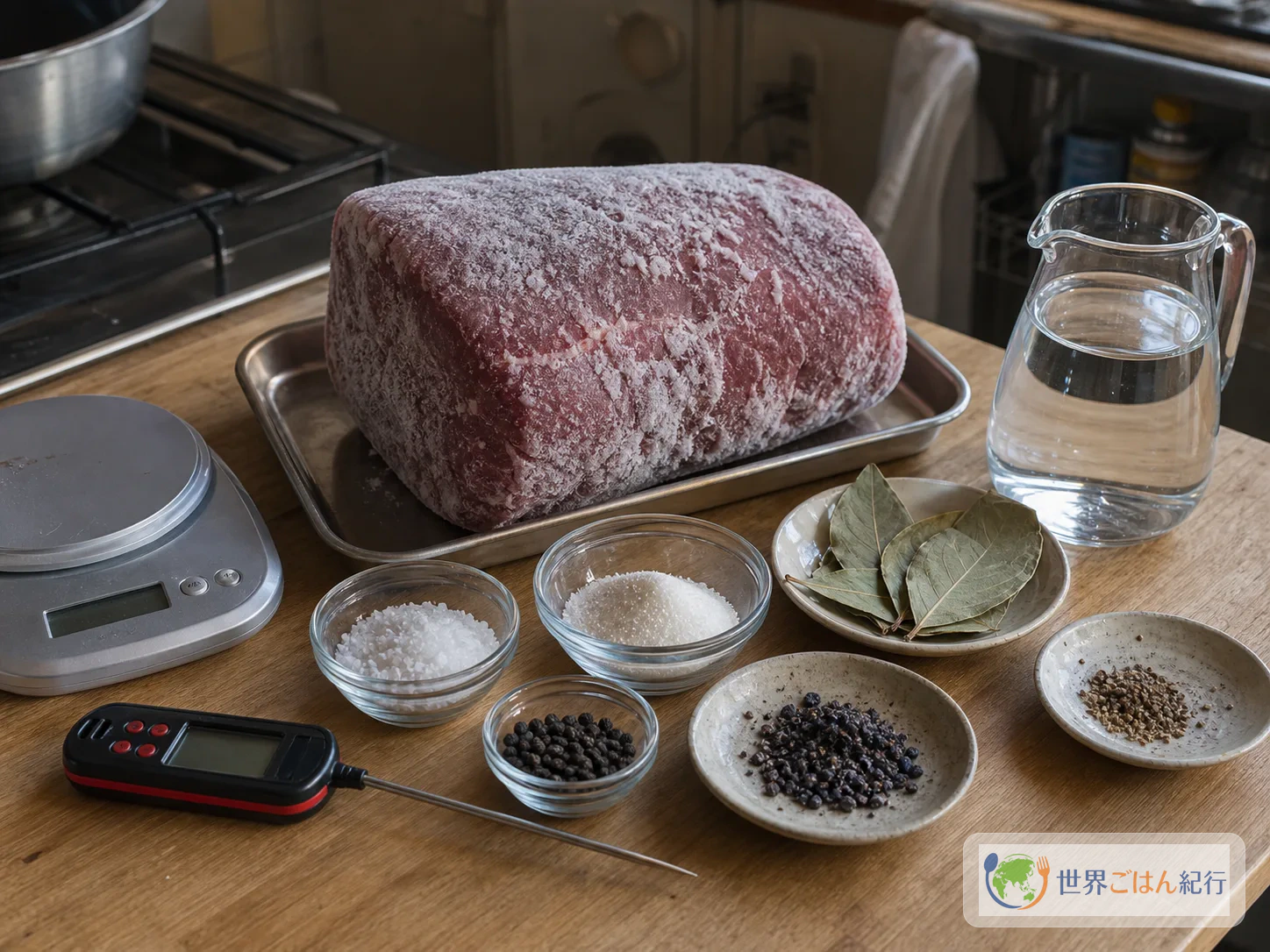
This serves 6. The hands-on time is short, but roasting and soaking take long, so starting the evening before or on a weekend morning lets you make it calmly.
This uses beef. If you make it with game, to approximate venison or moose, the core-temperature safety standard differs from beef. At home, don't judge by color alone; use a core thermometer. When children, older people, pregnant people or those with weakened immunity will eat it, move the core temperature to the safe side and keep the refrigeration before and after eating shorter.
The brine in this dish is not a mild liquid for keeping meat for days. It is a strong brine in which roasted meat soaks for just a few hours to bring flavor in from the surface. If you worry about making it too salty, rather than reducing the salt, it is easier to adjust by taking the meat out at 4 hours, slicing off an end and tasting.
What is worth looking for when shopping
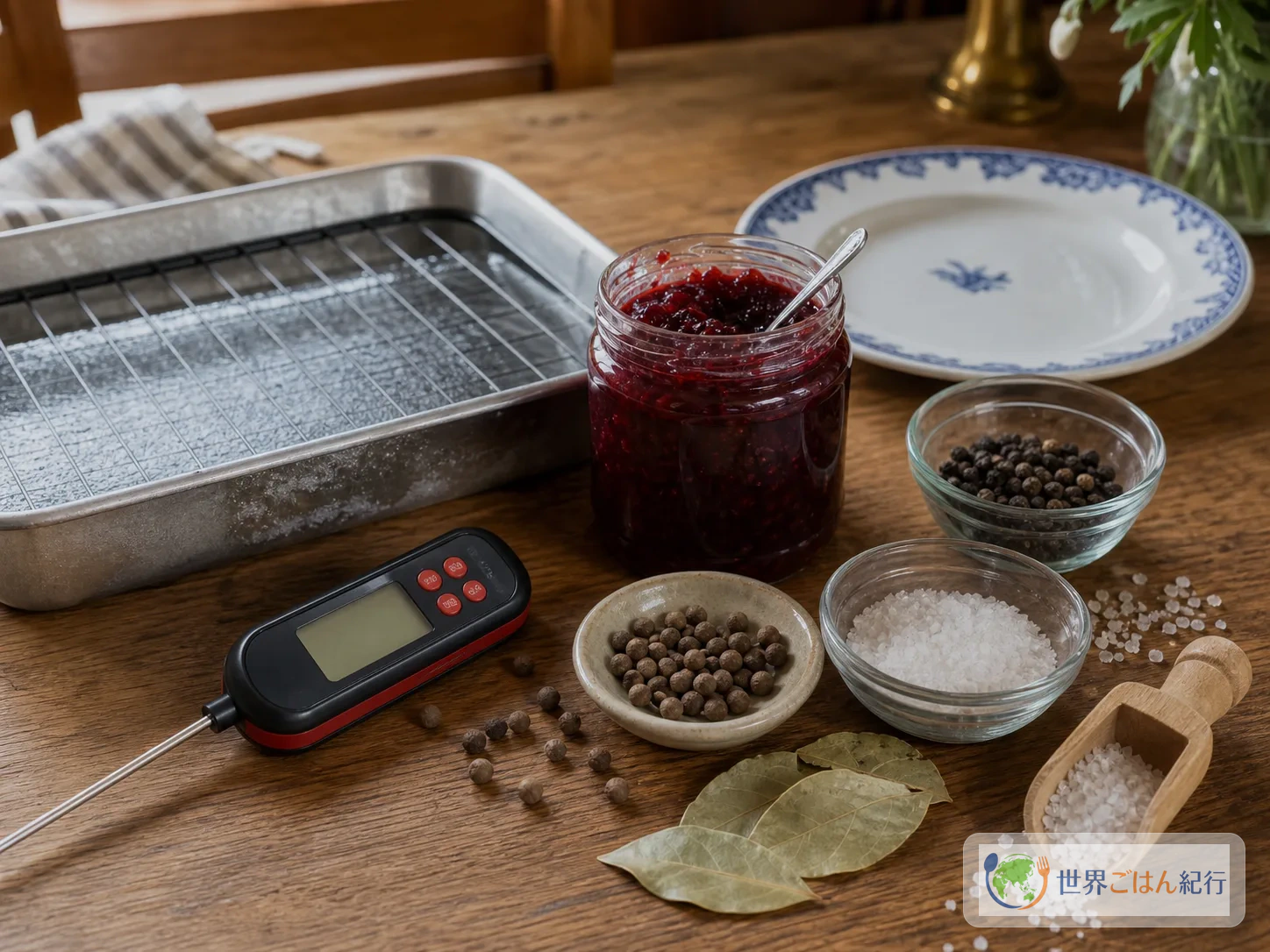
Beef, salt, sugar and potatoes are covered by a nearby supermarket. What is worth seeking out elsewhere is the core thermometer for long low-temperature roasting, lingonberry jam that creates the sweet-sour Nordic note, and allspice that can be used in small quantities in a meat brine. We don't treat the meat itself as a product but narrow it to what bears on judging the finish and the local way of eating.
The core thermometer is directly tied to this dish's safety check. Cutting to see the color lets the juices escape, so after about 2 hours of roasting, when the meat is firm enough to pierce, insert it into the thickest part.
The sweet-sour of lingonberry works less on fatty meat than on lean meat sliced cold and thin. Cranberry sauce is close, but for the feel of a Nordic table it is a side worth pairing at least once.
Allspice is an aroma on the Nordic side that is also used in köttbullar. In tjälknöl don't let it come on strong; put in only 1/3 tsp per 1 L of brine, adding a little warmth behind the black pepper and bay leaf.
Judgment calls for a home kitchen
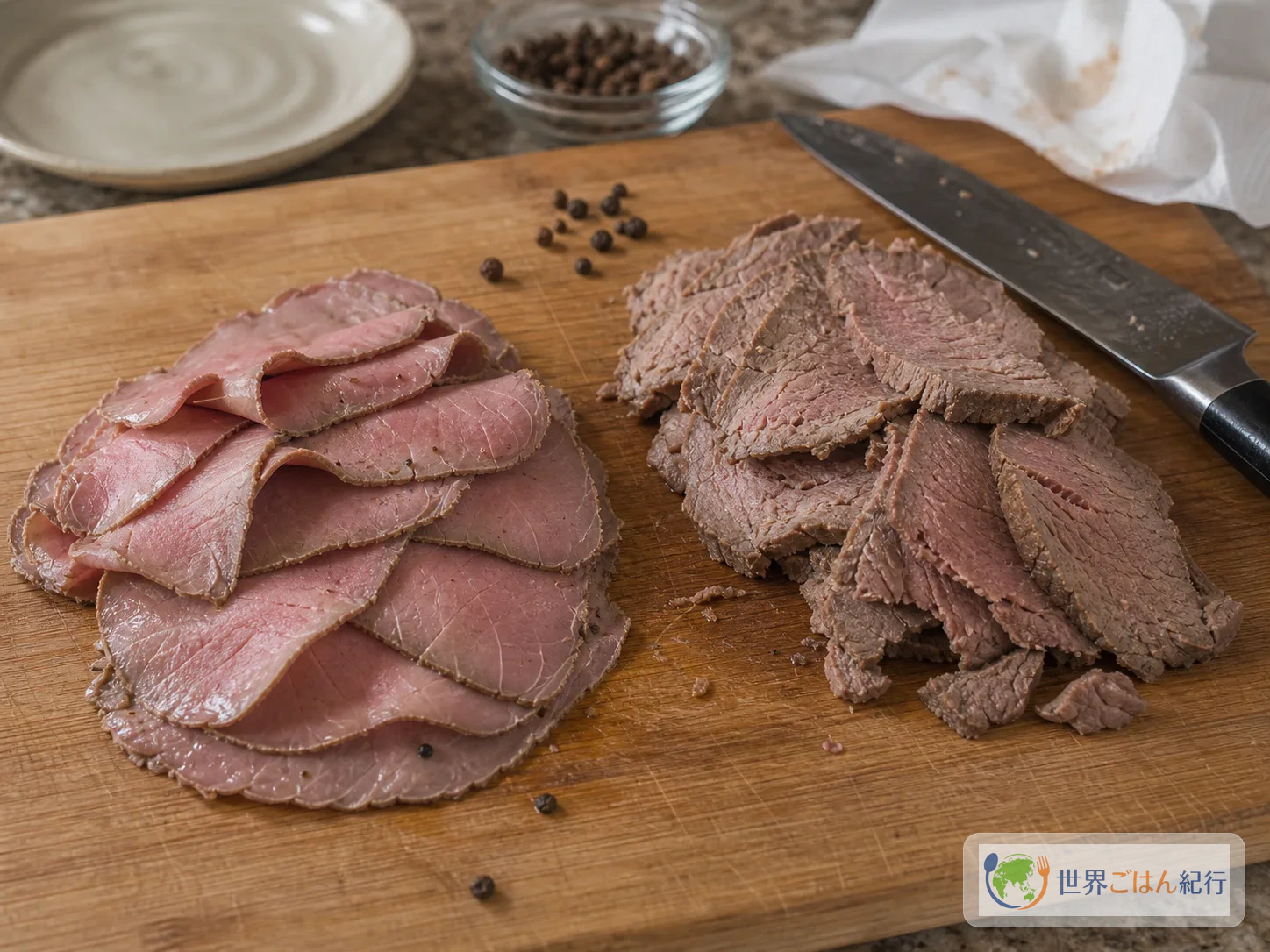
If you chase a replica of moose too far, the difficulty of shopping puts the dish out of reach. For the first time you can make it with beef round or rump. Choose a cut with little fat and sinew that can be bought as a block of about 1 kg. A block sold for roast beef is easy to handle, but heavily marbled meat gets its fat hardened when made cold, and the texture is heavy.
Freeze the meat solid first. This is not a dish for roasting refrigerated meat straight from the store. The time in which only the surface is heated first and the interior slowly catches up creates the dish's texture. To keep the smell of the freezer from transferring, wrap it in plastic twice the same day you buy it, put it in a storage bag and freeze it.
For core temperature, aim for 65–68°C with lean beef. US food-safety materials give a standard for steaks and roasts of beef and the like: reach 63°C, then rest 3 minutes. Game such as venison is handled differently, so at home 71°C is the safer guide. Swedish recipes show guides of around 65, 68 and 70°C, but at home decide by checking with a thermometer, according to the kind of meat and who is eating.
The brine is strong. That is not for soaking for days as a preserved food, but to bring flavor quickly into roasted meat. Cut an end at 4 hours and taste; if it's mild, soak up to 5 hours, and if the flavor has gone in, take it out. If it is too salty, rinse the surface quickly and slice thin, and combined with potatoes or bread it's easier to eat.
Serving and storage: cold and thin
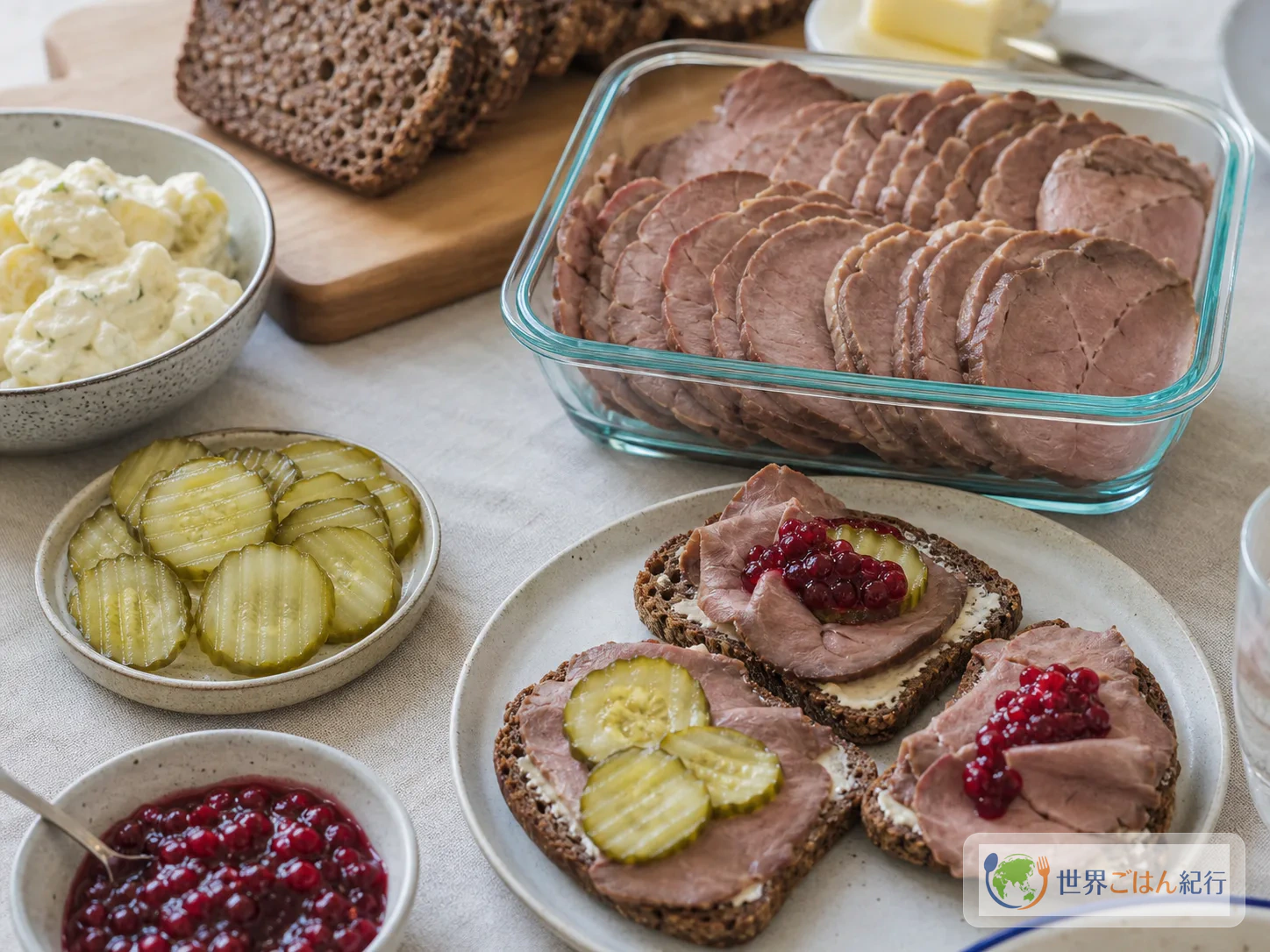
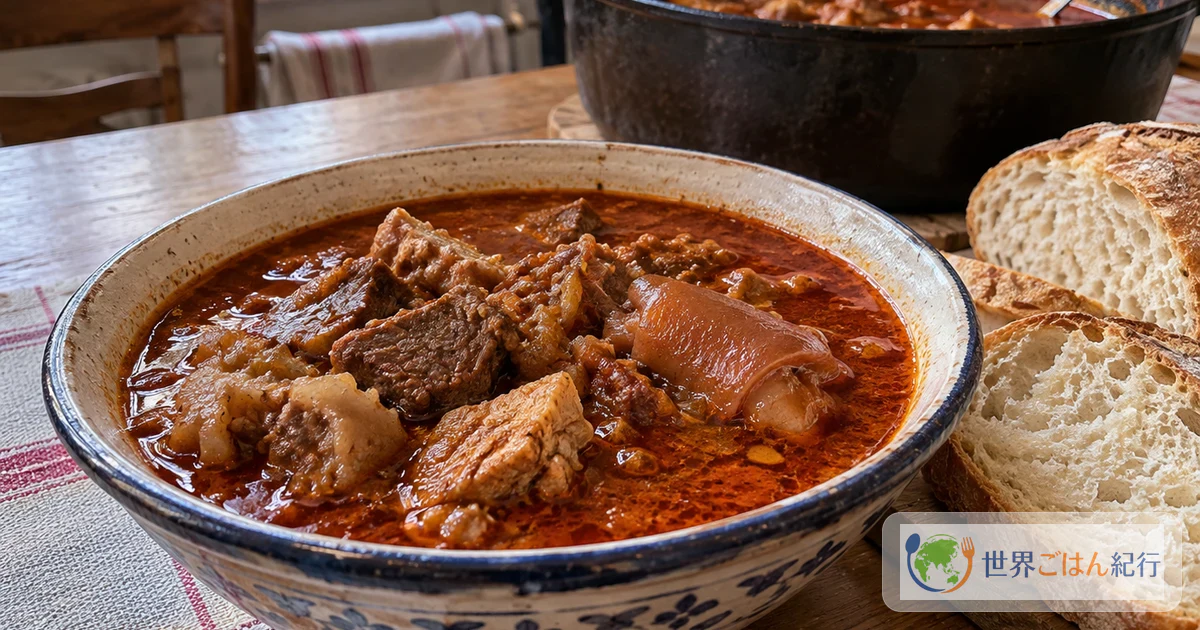
Tjälknöl is less a freshly roasted feast meat than a dish where you eat cold thin slices little by little. If plating, serve with potato gratin, boiled potatoes, pickled cucumber and lingonberry jam. On bread, spread thin butter on rye bread and layer meat, cucumber and lingonberries for a lunch.
For storage, put the sliced meat in an airtight container and keep it refrigerated for about 2 days. It has been in brine, but in a home refrigerator there is opening and closing and contact with knives, so it is safer not to assume long storage. Take out only what you will eat and return the rest to the refrigerator right away. Reheating tends to tighten lean meat, so rather than putting it in soups or stir-fries, it suits being eaten in a sandwich, a salad, or beside potatoes.
To continue with Swedish cooking, go on to köttbullar, which uses the same lingonberry, and you see the relation between meat and a sweet-sour side. To lean toward a cold Nordic table, Denmark's smørrebrød also pairs well. For a warm home dish of lamb and cabbage, widening to Norway's fårikål (in Japanese) gives you the range of northern meat dishes.
FAQ
Can I thaw the meat before roasting?
For the tjälknöl character, roast without thawing. A low roast can be made from thawed meat too, but the way heat goes in changes and the roasting time gets shorter. In that case manage the core temperature as for ordinary roast beef and keep the brine soak short.
Can I make it without a core thermometer?
It is a hard dish to make without one. In an 8 to 10 hour low roast you can't tell the core temperature by looks. Time varies a lot with the size of the meat and individual ovens, so using a core thermometer reduces both failure and food-safety worry.
What if it turns out too salty?
Rinse the surface quickly with water, pat it dry with paper towels and slice thin. Don't eat it alone; combined with potatoes, bread, unsalted butter and cucumber, the saltiness disperses. Next time keep the brine the same and shorten the soak to 4 hours for easier adjustment.
Are juniper berries essential?
No. If you have them you get the coniferous aroma typical of Nordic and game cooking. If not, leave them out and make it with black pepper, bay leaf and a little allspice. Even if you want more aroma, adding a lot of allspice makes it taste herbal, so hold back.
Can I eat it warm?
You can, but the quality of this dish comes out when it is chilled and sliced thin. If warming, rather than using a microwave, just leave it at room temperature for about 10 minutes. Warm it too much and the lean meat tightens, and the carefully cut thin slices feel tough.
Sources
- Köket.se, "Tjälknöl"
- Arla, "Tjälknöl"
- Wikibooks Svenska, "Kokboken/Recept/Tjälknöl"
- Wikipedia Svenska, "Tjälknöl"
- FoodSafety.gov, "Safe Minimum Internal Temperatures"