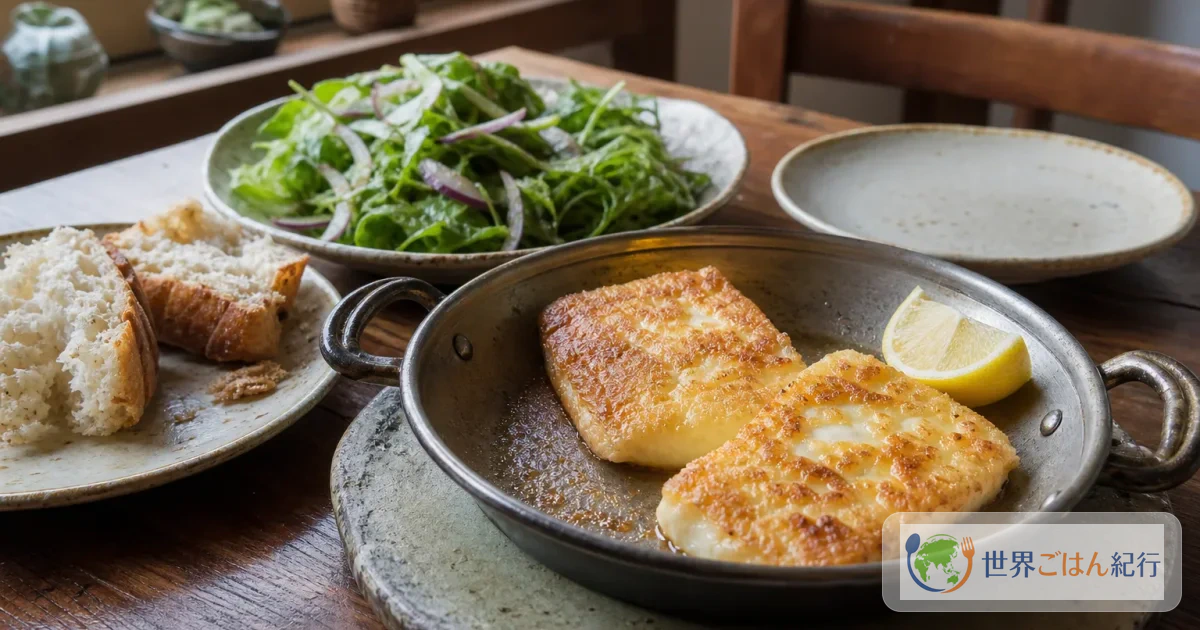
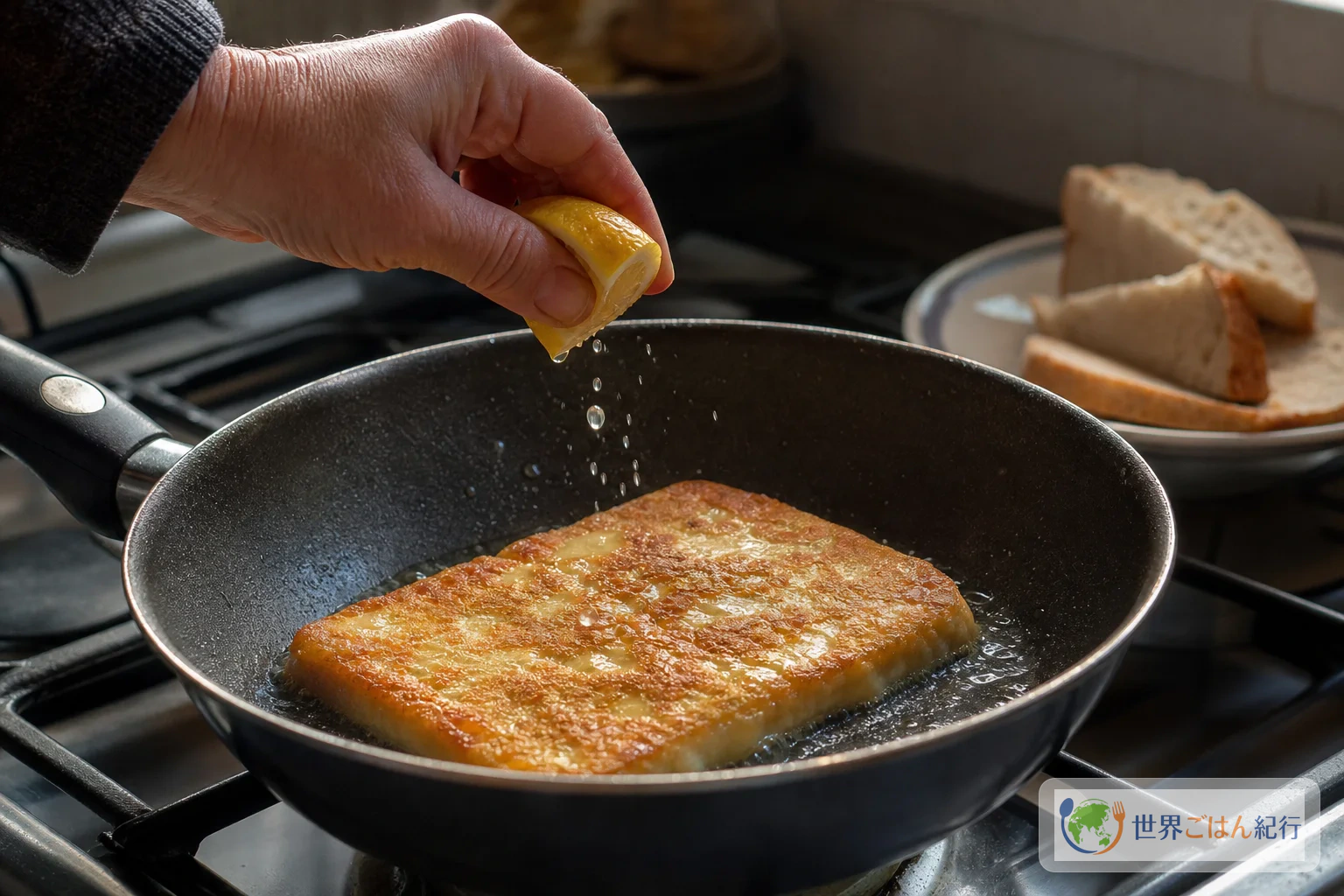
Saganaki is a dish you send to the table before the cheese melts
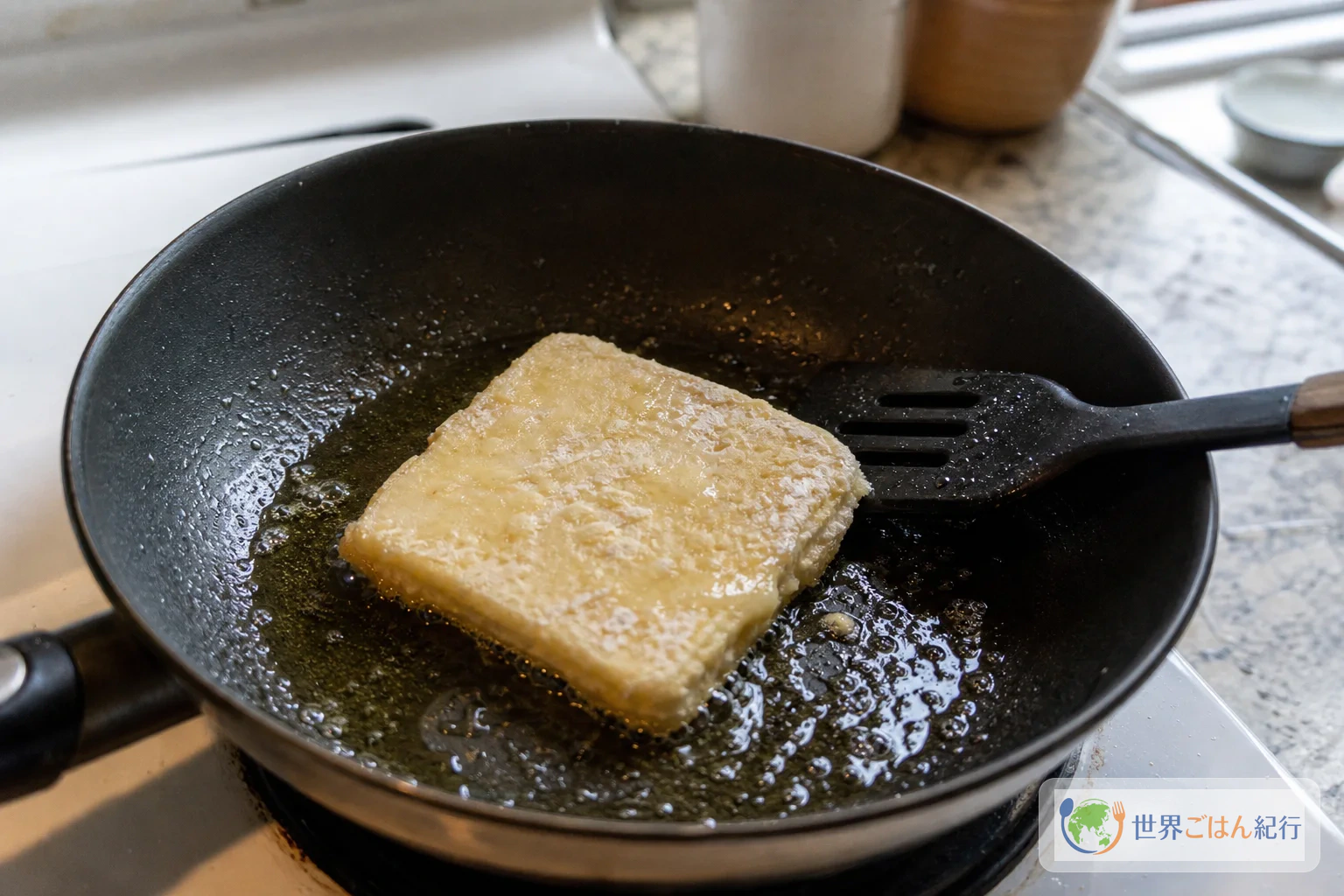
In the pan, only the edge of the white cheese turns golden first. The center has not yet melted, but when you lightly press the surface with a spatula, the coating gives a little over the cheese beneath. That is the moment to turn off the heat and squeeze on the lemon.
After the sizzle, the salty smell suddenly lifts. Add a slice of bread and it is less a main course for dinner than a small plate that someone cuts another piece of and shares around. This is Greek saganaki.
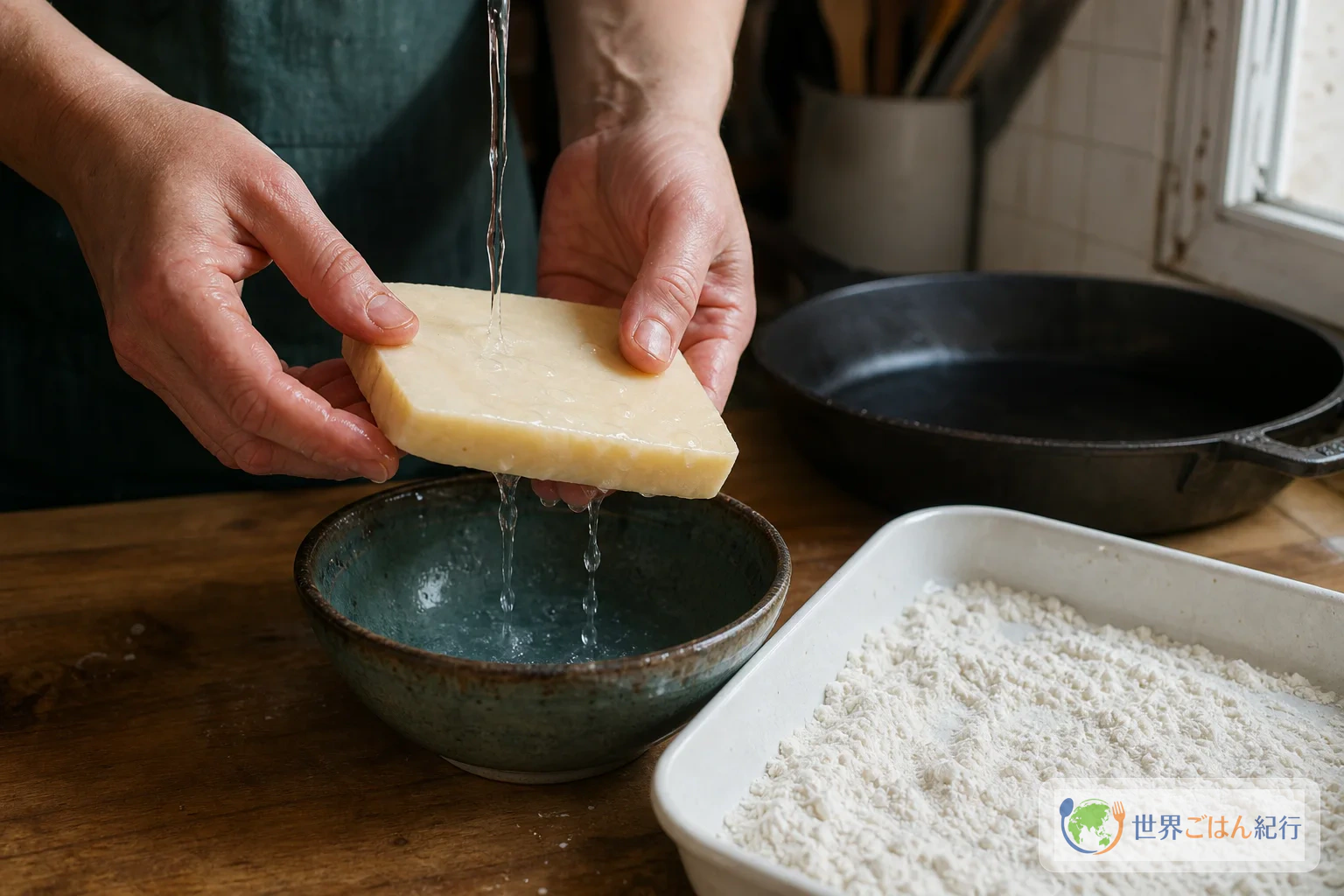
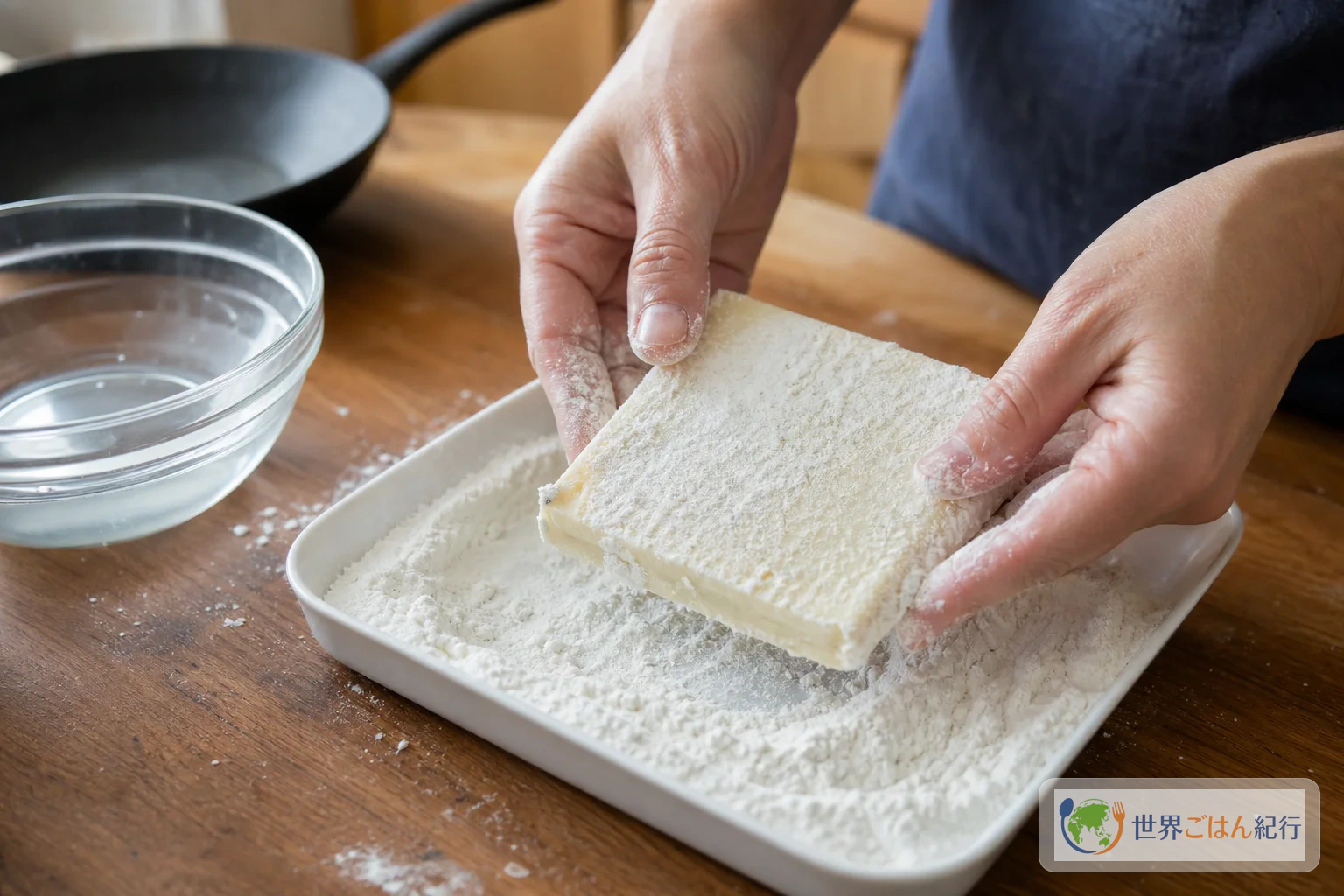
The name saganaki spread from the small two-handled pan the dish is cooked in. The Greek cheesemaker KOLIOS presents saganaki cheese as a meze that is fried or grilled, with a crisp outside and a soft inside. The recipe from the Greek National Tourism Organisation slices graviera, kefalograviera or kefalotyri 1 cm thick, wets it with cold water, coats it in flour, fries both sides and squeezes lemon over it.
The first question in a home kitchen is not the small special pan. It is "how far should the cheese melt?" If you wait until the center is completely liquid, it runs out of the coating or loses its shape in the oil. Move it to the plate once the color outside and the firmness of the edge are right. Once you understand that judgment, an ordinary 20 cm frying pan reproduces the heart of the dish well enough.
Where saganaki sits at the Greek table
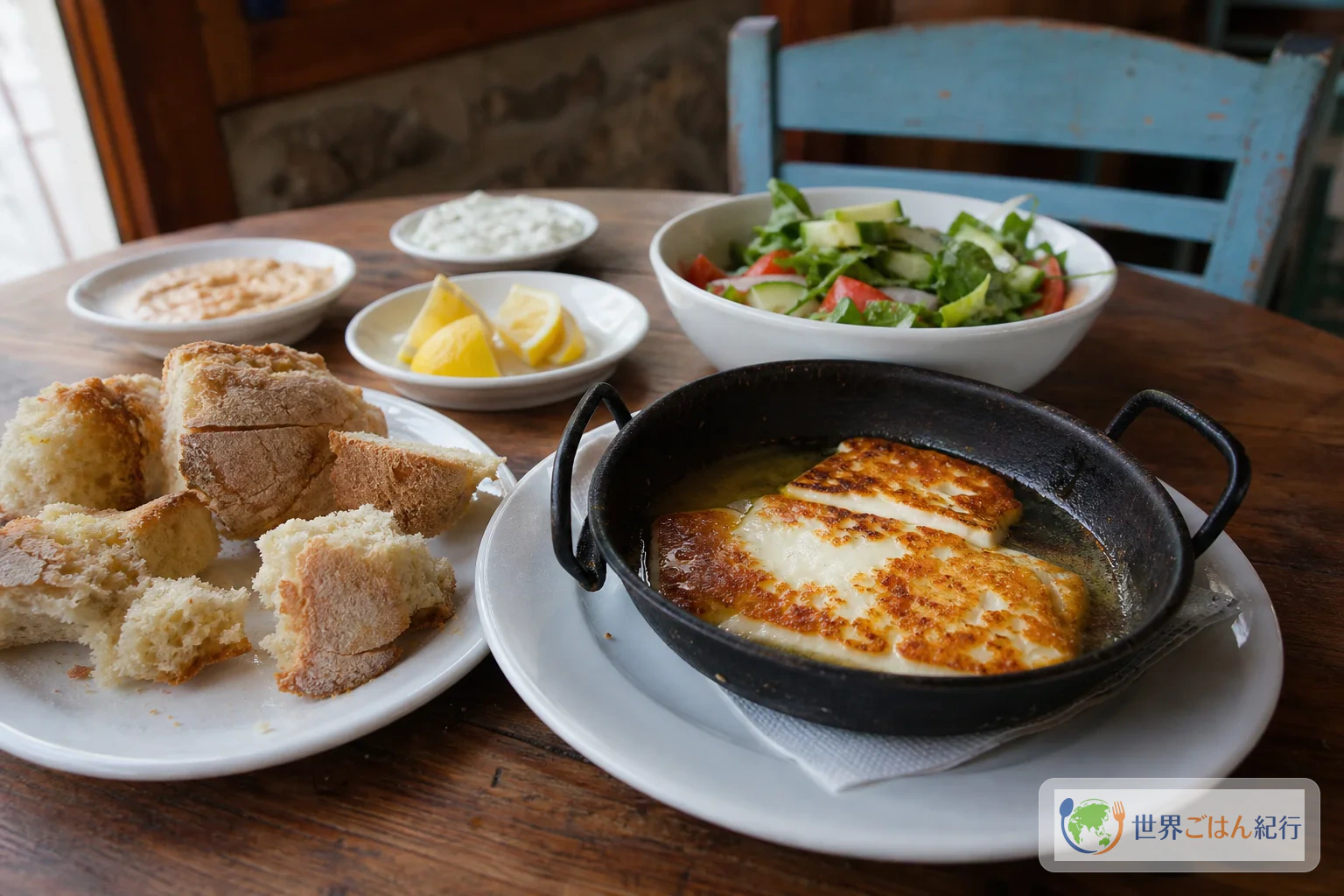
A Greek meal is less about a single plate decided for each person than about setting out several small dishes called meze and reaching for them with bread and vegetables. Visit Greece describes feta as a meze, served baked, wrapped in paper, or sautéed. KOLIOS's saganaki material also lists serving it with bread and a green salad.
What makes this dish interesting is that it is not complete with cheese alone. Hot saltiness needs the sourness of lemon, and a crisp surface goes well with soft bread. Add a salad and the cheese's fat is reset in your mouth once, so your hand goes out for another piece. It works as a starter before a big meat dish or beside grilled vegetables for dinner, filling a gap on the table.
The cheese is not fixed to a single kind across Greece. Visit Greece's cheese guide lists cheeses that differ in milk, aging and firmness: graviera from Crete, kefalotyri from Epirus, feta eaten everywhere. Seen as a dish that uses whatever "cheese that holds its shape when cooked" is available locally, saganaki makes substitutes easier to think about.
Knowing the origin of the name, you might feel you have to buy the special pan. But the main route here is an ordinary frying pan. A saganaki pan is easy to bring straight to the table, but learning to tell when the cheese is done comes before adding equipment.
On days when you want one more Greek small plate, set it beside the no-cook dakos (in Japanese) or the skewered souvlaki, and the aromas of lemon, oregano and bread connect.
The biggest question at home is the firmness of the cheese
The Greek National Tourism Organisation recipe specifies graviera, kefalograviera or kefalotyri. None of them is a cheese you will always find in an ordinary supermarket. If you can find one at an import store or cheese shop, make it the main choice; if not, think through the table below in order.
| Cheese | How it looks when fried | Judgment for a home kitchen |
|---|---|---|
| Graviera | The surface colors and the center softens easily | The first choice if you can find it. Pick a 1 cm thick block |
| Kefalotyri, kefalograviera | Salty and firm, so it holds the coating well | Closest to the official recipe. Look for thick cuts, not thin slices |
| Halloumi | Holds its shape and is springy to bite | An easy substitute, but it is a Cypriot cheese, so the flavor goes in another direction |
| Feta | Very salty and crumbles easily | Choose a thick block and handle it without pressing. For the first attempt, a firm cheese is recommended |
Feta is Greece's best-known cheese, but putting it straight into saganaki does not guarantee success. Because it is moist and salty, thin pieces or crumbled feta cannot hold the flour coating and are likely to break when turned. If you use it, blot the block dry, cut it about 1.5 cm thick, and do not touch it repeatedly while it fries.
At the store, what to check is not the name of the cheese but whether you can buy it as a block, whether it is firm enough to be treated for frying, and whether the package is around 200 g. If you can only find thin slices, change course: shorten the cooking time and serve them as a small appetizer on bread, which breaks less.
The cold water and flour may look like a detour. But wetting the surface with cold water before dusting with flour creates a thin boundary between the cheese and the coating. If you just dust with dry flour, the flour falls off and only the color darkens in the oil. The coating need not be thick. It is right when white flour remains when you hold the cheese in your fingers and only the excess falls off.
Ingredients (serves 2) | No added salt; use the cheese's own flavor
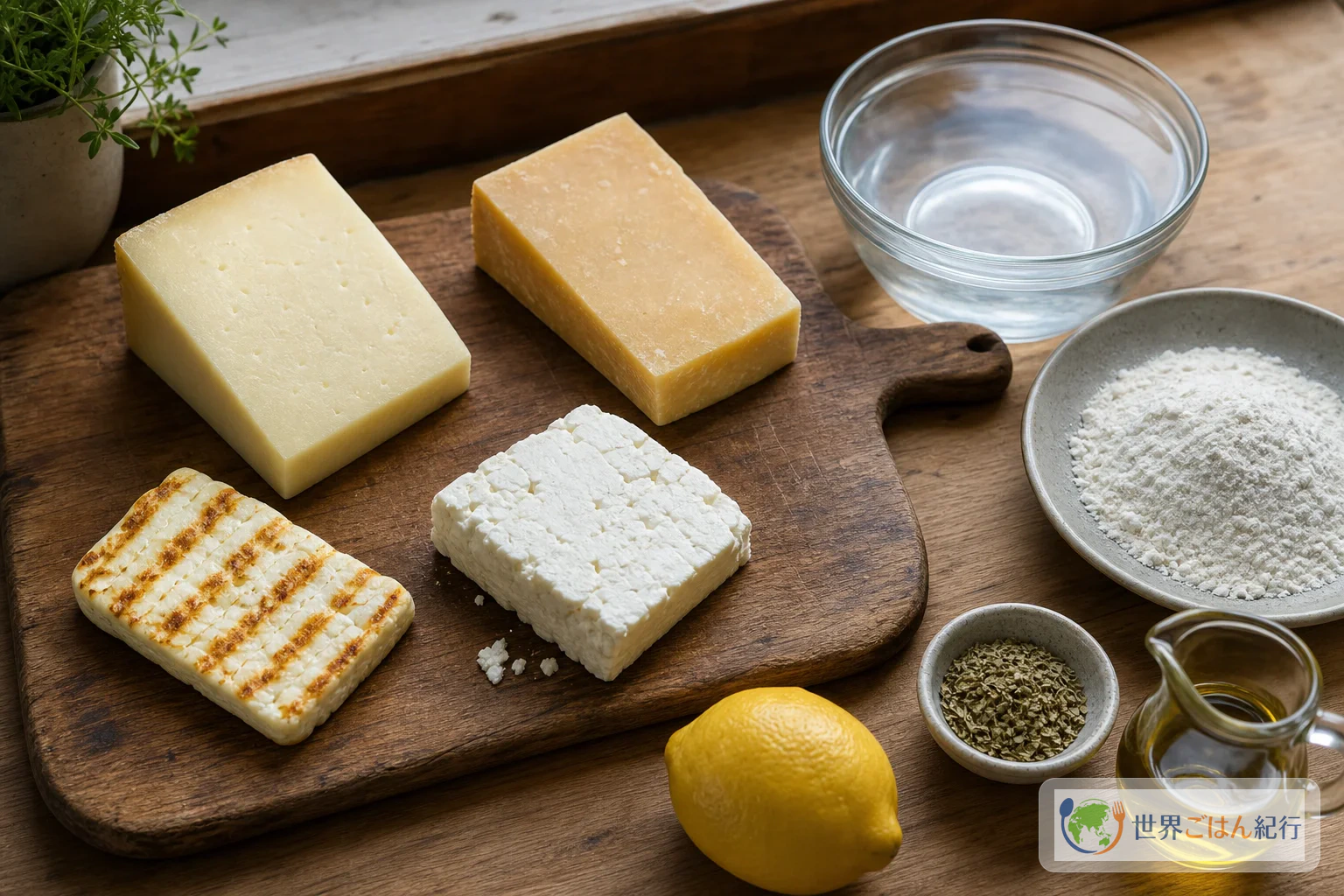
For two servings, divide 200 g of cheese into 2 to 4 pieces. You can cut one big piece between two people, but dividing it into single servings from the start lets you take it out quickly when it is done.
You do not need to salt the cheese. Do not mix salt into the flour either; taste the finished cheese and add a little only if needed. Feta and kefalotyri are often salty enough before they are fried.
This dish contains milk and wheat. The ingredients and salt level differ by cheese, so check the label when you buy. Shake the water droplets off the cold-water-wet cheese before dusting it with flour. If water falls into the oil, it spatters easily. Use separate tongs and plates before and after frying so that utensils that touched raw cheese do not go to the table.
Dried oregano: decide by where you will use it up, not how much to buy
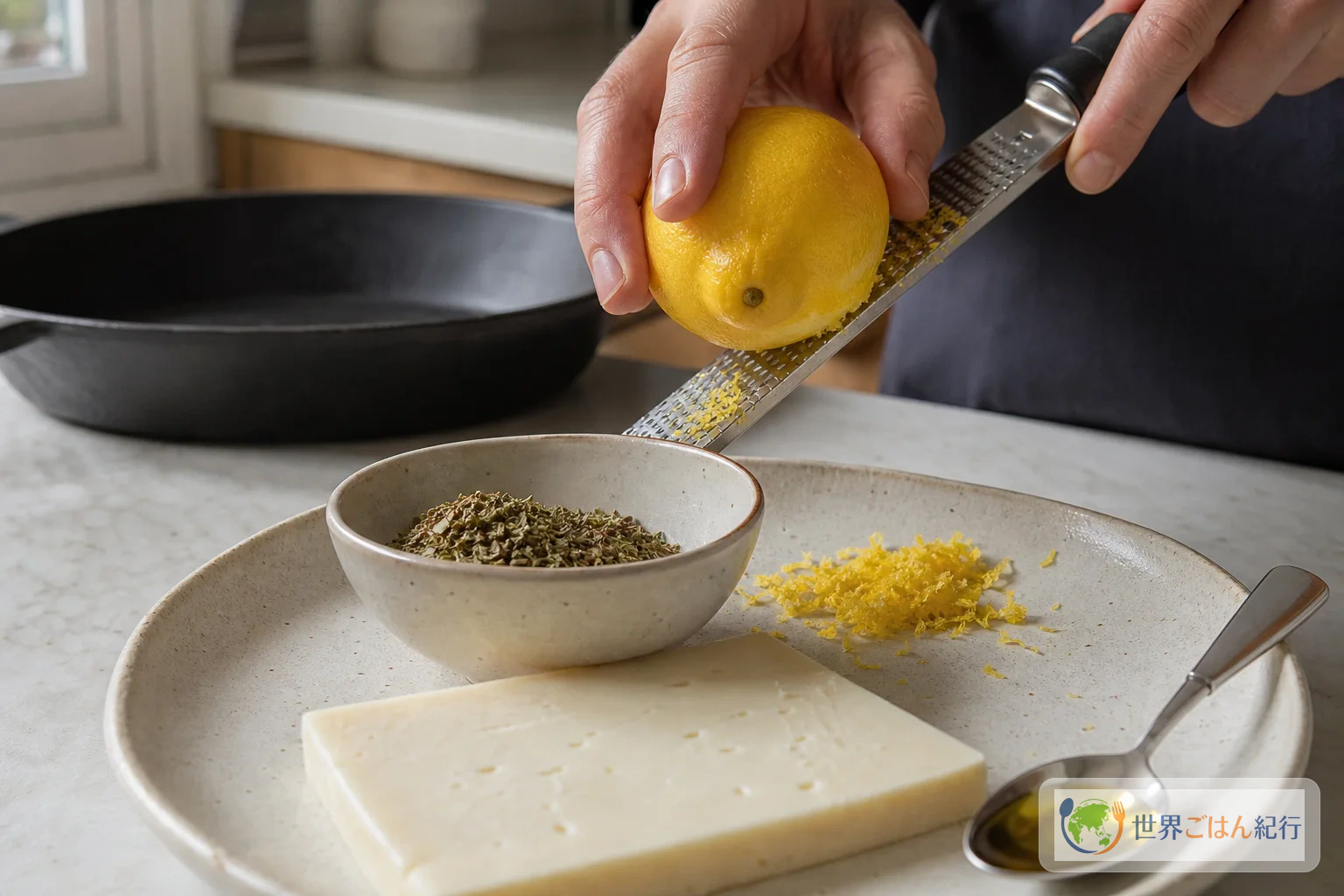
The oregano for saganaki is only 1/2 tsp. Buying a big bag for that amount may look excessive, but in Greek cooking dried oregano often goes with lemon and olive oil. If you scatter it over a no-cook plate like dakos (in Japanese), or use it to round out the bean aroma of fasolada, you can use up the rest.
It makes sense to buy a bottle if you do not like the aroma of the small jars you find, or if you will make several Greek dishes in a row. If you will make saganaki only once, the dried oregano you already have is enough. Fresher lemon makes more difference in this dish than leaving a large bottle on the shelf.
Instructions | Make a thin film of cold water and flour
Before you start, take the cheese out of the refrigerator and cut it right away. If it sits long at room temperature, the surface softens and the corners crumble when you dust it with flour. Line up the pan, oil, cold water, flour and lemon first so you are not hurried once frying begins.
Tell when it is done by the edge, not by whether it has melted
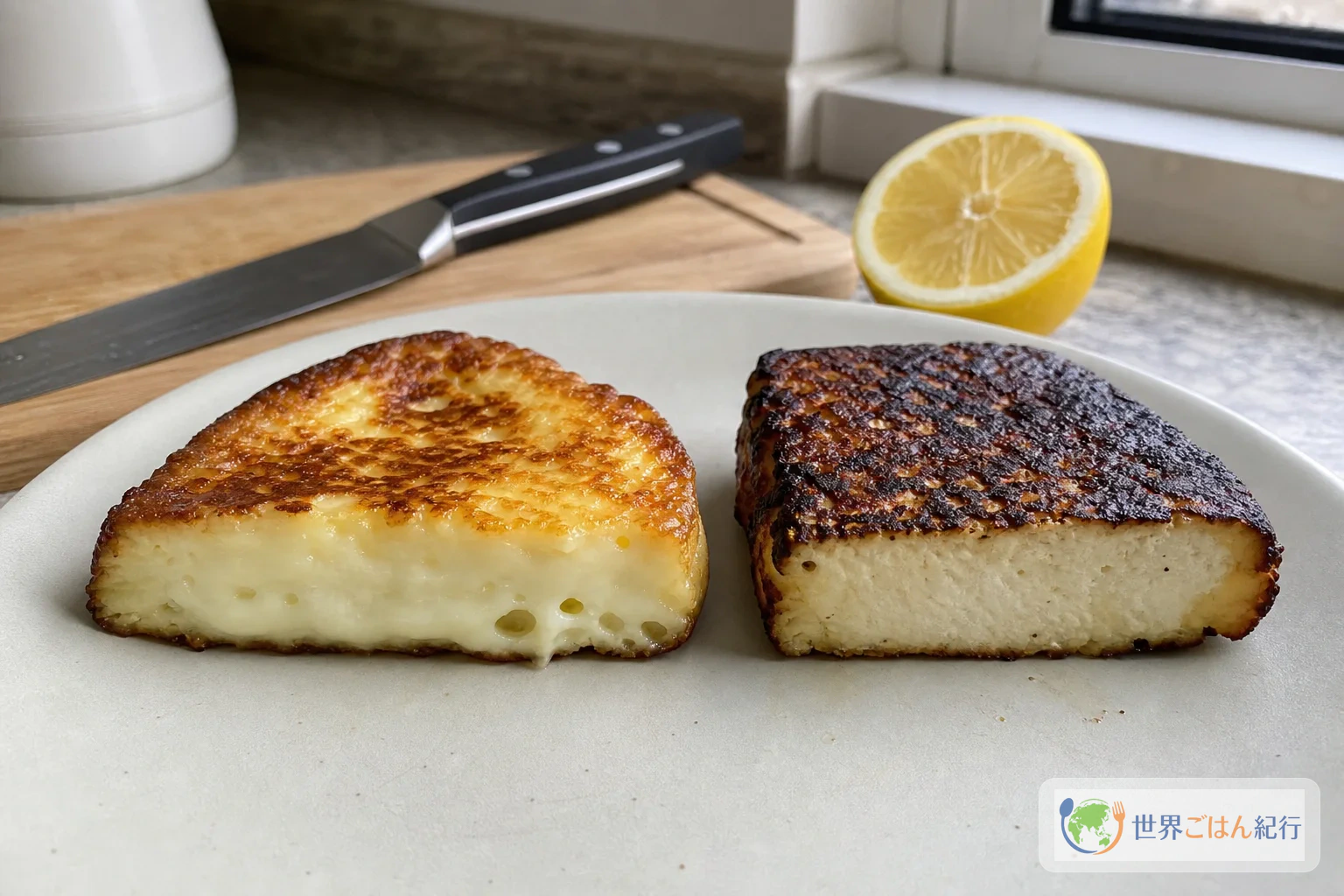
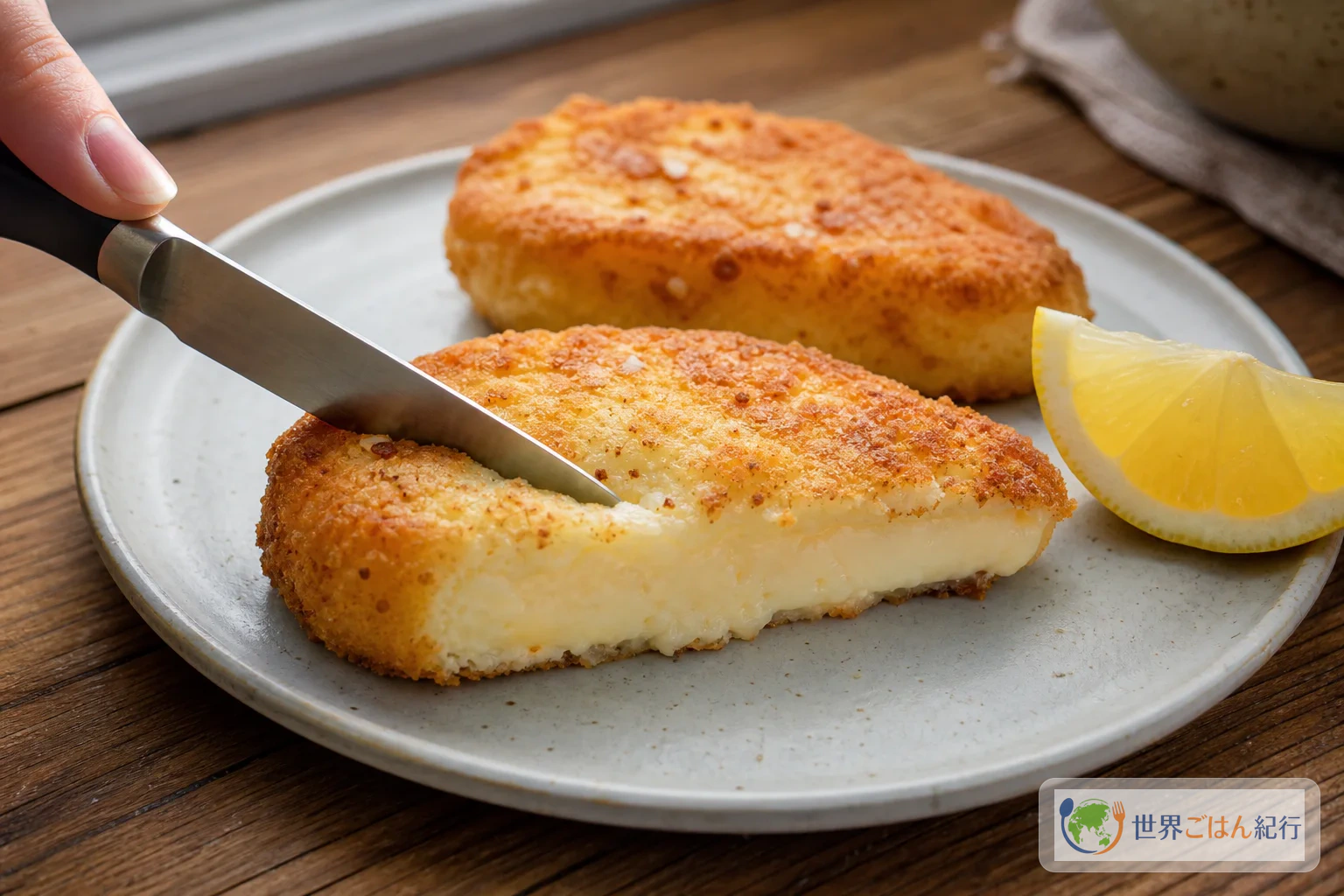
When you put in a knife, the center does not need to run out. As KOLIOS's material describes it, the ideal is crisp outside and soft inside. How far the center stretches changes with the type of cheese, so do not use how fluid it looks as the only measure of success.
| State | Likely cause | How to recover on the spot |
|---|---|---|
| The flour is white and the surface is dry | The oil temperature is low, or you turned it too early | Return to medium heat and fry each side 30 seconds longer |
| The flour coating stays in the pan | The cheese was too wet, or the flour was too thin | Don't try to scrape it off; gather the leftover cheese with the spatula. Next time, blot the water off a little |
| The surface is dark brown and the center is hard | High heat, or cooked too long | Don't cook it more; eat it with lemon and salad. Next time lower the heat a little |
| The cheese broke when turned | Thin cheese, or touched repeatedly | Fry the broken side down for just 30 seconds and switch to a small plate to put on bread |
The cheese being cold before frying is not a problem. Frying the surface quickly from cold actually sets the coating before the center collapses. Do not shake the pan repeatedly, and turn only once. Just keeping these two rules lets the cheese hold its shape without a special pan.
After the lemon, add just a little oregano
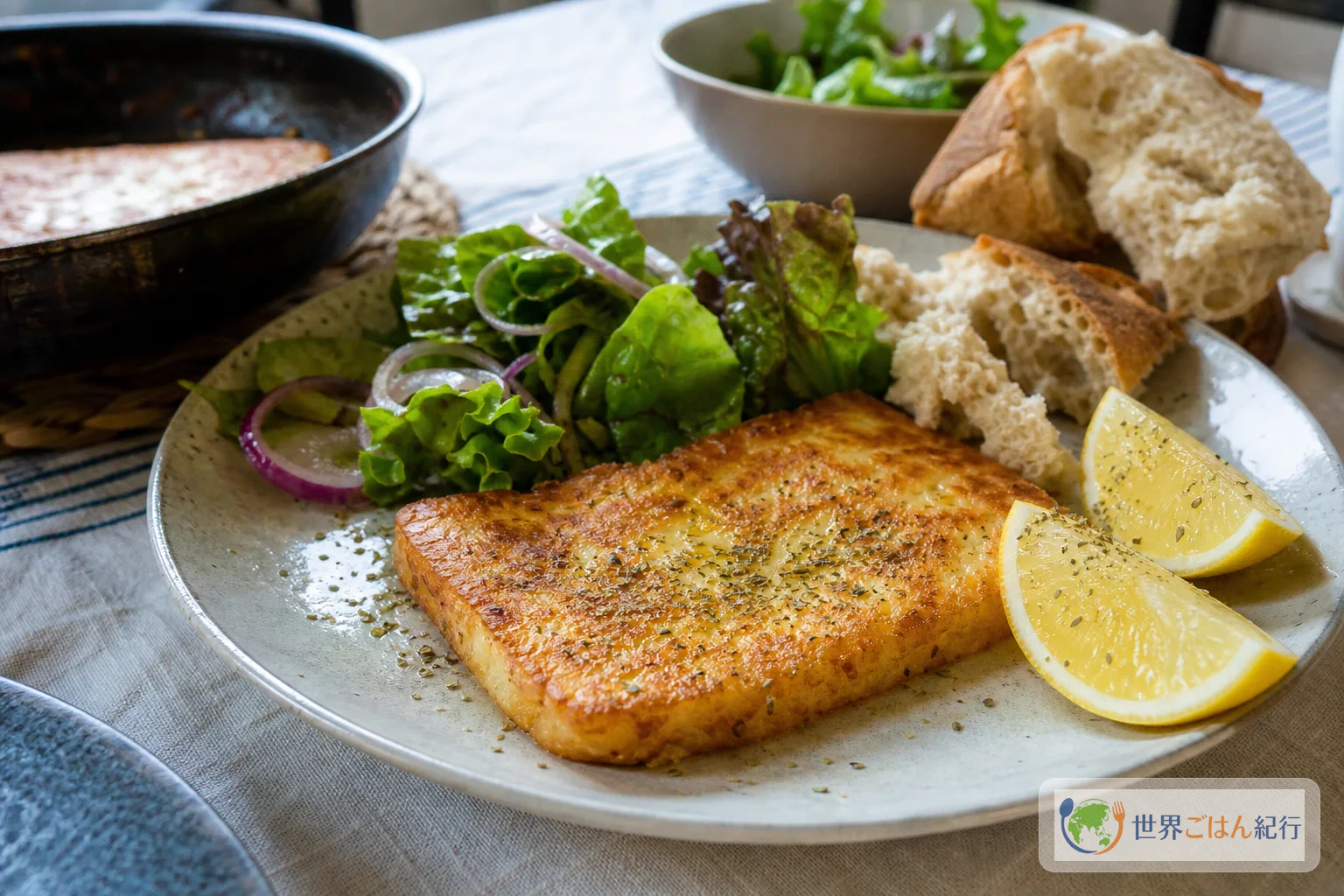
The basis of the official recipe is fried cheese and lemon. If you add oregano, do not put it in the frying oil; scatter 1/2 tsp after squeezing the lemon. Heated long in oil it turns bitter more than green in aroma, and the cheese's saltiness feels heavy.
On days when you want a rounder aroma, make a "lemon oregano salt" by mixing 1 tsp oregano, a pinch of salt and a little yellow lemon zest. If you have a mortar, crush it lightly; if not, rubbing it between your fingertips is enough. This is not an essential step of saganaki, but an addition to bring out aroma in a home kitchen.
A mortar is worth owning if you regularly crush small amounts of cumin, black pepper, garlic or nuts, and not only oregano salt. If you only make saganaki once, you can do without one by rubbing it with your fingers or pressing the lemon zest with the back of a spoon.
Eat it fresh, and use leftovers by the next day
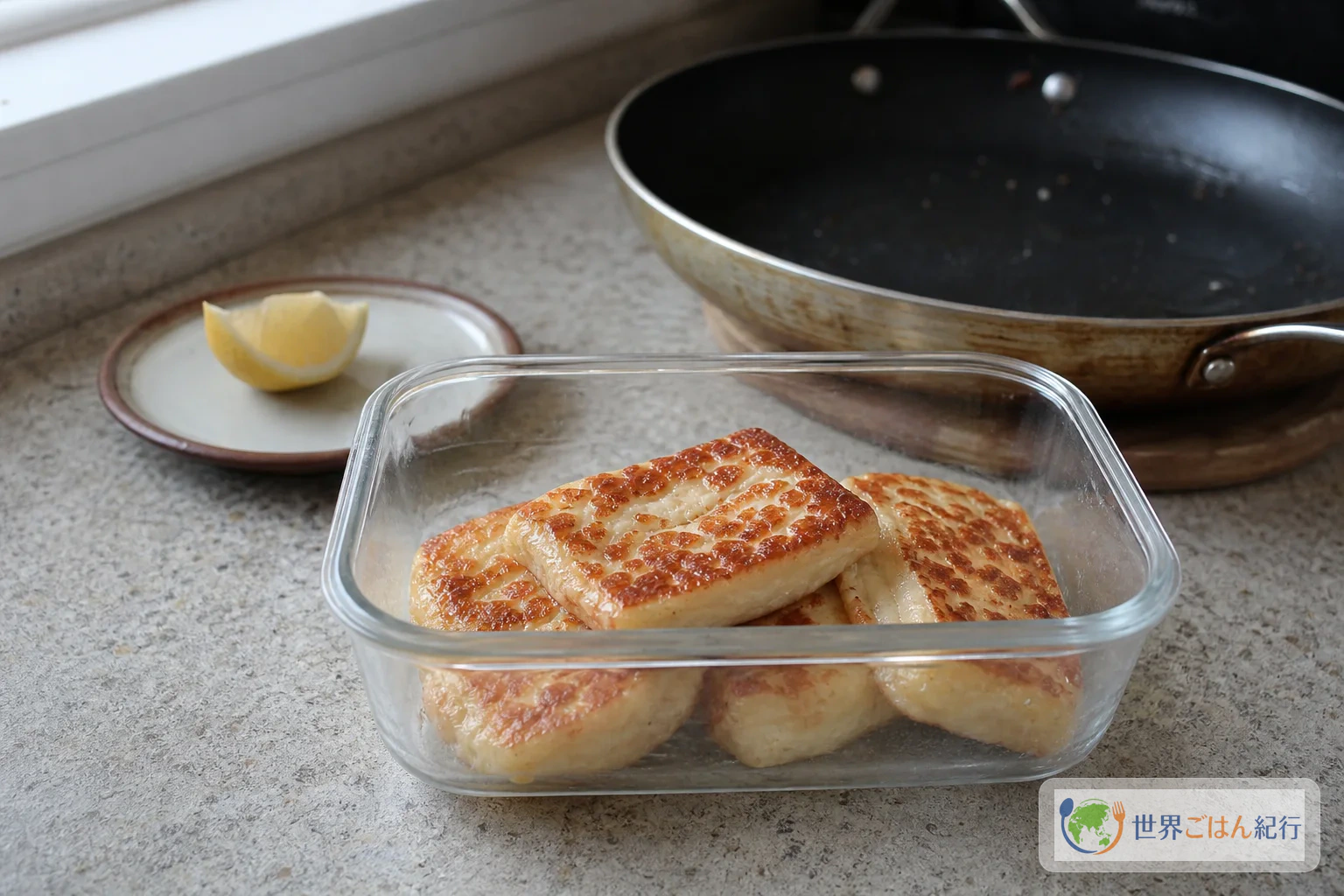
The longer saganaki sits after the lemon goes on, the softer the coating gets. The easiest way is not to fry for everyone at once but to fry one piece at a time just before the people who will eat it are together.
If there are leftovers, let the heat go off, move them to a shallow container and refrigerate. Use them by the next day: warm the pan over low heat and fry 1 to 2 minutes per side again. The surface comes back, but not to the firmness of fresh-fried cheese. Microwaving alone makes the coating damp and draws water out of the cheese, so use it only briefly as a final reheat if at all.
This is not a dish to increase in quantity for storage. Fry 200 g as an amount two people can finish, and round out the plate with bread and salad; that is the more saganaki-like way to spend the time.
FAQ: feta, the special pan and flames
Can I make it with feta alone?
You can, but choose a thick block and blot it dry before handling. Thin or finely crumbled feta is hard to turn and fails more easily than the firm cheeses in the official recipe. At first, a cheese that holds its shape when fried, such as graviera, kefalotyri or halloumi, makes the judgment easier.
Do I need a special saganaki pan?
No. The appeal of the special pan is that it can go straight to the table, but an ordinary frying pan works too, if you spread the oil thinly and fry each side without moving it. If you buy one, think about whether you will also use it to serve fried vegetables or small meze straight from the pan, not only saganaki.
Is it a dish where you pour liquor over and set it alight?
Not in this recipe. The Greek National Tourism Organisation recipe also fries in oil and squeezes lemon. You do not need to ignite alcohol on a home stove; squeezing lemon over hot cheese gives plenty of aroma and sound.
Sources
- Greek National Tourism Organisation, "Mouthwatering Greek Cuisine", Saganaki recipe, https://pub-mediabox-storage.rxweb-prd.com/exhibitor/document/exh-43e3a699-83b1-4a5a-877d-13ffe0a23289/1ddbab92-41dc-484c-b420-f3188b1f5513.pdf (accessed 22 July 2026)
- Visit Greece, "Greek Cheeses", https://www.visitgreece.gr/experiences/gastronomy/greek-cheeses/ (accessed 22 July 2026)
- KOLIOS S.A., "Saganaki cheese", https://www.kolios.gr/en/our_products/kasseri-pdo-yellow-cheeses/saganaki/ (accessed 22 July 2026)
- KOLIOS S.A., "Product Catalogue 2024", https://www.kolios.gr/wp-content/uploads/2024/10/KOLIOS_ProductCatalogue_2024_EN.pdf (accessed 22 July 2026)