
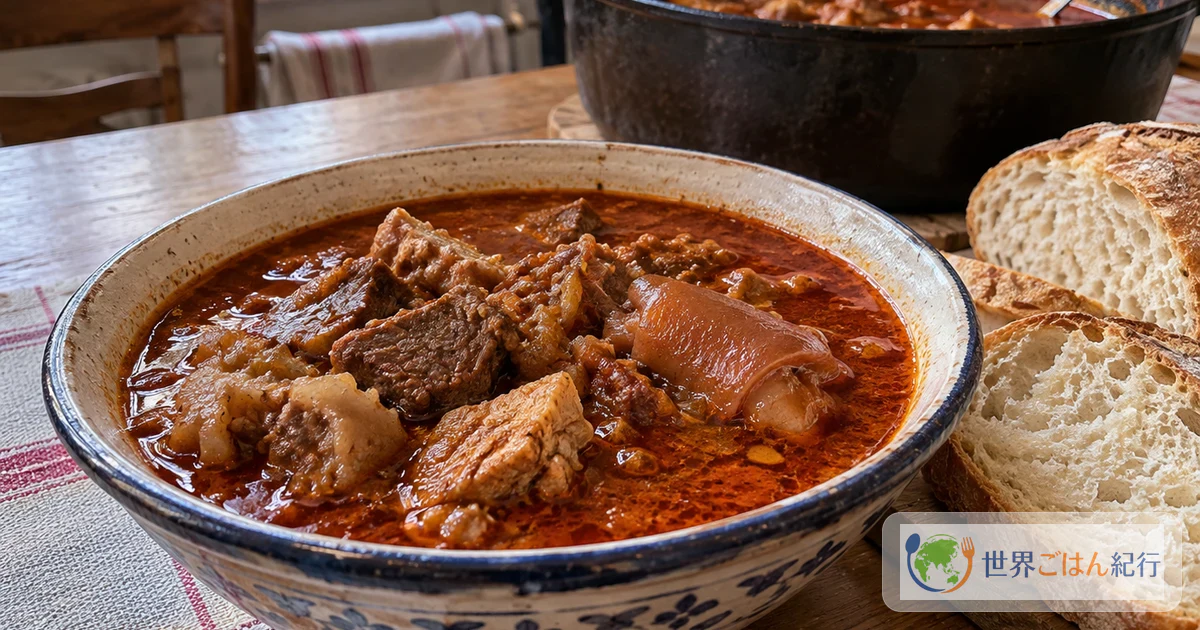
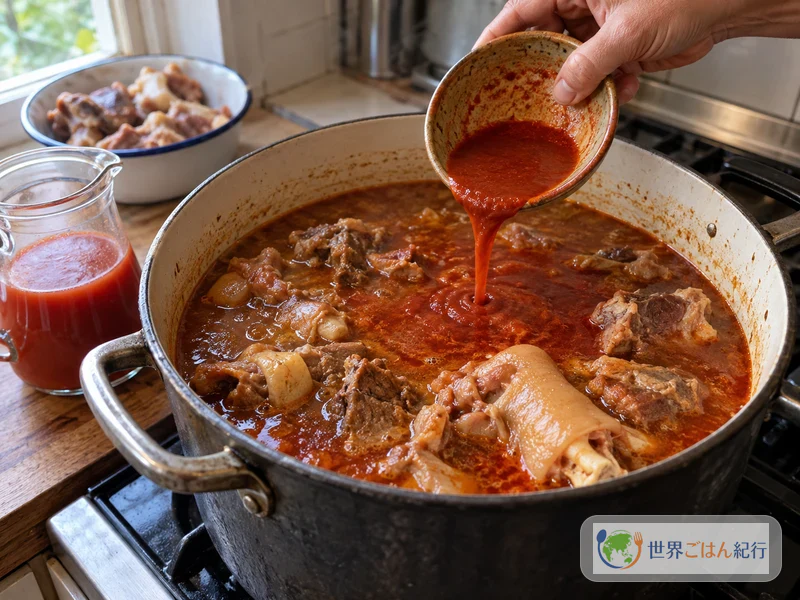
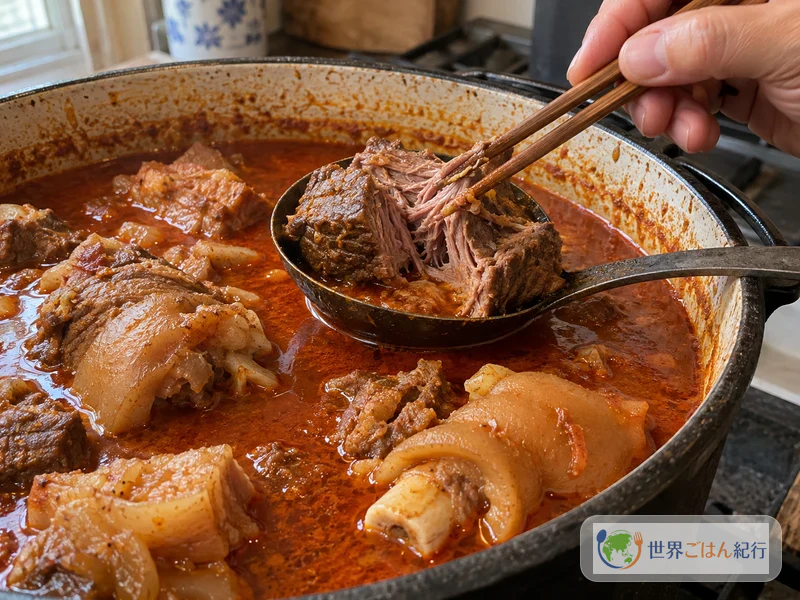
In late autumn, in the villages of Slavonia, the flat plain of eastern Croatia, several big iron kettles hang in the square over wood fires. What is simmering in them is čobanac, a soup-like stew of beef and pork cooked with onions and bright red paprika. Around the person stirring the pot with a wooden paddle, people gather with bread in hand. The paprika pot that carries a shepherd's name is the signature dish of Slavonia.
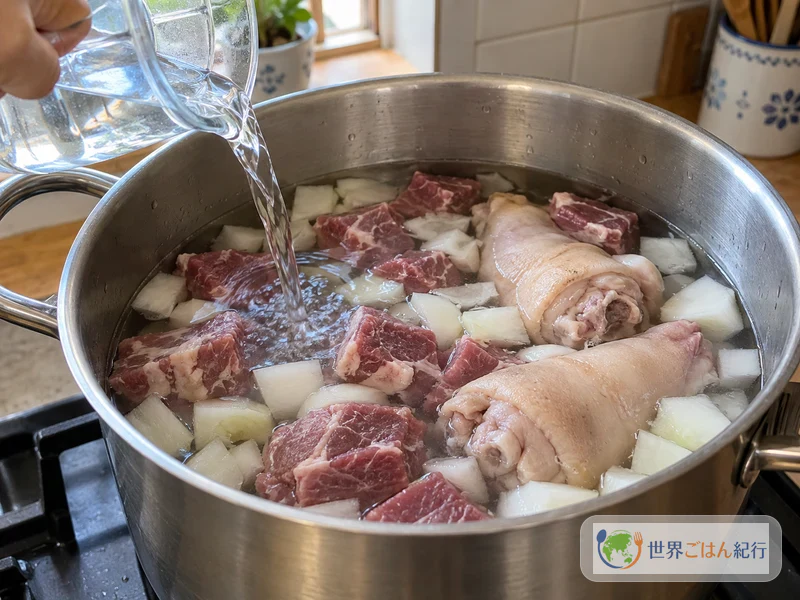
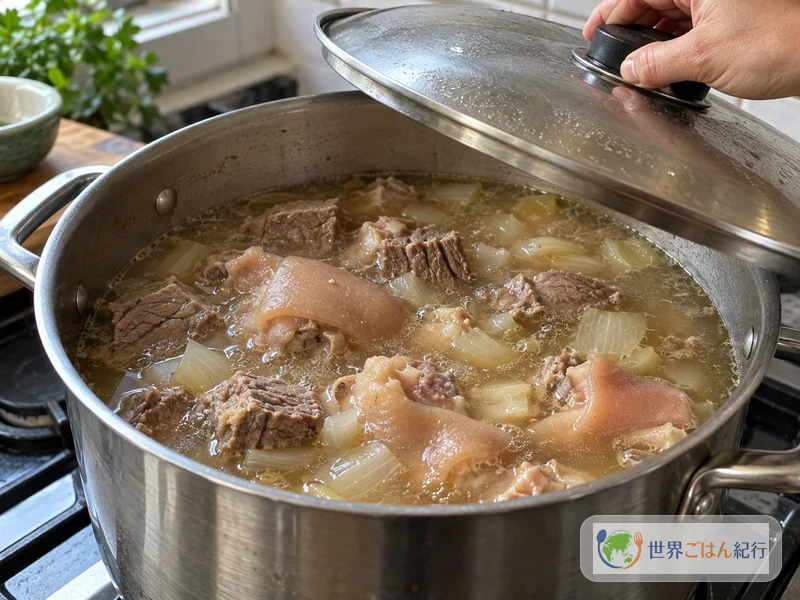
In a home kitchen, the method is hardly different. Put onions, meat, and water in a deep pot and set it on the heat, add the tough meats first in order, and at the end dye it bright red with paprika. There is no browning of the meat, and it is an almost disappointingly simple dish that you simply simmer for about two and a half hours.
A shepherd's pot became the dish of Slavonian festivals
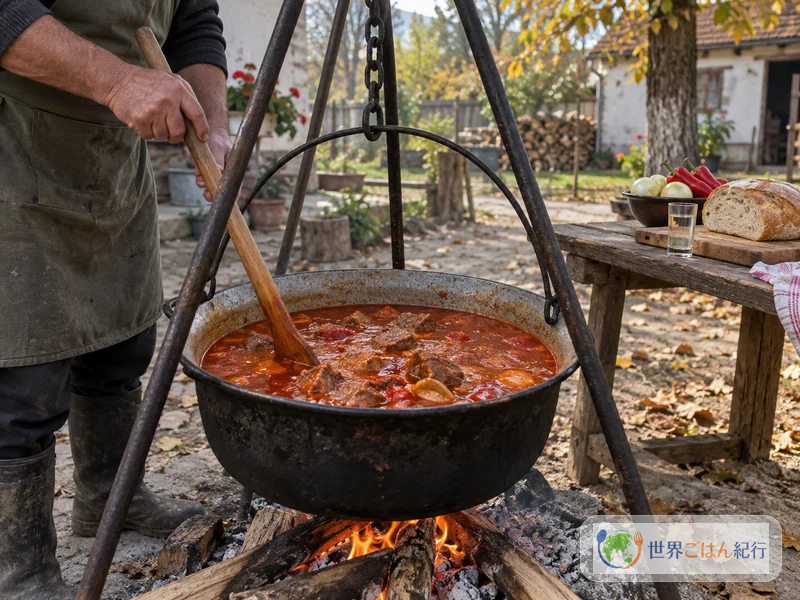
The name čobanac comes from čoban, "shepherd" in South Slavic. The alternative name pastirac is likewise taken from pastir, shepherd. The dish is said to have begun as a simple stew made by shepherds and rural workers, who would put the meat and onions at hand into a pot and leave it on the fire while they tended livestock.
Slavonia is the easternmost, flat region of Croatia, bounded by the Danube, Sava, and Drava rivers. It is utterly different from the fish and olive oil cooking of the Adriatic coast; at the center of the table are cured pork products and stews made with paprika. As in neighboring Hungary, it is a kitchen that cannot begin without paprika. The red color and aroma of čobanac also come from the generous amount of paprika that goes in.
Čobanac is still widely made today at Slavonian regional food festivals and markets, and at events where big-kettle dishes are cooked outdoors. Cooking in a big pot over an outdoor fire is the old way, and it is indispensable where village people gather. It is also loved as a winter dish.
Traditionally, čobanac is made by cooking several kinds of meat together. With beef and pork as the axis, mutton and game such as venison and wild boar from hunting may go in. The formula differs by household and village, and which meat goes in at what share shows each house's taste. Cooking various meats in a single pot gives a broth in which the savor of each meat layers.
Ingredients (serves 6)
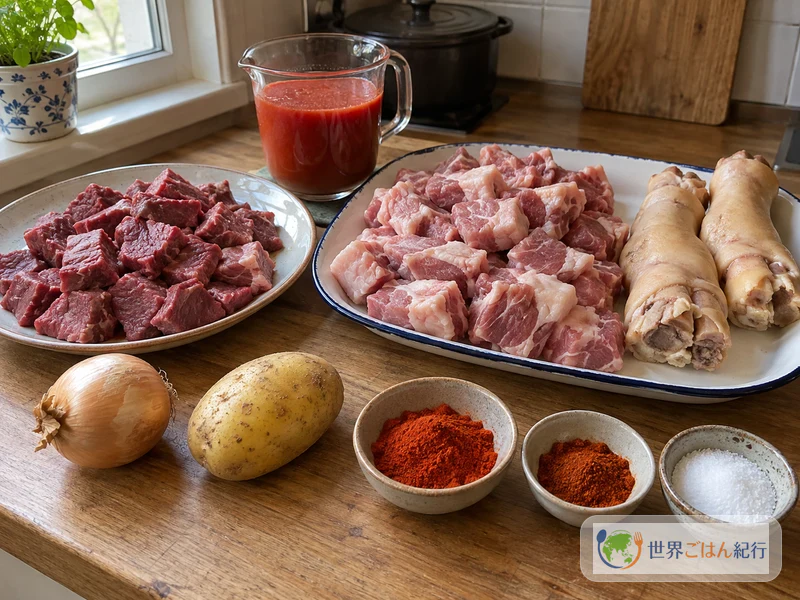
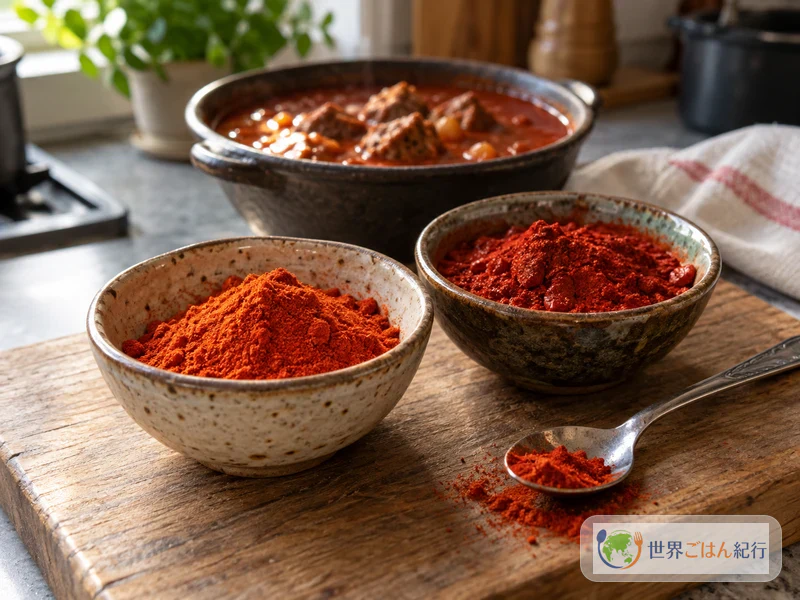
The red color of čobanac comes almost entirely from paprika powder. Most paprika powder sold in supermarkets is the mild, sweet kind, which can be used as it is. Hot paprika can be found at import food stores or online, but if you cannot find it, a pinch of ground red chili does the job of the heat. Pig's trotters are often sold pre-boiled at butcher shops, and their gelatin gives the broth a pleasant body.
In Slavonian homes a little game is mixed in to add a wild note to the broth. Frozen venison or wild boar can be had from specialty meat suppliers. Cut it the same size as the beef and simmer it from the start together with the beef.
How to make čobanac
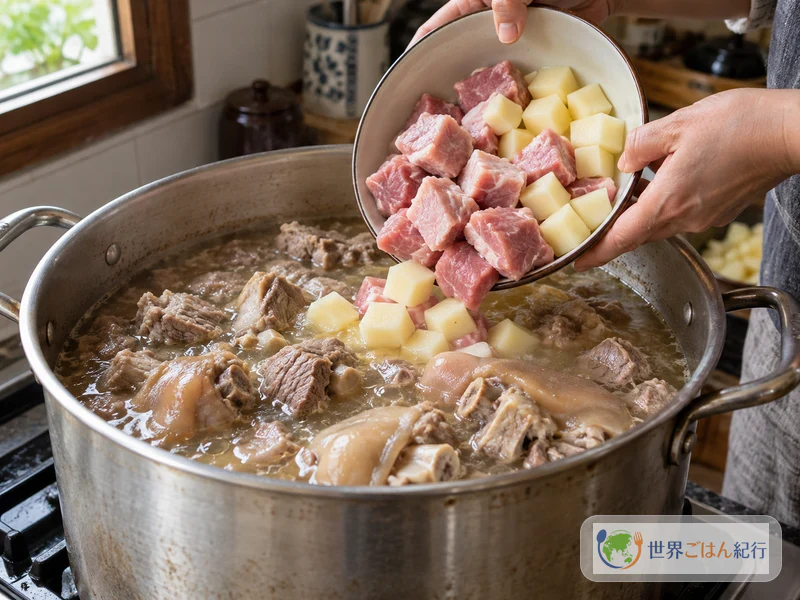
Prep is about 20 minutes. Cut the meat into cubes of the same size, and chop the onion and potato. The simmering takes 2 to 2 and a half hours. The tough meats go in first, and the pork, which softens more easily, goes into the pot 30 minutes later.
Cook pork and trotters until the center has been at 75°C for at least 1 minute. Even fresh pork, if not cooked through, can cause food poisoning or infection with hepatitis E virus. Simmering for 2 hours or more as in this recipe cooks it through enough, but cut into the large chunks and check the color inside.
Do not put the paprika in from the start; add it one hour after you started simmering. If you find the color or aroma lacking at the end, dissolve 1 tsp more sweet paprika in broth and add it 5 minutes before turning off the heat.
Čobanac gets even better after standing overnight, when the savor of the meat and the paprika meld. When it cools, the gelatin of the trotters can make the broth set to a jelly, but rewarming brings it back.
Dipping bread, around the big kettle
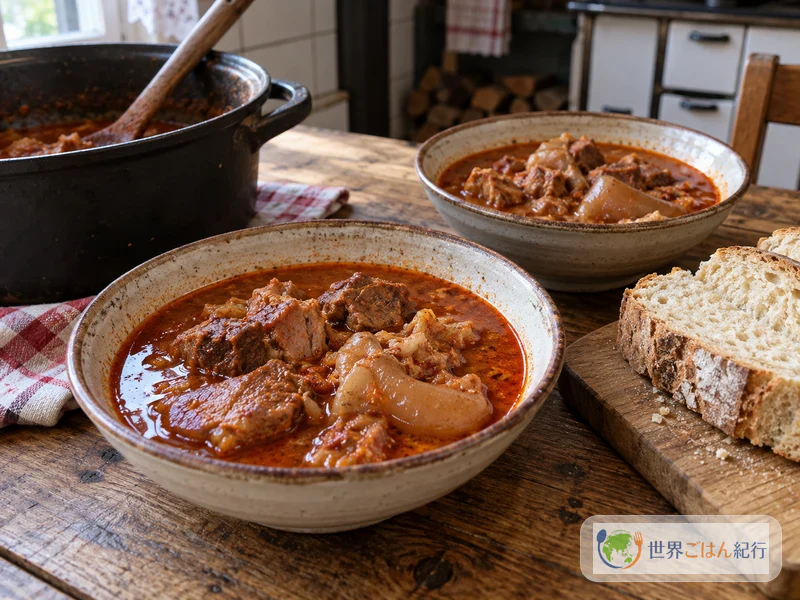
Serve čobanac generously in a deep bowl with thick slices of bread. It has too many solids to be called a soup and too much liquid to be called a stew, so it is best eaten while dipping bread in it. The American food magazine Milk Street also introduces serving it with mashed potatoes or crusty bread. In a home kitchen, crusty bread such as country bread goes well.
In the same family of paprika stews, across the border in Hungary it becomes chicken paprikash (in Japanese), finished with chicken and sour cream, or beef goulash. So different that you would not believe it comes from the same country, the Adriatic coastal stew is pašticada (in Japanese).
Frequently asked questions
Can I make it without trotters?
Yes. Trotters give the broth body and richness, so if you have none, add about 200 g more pork shoulder. The broth finishes a little thinner.
Can I make it not spicy?
If you leave out the hot paprika and use only sweet paprika, there is almost no heat. When eating with children, you can add the hot paprika or ground red chili only to the adults' bowls.
Can I make it ahead?
It is suited to making ahead, since the flavor melds after standing overnight. After the heat has gone, move it to a lidded container and refrigerate, and eat it up soon. When rewarming, heat until the whole thing is thoroughly hot.
May I make it with only beef?
Yes. The American Milk Street recipe presents a variation made only with beef chuck. But combining several kinds of meat is the way of Slavonian homes, so if you can, simmer pork in it too.
Sources
- Druga srednja škola Beli Manastir, "Baranjska kuharica" (cookbook of the Baranja region), 2023/2024 school project. Accessed and checked 22 October 2026. https://ss-druga-bm.skole.hr/wp-content/uploads/sites/2463/2025/04/Baranjska-kuharica.pdf
- Croatia Week, "[VIDEO] Croatian Recipes: Čobanac (Shepherd's Stew)," 11 January 2017. Accessed and checked 22 October 2026. https://www.croatiaweek.com/video-croatian-recipes-cobanac-stew/
- Milk Street, "Slavonian-Style Shepherd's Stew." Accessed and checked 22 October 2026. https://www.177milkstreet.com/recipes/slavonian-style-shepherds-stew
- Wikipedia, "Slavonian čobanac." Accessed and checked 22 October 2026. https://en.wikipedia.org/wiki/Slavonian_%C4%8Dobanac
- Bunkyo City (Tokyo), "Serving and selling raw pork is now prohibited!" Accessed and checked 22 October 2026. https://www.city.bunkyo.lg.jp/b026/p002888.html


