Just Slice Apples into Rings and Fry Them, and the Mood at the Table Changes
A day of deep-frying takes a little resolve in the kitchen. You heat the oil, dust the flour, and wipe down around the pot at the end. Because of that effort, the smell at the moment an apple ring goes through batter and into the oil has a pleasure quite different from an ordinary baked sweet.
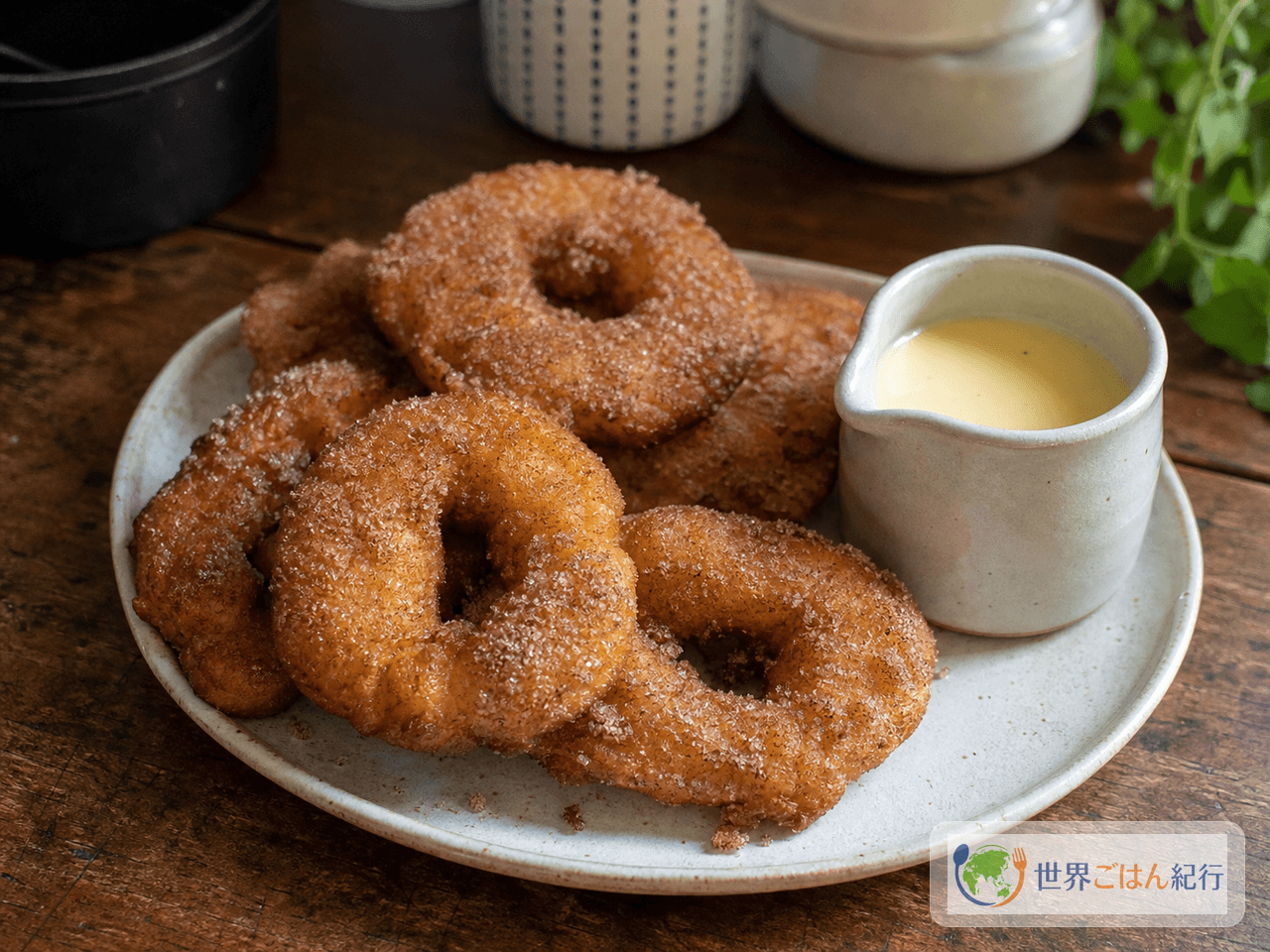
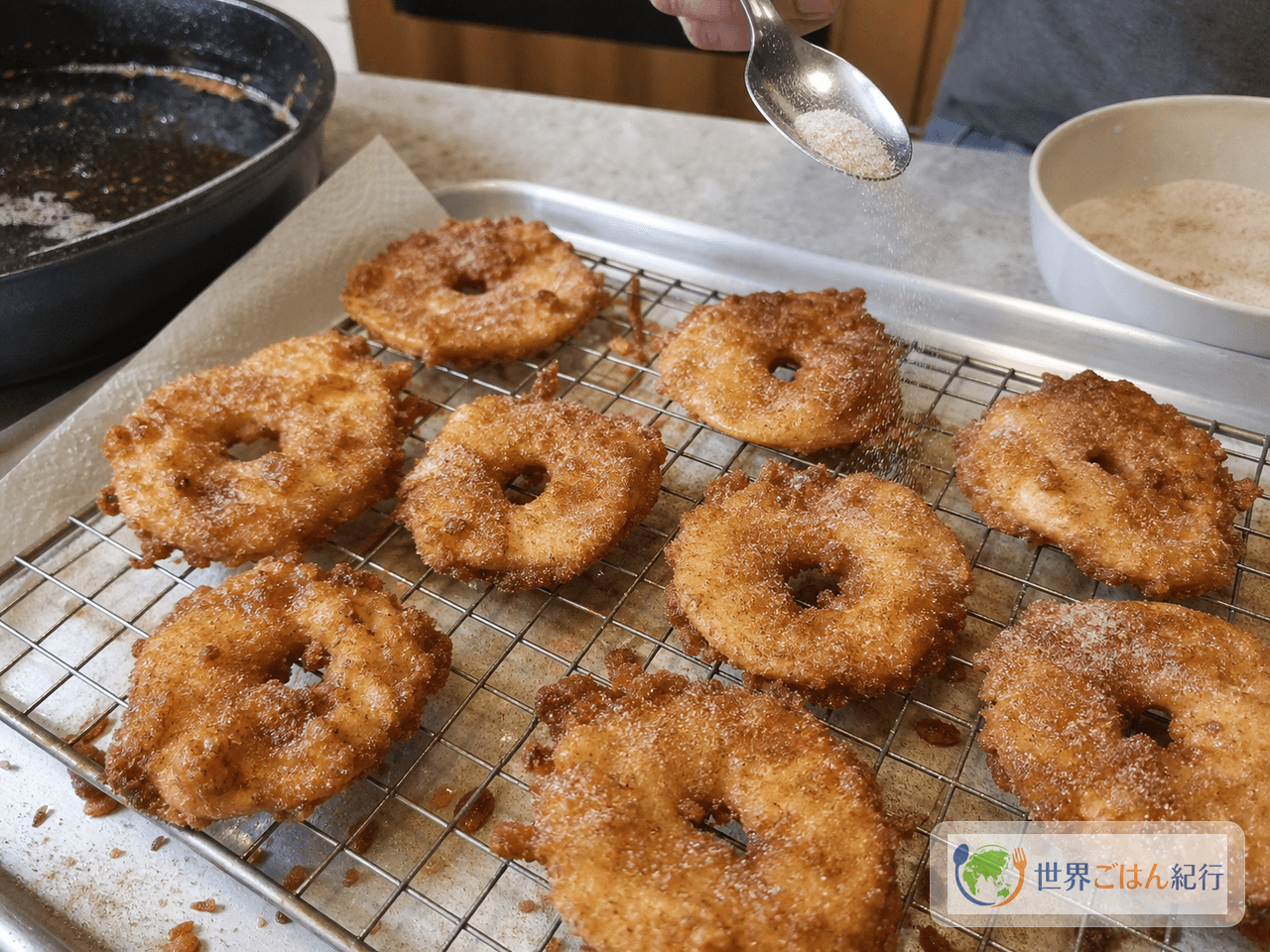
Apfelküchle is a fried apple sweet long loved around Baden-Württemberg and Swabia in southern Germany. In Austria, similar dishes go by names such as Apfelradl, Apfelradln, and Apfelkiachl. In every case, you cut cored apples into rings, coat them in batter, puff them up in hot oil, and finish with cinnamon sugar.
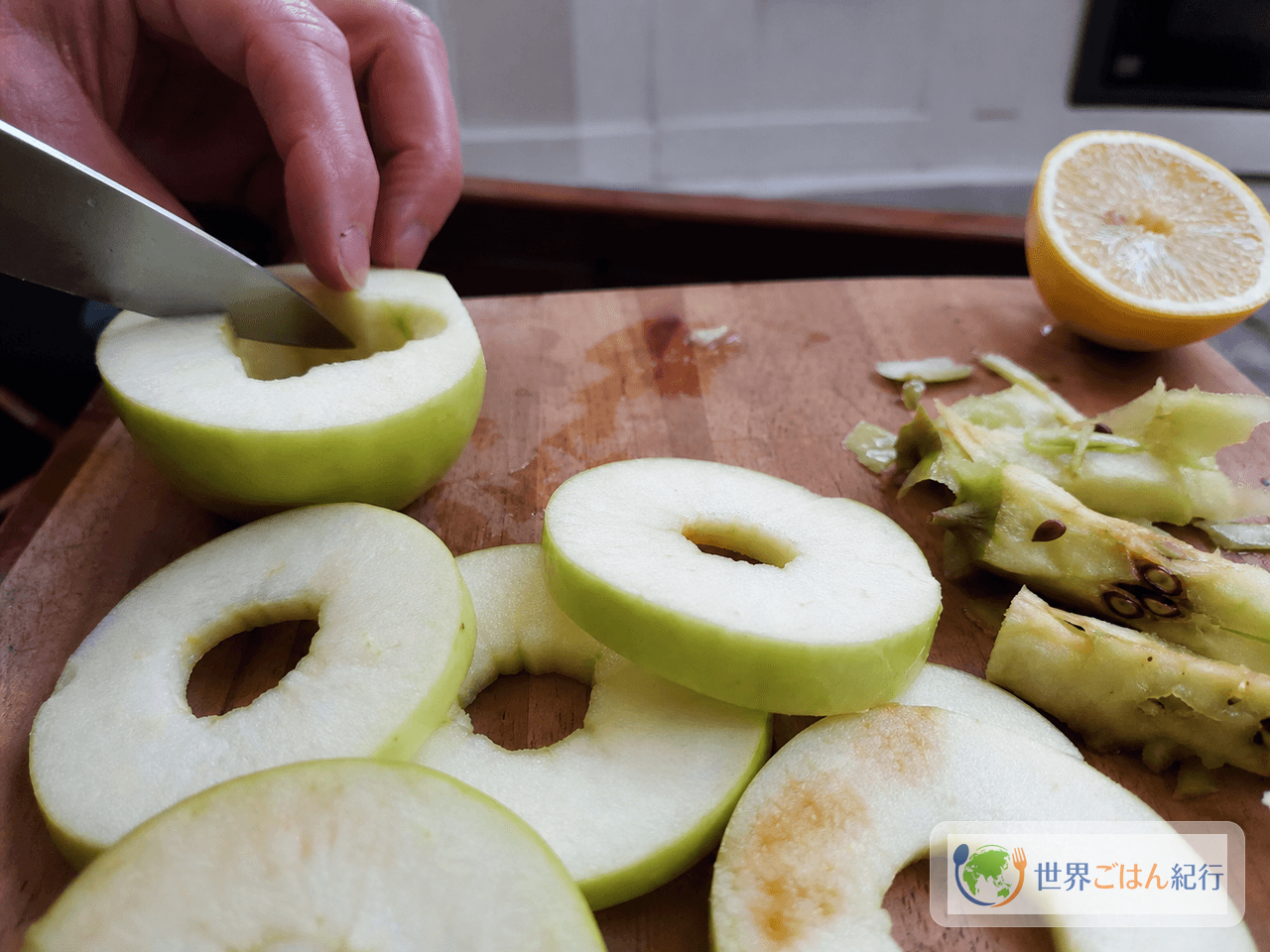
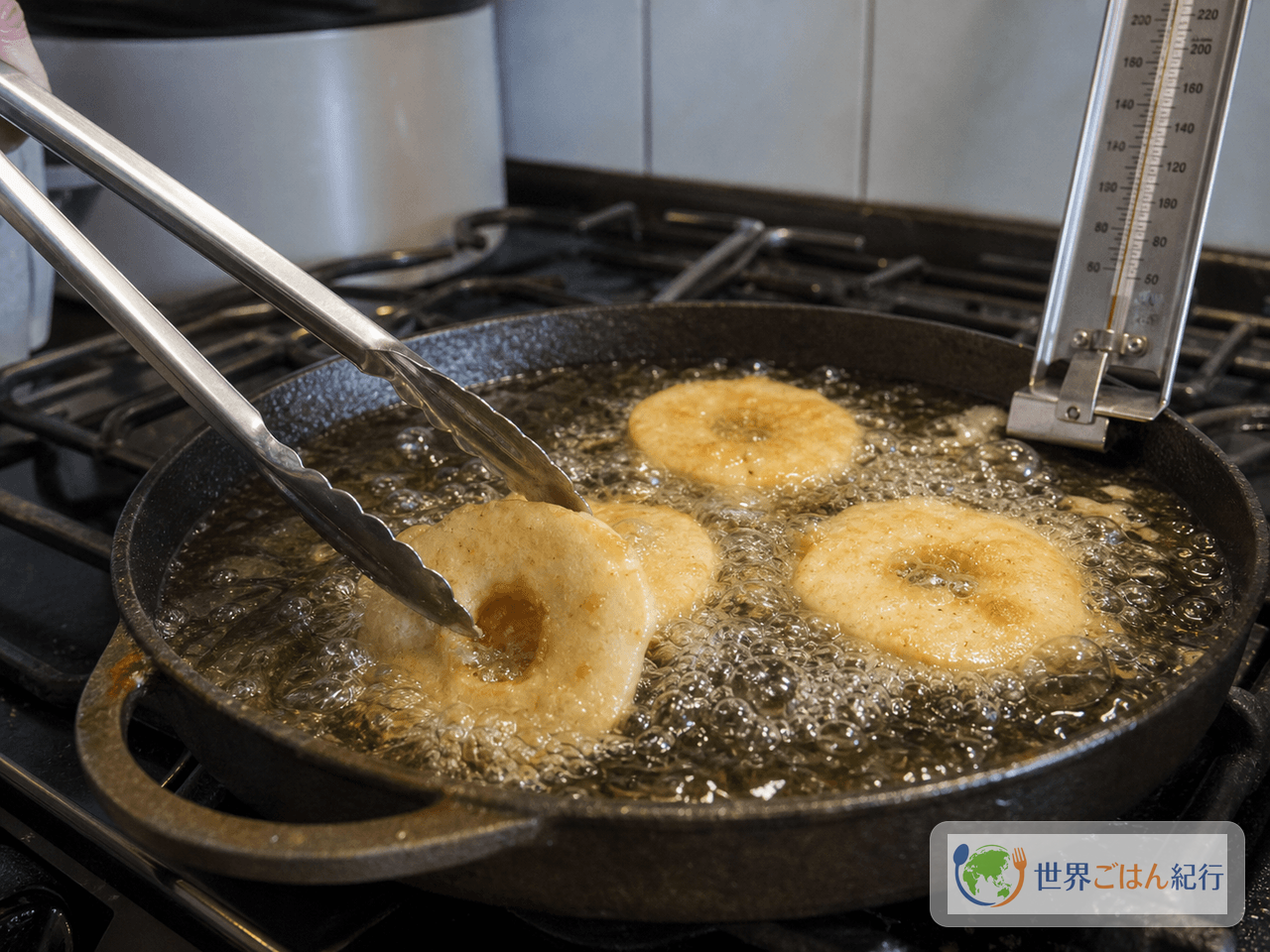
The hard part at home is less finding ingredients than thickness and oil temperature. Cut the apples too thin and their acidity is lost; too thick and only the batter colors while the center stays raw. If the oil is too cool the batter is heavy, and if too hot only the outside turns brown. For a home frying pan where this is least likely to fail, this article uses apples 8 mm to 1 cm thick and oil at 170 to 175 degrees C.
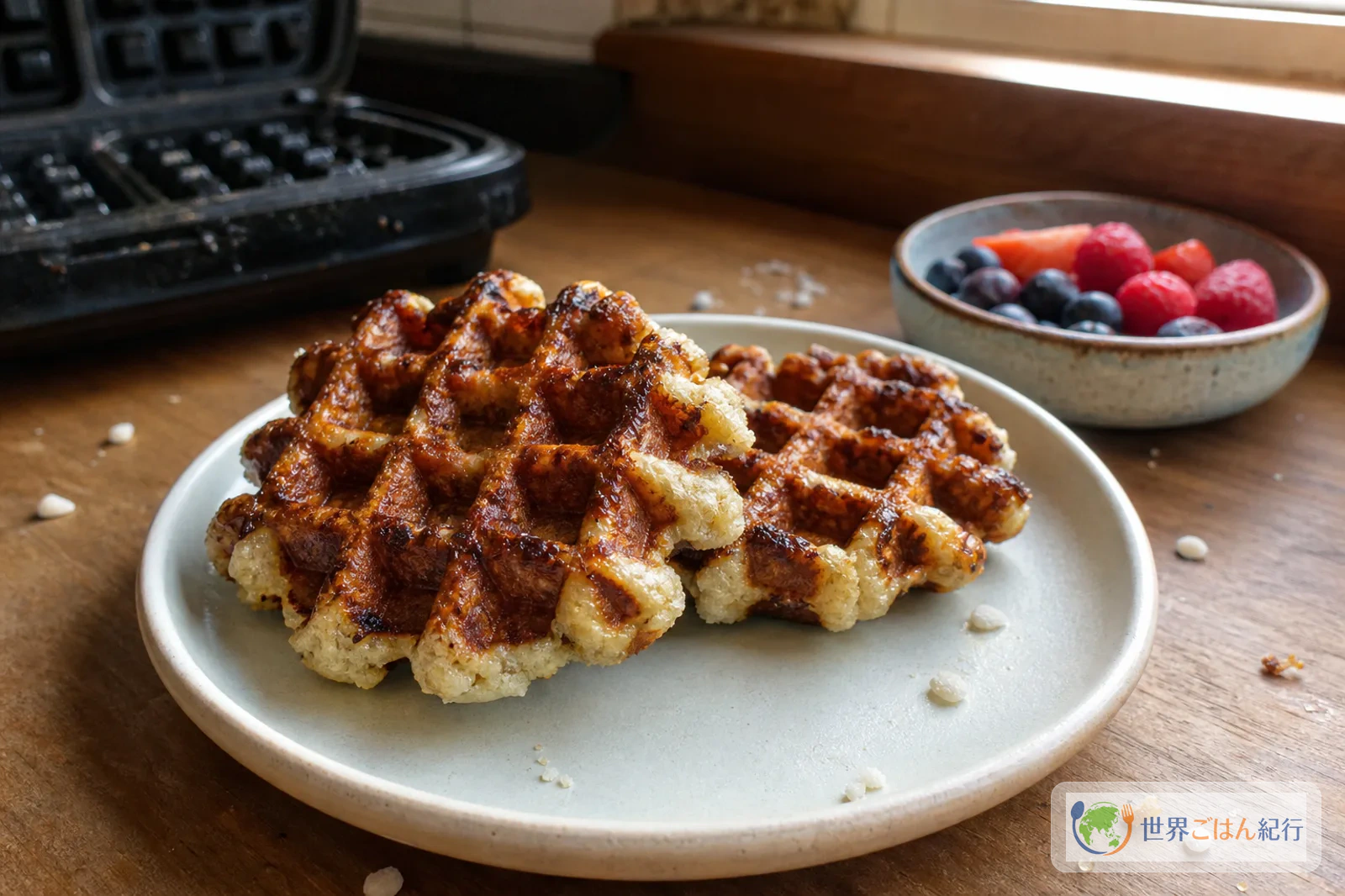
Among sweet flour-based dishes, Belgian waffles (in Japanese) center on a yeasted batter and the toasty flavor of the iron. Apfelküchle warms the apple itself and seals its acidity and juice inside the batter. For a light lunch, serve it after a soup, or with a warm side such as southern Germany's Bayrisch Kraut (in Japanese), and the table is not only sweets.
In German, Apfel means apple, and Küchle is a dialect word for a small cake or baked sweet. On the Austrian side it is sometimes called Apfelradl, meaning "apple wheel." This article writes the name as Apfelküchle to match the dish name, and also draws on how Austrian Apfelradl is made, adapting it for home cooks.
Ingredients (serves 4)
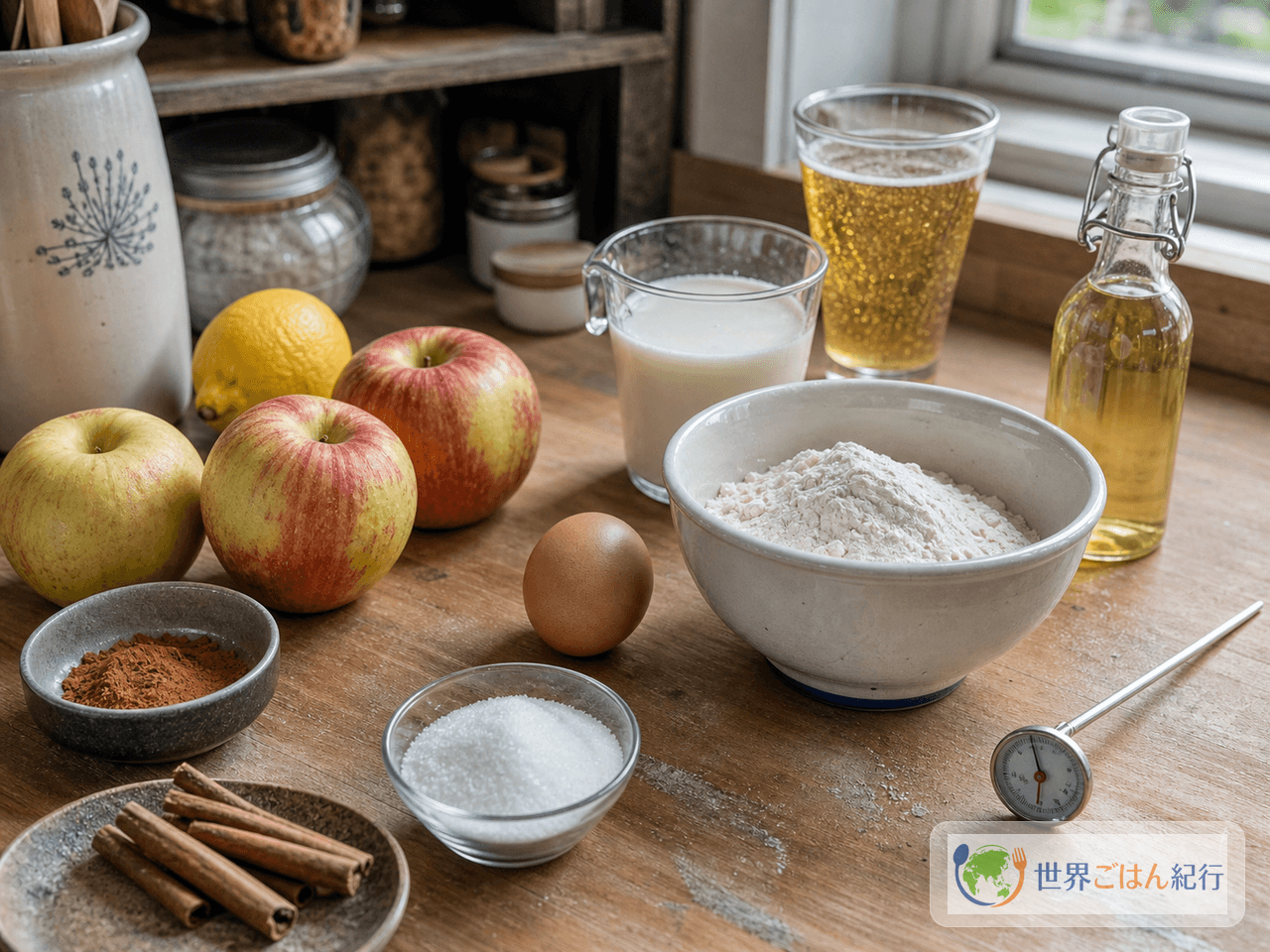
This uses wheat, egg, and dairy. The frying oil reaches 170 degrees C or more, so if moisture remains on the apples when they go in, the oil will spatter. If you cook with small children, do it together through cutting the apples, and have an adult handle the frying.
What to Keep and What You Can Change in a Home Kitchen
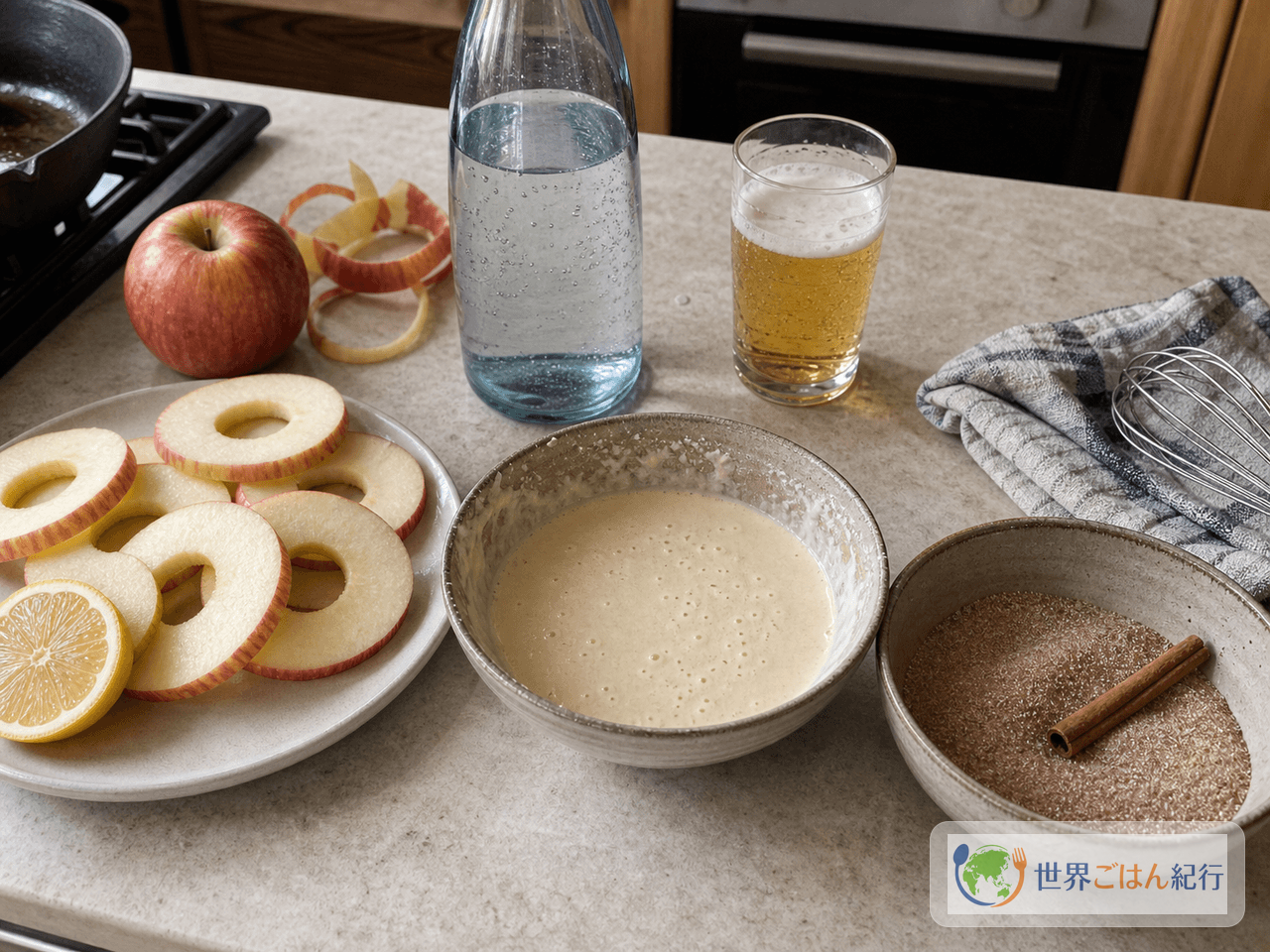
Apfelküchle is not a dish that requires imported ingredients. What matters is a tart apple, a batter that does not puff too much, hot oil, and cinnamon sugar coated on right after frying. In Austrian Apfelradl-style recipes, a thin batter of milk and egg is common, and on the South German side some use beer, yeast, or fruit wine. At home, adding sparkling water or beer for lightness makes it easy to handle.
| What you wonder about | To lean toward the original | To make it easier to cook at home |
|---|---|---|
| Apples | Large tart apples in thick rings | If using Fuji, add a little more lemon juice and do not slice too thin |
| Batter | Add beer or sparkling water to lighten it | 60 ml sparkling water gives a gentler aroma |
| Fat | Fry in clarified butter such as Butterschmalz | Fry in rice bran or canola oil and add a butter aroma at the end |
| Finish | Cinnamon sugar, powdered sugar, vanilla sauce | Cinnamon sugar alone is enough |
| How to serve | As a warm light meal or a sweet main | 2 pieces as a snack; 3 after soup for lunch |
A tart apple like Jonathan is ideal, but it is hard to find in some seasons. If you use Fuji or Jonagold, they are sweeter, so coat them well with lemon juice. Fragrant, soft varieties like Orin collapse at the center easily, so it is safer not to cut them thinner than 8 mm.
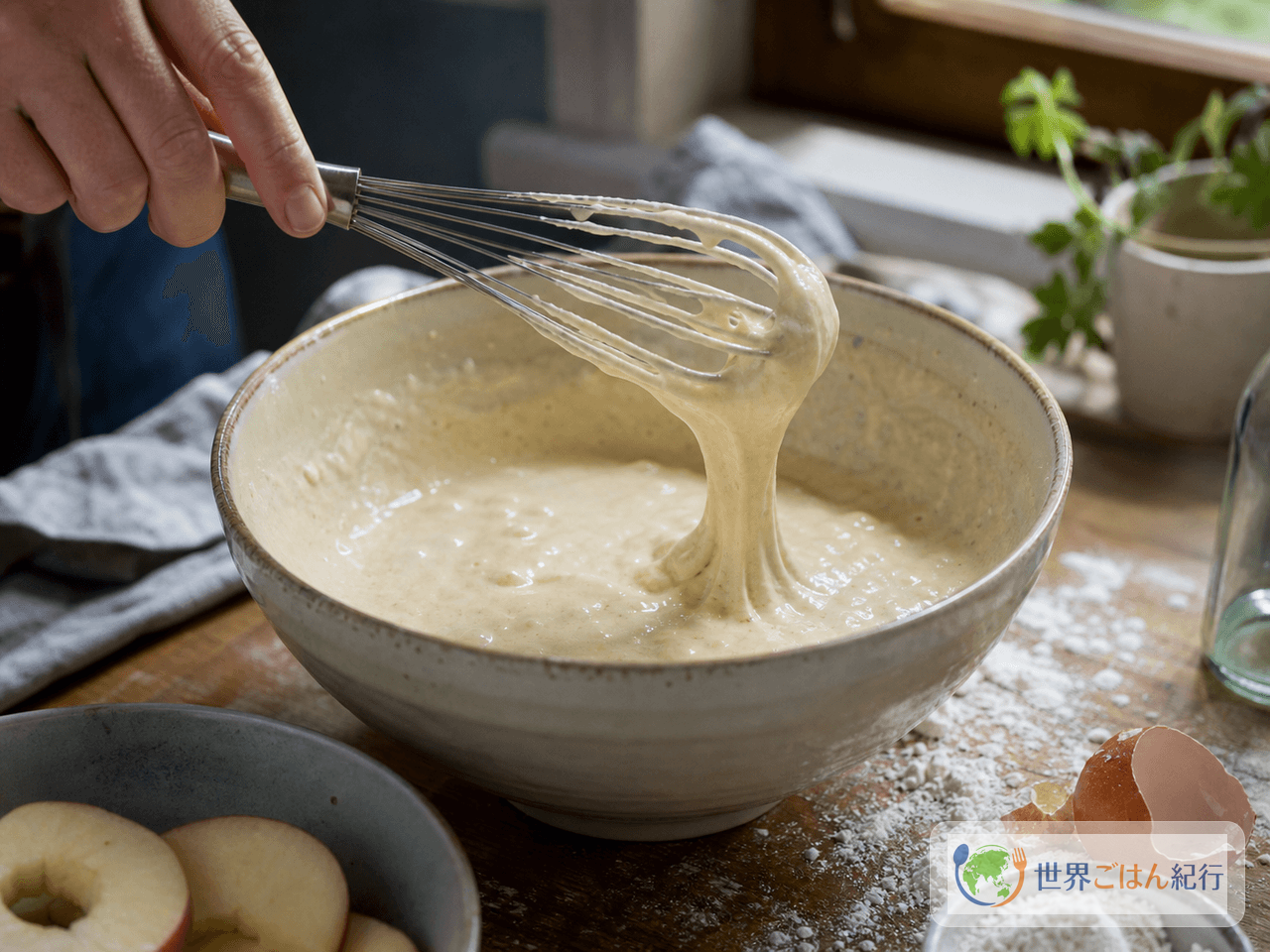
The batter is not as sweet as pancake batter. More sugar makes the fry color arrive faster, but it hides the apple's acidity and burns easily in the oil. If you decide the sweetness with the cinnamon sugar at the end, more juice stays inside the batter.
Shopping Notes: If You Buy Something Extra, Look at Aroma and Oil Temperature
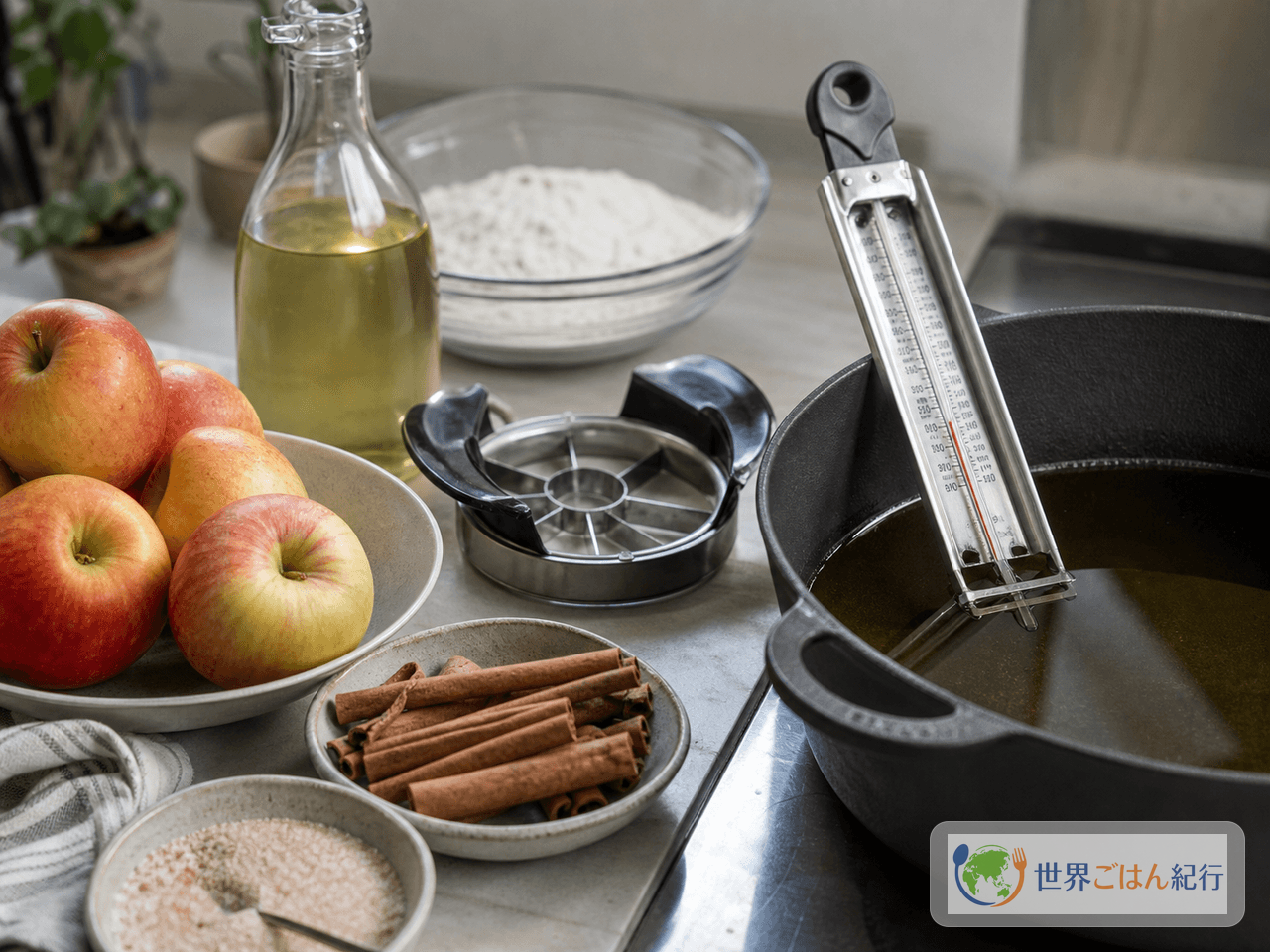
Apples, eggs, milk, and sugar are fine from a regular supermarket. The things worth buying extra are a tool that steadies the oil temperature, a frying pan that does not lose heat easily even with shallow oil, and a spice to supplement the cinnamon aroma. Especially the first time, oil temperature swings cause failures more than the apple variety does, so having a thermometer speeds up decisions.
A deep-fry thermometer lets you check the oil without sacrificing a first piece as a test. With a thin batter on an apple sweet, the difference between the 160s and the 180s degrees C shows up directly as heaviness or burning.
You can fry in a deeper pot, but at home a heavy frying pan with about 2 cm of oil uses less oil. In a thin frying pan, the temperature drops the moment the apples go in, and the batter soaks up oil.
You can also make this with ground cinnamon. Cinnamon sticks are not required, but if you go on to make vanilla sauce or a warm wine sauce, they release aroma more easily, and any leftover can go into baked apples.
How to Eat It and Build a Menu: A Sweet Main or a Warm Dessert
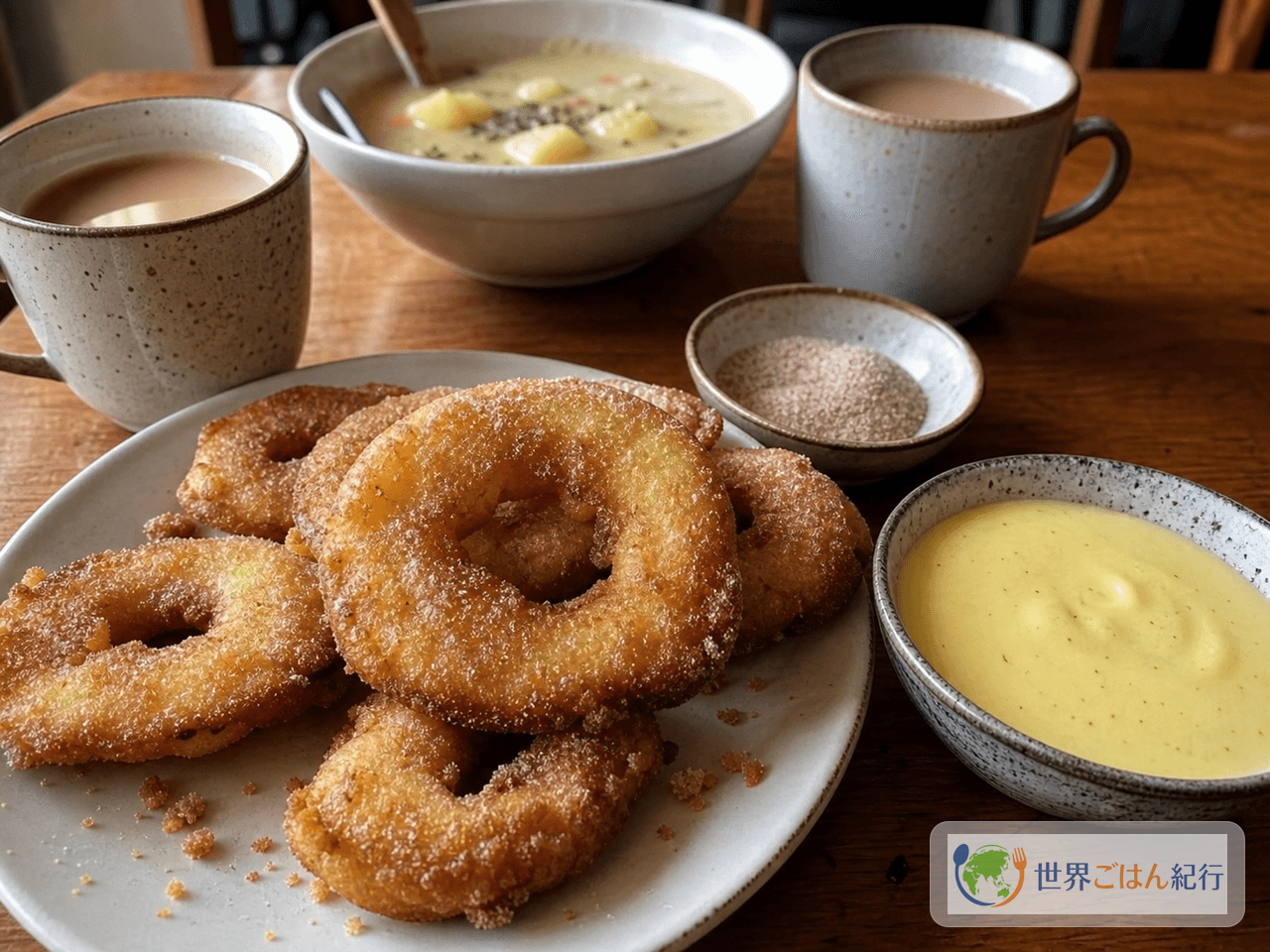
Apfelküchle is a dish to eat freshly fried. The outside is light, the apple inside turns slightly translucent from the heat, and juice seeps out when you put a fork in. If you leave it for long after coating with sugar, the surface turns damp, so finish it just before it goes to the table.
Sweet flour dishes in southern Germany and Austria sometimes take the place of a light main course, not only dessert. For lunch, serve a vegetable soup or a clear soup first, then 2 to 3 pieces of Apfelküchle. As a snack, plan on 2 pieces per person with coffee or tea.
To go alongside, vanilla ice cream, vanilla sauce, lightly whipped cream, or plain yogurt. To keep the sweetness down, mix 100 g yogurt with 1 tsp lemon juice and 1 tsp sugar; it suits the acidity of the apple. Rather than stacking cream generously as with New Zealand's pavlova (in Japanese), here it is easier to eat when you keep to an amount that does not make the warm batter too wet.
Storing is not recommended. If some is left over, refrigerate it before coating with cinnamon sugar, and reheat the next day in a toaster oven at 180 degrees C for 5 minutes. A microwave alone makes the batter soft again, so reheating suits a toaster oven better than a short microwave burst.
Where It Tends to Go Wrong
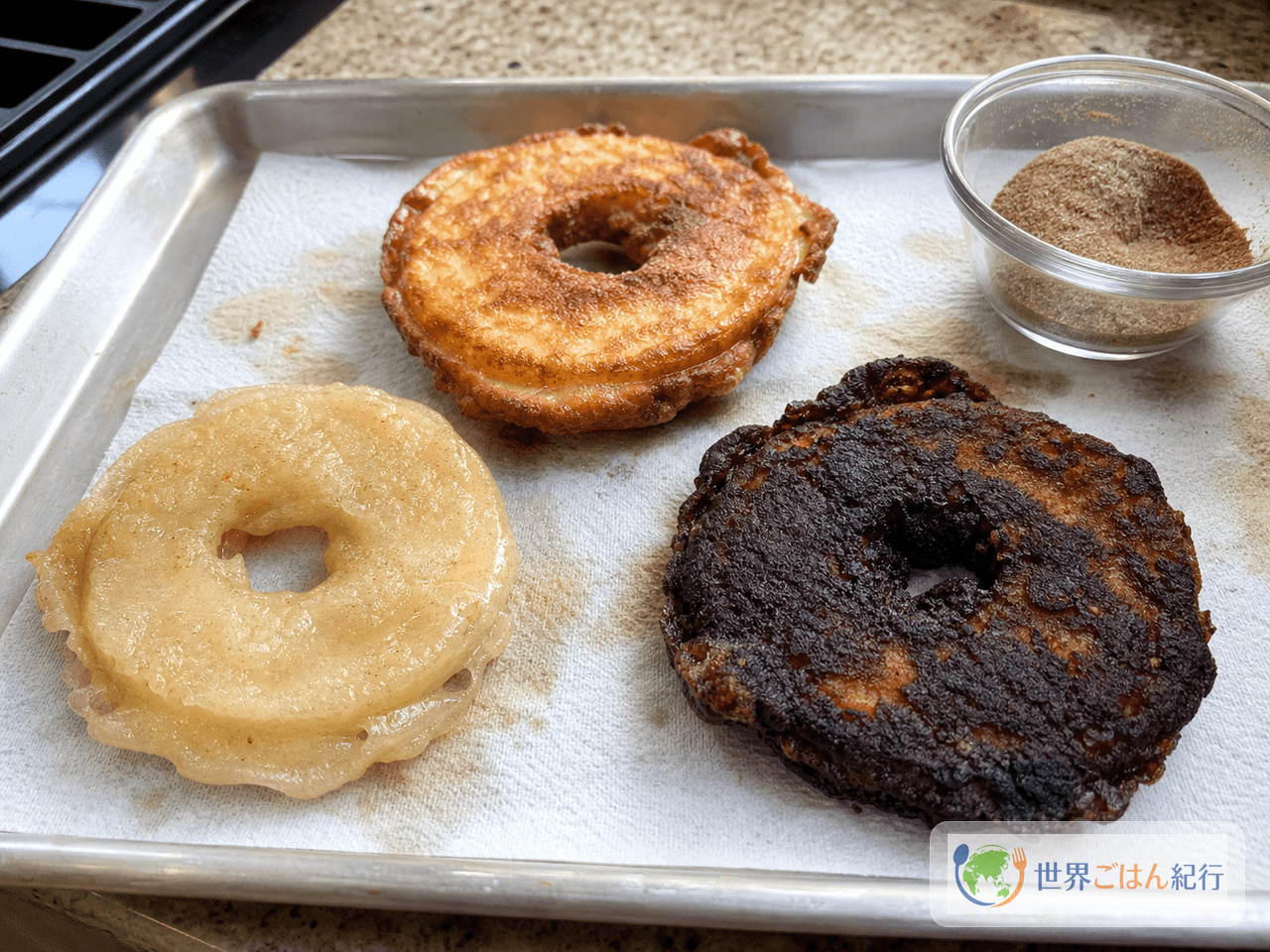
| What happened | Cause | Fix |
|---|---|---|
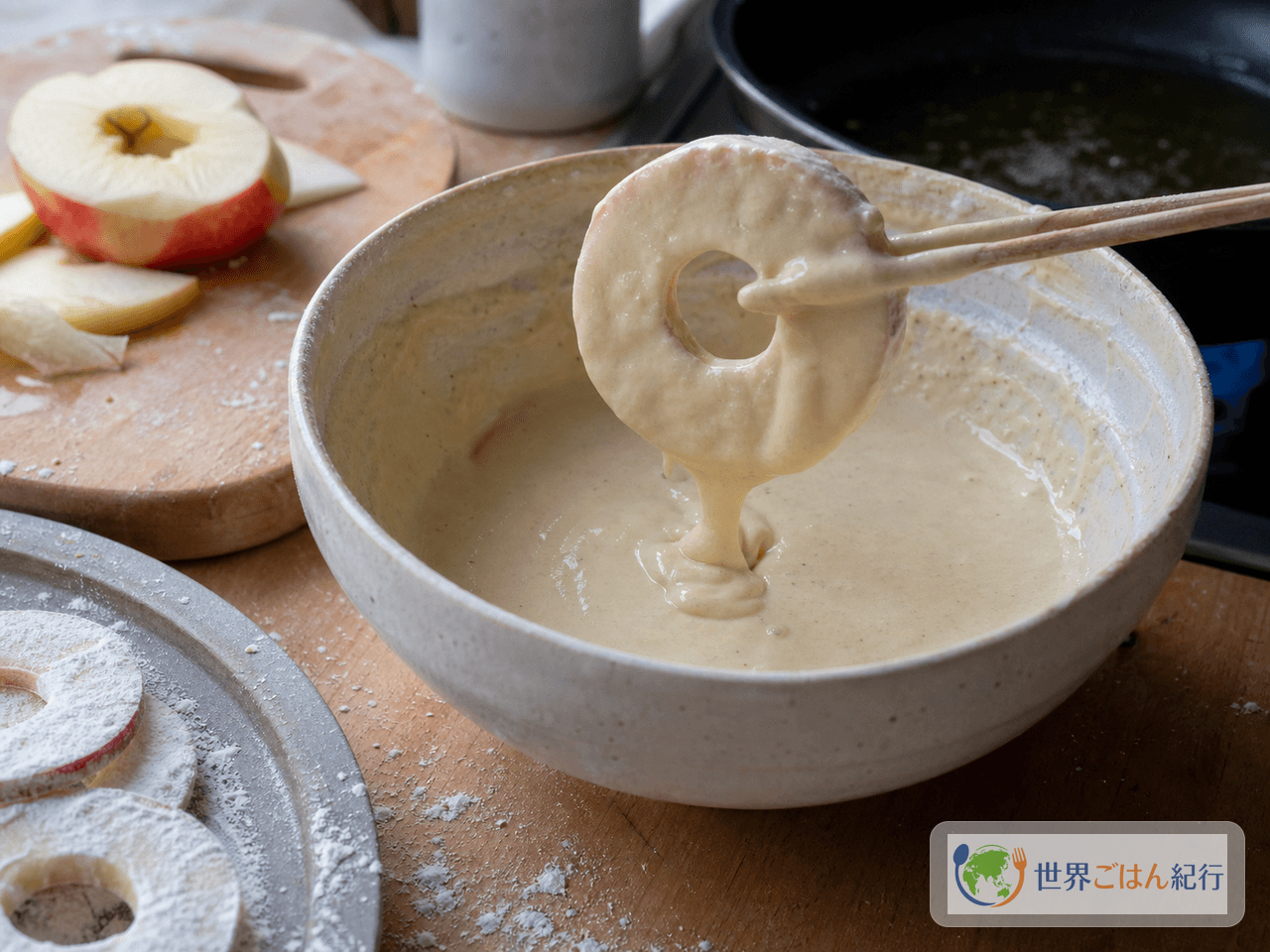
| The batter falls off | The apple is too wet; no flour coat | Press dry after the lemon juice and dust with a thin layer of cake flour |
| Soggy and heavy | Oil temperature too low; batter too thick | Return to 170 degrees C before adding, and loosen the batter with 2 tsp milk |
| Only the outside burns | Oil too hot; too much sugar | Lower to 175 degrees C or less and keep sugar in the batter to 1 tbsp |
| The apple is raw | Too thick; fried too briefly | Cut to within 1 cm; aim for 2 minutes on the first side and 2 minutes after turning |
| Too sweet | The apple is sweet; too much powdered sugar | Increase the lemon juice and finish with only cinnamon sugar |
The most common failure is making the batter too thick in the hope of a neat round. Apfelküchle is not a doughnut; it is apple rings wearing a thin batter. It is enough if you can just see the shape of the apple through the batter.
If you have no oil thermometer, dip the tip of a wooden spatula or cooking chopstick into the oil and see whether fine bubbles come up right away. This is only a rough guide, though. Test a small edge piece first: if it turns dark brown in 2 minutes, the temperature is too high; if it is still white after 3 minutes, it is too low.
FAQ and What I Consulted
Do I peel the apples?
You can make it with the skin on. The skin helps the ring keep its shape, and the red edge looks pretty. If the texture of the skin bothers you, or if the surface feels waxy, peel them. If you leave the skin on, wash them well and cut out only the hard part around the core cleanly.
Can I make it without beer?
Yes. This article uses sparkling water. Beer gives a slightly more grown-up aroma and moves it toward a South German batter. If you are eating with children or want a milder aroma, sparkling water is easier to work with.
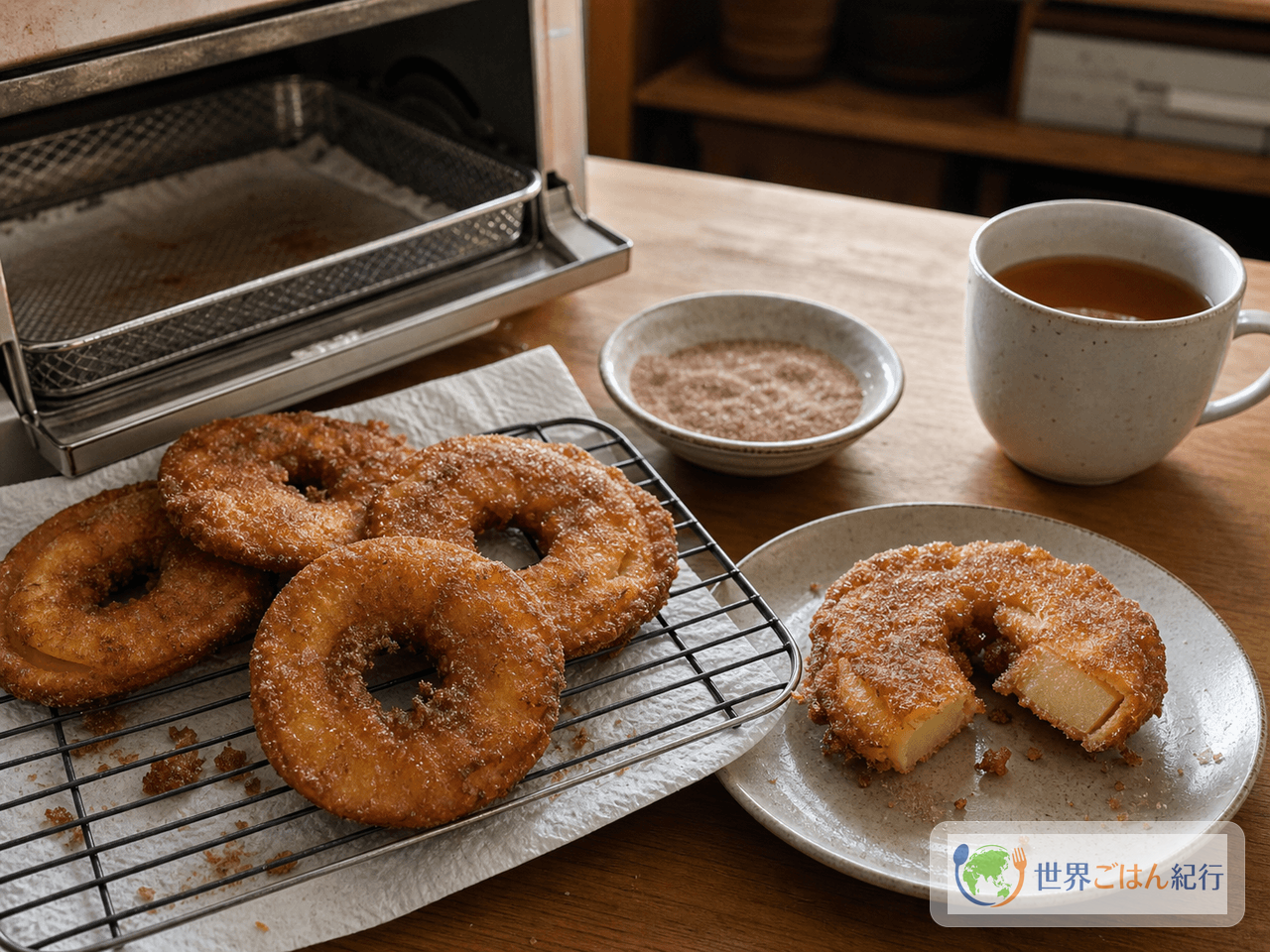
Can I make it in the oven or an air fryer?
It becomes a different dish. This is a dish where the oil sets the batter at once, so in the oven it moves toward an apple pancake. If you want to avoid oil, switch to cooking it in a frying pan with a little butter over medium-low heat with a thin batter. You will not get the lightness of frying, but it holds together as a home snack.
Can I pack the cooled pieces in a lunch box?
I do not recommend it. The moisture of the apple softens the batter, and the cinnamon sugar dissolves. If you bring them to share, cool the fried pieces on a rack, keep the sugar in a separate bag, and coat just before eating to keep them in good condition.
What can I serve with it to make it feel more authentic?
Cinnamon sugar alone is enough, but adding vanilla sauce or a light wine sauce moves it closer to a South German table. To lean toward Austria, dust lightly with powdered sugar and cinnamon and serve while warm. If serving it as a meal, putting a soup first makes it easier to eat as a sweet main.
Sources consulted
- Schmeck den Süden: Apfelküchle - checked its place in Baden-Württemberg, the thickness of the apple, batters made with beer or yeast, cinnamon sugar, and the context of Chaudeau sauce.
- Ja! Natürlich: Apfelradl - checked, as the Austrian Apfelradl, tart apples, a batter of milk and egg, and the choice between deep oil or pan-frying.
- Salzburg schmeckt: Apfelradln - checked its treatment in Austria as a sweet main or dessert and how it is served with soup and salad.
- Wikipedia: Apfelküchle - checked the differences in names such as Apfelküchle, Apfelradl, and Apfelkiachl and what it is called around southern Germany and Austria.