How Is Icelandic Dried Fish Eaten? Torn Pieces and a Little Butter
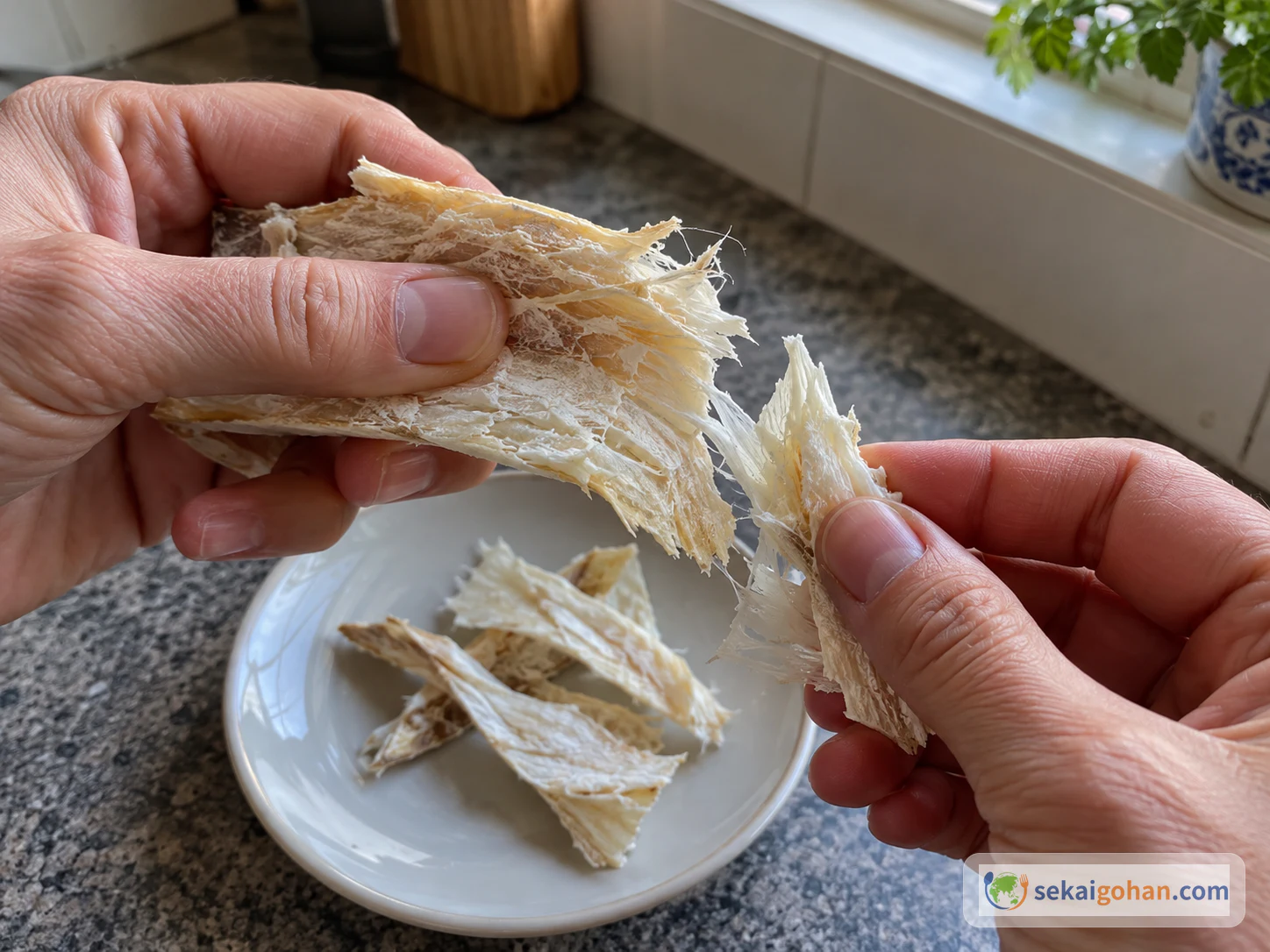
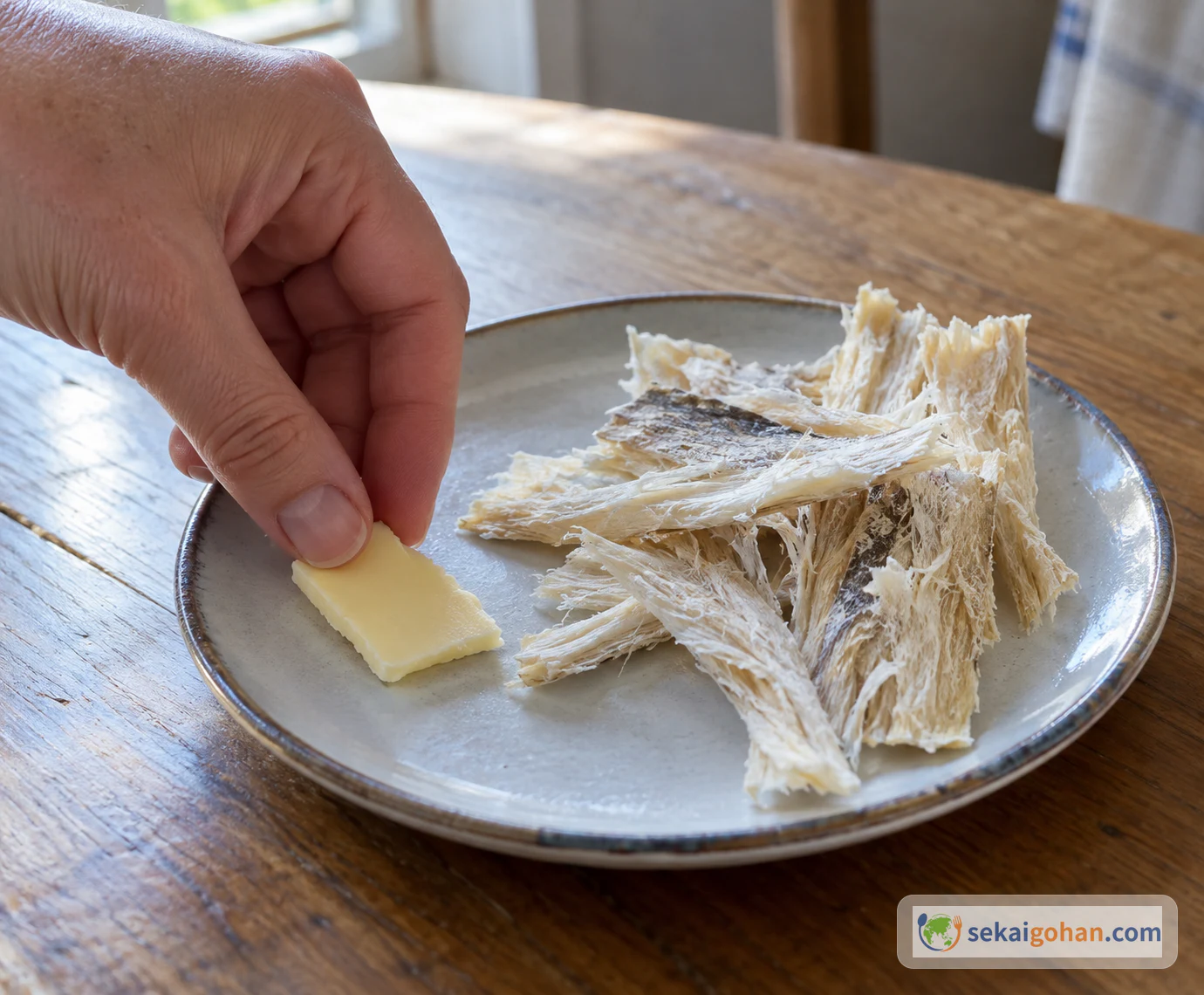
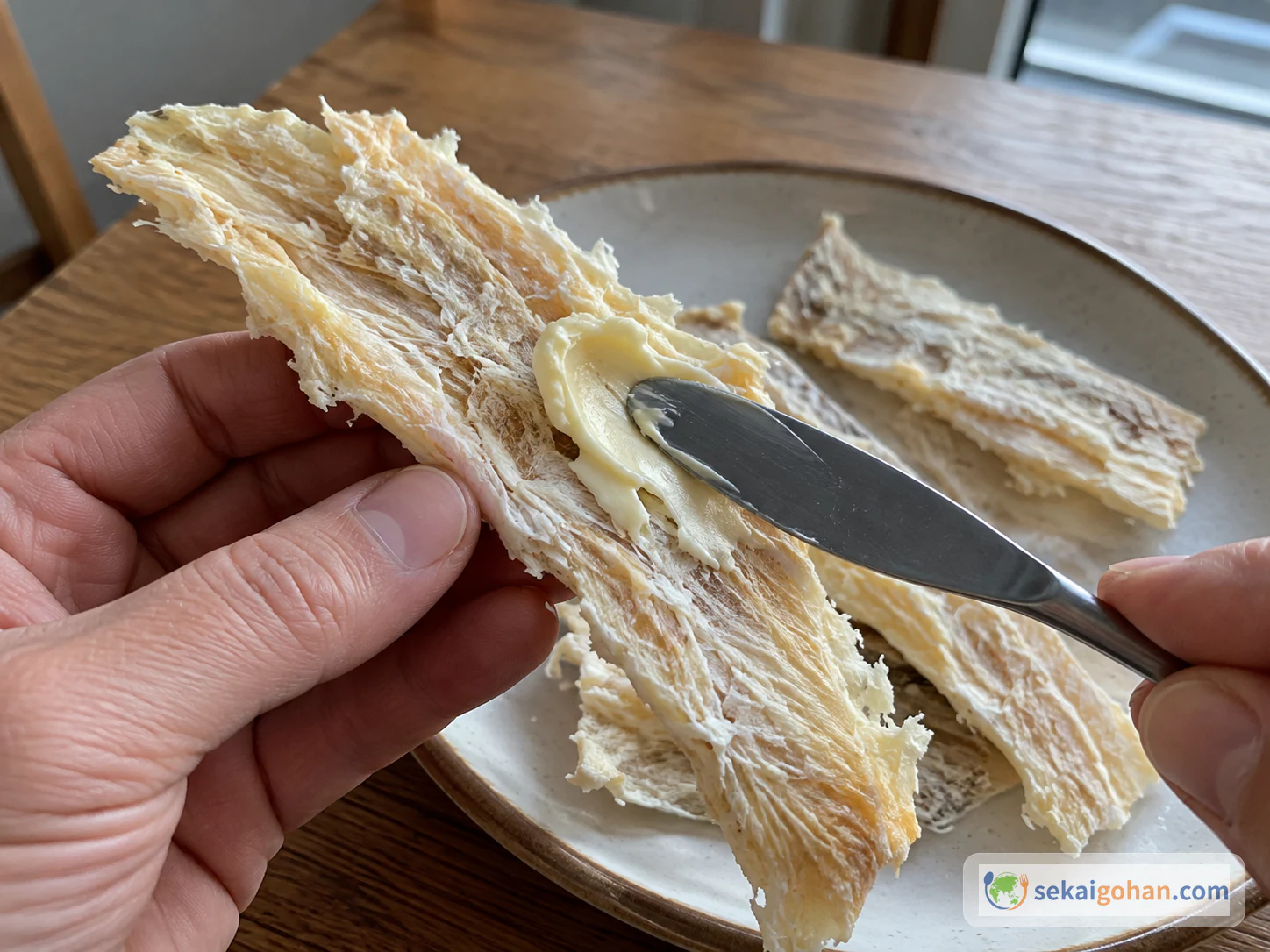
Harðfiskur is a finished, ready-to-eat dried fish. Nothing is cooked here: you tear it into pieces, set butter beside it, and let each bite find its own balance of salty, dry fish and soft fat.
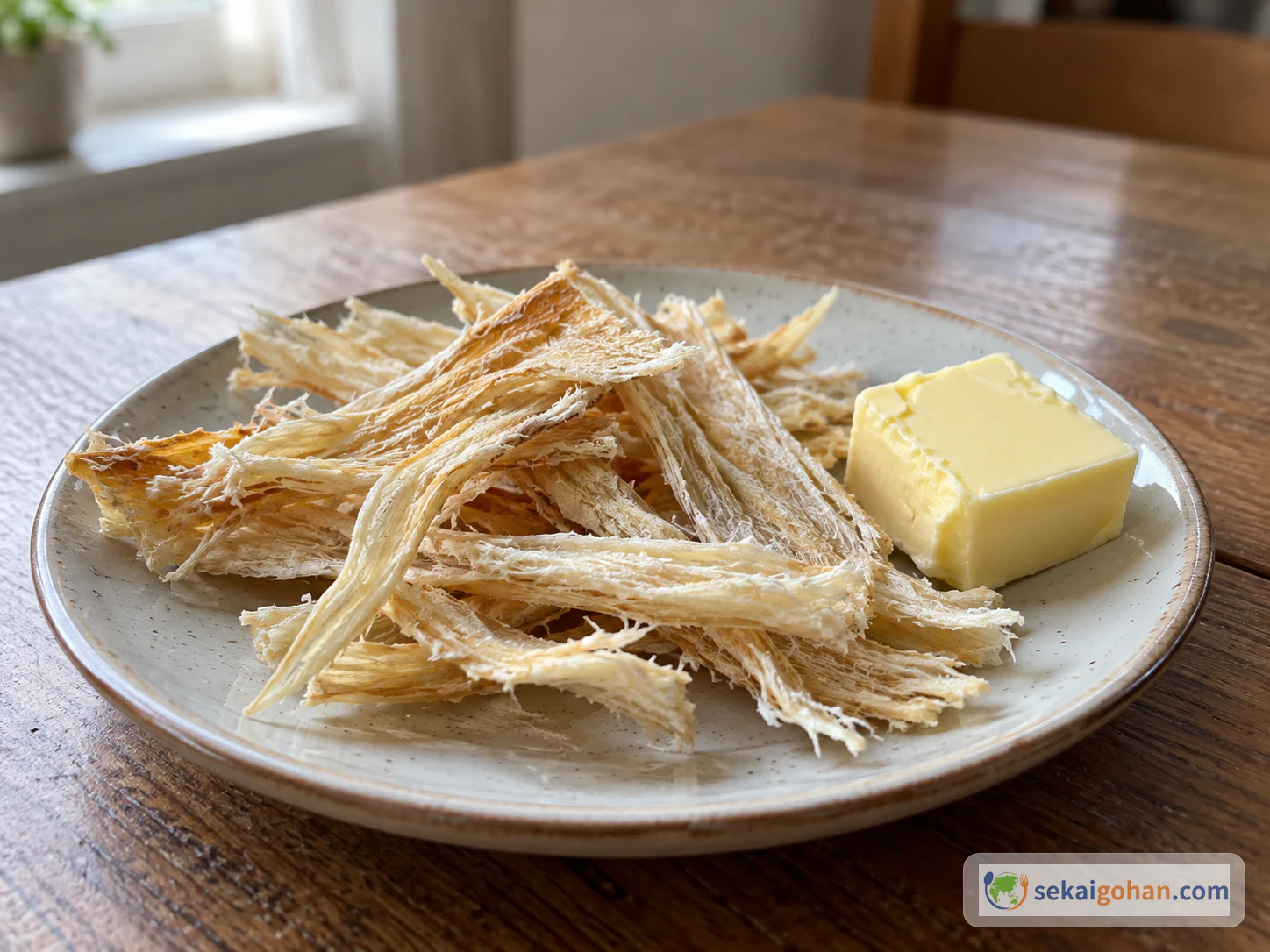
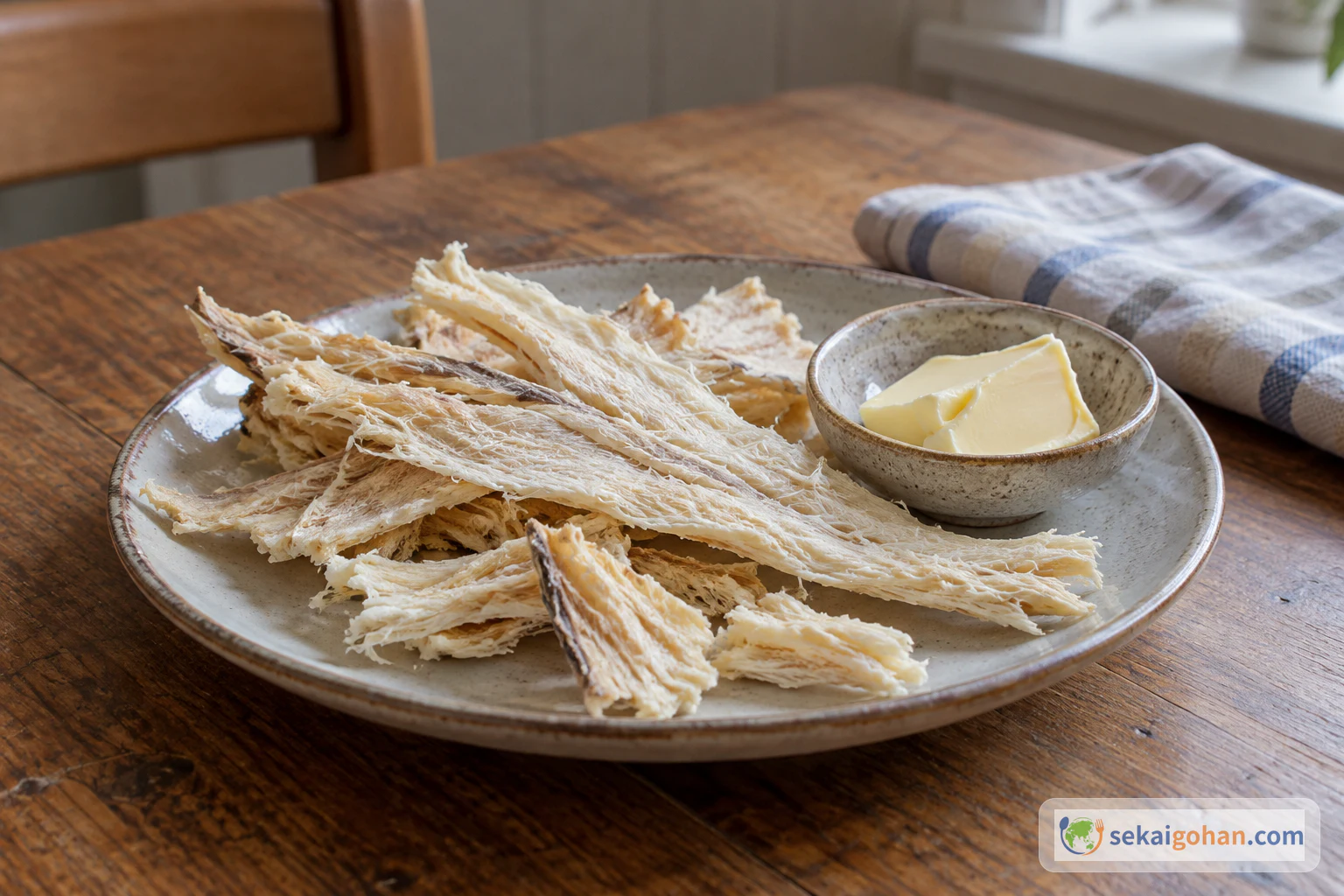
A small plate of pale, fibrous dried fish, torn along the grain, and a modest pat of butter on the side. That is harðfiskur as it is commonly eaten in Iceland. Iceland's official tourism guide describes it as a traditional dried fish eaten as a snack and taken along on hikes, with butter as the typical companion. A cultural-heritage account and a historical cooking site agree on the same pairing: the fish is eaten as it is, or with butter.
The name does not point to one fish. Harðfiskur is the word for an Icelandic dried-fish food, and it is made mainly from fillets of cod, haddock or wolffish. Some products use salt and some do not. Because of that range, the most useful first step at home is simply to read the package of the harðfiskur you bought. If you want to explore further, see more dishes from Iceland.
Sekai Gohan has not kitchen-tested this recipe as a whole.
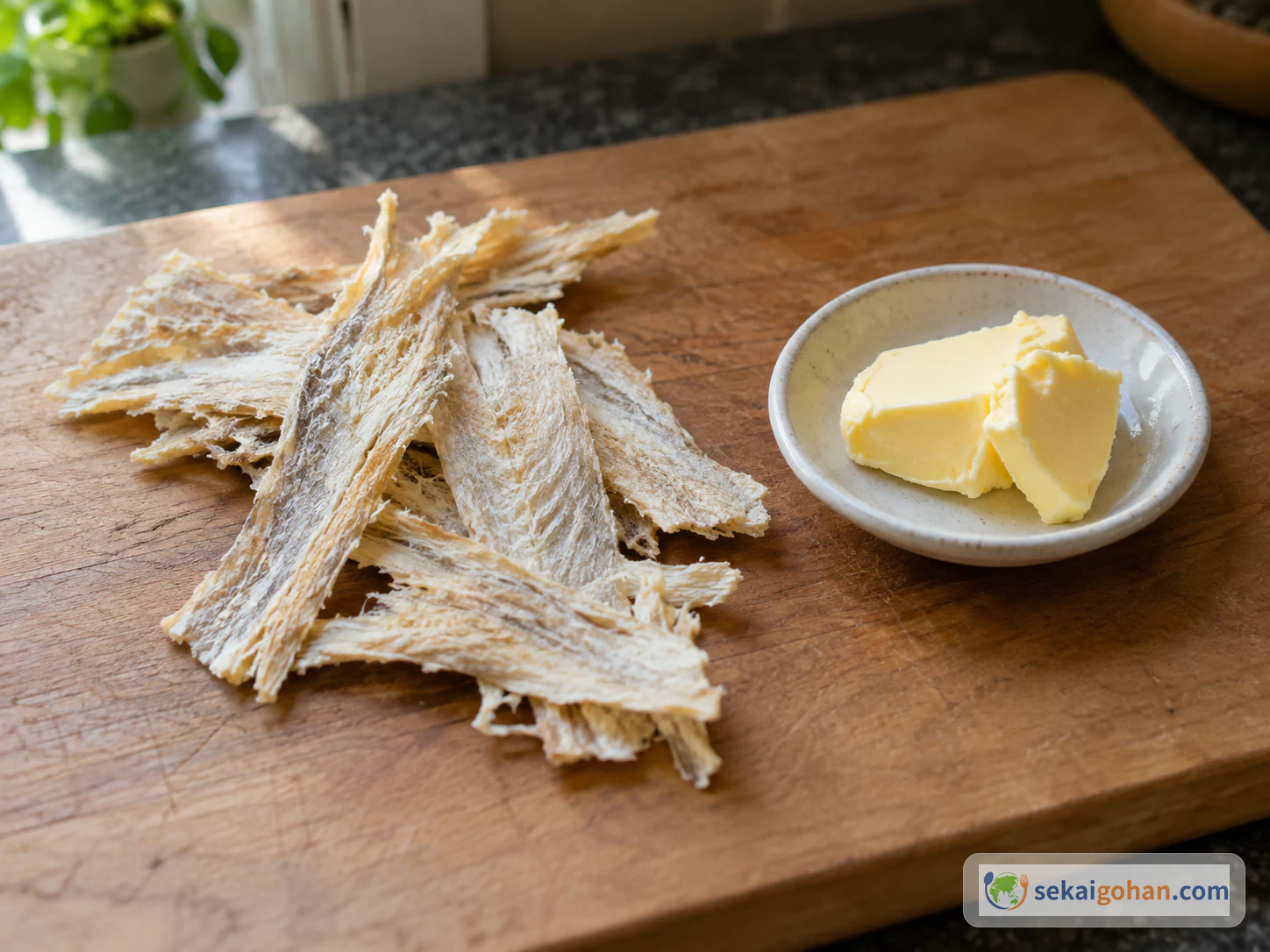
Ingredients for Two as a Snack
Equipment
- Small plates for serving
- A small dish for the butter
- A small kitchen scale (only if you want to weigh the portion)
Choosing the Fish and Butter
These amounts are a serving guide for a light snack for two. They are not a traditional measure or a standard Icelandic portion, and the butter can be adjusted freely.
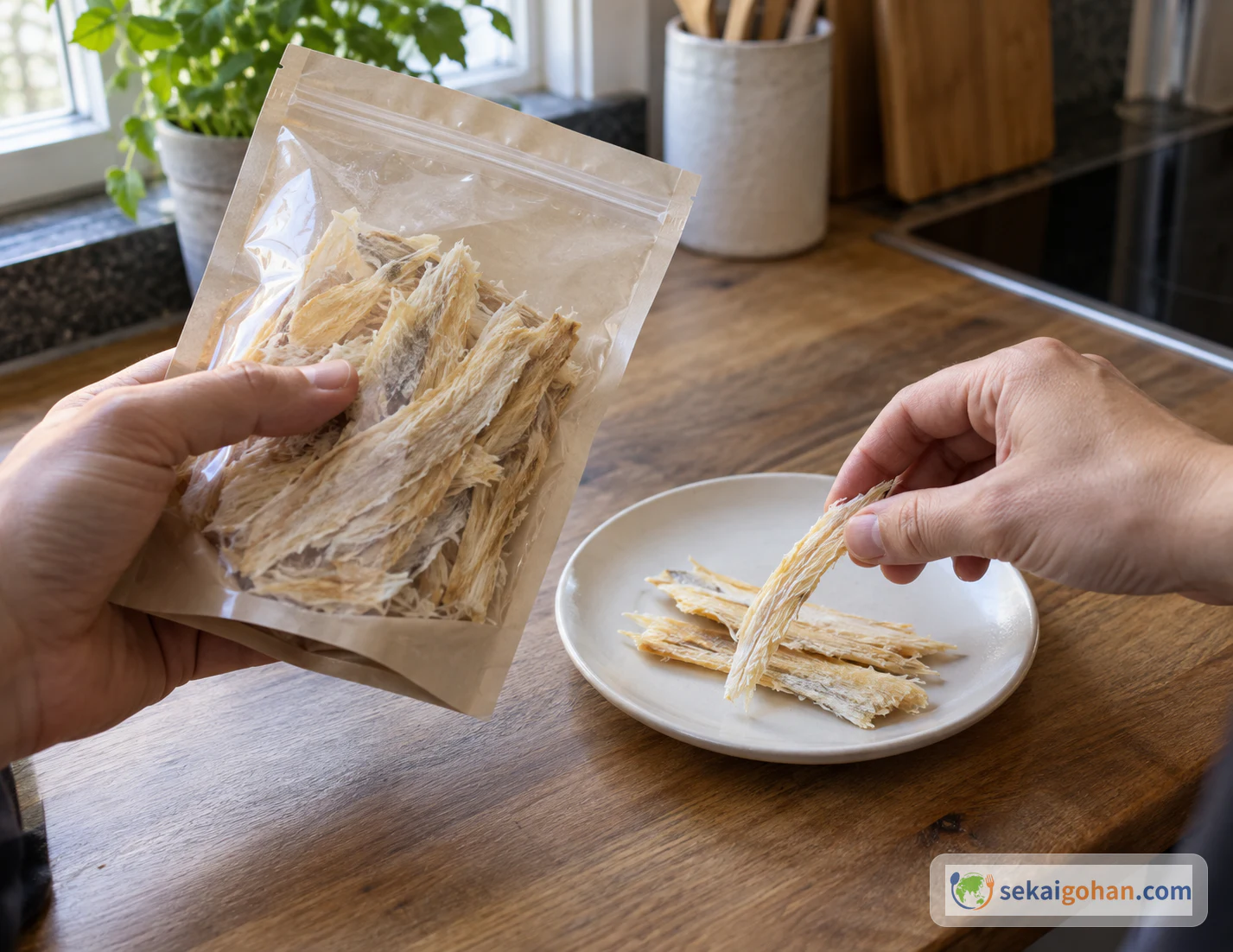
The fish. Look for a finished product labeled as Icelandic harðfiskur or dried fish, and check the country of origin, fish species, ingredients and storage instructions before buying. Specialty and imported-food shops are the likeliest places to find it. If you cannot find an Icelandic product, choose an imported dried fish whose ingredients and origin you have confirmed. Ordinary snack-style dried fish from other cuisines is a different food, so it is not treated here as a substitute for harðfiskur.
The butter. Unsalted butter keeps closest to the plain butter served alongside. Salted butter adds to any salt already in the fish, so if you use it, check the label and use it sparingly. If you need to avoid dairy, the result is a different food, and it is not covered as a substitution in this recipe.
This dish contains fish and milk. Check each product's label for allergens, including any cross-contact statements. Follow the product label for how to store the fish both before and after opening, including any use-by guidance once opened. Do not assume every harðfiskur can be kept at room temperature.
Serving Ready-Made Dried Fish: Check, Tear, Butter
Every step uses a finished, purchased product. Making dried fish at home from raw fish is not part of this recipe.
Too Hard or Too Salty: Fixing the Plate
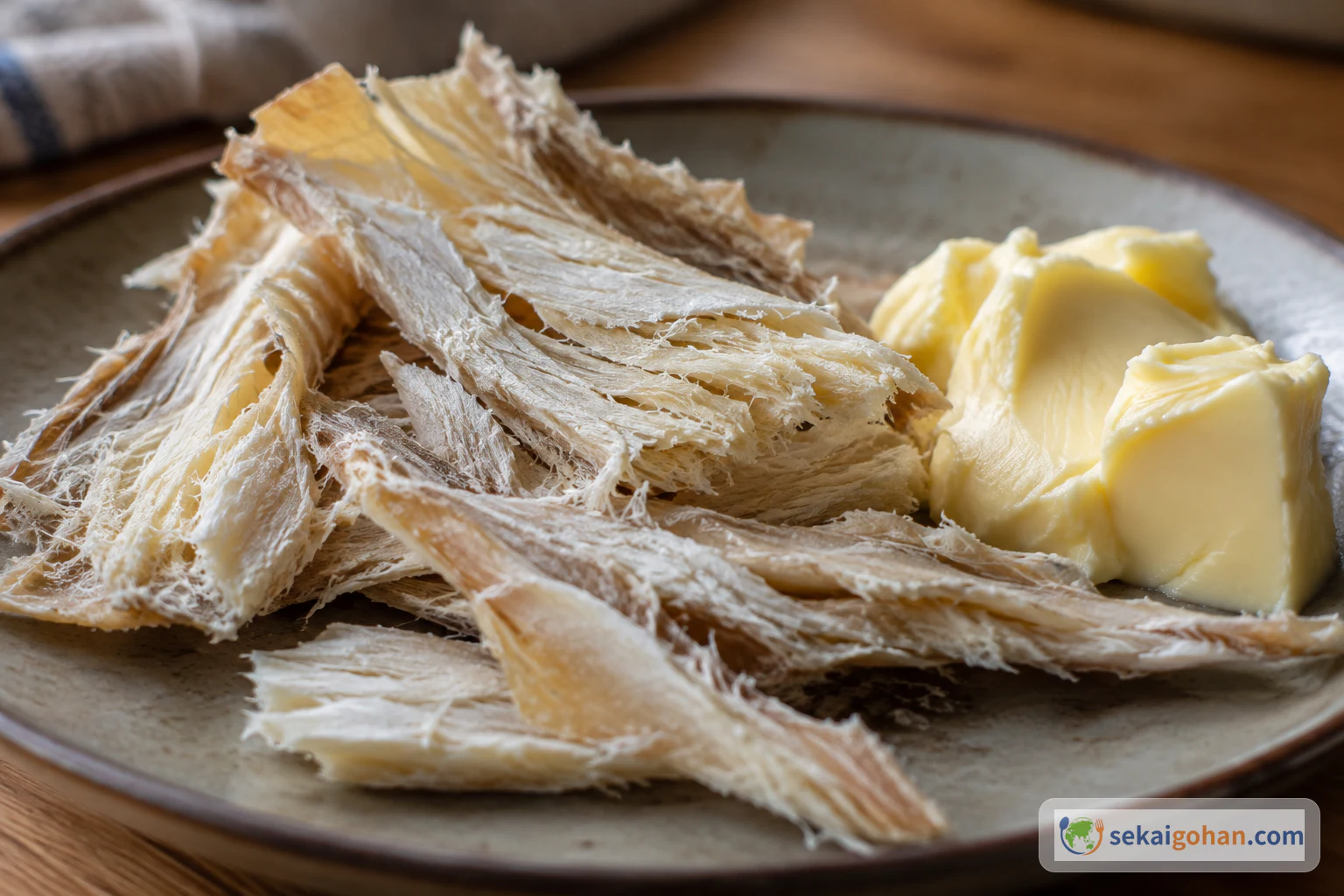
The character of harðfiskur is the contrast between dry, fibrous fish and creamy butter. Most problems come from differences between products rather than from technique.
| Condition | Likely reason | What to do |
|---|---|---|
| Hard to chew | Products are processed to different degrees of softness | Don't force it; tear it into smaller pieces and check how easy it is to chew. Soaking or simmering the fish is not part of this way of eating it |
| Too salty | Some products use salt; salted butter adds more | Check the ingredients and nutrition label, and keep the butter, especially salted butter, to a small amount |
| Butter overwhelms the fish | Too much spread at once | Go back to a thin layer per bite, or eat some pieces plain |
Ways to Vary It
- Plain, without butter. Harðfiskur is also eaten just as it is. Butter is the classic pairing, not a requirement.
- More or less butter. Spread more on drier pieces and less on salty ones. The 20g is only a starting point.
- Softened or whole pieces. Machine-softened products tear easily into flakes; harder pieces just need smaller tearing. Choose whichever texture you prefer.
Bread, seaweed and herbs are not part of this basic pairing, so they are left out here.
A Preserved Food That Was Pounded and Eaten: The Background

Drying fish in the wind is closely tied to life where other ways of preserving were limited. One historical cooking site explains that wind-drying was used in places where salt and fuel for smoking were scarce, and it describes a traditional process: washing the fish, removing the head and guts, opening it out with the tail left on, hanging it on drying racks for weeks, and then softening the hard, dried fish with a wooden mallet. That description is shared here as background only. It is not a tested method for drying fish safely in a home kitchen today, and this article does not recommend making harðfiskur at home.
Iceland's intangible-heritage record describes a tradition of drying fish outdoors or indoors that continues today, with the fish eaten uncooked. In the past, dried fish was beaten to soften it and eaten with butter or other fats, and the University of Iceland's question-and-answer site also notes it being eaten with butter or tallow. In those times it was part of everyday meals; today it is more often a snack. Some modern products are softened by machine, and harðfiskur is eaten as a snack, while traveling, at the midwinter Þorri feast and in restaurants. Þorri is only one of its places at the table, though: it is eaten throughout the year.
When harðfiskur was first eaten in Iceland cannot be determined. The University of Iceland's answer distinguishes the fourteenth-century trade in dried fish for European markets from how dried fish was eaten within Iceland, and explains that drying and maturing methods, as well as the fish used, varied by region and period. A 2007 industry report from Matís likewise records haddock, wolffish, cod and other species, in several product forms such as fillets and pieces. That range is why it is worth reading the package of any harðfiskur you buy instead of assuming one standard product.
Frequently Asked Questions
What fish is harðfiskur made from?
It depends on the product. Cod, haddock and wolffish are the main fish named by Iceland's official tourism guide and the Matís report. Some products are made with salt and some without, so check the label.
How is it eaten?
Ready-to-eat, as it is, often with butter. Tear it into bite-size pieces and spread a little butter on each piece.
Can I make it at home from raw fish?
This recipe does not cover it. Safe temperatures, salt levels and drying times for home fish-drying could not be established from the available sources, so this recipe uses a finished, purchased product.
Is it only eaten during Þorri?
No. It appears at the midwinter Þorri feast, but it is also eaten throughout the year as a snack and while traveling.
Do I have to use butter?
No. Butter is the traditional pairing, and it is set on the side here, but harðfiskur is also eaten plain.
Sources
- Business Iceland / Visit Iceland, "Enjoy Icelandic Food Culture." Harðfiskur as a traditional dried fish eaten as a snack and on hikes; made mainly from cod, haddock or wolffish fillets, sometimes with salt; butter as the typical pairing. https://www.visiticeland.com/article/enjoy-icelandic-food/
- Cooking in the Land of Fire and Ice, "Harðfiskur / Dried Cod." Wind-drying where salt and smoking fuel were limited; the traditional process of cleaning, opening, rack-drying for weeks and softening with a mallet; eating it plain or with butter. A historical home-cooking site, not a food-safety standard for drying fish. https://icelandicvikingcooking.ca/recipe-courses/fish/hardfiskur-dried-cod/
- Lifandi hefðir (Icelandic intangible cultural heritage), Haraldur Sturlaugsson, "Hardfish and Stockfish: Cultural and Culinary Traditions." Outdoor and indoor drying continuing today; eating the fish uncooked; historically pounding it and eating it with butter or other fats; machine-softened modern products; eating it as a snack, while traveling, at Þorri and in restaurants. https://lifandihefdir.is/lifandi-hefdir/hardfish-and-stockfish-cultural-and-culinary-traditions-of-hardfish-and-stockfish/
- Matís, "Dried fish as health food" (Report 32-07), 2007. Dried fish as a long-eaten food still consumed as a snack at home and at festivals; species such as haddock, wolffish and cod; multiple product forms. Product details reflect the time of publication. https://www.matis.is/media/matis/utgafa/Skyrsla_32-07.pdf
- Vísindavefurinn, University of Iceland, "Hvenær var harðfiskur fyrst borðaður á Íslandi?" (When was harðfiskur first eaten in Iceland?). That the starting point cannot be determined; the distinction between the fourteenth-century European dried-fish trade and eating it at home; eating it pounded with butter or tallow; regional and historical differences in methods and fish. In Icelandic. https://www.visindavefur.is/svar.php?id=78050