The Water Stew Kept Alive by an Old Flemish City
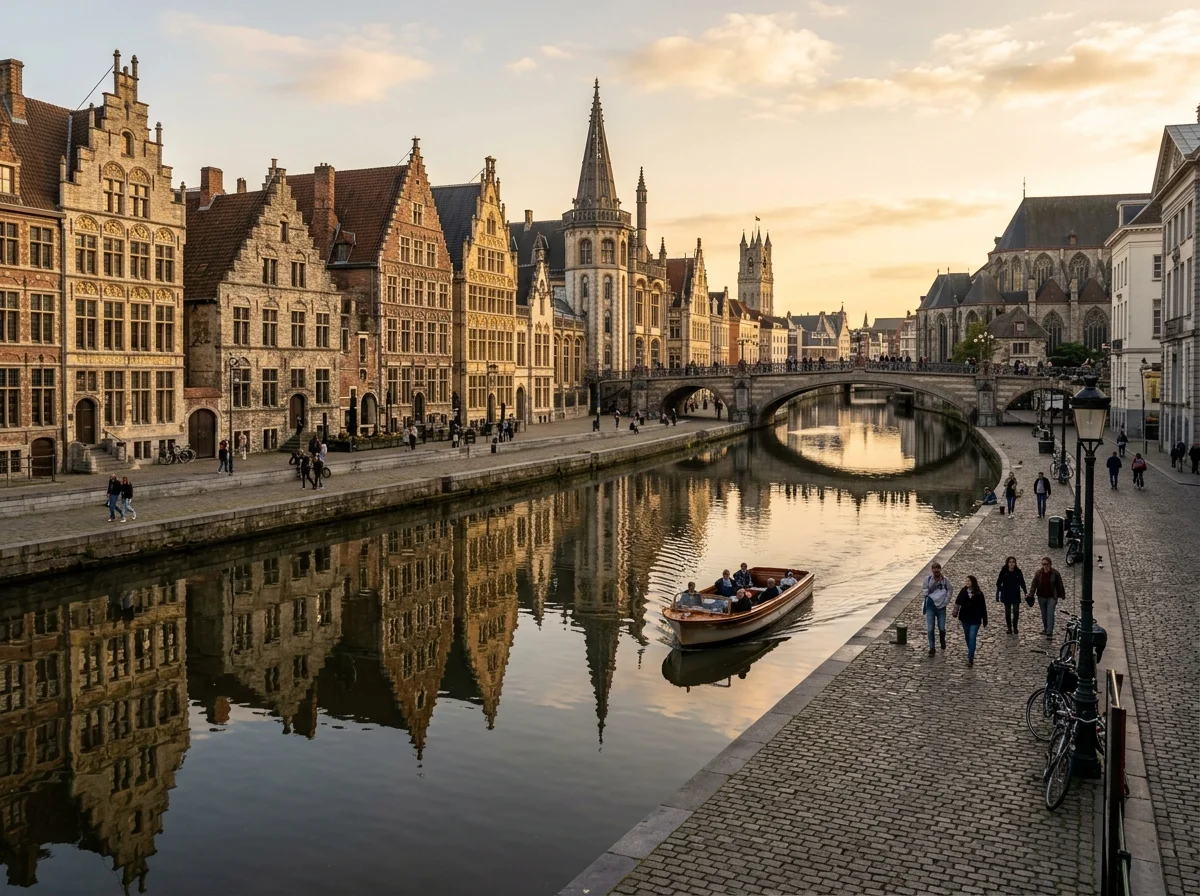
Ghent, in Belgium's northern region of Flanders, is an old city that still looks medieval. Stone buildings line its canals, and a dish that has been handed down for centuries belongs to the place. Waterzooi comes from the Flemish for "water stew" (water = water, zooien = to boil), and it is one of Belgium's proudest traditional dishes.
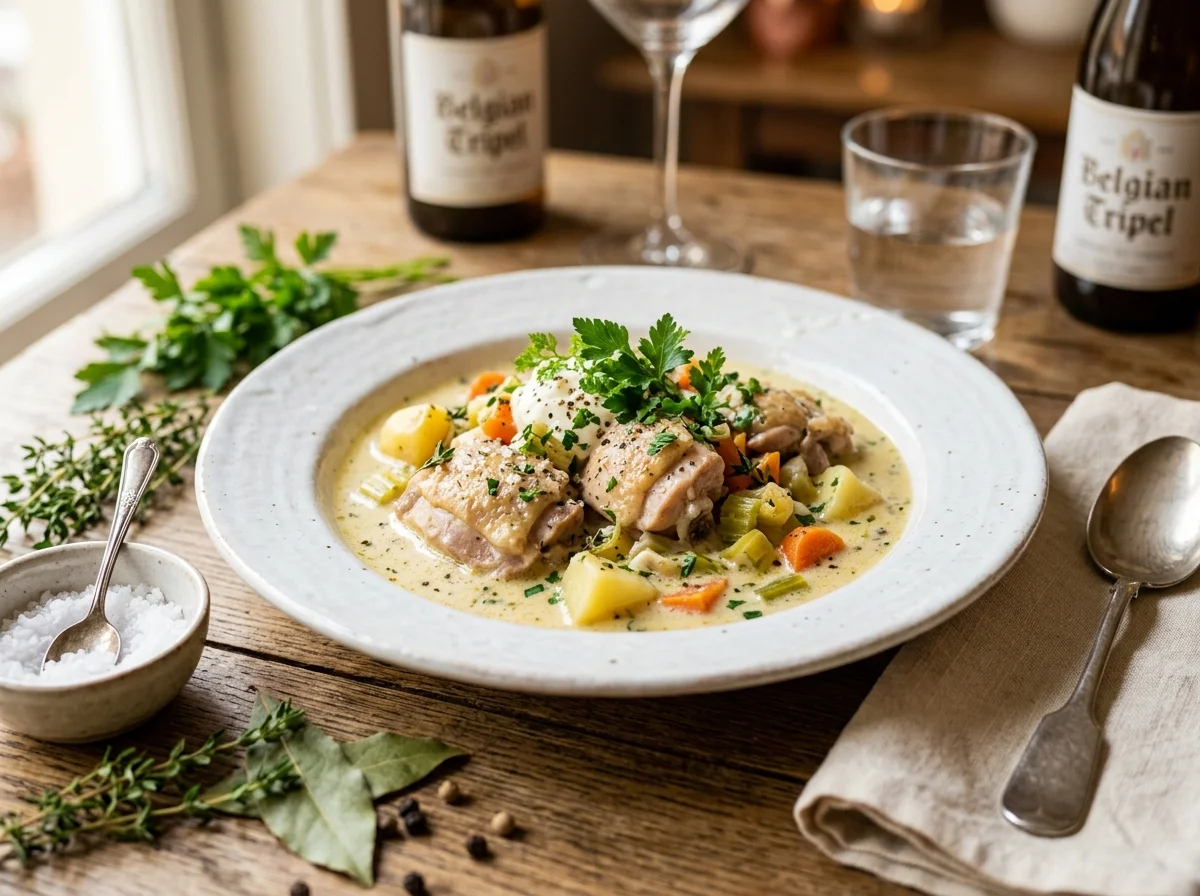
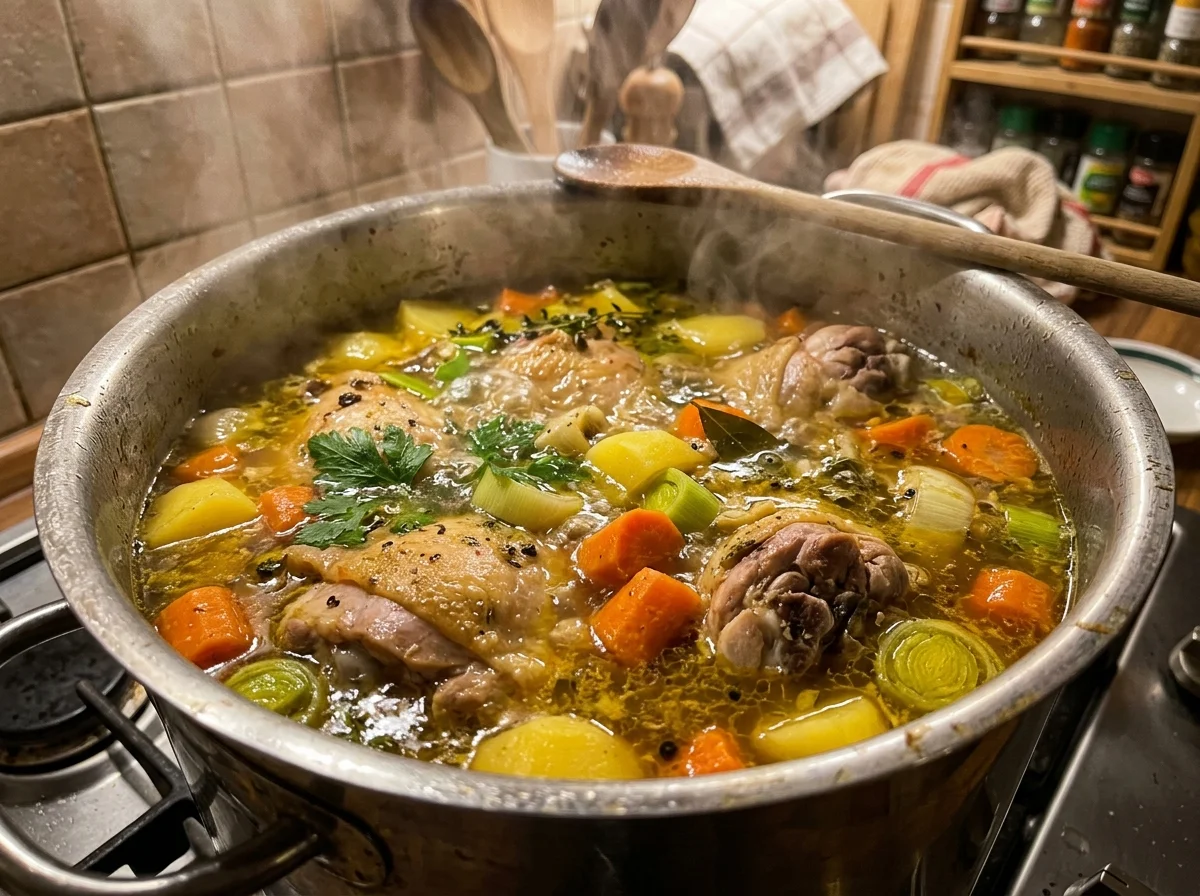
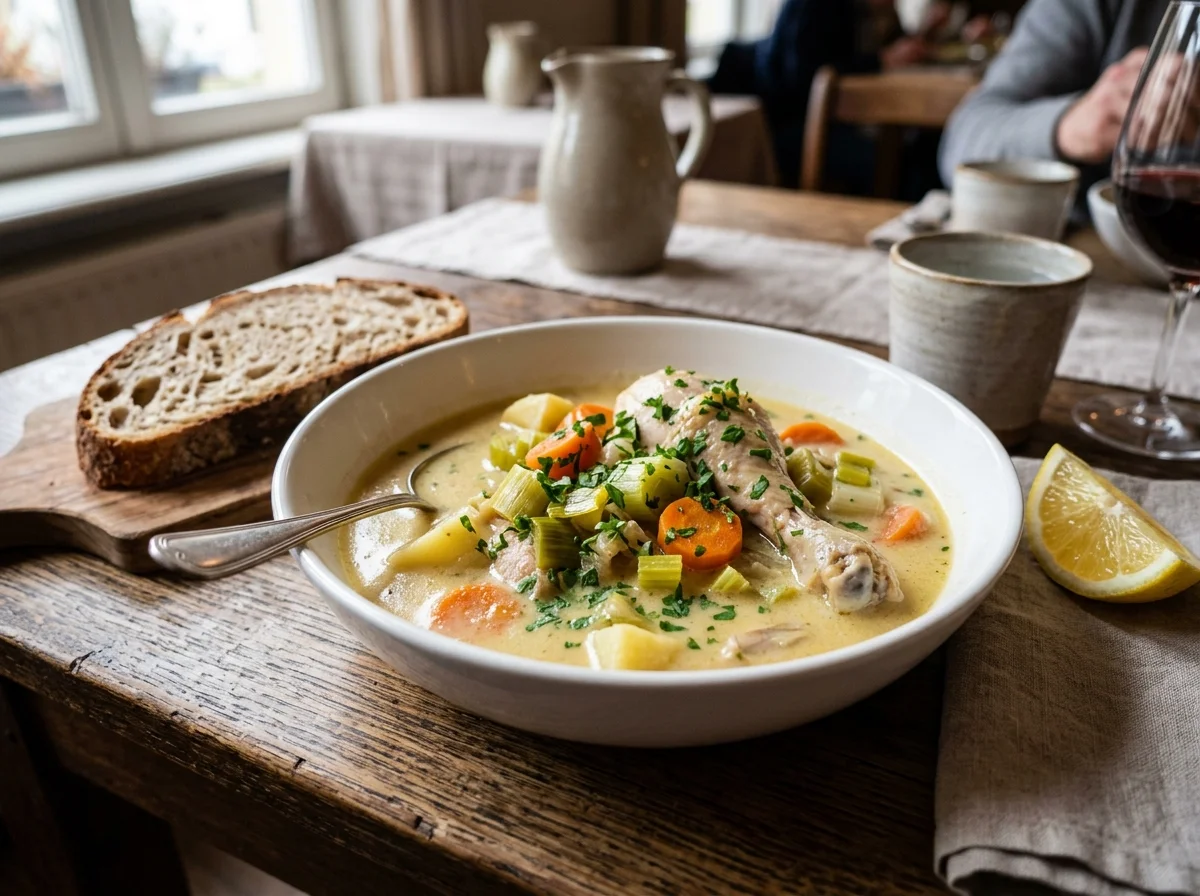
It looks like a pale golden cream soup. But take a spoonful and you find chicken thighs that fall off the bone, sweet concentrated carrots and leeks, and floury potatoes all melting into the creamy broth. A "liaison" of egg yolk and cream gives the whole pot body and richness, and fresh parsley keeps it from feeling heavy. It is a masterpiece from a country famous for beer, and it contains none.
A traditional Flemish dish whose name means "something boiled in water". It was originally made with freshwater fish from the canals of Ghent (pike, eel, carp), and the chicken version became the standard from the 19th century onward. Chicken thighs and root vegetables are simmered in stock and finished with a "liaison" of egg yolk and cream.
Recipes for "Gentse waterzooi" (Ghent-style waterzooi) are easy to find, but the details that matter in a home kitchen, such as how to control the temperature of the liaison and how the fish and chicken versions differ, are often skipped. If Belgian carbonnade flamande is the great beer braise, waterzooi is the great cream braise. This guide walks through it step by step.
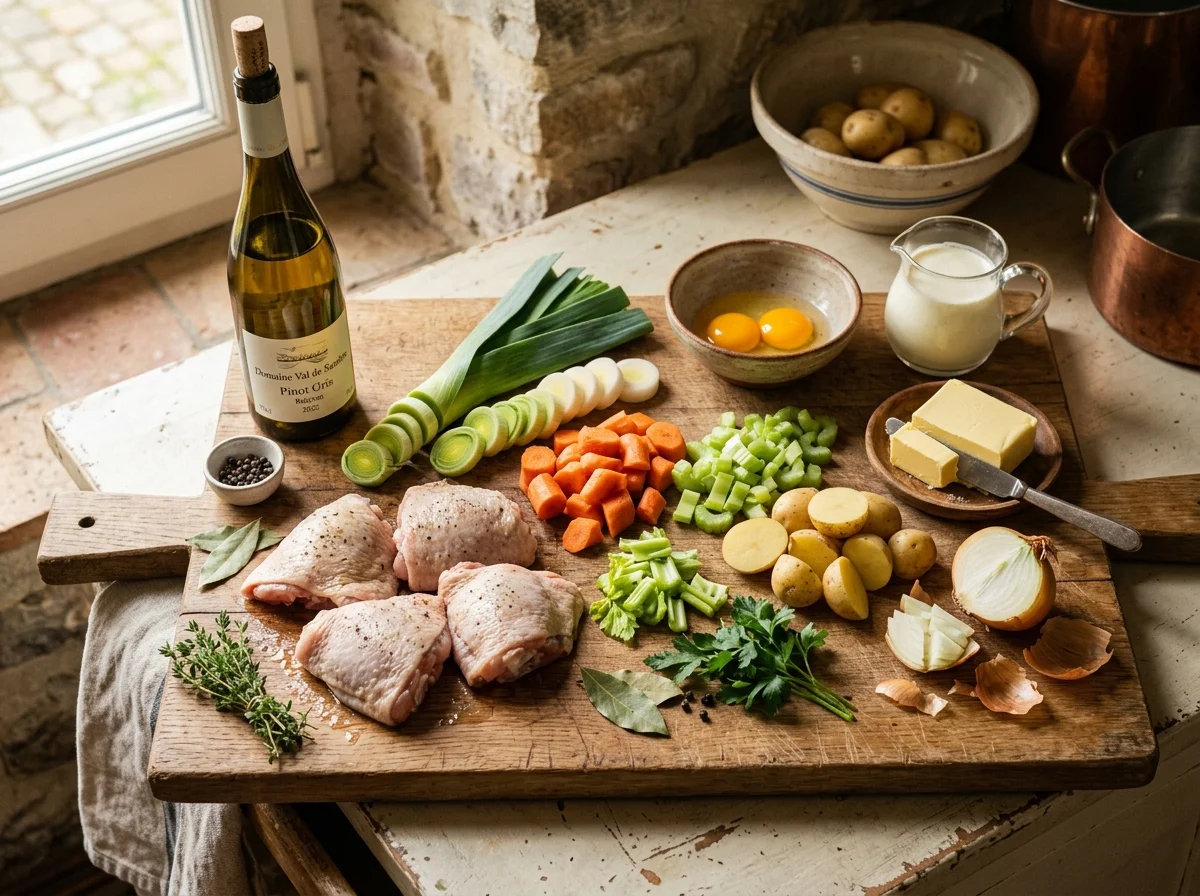
Ingredients (serves 4)
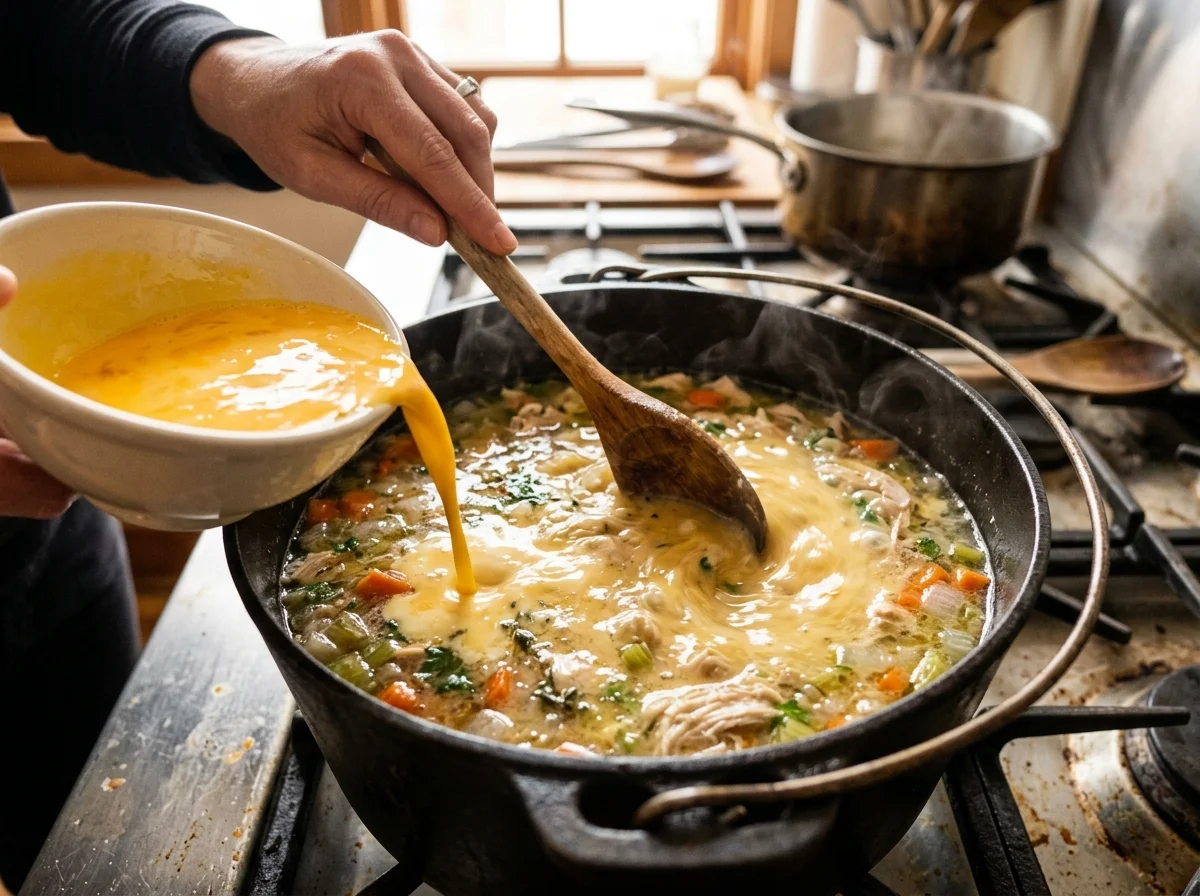
Waterzooi succeeds or fails on the liaison. If you pour the egg yolk and cream mixture straight into very hot broth, the eggs curdle and turn grainy. Take out 2 ladles of broth, stir them into the liaison a little at a time (tempering) to raise the temperature of the yolks slowly, and only then return it to the pot. Always take the pot off the heat first.
Cooking Tips
The collagen and gelatin that dissolve out of the bones give the soup body and depth. You can make waterzooi with boneless thighs, but then use a more concentrated stock, or simmer 3 chicken wings along with it to add gelatin. The result improves noticeably. The principle is the same as in French pot-au-feu (in Japanese: pot-au-feu).
If you skip tempering and pour the liaison straight into the broth, it turns into scrambled eggs in an instant. Take the 3 minutes.
A sweet wine makes the soup too sweet. Chardonnay or Pinot Gris is typical in Belgium. A reasonably priced Sauvignon Blanc is a good choice. If you substitute cooking sake, watch the salt and add less.
Variations
Fish waterzooi (the original recipe)
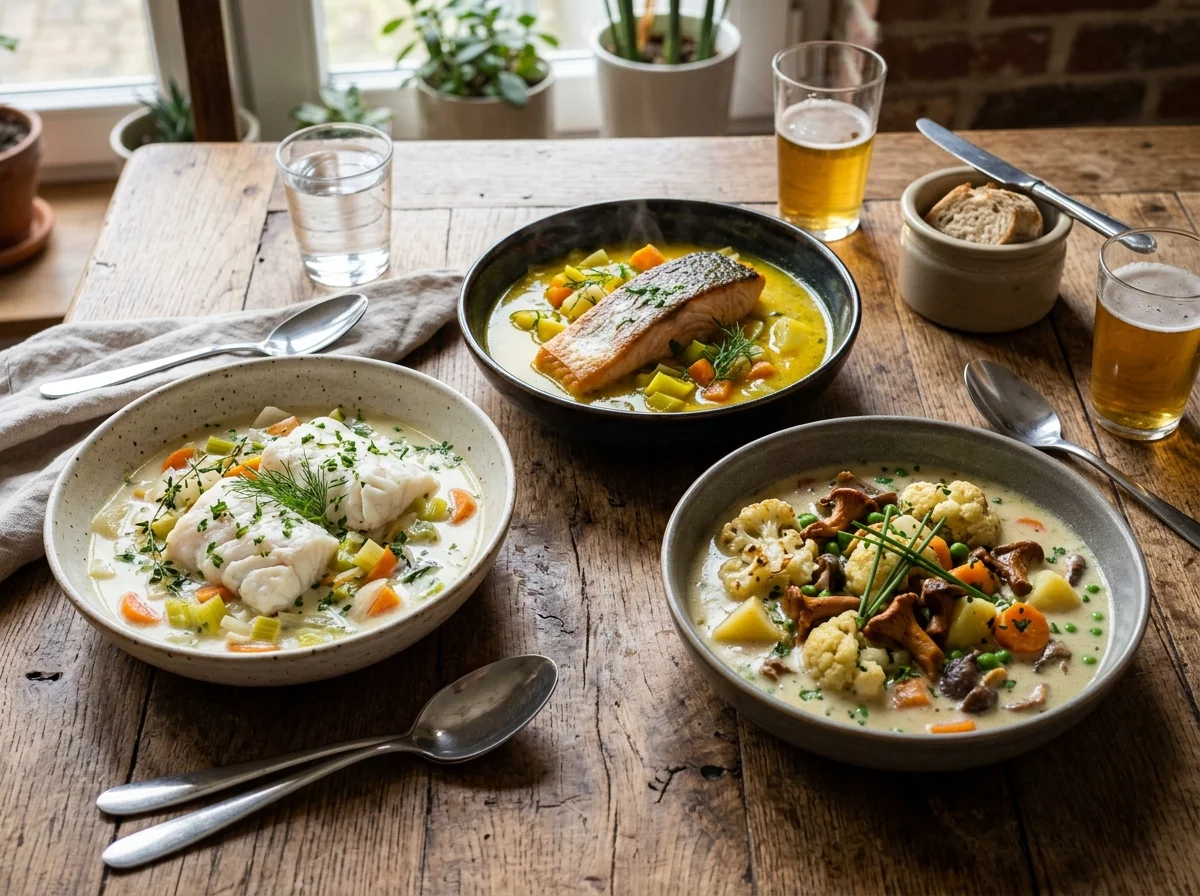
The original waterzooi was actually made with fish: pike, eel and carp from the canals of Ghent. Today you can recreate it with 500 g white fish (cod or sea bream) and 200 g salmon. Don't simmer the fish. Add it after the broth is done and cook it over low heat for just 5 minutes.
Salmon version
A Nordic-style variation using 4 fresh salmon fillets. Add the salmon once the broth is finished, cover, and steam-simmer for 5 minutes. The salmon's fat melts into the broth and makes it richer.
Vegetarian version
Use 1 head of cauliflower and 300 g mushrooms in place of the chicken. Replace the chicken stock with vegetable stock and cook with olive oil instead of butter. The sweetness of the root vegetables and the richness of the liaison make a satisfying soup.
Pressure cooker version (shortcut)
A pressure cooker cuts the simmering time from 30 minutes to 10 minutes. Do the browning and deglazing the same way, then pressure-cook for 10 minutes. After a natural release, add the liaison to finish.
About the Dish
Ghent, a Flemish city of good food
Ghent is a center of Flemish food culture, and waterzooi is its signature dish.
The oldest versions used freshwater fish such as pike, carp and eel, and the chicken version became dominant later, in the 19th century.
From "water stew" to a dish of the well-off
The name waterzooi is humble. "Something boiled in water" suggests it began as everyday food for fishermen and farmers: fish from the Ghent canals put in a pot with vegetables from the fields and boiled in water.
Over time the dish was refined. Butter and cream were added, the egg yolk liaison was introduced, and white wine came into use. A "fisherman's pot" became a refined soup.
Belgian food: beyond beer and frites
When people think of Belgium they usually think of chocolate, waffles and beer, but Belgian food goes further. The braises of Flanders have their own style, combining French refinement with Dutch practicality.
If carbonnade flamande embodies the strength of Belgian beer, waterzooi embodies the elegance of cream. The two are the "front and back" of Flemish cooking, and knowing both shows how deep Belgian food runs.
The liaison: a French influence
The liaison (the egg yolk and cream finish) that defines waterzooi comes from French sauce technique. Flanders borders francophone Wallonia and has exchanged ideas with French cooking for centuries.
Egg yolk lecithin acts as a natural emulsifier, holding water and fat together. That is why waterzooi has a texture that is "creamy but not too heavy".
Nutrition (per serving, from 4 servings)
36 g of protein from the chicken thighs, vitamins and minerals from the root vegetables, and fat-soluble vitamins from the cream. A soup that warms you from the inside is ideal for winter.
| Nutrient | Amount |
|---|---|
| Calories | 480 kcal |
| Protein | 36 g |
| Fat | 26 g |
| Carbohydrates | 22 g |
| Fiber | 4 g |
| Sodium | 620 mg |
Chicken thighs are juicier and more flavorful than breast meat. Simmering them on the bone turns collagen into gelatin, which gives the soup body.
More Dishes to Cook
- Bacalhau à Brás: Uses similar ingredients and aromas from the same region.
- Raclette: Uses similar ingredients and aromas from the same region.
- Carbonnade flamande: Continue with another dish from the same country's table.
- Koupepia: Uses similar ingredients and aromas from the same region.
Frequently Asked Questions
Questions often asked by people making waterzooi for the first time.
Q1. My liaison scrambled. Can I fix it?
Unfortunately it can't be fully repaired. But you can recover it by straining out the egg curds through a sieve. Add 100 ml of cream to the strained soup and rewarm it gently over low heat. It will look a little less nice, but the flavor is not spoiled. Next time, always temper.
Q2. I can't find leeks.
The white parts of thick scallions or spring onions are the closest substitute. Regular onion has a different sweetness, so I don't recommend it much.
Q3. Which is the "real" one, the fish or chicken version?
Historically the fish version is the original. In Ghent today, however, the chicken version is by far the most common, and "Gentse waterzooi" usually means the chicken version. Both are real waterzooi.
Q4. Can I make it a day ahead?
It is best to refrigerate it before adding the liaison, then reheat it the next day and add the liaison. Reheating after the liaison is in risks curdling the yolks. It keeps for 2 days in the refrigerator.
Q5. Can children eat it?
The alcohol in the white wine cooks off during simmering, and the stew has no spicy ingredients, so it is safe for children. Its creamy flavor is popular with them.
Related European Stews
If waterzooi caught your interest, explore the variety of European stews.
- Carbonnade flamande: Belgium's beer braise. The pair to waterzooi and the two pillars of Flemish cooking
- Goulash: Hungary's paprika stew. A robust Central European braising tradition
- Svíčková: Czech beef in cream sauce. A Central European take on creamy stews
European stews are a mirror of each country's climate and history.
- Farikal: Norway's lamb and cabbage stew. The simple beauty of a Nordic braise
- Caldo verde: Portugal's kale soup. A vegetable soup of southern Europe