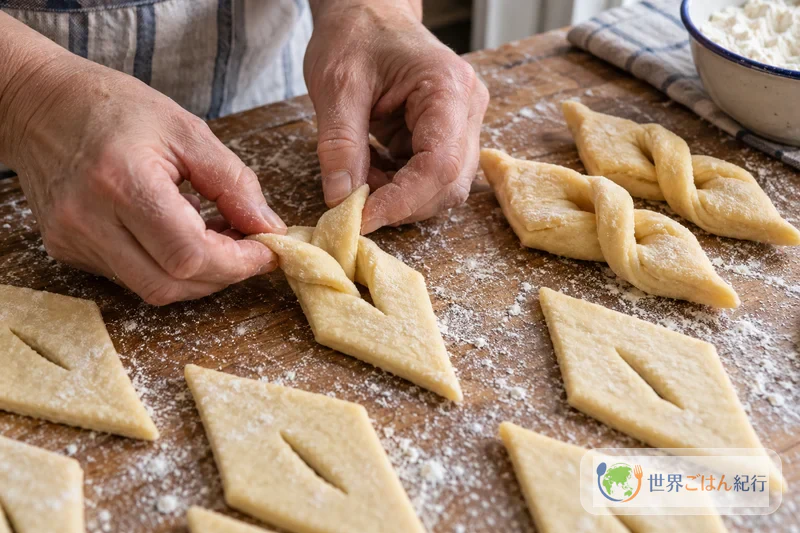

In the bread aisle of a Reykjavík supermarket, bags packed with golden fried pastries are stacked up. Each one is a slender diamond, with one end pulled through a slit in the middle so that it twists around. Icelanders pick at these with coffee on an ordinary weekday afternoon, not a special day. They are kleinur (singular: kleina).
The Nordic countries have several very similar fried pastries, and in other countries they are often made as Christmas sweets, whereas in Iceland they are an everyday snack eaten all year round. The dough is made of flour, egg, sugar, and sour cream and buttermilk, with a faint drift of nutmeg or cardamom. There are only two high points in the method: keep the dough an even 6 mm thick, and fry it in 190°C oil. Hold those two points and you get a fry that is crisp outside and soft inside.
A twisted fried pastry with relatives all over the Nordic countries
Relatives of this fried pastry are found all over the Nordic countries. In Sweden they are klenät, in Denmark klejne, and in Norway fattigmann. The name is thought to come from the Low German Kleinet, meaning a small item or gift. In Denmark they are recorded as early as the 14th century, and in the 18th and 19th centuries the method appeared in Danish and Icelandic cookbooks.
Kleinur first appear in writing in Iceland around 1800, in a cookbook compiled by Marta Maria Stephensen. According to Icelandic Food, a web magazine on Icelandic food culture, what began as a Christmas treat became an everyday snack over the 19th century. Today they are sold singly in bakeries and in bags of about 10 in supermarkets, and it is usual to eat them plain, without powdered sugar or any topping.
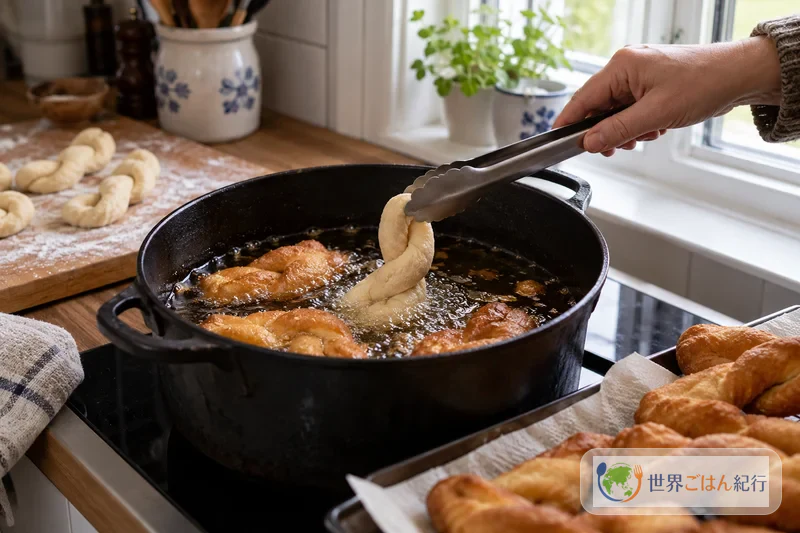
Long ago, kleinur were fried in mutton fat (tallow). It is a way of frying that belongs to Iceland, where sheep were central to life. Today frying in vegetable oil is common, and some people use lard.
Norwegian fattigmann often includes cardamom, cinnamon, and a very little cognac. Icelandic kleinur also vary in flavoring by household, with some using nutmeg and others preferring the scent of cardamom. The Icelandic Food article writes of the scent of cardamom filling the kitchen while frying as a memory of this pastry. With either spice, a very small amount is enough. Too much makes the spice too assertive and hides the plainness of the fried sweet.
Ingredients (makes about 18)
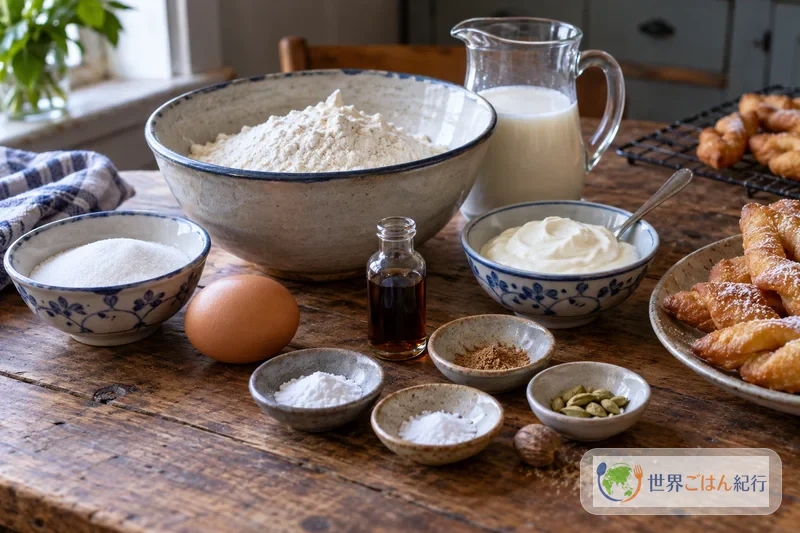
This mix takes the recipe published in the Icelandic English-language magazine Reykjavík Grapevine (about 50 pieces) and reduces it to one third, an easier amount to fry at home. Cup measures have been converted to grams and ml.
Cream of tartar is a white powder, potassium hydrogen tartrate, which leavens dough when used with baking soda. It is available at baking supply shops and online, but if you do not have it you can substitute baking powder. Nutmeg and cardamom are both found in the spice aisle of a supermarket. Cardamom gives a fresh, Nordic scent, so trying it the second time should be fun.
Buttermilk is not always easy to find. Mixing lemon juice into milk and letting it stand a little produces body and acidity that stand in for buttermilk. The acidic dairy reacts with the baking soda and has the job of making the dough puff up softly.
How to make kleinur
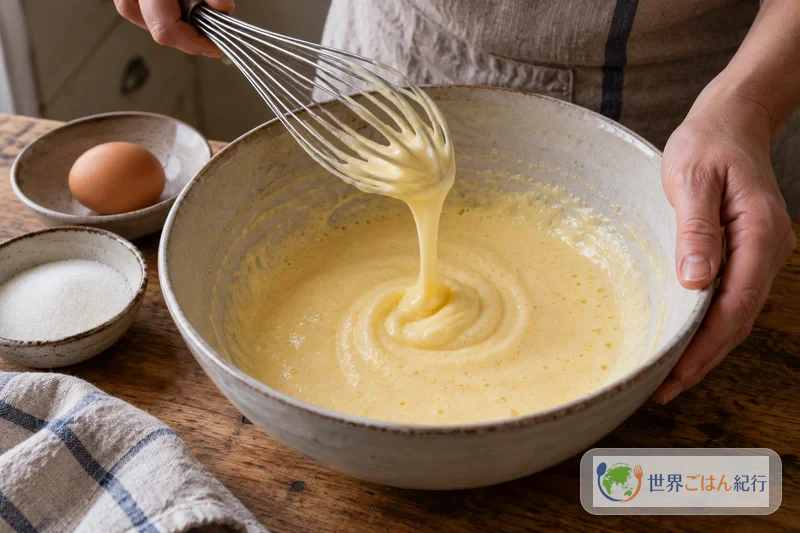
Making the dough takes about 10 minutes, rolling and shaping about 20 minutes, and frying about 30 minutes. Frying all the shaped dough together lowers the oil temperature easily. Fry 5 or 6 pieces at a time, a few at a time.
Frying oil gets very hot. Do not leave the stove while frying, and if the oil gets too hot and smokes, turn off the heat at once. When adding dough, slide it in gently from close to the surface of the oil, and watch for burns from splatter. This sweet contains wheat, egg, and dairy.
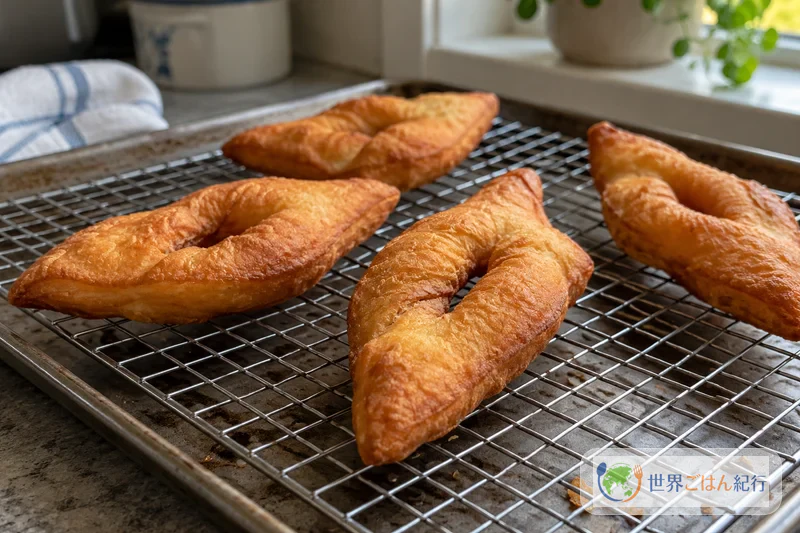
If the oil is too cool, the dough soaks up oil and turns heavy. If it is too hot, the outside burns while the inside stays raw. Fry the first piece as a test and break it open to check that it is cooked to the center, then fry the rest, and you will not go wrong.
A traditional tool for even shapes
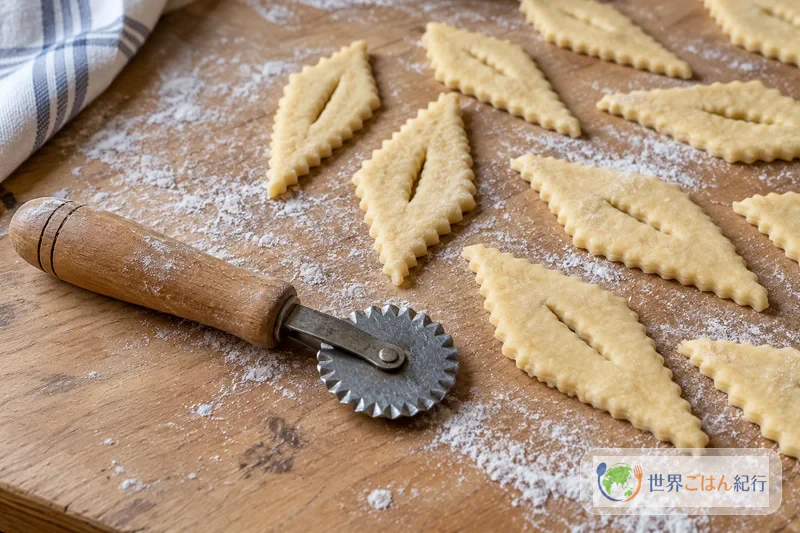
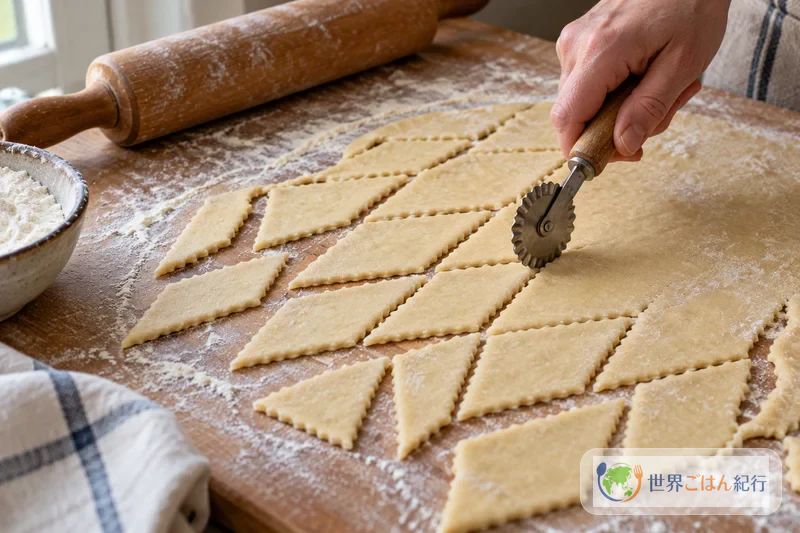
In Iceland, a dedicated tool for cutting kleinur dough, the kleinujárn, has been used. It is a small wheel-shaped tool that is rolled over the dough to cut it. A pastry cutter does the same job, and a pizza cutter is quite enough if you have none.
When shaping, what to watch is making all the diamonds the same size and thickness. It makes the frying times match, and they line up neatly in a bag. Cutting against a ruler keeps the shapes even even when you are not used to it. The first few twists may be awkward, but by the time you have made 10 your hands remember.
With coffee, while still warm
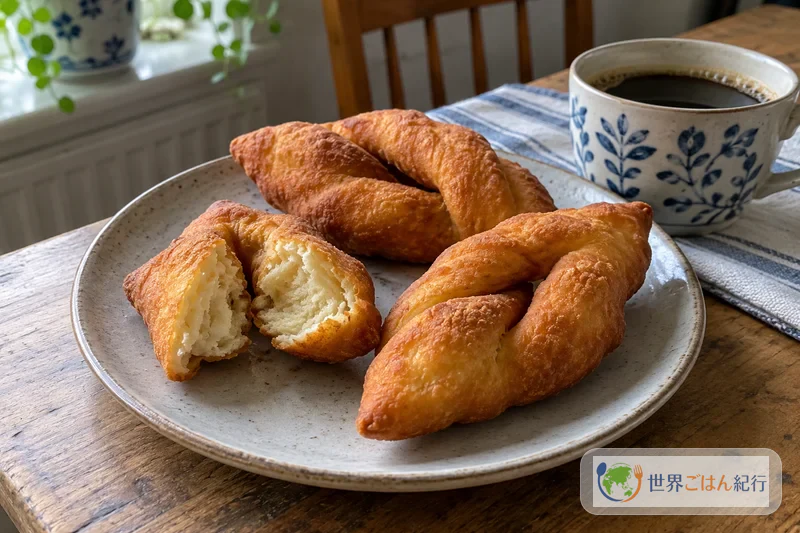
It is said to be best eaten after cooling a little from fresh out of the oil, while still faintly warm. In Iceland, the standard is to eat them plain, without any topping, with black coffee. The outside is crisp and toasty, the inside moist and soft, with a faint tang of sour cream and the scent of nutmeg left behind. If you want to add sweetness you may dust them with powdered sugar, but it is not a way you often see Icelanders eat them.
Storing in a dry place is the way to handle kleinur. When they absorb moisture, the crisp texture of the outside is lost. If you want to make one more Nordic snack, Denmark's open-faced sandwich, smørrebrød, shows a different face of the Nordic table from coffee time.
Frequently asked questions
The dough is too soft to roll.
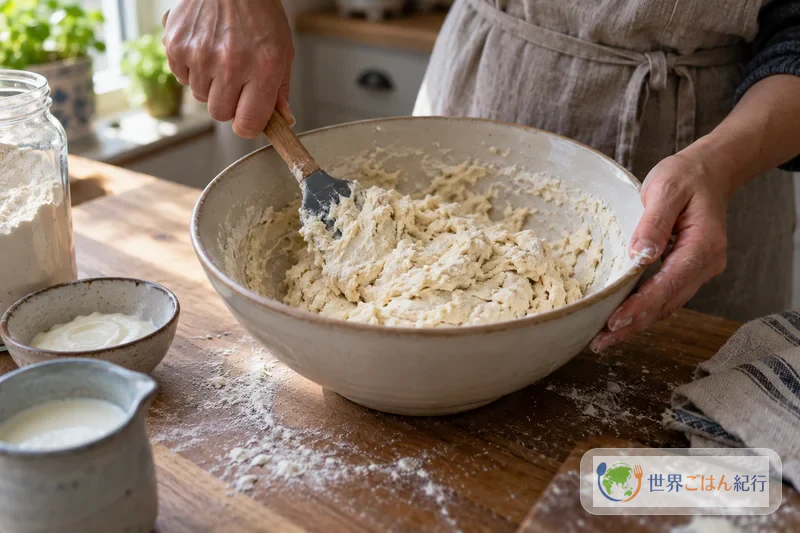
Use plenty of flour for dusting, and add flour 1 tbsp at a time. If it is still sticky, wrap it in plastic and rest it in the refrigerator for about 30 minutes to make it easier to handle. Adding too much flour makes the fry hard, so add it a little at a time.
Can I make it with baking powder only?
You can. Instead of baking soda and cream of tartar, mix 2 tsp baking powder into the flour. The rise and flavor change a little.
The inside is raw after frying.
The oil may have been too hot so that only the outside colored first, or the dough may have been too thick. Keep 190°C with a thermometer and make the thickness 6 mm. Pieces with a raw center will cook through if fried again in 180°C oil for about 1 minute.
I want to try frying in mutton fat.
Mutton fat is hard to get, so mixing a little lard into the frying oil gets closer to the old-fashioned richness. Vegetable oil alone also fries up well.
How long do they keep?
They are best on the day they are fried. Store them in a dry place and finish them soon. This article gives no storage days, because no reliable basis for them could be confirmed.
Sources
- The Reykjavík Grapevine, "Make Your Own Kleinur," 21 November 2012. Accessed and checked 22 October 2026. https://grapevine.is/food/2012/11/21/make-your-own-kleinur/
- Icelandic Food (FÆÐA | FOOD), Marta Biernat, "Kleina, the delicious fried pastry." Accessed and checked 22 October 2026. https://icelandicfood.is/?p=2276
- Wikipedia, "Kleina." Accessed and checked 22 October 2026. https://en.wikipedia.org/wiki/Kleina