Skyr: An Icelandic Dairy Food Finished by Draining Off the Whey
Skyr gets its thick, spoonable body because the curd is drained, not because it is stirred thick. Measure the temperatures and check the curd with a knife. The clock is only a guide.
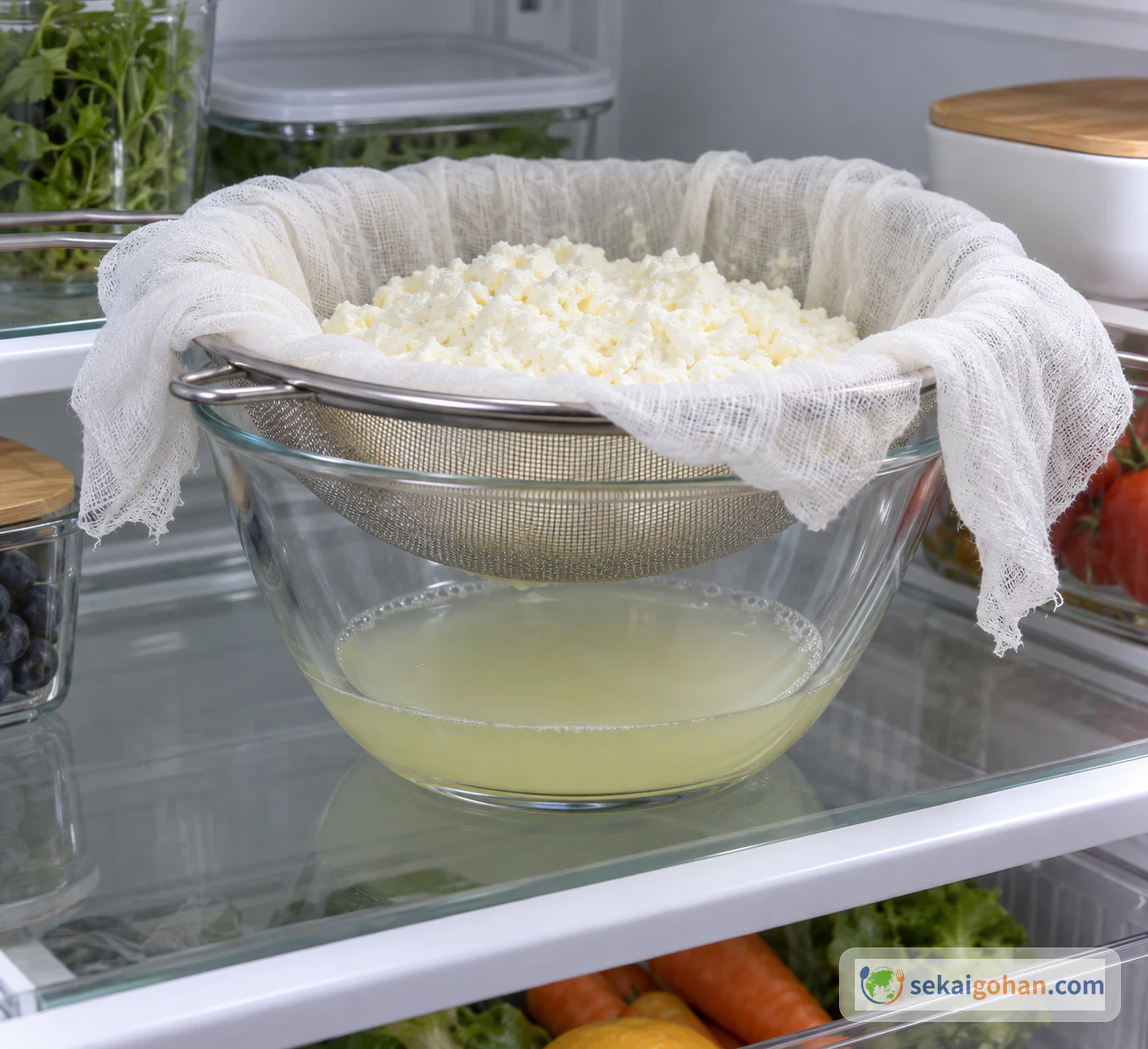
Skyr is a thick, ivory dairy food eaten with a spoon, plain or sweetened, often at breakfast or as a snack. It looks and is eaten much like a thick yogurt. Still, the Slow Food Foundation describes traditional Icelandic skyr as an acid-set fresh cow's-milk cheese and notes that it is not yogurt, even though it is used in a similar way and has a similar texture. The difference lies in how it is made. Milk is set into a curd, and the curd is then strained through cloth so the whey runs off.
Commercial skyr is made in many ways today. The recipe in this article is one home method. It is taken from a single published home-cheesemaking recipe by Hjemmeriet, a specialist supplier. That recipe uses 2 litres of skimmed milk, 1 tablespoon of fresh skyr as the starter and 2 drops of rennet. Its stated approximate result is about 1 litre of skyr and about 1 litre of whey. The amount you get depends on the milk and equipment, so treat that figure as a rough guide.
This recipe has not been kitchen-tested by Sekai Gohan. Yield and timing have not been measured. Rennet also differs in strength from product to product. Read your rennet's label before you start.
How Skyr Is Eaten and Valued in Iceland
Visit North Iceland calls skyr an Icelandic specialty made since the time of settlement. It notes that the milk is usually skimmed and set with bacterial cultures and rennet. The same tourism source suggests that skyr was relatively economical to make compared with cheese, and that this is a likely reason Icelandic cheesemaking traditions faded. No exact year of origin is claimed here, and none is needed to enjoy it.
The Slow Food Foundation records several features of the traditional artisanal method. Starter is carried over from a previous batch of skyr. Calf rennet may be added if the milk sets weakly. The curds are strained through cloth. That artisanal process is separate from the home recipe below, and its figures are not mixed into it.
Skyr's place in Icelandic life has also changed. A peer-reviewed article by Jón Þór Pétursson and Valdimar Tr. Hafstein in the Journal of American Folklore (2022) looks at how skyr moved from everyday food to national food heritage. It also looks at how branding and global markets shape that heritage story. The article warns against reading modern marketing as simple proof of an unchanged ancient tradition. For more Icelandic dishes, see the Iceland country page.
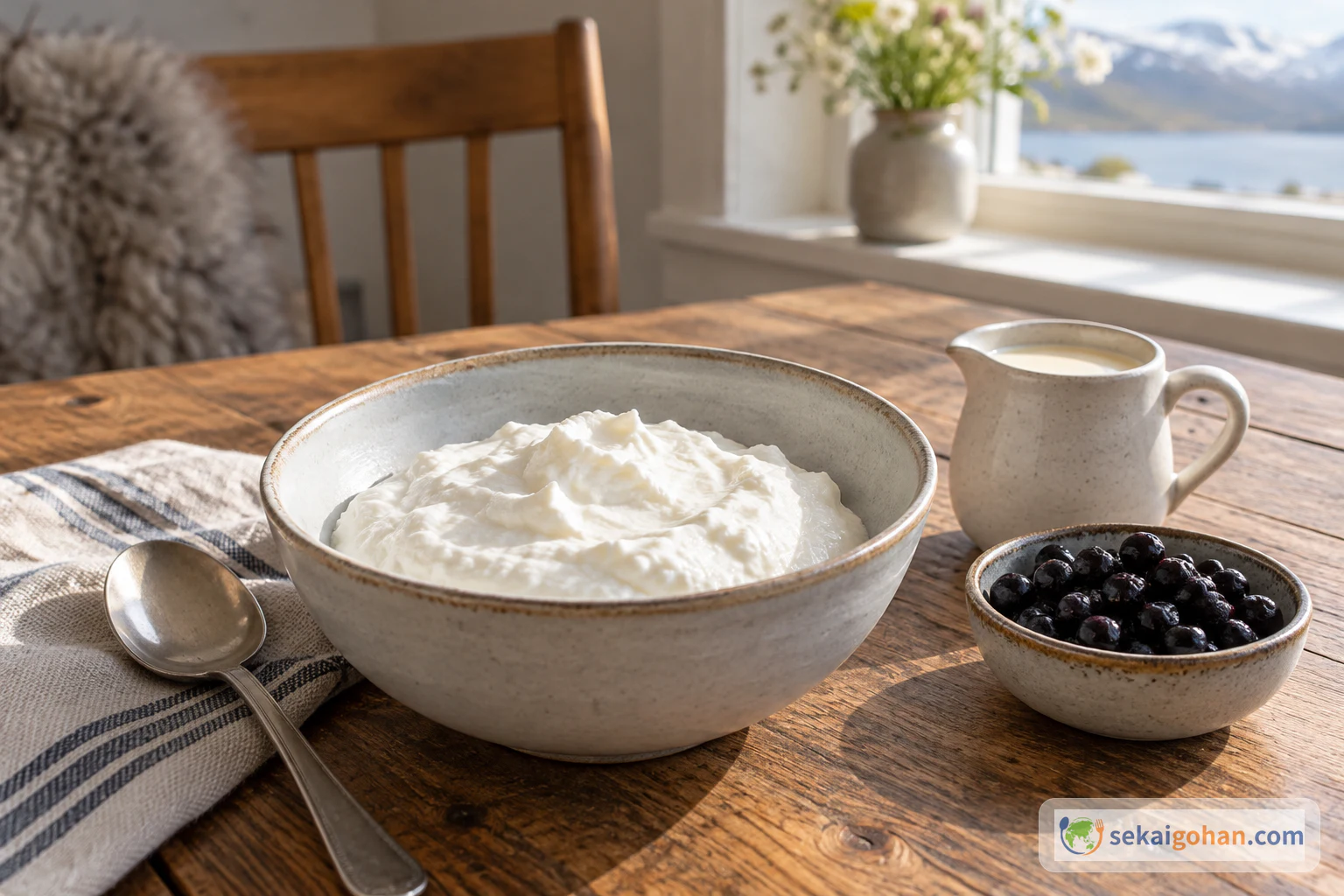
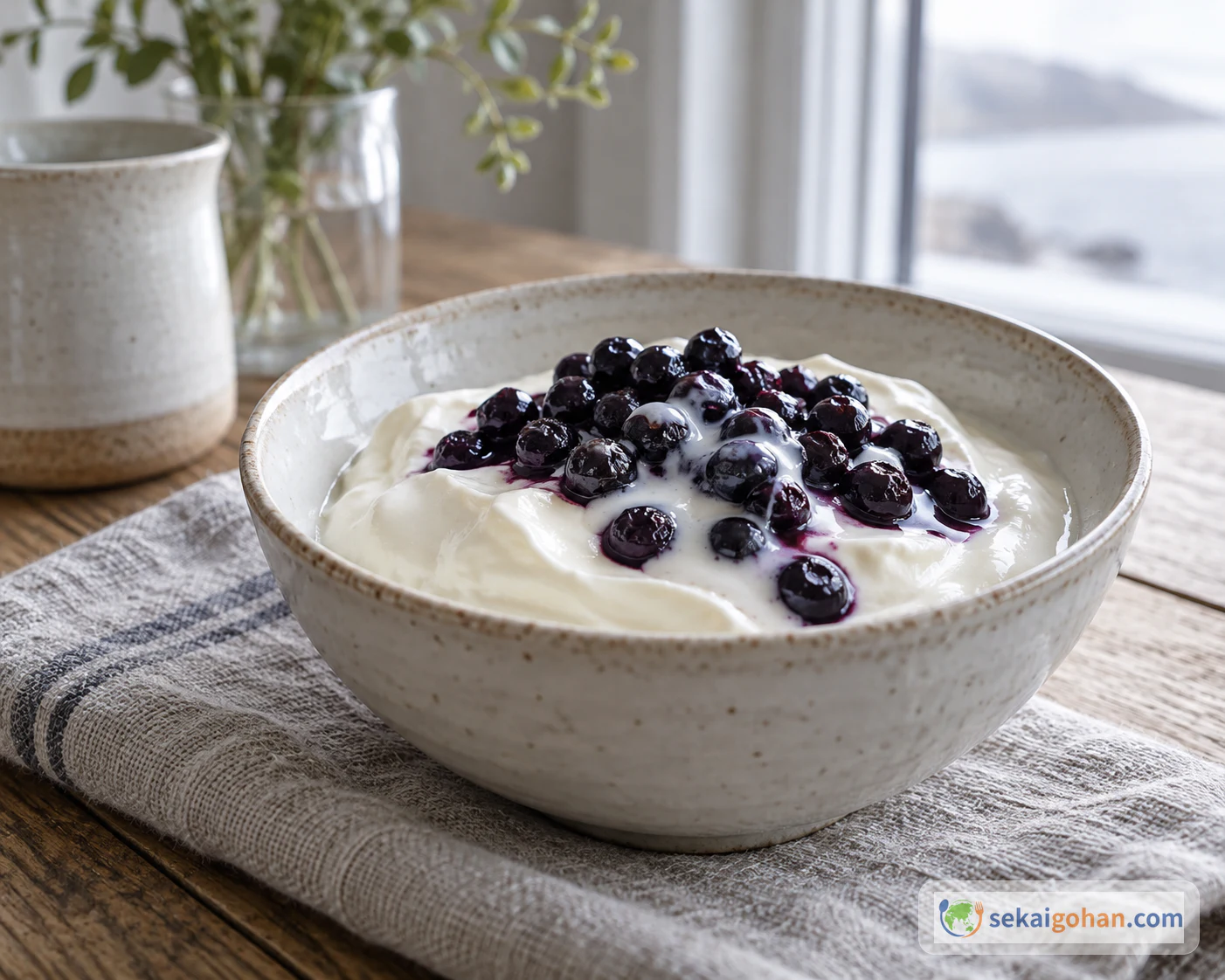
At the table, skyr is eaten plain, with sugar, or with cream or milk. Among the foods to try in Iceland, Visit Iceland recommends skyr with wild bilberries and cream. Outside Iceland, cultivated blueberries can stand in for the bilberries. They are a substitute, though, and the taste will not be the same.
Ingredients: Skimmed Milk, a Spoonful of Skyr and Rennet
Equipment
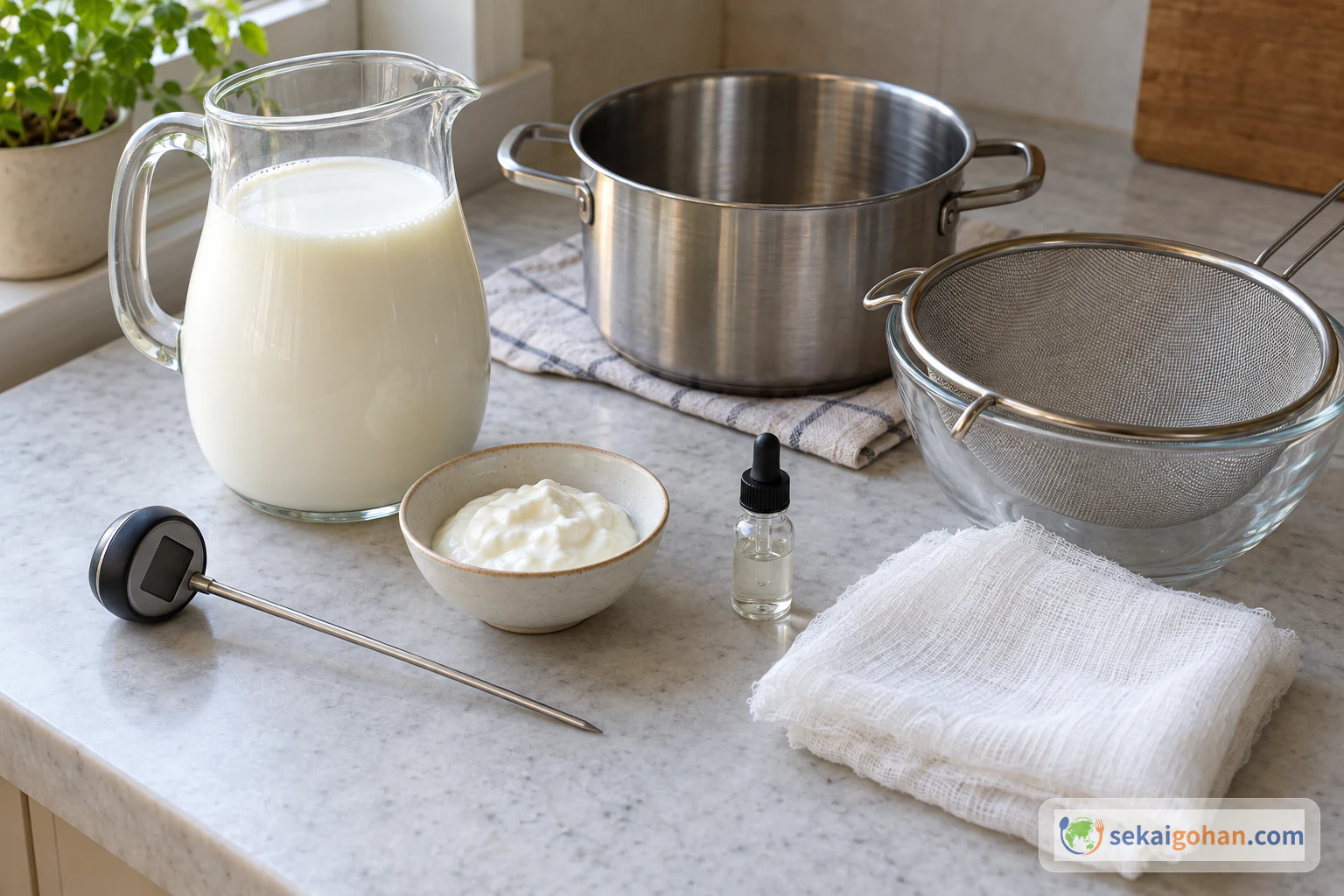
- Heavy pot with a lid
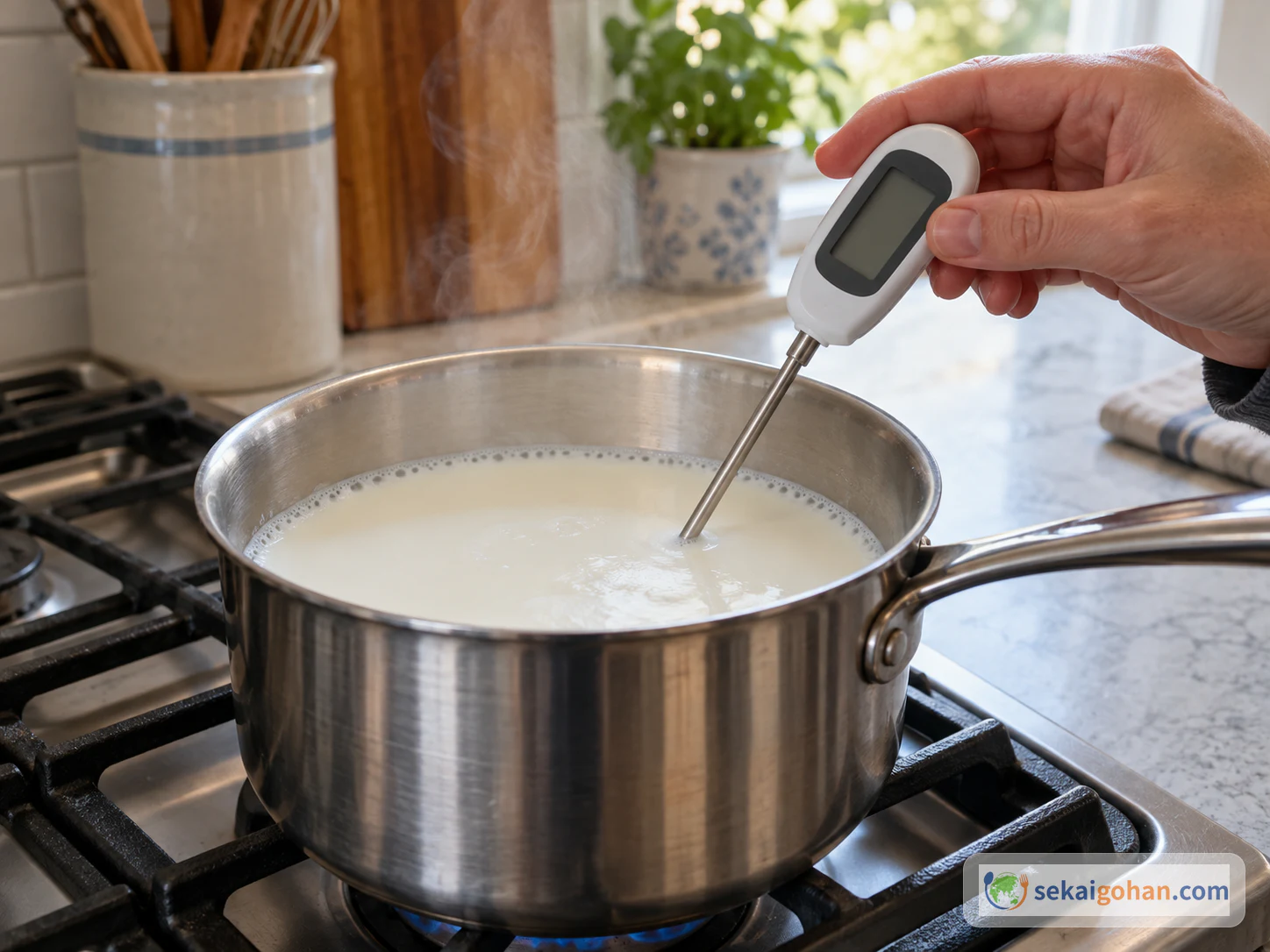
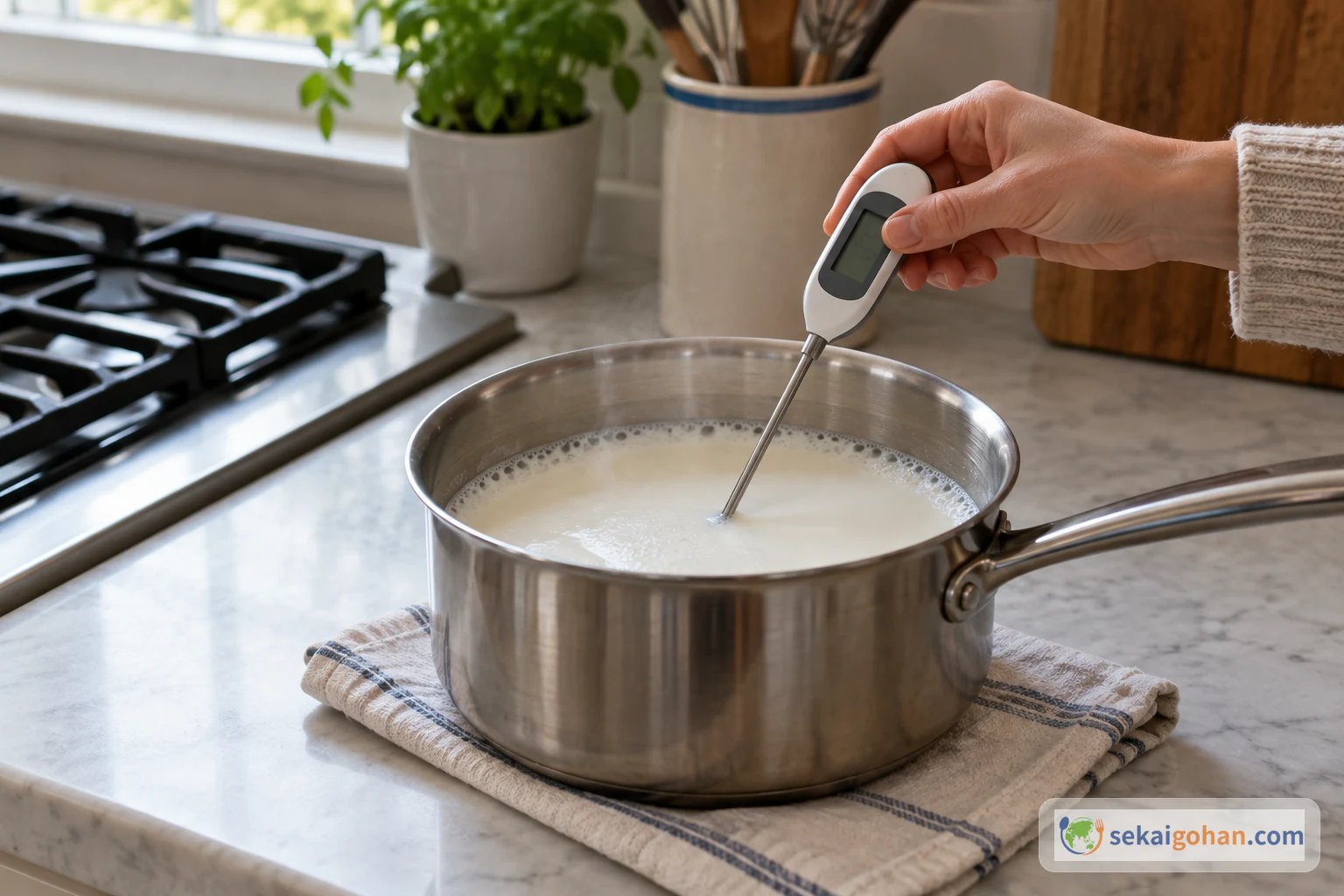
- Thermometer that reads at least 86–90°C and 39°C
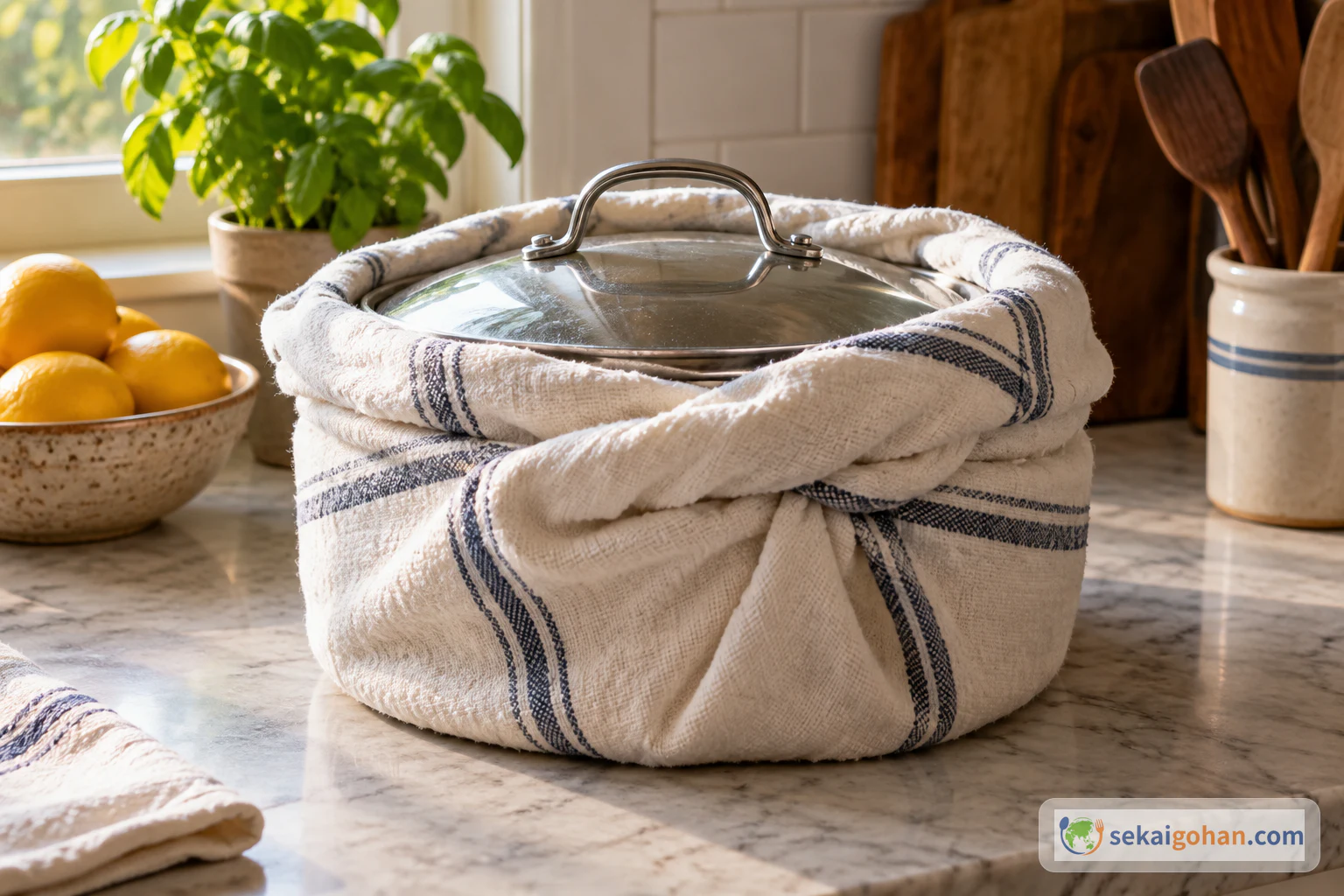
- Towel for wrapping the pot
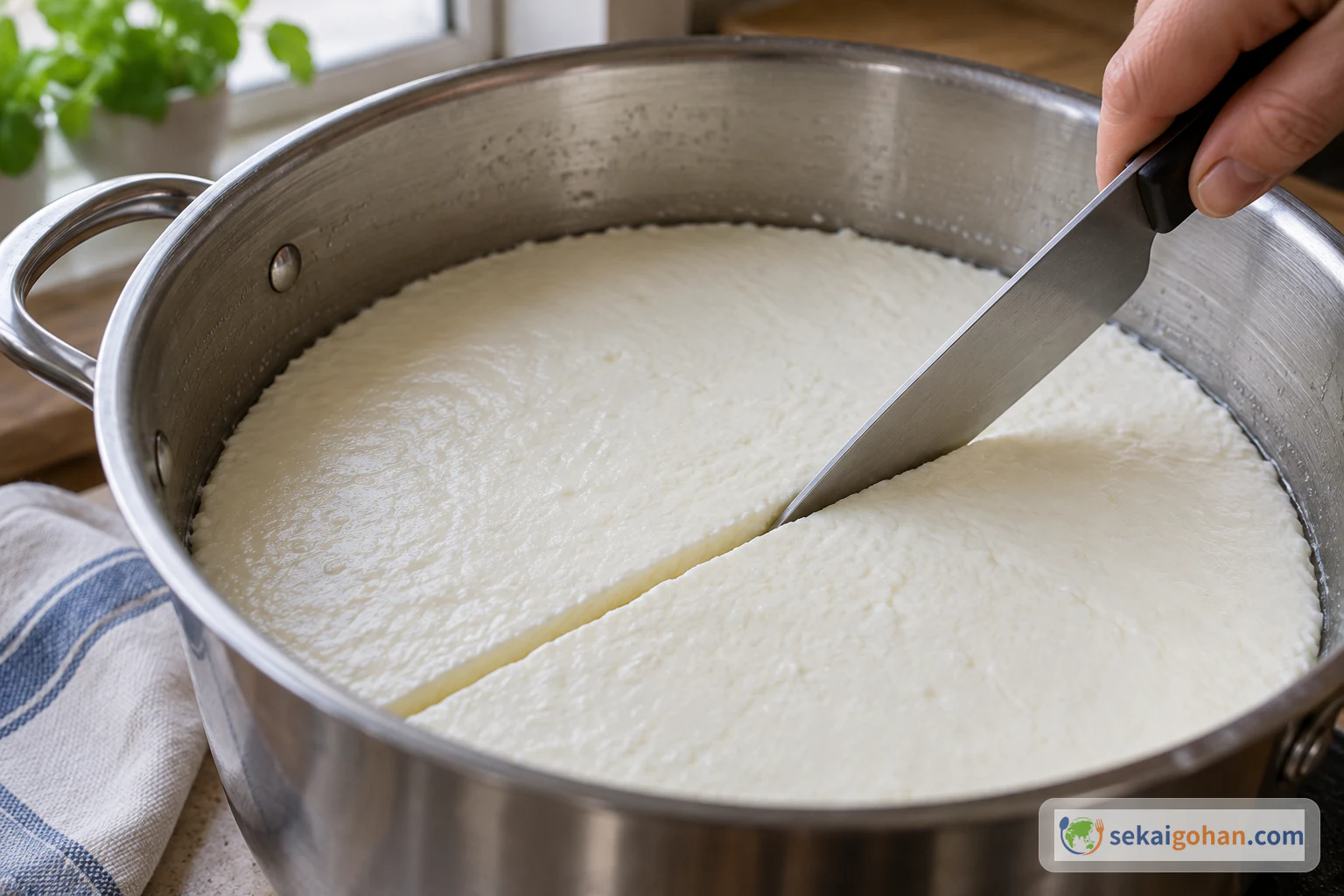
- Long knife
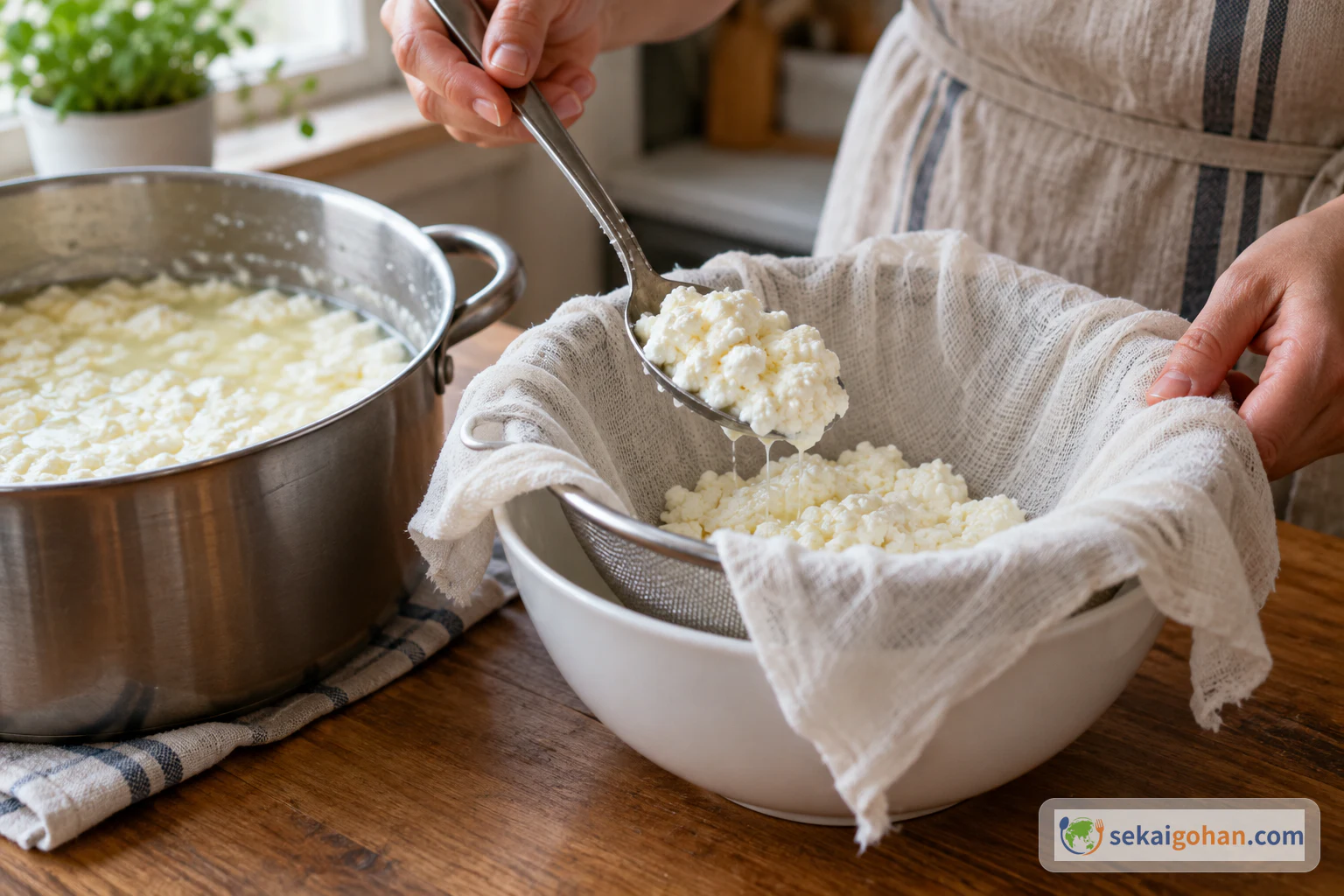
- Sieve or colander
- Clean cheesecloth or similar cloth
- Bowl to catch the whey, sized to hold the sieve
Choosing the Starter, Rennet and Milk
Starter. The traditional approach uses skyr from a previous batch. For a first batch, use a plain store-bought skyr with live cultures. If you cannot find fresh skyr, plain yogurt, sour cream or buttermilk can be used, but they change the flavor; fresh skyr is preferable. If you use one, you are making a skyr-style strained dairy, not one started the traditional way.
Rennet. Rennet comes in different strengths and forms. The 2 drops in this recipe are not a safe amount for every product. Follow the label's guidance for your rennet and milk volume. Do not try to convert powder or tablets into "2 drops' worth" by guessing.
Milk. Use skimmed milk.
Method: From Hot Milk to Firm, Drained Skyr
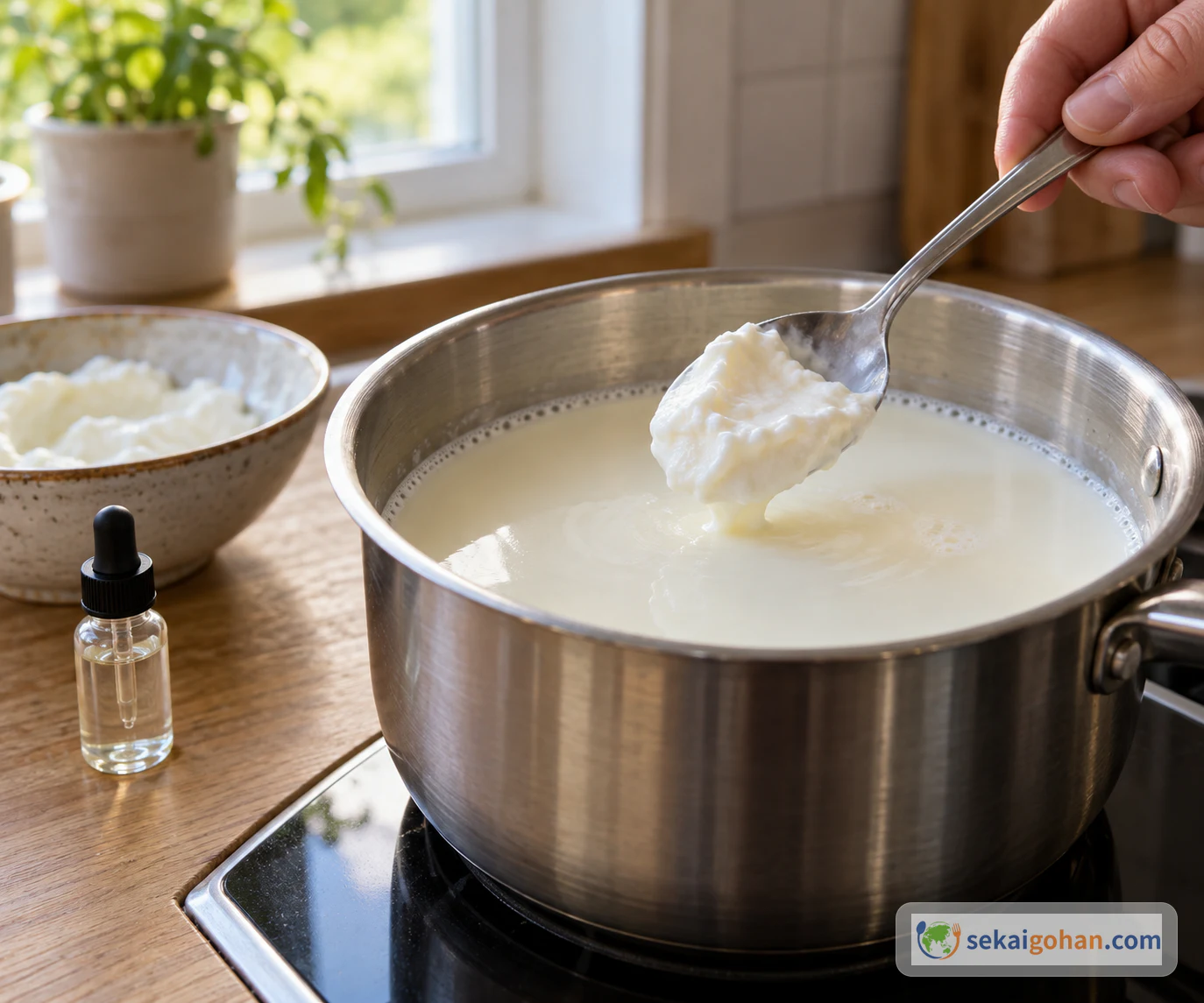
Two moments decide the batch. The first is when the milk has cooled to 39°C. The second is when a knife cut in the curd stays open. Use the times as guides and check the actual state before moving on.
When Things Go Off Course
| What you see | Where to look | What to do |
|---|---|---|
| The knife cut closes up | The curd has not set firmly enough yet | Give it a little more time, keeping it warm, then test again |
| The milk barely sets | Temperature when the starter went in; rennet amount; whether the starter had live cultures | Check that the milk was at 39°C, that the rennet amount matched the label, and that the skyr was plain with live cultures. The Slow Food Foundation notes that traditional makers may add calf rennet when setting is weak |
| Still soft and wet after draining | Drainage time and layer depth | Keep draining in the refrigerator within the 12–24 hours. Spread the curd so the layer is no deeper than 7–9 cm |
| Flavor is different from skyr you have bought | Starter | Yogurt, sour cream or buttermilk starters change the flavor. Next time, use plain fresh skyr |
Variations and Serving Ideas
- Icelandic-style: wild bilberries and cream, as Visit Iceland suggests.
- Everyday: plain, or with a little sugar and milk or cream, for breakfast or a snack.
- With blueberries: use these where bilberries are hard to find. Expect a different berry flavor.
- Different starter: if you have no skyr, use plain yogurt, sour cream or buttermilk. The flavor will change, so this makes a skyr-style dairy rather than the traditional kind.
Frequently Asked Questions
Is skyr just a thick yogurt?
No. It is eaten like yogurt, but the Slow Food Foundation describes traditional skyr as an acid-set fresh cheese whose curd is strained through cloth. The thickness comes from draining off the whey.
What does the rennet do?
It helps the milk set into a curd firm enough to hold a knife cut. Visit North Iceland notes that skyr milk is usually set with both bacterial cultures and rennet. Products vary in strength, so follow your rennet's label.
Why heat the milk so high and then cool it so far?
The recipe heats the milk to 86–90°C and then cools it to 39°C before the starter goes in. Adding the starter while the milk is hot is not part of the method. Wait until the thermometer reads 39°C.
How long does homemade skyr keep?
Keep it in a clean, covered container in the refrigerator and use clean utensils. The home recipe this article follows gives 4–5 days as a guide. Do not stretch it beyond that.
Can I use the result as starter for the next batch?
Carrying starter over from a previous batch is part of the traditional method the Slow Food Foundation describes. This home recipe has not been tested that way, so no guidance is given on how many batches you can carry it through.
Sources
- Hjemmeriet, "Recipe - Skyr - Icelandic quark." The home recipe used here: 2 litres skimmed milk, 2 drops rennet, 1 tbsp fresh skyr as starter, and an approximate yield of about 1 litre skyr and 1 litre whey. Also the steps: heating to 86–90°C, slow cooling to 39°C, about 5 hours of setting, the curd cut test, and refrigerated straining for 12–24 hours. It also notes that fresh skyr is preferred over plain yogurt, sour cream or buttermilk substitutes, which change the flavor. https://hjemmeriet.com/en/visopskrift.php?id=32&title=Recipe+-+Hjemmeriet+-+Skyr
- Slow Food Foundation for Biodiversity, "Traditional Icelandic Skyr." Skyr as an acid-set fresh cow's-milk cheese that differs from yogurt; the traditional method using starter from a previous batch, calf rennet if setting is weak, and straining through cloth; skyr eaten plain or sweetened, with cream or milk. https://www.fondazioneslowfood.com/en/slow-food-presidia/50588/
- Visit North Iceland, "Dairy products." Skyr as an Icelandic specialty made since settlement, usually from skimmed milk set with bacterial cultures and rennet, and its relative economy compared with cheese. https://www.northiceland.is/en/food-accommodation/taste-north-iceland/dairy-products
- Jón Þór Pétursson and Valdimar Tr. Hafstein, "Stirring Up Skyr: From Live Cultures to Cultural Heritage," Journal of American Folklore 135(535), 2022 (Iceland Research Information System record and abstract). Skyr's shift from everyday food to national food heritage, and the role of branding and global markets in heritage narratives. https://iris.landsbokasafn.is/en/publications/stirring-up-skyr-from-live-cultures-to-cultural-heritage/
- Visit Iceland, "Enjoy Icelandic food." Skyr with wild bilberries and cream as a food to try in Iceland. https://www.visiticeland.com/article/enjoy-icelandic-food/