Crema Catalana: A Catalan Dessert You Eat by Cracking the Sugar
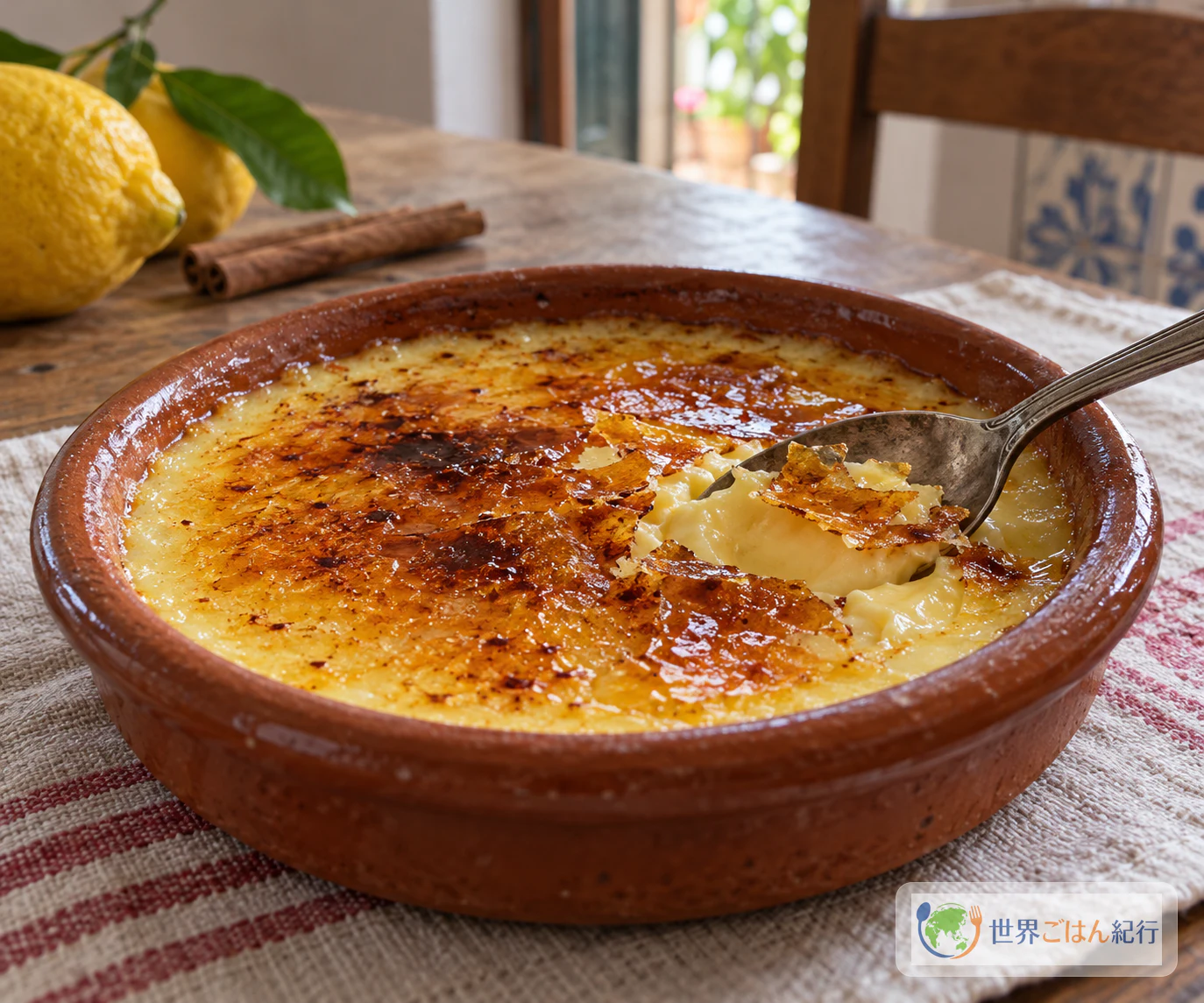
A cold, soft custard scented with lemon and cinnamon, under a thin crust of sugar burnt just before serving. The contrast between the two is the whole point.
Push a spoon into a shallow earthenware dish and the thin amber sugar crust shatters, revealing a cold, pale custard that smells of lemon peel and cinnamon. That is crema catalana, from Catalonia in Spain: milk, egg yolks, sugar and cornstarch cooked in a saucepan, chilled, and topped with sugar that is caramelized only at the last moment.
The dish goes by several names. Besides crema catalana, it is called crema cremada ("burnt cream") and crema de Sant Josep ("Saint Joseph's cream"). The Catalan culinary heritage manual Apats de Catalunya ties it to spring and to the days around March 19, the feast of Saint Joseph, a season when milk and eggs were plentiful. Today it is eaten all year round.
It is easy to confuse with other burnt-sugar custards. This recipe follows a Catalan home recipe that cooks the custard on the stove with milk, egg yolks and cornstarch, flavored with lemon and cinnamon. Rather than treating it as a contest over who invented what, it helps to keep those ingredients and that stovetop method in mind when you shop and cook.
Ingredients (for 4 shallow dishes)
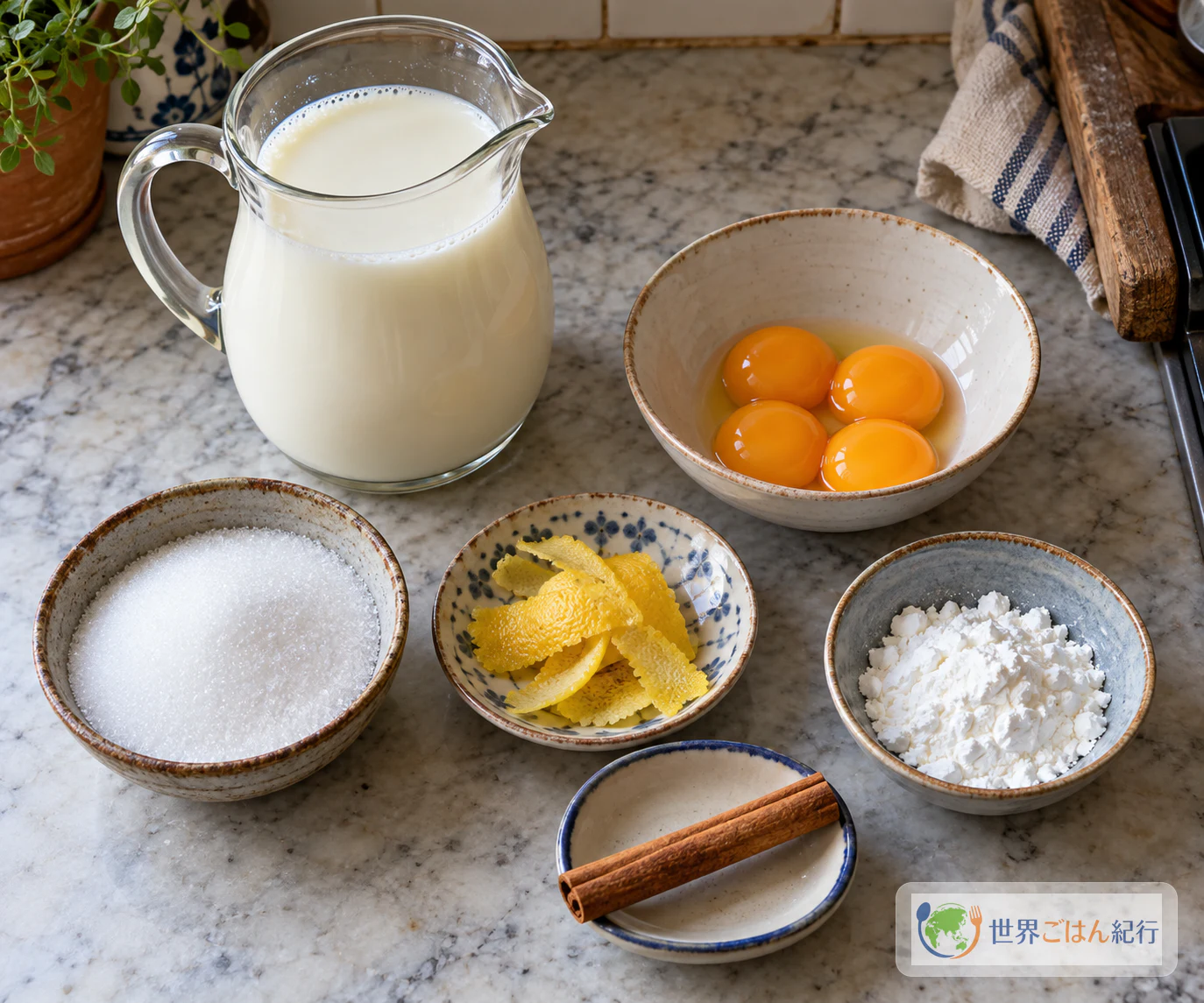
These amounts are exactly half of the crema cremada recipe by Gemma Clofent published on Cuina.cat, which uses 1 L milk, 8 yolks, 200 g sugar, 40 g Maizena, a cinnamon stick and lemon peel. Dividing the custard among 4 dishes is our suggestion for a home kitchen, not the yield stated in the original recipe. The custard needs time in the refrigerator, so plan ahead.
This dessert contains egg and milk. If you need to avoid other allergens, check the label of your cornstarch product, including any statements about shared production lines. Allergy-friendly substitutes for the milk or yolks would make a different dessert, so they are not offered here as the same dish.
Choosing and Substituting Ingredients
Cornstarch. Maizena is a brand of corn starch, so any plain cornstarch sold for cooking will do. Potato starch (such as Japanese katakuriko) thickens differently and gives a different texture, so it is not a like-for-like substitute. If cornstarch is hard to find, look for another cornstarch product and use the same 20 g.
Lemon peel. Peel only the thin yellow layer and leave the white pith behind. Because you are using the skin, check the label for fruit sold as suitable for using the peel (for example, untreated or unwaxed). If you have no citrus whose peel you can use, you can leave it out, but the aroma of the dessert will change.
Cinnamon. Use a stick, not ground cinnamon. A stick can be lifted out of the milk; ground cinnamon cannot be strained out and leaves a gritty texture.
Milk, not cream. Replacing the milk with cream makes the custard heavy, so cream is not part of this recipe. The whites are not used either; save them for something else. Egg sizes vary, and the recipe absorbs that difference, so count yolks rather than weighing them.
Equipment
- Saucepan
- Mixing bowl
- Whisk
- Wooden spoon or spatula
- Fine-mesh strainer
- 4 shallow heatproof dishes, ideally earthenware
- Plastic wrap
- Kitchen torch (or an oven broiler; see step 7)
If you plan to use a torch, check that your dishes are suitable for it. Do not use a torch on a dish whose instructions say it is not for direct flame.
Method: Infuse, Thicken, Chill, Then Burn the Sugar
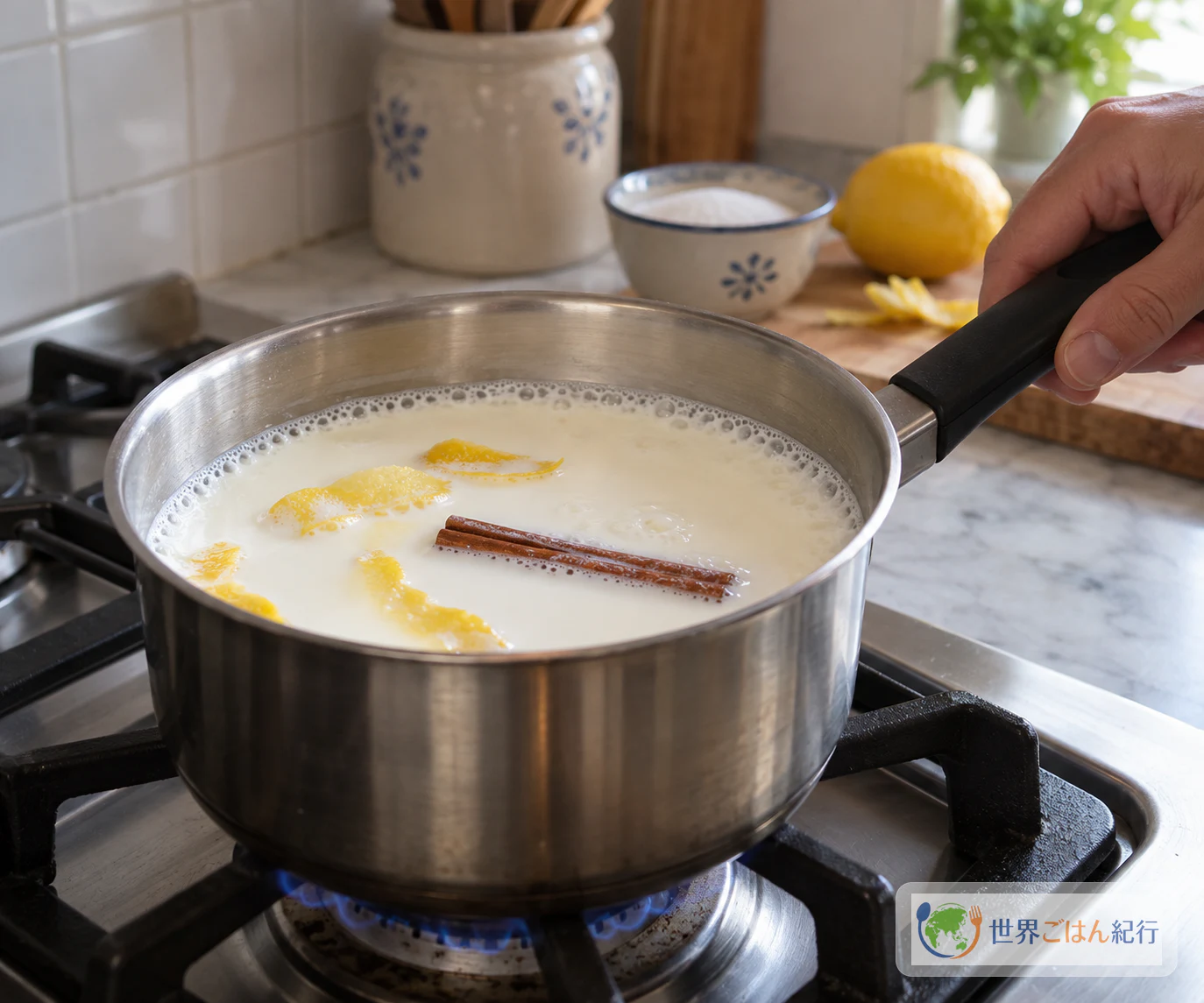
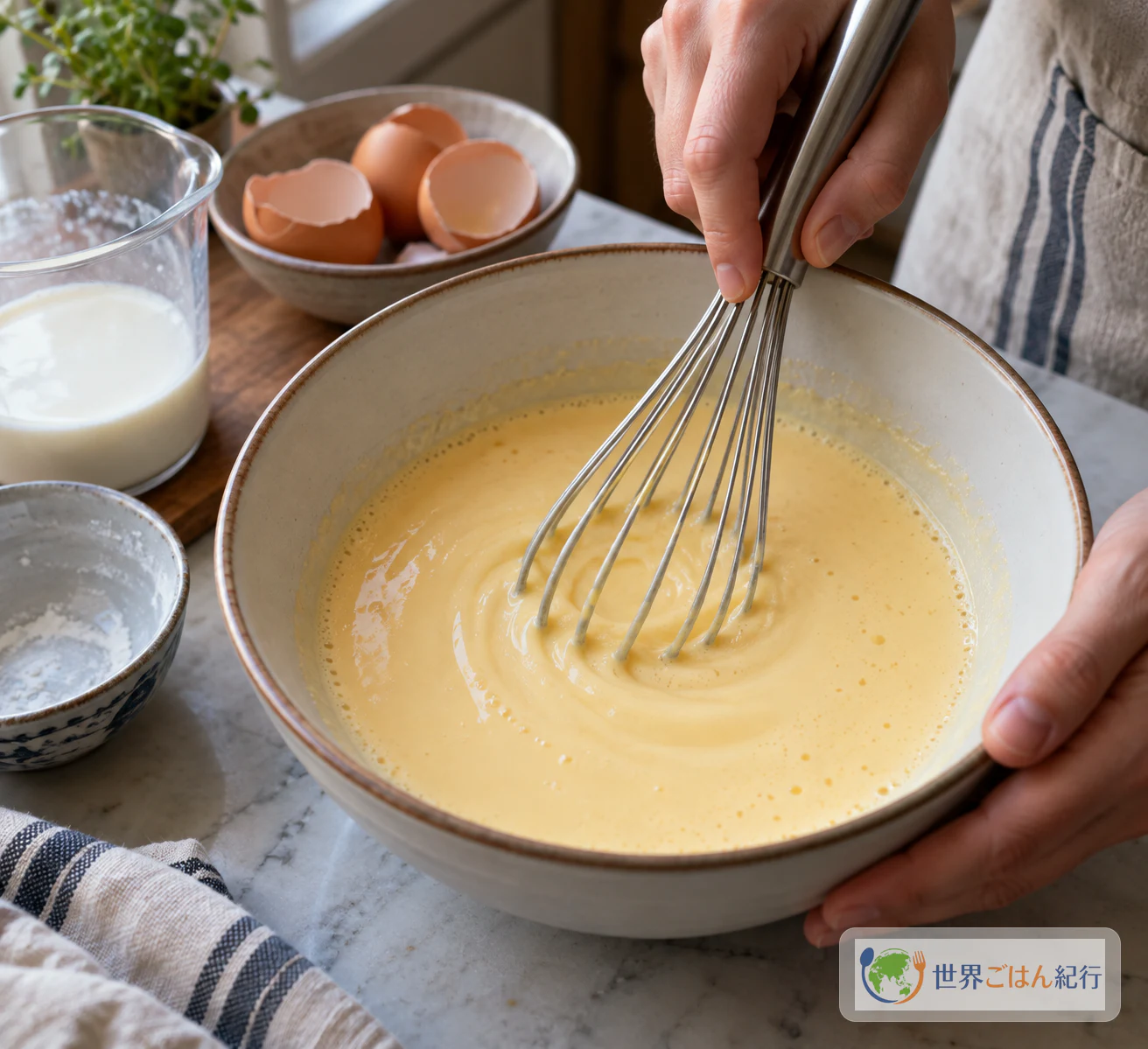
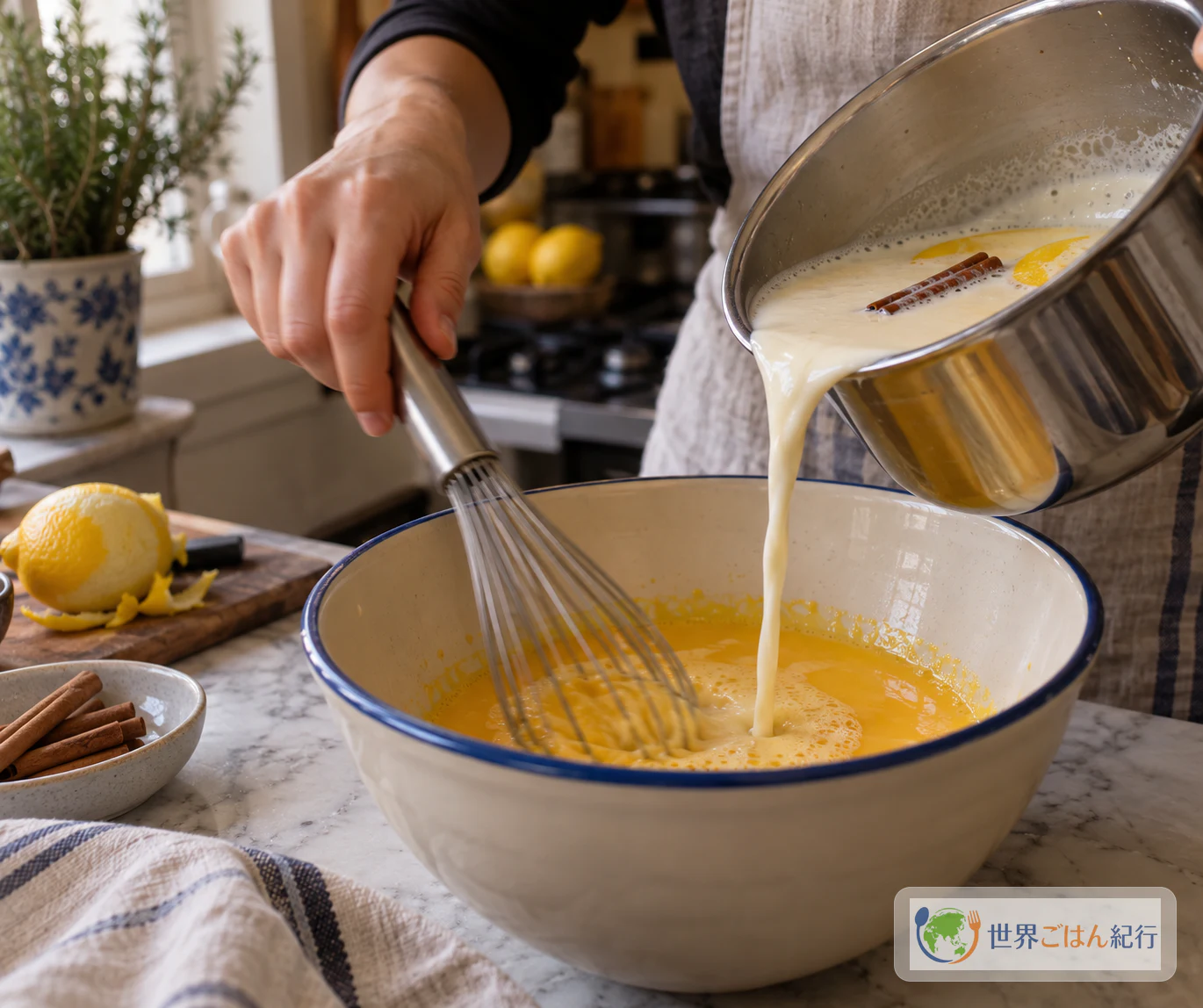
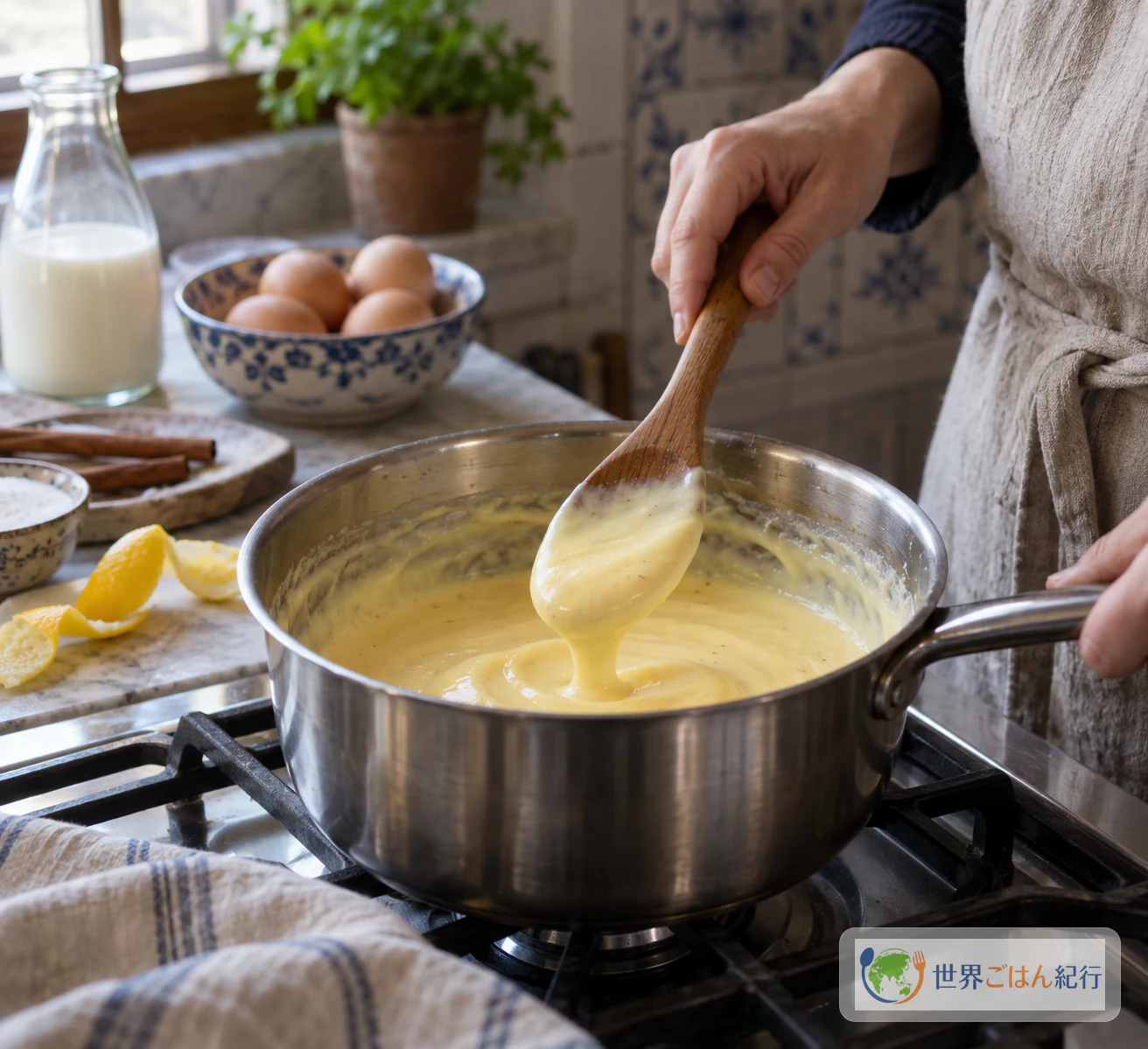
No temperature is given here. Judge the custard by eye: steam, the first bubbles breaking through, and a coating on the spoon that leaves a brief trail.
Serving: One Spoonful, Two Textures
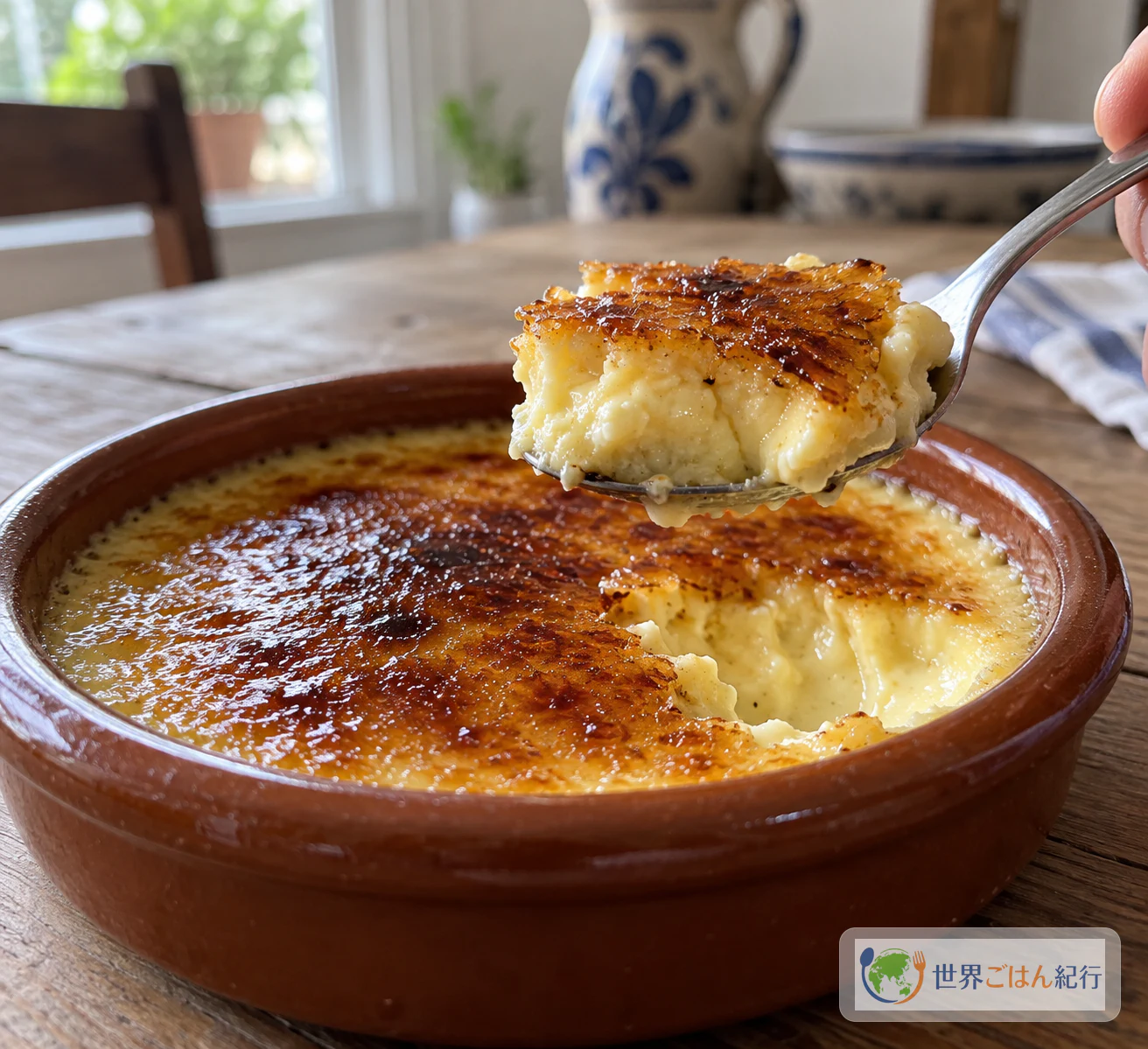
Aim to get both layers in every spoonful: the crisp, slightly bitter sugar and the cold, soft custard underneath. That is why the custard can be made ahead, but the sugar is burnt only at the table's last minute. A crust burnt in advance absorbs moisture from the custard and loses its snap.
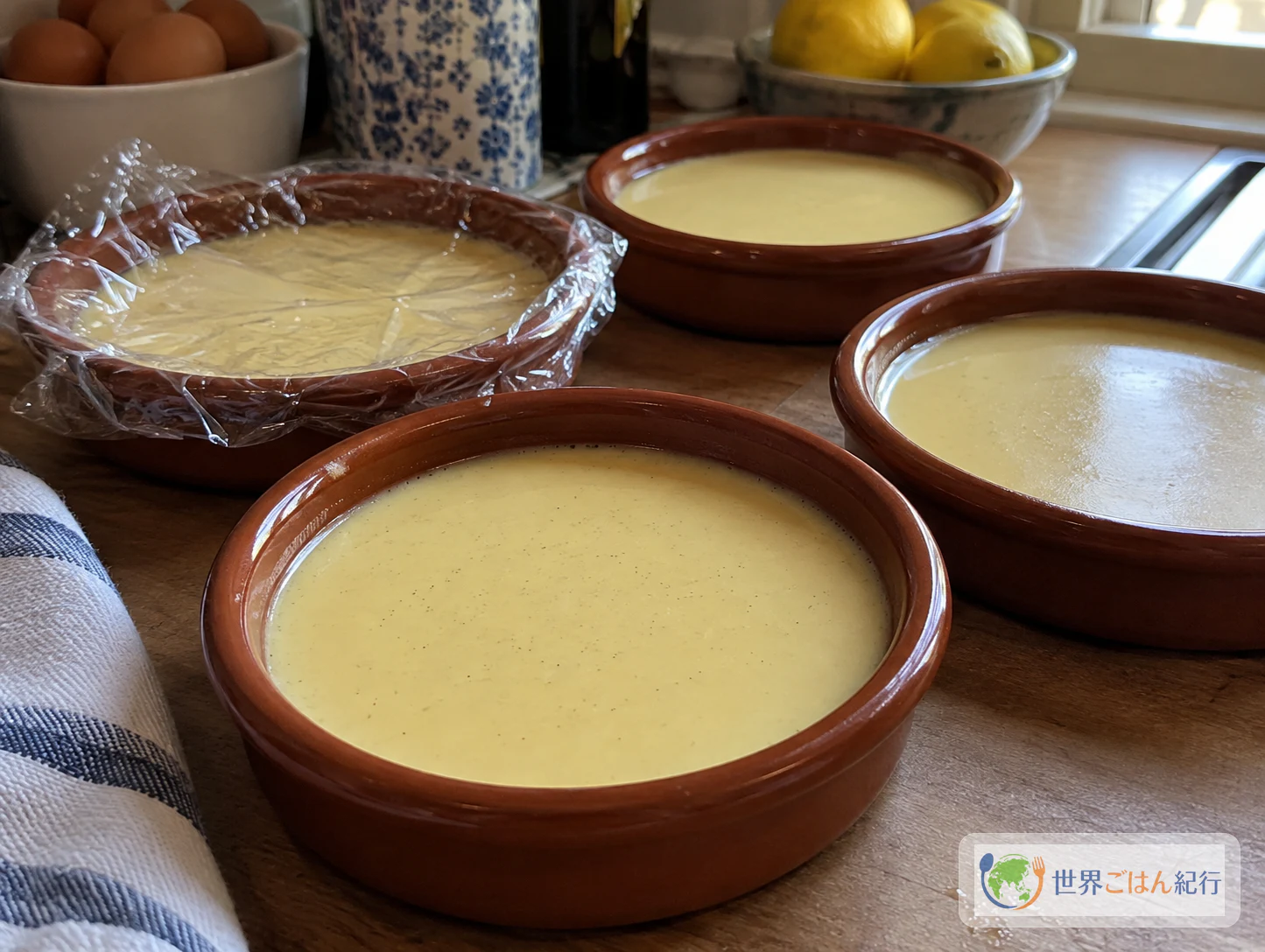
Crema catalana is a refrigerated dessert made with eggs and milk. Keep the custard covered in the refrigerator, don't leave it standing at room temperature, and eat it soon. We don't give a set number of days it will keep. Freezing is not recommended because it changes the texture, and don't burn the sugar on any dishes you plan to store.
Grainy, Runny, Soggy: Fixing Common Problems
| Problem | Likely cause | What to do |
|---|---|---|
| Grainy or lumpy custard | Heat too high, not enough stirring, or the yolks were heated too suddenly | Use low heat, scrape the bottom constantly, and add the warm milk to the yolks little by little. Straining right after you take the pan off the heat removes light lumps, but it can't fix a scorched taste |
| Custard doesn't set | Not cooked enough, or the cornstarch was mismeasured | Return the pan to low heat and keep stirring until a line drawn across the bottom of the pan holds. Check the firmness again once it is chilled |
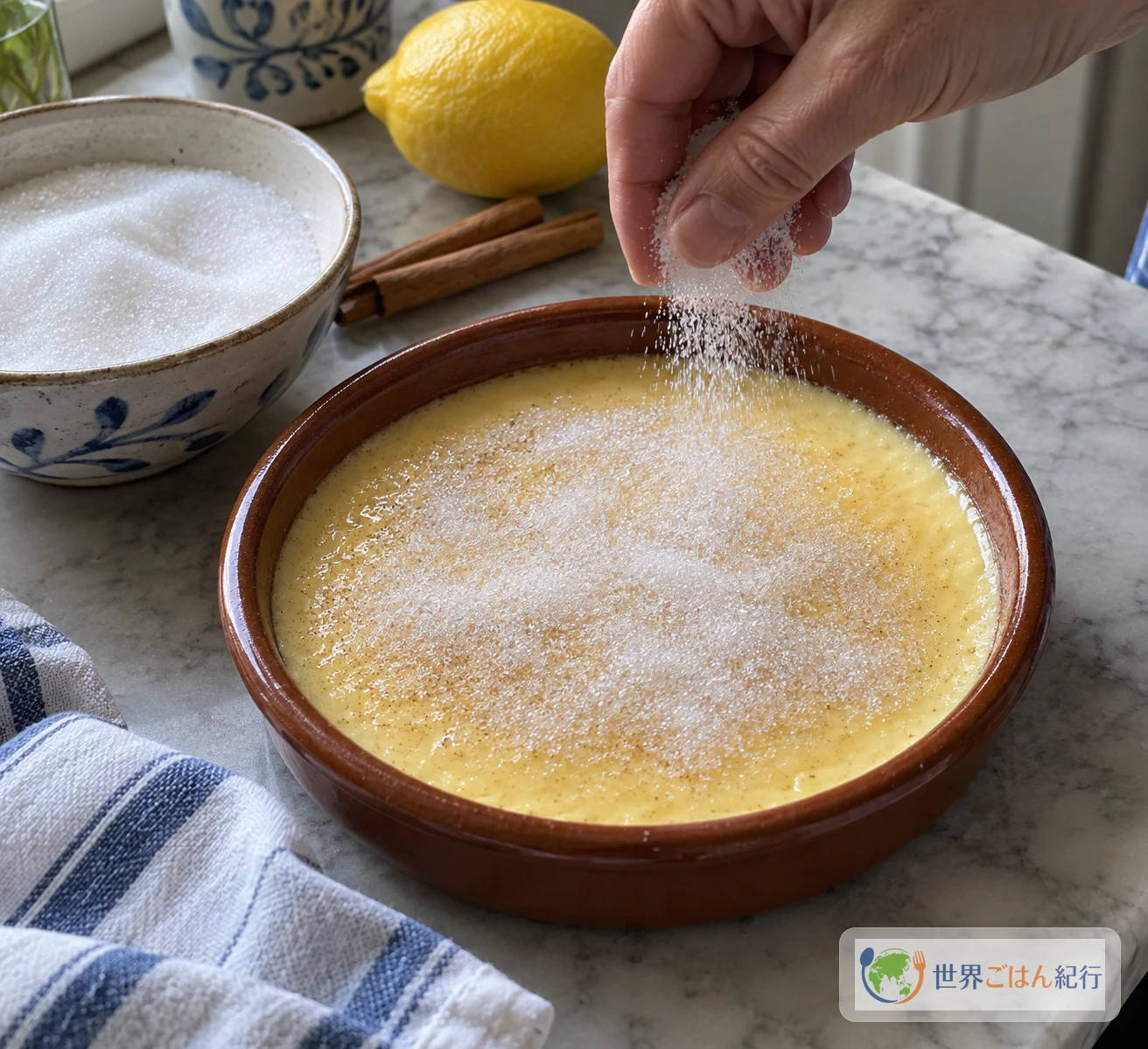
| Sugar crust turns soft or wet | Moisture on the custard surface, too much sugar, or the crust sat too long after burning | Chill the custard well, blot any droplets, keep the sugar layer thin, and burn it just before serving |
Variations
Orange peel. Some regions and households add a little orange peel along with the lemon. It is not part of the base recipe here, but it is a natural way to vary the aroma.
A softer custard. Using somewhat less cornstarch gives a looser custard that you eat with a spoon rather than one that holds its shape. This goes beyond the recipe this article is based on, so we don't give a ratio; treat it as something to experiment with.
One large dish. Apats de Catalunya describes crema catalana served either in individual containers or in a large dish. A wider surface means you will need to adjust the amount of topping sugar and watch for uneven browning.
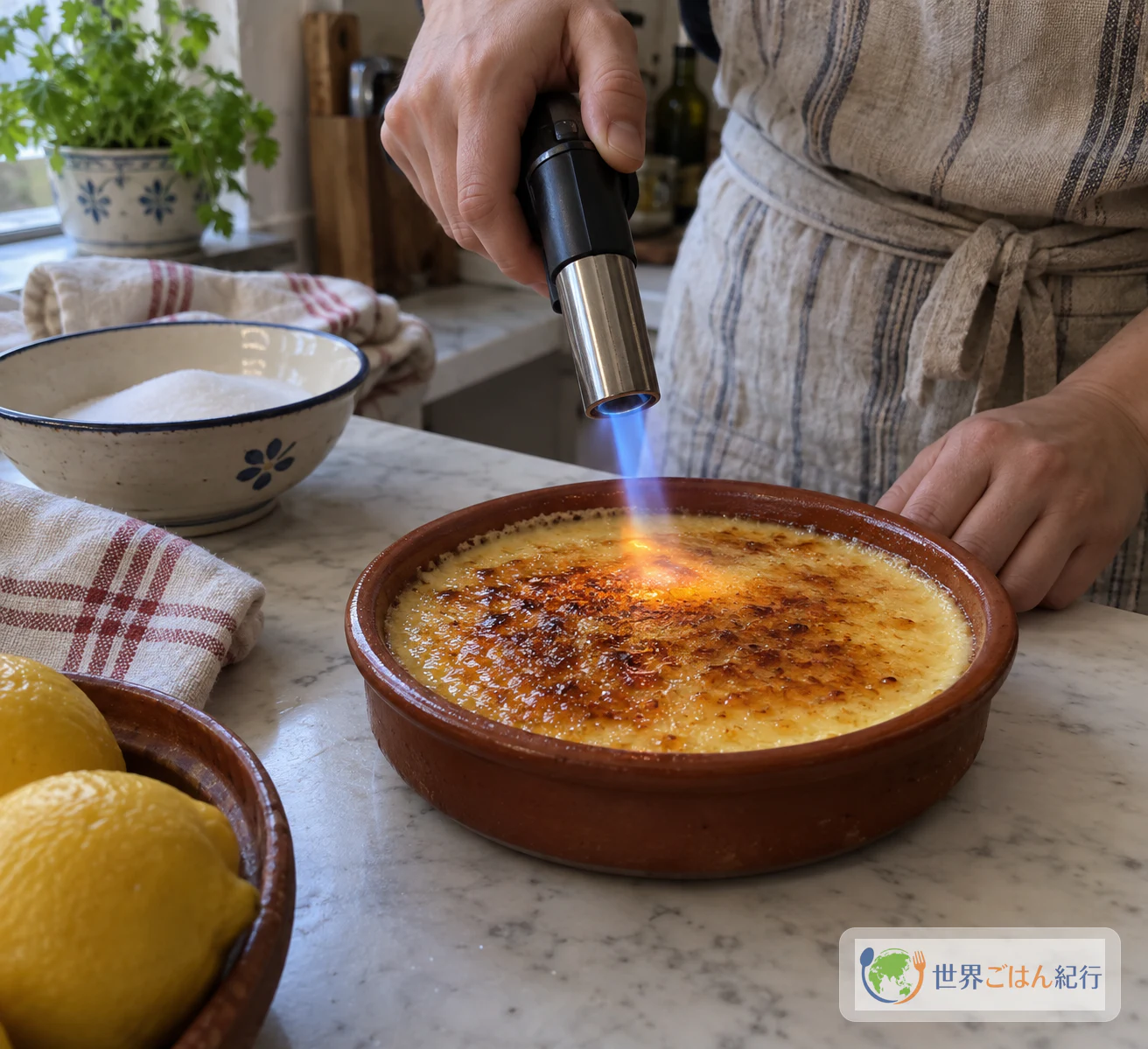
Tools for burning the sugar. The sugar can be caramelized with a dedicated hot iron, a kitchen torch or an oven broiler. Each gives a different evenness of crust and warms the custard to a different degree.
Lactose-free milk. You could try lactose-free milk as a general substitute, but the flavor and sweetness may change. Think of it as an experiment, not a faithful reproduction of the traditional recipe.
Names, the Feast of Saint Joseph, and Neighboring Versions
The name crema de Sant Josep links the dessert to Saint Joseph's Day on March 19. Apats de Catalunya connects it to that spring date and to the abundance of milk and eggs at that time of year, and notes that it is now eaten year-round. The same manual discusses older cookbooks in its account of Catalan food history. Records of similar milk-and-egg dishes in old cookbooks are not proof that today's recipe already existed in its current form, so this article does not name a single point of origin.
The dish is also loved beyond Catalonia, in Andorra, the Balearic Islands and Valencia. Andorra Tourism describes it under the names crema cremada and crema de Sant Josep, connects it to March 19, and says it is now eaten all year. Its Andorran-style recipe, crema a l'andorrana, works differently from the Catalan version in this article: it uses whole eggs and two kinds of starch, and cooks the custard in a water bath without letting it boil. Even within the same cultural area, the formula and method vary, so the version here is one Catalan home recipe, not the only correct one.
Frequently Asked Questions
Is crema catalana the same as crème brûlée?
Both are custards with a burnt-sugar top, but this recipe is cooked on the stove from milk, egg yolks and cornstarch, and is flavored with lemon peel and cinnamon. Keep those features in mind rather than treating the two as interchangeable.
Can I make it without a kitchen torch?
Yes, with an oven broiler. Preheat it well, follow the instructions for your heatproof dishes, and caramelize the sugar quickly. The custard warms more easily under a broiler, so the contrast between cold custard and crisp sugar will be less sharp than with a torch.
When should I make it?
Make the custard ahead and chill it thoroughly in the refrigerator, then burn the sugar right before serving. Keep the custard covered and refrigerated, and eat it soon.
Can I use potato starch instead of cornstarch?
It is not recommended. Potato starch thickens differently and gives a different texture, so we can't say it will give the same result. Use plain cornstarch.
Sources
- Gastroteca, Apats de Catalunya (Catalan culinary heritage manual), "Crema catalana." Source for the alternative names crema de Sant Josep and crema cremada; the link to spring and the days around March 19; the dessert now being eaten year-round; serving it cold in individual containers or a large dish with the sugar burnt immediately before serving; and the background on Catalan food history. https://www.gastroteca.cat/wp-content/uploads/ENG-Apats_Catalunya-manual.pdf
- Gemma Clofent, "Crema cremada," Cuina.cat. The Catalan recipe this article halves: milk, egg yolks, sugar, Maizena, cinnamon and lemon peel; cornstarch dissolved in cold milk; infusing the milk; combining with the yolks and straining; cooking while stirring constantly; chilling; and burning the sugar before serving. https://www.cuina.cat/receptes/crema-catalana_30857_117.html
- Andorra Tourism, "Crema a l'andorrana (Andorran-style cream)." Source for the names crema cremada and crema de Sant Josep, the March 19 custom, the dish being enjoyed in Catalonia, Andorra, the Balearic Islands and Valencia, its year-round popularity today, and the Andorran version's different formula and water-bath method. https://visitandorra.com/en/gastronomy/andorran-recipes/crema-a-landorrana-andorrana-style-cream.html