Raw Potato and Mashed Potato in One Small Cake
Squeeze the grated raw potato, combine it with boiled, mashed potato, bring it together with buttermilk only until it is like firm mashed potatoes, and cook both sides in a pan.
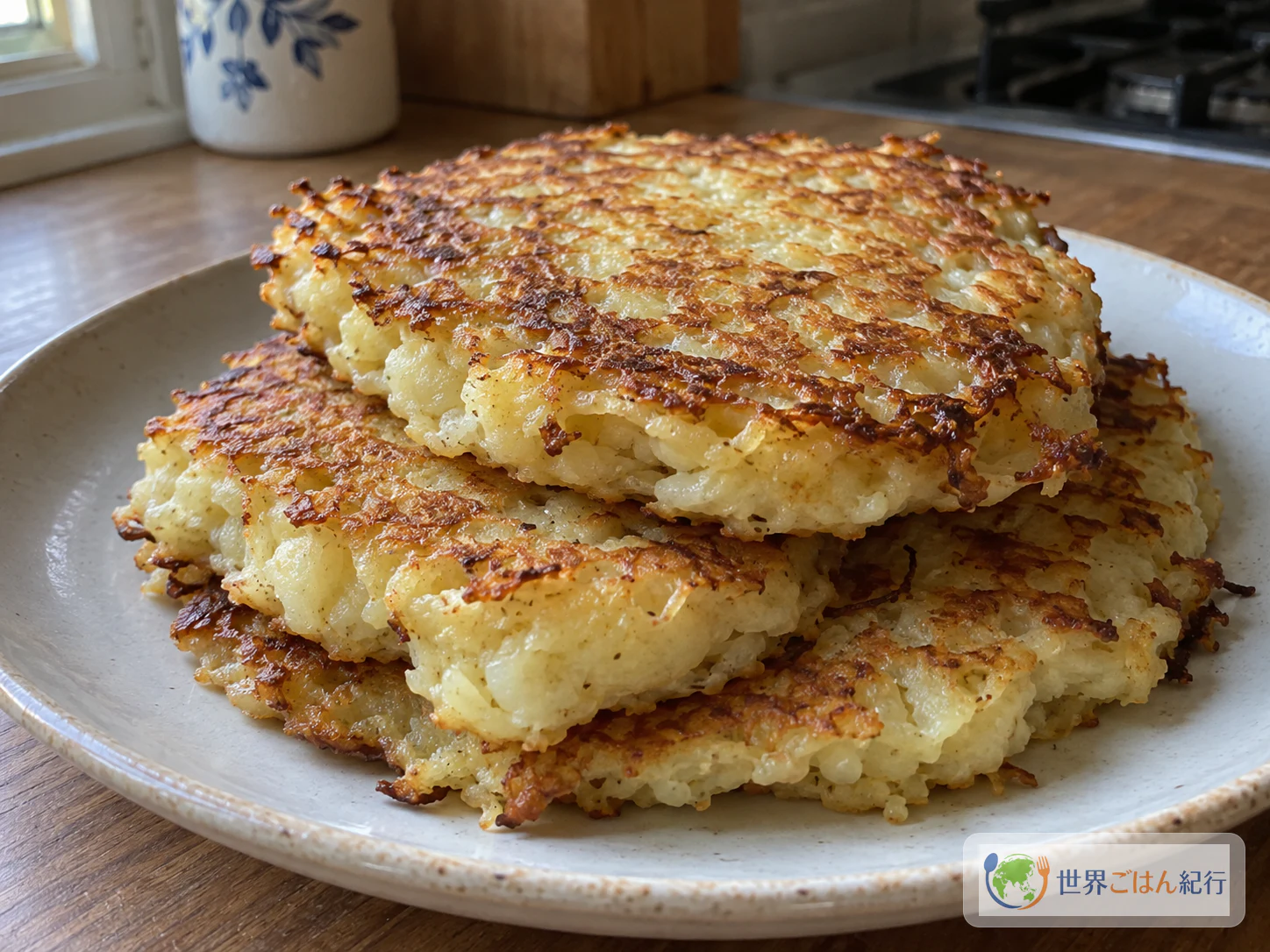
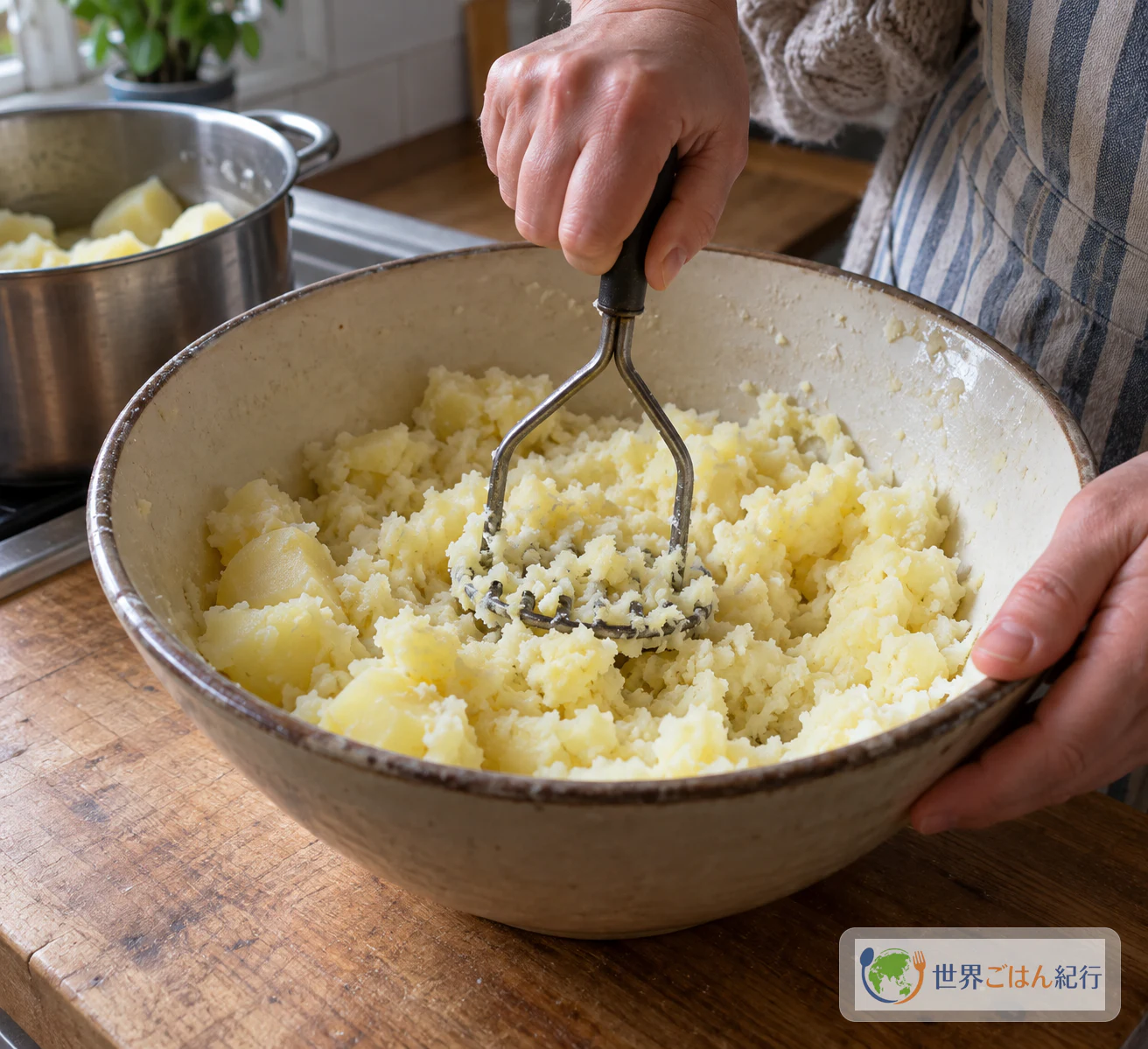
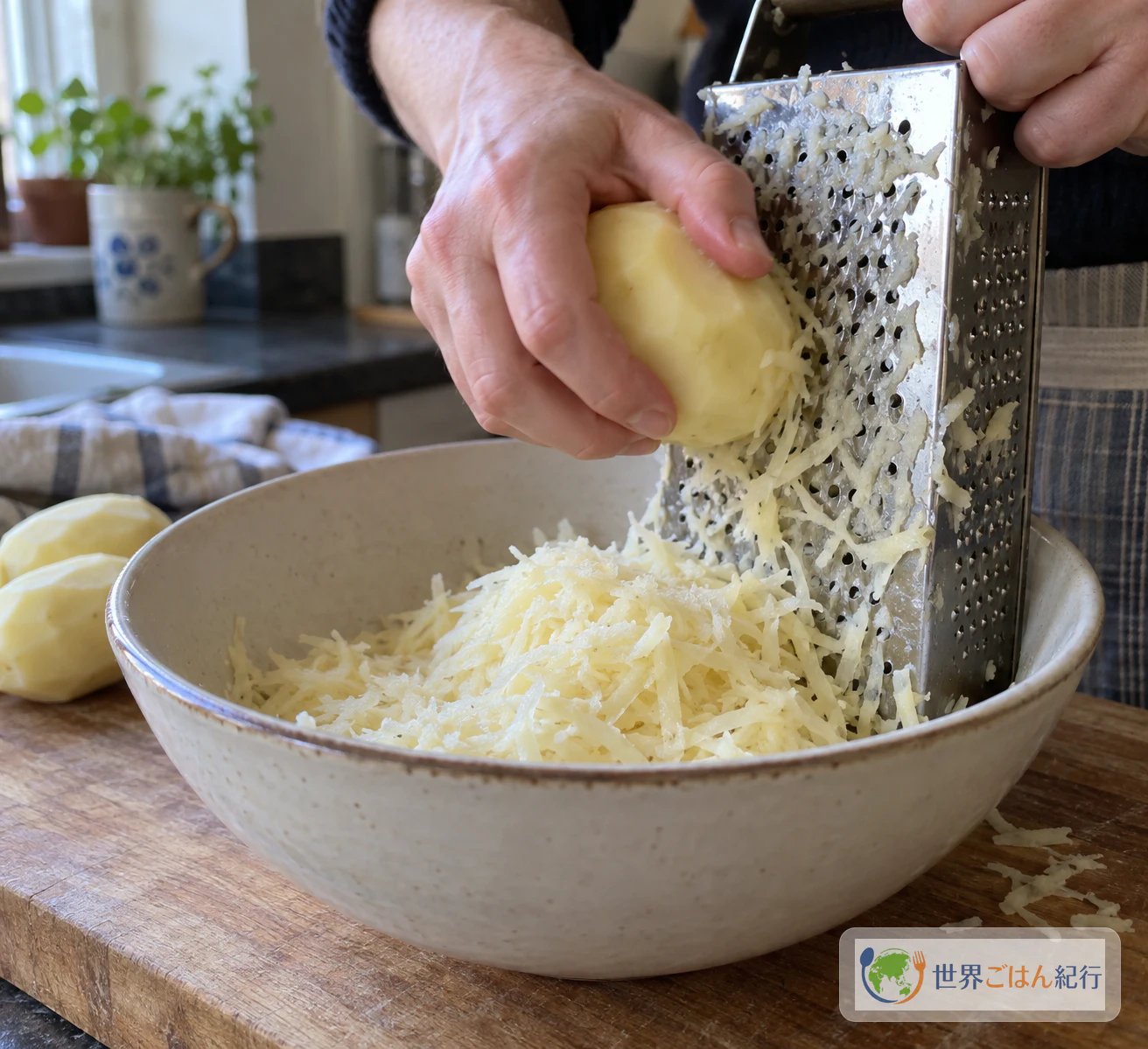
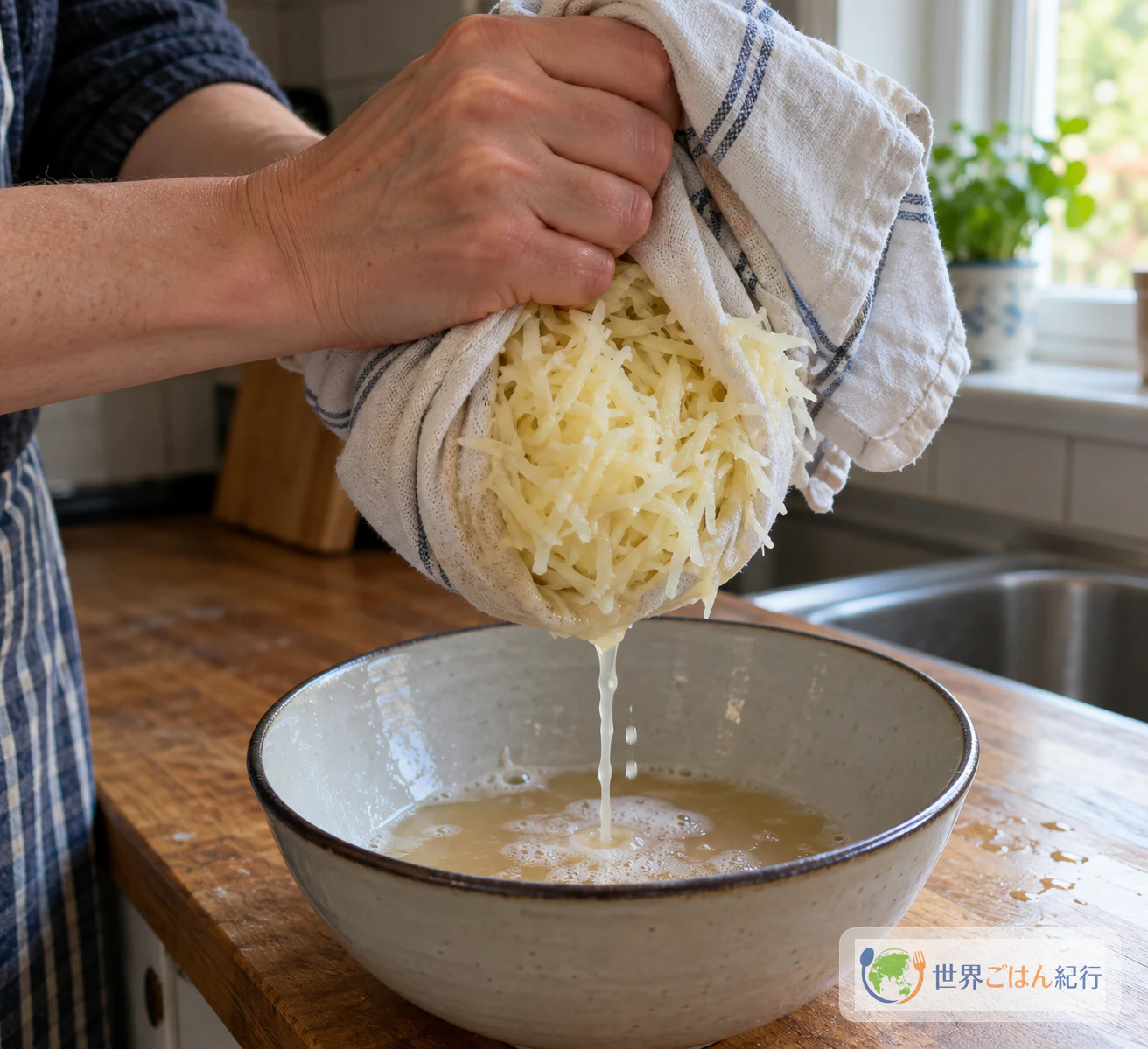
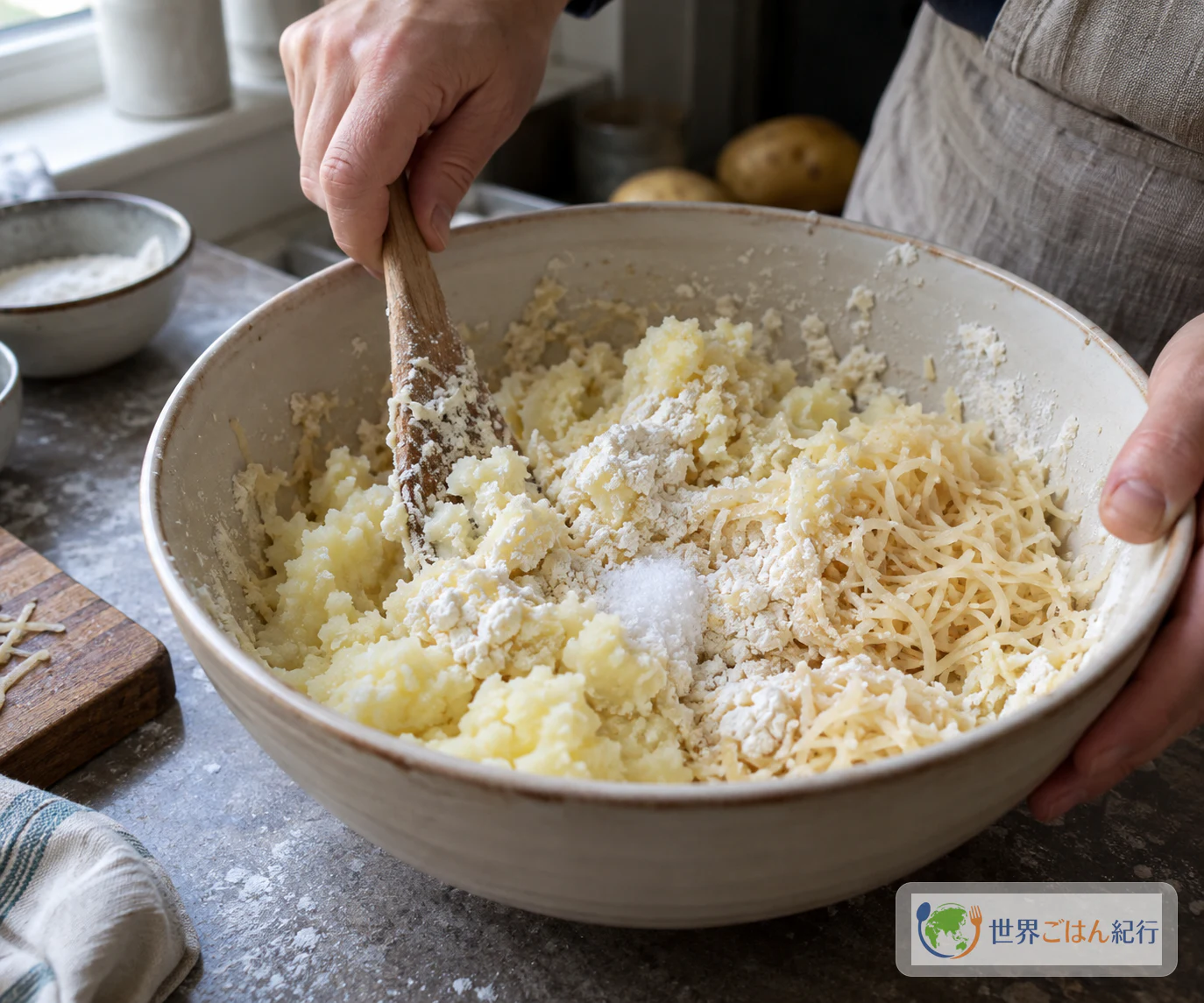
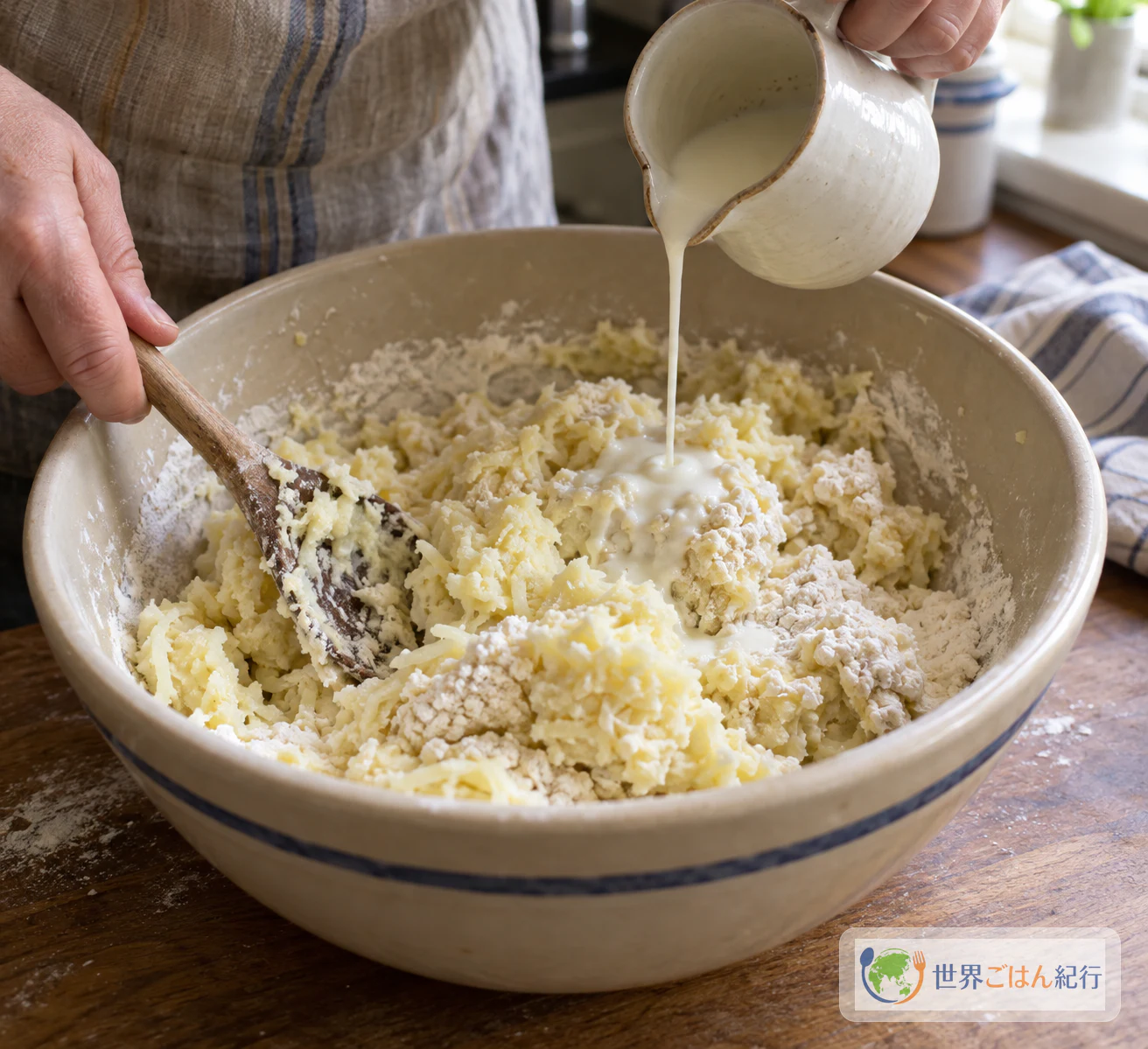
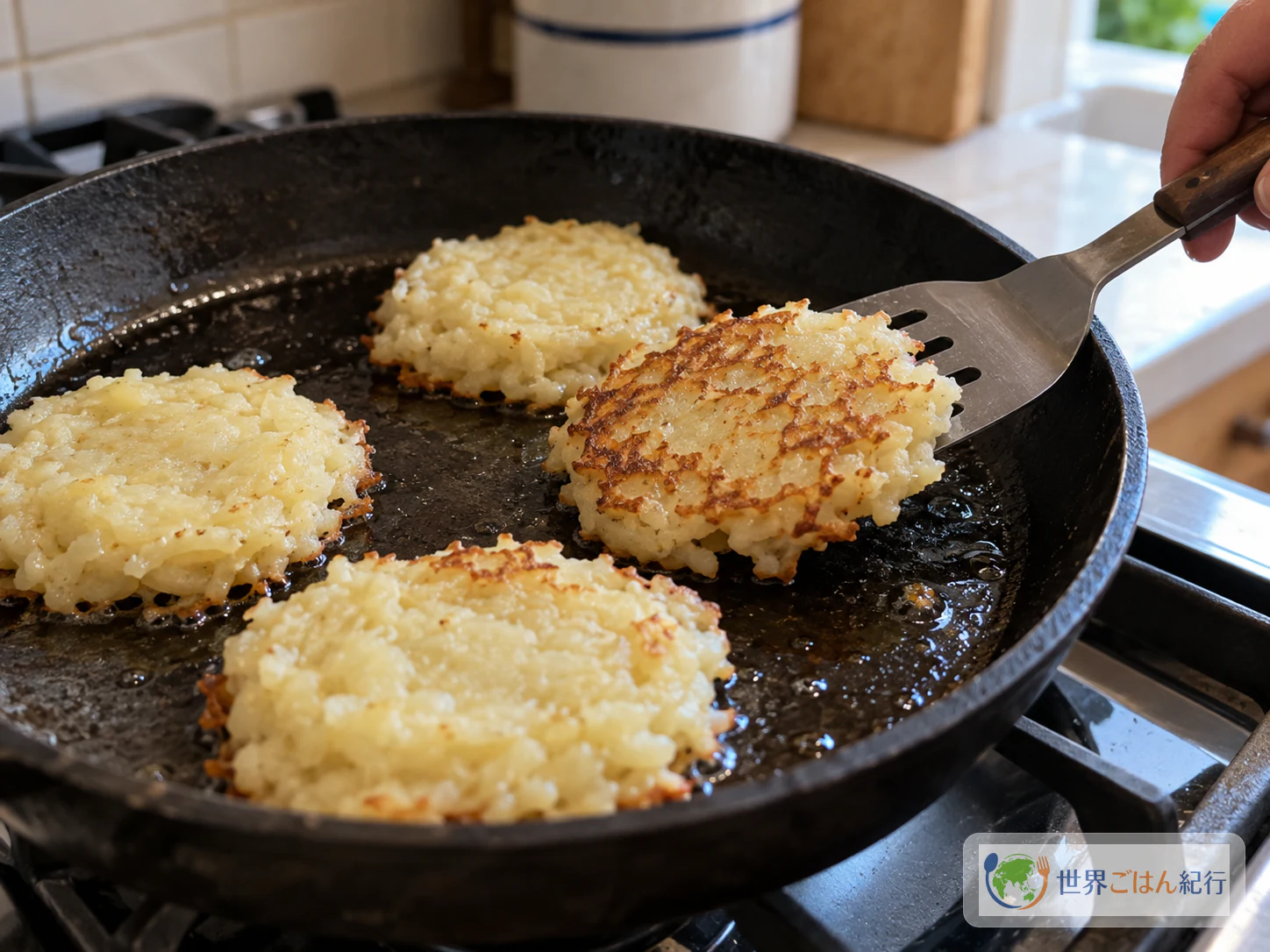
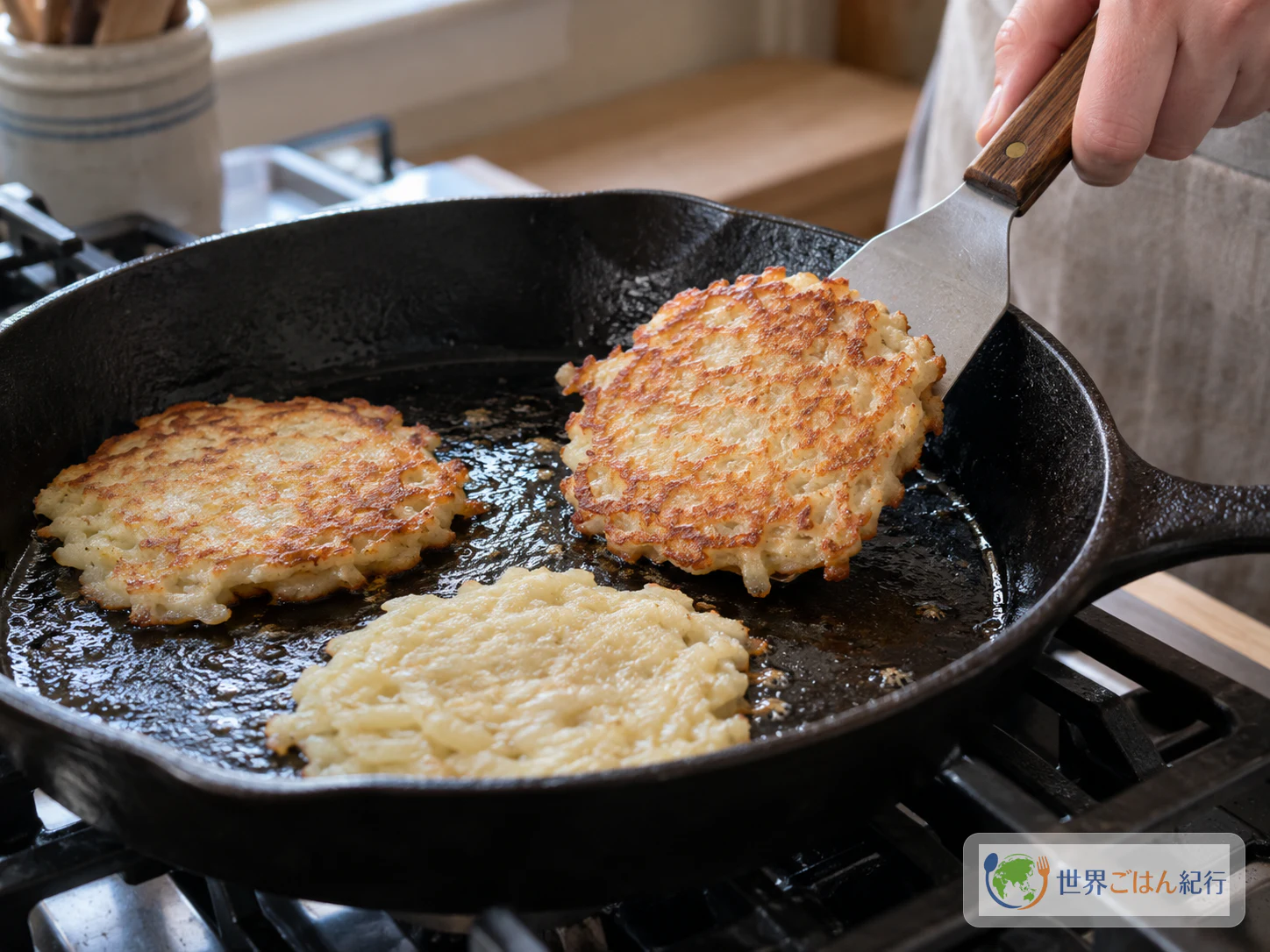
Peeled raw potato is grated finely, gathered in a clean cloth, and squeezed until the pale liquid runs out. In the bowl beside it waits potato that has been boiled until tender and mashed. The two go into the same bowl with flour, baking soda and salt, and a little buttermilk pulls everything into a thick, rough mixture. Spooned into a hot, lightly oiled pan, it starts out soft and turns brown on the underside before it is flipped.
This is boxty, an Irish potato dish. The version in this article follows a single recipe published by Ireland's National Parks and Wildlife Service: a pan boxty that combines mashed and grated raw potato, binds them with buttermilk and fries them in a skillet. It is one example of the dish, not the only way it is made, and it is not presented as the house recipe of any particular county. Our editors have not kitchen-tested it.
Why use potato in two different states? The recipe itself simply calls for both, and the rest of this article stays with what that recipe and the other sources actually say.
Where Boxty Belongs: Ireland's North Midlands, Connacht and Ulster
The National Parks and Wildlife Service booklet associates boxty especially with the north midlands, north Connacht and southern Ulster, and names Sligo, Mayo, Leitrim and Cavan in particular. In an interview with easyFood, Pádraic Óg Gallagher of Gallagher's Boxty House describes it as a dish of Ireland's north-west and lists Leitrim, Cavan, north Longford, Mayo and Fermanagh. The two lists overlap but are not identical, so it is fairer to read them side by side than to draw a single fixed border around the dish or call it the one regional food of the whole island. For more dishes from the same country, see Irish recipes.
Boxty also takes more than one form. In the same interview, Gallagher describes boiled, baked and pan boxty, notes that households vary, and says boiled boxty is better known in Cavan and Fermanagh. The National Parks booklet explains that versions vary but share finely grated raw potato and frying; that is how this booklet frames its own recipe, not a rule that covers every boxty everywhere. The recipe below is the pan type only, and no steps from the baked or boiled styles are mixed into it.
As for where boxty is eaten, the interview mentions it being served in shops and restaurants in the north-west and as part of a traditional breakfast. A Tesco recipe likewise presents a contemporary pancake-style boxty served at breakfast. Breakfast is one setting the sources mention, not a fixed rule.
Ingredients: Two Portions of Raw Potato, One Firm Mixture
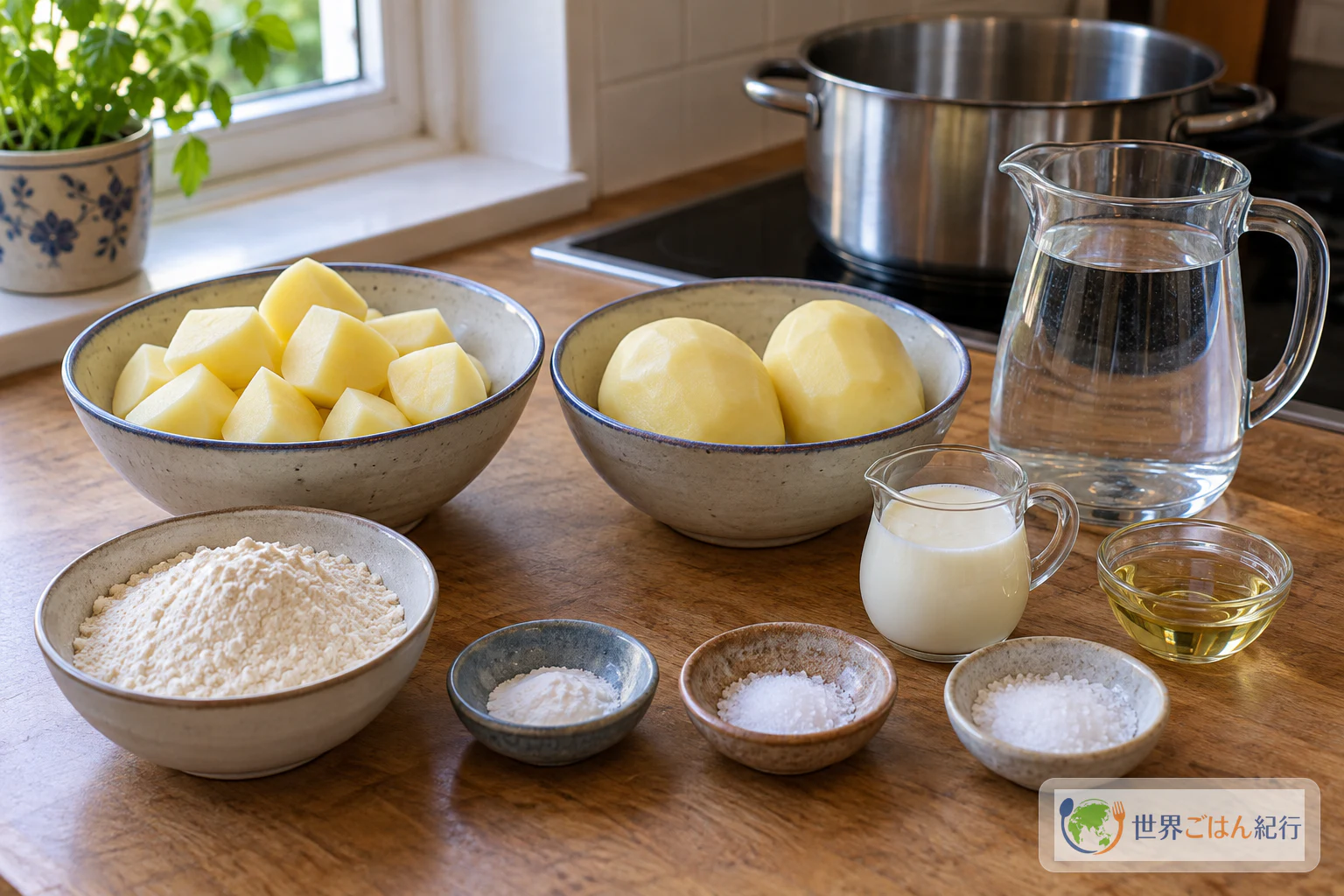
Each potato portion is 9 ounces (255g), weighed peeled and raw: one is chopped and boiled, and all of it is mashed and used; the other is weighed before grating and squeezing. Don't top up or trim the boiled potato to bring it back to 255g, and don't reweigh the grated potato after squeezing.
This recipe contains wheat (flour) and milk (buttermilk). Check product labels if you are cooking for anyone with allergies.
Equipment
- Box grater with a fine side
- Clean cloth or tea towel for squeezing
- Pot for boiling
- Potato masher
- Large mixing bowl
- Measuring jug
- Heavy skillet
- Spatula
- Baking sheet and oven, for keeping cooked boxty warm
Choosing Flour, Buttermilk and Potatoes
Flour. Use all-purpose flour. Where all-purpose flour is not sold under that name, a medium-protein flour is a reasonable match; in Japan, for example, chūrikiko. Low-protein cake flour should not be assumed to be the same thing.
Baking soda. Use baking soda (bicarbonate of soda) as written. Baking powder is a different product and is not a substitute here.
Buttermilk. Use liquid buttermilk. Swapping in 125g of buttermilk powder or 125ml of plain milk changes the acidity and texture, so neither is a like-for-like replacement, and no tested substitute is offered here. Measure 125ml as the upper limit and add it gradually; the target is the texture, not the full volume.
Potatoes. Use potatoes that are easy to find where you live.
Method: Squeeze, Mash, Combine and Fry
Cook about 3 minutes per side as a guide. Thickness, heat and the pan all change this, so check the color of each side as you go.
Golden color on the outside does not by itself prove the inside is fully cooked. The grated potato goes into the pan raw, so make sure each boxty is cooked through to the center. Japan's Ministry of Health, Labour and Welfare's general household food-safety guidance advises heating food thoroughly to the center and, for leftovers, dividing them into shallow containers to cool quickly, refrigerating promptly and reheating thoroughly. That is general household guidance, not a test of this recipe, and no storage period is given here.
Loose, Pale, Too Dark: Fixing Problems as You Go
| Condition | Likely cause | What to do |
|---|---|---|
| The mixture is wet and spreads like batter | Too much buttermilk, or the grated potato was not squeezed enough | Add buttermilk only a little at a time and stop at a firm, mashed-potato texture. Squeeze the grated potato well before mixing |
| The mixture is dry and crumbly | Not enough buttermilk yet | Keep adding small amounts, within the 125ml, until it holds together |
| The outside browns before 3 minutes | Heat too high, or the pan was not turned down after preheating | Cook over medium-low after preheating, and lower the heat further if needed |
| Pale after 3 minutes | Heat too low, or a thicker cake | Give it more time and judge by color rather than the clock |
| Brown outside but you are unsure about the center | Thicker cakes take longer | Keep the rounds small and thin, around 2 inches across, and make sure they are cooked through before serving |
Ways to Adjust Within the Recipe
These are home-cooking adjustments, not instructions from the source.
- Lighter color. If your pan runs hot, lower the heat and watch the underside closely rather than relying on time.
- Smaller cakes. Keeping to the source's heaped tablespoon and about 2-inch round makes the boxty easier to turn.
- Grated potato that holds more water. How much liquid comes out varies. Rather than fixing a squeeze amount, aim for the firm mashed-potato texture and adjust the buttermilk accordingly.
- Buttermilk hard to find. No substitute has been tested for this recipe. If you can find liquid buttermilk, use it as written.
- What to serve it with. The interview mentions boxty as part of a traditional breakfast. Anything you serve alongside is your choice and is not part of the recipe.
Serving Boxty and Reading Its History
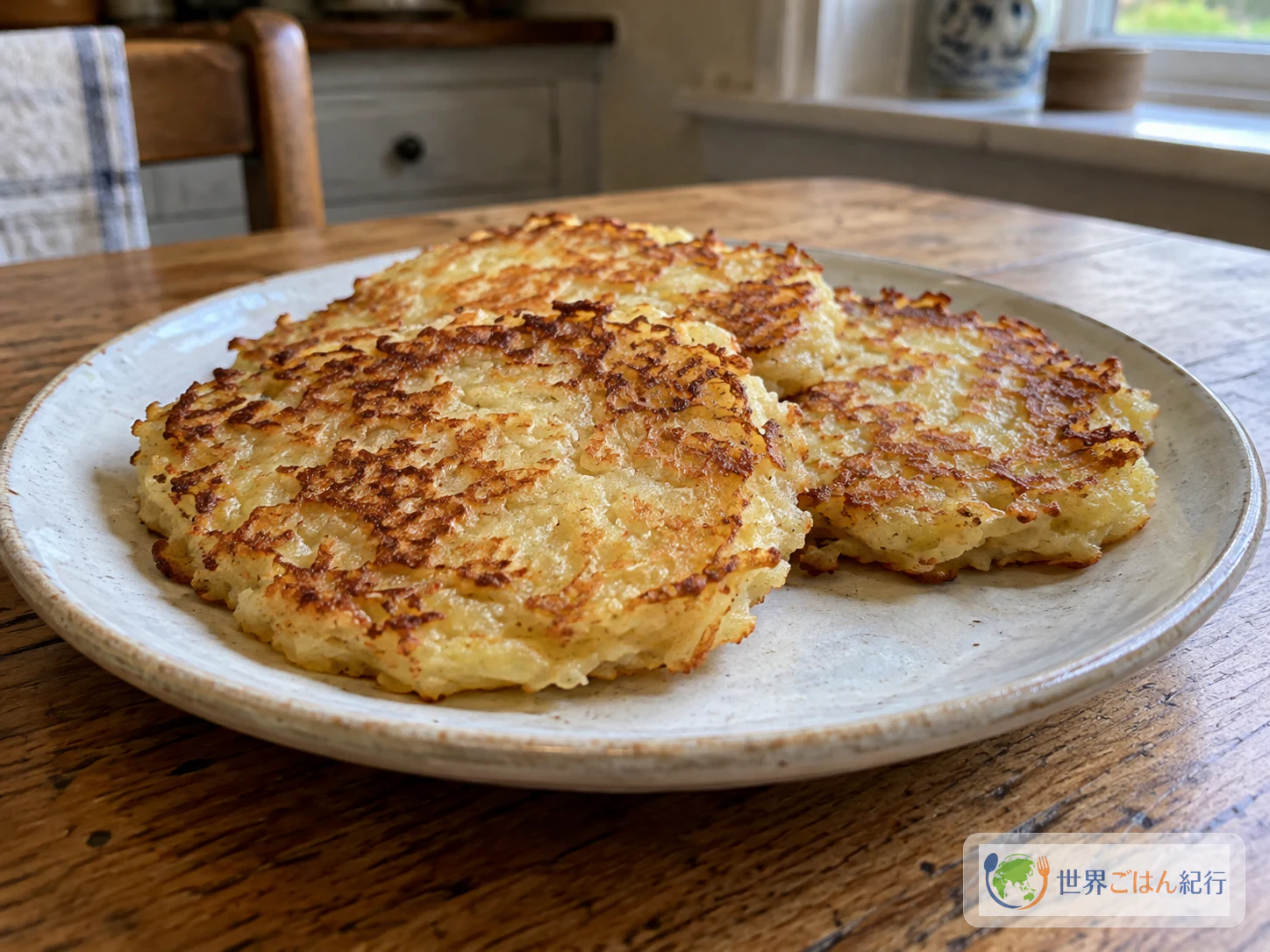
Serve the boxty warm from the oven. The recipe itself has no toppings or sides; bacon, eggs or tomatoes can sit alongside if you like, but they are not part of the dish.
Where boxty began is not settled. In the easyFood interview, Gallagher names an 1828 work by William Carleton as the earliest written reference they have found, and they dispute the idea that boxty was born as a famine dish. Separately, the Galway County Heritage Office hosts an oral account collected by Angela Mannion from informant Patrick Mannion of Kilkerrin, County Galway. It describes grating or scraping potatoes and squeezing them, combining them with flour, salt and boiled potatoes, and cooking them on a griddle. That page sits under a famine topic, but it is one person's recollection and cannot show that boxty originated in the Famine or stand for practice across every region. A chef's interview and a folklore recollection are different kinds of sources, and neither is treated here as proof of an origin. The interview also mentions other names, rasp and stampaí; the meaning of the name boxty is not covered here.
Frequently Asked Questions
Which part of Ireland is boxty from?
The National Parks and Wildlife Service booklet ties it especially to the north midlands, north Connacht and southern Ulster, naming Sligo, Mayo, Leitrim and Cavan. The easyFood interview places it in the north-west, naming Leitrim, Cavan, north Longford, Mayo and Fermanagh. The lists overlap, but there is no single fixed boundary.
Why use both raw and boiled potato?
That is how the source recipe is built: one portion is boiled and mashed, the other is grated raw and squeezed. The sources do not explain a reason, so none is claimed here.
What if I can't find buttermilk?
No substitute has been tested for this recipe. Buttermilk powder and plain milk change the acidity and texture, so they are not one-for-one replacements. If you can get liquid buttermilk, use it as written.
How many boxty does this make?
The source does not give a yield. Each boxty is a heaped tablespoon of mixture spread to about 2 inches, but the total number is not promised.
How long should each side cook?
The source suggests about 3 minutes per side over medium-low heat after preheating the pan. Pans, heat and thickness vary, so turn when the underside is golden brown and check both sides.
Can I store leftovers?
No source checked for this recipe gives a storage period or reheating method for boxty, so none is stated. For general household practice, see the food-safety note in the method section.
Sources
- National Parks and Wildlife Service, Ireland, "Myths and Folklore — Recipes: Boxty." The regions boxty is associated with (north midlands, north Connacht, southern Ulster; Sligo, Mayo, Leitrim, Cavan), versions sharing finely grated raw potato and frying, and the recipe used here: ingredients and weights, buttermilk volume, method, pan heat, about 3 minutes per side, and the 150°C keep-warm oven. Yield is not stated. https://www.nationalparks.ie/app/uploads/2022/08/NPW01_House-Book_FINAL-TO-PRINT_090306.pdf
- Tesco Recipes, "Boxty recipe." A contemporary pancake-style boxty served at breakfast, using raw grated and mashed potato, flour, baking soda, buttermilk and pan frying. A different formula, used for comparison only. https://www.tesco.com/recipes/en-GB/recipe/boxty
- easyFood, "All you need to know about boxty," interview with Pádraic Óg Gallagher of Gallagher's Boxty House. Boiled, baked and pan boxty, household variation, the north-west and the counties named, boiled boxty in Cavan and Fermanagh, breakfast serving, the names rasp and stampaí, and the interviewee's view on origins. Culinary testimony, not definitive history. https://easyfood.ie/articles/all-you-need-to-know-about-boxty/
- Galway County Heritage Office / Galway Community Heritage, "Boxty — Galway's Gastronomic Heritage." An oral account from Kilkerrin, County Galway, collected by Angela Mannion from Patrick Mannion. One informant's recollection; it does not establish origins or represent all regional practice. https://heritage.galwaycommunityheritage.org/content/topics/galways-gastronomic-heritage/famine/boxty
- Ministry of Health, Labour and Welfare (Japan), "家庭での食中毒予防" (Preventing food poisoning at home). General household guidance on heating food thoroughly to the center and on cooling and reheating leftovers. Not specific to boxty. https://www.mhlw.go.jp/stf/seisakunitsuite/bunya/kenkou_iryou/shokuhin/syokuchu/01_00008.html