
Francesinha: A Sandwich You Eat with a Knife and Fork
Soft bread, salty meats, melting cheese and a dark tomato sauce with the bittersweet depth of beer and Port. Finish with a little heat from piri-piri.
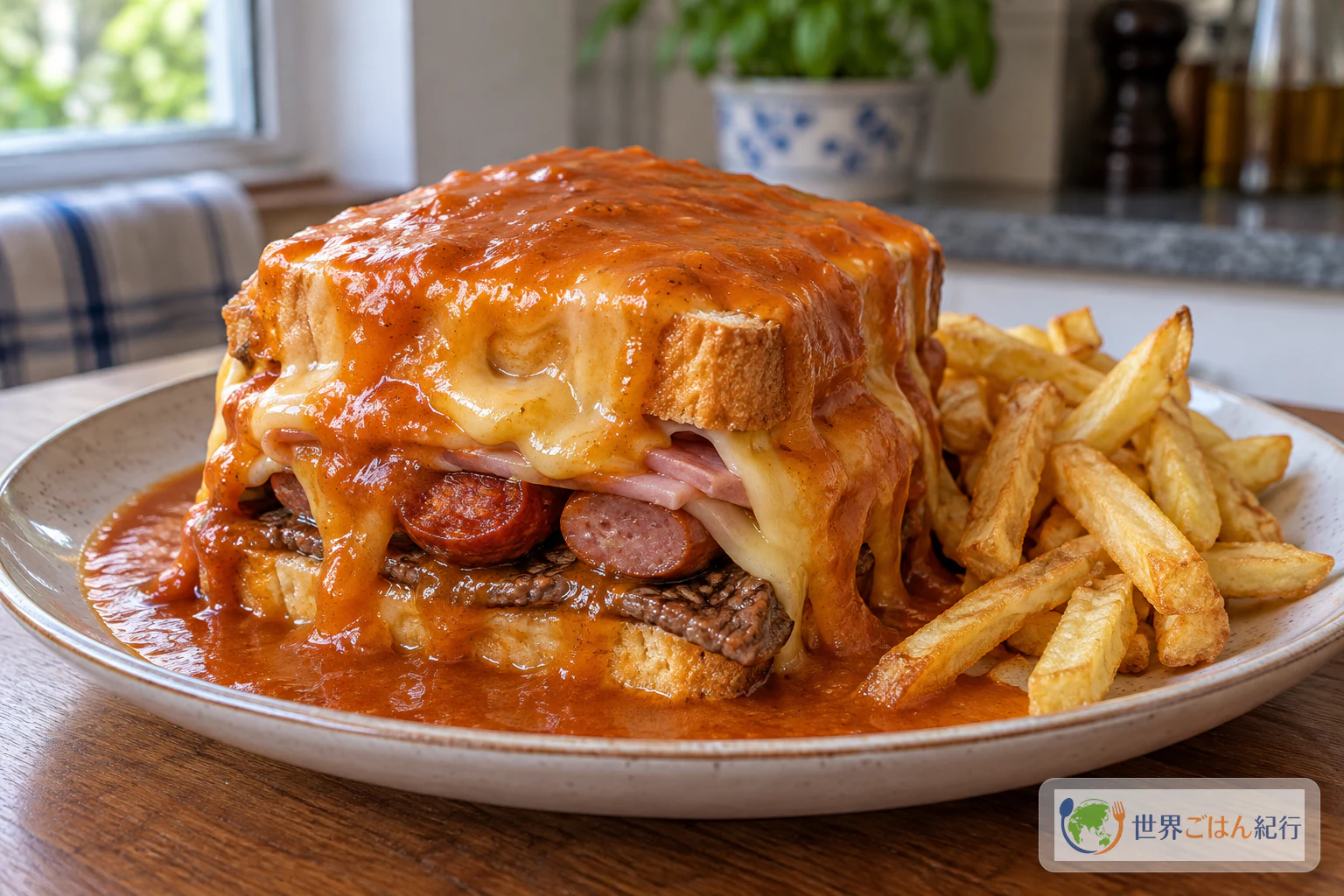
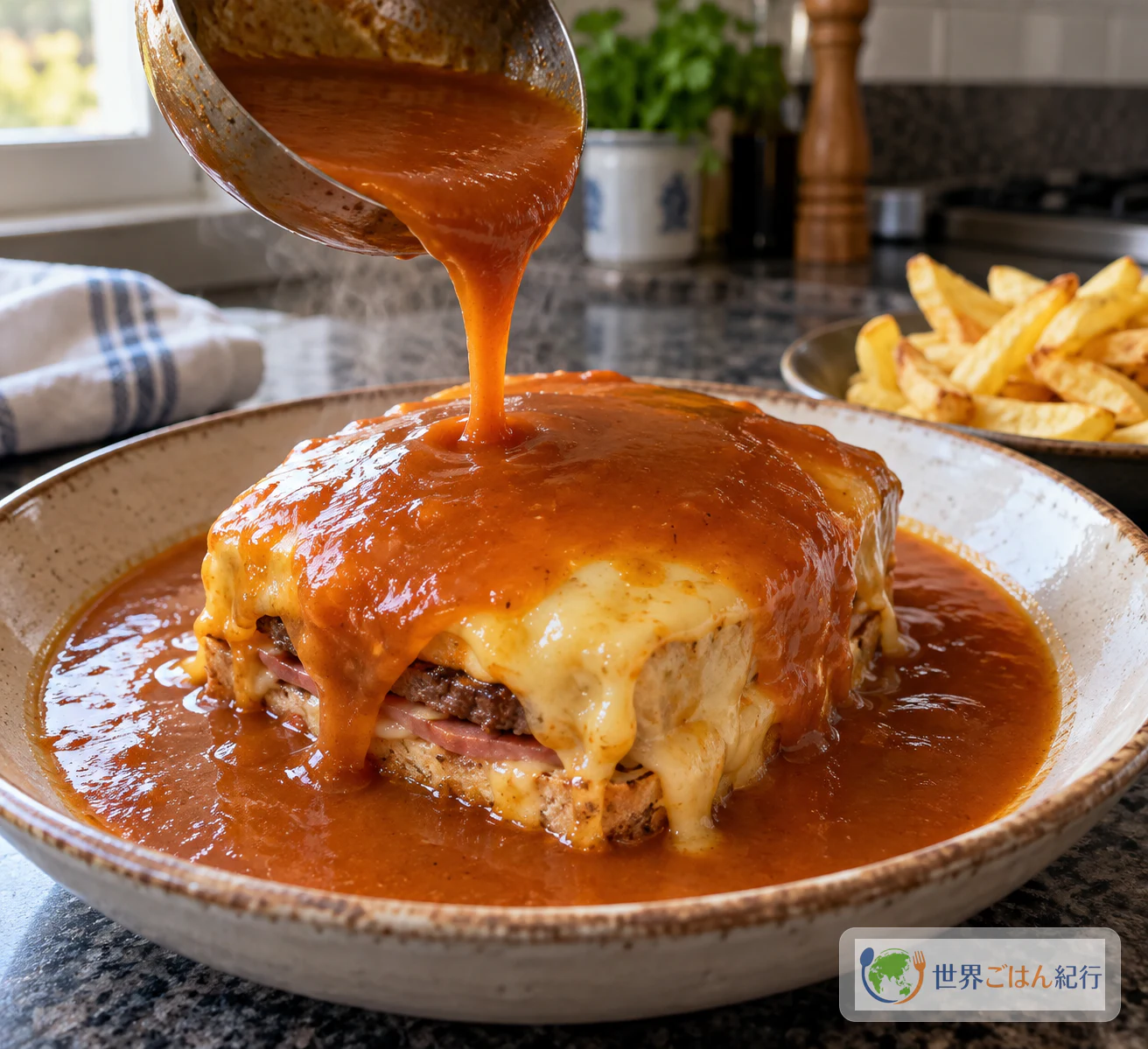
Picture a plate in a Porto café. Hot sauce made with tomato and beer runs over melted cheese and pools around a sandwich packed with meat, while fries wait alongside to be dragged through it. Francesinha is closely tied to Porto, and the tourism site Hey Porto presents it as one of the city's signature dishes, the kind of thing to eat on a cold day.
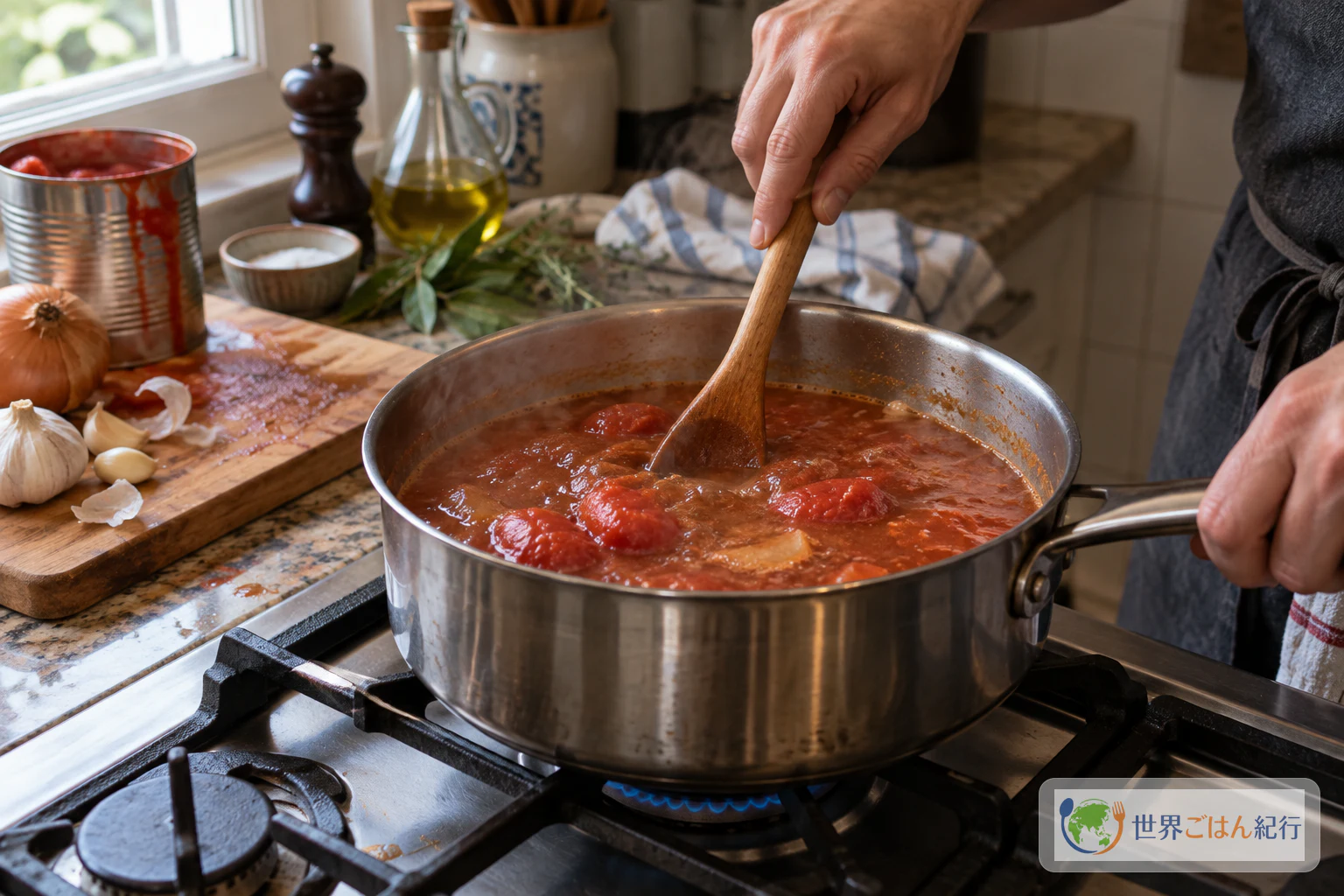
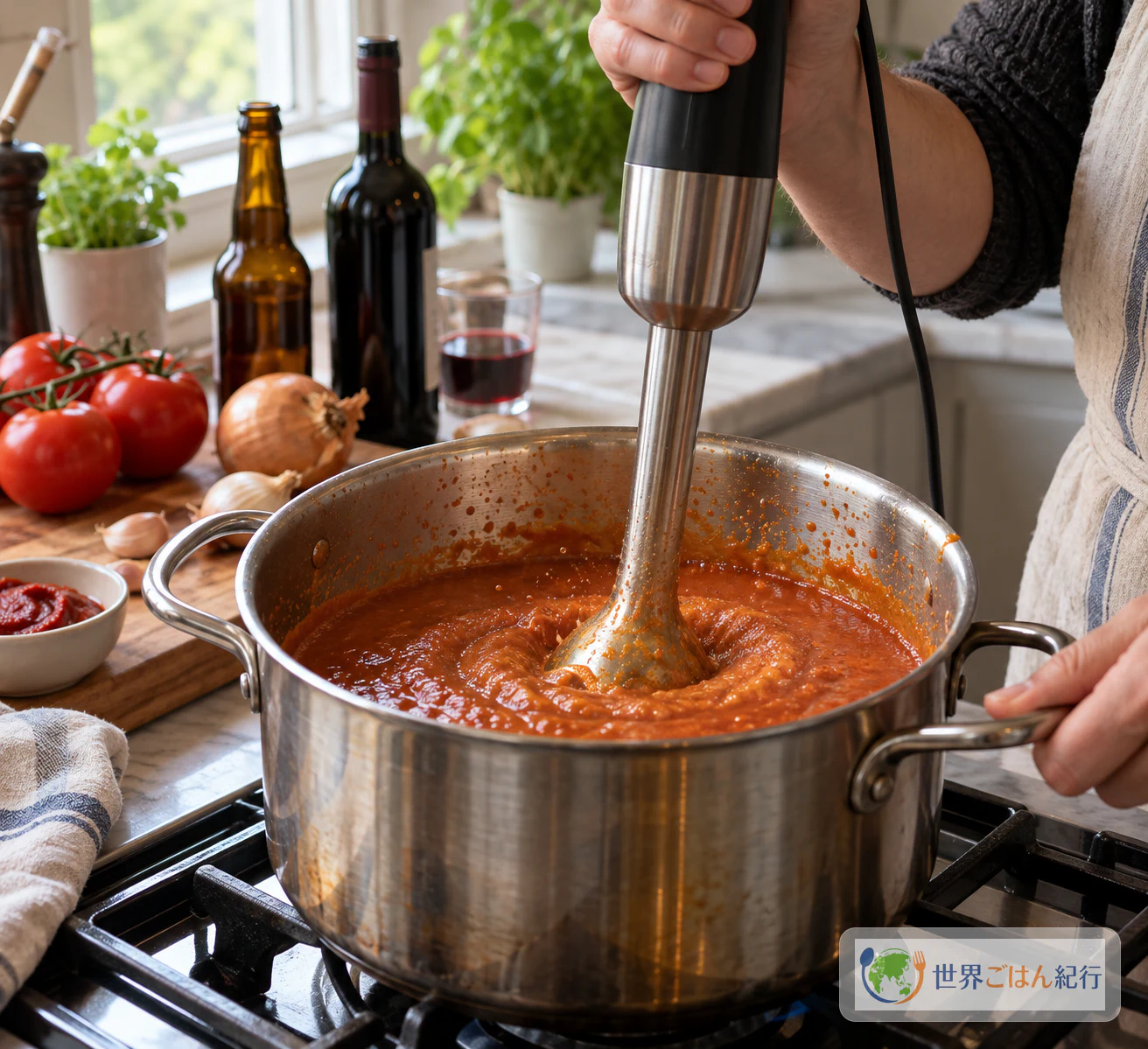
This article makes one serving of a Porto-style francesinha, following the Portuguese-language recipe from We Travel Portugal without blending in amounts from other versions. That recipe is an editorial one from a travel and food site, not a house secret or the one true formula. Sekai Gohan has not kitchen-tested it. The sauce takes the most time, simmering in stages of 10, 10 and 30 minutes, so start there and leave the sandwich until it is nearly ready. The hardest part may be the shopping, since Portuguese sausages and Ruby Port are not on every supermarket shelf.
What Is a Francesinha?
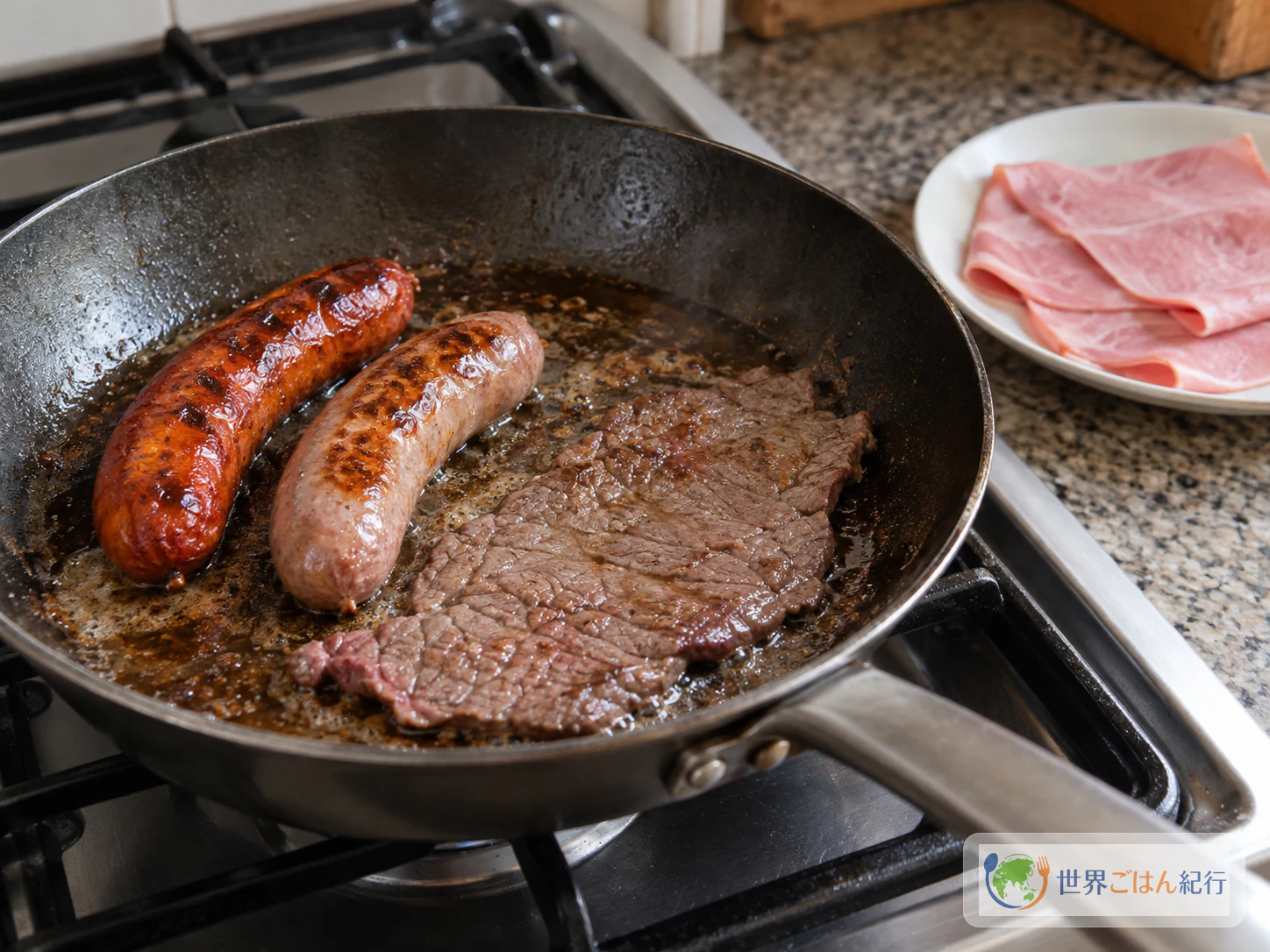
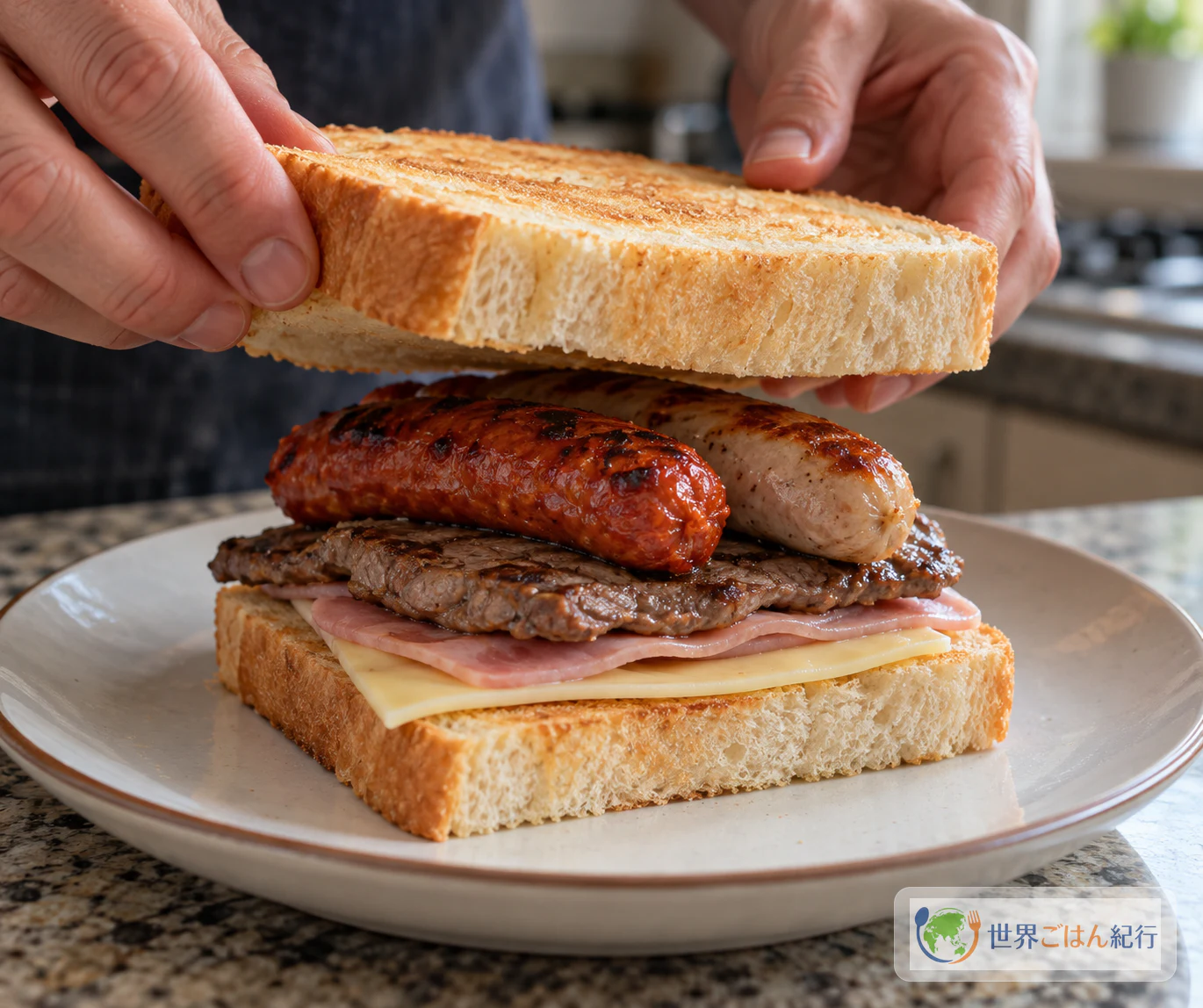
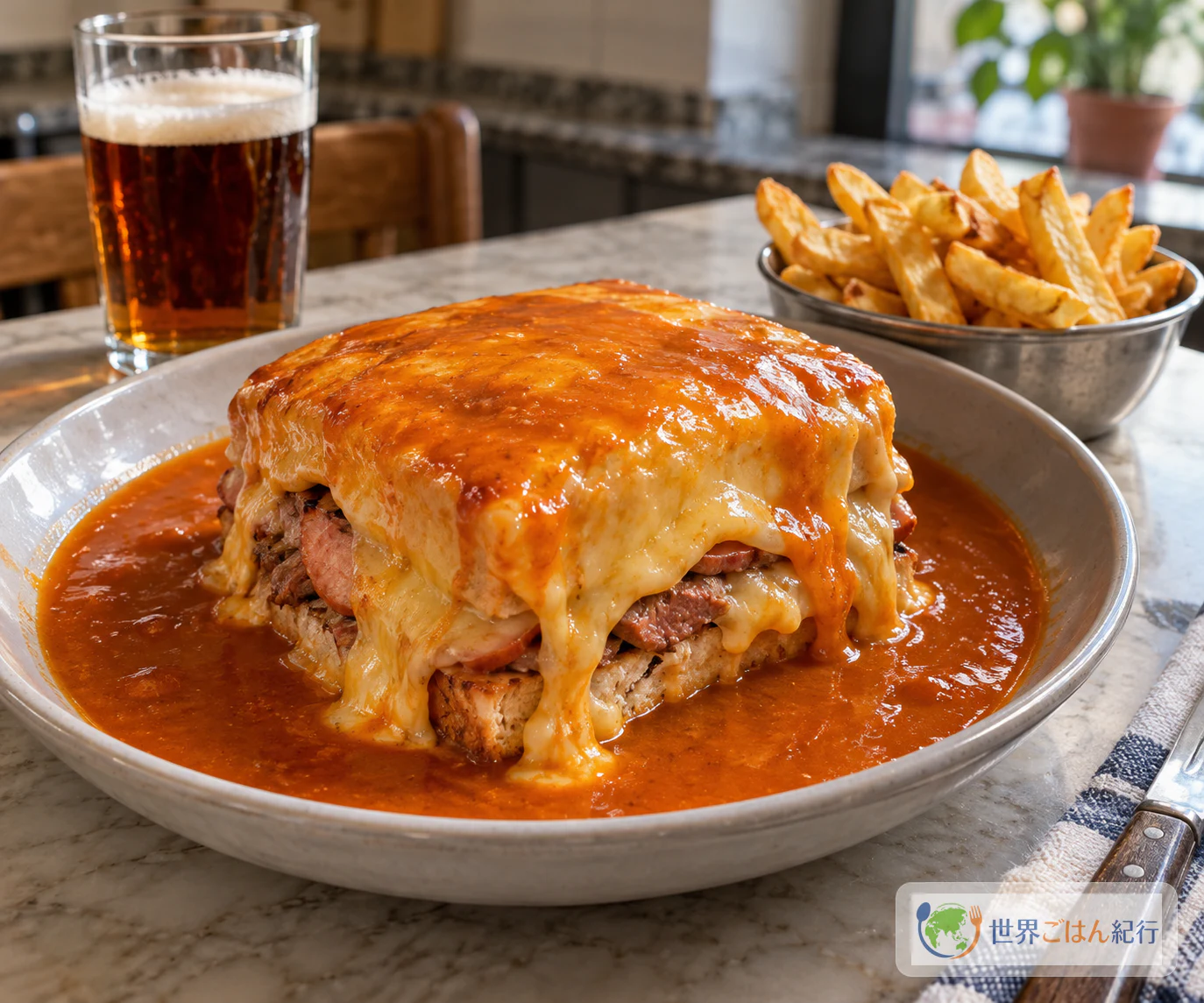
A francesinha is built in layers: bread, thin beef steak, two kinds of sausage, fiambre (cooked ham) and cheese, all under a thick sauce. Beyond that, the details vary. Some published versions add an egg and others do not, and the one followed here has none.
There is a lot of sauce, so this is plate food rather than something to pick up in your hands. We Travel Portugal, Turismo de Portugal and Continente all mention fries alongside, and they make good use of whatever sauce is left on the plate.
The Origin Story and the French Echo in the Name
The story most often told begins with Daniel da Silva, who is said to have returned from France and Belgium and, in the 1950s, reworked the croque monsieur in Porto at A Regaleira. We Travel Portugal repeats this account, and Hey Porto similarly describes a dish inspired by the croque monsieur that gained its sauce at a Porto establishment.
It is best read as a popular story, not settled history. We Travel Portugal also notes that the origin is disputed, including a theory involving an older name. The name itself is usually explained as something like "little French girl" or "little French thing," but that too is an explanation in circulation rather than a confirmed etymology. The link to Porto is strong, while the single inventor and exact date remain unproven.
Ingredients: Sauce and Sandwich for 1 Serving
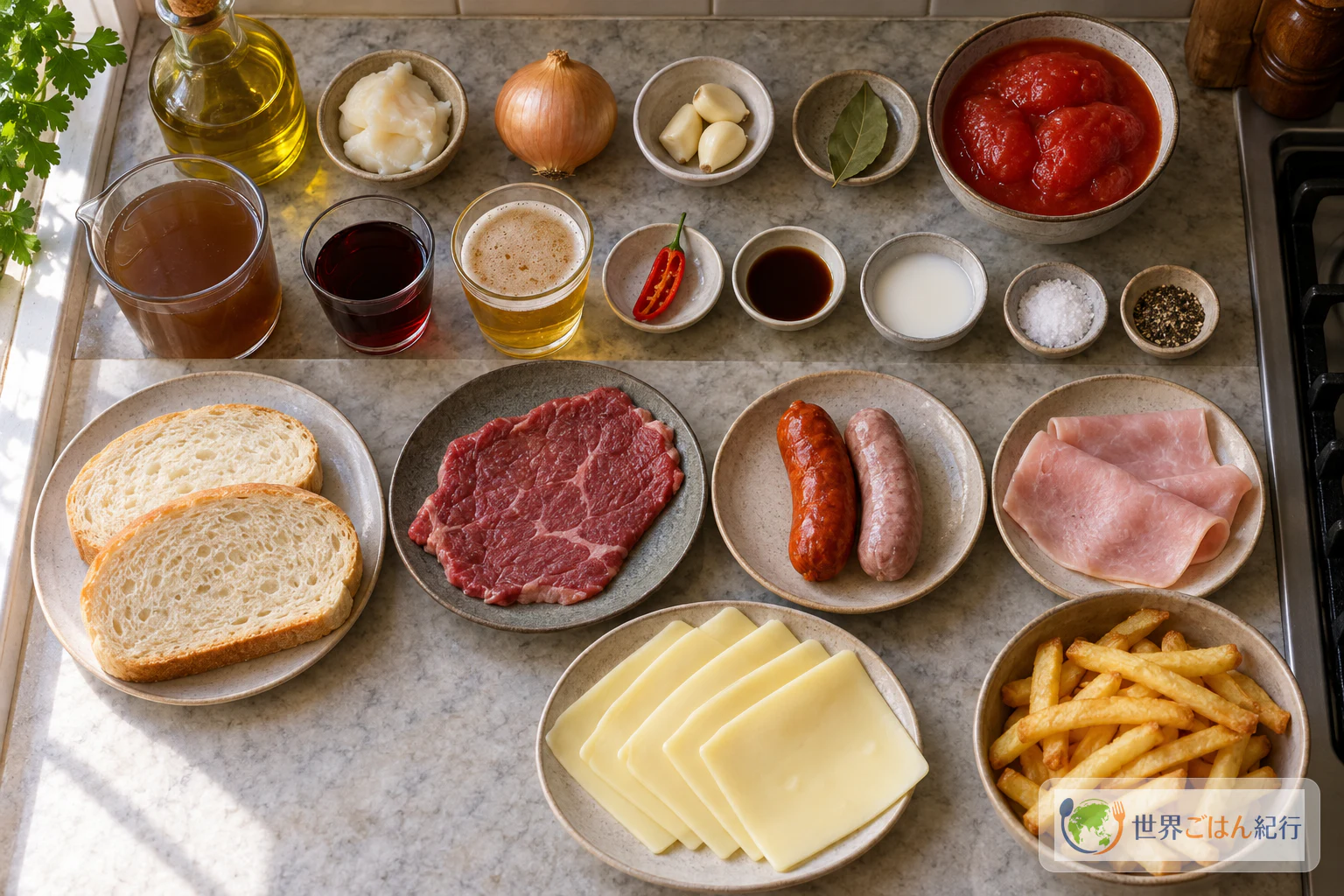
You may not need all of the sauce for one plate, so pour what suits you.
Equipment
- Deep saucepan, to keep the sauce from splattering
- Hand blender
- Wide frying pan
Choosing What to Buy
The flavor rests on salty, smoky meat, soft bread, melted cheese, a dark bittersweet sauce and a little heat at the end. Keep those in mind when an exact ingredient is out of reach. The suggestions below are our own, and none of them is an exact match.
| Item | What to look for | What changes with a stand-in |
|---|---|---|
| Sausages | Search for "Portuguese linguiça" at Portuguese grocers or online | Spicy chorizo can stand in for the spicy sausage, and an ordinary sausage for the mild one. Texture and spicing differ, so keep two distinct sausages |
| Fiambre | Ordinary cooked sandwich ham | Do not use raw cured ham, which is a different product |
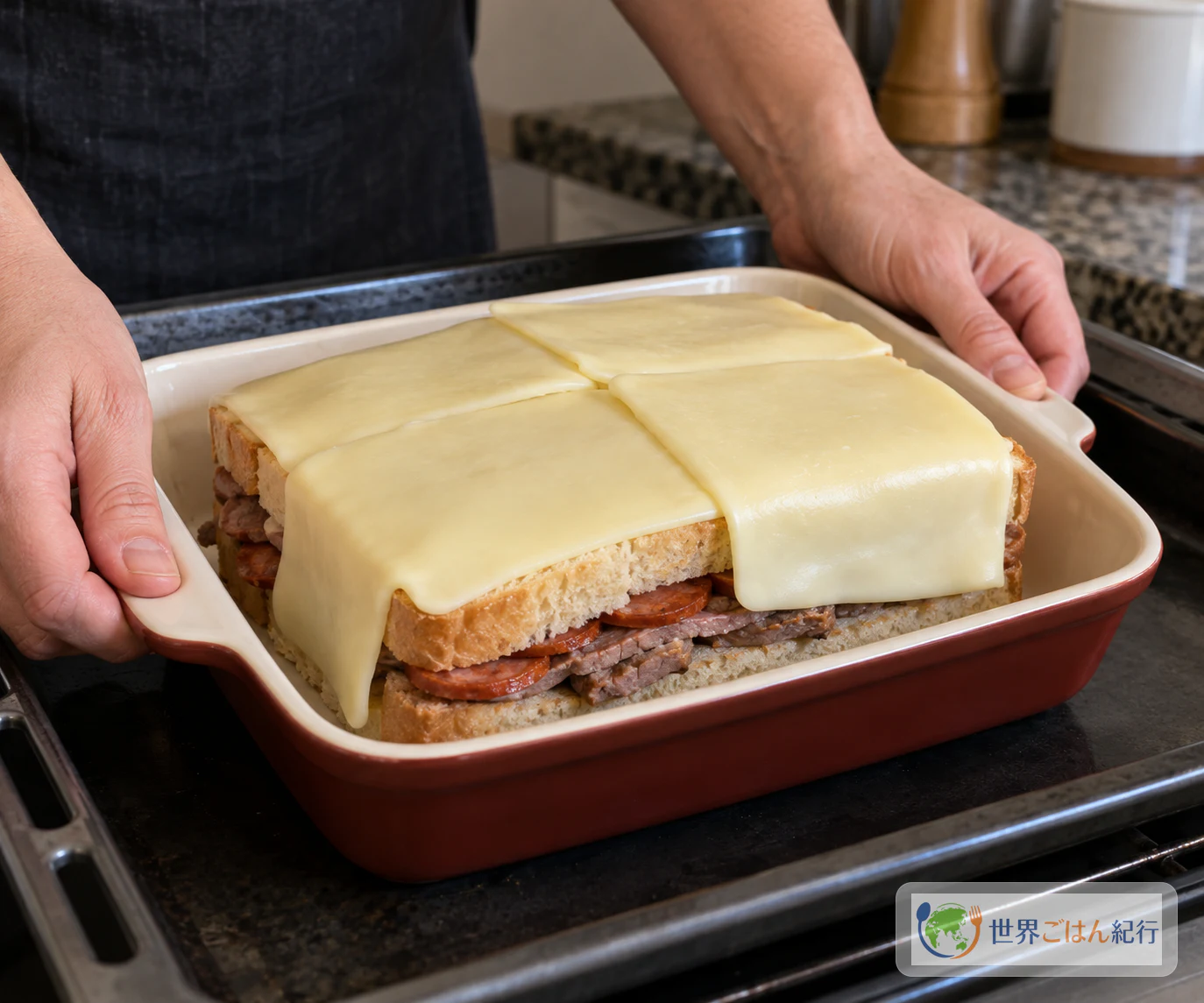
| Cheese | Any slice that melts well | Flavor shifts with the cheese. Cheddar and flamengo are also used for this dish |
| Ruby Port | Search for "Ruby Port wine" | Port is a sweet fortified wine and helps shape the sauce. We have no verified replacement that tastes the same |
| Worcestershire sauce | Check that the label says Worcestershire | Sauces sold under similar names, such as Japanese usuta sauce, should not be assumed identical |
| Lard | Plain pork lard | Do not swap in butter or similar fats if you want this version's flavor |
| Cornstarch | Plain cornstarch | Other starches, such as katakuriko (potato starch), are not treated as the same thing here |
How to Make Francesinha
Make the sauce before you assemble anything, then bring it back to a boil at the end. It has to be very hot to melt the cheese on top, and keeping it apart until serving protects the bread.
Fixing Common Problems
| Problem | Likely cause | What to do |
|---|---|---|
| Watery sauce | Not reduced enough | Simmer gently without a lid. Use the cornstarch and cold water mixture only if it is still needed |
| Salty sauce | Stock and Worcestershire sauce vary in salt | Add salt only at the very end, after tasting |
| Bread falling apart | Bread was not toasted, or the sauce went on too early | Toast the bread lightly and pour the sauce only when serving |
| Too hot | Chili heat varies from one to the next | Remove the seeds and check the chili's heat first. One chili is the standard here, and using less is your own adjustment |
This dish contains wheat (bread), milk (cheese) and meat. Sausages and sauces may also contain soy, wheat or other allergens, so check the labels of the products you buy. The sauce contains beer and Port, and we cannot say how much alcohol remains after simmering. Alcohol-free replacements are unverified and should not be expected to taste the same.
Eat the assembled sandwich as soon as it is made. Storing and reheating it have not been verified, so we do not recommend making it ahead. Cool any leftover sauce quickly, keep it in the refrigerator in a clean container, and use it soon. We do not give a storage period because none has been confirmed.
How Versions Differ
Fillings and sauce change from one recipe to the next, so what follows describes other versions, not additions to the recipe above. You can find more dishes on our Portugal page.
| Version | Fillings | Sauce and finish |
|---|---|---|
| We Travel Portugal (used here) | Beef, spicy and mild linguiça, fiambre, cheese. No egg | Tomato, beef stock, pale beer, Ruby Port, piri-piri, Worcestershire sauce. Melted by hot sauce, with fries |
| Turismo de Portugal | Veal, fresh sausage, fresh linguiça, mortadela, fiambre, egg | Meat trimmings, beef stock, beer, white wine, brandy, Port, tomato and spices, with fries |
| Continente | Fresh sausage, linguiça, beef, fiambre, cheddar and flamengo, fried egg | Tomato, beer, white wine, Port, Worcestershire-style sauce, dried chili. Cheese melted at 220°C, with fries |
A few ways to change the dish:
- Less heat: use less piri-piri than the single chili in this recipe. This is a change to the recipe, not part of it.
- With an egg: a fried egg on top belongs to other published versions such as Continente's. It is a serving difference and is not part of the recipe above.
- More meat: adding mortadela moves you toward the Turismo de Portugal style, which has its own amounts and sauce.
- Francesinha poveira: this style from Póvoa is treated as a different type of dish and should not be mixed with the Porto-style recipe here.
- Vegetarian: we do not offer a formula, because replacing the meats and stock would need its own research.
Frequently Asked Questions
Is the egg required?
No. It varies by recipe and restaurant. The We Travel Portugal recipe followed here has no egg, while the Turismo de Portugal and Continente versions include one.
Can I use chorizo?
Chorizo can stand in for the spicy linguiça, though the flavor will differ. Keep the two-sausage structure by pairing it with a separate mild sausage.
What is the sauce made of?
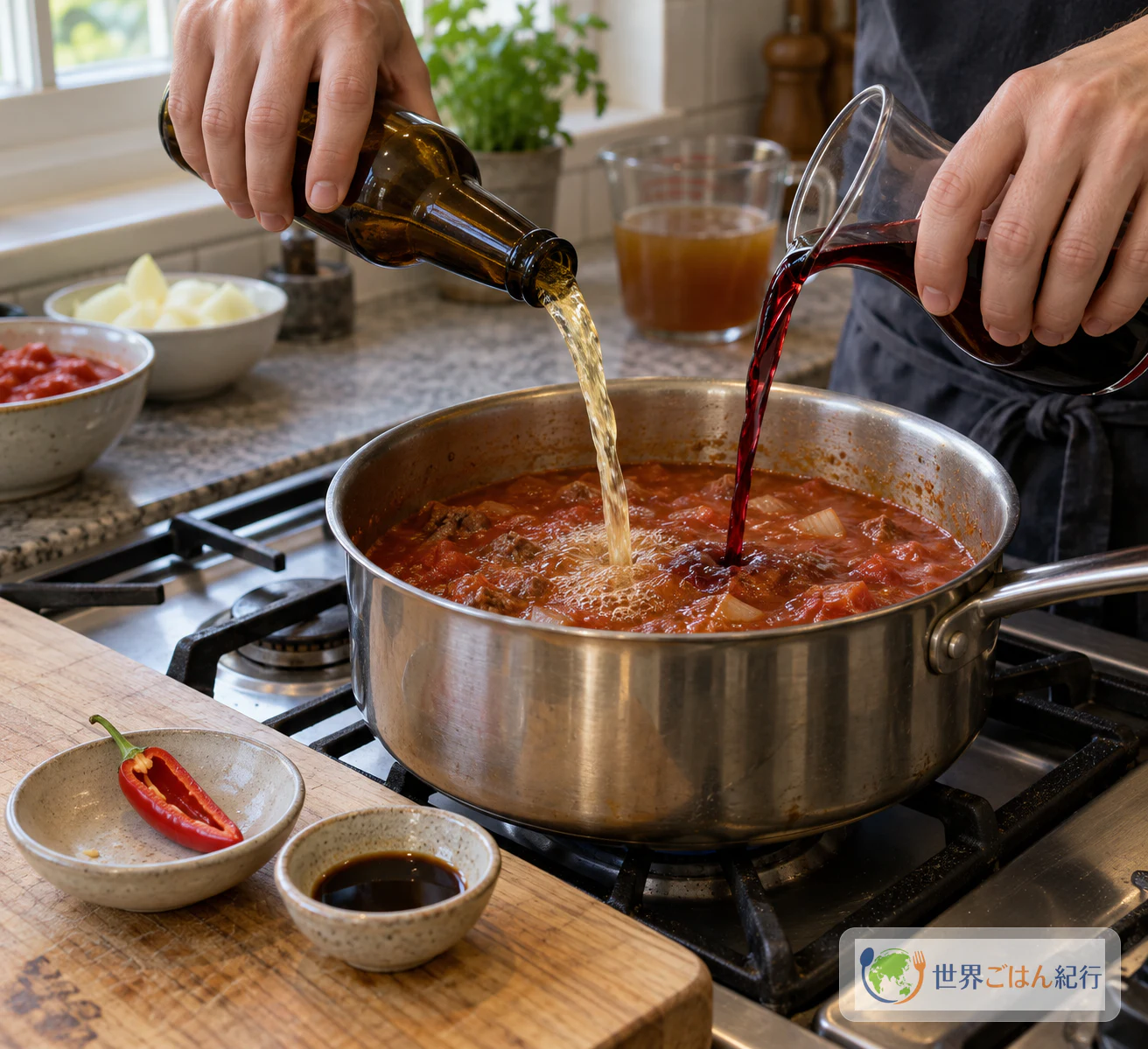
In this version, it is tomato, beef stock, pale beer, Ruby Port and Worcestershire sauce, built on lard, olive oil, onion, garlic and bay leaf, with piri-piri for heat. Other recipes change the mix, for example by adding white wine or brandy.
Are fries required?
No. They are a common side and appear in all three recipes compared above, but the sandwich and sauce are the dish itself.
What size can of tomatoes should I use?
We Travel Portugal specifies one can without stating its size, and it gives no weights for the bread, meats or cheese either. We have not estimated any of these, so season and adjust the thickness by tasting.
How many slices of fiambre go inside?
The ingredient list has two slices, while the layering order we are following names one fiambre layer and does not place a second slice. We suggest putting both slices in that layer, which is our own reading.
Do I need an oven?
Not for this version, where boiling sauce melts the cheese. Continente's recipe melts it at 220°C, but that temperature belongs to that recipe.
How long does it take?
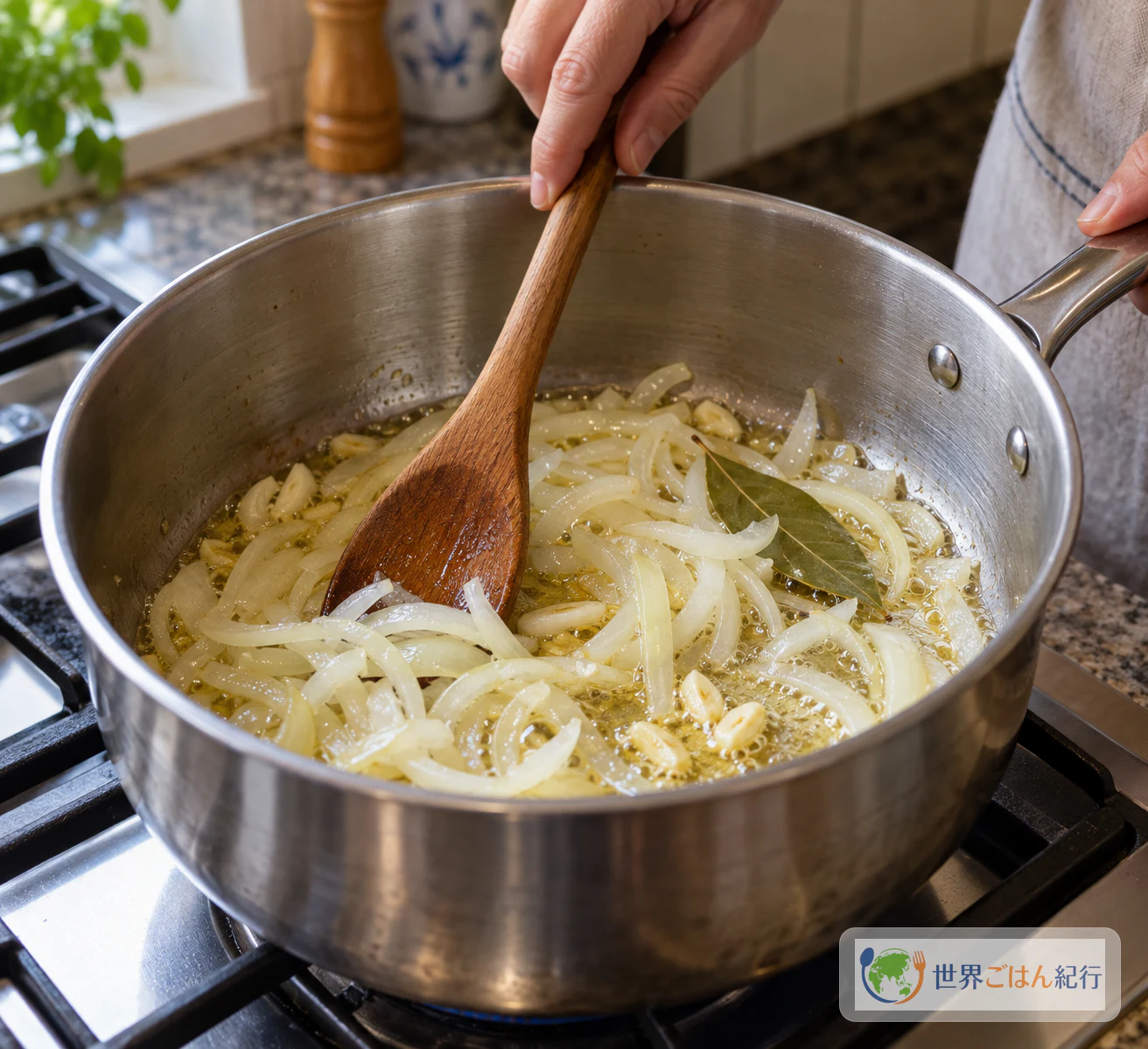
We do not give a total, because the time figures on the We Travel Portugal page do not agree with each other. Expect about 9 minutes for the aromatics and simmers of 10, 10 and 30 minutes for the sauce. Preparation, frying and assembly take additional time.
Is the origin settled?
No. The connection to Porto is strong, but the story of Daniel da Silva, A Regaleira and the 1950s is one account among disputed ones.
Sources
- We Travel Portugal, "Francesinha: Um clássico Português criado na cidade do Porto." One-serving recipe used here, including ingredients, method and serving with fries; the croque monsieur origin story and the existence of other theories. https://wetravelportugal.com/pt/francesinha/
- Turismo de Portugal, "25 abril: 50 anos, 50 receitas — Francesinha." A separate version used for comparison of fillings, sauce and fries. https://www.turismodeportugal.pt/SiteCollectionDocuments/formacao/25-de-abril-50-anos-50-receitas.pdf
- Continente / The Healthy Sins, "Francesinha." A separate version used for comparison of fillings, sauce, cheese melted at 220°C and fries. https://feed.continente.pt/receitas/francesinha
- Hey Porto, "Francesinha." Tourism background on the croque monsieur inspiration and the dish as a Porto specialty for cold days. https://www.heyporto.com/en/francesinha/