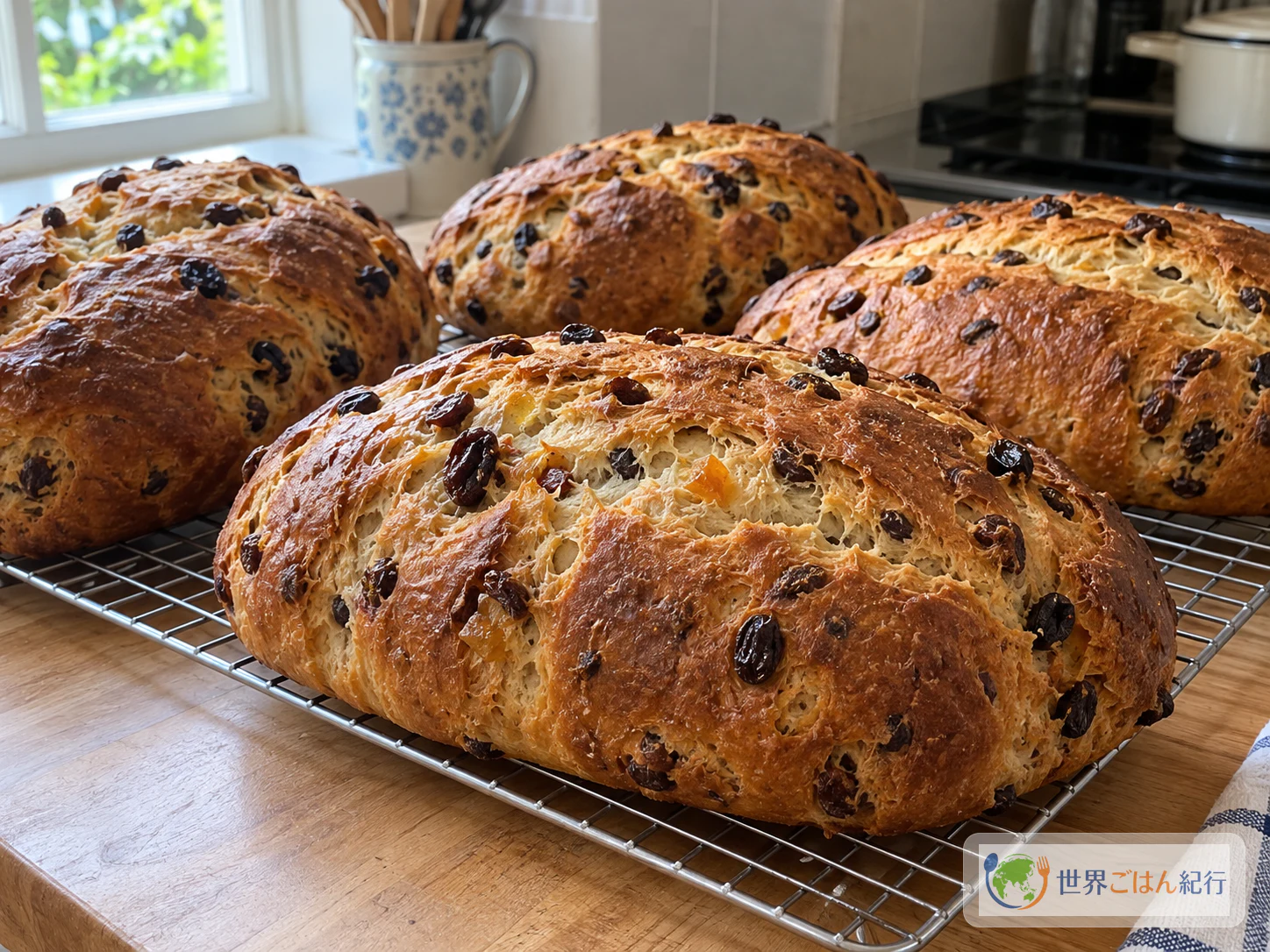
Guernsey Gâche: A Fruit Loaf for Slicing, Toasting and Buttering
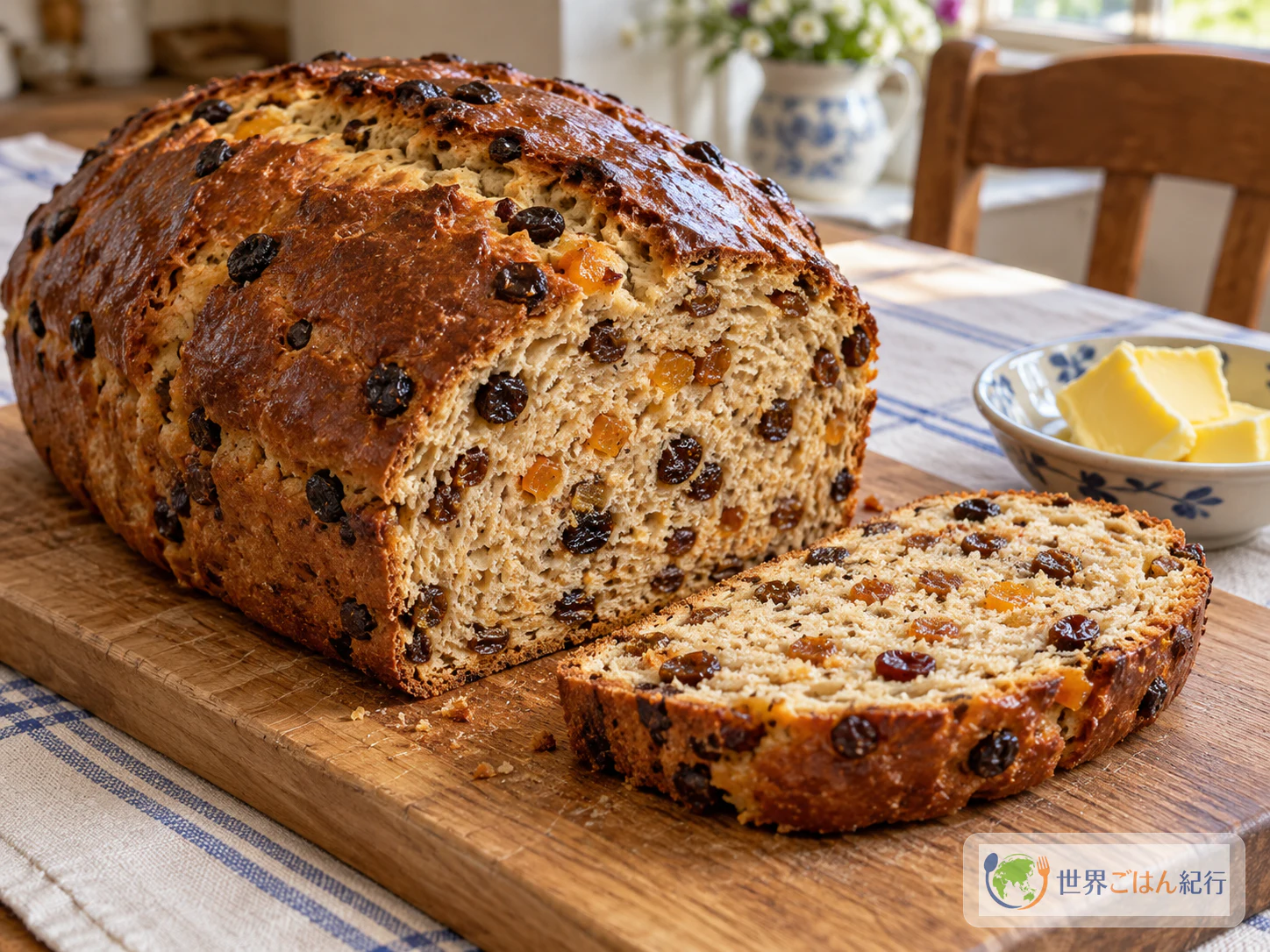
This is a yeasted bread rich with butter, sultanas and mixed peel, not a cake.
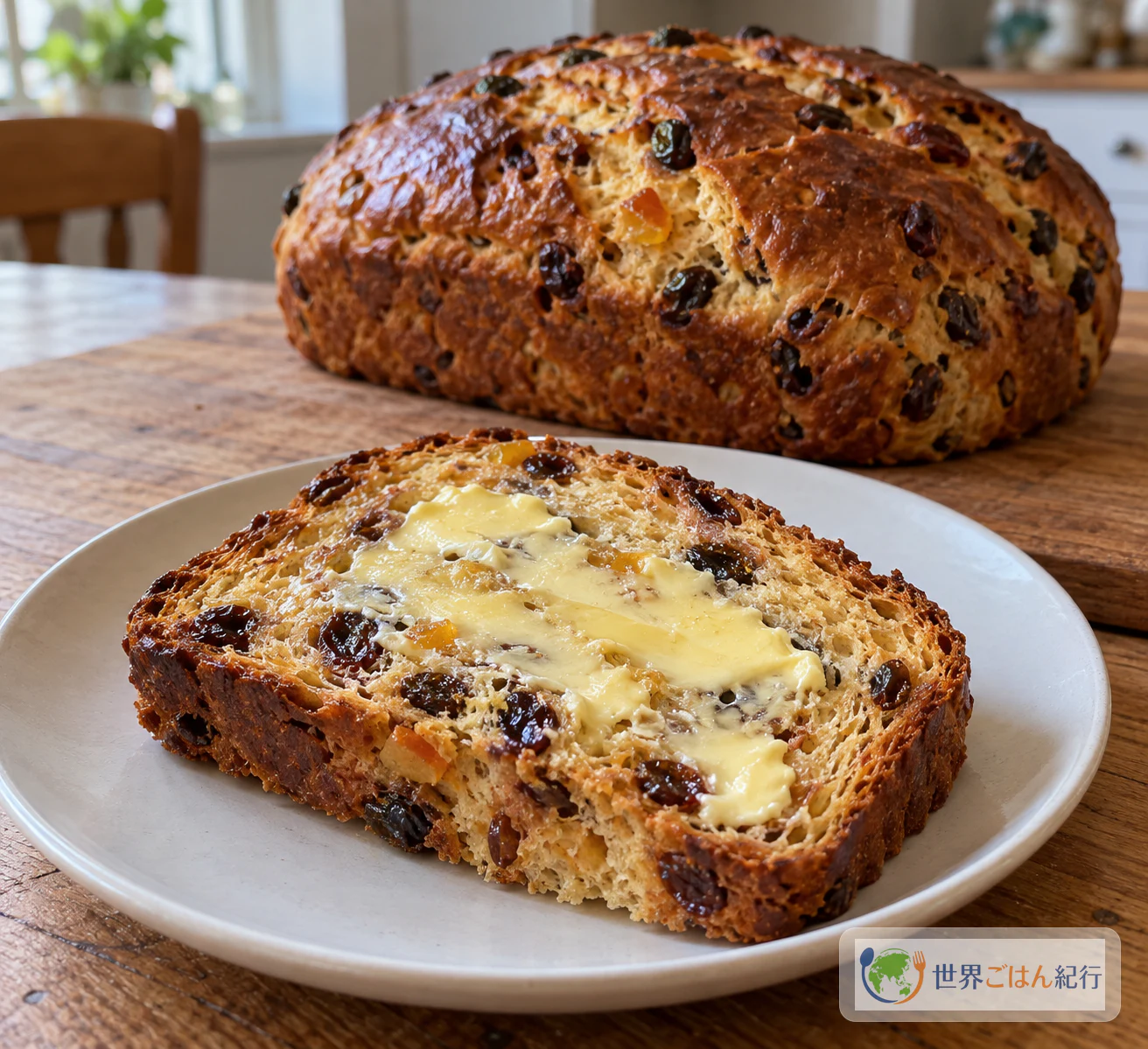
On Guernsey, gâche is an everyday sort of treat. It is sold at beach kiosks and in supermarkets, and it often appears at afternoon tea. Cut a slice, toast it lightly if you like, and add butter. Visit Guernsey presents it as a local specialty, a rich fruit loaf best served with local butter, and BBC Guernsey describes it toasted with Guernsey butter.
BBC Guernsey explains that gâche means "cake" in Guernésiais, the island's own language, but this is a yeast-raised bread full of dried fruit. It should not be confused with gâche mêlaïe, a separate apple-and-spice preparation.
The Recipe Used Here, and What Remains Unresolved
We have not kitchen-tested this recipe. The amounts, rise time and oven temperatures come from BBC Guernsey. The suggestion to divide the dough among several tins is our own editorial adjustment, not part of the BBC recipe.
BBC Guernsey publishes two formulas: a traditional one and an alternative with eggs and milk. This article uses only the traditional version, with no quantities borrowed from the other.
The weights are in pounds and ounces, as published, with approximate metric equivalents beside them. The water is measured in British imperial pints, and that conversion uses 568 ml to the pint, so 1/2 pint is about 284 ml.
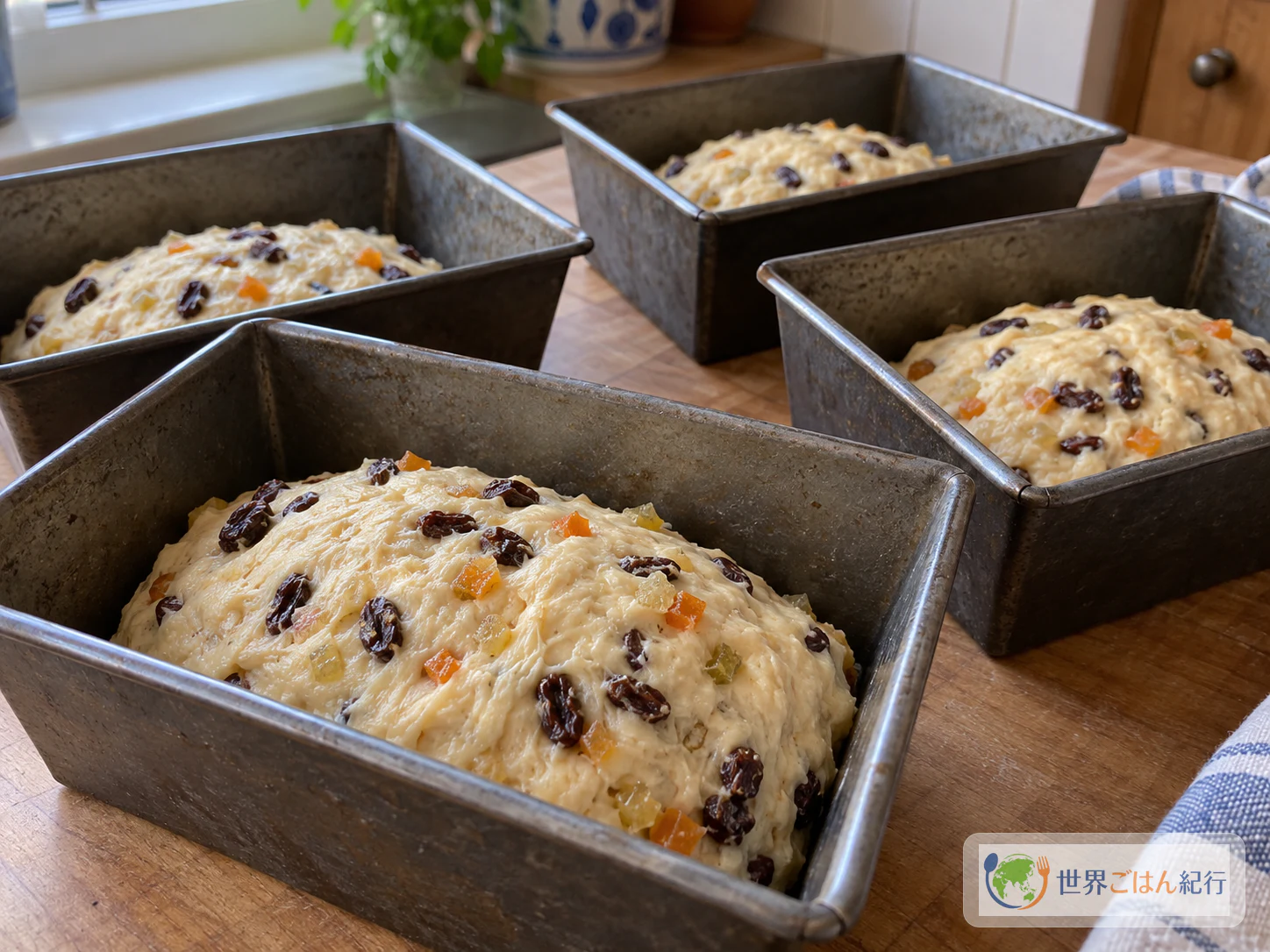
One part of the BBC recipe doesn't add up. It calls for a single 1 lb loaf tin, yet the flour alone weighs 1 lb, before the butter, fruit and water go in. The dough appears far too large for that tin. Rather than force it in, we suggest dividing it among several small loaf tins, each filled to about four-fifths. We can't confirm the number or size of tins, so we give no yield.
Dividing the dough also affects the bake. The published times are 30 minutes at 220°C followed by 30 minutes at 200°C, but they may not suit smaller tins. We have no confirmed baking time for divided loaves and no confirmed internal temperature for doneness, so treat the times as a guide.
Ingredients for One Batch of Dough
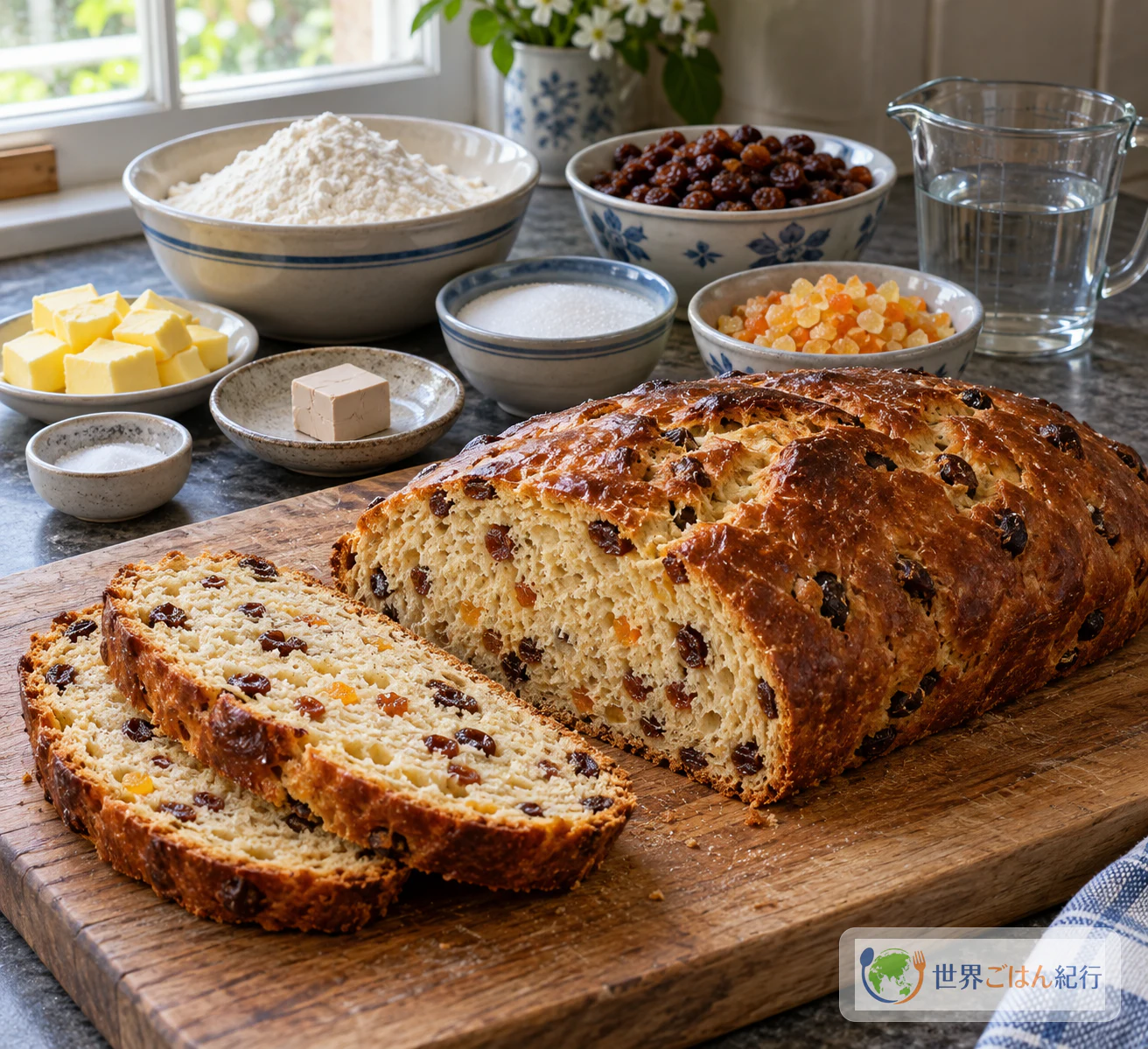
This loaf contains wheat and milk. If you are cooking for someone with an allergy, also check the labels on packaged ingredients for cross-contact.
Equipment
- Large mixing bowl
- Sieve
- Small cup for the yeast
- Cloth or other cover for the bowl
- Several small loaf tins
- Oven
Choosing and Substituting
- Flour: Choose a soft to medium-strength plain flour. Don't automatically swap in strong bread flour.
- Butter: Unsalted butter is the practical choice away from the island. It stands in for Guernsey butter but won't reproduce its dairy character.
- Sultanas: Regular raisins can be used if sultanas are hard to find. The loaf will be darker and a little more tart, so it will differ from the traditional version.
- Mixed peel: This is candied citrus peel, usually sold ready-chopped. Orange peel alone will change the flavor, making it more single-note.
- Fresh yeast: It isn't always easy to find. Dry yeast products vary, so we don't give a fixed conversion. If you use dry yeast, follow the instructions on the package.
Method: From Warm Flour to a Two-Stage Bake
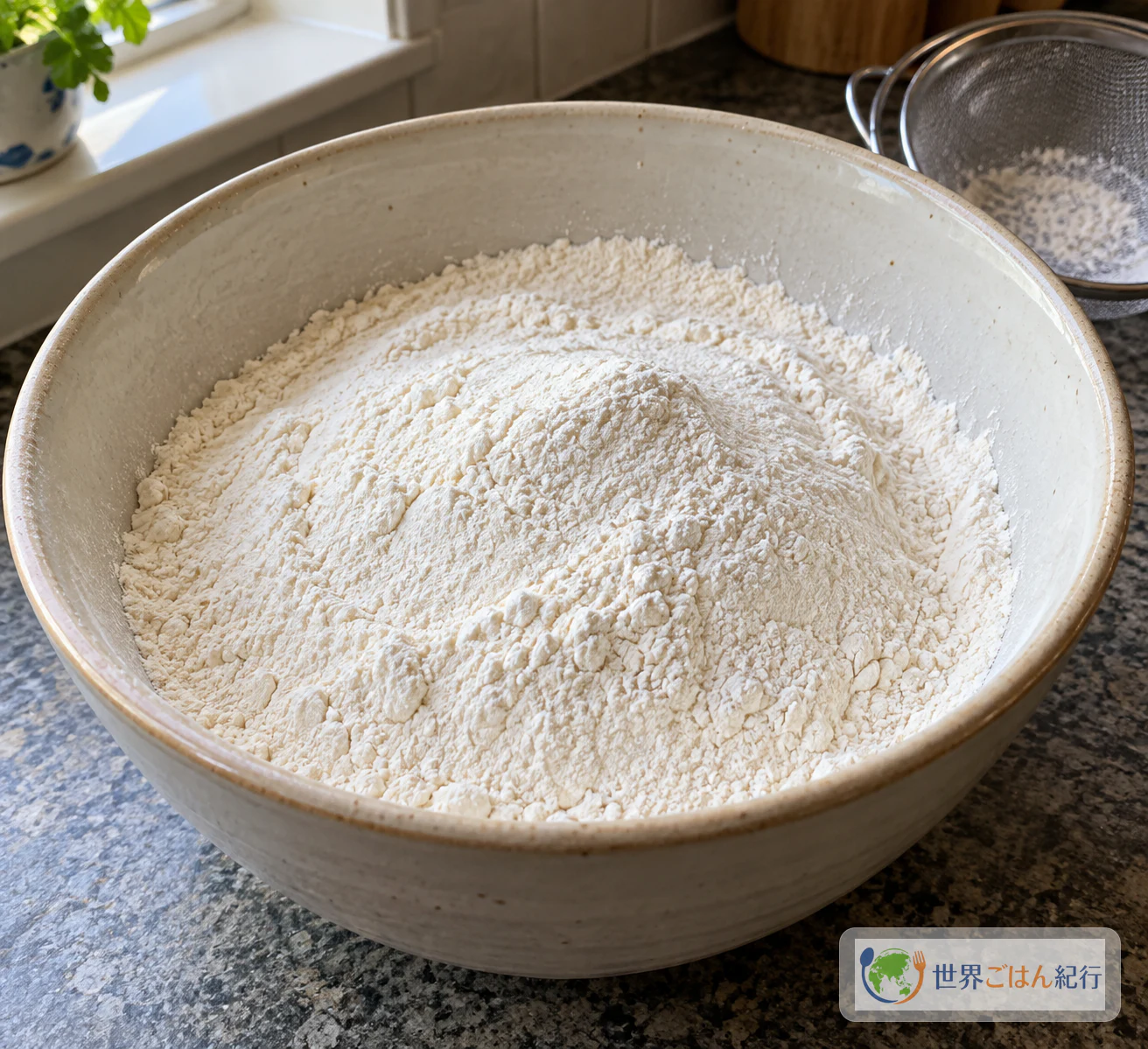
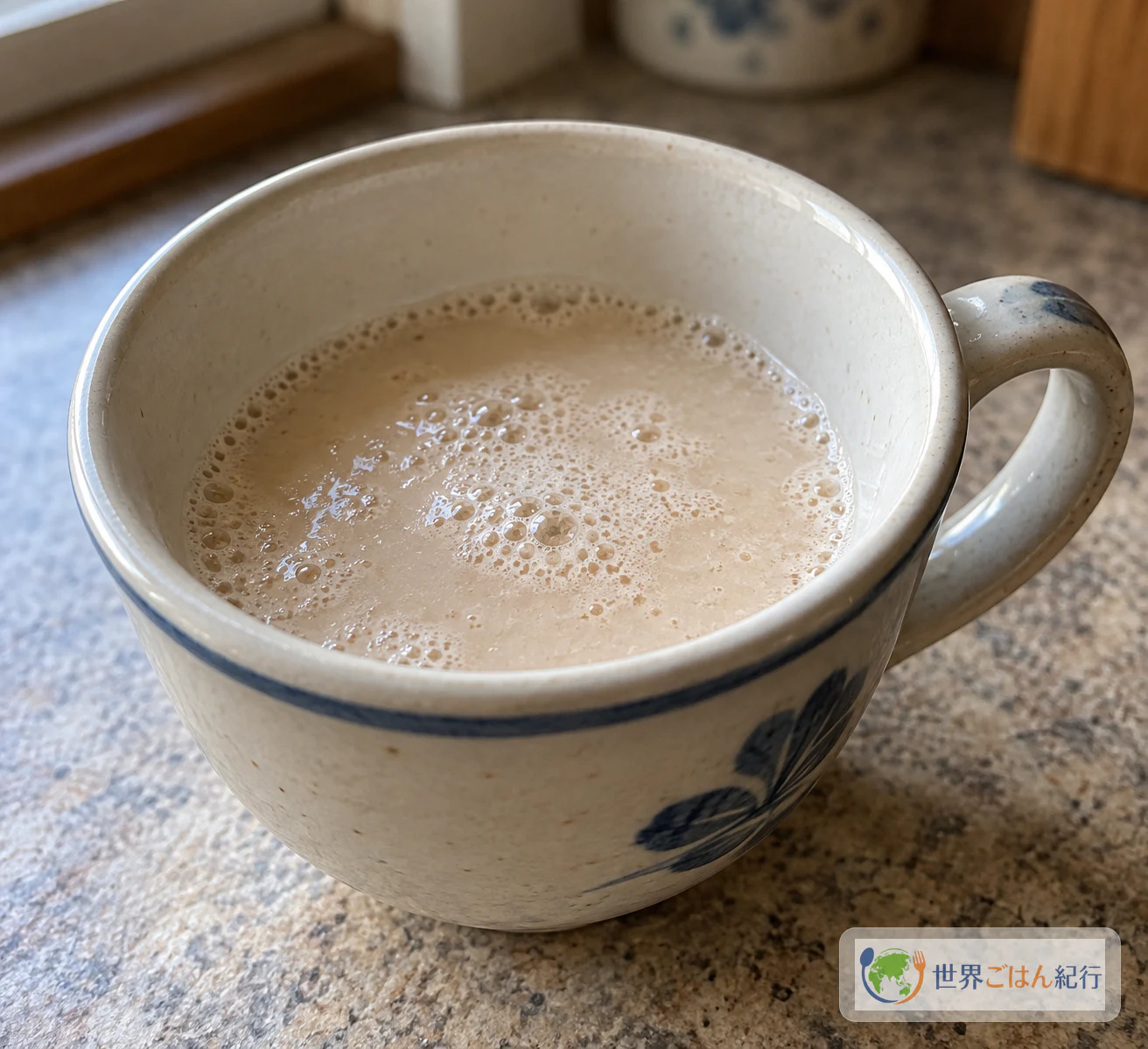
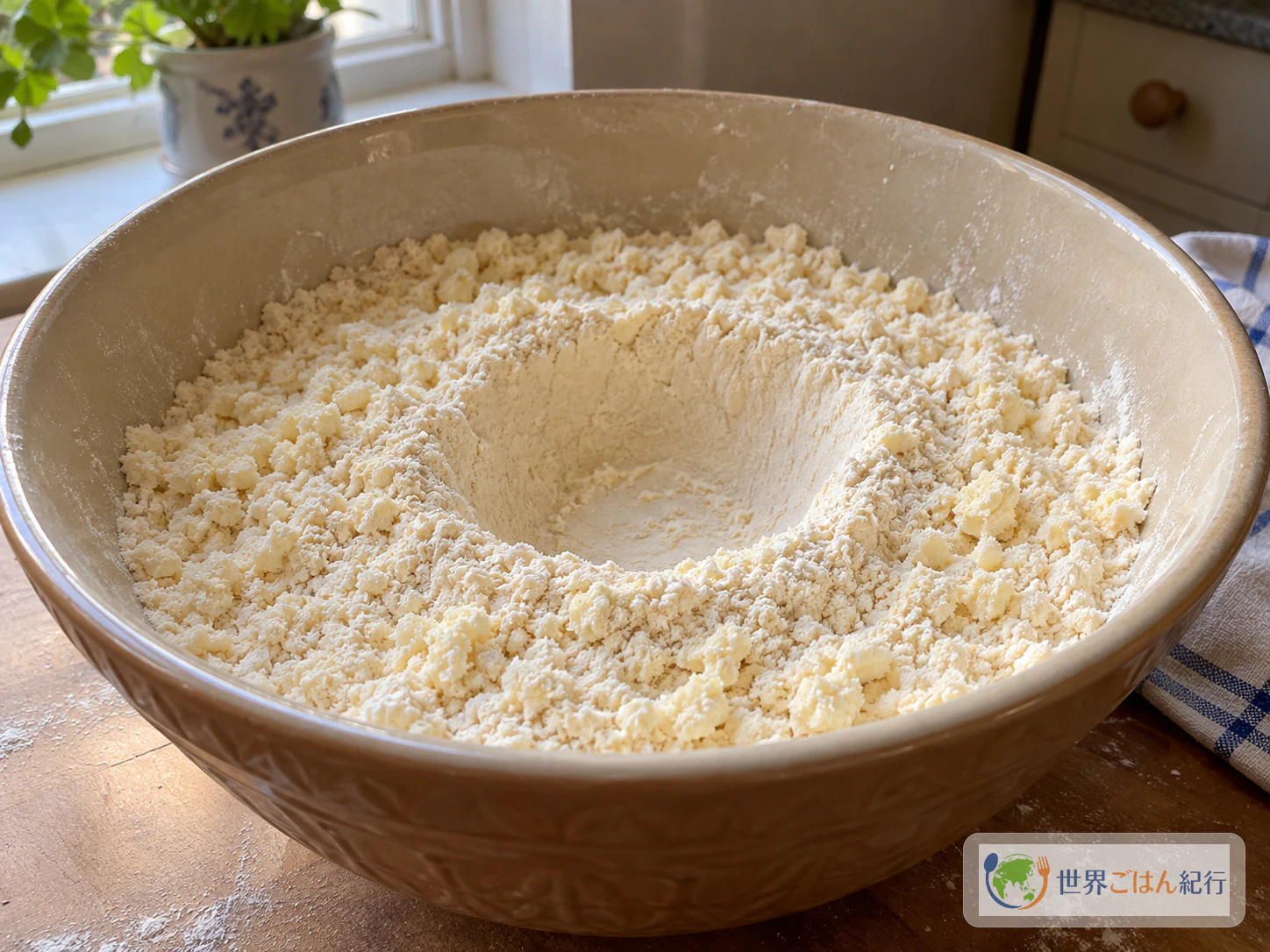
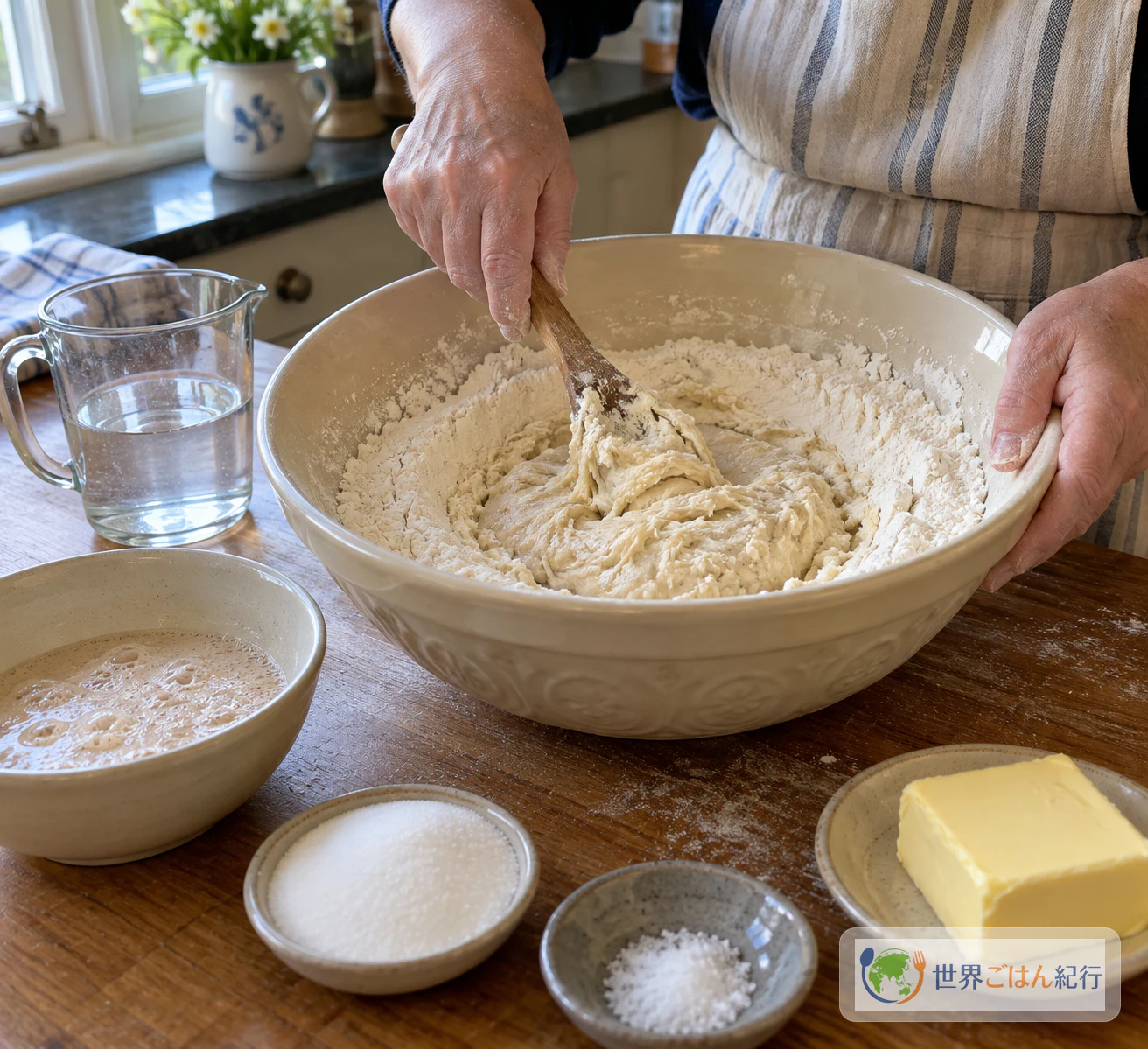
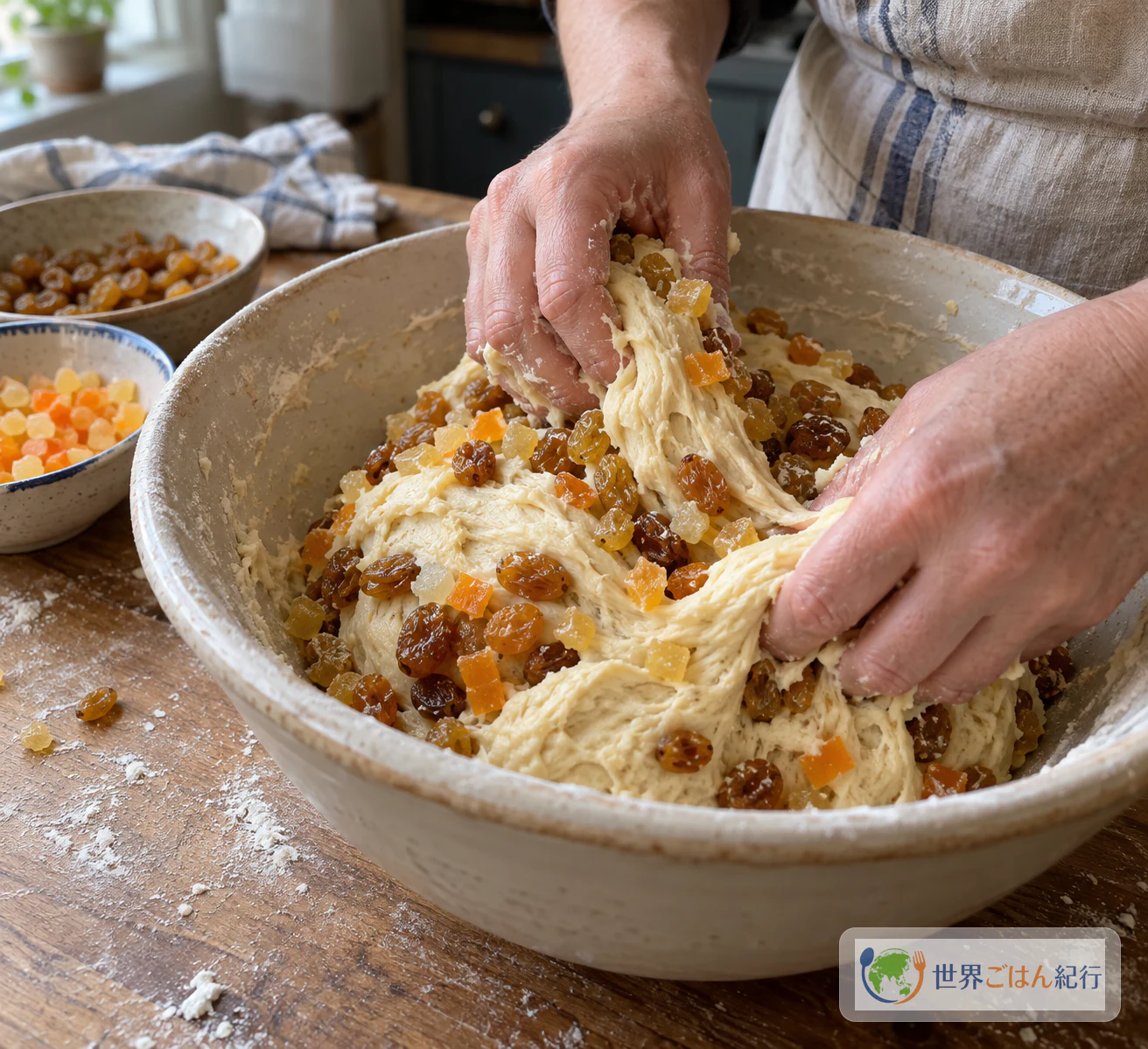
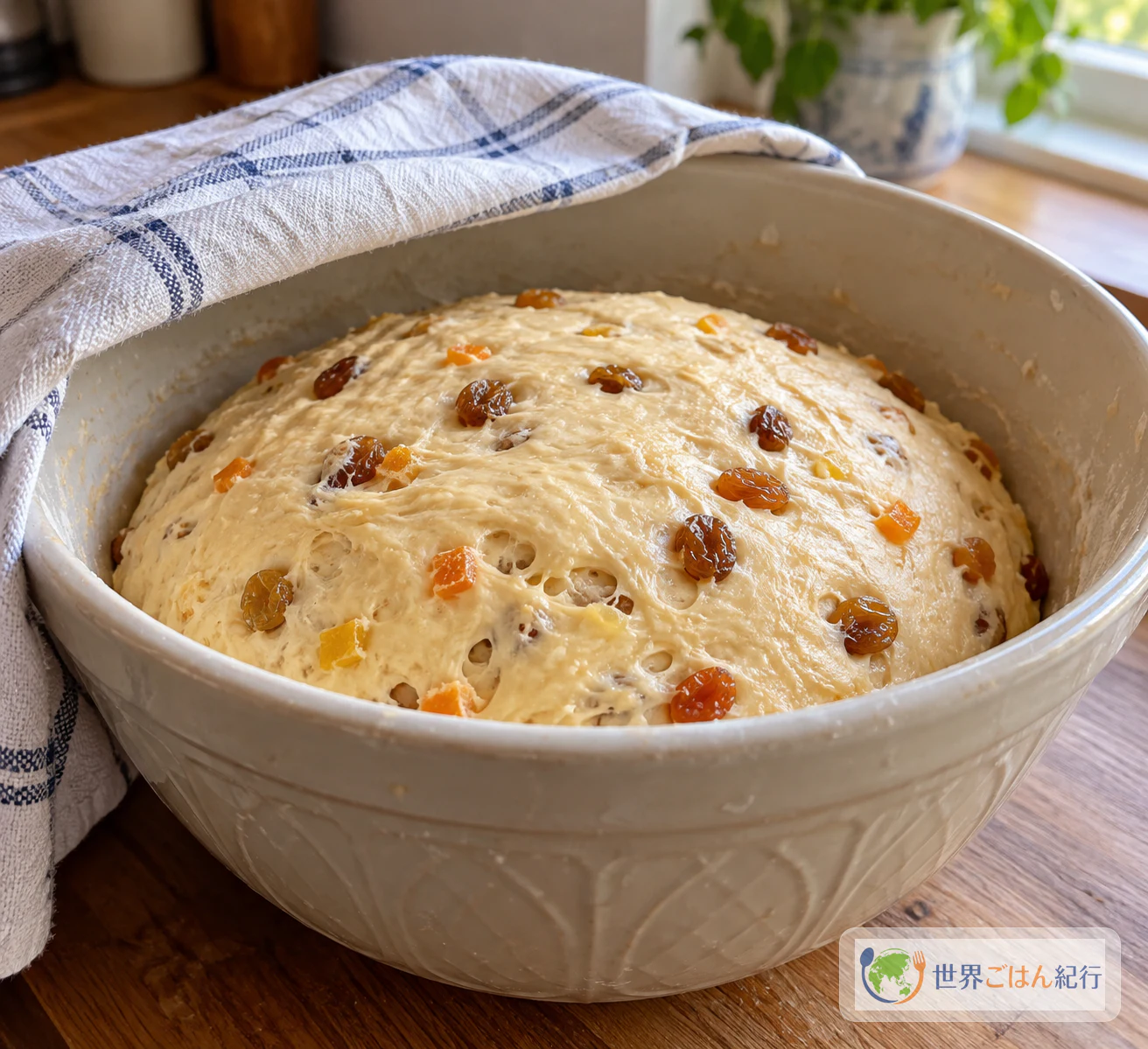
The dough rises for 1.5 to 2 hours, and the bake has two 30-minute stages. Have your loaf tins ready before the rise ends.
Troubleshooting: Yeast, Dough, Tins and Bake
| Condition | Likely cause | What to do |
|---|---|---|
| The yeast mixture shows no foam | The yeast may be inactive, or very hot water may have affected it | Give it a few more minutes. If nothing changes, start again with fresh yeast and water that is warm, not hot. We have no confirmed target temperature |
| The dough is dry | Too little water, or flour not fully worked in | Keep adding the measured water gradually. If you go beyond 1/2 pint, note how much you added |
| The dough is very wet | The water went in too quickly | The dough should be soft, but we have no confirmed amount of extra flour to correct it. Next time, add the water more slowly |
| The dough has barely risen after 2 hours | The spot may not be warm enough, or the yeast may be weak | Move the bowl somewhere warmer and watch the dough rather than the clock. We have no confirmed target volume |
| The dough won't fit the tin | The batch is too large for a single small tin | Divide it among more tins so that each is filled to about four-fifths |
| The crust is brown but the center seems underdone | Ovens vary, and tin size changes the bake | A loaf that is still doughy in the center isn't finished. We have no confirmed internal temperature or time for divided loaves, so record what your tins needed |
Variations
These are our own untested suggestions, not part of the traditional formula.
| Variation | What changes | What to keep in mind |
|---|---|---|
| Replace some sultanas with raisins | Easier shopping; a darker color and stronger sweet-tart flavor | The result moves away from the traditional loaf |
| Use orange peel instead of mixed peel | A clearer but more single-note citrus flavor | This changes the character of the peel |
| Use some whole-wheat flour | A different flour character | BBC Guernsey's alternative recipe offers a wholemeal option, but we have no established ratio for this formula, so this is only an idea |
| Use unsalted butter instead of Guernsey butter | Easier to find | It won't reproduce the island butter's dairy character |
| Bake in two or more tins | Avoids the capacity problem with a single 1 lb tin | Baking time needs to be worked out by trial |
Gâche on Guernsey: A Local Loaf with More Than One Recipe
Gâche and gâche mêlaïe are different
The similar names are easy to confuse, but gâche is a fruit bread, while gâche mêlaïe is an apple-and-spice preparation. If you are looking for an apple recipe, this isn't it.
There is no single agreed recipe
The Sarnian, a reference site for a Guernsey-set book series, notes that several methods exist and that there is no single agreed recipe. It also records a recipe in rhyme that lists plain flour, yeast, water, sultanas and mixed peel. BBC Guernsey's alternative version differs from the traditional one, using eggs, milk and dark brown sugar, and it asks you to wash and dry the fruit. The traditional formula doesn't include that step, so we haven't added it.
How it is eaten
Our sources agree more on how gâche is enjoyed than on how it is made. BBC Guernsey links it to afternoon tea and toasting with Guernsey butter, Visit Guernsey recommends local butter, and The Sarnian says it can be eaten plain or toasted. The sources we consulted don't establish the loaf's origins or wider history, so we don't offer an origin story here.
For another sweet bake from a yeasted dough, see makové koláče from Czechia. For a home-style treat from another island, try kleinur from Iceland.
Frequently Asked Questions
Can I use raisins instead of sultanas?
Yes, as an editorial substitution. Expect a darker loaf with more tartness, and a result that differs from the traditional version.
How is gâche different from gâche mêlaïe?
Gâche is a fruit bread made here with sultanas and mixed peel. Gâche mêlaïe is a separate preparation based on apples and spices.
What if I can't find fresh yeast?
Dry yeast is the likely alternative, but we don't give a conversion because products differ. Follow the instructions on the package you buy.
Do I have to toast it?
No. Toasting is a classic way to serve it, but gâche can also be eaten plain. Butter is served alongside and isn't part of the dough.
Can I bake all the dough in one 1 lb tin?
We don't recommend it. BBC Guernsey names a single 1 lb loaf tin, but the amount of dough appears too large for one. We haven't resolved this discrepancy, so we suggest using several small tins and treating the baking time as a guide.
Is a pint here the same as a US pint?
No. The 1/2 pint in this recipe is a British imperial measure, about 284 ml.
How should I store or freeze gâche?
Our sources don't cover storing, freezing or reheating gâche, so we can't give reliable guidance or times.
Sources
- BBC Guernsey, "Gâche." Traditional formula, rise time, two-stage bake and the single 1 lb tin; the separate egg-and-milk version; the meaning of the name; afternoon tea and toasting with Guernsey butter. This is an archived local page. https://www.bbc.co.uk/guernsey/content/articles/2004/07/22/gache_feature.shtml
- Visit Guernsey, "5 Top Tips For Dining Out In Guernsey." Gâche as a local specialty and a rich fruit loaf best served with local butter. https://www.visitguernsey.com/articles/2018/5-top-tips-for-dining-out-in-guernsey/
- The Sarnian, "Gache, Guernsey fruit loaf recipe." The range of methods, the distinction from gâche mêlaïe, the rhyme version, and availability at beach kiosks and supermarkets. This is a reference site for a book series by Nik Rawlinson, used as a supplementary source rather than a historical authority. https://thesarnian.com/essentials/guernsey-gache-recipe/