Gelato: A Few Minutes at the Table, Many Hours in the Kitchen
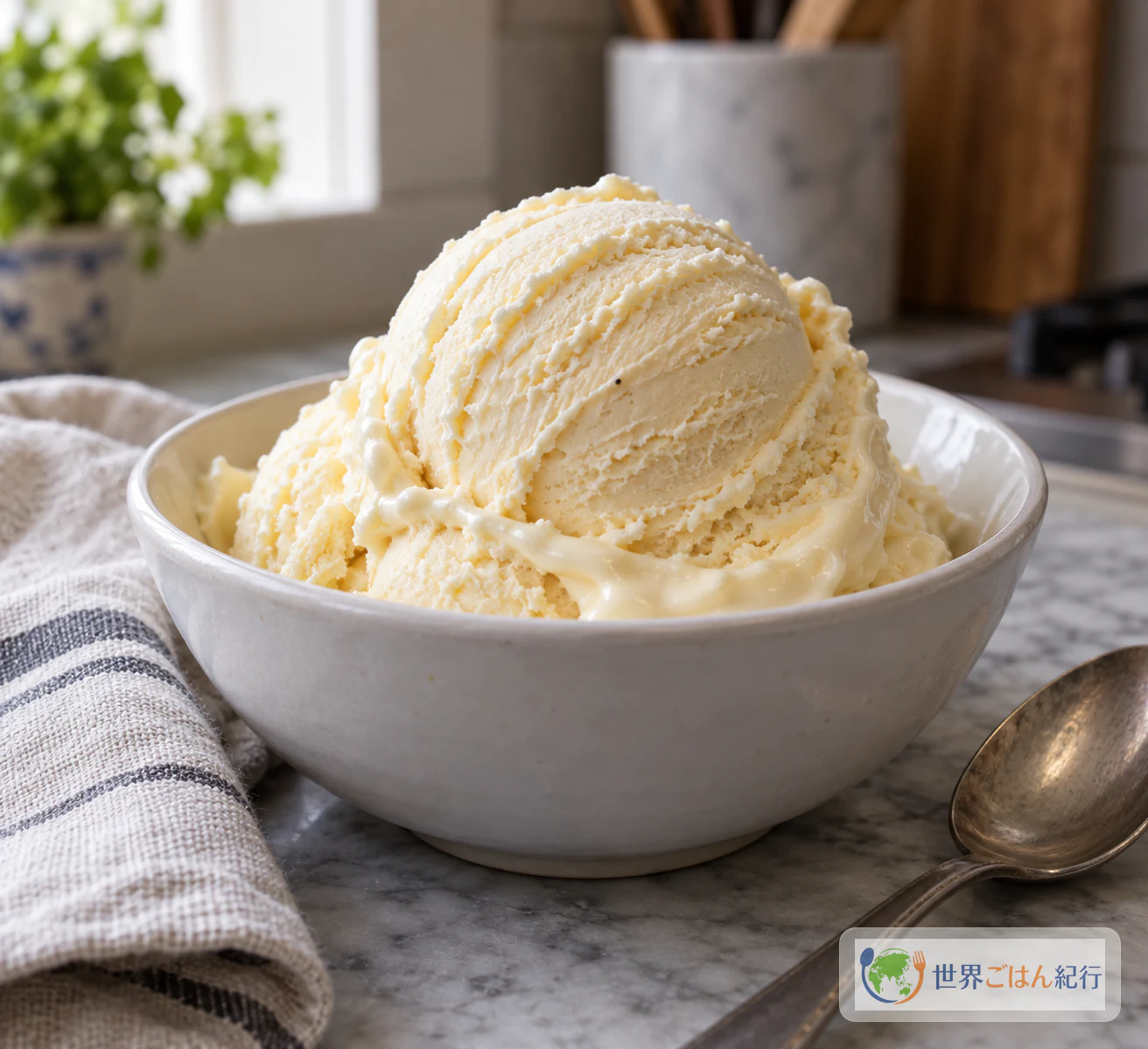
The aroma of milk, a light layer of vanilla and lemon zest, and the roundness of egg yolk. This is one crema recipe, followed as published, not a blend of several.
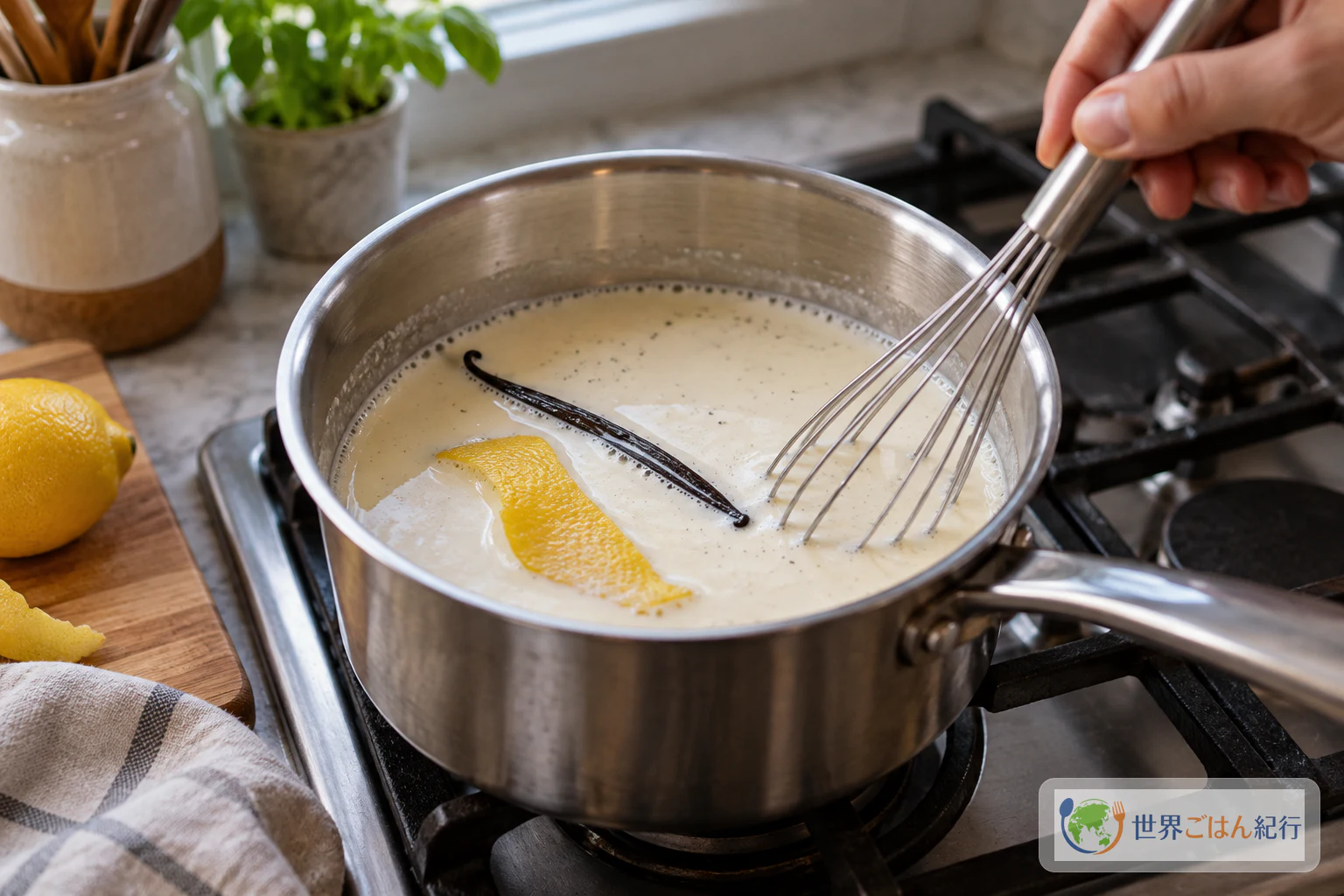
A scoop of gelato doesn't last long. The edges soften against the bowl, the spoon moves a little faster, and in a few minutes it is gone. Making it at home runs on a completely different clock: you warm milk with vanilla and lemon zest, bring egg yolks up to temperature, cool the base quickly, leave it in the refrigerator for at least four hours, and only then let a machine turn it into something frozen and spoonable.
This article follows that slower side. The recipe is the crema published by Gelato d'Essai, a gelateria in Italy, for making at home: a 1 kg batch built on whole milk, a little cream, egg yolks, sugar, dextrose and skimmed milk powder. Along the way, we look at how chilled desserts became part of life in Italian cities, and why "gelato" is a family of styles rather than a single formula.
What Gelato Is, and Which One We Are Making
Gelato is not one recipe. Within Italian gelato there are milk-based styles such as fior di latte, egg-yolk styles such as crema, and sorbetto, built on fruit and water. Each starts from a different base, so a recipe for one doesn't simply carry over to another.
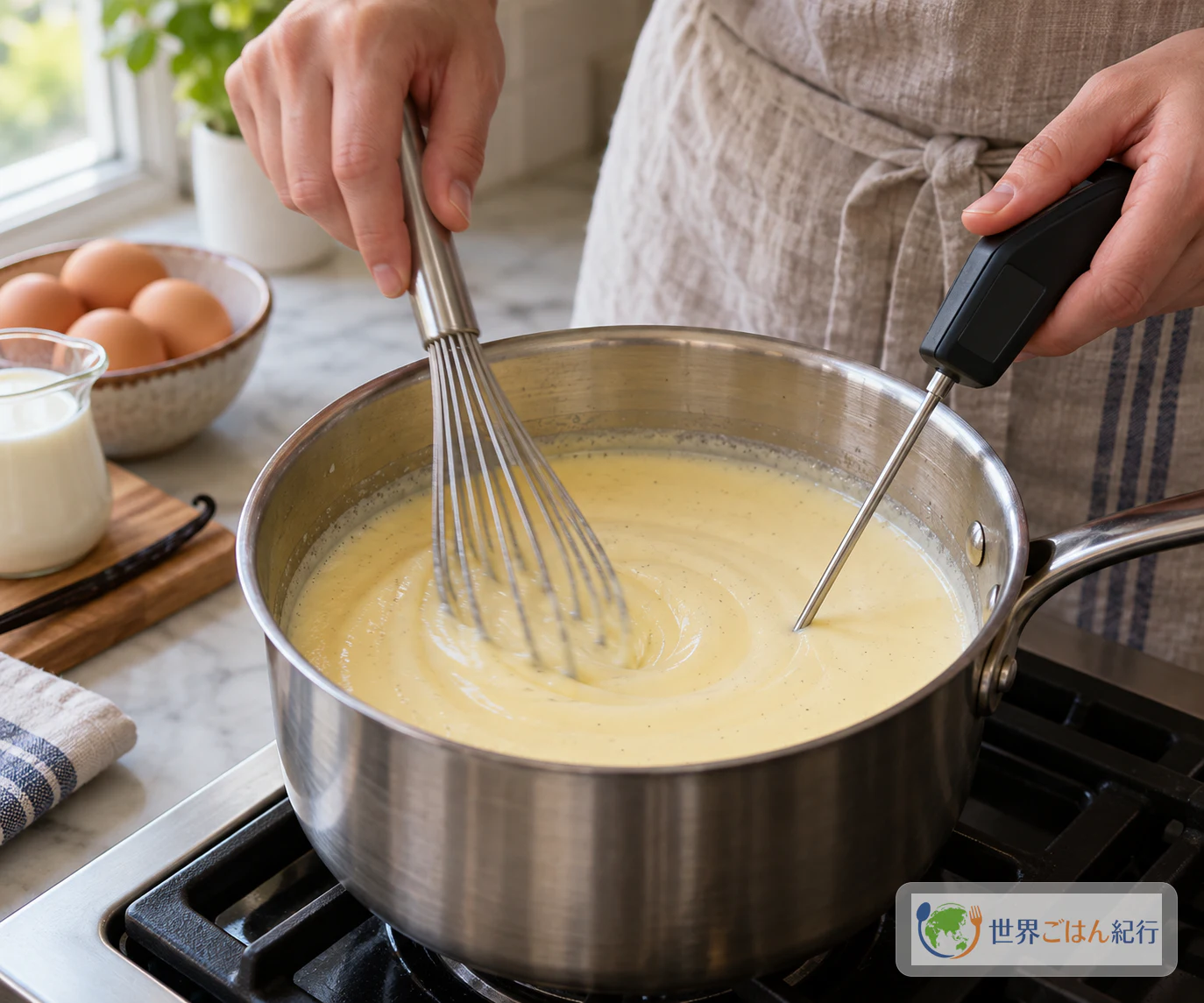
Even within crema, published recipes differ. Gelato d'Essai's version, used here, warms the milk to about 75°C, brings the yolks up to temperature with it, then heats the combined base to 85°C. A separate crema recipe by Cristina Bowerman on Great Italian Chefs uses different proportions, flavors the base with cinnamon, and has its own method: mixing starts at 45°C and the base is cooked at 85°C for 5 minutes. That is a different recipe; its ingredients and steps are not mixed into this one.
So treat this as one well-defined example of crema, not as the single correct gelato. If you see a different temperature or ratio elsewhere, it most likely belongs to a different formula.
Ingredients: Gelato d'Essai's 1 kg Crema
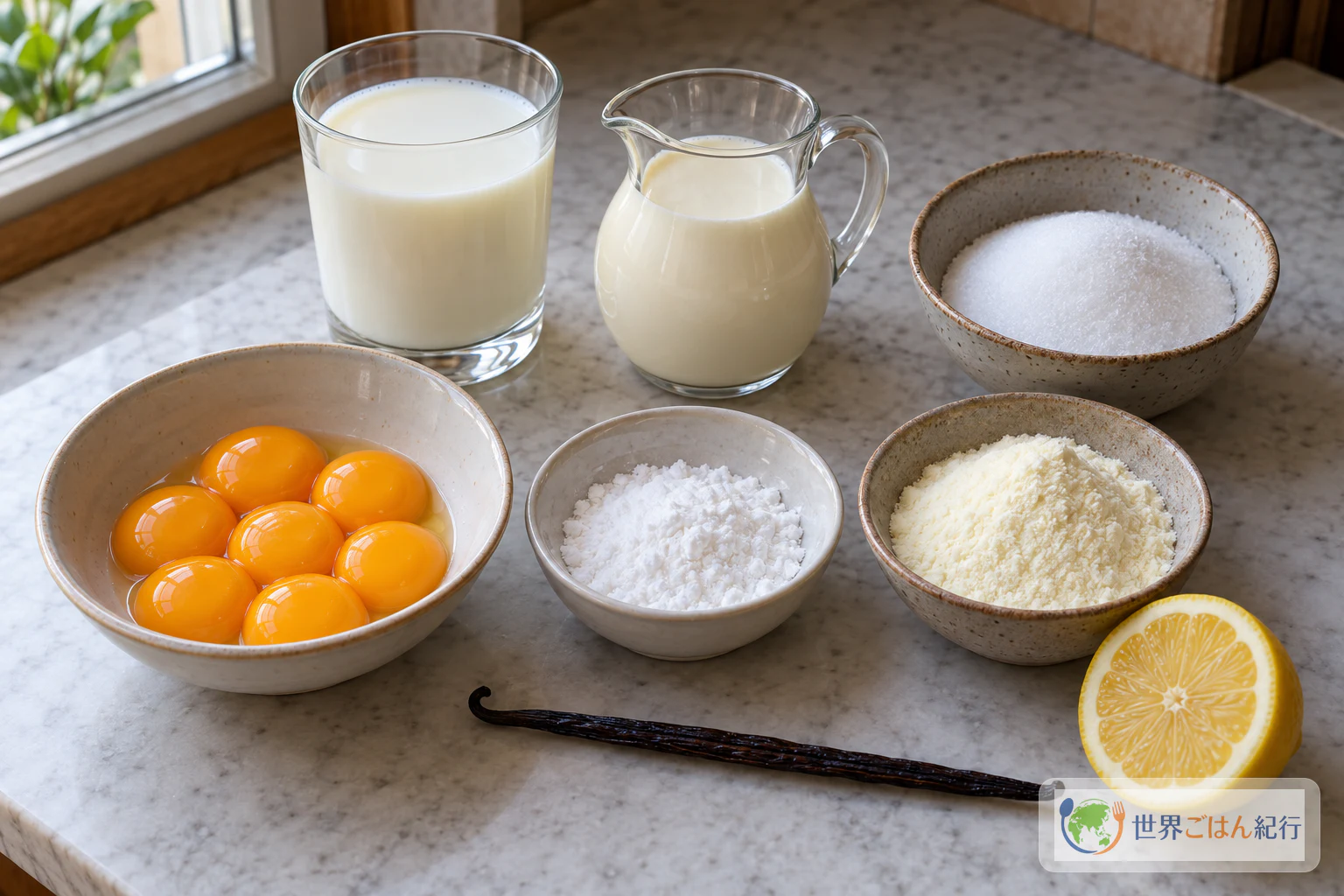
This recipe makes a 1 kg batch; how many servings that makes depends on your bowls and scoop size. Weigh everything, and go by the weight of the yolks rather than the count of eggs.
Equipment
- Kitchen thermometer (needed to read about 75°C, 85°C and the hold check in step 4)
- Saucepan
- Whisk
- Bowl for the yolks and sugar, and a small bowl for the powder mix
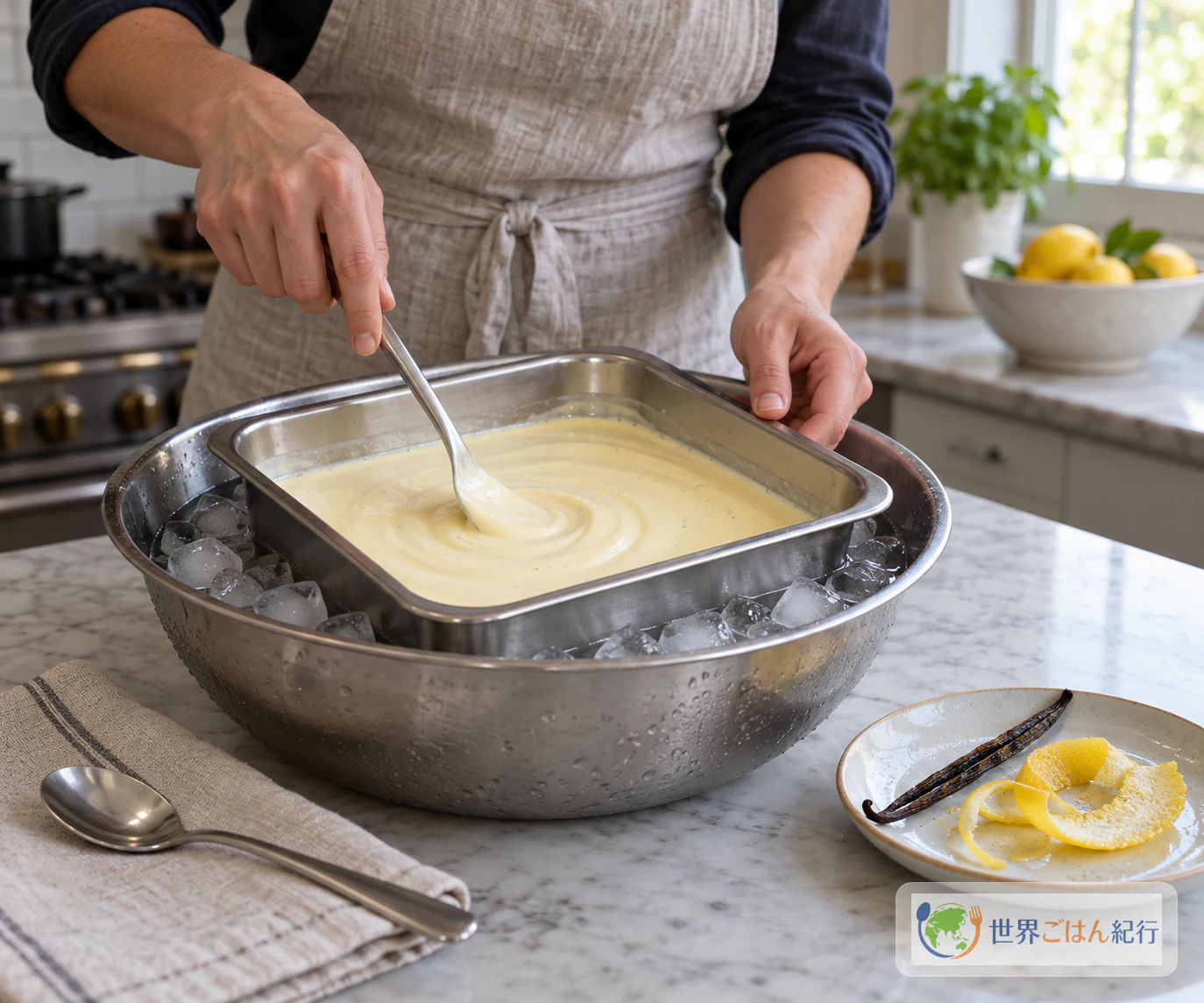
- Clean, shallow container (metal works well) for cooling
- Larger bowl for ice water
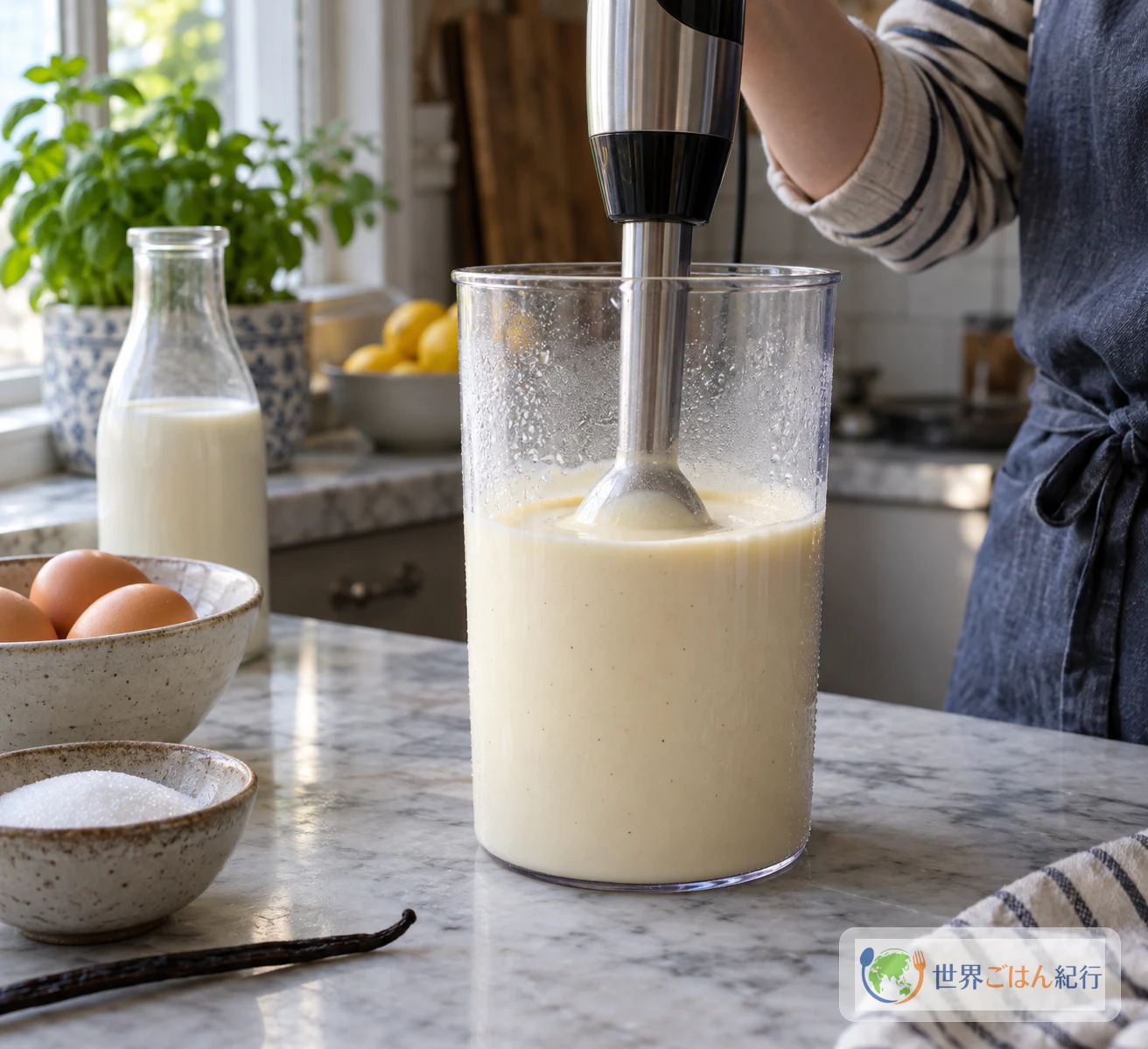
- Hand blender or blender
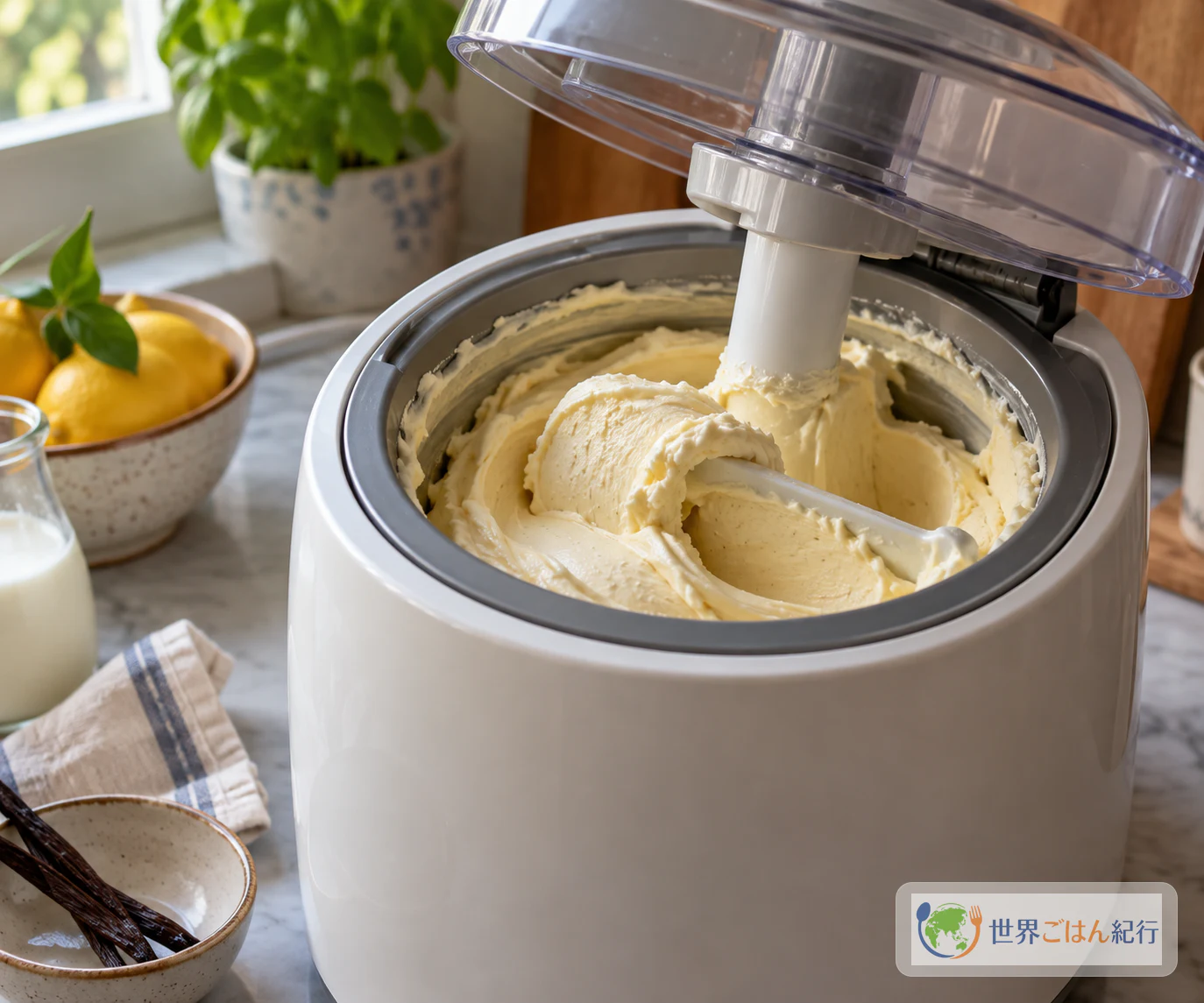
- Ice cream maker
- Clean lidded container for the freezer
Choosing Ingredients and Substitutions
Whole milk, cream, eggs, sugar and lemons are everyday supermarket items. Dextrose (food-grade powder), skimmed milk powder and vanilla pods are easier to find at baking-supply shops or online.
- Dextrose: Gelato d'Essai suggests replacing the 30g dextrose with 25g extra sugar. Sweetness and the way the gelato freezes may change, so treat it as a slightly different result.
- Vanilla pod: You can switch to vanilla extract, but the aroma infused from a pod is different. This is a change to the recipe, not an equivalent.
- Skimmed milk powder: Don't leave it out or replace it with starch or another powder. That would make a different formula.
- Cream: Any fresh cream will do.
- Lemon zest: Use the whole zest of half a lemon. Peel thin strips and leave the white pith behind.
Method: Heating, Cooling, Chilling and Churning
This recipe contains milk and eggs; check the labels of everything you buy and watch for cross-contact on shared equipment. The base is heated to 85°C. For home kitchens, step 4 adds a check from Japan's Ministry of Health, Labour and Welfare general food-safety guidance (core temperature of 75°C for at least 1 minute): stir the whole base, measure it, and confirm it stays at 75°C or above for at least 1 minute. Touching 85°C for a moment does not, by itself, show that this hold was met. The texture of the finished gelato under this check is not guaranteed.
Plan around the chilling time: after cooking and cooling, the base needs at least 4 hours in the refrigerator before it can be churned.
When Things Go Wrong
| Problem | What to look at | What to do |
|---|---|---|
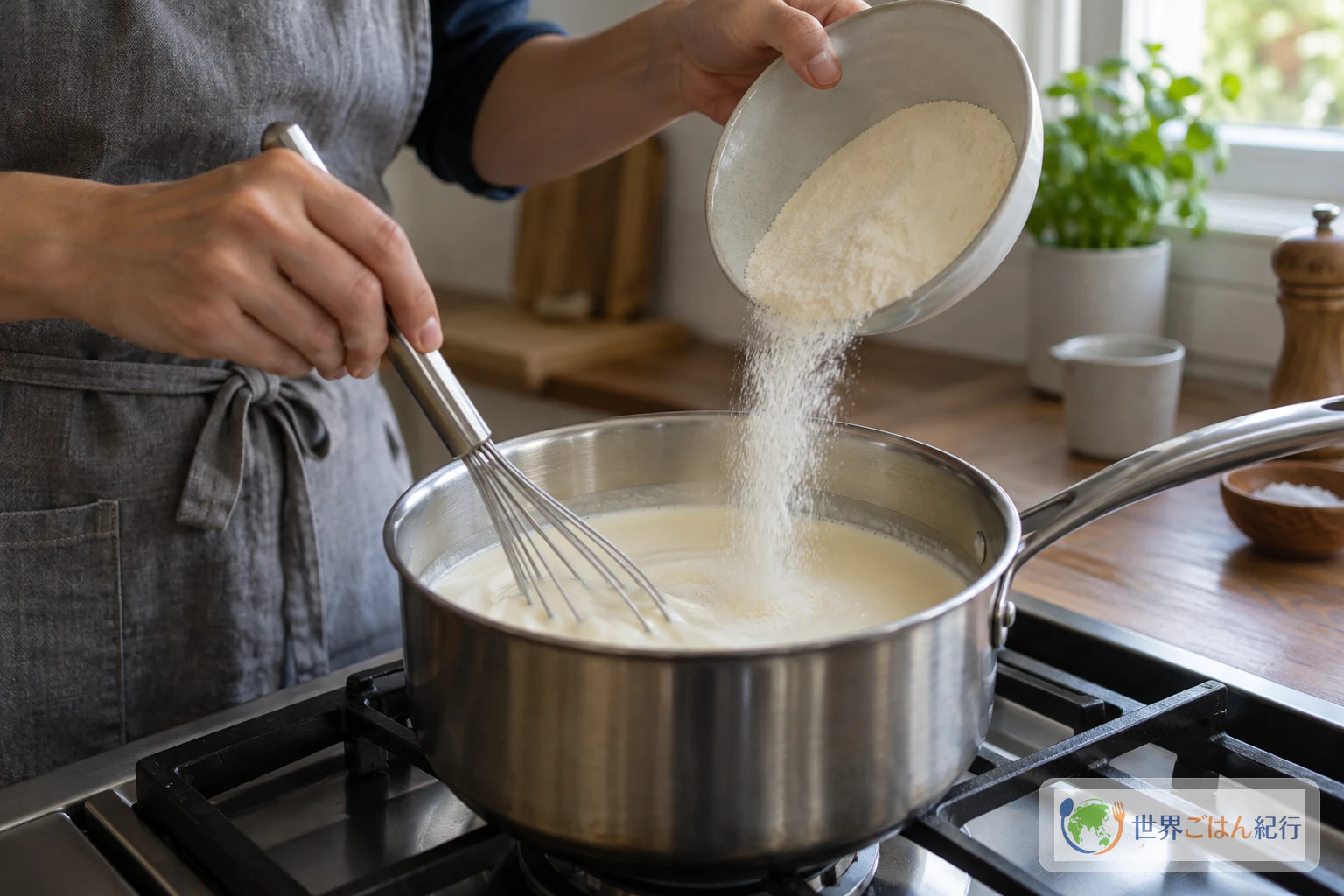
| Clumps of powder | Powders added all at once, or not mixed with the sugar first | Mix the sugar, dextrose and milk powder dry, then scatter them in gradually while whisking |
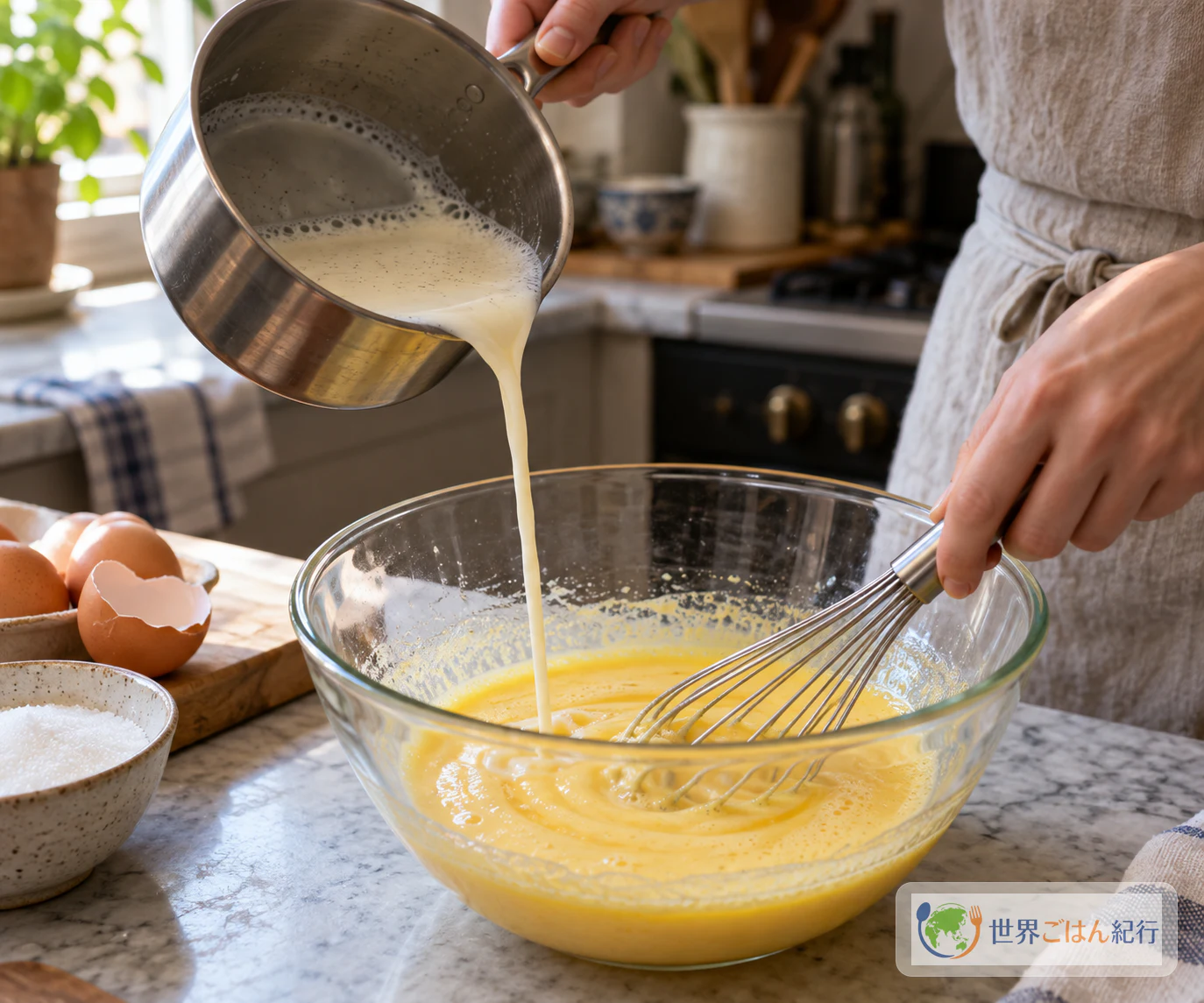
| Grainy, set egg | Heat too high, stirring stopped, yolks warmed too quickly | Pour the warm milk into the yolks slowly in step 3, keep stirring in step 4, use a thermometer, and don't go past 85°C into a boil |
| The base froze and won't go into the machine | The base was put in the freezer | The source chills the base in the refrigerator only, then blends it before churning. Keep it in the refrigerator |
| Hard or icy result | Machine capacity, pre-freezing, freezer conditions | Don't reduce the sugar. Follow your machine's capacity, pre-chilling and churning instructions. Home machines and freezers differ, so the cause can't be pinned down to one thing |
| No ice cream maker | — | Gelato d'Essai suggests freezing the base in ice cube trays and blending the cubes in a powerful blender. Don't expect the same texture as machine churning |
Five Variations on the Base Recipe
Each of these is a change from the base recipe, not part of it.
- No vanilla: Leave out the vanilla pod to bring the milk and egg-yolk crema to the front.
- No lemon zest: Leave out the zest to lean toward milk and vanilla.
- No dextrose: Use the source's suggestion of 25g extra sugar in place of the dextrose. Sweetness and freezing behavior may change.
- With seasonal fruit: Serve fruit on the side. Don't mix it into the base; change the plate, not the formula.
- With espresso: Serve espresso alongside to enjoy the contrast of hot and cold, without mixing liquid into the base.
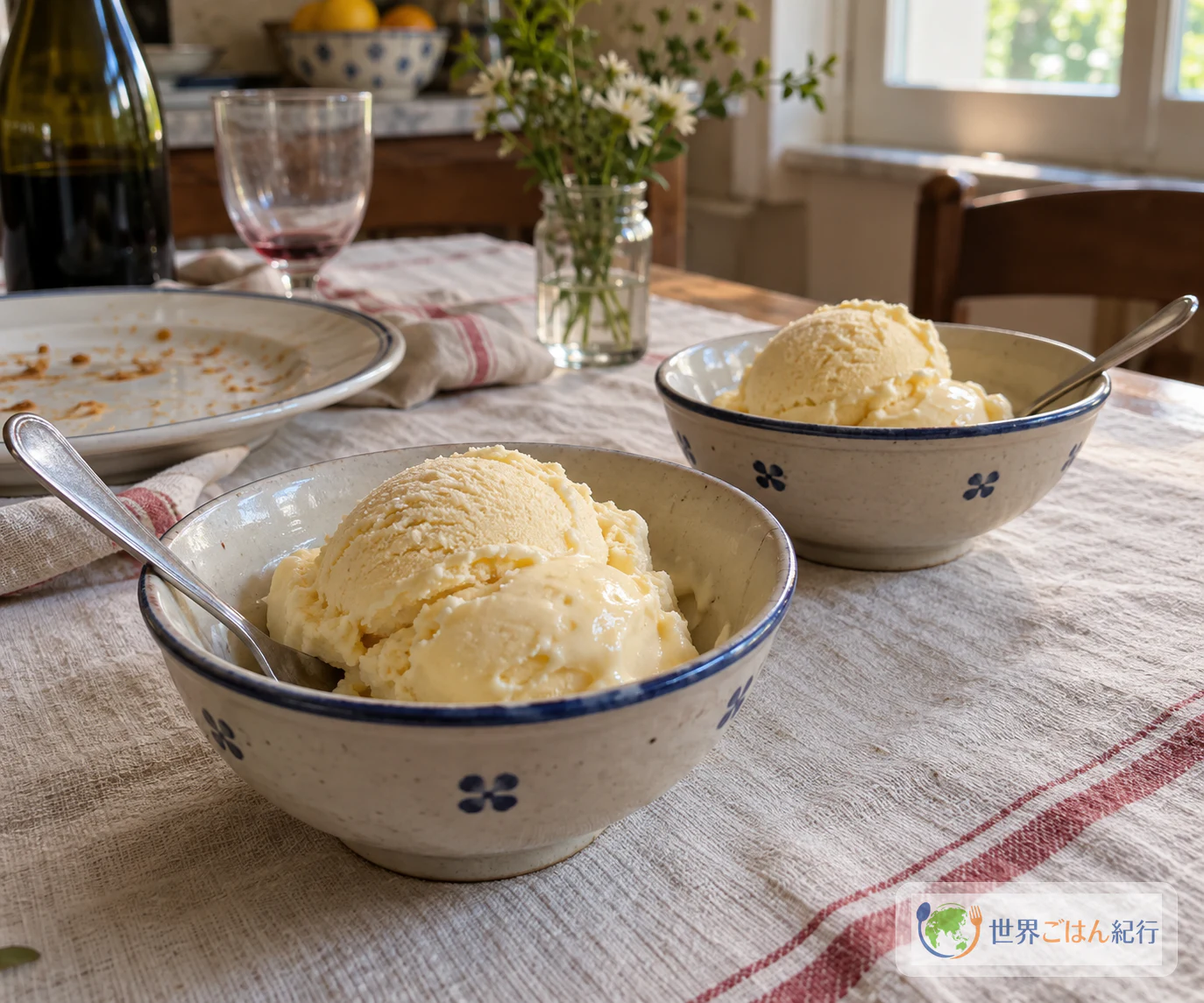
Culture and History: Snow, Ice and City Streets
Long before freezers, chilled desserts depended on snow and ice. The Carpigiani Gelato Museum, run by a company group in the gelato machine business, lays out its history in stages: chilled foods made with ice and snow, gelato and the rise of specialist makers between the sixteenth and eighteenth centuries, street selling and freezing technology in the nineteenth and twentieth centuries, and mechanization and hygiene control in the twentieth century. It is a museum overview, so it is best read as a broad outline rather than a settled origin story; gelato's beginnings can't be credited to a single person or city.
A clearer close-up comes from eighteenth-century Naples. Research by historian Melissa Calaresu, presented by Gonville & Caius College, Cambridge, looks at the city's sorbetterie as places of public sociability, at chilled treats sold in the street, and at a range of consumers wider than the elite. Behind that lay the work of collecting snow and ice, carrying it into the city and storing it. Heat, the supply of ice and places where people gathered all shaped how chilled desserts reached the city. The ices and sorbets of that era were not the same thing as today's gelato, and the modern gelateria counter shouldn't be read back into that history.
What carries through is that chilled desserts in Italy changed with their conditions: who could get ice, where people bought and ate them, and, later, how machines and hygiene rules reshaped production. Today's variety of styles, from crema and fior di latte to sorbetto, sits at the end of that long line. Gelato also turns up in other forms at the table; brioche con gelato, gelato tucked into a brioche, is a separate dish of its own.
Storage and Allergies
- Cooling: Cool the cooked base quickly in a shallow container and don't leave it at room temperature.
- Temperatures: Japan's Ministry of Health, Labour and Welfare gives 10°C or below for the refrigerator and −15°C or below for the freezer as guidelines.
- Freezing: Keep finished gelato in a clean, lidded container in the freezer. Home freezers can change the quality. Take out only what you will eat, and don't leave it out for long.
- Allergens: Contains milk and eggs. Check labels and watch for cross-contact on shared equipment.
Frequently Asked Questions
How is gelato different from ice cream?
There isn't a simple answer from fat or air content alone. Recipes, production methods and how they are served vary widely on both sides, and the sources used here don't support a single numerical definition. What is clear is that gelato itself covers several styles, such as crema, fior di latte and sorbetto.
Can I make it without an ice cream maker?
Gelato d'Essai suggests freezing the base in ice cube trays and then blending the cubes in a powerful blender. It is a workable route, but the texture won't necessarily match a machine-churned batch.
Can I replace the dextrose with sugar?
Yes. The source suggests 25g of extra sugar in place of the 30g dextrose. Expect the sweetness and the way it freezes to change somewhat.
How many servings does this make?
The source gives the recipe as about 1 kg. It doesn't give a number of servings, since that depends on the size of your bowls and scoops.
What temperature do the yolks need to reach?
In the source recipe, the milk goes into the yolks at about 75°C, and the combined base is then heated to 85°C without boiling. The source gives no holding time. As an added home check based on Japan's general food-safety guidance, stir the whole base, measure it, and confirm it stays at 75°C or above for at least 1 minute, without going past 85°C into a boil.
Sources
- Gelato d'Essai, "CREMA — Puoi farlo anche a casa!" Source of the 1 kg crema recipe: ingredients and amounts, the sugar split, warming the milk and adding the powders, tempering the yolks at about 75°C and heating to 85°C, quick cooling, at least 4 hours of refrigeration, blending and churning, the 25g sugar substitute for dextrose, and the ice-cube-tray method. https://gelatodessai.it/dessai-fai-da-te/crema-fai-da-te/
- Carpigiani Gelato Museum, "History." The museum's outline from ice-and-snow chilled foods to early modern gelato and specialist makers, street selling and freezing technology, and twentieth-century mechanization and hygiene control. https://www.gelatomuseum.com/en/history
- Gonville & Caius College, University of Cambridge, "The history of ice cream" (research of Melissa Calaresu). Eighteenth-century Neapolitan sorbetterie and public sociability, street selling and consumers, and the collection, transport and storage of snow and ice. https://www.cai.cam.ac.uk/news/history-ice-cream
- Great Italian Chefs / Cristina Bowerman, "Crema gelato." A separate crema recipe, cited only for comparison of ingredients and method (mixing from 45°C, cooking at 85°C for 5 minutes). https://www.greatitalianchefs.com/recipes/crema-gelato-recipe
- Ministry of Health, Labour and Welfare (Japan), "家庭での食中毒予防" (Preventing food poisoning at home; in Japanese). Refrigerator 10°C or below and freezer −15°C or below guidelines, core heating of 75°C for at least 1 minute, avoiding room-temperature standing, and cooling in shallow containers. https://www.mhlw.go.jp/stf/seisakunitsuite/bunya/kenkou_iryou/shokuhin/syokuchu/01_00008.html
- Ministry of Health, Labour and Welfare (Japan), "家庭でできる食中毒予防の6つのポイント" (Six points for preventing food poisoning at home; in Japanese). Core heating of 75°C for at least 1 minute and cooling in shallow containers, used for the home hold check in step 4. https://www.mhlw.go.jp/stf/seisakunitsuite/bunya/kenkou_iryou/shokuhin/syokuchu/01_00006.html