Genoese Minestrone: A Long, Quiet Simmer and a Green Finish
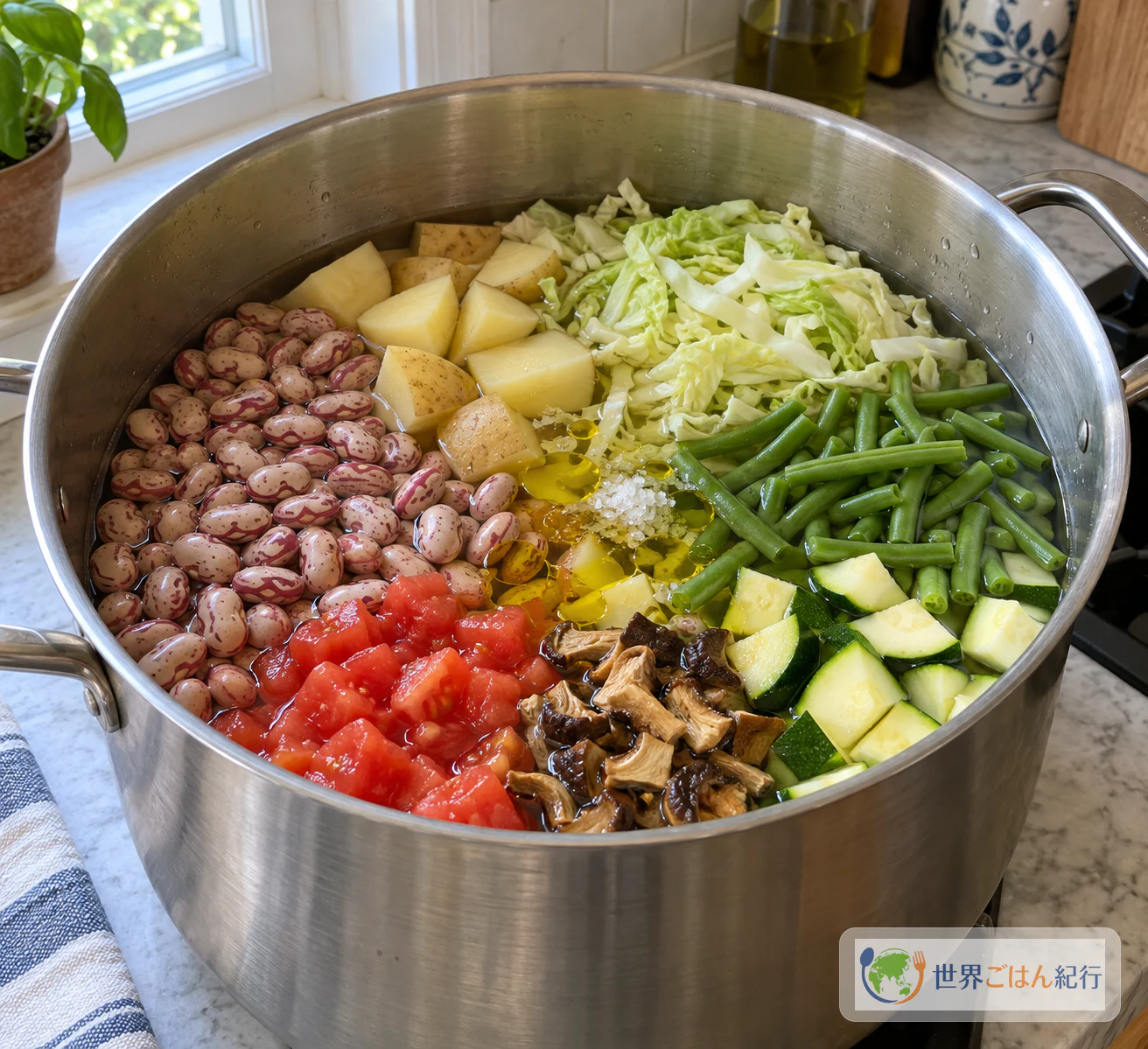
Cook the vegetables and beans until tender all the way through while they still hold their shape. Add the short pasta at the end, then turn off the heat and fold in the pesto last.
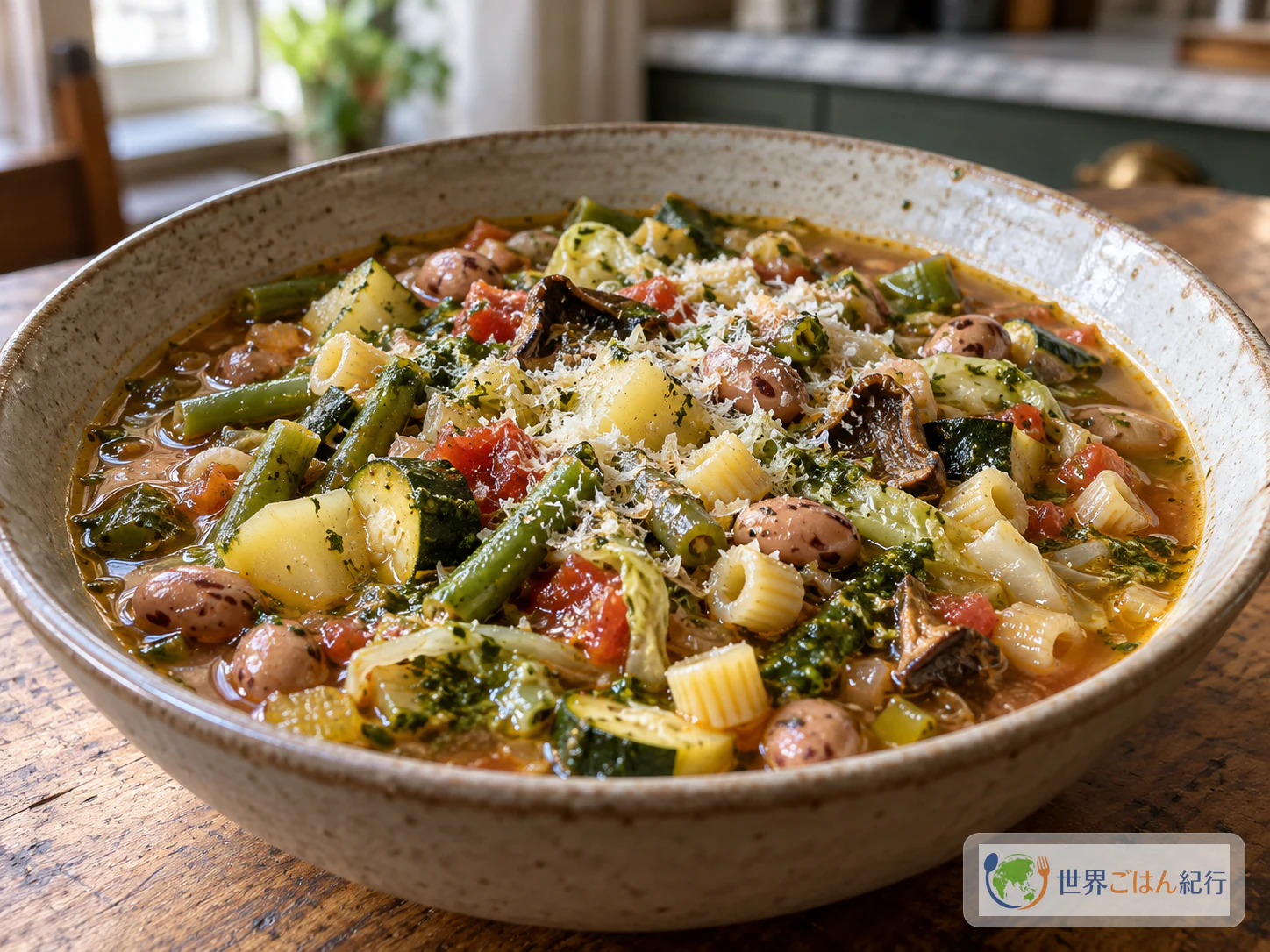
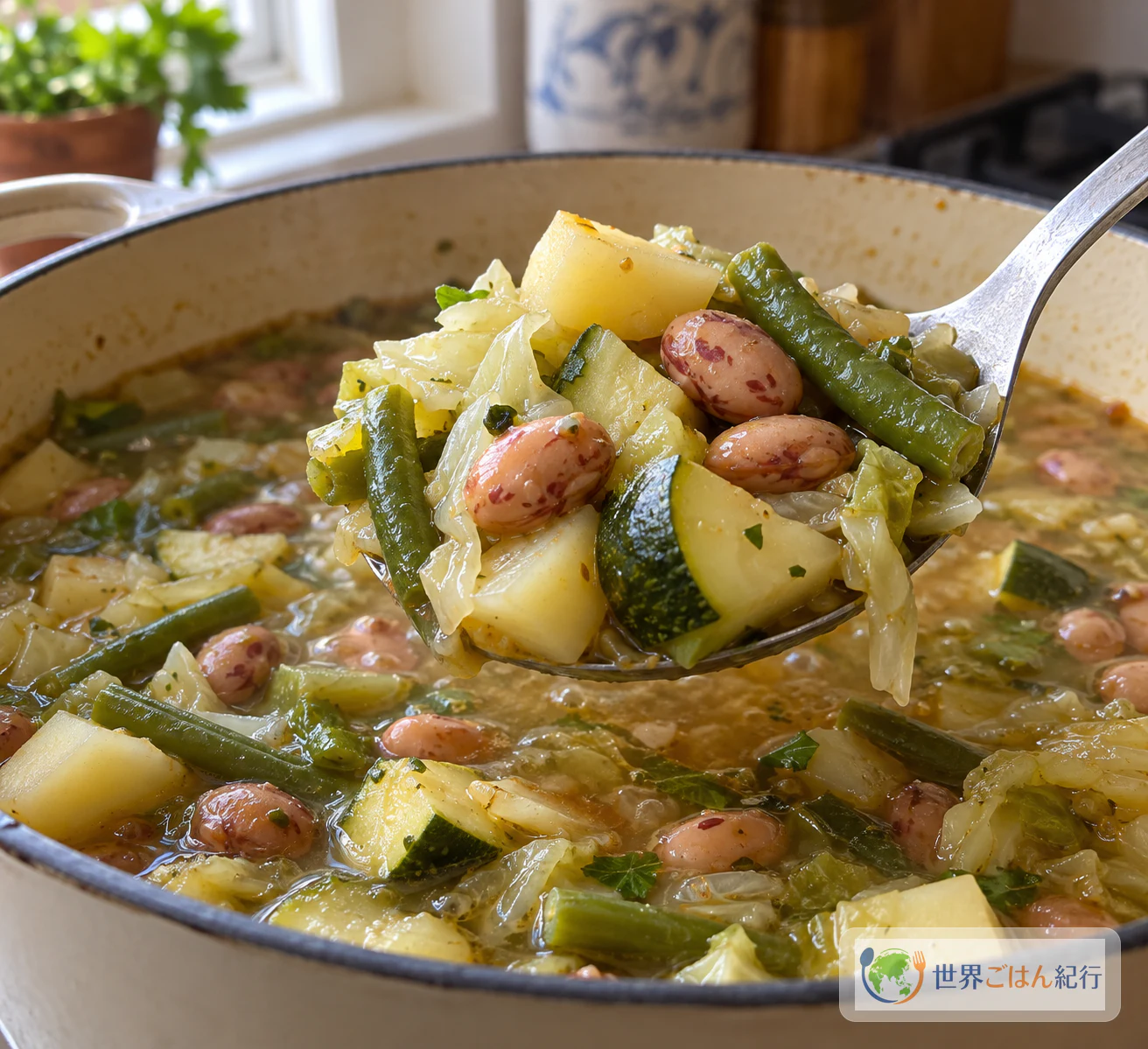
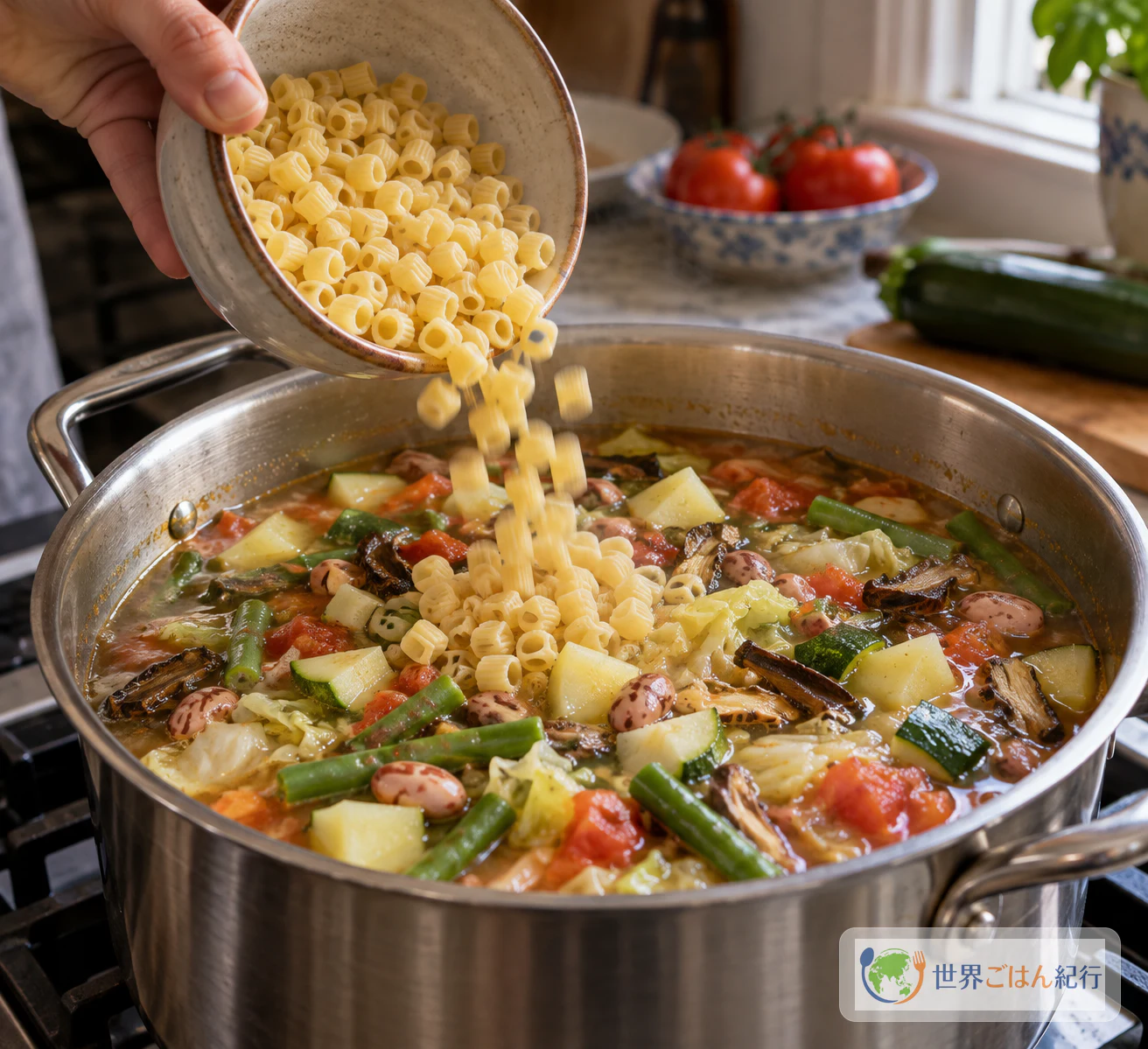
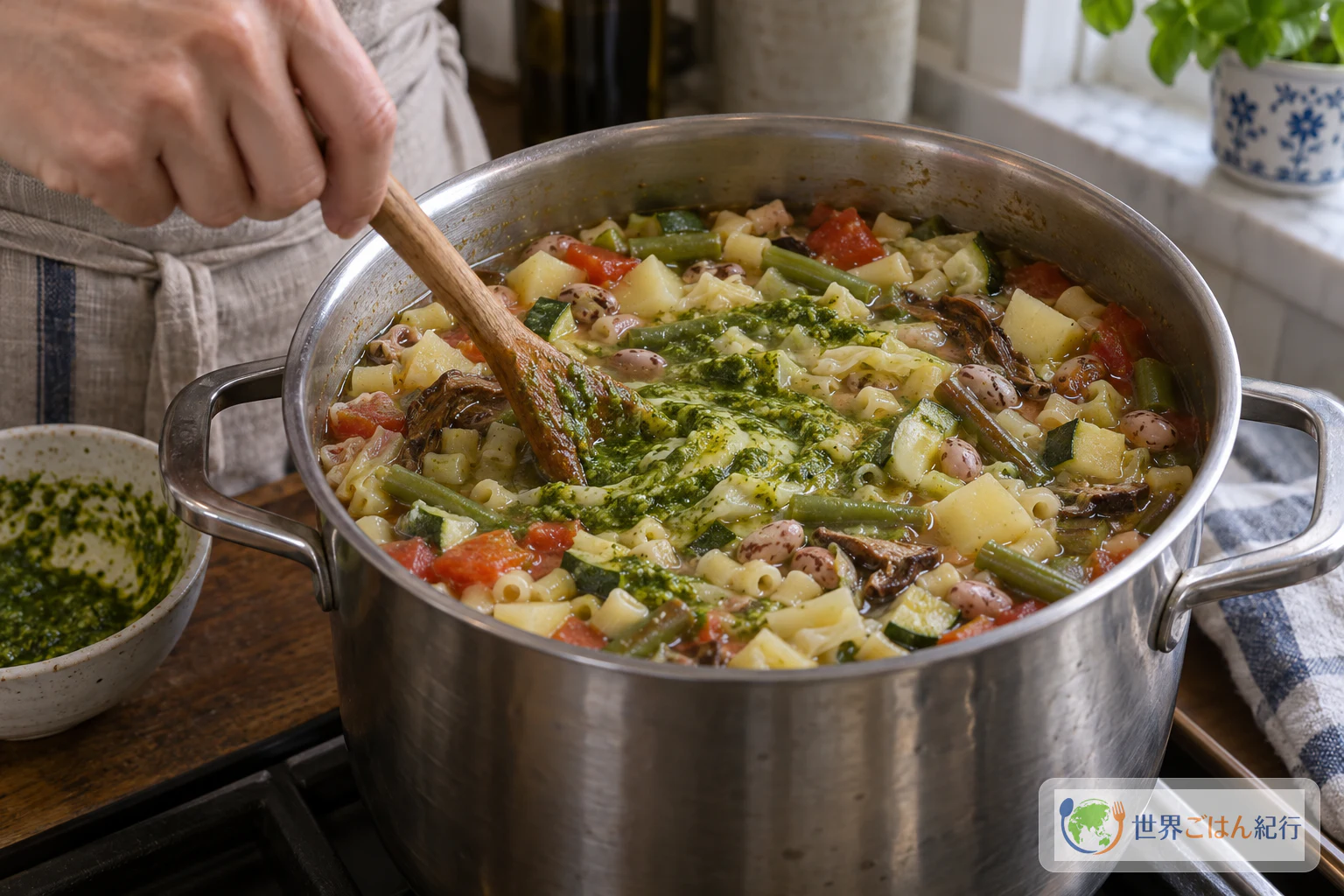
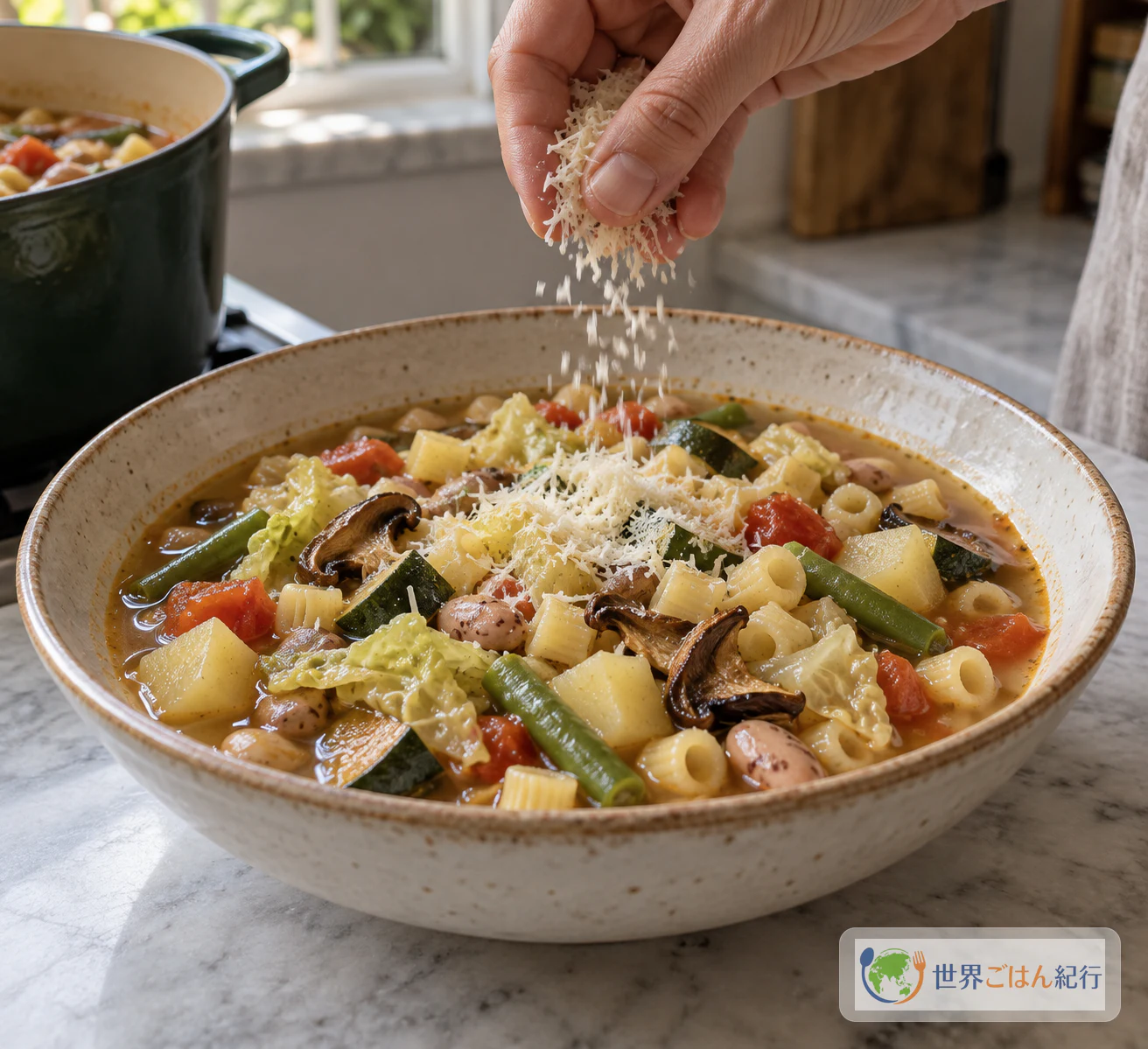
For most of its time on the stove, this soup smells round and mellow: potato, cabbage, green beans, zucchini, ripe tomato, borlotti beans and dried mushrooms simmering together over low heat. Then the small ridged pasta goes in, the heat goes off, and after a short pause a few spoonfuls of pesto are folded through. The steam that rises now carries basil, garlic and cheese on top of the vegetables. That last change is what sets this version apart.
This is one Genoese way to make minestrone, minestrone alla genovese: vegetables, beans and pasta cooked in one pot and finished with pesto. It is not the single standard minestrone for all of Italy. Even within Genoese recipes, the ingredients and method change from one source and household to the next. The recipe here follows one four-serving version from Cucchiaio d'Argento from start to finish, without mixing in quantities from other recipes.
Is There One Rule for Minestrone? What Makes the Genoese Version
Minestrone is a name shared by many regional soups, not one fixed formula. The recipe catalogue of the Accademia Italiana della Cucina lists separate entries under that name: a minestrone attributed to the Marche, a Genoese minestrone with pesto attributed to Liguria, and a Milanese minestrone attributed to Lombardy. Italy's official tourism portal describes Genoese minestrone as a soup of seasonal vegetables finished with pesto, and links it to Genova Pra'. The Cucchiaio d'Argento recipe page itself notes that families make their own seasonal versions.
So rather than asking what the "real" minestrone is, it helps to ask which version you are cooking. The one in this article uses cabbage, dried mushrooms, fresh borlotti beans and ditalini, simmered gently so the vegetables keep their shape. The Accademia's own Genoese recipe takes a different route: more vegetables to more water, cooked until they break down and thicken the soup, then pasta, pesto off the heat, and a 15-minute rest so it is served lukewarm. Both are Genoese; they are simply different pots.
The soup also has a place in stories about the port of Genoa. A publication on the cooking of reuse from the Accademia Italiana della Cucina recounts that food sellers known as cadrai or catrai, working from small boats or rafts, brought hot minestrone out to ships, served with pesto and garlic. That account comes through quotations and regional writing gathered in the publication, so it is best read as a recorded story, not as proof of the dish's single origin or of how it spread beyond Genoa.
Ingredients for 4 Servings
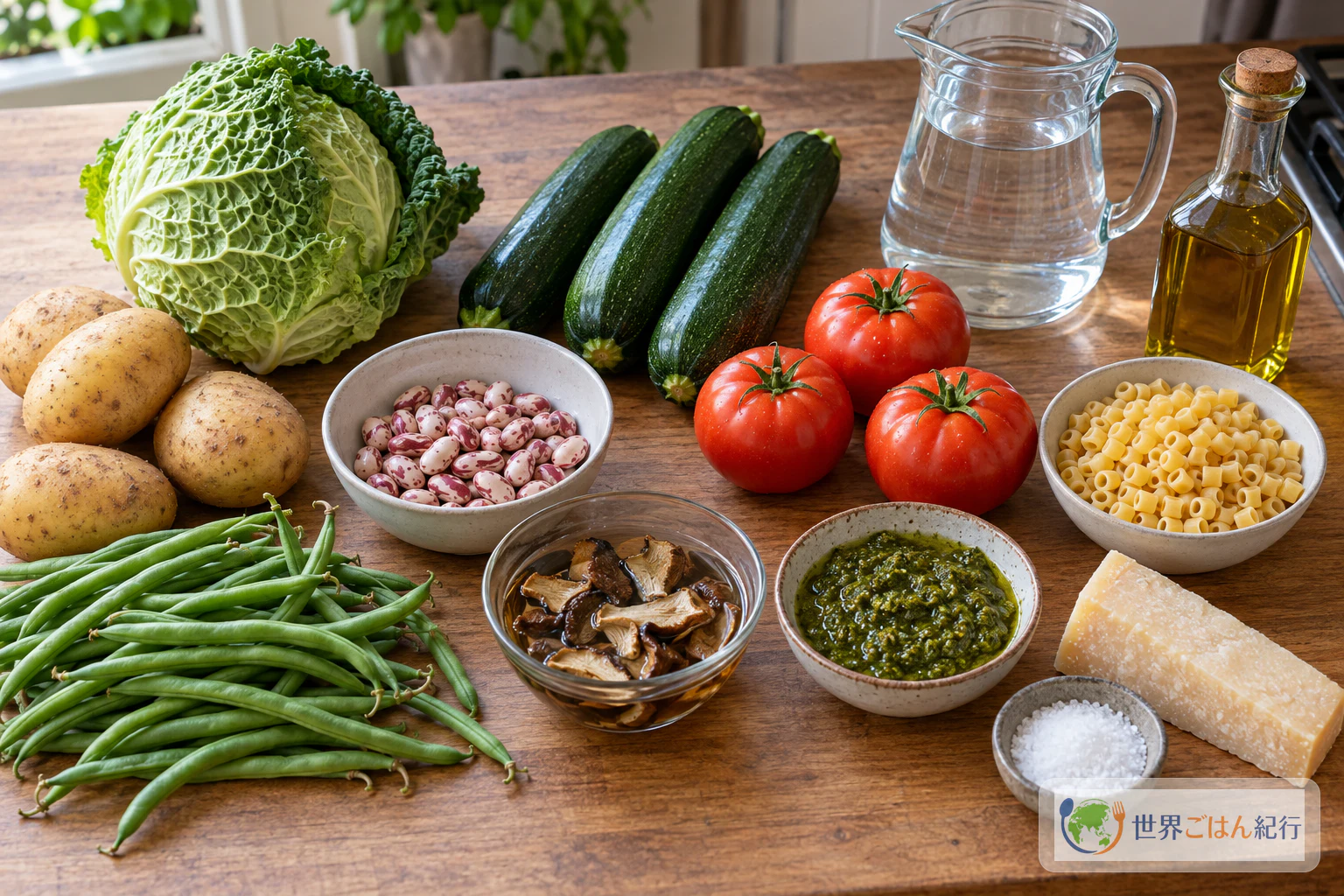
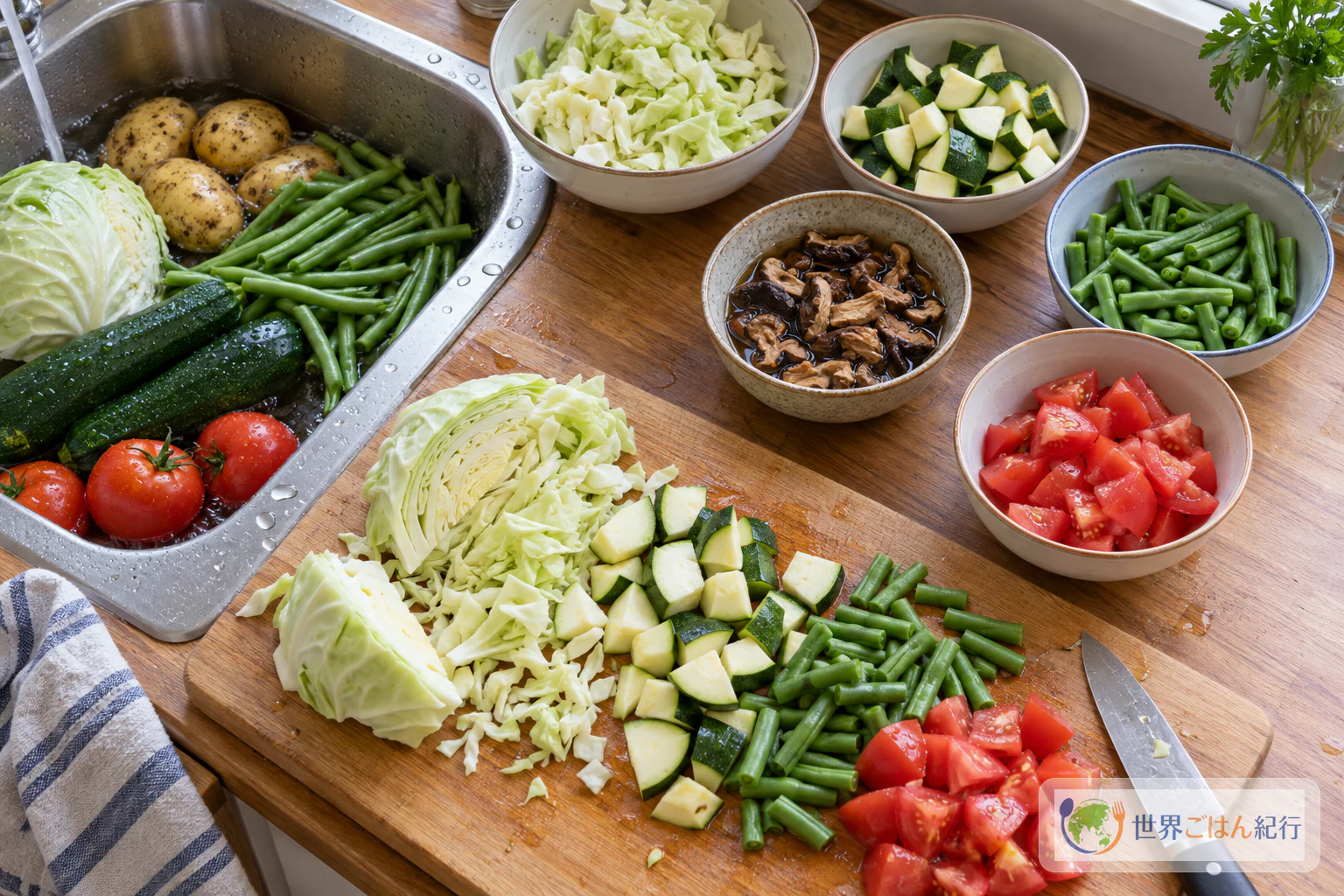
These are the amounts from the Cucchiaio d'Argento recipe for 4 servings. The zucchini and tomatoes are counted, not weighed, and the recipe gives no amounts for salt or Parmigiano Reggiano, so those are seasoned by taste.
This soup contains wheat (the pasta) and milk (Parmigiano Reggiano, and the cheese in most pesto). Pesto also commonly contains pine nuts or other nuts. Ingredients differ between pesto products, so read the label of the jar you buy, including any shared-facility statements. The substitutions in this article are about flavor and availability; none of them is a guarantee for an allergy-safe version.
Choosing and Substituting: Beans, Pasta, Mushrooms and Pesto
The 100 g of borlotti means fresh beans already out of the pod. It is not the weight of whole pods, and it is not 100 g of dried beans. Dried beans need soaking and cooking of their own, so swapping in the same weight of dried borlotti changes the whole recipe. If fresh borlotti are hard to find, canned borlotti or cannellini are a practical choice. The bean flavor becomes lighter, the skins and the way the beans break down change, and you will need to adjust liquid and timing, judging by the beans themselves.
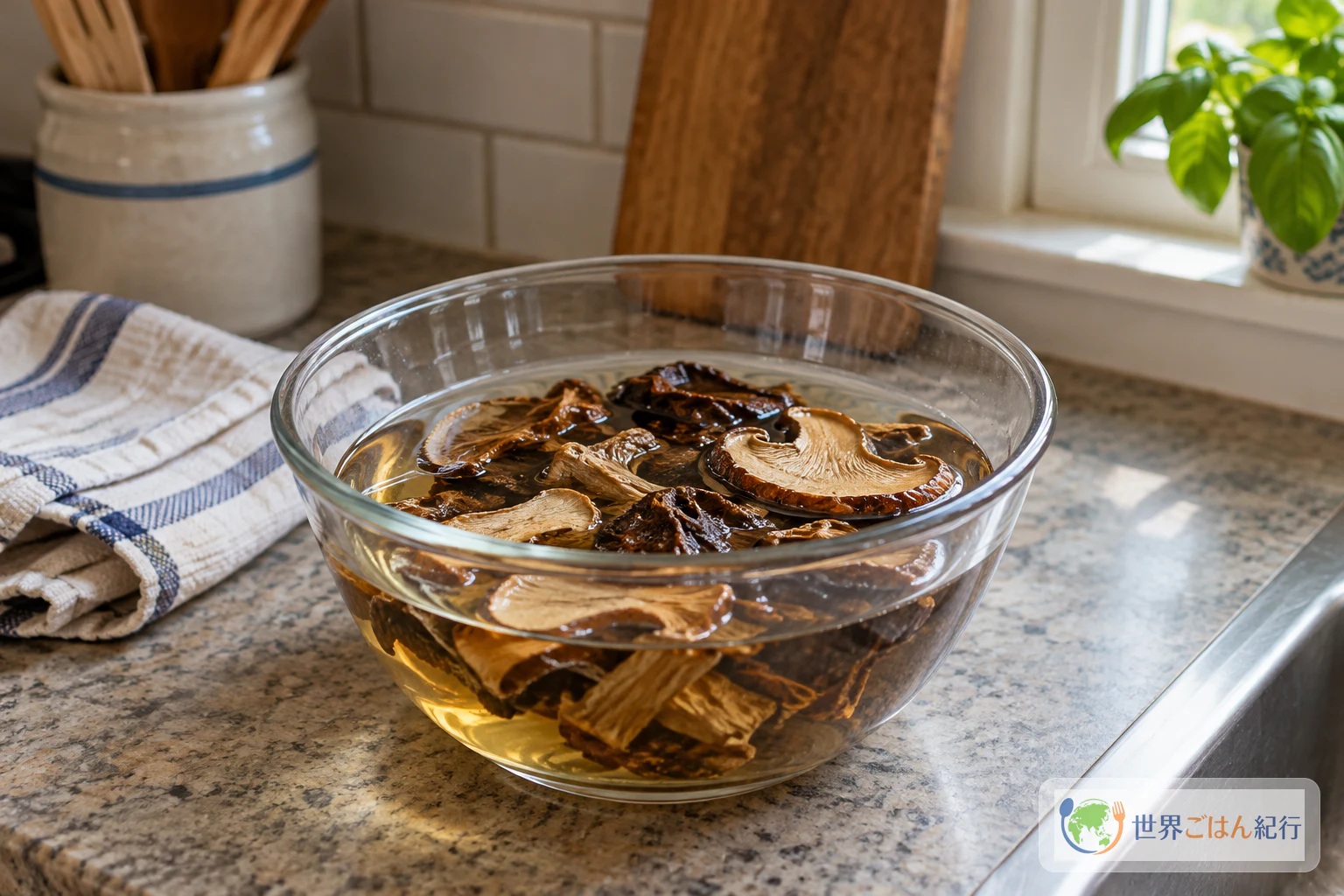
Ditalini rigati are short, ridged tubes. If you can't find them, a small macaroni works, though the shape and mouthfeel change; follow its own package time. For the dried mushrooms, the recipe does not name a variety. Dried porcini are one choice that keeps the aroma in the same family; Japanese or other mushrooms would give a different scent. The soaking water is not used in this recipe, so do not add it to the pot on your own.
Frozen green beans can stand in for fresh, but the water they release as they thaw makes them softer. Canned tomatoes in place of fresh ones are another editorial option; they change the liquid and acidity. Pesto is the hardest part to replace, because its basil, garlic, cheese, nuts and olive oil define the finish. Use the 4 tbsp as it comes, without stirring extra oil or cheese into it.
When shopping, start with the vegetables you can get anywhere, then the short pasta, beans and dried mushrooms, and the pesto last.
Equipment
- A large, heavy-based pot with a lid, big enough to hold 2 L of water plus all the vegetables, beans and pasta without boiling over. This does not mean a 2 L pot; check the actual capacity on the product listing. A heavy base makes it less likely to catch on the bottom during the long, low simmer.
- A small bowl for soaking the mushrooms
- A cutting board and knife
- A wooden spoon or spatula
Method: Genoese Minestrone
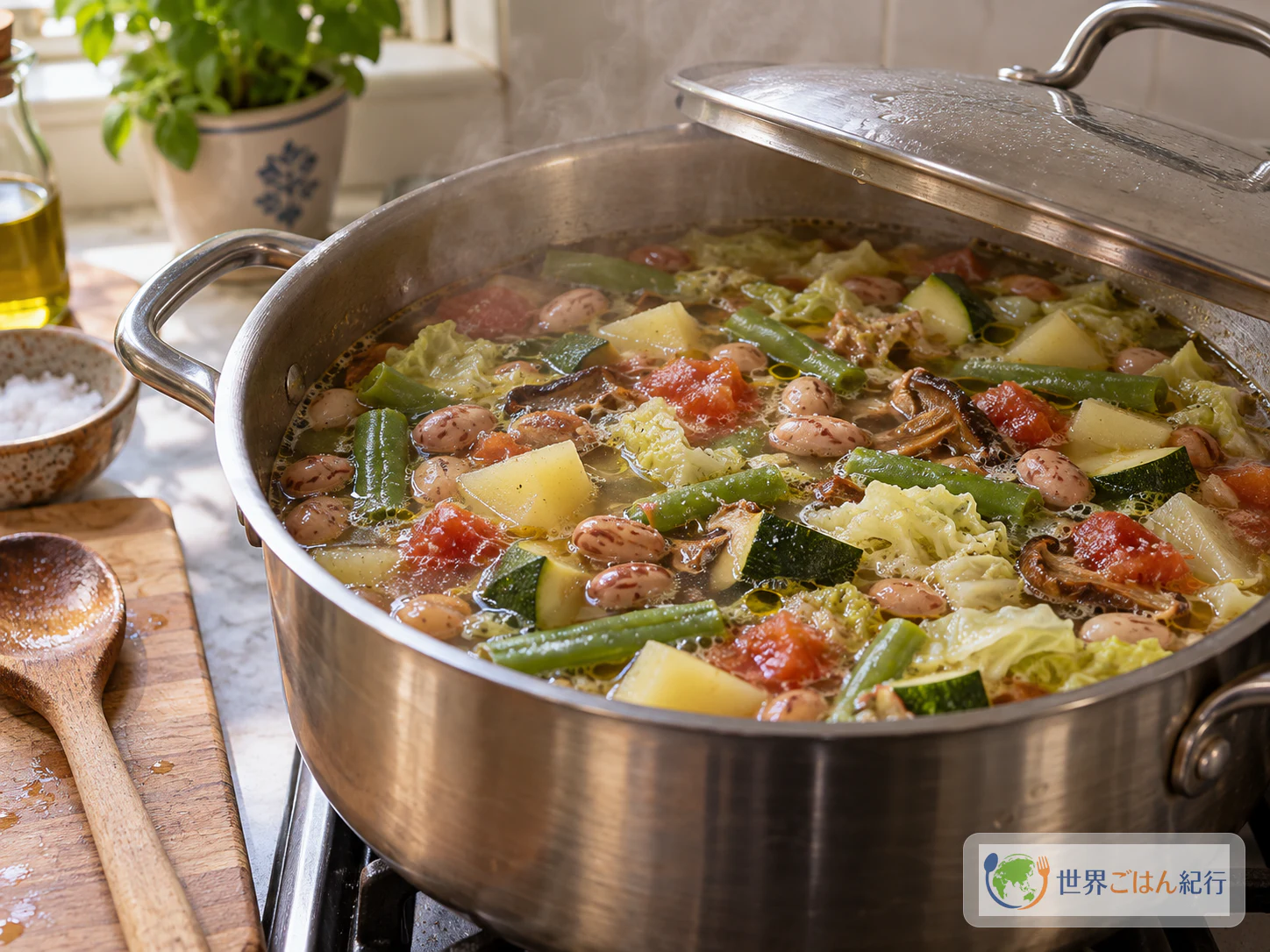
The 2-hour simmer is the recipe's guide. Your pot, your heat and the size of your pieces all change how fast things cook, so check that the vegetables and beans are tender to the center while still holding their shape.
Where It Goes Wrong: Fixing Problems in the Pot
Most problems with this soup come from three moments: the long simmer, the timing of the pasta, and when the pesto goes in. Check them one at a time.
| Condition | Main cause | How to fix it |
|---|---|---|
| Vegetables or beans still firm | Large or uneven pieces, a pot or burner that runs cool | Don't cut the simmer short across the board. Keep it on low and check the beans and vegetables again; next time, cut pieces to an even size |
| Vegetables collapsing | Boiling hard instead of simmering, uneven pieces | Keep the heat low with the lid slightly ajar, and keep the pieces even |
| Soup tastes thin | This recipe has no reducing or mashing step | Adjust salt first. Mashing some potato and beans to thicken is the method of a different Genoese recipe; treat it as a variation, not part of this one |
| Pasta too soft | Pasta added too early, or left sitting in the soup | Add the pasta close to serving, and stop the heat a little before the package time. Store leftovers without the pasta |
| Weak pesto aroma | Pesto heated or boiled | Turn off the heat, rest briefly, then add the pesto and don't cook it further |
| Too salty or not salty enough | Salt in pesto and cheese varies by product | Salt in stages and taste again after the pesto and cheese go in |
Variations Worth Making
Change the season's vegetables. The source recipe notes that families make seasonal versions. Leafy vegetables of the season can join or replace some of the vegetables, but they change the balance and the amount of liquid, so adjust as you go.
Use canned cannellini instead of fresh borlotti. This makes the soup easier to shop for. The bean aroma and the texture of the skins become lighter, and canned beans cook differently from fresh ones, so check the timing again.
Swap ditalini for a small macaroni. Easier to find in many supermarkets. Follow the macaroni's own package time when you add it.
Mash some potato and beans for a thicker soup. The Accademia Italiana della Cucina's Genoese recipe cooks the vegetables until they break down and thicken the soup. This is a separate method from the recipe in this article, with its own proportions, and gives a denser result.
Fry the cold leftovers: minestrone fritto. A traditional way of reusing leftovers, described in the next section. It is a different way of eating already-cooked soup, not a step in the recipe above.
Regional Differences and Ways of Eating
What goes into minestrone, and how it is finished, changes from region to region. In the Accademia Italiana della Cucina's catalogue, Liguria's entry is the Genoese minestrone with pesto, while Lombardy has its own Milanese minestrone. An article from Cucina Regionale Italiana describes Milanese minestrone combining rice, beans, cabbage and other vegetables, with warm and cool versions depending on the season, and discusses written mentions of it from the 19th century. That is a Milanese example, not the same dish as the Genoese pesto version, but it shows how much the name can cover.
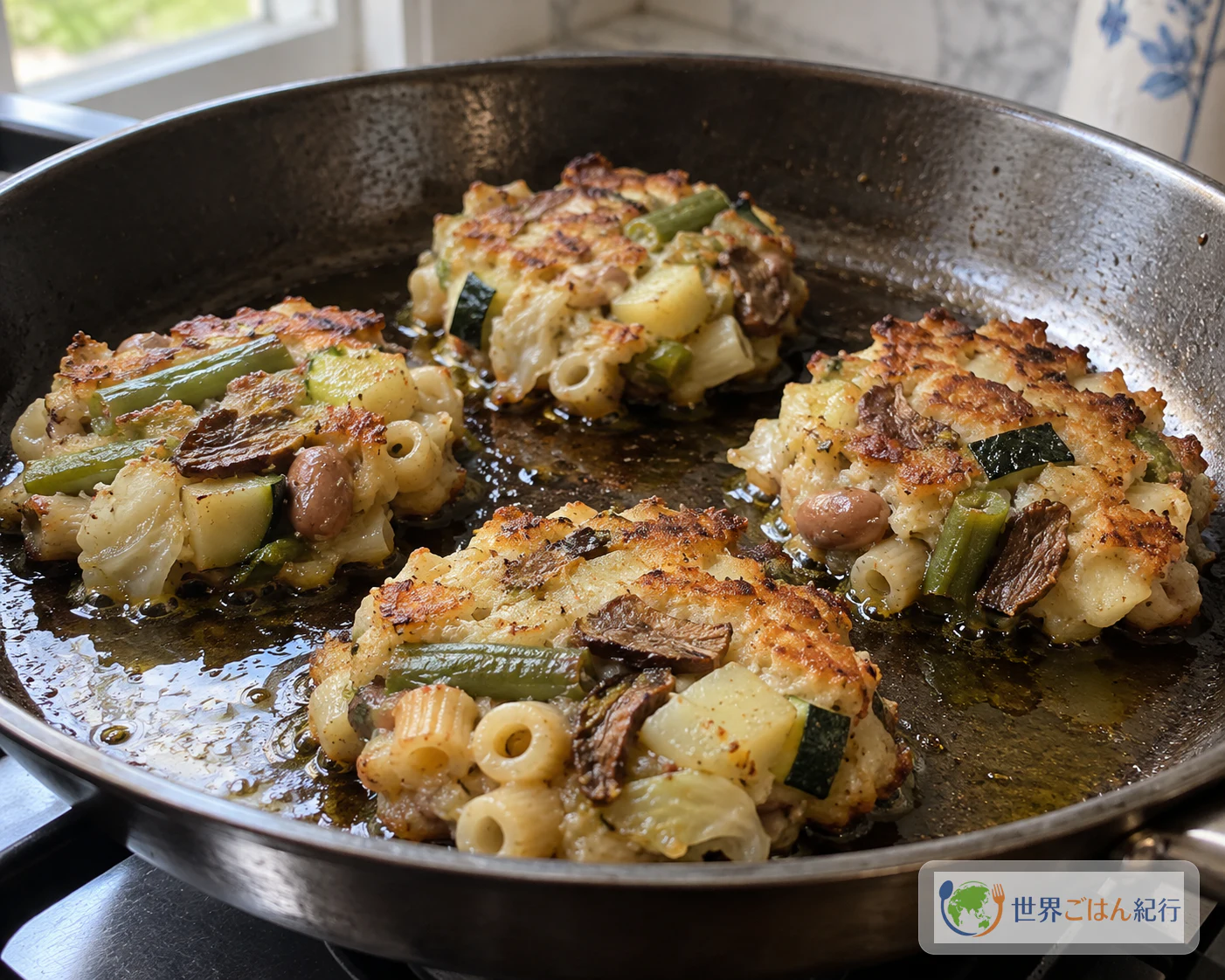
The Accademia's publication on the cooking of reuse also describes a Genoese habit for leftovers: minestrone that has cooled until firm is cut into pieces and fried in a little oil, as minestrone fritto. The same publication gives its own six-serving minestrone with red beans, green beans, eggplant, potatoes, zucchini, pesto and pasta or rice, a separate recipe whose quantities are not mixed into the one here. Treat minestrone fritto as a traditional way of eating, not as storage advice; the safety notes in the next section apply to any leftovers you keep today.
If you'd like to cook more from the same country, browse more Italian dishes.
Storage, Reheating and Safety
Don't leave cooked soup at room temperature for long. Divide leftovers into shallow containers so they cool quickly. When reheating, heat thoroughly, stirring down to the bottom of the pot; Japan's Ministry of Health, Labour and Welfare gives 75°C or above as a guide.
For texture, the Cucchiaio d'Argento recipe suggests storing the soup without the pasta where possible. Its own guidance is up to 2–3 days in an airtight container in the refrigerator, and 2–3 months in the freezer without the pasta or pesto. That is a recipe site's suggestion, not a verified safe storage period, so follow the handling advice above and use your own judgment.
Reheat only the portion you plan to eat. If you stored the soup without pasta, cook pasta for that portion separately or in the reheated soup. If you want the pesto aroma back, you can stir a small fresh spoonful into each bowl at serving.
Frequently Asked Questions
How is Genoese minestrone different from other minestrone?
The Genoese version is finished with pesto. Minestrone is a name shared by many regional soups, and Italian sources list separate versions for different regions, so there is no single national standard. This article follows one Genoese recipe.
What can I use instead of fresh borlotti beans?
Canned borlotti or cannellini are a practical editorial substitute, with a lighter bean flavor and different texture and timing. Don't replace the 100 g of fresh shelled beans with 100 g of dried beans; dried beans need their own soaking and cooking.
When does the pesto go in?
At the very end. Once the pasta is done, turn off the heat, let the soup rest for about 2 minutes, then stir in the pesto. Don't boil it afterward.
Can I store the soup with the pasta in it?
You can, but the pasta keeps softening. The source recipe suggests storing it without the pasta for better texture. For safety, cool leftovers quickly in shallow containers and reheat thoroughly.
Is minestrone meant to be eaten cold?
This recipe is served hot from the pot after its short rest. Other versions differ: the Accademia's Genoese recipe rests the soup to serve it lukewarm, a Milanese example has warm and cool seasonal versions, and Genoese minestrone fritto fries leftovers that have cooled and set. None of these makes the Genoese version always a cold dish.
Sources
- Cucchiaio d'Argento (recipe by Sara Querzola), "Minestrone alla genovese." The four-serving recipe used in this article: all ingredients and amounts, mushroom soaking, the 2-hour low simmer with the lid ajar, pasta timing, pesto added off the heat, storage and substitution suggestions, and the note that family versions vary by season. https://www.cucchiaio.it/ricetta/ricetta-minestrone-genovese-pesto/
- Accademia Italiana della Cucina, "Minestrone alla genovese al pesto." A separate Ligurian recipe with its own proportions, mashing, pasta and pesto at the end, and a rest before serving lukewarm; used for comparison only. https://www.accademiaitalianadellacucina.it/it/ricette/ricetta/minestrone-alla-genovese-al-pesto
- Accademia Italiana della Cucina, "Ricette | Page 14." Recipe catalogue listing minestrone from the Marche, Genoese minestrone with pesto from Liguria, and Milanese minestrone from Lombardy. https://www.accademiaitalianadellacucina.it/it/ricette?page=13
- Accademia Italiana della Cucina, "Itinerari di Cultura Gastronomica: La cucina di riuso." The account of the cadrai/catrai bringing minestrone with pesto and garlic to ships, minestrone fritto, and a separate six-serving minestrone. https://www.accademiaitalianadellacucina.it/sites/default/files/print_pdf/La%20cucina%20riuso_1.pdf
- Italia.it / ENIT, "What to eat in Liguria in winter: typical dishes to discover." Genoese minestrone as seasonal vegetables finished with pesto, associated with Genova Pra'. https://www.italia.it/en/liguria/things-to-do/winter-notes
- Cucina Regionale Italiana, "Minestrone alla milanese – storia e curiosità." Milanese minestrone with rice, beans and cabbage, seasonal warm and cool versions, and 19th-century mentions. https://cucinaregionaleitaliana.it/portfolio-items/minestrone-alla-milanese-storia-e-curiosita/
- Ministry of Health, Labour and Welfare (Japan), "家庭での食中毒予防" (Preventing food poisoning at home). Avoiding long periods at room temperature, cooling leftovers quickly in shallow containers, and thorough reheating with a guide of 75°C or above. https://www.mhlw.go.jp/stf/seisakunitsuite/bunya/kenkou_iryou/shokuhin/syokuchu/01_00008.html