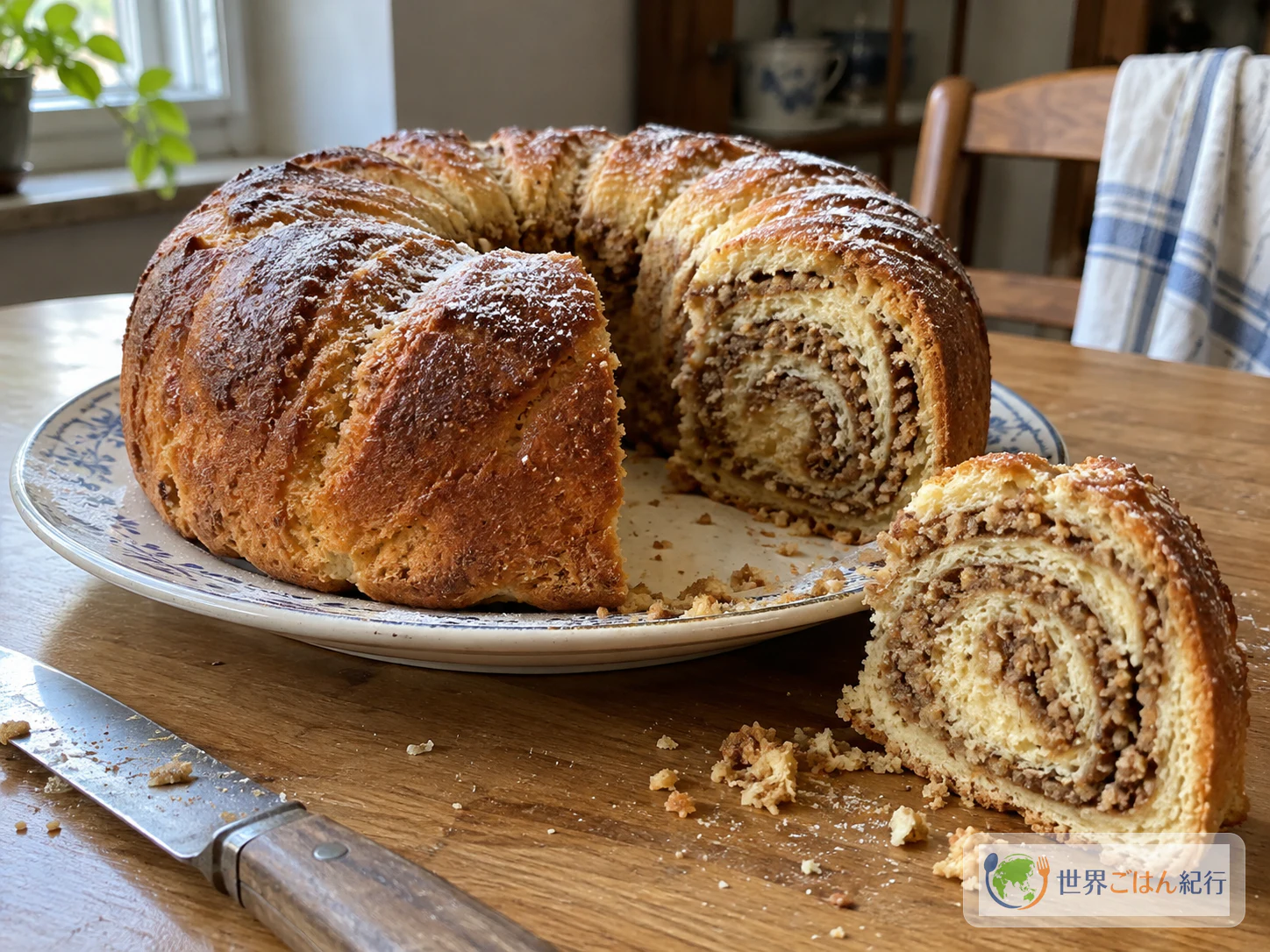
Potica: A Spiral of Walnuts and Yeast Dough for the Holiday Table
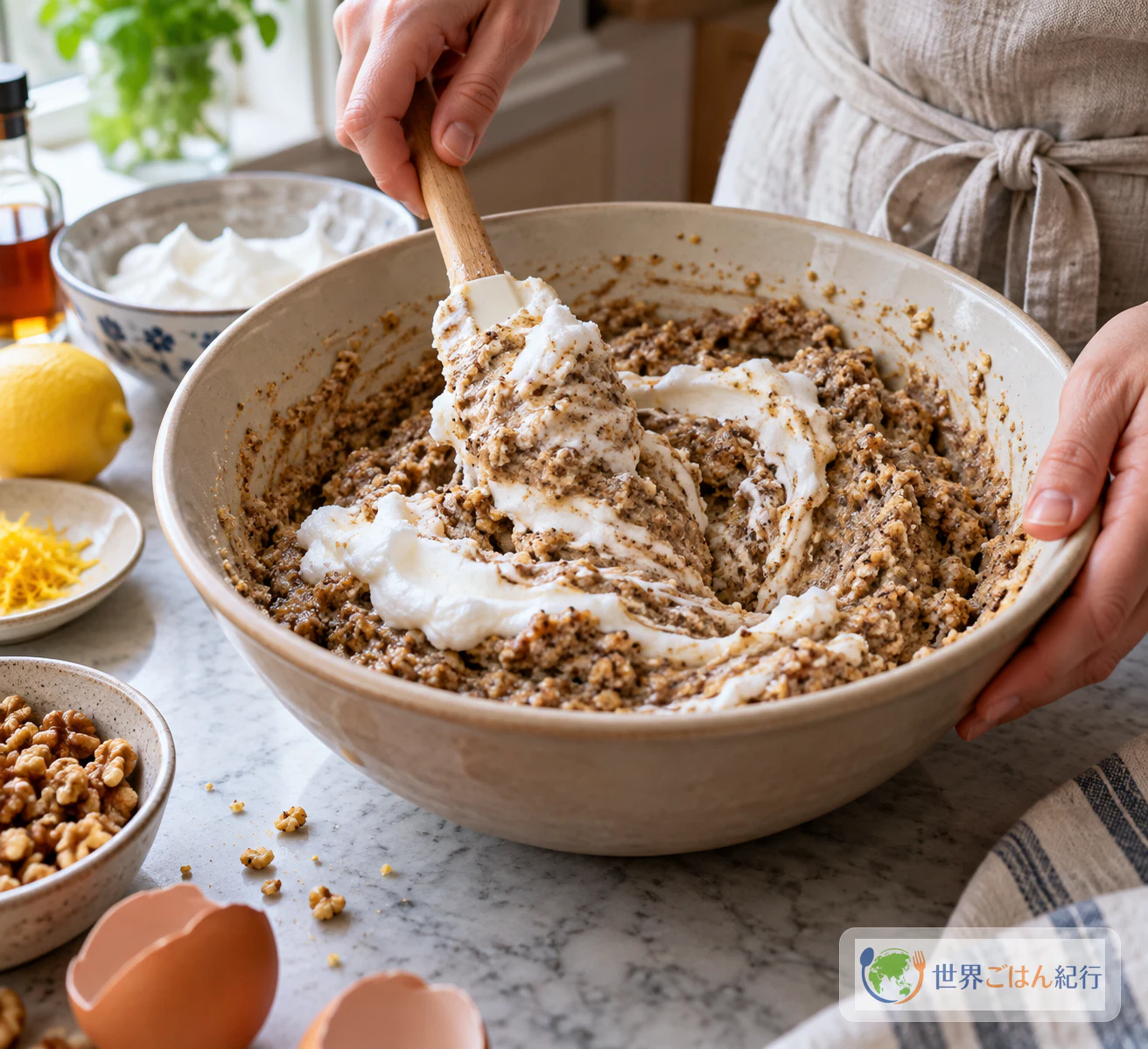
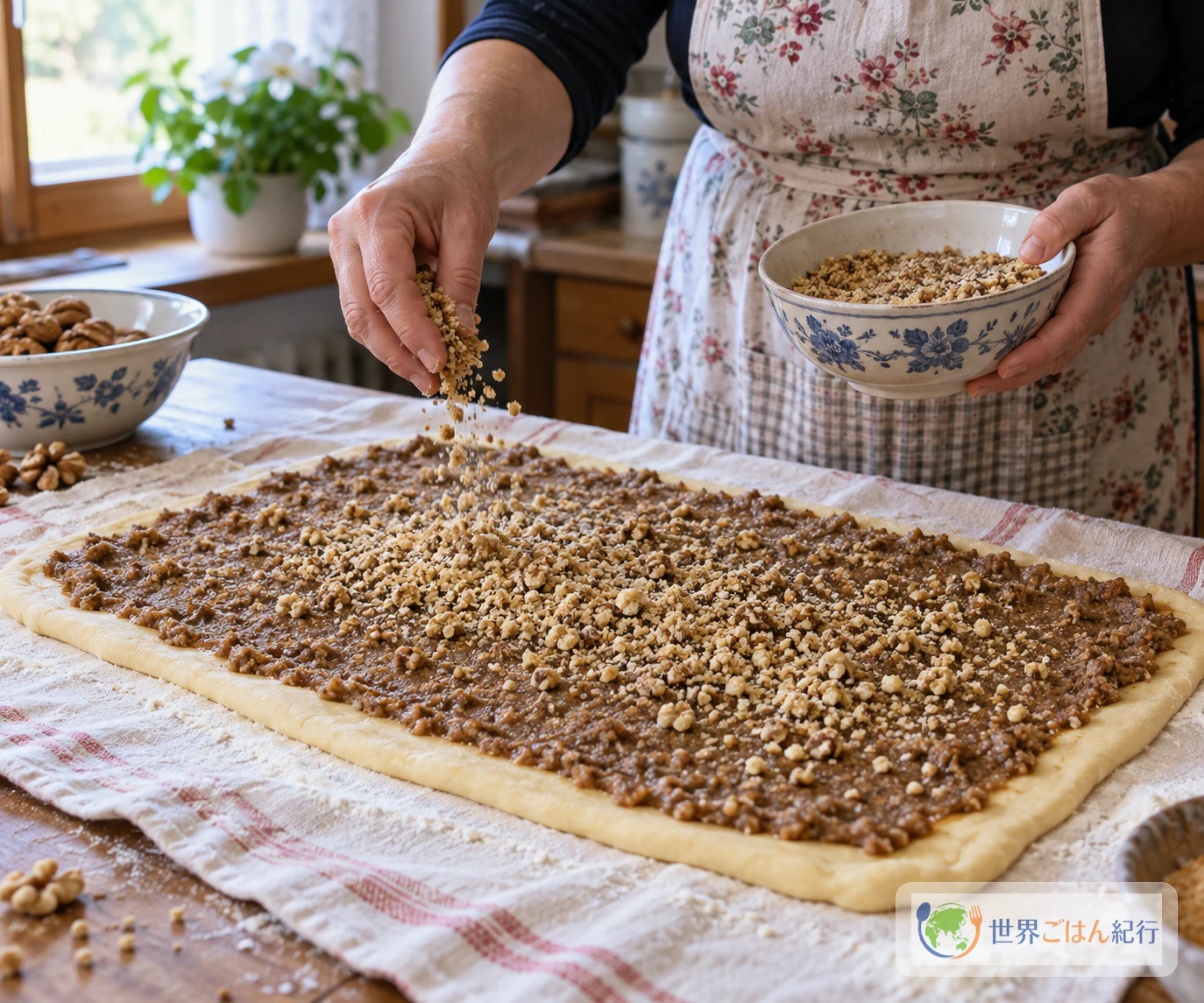
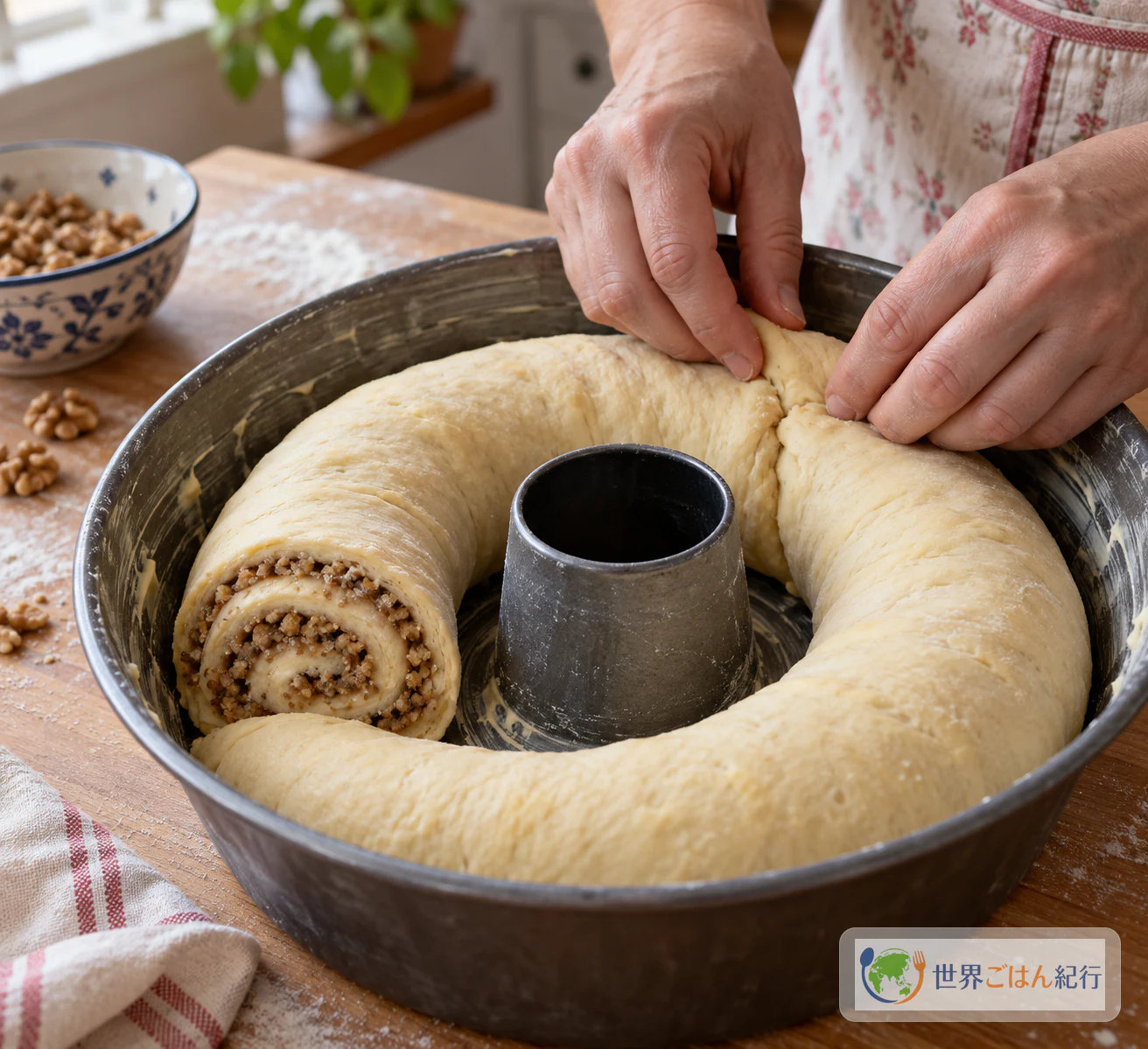
Keep the groups of milk, butter, sugar and egg apart, because each one goes in at a different stage. Roll the dough tightly around an even layer of filling so the walnut spiral shows when the ring is cut.
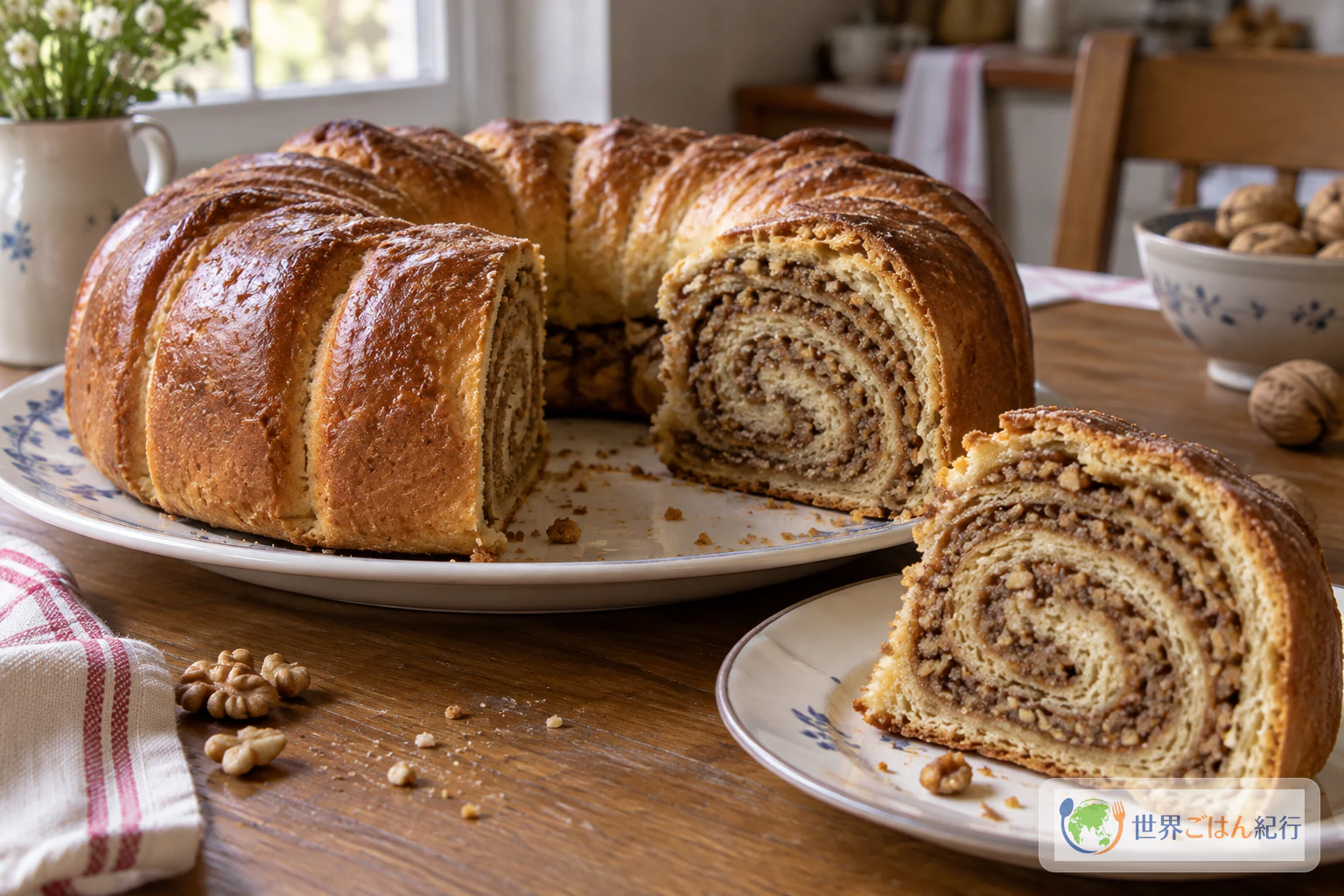
At Christmas and Easter in Slovenia, potica is one of the sweets that families bake for the holiday table. The spiral of dough and filling appears only when a wedge is cut from the ring.
Potica (walnut potica is orehova potica) is a yeast dough rolled around a filling. Visit Ljubljana, the city's tourism organization, calls it a recognizable Slovenian dessert that is especially popular at holidays, and notes that recipes differ from family to family. There is no single correct formula, so this article follows one version: the classic walnut potica published by Visit Ljubljana. Its amounts are not mixed with those of any other recipe.
- Not kitchen-tested: Sekai Gohan has not kitchen-tested this recipe. The amounts, times and temperatures come from the published Visit Ljubljana version.
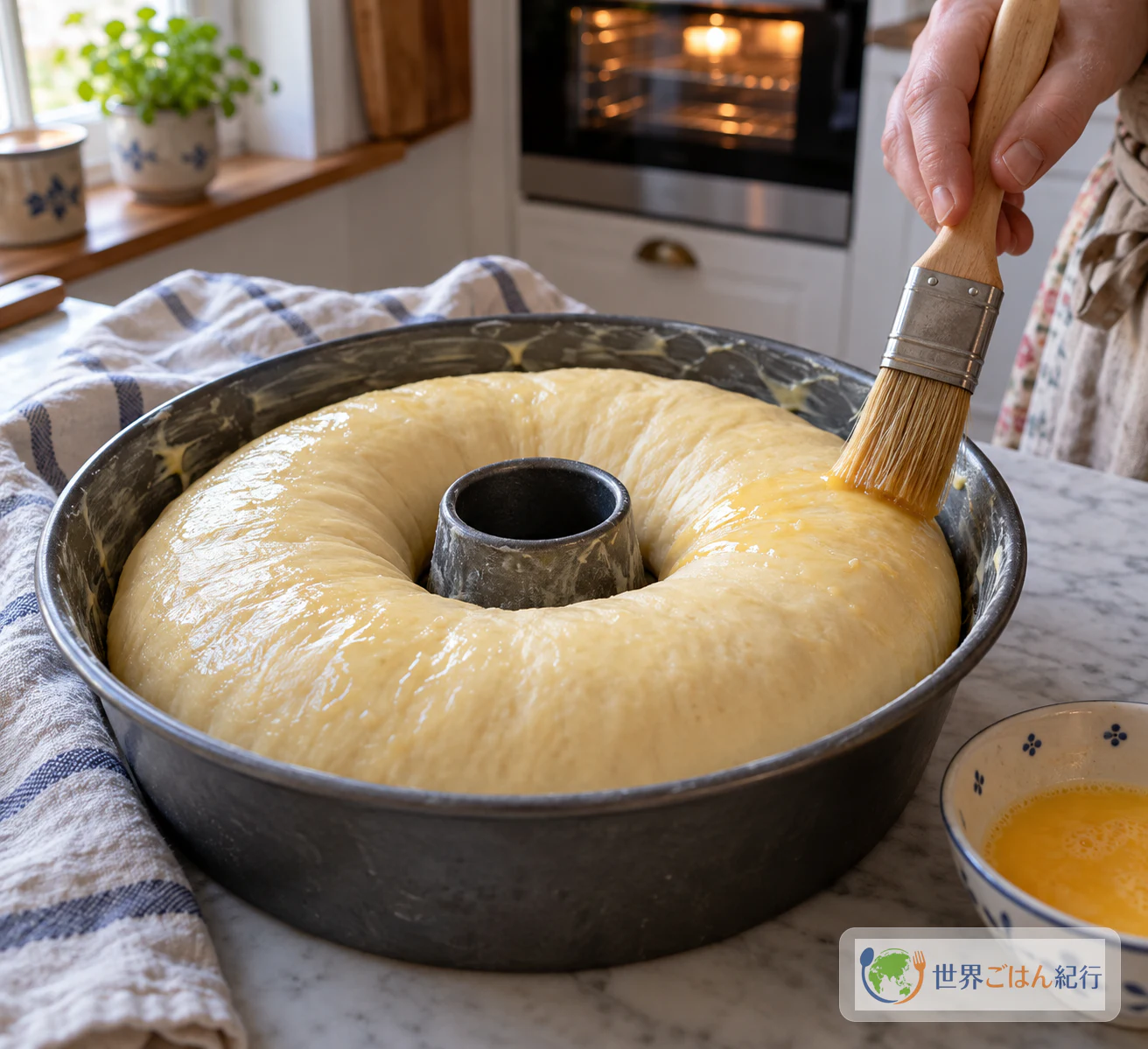
- One editorial addition: Visit Ljubljana's method brushes the potica with beaten egg before baking, but its ingredient list has no egg for this. We list 1 whole egg for the glaze. That quantity is our addition, not Visit Ljubljana's. The Slovenian Farm Holidays Association's walnut potica also uses an egg glaze.
- Powdered sugar: It appears in Visit Ljubljana's last step with no amount, so we treat it as an optional finish.
- Not specified: The published recipe gives no rising times or mold diameter, and we do not add any.
Ingredients for Walnut Potica
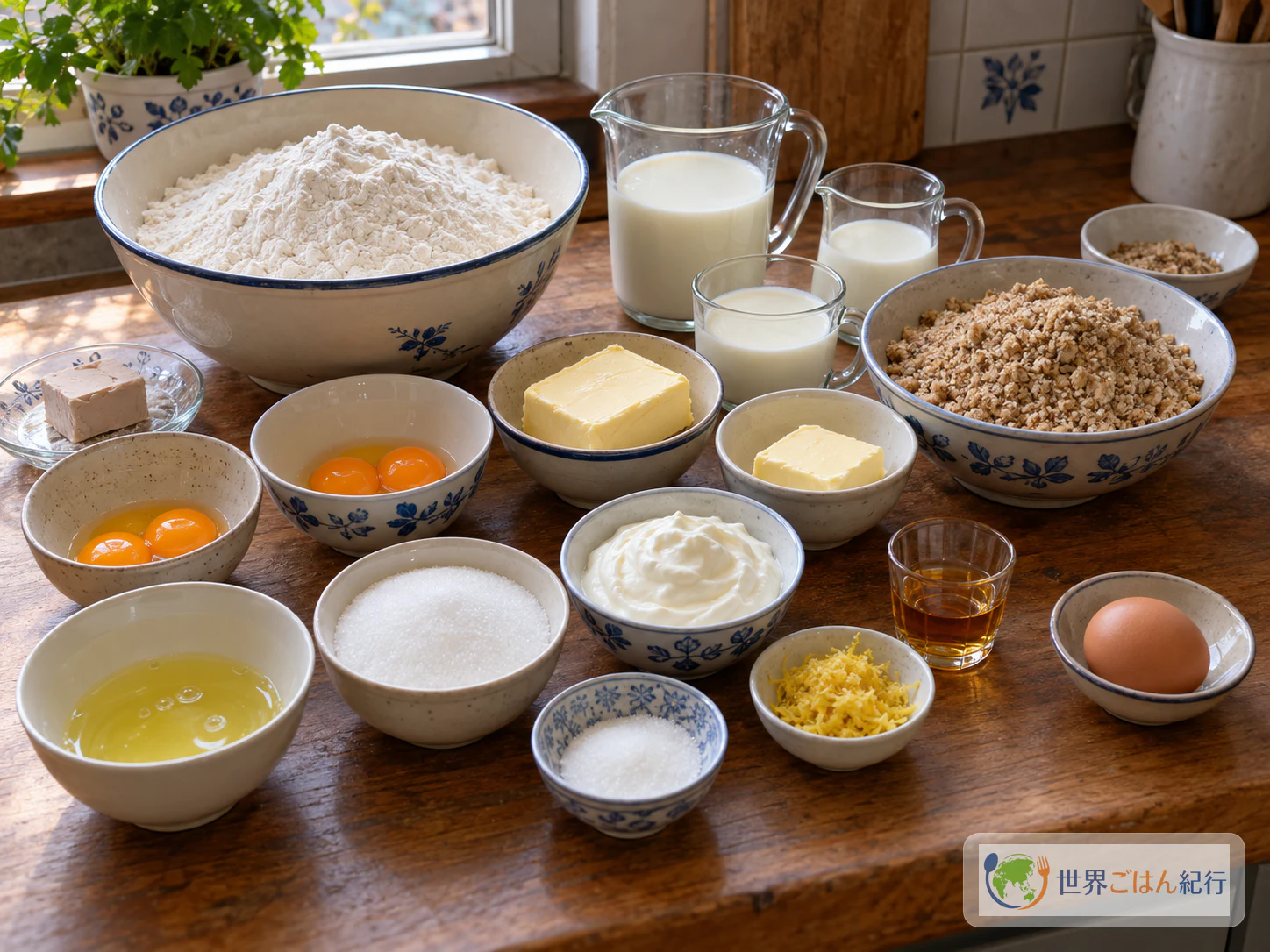
This potica contains wheat, eggs, milk, walnuts (a tree nut) and rum. Watch for nut cross-contact as well. Allergy-friendly swaps would make a different pastry from the one described here.
Equipment
- Round potica mold (potičnik), buttered before use
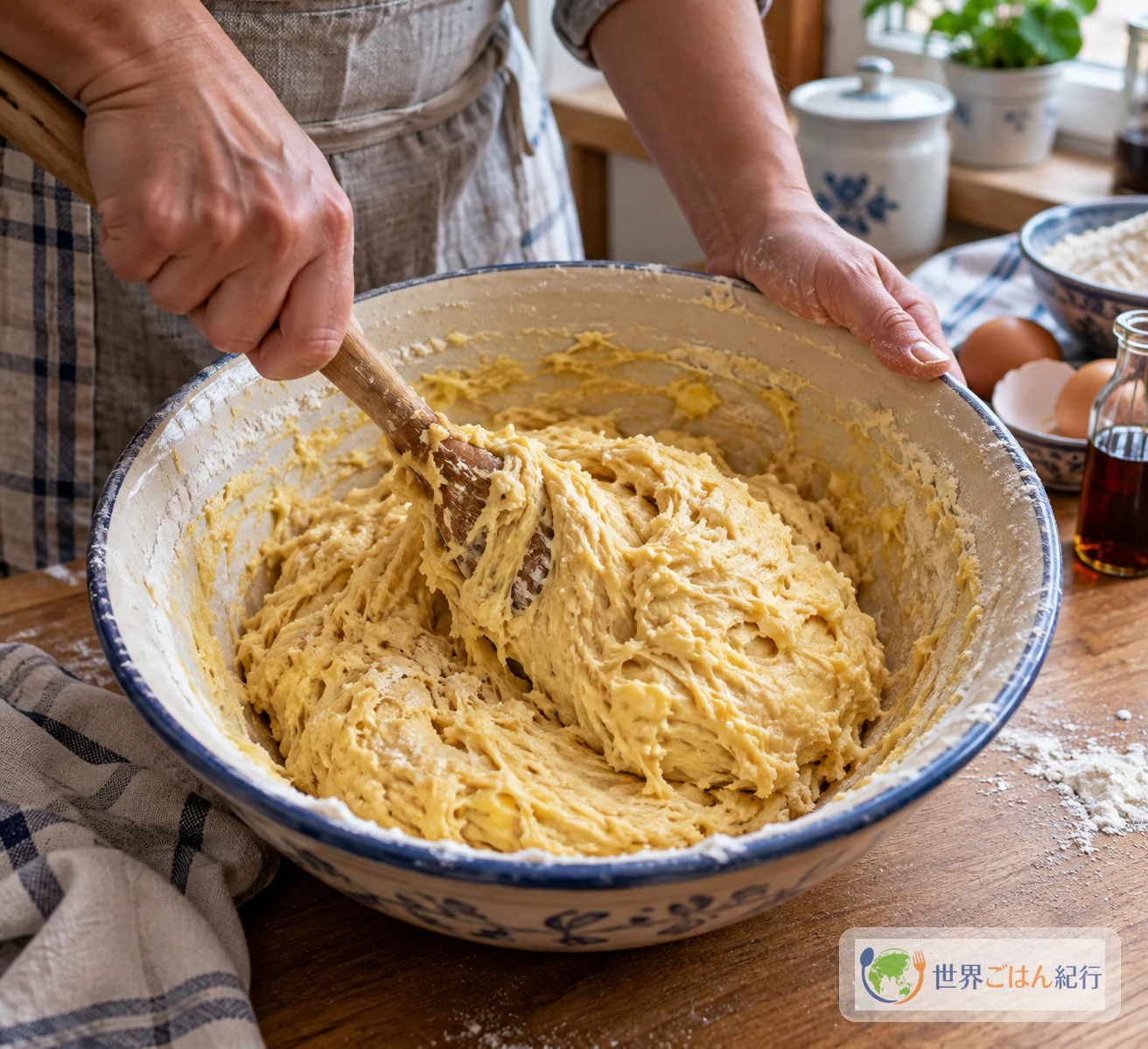
- Large bowl and spoon for beating the dough
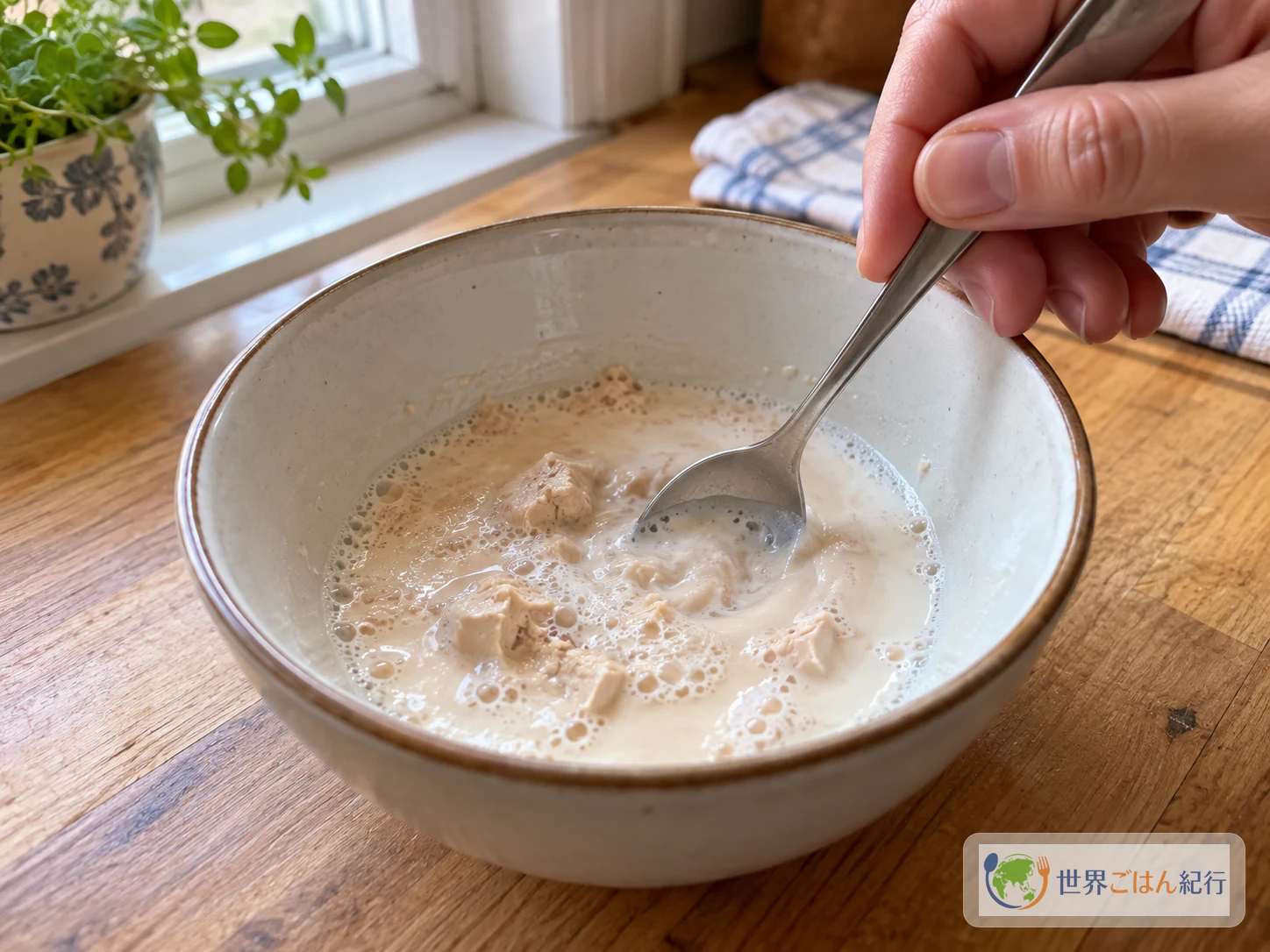
- Small bowl for the yeast starter
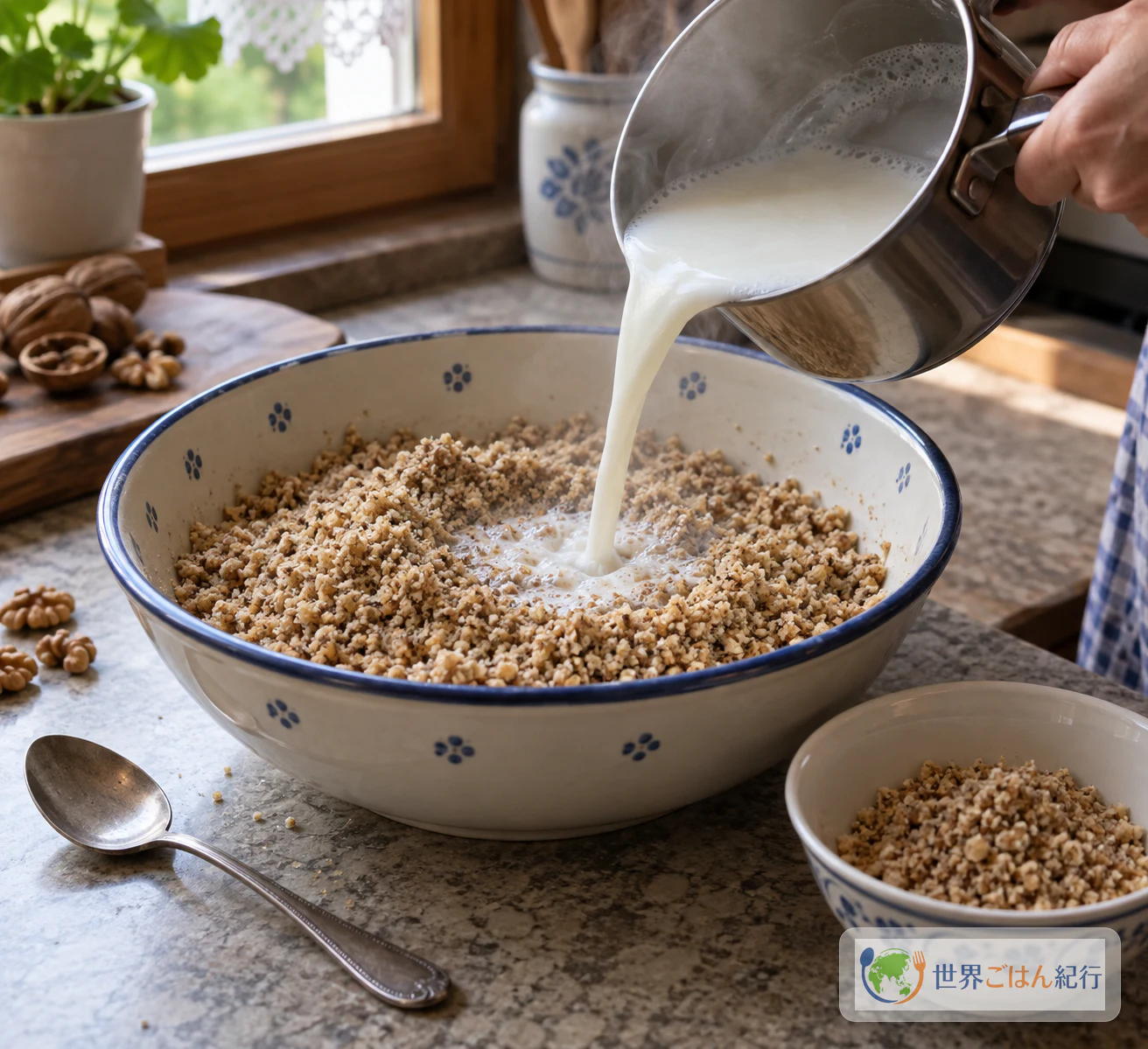
- Wide bowl for the walnut filling, plus a separate bowl for whipping the egg whites
- Grinder for the walnuts
- Spatula for folding
- Rolling pin
- Pastry brush
- Small square baking dish, in case the roll is too long for the mold
- Oven
Choosing and Substituting
- Fresh yeast: If you can only find dried yeast, follow the label on your product and judge by how the dough behaves. No confirmed conversion is given here.
- Sour cream: It brings acidity and dairy fat to the filling. Unsweetened yogurt changes both the texture and the sourness, so it is not an equal swap.
- Vanilla sugar: Products can differ in both aroma and sugar content, and the weight of a sachet varies, so read the label on yours.
- Flour: Use all-purpose flour. No bread flour swap has been verified for this dough.
- Mold: Other shapes of pan have not been verified as equal to a round potica mold.
Method: From Yeast Starter to Two-Stage Bake
The filling can be made while the dough rises. Have it ready before the dough is rolled out.
Troubleshooting
These are editorial cautions drawn from the method, not guarantees of a result.
| Problem | Likely cause | What to do |
|---|---|---|
| The dough has not swelled yet | Rising speed varies, and no fixed time applies | Keep it covered in a warm place and go by the swelling |
| The whipped whites lose their foam | The walnut mixture may still be hot | Let the walnuts cool first and fold the whites in last |
| The filling squeezes out while rolling | Uneven layer, or pressing too hard | Spread the filling evenly and roll tightly without pushing it toward the edge |
| The dough tears | Uneven thickness | Roll the dough to an even finger thickness before spreading the filling |
| The roll is too long for the mold | The roll is longer than the mold's circumference | Cut off the extra and bake it in a small square dish |
| The crust looks done early | Color does not tell you about the inside | Do not stop on color alone. Molds and ovens differ, so keep them in mind throughout the bake |
Variations
- Other fillings: Hazelnut, tarragon, poppy seed and cheese potica are their own recipes with their own amounts. Do not put those fillings into the walnut quantities above.
- Honey and walnut: This is a separate style with different proportions, not a small tweak to this version.
- No rum: You can leave it out, but the aroma will be weaker. Do not replace it with water or another liquid.
Potica in Slovenia: Holidays, Family Recipes and a Protected Name
The Slovenian Tourist Board describes potica as a rolled yeast dough pastry tied to holidays such as Christmas and Easter, and to family baking, with recipes handed down through households. Its article calls potica "the delicious queen of festive dishes." Visit Ljubljana likewise says that recipes vary by family, so we present this version as one classic walnut potica rather than the authentic one.
The range is wide. The Tourist Board says more than 80 fillings are known, with walnut, hazelnut, tarragon, poppy seed and cheese among the typical ones.
Walnut recipes differ too. The Slovenian Farm Holidays Association's walnut potica uses 1 kg flour, 600-700 g walnuts, honey and cinnamon, and the Tourist Board's own recipe is also a honey-walnut version with 1 kg flour. Both differ from the Visit Ljubljana recipe used here.
The Tourist Board also notes that Slovenian potica has protected status as a guaranteed traditional speciality. That does not mean every home recipe is identical, and we do not go into the details of the scheme here. For more of the country's food, see our Slovenia page.
Frequently Asked Questions
What kind of pastry is potica?
It is a Slovenian festive pastry made by rolling a filling inside yeast dough. This version uses walnuts and is baked in a round mold, following Visit Ljubljana's recipe.
Why does this recipe list an egg that Visit Ljubljana's ingredient list doesn't?
Visit Ljubljana's method calls for brushing with beaten egg before baking, but its ingredient list leaves the egg out. Rather than skip the step, we added 1 whole egg. The technique has outside support, since the Slovenian Farm Holidays Association also glazes with egg, but the quantity is our editorial choice.
How long should the dough rise?
Visit Ljubljana gives no rising time for either rise, so we do not give one. Go by how much the dough has swelled. The page displays a total of 2 hours, but it does not break down the rising time, so we do not promise that figure.
Do I need a special mold?
Visit Ljubljana specifies a round potica baking mold but gives no diameter. Whether other pans work equally well has not been verified, so we do not suggest a size or a replacement.
How many people does it serve?
The Visit Ljubljana page lists 4 portions. That is the page's label, not a measured yield, and the number of slices and finished weight have not been verified.
How do I know when it is done?
Visit Ljubljana gives about 45 minutes at 180°C followed by about 25 minutes at 150°C. It gives no internal temperature, and we do not add one. Keep in mind that molds and ovens differ, and that color alone is not a reliable test.
How long does potica keep, and can I freeze it?
The sources used here give no guidance on storing, freezing or reheating potica, so we do not state any period or method.
Sources
- Visit Ljubljana / Ljubljana Tourism, "Slovenian potica." Source of the classic walnut recipe used here (ingredients, method, two-stage baking and serving), the listed 4 portions and 2 hours, and the description of potica as a recognizable holiday dessert with recipes that vary by family. https://www.visitljubljana.com/en/visitors/food-and-drink/recipes/slovenian-potica
- Slovenian Tourist Board / I feel Slovenia, "Potica, the delicious queen of festive dishes." Source for potica as a rolled yeast pastry tied to holidays and family baking, the more than 80 known fillings, the guaranteed traditional speciality status, and its separate honey-walnut recipe, which is cited for comparison only. https://www.slovenia.info/en/stories/potica-the-delicious-queen-of-festive-dishes
- Združenje turističnih kmetij Slovenije / Slovenian Farm Holidays Association, "Walnut potica." Cross-check for rolling, proofing, egg glazing, baking and cooling, and an example of how recipes vary. Its quantities are not used in this recipe. https://www.bauernhofslowenien.si/gastronomie/rezepten/rezept/walnut-potica