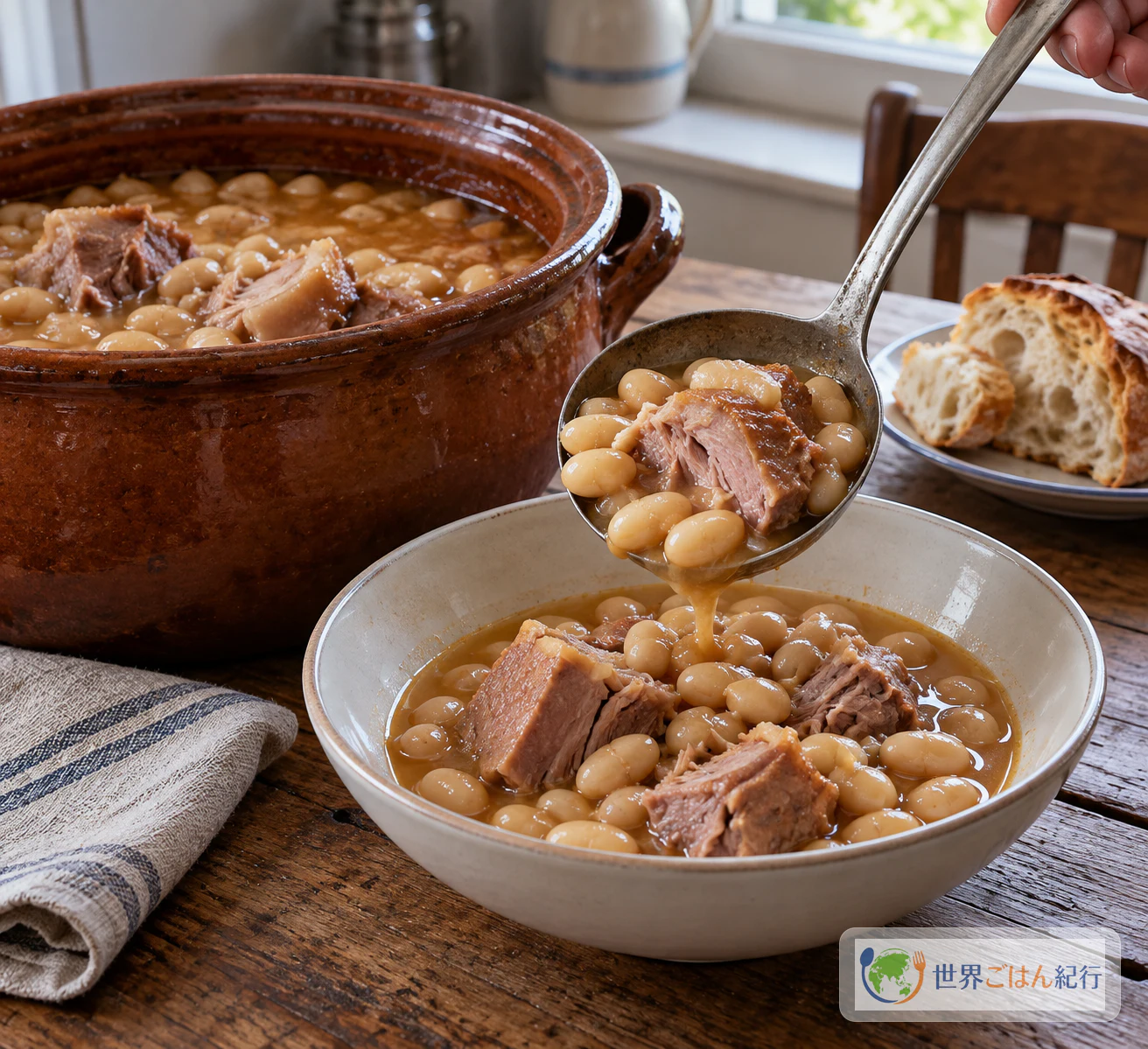
Guernsey Bean Jar: A Pot Left to the Long, Low Heat
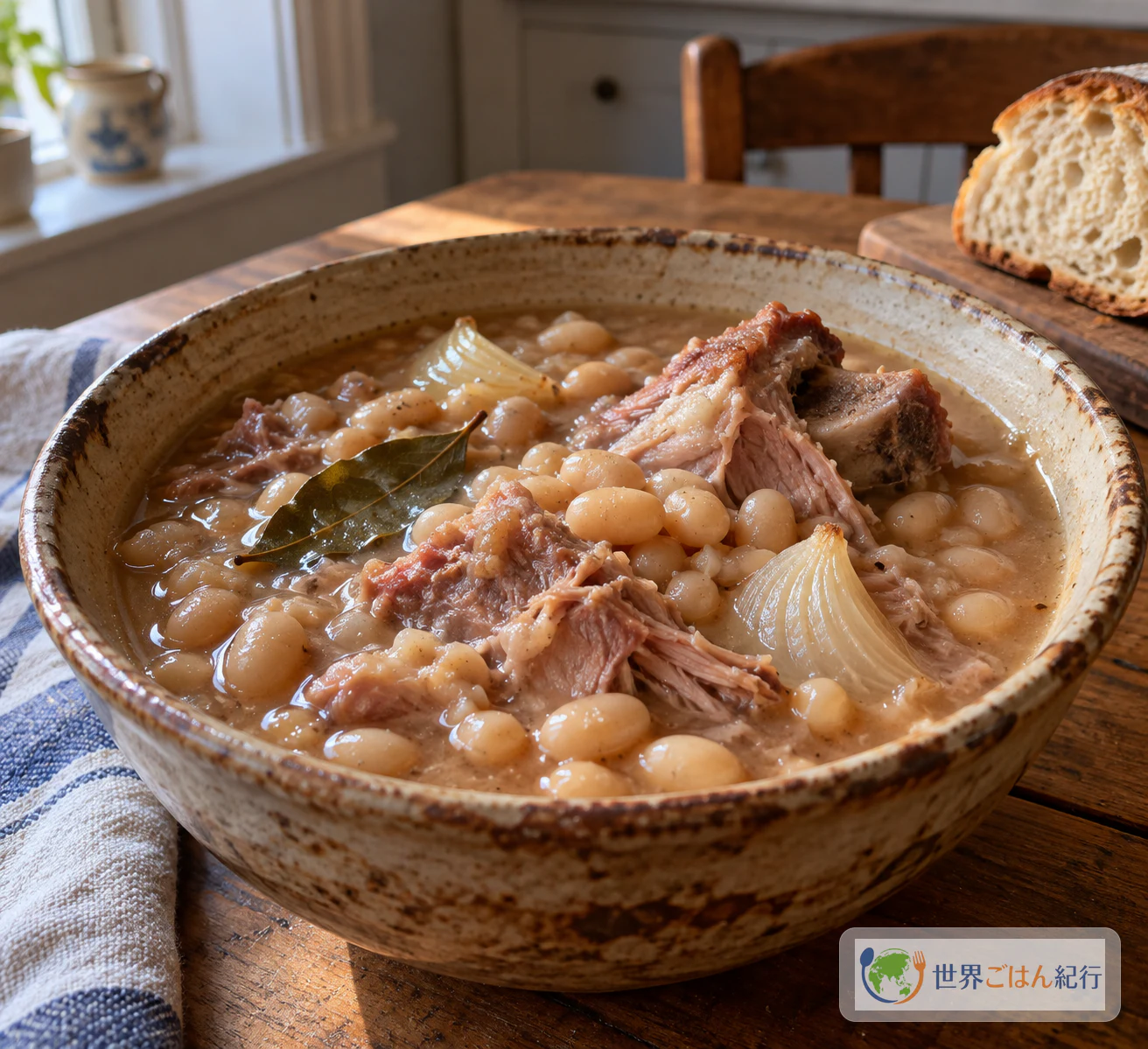
Bring the beans to fully soft and the pork to the point where it comes away from the bone. Keep the seasoning simple, and don't let the pot run dry.
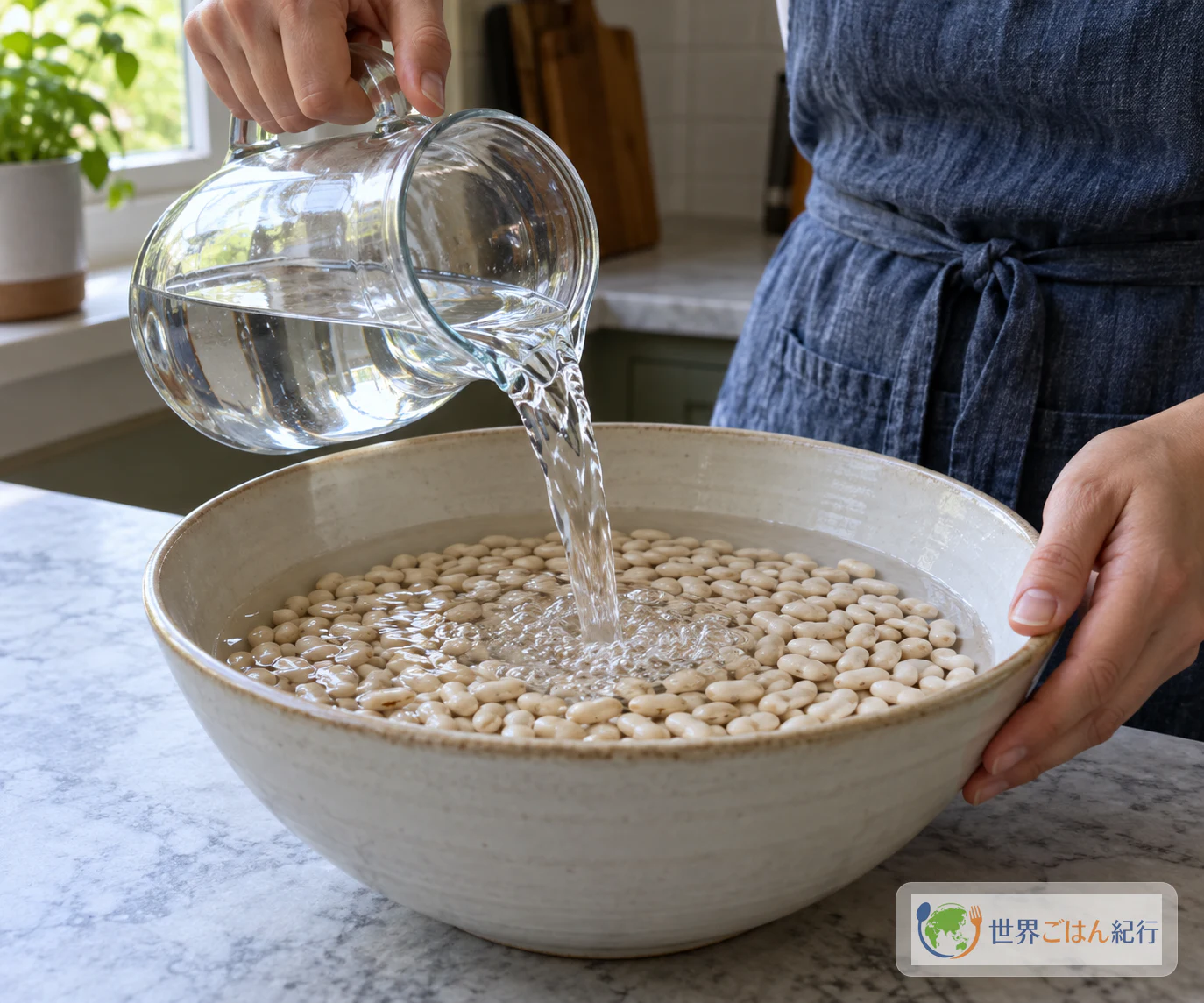
In town, the jar might spend the night at the baker's. That is how Guernsey cookery-book author Marguerite Paul remembered it in a 2014 Guernsey Press feature: pots left overnight with a bakery, while farmhouses used a large range or a furze oven. It is one person's recollection, not a rule for the whole island, but it shows what bean jar asks of a cook. You soak the beans, fill the pot, and then let time and low heat do the rest.
No single bean jar speaks for Guernsey. Visit Guernsey describes it as made with pork or beef, and Paul described households that differ over the meat, the beans and whether carrots go in. This article follows one version: a recipe the same feature reproduces from James Stevens Cox's Guernsey Dishes of Bygone Days, attributed to Mrs Louisa Helmot and described as 18th-century. It is one historical recipe, not the only authentic one.
This recipe has not been kitchen-tested. The 6 servings is the printed figure, not a measured yield. The historical recipe gives no oven temperature or water volume and does not mention boiling the beans first, so two additions are ours:
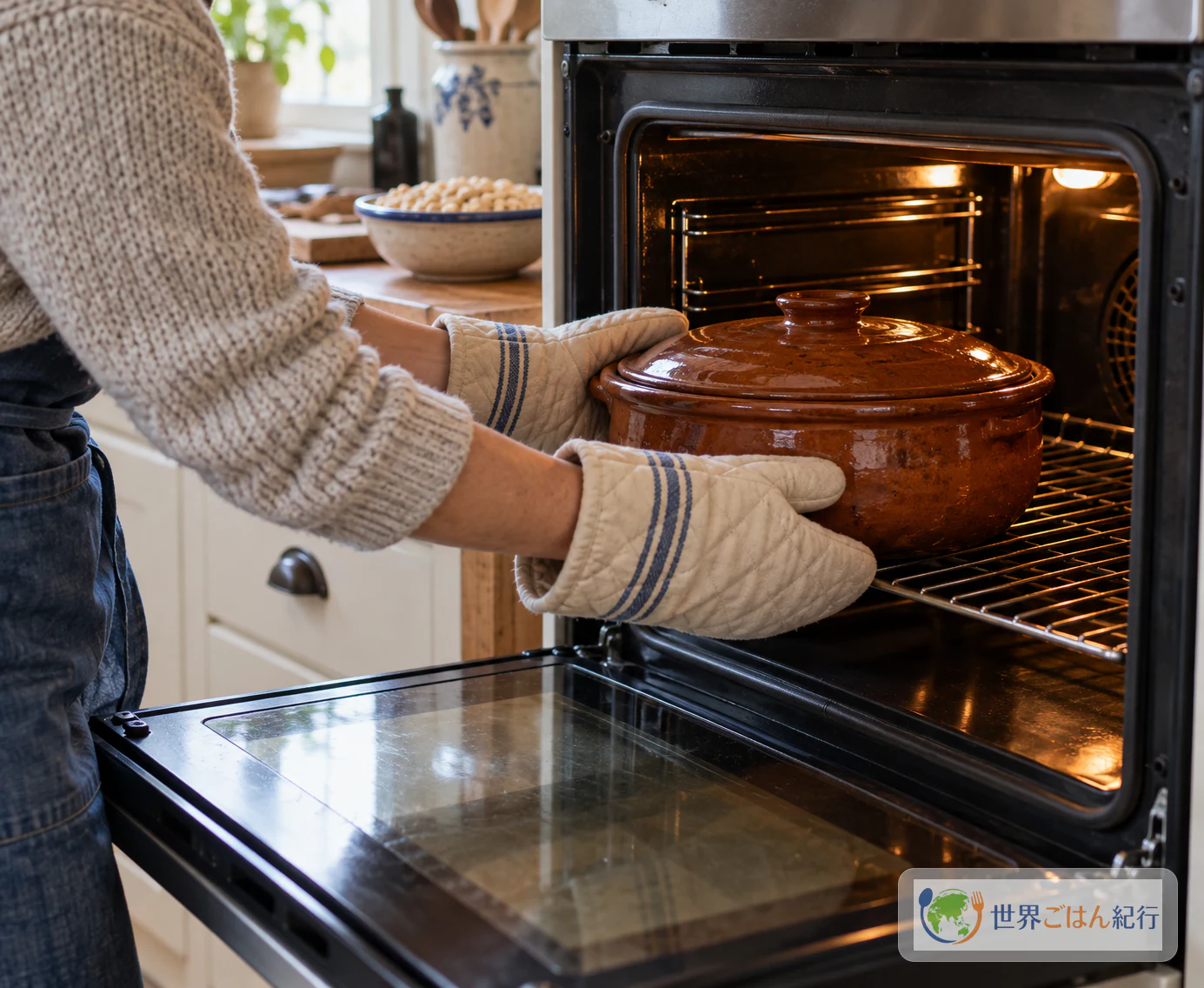
- Oven temperature: 150°C. The historical recipe asks only for gentle cooking in a moderate oven. Other island recipes with different ingredients, from the Channel Islands Co-op and Guernsey Donkey, give 150–170°C for 6–8 hours, and the Co-op lists this as gas 2–3. Visit Guernsey says "low to medium." We chose the low end of that range as a guide.
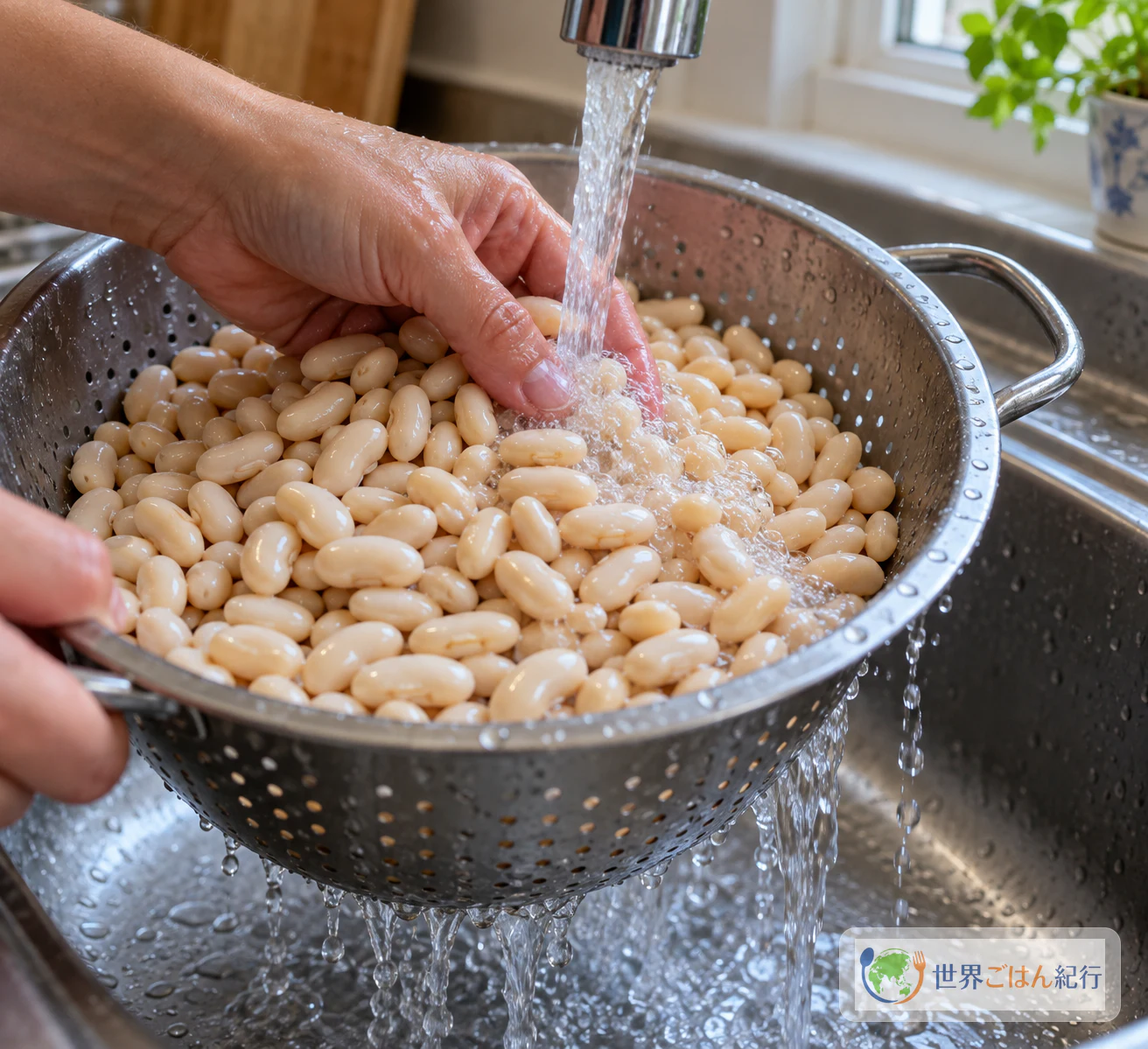
- A boil of at least 30 minutes after soaking. This is a food-safety step based on FDA guidance as summarized by Kansas State University, and Visit Guernsey's traditional recipe also includes it.
The feature also prints imperial weights that do not match its metric ones, so only the metric amounts are used here. The water is left unmeasured rather than given an invented number.
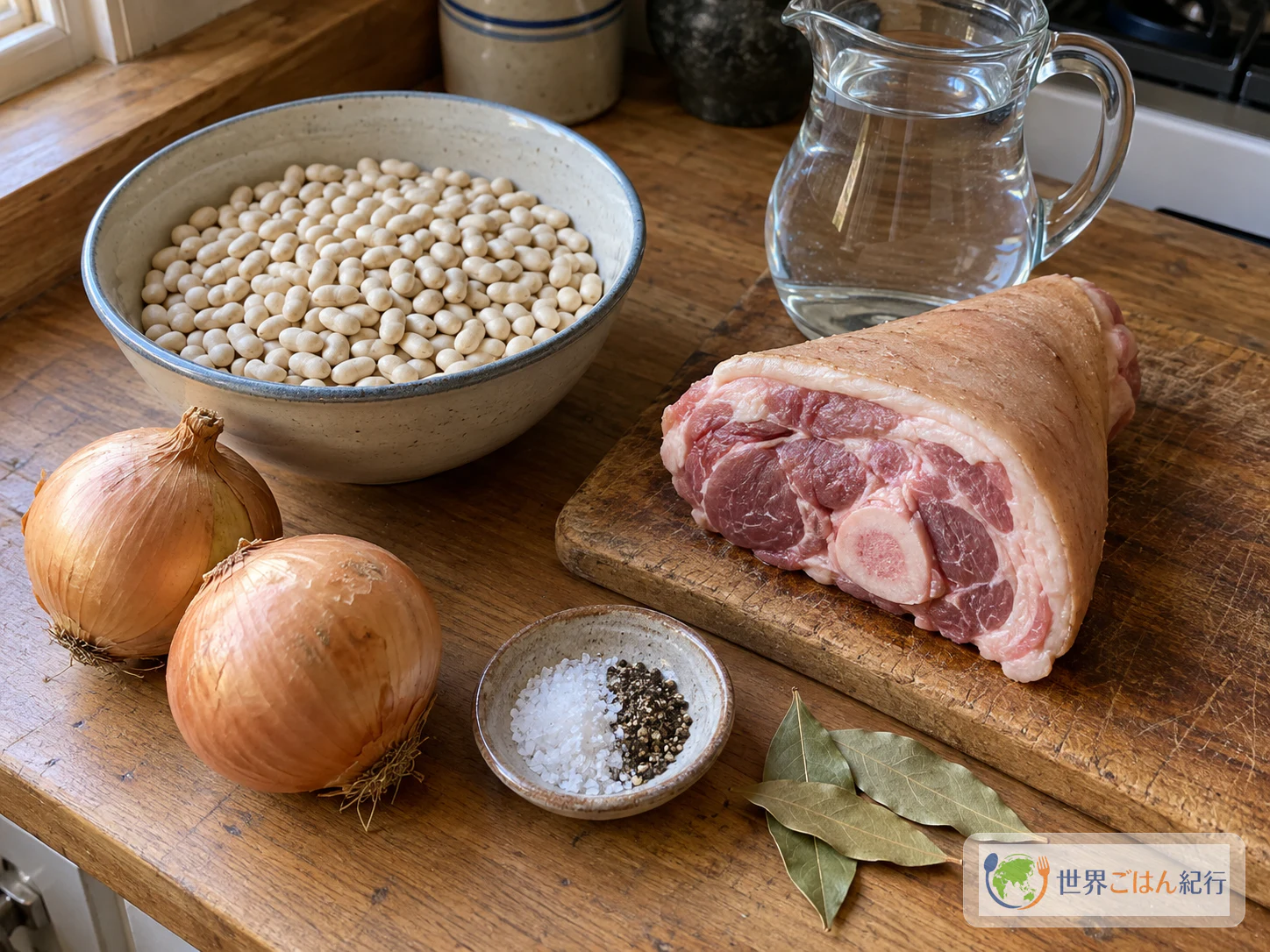
Ingredients for 6 Servings
Equipment
- Large bowl
- Colander
- Large pot
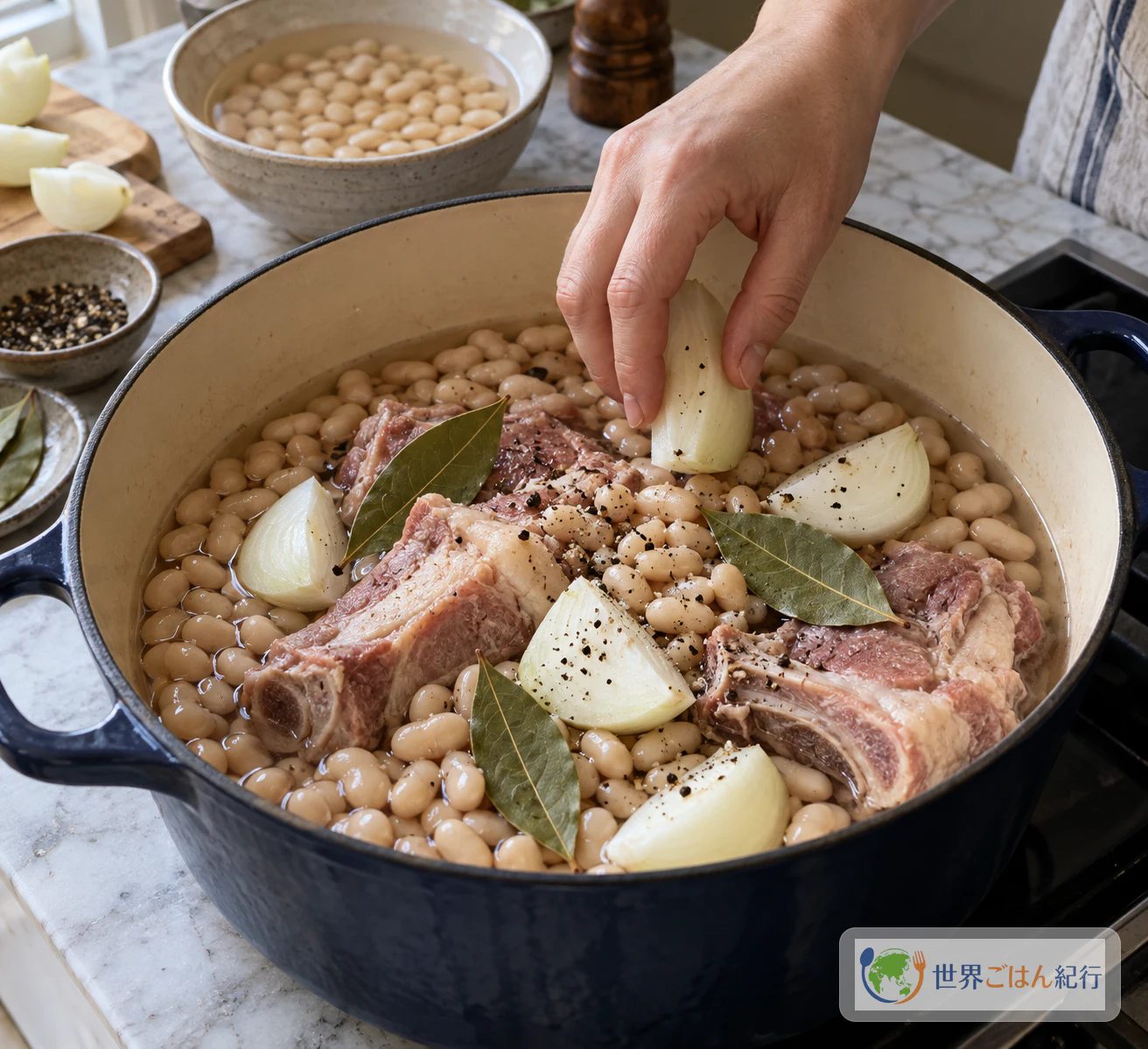
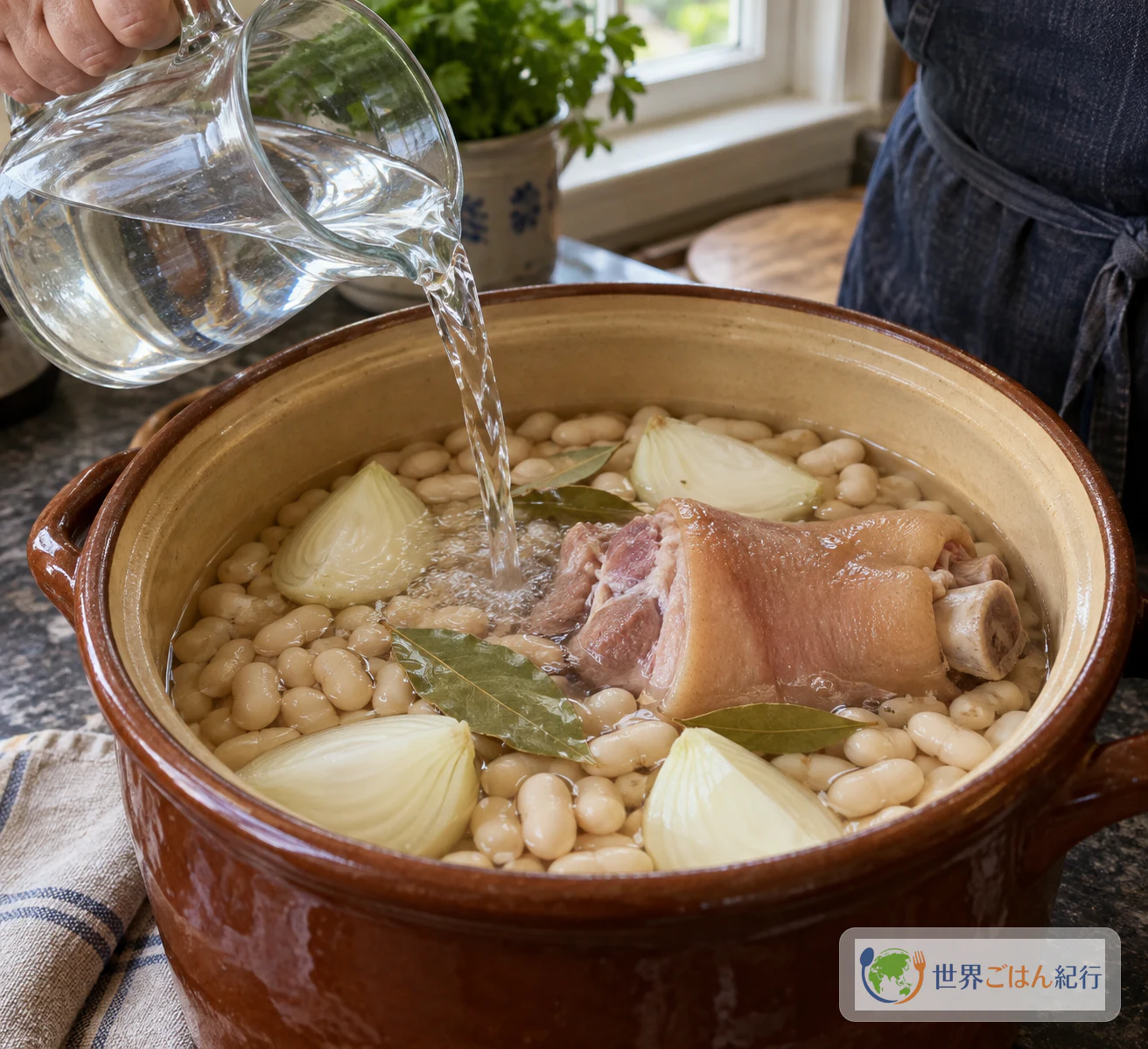
- Heavy oven-safe casserole with a well-fitting lid, or an earthenware bean jar or crock
- Oven mitts
- Spoon
Choosing Beans and Pork
Look for dried white beans labeled haricot. Another large white bean, such as Japanese daifuku beans, can stand in, but the variety will make a difference.
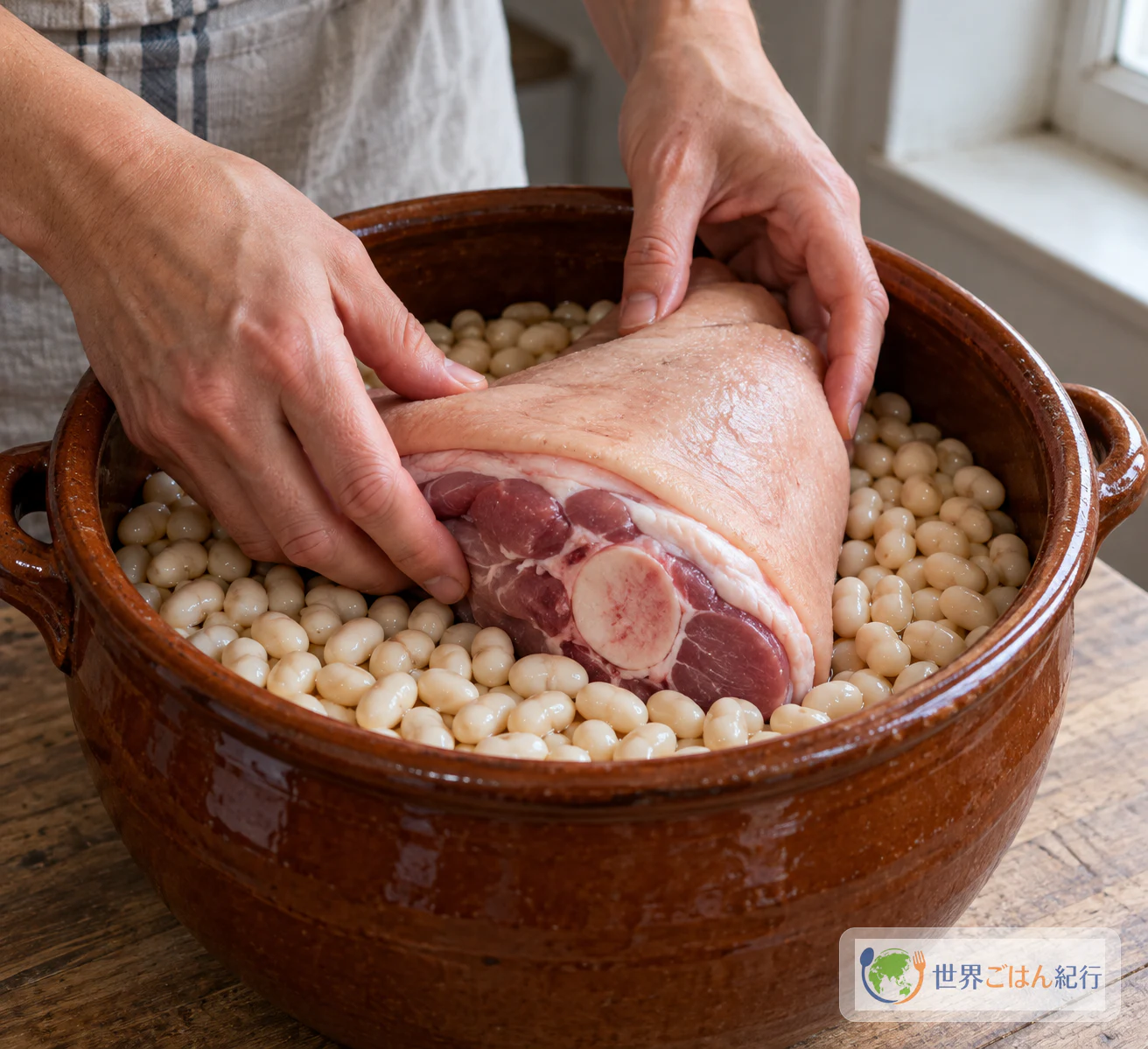
Keep the pork as a bone-in piece of fresh leg. A pig's trotter with extra pork is not used here, and neither are salted cuts such as gammon. If you choose one anyway, that is your own change, and the final salt will need adjusting by taste.
None of these ingredients is egg, dairy or wheat. If you have an allergy, check the labels on what you buy, and treat any bread served alongside separately.
Method: From an Overnight Soak to Soft Beans
Raw or undercooked beans contain phytohaemagglutinin (PHA), which can cause nausea, vomiting and diarrhea. Properly cooked beans are safe. Boil the soaked beans in fresh water for at least 30 minutes, and do not rely on low-temperature cooking such as a slow cooker, which may not get hot enough.
Troubleshooting: Firm Beans, a Dry Pot, Too Much Salt
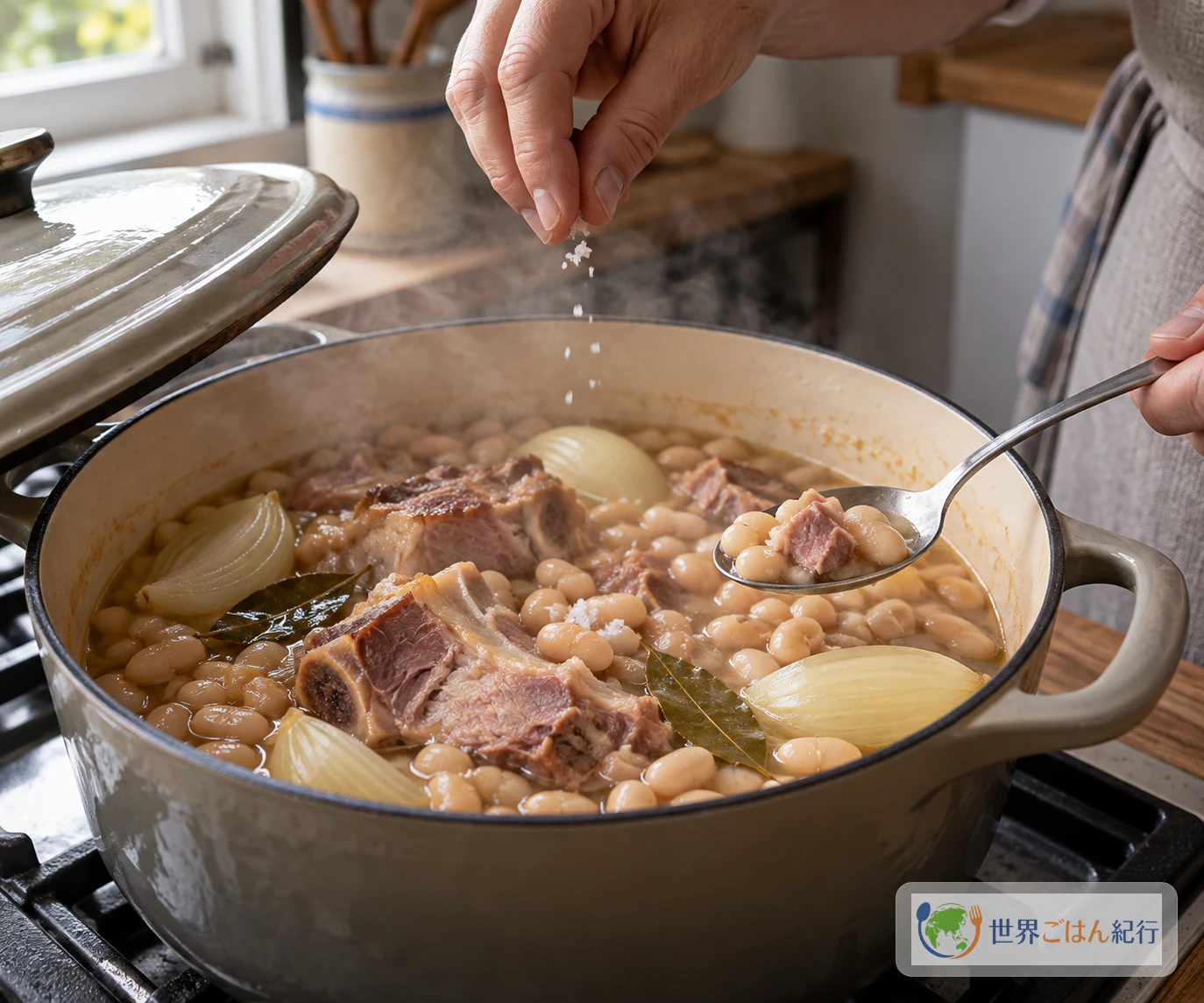
Time alone won't tell you when this dish is ready, because your pot, your oven and the age of your beans can all change how long it takes. Judge by the beans and the meat.
| What you see | What to do |
|---|---|
| Beans still firm after 5 hours | Keep cooking, covered, and check the water. Do not serve beans until they are completely soft |
| Liquid running low | Add water and replace the lid. Check more often from then on |
| Pork not yet coming away from the bone | Return the covered pot to the oven and check again later |
| Dish tastes flat at the end | Add salt a little at a time and taste between additions |
| A salted cut made the pot too salty | Next time, taste before adding any salt, since the meat may already season the beans |
Variations: What Island Cooks Change
Bean jar changes from one household to the next, but these are separate recipes rather than swaps for the amounts above. Change one thing at a time, and make the base version first if it's your first bean jar.
| Variation | Where it appears | How to approach it |
|---|---|---|
| Beef instead of pork | Visit Guernsey mentions pork or beef; Paul mentions beef shin; the Co-op and Guernsey Donkey recipes allow a pig's trotter or beef shin | Treat it as a different recipe and follow that recipe's amounts and times |
| Haricot beans only | The historical recipe used here | The version in this article, and the simplest place to start |
| Haricot and butter beans | Paul's account, plus the Guernsey Donkey and Co-op recipes (200g of each, serving 4) | Use a mixed-bean recipe rather than altering the 500g here by guesswork |
| With carrots | Paul describes households that differ on them; the Guernsey Donkey recipe uses 2 carrots | Not in this version, so take it from a recipe that includes them |
| A casserole instead of a crock | Our own equipment suggestion | Same beans and meat, cooked in a heavy lidded oven-safe pot |
Guernsey Donkey's modern recipe suggests crusty bread alongside. It's a pleasant addition, but the historical recipe doesn't call for it. Visit Guernsey's traditional recipe uses belly pork with haricot and butter beans in a low-to-medium oven for at least 3–4 hours, which is another reminder that each version has its own ingredients and timing.
Bean Jar in Guernsey: Then and Now
Visit Guernsey calls bean jar a Guernsey speciality and a hearty cassoulet-style dish made with pork or beef. That phrase is a comparison and doesn't make it the same dish as French cassoulet. If you enjoy comparing how other places treat beans and meat, red beans and rice offers another bean tradition, and Dublin coddle is another regional dish of meat and vegetables in one pot.
The bakery story appears in more than one place. Besides Paul's recollection, the local history site Guernsey Donkey describes a tradition of cooking bean jars overnight in a bakery's residual heat and reports associations with winter and Bonfire Night. Those associations rest on that one site, so we don't present them as established custom. Paul's point about farmhouses matters too: a large range or furze oven could do the same job, and low, slow cooking was the shared principle.
The feature also shows an older form of the name, "enne jarraie d'haricaots." We can't say how standard that spelling is, so it is best read simply as a historical form.
Bean jar is still on menus today. Visit Guernsey's listing for Cobo Tearoom includes local bean jar, and the tearoom says its version is slow-cooked for 18 hours. That timing belongs to that kitchen and isn't part of this recipe.
Together, the historical recipe, a cook's memories and a present-day menu don't add up to one fixed formula. What they share is the long, low heat, so start with these few ingredients and let the variations come later, one at a time.
Frequently Asked Questions
Is bean jar the same as cassoulet?
No. Visit Guernsey uses "cassoulet-style" to describe the dish, which is a comparison rather than a claim that they are the same. Treat bean jar as its own island dish.
Why boil the beans if the historical recipe doesn't?
The historical recipe does not mention it, and neither does the Channel Islands Co-op's. We added it because raw or undercooked beans contain PHA, according to the FDA. Kansas State University's summary of FDA guidance says to soak dry kidney-type beans for at least 5 hours, drain them, and boil them in fresh water for at least 30 minutes. Visit Guernsey's traditional recipe includes the same boil.
Why 150°C if other recipes go up to 170°C?
The historical recipe gives no temperature. Island recipes from the Channel Islands Co-op and Guernsey Donkey give 150–170°C for 6–8 hours, but they use different ingredients. We chose 150°C as a guide for this version and have not tested it, so judge doneness by soft beans and meat that comes away from the bone.
How long is "overnight"?
The historical recipe says at least 5 hours or overnight, without putting a number on overnight. Cobo Tearoom's 18 hours describes that venue's own version. Whichever you choose, the liquid still needs checking.
Can I make it without pork?
Beef versions exist, but don't simply reuse the amounts and steps here. Follow a recipe written for beef, such as the Co-op or Guernsey Donkey version with beef shin.
Do I need carrots?
No. Carrots vary by household, and this version leaves them out.
Do I need a special bean jar?
No. An earthenware jar or crock is the historical vessel, but we suggest a heavy, lidded, oven-safe casserole as a practical alternative.
Sources
- The Week / Guernsey Press, "Is your jar the business?" 18 January 2014 (PDF hosted by Guernsey-Biberach). Marguerite Paul's account of household variation and overnight bakery cooking, and the reproduced Mrs Louisa Helmot recipe from James Stevens Cox's Guernsey Dishes of Bygone Days. https://www.guernseybiberach.com/file/0/BeanJar18Jan14.pdf
- Visit Guernsey, "5 Top Tips For Dining Out In Guernsey." Bean jar as a Guernsey speciality and a hearty cassoulet-style dish made with pork or beef. https://www.visitguernsey.com/articles/2018/5-top-tips-for-dining-out-in-guernsey/
- Visit Guernsey, "Cobo Tearoom." A current listing for local bean jar, with the venue's own version slow-cooked for 18 hours. https://www.visitguernsey.com/experiences/food-drink/cobo-tearoom/
- Visit Guernsey, "5 traditional Guernsey recipes to try at home." A different traditional recipe with a boil of at least 30 minutes, a low-to-medium oven, and soft beans and meat falling off the bone as the doneness cue. https://www.visitguernsey.com/articles/2020/5-traditional-guernsey-recipes-to-try-at-home/
- Guernsey Donkey, "Guernsey Bean Jar." Local-history account of bakery residual heat and winter and Bonfire Night associations, plus a different recipe at 150–170°C for 6–8 hours. https://guernseydonkey.com/guernsey-bean-jar/
- Channel Islands Co-op, "Guernsey bean jar." A different recipe giving gas 2–3 or 150–170°C for 6–8 hours, with occasional checks to top up the water. https://www.channelislands.coop/food/recipes/liberation-day-recipes/guernsey-bean-jar/
- U.S. Food and Drug Administration, "Natural Toxins in Food." PHA in raw or undercooked beans, its symptoms, and the safety of properly cooked beans. https://www.fda.gov/food/chemical-contaminants-pesticides/natural-toxins-food
- Kansas State University Research and Extension, "Cooking Dry Beans Safely." Summary of FDA guidance on soaking, boiling in fresh water for at least 30 minutes, and not relying on a slow cooker. https://www.k-state.edu/news/you-asked-it/articles/2017/10/cooking-dry-beans-safely.html