The edge of the pan sings first: Prekmurje's zlevanka
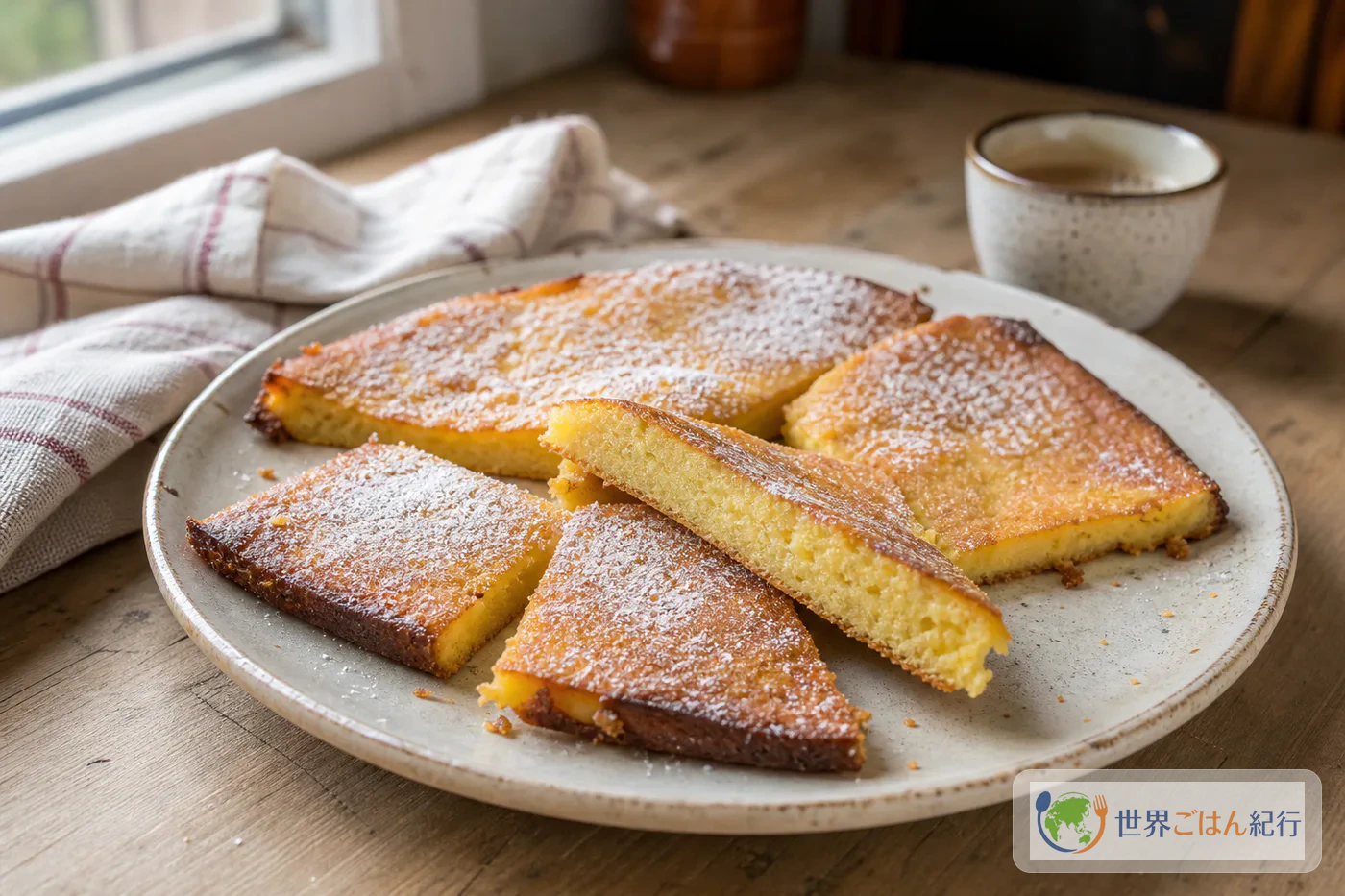
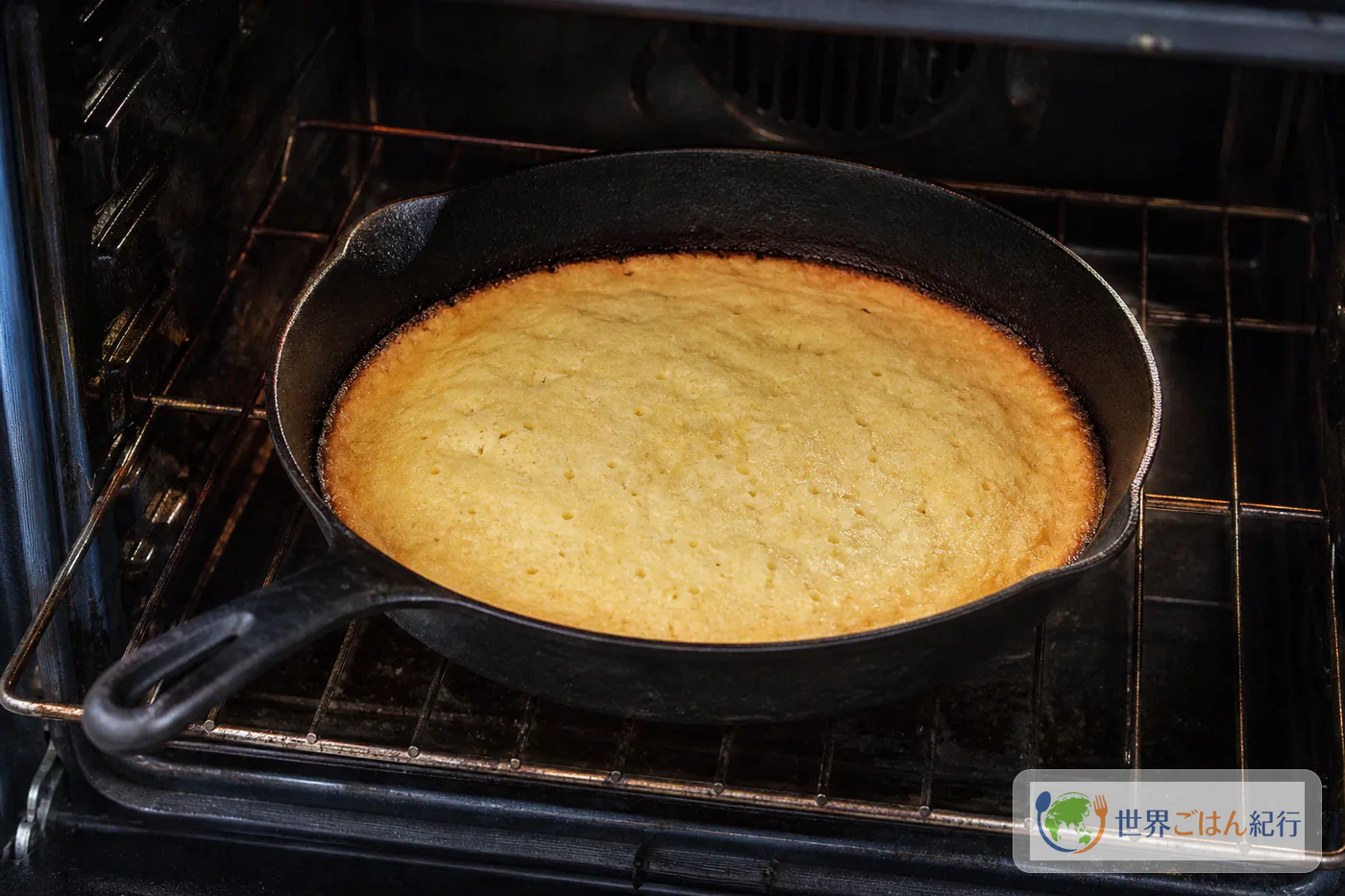
When you pour yellow batter into a hot pan, only the edge gives a small sizzle. In the oven, the flat surface slowly lifts, and the sweet smell of baked corn overtakes the soft aroma of milk. There is no showy decoration. It is an everyday flour sweet for pinching a slightly scorched edge and eating the still-warm center.
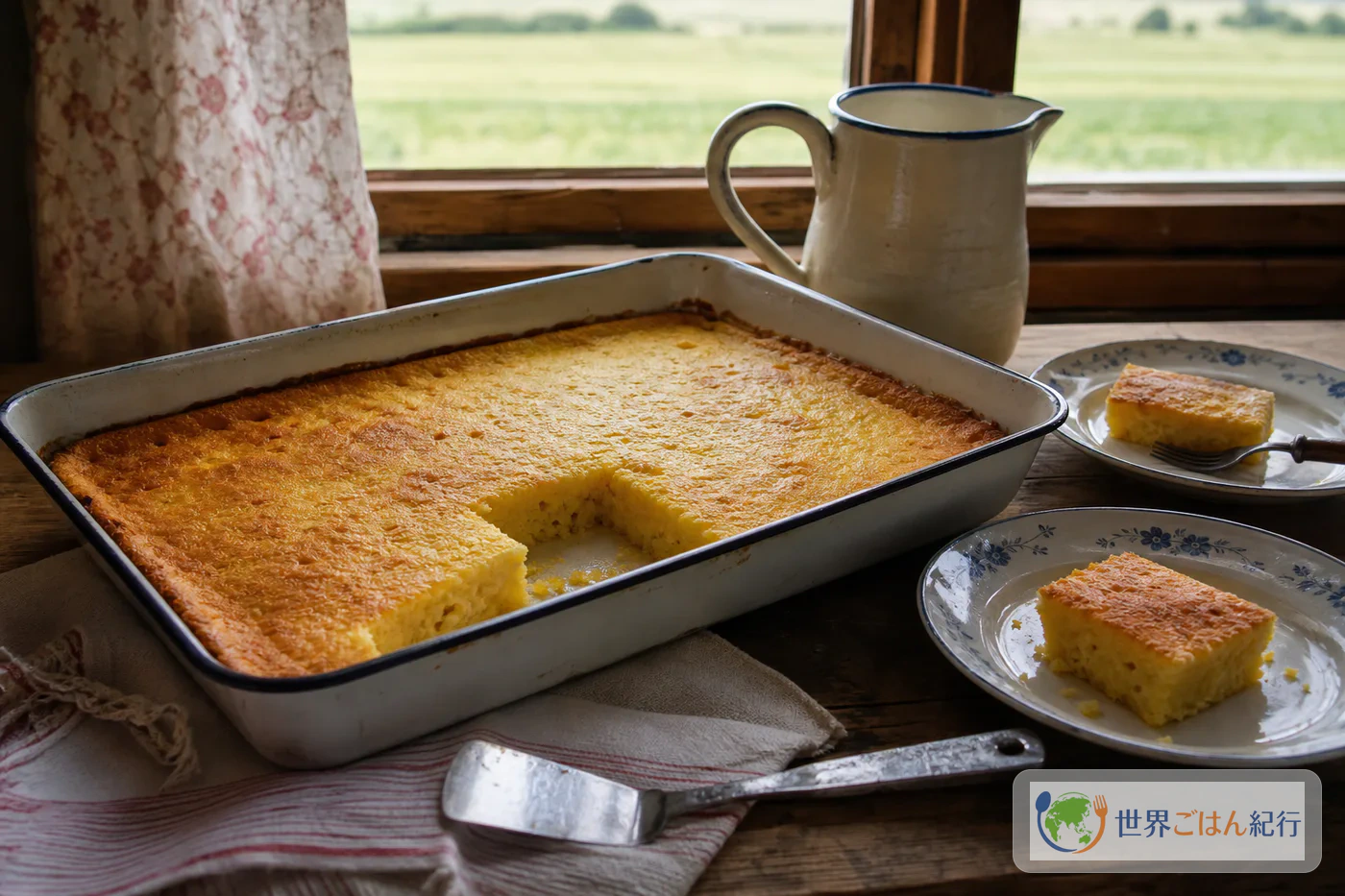
Zlevanka (zlevanka) is a dish made in Prekmurje and Prlekija in northeastern Slovenia, in which a pourable batter is poured into a pan and baked. It is also written zlejvanka, closer to the Prekmurje dialect, and its name is explained as connected to the Slovenian zlivati, "to pour." It is too thin to call a cake, and its batter too soft to call bread. At the table, you don't need to decide which.
Locally there is a sweet cornmeal koruzna zlevanka, a buckwheat ajdova zlevanka, and a version layered with yogurt or sour cream, and it is also eaten without sugar beside soup. This time we center on the 250 g cornmeal, 500 ml milk and 1 egg found in a Slovenian-language source that compiles Prekmurje regional dishes. Starting the bake at 200°C and lowering to 175°C once the batter has risen a little is the interesting part of this formula.
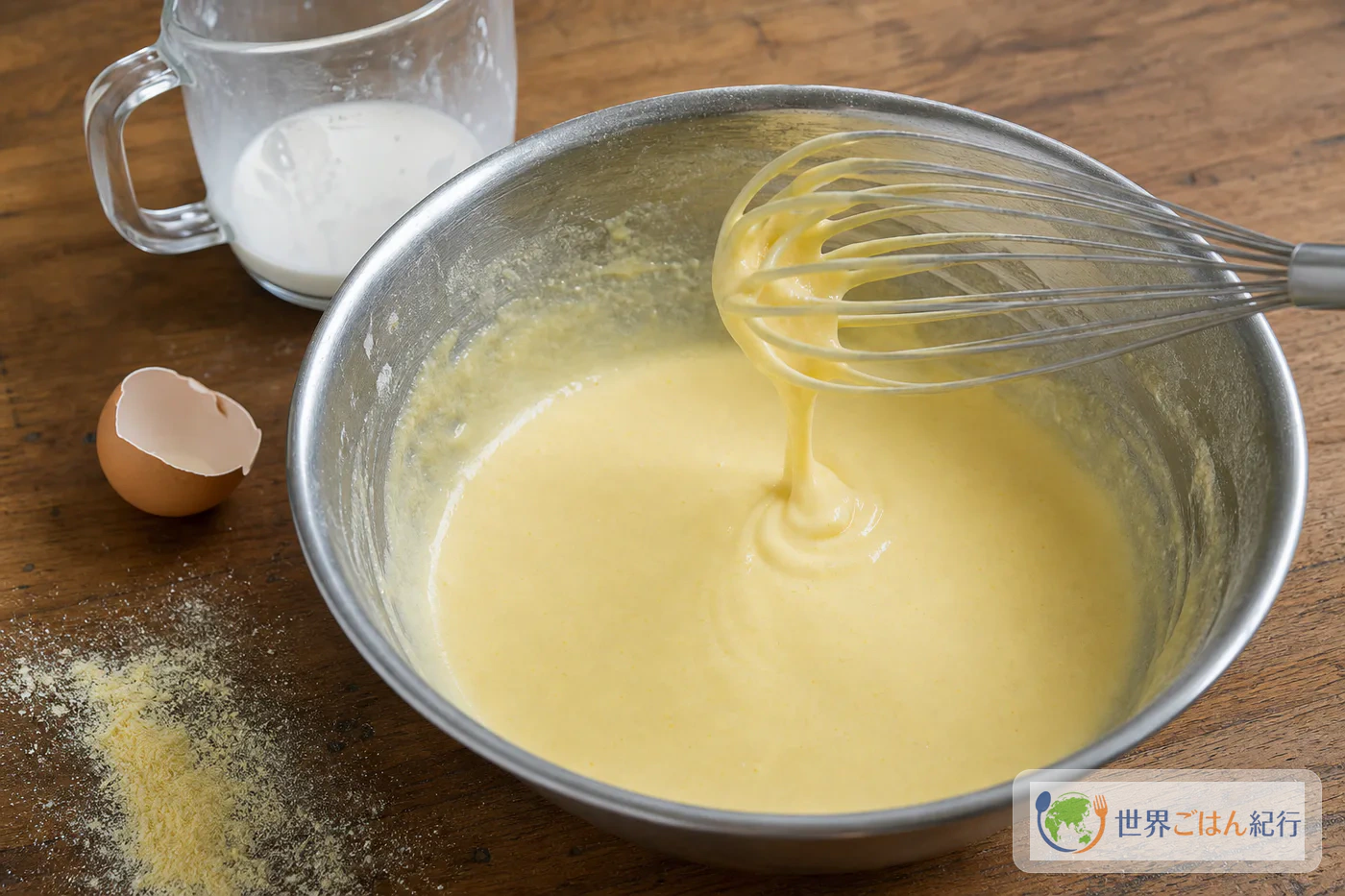
What to protect in a home kitchen is fine flour, a pourable batter, a hot pan, and two stages of temperature. The brand of dairy and a dedicated baking pan can be swapped. Even among similar corn dishes, it feels the opposite to Moldova's Mămăligă (in Japanese), which is stirred in a pot. This one is not stirred; it is poured and set from the edge.
The standard spelling is zlevanka, and in Prekmurje zlejvanka is also seen. Because there is no settled spelling in some languages, this article uses the original spelling. Related zlijevka and zlevenka also exist in northern Croatia, and across the border the ingredients and names change slightly.
Ingredients and choosing flour: fine-ground keeps the center from getting heavy
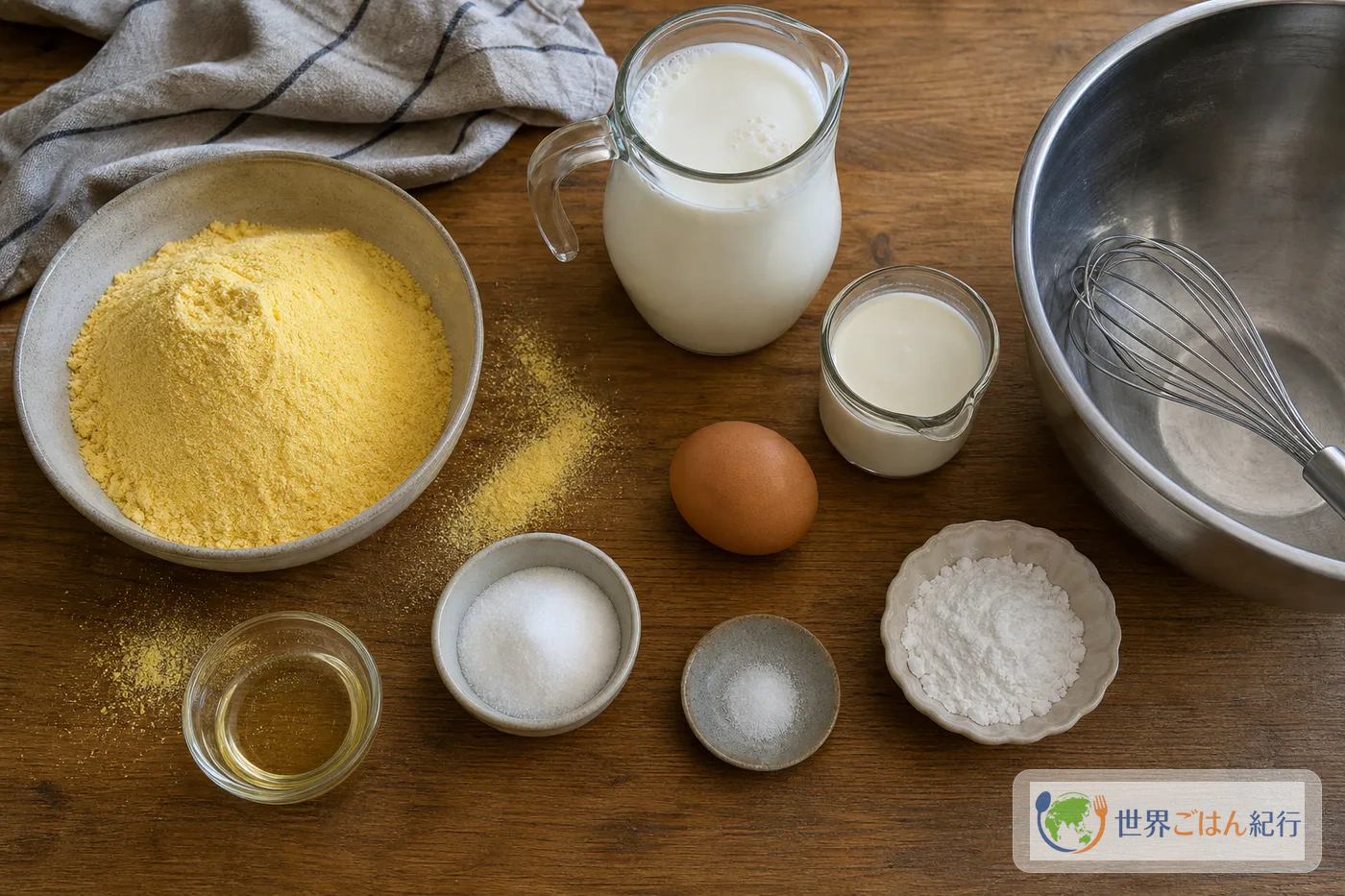
This makes one 26 cm skillet or one 24 cm square metal baking pan. It is assumed to be cut in 8 pieces, with 2 pieces each for 4 people.
This recipe uses egg and dairy. Cornmeal itself contains no wheat, but depending on the product it may be made in a facility that handles wheat. If you need to avoid gluten, check the allergen label on the bag as well.
Corn flour, cornmeal and cornstarch
What confuses people most at the shelf is the names of the yellow powders. What is used here is corn flour, corn ground finely, or fine-grained cornmeal. White cornstarch is only the starch, so it gives neither the aroma of baked corn nor the texture of flour that falls apart softly.
If using fine cornmeal, limiting it to up to 80 g of the 250 g gives a slightly grainy, farmhouse texture. If you swap the whole amount to coarse-ground, in a bake of 20 to 30 minutes the grains cannot absorb all the liquid, and a firmness remains in the center. If what is in the bag is clearly coarser than sugar, make fine corn flour the main flour.
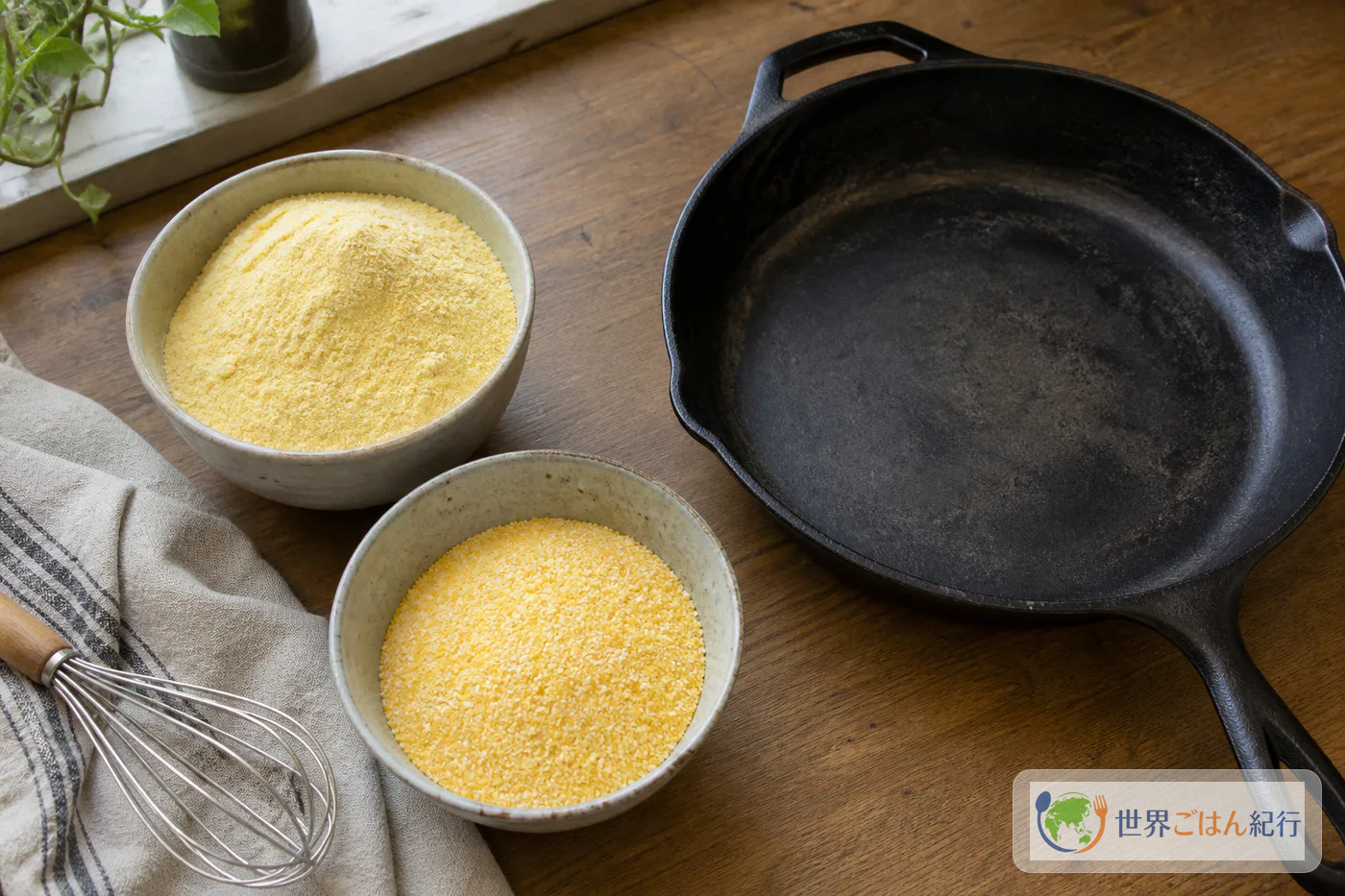
Milk and egg are available at a nearby grocery. What gives pause is the flour and the pan. For the first time, fine corn flour alone is enough. If you want a fragrant edge, a heavy skillet that can go in the oven is useful. If you use a thin aluminum pan, do not preheat; oil it, pour in the batter, and extend the bake by about 3 minutes.
How to make it: lift at 200°C, set the center at 175°C
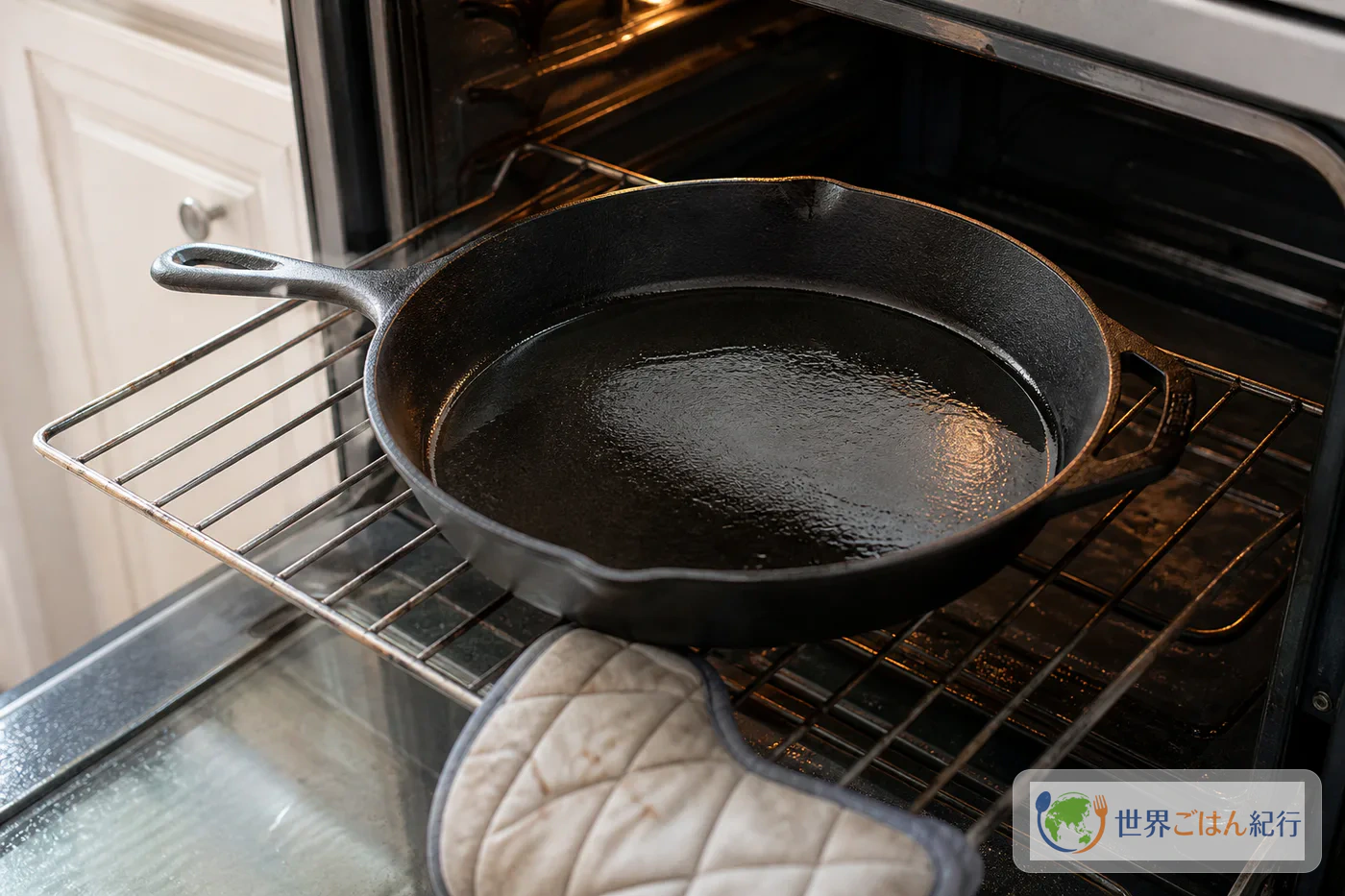
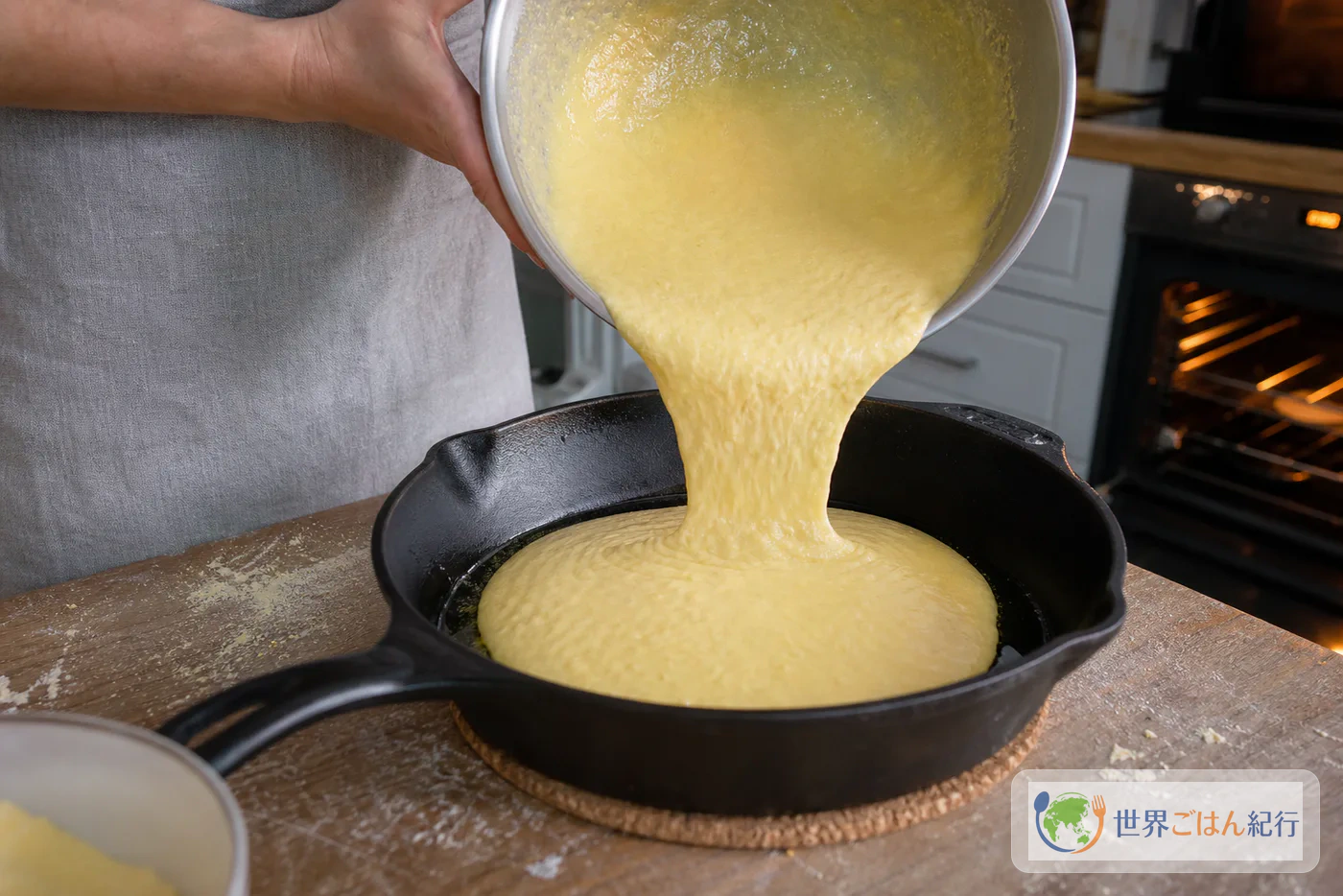
The temperature of the pan decides the result more than making the batter. Preheat the skillet with oil so the edge sets first. If you use a thin metal pan or heatproof glass, whether it is safe to heat empty differs by product, so do not preheat it; put in the batter and then put it in the oven.
Unless the product label confirms that heatproof glass or a thin metal pan can be heated empty, do not preheat it. Pour the batter into a room-temperature oiled pan and bake at 200°C for 10 minutes, then at 175°C for 18 to 23 minutes. The sound at the edge is weaker, but avoiding the risk of cracking matters more.
Causes of failure: stop by looking at the center, not the edge
Zlevanka is thin, so if you chase only the browning, it suddenly dries out. The ideal cross-section has fine holes and springs back moist when pressed. Underbaked, water seeps at the center; overbaked, the cut edge crumbles like sand.
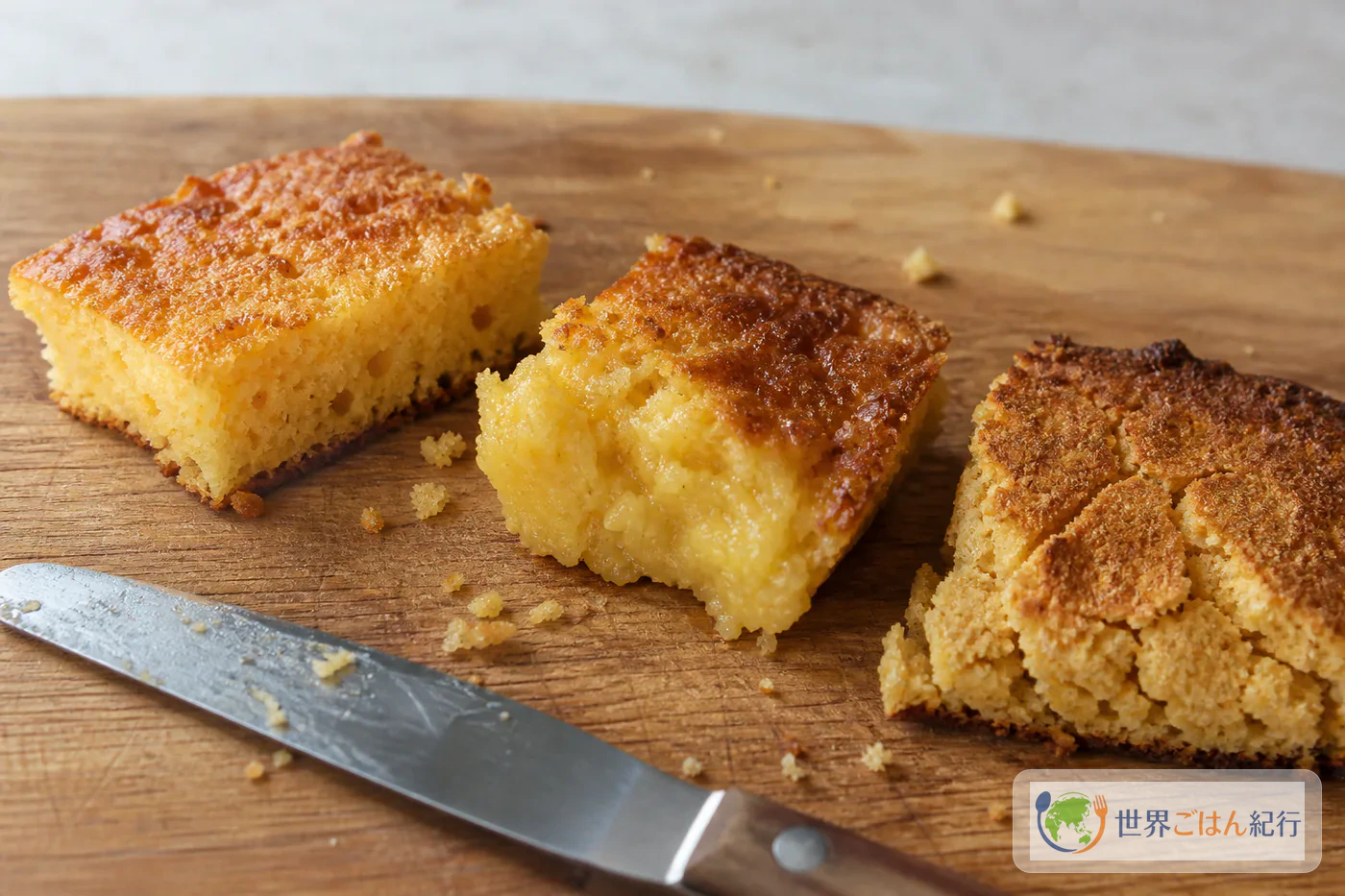
| State | Cause | What to change next |
|---|---|---|
| Center is wet and sticks to the spatula | Lowered to 175°C too early, pan too small so batter too thick | Add 5 minutes at 175°C, and next time use a pan of 24 cm square or larger |
| Only the edge is black, the center white | Pan preheated too long, too much oil | Preheat 3 minutes and reduce the pan oil to 10 ml |
| Crumbles apart everywhere | Too much coarse flour, overbaked | Keep coarse flour to 80 g or less and shorten the 175°C time by 3 minutes |
| Bottom is sticky | Pan was cold, cut without resting | Use a pan that can be preheated and wait 10 minutes after baking |
| Heavy like mochi | Used cornstarch, flour lumps remained | Switch to a yellow flour whose ingredient list says corn, and mix in 3 portions |
If you try to rescue an overbaked piece by pouring milk over it, it falls apart. Cut it into 1 cm cubes and scatter a little under plain yogurt and fruit to make use of the dry, floury texture. Don't cut an underbaked one; return it to the pan and heat further at 175°C in 5-minute steps.
Even at the same temperature, a black iron skillet colors the edge and bottom faster, and a thin silver pan takes a little longer for the heat to reach the center. If the edge darkens first even when you follow the times in the table, cover the rim of the pan with thin strips of aluminum foil only in the second half of baking. Conversely, if the bottom is pale, move the baking sheet to the lower rack of the oven next time only. Adjusting by the position of the pan and extra heating in 5-minute steps, rather than changing the temperature greatly, lets you correct without drying the center.
The sweet version and the salty version: the range of one "pouring dish"
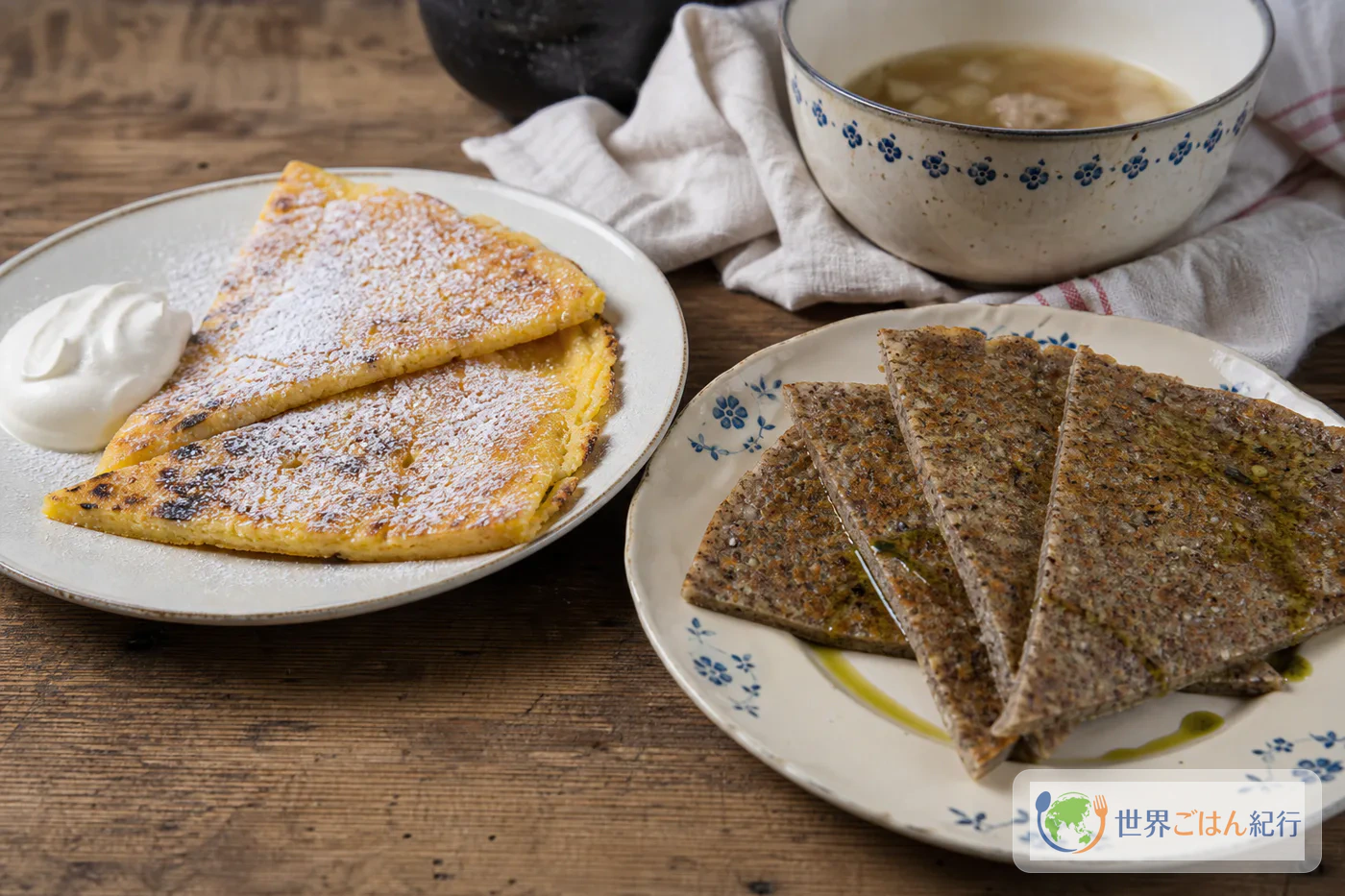
This koruzna zlevanka is the sweet version, dusted thinly with powdered sugar and eaten with coffee or white milk coffee. With only 24 g of sugar, it is closer in sweetness to breakfast or a light snack than to cake. Before the powdered sugar goes on, it also sits comfortably beside a salty soup. When pairing it with a stew like Hungary's Goulash, reduce the sugar to 8 g and leave out the powdered sugar.
The buckwheat ajdova zlevanka changes its role even in the same shape. There is a local example of 300 g buckwheat flour, 2 eggs and milk added until the batter is just a little thicker than pancake batter, poured into a hot pan and baked briefly at high heat. Finished with crisp pork cracklings or pumpkin seed oil, it is eaten as an accompaniment to soup or a warm starter. This salty version is a separate formula, so you can't make it by simply replacing the cornmeal with buckwheat flour in equal amounts.
Across the border, Croatia's Zagorski Štrukli uses dairy and flour too, but is a dish where the dough is stretched and wrapped. Zlevanka is not wrapped. The more rushed the morning, the more the simplicity of just pouring batter from a bowl into a pan helps. Comparing it with Paraguay's Sopa Paraguaya, you see the difference between corn bakes of the same kind: a rich meal bread holding onion and cheese, and a thin baked sweet that keeps the lightness of milk.
Storage and reheating
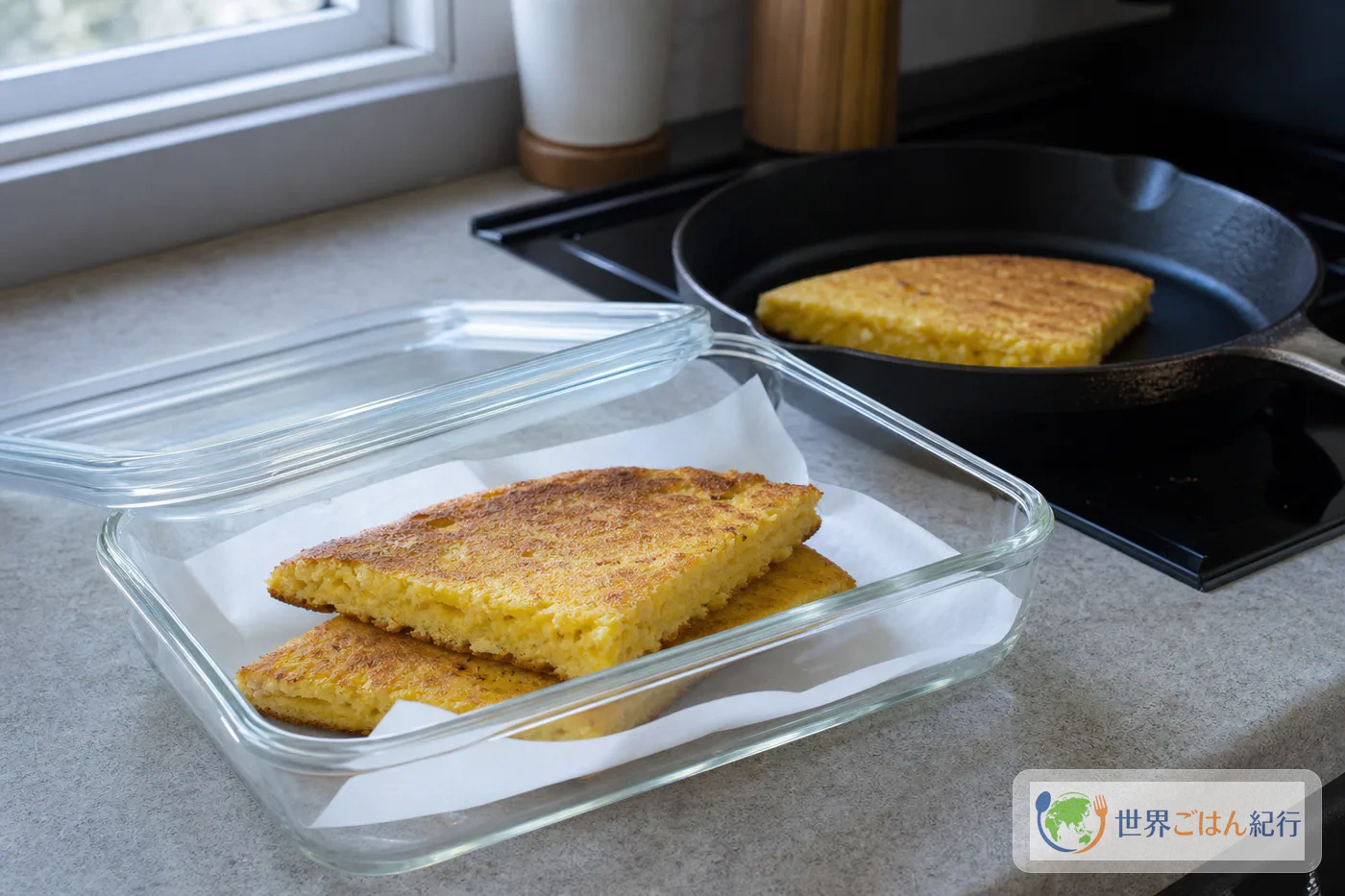
Once completely cool, put them in an airtight container lined with parchment, without overlapping. The guide is 2 days refrigerated and 2 weeks frozen. Powdered sugar absorbs humidity, so don't dust it before storing. To freeze, sandwich each piece between parchment and put in a container.
To reheat, refrigerated pieces go in a dry skillet over low heat, 2 minutes per side. Frozen ones are thawed in the refrigerator for 6 hours and then warmed the same way. It can be eaten from the microwave alone, but over 20 seconds at 600 W the center tends to tighten, so drying the edge in a low-heat skillet for 30 seconds at the end brings it closer to freshly baked.
The food culture of Prekmurje: why cornmeal and buckwheat are used
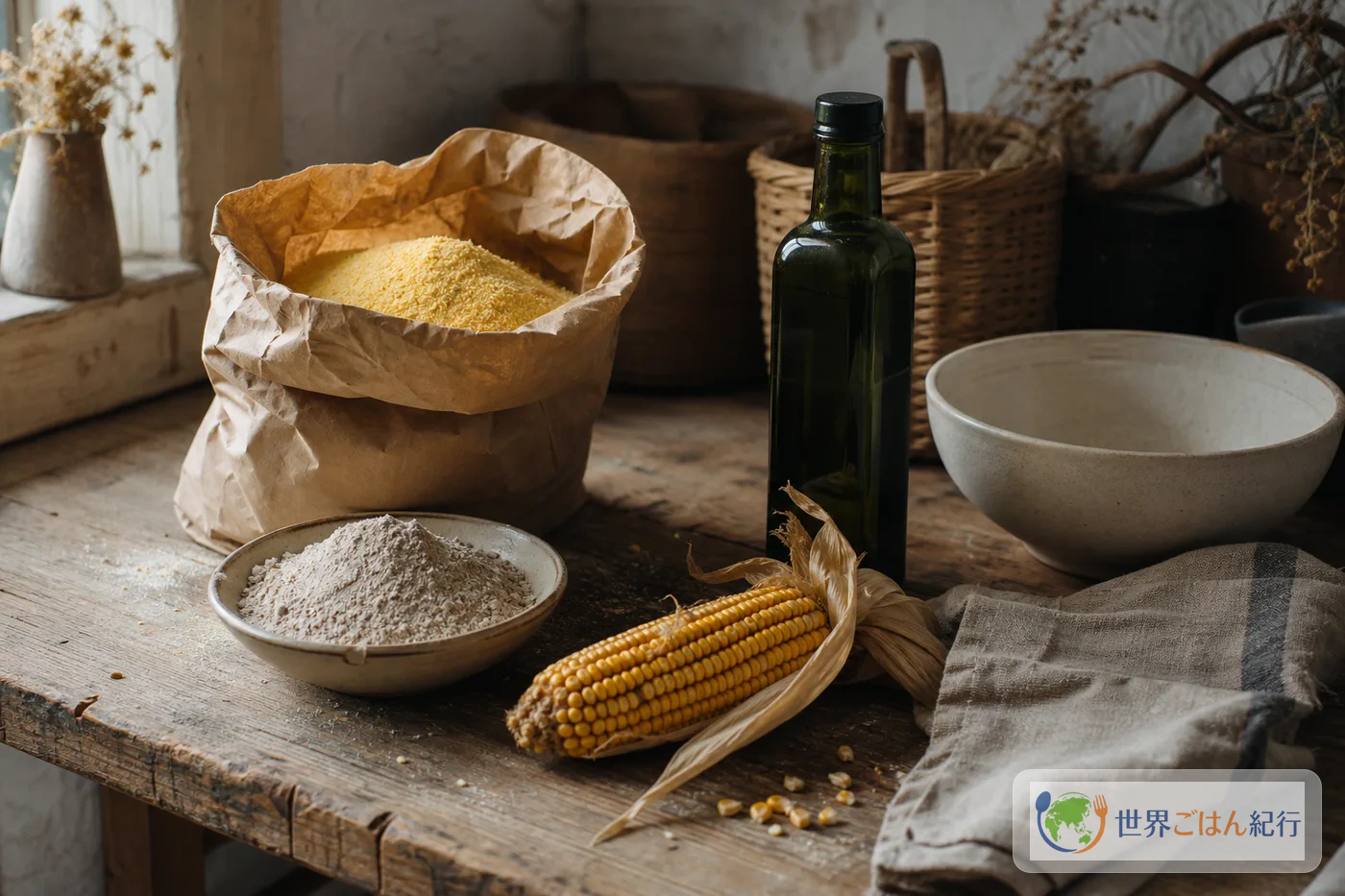
Open the bag, and cornmeal is bright yellow, buckwheat flour a cloudy-sky gray. Prekmurje, where these two flours sit side by side, is the region of the Pannonian plain stretching across the far northeastern edge of Slovenia, on the other side of the Mura river. Close to Austria, Hungary and Croatia, its table took in dairy, pork and pumpkin seeds before it recognized borders. The reason zlevanka is hard to lock into one fixed recipe is that households here moved between sweet and salty according to the flour at hand and the work of the season.
The koruzna zlevanka that appears in Slovenian regional sources is a simple sweet baked from cornmeal or polenta meal, milk, egg and cream. On the other hand, the ajdova zlevanka introduced by a local food outlet uses buckwheat flour, which was familiar even when white wheat flour was scarce, and is explained as having once been served beside soup and now as a warm starter or light meal. The pumpkin seed oil on top adds a near-black green color and a roasted aroma. The cornmeal version is a pale yellow sweet, the buckwheat version a grayish savory one, and the occasions for eating differ even under the same name.
What the methods share is pouring without kneading. It does not wait for fermentation like bread, and it does not stretch a dough like a layered pastry. You decide the consistency in a large bowl and start baking while the hot pan waits. It is a procedure that can be prepared even between the day's work, and it is just as easy to handle in a modern kitchen. About an hour after you start measuring ingredients, you reach a warm slice with the powdered sugar on top not yet melted.
What to prioritize when recreating it elsewhere is the grind of the flour and the two stages of baking temperature. Cream can be swapped for yogurt, and an iron pan for a metal one. But with cornstarch, the aroma of ground corn does not return. Checking one more bag while shopping keeps the core of the local formula.
Frequently asked questions: substitutes, storage, serving
Can I make it with cornstarch?
No. Cornstarch is a white powder with only the starch of corn taken out, and its role is different from corn flour. Using it gives strong elasticity and it tightens like mochi when cool. Check the ingredients and color on the bag and choose yellow corn flour or fine cornmeal.
Can I make it without cream?
You can replace it with 45 g plain unsweetened yogurt. A little acidity comes through, leaning toward another local style of zlevanka. Keep the milk at its amount, and add 15 ml more milk only if the batter is heavy. Switching to butter makes it hard when cool, so keeping the combination of oil and dairy is easier to handle.
Can I make it without a skillet?
You can make it in a 24 cm square metal cake pan, or a baking dish of about 20 cm x 28 cm. If the pan is thin, do not preheat it empty; oil it, pour in the batter and then put it in the oven. Extend the 200°C time to 10 minutes and then watch how the center springs back at 175°C. Some heatproof glass cracks with sudden temperature changes, so use it from room temperature.
What do I eat it with if not sweet?
Reduce the sugar to 8 g, leave out the powdered sugar, and serve it beside vegetable soup, a bean stew or goulash. With no sugar at all, the green aroma of corn tends to stand out, so keeping just 8 g makes it fit a savory plate. The next morning it is not heavy beside egg dishes either.
What if it hardens in the refrigerator?
Don't pour water on the surface; warm it in a dry skillet over low heat, 2 minutes per side. Covering with a lid returns too much moisture and dampens the edge, so do not use the lid at first. If only the center is cold, use the lid for the last 30 seconds.
Main reference links
- Turistična zveza Slovenije / OŠ Turnišče, "Po poteh preteklosti": https://www.os-turnisce.si/files/2014/03/po-poteh-preteklosti.pdf
- Slovenian Tourist Board, "Taste Slovenia": https://www.slovenia.info/uploads/vdm/publikacije/taste_slovenia_en.pdf
- Visit Pomurje, "Ajdova zlevanka": https://visitpomurje.eu/ideje-za-izlet/to-pomlad-kuhamo-ajdova-zlevanka
- Okusno.je, "Ajdova zlevanka (zlejvanka)": https://okusno.je/domace/ajdova-zlevanka-recept-zlejvanka.html
- Slovenian Kitchen, "Traditional Prekmurska Zlevanka": https://sloveniankitchen.com/en-us/blogs/desserts/traditional-slovenian-zlevanka-prekmurska-yogurt-cake-recipe
- Wikipedia contributors, "Zlevanka": https://en.wikipedia.org/wiki/Zlevanka