British Apple Pie: No Single Shape, No Single Origin
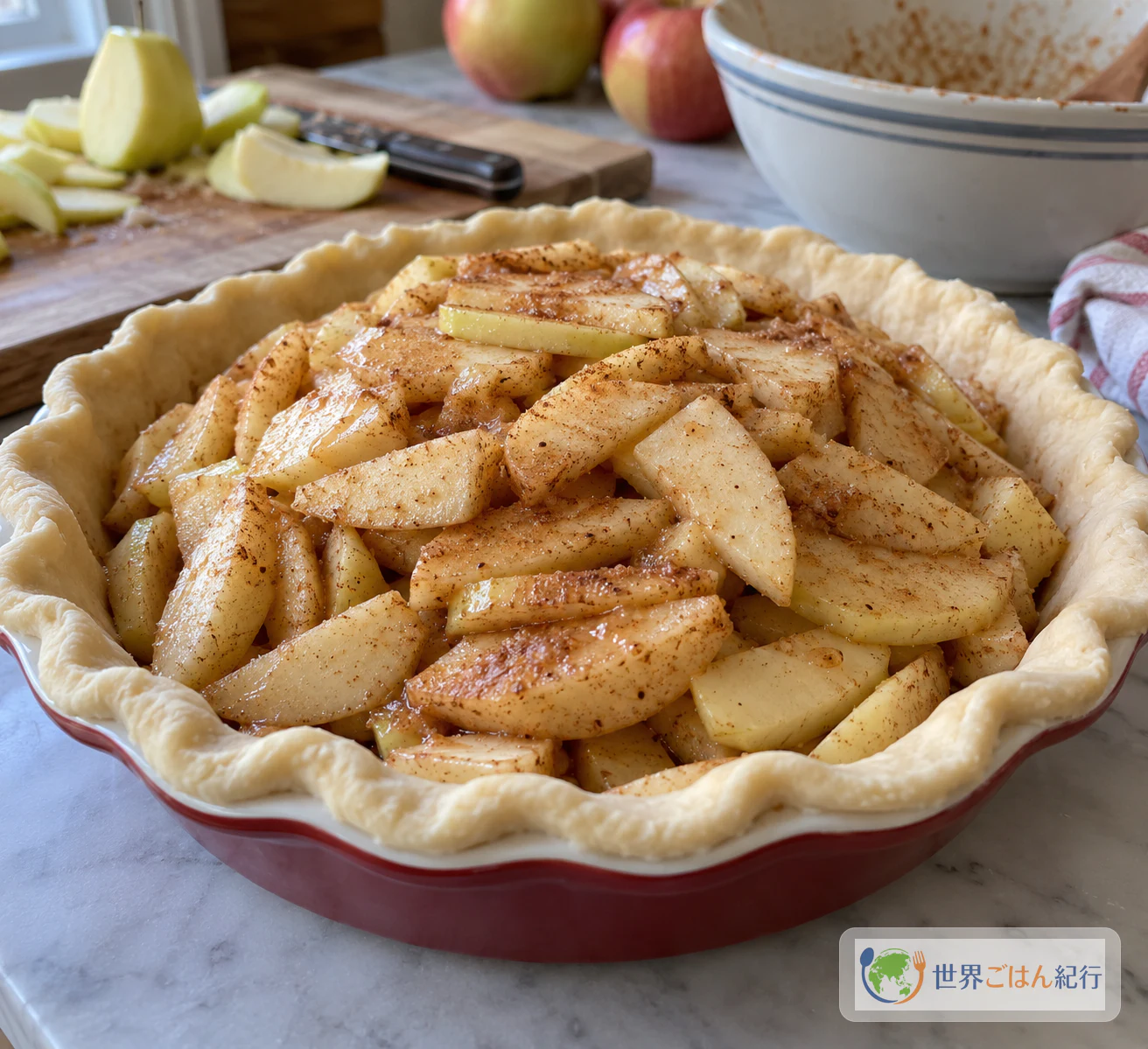
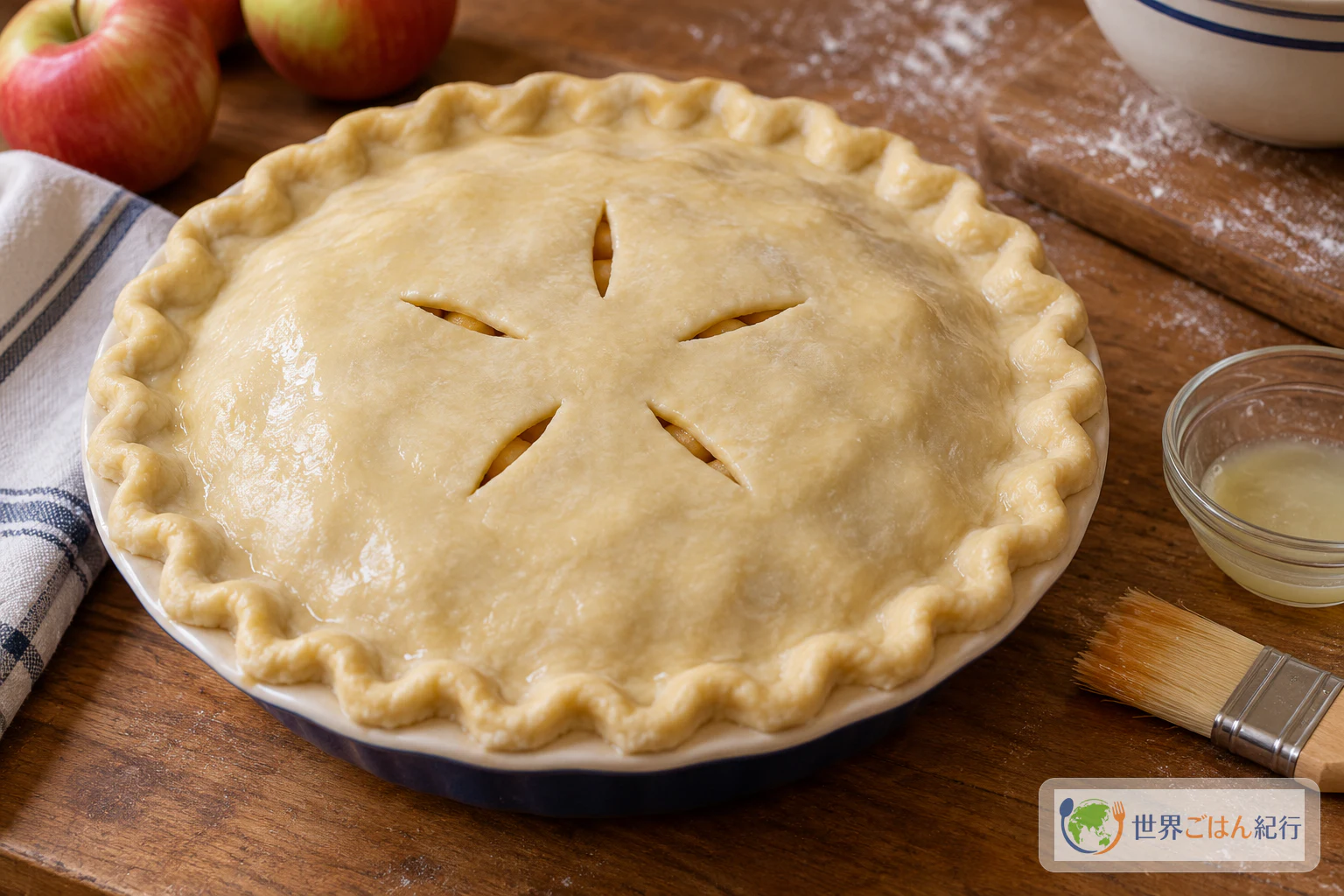
Tart apples that soften in the oven, a short, egg-enriched pastry above and below, and a lid with steam vents. Dry the apples, keep the pastry cool, and give the baked pie a few minutes before you cut it.
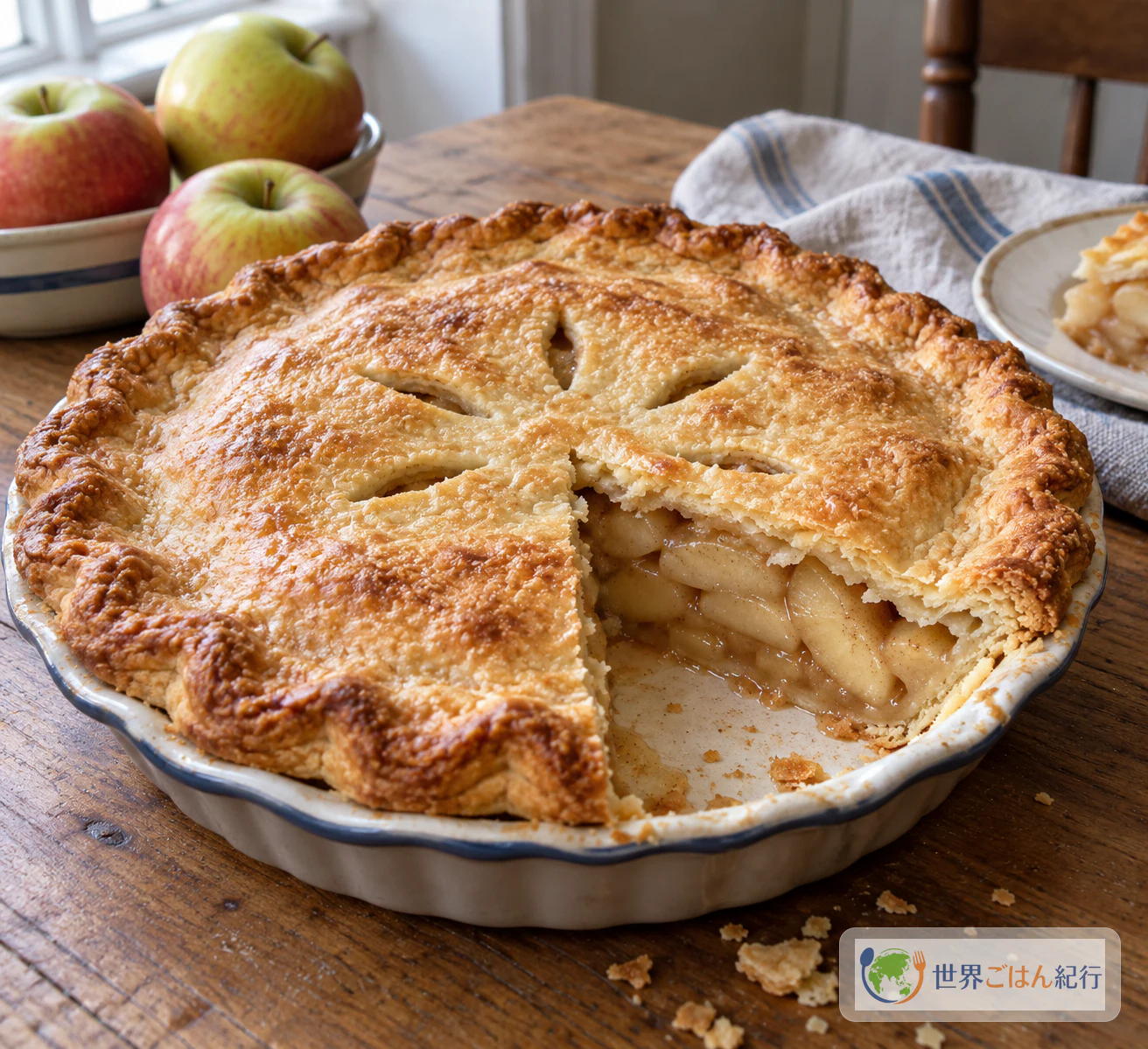
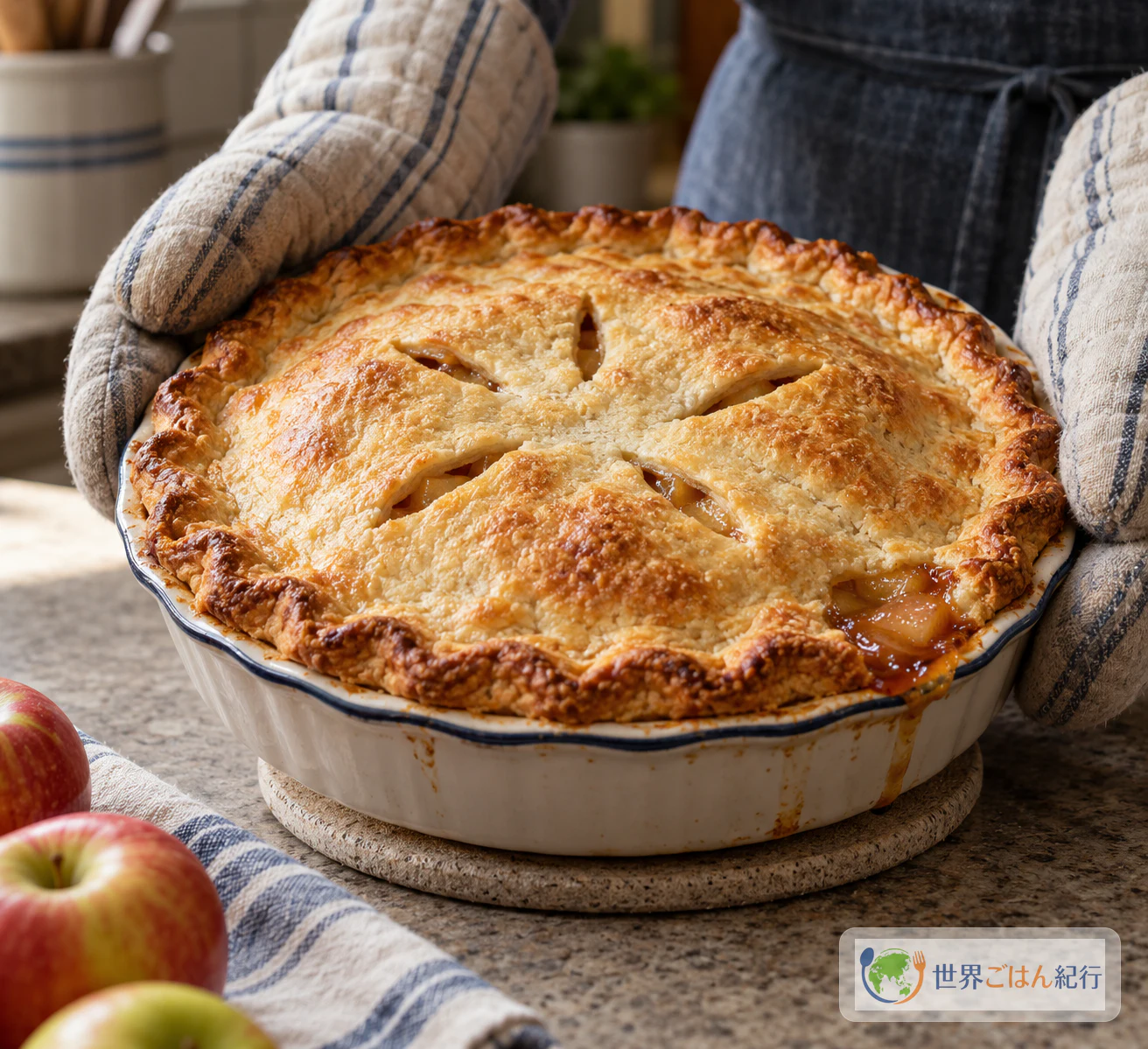
The pie has just come out of the oven. The lid is golden, and a little juice is still bubbling at the edge. The knife can wait: a pie like this asks for 5–10 minutes on the counter before slicing, so the hot filling can settle and the first slice comes away with its layers of apple intact. Then it goes to the table warm, with a spoonful of softly whipped cream.
The pie in this article follows one modern British home recipe: Angela Nilsen's "Homemade apple pie," published by BBC Good Food (from Good Food magazine, October 2004). It fills an egg shortcrust with sharp Bramley cooking apples and serves eight. It is one example of a British apple pie, not a fixed national standard. Other British recipes take different routes.
The deeper history is longer and more tangled. The Forme of Cury, a cookery book dated to about 1390 and linked to the master cooks of Richard II's court, includes a recipe called "Tartys in Applis." It is a baked fruit tart of apples, spices, figs, raisins and pears, coloured with saffron. It is a different preparation from a different era. It is not the same recipe as the pie below, and it does not prove where the first apple pie was made.
Food historians also trace continuity between apple pies across the Atlantic. One short history of American food describes the typical American apple pie as continuous with fifteenth-century English forms. It notes that English recipes by the late sixteenth century were already fairly close to the modern type, and that crusts, sweeteners, spices and fruit have varied by period and place. That shared lineage is a reason not to treat the dish as exclusively British or exclusively American. The rest of this article stays with one modern British recipe and follows it closely.
Ingredients: 8 Servings, Filling and Pastry Kept Separate
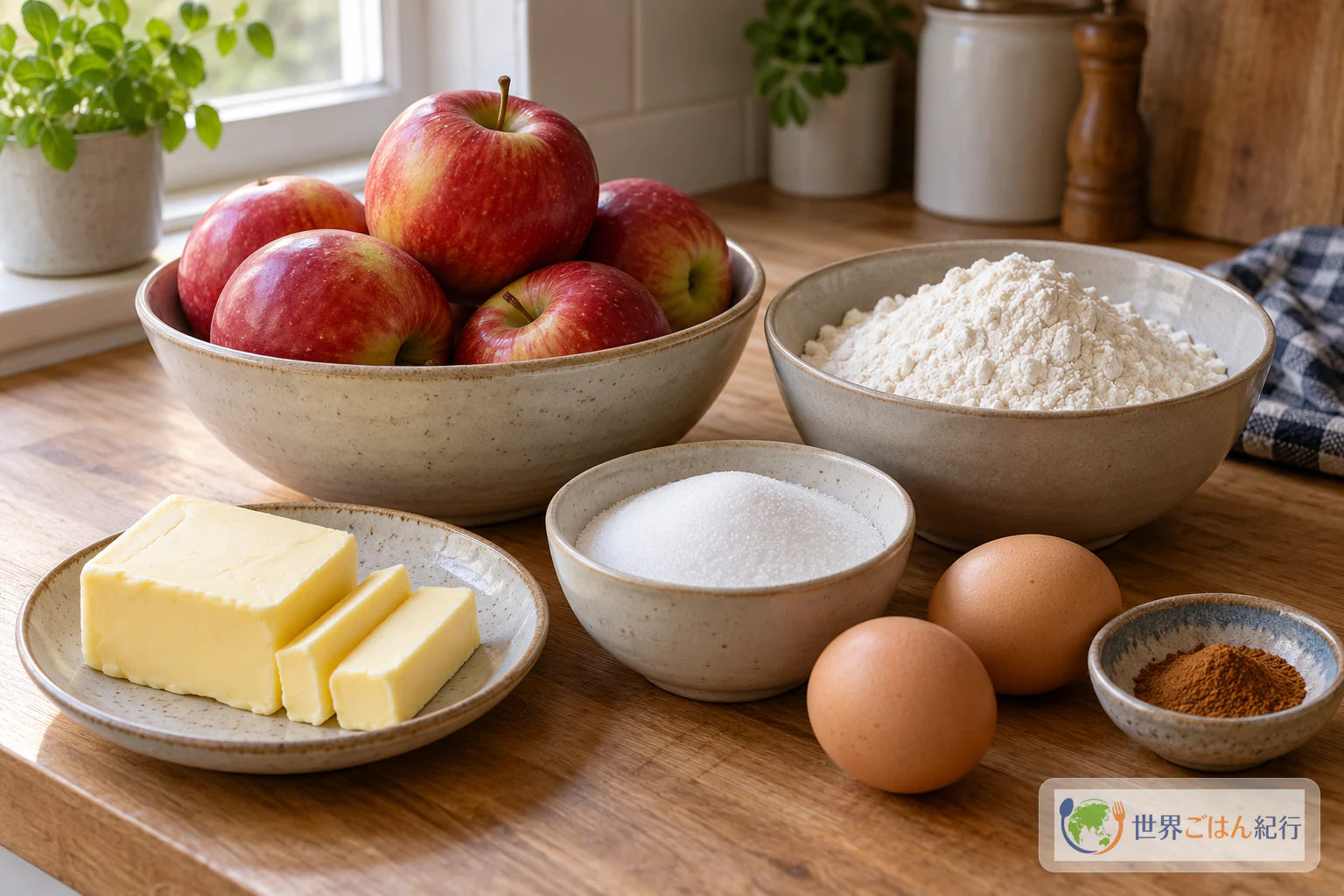
Sugar and flour appear in both the filling and the pastry, so the tables keep the two uses apart. The amounts are the source recipe's own and are not added together inside the method. The English ingredient names are kept as the recipe gives them.
US conversions (approximate): 1kg is about 2¼ lb, 140g about 5 oz, 225g about 8 oz, 50g about 1¾ oz and 350g about 12⅓ oz.
Equipment: a round pie dish 20–22cm (about 8–8½ in) across and 4cm (about 1½ in) deep, a rolling pin, kitchen paper, and a pastry brush.
Time: the source recipe lists a total time of 2 hours 30 minutes. That total includes a 45-minute chill for the pastry and 40–45 minutes in the oven.
Choosing apples
The recipe is built on the Bramley, a British cooking apple. The BBC recipe describes it as sharp and as softening when it cooks. A UK application specification for a traditional Bramley pie filling explains the tartness in terms of the apple's relatively high malic acid and low sugar. If you can find Bramleys, use them; the rest of the recipe assumes them.
If you can't find Bramleys, consider Kogyoku, a Japanese apple. Hirosaki City's apple park describes it as balancing sweetness and acidity, as having a good aroma, and as holding its shape after cooking, which makes it suitable for apple pie. Using it here is an editorial suggestion based on those cultivar notes. It is not a proven equivalent. The juiciness, sweetness and baked texture may differ from the original, and no adjusted sugar or liquid amounts have been worked out for it. Keep the recipe quantities as written.
Shopping list
- Apples: Bramley apples, 1kg. If you are looking for them, search for "Bramley cooking apples." Availability varies by shop and season.
- Golden caster sugar: 190g in total (140g for the filling, 50g for the pastry).
- Plain flour: 350g for the pastry plus 3 tbsp for the filling.
- Butter: 225g.
- Eggs: 2.
- Ground cinnamon: 1/2 tsp.
- Cream for whipping: enough to serve.
- Pie dish: a deep round dish, 20–22cm across and about 4cm deep. The depth lets you pile the apples high and still close the lid over them.
"Golden caster sugar" and "plain flour" are the names the recipe uses. This article has not confirmed that they match a specific sugar or flour sold elsewhere, including particular Japanese products. If you swap in a local product, check its type yourself rather than assuming the result will be identical.
This recipe contains wheat, eggs and dairy (butter and cream). Substitutes for these have not been tested for this recipe, so a swapped version may not behave or taste the same.
Method: Wrapping the Apples and Baking the Pie
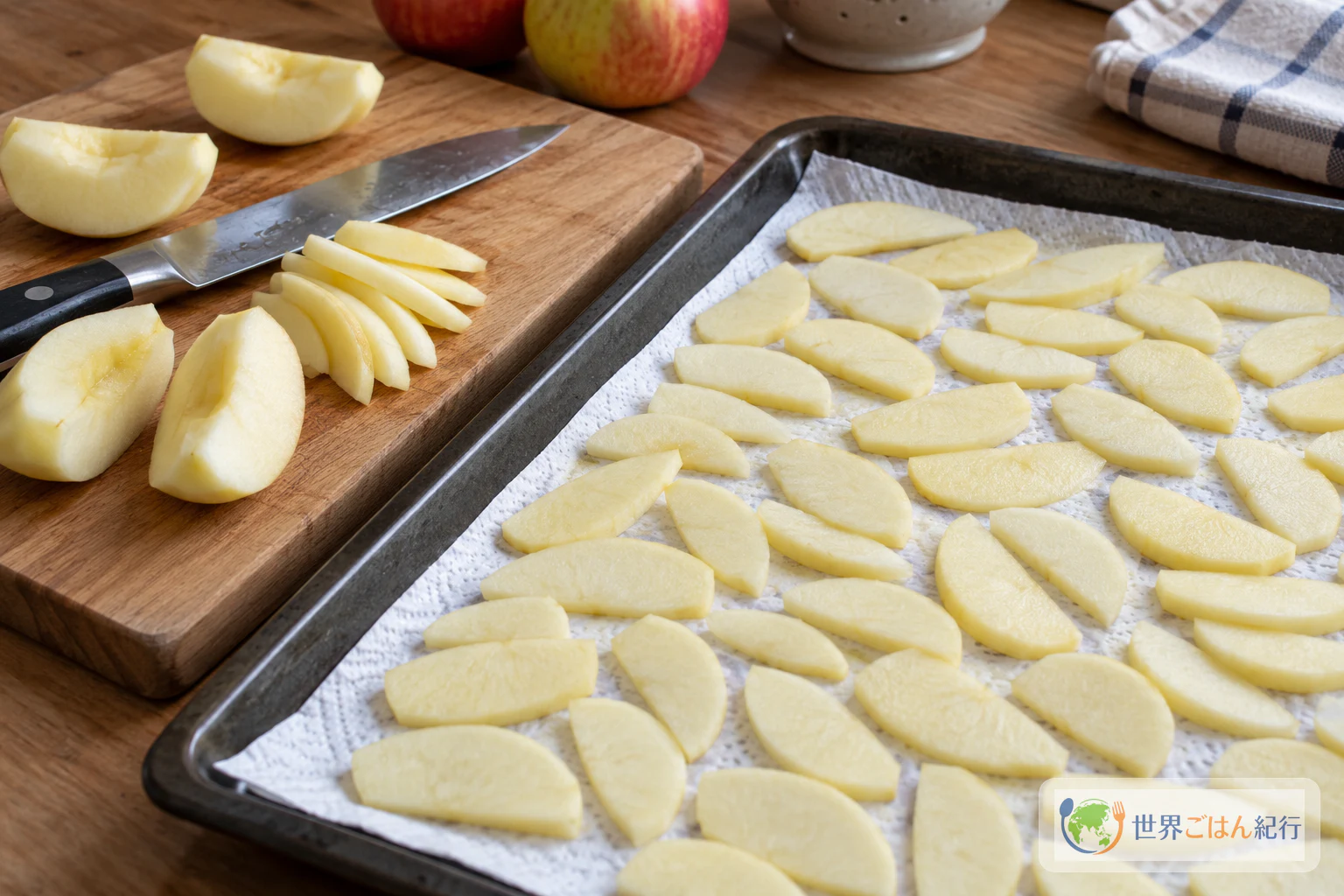
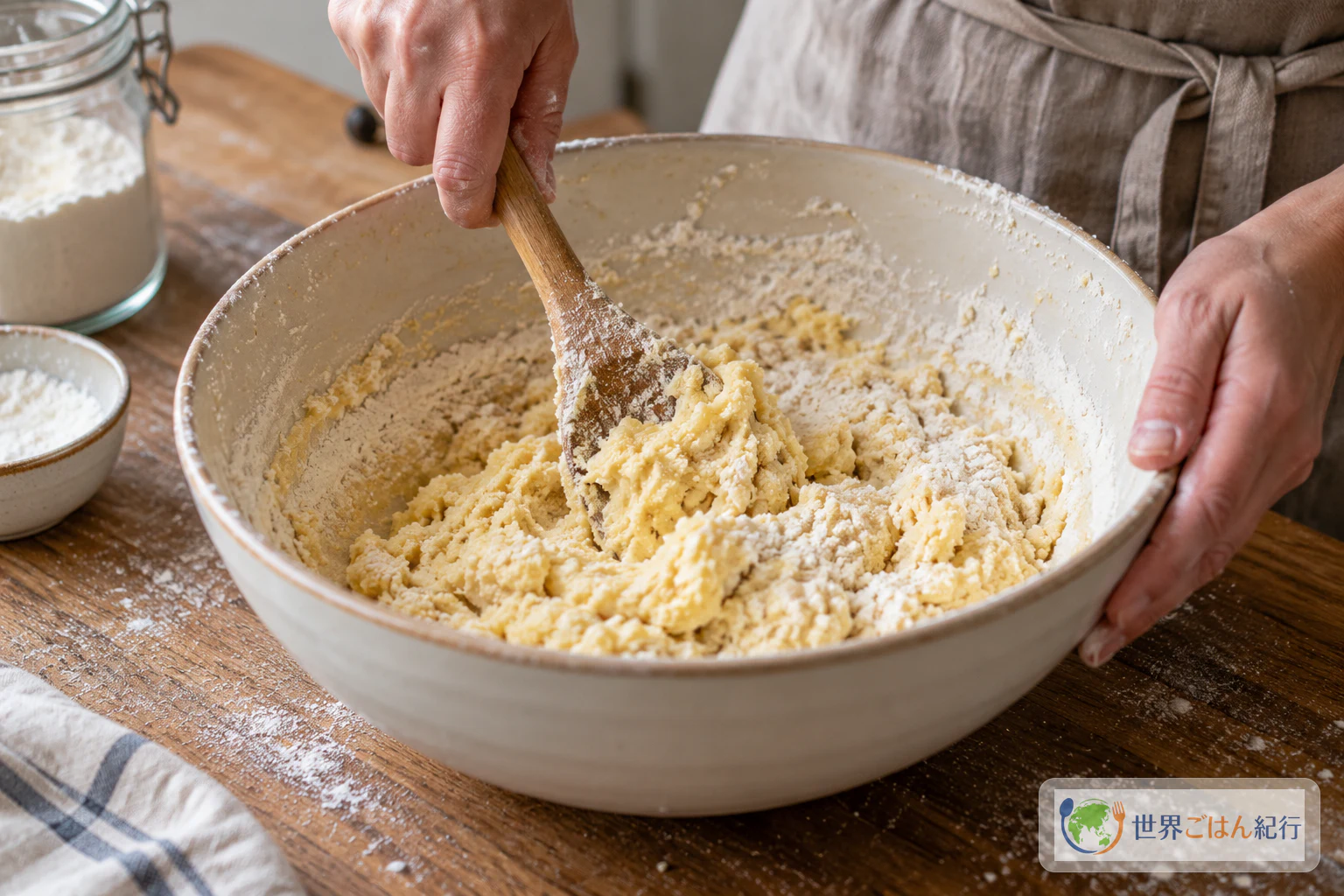
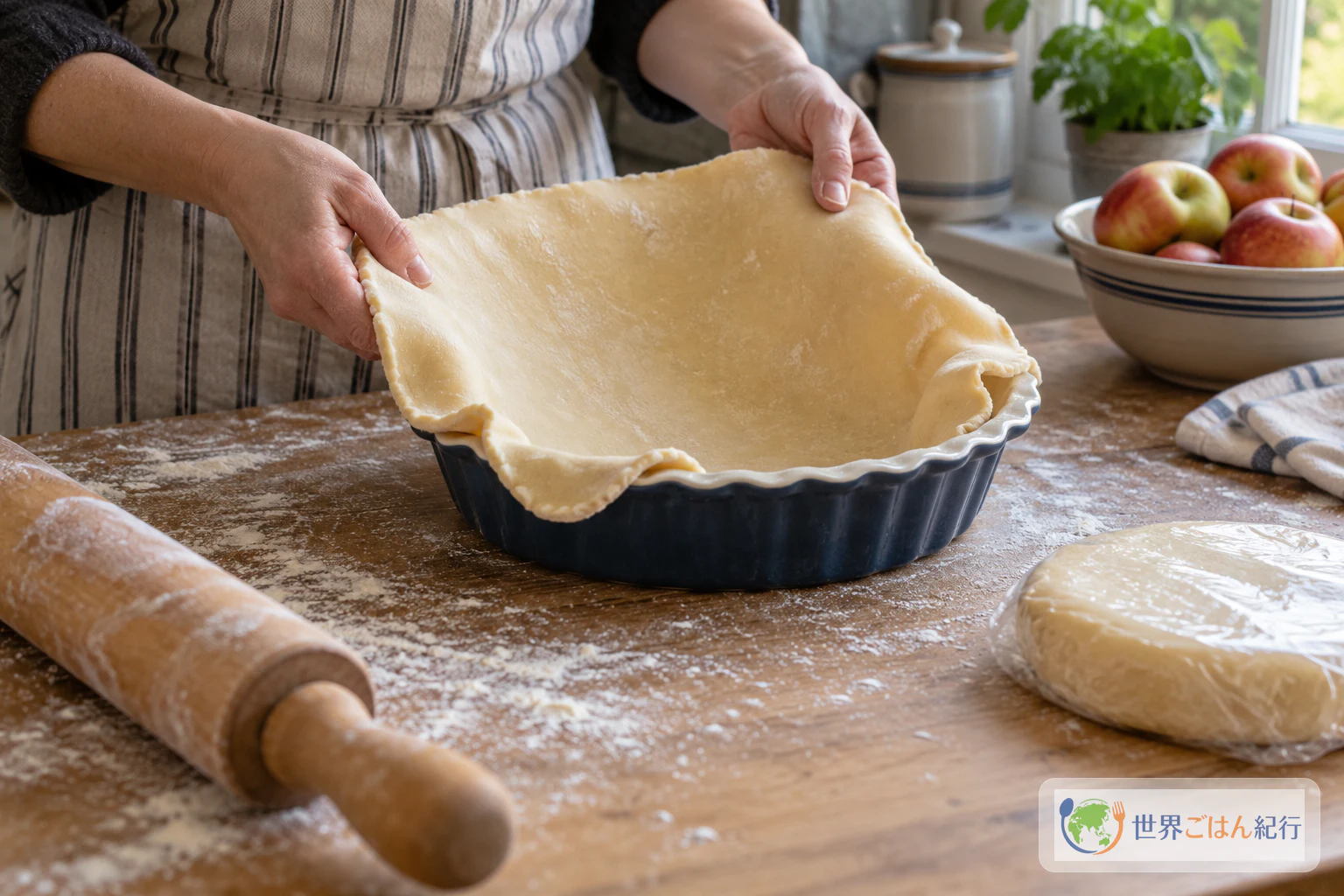
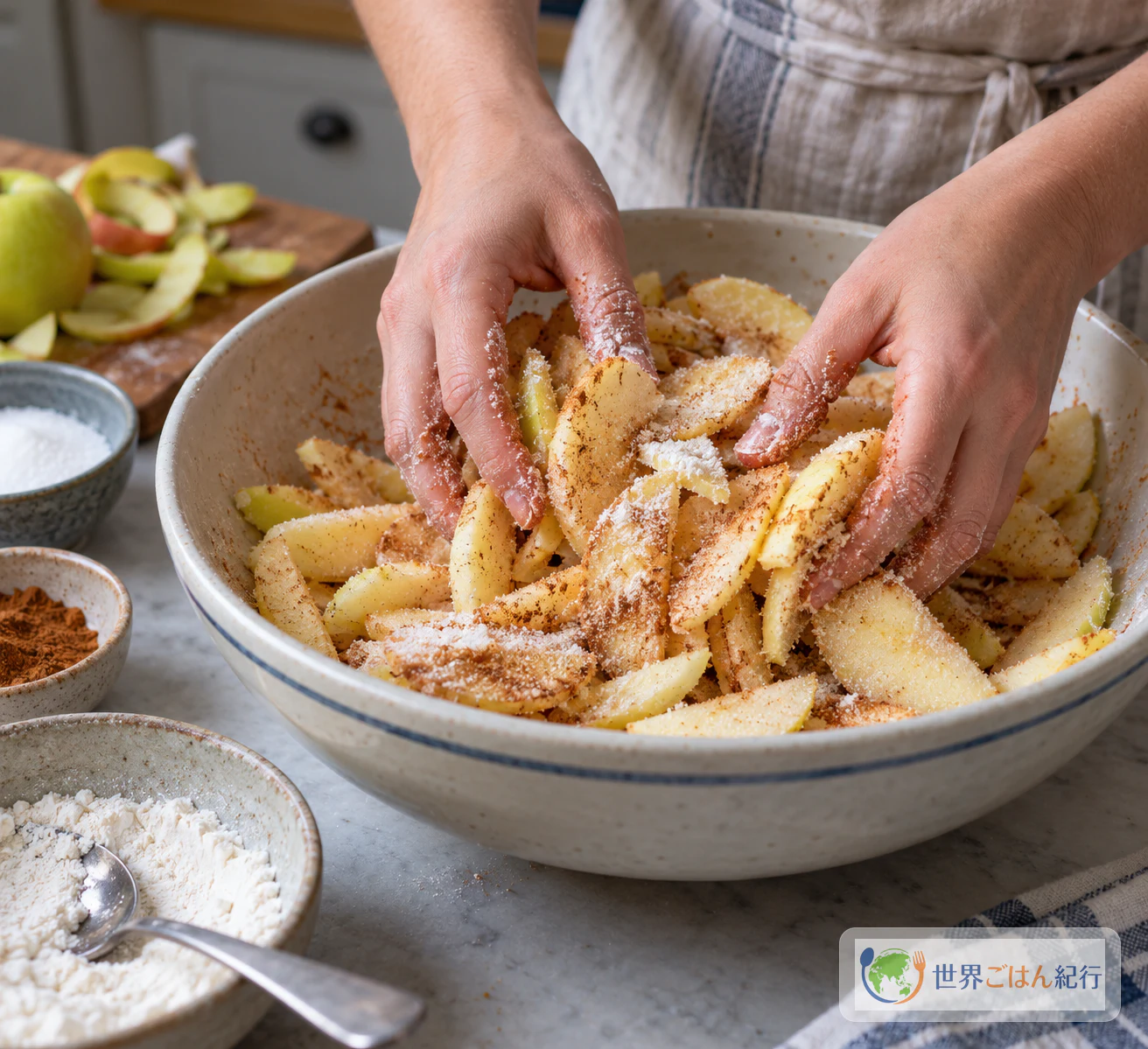
The apples are sliced and dried first, the pastry chills, and the apples are seasoned only just before they go into the dish. The filling goes in raw. There is no pre-cooking step.
Tips and Troubleshooting: Watch the Moisture and the Pastry's Temperature
Two things to watch are how much juice reaches the pastry and how warm the pastry is while you handle it.
| Problem | Likely reason | What to do |
|---|---|---|
| The bottom crust is soggy | Wet apple slices, or pooled juice poured into the base | Dry the slices well on paper (step 1), toss them with sugar only at the last minute (step 4), and leave loose juice in the bowl (step 5). Don't place a hot or pre-cooked filling on the pastry; this recipe never calls for one |
| The pastry is too soft to roll or lift | The dough has warmed up | Put it back in the fridge until it firms a little, then carry on. The recipe gives no fixed time for this extra rest |
| The lid isn't golden yet at 40 minutes | Ovens differ | Keep baking within the recipe's 40–45 minutes and judge by colour. No oven-specific correction is given here |
| The slice collapses and the juice runs | Cut too soon | Let the pie rest for the full 5–10 minutes before slicing |
| The filling tastes sweeter or firmer than expected | A different apple was used | Sweetness and texture depend on the apple. The recipe's sugar amount is written for Bramleys and has not been adjusted for other apples |
The bake time and temperature come from the recipe, but the cues that tell you the pie is ready are a golden lid in the oven and juices that have settled after resting. Watch for both rather than relying on the clock alone.
Variations: Choosing the Apples and What to Serve Alongside
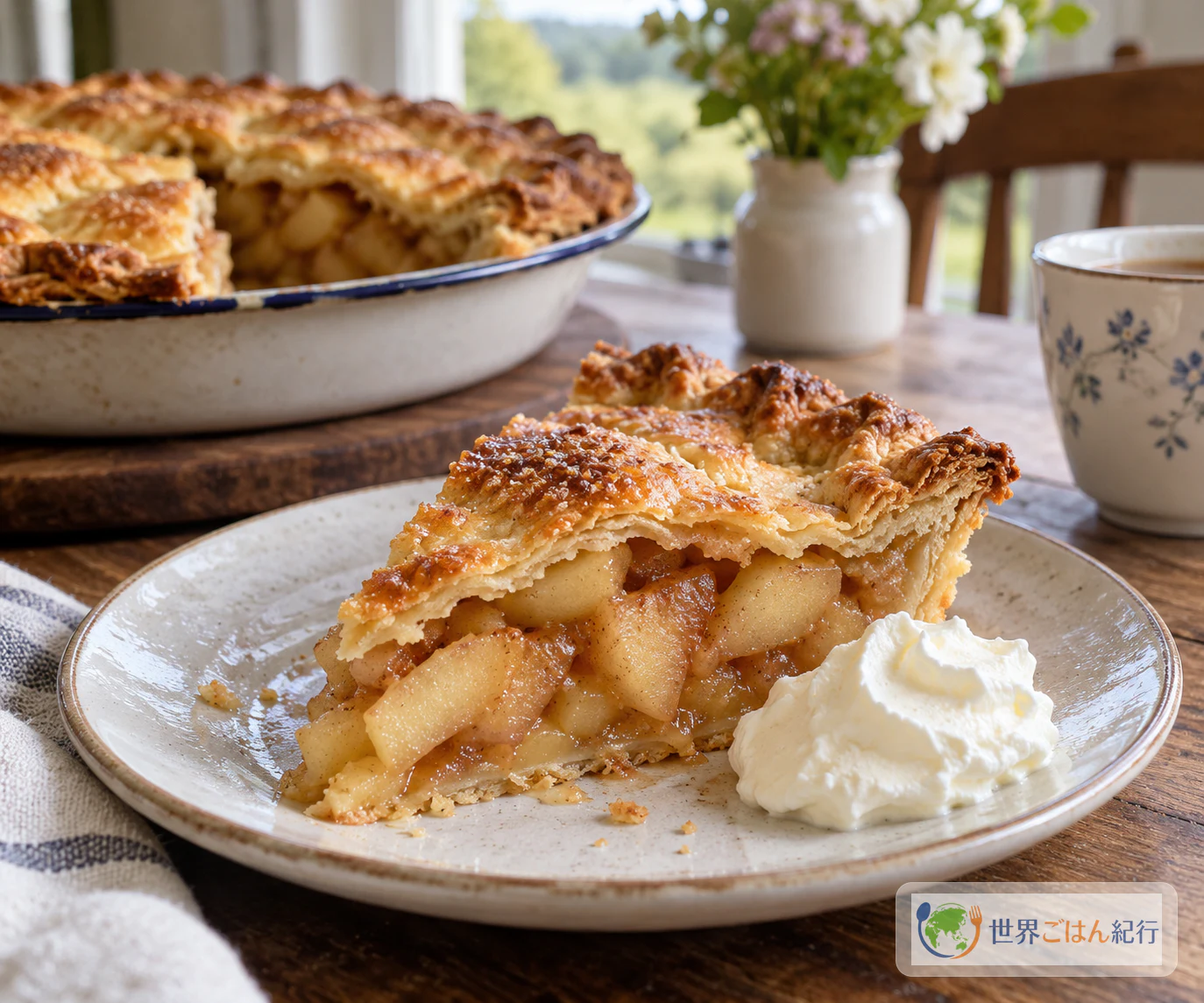
The apple and accompaniment options below keep the base pastry and method. The Bake Off example is a separate recipe, included only for comparison.
- Kogyoku instead of Bramley. Hirosaki City describes Kogyoku as balancing sweetness and acidity and holding its shape after cooking. That makes it a reasonable candidate when Bramleys aren't available, but the baked result is not guaranteed to match.
- Adding a firmer apple. The BBC recipe notes that mixing some firm eating apples in with the Bramleys keeps more texture in the filling. Fuji, which Hirosaki City describes as sweet with a crisp bite, is one candidate. Expect a sweeter, firmer filling. No mixing ratio or sugar reduction has been worked out, so none is suggested here.
- Akane. The Aomori Apple Council describes Akane as harvested earlier than Kogyoku and suggests it as a stand-in for baking when Kogyoku isn't available. Availability depends on region and season, so check the variety label when you shop.
- What to serve with it. The base recipe serves the pie with softly whipped cream. The BBC page also mentions custard and ice cream as accompaniments.
- A different British approach. The Great British Bake Off publishes a different apple pie that combines Bramley and Braeburn apples, uses a spelt pastry, and finishes the top with a lattice, served with custard or ice cream. It shows how widely British apple pies vary. It is a separate recipe, and none of its ingredients or amounts are part of the recipe above.
Background: The Bramley and Britain's Cooking Apples
The apple at the centre of this recipe has its own documented story, which should be kept separate from the history of the pie. According to the National Fruit Collection at Brogdale, Bramley's Seedling was raised by Mary Ann Brailsford in Southwell, Nottinghamshire, at some point between about 1809 and 1813. It was introduced commercially in 1865 and has become a widely grown cooking apple in Britain.
A local history published by the Nottinghamshire Historic Environment Record fills in the rest. The fruit came from a tree that Mary Ann had planted. Nurseryman Henry Merryweather later propagated it and named it after Bramley, who by then owned the property. The apple was shown to the Royal Horticultural Society in 1876. All of this is the history of an apple variety, not the origin of apple pie.
Britain's markets have long distinguished eating apples from cooking apples, according to Apples and People, a research and heritage project. Bramley is valued as a cooking apple because its flavour and texture hold up well to heat. The UK application specification for "Traditional Bramley Apple Pie Filling" attributes the apple's sharpness after cooking to its high malic acid and low sugar. That specification describes a filling built mainly on Bramley pieces, sugar and water, with purée, cornflour and lemon juice listed as optional. It is an application document for a product specification. It is not evidence of current legal protection and not a legally required recipe for a homemade pie.
Frequently Asked Questions
What if I can't find Bramley apples?
Kogyoku is the candidate suggested here, based on Hirosaki City's notes that it is well balanced and holds its shape when cooked. It is not the same apple, and the result may differ in juiciness, sweetness and texture. The recipe's quantities have not been adjusted for it.
How do I keep the bottom crust from going soggy?
Dry the apple slices on kitchen paper, season them only just before filling, and leave any pooled juice behind in the bowl. Don't put a hot or pre-cooked filling onto the pastry. This recipe uses raw apples throughout, so there is no cooking step to add.
Can I make it without wheat, eggs or dairy?
This recipe contains all three. Substitutes have not been tested for it, so there's no guarantee a swapped version will bake the same way.
What size dish do I need?
A round pie dish 20–22cm (about 8–8½ in) across and 4cm (about 1½ in) deep. The lid is rolled to about 28cm (11 in) to cover the mounded apples.
Is "Tartys in Applis" the original apple pie?
No. It is a medieval fruit tart recorded in The Forme of Cury, made with apples, spices, figs, raisins and pears and coloured with saffron. It belongs to a different period and is a different preparation. It is not the same as a modern British apple pie, and it doesn't prove where apple pie first began.
How should I handle leftover pie?
The recipe gives no storage period, so none is promised here. General home food-safety guidance from Japan's Ministry of Health, Labour and Welfare and Ministry of Agriculture, Forestry and Fisheries covers cooked leftovers in general:
- Don't leave the pie at room temperature for long.
- Handle it with clean utensils.
- Cool it quickly; dividing it into shallow containers helps.
- Seal it in an airtight container or wrap, refrigerate it promptly, and eat it soon.
- Throw it away if too much time has passed.
- If you reheat it, heat it thoroughly. The Ministry of Health, Labour and Welfare gives 75°C (167°F) or higher as a general guide.
This guidance applies to cooked food in general, not specifically to apple pie, and it does not give a reheating time.
For more dishes from the same country, see recipes from the United Kingdom.
Sources
- BBC Good Food, "Homemade apple pie" (Angela Nilsen; Good Food magazine, October 2004). The base recipe for 8 servings: ingredients, dish size, method, 45-minute chill, 190°C (fan 170°C) for 40–45 minutes, resting and serving; also notes on Bramley's character, mixing in firmer apples, avoiding a soggy base, and accompaniments. https://www.bbcgoodfood.com/recipes/ultimate-apple-pie/
- British Library Archives and Manuscripts Catalogue, "Add MS 5016: Forme of Cury." Catalogue record dating the cookery book of Richard II's master cooks to about 1390. https://searcharchives.bl.uk/catalog/032-002110532
- Project Gutenberg, The Forme of Cury: A Roll of Ancient English Cookery (transcription of Samuel Pegge's 1780 edition). The "Tartys in Applis" recipe and its ingredients. It gives no quantities and does not establish identity with modern pies. https://www.gutenberg.org/cache/epub/8102/pg8102-images.html
- Oxford University Press blog, "As American as apple pie" (excerpt from The Oxford Companion to American Food and Drink). Continuity between American apple pie and earlier English forms, and the variety of apple pies over time. https://blog.oup.com/2011/07/apple-pie/
- The Great British Bake Off, "Apple Pie recipe." A different British recipe, cited as a point of comparison only. https://thegreatbritishbakeoff.co.uk/recipes/all/apple-pie/
- UK Government publication archive, "Traditional Bramley Apple Pie Filling: TSG application specification" (application submitted by UK Apples & Pears Ltd). Bramley's acidity and the scope of the filling described in the application. It is not evidence of current protection status or of a household recipe. https://assets.publishing.service.gov.uk/media/5fd36b98d3bf7f3061e108ae/trad-bramley-apple-pie-filling-tsg.pdf
- National Fruit Collection, Brogdale, "Bramley's Seedling." Variety record: raised about 1809–1813, introduced 1865. https://www.nationalfruitcollection.org.uk/full2.php?fruit=apple&varid=714
- Nottinghamshire Historic Environment Record, "The Story of the Bramley Apple." Local history of the variety's Southwell origins, Henry Merryweather and the 1876 RHS showing. https://hbsmrweb-nottinghamshire.esdm.co.uk/whats-new/the-story-of-the-bramley-apple
- Apples and People, "Bramley's Seedling: Big apples from little pips." Background on Britain's eating and cooking apples and Bramley's reputation in cooking. https://applesandpeople.org.uk/stories/bramley/
- Hirosaki City Apple Park, "りんごの料理特性" (Cooking characteristics of apples). Kogyoku's suitability for apple pie and Fuji's sweetness and texture. https://www.city.hirosaki.aomori.jp/ringopark/ryouri.html
- Aomori Apple Council, "青森りんご大図鑑" (Aomori apple guide). Kogyoku for baking, and Akane as an earlier-harvested alternative. https://aomori-ringo.or.jp/starcut/variety.html
- Ministry of Health, Labour and Welfare (Japan), "家庭での食中毒予防" (Preventing food poisoning at home). General guidance on handling, cooling and reheating leftovers, including 75°C or higher as a reheating guide. https://www.mhlw.go.jp/stf/seisakunitsuite/bunya/kenkou_iryou/shokuhin/syokuchu/01_00008.html
- Ministry of Agriculture, Forestry and Fisheries (Japan), "冷蔵庫のかしこい使い方" (Using the refrigerator wisely). General guidance on cooling, sealing, refrigerating and thoroughly reheating home-cooked leftovers. https://www.maff.go.jp/j/syouan/seisaku/foodpoisoning/frige.html