The most formal dish on the Dalmatian table
Dalmatia, on Croatia's Adriatic coast. In this region, dotted with beautiful port towns like Dubrovnik and Split, there is a top-ranking meat dish long regarded as hard to surpass. It is Pašticada.
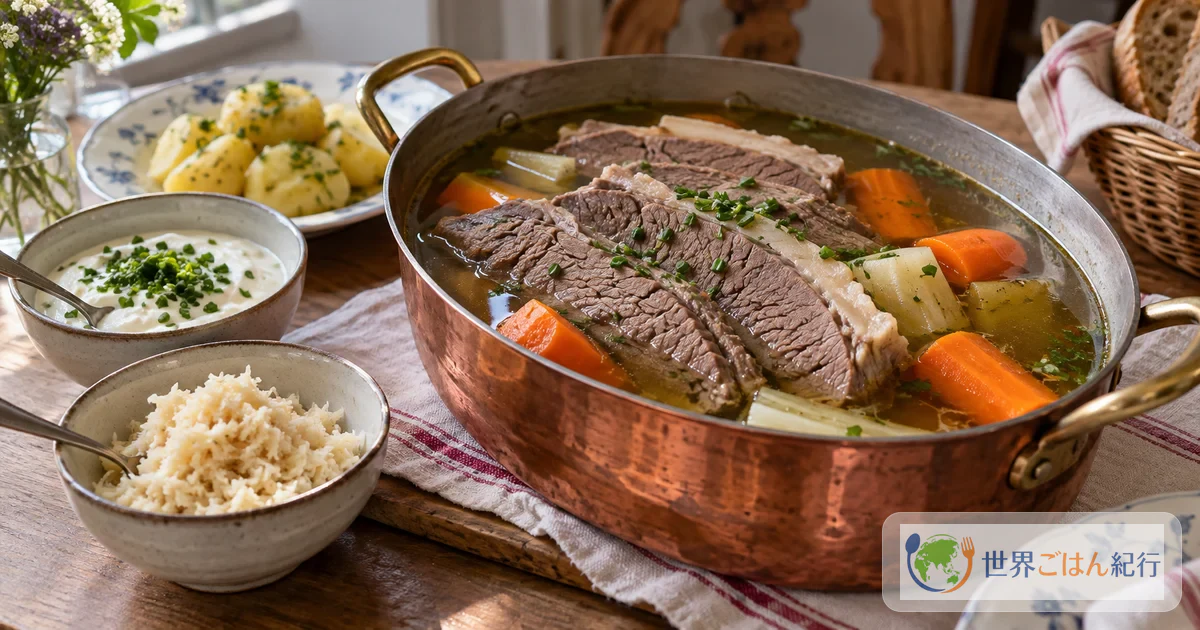
Pašticada is a deep reddish-brown stew in which a block of beef is marinated overnight in wine vinegar and aromatic vegetables, then braised slowly for six hours or more with prunes, red wine and bacon. The sauce interweaves sweetness, acidity and savoriness, and clings to beef tender enough to fall apart with a fork. The side dish is always handmade gnocchi (njoki). The moment those gnocchi soak up every bit of the sauce and come together in the mouth is the heart of pašticada.
It is a dish for the most important moments of life: weddings, Christmas, Easter and christenings are occasions when Dalmatian homes are said to put it on the table.
"Pašticada" derives from the Italian "pastizzada" (a braised dish), reflecting the centuries during which the Republic of Venice ruled Dalmatia. Recipes differ from one coastal city to the next, such as Split, Dubrovnik and Šibenik, and a proud rivalry between households over "my pašticada is the best" continues today.
In English there are many food writers who present detailed recipes and cultural background for pašticada as "Croatia's most prestigious dish." Eastern European dishes such as Hungarian goulash and Czech svíčková are known more widely, but pašticada is still little known. This article explains, from marinade tips onward, how to reproduce the local method with ingredients available at an ordinary supermarket.
Ingredients (serves 6)
The best cut for pašticada is one that "turns melting tender with long, low cooking." In Croatia, beef rump (špikovana govedina) is traditionally used. A block of beef round is best. If it is too lean, the fat from the bacon makes up for it, so don't worry. The point is to cut the block into pieces yourself rather than using pre-cut stew cubes, which keeps the meat from falling apart too much during braising.
Tell a Dalmatian that you served pašticada with pasta and you may get a frown. In local opinion, no side dish other than gnocchi belongs with pašticada. The finished dish is the gnocchi soaking up the meat sauce and melting in the mouth. Store-bought gnocchi are acceptable, but handmade gives you double the satisfaction. As with Polish pierogi, making the dough yourself greatly affects the satisfaction of the whole dish.

Cooking tips
Much of pašticada's flavor is decided by the marinade. Skipping it leaves you with simply a meat stew. The ideal schedule is to prepare the marinade the night before and start braising the next morning.
Dried California prunes sold in supermarkets are the easiest to find and are characteristically sweet. In the Dalmatian tradition prunes grown along the Adriatic coast are used, but California prunes are enough to reproduce the dish elsewhere. More prunes makes the sauce sweeter; fewer makes the acidity stand out. 150 g gives the best balance of sweet and sour.
2 hours: the meat is still firm. It has chew. 4 hours: tender enough to tear with a fork. The minimum finish line. 6 hours: melts in the mouth. This is the ideal. 8 hours: the fibers collapse completely and become one with the sauce. Traditional for celebrations. This is the philosophy shared by the world's great braised dishes, such as Brazilian feijoada and Algerian chorba frik. No hurry; slowly.
If the finished sauce is thin, take the lid off and reduce it over medium heat. If it is too thick, loosen it with a little red wine. The ideal thickness is "flowing slowly down the back of a spoon." Picture it as a little looser than curry roux and much thicker than consommé.
Variations
Slow cooker version
On busy days a slow cooker is handy. Steps 1–3 are the same, then put everything into the slow cooker and cook on LOW for 8–10 hours. Set it in the morning and it is ready for dinner. Dishes where "low and slow" is the secret of the flavor, like Uzbek plov and Ethiopian doro wat, suit a slow cooker perfectly.
Vegan version (mushroom pašticada)
Use 400 g king oyster mushrooms and 200 g maitake in large pieces instead of meat. A 4-hour marinade is enough for mushrooms, and the braise finishes in 2 hours. The mushrooms' umami compound (guanylate) interweaves with the sweetness of the prunes and the acidity of the red wine for a depth you wouldn't guess is meatless. Serving it with Moldovan mămăligă is also recommended.

Background to the dish
A legacy left by the Republic of Venice
The origins of pašticada go back to the 15th–18th centuries, when the Republic of Venice ruled Dalmatia. The name itself derives from the Italian "pastizzada" (a braised dish), and a resemblance has been pointed out to the Veneto's "pastissada de caval" (a braise of horse meat).
But Dalmatian pašticada evolved greatly from the Italian prototype. The prunes and rosemary that thrive in the Mediterranean climate, the spices (cloves, nutmeg) that gathered in the Adriatic ports, and the meat-eating culture of the Balkans came together, and a unique dish, neither Italian nor Balkan, was born.
"My pašticada is the best": household pride
Between the pašticada of Split and the pašticada of Dubrovnik, the amount of prunes, the kind of wine and the spice blend differ subtly. Households keep their own versions, and which is best is a matter of local pride.
Pašticada and the Christmas table
Pašticada is a dish associated with festive meals. The fragrance of a braise drifting through the house from morning is the smell of a celebration in many Dalmatian homes.
What to drink with pašticada
Wine pairing
The Croatian red wine Plavac Mali is the best match for pašticada. Plavac Mali is a grape variety native to Dalmatia, and DNA analysis has shown it to be a close relative of California's Zinfandel. It is full-bodied with strong fruit, powerful enough not to be overwhelmed by the complex sauce of pašticada.
These wines, easy to find elsewhere, pair well.
- Cabernet Sauvignon (such as from Chile): strong tannins that harmonize with the prune sauce
- Merlot: mellow fruit that harmonizes with the sweetness of pašticada
- Syrah / Shiraz: spicy flavors that echo the cloves and nutmeg
For white wine drinkers, the Dalmatian white grape variety Pošip is surprisingly good. Tell a local, though, that you had white wine with pašticada, and they may be surprised.
Non-alcoholic
Pomegranate juice or grape juice (100% juice) sets off the meal in place of red wine. In Dalmatia it is customary to drink rakija, a fruit brandy, after a meal.

Nutrition (per serving, one of 6)
Long braising melts out the excess fat of the beef, which can be skimmed off with a spoon, so despite its rich look the fat content is modest. It also contains the fiber of the prunes and the polyphenols of red wine, a well-balanced dish.
| Nutrient | Amount |
|---|---|
| Calories | 580 kcal |
| Protein | 42 g |
| Fat | 22 g |
| Carbohydrates | 48 g |
| Fiber | 5 g |
| Sodium | 720 mg |
Even after six hours of braising the alcohol does not cook off completely, so be careful when serving children and pregnant women.
More dishes to cook
- Zagorski Štrukli - another Croatian dish, but a baked cheese-dough dish in contrast to a celebratory meat dish. Easy to turn into a light lunch or a side.
- Carbonnade - makes use of ingredients and aromas from the same region.
- Waterzooi - makes use of ingredients and aromas from the same region.
- Svíčková - makes use of ingredients and aromas from the same region.
- Ameijoas à Bulhão Pato - makes use of ingredients and aromas from the same region.
Frequently asked questions
Questions often asked by people making pašticada for the first time, from braising time to storage and choosing the wine.
Q1. Do I really have to braise it for 6 hours? Can't I shorten it?
At least 4 hours is needed. At 4 hours it is tender enough to tear with a fork, and at 6 hours it melts in the mouth. A pressure cooker can shorten it to about 1.5–2 hours, but the result is a different dish from the slow braise. We recommend braising slowly on a day when you have time.
Q2. Should I be particular about the red wine?
Expensive wine isn't needed. Rather, a dry red you wouldn't mind cooking with is best. Cabernet Sauvignon and Merlot are the standards. In Croatia wine from the local Plavac Mali grape is used, but outside the region any full-bodied red wine of moderate price is enough. Avoid sweet wine (combined with the sweetness of the prunes it becomes too sweet).
Q3. Is it good the next day?
It tastes better the next day. Pašticada is often said to be completed after a night of rest. After braising, put the whole pot in the refrigerator and reheat the next day, and the sauce soaks fully into the meat and the flavor deepens further. It keeps 3 days refrigerated and 1 month frozen.
Q4. Can I use pasta instead of gnocchi?
Strictly speaking it goes against local custom, but it will of course taste good. Short pasta with ridges, such as fusilli or penne, holds the sauce well. Some regions serve it with polenta (cornmeal porridge). It is safest, though, not to tell someone from Dalmatia that you ate it with pasta.
Q5. Can children eat it?
Most of the alcohol in the red wine cooks off during the six-hour braise, but not entirely to zero. When serving children, you can replace the red wine with 200 ml 100% grape juice plus 2 tbsp balsamic vinegar. With the sweetness of the prunes, it has a taste children find easy to eat.
Related European dishes
If pašticada has caught your interest, please try other European braised dishes too. Each is a traditional braise its country is proud of.
- Goulash: Hungary's beloved dish. A paprika-based beef stew, a different Eastern European approach to braising from pašticada
- Svíčková: a Czech braise in a tangy cream sauce. Like pašticada, it shines through the union of acidity and sweetness
- Moussaka: Greece's layered gratin. Another masterpiece of Mediterranean cooking
- Borscht: Ukraine's red soup. The sweetness and acidity of beets echo the prunes of pašticada
Sources
- McGee, H. (2004). On Food and Cooking: The Science and Lore of the Kitchen. Scribner. https://www.hmcgee.com/ — a basic reference on food science, including marinades and the Maillard reaction