Patatas Bravas: Hot Potatoes and a Red Sauce to Share
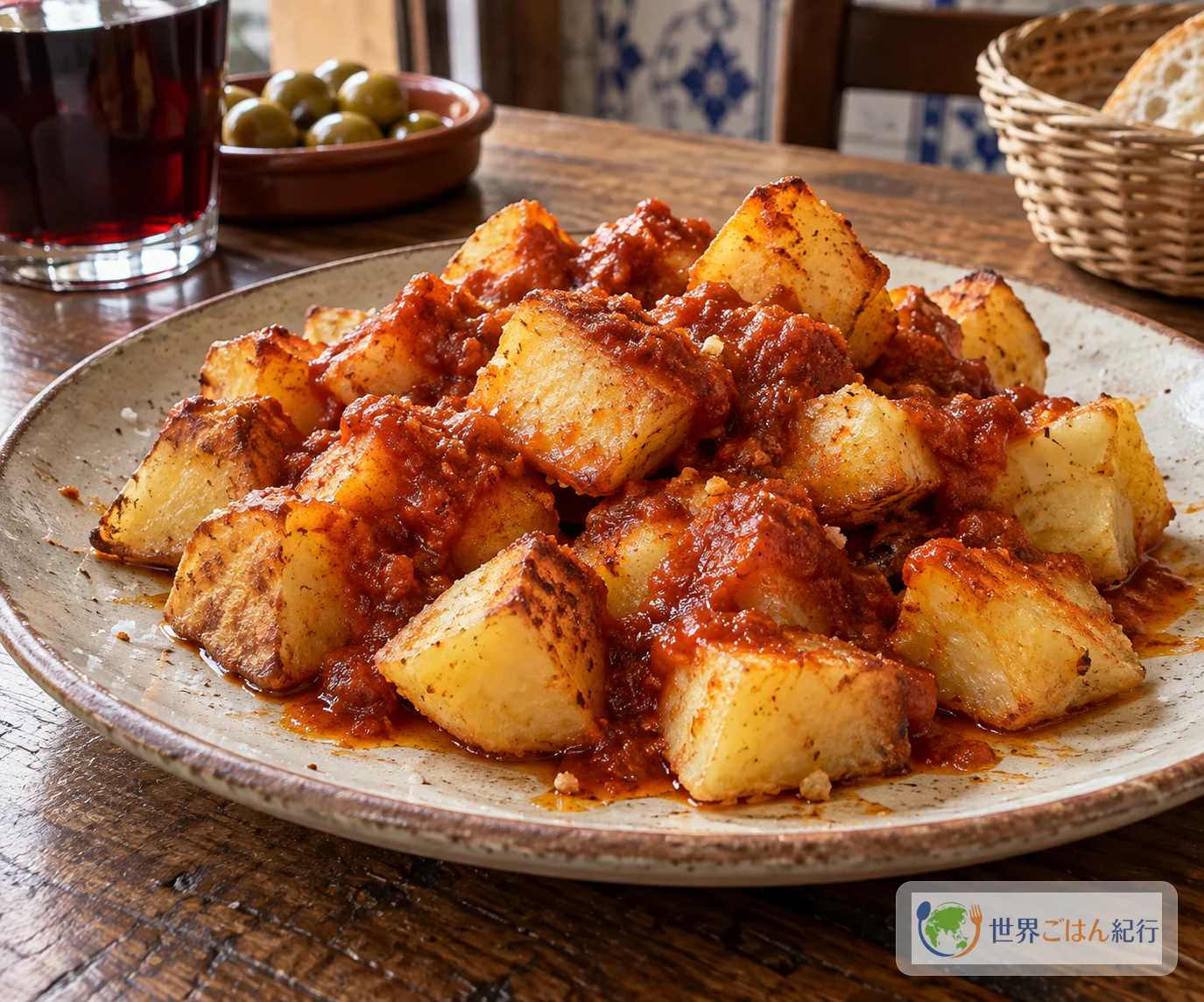
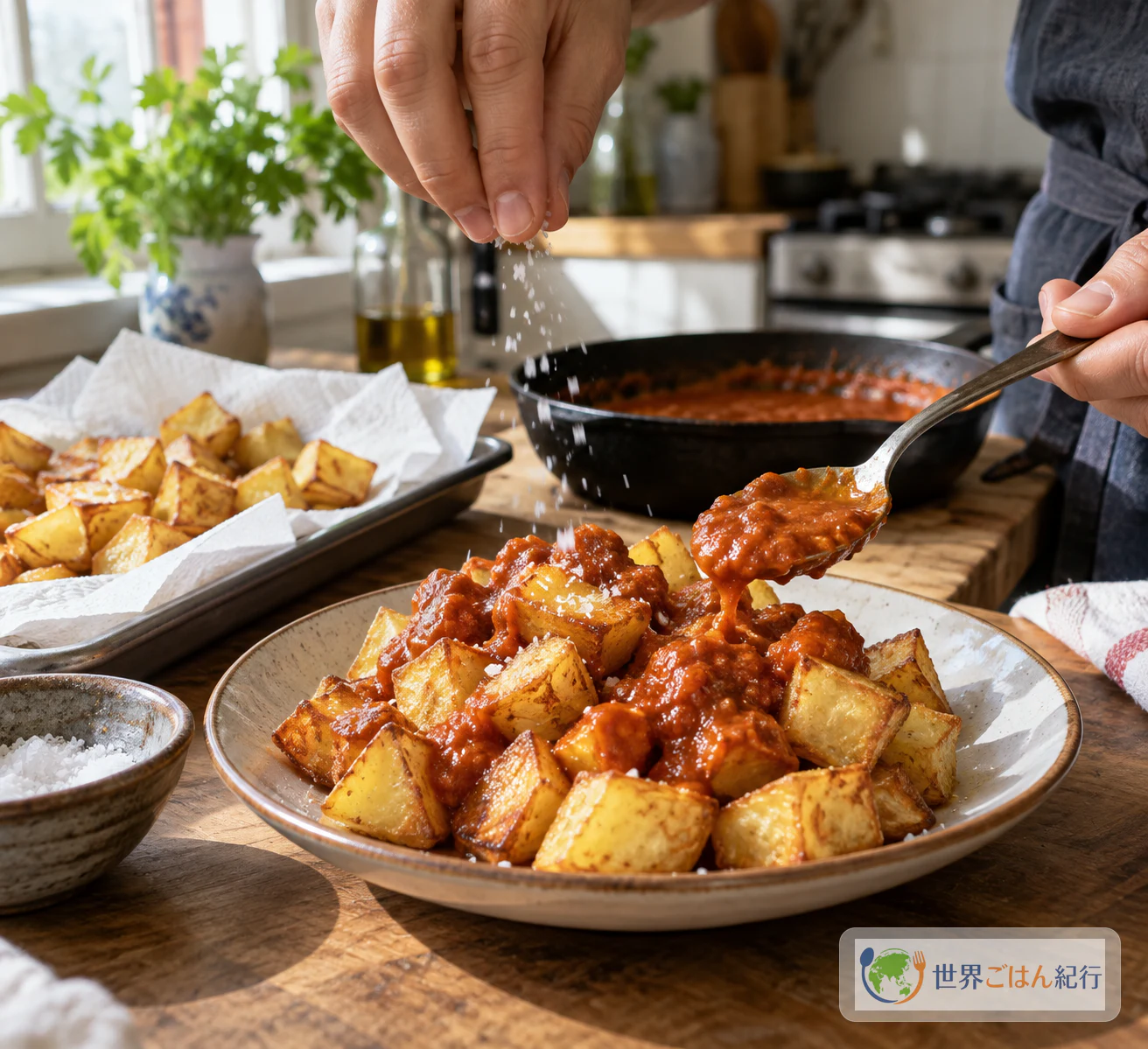
Potatoes soft all the way through with golden edges, and a smooth sauce whose heat comes from pimentón and whose depth comes from choricero pepper and almond. Keep the two parts distinct, so the sauce dresses the potatoes rather than drowning them.
In Spain, a tapa is often something that arrives alongside a drink, or a dish ordered while hopping between bars or as a small plate in its own right. Spain's official tourism guide places patatas bravas among popular tapas and describes it simply: fried potatoes covered in a spicy sauce. A plate goes in the middle of the table, and everyone reaches in.
What that sauce should be is less simple. The Academia Madrileña de Gastronomía describes the sauce it treats as the Madrid style as one made without tomato, built around olive oil, onion and hot pimentón. In the academy's account, the dish spread across Spain and the sauce changed from place to place, with bars keeping their own versions. So rather than chasing a single "correct" bravas, this article follows one clear, reproducible recipe: the four-serving version by Mònica Escudero published in EL PAÍS (El Comidista), which enriches the sauce with ground almonds and choricero pepper paste.
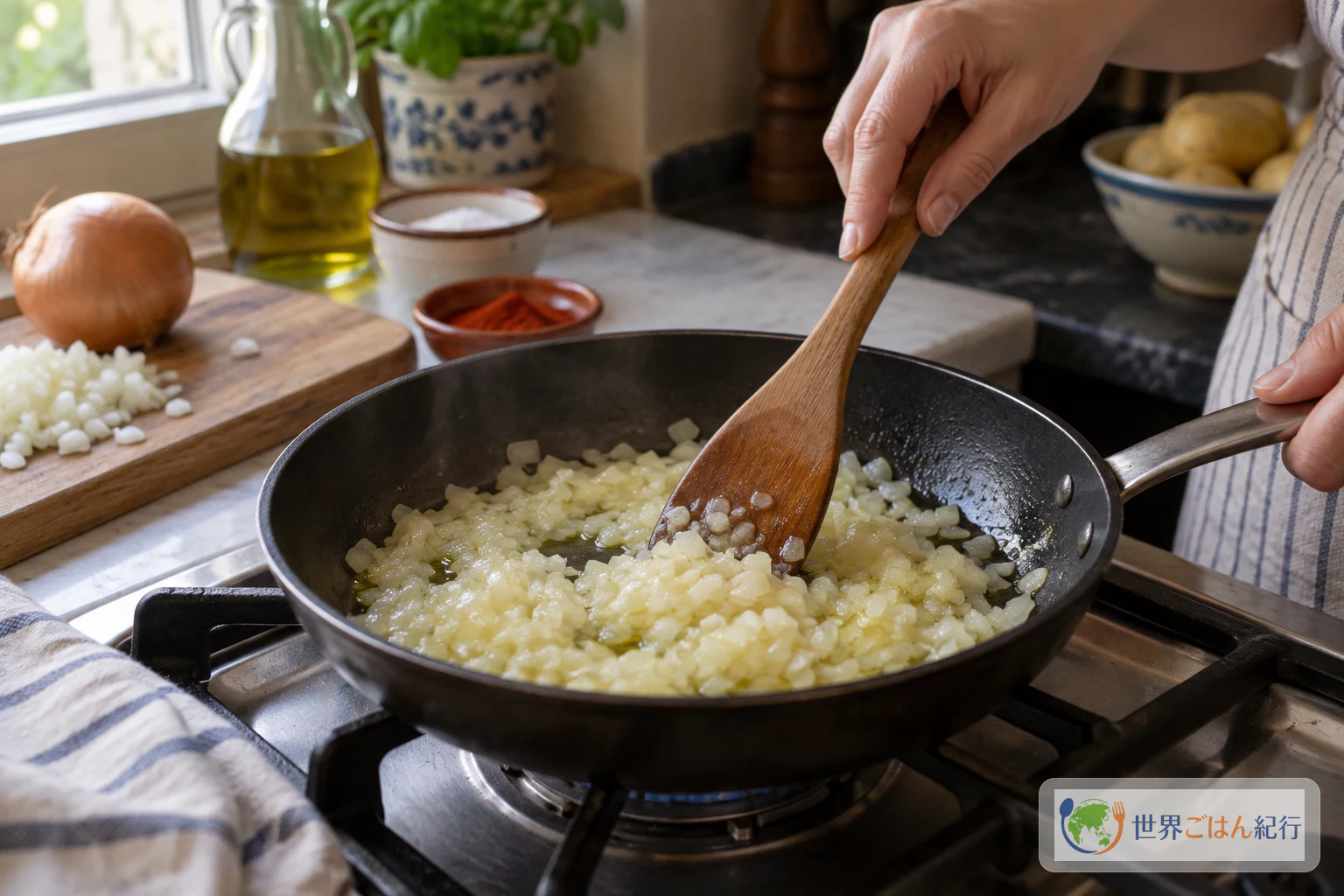
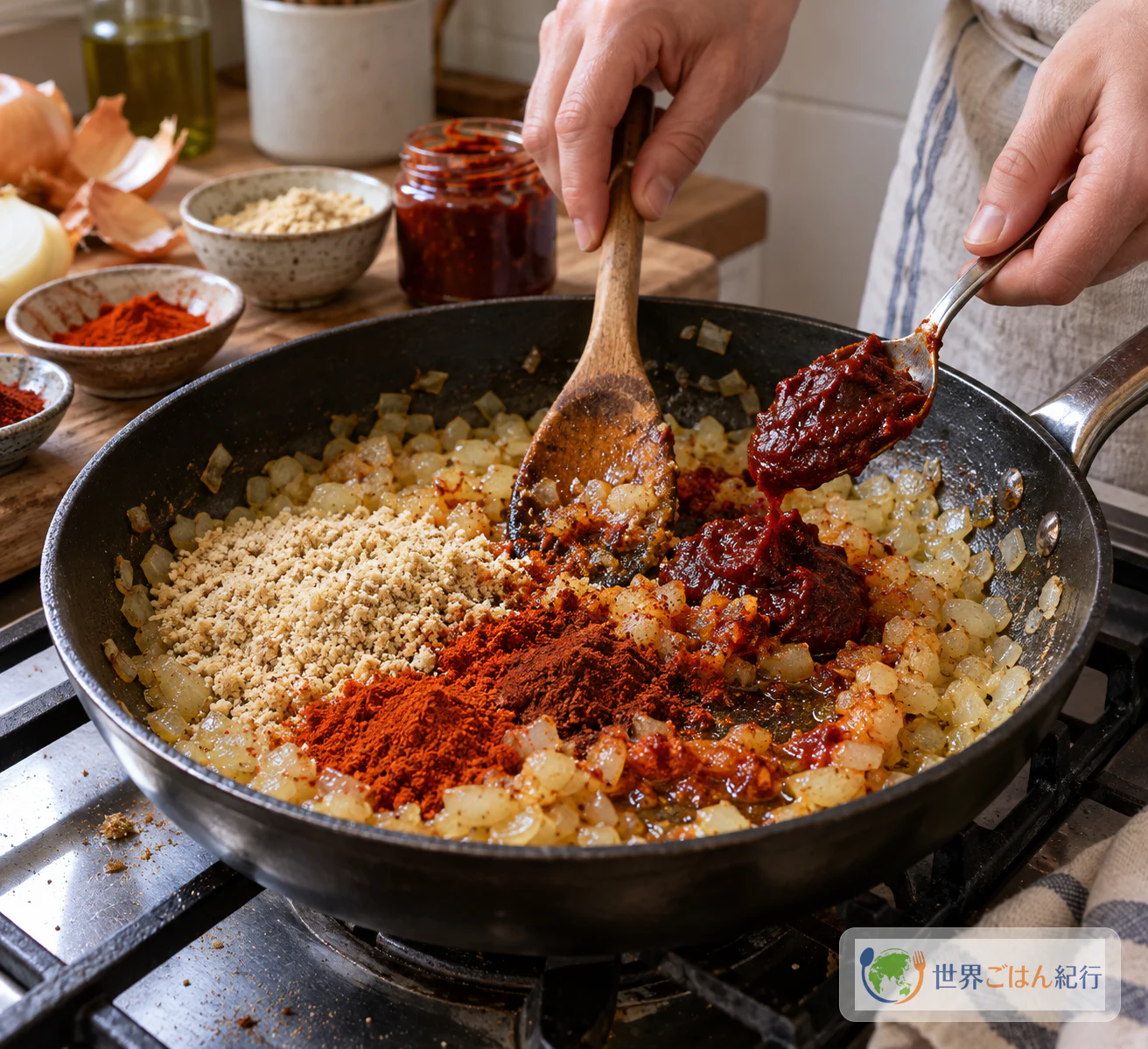
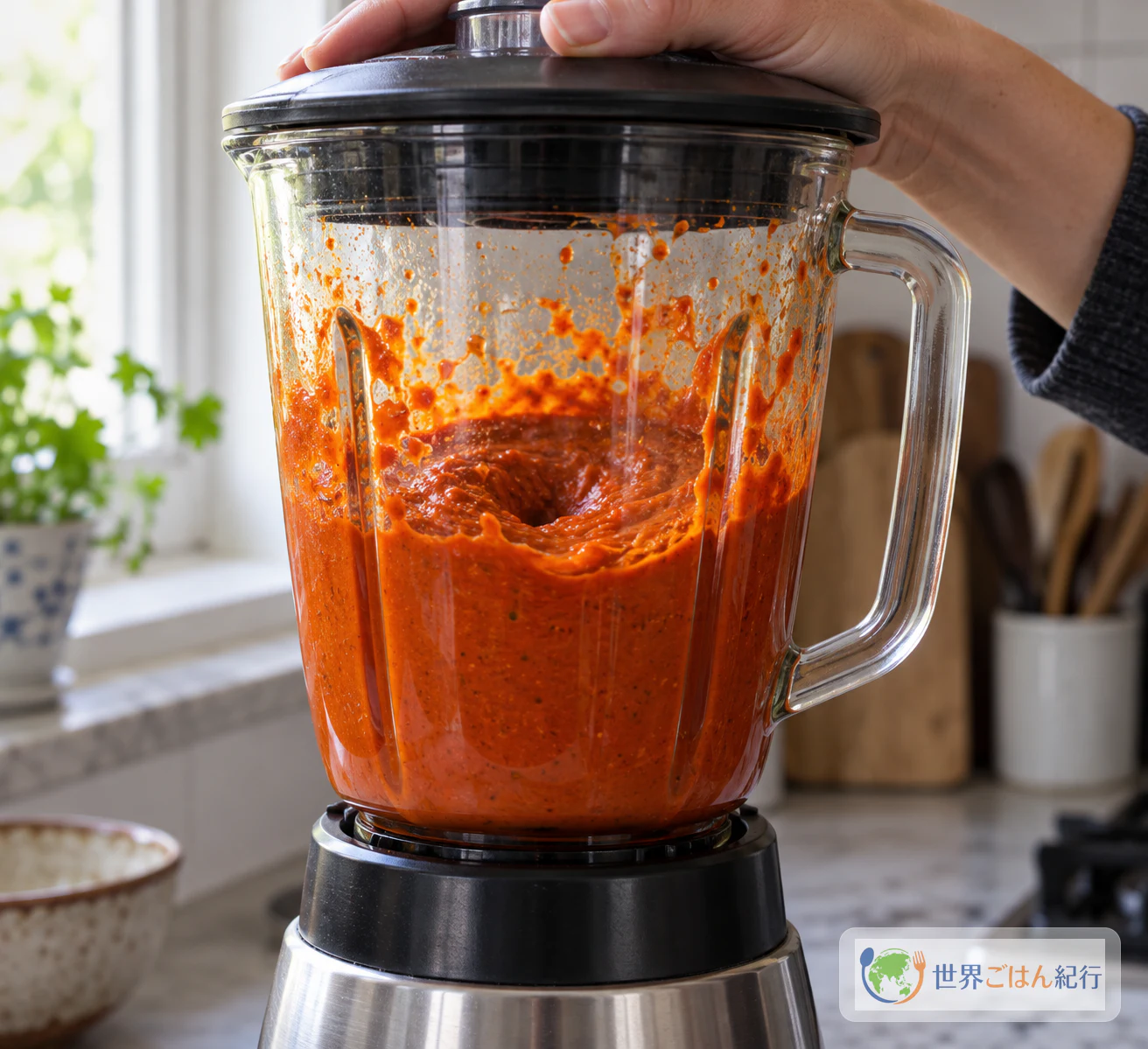
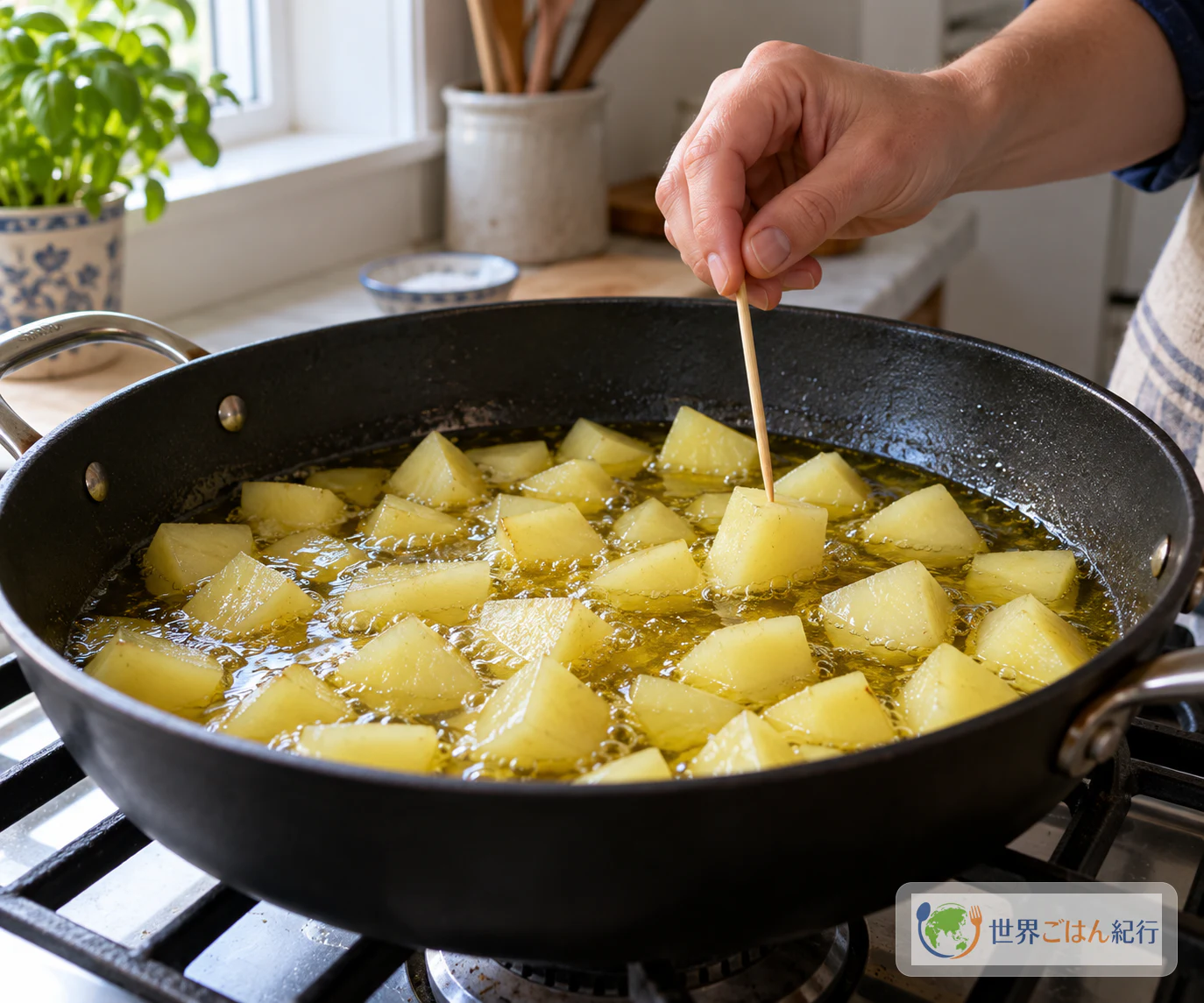
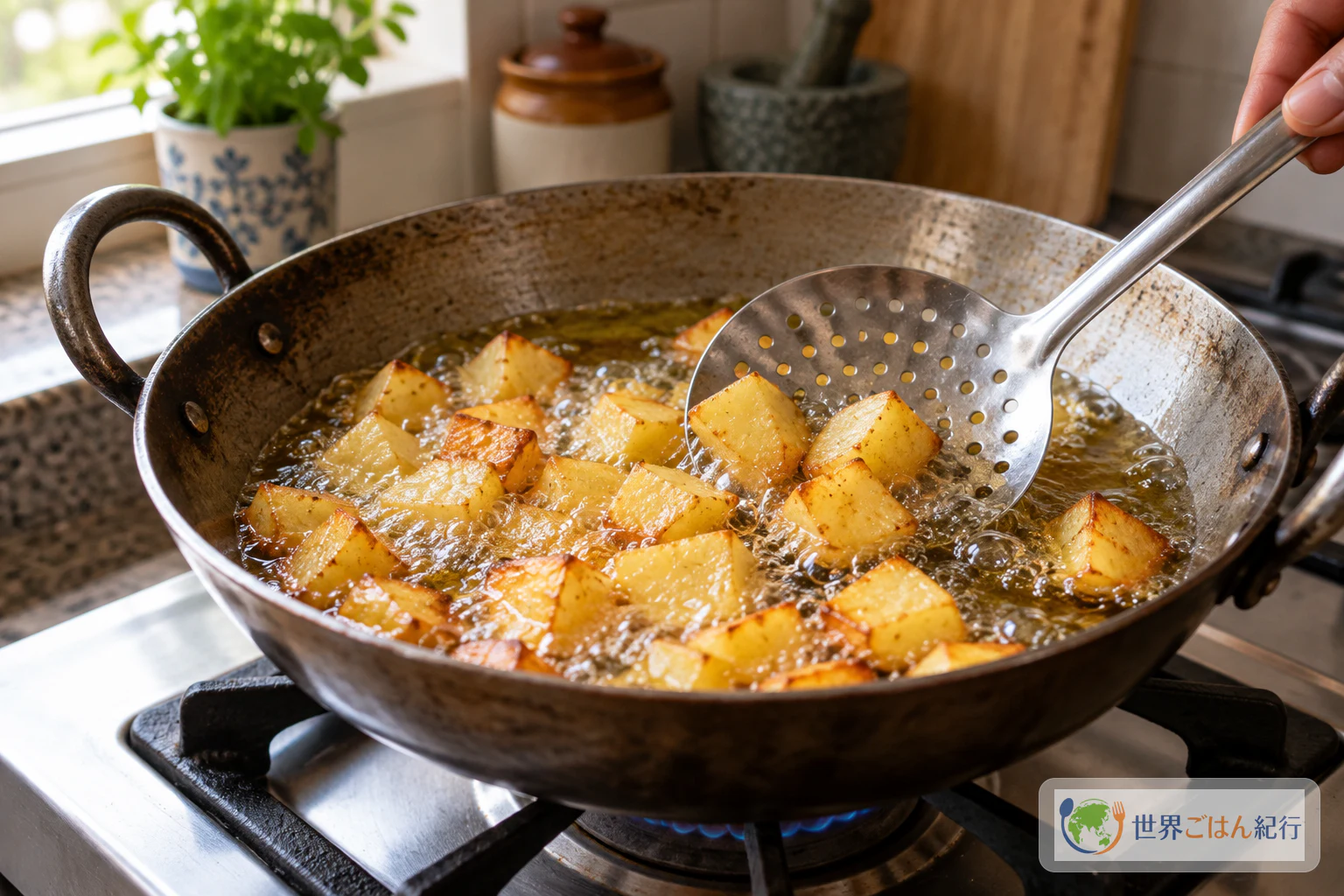
There are two things to get right. The potatoes cook twice in one pan: first gently in oil until tender, then over higher heat until the outsides take on color and crunch. The sauce is cooked slowly, so the onion stays pale and the pimentón never scorches, then blended smooth.
Ingredients: Building the Sauce Around Choricero Pepper (Serves 4)
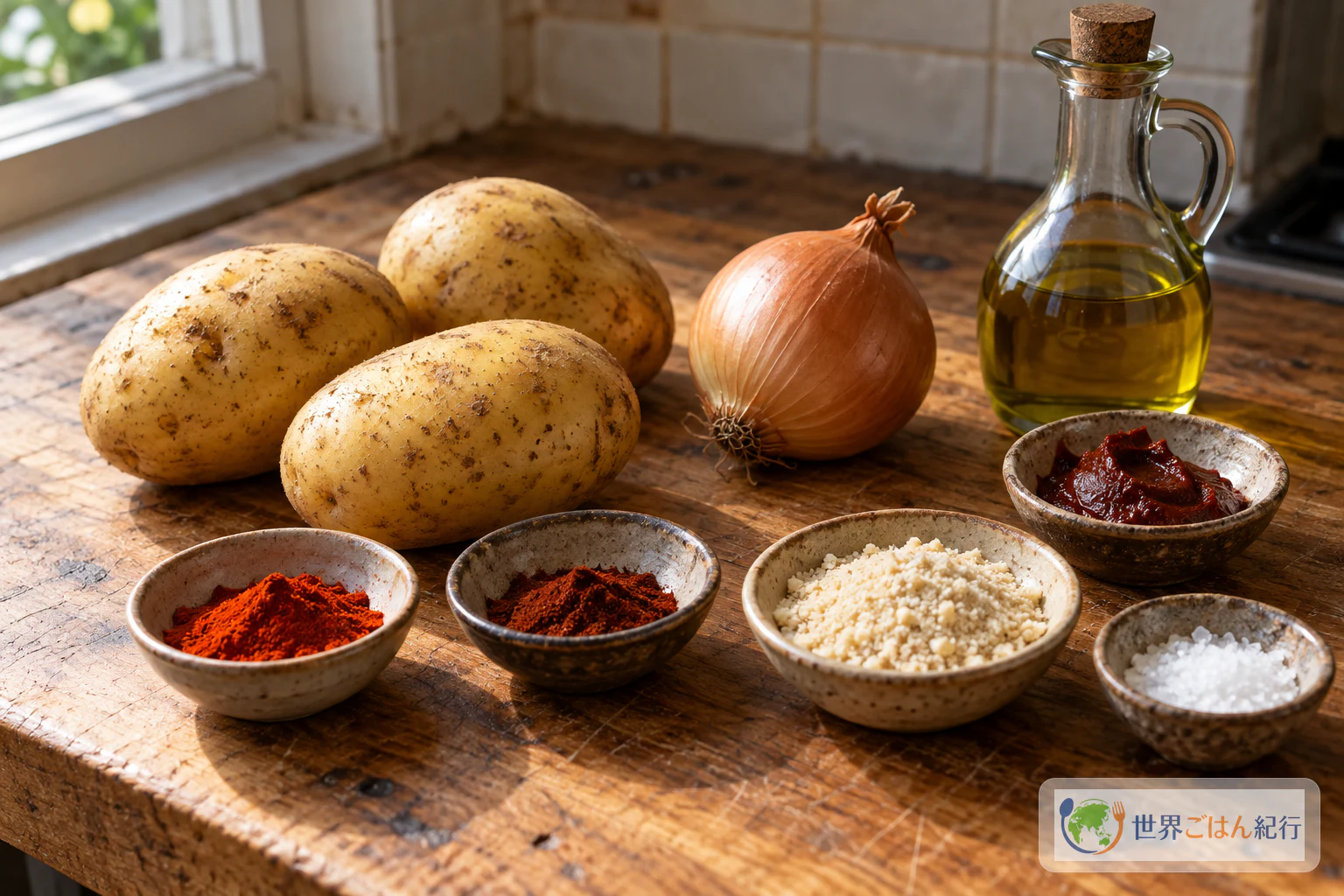
These amounts follow the EL PAÍS recipe for 4 servings. The recipe gives no weight for the potatoes and no quantity for the olive oil or salt, so they are listed here as the source lists them. Use as much as the pan and your taste call for.
The sauce contains almonds. Tell anyone with a tree-nut allergy before serving. Also watch for cross-contact through shared frying oil, blenders and utensils. If you add allioli or mayonnaise on the side, as some bars do, check those too: a version made with egg adds another allergen.
Equipment
- A skillet for the sauce
- A blender, or a food mill (pasapuré), for smoothing the sauce
- A deep skillet or pot for the potatoes
- A thin skewer for checking the potatoes
- A slotted spoon
- Paper towels for draining
- A frying thermometer (optional): the recipe gives no oil temperatures, so this is not required, but some cooks find it helps them see the difference between the gentle stage and the browning stage
Choosing and Substituting: What Can Change and What Can't
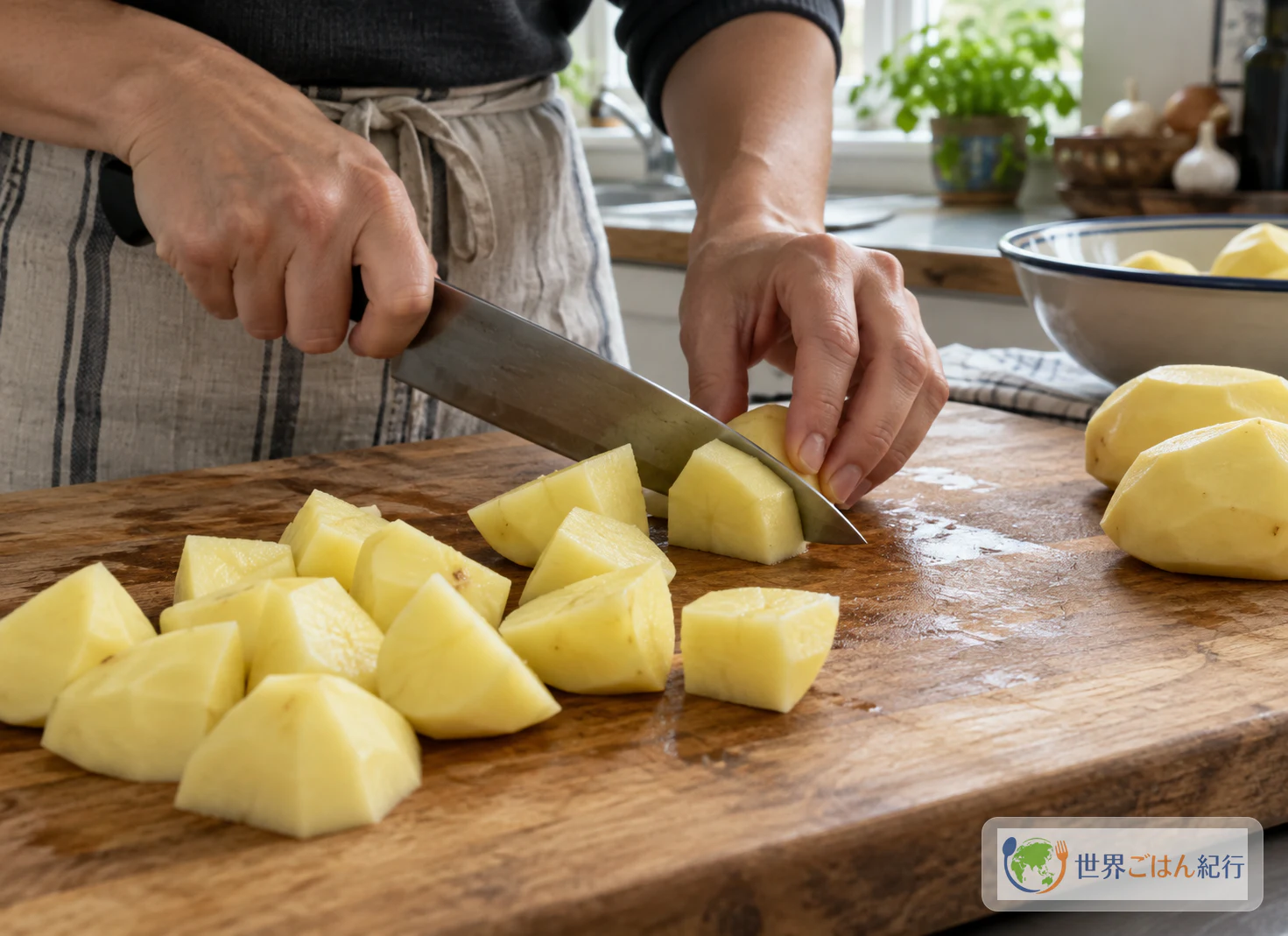
Potatoes. The recipe asks for three large young potatoes and names no variety. Choosing potatoes of a similar size, and a type you know fries well, makes even cooking easier. That is practical advice, not part of the original recipe.
Two kinds of pimentón. Sweet and hot pimentón are separate ingredients, so buy both. If you cannot find Spanish pimentón, ordinary sweet paprika works for the sweet portion, though the aroma will differ. Don't swap generic chili powder 1:1 for the hot pimentón. Its heat and flavor are different, so if you must use it, start with a small amount and taste.
Ground almonds. Unsweetened ground almonds, or almond flour, serve the same purpose. Avoid anything sweetened.
Choricero pepper paste. This is the ingredient worth tracking down, at a Spanish grocer or online, searching for "choricero pepper paste" or carne de pimiento choricero. It is not the same as paprika powder, and not the same as a hot chili paste. Other pepper pastes taste different, so treat them as a different sauce rather than an equivalent. Jarred products also vary in salt, so taste before salting the sauce.
Method: Pale Onion, Gentle Pimentón, Potatoes Cooked Twice in One Pan
Make the sauce first so it is ready when the potatoes come out of the oil. The potatoes are best salted and sauced while hot.
The recipe sets times only for the pimentón and choricero stages. Everything else is judged by what you see and feel: the onion's color, the softness at the center of a potato cube, the color of its edges.
Pale, Bitter, Hard in the Middle: Fixing Common Problems
| Problem | Likely cause | What to do |
|---|---|---|
| The onion browned | Heat too high in step 1 | Keep the heat low and aim for translucent, not golden. The sauce is meant to start from soft, pale onion |
| The sauce tastes bitter or burnt | The pimentón scorched | Keep the heat very low once the pimentón and choricero go in, and stick to the short cooking times |
| The sauce is too thick | Normal variation in ingredients | Loosen with a little olive oil, as the recipe does, instead of water or stock |
| The center of the potato is still hard | The heat was raised too soon | Stay at the gentle stage until a skewer slides easily into the center, then brown |
| The potatoes are pale and soft outside | The second, hotter stage was too short, or the pan is crowded | Give them more room and let the higher heat finish the color before draining |
| The potatoes went soggy on the plate | Too much sauce on top, or they sat too long | Sauce just before eating, and leave some edges exposed |
The contrast between a crisp outside and a soft inside is the point of the dish, and it is at its best straight from the pan. Cook the potatoes close to serving time rather than ahead.
If you do have leftovers, Japan's Ministry of Health, Labour and Welfare's general home food-safety guidance is a useful baseline. Cool food quickly in shallow containers. Keep utensils for raw and cooked food separate. When reheating, heat thoroughly, to 75°C at the center for at least 1 minute. This is general guidance, not a storage time specific to this recipe. Don't leave the dish standing at room temperature.
Variations Worth Making
- Milder. For anyone sensitive to heat, reduce the hot pimentón and let the sweet pimentón and choricero carry the flavor. How much to reduce is a matter of taste.
- Hotter. Increase the hot pimentón a little at a time, starting from the recipe's 1 tsp. Adding cayenne or other ingredients borrowed from different recipes makes a different sauce.
- Almond texture. The recipe calls for ground almonds and a smooth sauce. Blending longer gives a silkier result, while a shorter blend leaves a little texture. Either way, start from ground almonds.
- When you can't find choricero. The best option is to find the paste and make the sauce as written. If you use a different pepper paste in the meantime, think of it as its own sauce, with a different sweetness and heat, rather than an equal swap.
- Barcelona-style mixtas. EL PAÍS notes that in some places in Barcelona, bravas are popular served mixtas, with the spicy sauce plus mayonnaise or ajonesa. Spain's tourism guide describes allioli as made mainly from olive oil and garlic. Serve it alongside as an extra, and keep it out of the bravas sauce itself. Check allergens if your version contains egg.
One Name, Many Sauces: Patatas Bravas Across Spain
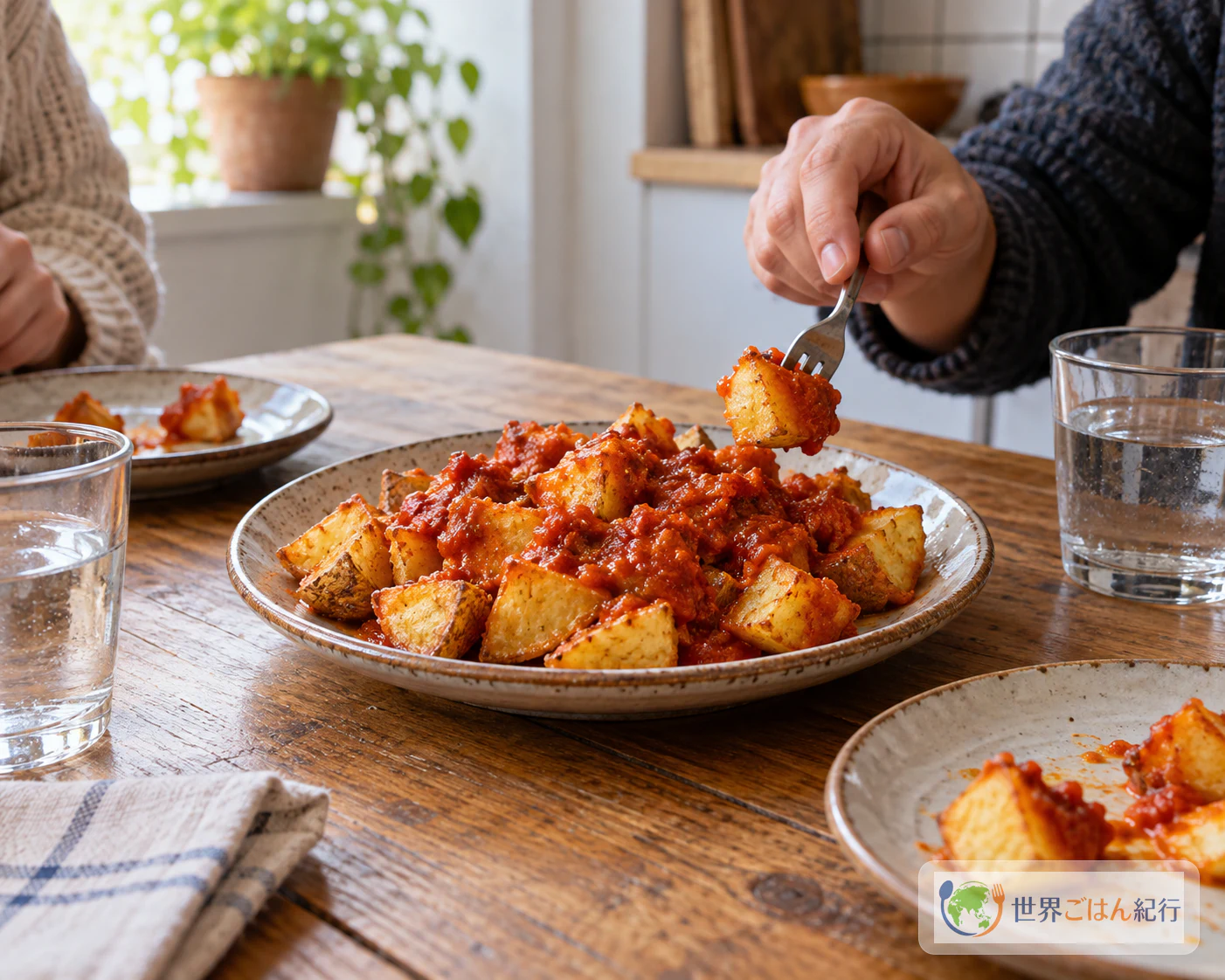
Patatas bravas belongs to Spain's tapas table, ordered alongside a drink or as one of several small plates while moving through an evening. Spain's official tourism guide lists it among the country's popular tapas: fried potatoes covered in a spicy sauce. For more dishes from the same country, see Spanish recipes.
The sauce is where versions part ways. The Academia Madrileña de Gastronomía describes the sauce it presents as the Madrid style as one without tomato, centered on olive oil, onion and hot pimentón. In its account, the dish spread throughout Spain, the sauce took on local character as it traveled, and bars guard their own recipes. That is the academy's view of the Madrid style, not proof of a single authentic recipe. The academy's own page also gives a different recipe of its own, with garlic, flour, vinegar and stock. It is a separate formula and is not mixed into the recipe here.
EL PAÍS describes the traditional sauce as built mainly on onion, oil and pimentón. It also notes that richer versions thickened with almonds or meat stock have become widespread, and that in parts of Barcelona the mixtas style is popular. The recipe in this article is EL PAÍS's own version, with ground almonds and choricero pepper paste. It is one well-defined example among many, neither the Madrid academy's style nor a stand-in for all of Spain.
When and where the dish began, and where its name comes from, are not settled in the sources used here, so this article leaves them open.
Frequently Asked Questions
What exactly are patatas bravas?
A Spanish tapa of fried potatoes covered in a spicy sauce, usually ordered to share, often alongside drinks. In this recipe, the potatoes are cooked gently in olive oil, browned over higher heat in the same pan, then salted and topped with a pimentón and choricero sauce.
Does bravas sauce need tomato?
No, not necessarily. The Madrid academy describes the sauce it presents as the Madrid style as tomato-free, and the sauce varies by region and by bar. This recipe contains no tomato either: its body comes from onion, almond and choricero pepper.
How do I adjust the heat?
The heat comes from the hot pimentón. Use the recipe's 1 tsp as your baseline, then use less for a milder sauce or add more a little at a time for a hotter one. Keep the sweet pimentón as written so the sauce doesn't lose its color and aroma.
Can I serve it with allioli?
Yes, as a side. EL PAÍS notes that mixtas, with mayonnaise or ajonesa alongside the spicy sauce, are popular in parts of Barcelona. Serve it separately rather than blending it into the bravas sauce, and check for egg if that matters to anyone at the table.
What if I can't find choricero pepper paste?
Look for it at Spanish or specialty grocers, or online under "choricero pepper paste" or carne de pimiento choricero. Other chili or pepper pastes have different heat and sweetness, so they make a different sauce, not an equivalent one. If you use one, taste carefully, since jarred products also vary in salt.
Sources
- EL PAÍS / El Comidista, "La receta: patatas bravas." The four-serving recipe used here: ingredients and amounts, the sauce method, the gentle-then-high-heat potato method in one pan, the texture of the potatoes, the traditional sauce and its richer variants, and Barcelona's mixtas. https://elpais.com/elpais/2020/08/20/eps/1597933479_831339.html?outputType=amp
- Academia Madrileña de Gastronomía, "Patatas Bravas." The academy's description of the Madrid-style sauce without tomato, the spread of the dish across Spain with local and bar-by-bar sauces, and the academy's own separate recipe. https://academiamadrilenadegastronomia.org/patatas-bravas/
- TURESPAÑA / Spain.info, "20 tapas recomendadas y muy populares en España." Tapas as dishes served with drinks or ordered while going out for tapas, patatas bravas as fried potatoes covered in a spicy sauce, and allioli as made mainly from olive oil and garlic. https://www.spain.info/es/top/tapas-recomendadas-populares-espana/
- Ministry of Health, Labour and Welfare (Japan), "家庭でできる食中毒予防の6つのポイント" (Six points for preventing food poisoning at home). General home guidance on thorough heating to 75°C at the center for at least 1 minute, separating utensils, cooling in shallow containers and reheating. https://www.mhlw.go.jp/stf/seisakunitsuite/bunya/kenkou_iryou/shokuhin/syokuchu/01_00006.html